Словари

Словарь английского языка | Значения слов, определения и примеры

dedication definition card — visual illustration of the meaning
noun
/ˌdɛdɪˈkeɪʃən/
преданность (predannost)

the quality of being committed to a task or purpose

"Her dedication to her studies earned her top grades."

"Её преданность учебе принесла ей высшие оценки." (Eyo predannost uchebe prinesla yey vysshie otsenki.)
verb
/dɪˈdjuːs/
делать вывод (delat' vyvod)

to reach a conclusion by reasoning or inference

"From the evidence, the detective deduced that the suspect was lying."

"Из доказательств детектив сделал вывод, что подозреваемый лгал." (Iz dokazatel'stv detektiv sdelal vyvod, chto podozrevaemyy lgal.)
adjective
/dɪˈdjuːsəbl/
выводимый (vyvodimy)

able to be deduced; possible to be inferred

"The solution is deducible from the data provided."
"Решение можно вывести из предоставленных данных." (Reshenie mozhno vyvesti iz predostavlennykh dannykh.)
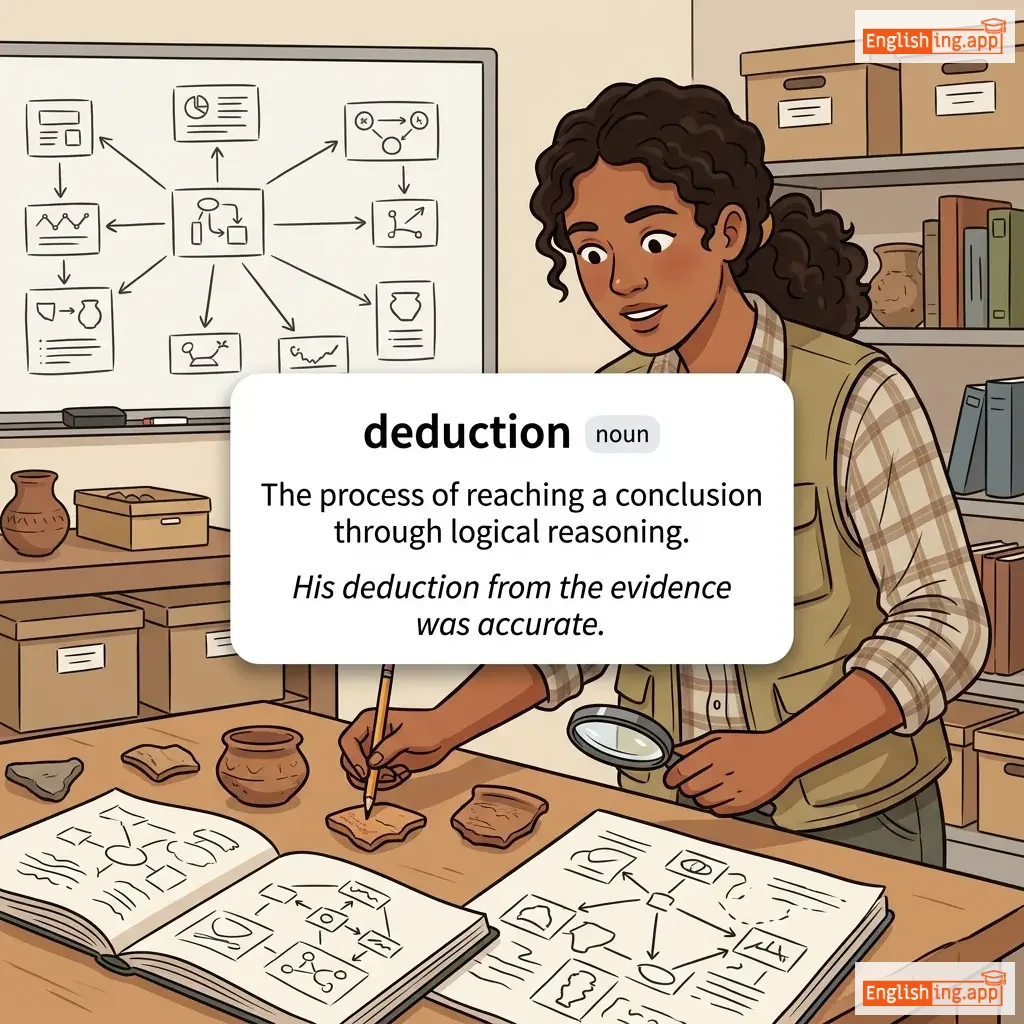
deduction definition card — visual illustration of the meaning
noun
/dɪˈdʌk.ʃən/
вывод (vyvod)

The process of reaching a conclusion through logical reasoning.

"His deduction from the evidence was accurate."

"Его вывод на основе доказательств был точным." (Ego vyvod na osnove dokazatel'stv byl tochnym.)
noun
/diːd/
поступок (postupok)

an action, especially a good or evil one

"His deed of kindness will never be forgotten."

"Его поступок доброты никогда не будет забыт." (Yego postupok dobroty nikogda ne budet zabyt.)
verb
/diːm/
считать, оценивать (schitat', otsenivat')

to regard or consider in a specified way

"The project was deemed a success by the board."
"Проект был признан успешным советом." (Proyekt byl prizan uspeshnym sovetom.)
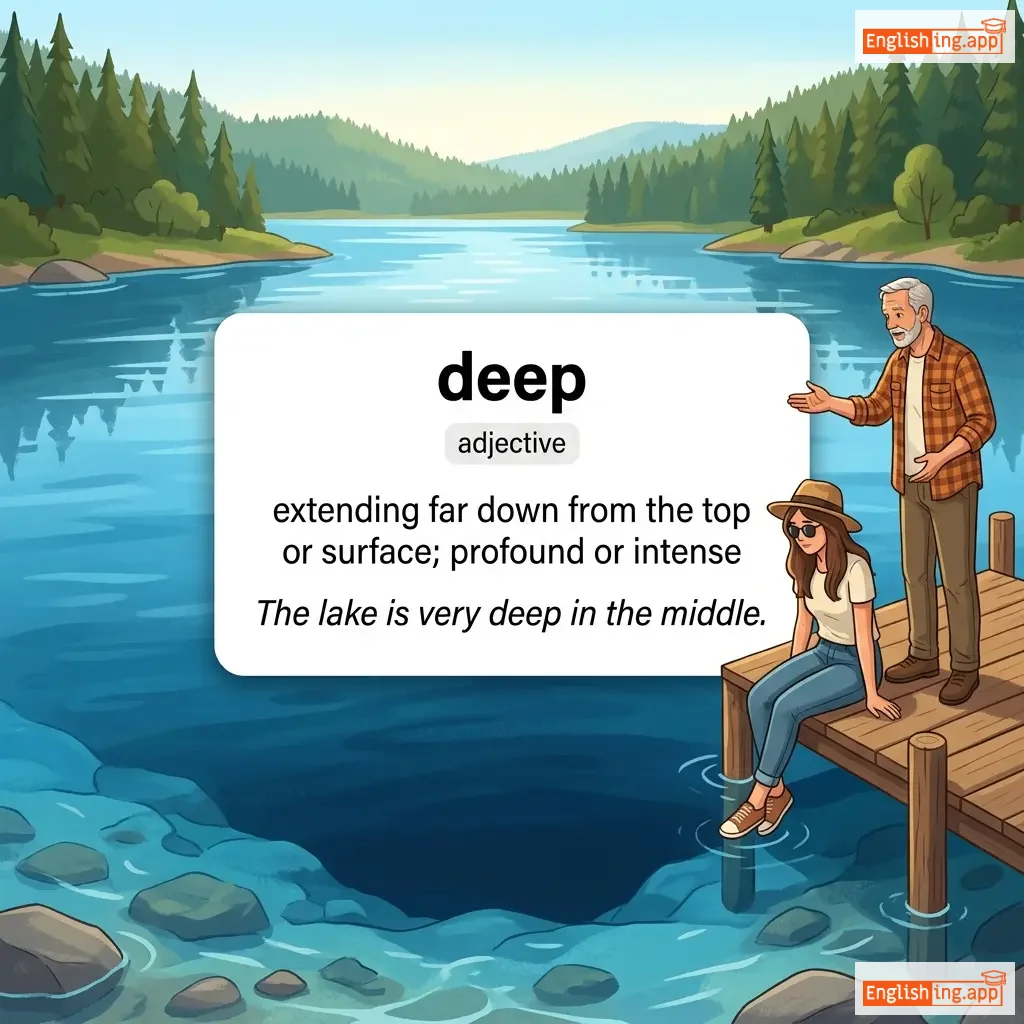
deep definition card — visual illustration of the meaning
adjective
/diːp/
счастье (schastye)

extending far down from the top or surface; profound or intense

"The lake is very deep in the middle."

"Она не могла скрыть свое счастье, когда получила награду." (Ona ne mogla skryt' svoyo schast'ye, kogda poluchila nagradu.)
noun
/diːp ˈkʌlər/
глубокий цвет (glubokiy tsvet)

a rich, intense, or dark shade of any color

"The artist used deep colours to create a dramatic effect."

"Художник использовал глубокие цвета для создания драматического эффекта." (Khudozhnik ispol'zoval glubokie tsveta dlya sozdaniya dramaticheskogo effekta.)
deep sea definition card — visual illustration of the meaning
noun
/diːp siː/
глубокое море (glubokoye more)

The deep parts of the sea or ocean, typically beyond the continental shelf.

"Many deep-sea creatures produce bioluminescence for survival."

"Многие глубоководные существа производят биолюминесценцию для выживания." (Mnogiye glubokovodnyye sushchestva proizvodit biyoluminestsiyu dlya vyzhivaniya.)
adverb
/ˈdiːpli/
глубоко (gluboko)

to a great depth, extent, or intensity

"She was deeply moved by the speech."

"Она была глубоко тронута речью." (Ona byla gluboko tronutá rech'yu.)
noun
/dɪr/
олень (olen)

a graceful wild animal with long legs and antlers, often living in forests

"A deer ran across the road suddenly."

"Олень внезапно пересек дорогу." (Olen vnezapno peresek dorogu.)
verb
/dɪˈfeɪs/
искажать (iskazhat)

to spoil the surface or appearance of something, especially by writing or drawing on it

"The vandals defaced the wall with graffiti."

"Вандалы изуродовали стену граффити." (Vandaly izurodovali stenu grafiti.)
verb
/ˈdiːfælˌkeɪt/
растратить деньги (rastatit' dengi)

to misuse or embezzle money that one is responsible for

"The accountant was accused of defalcating company funds."

"Бухгалтера обвинили в растрате средств компании." (Bukhgaltera obvinili v rastrate sredstv kompanii.)
noun
/ˌdɛfəˈmeɪʃən/
клевета (kleveta)

the act of damaging someone's reputation by making false statements

"The newspaper was sued for defamation of character."
"Газета была подана в суд за клевету." (Gazeta byla podana v sud za klevetu.)
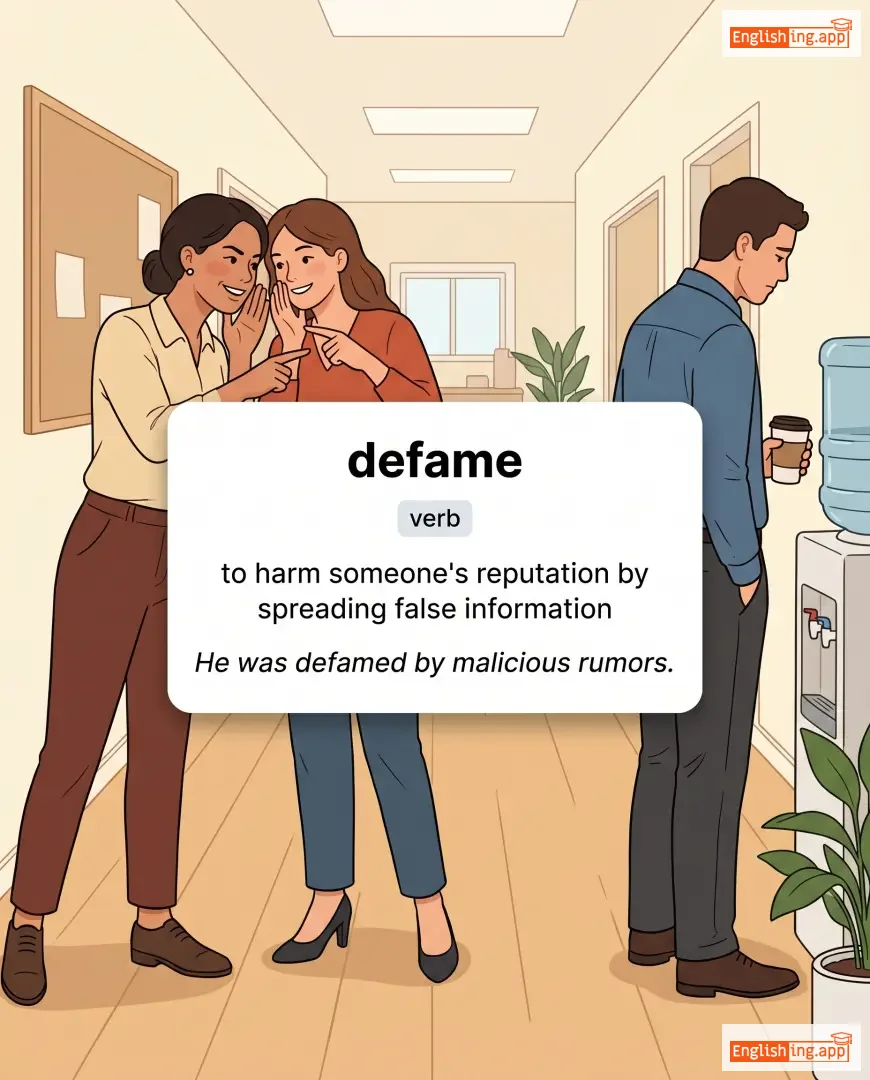
defame definition card — visual illustration of the meaning
verb
/dɪˈfeɪm/
оклеветать (oklevetat)

to harm someone's reputation by spreading false information

"He was defamed by malicious rumors."
"Он был очернен злонамеренными слухами." (On byl ochernyon zlonamerenymi slukhami.)
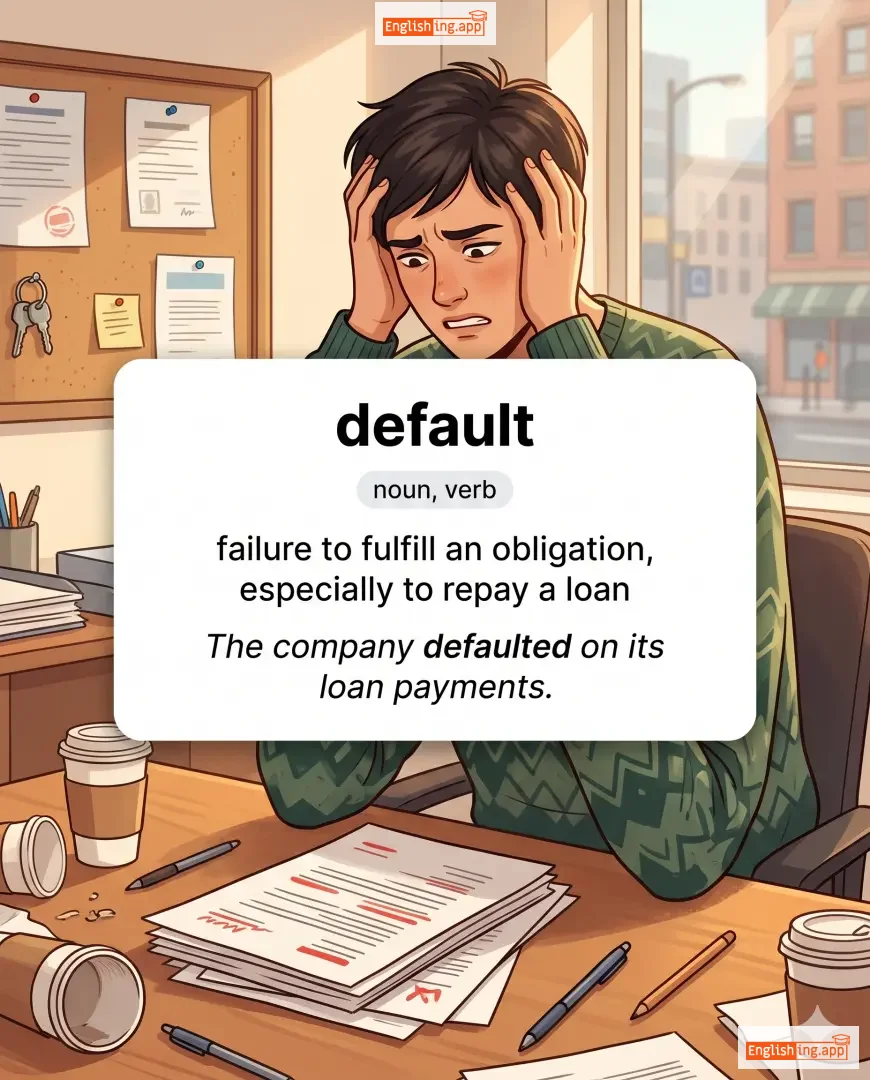
default definition card — visual illustration of the meaning
noun, verb
/dɪˈfɔːlt/
невыполнение обязательства (nevyplnenie obyazatel'stva)

failure to fulfill an obligation, especially to repay a loan

"The company defaulted on its loan payments."

"Компания не выполнила свои обязательства по платежам по кредиту." (Kompaniya ne vypolnila svoi obyazatel'stva po platezham po kreditu.)
verb
/dɪˈfiːt/
побеждать (pobezhdat)

to win a victory over someone or something in a competition or battle

"Our team defeated their rivals in the final match."

"Наша команда победила их соперников в финальном матче." (Nasha komanda pobedila ikh sopernikov v final'nom matche.)
noun, adjective
/dɪˈfiːtɪst/
поражени́ческий (porazhenicheskiy)

A person who expects or is excessively ready to accept failure; showing a tendency to expect defeat.

"His defeatist attitude discouraged the rest of the team."

"Его пораженческое отношение обескуражило остальных членов команды." (Ego porazhencheskoe otnoshenie obeskurazhilo ostal'nykh chlenov komandy.)
noun, verb
/ˈdiːfɛkt/ (noun), /dɪˈfɛkt/ (verb)
дефект / дезертировать (defekt / dezeritirovat)

A shortcoming, imperfection, or flaw; or to abandon a cause or group for another.

"The engineer found a defect in the software code."

"Инженер обнаружил дефект в коде программного обеспечения." (Inzhener obnaruzhil defekt v kode programmnogo obespecheniya.)
noun
/dɪˈfɛkʃən/
дефекция (defekciya)

The act of abandoning one’s country, cause, or group in favor of another.

"The politician’s defection shocked his supporters."

"Дефекция политика шокировала его сторонников." (Defekciya politika shokirovala ego storonnikov.)
adjective
/dɪˈfektɪv/
дефектный; неполный (defektnyy; nepolnyy)

having faults or defects; imperfect

"The defective product was returned to the store."

"Дефектный продукт был возвращён в магазин." (Defektnyy produkt byl vozvrashchyon v magazin.)
noun
/dɪˈfɛns/
защита (zashchita)

The act of protecting or guarding against attack, harm, or criticism.

"The castle walls were built for defence against invaders."
"Стены замка были построены для защиты от захватчиков." (Steny zamka byli postroyeny dlya zashchity ot zakhvatchikov.)
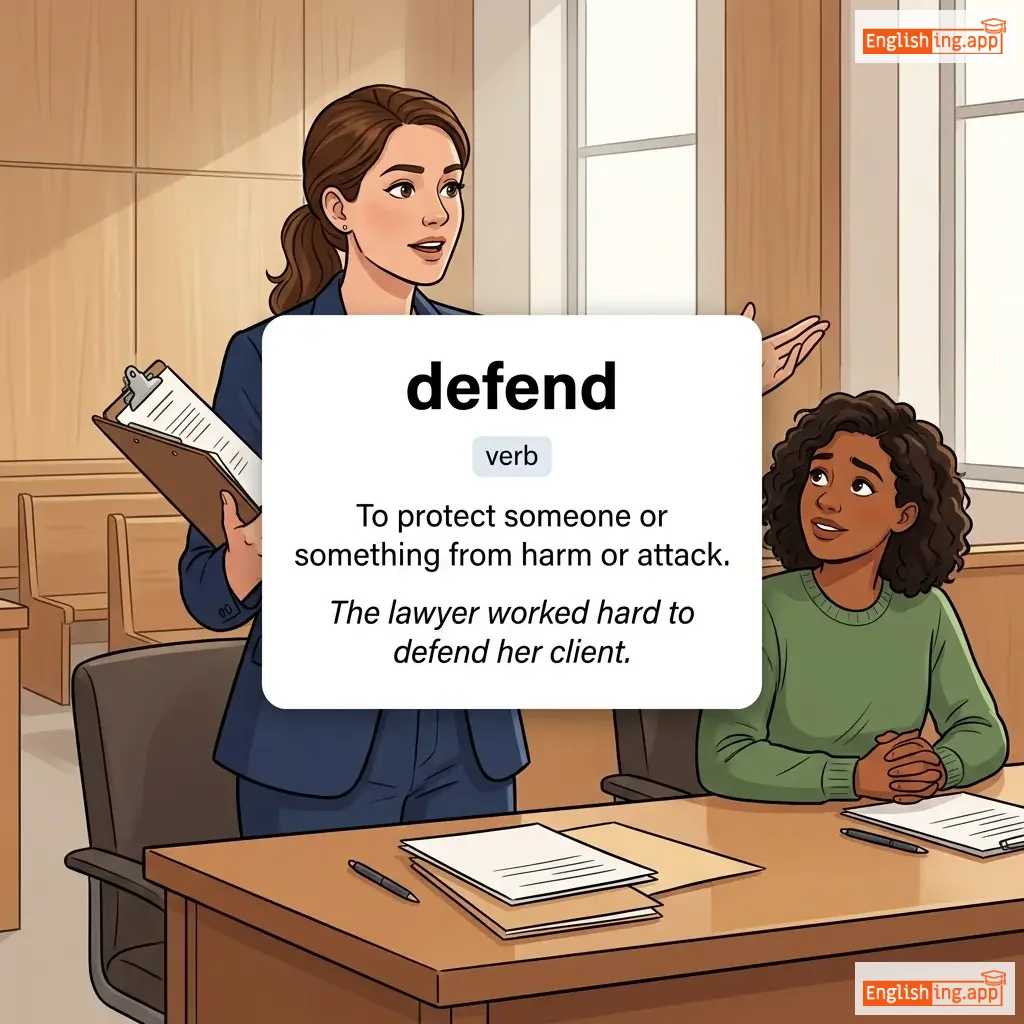
defend definition card — visual illustration of the meaning
verb
/dɪˈfɛnd/
защищать (zashchishchat)

To protect someone or something from harm or attack.

"The lawyer worked hard to defend her client."

"Адвокат усердно работал, чтобы защитить своего клиента." (Advokat usyerdno rabotal, chtoby zashchitit' svoego kliyenta.)
noun
/dɪˈfɛndənt/
обвиняемый (obvinyaemyy)

An individual, company, or institution sued or accused in a court of law.

"The defendant pleaded not guilty to the charges."

"Обвиняемый не признал себя виновным по обвинениям." (Obvinyayemyy ne priznalsya sebya vinovnym po obvineniyam.)
noun
/dɪˈfɛndər/
защитник (zaschitnik)

a person who protects someone or something from harm or attack

"The defender blocked the shot and saved the goal."
"Защитник заблокировал удар и спас гол." (Zaschitnik zablokiroval udar i spas gol.)
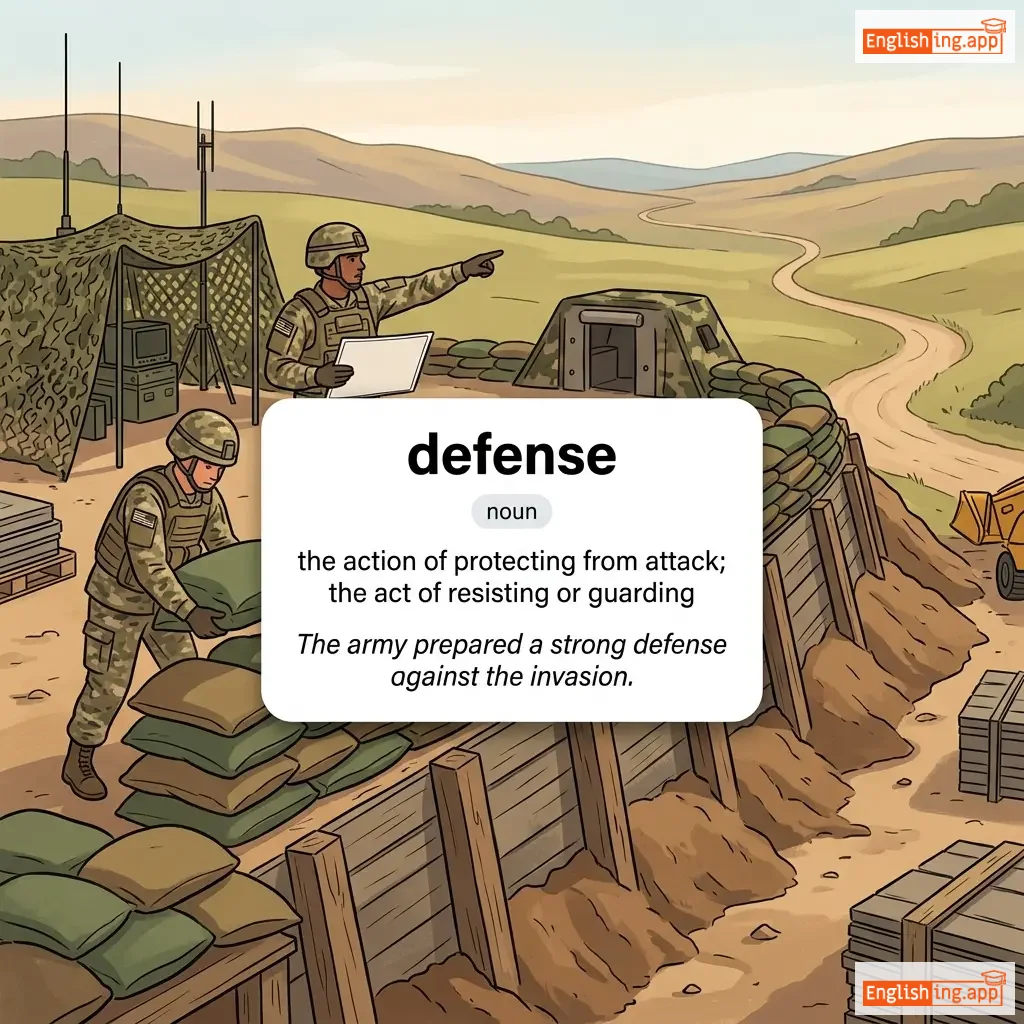
defense definition card — visual illustration of the meaning
noun
/dɪˈfɛns/
счастье (schastye)

the action of protecting from attack; the act of resisting or guarding

"The army prepared a strong defense against the invasion."

"Она не могла скрыть свое счастье, когда получила награду." (Ona ne mogla skryt' svoye schast'ye, kogda poluchila nagradu.)
adjective
/dɪˈfɛnsəbəl/
защищаемый / оправданный (zashchishchaemyy / opravdannyy)

Capable of being protected against attack or criticism; justifiable.

"Her decision was legally defensible."

"Ее решение было юридически защищаемым." (Eyo reshenie bylo yuridicheski zashchishchayemym.)
adjective
/dɪˈfɛnsɪv/
защитный (zashchitny)

Intended to protect or defend; behaving in a way to guard against criticism or attack.

"He became defensive when asked about his mistake."

"Он стал защитным, когда его спросили о его ошибке." (On stal zashchitnym, kogda ego sprosili o yego oshibke.)
verb
/dɪˈfɜːr/
отсрочить (otsrochit)

To postpone or delay; to yield to someone else's judgment or opinion.

"The meeting was deferred until next week."
"Заседание было отложено до следующей недели." (Zasedanie bylo otlozheno do sleduyushchey nedeli.)
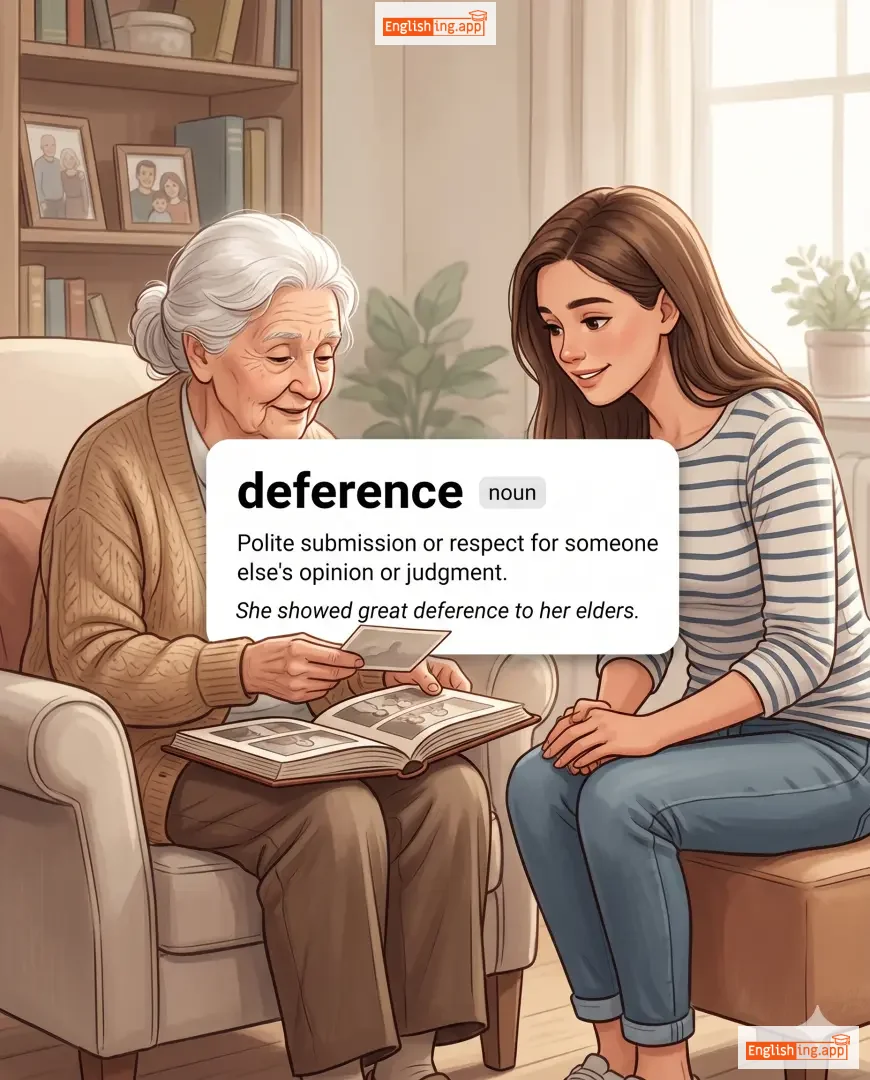
deference definition card — visual illustration of the meaning
noun
/ˈdɛfərəns/
почтение (pochtenie)

Polite submission or respect for someone else's opinion or judgment.

"She showed great deference to her elders."

"Она проявила большое почтение к своим старшим." (Ona proyavila bol'shoe pochtenie k svoim starshim.)
adjective
/ˌdɛfəˈrɛnʃəl/
почтительный (pochtitelny)

Showing or expressing respect and high regard.

"He was always deferential toward his teachers."

"Он всегда был почтительным по отношению к своим учителям." (on vsegda byl pochtitel'nym po otnosheniyu k svoim uchitelyam.)
noun
/dɪˈfaɪəns/
неповиновение (nepovinoveniye)

Open resistance or bold disobedience.

"The protest was an act of defiance against injustice."

"Протест был актом неповиновения против несправедливости." (Protest byl aktom nepovinoveniya protiv nespravedlivosti.)
adjective
/dɪˈfaɪ.ənt/
непокорный (nepokornyy)

showing open resistance or bold disobedience

"The child was defiant when told to clean his room."

"Ребёнок был непокорным, когда ему сказали убраться в своей комнате." (Rebyonok byl nepokornym, kogda yemu skazali ubrat'sya v svoey komnate.)
noun
/dɪˈfɪʃ.ən.si/
дефицит (defitsit)

a lack or shortage of something that is necessary

"The doctor diagnosed him with a vitamin D deficiency."

"Врач поставил ему диагноз дефицита витамина D." (Vrach postavil yemu diangnoz defitsita vitamina D.)
adjective
/dɪˈfɪʃ.ənt/
дефицитный (defitsitnyy)

not having enough of something that is essential

"The soil is deficient in nutrients."

"Почва бедна питательными веществами." (Pochva bedna pitatel'nymi veshchestvami.)
noun
/ˈdɛfɪsɪt/
дефицит (defitsit)

The amount by which something, especially money, is too small or lacking.

"The government is trying to reduce the budget deficit."

"Правительство пытается уменьшить дефицит бюджета." (Pravitel'stvo pytayetsya umenshit' defitsit byudzheta.)
verb
/dɪˈfaɪl/
осквернять (oskvernyat)

to pollute, corrupt, or make dirty

"The river was defiled by industrial waste."

"Река была осквернена промышленными отходами." (Reka byla oskvernena promyshlennymi otkhodami.)
verb
/dɪˈfaɪn/
определять (opredelyat')

to explain the meaning of a word, phrase, or concept clearly

"The teacher asked the student to define the word 'democracy'."

"Учитель попросил студента определить слово 'демократия'." (Uchitel' poprosil studenta opredelit' slovo 'demokratiya'.)
adjective
/ˈdef.ən.ɪt/
определенный (opredelennyy)

clearly stated or decided; not vague or doubtful

"We need a definite plan before starting the project."

"Нам нужен определенный план перед началом проекта." (Nam nuzhen opredelennyy plan pered nachalom proyektu.)
adverb
/ˈdɛfɪnɪtli/
определенно (opredelenno)

without any doubt; certainly

"I will definitely call you tomorrow."

"Я обязательно позвоню тебе завтра." (Ya obyazatel'no pozvonyu tebe zavtra.)
noun
/ˌdɛfɪˈnɪʃən/
определение (opredelenie)

a statement that explains the meaning of a word or concept

"The dictionary gives a clear definition of the word."

"Словарь дает четкое определение этого слова." (Slovar' dayet chotkoye opredeleniye etogo slova.)
adjective
/dɪˈfɪnɪtɪv/
окончательный (okonchatel'nyy)

serving as a final or most authoritative form; conclusive and decisive

"The committee reached a definitive agreement on the policy."

"Комитет достиг окончательного соглашения по политике." (Komitet dostig okonchatelnogo soglasheniya po politike.)
adjective
/kənˈtraɪvd/
искусственный или принудительный; не естественный или спонтанный (iskusstvennyy ili prinuditelnýy; ne estestvennyy ili spontannyy)

artificial or forced; not natural or spontaneous

"The ending of the movie felt contrived and unrealistic."
"Концовка фильма казалась искусственной и нереалистичной." (Kontsovka fil'ma kazalas' iskusstvennoy i nerealistichnoy.)
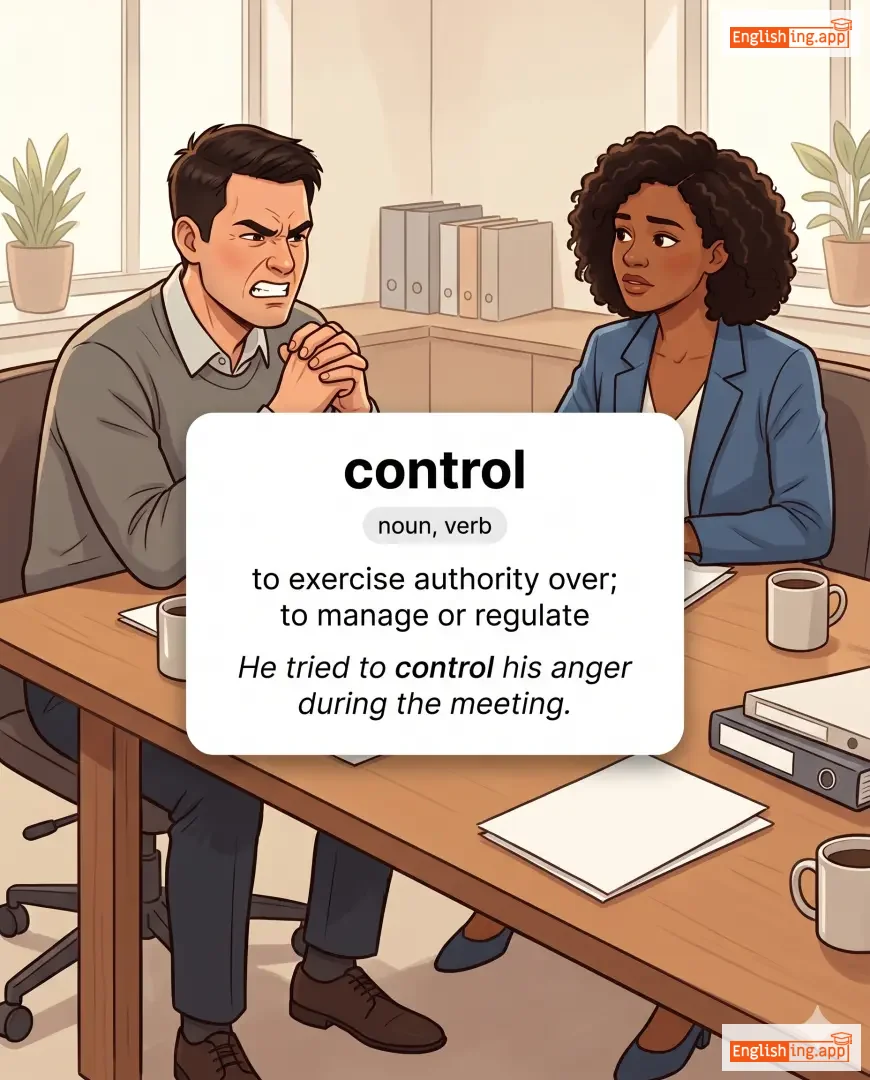
control definition card — visual illustration of the meaning
noun, verb
/kənˈtroʊl/
контролировать (kontrolirovat')

to exercise authority over; to manage or regulate

"He tried to control his anger during the meeting."

"On postaralsya kontrolirovat' svoi zlost' vo vremya sobraniya." (On postaralsya kontrolirovat' svoi zlost' vo vremya sobraniya.)
adjective
/kənˈtroʊld/
контролируемый (kontroliruemyy)

managed or regulated carefully; kept within limits

"The experiment was conducted in a controlled environment."

"Эксперимент проводился в контролируемой среде." (Eksperiment provodilsya v kontroliruemoy srede)
noun
/kənˈtroʊlər/
контроллер (kontroller)

a person or device that manages, directs, or regulates something

"The game controller made it easy to play the video game."
"Контроллер игры упростил игру в видеоигры." (Kontroller igry uprostil igru v videoigry.)
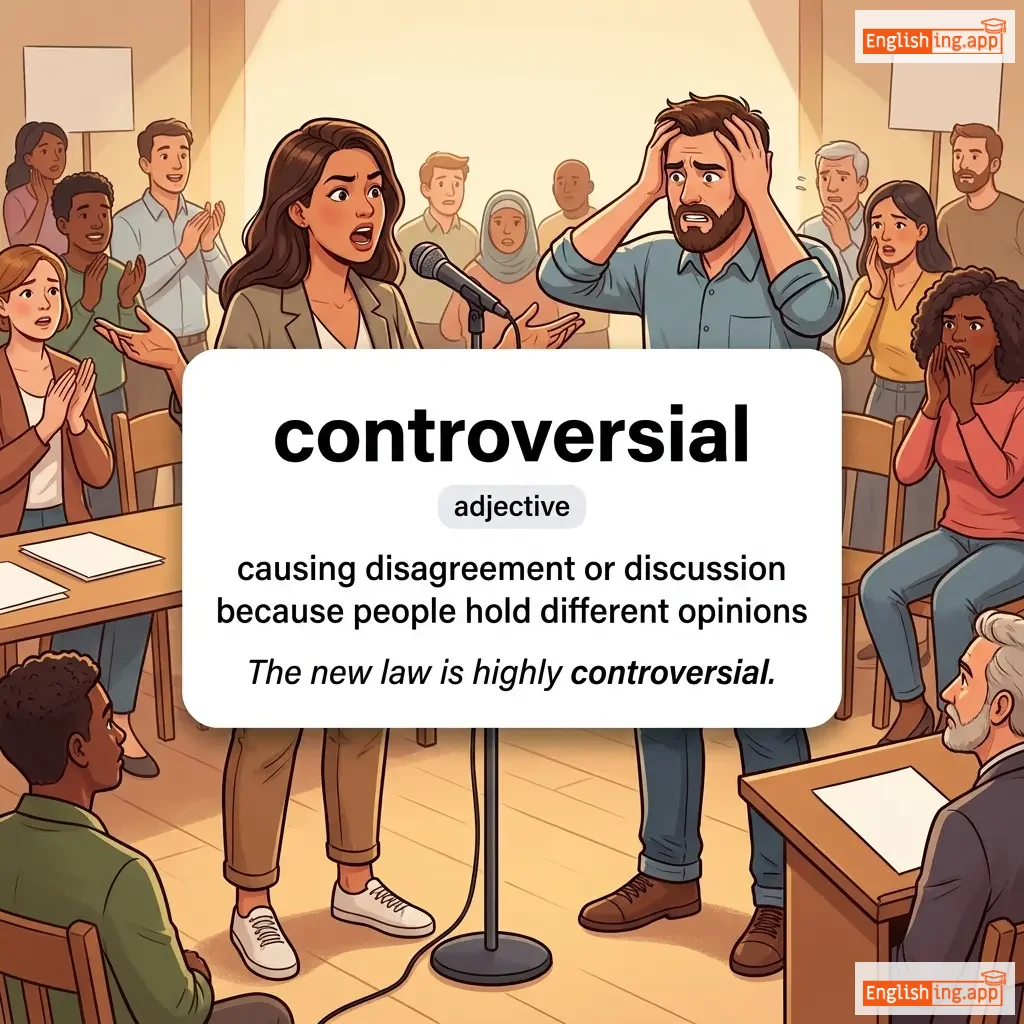
controversial definition card — visual illustration of the meaning
adjective
/ˌkɒn.trəˈvɜː.ʃəl/
спорный (spornyy)

causing disagreement or discussion because people hold different opinions

"The new law is highly controversial."

"Новый закон вызывает много споров." (Novyy zakon vyzyvayet mnogo sporov.)
noun
/ˈkɒn.trə.vɜːr.si/
спор (spor)

A prolonged public disagreement or heated discussion.

"The new policy sparked a major controversy."

"Новая политика вызвала большую контроверсию." (Novaya politika vyzvala bol'shuyu kontroversiyu.)
verb
/ˌkɒntrəˈvɜːrt/
опровергать (oprovergat)

to dispute or argue against; to contradict

"The scientist controversed the previous research findings."
"Учёный опроверг предыдущие результаты исследования." (Uchyonnyy opoverg prevyushchiye rezul'taty issledovaniya.)
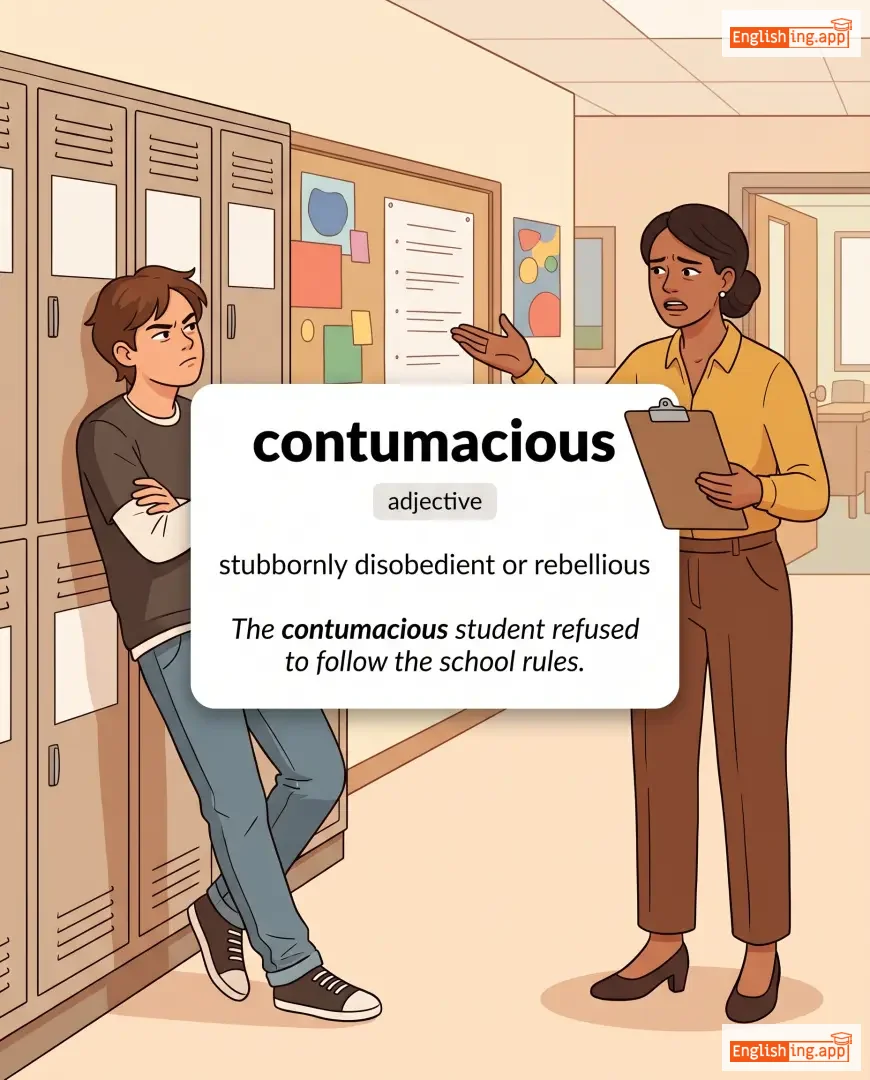
contumacious definition card — visual illustration of the meaning
adjective
/ˌkɒn.tjʊˈmeɪ.ʃəs/
неповинующийся, мятежный (nepovinuyushchiesya, myatezhnyy)

stubbornly disobedient or rebellious

"The contumacious student refused to follow the school rules."

"Неповинующийся студент отказался следовать школьным правилам." (Nepovinuyushchiesya student otkazalsya sledovat' shkol'nym pravillam.)