Словари

Словарь английского языка | Значения слов, определения и примеры

noun
/dæmˈneɪ.ʃən/
проклятие; разрушение (proklyatie; razrushenie)

condemnation to eternal punishment in hell; something that causes ruin or failure

"The preacher spoke about salvation and damnation in his sermon."

"Проповедник говорил о спасении и проклятии в своей проповеди." (Propovednik govoril o spasenii i proklyatii v svoei propovedi.)
adjective
/dæmp/
влажный (vlazhny)

slightly wet, often in an unpleasant way

"The room felt cold and damp after the rain."

"Комната казалась холодной и влажной после дождя." (Komnata kazalas' kholodnoy i vlazhnoy posle dozhdya.)
verb
/ˈdæmpən/
увлажнять, ослаблять (uvlaznyat', oslablyat')

to make something slightly wet; to make something less strong, active, or intense

"The rain dampened the excitement of the outdoor concert."

"Дождь ослабил возбуждение от открытого концерта." (Dozhd' oslabil vozhuzhdenie ot otkrytogo kontserta.)
noun
/ˈdæmpər/
нечто, что уменьшает или ослабляет силу, эффект или волнение (nechto, chto umenshaet ili oslablyaet silu, effekt ili volnenie)

something that reduces or lessens the force, effect, or excitement

"The cancellation of the trip put a damper on their enthusiasm."
"Отмена поездки испортила их энтузиазм." (Otmena poezzki isportila ikh entuziazm.)
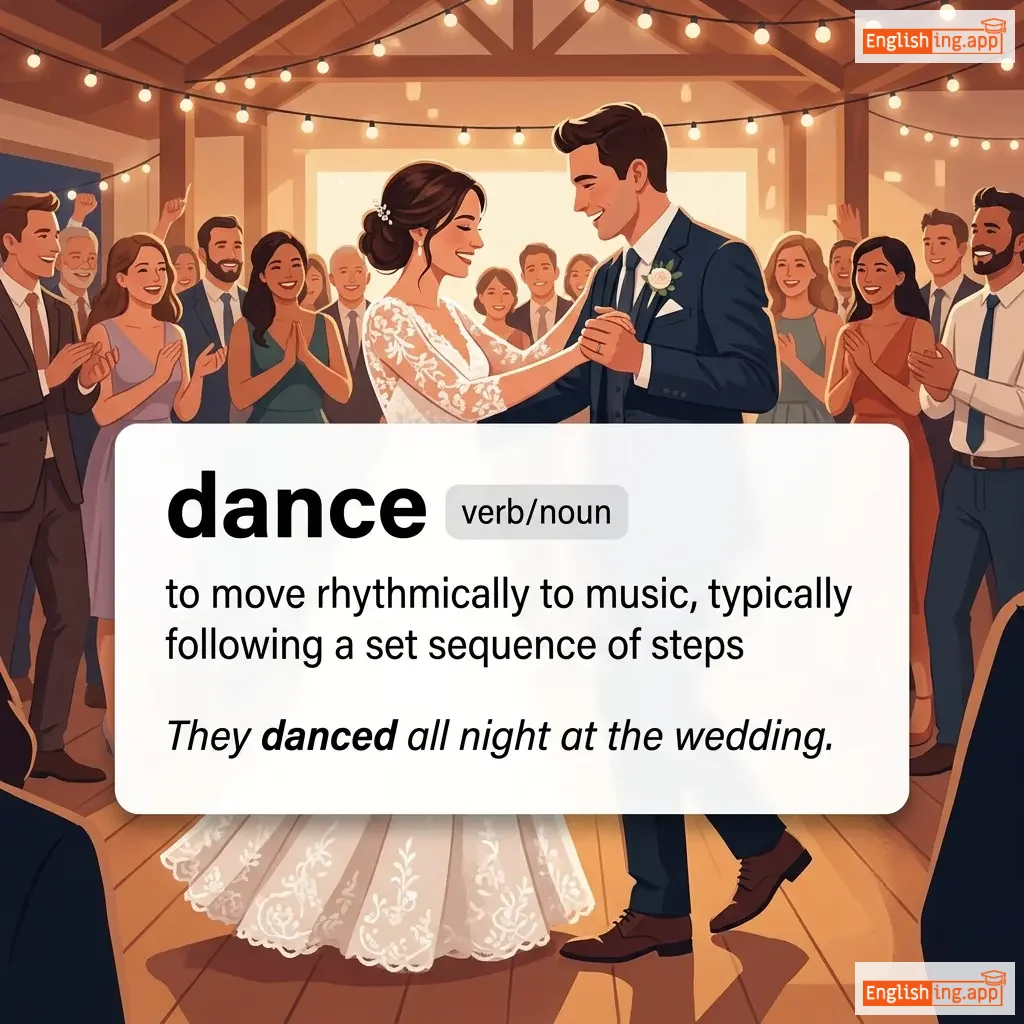
dance definition card — visual illustration of the meaning
verb/noun
/dæns/
счастье (schast'ye)

to move rhythmically to music, typically following a set sequence of steps

"They danced all night at the wedding."

"Она не могла скрыть своего счастья, когда получила награду." (Ona ne mogla skryt' svoego schast'ya, kogda poluchila nagradu.)
noun
/ˈdænsər/
танцор (tantcor)

a person who dances or performs dancing professionally or as a hobby

"The dancer moved gracefully across the stage."

"Танцор двигался грациозно по сцене." (Tantsor dvizhalsya gratsiozno po stsene.)
noun
/ˈdænsɪŋ/

the activity of moving the body rhythmically to music

"They spent the evening dancing at the party."

noun
/ˈdæn.drʌf/
перхоть (perkhot)

small white or grey flakes of dead skin that form on the scalp and fall from the hair

"He used a special shampoo to treat his persistent dandruff problem."

"Он использовал специальный шампунь для лечения своей постоянной проблемы с перхотью." (On ispol'zoval spetsial'nyy shampun' dlya lecheniya svoey postoyannoy problemy s perkhotyuy.)
noun
/ˈdændi/
мужчина, который слишком много внимания уделяет своему внешнему виду и одежде (muzhchina, kotoryy slishkom mnogo vnimaniya udelayet svoemu vneshnomu vidu i odezhde)

a man who gives too much attention to his appearance and clothes

"The young dandy spent hours grooming himself before the party."
"Молодой денди потратил часы на подготовку перед вечеринкой." (Molodoy dendi potratil chasy na podgotovku pered vecherinkoy.)
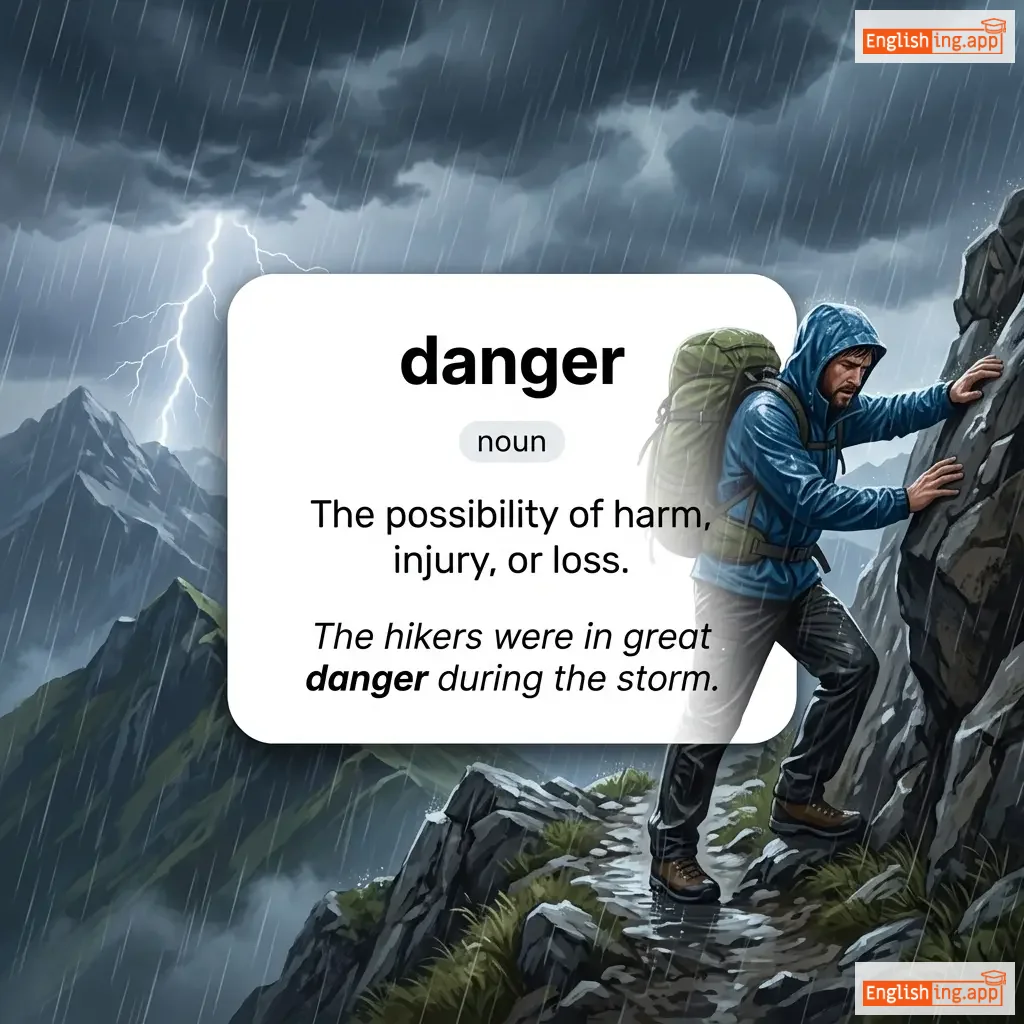
danger definition card — visual illustration of the meaning
noun
/ˈdeɪn.dʒər/
опасность (opasnost)

The possibility of harm, injury, or loss.

"The hikers were in great danger during the storm."

"Путешественники были в большой опасности во время бури." (Puteshestvenniki byli v bol'shoy opasnosti vo vremya buri.)
adjective
/ˈdeɪndʒərəs/
опасный (opasnyy)

likely to cause harm or injury; unsafe

"Driving fast on icy roads is dangerous."

"Ехать быстро по ледяным дорогам опасно." (Yekhat' bystro po ledyanym dorogam opasno.)
adverb
/ˈdeɪndʒərəsli/
опасно (opasno)

in a way that could cause harm or injury; riskily

"He was driving dangerously fast on the highway."

"Он ехал опасно быстро по шоссе." (On ekhal opasno bystro po shosse)
verb
/ˈdæŋɡəl/
висеть (viset)

to hang loosely or swing freely

"The keys dangled from his belt."

"Ключи висели на его поясе." (Klyuchi viseli na ego poyase.)
adjective
/dæŋk/
влажный и холодный (vlazhnyy i kholodnyy)

unpleasantly damp and cold

"The basement was dark and dank, filled with a musty smell."

"Подвал был темным и влажным, с неприятным запахом." (Podval byl temnym i vlazhnyy, s nepriyatnym zapakhom.)
adjective
/ˈdæpər/
стильный и опрятный (stíl'nyy i opryatnyy)

Neat, stylish, and well-dressed in appearance.

"He looked very dapper in his new suit."

"Он выглядел очень стильно в своем новом костюме." (On vyglyadel ochen' stíl'no v svoem novom kostyume.)
adjective
/ˈdæpəld/
пятнистый (pyatnisty)

Marked with spots or patches of light and shade or different colors.

"The forest floor was dappled with sunlight."
"Лесная подстилка была пятнистой от солнечного света." (Lesnaya podstilka byla pyatnistoy ot solnechnogo sveta.)
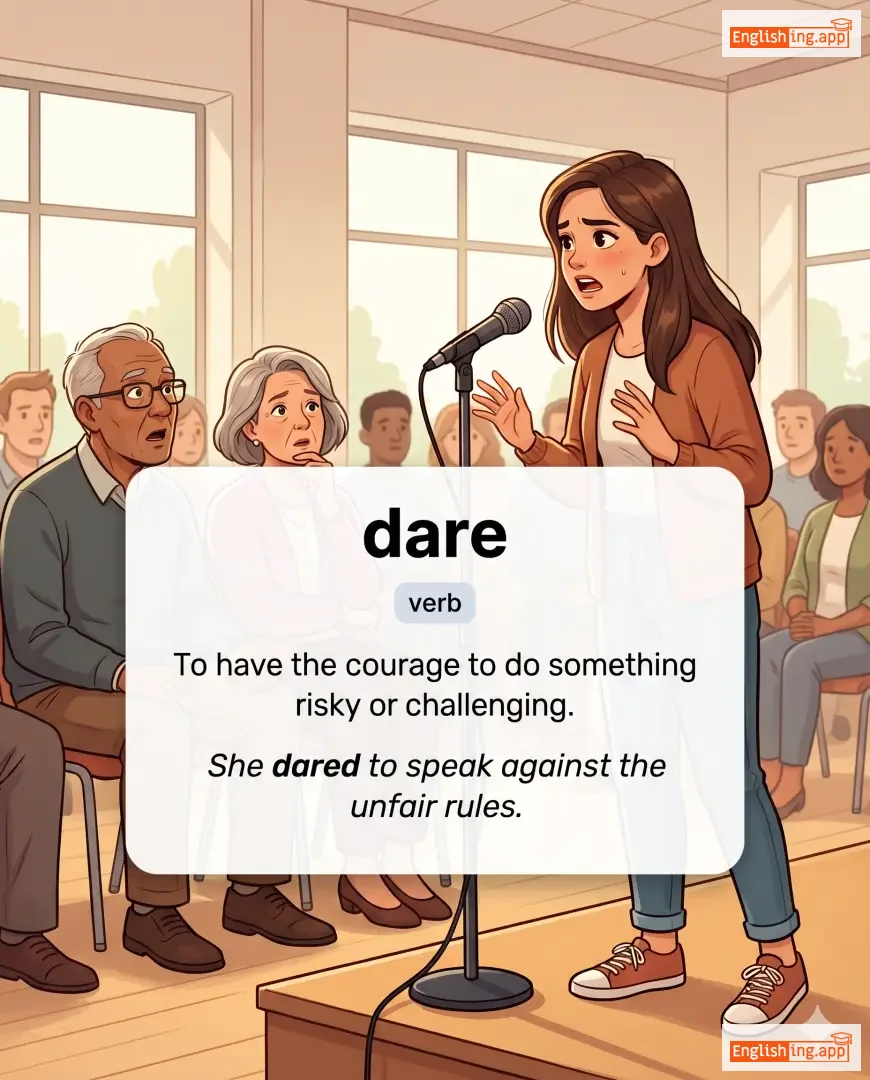
dare definition card — visual illustration of the meaning
verb
/der/
осмелиться (osmelitsya)

To have the courage to do something risky or challenging.

"She dared to speak against the unfair rules."

"Она осмелилась выступить против несправедливых правил." (Ona osmelilas' vystupit' protiv nespravedlivykh pravil.)
noun
/ˈderˌdevəl/
авантюрист (avantyurist)

A person who enjoys doing dangerous or risky things.

"The stunt was performed by a famous daredevil."

"Трюк был выполнен известным авантюристом." (Tryuk byl vypolnen izvestnym avantyuristom.)
adjective
/ˈderɪŋ/
отважный (otvazhnyj)

Willing to take risks; bold and adventurous.

"Her daring plan surprised everyone."
"Ее отважный план удивил всех." (Yeyo otvazhnyj plan udivil vsekh.)
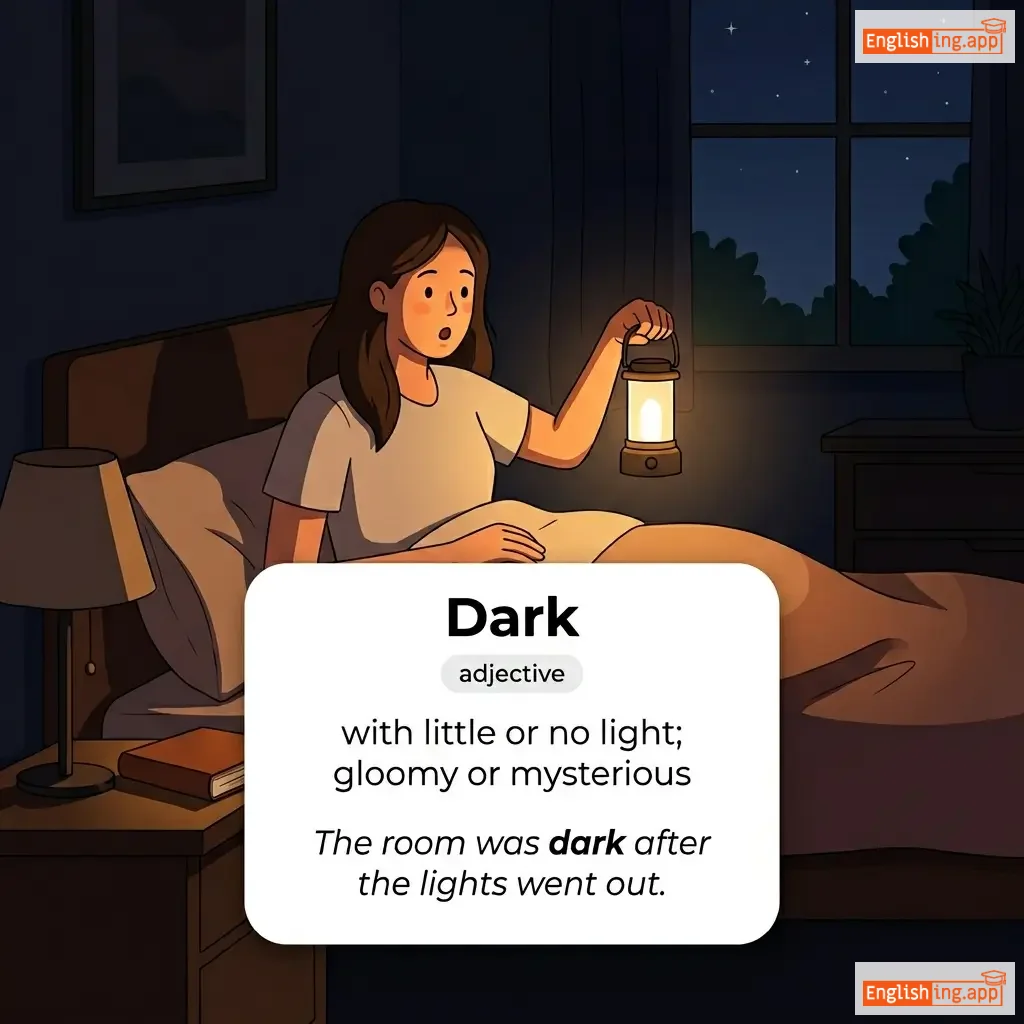
Dark definition card — visual illustration of the meaning
adjective
/dɑːrk/
тёмный (tyomniy)

with little or no light; gloomy or mysterious

"The room was dark after the lights went out."

"Комната стала тёмной, когда погасли огни." (Komnata stala tyomnoy kogda pogasli ogni.)
adjective
/dɑːrk bluː/
тёмно-синий (tyomno-siniy)

a deep shade of blue color

"She wore a dark blue dress to the party."

"Она носила темно-синее платье на вечеринку." (Ona nosila tyomno-sinee plat'ye na vecherinku.)
verb
/ˈdɑːrkən/
затемнять (zatemnyat)

to make or become dark; to reduce brightness or light

"The clouds began to darken the sky before the storm."

"Облака начали затемнять небо перед бурей." (Oblaka nachali zatemnyat nebo pered burey)
adverb
/ˈdɑːrklɪŋ/
в темноте (v temnote)

In the dark or growing dark; dimly.

"The forest creatures moved darkling through the night."

"Лесные существа двигались в темноте ночью." (Lesnye suschestva dvigalis v temnote noch'yu.)
noun
/ˈdɑːrk.nəs/
тьма (t'ma)

The absence of light; the state of being dark.

"The room was filled with darkness after the lights went out."

"Комната наполнилась тьмой, когда погасли огни." (Komnata napolnilas t'moy, kogda pogasli ogni.)
verb, noun
/dɑːrt/
дротик/быстро побежать (drotik/byistro pobezhat)

to move suddenly and quickly; a small pointed missile thrown at a target

"The cat darted across the street to avoid the car."

"Кошка быстро пробежала через улицу, чтобы избежать машины." (Koshka bystro probegala cherez ulitsu, chtoby izbezhat' mashiny.)
noun
/ˈdɑːrwɪnɪzəm/
дарвинизм (darvinizm)

the theory of biological evolution developed by Charles Darwin, emphasizing natural selection

"Darwinism revolutionized the way scientists understood the origin of species."

"Дарвинизм революционизировал способ, которым ученые понимали происхождение видов." (Darvinizm revolyutsioniziroval sposob, kotorym uchyonyye ponimali proiskhozhdeniye vidov.)
verb
/dæʃ/
двигаться быстро и внезапно; сильно ударить или сломать что-то (dvigat'sya bystro i vnezapno; sil'no udarit' ili slomat' chto-to)

to move quickly and suddenly; to strike or break something violently

"She dashed across the street to catch the bus."

"Она быстро побежала через улицу, чтобы поймать автобус." (Ona bystro pobezhal через ulitsu, chtoby poymat' avtobus.)
adjective
/ˈdæʃ.ɪŋ/
стильный; привлекательный; уверенный; (stilyj; privlekatel'nyj; uverennyj)

stylish and confident; lively and energetic; attractive and charming

"He looked dashing in his new suit."

"Он выглядел стильно в своем новом костюме." (On vyglyadel stilyj v svojem novom kostjume.)
noun
/ˈdæstərd/
подлец (podlets)

a cowardly or dishonorable person

"Only a dastard would betray his closest friend."

"Только подлый человек предаст своего ближайшего друга." (Tol'ko podlyi chelovek predast svoego blizhaishego druga.)
noun
/ˈdeɪ.tə/ or /ˈdæt.ə/
данные (dannye)

Facts, statistics, or information collected for reference or analysis.

"The scientists analyzed the data to find patterns."

"Ученые проанализировали данные, чтобы найти закономерности." (Uchonyye proanalizirovali dannye, chtoby nayti zakonomernosti.)
data breach definition card — visual illustration of the meaning
noun
/ˈdeɪ.tə briːtʃ/
утечка данных (utechka dannyh)

Unauthorized disclosure of sensitive information through security violation

"A data breach exposed millions of users' passwords."

"Утечка данных раскрыла пароли миллионов пользователей." (Utechka dannyh raskryla paroli millionov pol'zovateley.)
noun
/ˈdeɪtəbeɪs/
база данных (baza dannykh)

a structured collection of data stored and accessed electronically

"The company's customer details are stored in a secure database."

"Детали клиентов компании хранятся в защищенной базе данных." (Detali klientov kompanii khranyatsya v zashchishchennoy baze dannykh.)
📅

date

noun/verb
/deɪt/

A particular day of the month or year; also, a social or romantic appointment.

"They decided to meet on the date of her birthday."

noun
/deɪts/
финики (finiki)

sweet brown oval fruits that grow on date palm trees

"Dates are commonly eaten during Ramadan to break the fast."

"Финики обычно едят во время Рамадана, чтобы разорвать пост." (Finiki obychno edyat vo vremya Ramadana, chtoby razohrat' post)
noun
/ˈdeɪtəm/ or /ˈdætəm/
данные (dannye)

a single piece of information; a fact used as a basis for reasoning or calculation

"Each datum in the survey was carefully analyzed."

"Каждый данные в исследовании был тщательно проанализирован." (Kazhdyy dannye v issledovanii byl tchatel'no proanalizirovan.)
verb
/dɔːb/
мазать (mazat)

to spread a thick or sticky substance carelessly on a surface

"The children daubed paint all over the walls."

"Дети размазали краску по стенам." (Deti razmazali krasku po stenam.)
noun
/ˈdɔːtər/
дочь (doch)

a female child in relation to her parents

"They are proud of their daughter for graduating college."
"Они гордятся своей дочерью за то, что она закончила колледж." (Oni gordyatsya svoey docher'yu za to, chto ona zakonchila kolledzh.)
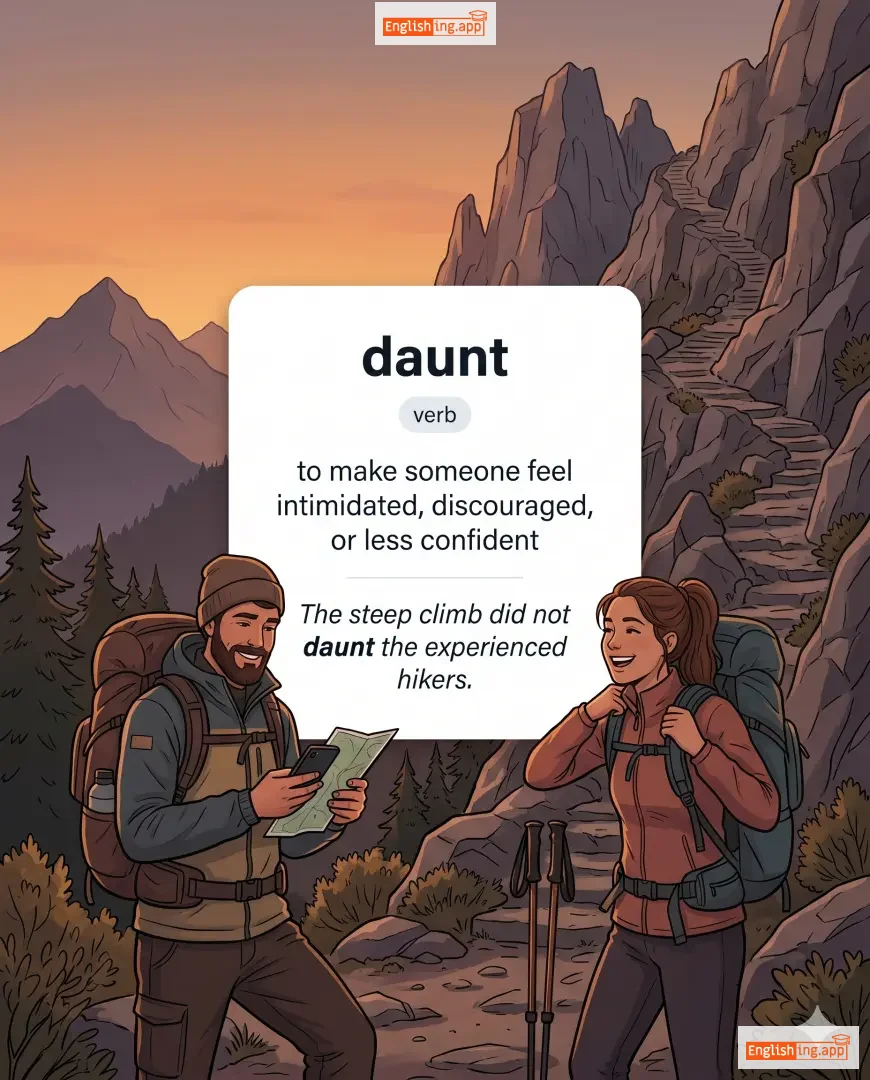
daunt definition card — visual illustration of the meaning
verb
/dɔːnt/
пугать (pugat)

to make someone feel intimidated, discouraged, or less confident

"The steep climb did not daunt the experienced hikers."
"Крутой подъем не напугал опытных туристов." (Krutoy pod'yom ne napugal opytnykh turistsov.)
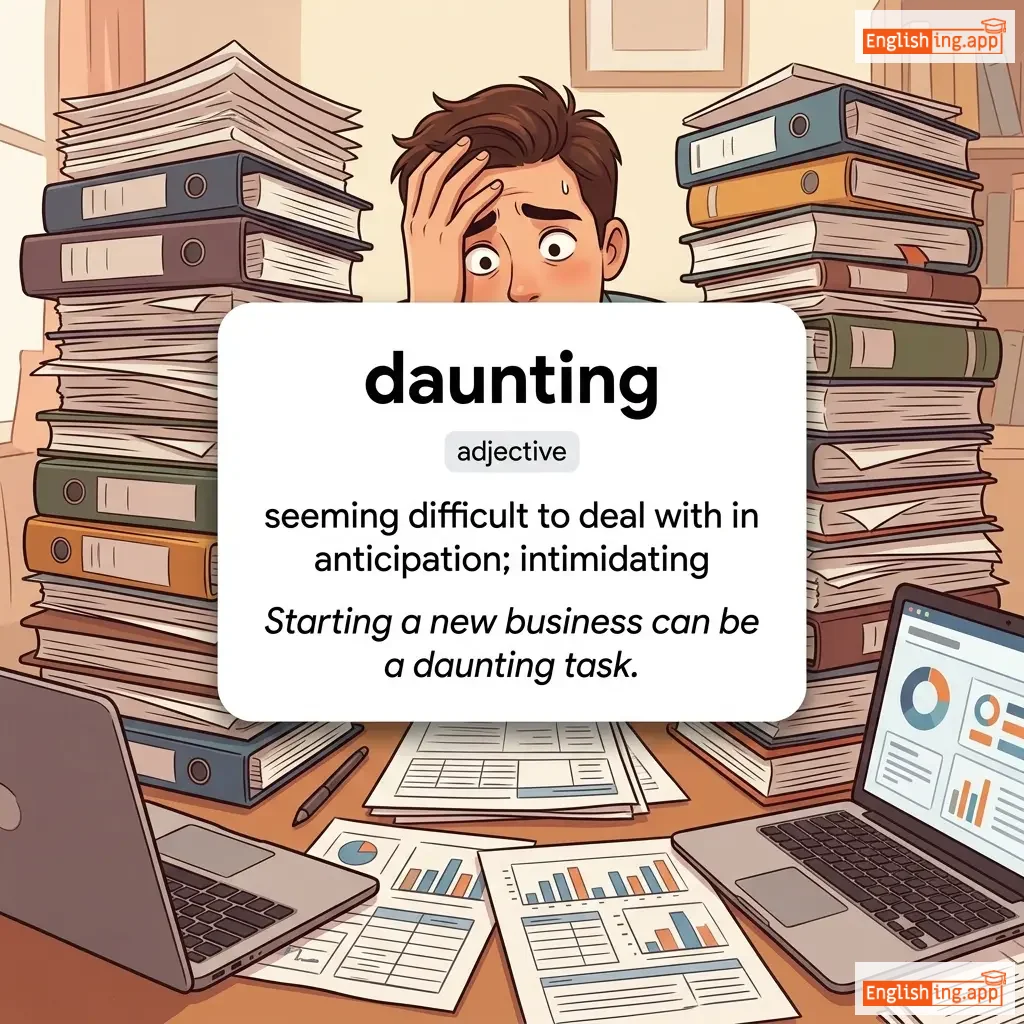
daunting definition card — visual illustration of the meaning
adjective
/ˈdɔːntɪŋ/
пугающий (pugayushchiy)

seeming difficult to deal with in anticipation; intimidating

"Starting a new business can be a daunting task."
"Начать новый бизнес может быть пугающим заданием." (Nachat' novyy biznes mozhet byt' pugayushchim zadaniem.)
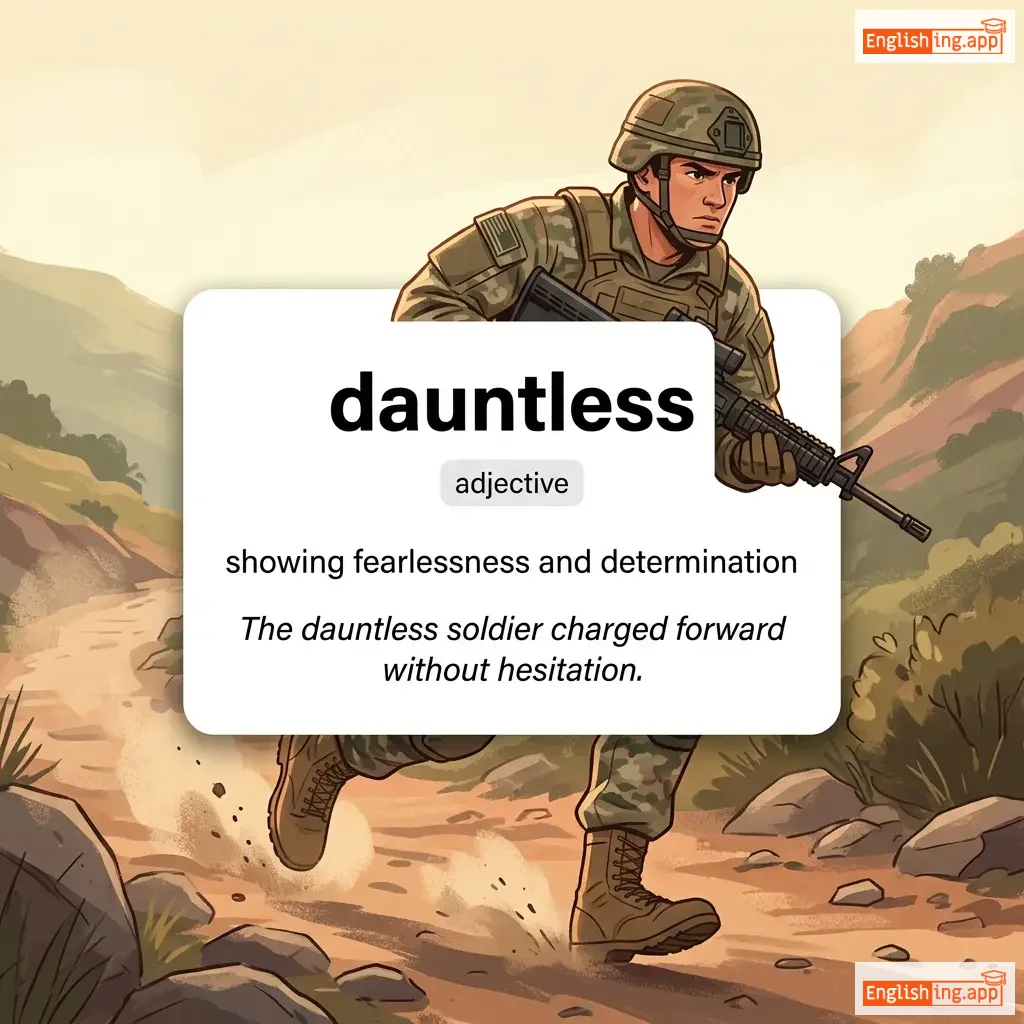
dauntless definition card — visual illustration of the meaning
adjective
/ˈdɔːntləs/
бесстрашный (besstrashnyy)

showing fearlessness and determination

"The dauntless soldier charged forward without hesitation."

"Бесстрашный солдат пошел вперед без колебаний." (Besstrashnyy soldat poshel vpered bez kolebaniy.)
verb
/ˈdɔːd(ə)l/
медлить (medlit)

to waste time by being slow or idle

"Stop dawdling and finish your homework."

"Перестань медлить и заканчивай домашку." (Perestan' medlit' i zakanchivay domashku.)
noun, verb
/dɔːn/
рассвет (rassvet)

The first appearance of light in the sky before sunrise; to begin or become apparent.

"Hope began to dawn in her heart after hearing the good news."
"Надежда начала рассветать в её сердце после того, как она услышала хорошие новости." (Nadezhda nachala rassvethat' v yejo serdtse posle togo, kak ona uslyshala khoroshie novosti.)
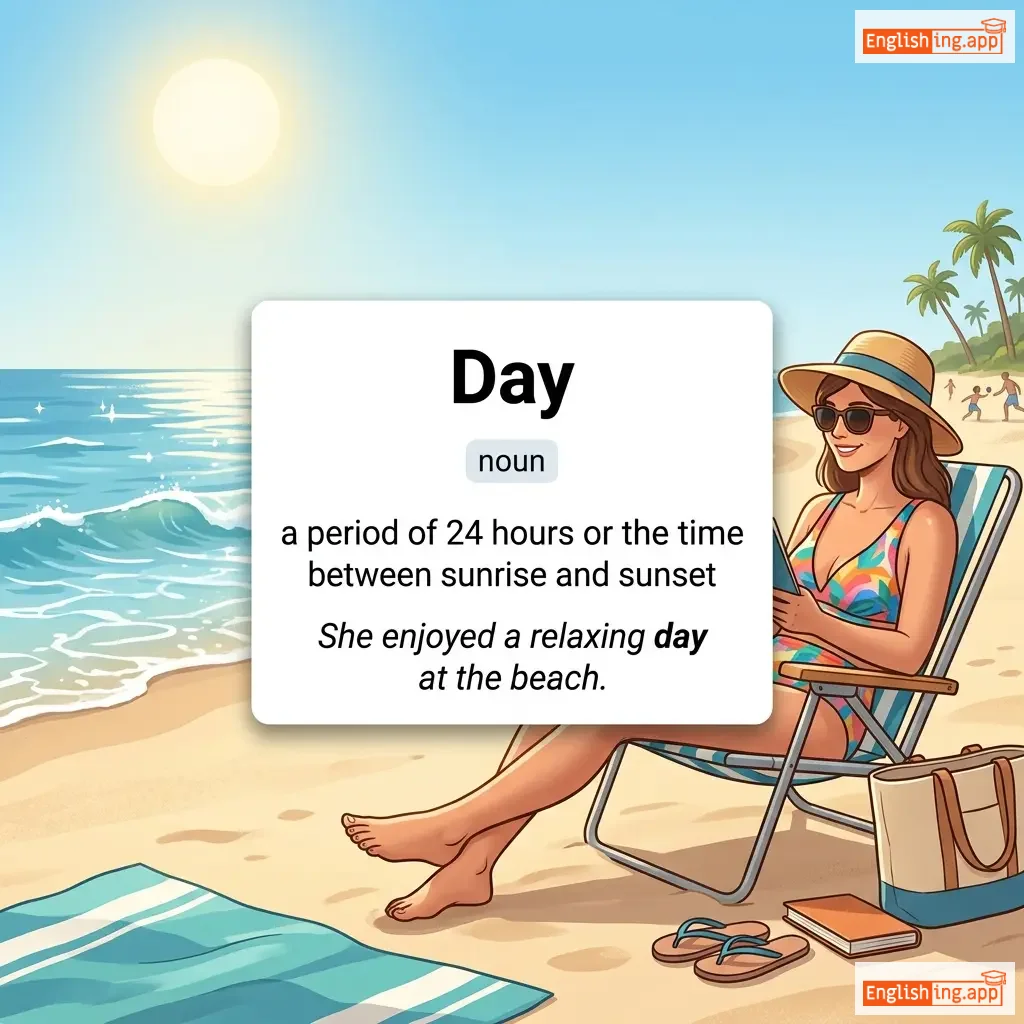
Day definition card — visual illustration of the meaning
noun
/deɪ/
день (den)

a period of 24 hours or the time between sunrise and sunset

"She enjoyed a relaxing day at the beach."

"Она наслаждалась расслабляющим днем на пляже." (Ona naslazhdalas' rasslablyayushchim dnyom na plyazhe.)
noun
/ˈdeɪ.mæn/
дневной рабочий (dnevnoi rabochii)

a worker employed by the day; a day laborer

"The farmer hired a day-man to help with the harvest."

"Фермер нанял дневного рабочего, чтобы помочь с уборкой урожая." (Fermyer nanyal dnevnovo rabochego, chtoby pomoch' s uborkoy urozhaya.)
noun
/ˈdeɪˌbreɪk/
рассвет (rassvet)

The time in the morning when daylight first appears; dawn.

"They set out on their journey at daybreak."

"Они начали свое путешествие на рассвете." (Oni nachali svoyo puteshestviye na rassvete.)
noun
/deɪz/
дни (dni)

plural of day; refers to multiple 24-hour periods of time

"The project will take at least five days to finish."

"Проект займет как минимум пять дней для завершения." (Proyekt zaymet kak minimum pyat' dney dlya zaversheniya.)
😵

daze

verb
/deɪz/

to stun or confuse someone temporarily with a shock or surprise

"The bright lights dazed the runners as they entered the stadium."

verb
/ˈdæzəl/
ослепить (oslepit)

to impress deeply or blind with brilliance or skill

"The magician's tricks dazzled the audience."

"Фокусы мага ослепили зрителей." (Fokusy maga oslepili zritelyey.)
adjective
/ˈdæz.lɪŋ/
ослепительный; впечатляющий (oslepitiel'nyi; vpechatliaiushchii)

extremely bright and impressive; brilliant and stunning

"The dazzling lights of the city amazed the tourists."

"Ослепительные огни города поразили туристов." (Oslepitiel'nye ogni goroda porazili turistov.)
adjective, noun
/dɛd/
мертвый (mertvyy)

No longer alive; the end of life.

"The old tree is completely dead."

"Старое дерево полностью мертво." (Staroye derevo polnost'yu mertvo.)