Словари

Словарь английского языка | Значения слов, определения и примеры

noun/verb
/ˈkʌri/
карри (karri)

A dish of meat, vegetables, etc., cooked in a sauce with spices; or to prepare food in such a style.

"She cooked a delicious chicken curry for dinner."

"Она приготовила вкусное куриное карри на ужин." (Ona prigotovila vkusnoye kurinoe karri na uzhin.)
noun
/ˈkɜːr.i liːvz/
листья карри (list'ya karri)

aromatic leaves from the curry tree used in South Asian cooking

"Fresh curry leaves add authentic flavor to Indian dishes."

"Свежие листья карри придают индийским блюдам настоящий вкус." (Svezhiye list'ya karri pridayut indiyskim blyudam nastoyashchiy vkus.)
noun, verb
/kɜːrs/
проклятие (proklyatie)

a solemn wish that harm or misfortune should befall someone; a rude or offensive word or phrase; to utter offensive words or wish harm upon someone

"He cursed loudly when he realized he had lost his wallet."

"Он громко выругался, когда понял, что потерял кошелёк." (On gromko vyrugalsya kogda ponyal chto poteryal koshelek)
adjective/noun
/ˈkɜːrsɪv/
курсивное письмо (kursivnoe pis'mo)

Written with characters joined together in a flowing manner.

"The teacher asked students to write the essay in cursive handwriting."

"Учитель попросил студентов написать эссе курсивом." (Uchitel' poprosil studentov napisat' esse kursivom.)
adjective
/ˈkɜːrsəri/
поверхностный (poverkhnostnyy)

Hasty and therefore not thorough or detailed.

"He gave the report only a cursory glance before the meeting."

"Он лишь поверхностно взглянул на отчет перед встречей." (On lish' poverkhnostno vzglyanul na otchet pered vstrechey.)
adjective
/kɜːrt/
резкий (rezkiy)

Rudely brief in speech or manner.

"His curt reply made everyone uncomfortable."

"Его резкий ответ заставил всех почувствовать дискомфорт." (Ego rezkiy otvet zastavil vsekh pochuvstvovat' diskomfort.)
verb
/kɜːrˈteɪl/
сокращать (sokratchat)

to reduce or limit something, especially something considered undesirable

"The company had to curtail its spending due to budget cuts."
"Компания была вынуждена сократить свои расходы из-за сокращения бюджета." (Kompaniya byla vynuzhdena sokratit' svoi rashody iz-za sokrashcheniya byudzheta.)
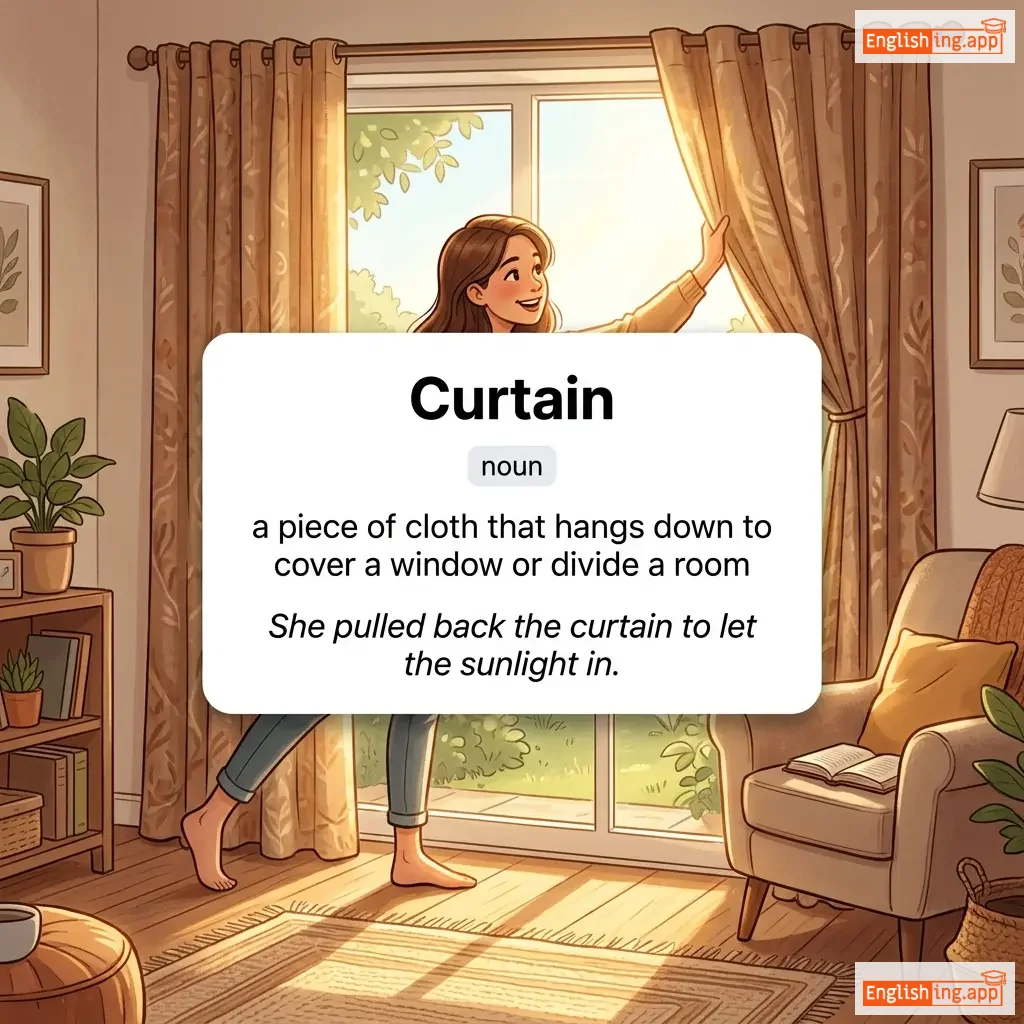
Curtain definition card — visual illustration of the meaning
noun
/ˈkɜː.tən/
занавес (zanaves)

a piece of cloth that hangs down to cover a window or divide a room

"She pulled back the curtain to let the sunlight in."

"Она отодвинула занавес, чтобы впустить солнечный свет." (Ona otodvinula zanaves, chtoby vpuskat' solnechnyy svet.)
noun/verb
/ˈkɜːrtsi/
реверанс (reverans)

a respectful bow made by women by bending the knees with one foot in front of the other

"She gave a quick curtsy before leaving the stage."

"Она сделала быстрый реверанс перед тем, как покинуть сцену." (Ona sdelala bystrij reverans pered tem, kak pokinut' stseny.)
noun
/kɜːv/
кривая (krivaya)

a smooth, continuous line that bends without angles

"The road curved sharply to the left."

"Дорога круто повернула налево." (Doroga kruto povernula nalevo.)
adjective
/ˈkʌsɪd/
упрямый (upryamy)

Annoyingly stubborn or difficult.

"He was too cussed to admit his mistake."

"Он был слишком упрям, чтобы признать свою ошибку." (On byl slishkom upryam, chtoby priznat' svoiu oshibku.)
noun
/ˈkʌstərd ˈæpəl/
кремовое яблоко (kremovoe yabloko)

a tropical fruit with sweet creamy white flesh and black seeds

"The custard apple has a sweet and creamy texture."

"Кремовое яблоко имеет сладкую и кремовую текстуру." (Kremovoe yabloko imeyet sladkuyu i kremovuyu teksturu.)
noun
/kʌˈstoʊ.di.ən/
дворник; охранник; управляющий (dvor-nik; ohr-annik; u-prav-lyay-ushchiy)

a person who has responsibility for or looks after something; a caretaker or guardian

"The school custodian ensures that all buildings are clean and secure."

"Школьный смотритель следит за тем, чтобы все здания были чистыми и безопасными." (Shkol'nyy smot-ritel' sle-dit za tem, chtoby vse zda-ni-ya by-li chist-y-mi i be-zop-as-ny-mi.)
noun
/ˈkʌs.tə.di/
опека (opeka)

the legal right or responsibility of taking care of someone or something

"The mother was granted custody of her children after the divorce."

"После развода матери была предоставлена опека над детьми." (Posle razvoda materi byla predostavlena opeka nad det'mi.)
Custom definition card — visual illustration of the meaning
noun
/ˈkʌstəm/
обычай (obychay)

a traditional practice or usual way of behaving in a particular society or place

"Shaking hands is a common custom in many countries."

"Пожимание рук — это обычай во многих странах." (Pozhimanie ruk — eto obyuchay vo mnogikh stranak.)
customer definition card — visual illustration of the meaning
noun
/ˈkʌstəmər/
клиент (klient)

a person or organization that buys goods or services from a store or business

"The shopkeeper greeted the customer with a smile."

"Продавец поприветствовал клиента с улыбкой." (Prodavets poprivetsvoval klienta s ulybkoy.)
Customer Retention definition card — visual illustration of the meaning
noun
/ˈkʌs.tə.mər rɪˈten.ʃən/
удержание клиентов (uderzhanie klientov)

The ability of a company or product to retain its customers over some specified period.

"High customer retention increases business sustainability."
"Высокий уровень удержания клиентов повышает устойчивость бизнеса." (Vysokij uroven' uderzhaniya klientov povyshaet ustojchivost' biznesa.)
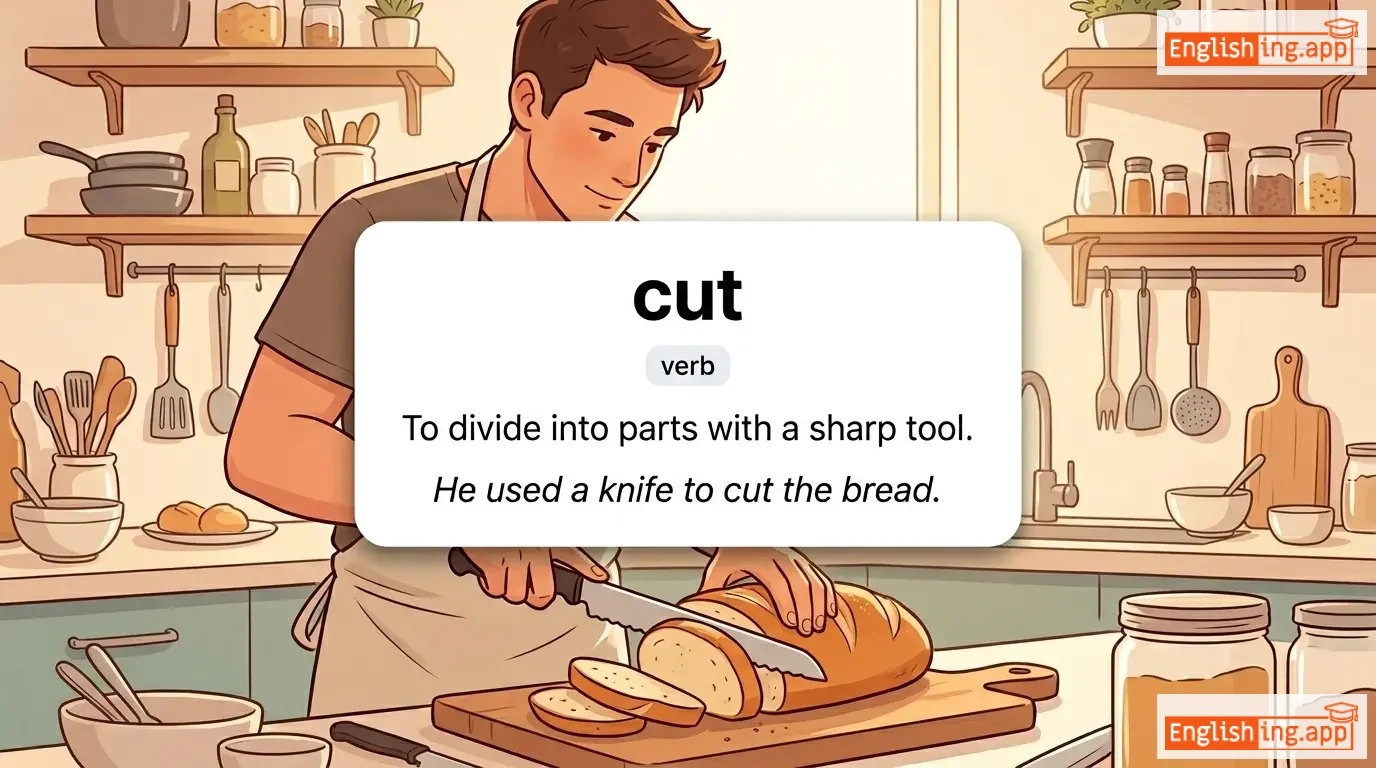
cut definition card — visual illustration of the meaning
verb
/kʌt/
резать (rezat')

To divide into parts with a sharp tool.

"He used a knife to cut the bread."

"Он использовал нож, чтобы нарезать хлеб." (On ispol'zoval nozh, chtoby narezaty khleb.)
adjective
/kjuːt/
милый (milyi)

attractive in a pretty or endearing way

"That puppy is so cute!"

"Этот щенок такой милый!" (Etot shchenok takoy milyi!)
noun
/ˈkʌt.lət/
котлета (kotleta)

a small piece of meat, especially veal or lamb, for frying or grilling

"She served delicious chicken cutlets for dinner."

"Она подала вкусные куриные котлеты на ужин." (Ona podala vkusnye kurinyye kotlety na uzhin)
adjective
/ˈkʌtɪŋ/
резкий (rezkiy)

sharp or severe, often used to describe remarks or actions

"Her cutting remarks made everyone feel uncomfortable."

"Её резкие замечания заставили всех чувствовать себя неудобно." (Eyo rezkiye zamechaniya zastavili vsekh chuvstvovat' sebya neudobno.)
cutting-edge definition card — visual illustration of the meaning
adjective
ˈkʌtɪŋ ˌɛdʒ
передовой, новаторский, передовые технологии (peredovoy, novatorskiy, peredovye tekhnologii)

The most advanced or innovative; at the forefront of development.

"This company develops cutting-edge technology."

"Эта компания разрабатывает передовые технологии." (Eta kompaniya razrabatyvayet peredovyye tekhnologii.)
cybernetics definition card — visual illustration of the meaning
noun
ˌsaɪ.bəˈnet.ɪks
кибернетика (kibernetika)

The science of communications and automatic control systems in both machines and living things.

"Cybernetics plays a crucial role in artificial intelligence."

"Кибернетика играет ключевую роль в искусственном интеллекте." (Kibernetika igraet klyuchevuyu rol v iskusstvennom intellekte.)
cybersecurity definition card — visual illustration of the meaning
noun
ˌsaɪ.bə.sɪˈkjʊə.rɪ.ti
кибербезопасность (kiberbezopasnost)

The practice of protecting systems, networks, and programs from digital attacks

"Cybersecurity ensures safe digital operations."

"Кибербезопасность обеспечивает безопасные цифровые операции." (Kiberbezopasnost obespetchivaet bezopasnye tsifrovye operatsii)
noun/verb
/ˈsaɪkl/
велосипед / цикл (velosiped / tsikl)

a series of events that repeat in the same order; or to ride a bicycle

"She cycles to school every day."

"Она ездит в школу на велосипеде каждый день." (Ona yezdit v shkolu na velosipede kazhdyi den.)
noun/adjective
/ˈsaɪklɔɪd/
циклоидная кривая (tsikloidnaya krivaya)

a curve traced by a point on the rim of a circle as it rolls along a straight line

"The cycloid is often studied in mathematics and physics."

"Циклоидная кривая часто изучается в математике и физике." (Tsikloidnaya krivaya chasto izuchayetsya v matematike i fizike.)
noun
/ˈsaɪkloʊn/
циклон (tsiklon)

a large-scale air mass that rotates around a strong center of low atmospheric pressure; a violent tropical storm

"The cyclone caused severe flooding along the coast."

"Циклон вызвал сильные наводнения на побережье." (tsiklon vyzval silnye navodneniya na poberezhye)
noun
/ˈsɪɡnət/
молодой лебедь (molodoy lebed)

a young swan

"The cygnet swam closely behind its mother."

"Цигнет плавал прямо за своей матерью." (Tsignet plaval pryamo za svoey mater'yu.)
noun
/ˈsɪnɪk/
циник (tsinik)

a person who believes that people are motivated purely by self-interest rather than acting for honorable reasons

"He was too much of a cynic to believe in true love."

"Он был слишком циничен, чтобы поверить в настоящую любовь." (On byl slishkom tsinichen, chtoby poverit' v nastoyashchuyu lyubov'.)
adjective
/ˈsɪn.ɪ.kəl/
циничный (tsinichnyy)

Believing that people are motivated by self-interest; distrustful of human sincerity or integrity.

"She was cynical about the politician's promises."

"Она была циничной по поводу обещаний политика." (Ona byla tsinichnoy po povodu obeshchaniy politika.)
noun
/ˈsɪn.ɪˌsɪz.əm/
цинизм (tsinizm)

An inclination to believe that people are motivated purely by self-interest; skepticism.

"His cynicism made it hard for him to trust anyone."

"Его цинизм затруднял ему доверие к кому-либо." (Yego tsinizm zatrudnyal yemu doverie k komu-libo.)
noun
/ˈsaɪ.nəˌʃʊr/
центр всех взглядов (tsentr vsekh vzglyadov)

A person or thing that is the center of attention or admiration.

"She was the cynosure of all eyes at the party."

"Она была центром всех взглядов на вечеринке." (Ona byla tsentrom vsekh vzglyadov na vecherinke.)
verb
/ˈdæb.əl/
заниматься поверхностно (zanimat'sya poverkhnostno)

To take part in an activity in a casual or superficial way.

"He dabbled in painting during his college days."

"Он пробовал рисовать во время учебы в университете." (On proboval risovat' vo vremya ucheby v universitete.)
noun
/dəˈkɔɪt/
разбойник (razboynik)

a member of an armed gang of robbers; a bandit, especially in India and Myanmar

"The village was terrorized by a gang of dacoits who robbed travelers."
"Деревня была терроризирована бандой разбойников, которые грабили путешественников." (Derevnya byla terrorizirovana bandoy razboynikov, kotorye grabili puteshestvennikov.)
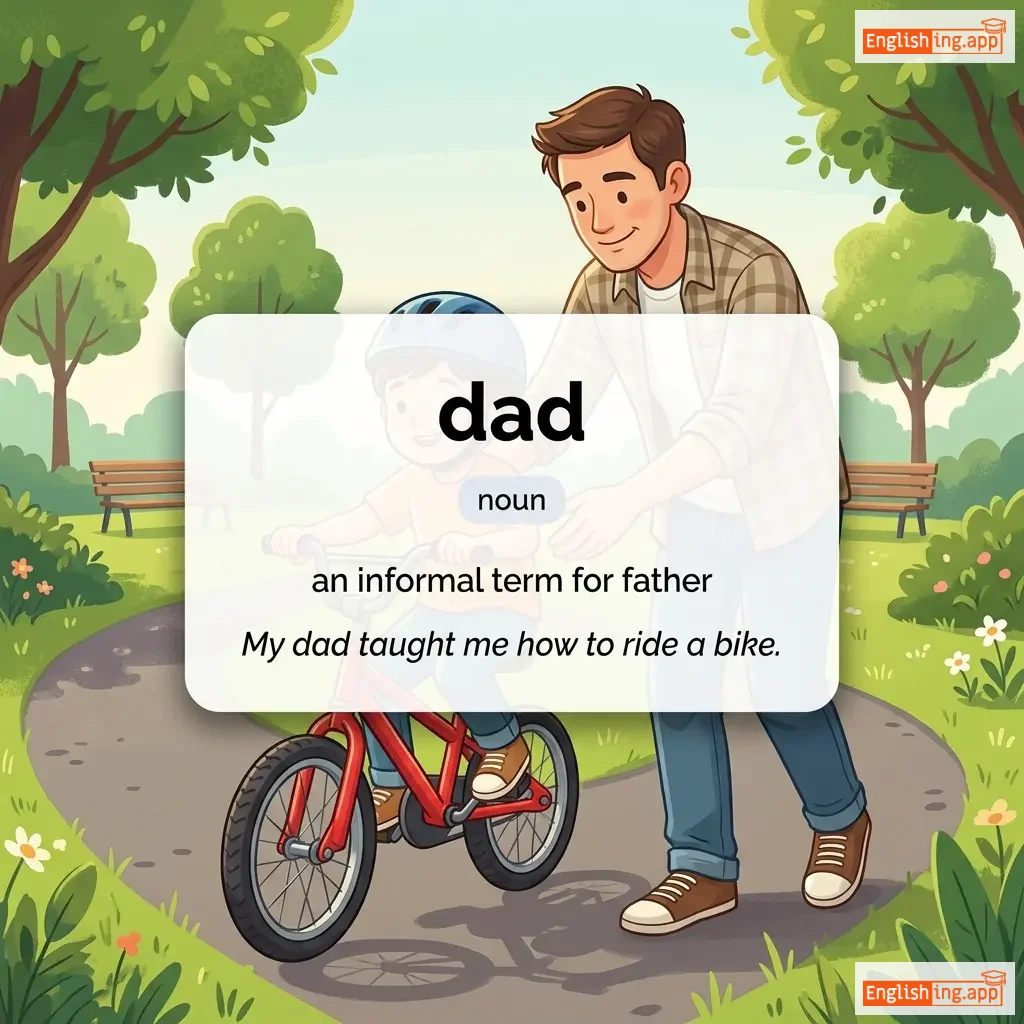
dad definition card — visual illustration of the meaning
noun
/dæd/
папа (papa)

an informal term for father

"My dad taught me how to ride a bike."

"Мой папа научил меня кататься на велосипеде." (Moy papa nauchil menya katat'sya na velosipede.)
noun
/ˈdæf.ə.dɪl/
нарцисс (nartsiss)

A bright yellow spring flower with a trumpet-shaped center, symbolizing rebirth and new beginnings

"The daffodils bloomed early this spring in the meadow."

"Нарциссы зацвели рано этой весной на лугу." (Nartsissy ratsveli rano etoj vesnoj na lugu.)
adjective
/dæft/
тупой (tupoy)

Silly or foolish.

"It was a daft idea to go hiking without water."

"Это была тупая идея идти в поход без воды." (Eto byla tupaya ideya idti v pokhod bez vody.)
noun
/ˈdæɡər/
кинжал (kinzhal)

a short knife with a pointed and edged blade, used as a weapon

"The assassin concealed a dagger beneath his cloak."

"Убийца спрятал кинжал под своим плащом." (Ubiytsa spryatal kinzhal pod svoim plashchom.)
noun
/dəˈɡerəˌtaɪp/
старинная фотография (starinnaya fotografiya)

An early type of photograph produced on a silver or silver-covered copper plate.

"The museum displayed a rare daguerreotype of Abraham Lincoln."

"В музее была выставлена редкая дагеротипия Авраама Линкольна." (V muzeye byla vystavlena redkaya daguerreotypiya Avraama Linkol'na.)
noun
/ˈdeɪ.li.ə/
далия (daliya)

a garden plant with brightly colored flowers that bloom in summer and autumn

"She planted colorful dahlias in her garden last summer."
"Она посадила яркие георгины в своем саду прошлым летом." (Ona posadila yarkie georginy v svoem sadu proshlym letom.)
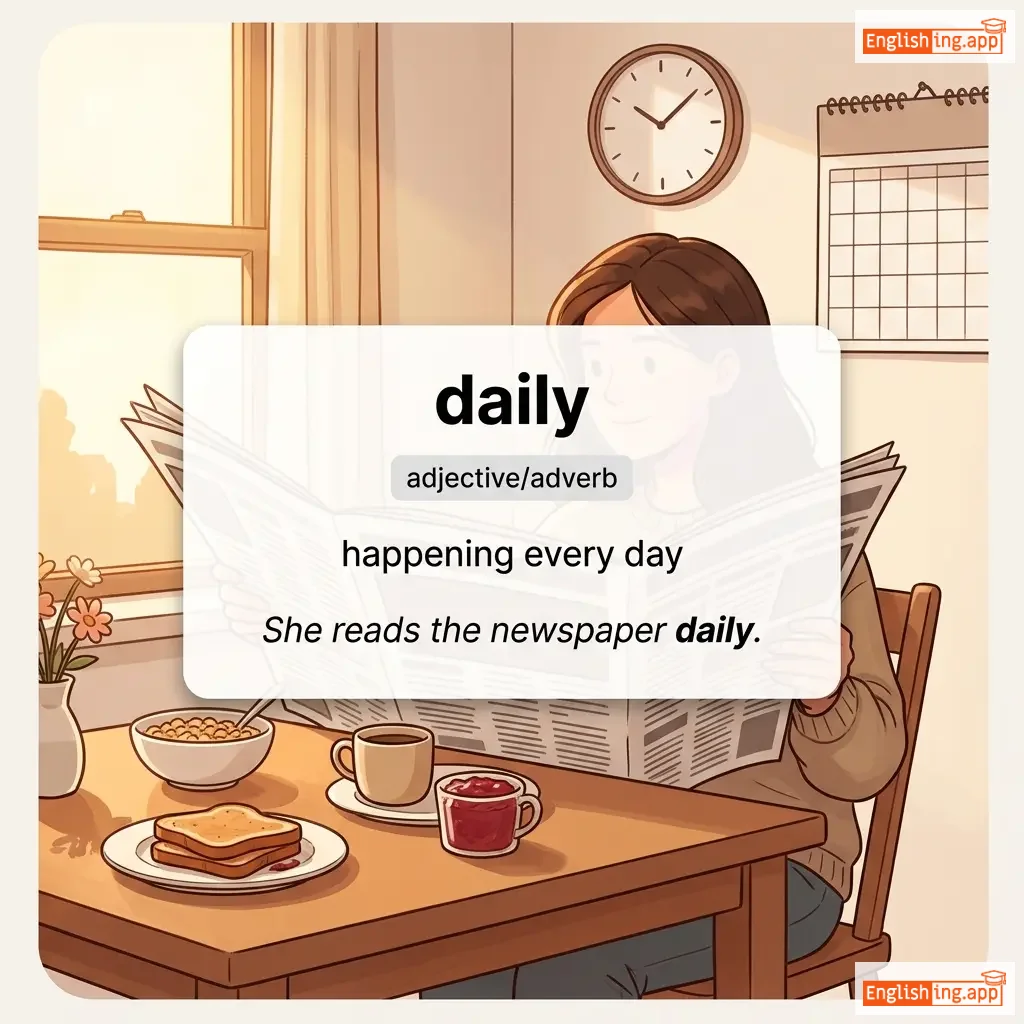
daily definition card — visual illustration of the meaning
adjective/adverb
/ˈdeɪli/
ежедневный (ezhednevny)

happening every day

"She reads the newspaper daily."

"Она читает газету ежедневно." (Ona chitayet gazetу ezhednevno.)
adjective
/ˈdeɪnti/
нежный и красивый (nezhnyy i krasivyy)

Delicately small, pretty, and often considered elegant.

"She wore a dainty necklace made of pearls."

"Она носила нежное ожерелье из жемчуга." (Ona nosila nezhnoye ozherelye iz zhemchuga.)
noun
/ˈdɛəri/
молочная ферма (molochnaya ferma)

a place where milk and milk products are produced or sold

"They visited the local dairy for fresh milk."

"Они посетили местную молочную ферму за свежим молоком." (Oni posetili mestnuyu molochnuyu fermu za svezhim molokom.)
noun
/ˈdeɪ.ɪs/ or /ˈdeɪ.əs/
пьедестал (p'ye-dyes-tal)

A raised platform in a hall or room, usually where speakers or honored guests sit.

"The speaker stood on the dais to address the audience."

"Оратор встал на пьедестал, чтобы обратиться к аудитории." (Orator vstal na p'ye-dyes-tal, chtoby obratit'sya k auditorii.)
noun
/ˈdæliəns/
мимолетные отношения (mimoletnye otnosheniya)

A casual romantic or sexual relationship; also frivolous or playful behavior.

"Their dalliance during the summer was brief but intense."

"Их мимолетные отношения летом были короткими, но интенсивными." (Ih mimoletnye otnosheniya letom byli korotkimi, no intensivnymi.)
verb
/ˈdæli/
медлить (medlit)

To act or move slowly; to waste time; also to engage in a casual romantic relationship.

"He dallied in the garden instead of starting his work."

"Он медлил в саду, вместо того чтобы начать свою работу." (On medlil v sadu, vmesto togo chtoby nachat' svoju rabotu.)
noun
/dæm/
плотина (plotina)

a barrier built to hold back water and raise its level

"The dam provides electricity to nearby towns."
"Плотина обеспечивает электричеством ближайшие города." (Plotina obespechivayet elektrichestvom blizhayshiye goroda.)
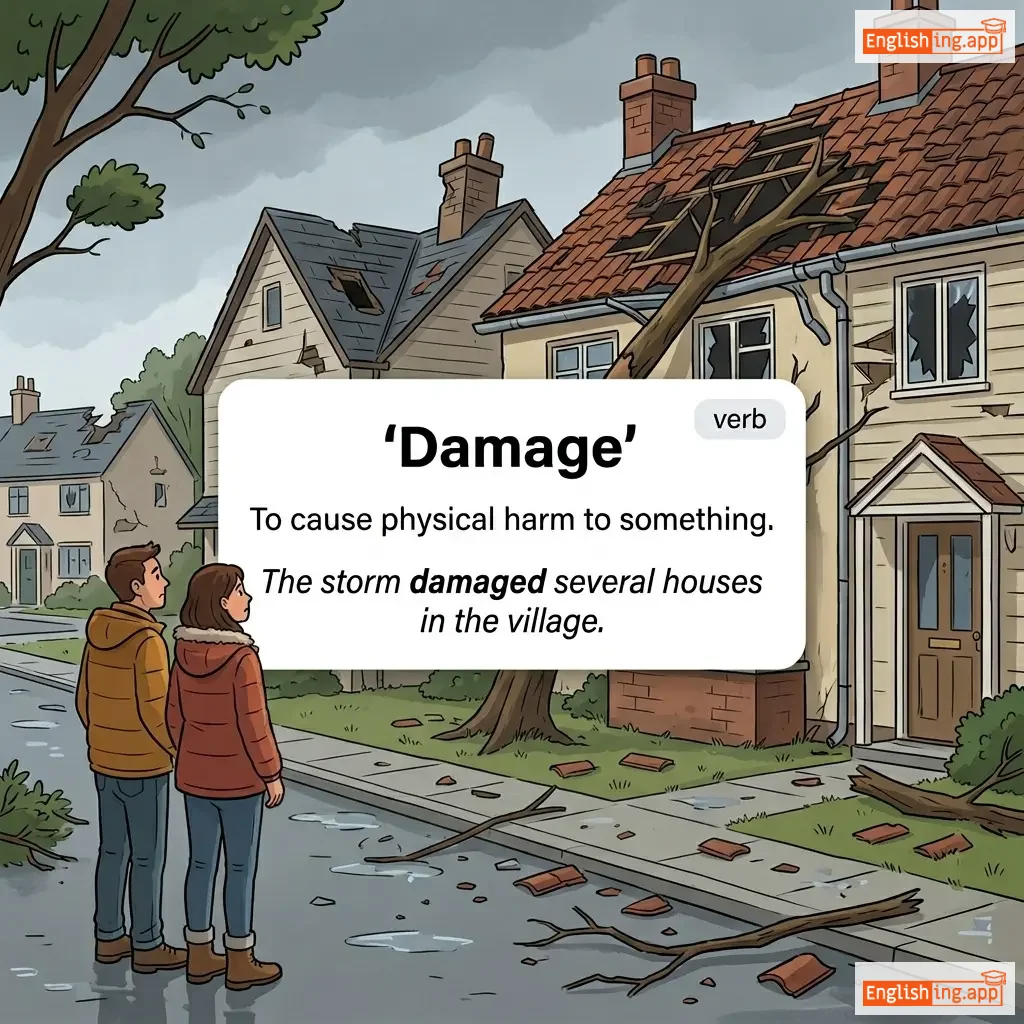
Damage definition card — visual illustration of the meaning
verb
/ˈdæmɪdʒ/
повреждение (povrezhdenie)

To cause physical harm to something.

"The storm damaged several houses in the village."

"Шторм повредил несколько домов в деревне." (Shtorm povredil neskol'ko domov v derevne.)
adjective
/ˈdæmɪdʒɪŋ/

causing harm or injury

"The storm caused damaging effects to the crops."

😡

damn

verb
/dæm/

to condemn or criticize strongly; used as an expletive to express anger or emphasis

"He damned the unfair system in his speech."