Словари

Словарь английского языка | Значения слов, определения и примеры

noun
/ˈdɪkʃəˌnɛri/
словарь (slovar)

A reference book or electronic resource containing words, usually arranged alphabetically, with information about their meanings, pronunciations, etymologies, and usage.

"I looked up the word in the dictionary to understand its meaning."

"Я посмотрел слово в словаре, чтобы понять его значение." (Ya posmotrel slovo v slovare, chtoby ponyat ego znachenie.)
noun
/ˈdɪktəm/
диктум (diktum)

A formal pronouncement, authoritative statement, or maxim.

"The judge’s dictum clarified the principle of equality before the law."

"Диктум судьи разъяснил принцип равенства перед законом." (Diktum sud'i raz'yasnil printsip ravenstva pered zakonom.)
adjective
/daɪˈdæktɪk/
дидактический (didakticheskiy)

Intended to teach, often with a moral lesson.

"The novel is not just entertaining but also didactic in nature."
"Роман не только развлекательный, но и дидактический по своей природе." (Roman ne tol'ko razvlekatel'nyy, no i didakticheskiy po svoey prirode.)
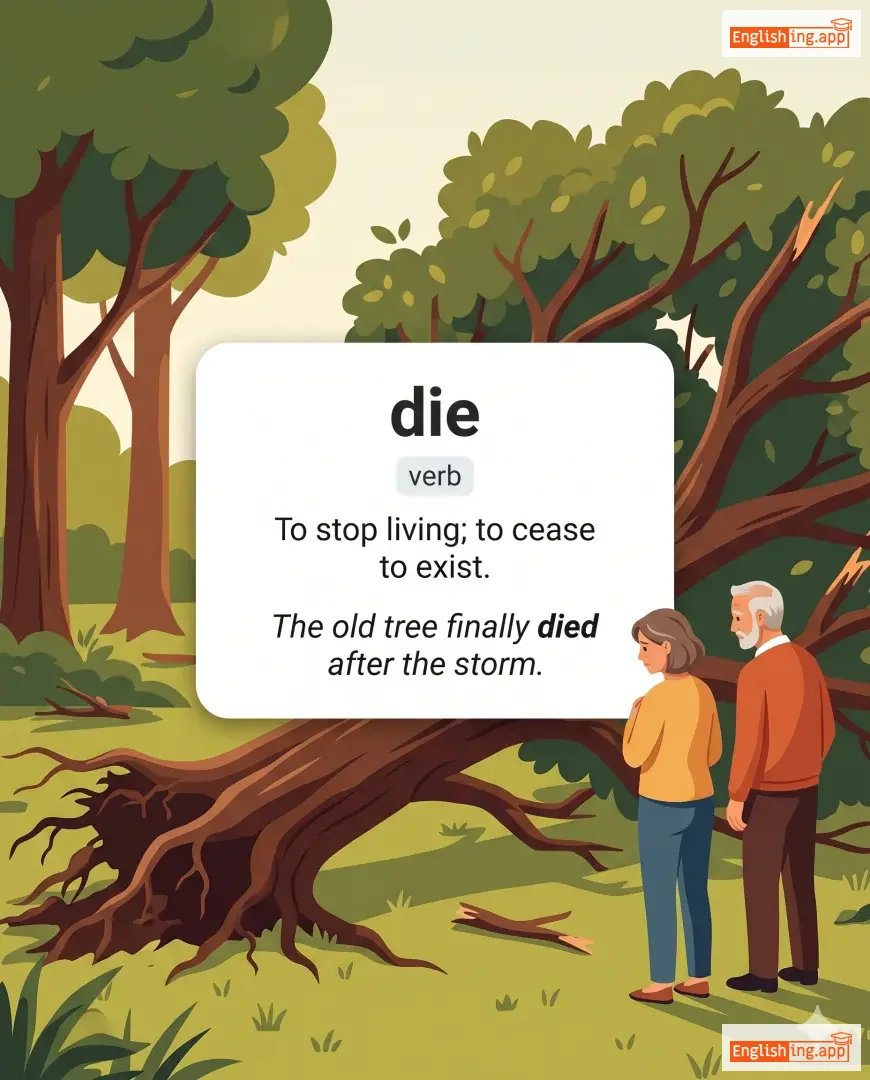
die definition card — visual illustration of the meaning
verb
/daɪ/
умереть (umeryet')

To stop living; to cease to exist.

"The old tree finally died after the storm."

"Старое дерево наконец умерло после шторма." (Staroye derevo nakonech umyerylo posle shtorma.)
noun
/ˈdaɪhɑːrd/

A person who strongly resists change and remains loyal to a belief or cause.

"He is a diehard fan of classic rock music."

noun
/ˈdaɪət/
диета (dieta)

the kinds of food that a person usually eats

"He follows a strict vegetarian diet."

"Он придерживается строгой вегетарианской диеты." (On pridierzhivayetsya strogoi vegetarianckoi diiety.)
verb
/ˈdɪfər/
различаться (razlichatsya)

to be unlike or distinct from something else

"Opinions differ on this issue."

"Мнения различаются по этому вопросу." (Mneniya razlichayutsya po etomu voprosu.)
noun
/ˈdɪfərəns/
разница (raznitsa)

A point or way in which things are not the same.

"There is a big difference between theory and practice."
"Есть большая разница между теорией и практикой." (Yest' bol'shaya raznitsa mezhdu teoriey i praktiekoy.)
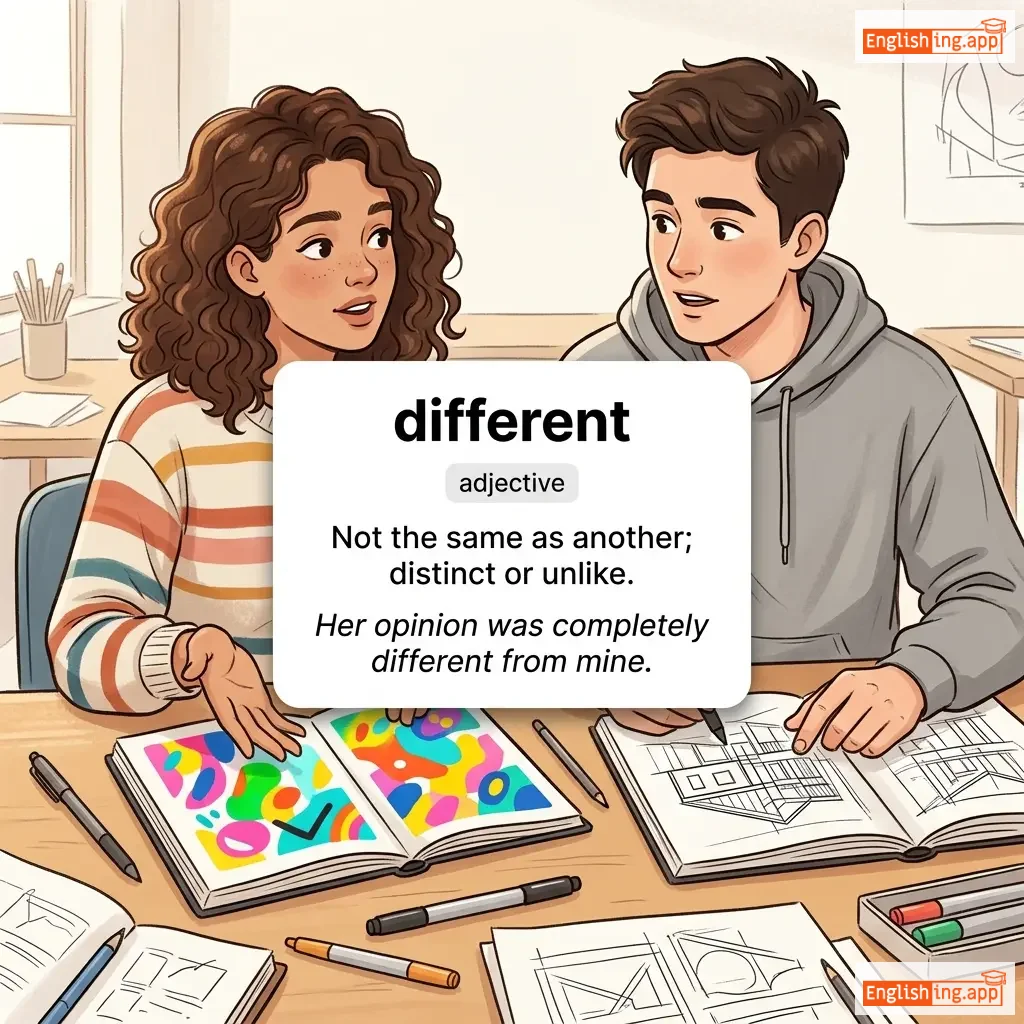
different definition card — visual illustration of the meaning
adjective
/ˈdɪf.ər.ənt/
различный (razlichny)

Not the same as another; distinct or unlike.

"Her opinion was completely different from mine."

"Её мнение было совершенно другим, чем моё." (Yeyo mneniye bylo sovershenno drugim, chem moyo.)
noun
/ˌdɪfəˈrɛnʃə/
отличительная характеристика (otlichitelnaya kharakteristika)

A distinguishing characteristic that sets one thing apart from another.

"The differentia of humans is their ability to reason abstractly."

"Отличительная характеристика человека — это способность мыслить абстрактно." (Otlichitelnaya kharakteristika cheloveka — eto sposobnost' myslyt' abstraktnо.)
adjective
/ˌdɪfəˈrɛnʃəl/
дифференциальный (differentsialnyy)

Relating to or showing a difference; involving a distinction.

"There is a differential treatment between the two groups."

"Существует дифференцированное отношение между двумя группами." (Sushchestvuet differentsirovannoye otnosheniye mezhdu dvumya gruppami.)
verb
/ˌdɪfəˈrɛnʃieɪt/
дифференцировать (differentsirovat')

To recognize or make a distinction between things.

"It is important to differentiate between fact and opinion."

"Важно дифференцировать факты и мнения." (Vazhno differentsirovat' fakty i mneniya.)
differentiation definition card — visual illustration of the meaning
noun
/ˌdɪf.ə.ren.ʃiˈeɪ.ʃən/
дифференциация, различие, разграничение (differentsiatsiya, razlichiye, razgranichenie)

The action or process of differentiating or distinguishing between two or more things or people.

"Strong differentiation sets brands apart from competitors."

"Сильная дифференциация выделяет бренды среди конкурентов." (Sil'naya differentsiatsiya vydelyayet brendy sredi konkurentov.)
adverb
/ˈdɪfərəntli/
по-другому (po-drugomu)

in a way that is not the same as another or as expected

"She approached the problem differently than her colleagues."

"Она подошла к решению проблемы по-другому, чем её коллеги." (Ona podoshla k resheniyu problemy po-drugomu, chem yejo kollegi.)
difficult definition card — visual illustration of the meaning
adjective
/ˈdɪf.ɪ.kəlt/
сложный (slozhny)

Needing much effort or skill to do or understand.

"The exam was so difficult that many students failed."

"Экзамен был настолько сложным, что многие студенты не сдали." (Ekzamen byl nastol'ko slozhnym, chto mnogie studenty ne sdali.)
noun
/ˈdɪfɪkəlti/

the state or condition of being hard to do, deal with, or understand

"He faced great difficulty in learning a new language."

diffidence definition card — visual illustration of the meaning
noun
/ˈdɪfɪdəns/
неуверенность в себе (neuverennost' v sebe)

Lack of self-confidence; shyness or modesty.

"Her diffidence made it hard for her to speak in public."

"Её неуверенность в себе затрудняла ей выступать на публике." (Yeyo neuverennost' v sebe zatrudnyala yey vystupat' na publike.)
adjective
/ˈdɪfɪdənt/

Shy or lacking confidence in one's own abilities.

"He was too diffident to ask a question in class."
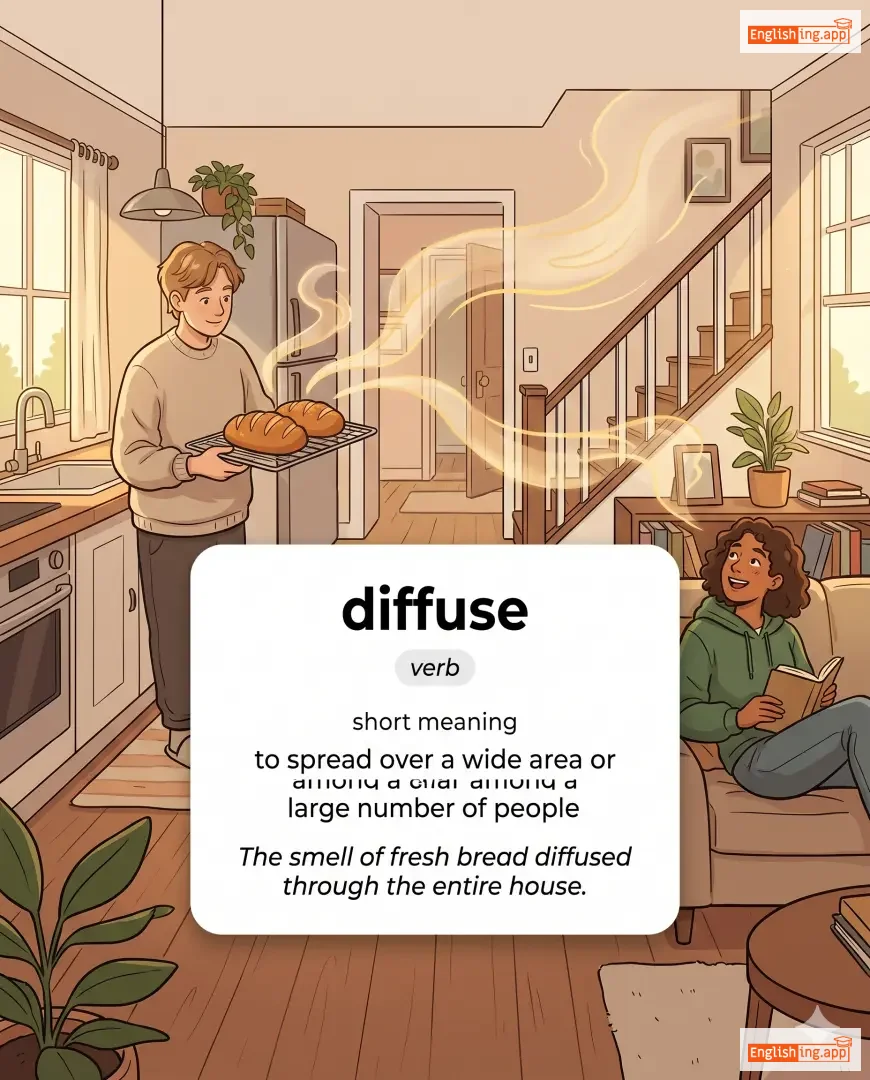
diffuse definition card — visual illustration of the meaning
verb
/dɪˈfjuːz/
распространять (rasprostranyat)

to spread over a wide area or among a large number of people

"The smell of fresh bread diffused through the entire house."

"Запах свежего хлеба распространился по всему дому." (Zapakh svezhago khleba rasprostranilsya po vsemu domu.)
adjective
/dɪˈfjuːzəbl/
распространяемый (rasprostranyayemyy)

able to spread or be spread through a medium

"Oxygen is diffusible through cell membranes."

"Кислород может распространяться через клеточные мембраны." (Kislorod mozhet rasprostranyatsya cherez kletochniye membrany.)
noun
/dɪˈfjuːʒən/
диффузия (diffyuzion)

the spreading of something more widely or the movement of particles from high to low concentration

"The diffusion of information on social media is rapid."
"Распространение информации в социальных сетях происходит быстро." (Rasprostranenie informatsii v sotsialnykh setyakh proiskhodit bystro)
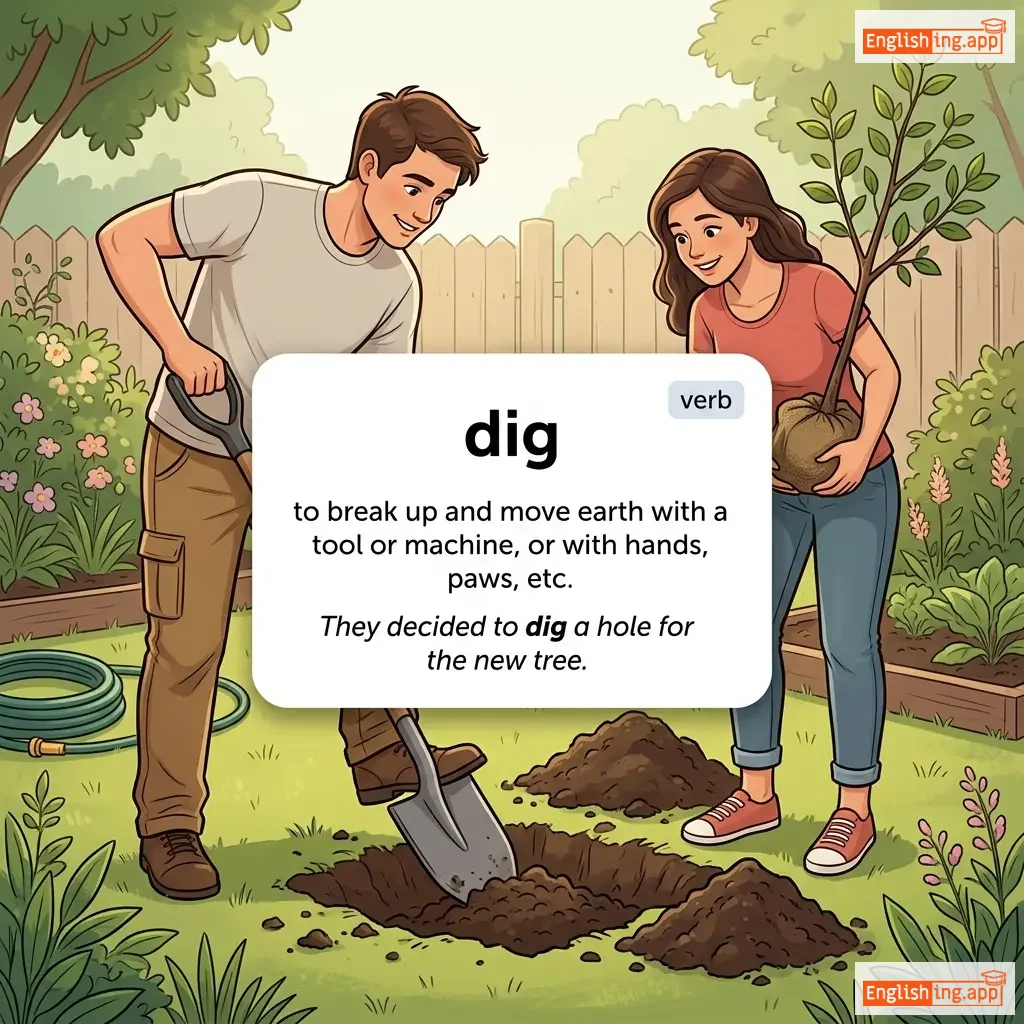
dig definition card — visual illustration of the meaning
verb
/dɪɡ/
копать (kopat)

to break up and move earth with a tool or machine, or with hands, paws, etc.

"They decided to dig a hole for the new tree."

"Они решили выкопать яму для нового дерева." (Oni reshilí vykopat' yamu dlya novogo dereva.)
digest definition card — visual illustration of the meaning
verb
/daɪˈdʒest/
переваривать (perevarivat)

to break down food in the body; to think about and understand

"It takes time to digest a heavy meal."

"Это занимает время, чтобы переварить тяжелую пищу." (Eto zanimaet vremya, chtoby perevarit' tyazholuyu pishchu.)
digestive definition card — visual illustration of the meaning
adjective
daɪˈdʒes.tɪv
пищеварительный (pishchevaritel'nyy)

Relating to the digestion of food.

"Digestive enzymes help break down food."

"Пищеварительные ферменты помогают разбирать пищу." (Pishchevaritel'nye fermenty pomogayut razbirat' pishchu.)
🔢

digit

noun
/ˈdɪdʒɪt/

a numeral from 0 to 9; also a finger or toe

"You must enter a four-digit code to unlock the phone."

digital definition card — visual illustration of the meaning
adjective
/ˈdɪdʒɪtl/
цифровой (tsifrovoj)

relating to technology that uses signals or data in the form of numbers (0s and 1s)

"She prefers digital books over printed ones."

"Она предпочитает цифровые книги бумажным." (Ona predpochitayet tsifrovye knigi bumazhnyim.)
digital detox definition card — visual illustration of the meaning
noun
/ˈdɪdʒɪtl ˈdɛtɒks/
цифровое очищение (tsifrovoe ochishchenie)

A period of time during which a person refrains from using electronic devices such as smartphones or computers, regarded as an opportunity to reduce stress or focus on social interaction in the physical world.

"A digital detox can help improve mental clarity and reduce stress."
"Цифровое очищение может помочь улучшить умственную ясность и снизить стресс." (Tsifrovoe ochishchenie mozhet pomoch' uluchshit' umstvennuyu yasnost' i snizit' stress.)
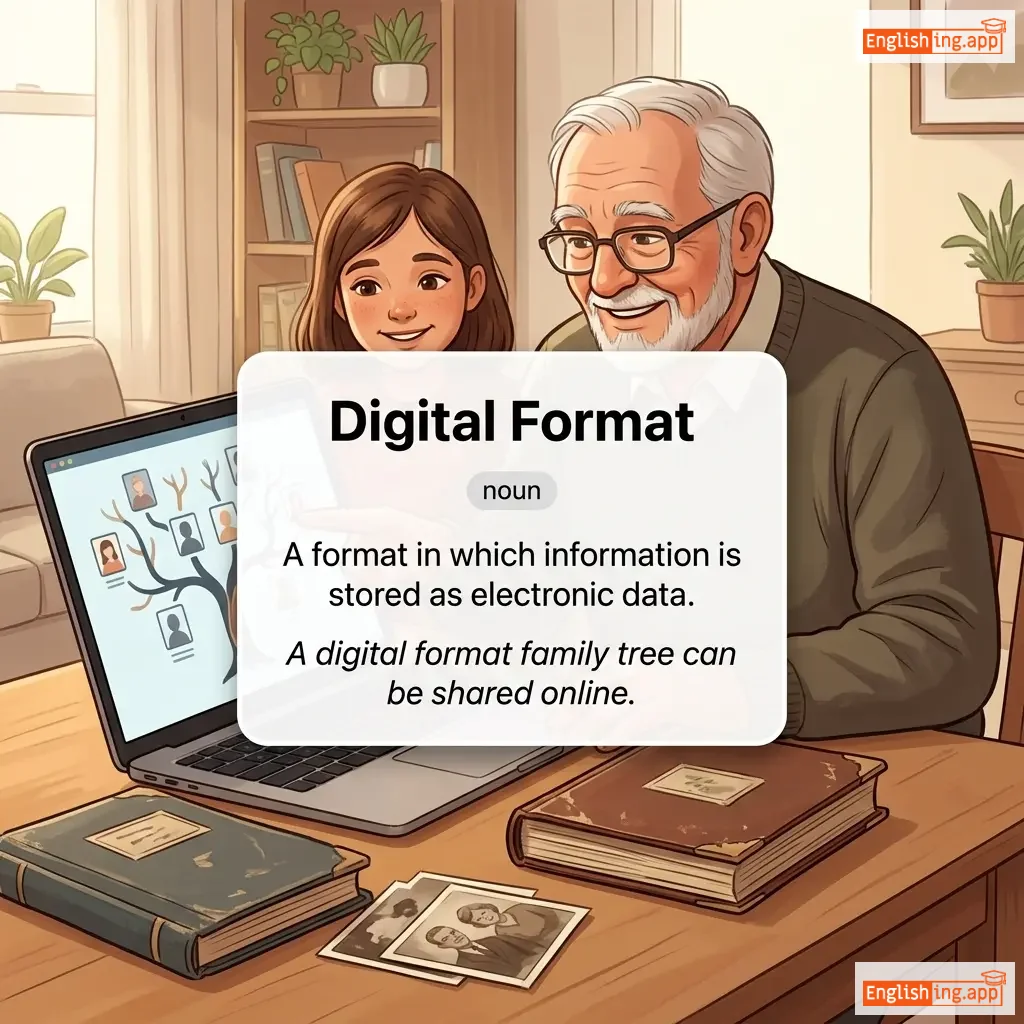
Digital Format definition card — visual illustration of the meaning
noun
ˈdɪdʒɪtəl ˈfɔːrmæt
цифровой формат (tsifrovoy format)

A format in which information is stored as electronic data.

"A digital format family tree can be shared online."

"Цифровое семейное древо можно поделиться онлайн." (Tsifrovoye semeynoye drevo mozhno podelit'sya onlayn.)
digital tools definition card — visual illustration of the meaning
noun
ˈdɪdʒ.ɪ.təl tuːlz
цифровые инструменты (tsifrovye instrumenty)

Electronic software and applications used for learning and educational purposes.

"Schools are integrating digital tools to enhance learning."

"Школы интегрируют цифровые инструменты для улучшения обучения." (Shkoly integriruyut tsifrovye instrumenty dlya uluchsheniya obucheniya.)
noun
/ˈdɪɡnɪˌtɛri/
важная персона (vazhnaia persona)

a person considered to be important because of high rank or office

"Several foreign dignitaries attended the state banquet."

"Несколько иностранных высокопоставленных лиц присутствовали на государственном банкете." (Neskol'ko inostrannykh vysokopostavlennykh lits prisutstvovali na gosudarstvennom bankete.)
noun
/ˈdɪɡnəti/
достоинство (dostoinstvo)

the state or quality of being worthy of respect or honor

"He faced the difficult situation with calm and dignity."

"Он столкнулся с трудной ситуацией с спокойствием и достоинством." (On stolknulsya s trudnoy situatsiey s spokoystviem i dostoinstvom.)
noun
/ˈdaɪɡræf/
диграф (digraf)

A pair of letters representing a single sound, such as 'sh' in 'ship'.

"In the word 'phone', the letters 'ph' form a digraph."

"В слове 'телефон' буквы 'ph' образуют диграф." (V slove 'telefon' bukvy 'ph' obrazyuyut digraf.)
verb
/ˈkrʌmpəl/
смять (smyat)

to crush something into folds or wrinkles

"He crumpled the paper and threw it in the bin."

"Он смял бумагу и бросил её в корзину." (On smyal bumagu i brosil yey v korzinu.)
noun/verb
/kruːˈseɪd/
крестовый поход, интенсивная кампания (krestovyy pokhod, intensivnaya kampaniya)

a vigorous campaign for a social, political, or religious cause; to fight passionately for a cause

"She has been crusading for women's rights all her life."

"она боролась за права женщин всю свою жизнь." (ona borolas' za prava zhenshchin vsyu svoyu zhizn'.)
verb
/krʌʃ/
сжать или раздавить что-то так сильно, что оно повреждается или разрушается (szhat' ili razdavít' chto-to tak sil'no, chto ono povrezhdaetsya ili razrushayetsya)

to press or squeeze something so hard that it is damaged or destroyed

"He accidentally crushed the paper cup in his hand."

"Он случайно раздавил бумажный стаканчик в своей руке." (On sluchayno razdavíl bumazhnyy stakanchik v svoey ruke.)
noun
/krʌst/
корка (korka)

the hard outer surface of something, especially bread or the Earth's outer layer

"He cut off the crust of the bread before eating."

"Он отрезал корку хлеба перед тем, как съесть." (On otrezal korku khleba pered tem, kak s'yest'.)
noun
/krʌˈsteɪʃən/
водное существо с жесткой оболочкой (vodnoe sushchestvo s zhestkoy obolochkoj)

an aquatic animal with a hard shell, such as crabs, lobsters, and shrimps

"Crabs and lobsters are well-known crustaceans."

"Крабы и омары хорошо известны среди ракообразных." (Kraby i omary khorosho izvestny sredi rakoobraznykh.)
adjective
/krʌˈsteɪʃəs/
с жесткой оболочкой (s zhestkoy obolochkoy)

relating to or having a hard shell like a crustacean

"The scientist studied the crustaceous fossils."

"Учёный изучал окаменелости с жесткой оболочкой." (Uchyonnyy izuchal okamenelosti s zhestkoy obolochkoj.)
noun
/krʌtʃ/
костыль, опора (kostyl', opora)

a support used by someone injured to walk; also something relied upon for support or help

"He had to use crutches after breaking his leg."

"Ему пришлось использовать костыли после того, как он сломал ногу." (Yemu prishlos' ispol'zovat' kostyli posle togo, kak on slomal nogu.)
noun
/krʌks/
суть (sut)

the most important or decisive point of an issue

"The crux of the problem lies in poor communication."
"Суть проблемы заключается в плохой коммуникации." (Sut problemy zaklyuchayetsya v plokhoy kommunikatsii.)
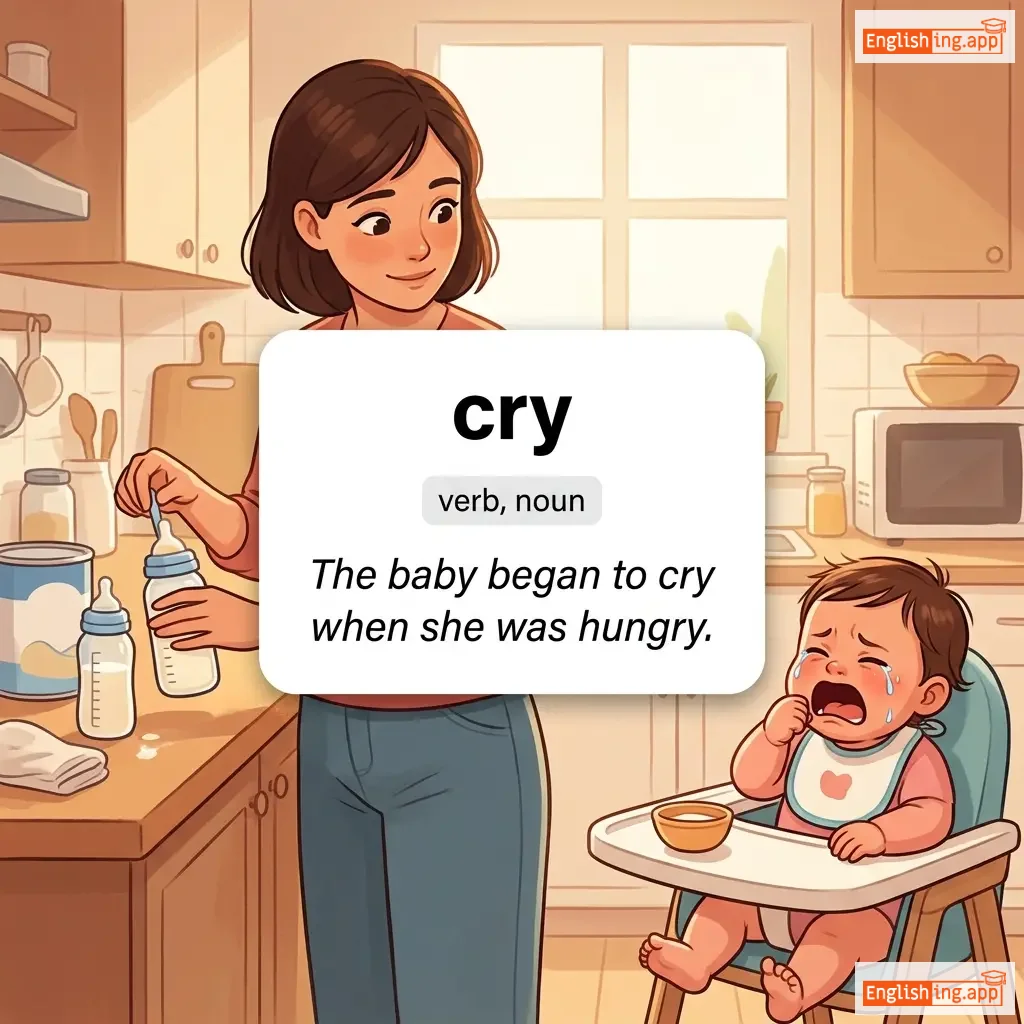
cry definition card — visual illustration of the meaning
verb, noun
/kraɪ/
плакать (plakat)

To shed tears as an expression of emotion such as sadness or pain; also a loud call or shout.

"The baby began to cry when she was hungry."

"Малыш начал плакать, когда она была голодна." (Malysh nachal plakat', kogda ona byla golodna.)
noun
/krɪpt/
склеп (sklep)

an underground chamber, especially one beneath a church, used as a burial place

"The tourists explored the ancient crypt beneath the cathedral."

"Туристы исследовали древнюю крипту под кафедральным собором." (Turisty issledovali drevnyuyu kriptu pod kafedral'nym soborom.)
cryptic definition card — visual illustration of the meaning
adjective
/ˈkrɪptɪk/
криптографический (kriptograficheskiy)

having a meaning that is mysterious or obscure

"She left a cryptic message on his voicemail."

"Она оставила криптографическое сообщение на его голосовой почте." (Ona ostavila kriptograficheskoe soobshchenie na ego golosovoy pochty.)
cryptocurrency definition card — visual illustration of the meaning
noun
/ˌkrɪptəˈkʌrənsɪ/
цифровая валюта (tsifrovaya valyuta)

A digital currency in which transactions are verified and records maintained by a decentralized system

"Cryptocurrencies are revolutionizing the financial landscape."

"Криптовалюты революционизируют финансовый ландшафт." (Kriptovalyuty revolyutsioniruyut finansovyy landshaft.)
noun
/ˈkrɪptəɡræm/
секретный код (sekretnyy kod)

a text written in code or cipher

"The detective solved the cryptogram hidden in the letter."

"Детектив решил криптограмму, скрытую в письме." (Detektiv reshil kriptogrammu, skrytuyu v pis'me.)
cryptographic definition card — visual illustration of the meaning
adjective
/ˌkrɪp.təˈɡræf.ɪk/
криптографический (kriptograficheskiy)

Relating to cryptography; involving or using secret codes or ciphers for security.

"Banks use cryptographic technology to protect transactions."

"Банки используют криптографические технологии для защиты транзакций." (Banki ispol'zuyut kriptograficheskiye tekhnologii dlya zashchity tranzaktsiy.)
cryptography definition card — visual illustration of the meaning
noun
/krɪpˈtɒɡ.rə.fi/
практика защиты информации с помощью шифрования или кодирования (praktika zashchity informatsii s pomoshch'yu shifrovaniya ili kodirovaniya)

The practice of securing information through encryption or coding techniques

"Modern cryptography ensures secure online transactions."

"Современная криптография обеспечивает безопасные онлайн-транзакции." (Sovremennaya kriptografiya obespechivayet bezopasnye onlayn-tranzaktsii.)
noun
/ˈkrɪstəl/
кристалл (kristall)

a clear, transparent mineral or glass that forms a solid structure with regular patterns

"She wore a necklace made of sparkling crystal."

"Она носила ожерелье из сверкающего кристалла." (Ona nosila ozherelye iz sverkayushchego kristalla.)
verb
/ˈkrɪstəlaɪz/
кристаллизовать (kristal-lizovat)

to form crystals; to make an idea or plan clear and definite

"Her vague thoughts began to crystallize into a solid plan."

"Её неопределённые мысли начали кристаллизоваться в чёткий план." (Ejo neopredelyonnye mysli nachali kristallizovatsya v chotkiy plan.)
noun
/kʌb/
медвежонок (medvezhonok)

a young bear, lion, tiger, or other large carnivorous mammal

"The bear cub stayed close to its mother for protection."

"Медвежонок оставался рядом с матерью для защиты." (Medvezhonok ostavalsya ryadom s mater'yu dlya zashchity.)