語彙集

英単語辞書 | 単語の意味、定義、例文

noun
/ˈdɪkʃəˌnɛri/
辞書 (jisho)

A reference book or electronic resource containing words, usually arranged alphabetically, with information about their meanings, pronunciations, etymologies, and usage.

"I looked up the word in the dictionary to understand its meaning."

"意味を理解するために辞書でその単語を調べました。" (Imi o rikai suru tame ni jisho de sono tango o shirabemashita.)
noun
/ˈdɪktəm/
格言 (kakugen)

A formal pronouncement, authoritative statement, or maxim.

"The judge’s dictum clarified the principle of equality before the law."

"裁判官の格言は法の前での平等の原則を明確にしました。" (Saibankan no kakugen wa hō no mae de no byōdō no gensoku o meikaku ni shimashita.)
adjective
/daɪˈdæktɪk/
教育的な (kyoikuteki na)

Intended to teach, often with a moral lesson.

"The novel is not just entertaining but also didactic in nature."

"その小説はただの娯楽ではなく、教育的な性質も持っている。" (Sono shōsetsu wa tada no goraku de wa naku, kyoikuteki na seishitsu mo motte iru.)
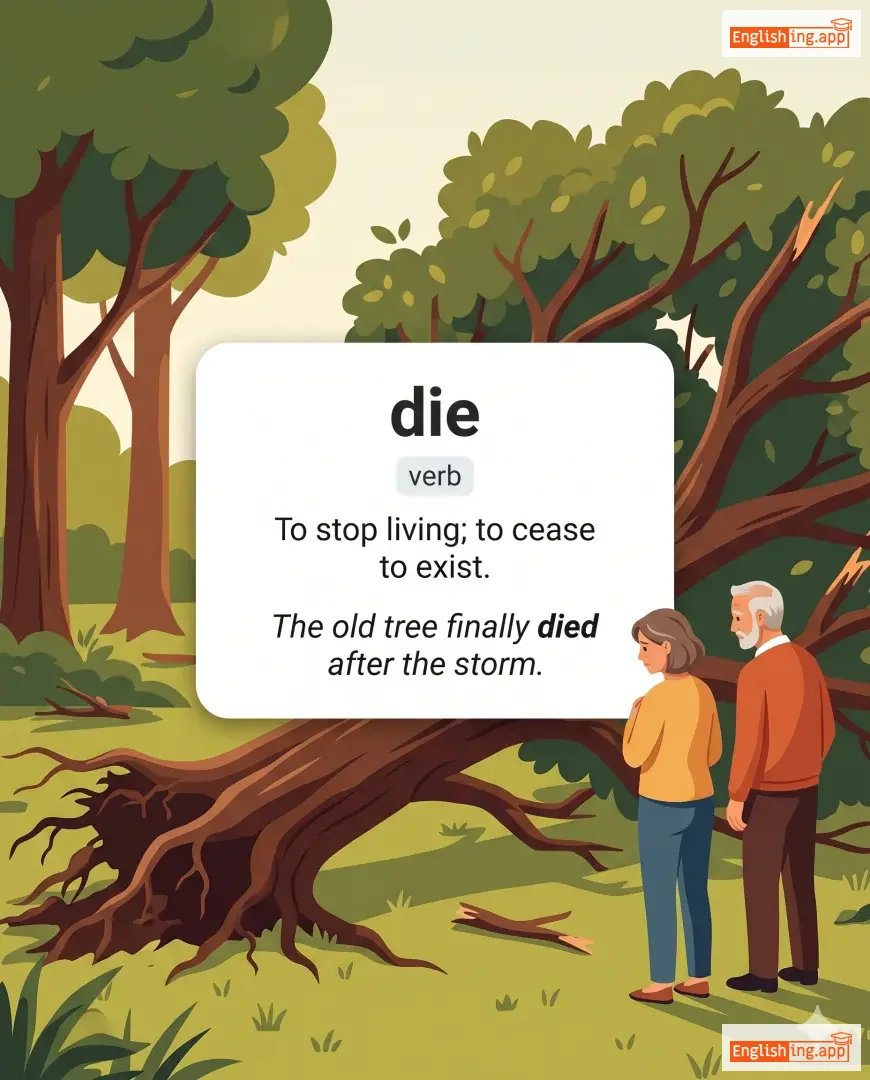
die definition card — visual illustration of the meaning
verb
/daɪ/
死ぬ (shinu)

To stop living; to cease to exist.

"The old tree finally died after the storm."

"古い木は嵐の後、最終的に死にました。" (Furui ki wa arashi no ato, saishū-teki ni shinimashita.)
noun
/ˈdaɪhɑːrd/

A person who strongly resists change and remains loyal to a belief or cause.

"He is a diehard fan of classic rock music."

noun
/ˈdaɪət/
ダイエット (daietto)

the kinds of food that a person usually eats

"He follows a strict vegetarian diet."

"彼は厳格なベジタリアンダイエットを実践しています。" (Kare wa genkaku na bejitarian daietto o jissen shiteimasu.)
verb
/ˈdɪfər/
異なる (kotonaru)

to be unlike or distinct from something else

"Opinions differ on this issue."

"この問題について意見が異なります。" (Kono mondai ni tsuite iken ga kotonarimasu.)
noun
/ˈdɪfərəns/
違い (chigai)

A point or way in which things are not the same.

"There is a big difference between theory and practice."
"理論と実践の間に大きな違いがあります。" (Riron to jissen no aida ni ōkina chigai ga arimasu.)
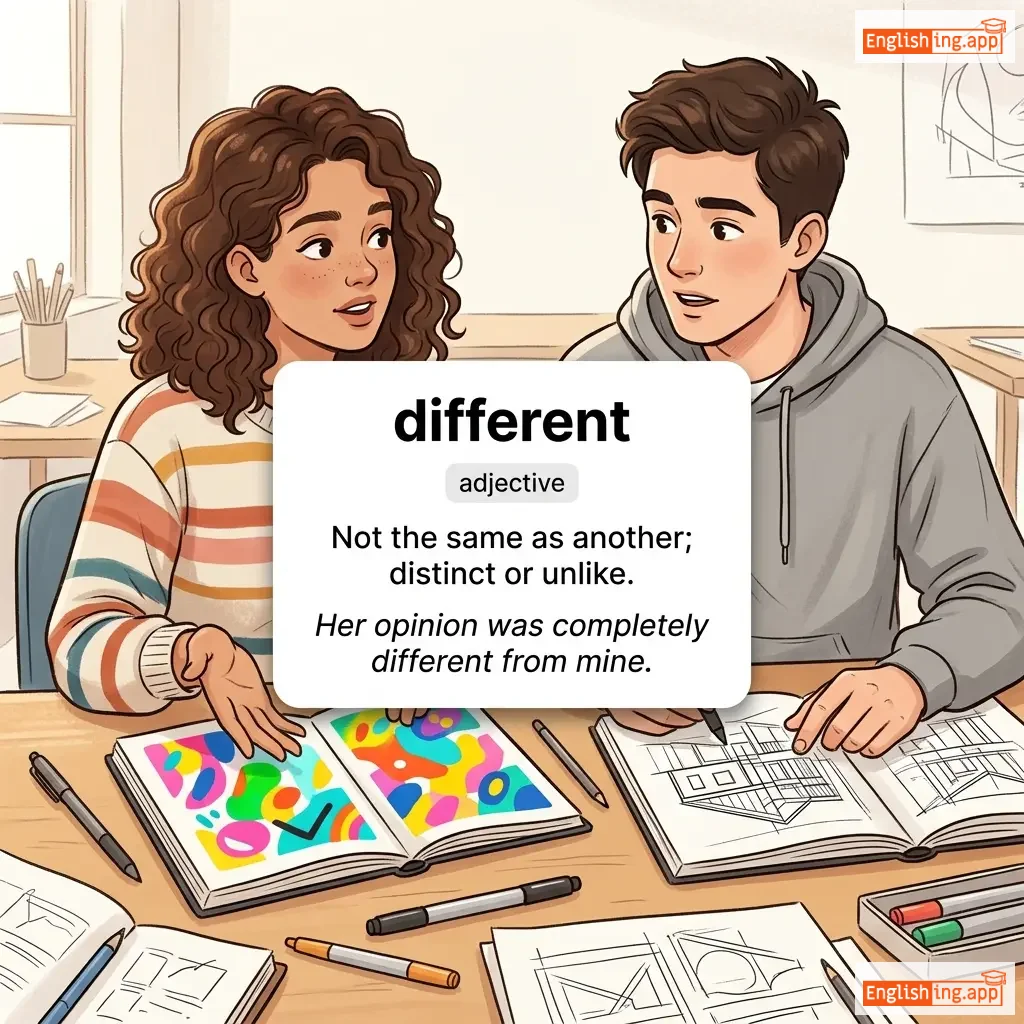
different definition card — visual illustration of the meaning
adjective
/ˈdɪf.ər.ənt/
異なる (kotonaru)

Not the same as another; distinct or unlike.

"Her opinion was completely different from mine."

"彼女の意見は私のものとは完全に異なっていました。" (Kanojo no iken wa watashi no mono to wa kanzen ni kotonatte imashita.)
noun
/ˌdɪfəˈrɛnʃə/
区別する特徴 (kubetsu suru tokuchou)

A distinguishing characteristic that sets one thing apart from another.

"The differentia of humans is their ability to reason abstractly."

"人間の区別する特徴は抽象的に考える能力です。" (Ningen no kubetsu suru tokuchou wa choushouteki ni kangaeru nouryoku desu.)
adjective
/ˌdɪfəˈrɛnʃəl/
差別的 (sabetsuteki)

Relating to or showing a difference; involving a distinction.

"There is a differential treatment between the two groups."

"2つのグループ間に差別的な扱いがあります。" (Futatsu no gurūpu-kan ni sabetsuteki na atsukai ga arimasu.)
verb
/ˌdɪfəˈrɛnʃieɪt/
区別する (kubetsu suru)

To recognize or make a distinction between things.

"It is important to differentiate between fact and opinion."

"事実と意見を区別することは重要です。" (Jijitsu to iken wo kubetsu suru koto wa juuyou desu.)
differentiation definition card — visual illustration of the meaning
noun
/ˌdɪf.ə.ren.ʃiˈeɪ.ʃən/
差別化, 区別, 分化 (sabetsuka, kubetsu, bunka)

The action or process of differentiating or distinguishing between two or more things or people.

"Strong differentiation sets brands apart from competitors."

"強いディファレンシエーションは、ブランドを競合他社と差別化します。" (Tsuyoi differentiation wa, burando o kyōgō tashā to sabetsuka shimasu.)
adverb
/ˈdɪfərəntli/
異なった方法で (kotonatta houhou de)

in a way that is not the same as another or as expected

"She approached the problem differently than her colleagues."

"彼女は同僚たちと違った方法で問題に取り組みました。" (Kanojo wa douryou-tachi to chigatta houhou de mondai ni torikumi mashita.)
difficult definition card — visual illustration of the meaning
adjective
/ˈdɪf.ɪ.kəlt/
難しい (muzukashii)

Needing much effort or skill to do or understand.

"The exam was so difficult that many students failed."

"試験は非常に難しく、多くの学生が失敗しました。" (Shiken wa hijō ni muzukashiku, ōku no gakusei ga shippai shimashita.)
noun
/ˈdɪfɪkəlti/

the state or condition of being hard to do, deal with, or understand

"He faced great difficulty in learning a new language."

diffidence definition card — visual illustration of the meaning
noun
/ˈdɪfɪdəns/
自信の欠如 (jishin no ketsujo)

Lack of self-confidence; shyness or modesty.

"Her diffidence made it hard for her to speak in public."

"彼女の自信の欠如は、公衆の前で話すのを難しくした。" (Kanojo no jishin no ketsujo wa, koushuu no mae de hanasu no o muzukashiku shita.)
adjective
/ˈdɪfɪdənt/

Shy or lacking confidence in one's own abilities.

"He was too diffident to ask a question in class."

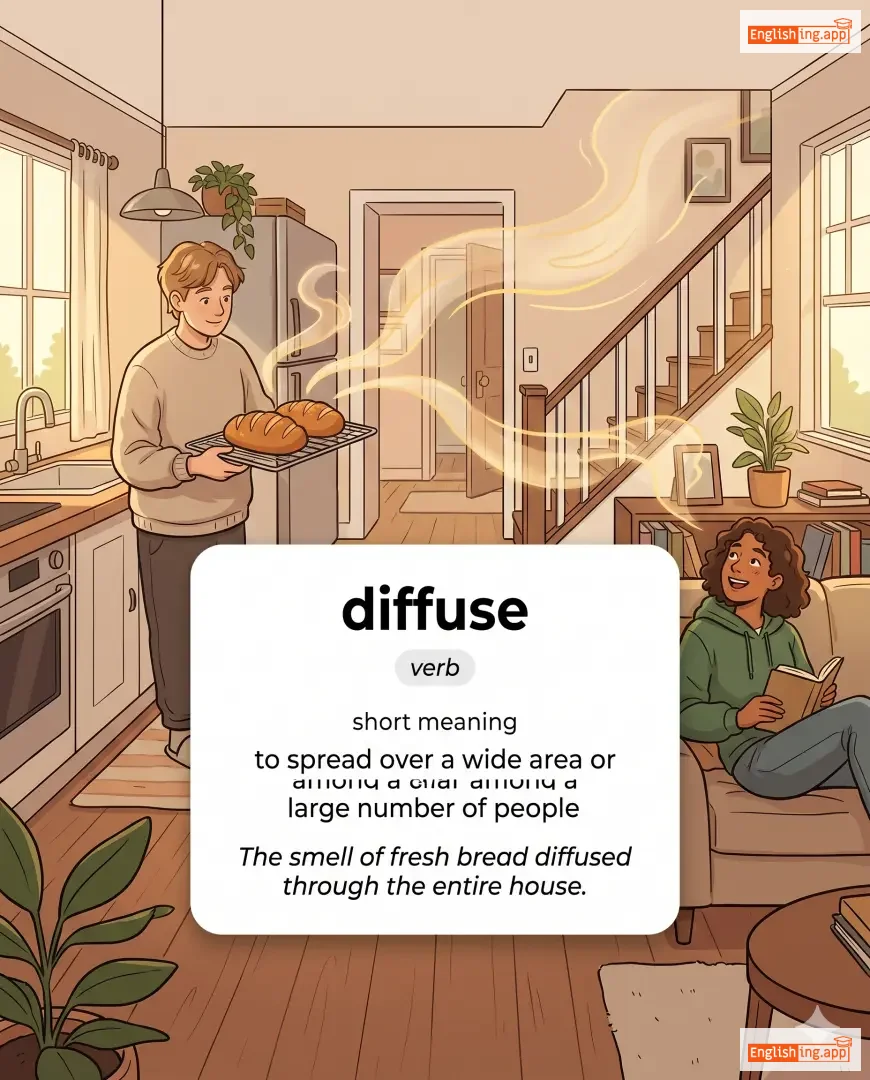
diffuse definition card — visual illustration of the meaning
🌫️

diffuse

verb
/dɪˈfjuːz/

to spread over a wide area or among a large number of people

"The smell of fresh bread diffused through the entire house."

adjective
/dɪˈfjuːzəbl/
拡散可能な (kassan kanou na)

able to spread or be spread through a medium

"Oxygen is diffusible through cell membranes."

"酸素は細胞膜を通じて拡散することができます。" (Sanso wa saiboumaku wo toshite kassan suru koto ga dekimasu.)
noun
/dɪˈfjuːʒən/

the spreading of something more widely or the movement of particles from high to low concentration

"The diffusion of information on social media is rapid."

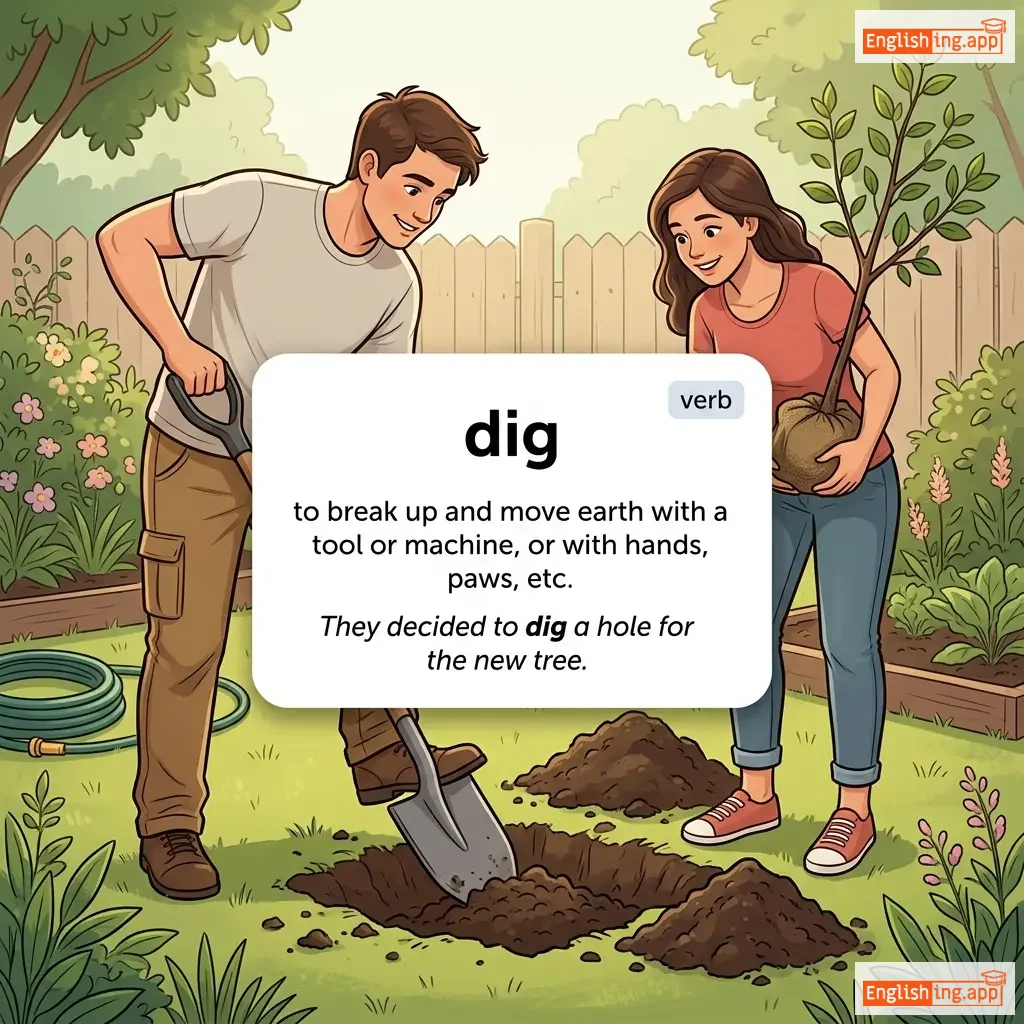
dig definition card — visual illustration of the meaning
verb
/dɪɡ/
掘る (horu)

to break up and move earth with a tool or machine, or with hands, paws, etc.

"They decided to dig a hole for the new tree."

"彼らは新しい木のために穴を掘ることを決めました。" (Karera wa atarashī ki no tame ni ana o horu koto o kimemashita.)
digest definition card — visual illustration of the meaning
verb
/daɪˈdʒest/
消化する (shouka suru)

to break down food in the body; to think about and understand

"It takes time to digest a heavy meal."

"重い食事を消化するのには時間がかかります。" (Omoi shokuji wo shouka suru no ni wa jikan ga kakarimasu.)
digestive definition card — visual illustration of the meaning
adjective
daɪˈdʒes.tɪv
消化の (shouka no)

Relating to the digestion of food.

"Digestive enzymes help break down food."

"消化酵素は食べ物を分解するのを助けます。" (Shouka kouso wa tabemono wo bunkai suru no wo tasukemasu.)
🔢

digit

noun
/ˈdɪdʒɪt/

a numeral from 0 to 9; also a finger or toe

"You must enter a four-digit code to unlock the phone."

digital definition card — visual illustration of the meaning
adjective
/ˈdɪdʒɪtl/
デジタル (dejitaru)

relating to technology that uses signals or data in the form of numbers (0s and 1s)

"She prefers digital books over printed ones."

"彼女は印刷された本よりデジタル本を好みます。" (Kanojo wa insatsu sareta hon yori dejitaru hon o konomimasu.)
digital detox definition card — visual illustration of the meaning
noun
/ˈdɪdʒɪtl ˈdɛtɒks/
デジタルデトックス (dejitaru detokkusu)

A period of time during which a person refrains from using electronic devices such as smartphones or computers, regarded as an opportunity to reduce stress or focus on social interaction in the physical world.

"A digital detox can help improve mental clarity and reduce stress."
"デジタルデトックスは、精神的な明晰さを改善し、ストレスを減らすのに役立ちます。" (Dejitaru detokkusu wa, seishinteki na meishikisa wo kaizen shi, sutoresu wo herasu no ni yakudachimasu.)
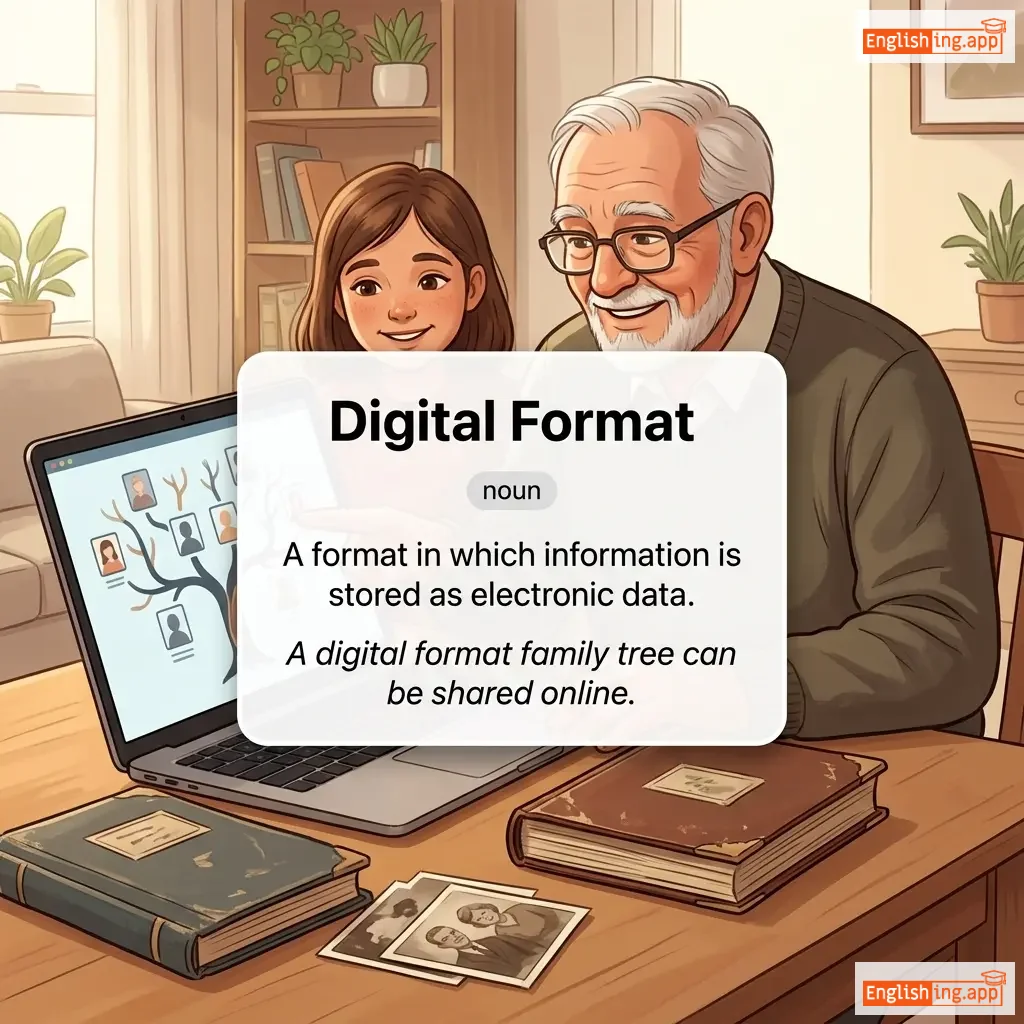
Digital Format definition card — visual illustration of the meaning
noun
ˈdɪdʒɪtəl ˈfɔːrmæt
デジタルフォーマット (dejitaru fōmatto)

A format in which information is stored as electronic data.

"A digital format family tree can be shared online."
"デジタルフォーマットの家系図はオンラインで共有できます。" (Dejitaru fōmatto no kakeizu wa onrain de kyōyū dekimasu.)
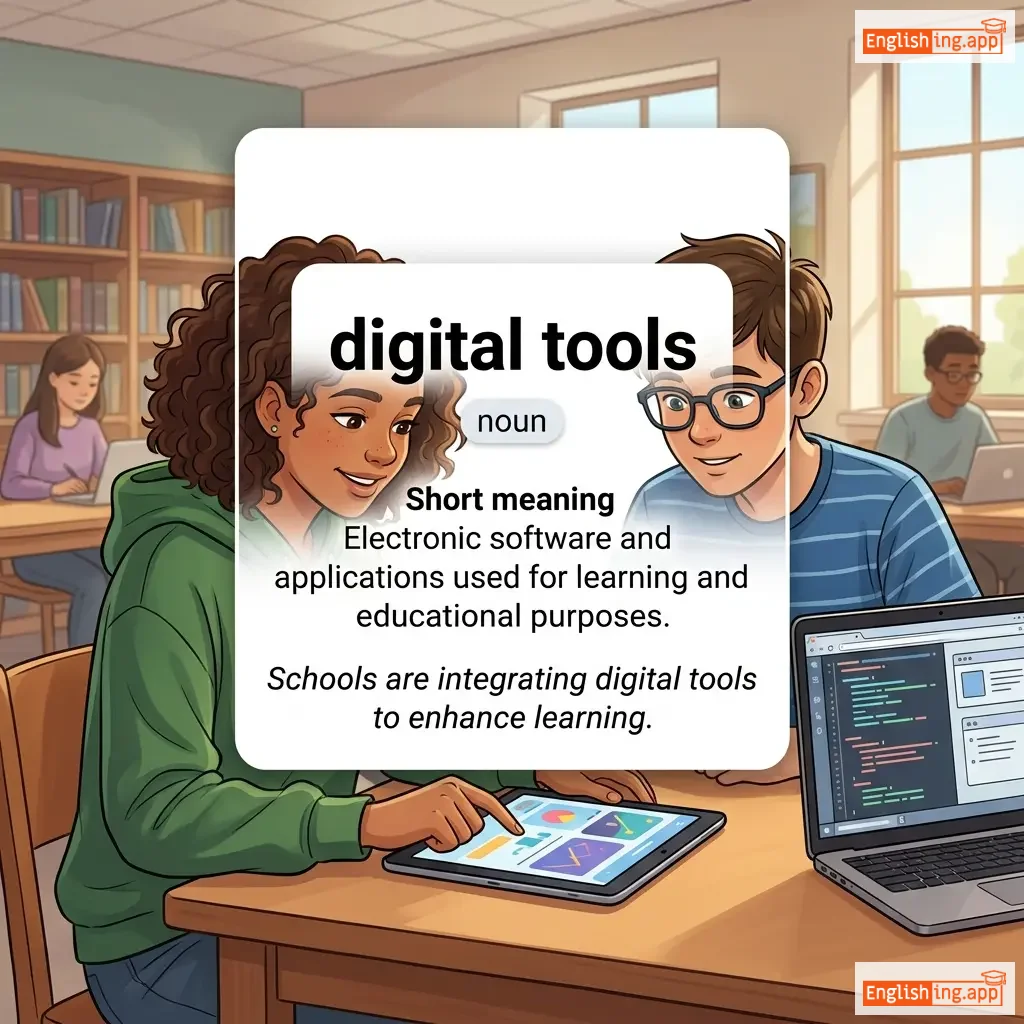
digital tools definition card — visual illustration of the meaning
noun
ˈdɪdʒ.ɪ.təl tuːlz
デジタルツール (dejitaru tsuuru)

Electronic software and applications used for learning and educational purposes.

"Schools are integrating digital tools to enhance learning."

"学校は学習を強化するためにデジタルツールを統合しています。" (Gakkou wa gakushuu o kyouka suru tame ni dejitaru tsuuru o tougou shiteimasu.)
noun
/ˈdɪɡnɪˌtɛri/
重要人物 (jūyō jinbutsu)

a person considered to be important because of high rank or office

"Several foreign dignitaries attended the state banquet."

"数人の外国の重要人物が国の晩餐会に出席しました。" (Sūnin no gaikoku no jūyō jinbutsu ga kuni no bansankai ni shusseki shimashita.)
noun
/ˈdɪɡnəti/
尊厳 (songen)

the state or quality of being worthy of respect or honor

"He faced the difficult situation with calm and dignity."

"彼は冷静さと尊厳を持って困難な状況に立ち向かいました。" (Kare wa reisei sa to songen wo motte konnan na joukyou ni tachimukaimashita.)
noun
/ˈdaɪɡræf/
二重音字 (nijuonji)

A pair of letters representing a single sound, such as 'sh' in 'ship'.

"In the word 'phone', the letters 'ph' form a digraph."

"'電話'という言葉では、'ph'の文字が二重音字を形成します。" ('denwa' to iu kotoba de wa, 'ph' no moji ga nijuonji o keisei shimasu.)
verb
/ˈkrʌmpəl/
くしゃくしゃにする (kushakushani suru)

to crush something into folds or wrinkles

"He crumpled the paper and threw it in the bin."

"彼は紙をくしゃくしゃにしてゴミ箱に投げ入れました。" (Kare wa kami o kushakusha ni shite gomibako ni nageiremashita.)
noun/verb
/kruːˈseɪd/
十字軍、激しいキャンペーン (jūjigun, hageshī kyampēn)

a vigorous campaign for a social, political, or religious cause; to fight passionately for a cause

"She has been crusading for women's rights all her life."

"彼女は一生を女性の権利のために戦っています。" (Kanojo wa isshō o josei no kenri no tame ni tatakatte imasu.)
💔

crush

verb
/krʌʃ/

to press or squeeze something so hard that it is damaged or destroyed

"He accidentally crushed the paper cup in his hand."

noun
/krʌst/
外皮 (gaihi)

the hard outer surface of something, especially bread or the Earth's outer layer

"He cut off the crust of the bread before eating."

"彼は食べる前にパンの外皮を切り取った。" (Kare wa taberu mae ni pan no gaihi o kirittotta.)
noun
/krʌˈsteɪʃən/
硬い殻を持つ水生動物 (katai kara o motsu suisei dōbutsu)

an aquatic animal with a hard shell, such as crabs, lobsters, and shrimps

"Crabs and lobsters are well-known crustaceans."

"カニやロブスターはよく知られている甲殻類です。" (Kani ya robusutā wa yoku shirarete iru kōkakurui desu.)
adjective
/krʌˈsteɪʃəs/
硬い殻のある (katai kara no aru)

relating to or having a hard shell like a crustacean

"The scientist studied the crustaceous fossils."

"科学者は硬い殻のある化石を研究しました。" (Kagakusha wa katai kara no aru kaseki o kenkyū shimashita.)
noun
/krʌtʃ/
松葉杖, 支え (matsu yabutsu, sasae)

a support used by someone injured to walk; also something relied upon for support or help

"He had to use crutches after breaking his leg."

"彼は足を骨折した後、松葉杖を使わなければならなかった。" (Kare wa ashi o kossetsu shita ato, matsuyabutsu o tsukawanakereba naranakatta.)
noun
/krʌks/
核心 (kakushin)

the most important or decisive point of an issue

"The crux of the problem lies in poor communication."

"問題の核心はコミュニケーション不足にあります。" (Mondai no kakushin wa komyunikeeshon busoku ni arimasu.)
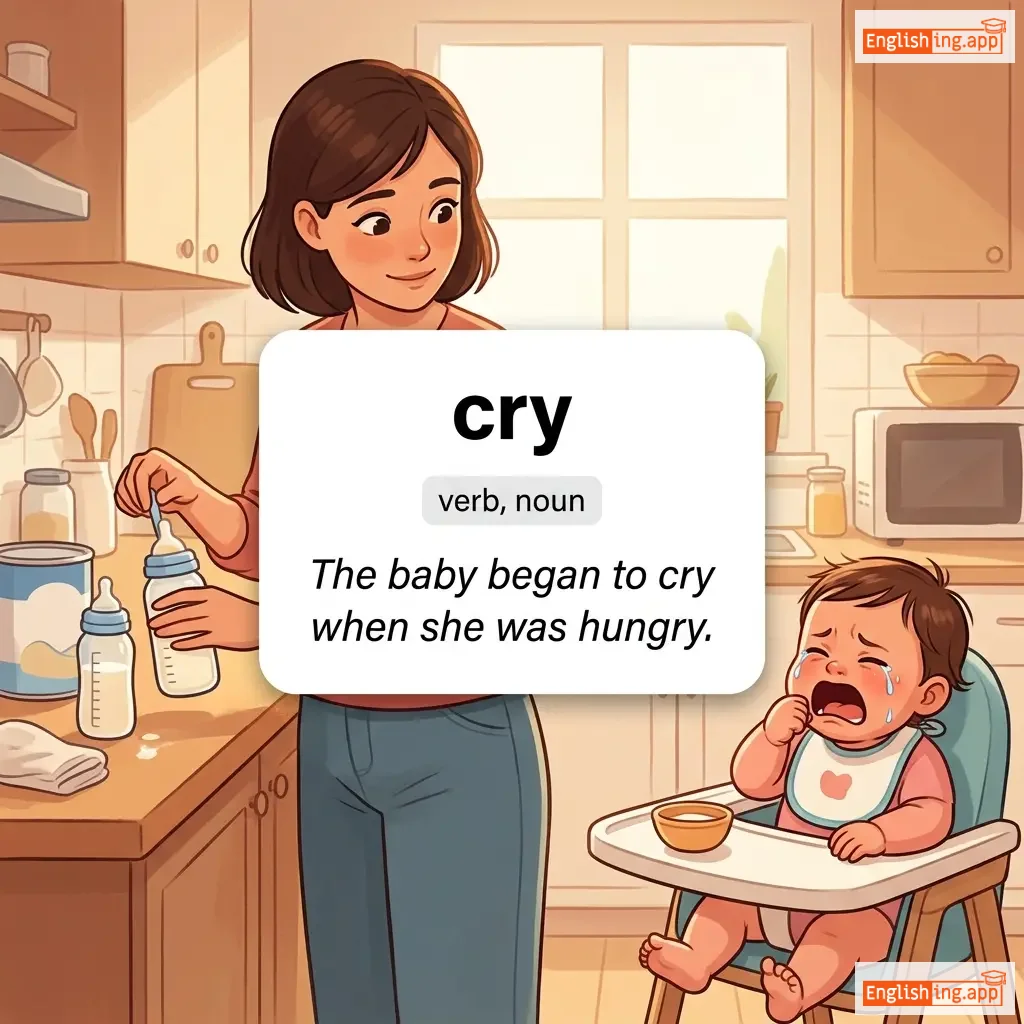
cry definition card — visual illustration of the meaning
😢

cry

verb, noun
/kraɪ/

To shed tears as an expression of emotion such as sadness or pain; also a loud call or shout.

"The baby began to cry when she was hungry."

noun
/krɪpt/
地下室 (chikashitsu)

an underground chamber, especially one beneath a church, used as a burial place

"The tourists explored the ancient crypt beneath the cathedral."

"観光客は大聖堂の下にある古代の地下室を探索しました。" (Kankoukyaku wa daiseidou no shita ni aru kodai no chikashitsu wo tansaku shimashita.)
cryptic definition card — visual illustration of the meaning
adjective
/ˈkrɪptɪk/
謎めいた (nazo meita)

having a meaning that is mysterious or obscure

"She left a cryptic message on his voicemail."

"彼女は彼のボイスメールに謎めいたメッセージを残しました。" (Kanojo wa kare no boisu mēru ni nazo meita messēji o nokoshimashita.)
cryptocurrency definition card — visual illustration of the meaning
noun
/ˌkrɪptəˈkʌrənsɪ/
暗号通貨 (angou touka)

A digital currency in which transactions are verified and records maintained by a decentralized system

"Cryptocurrencies are revolutionizing the financial landscape."

"暗号通貨は金融の風景を革命的に変えています。" (Angou touka wa kin'yuu no fuukei o kakumeiteki ni kaeteimasu.)
noun
/ˈkrɪptəɡræm/
暗号文 (angoubun)

a text written in code or cipher

"The detective solved the cryptogram hidden in the letter."

"探偵は手紙に隠された暗号文を解読しました。" (Tantei wa tegami ni kakusareta angōbun o kaidoku shimashita.)
cryptographic definition card — visual illustration of the meaning
adjective
/ˌkrɪp.təˈɡræf.ɪk/
暗号学的 (angōgakuteki)

Relating to cryptography; involving or using secret codes or ciphers for security.

"Banks use cryptographic technology to protect transactions."

"銀行は取引を保護するために暗号技術を使用します。" (Ginkō wa torihiki o hogo suru tame ni angō gijutsu o shiyō shimasu.)
cryptography definition card — visual illustration of the meaning
noun
/krɪpˈtɒɡ.rə.fi/
暗号化または符号化技術を使用して情報を保護する実践 (Angouka matawa fugouka gijutsu wo shiyou shite jouhou wo hogo suru jissen)

The practice of securing information through encryption or coding techniques

"Modern cryptography ensures secure online transactions."

"現代の暗号技術は、安全なオンライン取引を保証します。" (Gendai no angou gijutsu wa, anzen na onrain torihiki wo hoshou shimasu.)
noun
/ˈkrɪstəl/
クリスタル (kurisutaru)

a clear, transparent mineral or glass that forms a solid structure with regular patterns

"She wore a necklace made of sparkling crystal."

"彼女はきらめくクリスタルのネックレスを身につけていました。" (Kanojo wa kirameku kurisutaru no nekkuresu o mi ni tsukete imashita.)
verb
/ˈkrɪstəlaɪz/
結晶化する (kesshouka suru)

to form crystals; to make an idea or plan clear and definite

"Her vague thoughts began to crystallize into a solid plan."

"彼女のあいまいな考えは、明確な計画に結晶化し始めた。" (Kanojo no aimai na kangae wa, meikaku na keikaku ni kesshouka shi hajimeta.)
noun
/kʌb/
子グマ (koyuma)

a young bear, lion, tiger, or other large carnivorous mammal

"The bear cub stayed close to its mother for protection."

"子グマは保護のために母親の近くにいました。" (Koyuma wa hogo no tame ni hahaoya no chikaku ni imashita.)