वोकैबुलरीज

इंग्लिश वोकैबुलरी डिस्कवर, लर्न और मास्टर करें

noun
/ˈdɪkʃəˌnɛri/
शब्दकोश (shabdkosh)

A reference book or electronic resource containing words, usually arranged alphabetically, with information about their meanings, pronunciations, etymologies, and usage.

"I looked up the word in the dictionary to understand its meaning."

"मैंने शब्द का अर्थ समझने के लिए शब्दकोश में देखा।" (Maine shabd ka arth samajhne ke liye shabdkosh mein dekha.)
noun
/ˈdɪktəm/
नियम (niyam)

A formal pronouncement, authoritative statement, or maxim.

"The judge’s dictum clarified the principle of equality before the law."

"न्यायधीश का dictum कानून के समक्ष समानता के सिद्धांत को स्पष्ट करता है।" (Nyayadhish ka dictum kanoon ke samakhsh samaanta ke siddhant ko spasht karta hai.)
adjective
/daɪˈdæktɪk/
शिक्षात्मक (shikshatmak)

Intended to teach, often with a moral lesson.

"The novel is not just entertaining but also didactic in nature."

"उपन्यास सिर्फ मनोरंजक नहीं, बल्कि शैक्षिक दृष्टिकोण से भी है।" (Upanyaas sirf manoranjak nahi, balki shaikshik drishtikon se bhi hai.)
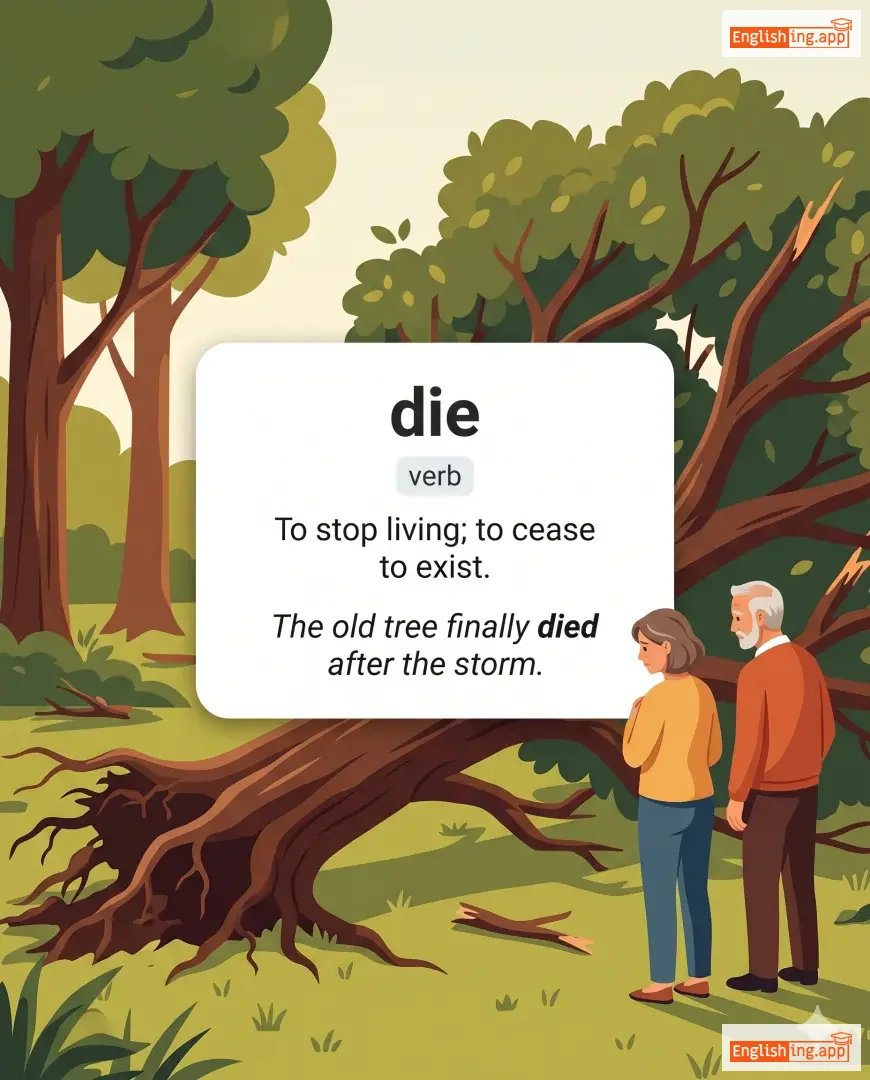
die definition card — visual illustration of the meaning
verb
/daɪ/
मरना (marna)

To stop living; to cease to exist.

"The old tree finally died after the storm."

"पुराना पेड़ तूफ़ान के बाद आखिरकार मर गया।" (Purana ped toofan ke baad aakhirkar mar gaya.)
noun
/ˈdaɪhɑːrd/
कट्टर (kattar)

A person who strongly resists change and remains loyal to a belief or cause.

"He is a diehard fan of classic rock music."

"वह क्लासिक रॉक संगीत का एक कट्टर प्रशंसक है।" (vah klaasik rok sangeet ka ek kattar prashansak hai)
noun
/ˈdaɪət/
आहार (aahar)

the kinds of food that a person usually eats

"He follows a strict vegetarian diet."

"वह एक कड़ा शाकाहारी आहार अपनाता है।" (Vah ek kada shaakahari aahar apnata hai.)
verb
/ˈdɪfər/
विभिन्न होना (vibhinn hona)

to be unlike or distinct from something else

"Opinions differ on this issue."

"इस मामले में रायें अलग हैं।" (Is maamle mein raayein alag hain.)
noun
/ˈdɪfərəns/
अंतर (antar)

A point or way in which things are not the same.

"There is a big difference between theory and practice."

"सिद्धांत और अभ्यास के बीच एक बड़ा अंतर है।" (Siddhant aur abhyas ke beech ek bada antar hai.)
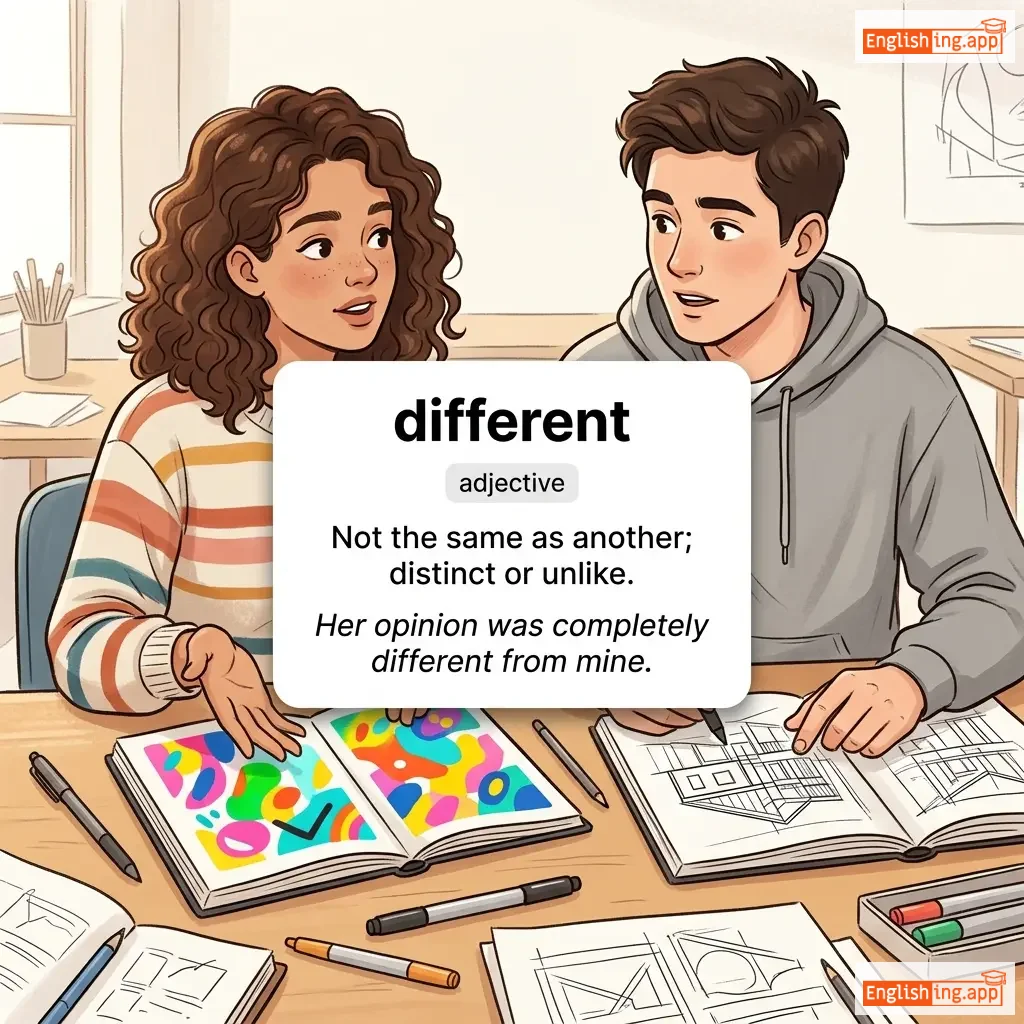
different definition card — visual illustration of the meaning
adjective
/ˈdɪf.ər.ənt/
विभिन्न (vibhinn)

Not the same as another; distinct or unlike.

"Her opinion was completely different from mine."

"उसका मत मेरे से पूरी तरह से अलग था।" (Uska mat mere se puri tarah se alag tha.)
noun
/ˌdɪfəˈrɛnʃə/
विभेदक लक्षण (vibhedak lakshan)

A distinguishing characteristic that sets one thing apart from another.

"The differentia of humans is their ability to reason abstractly."

"मानवों का विभेदक लक्षण उनकी अमूर्त रूप से सोचने की क्षमता है।" (Manavon ka vibhedak lakshan unki amurt roop se sochne ki kshamata hai.)
adjective
/ˌdɪfəˈrɛnʃəl/
भेदात्मक (bhedatmak)

Relating to or showing a difference; involving a distinction.

"There is a differential treatment between the two groups."

"दो समूहों के बीच भेदात्मक उपचार है।" (Do samoohon ke beech bhedatmak upchar hai.)
verb
/ˌdɪfəˈrɛnʃieɪt/
अंतर करना (antar karna)

To recognize or make a distinction between things.

"It is important to differentiate between fact and opinion."

"यह महत्वपूर्ण है कि तथ्य और राय के बीच अंतर किया जाए।" (Yah mahatvapurn hai ki tathya aur rai ke beech antar kiya jaye.)
differentiation definition card — visual illustration of the meaning
noun
/ˌdɪf.ə.ren.ʃiˈeɪ.ʃən/
विभेदन, अंतर, भेदभाव (vibhedan, antar, bhedbhav)

The action or process of differentiating or distinguishing between two or more things or people.

"Strong differentiation sets brands apart from competitors."

"स्ट्रॉन्ग डिफ़ेरेंशिएशन ब्रांड्स को प्रतियोगियों से अलग करता है।" (Strong differentiation brands ko pratijogiyon se alag karta hai.)
adverb
/ˈdɪfərəntli/
अलग तरह से (alag tarah se)

in a way that is not the same as another or as expected

"She approached the problem differently than her colleagues."

"उसने अपने सहकर्मियों से अलग तरीके से समस्या का समाधान किया।" (Usne apne sahkarmiyon se alag tareeke se samasya ka samadhan kiya.)
difficult definition card — visual illustration of the meaning
adjective
/ˈdɪf.ɪ.kəlt/
कठिन (kathin)

Needing much effort or skill to do or understand.

"The exam was so difficult that many students failed."

"परीक्षा इतनी कठिन थी कि कई छात्रों ने असफलता पाई।" (Pariksha itni kathin thi ki kai chhatron ne asafalta payi.)
noun
/ˈdɪfɪkəlti/

the state or condition of being hard to do, deal with, or understand

"He faced great difficulty in learning a new language."

diffidence definition card — visual illustration of the meaning
noun
/ˈdɪfɪdəns/
आत्मविश्वास की कमी (atmavishwas ki kami)

Lack of self-confidence; shyness or modesty.

"Her diffidence made it hard for her to speak in public."

"उसकी आत्मविश्वास की कमी ने उसे सार्वजनिक रूप से बोलने में कठिनाई दी।" (Uski atmavishwas ki kami ne use sarvajanik roop se bolne mein kathinai di.)
adjective
/ˈdɪfɪdənt/
शर्मीला (difident)

Shy or lacking confidence in one's own abilities.

"He was too diffident to ask a question in class."

"वह कक्षा में एक सवाल पूछने से बहुत शर्मीला था।" (vah kaksha mein ek sawaal poochhne se bahut sharmila tha.)
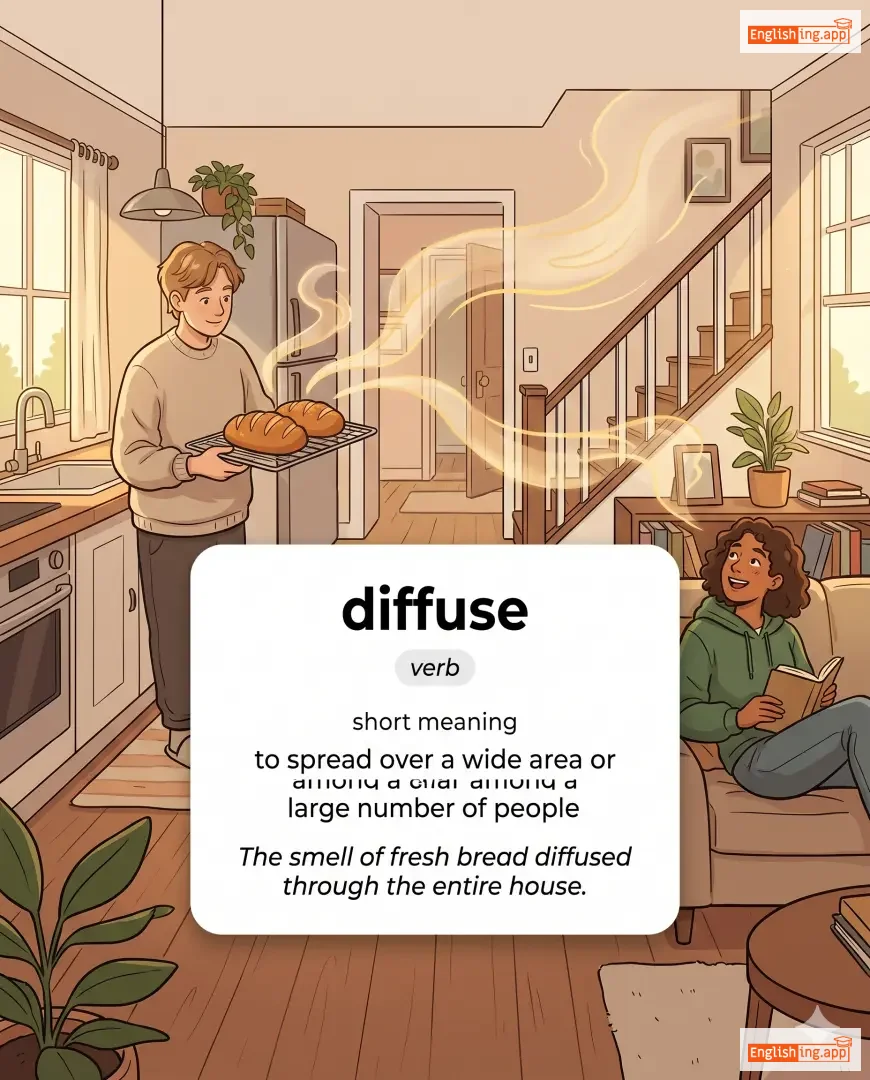
diffuse definition card — visual illustration of the meaning
verb
/dɪˈfjuːz/
व्याप्त करना (vyaapt karna)

to spread over a wide area or among a large number of people

"The smell of fresh bread diffused through the entire house."

"ताजे ब्रेड की खुशबू पूरे घर में फैल गई।" (Taje bread ki khushboo poore ghar mein phail gayi.)
adjective
/dɪˈfjuːzəbl/
विस्तार योग्य (vistaar yogya)

able to spread or be spread through a medium

"Oxygen is diffusible through cell membranes."

"ऑक्सीजन कोशिका झिल्ली के माध्यम से फैल सकता है।" (Oxygen koshika jhilli ke maadhyam se phail sakta hai.)
noun
/dɪˈfjuːʒən/
प्रसार (difiyujan)

the spreading of something more widely or the movement of particles from high to low concentration

"The diffusion of information on social media is rapid."

"सोशल मीडिया पर जानकारी का प्रसार तेज है." (social media par jaankari ka prasar tez hai)
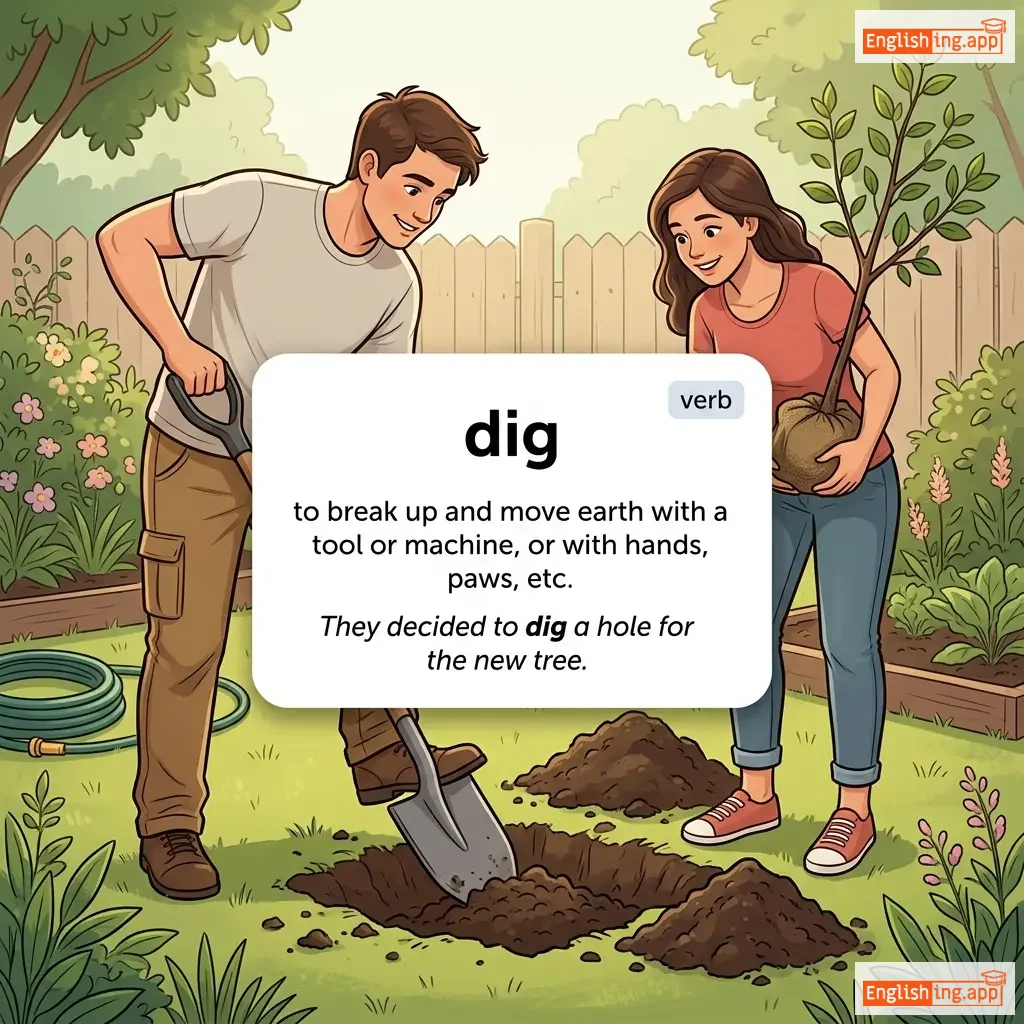
dig definition card — visual illustration of the meaning
verb
/dɪɡ/
खोदना (khodna)

to break up and move earth with a tool or machine, or with hands, paws, etc.

"They decided to dig a hole for the new tree."

"उन्होंने नए पेड़ के लिए एक गड्ढा खोदने का निर्णय लिया।" (Unhone naye ped ke liye ek gaddha khodne ka nirnay liya.)
digest definition card — visual illustration of the meaning
verb
/daɪˈdʒest/
पाचन करना (pachan karna)

to break down food in the body; to think about and understand

"It takes time to digest a heavy meal."

"यह एक भारी भोजन को पचाने के लिए समय लेता है।" (Yeh ek bhari bhojan ko pachane ke liye samay leta hai.)
digestive definition card — visual illustration of the meaning
adjective
daɪˈdʒes.tɪv
पाचन संबंधी (paachan sambandhi)

Relating to the digestion of food.

"Digestive enzymes help break down food."

"पाचन एंजाइम भोजन को तोड़ने में मदद करते हैं।" (Paachan enzymes bhojan ko todne mein madad karte hain.)
noun
/ˈdɪdʒɪt/
अंक (dijit)

a numeral from 0 to 9; also a finger or toe

"You must enter a four-digit code to unlock the phone."

"फोन को अनलॉक करने के लिए आपको चार अंकों का कोड दर्ज करना होगा।" (phone ko anlaak karne ke liye aapko chaar ankon ka kod darj karna hoga)
digital definition card — visual illustration of the meaning
adjective
/ˈdɪdʒɪtl/
डिजिटल (digital)

relating to technology that uses signals or data in the form of numbers (0s and 1s)

"She prefers digital books over printed ones."

"वह मुद्रित पुस्तकों के मुकाबले डिजिटल पुस्तकें पसंद करती है।" (Wah mudrit pustakon ke mukable digital pustakein pasand karti hai.)
digital detox definition card — visual illustration of the meaning
noun
/ˈdɪdʒɪtl ˈdɛtɒks/
डिजिटल डिटॉक्स (digital detox)

A period of time during which a person refrains from using electronic devices such as smartphones or computers, regarded as an opportunity to reduce stress or focus on social interaction in the physical world.

"A digital detox can help improve mental clarity and reduce stress."

"डिजिटल डिटॉक्स मानसिक स्पष्टता में सुधार और तनाव को कम करने में मदद कर सकता है।" (Digital detox mansik spashthata mein sudhaar aur tanav ko kam karne mein madad kar sakta hai.)
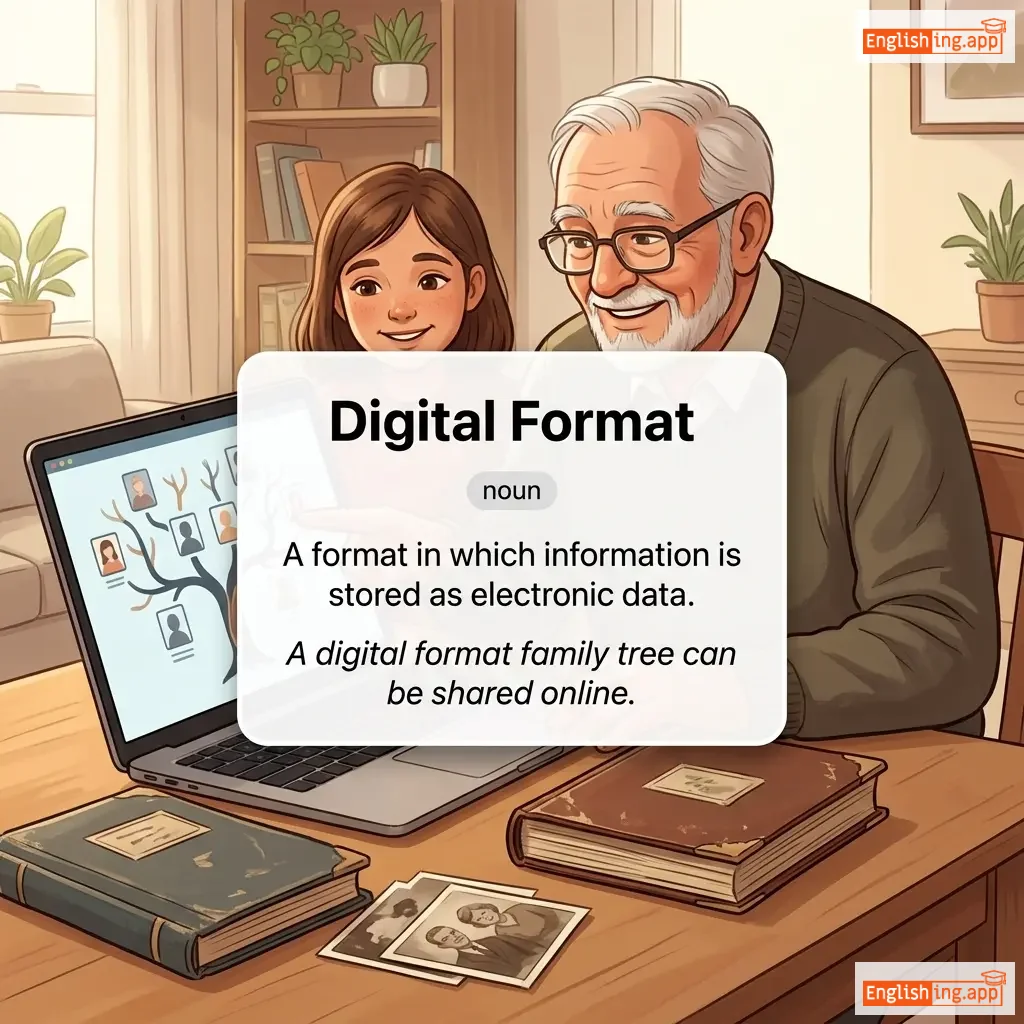
Digital Format definition card — visual illustration of the meaning
noun
ˈdɪdʒɪtəl ˈfɔːrmæt
डिजिटल प्रारूप (digital praaroop)

A format in which information is stored as electronic data.

"A digital format family tree can be shared online."

"एक डिजिटल प्रारूप पारिवारिक वृक्ष को ऑनलाइन साझा किया जा सकता है।" (Ek digital praaroop parivaarik vriksh ko online saajha kiya ja sakta hai.)
digital tools definition card — visual illustration of the meaning
noun
ˈdɪdʒ.ɪ.təl tuːlz
डिजिटल टूल्स (digital tools)

Electronic software and applications used for learning and educational purposes.

"Schools are integrating digital tools to enhance learning."

"स्कूल डिजिटल टूल्स को सीखने को बढ़ावा देने के लिए एकीकृत कर रहे हैं।" (School digital tools ko seekhne ko badhawa dene ke liye ekeekrit kar rahe hain.)
noun
/ˈdɪɡnɪˌtɛri/
महत्वपूर्ण व्यक्ति (mahatvapoorn vyakti)

a person considered to be important because of high rank or office

"Several foreign dignitaries attended the state banquet."

"कई विदेशी गणमान्य व्यक्तियों ने राज्य भोज में भाग लिया।" (Kai videshi ganmanaya vyaktiyon ne rajya bhoj mein bhag liya.)
noun
/ˈdɪɡnəti/
गरिमा (garima)

the state or quality of being worthy of respect or honor

"He faced the difficult situation with calm and dignity."

"उसने कठिन स्थिति का सामना शांति और गरिमा के साथ किया।" (Usne kathin sthiti ka saamna shaanti aur garima ke saath kiya.)
noun
/ˈdaɪɡræf/
डाइग्राफ (daigraf)

A pair of letters representing a single sound, such as 'sh' in 'ship'.

"In the word 'phone', the letters 'ph' form a digraph."

"'फोन' शब्द में 'फ' अक्षर एक डाइग्राफ बनाता है।" ('phone' shabd mein 'ph' akshar ek daigraf banata hai.)
verb
/ˈkrʌmpəl/
मचमचाना (machmachana)

to crush something into folds or wrinkles

"He crumpled the paper and threw it in the bin."

"उसने कागज को मसल कर कूड़ेदान में फेंक दिया।" (Usne kagaz ko masal kar koodedan mein phenk diya.)
noun/verb
/kruːˈseɪd/
धर्मयुद्ध, जोरदार अभियान (dharmayudh, joradar abhiyan)

a vigorous campaign for a social, political, or religious cause; to fight passionately for a cause

"She has been crusading for women's rights all her life."

"वह महिलाओं के अधिकारों के लिए जीवन भर क्रूसेडिंग कर रही है।" (Wah mahilaon ke adhikaron ke liye jeevan bhar crusading kar rahi hai.)
verb
/krʌʃ/
कुछ इस हद तक दबाना या मरोड़ना कि वह क्षतिग्रस्त या नष्ट हो जाए (kuch is had tak dabana ya morna ki vah kshatigrast ya nasht ho jaye)

to press or squeeze something so hard that it is damaged or destroyed

"He accidentally crushed the paper cup in his hand."

"वह गलती से अपने हाथ में कागज का कप क्रश कर बैठा।" (Vah galti se apne haath mein kaagaz ka kap crush kar baitha.)
noun
/krʌst/
कठिन परत (kathin parat)

the hard outer surface of something, especially bread or the Earth's outer layer

"He cut off the crust of the bread before eating."

"उसने खाने से पहले रोटी की कठोर परत काट दी।" (Usne khane se pehle roti ki kathor parat kaat di.)
noun
/krʌˈsteɪʃən/
कठोर खोल वाले जलीय प्राणी (Kathor khol wale jaliya prani)

an aquatic animal with a hard shell, such as crabs, lobsters, and shrimps

"Crabs and lobsters are well-known crustaceans."

"केकड़े और लॉबस्टर अच्छे से प्रसिद्ध क्रस्टेशियन हैं।" (Kekde aur lobster achhe se prasiddh crustaceans hain.)
adjective
/krʌˈsteɪʃəs/
कठोर खोल जैसा (kathor kohl jaisa)

relating to or having a hard shell like a crustacean

"The scientist studied the crustaceous fossils."

"वैज्ञानिक ने कठोर खोल जैसे जीवाश्मों का अध्ययन किया।" (Vaigyanik ne kathor kohl jaise jibashmon ka adhyayan kiya.)
noun
/krʌtʃ/
लाठी, सहारा (lathi, sahara)

a support used by someone injured to walk; also something relied upon for support or help

"He had to use crutches after breaking his leg."

"उसे पैर टूटने के बाद लाठी का इस्तेमाल करना पड़ा।" (Use pair tootne ke baad lathi ka istemal karna pada.)
noun
/krʌks/
मुख्य बिंदु (mukhya bindu)

the most important or decisive point of an issue

"The crux of the problem lies in poor communication."

"समस्या का मुख्य बिंदु खराब संचार में छिपा हुआ है।" (Samasya ka mukhya bindu kharab sanchar mein chhupa hua hai.)
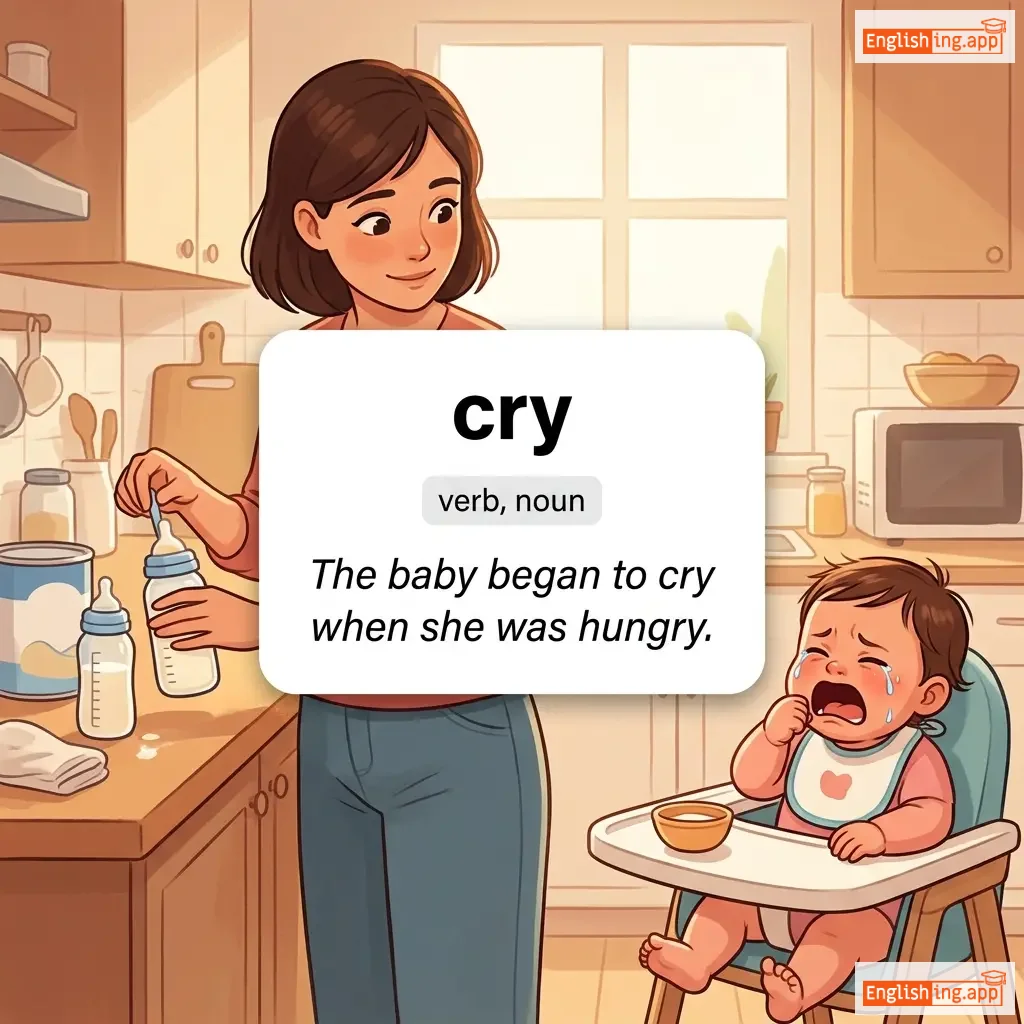
cry definition card — visual illustration of the meaning
verb, noun
/kraɪ/
रोना (rona)

To shed tears as an expression of emotion such as sadness or pain; also a loud call or shout.

"The baby began to cry when she was hungry."

"जब बच्ची भूखी थी तो वह रोने लगी।" (Jab bachchi bhookhi thi to vah rone lagi.)
noun
/krɪpt/
समाधि कक्ष (samadhi kakkh)

an underground chamber, especially one beneath a church, used as a burial place

"The tourists explored the ancient crypt beneath the cathedral."

"पर्यटकों ने कैथेड्रल के नीचे प्राचीन समाधि कक्ष का अन्वेषण किया।" (Paryatkon ne cathedral ke neeche prachin samadhi kakkh ka anvishan kiya.)
cryptic definition card — visual illustration of the meaning
adjective
/ˈkrɪptɪk/
रहस्यमय (rahasyamay)

having a meaning that is mysterious or obscure

"She left a cryptic message on his voicemail."

"वह अपने वॉयसमेल पर एक रहस्यमय संदेश छोड़ गई।" (Wah apne voicemail par ek rahasyamay sandesh chhod gayi.)
cryptocurrency definition card — visual illustration of the meaning
noun
/ˌkrɪptəˈkʌrənsɪ/
डिजिटल मुद्रा (digital mudra)

A digital currency in which transactions are verified and records maintained by a decentralized system

"Cryptocurrencies are revolutionizing the financial landscape."

"क्रिप्टोकरेन्सी वित्तीय परिदृश्य में क्रांति ला रही हैं।" (Cryptocurrency vittiya paridrishya mein kranti la rahi hain.)
noun
/ˈkrɪptəɡræm/
गोपनीय कोड (gopniya kod)

a text written in code or cipher

"The detective solved the cryptogram hidden in the letter."

"जासूस ने पत्र में छिपे क्रिप्टोग्राम को हल किया।" (Jasoos ne patra mein chhipe cryptogram ko hal kiya.)
cryptographic definition card — visual illustration of the meaning
adjective
/ˌkrɪp.təˈɡræf.ɪk/
सांकेतिक लेखन (sanketik lekhan)

Relating to cryptography; involving or using secret codes or ciphers for security.

"Banks use cryptographic technology to protect transactions."

"बैंक्स लेनदेन को सुरक्षित करने के लिए क्रिप्टोग्राफिक तकनीक का उपयोग करते हैं।" (Banks lendan ko surakshit karne ke liye cryptographic takneek ka upyog karte hain.)
cryptography definition card — visual illustration of the meaning
noun
/krɪpˈtɒɡ.rə.fi/
गोपनीयता संरक्षण या एन्क्रिप्शन तकनीक (gopaneeyata sanrakshan ya encryption takneek)

The practice of securing information through encryption or coding techniques

"Modern cryptography ensures secure online transactions."

"आधुनिक क्रिप्टोग्राफी ऑनलाइन लेन-देन को सुरक्षित बनाती है।" (Aadhunik cryptography online len-den ko surakshit banati hai.)
noun
/ˈkrɪstəl/
क्रिस्टल (kristal)

a clear, transparent mineral or glass that forms a solid structure with regular patterns

"She wore a necklace made of sparkling crystal."

"उसने एक चमचमाती क्रिस्टल की हार पहनी थी।" (Usne ek chamchamati kristal ki haar pehni thi.)
verb
/ˈkrɪstəlaɪz/
क्रिस्टलाइज़ करना (krystallize karna)

to form crystals; to make an idea or plan clear and definite

"Her vague thoughts began to crystallize into a solid plan."

"उसकी अस्पष्ट सोचें एक ठोस योजना में क्रिस्टलाइज़ होने लगीं।" (Uski aspasht sochen ek thos yojna mein krystallize hone lagi.)
noun
/kʌb/
शावक (shavak)

a young bear, lion, tiger, or other large carnivorous mammal

"The bear cub stayed close to its mother for protection."

"भालू का शावक अपनी माँ के पास सुरक्षा के लिए रहा।" (bhaloo ka shaavak apni maan ke paas suraksha ke liye raha.)