वोकैबुलरीज

इंग्लिश वोकैबुलरी डिस्कवर, लर्न और मास्टर करें

noun
/dɪˈrɪʒən/
अपमान (apmaan)

Contemptuous ridicule or mockery.

"His ideas were greeted with derision by the audience."

"उसके विचारों का अपमान के साथ स्वागत किया गया था।" (Uske vicharon ka apmaan ke saath swagat kiya gaya tha.)
adjective
/dɪˈraɪsɪv/
अपमानजनक (apmanjanak)

Expressing contempt or ridicule.

"She gave a derisive laugh at his attempt to sing."

"उसने उसकी गाने की कोशिश पर अपमानजनक हंसी दी।" (usne uski gaane ki koshish par apmanjanak hansi di.)
noun
/ˌdɛrɪˈveɪʃən/
व्युत्पत्ति (vyutpatti)

The origin or development of something from a source.

"The derivation of the word comes from Latin."

"शब्द की व्युत्पत्ति लैटिन से आई है।" (shabd ki vyutpatti latin se aayi hai.)
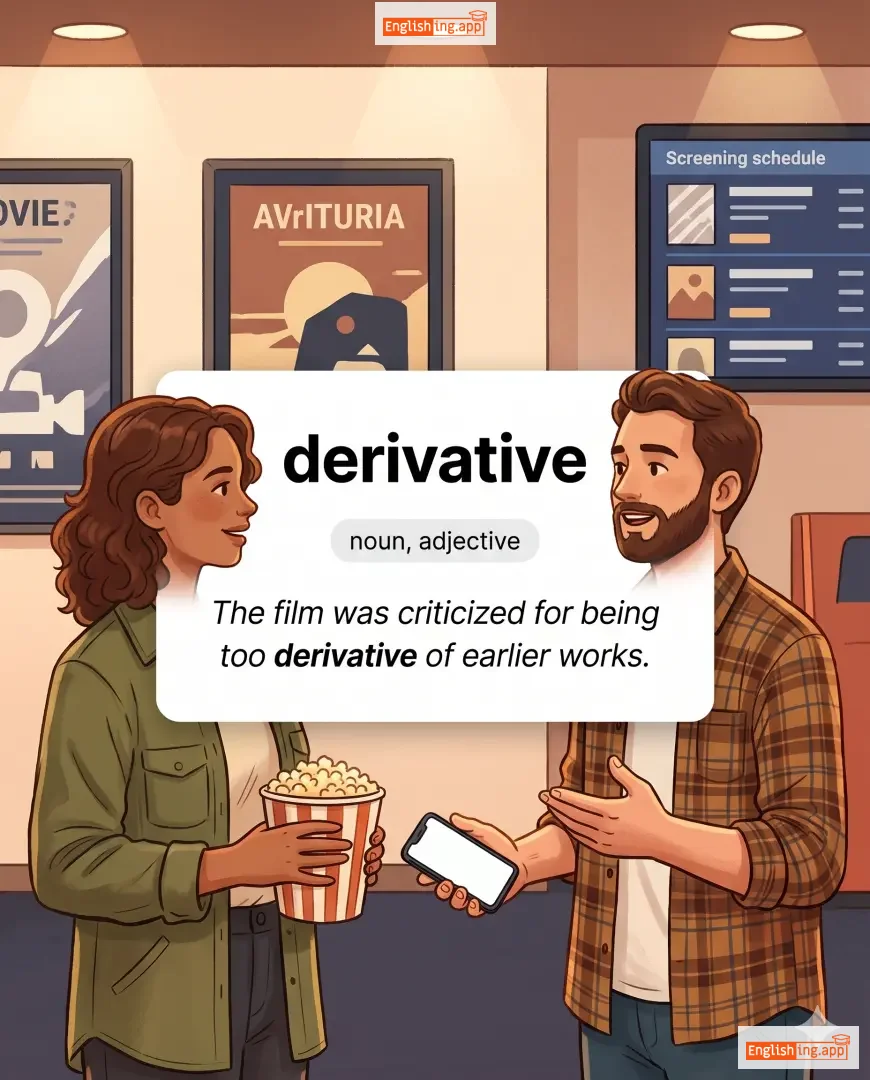
derivative definition card — visual illustration of the meaning
noun, adjective
/dɪˈrɪvətɪv/
व्युत्पन्न / अनुकरणीय (vyutpann / anukaraniya)

Something that is based on another source; in math, a measure of how a function changes.

"The film was criticized for being too derivative of earlier works."

"फिल्म को इसके पहले के कामों से बहुत अधिक व्युत्पन्न होने के लिए आलोचना की गई थी।" (film ko iske pehle ke kamon se bahut adhik vyutpann hone ke liye alochana ki gayi thi.)
verb
/dɪˈraɪv/
स्रोत से प्राप्त करना (srot se prapt karna)

To obtain something from a source.

"Many English words derive from Latin."

"कई अंग्रेजी शब्द लैटिन से प्राप्त होते हैं।" (kai angrezi shabd latin se prapt hote hain.)
adjective
/dɪˈraɪvd/
व्युत्पन्न (vyutpann)

Developed or obtained from something else; not original.

"The word is derived from Latin."

"यह शब्द लैटिन से व्युत्पन्न है।" (Yeh shabd Latin se vyutpann hai.)
noun
/ˌdɜːrməˈtɑːlədʒɪst/
चर्म रोग विशेषज्ञ (charm rog visheshagya)

A doctor who specializes in the treatment of skin diseases.

"She consulted a dermatologist for her skin allergy."

"उसने अपनी त्वचा की एलर्जी के लिए एक डर्मेटोलॉजिस्ट से सलाह ली।" (Usne apni tvacha ki allergy ke liye ek dermatologist se salah li.)
noun
/ˌdɜːrməˈtɑːlədʒi/
त्वचाविज्ञान (tvachavigyan)

The branch of medicine concerned with the skin and its diseases.

"He studied dermatology at medical school."

"उसने मेडिकल स्कूल में डर्माटोलॉजी का अध्ययन किया।" (Usne medical school mein dermatology ka adhyayan kiya.)
adjective
/dɪˈrɒɡətɪv/
अपमानजनक (apmanjanak)

Expressing a low opinion or showing lack of respect.

"He made a derogative remark about her work."

"उसने उसके काम के बारे में एक अपमानजनक टिप्पणी की।" (Usne uske kaam ke baare mein ek apmanjanak tippani ki.)
adjective
/dɪˈrɒɡətɔːri/
अपमानजनक (apmanjanak)

Showing a critical or disrespectful attitude.

"The article contained derogatory comments about the politician."

"लेख में राजनेता के बारे में अपमानजनक टिप्पणी थी।" (lekh mein rajneta ke baare mein apmanjanak tippani thi.)
noun
/ˈdɛrɪk/
डेरिक (derik)

A framework or tower used for supporting a crane, especially for oil drilling or lifting heavy loads.

"The workers assembled a derrick at the oil drilling site."

"मजदूरों ने तेल ड्रिलिंग साइट पर एक डेरिक इकट्ठा किया।" (Mazdooron ne tel drilling site par ek derik ikattha kiya.)
noun
/ˈdɛskænt/
अतिरिक्त संगीत (atirikt sangeet)

An additional melody or counterpoint sung or played above the main melody.

"The choir added a beautiful descant to the hymn."

"कोरस ने भजन में एक सुंदर डेस्केंट जोड़ा।" (Koras ne bhajan mein ek sundar descant joda.)
verb
/dɪˈsɛnd/
नीचे आना (neeche aana)

To move or fall downward; to come or go down from a higher place.

"The hikers descended the steep mountain path."

"पर्यटकों ने खड़ी पहाड़ी रास्ते से नीचे उतरे।" (Paryatako ne khadi pahadi raste se neeche utare.)
noun
/dɪˈsɛndənt/
वंशज (vangaj)

A person who is descended from a particular ancestor.

"She is a descendant of a famous poet."

"वह एक प्रसिद्ध कवि का वंशज है।" (Vah ek prasiddh kavi ka vangaj hai.)
adjective
/dɪˈsɛndənt/
निम्नगामी (nimnagaami)

Moving downward; going down or descending.

"The river followed a descendent course toward the valley."

"नदी ने घाटी की ओर एक निम्नगामी मार्ग का अनुसरण किया।" (Nadi ne ghaati ki or ek nimnagaami maarg ka anusaran kiya.)
noun
/dɪˈsɛnt/
अवतरण / वंश (avtaran / vansh)

the action of moving downward, falling, or dropping; ancestry or origin

"The climbers began their descent from the mountain peak."

"चढ़ाई करने वाले पहाड़ी की चोटी से अपनी अवतरण की शुरुआत करने लगे।" (chadhai karne wale pahadi ki choti se apni avtaran ki shuruat karne lage.)
verb
/dɪˈskraɪb/
वर्णन करना (varnan karna)

to give an account of something in words, including details

"She described the scene vividly."

"उसने दृश्य को जीवंत रूप से वर्णित किया।" (Usne drishya ko jeevant roop se varnit kiya.)
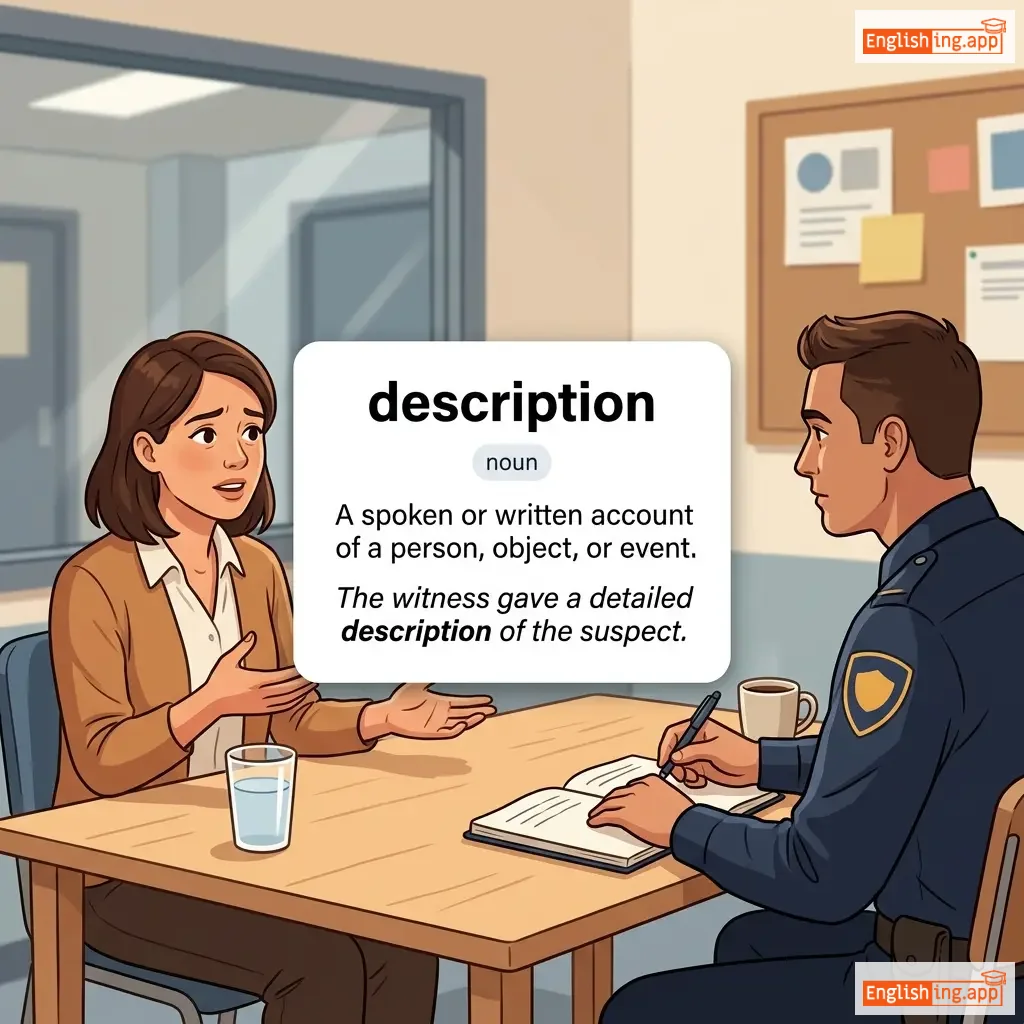
description definition card — visual illustration of the meaning
noun
/dɪˈskrɪpʃən/
विवरण (vivaran)

A spoken or written account of a person, object, or event.

"The witness gave a detailed description of the suspect."

"गवाह ने संदिग्ध का विस्तृत विवरण दिया।" (Gawah ne sandigdh ka vistaarit vivaran diya.)
verb
/dɪˈskraɪ/
दूर से देखना (door se dekhna)

to catch sight of something, especially something distant or obscure

"From the hilltop, they descried a small village in the distance."

"हिलटॉप से, उन्होंने दूर में एक छोटा गाँव देखा।" (hilltop se, unhone door mein ek chhota gaon dekha.)
verb
/ˈdɛsɪkreɪt/
अपवित्र करना (apavitra karna)

to treat a sacred place or object with disrespect or violation

"The vandals desecrated the ancient temple walls with graffiti."

"वैंडल्स ने प्राचीन मंदिर की दीवारों को ग्रैफिटी से अपवित्र कर दिया।" (vandals ne prachin mandir ki deewaron ko graffiti se apavitra kar diya.)
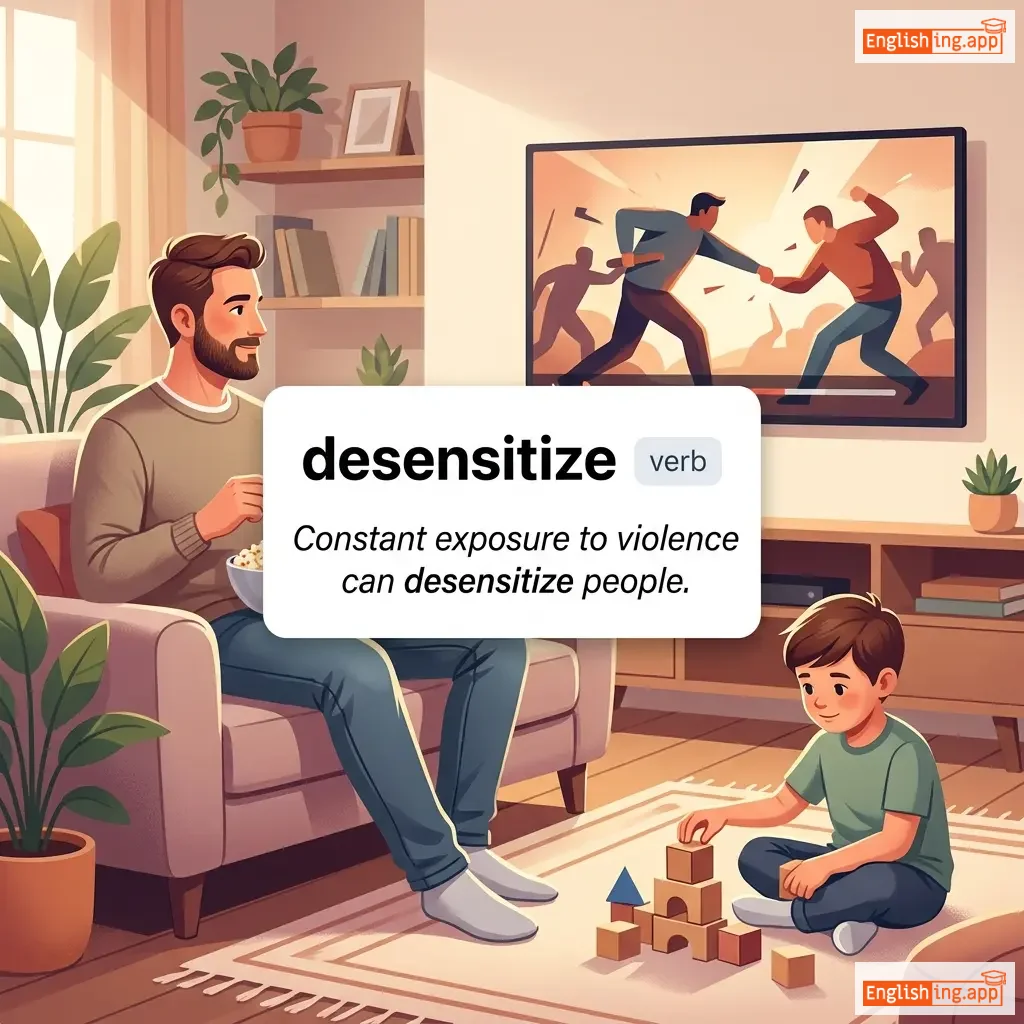
desensitize definition card — visual illustration of the meaning
verb
diːˈsɛn.sɪ.taɪz
संवेदनशीलता कम करना (sensitive-lata kam karna)

To make someone less sensitive or reactive to something through repeated exposure.

"Constant exposure to violence can desensitize people."

"लगातार हिंसा का सामना करने से लोग असंवेदनशील हो सकते हैं।" (Lagaataar hinsa ka samna karne se log asanvedansheel ho sakte hain.)
noun, verb
/ˈdez.ɚt/ (noun/adjective), /dɪˈzɜːrt/ (verb)
रेगिस्तान / त्यागना (registan / tyagna)

as a noun, a barren sandy region; as a verb, to abandon someone or something

"He deserted his friends in their time of need."

"उसने अपने दोस्तों को उनकी जरूरत के समय में छोड़ दिया।" (Usne apne doston ko unki zarurat ke samay mein chhod diya.)
adjective
/dɪˈzɜːrtɪd/
रेगिस्तानी (registani)

Empty of people; abandoned.

"The village looked completely deserted after the storm."

"तूफान के बाद गाँव पूरी तरह से रेगिस्तानी दिख रहा था।" (Toofan ke baad gaon poori tarah se registani dikh raha tha.)
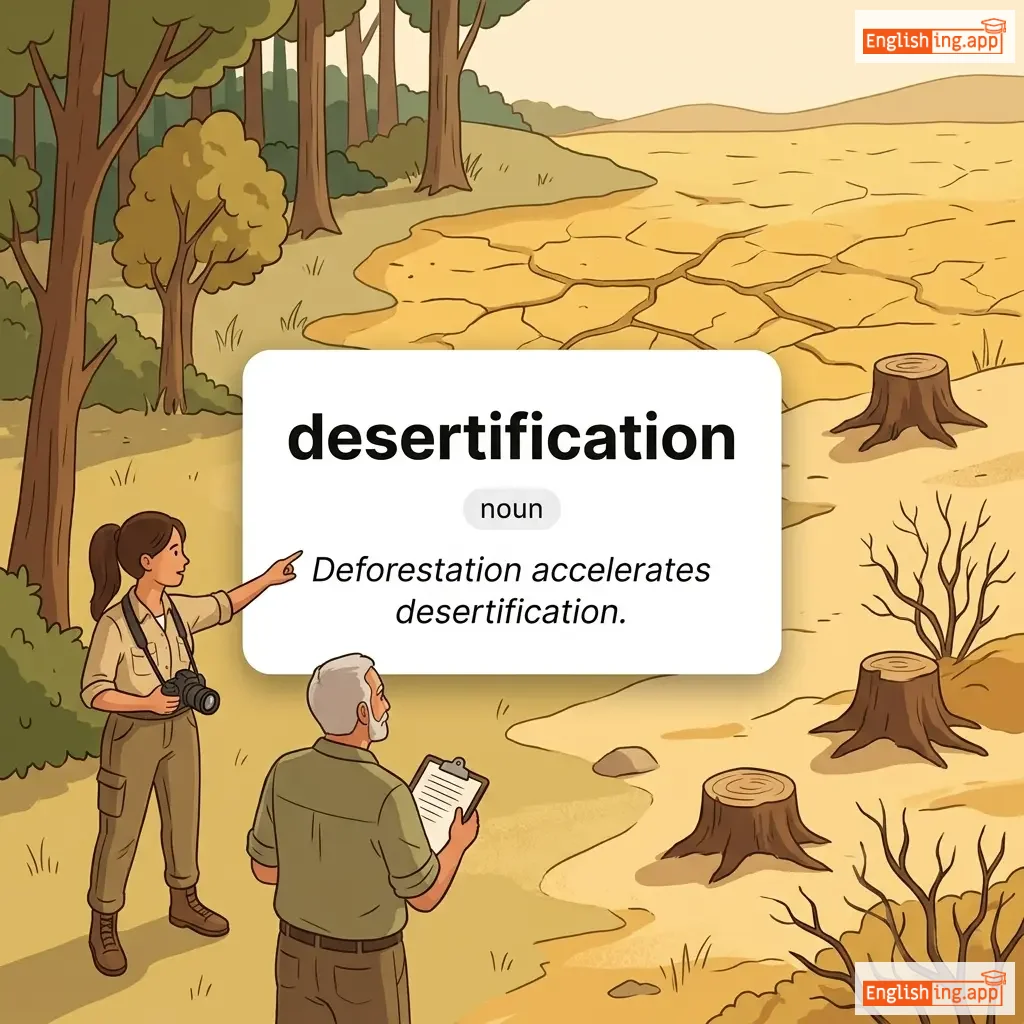
desertification definition card — visual illustration of the meaning
noun
dɪˌzɝː.t̬ə.fɪˈkeɪ.ʃən
मरुस्थलीकरण (marusthalikaran)

The process by which fertile land becomes desert, typically as a result of drought, deforestation, or inappropriate agriculture.

"Deforestation accelerates desertification."

"वनों की अराजकता मरुस्थलीकरण को तेज करती है।" (Vanon ki arajakta marusthalikaran ko tej karti hai.)
noun
/dɪˈzɜːrts/ (noun: reward or punishment deserved)
जो कोई डिज़र्व करता है, खासकर सजा या पुरस्कार (jo koi deserve karta hai, khaaskar saza ya puraskar)

what someone deserves, especially punishment or reward

"He finally got his just deserts for cheating in the exam."

"उसे परीक्षा में धोखाधड़ी करने के लिए आखिरकार अपनी प्राप्य सजा मिली।" (use pariksha mein dhokhadadi karne ke liye aakhirkaar apni prapya saza mili.)
verb
/dɪˈzɜːrv/
योग्य होना (yogya hona)

To be worthy of something, usually a reward or punishment.

"She worked hard and deserves recognition."

"उसने कड़ी मेहनत की और वह सम्मान का पात्र है।" (Usne kadi mehnat ki aur vah sammaan ka patra hai.)
noun
/ˈdɛsɪkənt/
सूखा करने वाली वस्तु (sookha karne wali vastu)

a substance that absorbs moisture and keeps things dry

"Silica gel packets are commonly used as a desiccant in packaging."

"सिलिका जेल पैकेट्स को पैकेजिंग में एक डेसिकंट के रूप में आमतौर पर उपयोग किया जाता है।" (silika jel packets ko packaging mein ek desiccant ke roop mein aamtaur par upyog kiya jata hai.)
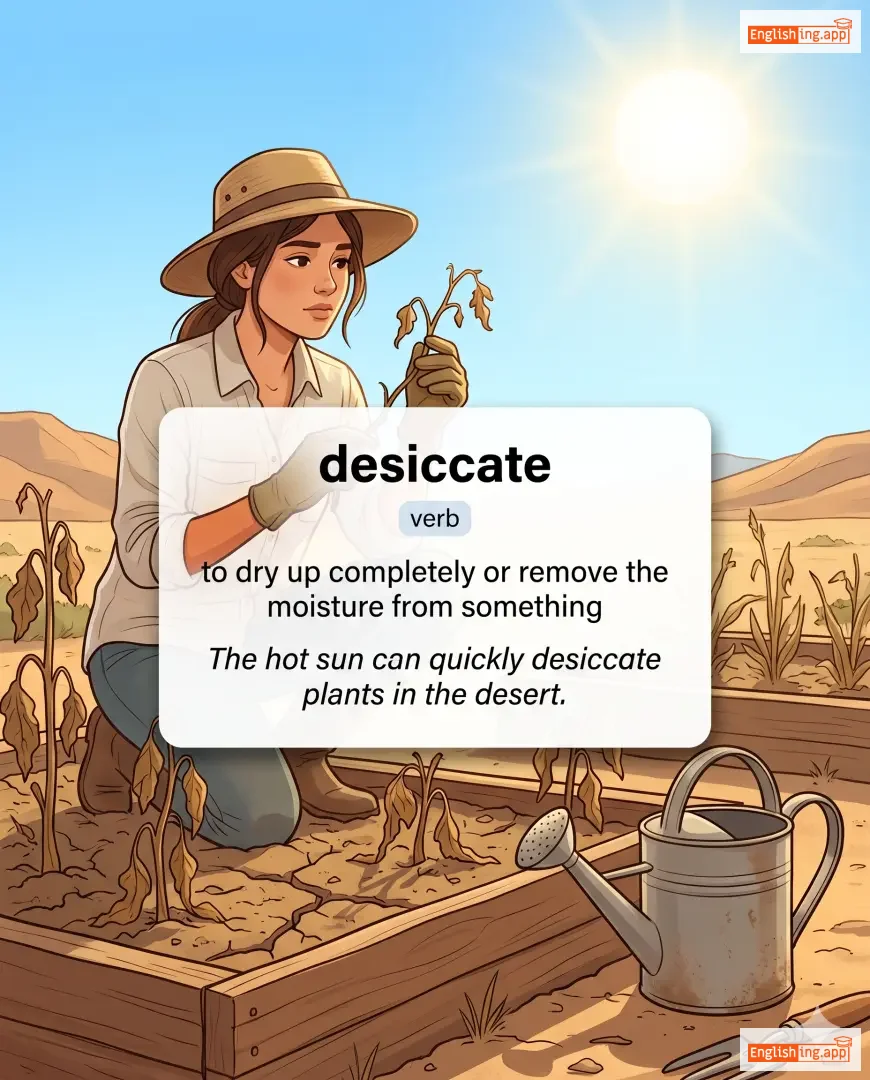
desiccate definition card — visual illustration of the meaning
verb
/ˈdɛsɪkeɪt/
सूखाना (sukhana)

to dry up completely or remove the moisture from something

"The hot sun can quickly desiccate plants in the desert."

"गर्म सूरज रेगिस्तान में पौधों को जल्दी सूखा सकता है।" (Garm sooraj registan mein paudhon ko jaldi sukha sakta hai.)
adjective
/ˈdɛsɪkeɪtɪd/
सूखा हुआ (sukha hua)

completely dried, having had all moisture removed

"The museum displayed desiccated specimens of plants."

"संग्रहालय ने सूखे पौधों के नमूने प्रदर्शित किए।" (Sangrahalay ne sukhe paudhon ke namune pradarshit kiye.)
noun
/dɪˌsɪdəˈreɪtəm/
आवश्यक वस्तु (aavashyak vastu)

something that is desired or considered necessary

"For many students, financial aid is a desideratum."

"कई छात्रों के लिए, वित्तीय सहायता एक आवश्यक वस्तु है।" (Kai chhatron ke liye, vittiya sahayata ek aavashyak vastu hai.)
verb
/dɪˈzaɪn/
डिज़ाइन करना (design karna)

to plan and create something with a particular purpose or look

"She will design the new company logo."

"वह नई कंपनी का लोगो डिज़ाइन करेगी।" (Vah nayi company ka logo design karegi.)
verb
/ˈdɛzɪɡneɪt/
नामित करना (namit karna)

to officially assign, appoint, or indicate something or someone

"The committee will designate a new chairperson next week."

"कमिटी अगले हफ्ते एक नए चेयरपर्सन को नामित करेगी।" (Kamiti agle hafte ek naye chairperson ko namit karegi.)
noun
/ˌdez.ɪɡˈneɪ.ʃən/
पदनाम; पद; शीर्षक; दर्जा (padnaam, pad, sheershak, darja)

the action of choosing someone for a position; a name, title, or official status

"His designation as team leader came with additional responsibilities and authority."

"उसकी टीम लीडर के रूप में पदस्थापना अतिरिक्त जिम्मेदारियाँ और अधिकार लेकर आई।" (uski team leader ke roop mein padsthapna atirikt zimmedariyan aur adhikar lekar aayi.)
noun
/dɪˈzaɪnər/
डिज़ाइनर (designer)

a person who plans and creates the form or structure of something

"The fashion designer presented her new collection."

"फैशन डिज़ाइनर ने अपनी नई संग्रह प्रस्तुत की।" (Fashion designer ne apni nai sangrah prastut ki.)
adjective
/dɪˈzaɪərəbl/
आकर्षक (aakarshak)

worth having or wanting; attractive

"The location of the house was highly desirable, with great views."

"घर का स्थान बहुत ही आकर्षक था, शानदार दृश्य थे।" (Ghar ka sthaan bahut hi aakarshak tha, shandar drishya the.)
noun, verb
/dɪˈzaɪər/
इच्छा (ichchha)

a strong feeling of wanting something or wishing for something to happen

"He has a strong desire to travel the world."

"उसका दुनिया घूमने की मजबूत इच्छा है।" (Uska duniya ghoomne ki majboot ichcha hai.)
verb
/dɪˈzɪst/
रोकना (rokna)

to stop doing something, especially an action considered wrong or undesirable

"The judge ordered the company to desist from unfair practices."

"न्यायाधीश ने कंपनी को अनुचित प्रथाओं से रुकने का आदेश दिया।" (Nyayadhish ne company ko anuchit prathaon se rukne ka aadesh diya.)
noun
/dɪˈsɪstəns/
निरस्त होना (nirast hona)

The act of stopping or ceasing from some action or behavior.

"The court urged his desistance from further unlawful activities."

"कोर्ट ने उसे आगे की गैरकानूनी गतिविधियों से निरस्त होने के लिए कहा।" (Court ne use aage ki gairkanuni gatividhiyon se nirast hone ke liye kaha.)
desk definition card — visual illustration of the meaning
noun
/dɛsk/
मेज (mez)

a piece of furniture with a flat surface used for writing or working

"The books are on the desk."

"किताबें मेज पर हैं।" (Kitabein mej par hain.)
noun
/ˈdɛsktɒp/
डेस्कटॉप कंप्यूटर (desktop kampyutar)

a computer designed to be used on a desk, typically with a separate monitor, keyboard, and mouse

"I keep my documents on the desktop for easy access."

"मैं आसान पहुँच के लिए अपने दस्तावेज़ डेस्कटॉप पर रखता हूँ।" (main aasan pahunch ke liye apne dastavej desktop par rakhta hoon)
adjective
/ˈdɛsələt/
विरान (viraan)

Empty, bleak, and without people; feeling very sad and lonely.

"The once lively town now stood desolate after the flood."

"जो एक समय जीवंत था, अब बाढ़ के बाद वीरान खड़ा था।" (Jo ek samay jeevant tha, ab baadh ke baad veeraan khada tha.)
noun
/dɪˈspɛər/
निराशा (despeyar)

The complete loss or absence of hope.

"She was in deep despair after losing her job."

"अपनी नौकरी खोने के बाद वह गहरी निराशा में थी." (Apni naukri khone ke baad vah gehri nirasha mein thi.)
adjective
/dɪˈsperɪŋ/
निराशाजनक (niraashajanak)

feeling hopeless; in despair

"She felt despairing after losing her job."

"अपना काम खोने के बाद, वह निराश महसूस कर रही थी।" (apna kaam khone ke baad, wah niraash mahsus kar rahi thi.)
noun
/ˌdɛspəˈrɑːdoʊ/
खतरनाक बदमाश (desperado)

A bold, reckless, or dangerous person, often a criminal.

"The sheriff was determined to capture the desperado who terrorized the town."

"शेरिफ शहर में आतंक मचाने वाले डेस्पेराडो को पकड़ने के लिए दृढ़ संकल्पित था." (sherif shahar mein aatank machaane vaale desperado ko pakadne ke liye dradh sankalpit tha.)
adjective
/ˈdɛspərət/
निर्विकल्प (nirvikalp)

Feeling or showing a hopeless sense that a situation is so bad as to be impossible to deal with.

"He was desperate to find a job before his savings ran out."

"वह अपनी बचत खत्म होने से पहले नौकरी पाने के लिए निराश था।" (Vah apni bachat khatam hone se pehle naukri paane ke liye nirash tha.)
adverb
/ˈdɛspərətli/
निराशा से (nirasha se)

in a way that shows despair or great need

"He called for help desperately after the accident."

"दुर्घटना के बाद उसने मदद के लिए निराशा से पुकारा।" (Durghatna ke baad usne madad ke liye niraasha se pukara.)
adjective
/dɪˈspɪkəbl/
निंदनीय (nindaniy)

Deserving hatred and contempt; vile or shameful.

"His despicable actions shocked the entire community."

"उसकी निंदनीय हरकतों ने पूरे समुदाय को चौंका दिया।" (Uski nindaniy harkaton ne poore samudaay ko chonka diya.)
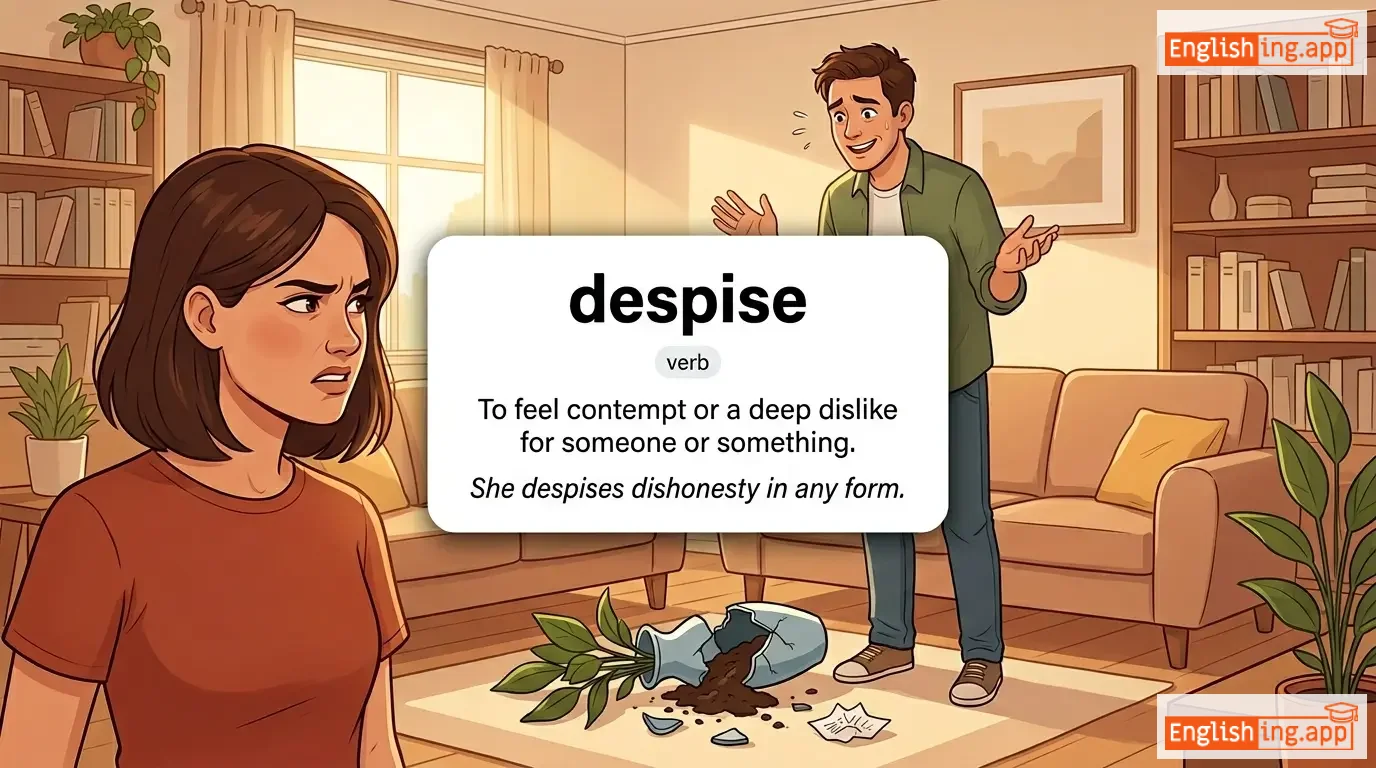
despise definition card — visual illustration of the meaning
verb
/dɪˈspaɪz/
नफ़रत करना (nafrat karna)

To feel contempt or a deep dislike for someone or something.

"She despises dishonesty in any form."

"वह किसी भी रूप में बेईमानी से नफरत करती है।" (Vah kisi bhi roop mein beemaani se nafrat karti hai.)
preposition
/dɪˈspaɪt/
इसके बावजूद (iske bawajood)

Without being affected by; in spite of.

"He continued his work despite the difficulties."

"कठिनाइयों के बावजूद उसने अपना काम जारी रखा।" (Kathinaiyon ke bawajood usne apna kaam jaari rakha.)
verb
/dɪˈspɔɪl/
लूटपाट करना (lootpaat karna)

To steal or violently remove valuable possessions from a place.

"The invaders despoiled the village during the war."

"आक्रमणकारियों ने युद्ध के दौरान गाँव को लूट लिया।" (Aakramankariyon ne yudh ke dauran gaanv ko loot liya.)