词汇表

英语词汇词典 | 单词含义、定义和示例

noun
/ˈdɪkʃəˌnɛri/
字典 (zidian)

A reference book or electronic resource containing words, usually arranged alphabetically, with information about their meanings, pronunciations, etymologies, and usage.

"I looked up the word in the dictionary to understand its meaning."

"我在字典里查了这个词的意思。" (Wo zai zidian li cha le zhe ge ci de yisi.)
noun
/ˈdɪktəm/
格言 (géyán)

A formal pronouncement, authoritative statement, or maxim.

"The judge’s dictum clarified the principle of equality before the law."

"法官的格言澄清了法律面前人人平等的原则。" (Fǎguān de géyán chéngqīngle fǎlǜ miànqián rén rén píngděng de yuánzé.)
adjective
/daɪˈdæktɪk/
教学的 (jiaoxue de)

Intended to teach, often with a moral lesson.

"The novel is not just entertaining but also didactic in nature."

"这本小说不仅仅是娱乐性,还有教学性质。" (Zhe ben xiaoshuo bu jin jin shi yulexing, hai you jiaoxue xingzhi.)
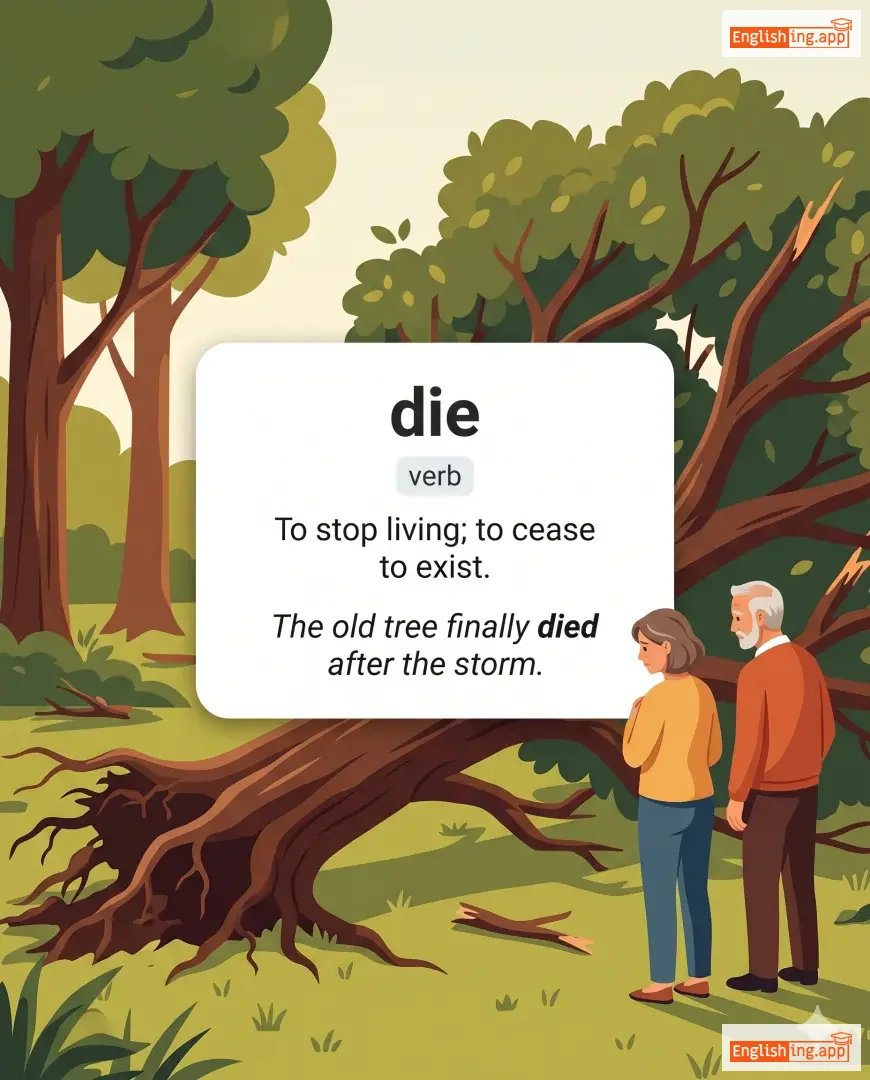
die definition card — visual illustration of the meaning
verb
/daɪ/
死亡 (sǐwáng)

To stop living; to cease to exist.

"The old tree finally died after the storm."

"在风暴之后,老树终于死了。" (Zài fēngbào zhīhòu, lǎo shù zhōngyú sǐle.)
noun
/ˈdaɪhɑːrd/

A person who strongly resists change and remains loyal to a belief or cause.

"He is a diehard fan of classic rock music."

noun
/ˈdaɪət/
饮食 (yinshi)

the kinds of food that a person usually eats

"He follows a strict vegetarian diet."

"他遵循严格的素食饮食。" (Tā zūnxún yángé de sùshí yǐnshí.)
verb
/ˈdɪfər/
不同 (butong)

to be unlike or distinct from something else

"Opinions differ on this issue."

"关于这个问题,意见有所不同。" (guanyu zhe ge wenti, yijian you suo butong.)
noun
/ˈdɪfərəns/
区别 (qubie)

A point or way in which things are not the same.

"There is a big difference between theory and practice."
"理论和实践之间有很大的区别。" (Lǐlùn hé shíjiàn zhī jiān yǒu hěn dà de qūbié.)
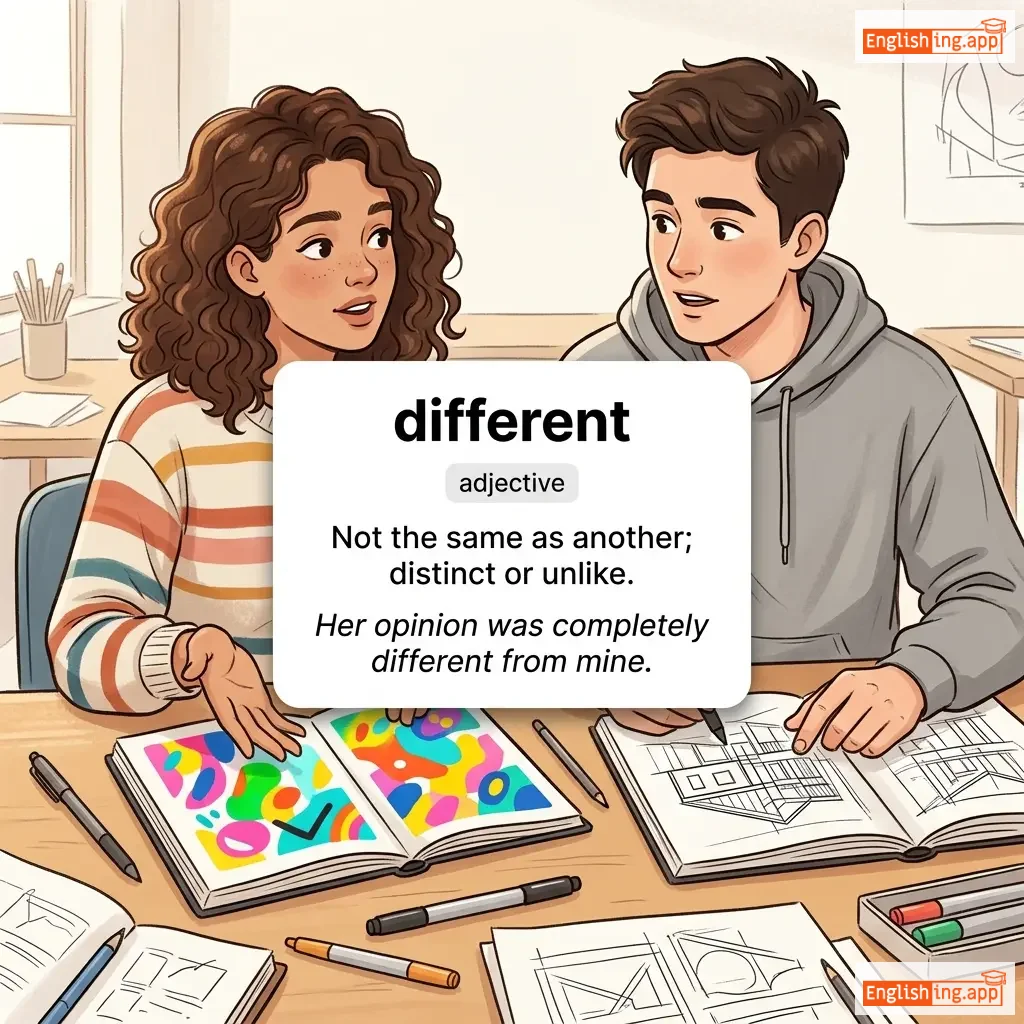
different definition card — visual illustration of the meaning
adjective
/ˈdɪf.ər.ənt/
不同的 (bùtóng de)

Not the same as another; distinct or unlike.

"Her opinion was completely different from mine."

"她的意见与我的完全不同。" (Tā de yìjiàn yǔ wǒ de wánquán bùtóng.)
noun
/ˌdɪfəˈrɛnʃə/
区分特征 (qufen tezheng)

A distinguishing characteristic that sets one thing apart from another.

"The differentia of humans is their ability to reason abstractly."

"人类的区分特征是他们的抽象思维能力。" (Renlei de qufen tezheng shi tamen de chousiang siwei nengli.)
adjective
/ˌdɪfəˈrɛnʃəl/
差异的 (chayi de)

Relating to or showing a difference; involving a distinction.

"There is a differential treatment between the two groups."

"这两个群体之间存在差异待遇。" (Zhe liang ge qunti zhijian cunzai chayi daiyu.)
verb
/ˌdɪfəˈrɛnʃieɪt/
区分 (qufen)

To recognize or make a distinction between things.

"It is important to differentiate between fact and opinion."

"重要的是区分事实和意见。" (Zhongyao de shi qufen shishi he yijian.)
differentiation definition card — visual illustration of the meaning
noun
/ˌdɪf.ə.ren.ʃiˈeɪ.ʃən/
差异化, 区分, 分类 (chāyì huà, qūfēn, fēnlèi)

The action or process of differentiating or distinguishing between two or more things or people.

"Strong differentiation sets brands apart from competitors."

"强烈的差异化使品牌在竞争者中脱颖而出。" (Qiángliè de chāyì huà shǐ pǐnpái zài jìngzhēng zhě zhōng tuōyǐng ér chū.)
adverb
/ˈdɪfərəntli/
以不同方式 (yi butong fangshi)

in a way that is not the same as another or as expected

"She approached the problem differently than her colleagues."

"她以不同的方式解决了这个问题,比她的同事们更有创意。" (Ta yi butong de fangshi jiejue le zhege wenti, bi ta de tongshi men geng you chuangyi.)
difficult definition card — visual illustration of the meaning
adjective
/ˈdɪf.ɪ.kəlt/
困难 (kunnan)

Needing much effort or skill to do or understand.

"The exam was so difficult that many students failed."

"考试如此困难,以至于许多学生都没通过。" (Kǎoshì rúcǐ kùnnán, yǐ zhì yú xǔduō xuéshēng dōu méi tōngguò.)
noun
/ˈdɪfɪkəlti/

the state or condition of being hard to do, deal with, or understand

"He faced great difficulty in learning a new language."

diffidence definition card — visual illustration of the meaning
noun
/ˈdɪfɪdəns/
缺乏自信 (quefa zixin)

Lack of self-confidence; shyness or modesty.

"Her diffidence made it hard for her to speak in public."

"她的缺乏自信让她很难在公众面前发言。" (Ta de quefa zixin rang ta hen nan zai gongzhong mianqian fayan.)
adjective
/ˈdɪfɪdənt/

Shy or lacking confidence in one's own abilities.

"He was too diffident to ask a question in class."

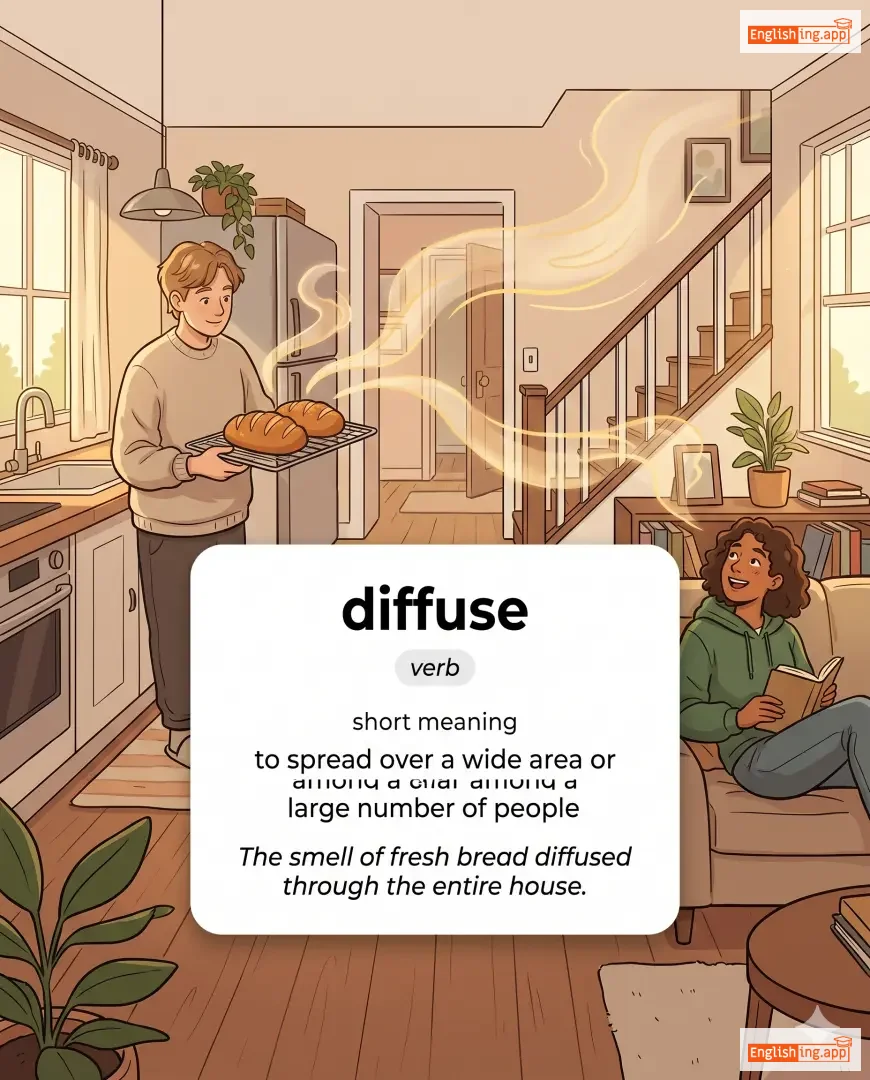
diffuse definition card — visual illustration of the meaning
🌫️

diffuse

verb
/dɪˈfjuːz/

to spread over a wide area or among a large number of people

"The smell of fresh bread diffused through the entire house."

adjective
/dɪˈfjuːzəbl/
可扩散的 (ke kuosan de)

able to spread or be spread through a medium

"Oxygen is diffusible through cell membranes."

"氧气可以通过细胞膜扩散。" (Yangqi keyi tongguo xibao mo kuosan.)
noun
/dɪˈfjuːʒən/

the spreading of something more widely or the movement of particles from high to low concentration

"The diffusion of information on social media is rapid."

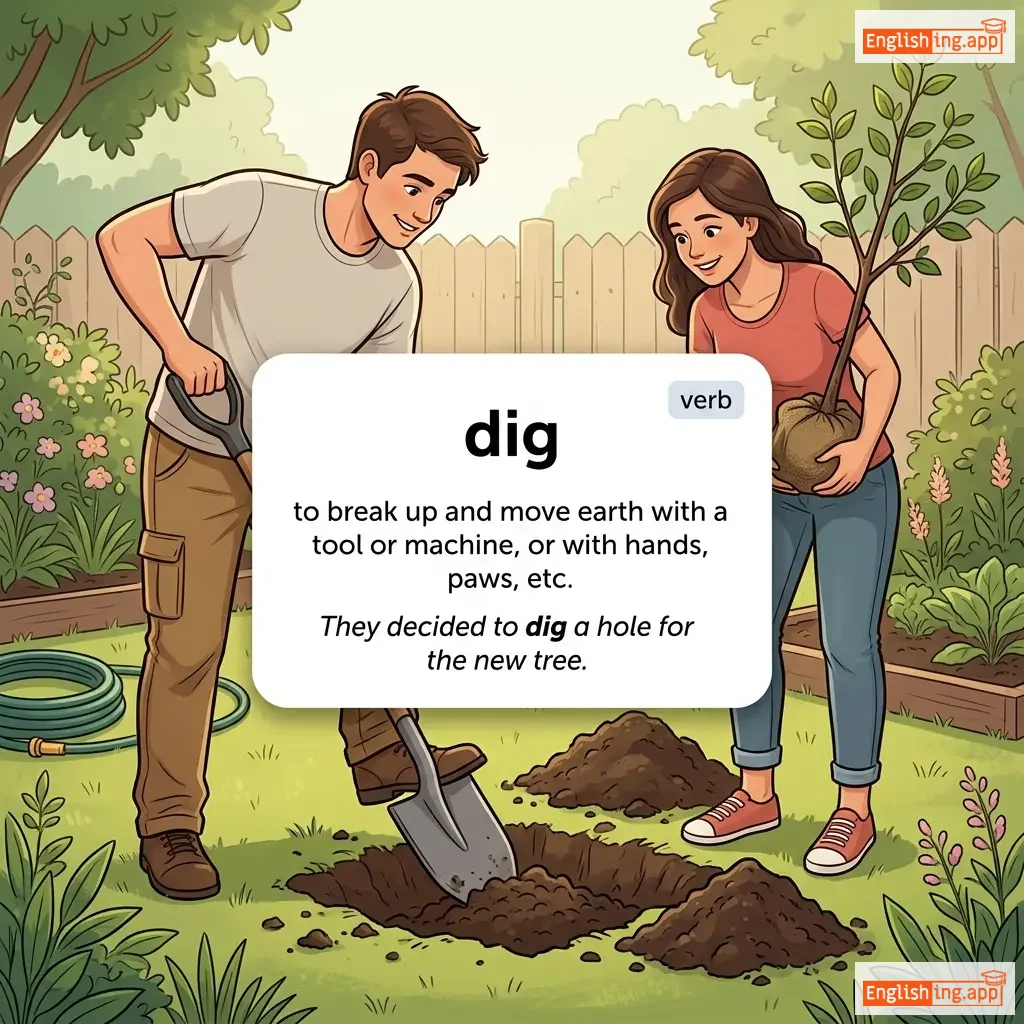
dig definition card — visual illustration of the meaning
verb
/dɪɡ/
挖掘 (wājué)

to break up and move earth with a tool or machine, or with hands, paws, etc.

"They decided to dig a hole for the new tree."

"他们决定为新树挖一个洞。" (Tāmen juédìng wèi xīn shù wā yīgè dòng.)
digest definition card — visual illustration of the meaning
verb
/daɪˈdʒest/
消化 (digest)

to break down food in the body; to think about and understand

"It takes time to digest a heavy meal."

"要花时间消化一顿丰盛的饭菜。" (it takes time to digest a heavy meal)
digestive definition card — visual illustration of the meaning
adjective
daɪˈdʒes.tɪv
消化的 (xiaohua de)

Relating to the digestion of food.

"Digestive enzymes help break down food."

"消化酶帮助分解食物。" (Xiāohuà méi bāngzhù fēn jiě shíwù.)
🔢

digit

noun
/ˈdɪdʒɪt/

a numeral from 0 to 9; also a finger or toe

"You must enter a four-digit code to unlock the phone."

digital definition card — visual illustration of the meaning
adjective
/ˈdɪdʒɪtl/
数字的 (shùzì de)

relating to technology that uses signals or data in the form of numbers (0s and 1s)

"She prefers digital books over printed ones."

"她更喜欢数字书籍而不是印刷书籍。" (Tā gèng xǐhuān shùzì shūjí ér bùshì yìnshuā shūjí.)
digital detox definition card — visual illustration of the meaning
noun
/ˈdɪdʒɪtl ˈdɛtɒks/
数字排毒 (shuzi paidu)

A period of time during which a person refrains from using electronic devices such as smartphones or computers, regarded as an opportunity to reduce stress or focus on social interaction in the physical world.

"A digital detox can help improve mental clarity and reduce stress."
"数字排毒有助于提高心理清晰度并减少压力。" (Shuzi paidu you zhu yu tigao xinli qingxidu bing jianshao yali.)
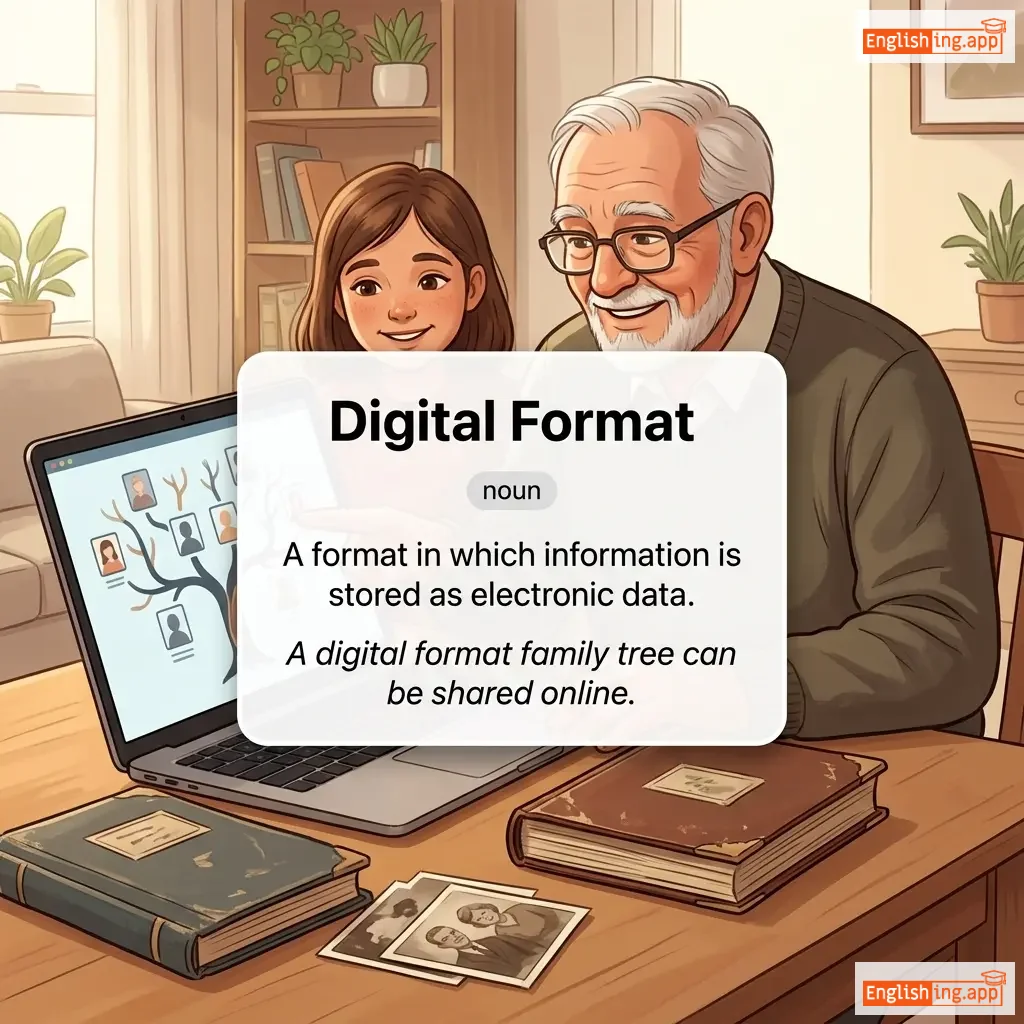
Digital Format definition card — visual illustration of the meaning
noun
ˈdɪdʒɪtəl ˈfɔːrmæt
数字格式 (shu zi ge shi)

A format in which information is stored as electronic data.

"A digital format family tree can be shared online."

"数字格式的家谱可以在线共享。" (Shùzì géshì de jiāpǔ kěyǐ zàixiàn gòngxiǎng.)
digital tools definition card — visual illustration of the meaning
noun
ˈdɪdʒ.ɪ.təl tuːlz
数字工具 (shùzì gōngjù)

Electronic software and applications used for learning and educational purposes.

"Schools are integrating digital tools to enhance learning."

"学校正在整合数字工具来增强学习效果。" (Xuéxiào zhèngzài zhěnghé shùzì gōngjù lái zēngqiáng xuéxí xiàoguǒ.)
noun
/ˈdɪɡnɪˌtɛri/
重要人物 (zhòng yào rén wù)

a person considered to be important because of high rank or office

"Several foreign dignitaries attended the state banquet."

"几位外国重要人物出席了国宴。" (Jǐ wèi wàiguó zhòngyào rénwù chūxí le guóyàn.)
noun
/ˈdɪɡnəti/
尊严 (zunyan)

the state or quality of being worthy of respect or honor

"He faced the difficult situation with calm and dignity."

"他以冷静和尊严面对了艰难的情况。" (Ta yi lengjing he zunyan miandui le jinnan de qingkuang.)
noun
/ˈdaɪɡræf/
双字母组合 (shuangzimuzuhe)

A pair of letters representing a single sound, such as 'sh' in 'ship'.

"In the word 'phone', the letters 'ph' form a digraph."

"'电话'一词中的'ph'字母组成一个双字母组合。" ('dianhua' yici zhong de 'ph' zimu zucheng yige shuangzimuzuhe.)
verb
/ˈkrʌmpəl/
揉捏 (róu niē)

to crush something into folds or wrinkles

"He crumpled the paper and threw it in the bin."

"他把纸揉成一团丢进了垃圾桶。" (Tā bǎ zhǐ róu chéng yī tuán diū jìn le lājī tǒng.)
noun/verb
/kruːˈseɪd/
十字军,激烈运动 (shízìjūn, jīliè yùndòng)

a vigorous campaign for a social, political, or religious cause; to fight passionately for a cause

"She has been crusading for women's rights all her life."

"她为妇女权利而斗争了一生。" (Tā wèi fùnǚ quánlì ér dòuzhēng le yīshēng.)
💔

crush

verb
/krʌʃ/

to press or squeeze something so hard that it is damaged or destroyed

"He accidentally crushed the paper cup in his hand."

noun
/krʌst/
外壳 (wai ke)

the hard outer surface of something, especially bread or the Earth's outer layer

"He cut off the crust of the bread before eating."

"他在吃之前切去了面包的外壳。" (Tā zài chī zhī qián qiē qùle miànbāo de wàiké.)
noun
/krʌˈsteɪʃən/
硬壳水生动物 (ying ke shui sheng dong wu)

an aquatic animal with a hard shell, such as crabs, lobsters, and shrimps

"Crabs and lobsters are well-known crustaceans."

"螃蟹和龙虾是著名的甲壳类动物。" (Pang xie he long xia shi zhu ming de jia ke lei dong wu.)
adjective
/krʌˈsteɪʃəs/
有硬壳的 (you ying ke de)

relating to or having a hard shell like a crustacean

"The scientist studied the crustaceous fossils."

"科学家研究了有硬壳的化石。" (Kexuejia yanjiule you yingkede huashi.)
noun
/krʌtʃ/
拐杖, 支撑 (guǎi zhàng, zhī chēng)

a support used by someone injured to walk; also something relied upon for support or help

"He had to use crutches after breaking his leg."

"他在摔断腿后不得不用拐杖。" (Tā zài shuāi duàn tuǐ hòu bùdé bù yòng guǎi zhàng.)
noun
/krʌks/
关键 (guānjiàn)

the most important or decisive point of an issue

"The crux of the problem lies in poor communication."

"问题的关键在于沟通不畅。" (Wenti de guānjiàn zài yú gōutōng bùchàng.)
cry definition card — visual illustration of the meaning
😢

cry

verb, noun
/kraɪ/

To shed tears as an expression of emotion such as sadness or pain; also a loud call or shout.

"The baby began to cry when she was hungry."

noun
/krɪpt/
墓室 (mùshì)

an underground chamber, especially one beneath a church, used as a burial place

"The tourists explored the ancient crypt beneath the cathedral."

"游客们探索了大教堂下的古老地下室。" (Yóukè men tàn suǒle dà jiàotáng xià de gǔlǎo dìxiàshì.)
cryptic definition card — visual illustration of the meaning
adjective
/ˈkrɪptɪk/
神秘 (shénmì)

having a meaning that is mysterious or obscure

"She left a cryptic message on his voicemail."

"她在他的语音邮件中留下了一个神秘的信息。" (Tā zài tā de yǔyīn yóuxiàng zhōng liú xià le yīgè shénmì de xìnxī.)
cryptocurrency definition card — visual illustration of the meaning
noun
/ˌkrɪptəˈkʌrənsɪ/
数字货币 (shuzi huobi)

A digital currency in which transactions are verified and records maintained by a decentralized system

"Cryptocurrencies are revolutionizing the financial landscape."

"加密货币正在彻底改变金融格局。" (Jiamihuobi zhengzai chedi gaibian jinrong geju.)
noun
/ˈkrɪptəɡræm/
秘密代码 (mìmì dàimǎ)

a text written in code or cipher

"The detective solved the cryptogram hidden in the letter."

"侦探解开了信中隐藏的密码图。" (Zhēntàn jiěkāile xìn zhōng yǐncáng de mìmǎ tú.)
cryptographic definition card — visual illustration of the meaning
adjective
/ˌkrɪp.təˈɡræf.ɪk/
加密的 (jiāmì de)

Relating to cryptography; involving or using secret codes or ciphers for security.

"Banks use cryptographic technology to protect transactions."

"银行使用加密技术来保护交易。" (Yínháng shǐyòng jiāmì jìshù lái bǎohù jiāoyì.)
cryptography definition card — visual illustration of the meaning
noun
/krɪpˈtɒɡ.rə.fi/
通过加密或编码技术保护信息的实践 (tongguo jiamiyu kodirong jishu baohu xinxi de shijian)

The practice of securing information through encryption or coding techniques

"Modern cryptography ensures secure online transactions."

"现代加密学确保了安全的在线交易。" (Xiandai jiamixue quebao le anquan de zailin jiaoyi.)
noun
/ˈkrɪstəl/
水晶 (shuǐjīng)

a clear, transparent mineral or glass that forms a solid structure with regular patterns

"She wore a necklace made of sparkling crystal."

"她戴着一条闪闪发光的水晶项链。" (Tā dàizhe yītiáo shǎnshǎn fāguāng de shuǐjīng xiàngliàn.)
verb
/ˈkrɪstəlaɪz/
结晶 (jie-jing)

to form crystals; to make an idea or plan clear and definite

"Her vague thoughts began to crystallize into a solid plan."

"她模糊的思绪开始在一个明确的计划中结晶。" (Ta mo-hu de si-xu kai-shi zai yi ge ming-que de ji-hua zhong jie-jing.)
noun
/kʌb/
幼熊 (you xiong)

a young bear, lion, tiger, or other large carnivorous mammal

"The bear cub stayed close to its mother for protection."

"小熊为保护自己一直待在母亲身边。" (Xiao xiong wei baohu ziji yizhi daizai muqin shenbian.)