词汇表

英语词汇词典 | 单词含义、定义和示例

adjective
/ˈkjuːbən/
古巴的 (gǔbā de)

relating to Cuba, its people, or its culture

"We enjoyed delicious Cuban coffee at the café."

"我们在咖啡馆享用了美味的古巴咖啡。" (Wǒmen zài kāfēi guǎn xiǎngyòngle měiwèi de gǔbā kāfēi.)
noun, verb
/kjuːb/
立方体 (lìfāngtǐ)

As a noun: a solid object with six equal square faces. As a verb: to cut food into small square pieces.

"She put a sugar cube in her tea."

"她把一块糖放进了她的茶里。" (Tā bǎ yī kuài táng fàng jìnle tā de chá lǐ.)
noun
/ˈkjuːbeb ˈpepər/
胡椒柯贝贝 (hújiāo kē bèi bèi)

aromatic spice with a slightly bitter taste and cooling aftertaste

"Cubeb pepper is used in traditional Indonesian cuisine."

"胡椒柯贝贝用于传统的印度尼西亚菜肴。" (hújiāo kē bèi bèi yòngyú chuántǒng de yìndùníxīyà càiyáo)
noun
/ˈkjuː.bɪ.kəl/
办公隔间 (bàngōng géjiān)

A small partitioned-off area of a room, typically in an office.

"She works in a cubicle with three other colleagues."

"她和另外三位同事在一个办公隔间里工作。" (Tā hé lìngwài sān wèi tóngshì zài yīgè bàngōng géjiān lǐ gōngzuò.)
noun
/ˈkʊk.uː/
布谷鸟 (bùgǔniǎo)

a bird known for its distinctive call and for laying eggs in other birds' nests

"We heard the cuckoo calling from the forest early in the morning."

"我们在清晨听到了从森林传来的布谷鸟的叫声。" (Wǒmen zài qīngchén tīng dào le cóng sēnlín chuán lái de bùgǔniǎo de jiàoshēng.)
noun
/ˈkjuː.kʌm.bər/
黄瓜 (huanggua)

a long green vegetable with watery flesh, eaten raw in salads or cooked

"I added fresh cucumber slices to my salad."

"我在沙拉里加入了新鲜的黄瓜片。" (Wo zai shala li jiaru le xinxian de huanggua pian.)
noun/verb
/ˈkʌdʒ.əl/
棍棒 (gùn bàng)

A short, thick stick used as a weapon; to beat with a cudgel.

"The guard used a cudgel to chase away the thief."

"警卫用棍棒把小偷赶走。" (Jǐngwèi yòng gùn bàng bǎ xiǎotōu gǎn zǒu.)
noun/verb
/kjuː/
信号 (xinhao)

A signal or prompt for action; to give a signal.

"The actor waited for his cue before entering the stage."

"演员在上台前等待他的信号。" (Yǎnyuán zài shàngtái qián děngdài tā de xìnhào.)
cues definition card — visual illustration of the meaning
noun
kjuːz
线索 (xiànsuǒ)

Signals or hints from conversation or environment that help understanding

"Facial expressions provide cues about a person's emotions."

"面部表情提供关于一个人情绪的线索。" (Miànbù biǎoqíng tígōng guānyú yīgè rén qíngxù de xiànsuǒ.)
noun
/kwɪˈziːn/
美食 (meishi)

A style or method of cooking, especially characteristic of a particular country or region.

"Italian cuisine is famous all over the world."

"意大利美食在全世界都很有名。" (Yidali meishi zai quan shijie dou hen you ming.)
noun
/ˌkʌl də ˈsæk/
死胡同 (si hutong)

A street or passage closed at one end; a dead end.

"They bought a house at the end of a quiet cul de sac."
"他们在一个安静的死胡同的尽头买了一栋房子。" (Tamen zai yi ge anjing de si hutong de jintou mai le yi dong fangzi.)
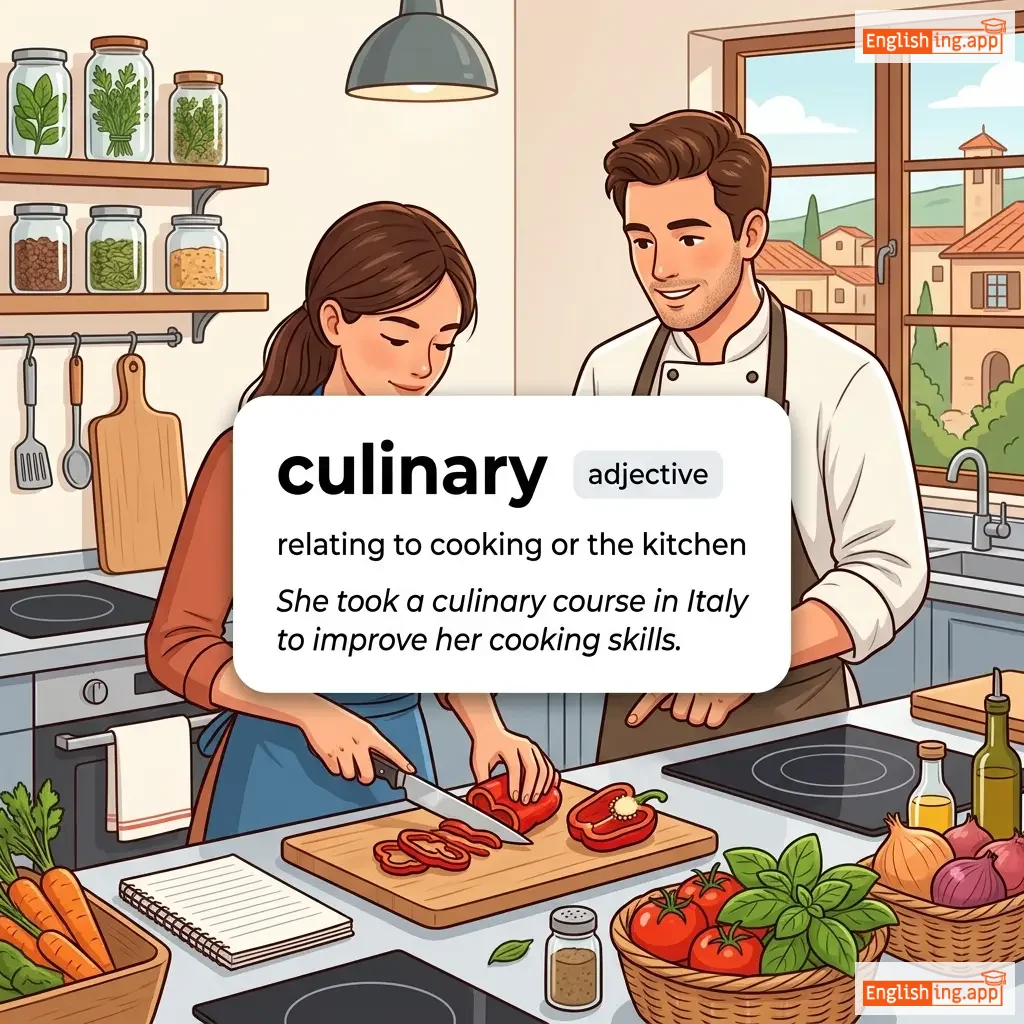
culinary definition card — visual illustration of the meaning
adjective
/ˈkʌl.ɪ.nɛr.i/
烹饪的 (pēngrèn de)

relating to cooking or the kitchen

"She took a culinary course in Italy to improve her cooking skills."

"她在意大利参加了一个烹饪课程,以提高她的烹饪技能。" (Tā zài Yìdàlì cānjiāle yīgè pēngrèn kèchéng, yǐ tígāo tā de pēngrèn jìnéng.)
✂️

cull

verb
/kʌl/

to select or remove from a larger group, often to reduce numbers

"The farmers decided to cull the sick animals from the herd."

culminate definition card — visual illustration of the meaning
verb
/ˈkʌl.mɪ.neɪt/
达到高潮 (dá dào gāo cháo)

to reach the highest point or final stage

"The negotiations culminated in a successful agreement."

"谈判以成功协议告终。" (Tánpàn yǐ chénggōng xiéyì gàozhōng.)
culmination definition card — visual illustration of the meaning
noun
/ˌkʌl.mɪˈneɪ.ʃən/
高潮 (gaochao)

the highest point or final result of something

"Graduation day is the culmination of years of hard work."

"毕业典礼是多年辛勤工作的高潮。" (Biye dianli shi duonian xinqin gongzuo de gaochao.)
noun
/ˌkʌl.pəˈbɪl.ɪ.ti/
罪责 (zuìzé)

responsibility for a fault or wrong; blameworthiness

"The jury considered his level of culpability in the crime."

"陪审团考虑了他在犯罪中的罪责程度。" (Péishěntuán kǎolǜle tā zài fànzuì zhōng de zuìzé chéngdù.)
adjective
/ˈkʌlpəbl̩/
有罪的 (you zui de)

deserving blame or responsibility for a wrongdoing

"The judge found him culpable for the accident."

"法官认定他对事故负有责任。" (Fa guan ren ding ta dui shi gu fu you ze ren.)
noun
/ˈkʌlprɪt/
罪犯 (zuìfàn)

a person who is responsible for a crime or misdeed

"The police caught the culprit behind the robbery."

"警察抓住了抢劫案背后的罪犯。" (Jǐngchá zhuāzhùle qiǎngjié àn bèihòu de zuìfàn.)
noun
/kʌlt/
邪教 (xie jiao)

a system of religious veneration and devotion directed toward a particular figure or object

"The cult followed their leader with great devotion."
"邪教以极大的献身精神追随他们的领袖。" (Xie jiao yi jidai de xianshen jingshen zhui sui tamen de lingxiu.)
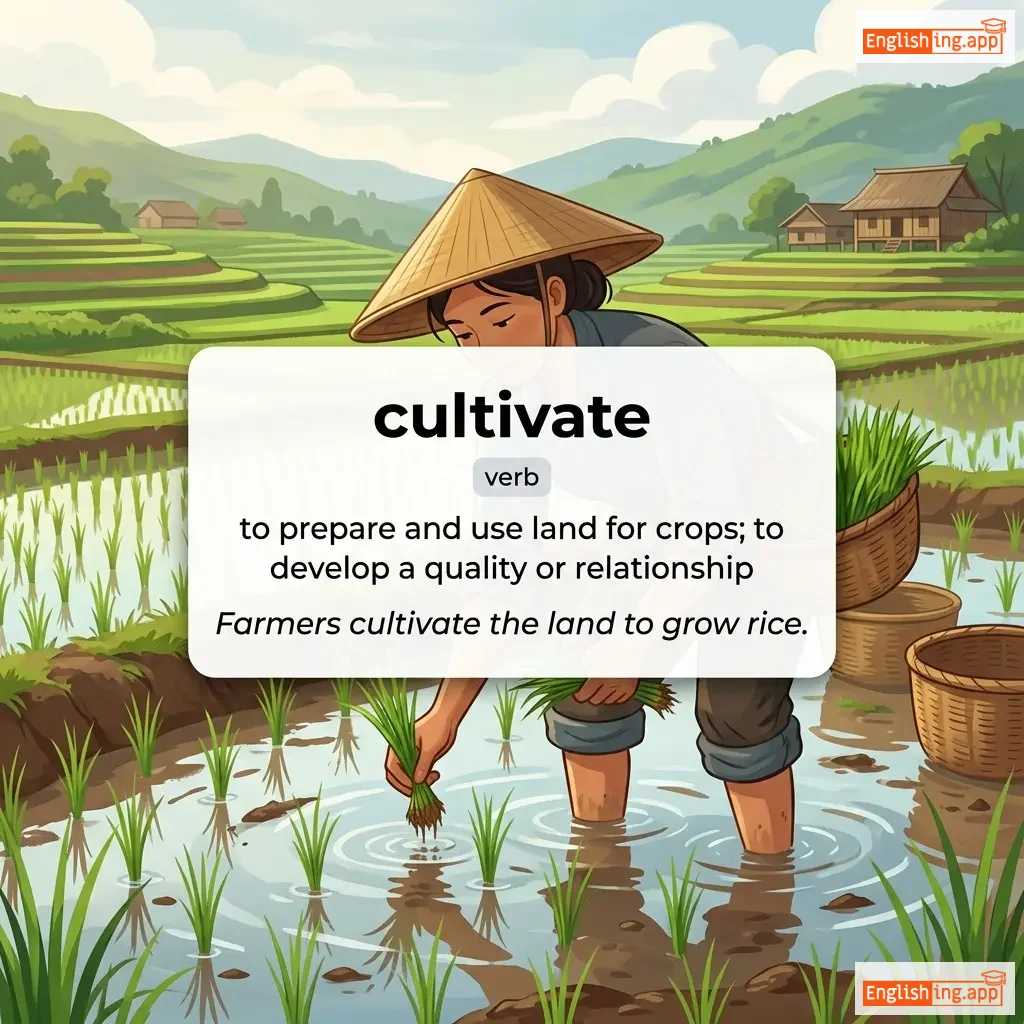
cultivate definition card — visual illustration of the meaning
verb
/ˈkʌltɪveɪt/
幸福 (xìng fú)

to prepare and use land for crops; to develop a quality or relationship

"Farmers cultivate the land to grow rice."
"她无法掩饰她收到奖项时的幸福。" (Tā wúfǎ yǎnshì tā shōu dào jiǎngxiàng shí de xìngfú.)
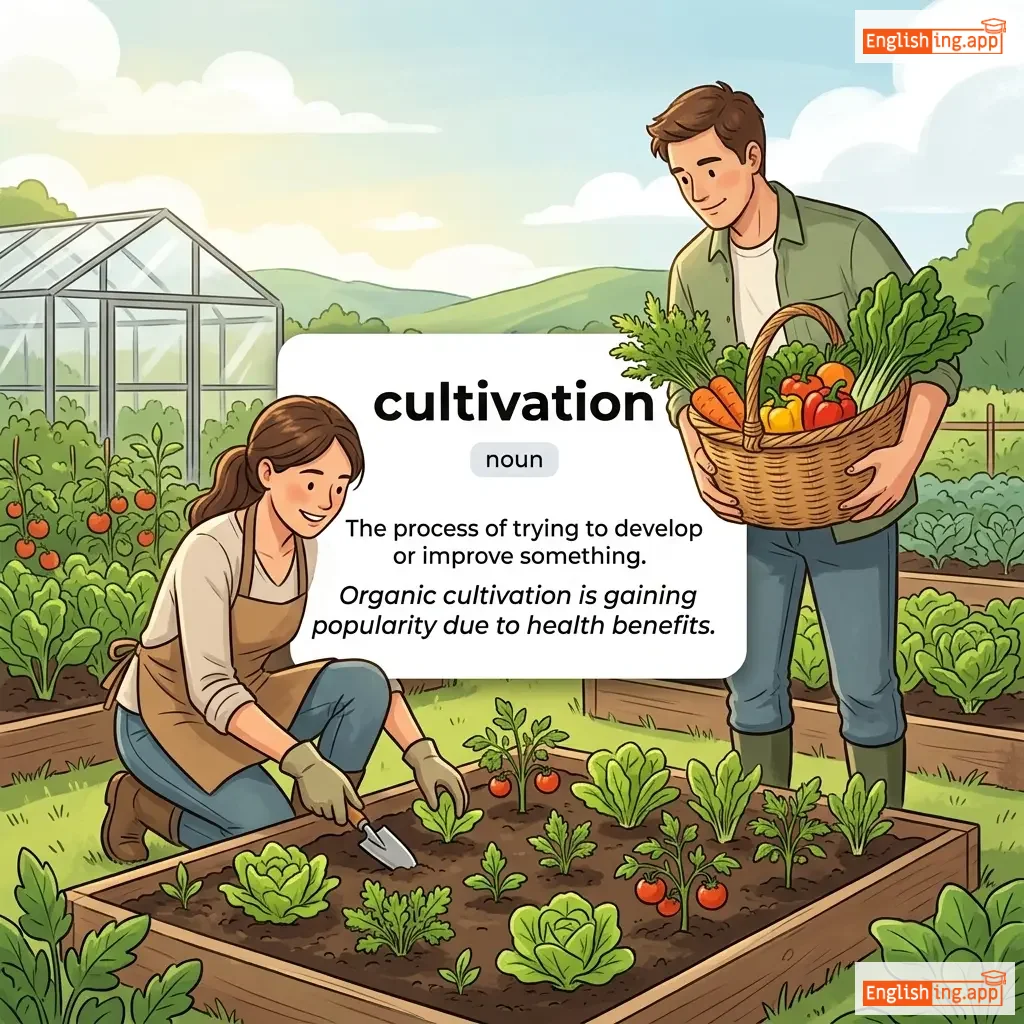
cultivation definition card — visual illustration of the meaning
noun
/ˌkʌl.tɪˈveɪ.ʃən/
耕作 (gēngzuò)

The process of trying to develop or improve something.

"Organic cultivation is gaining popularity due to health benefits."
"有机耕作因健康利益而获得越来越多的关注。" (Yǒujī gēngzuò yīnwèi jiànkāng lìyì ér huòde yuè lái yuè duō de guānzhù.)
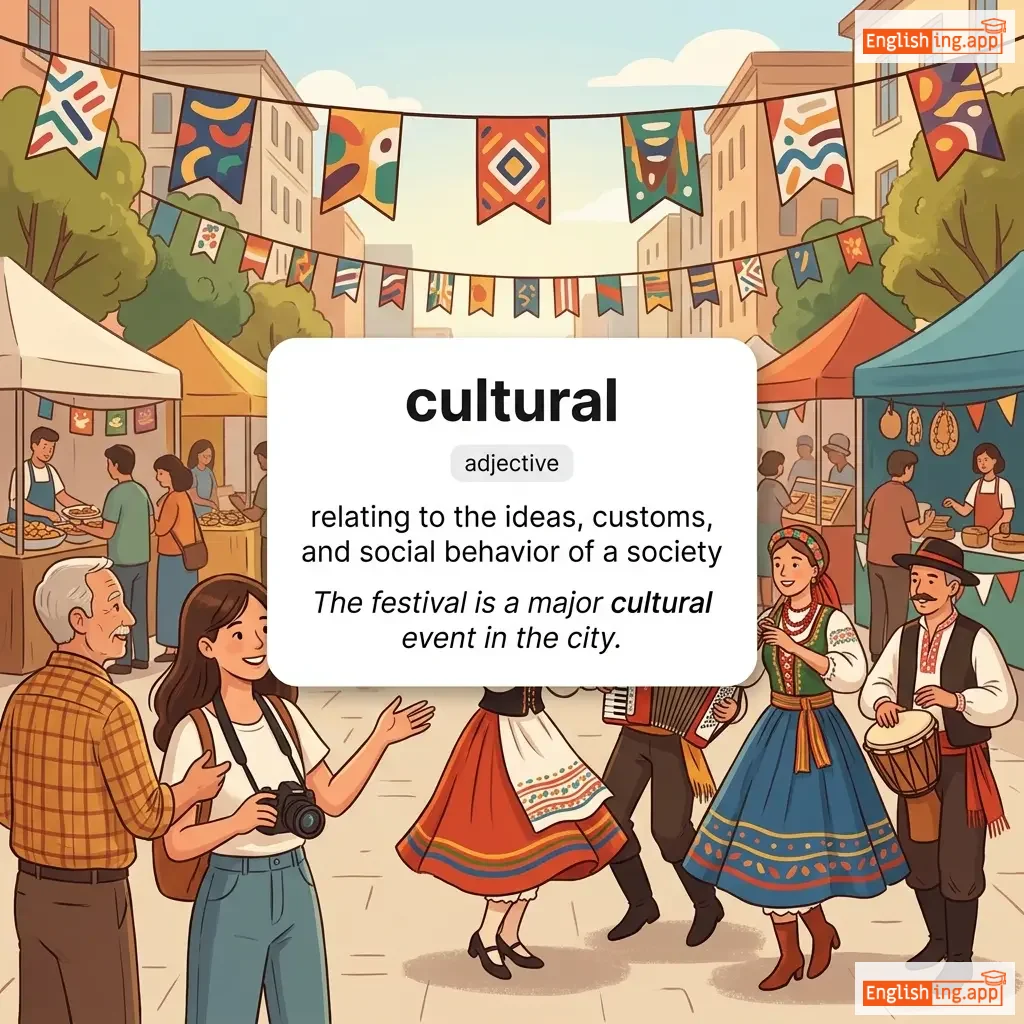
cultural definition card — visual illustration of the meaning
adjective
/ˈkʌltʃərəl/
文化的 (wenhua de)

relating to the ideas, customs, and social behavior of a society

"The festival is a major cultural event in the city."
"这个节日是城市里一个重要的文化活动。" (Zhege jieri shi chengshi li yige zhongyao de wenhua huodong.)
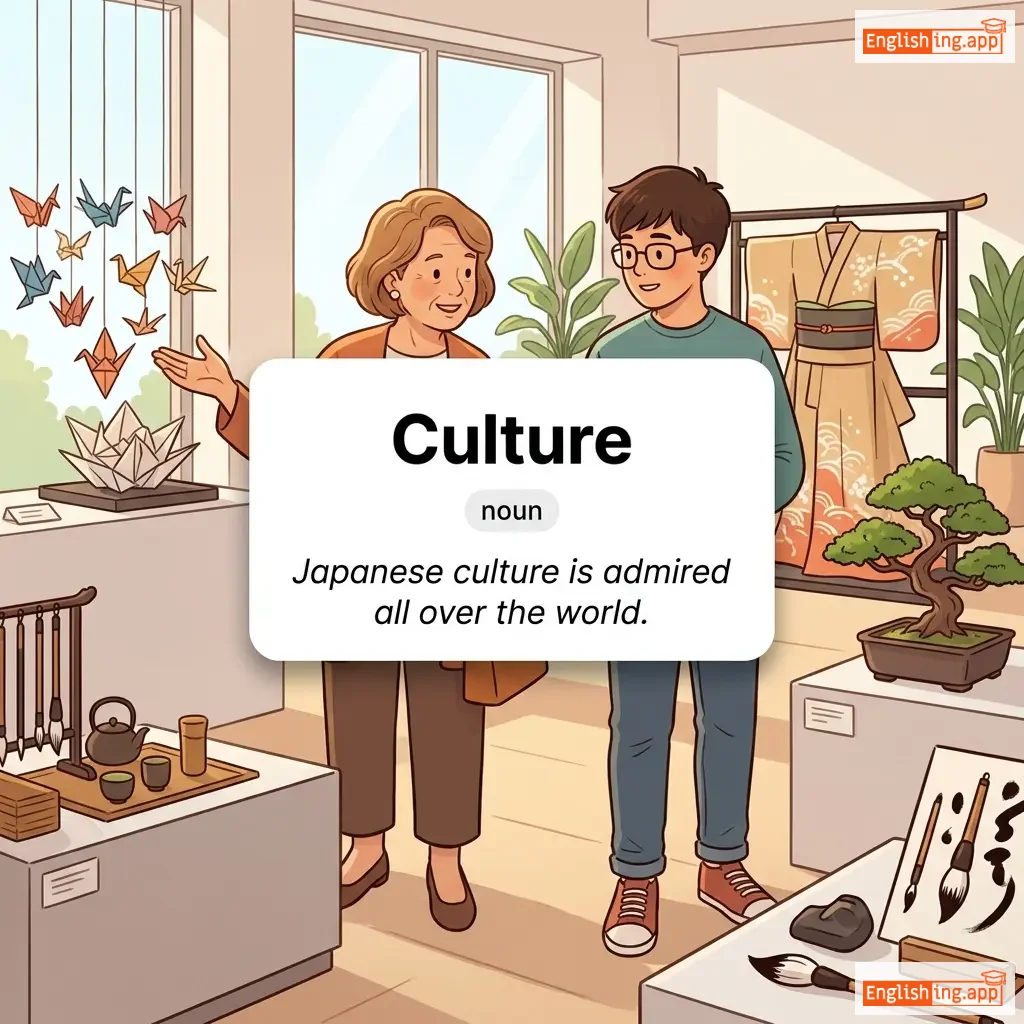
Culture definition card — visual illustration of the meaning
noun
/ˈkʌltʃər/
文化 (wenhua)

the customs, arts, social institutions, and achievements of a particular people or society

"Japanese culture is admired all over the world."

"日本文化在全世界都受到钦佩。" (Riben wenhua zai quanshijie dou shoudao qinpei.)
adjective
/ˈkʌltʃəd/
有文化的 (yǒu wénhuà de)

characterized by refined taste, manners, and education

"She is a cultured woman who loves art and literature."

"她是一个有文化的女人,喜欢艺术和文学。" (Tā shì yīgè yǒu wénhuà de nǚrén, xǐhuān yìshù hé wénxué.)
noun
/ˈkʌlvərt/
涵洞 (handong)

a tunnel or drain that carries water under a road or railway

"The heavy rainwater flowed through the culvert under the bridge."

"沉重的雨水通过桥下的涵洞流动。" (Chénzhòng de yǔshuǐ tōngguò qiáo xià de handong liúdòng.)
cumbersome definition card — visual illustration of the meaning
adjective
/ˈkʌmbərsəm/
笨重的 (bènzhòng de)

Large, heavy, or difficult to handle; complicated and inefficient.

"The cumbersome package was too heavy to carry alone."

"那个笨重的包裹太重,无法单独携带。" (Nàgè bènzhòng de bāoguǒ tài zhòng, wúfǎ dān dú xiédài.)
noun
/ˈkjuːmɪn/
孜然 (ziran)

A spice made from the dried seeds of a plant in the parsley family, with a warm earthy flavor

"Cumin is an essential spice in Indian and Middle Eastern cooking."

"孜然是印度和中东烹饪中的一种基本香料。" (Ziran shi yindu he zhongdong pengren zhong de yizhong jiben xiangliao.)
adjective
/ˈkjuːmjələtɪv/
累积的 (lěijī de)

Increasing gradually by addition; growing in quantity, force, or effect.

"The cumulative effect of stress can harm your health."

"压力的累积效应可能对您的健康造成伤害。" (Yālì de lěijī xiàoguǒ kěnéng duì nín de jiànkāng zàochéng shānghài.)
adjective
/ˈkʌnɪŋ/
狡猾 (jiaohua)

Having or showing skill in achieving one's ends by deceit or evasion; cleverness in a tricky way.

"The cunning fox tricked the farmer."

"狡猾的狐狸欺骗了农夫。" (Jiaohua de huli qipian le nongfu.)
noun
/kʌp/
杯子 (beizi)

a small bowl-shaped container for drinking from, typically with a handle

"She drank a cup of tea in the morning."

"她早上喝了一杯茶。" (Ta zao shang he le yi bei cha.)
noun
/ˈkʌp.bɔːrd/
橱柜 (chúguì)

a piece of furniture with doors and shelves for storing dishes, food, or clothes

"She stored all the plates and bowls in the kitchen cupboard."

"她把所有的盘子和碗放进了厨房的橱柜里。" (Tā bǎ suǒyǒu de pánzi hé wǎn fàng jìnle chúfáng de chúguì lǐ.)
noun
/kjuːˈpɪdəti/
贪婪 (tanlan)

Excessive desire for wealth or possessions; greed.

"The king's downfall was caused by his cupidity."

"国王的衰落是由于他的贪婪。" (Guówáng de shuāiluò shì yóuyú tā de tān lán.)
adjective
/ˈkjʊərəbl/
可治愈的 (ke zhi yu de)

Able to be cured or healed.

"The doctor assured her that the disease was curable."

"医生向她保证,这种疾病是可治愈的。" (Yi sheng xiang ta baozheng, zhe zhong ji bing shi ke zhi yu de.)
adjective
/ˈkjʊərətɪv/
治愈性 (zhìyùxìng)

Able to cure disease or restore health.

"The doctor prescribed a curative treatment for the illness."

"医生为疾病开出了治愈性的治疗方案。" (Yīshēng wèi jíbìng kāi chūle zhìyùxìng de zhìliáo fāng'àn.)
noun
/kjʊˈreɪtər/
策展人 (cè zhǎn rén)

a person who is responsible for the care and management of a museum, gallery, or collection

"The curator organized a new exhibition of ancient artifacts."

"策展人组织了一个新的古代文物展览。" (Cè zhǎn rén zǔzhīle yīgè xīn de gǔdài wénwù zhǎnlǎn.)
verb
/kɜːrb/
抑制 / 控制 (yìzhì / kòngzhì)

to restrain, control, or limit something

"The government took steps to curb inflation."

"政府采取了措施来遏制通货膨胀。" (Zhèngfǔ cǎiqǔle cuòshī lái èzhì tōnghuò péngzhàng.)
noun
/kɜːrd/
酸奶 (suānnǎi)

a white dairy product made by coagulating milk; yogurt

"She added fresh curd to the salad for a tangy flavor."

"她在沙拉中加入了新鲜的酸奶,带来了酸味。" (Tā zài shālā zhōng jiārùle xīnxiān de suānnǎi, dàilái le suān wèi.)
cure definition card — visual illustration of the meaning
verb
/kjʊər/
治疗 (zhiliao)

to make someone healthy again after an illness

"The new medicine cured her of the infection."

"新的药物治愈了她的感染。" (Xīn de yào wù zhì yù le tā de gǎn rǎn.)
noun
/ˈkɜːrfjuː/
宵禁 (xiaojin)

a rule requiring people to stay indoors after a certain time, usually at night

"The city imposed a curfew during the unrest."

"城市在骚乱期间实施了宵禁。" (Chéngshì zài sāoluàn qījiān shíshīle xiāojìn.)
noun
/ˈkjʊriˌoʊ/
奇特物品 (qite wupin)

a small unusual or interesting object, often collected for its rarity

"She bought a curio from the antique shop."

"她从古董店买了一个奇特物品。" (Ta cong gudong dian mai le yi ge qite wupin.)
noun
/ˌkjʊəriˈɒsɪti/
好奇心 (haoqixin)

a strong desire to know or learn something

"Children have a natural curiosity about the world around them."

"孩子们对周围的世界充满自然的好奇心。" (Háizimen duì zhōuwéi de shìjiè chōngmǎn zìrán de hàoqí xīn.)
curious definition card — visual illustration of the meaning
adjective
/ˈkjʊəriəs/
好奇 (haoqí)

eager to know or learn something

"The child was curious about the stars in the sky."

"孩子对天空中的星星感到好奇。" (Háizi duì tiānkōng zhōng de xīngxīng gǎndào hàoqí.)
noun
/kɜːrl/
卷发; 螺旋形状 (juan fa; luoxuan xingzhuang)

a piece of hair that curves or coils; something with a spiral or curved shape

"She had beautiful natural curls that framed her face perfectly."

"她有美丽的自然卷发,完美地框住了她的脸。" (Tā yǒu měilì de zìrán juǎn fa, wánměi de kuàng zhùle tā de liǎn.)
💇‍♀️

curler (kɑːrlər)

noun
/ˈkɜːrlər/
卷发器 (juǎn fà qì)

A small roller used for curling hair.

"She used a curler to style her hair for the party."

"她用卷发器为派对造型她的头发。" (Tā yòng juǎn fà qì wèi pàiduì zàoxíng tā de tóufà.)
adjective
/ˈkɜːrli/
卷曲的 (juan qu de)

having curls or waves; shaped with bends or coils

"She has naturally curly hair."

"她有自然的卷曲头发。" (Ta you ziran de juanqu toufa)
noun
/kərˈmʌdʒən/
脾气暴躁的老人 (píqì bàozào de lǎorén)

a bad-tempered, cranky, or irritable person, usually old

"The old curmudgeon complained about everything in the neighborhood."

"那位脾气暴躁的老人抱怨着邻里的一切。" (Nà wèi píqì bàozào de lǎorén bàoyuànzhe línlǐ de yīqiè.)
currency definition card — visual illustration of the meaning
noun
/ˈkʌrənsi/
货币 (huobi)

the system of money used in a particular country

"The U.S. dollar is the official currency of the United States."

"美元是美国的官方货币。" (Meiyuan shi Meiguo de guanfang huobi.)
adjective, noun
/ˈkʌrənt/
当前, 电流 (dāngqián, diànliú)

belonging to the present time; a flow of water or electricity

"She is reading the current issue of the magazine."

"她正在阅读杂志的当前期。" (Tā zhèngzài yuèdú zázhì de dāngqián qī.)
adverb
/ˈkʌrəntli/
目前 (muqian)

at the present time; now

"He is currently working on a new project."

"他目前正在做一个新项目。" (Tā mùqián zhèngzài zuò yīgè xīn xiàngmù.)
curriculum definition card — visual illustration of the meaning
noun
/kəˈrɪkjələm/
课程 (kecheng)

The subjects comprising a course of study in a school, college, or university.

"The school updated its curriculum to include more digital literacy courses."

"学校更新了其课程,增加了更多的数字素养课程。" (Xuexiao gengxin le qí kèchéng, zēngjiāle gèng duō de shùzì sùyǎng kèchéng.)