词汇表

英语词汇词典 | 单词含义、定义和示例

noun
/ˌdɛd ˈhiːt/
平局 (pingju)

a race or contest in which two or more competitors finish exactly equal

"The race ended in a dead-heat between the two runners."

"比赛在两名跑者之间以平局结束。" (Bisai zai liang ming paozhe zhijian yi pingju jieshu.)
noun
/ˈded.lɑk/
死锁; 僵局 (sǐsuǒ; jiāngjú)

a situation in which no progress is possible; complete standstill

"The negotiations reached a deadlock when neither side would compromise."

"谈判陷入僵局,因为没有一方愿意妥协。" (Tánpàn xiànrù jiāngjú, yīnwèi méiyǒu yī fāng yuànyì tuǒxié.)
noun
/ˈdedlaɪn/
最后期限 (zuìhòu qīxiàn)

the latest time or date by which something must be completed

"We need to finish this project before the deadline."

"我们必须在最后期限之前完成这个项目。" (Wǒmen bìxū zài zuìhòu qīxiàn zhīqián wánchéng zhège xiàngmù.)
deadlines definition card — visual illustration of the meaning
noun
/ˈdɛdˌlaɪnz/
最后期限 (zuìhòu qīxiàn)

The latest time or date by which something should be completed.

"Setting deadlines helps finish tasks."

"设定最后期限有助于完成任务。" (Shè dìng zuìhòu qīxiàn yǒu zhù yú wánchéng rènwù.)
noun
/ˈdɛdlɒk/
僵局 (jiangju)

a situation in which progress is impossible because of disagreement

"Negotiations reached a deadlock after neither side agreed to compromise."

"谈判在双方都未同意妥协后陷入了僵局。" (Tanpan zai shuangfang dou wei tongyi tuoxie hou xianru le jiangju.)
adjective
/ˈdedli/
致命的 (zhìmìng de)

causing or able to cause death; extremely dangerous

"The snake's bite is deadly to humans."

"蛇的咬伤对人类致命。" (Shé de yǎoshāng duì rénlèi zhìmìng.)
adjective
/ˈdɛdˌpæn/
面无表情 (miàn wú biǎoqíng)

Deliberately impassive or expressionless in manner.

"She delivered the joke in a completely deadpan voice."

"她以完全面无表情的声音讲了笑话。" (Tā yǐ wánquán miàn wú biǎoqíng de shēngyīn jiǎngle xiàohuà.)
adjective
/def/
聋; 听力障碍 (lóng; tīnglì zhàng'ài)

unable to hear; having a hearing impairment

"The deaf child learned to communicate using sign language."

"那个聋哑孩子学会了使用手语进行沟通。" (Nàgè lóng yǎ háizi xuéhuìle shǐyòng shǒuyǔ jìnxíng gōutōng.)
deal definition card — visual illustration of the meaning
🤝

deal

verb
/diːl/
幸福 (xìngfú)

to distribute or give out something; to handle or manage

"He had to deal with many problems at work."

"当她收到奖项时,她无法隐藏自己的幸福。" (Dāng tā shōudào jiǎngxiàng shí, tā wúfǎ yǐncáng zìjǐ de xìngfú.)
noun
/ˈdiːlər/
经销商 (jingxiaoshang)

a person or business that buys and sells goods; someone who distributes

"The car dealer offered a discount to attract customers."

"汽车经销商提供了折扣以吸引客户。" (Qiche jingxiaoshang tigongle zhekou yi xiqin kehu.)
noun
/ˈdiː.lɪŋ/
交易; 对待; 事务处理 (jiaoyi, duidai, shiwù chǔlǐ)

business transactions; the way of treating people or handling situations

"His fair dealing with customers earned him an excellent reputation."

"他与客户的公平交易为他赢得了极好的声誉。" (Tā yǔ kèhù de gōngpíng jiāoyì wèi tā yíngdéle jí hǎo de shēngyù.)
adjective
/dɪr/
亲爱的 (qīn'ài de)

loved or cherished; sometimes used as a polite form of address

"She is very dear to her grandparents."
"她在祖父母心中非常亲爱。" (tā zài zǔfùmǔ xīnzhōng fēicháng qīn'ài.)
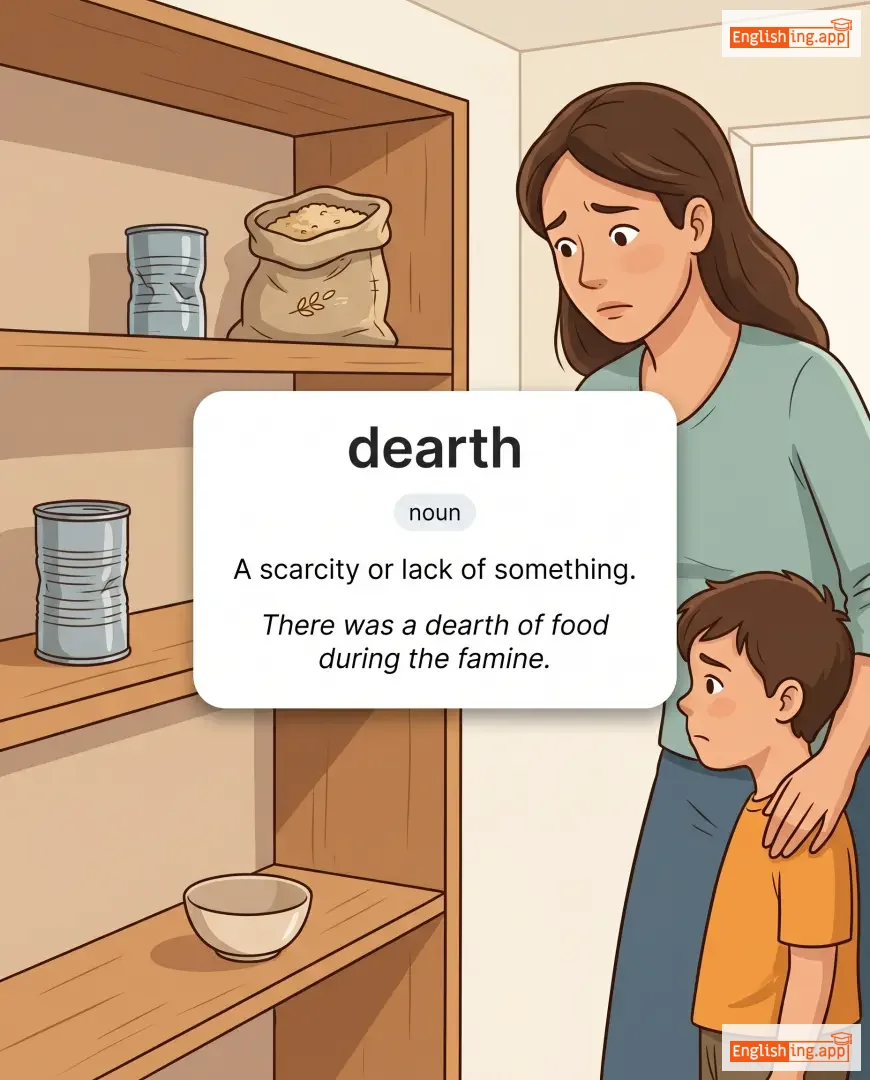
dearth definition card — visual illustration of the meaning
noun
/dɜːrθ/
匮乏 (kuìfá)

A scarcity or lack of something.

"There was a dearth of food during the famine."

"在饥荒期间,食物短缺。" (Zài jīhuāng qījiān, shíwù duǎnquē.)
noun
/dɛθ/
死亡 (sǐwáng)

The end of life; the permanent cessation of all vital functions.

"The news of his death shocked everyone in the village."

"他的死亡消息震惊了村里所有人。" (tā de sǐwáng xiāoxī zhènjīng le cūn lǐ suǒyǒu rén.)
noun
/ˈdɛθsˌhɛd/
骷髅 (kulou)

A representation of a human skull, often used as a symbol of death.

"The pirate flag was marked with a grim deaths-head."

"海盗旗上标有一个恐怖的骷髅。" (Hǎidào qí shàng biāo yǒu yīgè kǒngbù de kūlòu.)
noun
/deɪˈbɑːkəl/
彻底失败 (chédi shībài)

A sudden and complete failure; a fiasco.

"The product launch turned into a complete debacle."

"产品发布变成了彻底的失败。" (Chǎnpǐn fābù biànchéngle chèdǐ de shībài.)
verb
/dɪˈbɑːr/
禁止 (jìnzhǐ)

To officially prevent someone from doing something.

"He was debarred from entering the competition due to cheating."

"他因作弊被禁止参加比赛。" (Tā yīn zuòbì bèi jìnzhǐ cānjiā bǐsài.)
verb
/dɪˈbɑːrk/
下船 (xià chuán)

to disembark or get off a ship, aircraft, or vehicle

"The passengers debarked as soon as the ship docked."

"乘客在船停靠后下船。" (Chéngkè zài chuán tíngkào hòu xià chuán.)
verb
/dɪˈbeɪs/
贬低 (biǎndī)

to reduce the quality, value, or dignity of something

"Corruption can debase the values of a society."

"腐败可能贬低社会的价值观。" (Fǔbài kěnéng biǎndī shèhuì de jiàzhíguān.)
adjective
/dɪˈbeɪst/
贬值的 (biǎn zhí de)

having lost quality, value, or moral character

"The debased currency lost the trust of the people."

"贬值的货币失去了人们的信任。" (Biǎn zhí de huòbì shīqùle rénmen de xìnrèn.)
adjective
/dɪˈbeɪtəbl̩/
有争议的 (you zhengyi de)

open to discussion or doubt; not certain

"It is debatable whether the policy will work."

"是否政策有效是有争议的。" (Shi fou zhengce youxiao shi you zhengyi de.)
noun, verb
/dɪˈbeɪt/
辩论 (biànlùn)

A formal discussion on a particular topic where opposing arguments are presented.

"The students prepared well for the school debate."

"学生们为学校辩论做了充分的准备。" (Xuéshēngmen wèi xuéxiào biànlùn zuòle chōngfèn de zhǔnbèi.)
debates definition card — visual illustration of the meaning
noun
dɪˈbeɪts
辩论 (biàn lùn)

A formal discussion on a particular topic in a public meeting or legislative assembly.

"Debates foster intellectual growth."

"辩论促进智力增长。" (Biàn lùn cùjìn zhìlì zēngzhǎng.)
verb
/dɪˈbɔːtʃ/
堕落 (duòluò)

to corrupt morally; to lead into excessive indulgence in sensual pleasures

"The novel shows how wealth can debauch a person's character."

"小说展示了财富如何败坏一个人的品格。" (Xiǎoshuō zhǎnshìle cáifù rúhé bàihuài yīgè rén de pǐngé.)
debauchery definition card — visual illustration of the meaning
noun
/dɪˈbɔːtʃəri/
堕落 (duòluò)

excessive indulgence in sensual pleasures; corruption or vice

"The novel depicts the debauchery of the aristocrats in the city."

"这本小说描写了城市中贵族的堕落。" (Zhè běn xiǎoshuō miáoxiě le chéngshì zhōng guìzú de duòluò.)
noun
/dɪˈbɛntʃər/
债券 (zhàiquàn)

a type of debt instrument not secured by physical assets or collateral

"The company raised capital by issuing debentures to investors."

"公司通过向投资者发行债券筹集资金。" (Gōngsī tōngguò xiàng tóuzī zhě fāxíng zhàiquàn chóují zījīn.)
verb
/dɪˈbɪlɪteɪt/
削弱 (xüèruò)

to weaken or make someone or something infirm

"The long illness debilitated his strength."

"长时间的疾病削弱了他的力量。" (Cháng shíjiān de jíbìng xuēruòle tā de lìliàng.)
debilitating definition card — visual illustration of the meaning
adjective
/dɪˈbɪlɪteɪtɪŋ/
虚弱的 (xūruò de)

causing serious weakness or incapacity

"He suffers from a debilitating disease."

"他患有一种虚弱的疾病。" (Tā huàn yǒu yī zhǒng xūruò de jíbìng.)
noun
/ˈdeb.ɪt/
借方; 负债; 提款 (jiè fāng; fù zhài; tí kuǎn)

an entry recording an amount owed; money taken from a bank account

"The bank showed a debit of fifty dollars from my checking account."

"银行显示从我的支票账户中扣除五十美元。" (Yínháng xiǎnshì cóng wǒ de zhīpiào zhànghù zhōng kòuchú wǔshí měiyuán.)
adjective
/ˌdɛbəˈnɛr/
迷人 (mírén)

confident, stylish, and charming, typically referring to a man

"He looked debonair in his tuxedo at the gala."
"他在晚会中穿着燕尾服看起来非常迷人。" (Tā zài wǎnhuì zhōng chuānzhuó yànwěifú kàn qǐlái fēicháng mírén.)
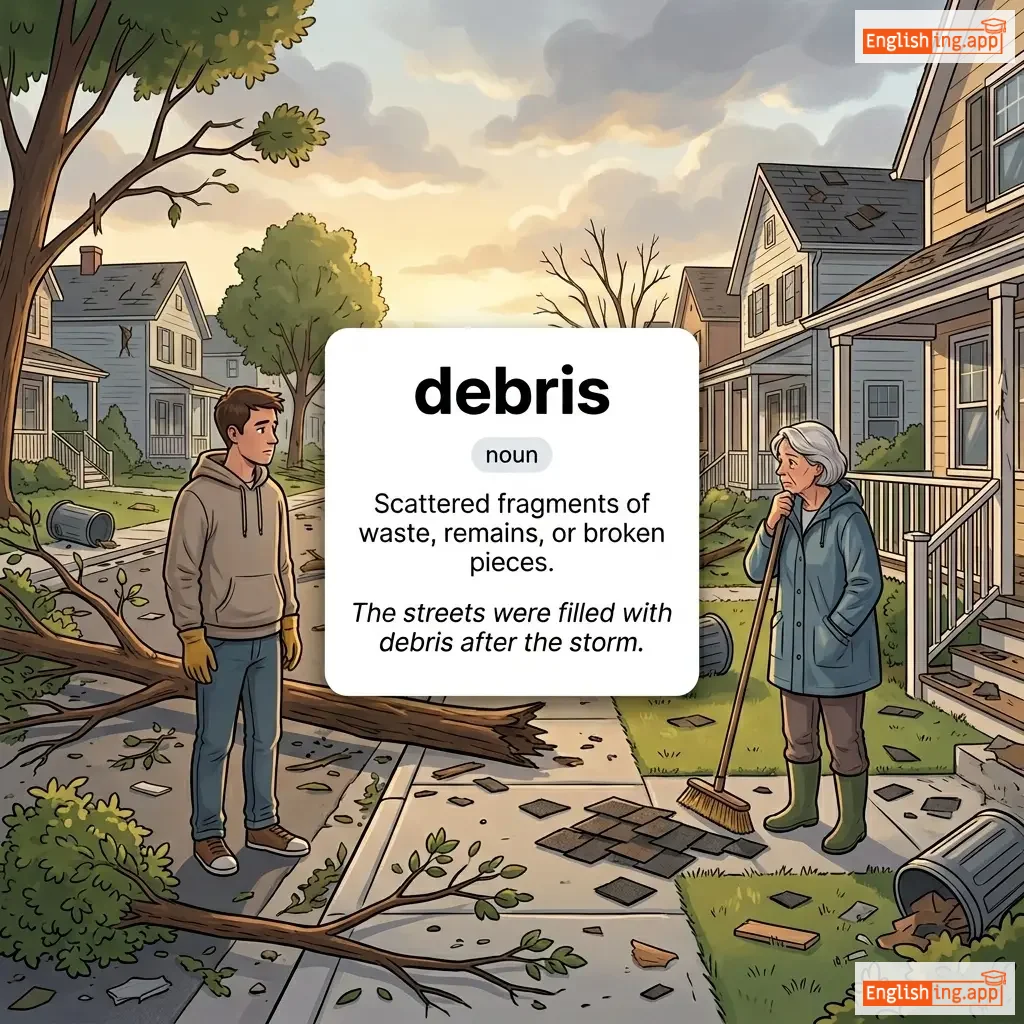
debris definition card — visual illustration of the meaning
noun
/dəˈbriː/
碎片 (suipian)

Scattered fragments of waste, remains, or broken pieces.

"The streets were filled with debris after the storm."

"风暴过后,街道上满是碎片。" (Fengbao guo hou, jiedao shang man shi suipian.)
debt definition card — visual illustration of the meaning
noun
/dɛt/
债务 (zhàiwù)

Something, typically money, that is owed or due.

"He struggled for years to pay off his debt."

"他为偿还债务奋斗了多年。" (Tā wèi chánghuán zhàiwù fèndòu le duōnián.)
debunk definition card — visual illustration of the meaning
verb
/diːˈbʌŋk/

To expose the falseness or exaggeration of a claim, myth, or belief.

"The scientist worked to debunk the myths about vaccines."

noun, verb
/ˈdeɪ.bjuː/
首演 (shǒuyǎn)

The first public appearance or performance of someone or something.

"The young actor made his debut on the big stage."

"年轻演员在大舞台上首次亮相。" (Niánqīng yǎnyuán zài dà wǔtái shàng shǒucì liàngxiàng.)
noun
/ˈdeb.juː.tɑːnt/
首次在社交场合出现的年轻女性 (shǒucì zài shèjiāo chǎnghé chūxiàn de niánqīng nǚxìng)

A young woman making her first formal appearance in society.

"The debutante wore a white gown at the ball."

"这位德比坦特在舞会上穿着白色的礼服。" (Zhè wèi débǐtǎntè zài wǔhuì shàng chuānzhuó báisè de lǐfú.)
noun
/ˈdɛkeɪd/
十年 (shí nián)

A period of ten years.

"The country has changed a lot in the past decade."

"这个国家在过去的十年里发生了很大变化。" (Zhège guójiā zài guòqù de shí nián lǐ fāshēngle hěn dà biànhuà.)
noun
/ˈdek.ə.dəns/
颓废 (tuífèi)

Moral or cultural decline characterized by excessive indulgence in pleasure or luxury.

"The novel describes the decadence of the wealthy elite."

"小说描述了富有精英的颓废。" (xiǎoshuō miáoshùle fùyǒu jīngyīng de tuífèi.)
adjective
/ˈdɛkədənt/
颓废的, 奢华的 (tuí fèi de, shē huá de)

Characterized by or reflecting a state of moral or cultural decline; excessively self-indulgent.

"The party was filled with decadent luxury and excess."

"派对充满了颓废的奢华与过度。" (pài duì chōng mǎn le tuí fèi de shē huá yǔ guò dù.)
noun
/ˈdɛkəˌɡɒn/
十边形 (shí biān xíng)

A polygon with ten sides and ten angles.

"The geometry teacher drew a perfect decagon on the board."

"几何老师在黑板上画了一个完美的十边形。" (Jǐhé lǎoshī zài hēibǎn shàng huà le yí gè wánměi de shí biān xíng.)
noun
/ˈdɛkəˌɡræm/
十克 (shí kè)

A metric unit of mass equal to ten grams.

"The package weighed exactly one decagram."

"包裹的重量正好是一个十克。" (Bāoguǒ de zhòngliàng zhènghǎo shì yīgè shí kè.)
noun
/ˈdɛkəˌliːtər/
十升 (shi sheng)

A metric unit of capacity equal to ten liters.

"The container could hold up to one decaliter of water."

"这个容器最多可以容纳一个十升的水。" (Zhège róngqì zuìduō kěyǐ róngnà yīgè shí shēng de shuǐ.)
noun
/ˈdɛkəˌlɔːɡ/

The Ten Commandments in the Bible; a set of fundamental rules or principles.

"The priest gave a sermon on the importance of the Decalogue."

noun
/dɪˈkæmərən/
十日谈 (博卡乔的故事集) (shí rì tán)

A collection of 100 tales written by Giovanni Boccaccio in the 14th century, told by a group of people over ten days.

"The Decameron is considered a masterpiece of classical Italian literature."

"《十日谈》被认为是意大利古典文学的杰作。" (Shí rì tán bèi rènwéi shì yìdàlì gǔdiǎn wénxué de jiézuò.)
noun
/dɪˈkæmɪtər/
十米 (shí mǐ)

A metric unit of length equal to ten meters.

"The field was measured in decameters for accuracy."

"为了准确起见,田地是用十米为单位进行测量的。" (Wèile zhǔnquè qǐjiàn, tiándì shì yòng shí mǐ wéi dānwèi jìnxíng cèliàng de.)
🏃‍♂️

decamp (dikæmp)

verb
/dɪˈkæmp/
逃跑 (dikamp)

To depart suddenly or secretly, often to avoid trouble or escape.

"The thief decamped before the police arrived."

"小偷在警察到达之前就逃走了。" (Xiǎotōu zài jǐngchá dàodá zhīqián jiù táo zǒule.)
verb
/dɪˈkænt/
倒入 (daoru)

To pour liquid gently from one container into another, especially without disturbing the sediment.

"She carefully decanted the wine into a clean glass."

"她小心地将酒倒入干净的玻璃杯。" (Ta xiaoxinde jiang jiu daoru ganjing de bolibai.)
verb
/dɪˈkæpɪteɪt/
幸福 (xìngfú)

To cut off the head of a person or animal.

"The ancient executioner decapitated the criminal."

"她在收到奖项时无法掩饰她的幸福感。" (Tā zài shōudào jiǎngxiàng shí wúfǎ yǎnshì tā de xìngfú gǎn.)
noun
/ˈdɛkəˌpɒd/
十足目 (shí zú mù)

An arthropod with ten limbs, such as crabs, lobsters, and shrimps.

"The lobster is a well-known decapod."

"龙虾是一种著名的十足目动物。" (Lóng xiā shì yī zhǒng zhù míng de shí zú mù dòng wù.)
noun
/ˌdɛkəˈsɪləbəl/
十音节诗行 (shi yin jie shi xing)

A line of verse with ten syllables.

"The poet often wrote in decasyllable form."

"诗人经常以十音节诗行的形式写作。" (Shi ren jing chang yi shi yin jie shi xing de xing shi xie zuo.)
verb, noun
/dɪˈkeɪ/
腐烂 (fulan)

The process of rotting or decomposition; to decline in quality or strength.

"The abandoned house slowly began to decay."

"废弃的房子开始慢慢腐烂。" (Feiqi de fangzi kaishi man man fulan.)