ভোকাবুলারিসমূহ

ইংরেজি শব্দের বাংলা অর্থ | English to Bangla Word Meaning Dictionary

noun
/ˌdɛd ˈhiːt/
সমান ফলাফল (shoman folafol)

a race or contest in which two or more competitors finish exactly equal

"The race ended in a dead-heat between the two runners."

"দৌড় প্রতিযোগিতা দুই দৌড়বিদের মধ্যে সমান ফলে শেষ হয়েছিল।" (Dour protijogita dui dourbider moddhe shoman fole shesh hoyechilo.)
noun
/ˈded.lɑk/
অচলাবস্থা; স্থবিরতা; (ocholabotha, sthobirota)

a situation in which no progress is possible; complete standstill

"The negotiations reached a deadlock when neither side would compromise."

"আলোচনা অচলাবস্থায় পৌঁছেছিল যখন কোনো পক্ষই আপস করতে রাজি ছিল না।" (alochona ocholabosthay pouchechhilo jokhon kono pokkhoi aposh korte raji chhilo na.)
noun
/ˈdedlaɪn/
শেষ সময়সীমা (shesh somoysima)

the latest time or date by which something must be completed

"We need to finish this project before the deadline."

"আমাদের ডেডলাইনের আগে প্রজেক্টটি শেষ করতে হবে।" (Amader deadline er age project ti shesh korte hobe.)
deadlines definition card — visual illustration of the meaning
noun
/ˈdɛdˌlaɪnz/
সময়সীমা (shomoyshima)

The latest time or date by which something should be completed.

"Setting deadlines helps finish tasks."

"সময়সীমা নির্ধারণ কাজ শেষ করতে সাহায্য করে।" (Shomoyshima nirdharon kaj shesh korte shahayyo kore.)
noun
/ˈdɛdlɒk/
অচলাবস্থা (ocholabastha)

a situation in which progress is impossible because of disagreement

"Negotiations reached a deadlock after neither side agreed to compromise."

"কোনও পক্ষ সমঝোতায় রাজি না হওয়ায় আলোচনা অচলাবস্থায় পৌঁছেছিল।" (Kono pokkho somjhoyte razi na howay alochona ocholabasthay pouchhchilo.)
adjective
/ˈdedli/
মারণ (maron)

causing or able to cause death; extremely dangerous

"The snake's bite is deadly to humans."

"সাপের কামড় মানুষদের জন্য মারাত্মক।" (Saper kamor manusher jonno marattok.)
adjective
/ˈdɛdˌpæn/
নিঃপ্রকাশ (niprokaash)

Deliberately impassive or expressionless in manner.

"She delivered the joke in a completely deadpan voice."

"সে পুরোপুরি নিঃপ্রকাশ ভঙ্গিতে কৌতুকটি বলেছিল।" (Se puroputi niprokaash bhongite koutukti bolechilo.)
adjective
/def/
বধির; কানে কম শোনা যায় এমন; (bodhir)

unable to hear; having a hearing impairment

"The deaf child learned to communicate using sign language."

"বধির শিশুটি ইশারা ভাষা ব্যবহার করে যোগাযোগ করতে শিখল।" (bodhir shishuti ishara bhasha bebhar kore jogajog korte shikhlo.)
deal definition card — visual illustration of the meaning
verb
/diːl/
মোকাবিলা করা / চুক্তি (mokabila kora / chukti)

to distribute or give out something; to handle or manage

"He had to deal with many problems at work."

"তাকে কর্মস্থলে অনেক সমস্যার মোকাবিলা করতে হয়েছিল।" (take kormosthole onek shomossar mokabila korte hoyechhilo.)
noun
/ˈdiːlər/
বিক্রেতা (bikreta)

a person or business that buys and sells goods; someone who distributes

"The car dealer offered a discount to attract customers."

"গাড়ি বিক্রেতা গ্রাহকদের আকর্ষণ করতে ছাড় দিয়েছিল।" (gari bikreta grakhokder akorshon korte char diyechhilo.)
noun
/ˈdiː.lɪŋ/
আচরণ; ব্যবহার; ব্যবসা; (acharon, bybohar, byabsha)

business transactions; the way of treating people or handling situations

"His fair dealing with customers earned him an excellent reputation."

"গ্রাহকদের সাথে তার ন্যায্য আচরণ তাকে চমৎকার সুনাম এনে দিয়েছিল।" (grahokder shathe tar nayyo acharon take chomtkar shunam ene diyechhilo.)
adjective
/dɪr/
প্রিয় (priyo)

loved or cherished; sometimes used as a polite form of address

"She is very dear to her grandparents."

"সে তার দাদা-দাদীর কাছে খুব প্রিয়।" (she tar dada-dadir kache khub priyo.)
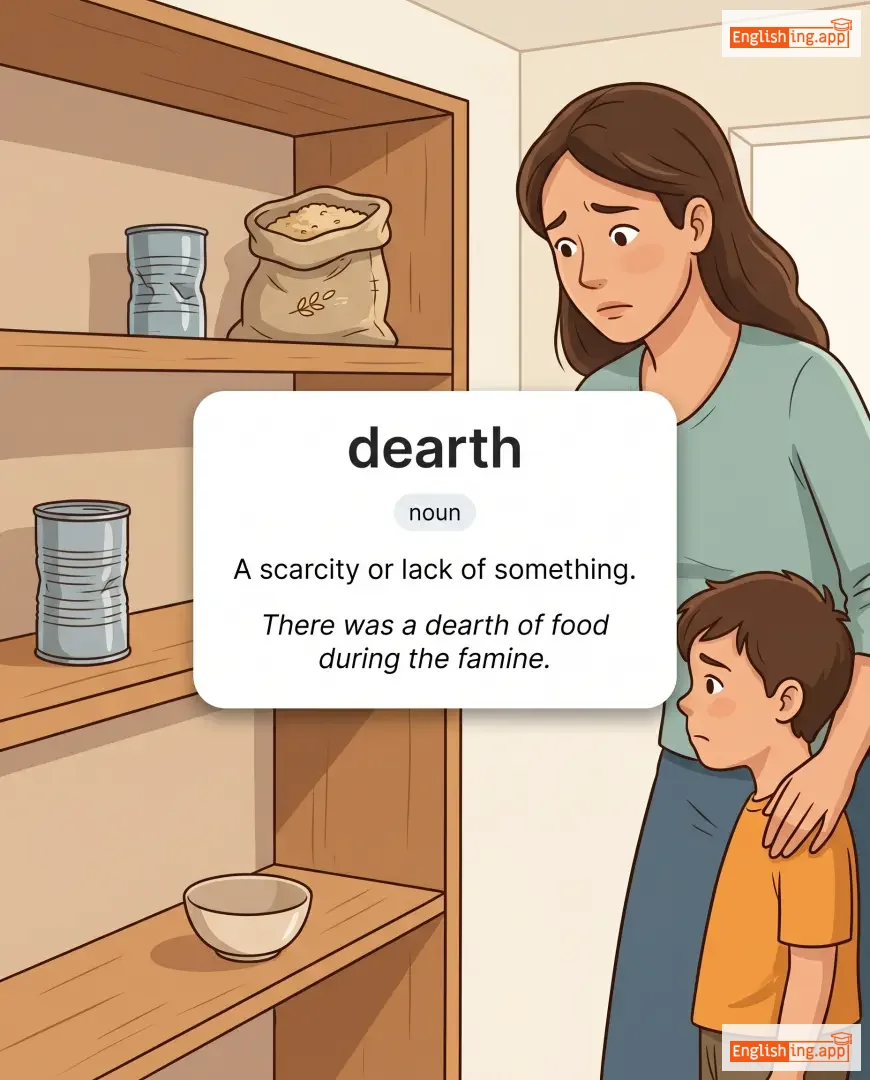
dearth definition card — visual illustration of the meaning
noun
/dɜːrθ/
অভাব (abhav)

A scarcity or lack of something.

"There was a dearth of food during the famine."

"দুর্ভিক্ষের সময় খাদ্যের অভাব ছিল।" (Durvikhkher somoy khadjer abhav chhilo.)
noun
/dɛθ/
মৃত্যু (mrityu)

The end of life; the permanent cessation of all vital functions.

"The news of his death shocked everyone in the village."

"তার মৃত্যুর খবর গ্রামে সবাইকে হতবাক করেছিল।" (Tar mrityur khobor grame sobaike hotbak korechilo.)
noun
/ˈdɛθsˌhɛd/
খুলি (khuli)

A representation of a human skull, often used as a symbol of death.

"The pirate flag was marked with a grim deaths-head."

"দস্যুদের পতাকায় ভয়ঙ্কর একটি খুলি চিহ্নিত ছিল।" (Dossyuder potakay bhoyonkor ekti khuli chihnito chhilo.)
noun
/deɪˈbɑːkəl/
ভয়াবহ ব্যর্থতা (bhoyaboh byarthota)

A sudden and complete failure; a fiasco.

"The product launch turned into a complete debacle."

"পণ্যের উদ্বোধন সম্পূর্ণ ভয়াবহ ব্যর্থতায় পরিণত হয়েছিল।" (Ponjer udbodhon sompurno bhoyaboh byarthotay porinoto hoyechhilo.)
verb
/dɪˈbɑːr/
নিষিদ্ধ করা (nishiddho kora)

To officially prevent someone from doing something.

"He was debarred from entering the competition due to cheating."

"প্রতিযোগিতায় প্রতারণার কারণে তাকে প্রবেশ থেকে নিষিদ্ধ করা হয়েছিল।" (Protijogitay protaronar karone take probesh theke nishiddho kora hoyechhilo.)
verb
/dɪˈbɑːrk/
অবতরণ করা (obotoron kora)

to disembark or get off a ship, aircraft, or vehicle

"The passengers debarked as soon as the ship docked."

"যাত্রীদের জাহাজ ভিড়তেই অবতরণ করেছিল।" (Jatrider jahaj virdetei obotoron korechilo.)
verb
/dɪˈbeɪs/
মূল্যহীন করা (mulyohin kora)

to reduce the quality, value, or dignity of something

"Corruption can debase the values of a society."

"দুর্নীতি একটি সমাজের মূল্যবোধকে মূল্যহীন করতে পারে।" (Durniti ekti somajer mulyobodheke mulyohin korte pare.)
adjective
/dɪˈbeɪst/
অবমূল্যায়িত (obomulyayito)

having lost quality, value, or moral character

"The debased currency lost the trust of the people."

"অবমূল্যায়িত মুদ্রা মানুষের আস্থা হারিয়েছিল।" (Obomulyayito mudra manusher astha hariyechilo.)
adjective
/dɪˈbeɪtəbl̩/
বিতর্কযোগ্য (bitorkojoggo)

open to discussion or doubt; not certain

"It is debatable whether the policy will work."

"নীতি কার্যকর হবে কিনা তা বিতর্কযোগ্য।" (Niti karyokor hobe kina ta bitorkojoggo.)
noun, verb
/dɪˈbeɪt/
বিতর্ক (bitorko)

A formal discussion on a particular topic where opposing arguments are presented.

"The students prepared well for the school debate."

"ছাত্ররা স্কুল বিতর্কের জন্য ভালোভাবে প্রস্তুতি নিয়েছিল।" (Chatrara school bitorker jonno bhalovabe prostuti niyechilo.)
debates definition card — visual illustration of the meaning
noun
dɪˈbeɪts
ডিবেটস। বিতর্ক। (debates. bitorko.)

A formal discussion on a particular topic in a public meeting or legislative assembly.

"Debates foster intellectual growth."

"বিতর্ক মানসিক বিকাশ ঘটায়।" (Bitorko manoshik bikash ghotay.)
verb
/dɪˈbɔːtʃ/
অবক্ষয়িত করা (obokkhoito kora)

to corrupt morally; to lead into excessive indulgence in sensual pleasures

"The novel shows how wealth can debauch a person's character."

"উপন্যাসটি দেখায় কিভাবে সম্পদ একজনের চরিত্রকে অবক্ষয়িত করতে পারে।" (Uponyasti dekhay kivabe sompod ekjoner choritrke obokkhoito korte pare.)
debauchery definition card — visual illustration of the meaning
noun
/dɪˈbɔːtʃəri/
অতিভোগ (otibhog)

excessive indulgence in sensual pleasures; corruption or vice

"The novel depicts the debauchery of the aristocrats in the city."

"উপন্যাসে শহরের অভিজাতদের অতিভোগ দেখানো হয়েছে।" (Uponnase shohorer abhijader otibhog dekhano hoyeche.)
noun
/dɪˈbɛntʃər/
ঋণপত্র (rinpotro)

a type of debt instrument not secured by physical assets or collateral

"The company raised capital by issuing debentures to investors."

"কোম্পানি বিনিয়োগকারীদের কাছে ঋণপত্র ইস্যু করে মূলধন সংগ্রহ করেছে।" (Kompani binijogkarider kache rinpotro issue kore muldhan songroho koreche.)
verb
/dɪˈbɪlɪteɪt/
দুর্বল করা (durbol kora)

to weaken or make someone or something infirm

"The long illness debilitated his strength."

"দীর্ঘ অসুস্থতা তার শক্তি দুর্বল করে দিয়েছিল।" (Dirgho osusthota tar shokti durbol kore diyechilo.)
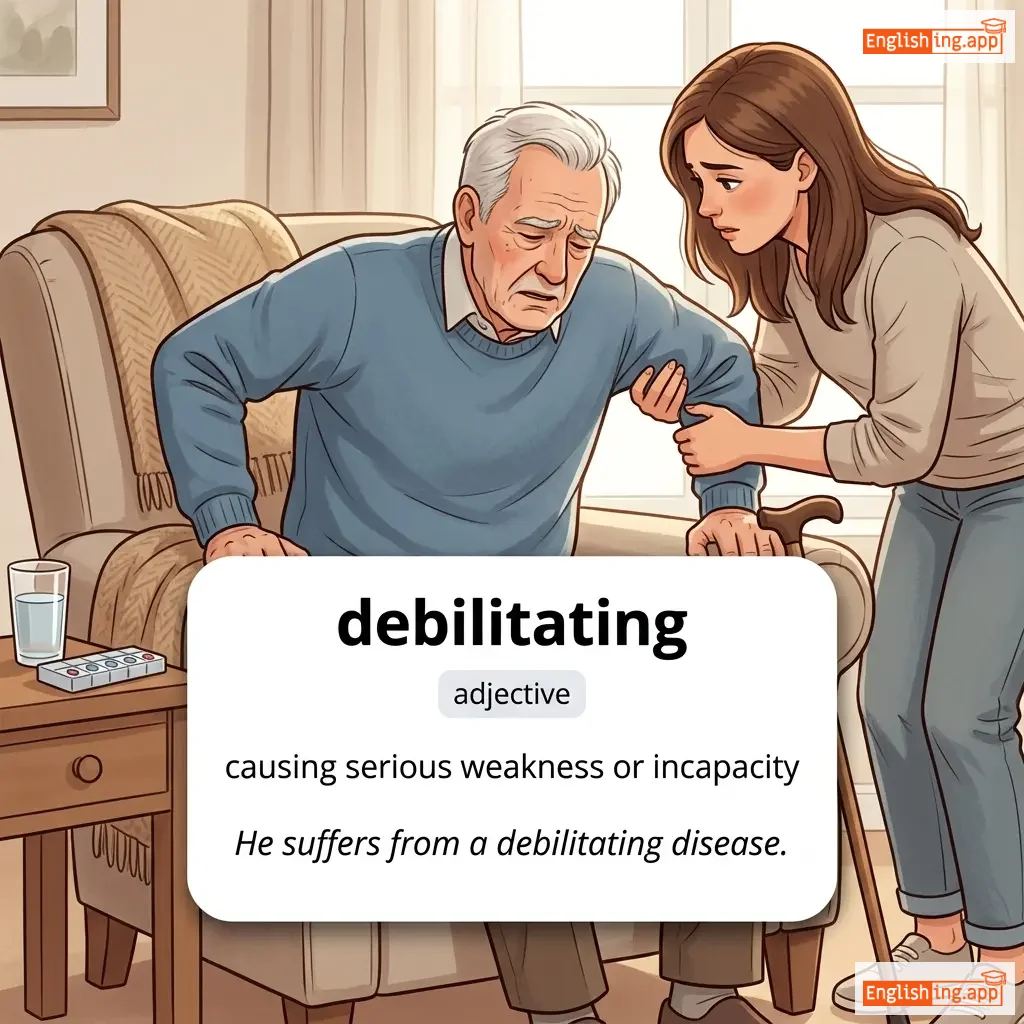
debilitating definition card — visual illustration of the meaning
adjective
/dɪˈbɪlɪteɪtɪŋ/
দুর্বলকারী (durbolkari)

causing serious weakness or incapacity

"He suffers from a debilitating disease."

"সে একটি দুর্বলকারী রোগে ভুগছে।" (Se ekti durbolkari roge vugche.)
noun
/ˈdeb.ɪt/
ঋণ; দেনা; বাকি; (rin, dena, baki)

an entry recording an amount owed; money taken from a bank account

"The bank showed a debit of fifty dollars from my checking account."

"ব্যাংক আমার চেকিং অ্যাকাউন্ট থেকে পঞ্চাশ ডলার ডেবিট দেখিয়েছে।" (bank amar checking account theke ponchash dollar debit dekhiyechhe.)
adjective
/ˌdɛbəˈnɛr/
আকর্ষণীয় (akorhshoniyo)

confident, stylish, and charming, typically referring to a man

"He looked debonair in his tuxedo at the gala."

"গালায় টাক্সেডোতে সে আকর্ষণীয় দেখাচ্ছিল।" (Galay tuxedote se akorhshoniyo dekhachhilo.)
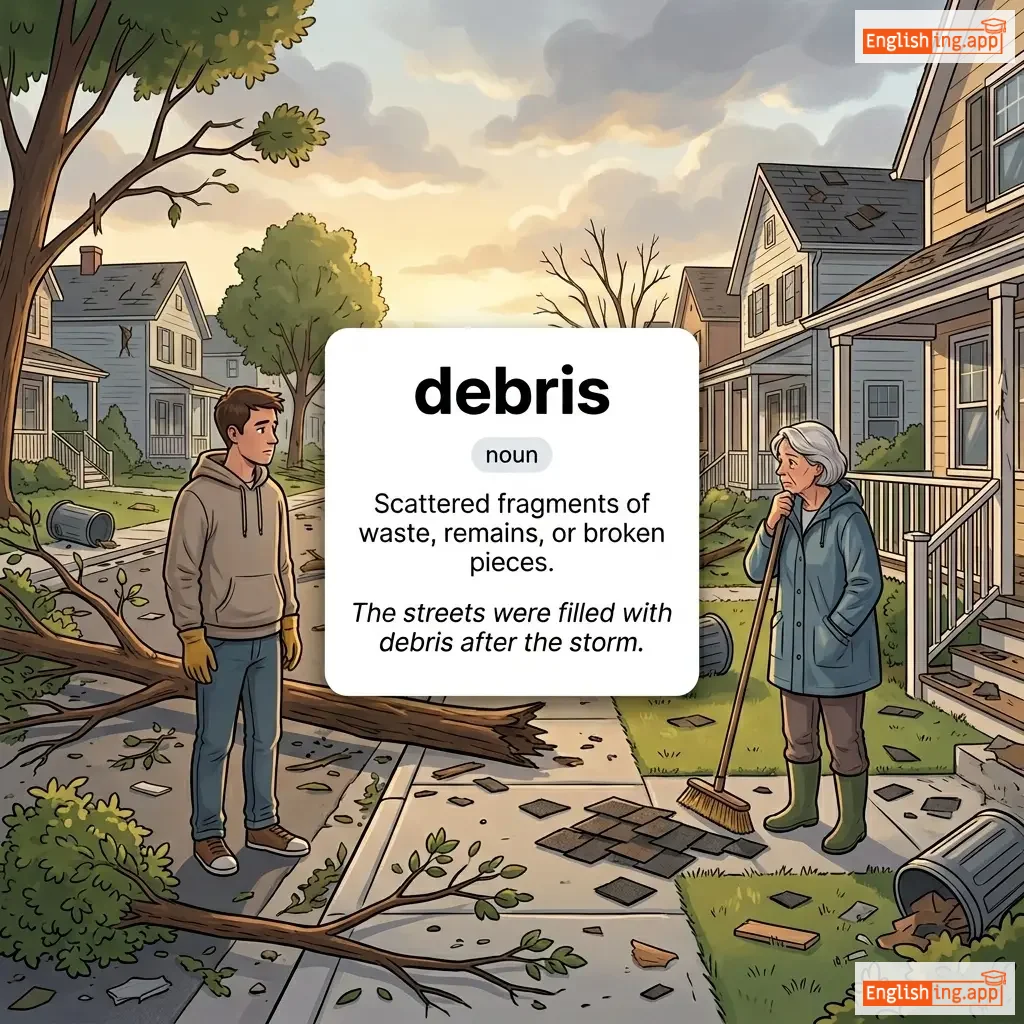
debris definition card — visual illustration of the meaning
noun
/dəˈbriː/
ভগ্নাবশেষ (bhagnoabosesh)

Scattered fragments of waste, remains, or broken pieces.

"The streets were filled with debris after the storm."

"ঝড়ের পর রাস্তাগুলো ভগ্নাবশেষে ভরে গিয়েছিল।" (Jhorder por rastagulo bhagnoaboshe she bhore giyechhilo.)
debt definition card — visual illustration of the meaning
noun
/dɛt/
ঋণ (rin)

Something, typically money, that is owed or due.

"He struggled for years to pay off his debt."

"সে তার ঋণ শোধ করতে বছরের পর বছর সংগ্রাম করেছে।" (Se tar rin shodh korte bochorer por bochor songram koreche.)
debunk definition card — visual illustration of the meaning
verb
/diːˈbʌŋk/
মিথ্যা প্রমাণ করা (mithya proman kora)

To expose the falseness or exaggeration of a claim, myth, or belief.

"The scientist worked to debunk the myths about vaccines."

"বিজ্ঞানী ভ্যাকসিন সম্পর্কে মিথগুলো ভ্রান্ত প্রমাণ করতে কাজ করেছিলেন।" (Biggani vaccine somporke mithgulo bhranto proman korte kaj korechhilen.)
noun, verb
/ˈdeɪ.bjuː/
প্রথম আবির্ভাব (prothom abirbhav)

The first public appearance or performance of someone or something.

"The young actor made his debut on the big stage."

"তরুণ অভিনেতা বড় মঞ্চে তার প্রথম আবির্ভাব করেছিল।" (Torun abhineta boro monche tar prothom abirbhav korechhilo.)
noun
/ˈdeb.juː.tɑːnt/
সমাজে নতুনভাবে আসা তরুণী (somaje notunbhabe asa toruni)

A young woman making her first formal appearance in society.

"The debutante wore a white gown at the ball."

"ডেবিউট্যান্ট বল-এ তরুণীটি সাদা পোশাক পরেছিল।" (Debutante ball e toruniti sada poshak porechhilo.)
noun
/ˈdɛkeɪd/
দশক (doshok)

A period of ten years.

"The country has changed a lot in the past decade."

"গত দশকে দেশটি অনেক পরিবর্তিত হয়েছে।" (Gato doshoke deshti onek poribortito hoyeche.)
noun
/ˈdek.ə.dəns/
নৈতিক অধঃপতন (noitik odhopoton)

Moral or cultural decline characterized by excessive indulgence in pleasure or luxury.

"The novel describes the decadence of the wealthy elite."

"উপন্যাসটি ধনী অভিজাতদের নৈতিক অধঃপতন বর্ণনা করেছে।" (Uponyashti dhoni abhijatder noitik odhopoton bornona koreche.)
adjective
/ˈdɛkədənt/
অবক্ষয়িত, বিলাসী (obokkhoito, bilashi)

Characterized by or reflecting a state of moral or cultural decline; excessively self-indulgent.

"The party was filled with decadent luxury and excess."

"পার্টিটি ছিল অবক্ষয়িত বিলাসিতা ও অতিরিক্ততার ভরপুর।" (Partiti chilo obokkhoito bilashita o otirikto tar vorpur.)
noun
/ˈdɛkəˌɡɒn/
দশভুজ (doshbhuj)

A polygon with ten sides and ten angles.

"The geometry teacher drew a perfect decagon on the board."

"জ্যামিতির শিক্ষক বোর্ডে একটি নিখুঁত দশভুজ আঁকলেন।" (Jyamiti shikkhok borde ekti nikhut doshbhuj anklen.)
noun
/ˈdɛkəˌɡræm/
দশ গ্রাম (dosh gram)

A metric unit of mass equal to ten grams.

"The package weighed exactly one decagram."

"প্যাকেটটির ওজন ছিল ঠিক এক ডেকাগ্রাম।" (Packet tir ojon chilo thik ek decagram.)
noun
/ˈdɛkəˌliːtər/
দশ লিটার (dosh liter)

A metric unit of capacity equal to ten liters.

"The container could hold up to one decaliter of water."

"পাত্রটি এক ডেকালিটার পানি ধারণ করতে পারত।" (Patroti ek decaliter pani dharon korte parto.)
noun
/ˈdɛkəˌlɔːɡ/
দশ আজ্ঞা (dosh agna)

The Ten Commandments in the Bible; a set of fundamental rules or principles.

"The priest gave a sermon on the importance of the Decalogue."

"যাজক ডেকালগের গুরুত্ব নিয়ে একটি ধর্মোপদেশ দিলেন।" (Jajok decalog er gurutto niye ekti dhormopodesh dilen.)
noun
/dɪˈkæmərən/
ডেকামেরন (বোকাচ্চিওর গল্পগ্রন্থ) (dekameron)

A collection of 100 tales written by Giovanni Boccaccio in the 14th century, told by a group of people over ten days.

"The Decameron is considered a masterpiece of classical Italian literature."

"ডেকামেরন ইতালীয় সাহিত্যের একটি শ্রেষ্ঠ রচনা হিসাবে গণ্য করা হয়।" (Dekameron italiyo sahityer ekti shreshtho rochona hisabe gonno kora hoy.)
noun
/dɪˈkæmɪtər/
ডেকামিটার (dekamitar)

A metric unit of length equal to ten meters.

"The field was measured in decameters for accuracy."

"সঠিকতার জন্য মাঠটি ডেকামিটারে মাপা হয়েছিল।" (Sothikotar jonno math ti dekamitare mapa hoyechhilo.)
verb
/dɪˈkæmp/
হঠাৎ পালিয়ে যাওয়া (dikamp)

To depart suddenly or secretly, often to avoid trouble or escape.

"The thief decamped before the police arrived."

"চোরটি পুলিশ আসার আগে পালিয়ে যায়।" (Chorti police asar age paliye jay.)
verb
/dɪˈkænt/
আস্তে ঢালা (dikaant)

To pour liquid gently from one container into another, especially without disturbing the sediment.

"She carefully decanted the wine into a clean glass."

"সে সাবধানে ওয়াইনটি একটি পরিষ্কার গ্লাসে ঢালল।" (Se sabdhane wain ti ekti porishkar glass e dhallo.)
verb
/dɪˈkæpɪteɪt/
শিরশ্ছেদ করা (dikapitett)

To cut off the head of a person or animal.

"The ancient executioner decapitated the criminal."

"প্রাচীন জল্লাদ অপরাধীর মাথা কেটে ফেলেছিল।" (Prachin jollad oporadhir matha kete phelchhilo.)
noun
/ˈdɛkəˌpɒd/
দশপদ প্রাণী (doshpodo prani)

An arthropod with ten limbs, such as crabs, lobsters, and shrimps.

"The lobster is a well-known decapod."

"লবস্টার একটি সুপরিচিত দশপদ প্রাণী।" (Lobster ekti suparichito doshpodo prani.)
noun
/ˌdɛkəˈsɪləbəl/
দশ অক্ষরবিশিষ্ট পঙক্তি (dosh okkhorbishishta pongkti)

A line of verse with ten syllables.

"The poet often wrote in decasyllable form."

"কবি প্রায়ই দশ অক্ষরবিশিষ্ট ছন্দে লিখতেন।" (Kobi prayoi dosh okkhorbishishta chhonde likhten.)
verb, noun
/dɪˈkeɪ/
পচন (pochon)

The process of rotting or decomposition; to decline in quality or strength.

"The abandoned house slowly began to decay."

"পরিত্যক্ত বাড়িটি ধীরে ধীরে পচতে শুরু করল।" (Porityokto bariti dhire dhire pochte shuru korlo.)