Vocabularies

English Vocabulary Dictionary | Word Meanings, Definitions & Examples

noun
/ˌdɛd ˈhiːt/

a race or contest in which two or more competitors finish exactly equal

"The race ended in a dead-heat between the two runners."

noun
/ˈded.lɑk/

a situation in which no progress is possible; complete standstill

"The negotiations reached a deadlock when neither side would compromise."

noun
/ˈdedlaɪn/

the latest time or date by which something must be completed

"We need to finish this project before the deadline."

deadlines definition card — visual illustration of the meaning
noun
/ˈdɛdˌlaɪnz/

The latest time or date by which something should be completed.

"Setting deadlines helps finish tasks."

noun
/ˈdɛdlɒk/

a situation in which progress is impossible because of disagreement

"Negotiations reached a deadlock after neither side agreed to compromise."

☠️

Deadly

adjective
/ˈdedli/

causing or able to cause death; extremely dangerous

"The snake's bite is deadly to humans."

adjective
/ˈdɛdˌpæn/

Deliberately impassive or expressionless in manner.

"She delivered the joke in a completely deadpan voice."

🧏

Deaf

adjective
/def/

unable to hear; having a hearing impairment

"The deaf child learned to communicate using sign language."

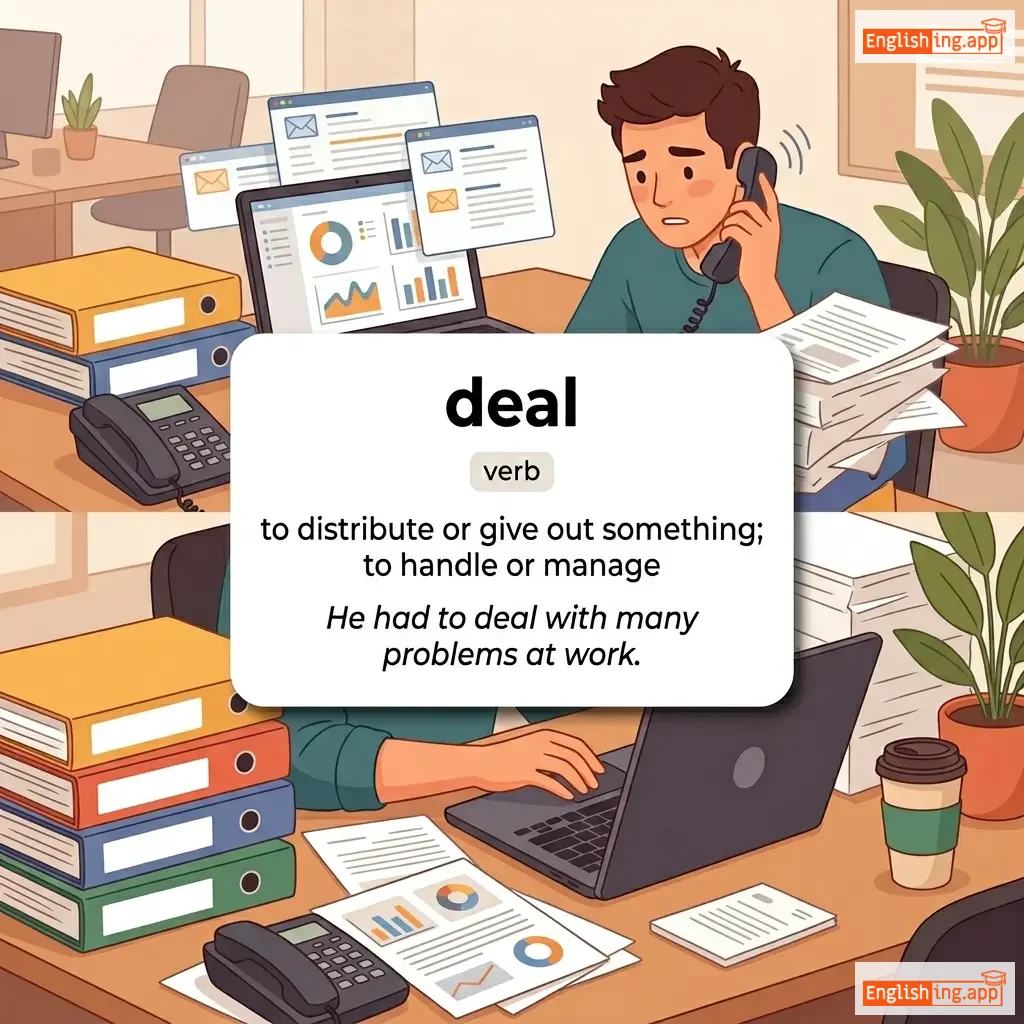
deal definition card — visual illustration of the meaning
🤝

deal

verb
/diːl/

to distribute or give out something; to handle or manage

"He had to deal with many problems at work."

noun
/ˈdiːlər/

a person or business that buys and sells goods; someone who distributes

"The car dealer offered a discount to attract customers."

noun
/ˈdiː.lɪŋ/

business transactions; the way of treating people or handling situations

"His fair dealing with customers earned him an excellent reputation."

💖

dear

adjective
/dɪr/

loved or cherished; sometimes used as a polite form of address

"She is very dear to her grandparents."

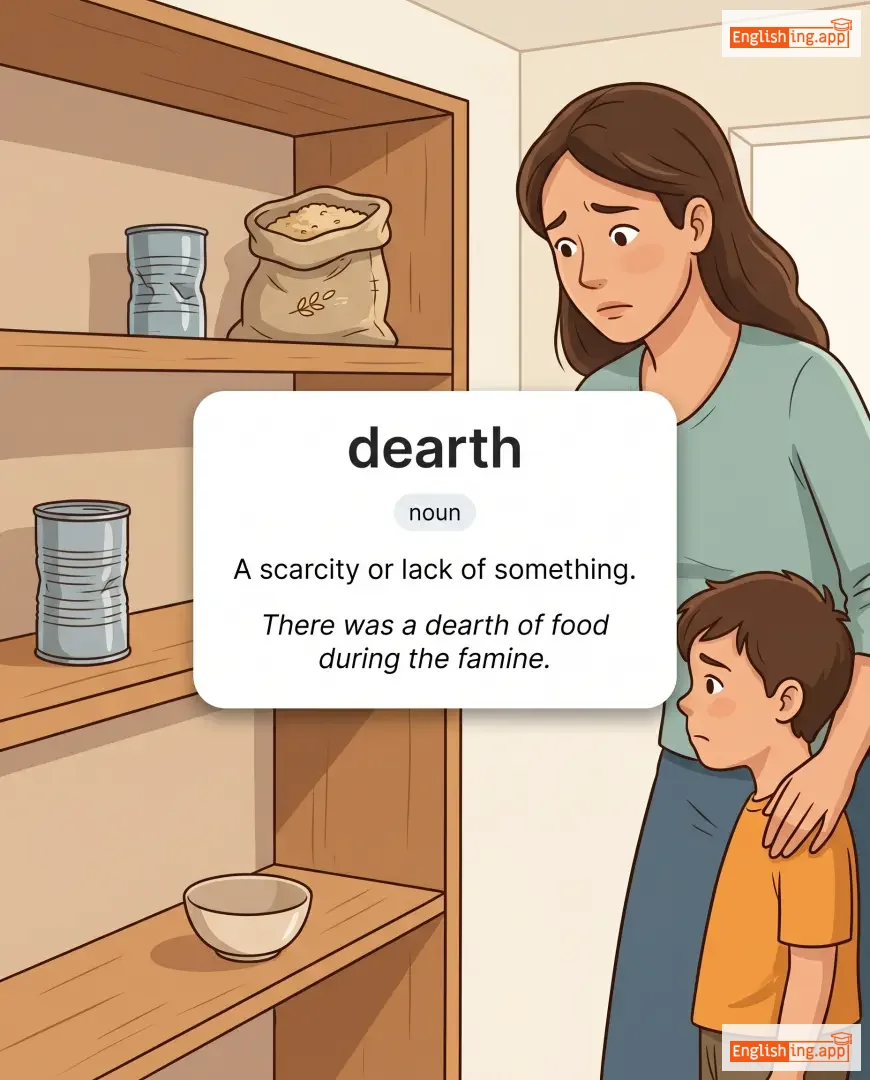
dearth definition card — visual illustration of the meaning
noun
/dɜːrθ/

A scarcity or lack of something.

"There was a dearth of food during the famine."

💀

Death

noun
/dɛθ/

The end of life; the permanent cessation of all vital functions.

"The news of his death shocked everyone in the village."

noun
/ˈdɛθsˌhɛd/

A representation of a human skull, often used as a symbol of death.

"The pirate flag was marked with a grim deaths-head."

noun
/deɪˈbɑːkəl/

A sudden and complete failure; a fiasco.

"The product launch turned into a complete debacle."

verb
/dɪˈbɑːr/

To officially prevent someone from doing something.

"He was debarred from entering the competition due to cheating."

verb
/dɪˈbɑːrk/

to disembark or get off a ship, aircraft, or vehicle

"The passengers debarked as soon as the ship docked."

⬇️

debase

verb
/dɪˈbeɪs/

to reduce the quality, value, or dignity of something

"Corruption can debase the values of a society."

adjective
/dɪˈbeɪst/

having lost quality, value, or moral character

"The debased currency lost the trust of the people."

adjective
/dɪˈbeɪtəbl̩/

open to discussion or doubt; not certain

"It is debatable whether the policy will work."

🗣️

Debate

noun, verb
/dɪˈbeɪt/

A formal discussion on a particular topic where opposing arguments are presented.

"The students prepared well for the school debate."

debates definition card — visual illustration of the meaning
🗣️

debates

noun
dɪˈbeɪts

A formal discussion on a particular topic in a public meeting or legislative assembly.

"Debates foster intellectual growth."

verb
/dɪˈbɔːtʃ/

to corrupt morally; to lead into excessive indulgence in sensual pleasures

"The novel shows how wealth can debauch a person's character."

debauchery definition card — visual illustration of the meaning
noun
/dɪˈbɔːtʃəri/

excessive indulgence in sensual pleasures; corruption or vice

"The novel depicts the debauchery of the aristocrats in the city."

noun
/dɪˈbɛntʃər/

a type of debt instrument not secured by physical assets or collateral

"The company raised capital by issuing debentures to investors."

verb
/dɪˈbɪlɪteɪt/

to weaken or make someone or something infirm

"The long illness debilitated his strength."

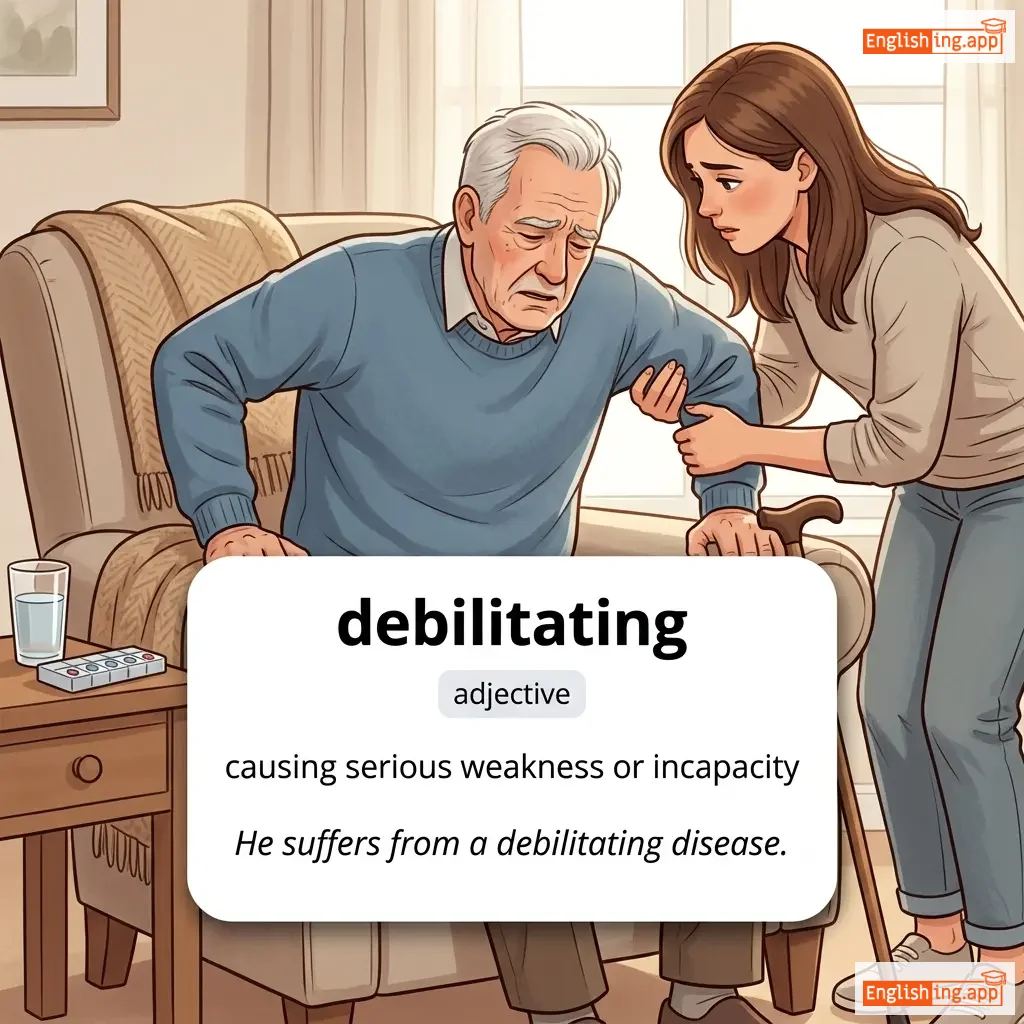
debilitating definition card — visual illustration of the meaning
adjective
/dɪˈbɪlɪteɪtɪŋ/

causing serious weakness or incapacity

"He suffers from a debilitating disease."

💳

Debit

noun
/ˈdeb.ɪt/

an entry recording an amount owed; money taken from a bank account

"The bank showed a debit of fifty dollars from my checking account."

adjective
/ˌdɛbəˈnɛr/

confident, stylish, and charming, typically referring to a man

"He looked debonair in his tuxedo at the gala."

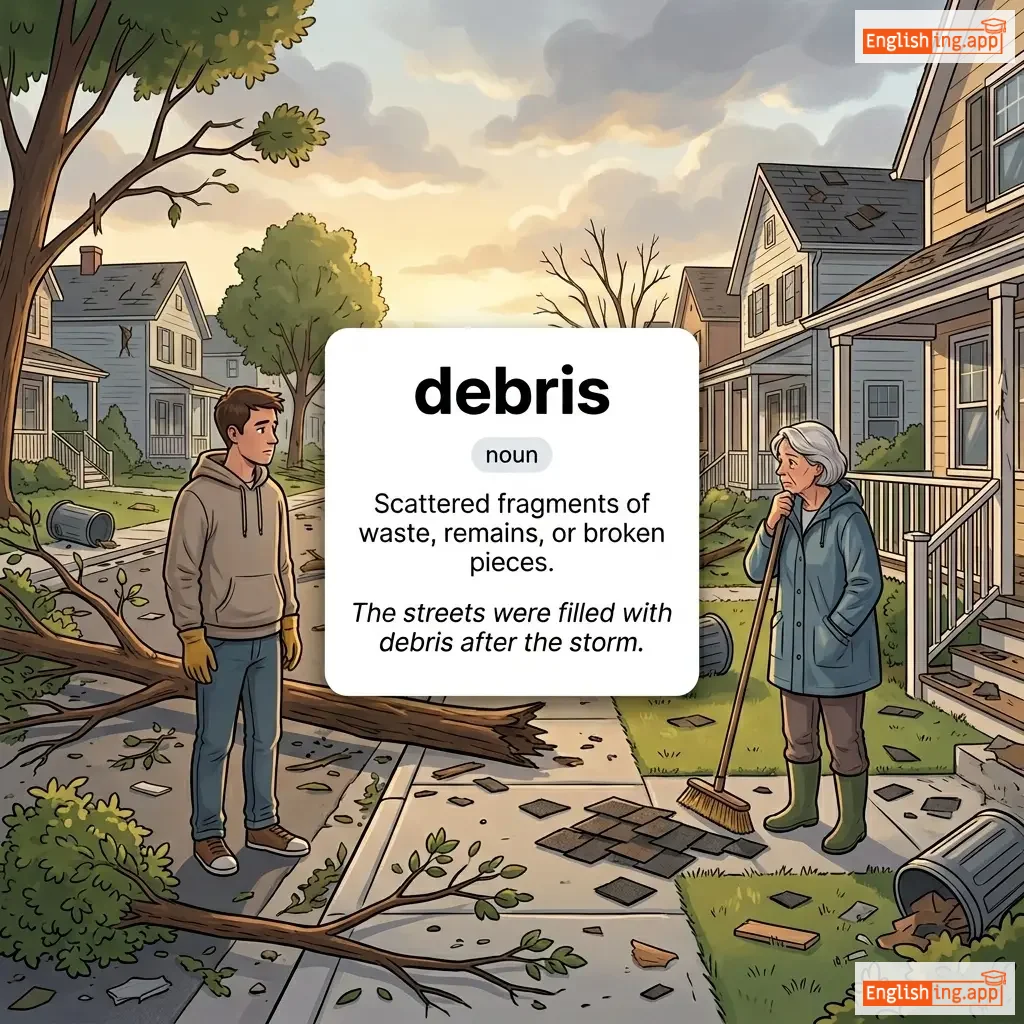
debris definition card — visual illustration of the meaning
noun
/dəˈbriː/

Scattered fragments of waste, remains, or broken pieces.

"The streets were filled with debris after the storm."

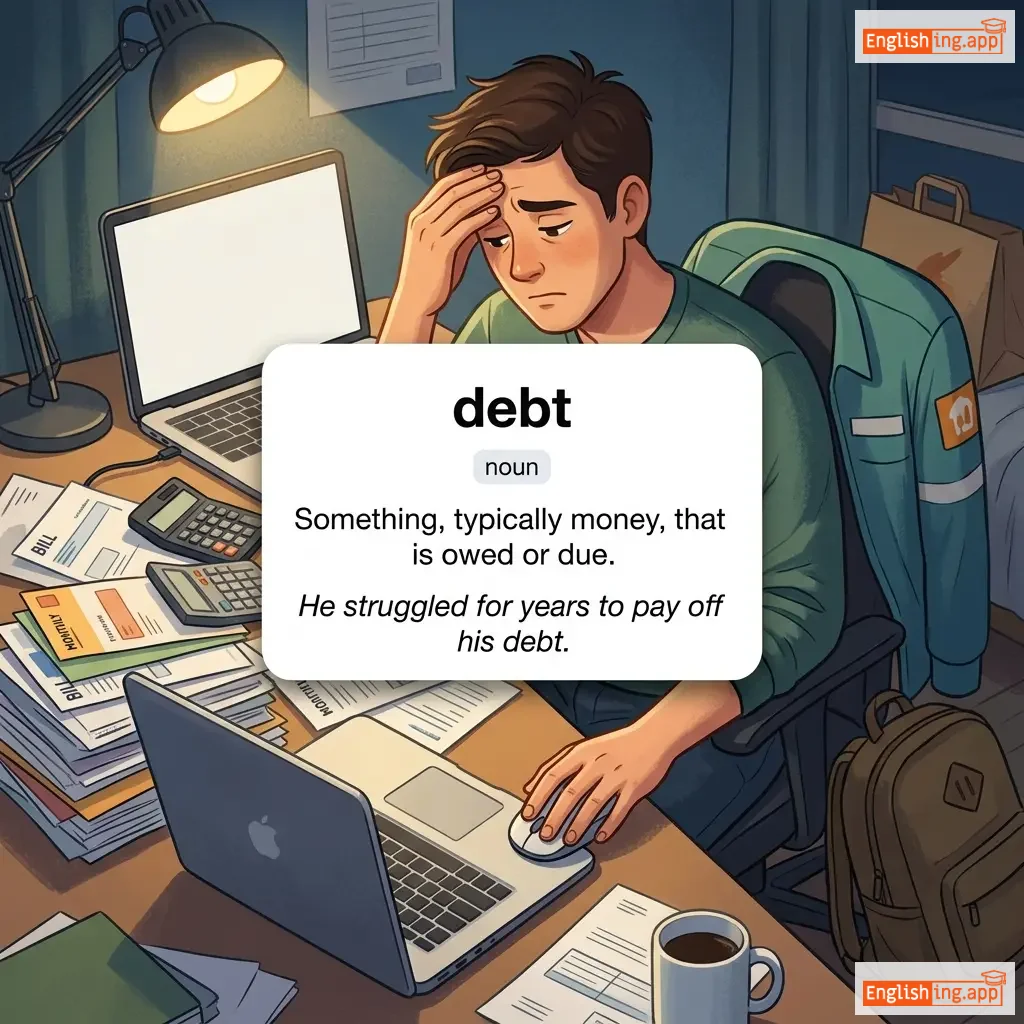
debt definition card — visual illustration of the meaning
💸

debt

noun
/dɛt/

Something, typically money, that is owed or due.

"He struggled for years to pay off his debt."

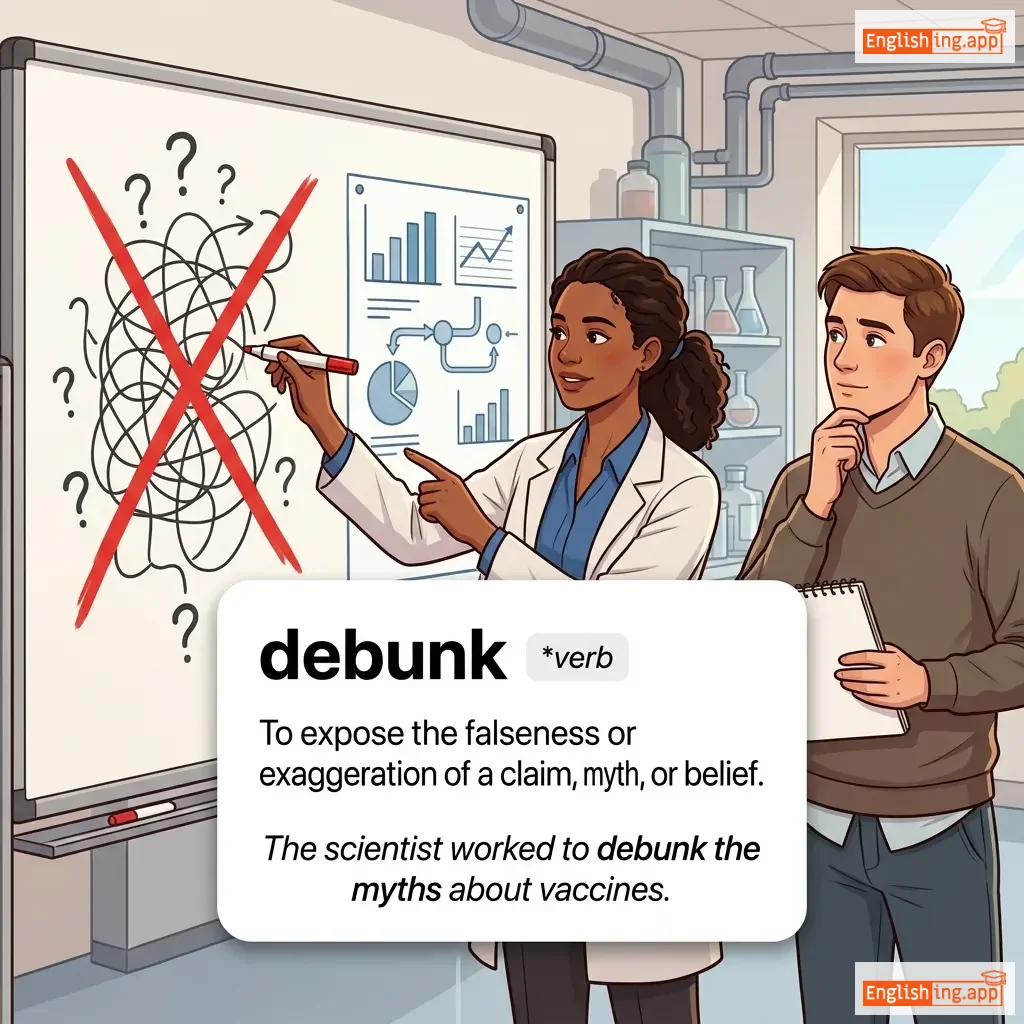
debunk definition card — visual illustration of the meaning
verb
/diːˈbʌŋk/

To expose the falseness or exaggeration of a claim, myth, or belief.

"The scientist worked to debunk the myths about vaccines."

🎤

debut

noun, verb
/ˈdeɪ.bjuː/

The first public appearance or performance of someone or something.

"The young actor made his debut on the big stage."

noun
/ˈdeb.juː.tɑːnt/

A young woman making her first formal appearance in society.

"The debutante wore a white gown at the ball."

noun
/ˈdɛkeɪd/

A period of ten years.

"The country has changed a lot in the past decade."

noun
/ˈdek.ə.dəns/

Moral or cultural decline characterized by excessive indulgence in pleasure or luxury.

"The novel describes the decadence of the wealthy elite."

adjective
/ˈdɛkədənt/

Characterized by or reflecting a state of moral or cultural decline; excessively self-indulgent.

"The party was filled with decadent luxury and excess."

noun
/ˈdɛkəˌɡɒn/

A polygon with ten sides and ten angles.

"The geometry teacher drew a perfect decagon on the board."

⚖️

decagram

noun
/ˈdɛkəˌɡræm/

A metric unit of mass equal to ten grams.

"The package weighed exactly one decagram."

noun
/ˈdɛkəˌliːtər/

A metric unit of capacity equal to ten liters.

"The container could hold up to one decaliter of water."

noun
/ˈdɛkəˌlɔːɡ/

The Ten Commandments in the Bible; a set of fundamental rules or principles.

"The priest gave a sermon on the importance of the Decalogue."

noun
/dɪˈkæmərən/

A collection of 100 tales written by Giovanni Boccaccio in the 14th century, told by a group of people over ten days.

"The Decameron is considered a masterpiece of classical Italian literature."

noun
/dɪˈkæmɪtər/

A metric unit of length equal to ten meters.

"The field was measured in decameters for accuracy."

🏃‍♂️

decamp

verb
/dɪˈkæmp/

To depart suddenly or secretly, often to avoid trouble or escape.

"The thief decamped before the police arrived."

verb
/dɪˈkænt/

To pour liquid gently from one container into another, especially without disturbing the sediment.

"She carefully decanted the wine into a clean glass."

🗡️

decapitate

verb
/dɪˈkæpɪteɪt/

To cut off the head of a person or animal.

"The ancient executioner decapitated the criminal."

noun
/ˈdɛkəˌpɒd/

An arthropod with ten limbs, such as crabs, lobsters, and shrimps.

"The lobster is a well-known decapod."

noun
/ˌdɛkəˈsɪləbəl/

A line of verse with ten syllables.

"The poet often wrote in decasyllable form."

🦠

Decay

verb, noun
/dɪˈkeɪ/

The process of rotting or decomposition; to decline in quality or strength.

"The abandoned house slowly began to decay."