Словари

Словарь английского языка | Значения слов, определения и примеры

adjective
/ˈkjuːbən/
кубинский (kubinskiy)

relating to Cuba, its people, or its culture

"We enjoyed delicious Cuban coffee at the café."

"Мы наслаждались вкусным кубинским кофе в кафе." (My naslazhdalis' vkusnym kubinskim kofe v kafe.)
noun, verb
/kjuːb/
куб (kub)

As a noun: a solid object with six equal square faces. As a verb: to cut food into small square pieces.

"She put a sugar cube in her tea."

"Она положила кубик сахара в свой чай." (Ona polozhila kubik sakhara v svoy chay.)
noun
/ˈkjuːbeb ˈpepər/
кубеба перец (kubeva perets)

aromatic spice with a slightly bitter taste and cooling aftertaste

"Cubeb pepper is used in traditional Indonesian cuisine."

"Кубеба перец используется в традиционной индонезийской кухне." (Kubeva perets ispol'zuyetsya v traditsionnoy indoneziyskoy kukhne)
noun
/ˈkjuː.bɪ.kəl/
кабинка (kabinka)

A small partitioned-off area of a room, typically in an office.

"She works in a cubicle with three other colleagues."

"Она работает в кабинке с тремя другими коллегами." (Ona rabotayet v kabinke s teryma drugimi kollegami.)
noun
/ˈkʊk.uː/
кукушка (kukushka)

a bird known for its distinctive call and for laying eggs in other birds' nests

"We heard the cuckoo calling from the forest early in the morning."

"Мы слышали кукушку, поющую в лесу рано утром." (My slyshali kukushku, poyushchuyu v lesu rano utrom.)
noun
/ˈkjuː.kʌm.bər/
огурец (ogurets)

a long green vegetable with watery flesh, eaten raw in salads or cooked

"I added fresh cucumber slices to my salad."

"Я добавил свежие ломтики огурца в мой салат." (Ya dobavil svezhie lomtiki ogurtsa v moy salat.)
noun/verb
/ˈkʌdʒ.əl/
палка (palka)

A short, thick stick used as a weapon; to beat with a cudgel.

"The guard used a cudgel to chase away the thief."

"Охранник использовал палку, чтобы прогнать вора." (Okhrannik ispol'zoval palku, chtoby prozhnat' vor.)
noun/verb
/kjuː/
сигнал (signal)

A signal or prompt for action; to give a signal.

"The actor waited for his cue before entering the stage."

"Актер ждал своего сигнала перед тем, как выйти на сцену." (Aktor zhdal svoego signala pered tem, kak vyyti na stsenu.)
cues definition card — visual illustration of the meaning
noun
kjuːz
подсказки (podskazki)

Signals or hints from conversation or environment that help understanding

"Facial expressions provide cues about a person's emotions."

"Лицевые выражения дают подсказки о эмоциях человека." (Litsevye vyrazheniya dayut podskazki o emotsiyakh cheloveka.)
noun
/kwɪˈziːn/
кухня (kukhnya)

A style or method of cooking, especially characteristic of a particular country or region.

"Italian cuisine is famous all over the world."

"Итальянская кухня известна по всему миру." (Italianskaya kukhnya izvestna po vsemy miru.)
noun
/ˌkʌl də ˈsæk/
тупик (tupik)

A street or passage closed at one end; a dead end.

"They bought a house at the end of a quiet cul de sac."
"Они купили дом в конце тихой тупиковой улицы." (Oni kupili dom v kontse tikhoy tupikovoy ulitsy.)
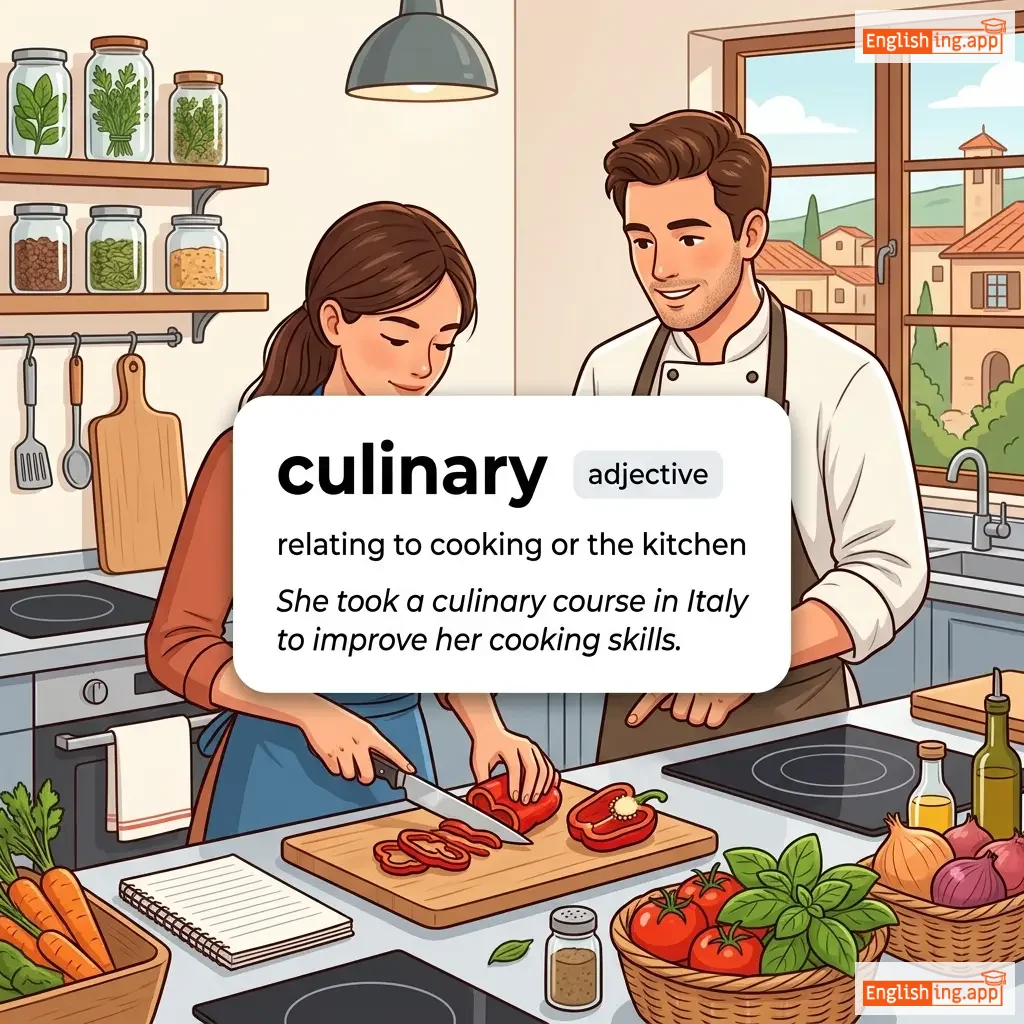
culinary definition card — visual illustration of the meaning
adjective
/ˈkʌl.ɪ.nɛr.i/
кулинарный (kulinarnyj)

relating to cooking or the kitchen

"She took a culinary course in Italy to improve her cooking skills."

"Она прошла кулинарный курс в Италии, чтобы улучшить свои кулинарные навыки." (Ona proshla kulinarnyj kurs v Italii, chtoby uluchshit' svoi kulinarnye navyki.)
verb
/kʌl/
отбирать (kul)

to select or remove from a larger group, often to reduce numbers

"The farmers decided to cull the sick animals from the herd."

"Фермеры решили отсеять больных животных из стада." (Fermery reshili otsiyat bolnykh zhivotnykh iz stada)
culminate definition card — visual illustration of the meaning
verb
/ˈkʌl.mɪ.neɪt/
достигать кульминации (dostigat' kul'minatsii)

to reach the highest point or final stage

"The negotiations culminated in a successful agreement."

"Переговоры завершились успешным соглашением." (Peregovory zavershilis' uspeshnym soglasheniyem.)
culmination definition card — visual illustration of the meaning
noun
/ˌkʌl.mɪˈneɪ.ʃən/
кульминация (kulminatsiya)

the highest point or final result of something

"Graduation day is the culmination of years of hard work."

"День выпускного - это кульминация лет тяжелого труда." (Den' vypusknogo - eto kul'minatsiya let tyazhelogo truda.)
noun
/ˌkʌl.pəˈbɪl.ɪ.ti/
вина (vina)

responsibility for a fault or wrong; blameworthiness

"The jury considered his level of culpability in the crime."

"Присяжные учли уровень его вины в преступлении." (Prisyazhnye uchli urovnen ego viny v prestuplenii.)
adjective
/ˈkʌlpəbl̩/
виновный (vinovny)

deserving blame or responsibility for a wrongdoing

"The judge found him culpable for the accident."

"Судья признал его виновным в аварии." (Sudya priznаl ego vinovnym v avarii.)
noun
/ˈkʌlprɪt/
виновник (vinovnik)

a person who is responsible for a crime or misdeed

"The police caught the culprit behind the robbery."

"Полиция поймала виновника за ограблением." (Politsiya poymala vinovnika za ograblyeniem.)
noun
/kʌlt/
культ (kult)

a system of religious veneration and devotion directed toward a particular figure or object

"The cult followed their leader with great devotion."
"Культ следовал за своим лидером с большой преданностью." (Kult sleduval za svoim liderom s bol'shoy predannost'yu.)
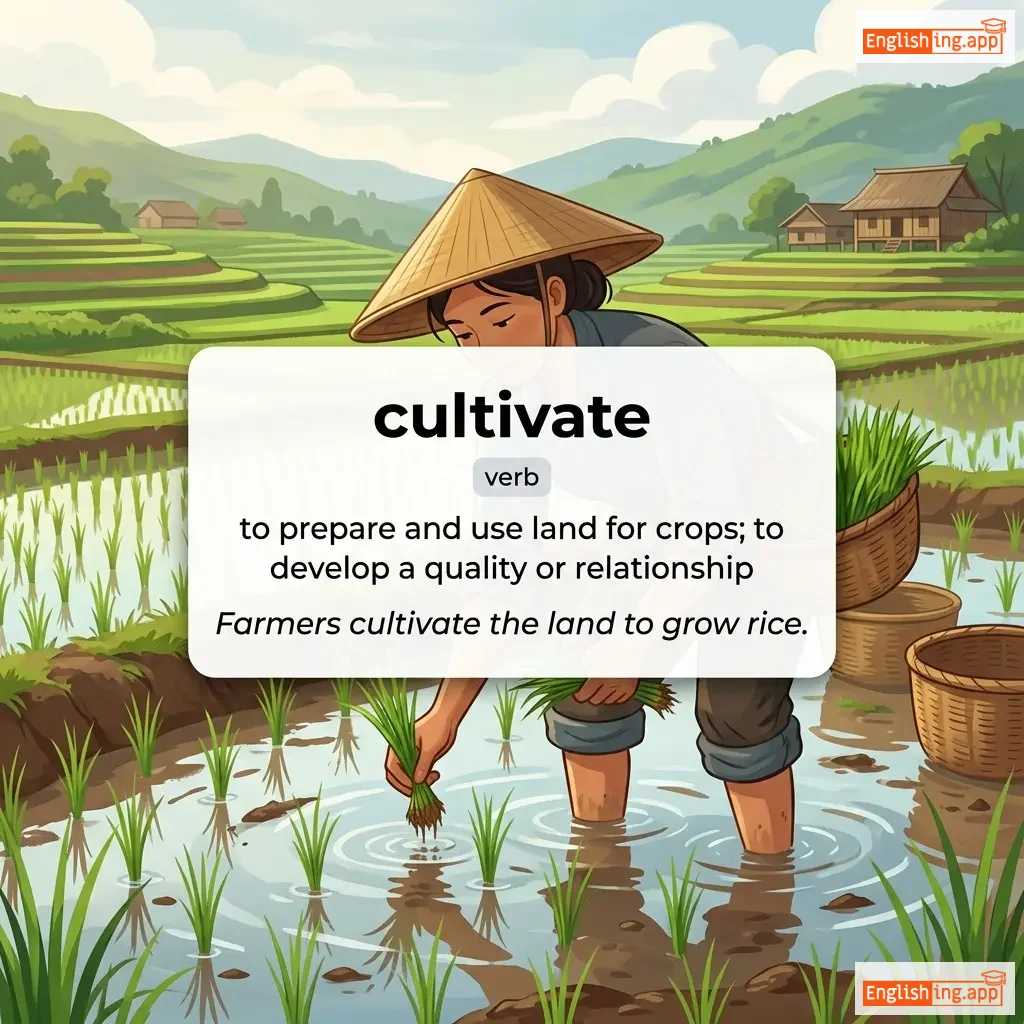
cultivate definition card — visual illustration of the meaning
verb
/ˈkʌltɪveɪt/
счастье (schastye)

to prepare and use land for crops; to develop a quality or relationship

"Farmers cultivate the land to grow rice."
"Она не могла скрыть своего счастья, когда получила награду." (Ona ne mogla skryt' svoego schast'ya, kogda poluchila nagradu.)
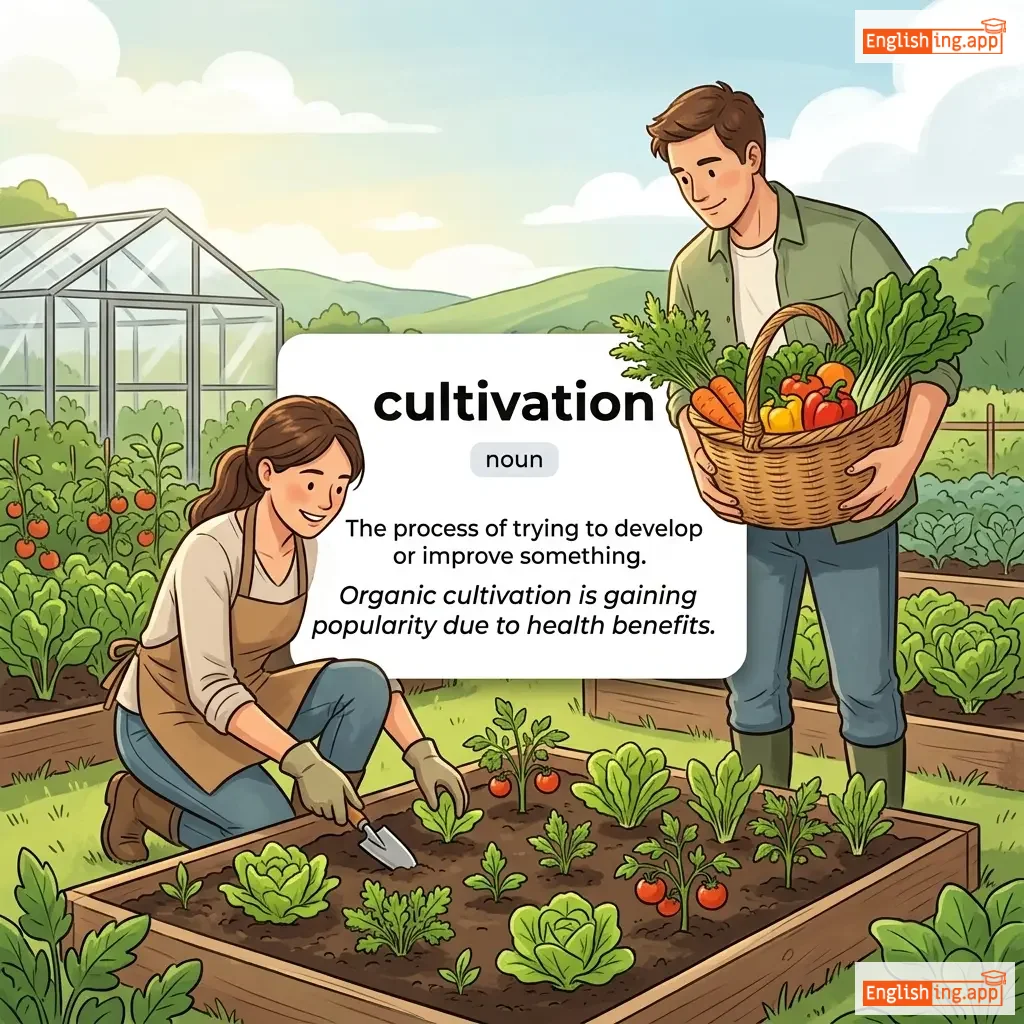
cultivation definition card — visual illustration of the meaning
noun
/ˌkʌl.tɪˈveɪ.ʃən/
культивирование (kul'tivirovanie)

The process of trying to develop or improve something.

"Organic cultivation is gaining popularity due to health benefits."
"Органическое культивирование набирает популярность благодаря пользе для здоровья." (Organicheskoe kul'tivirovanie nabiraet populyarnost' blagodarya pol'ze dlya zdorov'ya.)
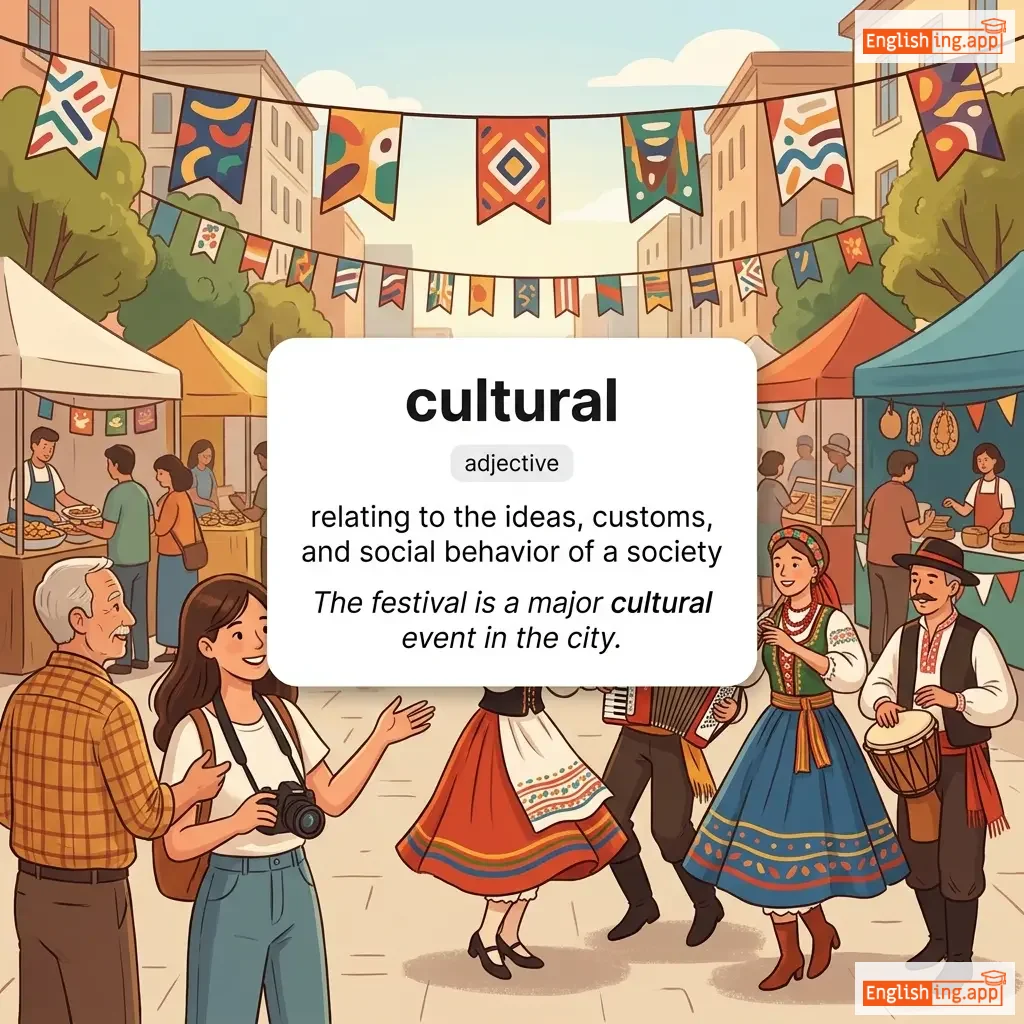
cultural definition card — visual illustration of the meaning
adjective
/ˈkʌltʃərəl/
культурный (kul'turnyy)

relating to the ideas, customs, and social behavior of a society

"The festival is a major cultural event in the city."
"Фестиваль — это важное культурное событие в городе." (Festival' — eto vazhnoe kul'turnoe sobytiye v gorode.)
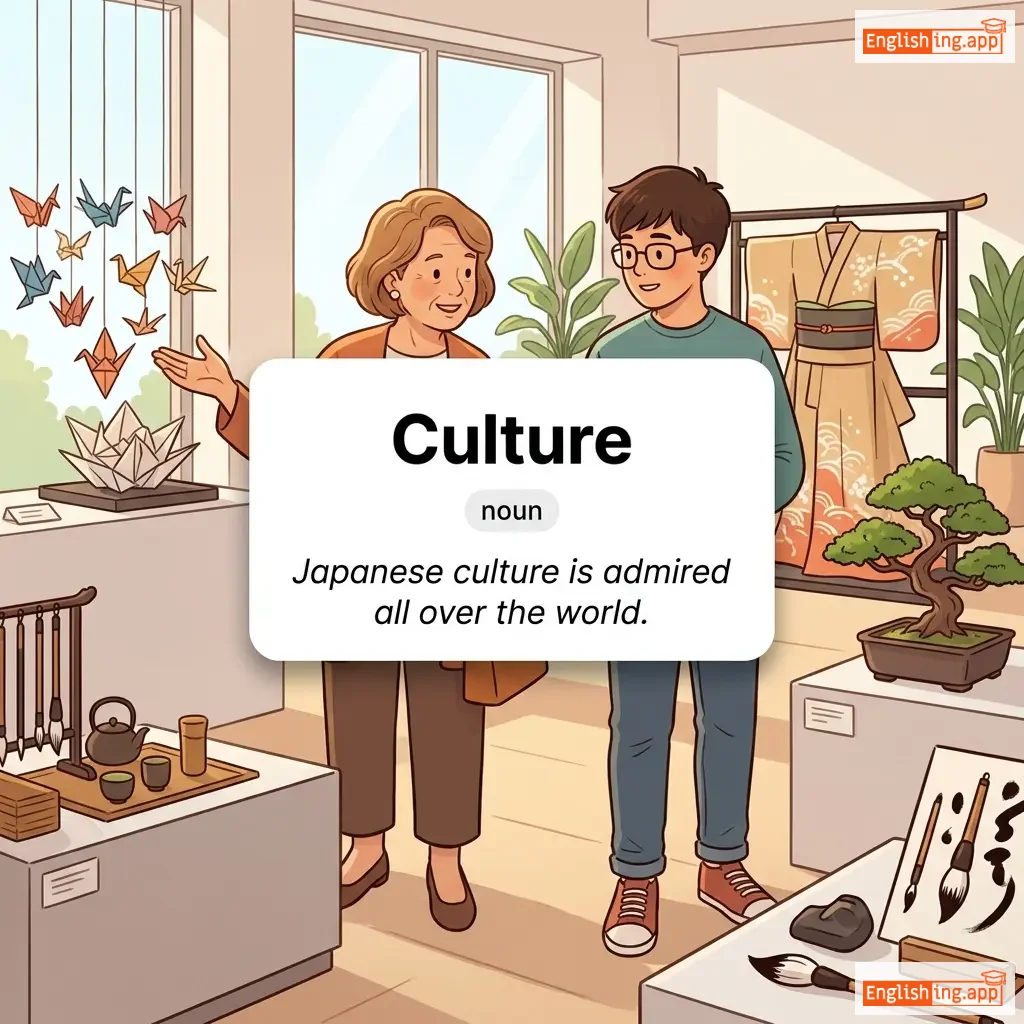
Culture definition card — visual illustration of the meaning
noun
/ˈkʌltʃər/
культура (kultura)

the customs, arts, social institutions, and achievements of a particular people or society

"Japanese culture is admired all over the world."

"Японская культура восхищает весь мир." (Yaponskaya kul'tura voskhishchayet ves' mir.)
adjective
/ˈkʌltʃəd/
культурный (kul'turnyy)

characterized by refined taste, manners, and education

"She is a cultured woman who loves art and literature."

"Она культурная женщина, которая любит искусство и литературу." (Ona kulturnaya zhenshchina, kotoraya lyubit iskusstvo i literaturu.)
noun
/ˈkʌlvərt/
коллектор (kollektor)

a tunnel or drain that carries water under a road or railway

"The heavy rainwater flowed through the culvert under the bridge."

"Тяжелая дождливая вода текла через коллектор под мостом." (Tyazhelaya dozhdlivaya voda tekla cherez kollektor pod mostom.)
cumbersome definition card — visual illustration of the meaning
adjective
/ˈkʌmbərsəm/
громоздкий (gromozdkiy)

Large, heavy, or difficult to handle; complicated and inefficient.

"The cumbersome package was too heavy to carry alone."

"Громоздкая посылка была слишком тяжелой, чтобы нести её одной." (Gromozdkiy posylka byla slishkom tyazheloy, chtoby nesti yejo odinoy.)
noun
/ˈkjuːmɪn/
кумин (kumin)

A spice made from the dried seeds of a plant in the parsley family, with a warm earthy flavor

"Cumin is an essential spice in Indian and Middle Eastern cooking."

"Кумин является важной специей в индийской и ближневосточной кухне." (Kumin yavlyaetsya vazhnoy spetsiyey v indiyskoy i blizhnevostochnoy kukhne.)
adjective
/ˈkjuːmjələtɪv/
кумулятивный (kumuljativnyj)

Increasing gradually by addition; growing in quantity, force, or effect.

"The cumulative effect of stress can harm your health."

"Кумулятивный эффект стресса может навредить вашему здоровью." (Kumulyativnyj effekt stressa mozhet navredit' vashemu zdorov'yu.)
adjective
/ˈkʌnɪŋ/
хитрый (khitryy)

Having or showing skill in achieving one's ends by deceit or evasion; cleverness in a tricky way.

"The cunning fox tricked the farmer."

"Хитрая лиса обманула фермера." (Khitrya lisa obmanula fermera.)
noun
/kʌp/
чашка (chashka)

a small bowl-shaped container for drinking from, typically with a handle

"She drank a cup of tea in the morning."

"Она выпила чашку чая утром." (Ona vypila chashku chaya utrom.)
noun
/ˈkʌp.bɔːrd/
шкаф (shkaf)

a piece of furniture with doors and shelves for storing dishes, food, or clothes

"She stored all the plates and bowls in the kitchen cupboard."

"Она поставила все тарелки и миски в кухонный шкаф." (Ona postavila vse tarelki i miski v kukhonnyy shkaf.)
noun
/kjuːˈpɪdəti/
жадность (zhadnost')

Excessive desire for wealth or possessions; greed.

"The king's downfall was caused by his cupidity."

"Падение короля было вызвано его жадностью." (Padeniye korolya bylo vyzvano yego zhadnost'yu.)
adjective
/ˈkjʊərəbl/
излечимый (izlechimy)

Able to be cured or healed.

"The doctor assured her that the disease was curable."

"Доктор заверил её, что болезнь излечимая." (Doktor zaveril yeye, chto bolezn' izlechimaya.)
adjective
/ˈkjʊərətɪv/
лечебный (lechebnyy)

Able to cure disease or restore health.

"The doctor prescribed a curative treatment for the illness."

"Врач назначил лечебное лечение от болезни." (Vrach naznachil lechebnoye lecheniye ot bolezni.)
noun
/kjʊˈreɪtər/
куратор (kurator)

a person who is responsible for the care and management of a museum, gallery, or collection

"The curator organized a new exhibition of ancient artifacts."

"Куратор организовал новую выставку древних артефактов." (Kurator organizoval novuyu vystavku drevnikh artefaktov.)
verb
/kɜːrb/
сдерживать / контролировать (sderzhivat / kontrolirovat)

to restrain, control, or limit something

"The government took steps to curb inflation."

"Правительство приняло меры по сдерживанию инфляции." (Pravitel'stvo prinyalo mery po sderzhivaniyu inflatsii.)
noun
/kɜːrd/
йогурт (yogurt)

a white dairy product made by coagulating milk; yogurt

"She added fresh curd to the salad for a tangy flavor."

"Она добавила свежий йогурт в салат для кисловатого вкуса." (Ona dobavila svezhiy yogurt v salat dlya kisloyatogo vkusa.)
cure definition card — visual illustration of the meaning
verb
/kjʊər/
лечить (leechit)

to make someone healthy again after an illness

"The new medicine cured her of the infection."

"Новое лекарство вылечило её от инфекции." (Novoe lekarstvo vylechilo yey ot infeksii.)
noun
/ˈkɜːrfjuː/
комендантский час (komendantskiy chas)

a rule requiring people to stay indoors after a certain time, usually at night

"The city imposed a curfew during the unrest."

"Город ввел комендантский час во время беспорядков." (Gorod vvel komendantskiy chas vo vremya besporyadkov.)
noun
/ˈkjʊriˌoʊ/
курьезный предмет (kur'yeznyy predmet)

a small unusual or interesting object, often collected for its rarity

"She bought a curio from the antique shop."

"Она купила курьезный предмет в антикварном магазине." (Ona kupila kur'yeznyy predmet v antikvarnom magazine.)
noun
/ˌkjʊəriˈɒsɪti/
любопытство (lyubopytstvo)

a strong desire to know or learn something

"Children have a natural curiosity about the world around them."

"Дети имеют естественное любопытство относительно мира вокруг них." (Deti imeyut estestvennoe lyubopytstvo otnositel'no mira vokrug nikh.)
curious definition card — visual illustration of the meaning
adjective
/ˈkjʊəriəs/
любопытный (lyubopytnyy)

eager to know or learn something

"The child was curious about the stars in the sky."

"Ребёнок был любопытен насчёт звёзд на небе." (Rebyonok byl lyubopyten naschёt zvyozd na nebe.)
noun
/kɜːrl/
локон; спираль (lokon; spiral)

a piece of hair that curves or coils; something with a spiral or curved shape

"She had beautiful natural curls that framed her face perfectly."

"У неё были красивые натуральные локоны, которые идеально обрамляли её лицо." (U nee byli krasivye natural'nye lokony, kotorye ideal'no obramlyali ee litso.)
noun
/ˈkɜːrlər/
щипцы для завивки (shchiptsy dlya zavyvki)

A small roller used for curling hair.

"She used a curler to style her hair for the party."

"Она использовала плойку, чтобы укладывать свои волосы для вечеринки." (Ona ispol'zovala ployku, chtoby ukladyvat' svoi volosy dlya vecherinki.)
adjective
/ˈkɜːrli/
кудрявый (kudryavyi)

having curls or waves; shaped with bends or coils

"She has naturally curly hair."

"У неё от природы кудрявые волосы." (U nee ot prirody kudryavye volosy)
noun
/kərˈmʌdʒən/
вспыльчивый старик (vspyl'chivyy starik)

a bad-tempered, cranky, or irritable person, usually old

"The old curmudgeon complained about everything in the neighborhood."

"Старик-вспыльчивый жаловался на все в районе." (Starik-vspyl'chivyy zhalovalsya na vse v rayone.)
currency definition card — visual illustration of the meaning
noun
/ˈkʌrənsi/
валюта (valyuta)

the system of money used in a particular country

"The U.S. dollar is the official currency of the United States."

"Доллар США является официальной валютой Соединенных Штатов." (Dollar SShA yavlyaetsya ofitsial'noy valyutoy Soedinennykh Shtatov.)
adjective, noun
/ˈkʌrənt/
текущий, поток (tekushchiy, potok)

belonging to the present time; a flow of water or electricity

"She is reading the current issue of the magazine."

"Она читает текущий выпуск журнала." (Ona chitayet tekushchiy vypusk zhurnala.)
adverb
/ˈkʌrəntli/
в данный момент (v dannyy moment)

at the present time; now

"He is currently working on a new project."

"Он сейчас работает над новым проектом." (On seychas rabotaet nad novym proyektom.)
curriculum definition card — visual illustration of the meaning
noun
/kəˈrɪkjələm/
учебный план (uchebnyy plan)

The subjects comprising a course of study in a school, college, or university.

"The school updated its curriculum to include more digital literacy courses."

"Школа обновила свой учебный план, чтобы включить больше курсов по цифровой грамотности." (Shkola obnovila svoy uchebnyy plan, chtoby vklyuchit' bol'she kursov po tsifrovoy gramotnosti.)