Словари

Словарь английского языка | Значения слов, определения и примеры

develop definition card — visual illustration of the meaning
verb
/dɪˈvɛləp/
развивать (razvivat)

To grow, advance, or create something over time.

"The company aims to develop new software solutions."

"Компания стремится развивать новые программные решения." (Kompaniya stremitsya razvivat' novye programmnye resheniya.)
noun
/dɪˈveləpər/
разработчик (razrabotchik)

a person or company that creates software, buildings, or land projects

"She works as a software developer at a tech company."

"Она работает разработчиком программного обеспечения в технологической компании." (Ona rabotaet razrabotchikom programmnogo obespecheniya v tekhnologicheskoi kompanii.)
verb
/dɪˈvɛləpɪŋ/
развивающий (razvivayushchiy)

the process of growing, improving, or becoming more advanced

"She is developing new skills in programming."
"Она развивает новые навыки в программировании." (Ona razvivaet novye navyki v programmirovanii.)
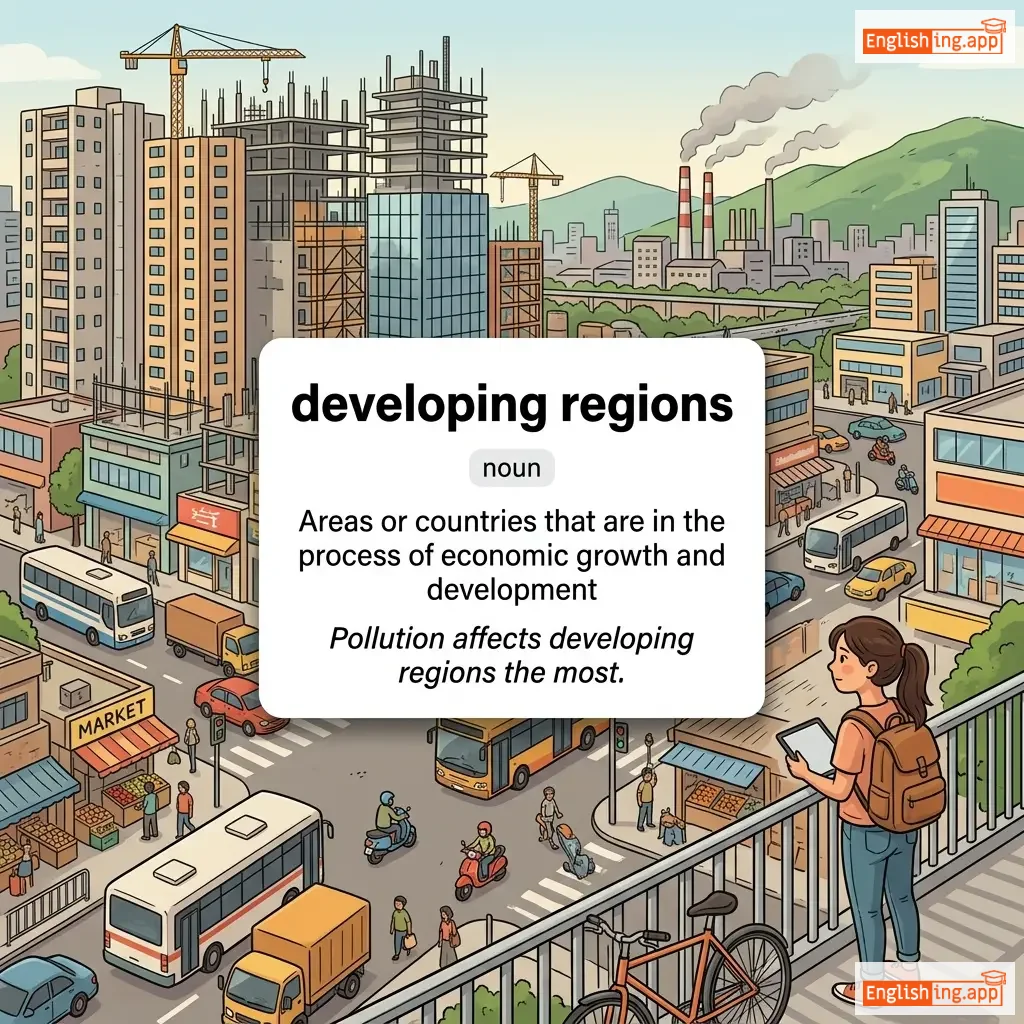
developing regions definition card — visual illustration of the meaning
noun
dɪˈveləpɪŋ ˈriːdʒənz
развивающиеся регионы (razvivayushchiesya regiony)

Areas or countries that are in the process of economic growth and development

"Pollution affects developing regions the most."
"Загрязнение больше всего затрагивает развивающиеся регионы." (Zagryaznenie bolshe vsego zatragivaet razvivayushchiesya regiony.)
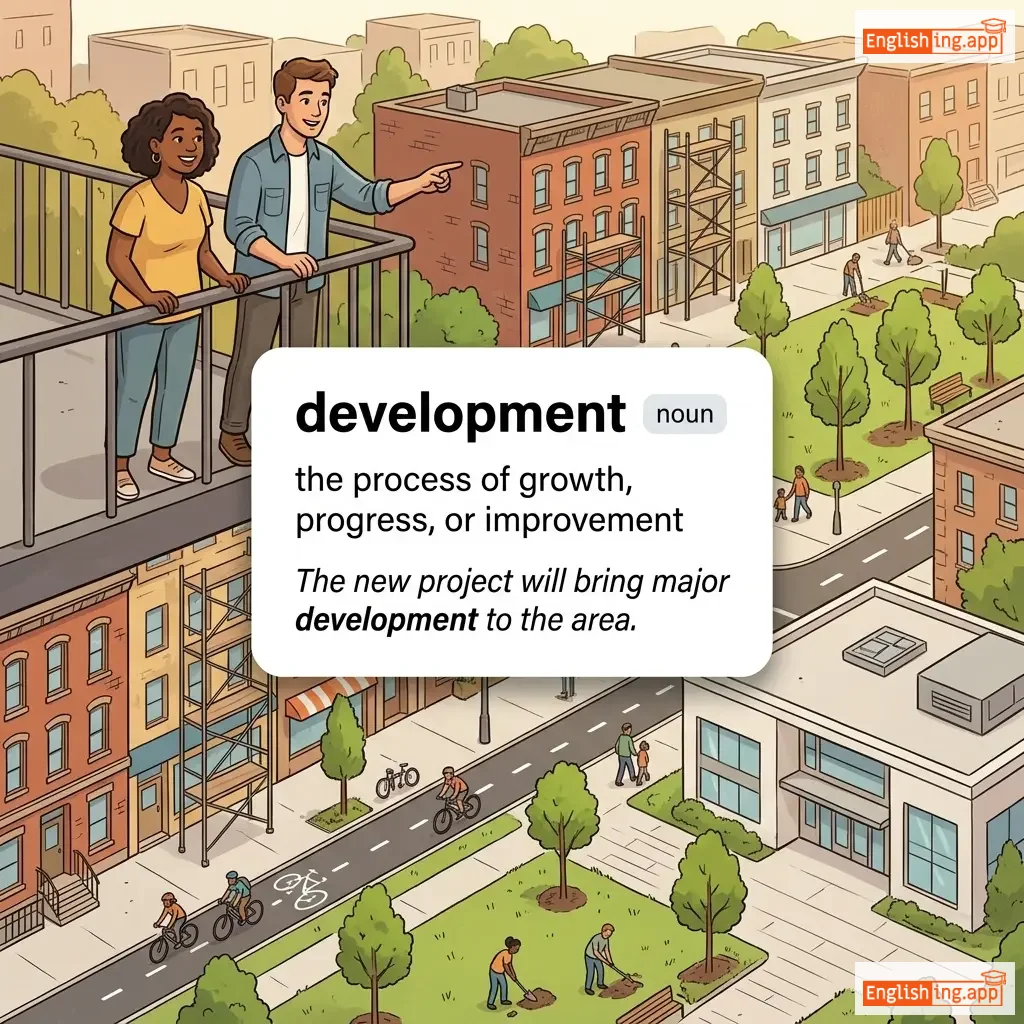
development definition card — visual illustration of the meaning
noun
/dɪˈvɛləpmənt/
развитие (razvitiye)

the process of growth, progress, or improvement

"The new project will bring major development to the area."

"Новый проект приведет к значительному развитию в регионе." (Novyy proyekt privedet k znachitel'nomu razvitiyu v regione.)
adjective
/dɪˌveləpˈmentl/
развивающий (razvivayushchiy)

relating to the process of growth or progress

"Early childhood is a crucial developmental stage for learning."

"Раннее детство - это важный развивающий этап для обучения." (Rannee detstvo - eto vazhnyy razvivayushchiy etap dlya obucheniya.)
noun
/ˈdiːviəns/
девиация (deviatsiya)

Behavior that differs from accepted social or moral standards.

"The book studies deviance in urban youth culture."
"Книга изучает девиацию в городской молодежной культуре." (Kniga izuchayet deviatsiyu v gorodskoy molodyozhnoy kulture.)
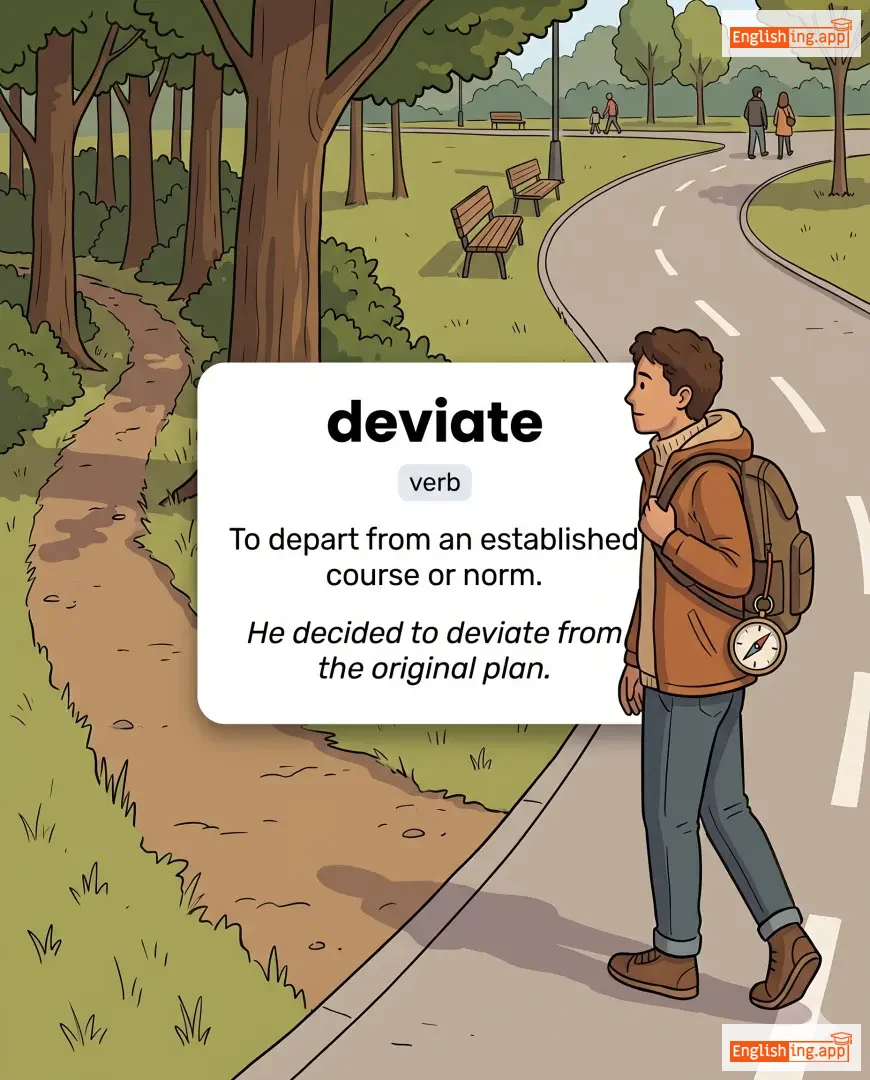
deviate definition card — visual illustration of the meaning
verb
/ˈdiːvieɪt/
отклоняться (otklonyatsya)

To depart from an established course or norm.

"He decided to deviate from the original plan."

"Он решил отклониться от исходного плана." (On reshil otklonitsya ot iskhodnogo plana.)
noun
/ˌdiːviˈeɪʃn/
отклонение (otklonenie)

The action of departing from an accepted standard or norm.

"Any deviation from the rules will not be tolerated."

"Любое отклонение от правил не будет допущено." (Lyuboye otklonenie ot pravil ne budet dopushcheno.)
device definition card — visual illustration of the meaning
noun
/dɪˈvaɪs/
устройство (ustroystvo)

An object, machine, or piece of equipment designed for a particular purpose.

"She bought a new device to track her fitness activities."

"Она купила новое устройство для отслеживания своих фитнес-активностей." (Ona kupila novoe ustroystvo dlya otslezhivaniya svoikh fitness-aktivnostej.)
noun
/ˈdɛv.əl/
дьявол (d'yavol)

An evil spirit or supernatural being often regarded as the embodiment of wickedness and harm.

"The story warned children about making deals with the devil."

"История предупреждала детей о том, чтобы они не заключали сделки с дьяволом." (Istoriya preduprezhdala detey o tom, chtoby oni ne zaklyuchali sdelki s d'yavolom.)
noun
/ˈdɛvɪlri/
дьявольщина (dyavol'shchina)

Wicked or cruel behavior; mischievous actions.

"The children were full of devilry on Halloween night."

"Дети были полны дьявольщины в ночь Хэллоуина." (Deti byli polny dyavol'shchiny v noch' Khellouina.)
noun
/ˈdɛvɪltrɪ/
дьявольская хитрость (dyavolskaya khitrost)

Cruel or malicious behavior; mischief with an evil aspect.

"The villain’s deviltry terrified the townsfolk."

"Злая игра злодея напугала жителей города." (Zlaya igra zlodeya napugala zhiteley goroda.)
adjective
/ˈdiːviəs/
коварный (kovarnyj)

Skillful at using underhanded tactics to achieve goals; not straightforward.

"He used a devious plan to gain control of the company."

"Он использовал коварный план, чтобы захватить контроль над компанией." (On ispol'zoval kovarnyj plan, chtoby zakhvatit' kontrol' nad kompaniey.)
verb
/dɪˈvaɪz/
разрабатывать (razrabatyvat')

To plan or invent something carefully.

"The engineers devised a new method to reduce costs."

"Инженеры разработали новый метод для снижения затрат." (Inzheneri razrabotali novyy metod dlya snizheniya zatrat.)
adjective
/dɪˈvɔɪd/
пустой (pustoy)

Completely lacking or without something.

"His speech was devoid of any real emotion."

"Его речь была пустой от всякой реальной эмоции." (Yego rech' byla pustoy ot vsyakoy real'noy emotsii.)
verb
/dɪˈvɒlv/
передавать (peredavat)

To pass power, responsibility, or duties to another person or group.

"The responsibility will devolve on the new manager."

"Ответственность будет передана новому менеджеру." (Otvetstvennost' budet peredana novomu menedzheru.)
verb
/dɪˈvoʊt/
посвящать (posvyashchat')

to give time, effort, or resources to something

"She devotes much of her time to helping the poor."

"Она посвящает много своего времени помощи бедным." (Ona posvyashchayet mnogo svoego vremeni pomoshchi bednym.)
adjective
/dɪˈvoʊtɪd/
преданный (predanny)

Very loving, loyal, or dedicated.

"She is a devoted mother who always puts her children first."

"Она преданная мать, которая всегда ставит своих детей на первое место." (Ona predannaya mat, kotoraya vsegda stavit svoikh detey na pervoye mesto.)
noun
/ˌdɛvəˈtiː/
преданный (predanny)

A person who is very enthusiastic about or strongly dedicated to something or someone.

"He is a great devotee of classical music."

"Он большой поклонник классической музыки." (On bol'shoy poklonnik klassicheskoy muzyki)
noun
/dɪˈvoʊ.ʃən/
преданность; верность; увлечение (predannost', vernost', uvlechenie)

love, loyalty, or enthusiasm for a person, activity, or cause

"Her devotion to helping others made her a beloved figure in the community."

"Её преданность помощи другим сделала её любимой фигурой в сообществе." (Yeyo predannost' pomoshchi drugim sdelala yeye lyubimoy figuroy v soobshchestve.)
adjective
/dɪˈvaʊt/
набожный (nabozhnyy)

Deeply religious or sincere.

"He is a devout believer who prays every day."

"Он является набожным верующим, который молится каждый день." (On yavlyaetsya nabožnym veruyushchim, kotoryy molitsya kazhdyy den'.)
noun
/djuː/
роса (rosa)

Tiny drops of water that form on cool surfaces at night from condensation.

"The grass was wet with morning dew."

"Трава была мокрой от утренней росы." (Trava byla mokroy ot utreyney rosy.)
dexterity definition card — visual illustration of the meaning
noun
/dɛkˈstɛrɪti/
ловкость (lovkost)

Skill in using the hands or body; mental quickness.

"She showed great dexterity in playing the piano."
"Она продемонстрировала большую ловкость, играя на пианино." (Ona prodemonstrirovala bol'shuyu lovkost', igraya na pianino.)
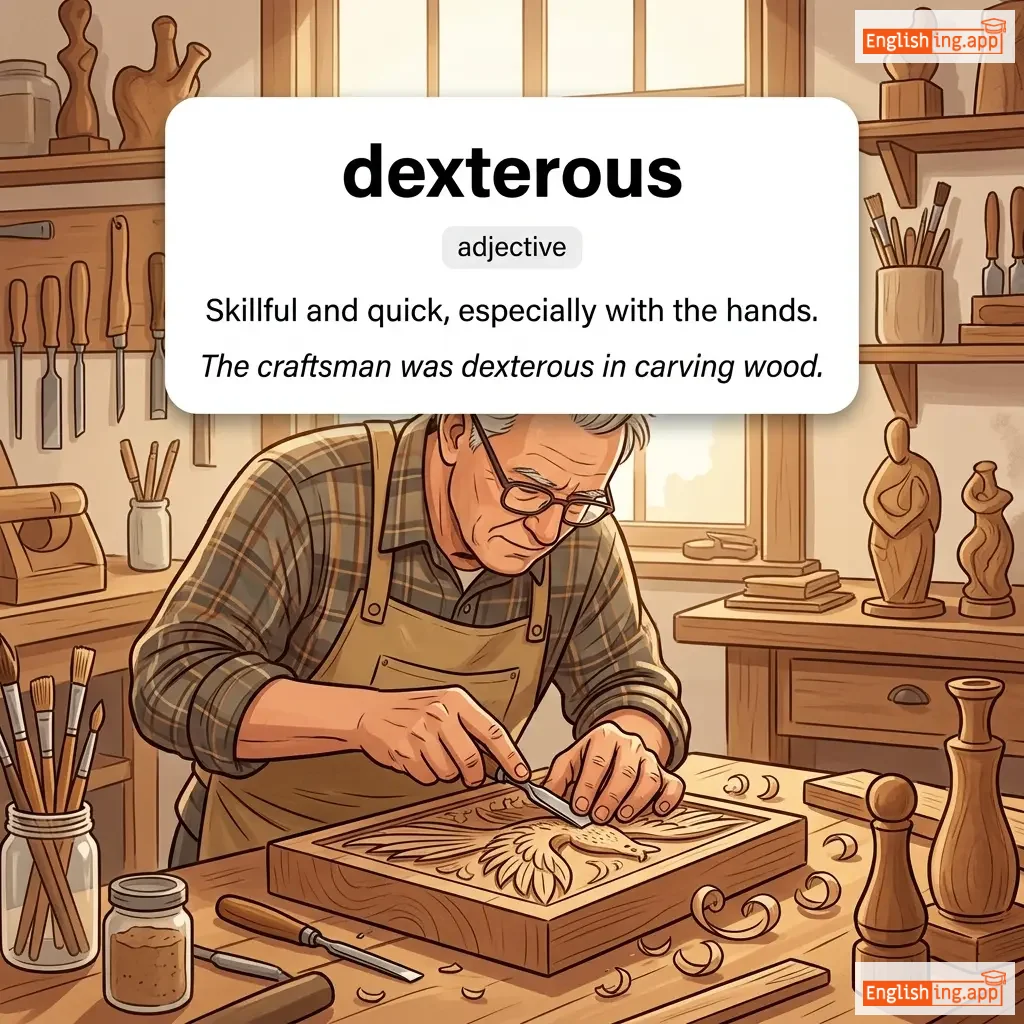
dexterous definition card — visual illustration of the meaning
adjective
/ˈdɛkstrəs/
ловкий (lovkiy)

Skillful and quick, especially with the hands.

"The craftsman was dexterous in carving wood."

"Ремесленник был ловким в резьбе по дереву." (Remeslennik byl lovkim v rez'be po derevu.)
👳‍♂️

Dhuti (дхути)

noun
/ˈduːti/
дхути (dhuti)

a traditional Indian garment for men consisting of a piece of unstitched cloth worn around the waist and legs

"The elderly man wore a white dhuti during the religious ceremony."

"Пожилой мужчина носил белый дхути во время религиозной церемонии." (Pozhiloy muzhchina nosil belyy dkhuti vo vremya religioznoy tseremonii.)
noun
/ˌdaɪəˈbiːtiːz/
счастье (schastye)

a medical condition in which the body cannot properly control the level of sugar in the blood

"He was diagnosed with type 2 diabetes last year."

"Она не могла скрыть своего счастья, когда получила награду." (Ona ne mogla skryt' svoego schast'ya, kogda poluchila nagradu.)
adjective
/ˌdaɪəˈbɒlɪk/
диаболический (diabolicheskiy)

Extremely evil or cruel; characteristic of the devil.

"The villain devised a diabolic scheme."

"Злодей придумал дьявольский план." (Zlodey pridumal d'yavol'skiy plan.)
adjective
/ˌdaɪəˈbɒlɪkəl/
дьявольский (dyavolskiy)

Wicked, cruel, or outrageously bad; resembling the devil.

"The dictator’s diabolical rule brought misery to the nation."

"Дьявольское правление диктатора принесло страдания народу." (Dyavolskoe pravlenie diktatora prineslo stradaniya narodu.)
adjective
/ˌdaɪəˈkrɪtɪkəl/
диакритический (diakriticheskiy)

Relating to a mark added to a letter to indicate a different pronunciation or stress.

"The word résumé has diacritical marks that change its meaning from resume."

"Слово 'резюме' имеет диакритические знаки, которые изменяют его значение от 'resume'." (Slovo 'rezume' imeyet diakriticheskiye znaki, kotoryye izmenyayut yego znacheniye ot 'resume'.)
noun
/ˈdaɪəˌdɛm/
диадема (diadema)

A crown or headband worn as a symbol of royalty or authority.

"The queen wore a glittering diadem at the coronation."
"Королева носила сверкающий диадему на коронации." (Koroleva nosila sverkayushchiy diademu na koronatsii.)
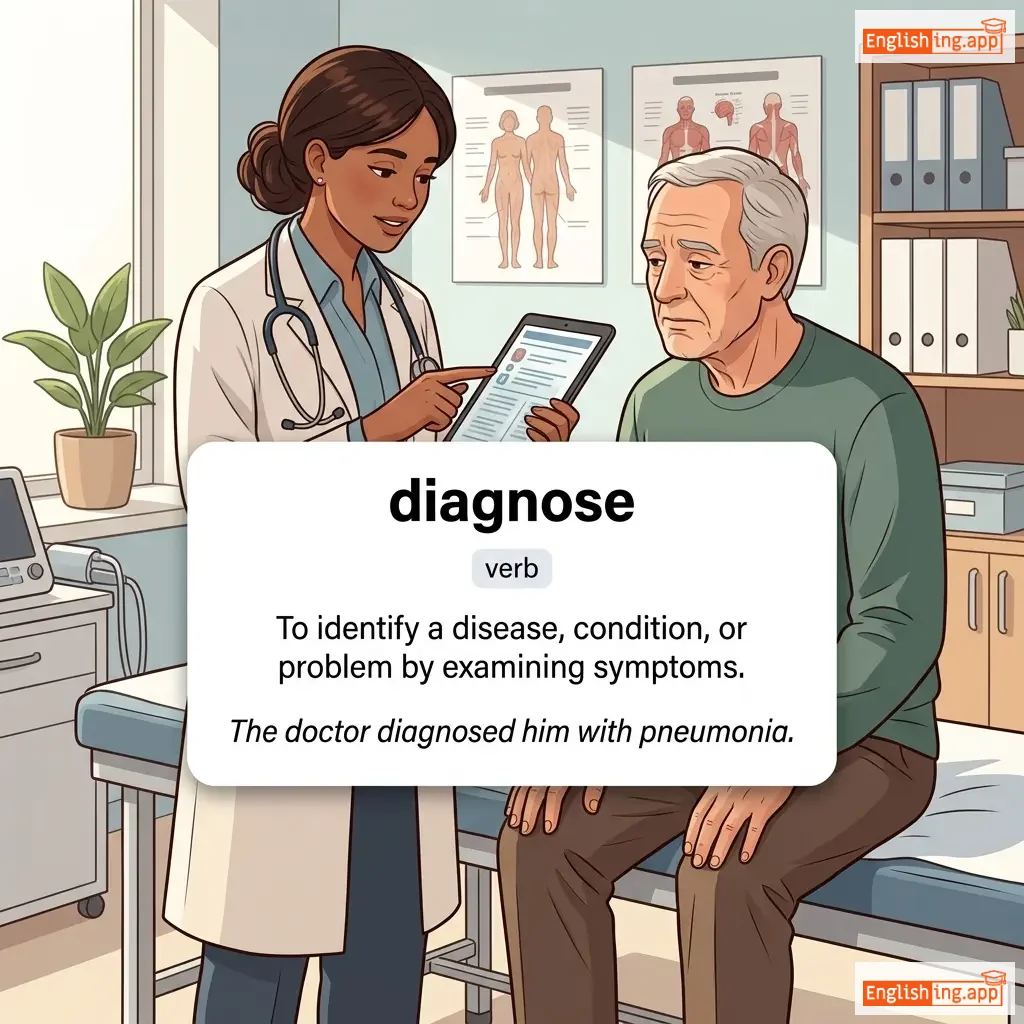
diagnose definition card — visual illustration of the meaning
verb
/ˌdaɪəɡˈnoʊz/
диагностировать (diagnostirovat')

To identify a disease, condition, or problem by examining symptoms.

"The doctor diagnosed him with pneumonia."

"Врач диагностировал у него пневмонию." (Vrach diagnostiroval u nego pneumoniyu.)
noun
/ˌdaɪəɡˈnoʊsɪs/

The identification of a disease, condition, or problem through examination of symptoms.

"The diagnosis confirmed that she had diabetes."

noun
/ˈdaɪəɡræm/
диаграмма (diagramma)

a simplified drawing that shows the structure, relationship, or process of something

"The teacher explained the system using a clear diagram."

"Учитель объяснил систему, используя понятную диаграмму." (Uchitel obyiasnil sistemu ispolzuya ponyatnuyu diagrammu)
noun
/ˈdaɪəˌlɛkt/
диалект (dialekt)

A particular form of a language spoken in a specific region or by a specific group.

"He speaks a dialect of Bengali that is common in rural areas."

"Он говорит на диалекте бенгальского, который распространен в сельских районах." (On govorit na dialekte bengalskogo, kotoryi rasprostranen v selskih rayonah.)
noun
/ˌdaɪəˈlɛktɪk/
диалектика (dialektika)

A method of argument or reasoning by dialogue, especially as a means of investigating truth.

"The philosopher used dialectic to challenge his students' assumptions."

"Философ применял диалектику, чтобы ставить под сомнение предположения своих студентов." (Filosof primenyal dialektiku chtoby stavit pod somneniya svoih studentov.)
adjective
/ˌdaɪəˈlɛktɪkəl/
диалектический (dialekticheskiy)

Relating to the logical discussion of ideas and opinions.

"She took a dialectical approach to solve the complex issue."

"Она приняла диалектический подход для решения сложной проблемы." (Ona prinila dialekticheskiy podkhod dlya resheniya slozhnoy problemy.)
noun
/ˌdaɪələˈtɪʃən/
диалектика (dialektika)

A person skilled in dialectic or logical argument.

"Socrates is often considered the greatest dialectician in history."

"Сократа часто считают величайшим диалектиком в истории." (Sokrata chasto schitayut velichayshim dialektikom v istorii.)
noun
/ˈdaɪəlɔːɡ/
диалог (dialog)

A conversation between two or more people, or a discussion aimed at reaching understanding.

"The two countries engaged in a dialogue to resolve their differences."

"Две страны вступили в диалог, чтобы разрешить свои разногласия." (Dve strany vstupili v dialog, chtoby razreshit' svoi raznoglasiya.)
noun
/ˈdaɪəmənd/
алмаз (almaz)

a precious hard stone, usually clear and colorless, valued as a gemstone

"She wore a beautiful diamond necklace at the party."
"Она носила на вечеринке красивое ожерелье с алмазами." (Ona nosila na vecherinke krasivoye ozherelye s almazami.)
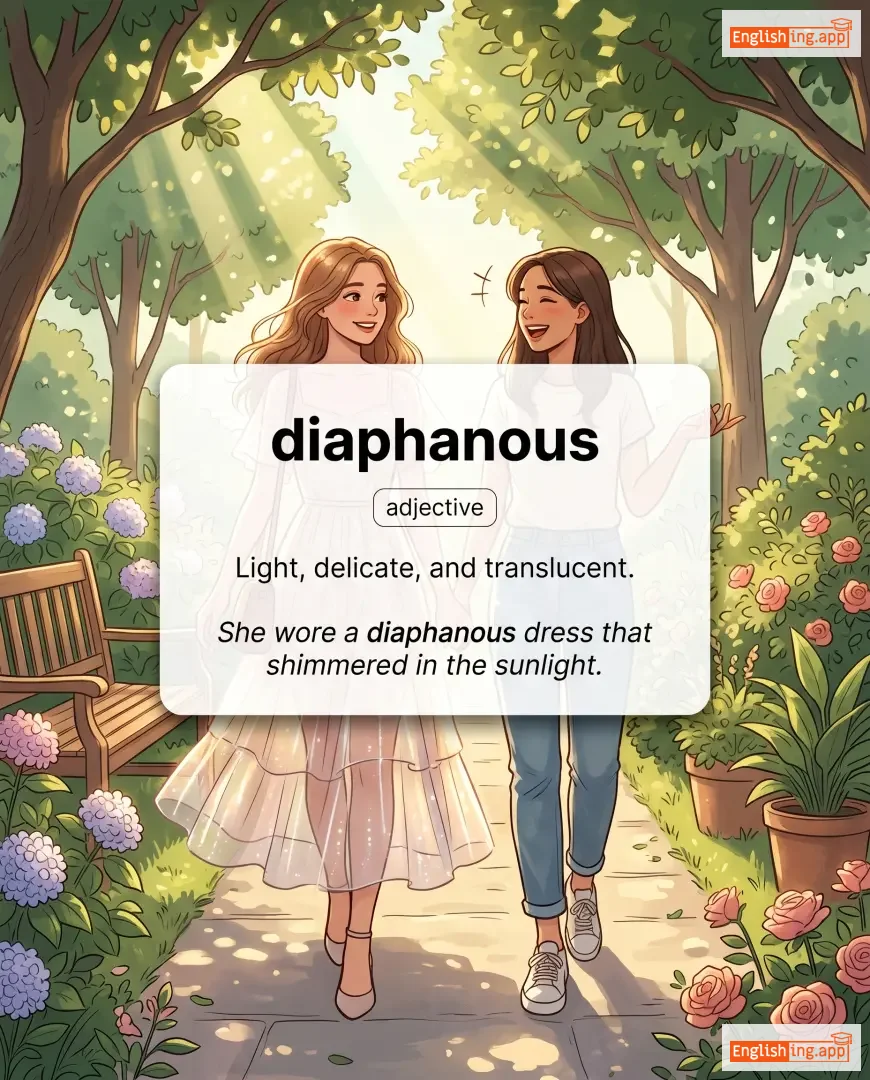
diaphanous definition card — visual illustration of the meaning
adjective
/daɪˈæfənəs/
прозрачный (prozrachny)

Light, delicate, and translucent.

"She wore a diaphanous dress that shimmered in the sunlight."

"Она носила прозрачное платье, которое мерцало на солнечном свете." (Ona nosila prozrachnoe plat'ye, kotoroe mertsalo na solnechnom svete.)
diary definition card — visual illustration of the meaning
noun
/ˈdaɪəri/
дневник (dnevnik)

a book in which one keeps a daily record of events and experiences

"She wrote about her day in her diary before going to bed."

"Она написала о своем дне в своем дневнике перед тем, как лечь спать." (Ona napisała o svoem dne v svoem dnevnike pered tem, kak lech spaty.)
adjective
/ˌdaɪəˈtɒmɪk/
диатомический (diatomicheskiy)

Consisting of two atoms.

"Oxygen is a diatomic molecule."
"Кислород — это диатомическая молекула." (Kislorod — eto diatomicheskaya molekula.)
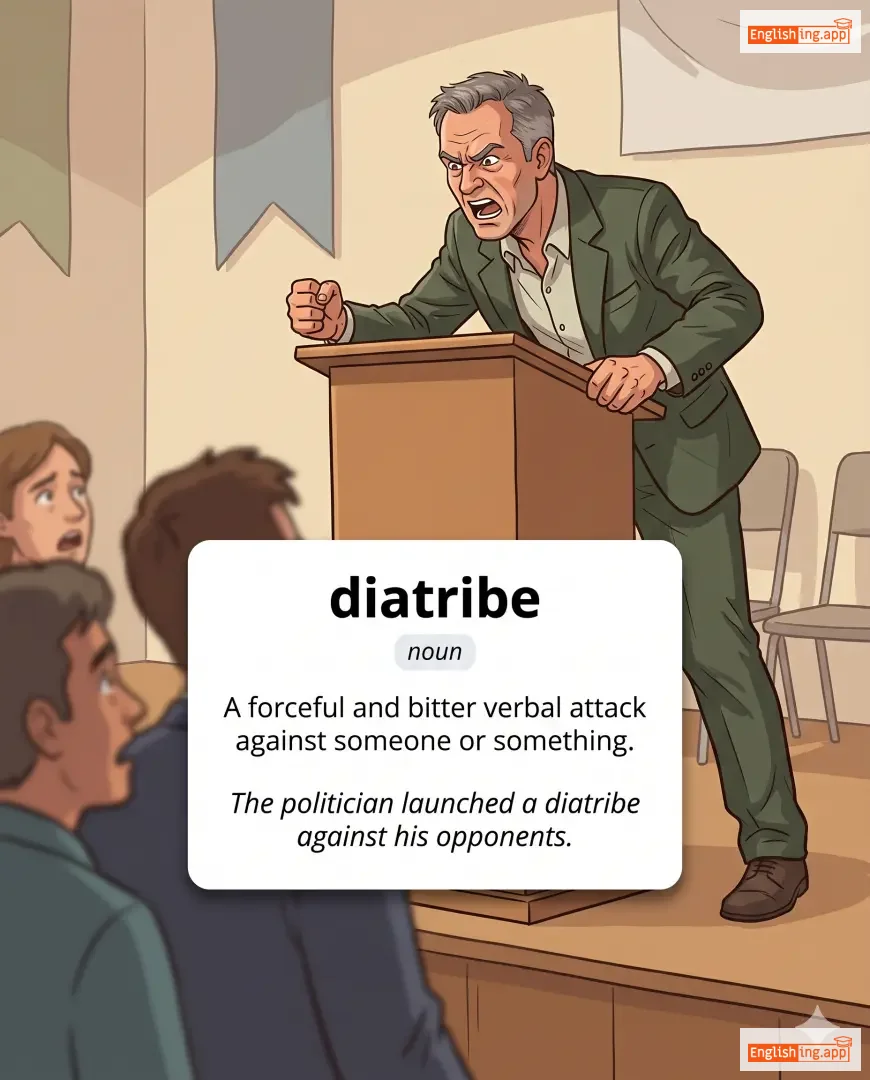
diatribe definition card — visual illustration of the meaning
noun
/ˈdaɪətraɪb/
диатриба (diatriba)

A forceful and bitter verbal attack against someone or something.

"The politician launched a diatribe against his opponents."

"Политик начал диатрибу против своих оппонентов." (Politik nachal diatribu protiv svoikh opponentov.)
adjective
/ˈdaɪ.si/
рискованный (riskovanyj)

Risky or unpredictable; potentially dangerous.

"Investing in that company looks pretty dicey right now."
"Инвестиции в эту компанию сейчас кажутся довольно рискованными." (Investitsii v etu kompaniyu sejchas kazhutsya dovol'no riskovannymi.)
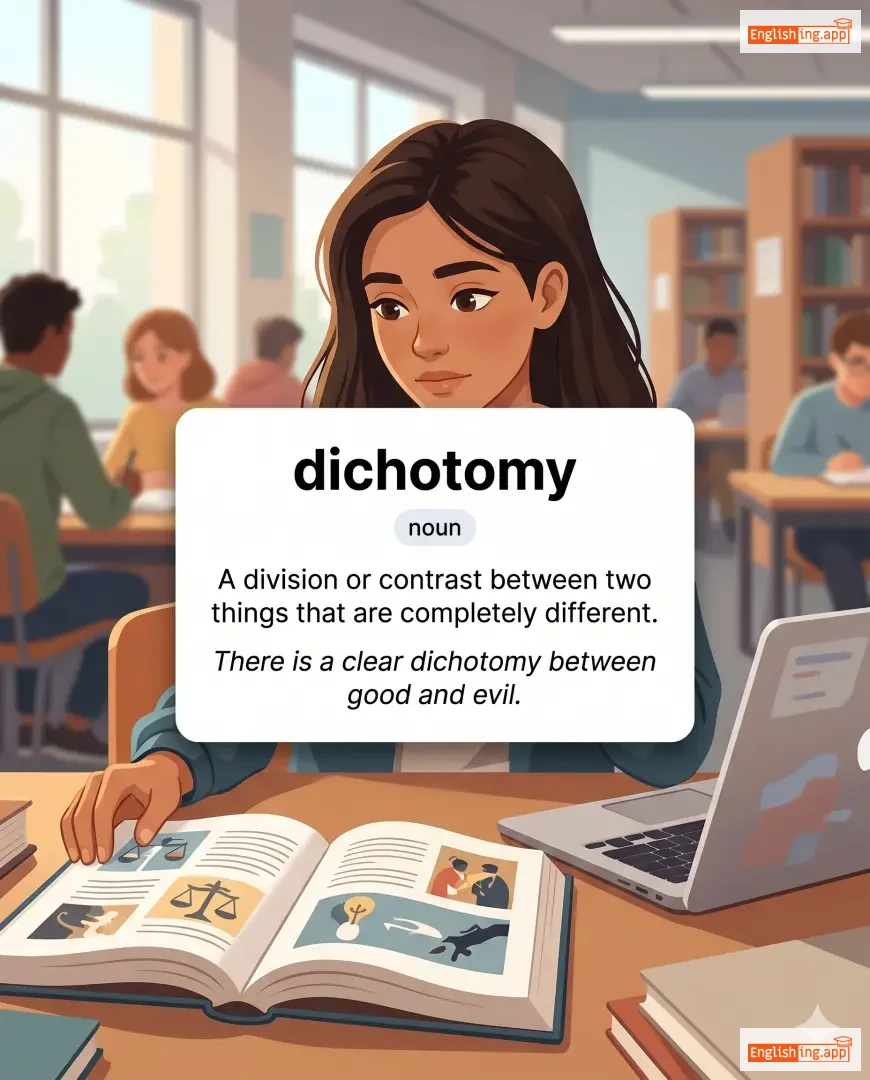
dichotomy definition card — visual illustration of the meaning
noun
/daɪˈkɒtəmi/
дихотомия (dikhotomiya)

A division or contrast between two things that are completely different.

"There is a clear dichotomy between good and evil."
"Существует явная дихотомия между добром и злом." (Sushchestvuyet yavnyaya dikhotomiya mezhdu dobrom i zlom.)
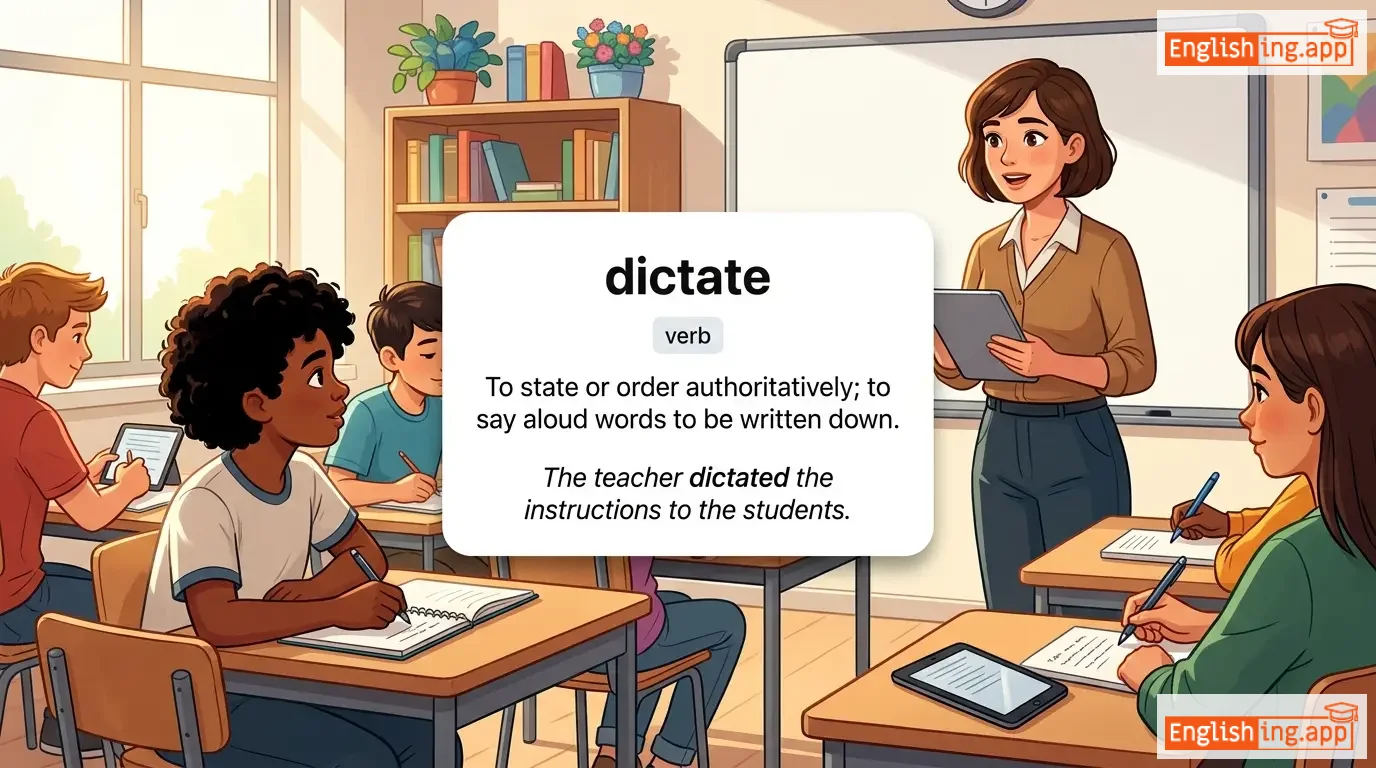
dictate definition card — visual illustration of the meaning
verb
/dɪkˈteɪt/
диктовать (diktovat)

To state or order authoritatively; to say aloud words to be written down.

"The teacher dictated the instructions to the students."

"Учитель диктовал инструкции студентам." (Uchitel' diktoval instruktsii studentam.)
noun
/dɪkˈteɪtə/
диктатор (diktator)

a ruler with total power over a country, typically one who has obtained control by force

"The dictator ruled the country with an iron fist."

"Диктатор управлял страной железным кулаком." (Diktator upravlyal stranoy zheleznym kulakom.)
adjective
/ˌdɪktəˈtɔːriəl/
диктаторский (diktatorskiy)

Having or showing a tendency to tell people what to do in an autocratic way.

"His dictatorial style made him unpopular among colleagues."
"Его диктаторский стиль сделал его непопулярным среди коллег." (Ego diktatorskiy stil' sdelal ego nepopulyarnym sredi kolleg.)
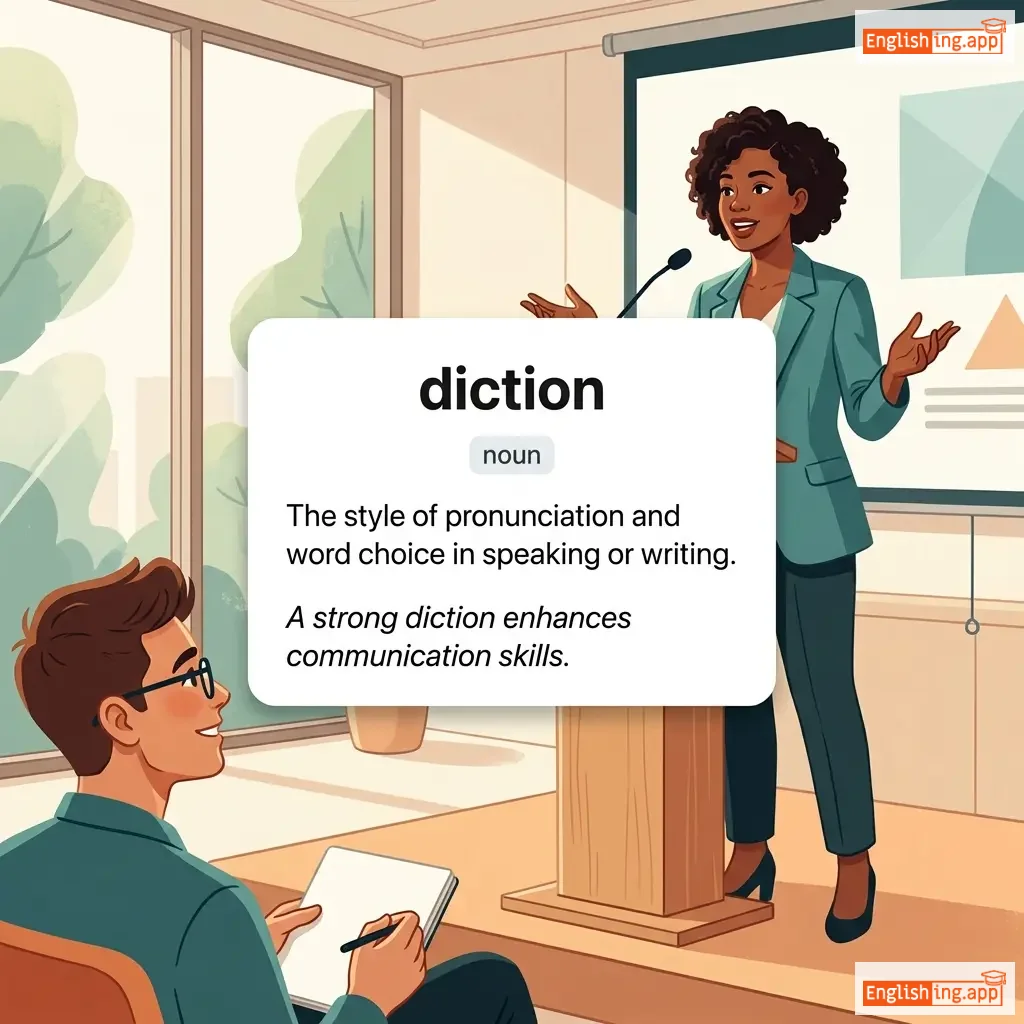
diction definition card — visual illustration of the meaning
noun
ˈdɪk.ʃən
произношение и выбор слов (proiznoshenie i vybor slov)

The style of pronunciation and word choice in speaking or writing.

"A strong diction enhances communication skills."

"Сильная дикция улучшает коммуникативные навыки." (Sil'naya dikciya uluchshaet kommunikativnye navyki.)