
词汇表

英语词汇词典 | 单词含义、定义和示例

develop definition card — visual illustration of the meaning
verb
/dɪˈvɛləp/
发展 (fāzhǎn)

To grow, advance, or create something over time.

"The company aims to develop new software solutions."

"公司旨在开发新的软件解决方案。" (Gōngsī zhǐ zài kāifā xīn de ruǎnjiàn jiějué fāng'àn.)
noun
/dɪˈveləpər/
开发者 (kaifazhe)

a person or company that creates software, buildings, or land projects

"She works as a software developer at a tech company."

"她在一家技术公司担任软件开发者。" (Tā zài yī jiā jìshù gōngsī dānrèn ruǎnjiàn kāifā zhě.)
verb
/dɪˈvɛləpɪŋ/
发展 (fazhan)

the process of growing, improving, or becoming more advanced

"She is developing new skills in programming."
"她正在编程中发展新技能。" (Ta zhengzai biancheng zhong fazhan xin jine.)
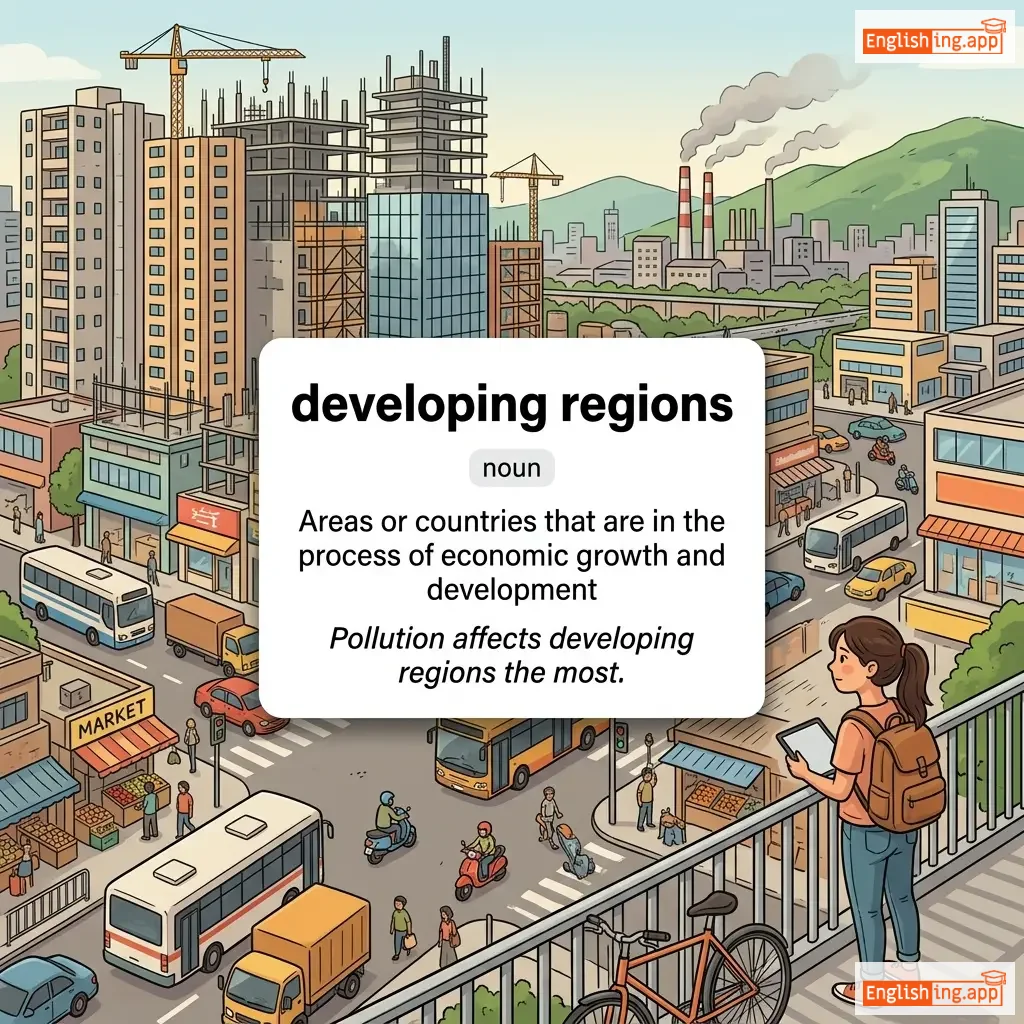
developing regions definition card — visual illustration of the meaning
noun
dɪˈveləpɪŋ ˈriːdʒənz
发展中国家 (fāzhǎn zhōng de dìqū)

Areas or countries that are in the process of economic growth and development

"Pollution affects developing regions the most."
"污染最严重地影响发展中国家。" (wūrǎn zuì yánzhòng de yǐngxiǎng fāzhǎn zhōng guójiā.)
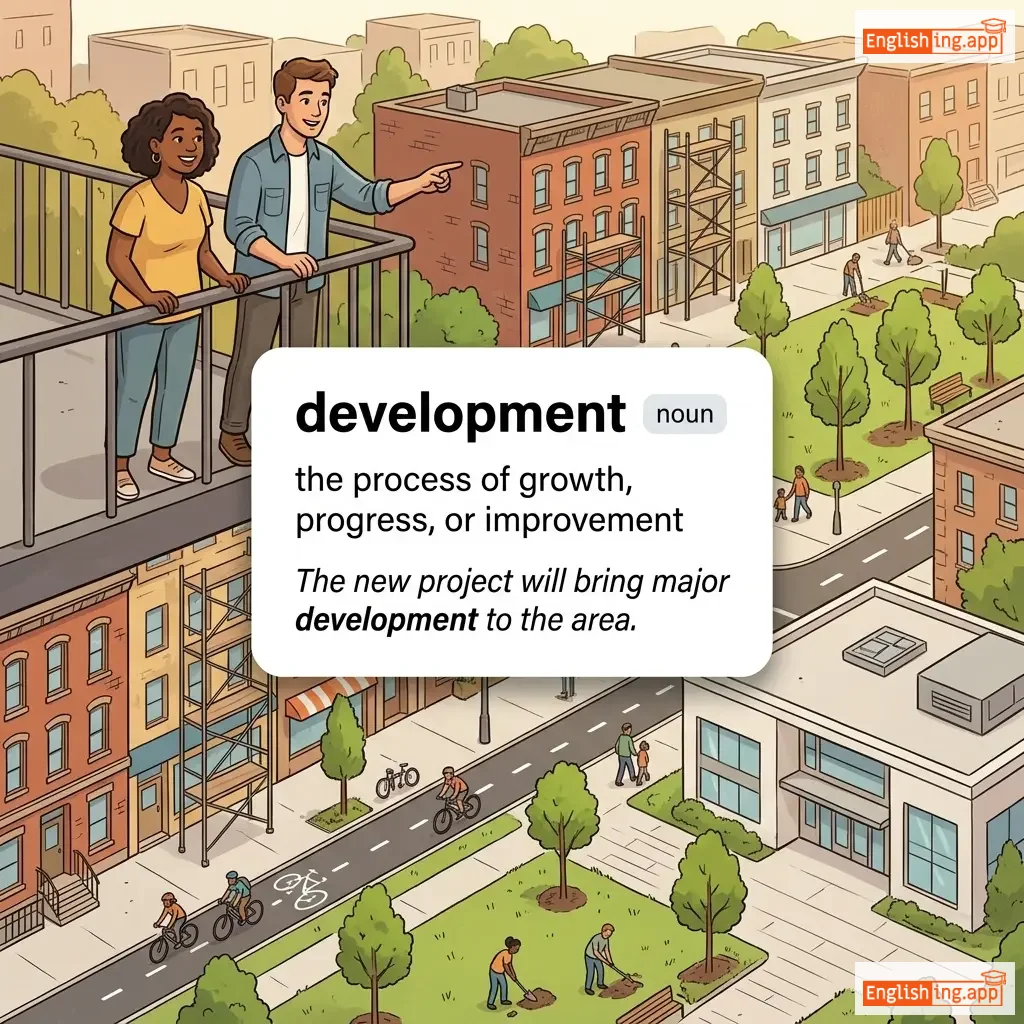
development definition card — visual illustration of the meaning
noun
/dɪˈvɛləpmənt/
发展 (fazhan)

the process of growth, progress, or improvement

"The new project will bring major development to the area."

"这个新项目将为该地区带来重大进展。" (Zhège xīn xiàngmù jiāng wèi gāi dìqū dàilái zhòngdà jìnzhǎn.)
adjective
/dɪˌveləpˈmentl/
发展性的 (fāzhǎn xìng de)

relating to the process of growth or progress

"Early childhood is a crucial developmental stage for learning."

"早期儿童是学习的关键发展性阶段。" (Zǎoqí értóng shì xuéxí de guānjiàn fāzhǎn xìng jiēduàn.)
noun
/ˈdiːviəns/
偏差 (piancha)

Behavior that differs from accepted social or moral standards.

"The book studies deviance in urban youth culture."

"这本书研究了城市青少年文化中的偏差。" (Zhe ben shu yanjiu le chengshi qingshaonian wenhua zhong de piancha.)
deviate definition card — visual illustration of the meaning
verb
/ˈdiːvieɪt/
偏离 (pianli)

To depart from an established course or norm.

"He decided to deviate from the original plan."

"他决定偏离原计划。" (Ta jueding pianli yuan jihua.)
noun
/ˌdiːviˈeɪʃn/
偏差 (piancha)

The action of departing from an accepted standard or norm.

"Any deviation from the rules will not be tolerated."

"任何偏差都不会被容忍。" (Renhe piancha dou bu hui bei rongren.)
device definition card — visual illustration of the meaning
noun
/dɪˈvaɪs/
设备 (shebei)

An object, machine, or piece of equipment designed for a particular purpose.

"She bought a new device to track her fitness activities."

"她购买了一个新设备来追踪她的健身活动。" (Ta goumai le yige xin shebei lai zhuizong ta de jianshen huodong.)
noun
/ˈdɛv.əl/
魔鬼 (móguǐ)

An evil spirit or supernatural being often regarded as the embodiment of wickedness and harm.

"The story warned children about making deals with the devil."

"这个故事警告孩子们不要与魔鬼做交易。" (Zhège gùshì jǐnggào háizimen bùyào yǔ móguǐ zuò jiāoyì.)
noun
/ˈdɛvɪlri/
恶作剧 (èzuòjù)

Wicked or cruel behavior; mischievous actions.

"The children were full of devilry on Halloween night."

"万圣节那天,孩子们充满了恶作剧。" (Wànshèngjié nàtiān, háizimen chōngmǎnle èzuòjù.)
noun
/ˈdɛvɪltrɪ/
恶魔的诡计 (è mó de guǐ jì)

Cruel or malicious behavior; mischief with an evil aspect.

"The villain’s deviltry terrified the townsfolk."

"恶棍的恶作剧吓坏了镇上的人。" (Ègùn de èzuòjù xià huàile zhèn shàng de rén.)
adjective
/ˈdiːviəs/
狡猾 (jiǎohuá)

Skillful at using underhanded tactics to achieve goals; not straightforward.

"He used a devious plan to gain control of the company."

"他使用了一个狡猾的计划来控制公司。" (Tā shǐyòngle yīgè jiǎohuá de jìhuà lái kòngzhì gōngsī.)
verb
/dɪˈvaɪz/
设计 (sheji)

To plan or invent something carefully.

"The engineers devised a new method to reduce costs."

"工程师们设计了一种新的方法来降低成本。" (Gōngchéngshī men shèjìle yī zhǒng xīn de fāngfǎ lái jiàngdī chéngběn.)
adjective
/dɪˈvɔɪd/
空虚 (kongxu)

Completely lacking or without something.

"His speech was devoid of any real emotion."

"他的演讲完全缺乏任何真实的情感。" (Tā de yǎnjiǎng wánquán quēfá rènhé zhēnshí de qínggǎn.)
verb
/dɪˈvɒlv/
移交 (yíjiāo)

To pass power, responsibility, or duties to another person or group.

"The responsibility will devolve on the new manager."

"责任将转交给新经理。" (Zérèn jiāng zhuǎnjiāo gěi xīn jīnglǐ.)
verb
/dɪˈvoʊt/
奉献 (fèngxiàn)

to give time, effort, or resources to something

"She devotes much of her time to helping the poor."

"她把大部分时间都奉献给了帮助穷人。" (Tā bǎ dà bùfen shíjiān dōu fèngxiàn gěile bāngzhù qióngrén.)
adjective
/dɪˈvoʊtɪd/
奉献的 (fengxian de)

Very loving, loyal, or dedicated.

"She is a devoted mother who always puts her children first."

"她是一个奉献的母亲,总是把孩子们放在第一位。" (Ta shi yi ge fengxian de muqin, zong shi ba haizimen fang zai di yi wei.)
noun
/ˌdɛvəˈtiː/
虔诚者 (qian cheng zhe)

A person who is very enthusiastic about or strongly dedicated to something or someone.

"He is a great devotee of classical music."

"他是古典音乐的一个忠实爱好者。" (ta shi gudian yinyue de yi ge zhongshi aihao zhe)
noun
/dɪˈvoʊ.ʃən/
忠诚; 热情; 奉献 (zhongcheng, reqing, fengxian)

love, loyalty, or enthusiasm for a person, activity, or cause

"Her devotion to helping others made her a beloved figure in the community."

"她对帮助他人的忠诚使她成为社区中的一个受人爱戴的人物。" (Ta dui bangzhu taren de zhongcheng shi ta chengwei shequ zhong de yige shouren aidai de renwu.)
adjective
/dɪˈvaʊt/
虔诚 (qiánchéng)

Deeply religious or sincere.

"He is a devout believer who prays every day."

"他是一个虔诚的信徒,每天都祈祷。" (Tā shì yīgè qiánchéng de xìntú, měitiān dōu qídǎo.)
noun
/djuː/
露水 (lushuì)

Tiny drops of water that form on cool surfaces at night from condensation.

"The grass was wet with morning dew."

"草地上覆盖着早晨的露水。" (Cǎodì shàng fùgài zhe zǎochén de lùshuì.)
dexterity definition card — visual illustration of the meaning
noun
/dɛkˈstɛrɪti/
灵巧 (lingqiao)

Skill in using the hands or body; mental quickness.

"She showed great dexterity in playing the piano."

"她在弹钢琴时展示了出色的灵巧。" (Ta zai tan gangqin shi zhanshi le chuse de lingqiao.)
dexterous definition card — visual illustration of the meaning
adjective
/ˈdɛkstrəs/
灵巧 (lingqiao)

Skillful and quick, especially with the hands.

"The craftsman was dexterous in carving wood."

"工匠在雕刻木头时非常灵巧。" (Gongjiang zai diaoke mutou shi feichang lingqiao.)
👳‍♂️

Dhuti (杜提)

noun
/ˈduːti/
杜提 (dhuti)

a traditional Indian garment for men consisting of a piece of unstitched cloth worn around the waist and legs

"The elderly man wore a white dhuti during the religious ceremony."

"老人穿着白色杜提参加宗教仪式。" (Lǎorén chuānzhuó báisè dùtí cānjiā zōngjiào yíshì.)
noun
/ˌdaɪəˈbiːtiːz/
幸福 (xingfu)

a medical condition in which the body cannot properly control the level of sugar in the blood

"He was diagnosed with type 2 diabetes last year."

"她收到奖项时,无法掩饰自己的幸福。" (Tā shōudào jiǎngxiàng shí, wúfǎ yǎnshì zìjǐ de xìngfú.)
adjective
/ˌdaɪəˈbɒlɪk/
魔鬼的 (mogui de)

Extremely evil or cruel; characteristic of the devil.

"The villain devised a diabolic scheme."

"反派设计了一个魔鬼的计划。" (Fǎnpài shèjìle yīgè móguǐ de jìhuà.)
adjective
/ˌdaɪəˈbɒlɪkəl/
恶魔般的 (emoban de)

Wicked, cruel, or outrageously bad; resembling the devil.

"The dictator’s diabolical rule brought misery to the nation."

"独裁者的恶魔般统治给国家带来了苦难。" (Ducai zhe de emoban tongzhi gei guojia daliu le kunan.)
adjective
/ˌdaɪəˈkrɪtɪkəl/
变音符号 (bianyinfuhao)

Relating to a mark added to a letter to indicate a different pronunciation or stress.

"The word résumé has diacritical marks that change its meaning from resume."

"‘简历’一词有变音符号,它改变了‘简历’的意思。" ('Jianli' yi ci you bianyinfuhao, ta gaibianle 'jianli' de yisi.)
noun
/ˈdaɪəˌdɛm/
冕冠 (mian guan)

A crown or headband worn as a symbol of royalty or authority.

"The queen wore a glittering diadem at the coronation."
"女王在加冕仪式上戴着闪闪发光的王冠。" (Nv wang zai jiamian yishi shang daizhe shanshan faguan de wangguan.)
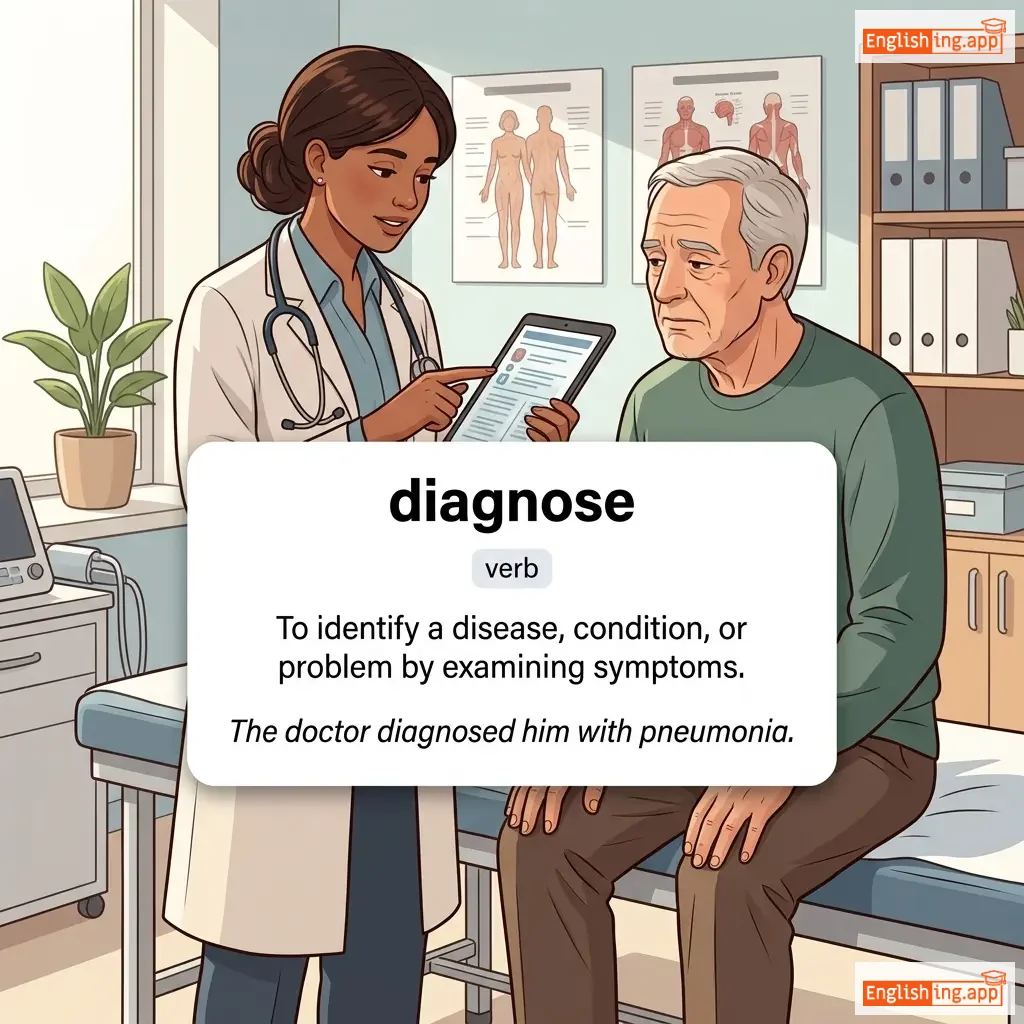
diagnose definition card — visual illustration of the meaning
verb
/ˌdaɪəɡˈnoʊz/
诊断 (zhěnduàn)

To identify a disease, condition, or problem by examining symptoms.

"The doctor diagnosed him with pneumonia."

"医生诊断出他患有肺炎。" (Yīshēng zhěnduàn chū tā huàn yǒu fèiyán.)
noun
/ˌdaɪəɡˈnoʊsɪs/

The identification of a disease, condition, or problem through examination of symptoms.

"The diagnosis confirmed that she had diabetes."

noun
/ˈdaɪəɡræm/
图表 (tubiao)

a simplified drawing that shows the structure, relationship, or process of something

"The teacher explained the system using a clear diagram."

"老师用一个清晰的图表解释了这个系统。" (Laoshi yong yige qingxi de tubiao jieshile zhege xitong)
noun
/ˈdaɪəˌlɛkt/
方言 (fangyan)

A particular form of a language spoken in a specific region or by a specific group.

"He speaks a dialect of Bengali that is common in rural areas."

"他讲的是一种在农村地区常见的孟加拉语方言。" (Ta jiang de shi yizhong zai nongcun diqu changjian de Mengjiala yu fangyan.)
noun
/ˌdaɪəˈlɛktɪk/

A method of argument or reasoning by dialogue, especially as a means of investigating truth.

"The philosopher used dialectic to challenge his students' assumptions."

adjective
/ˌdaɪəˈlɛktɪkəl/
辩证 (bianzheng)

Relating to the logical discussion of ideas and opinions.

"She took a dialectical approach to solve the complex issue."

"她采取了辩证的方法来解决这个复杂的问题。" (Ta caiqu le bianzheng de fangfa lai jiejue zhege fuza de wenti.)
noun
/ˌdaɪələˈtɪʃən/
辩证法专家 (bian zheng fa zhuan jia)

A person skilled in dialectic or logical argument.

"Socrates is often considered the greatest dialectician in history."

"苏格拉底常被认为是历史上最伟大的辩证法专家。" (Su ge la di chang bei ren wei shi li shang zui wei da de bian zheng fa zhuan jia.)
noun
/ˈdaɪəlɔːɡ/
对话 (duìhuà)

A conversation between two or more people, or a discussion aimed at reaching understanding.

"The two countries engaged in a dialogue to resolve their differences."

"这两个国家进行了对话,以解决他们的分歧。" (Zhè liǎng gè guójiā jìnxíngle duìhuà, yǐ jiějué tāmen de fēnqí.)
noun
/ˈdaɪəmənd/
钻石 (zuànshí)

a precious hard stone, usually clear and colorless, valued as a gemstone

"She wore a beautiful diamond necklace at the party."
"她在派对上戴着一条美丽的钻石项链。" (Tā zài pàiduì shàng dàizhe yītiáo měilì de zuànshí xiàngliàn.)
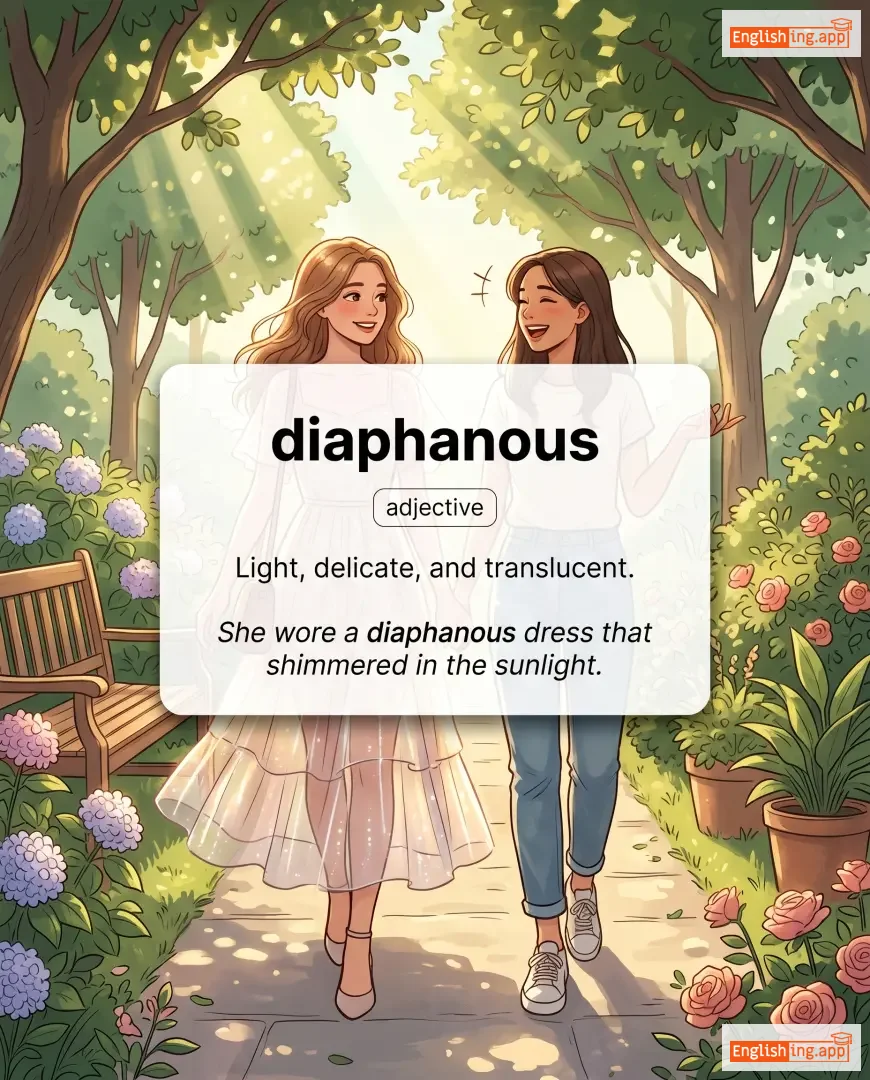
diaphanous definition card — visual illustration of the meaning
adjective
/daɪˈæfənəs/
透明的 (touming de)

Light, delicate, and translucent.

"She wore a diaphanous dress that shimmered in the sunlight."

"她穿着一件透明的裙子,在阳光下闪闪发光。" (Ta chuanzhuo yi jian touming de qunzi, zai yangguang xia shanshan faguang.)
diary definition card — visual illustration of the meaning
noun
/ˈdaɪəri/
日记 (rìjì)

a book in which one keeps a daily record of events and experiences

"She wrote about her day in her diary before going to bed."

"她在睡觉前在日记中写下了她的一天。" (Tā zài shuìjiào qián zài rìjì zhōng xiě xià le tā de yītiān.)
adjective
/ˌdaɪəˈtɒmɪk/
双原子 (shuang yuánzǐ)

Consisting of two atoms.

"Oxygen is a diatomic molecule."
"氧气是双原子分子。" (Yǎngqì shì shuāng yuánzǐ fēnzǐ.)
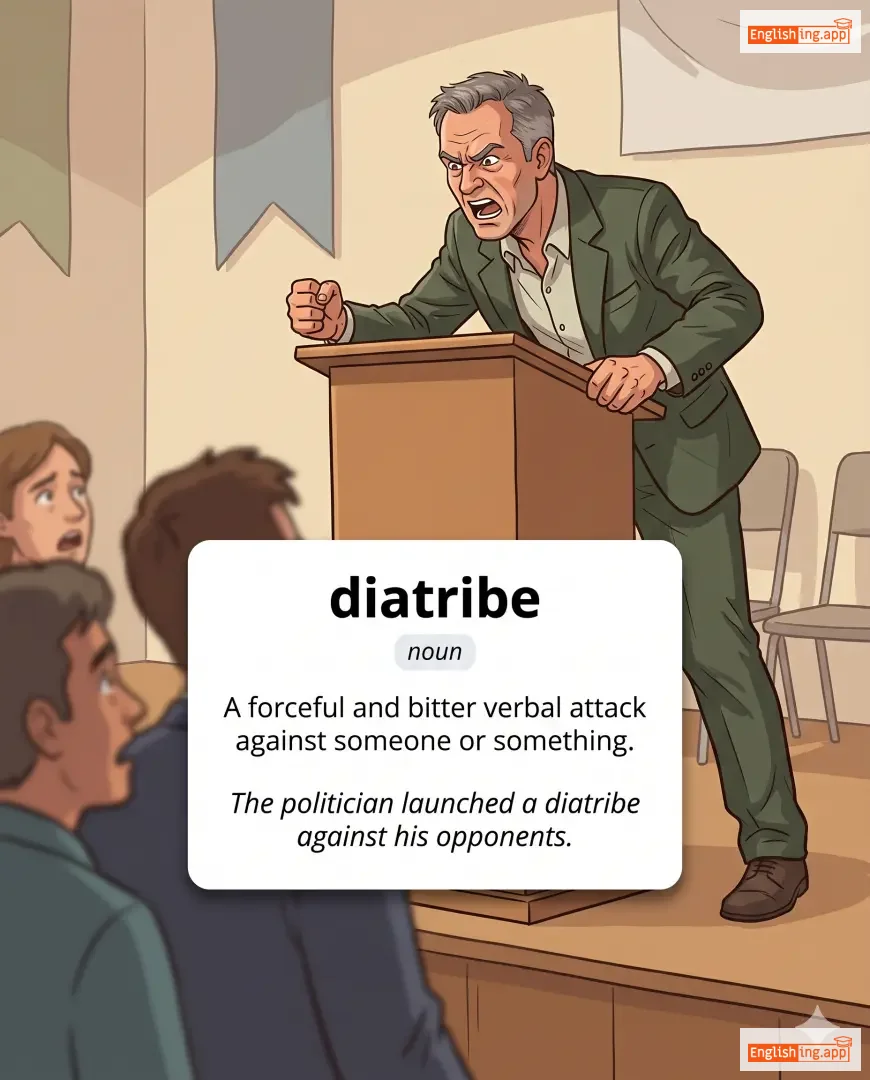
diatribe definition card — visual illustration of the meaning
noun
/ˈdaɪətraɪb/
激烈的抨击 (jīliè de pēngjí)

A forceful and bitter verbal attack against someone or something.

"The politician launched a diatribe against his opponents."

"这位政治家对他的对手发起了激烈的抨击。" (Zhè wèi zhèngzhìjiā duì tā de duìshǒu fāqǐle jīliè de pēngjí.)
adjective
/ˈdaɪ.si/
冒险的 (màoxiǎn de)

Risky or unpredictable; potentially dangerous.

"Investing in that company looks pretty dicey right now."
"现在投资这家公司看起来非常冒险。" (Xiànzài tóuzī zhè jiā gōngsī kàn qǐlái fēicháng màoxiǎn.)
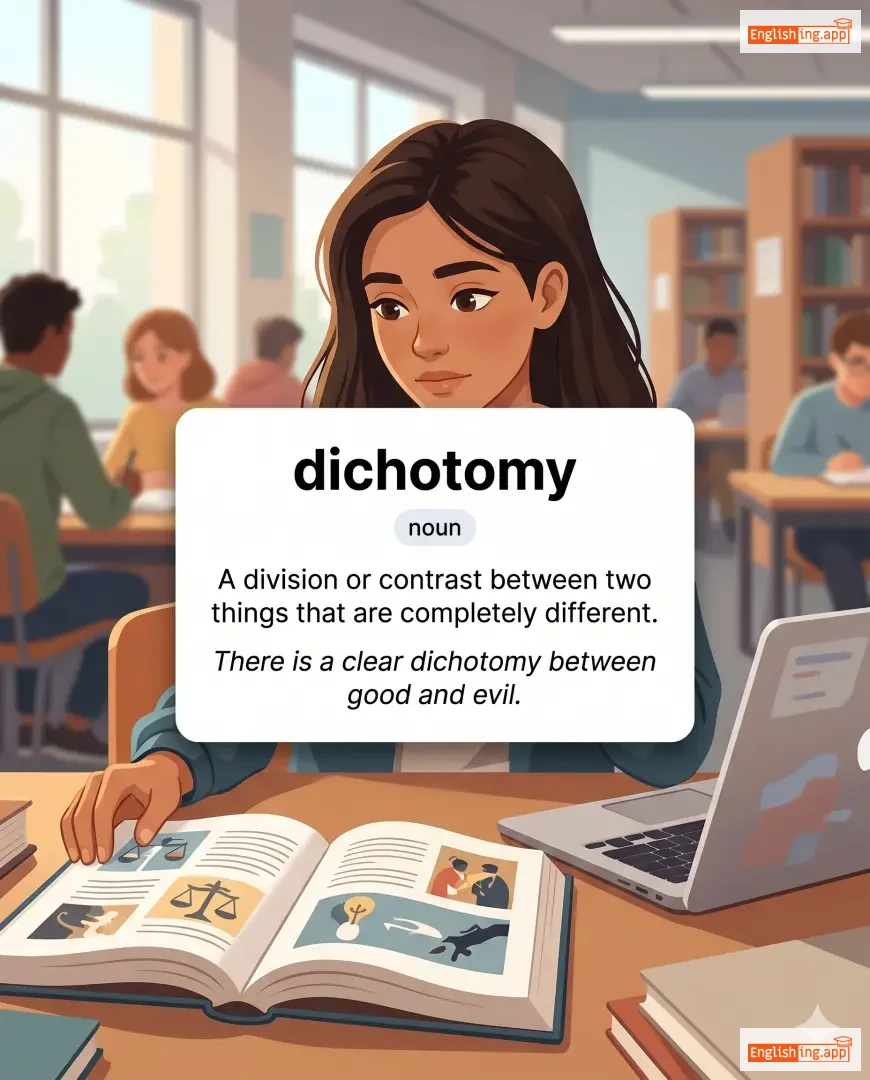
dichotomy definition card — visual illustration of the meaning
noun
/daɪˈkɒtəmi/
二分法 (er fen fa)

A division or contrast between two things that are completely different.

"There is a clear dichotomy between good and evil."
"善与恶之间存在明显的二分法。" (Shan yu e zhijian cunzai mingxian de er fen fa.)
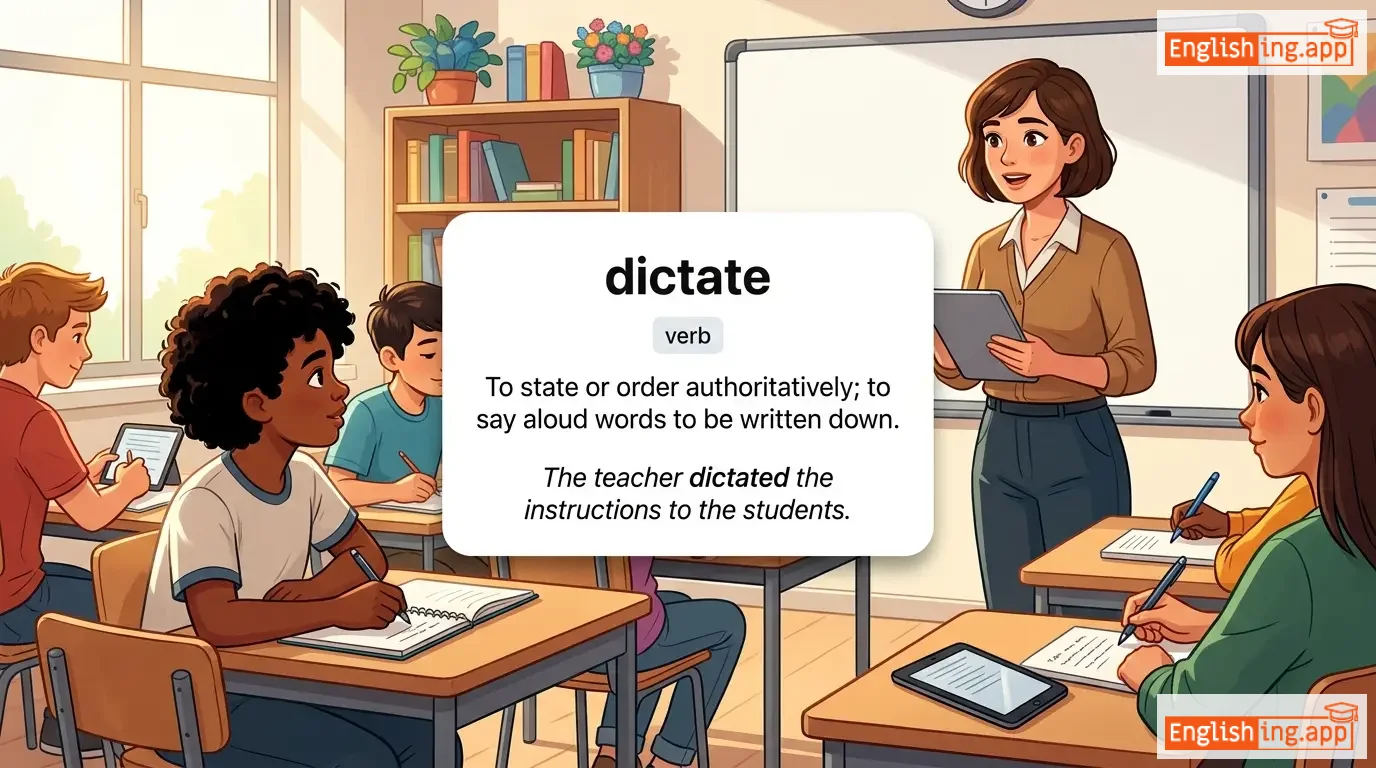
dictate definition card — visual illustration of the meaning
verb
/dɪkˈteɪt/
口授 (kǒu shòu)

To state or order authoritatively; to say aloud words to be written down.

"The teacher dictated the instructions to the students."

"老师给学生们口授了指令。" (Lǎoshī gěi xuéshēngmen kǒushòu le zhǐlìng.)
noun
/dɪkˈteɪtə/
独裁者 (dúcáizhě)

a ruler with total power over a country, typically one who has obtained control by force

"The dictator ruled the country with an iron fist."

"独裁者用铁腕统治着国家。" (Dúcáizhě yòng tiěwàn tǒngzhì zhe guójiā.)
adjective
/ˌdɪktəˈtɔːriəl/
独裁的 (dúcái de)

Having or showing a tendency to tell people what to do in an autocratic way.

"His dictatorial style made him unpopular among colleagues."
"他的独裁风格使他在同事中不受欢迎。" (Tā de dúcái fēnggé shǐ tā zài tóngshì zhōng bù shòu huānyíng.)
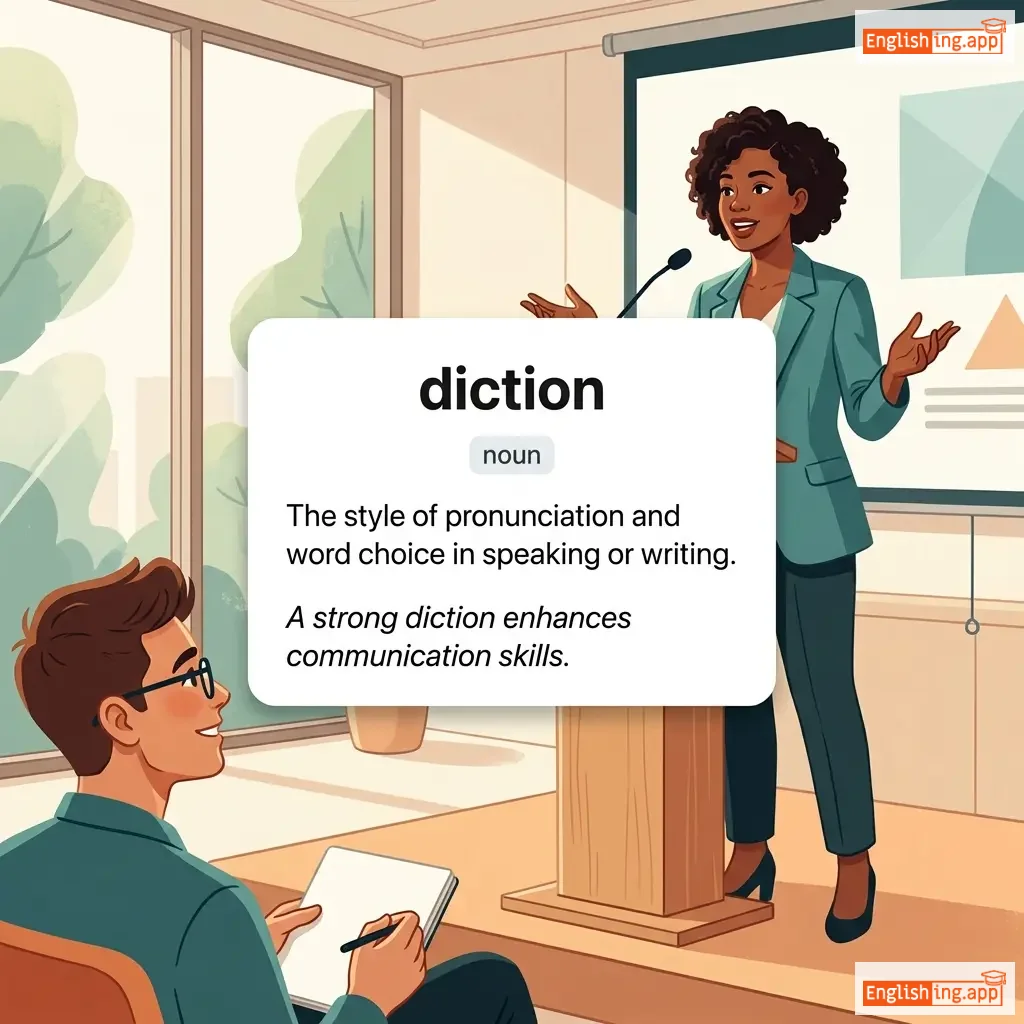
diction definition card — visual illustration of the meaning
noun
ˈdɪk.ʃən
发音和词语选择 (fāyīn hé cíyǔ xuǎnzé)

The style of pronunciation and word choice in speaking or writing.

"A strong diction enhances communication skills."

"强有力的发音增强了沟通技巧。" (Qiáng yǒulì de fāyīn zēngqiángle gōutōng jìqiǎo.)