語彙集

英単語辞書 | 単語の意味、定義、例文

noun
/dæmˈneɪ.ʃən/
永遠の罰; 破滅 (eien no batsu; hametsu)

condemnation to eternal punishment in hell; something that causes ruin or failure

"The preacher spoke about salvation and damnation in his sermon."

"説教者はその説教で救いと永遠の罰について話しました。" (Sekkyousha wa sono sekkyou de suki to eien no batsu ni tsuite hanashimashita.)
adjective
/dæmp/
湿った (shimetta)

slightly wet, often in an unpleasant way

"The room felt cold and damp after the rain."

"雨の後、部屋は冷たくて湿っていると感じました。" (Ame no ato, heya wa tsumetakute shimette iru to kanjimashita.)
verb
/ˈdæmpən/
湿らせる, 和らげる (shimerareru, yawarageru)

to make something slightly wet; to make something less strong, active, or intense

"The rain dampened the excitement of the outdoor concert."

"雨が屋外コンサートの興奮を和らげました。" (Ame ga okugai konsāto no kōfun o yawaragemashita.)
noun
/ˈdæmpər/
力、効果、または興奮を減少または抑制するもの (chikara, kōka, matawa kōfun o genshō matawa yokusei suru mono)

something that reduces or lessens the force, effect, or excitement

"The cancellation of the trip put a damper on their enthusiasm."

"旅行のキャンセルは彼らの熱意をそぐことになった。" (Ryokō no kyanseru wa karera no netsui o sogu koto ni natta.)
dance definition card — visual illustration of the meaning
verb/noun
/dæns/
幸福 (kōfuku)

to move rhythmically to music, typically following a set sequence of steps

"They danced all night at the wedding."

"彼女は賞を受け取ったとき、幸せを隠すことができませんでした。" (Kanojo wa shō o uketotta toki, kōfuku o kakusu koto ga dekimasen deshita.)
noun
/ˈdænsər/
ダンサー (dansā)

a person who dances or performs dancing professionally or as a hobby

"The dancer moved gracefully across the stage."

"ダンサーは舞台を優雅に動きました。" (Dansā wa butai o yūga ni ugokimashita.)
noun
/ˈdænsɪŋ/

the activity of moving the body rhythmically to music

"They spent the evening dancing at the party."

noun
/ˈdæn.drʌf/
フケ (dandorafu)

small white or grey flakes of dead skin that form on the scalp and fall from the hair

"He used a special shampoo to treat his persistent dandruff problem."

"彼は慢性的なフケの問題を治すために、特別なシャンプーを使った。" (kare wa manseitekina fuke no mondai o naosu tame ni tokubetsu na shanpuu o tsukatta)
noun
/ˈdændi/
外見と服装に過剰に気を使う男性 (gaiken to fukusou ni kajou ni ki wo tsukau dansei)

a man who gives too much attention to his appearance and clothes

"The young dandy spent hours grooming himself before the party."
"若いダンディはパーティーの前に何時間も自分を整えるのに費やした。" (Wakai dandy wa pātī no mae ni nan-jikan mo jibun wo totonoeru noni費やした。)
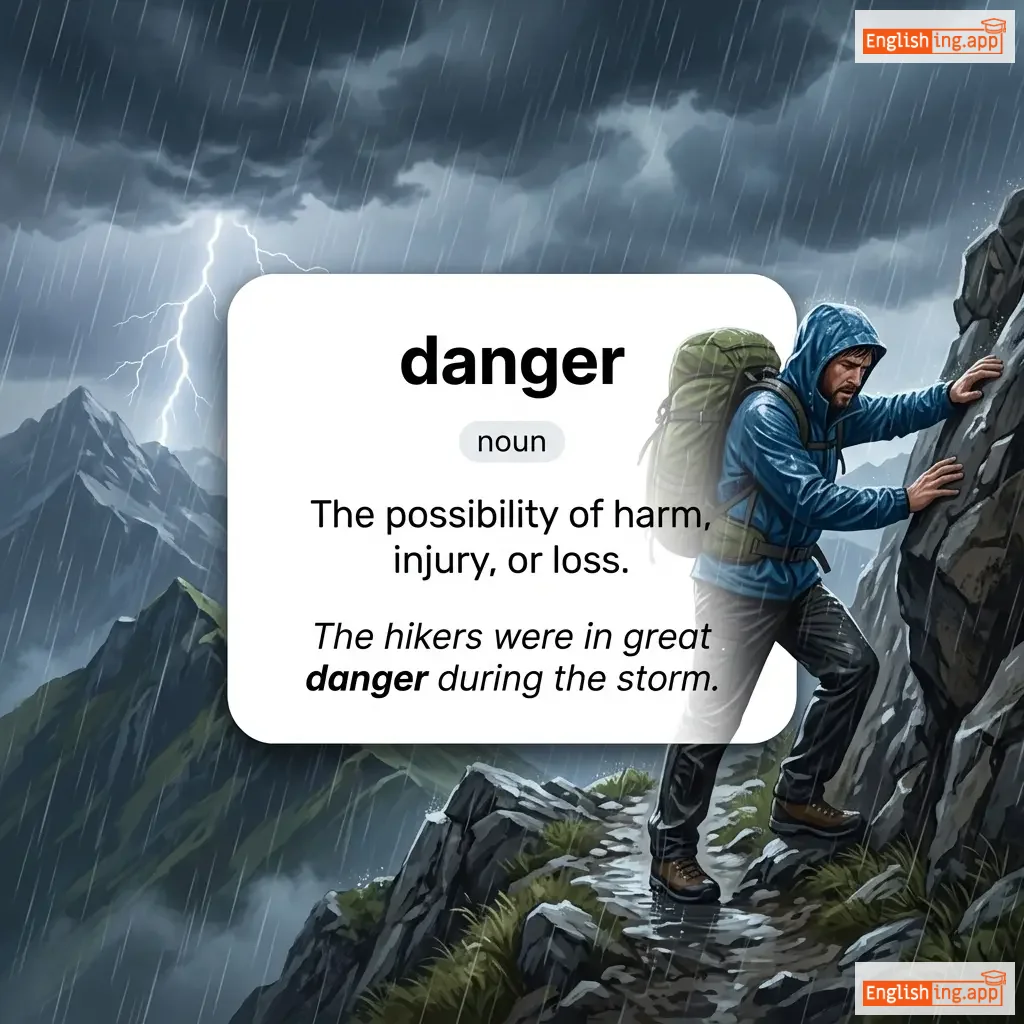
danger definition card — visual illustration of the meaning
noun
/ˈdeɪn.dʒər/
危険 (kiken)

The possibility of harm, injury, or loss.

"The hikers were in great danger during the storm."

"登山者は嵐の中で大きな危険にさらされていました。" (Tozan-sha wa arashi no naka de ookina kiken ni sarasarete imashita.)
adjective
/ˈdeɪndʒərəs/
危険 (kiken)

likely to cause harm or injury; unsafe

"Driving fast on icy roads is dangerous."

"氷の道路で速く運転するのは危険です。" (Kōri no dōro de hayaku unten suru no wa kiken desu.)
adverb
/ˈdeɪndʒərəsli/
危険に (kiken ni)

in a way that could cause harm or injury; riskily

"He was driving dangerously fast on the highway."

"彼は高速道路で危険に速く運転していた。" (kare wa kousoku douro de kiken ni hayaku unten shite ita)
verb
/ˈdæŋɡəl/
ぶら下がる (burasagaru)

to hang loosely or swing freely

"The keys dangled from his belt."

"鍵がベルトからぶら下がっていました。" (Kagi ga beruto kara burasagatte imashita.)
adjective
/dæŋk/
湿っていて寒い (shittete ite samui)

unpleasantly damp and cold

"The basement was dark and dank, filled with a musty smell."

"地下室は暗くて湿っていて、悪臭が充満していました。" (Chikashitsu wa kurakute shittete ite, akushū ga jūman shite imashita.)
adjective
/ˈdæpər/
おしゃれで清潔 (oshare de seiketsu)

Neat, stylish, and well-dressed in appearance.

"He looked very dapper in his new suit."

"彼は新しいスーツでとてもおしゃれに見えた。" (Kare wa atarashī sūtsu de totemo oshare ni mieta.)
adjective
/ˈdæpəld/
斑点模様 (hanten moyou)

Marked with spots or patches of light and shade or different colors.

"The forest floor was dappled with sunlight."

"森の地面は日光で斑点模様ができていた。" (Mori no jimen wa nikkou de hanten moyou ga dekite ita.)
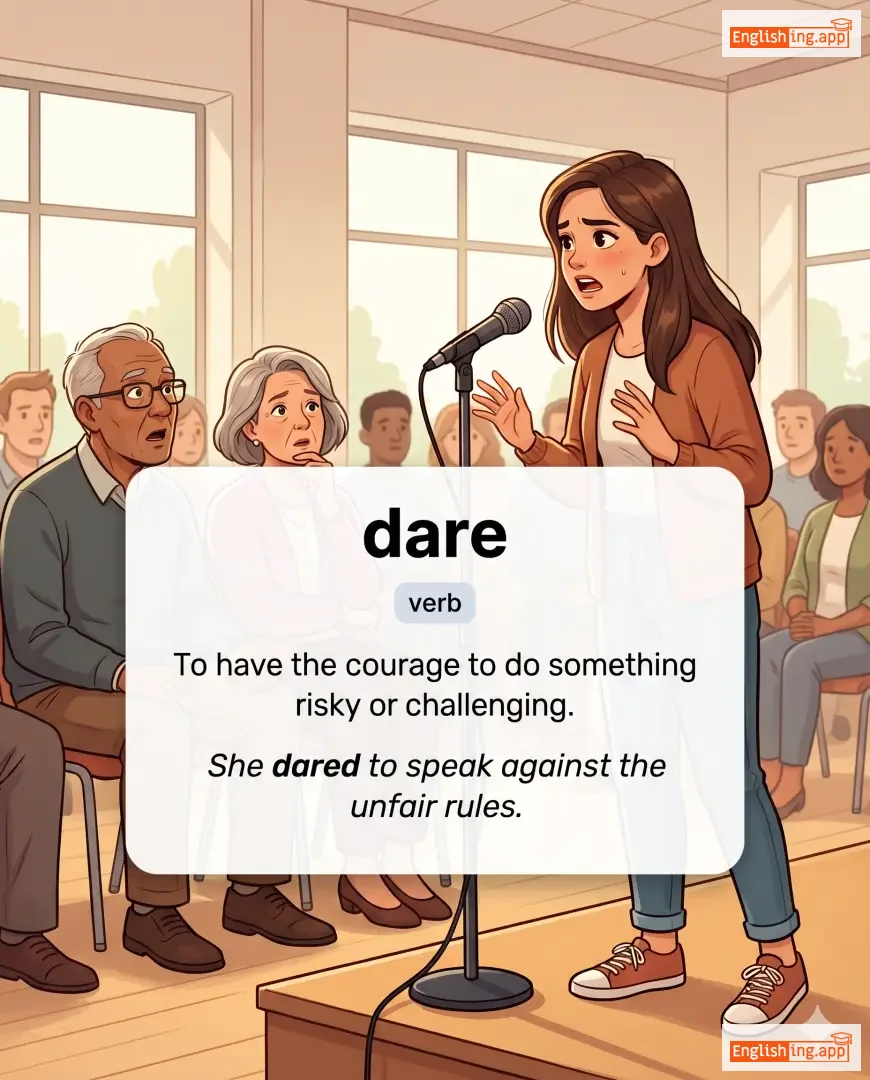
dare definition card — visual illustration of the meaning
verb
/der/
挑戦する (chōsen suru)

To have the courage to do something risky or challenging.

"She dared to speak against the unfair rules."

"彼女は不公平なルールに反対する勇気を持って話しました。" (Kanojo wa fukōhei na rūru ni hantai suru yūki o motte hanashimashita.)
noun
/ˈderˌdevəl/
危険を冒す人 (kiken o okasu hito)

A person who enjoys doing dangerous or risky things.

"The stunt was performed by a famous daredevil."

"そのスタントは有名なデアデビルによって行われました。" (Sono sutanto wa yūmei na deadebiru ni yotte okonawaremashita.)
adjective
/ˈderɪŋ/
大胆 (daitan)

Willing to take risks; bold and adventurous.

"Her daring plan surprised everyone."
"彼女の大胆な計画は皆を驚かせた。" (Kanojo no daitan na keikaku wa mina o odorokaseta.)
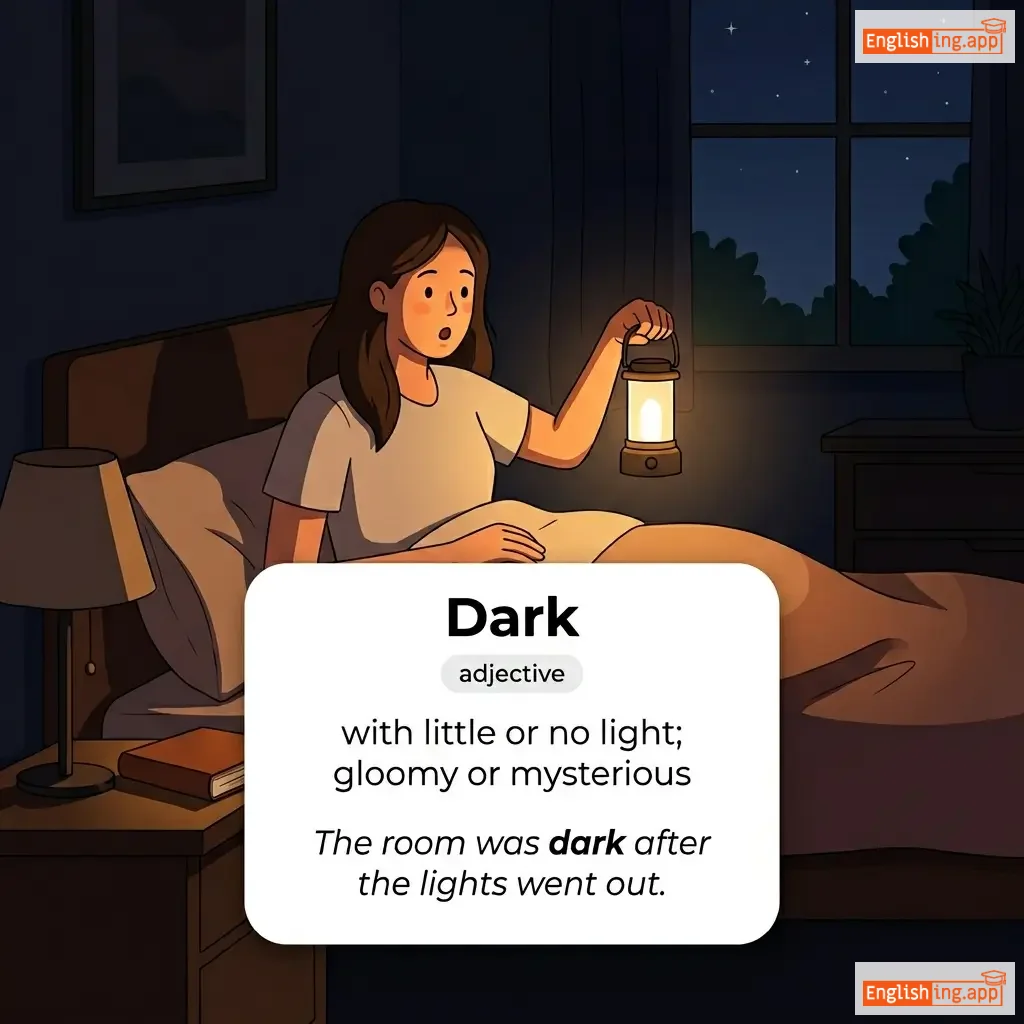
Dark definition card — visual illustration of the meaning
adjective
/dɑːrk/
暗い (kurai)

with little or no light; gloomy or mysterious

"The room was dark after the lights went out."

"電気が消えた後、部屋は暗くなった。" (denki ga kieta ato, heya wa kuraku natta.)
adjective
/dɑːrk bluː/
ダークブルー (daakuburuu)

a deep shade of blue color

"She wore a dark blue dress to the party."

"彼女はパーティーにダークブルーのドレスを着て行った。" (Kanojo wa paatii ni daakuburuu no doresu o kite itta.)
verb
/ˈdɑːrkən/
暗くする (kuraku suru)

to make or become dark; to reduce brightness or light

"The clouds began to darken the sky before the storm."

"嵐の前に雲が空を暗くし始めた。" (arashi no mae ni kumo ga sora o kuraku shi hajimeta)
adverb
/ˈdɑːrklɪŋ/
暗闇の中で (kurayami no naka de)

In the dark or growing dark; dimly.

"The forest creatures moved darkling through the night."

"森の生き物は夜に暗闇の中で動いていた。" (Mori no ikimono wa yoru ni kurayami no naka de ugoite ita.)
noun
/ˈdɑːrk.nəs/
暗闇 (kurayami)

The absence of light; the state of being dark.

"The room was filled with darkness after the lights went out."

"ライトが消えると部屋は暗闇に包まれた。" (Raito ga kieru to heya wa kurayami ni tsutsumareta.)
verb, noun
/dɑːrt/
ダート/急に走る (dāto/kyū ni hashiru)

to move suddenly and quickly; a small pointed missile thrown at a target

"The cat darted across the street to avoid the car."

"猫は車を避けるために急いで道路を横切りました。" (Neko wa kuruma o yokeru tame ni isoi de dōro o yokogirimashita.)
noun
/ˈdɑːrwɪnɪzəm/
ダーウィニズム (Dāwinizumu)

the theory of biological evolution developed by Charles Darwin, emphasizing natural selection

"Darwinism revolutionized the way scientists understood the origin of species."

"ダーウィニズムは科学者たちが種の起源を理解する方法を革命的に変えました。" (Dāwinizumu wa kagakusha-tachi ga shuno kigen o rikai suru hōhō o kakumei-teki ni kaemashita.)
💨

dash

verb
/dæʃ/

to move quickly and suddenly; to strike or break something violently

"She dashed across the street to catch the bus."

adjective
/ˈdæʃ.ɪŋ/
魅力的; スタイリッシュ; 自信に満ちた; (miryokuteki; sutairisshu; jishin ni michita)

stylish and confident; lively and energetic; attractive and charming

"He looked dashing in his new suit."

"彼は新しいスーツで魅力的に見えました。" (Kare wa atarashii suutsu de miryokuteki ni miemashita.)
noun
/ˈdæstərd/
卑怯者 (hikyou-sha)

a cowardly or dishonorable person

"Only a dastard would betray his closest friend."

"裏切るのは卑怯者だけだ。" (Urigiru no wa hikyou-sha dake da.)
noun
/ˈdeɪ.tə/ or /ˈdæt.ə/
データ (deta)

Facts, statistics, or information collected for reference or analysis.

"The scientists analyzed the data to find patterns."

"科学者たちはパターンを見つけるためにデータを分析しました。" (Kagakusha-tachi wa patān o mitsukeru tame ni dēta o bunseki shimashita.)
data breach definition card — visual illustration of the meaning
noun
/ˈdeɪ.tə briːtʃ/
データ漏洩 (dēta rōei)

Unauthorized disclosure of sensitive information through security violation

"A data breach exposed millions of users' passwords."

"データ漏洩により何百万人ものユーザーのパスワードが公開されました。" (Dēta rōei ni yori nanbyakumannin mo no yūzā no pasuwādo ga kōkai saremashita.)
noun
/ˈdeɪtəbeɪs/
データベース (dētābēsu)

a structured collection of data stored and accessed electronically

"The company's customer details are stored in a secure database."

"会社の顧客情報は安全なデータベースに保存されています。" (Kaisha no kokyaku jōhō wa anzen na dētābēsu ni hozon sareteimasu.)
📅

date

noun/verb
/deɪt/

A particular day of the month or year; also, a social or romantic appointment.

"They decided to meet on the date of her birthday."

noun
/deɪts/
デーツ (dētsu)

sweet brown oval fruits that grow on date palm trees

"Dates are commonly eaten during Ramadan to break the fast."

"デーツはラマダン中に断食を解くためによく食べられます。" (Dētsu wa ramadan-chū ni danjiki o toku tame ni yoku taberaremasu)
noun
/ˈdeɪtəm/ or /ˈdætəm/
データ (deta)

a single piece of information; a fact used as a basis for reasoning or calculation

"Each datum in the survey was carefully analyzed."

"調査の各データは慎重に分析されました。" (Chousa no kaku deta wa shinchou ni bunseki saremashita.)
verb
/dɔːb/
塗る (nuru)

to spread a thick or sticky substance carelessly on a surface

"The children daubed paint all over the walls."

"子供たちは壁にペンキを塗り広げました。" (kodomotachi wa kabe ni penki o nurihirogemashita.)
noun
/ˈdɔːtər/
(musume)

a female child in relation to her parents

"They are proud of their daughter for graduating college."
"彼らは大学を卒業した娘を誇りに思っています。" (Karera wa daigaku o sotsugyō shita musume o hokori ni omotteimasu.)
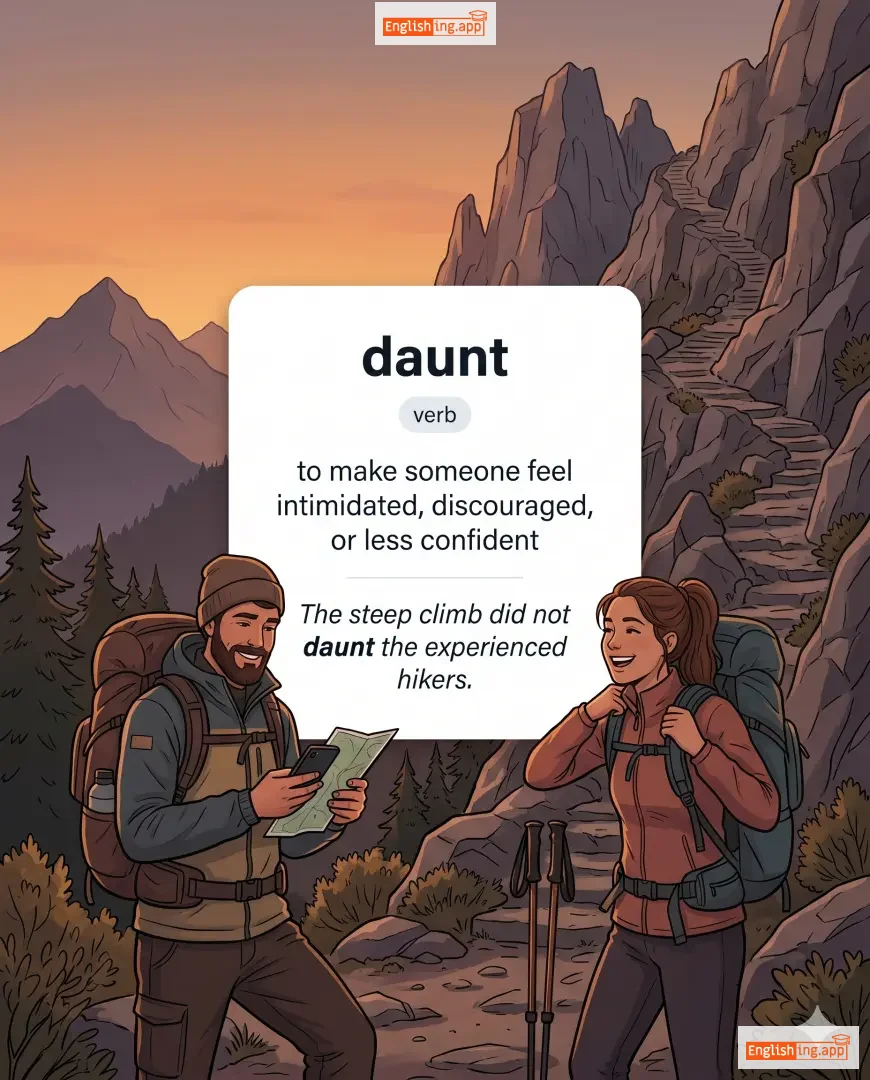
daunt definition card — visual illustration of the meaning
verb
/dɔːnt/
脅す (odosu)

to make someone feel intimidated, discouraged, or less confident

"The steep climb did not daunt the experienced hikers."
"急な登りは経験豊富なハイカーを怖がらせませんでした。" (Kyū na nobori wa keiken hōfu na haikā o kowagarasemasen deshita.)
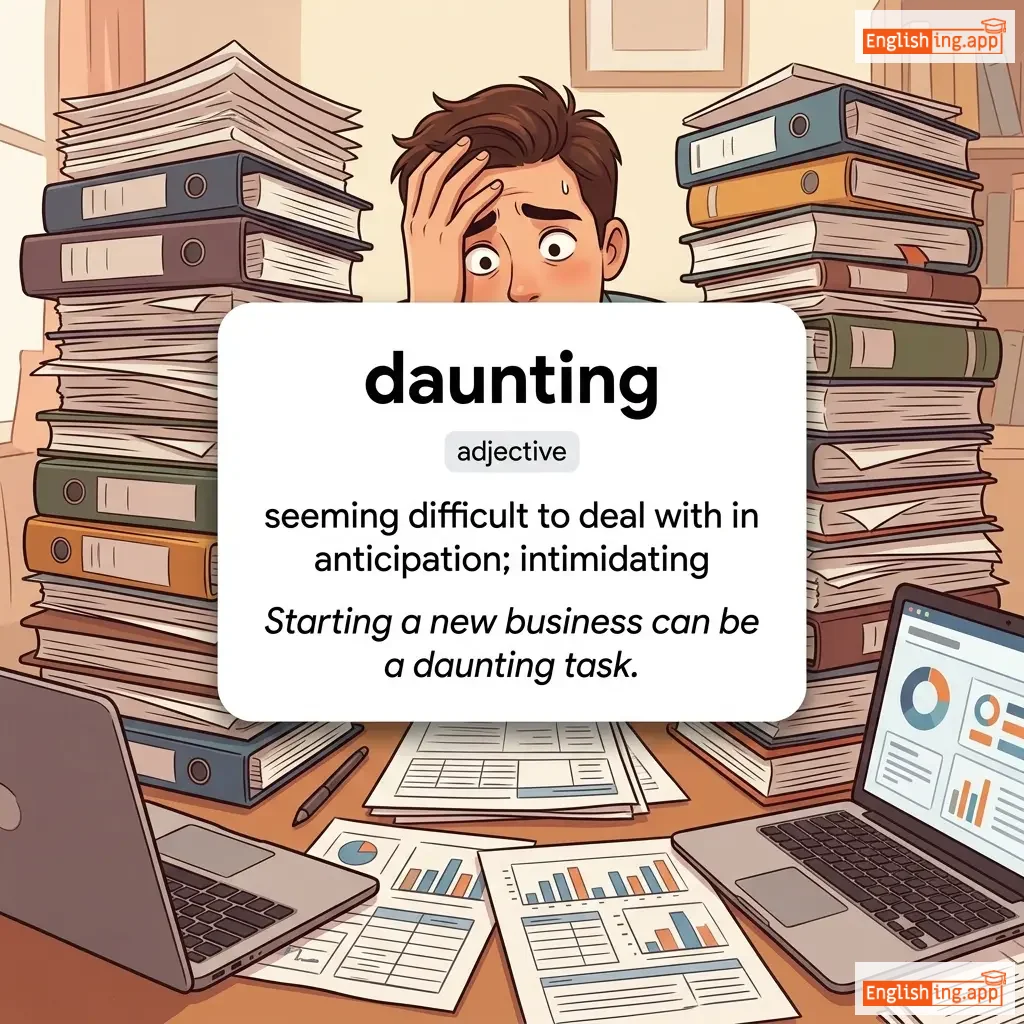
daunting definition card — visual illustration of the meaning
adjective
/ˈdɔːntɪŋ/
威圧的 (iatsuteki)

seeming difficult to deal with in anticipation; intimidating

"Starting a new business can be a daunting task."
"新しいビジネスを始めるのは威圧的な仕事かもしれません。" (Atarashī bijinesu o hajimeru no wa iatsuteki na shigoto kamo shiremasen.)
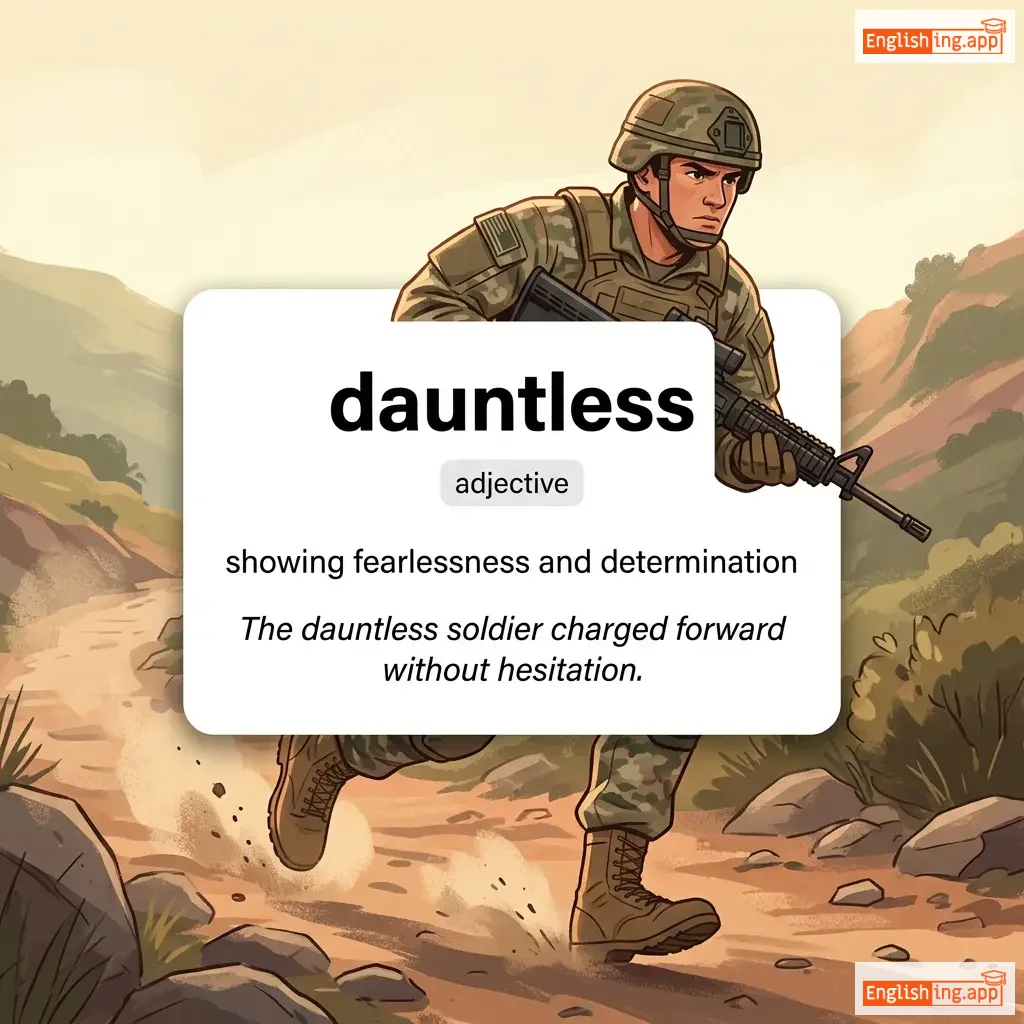
dauntless definition card — visual illustration of the meaning
adjective
/ˈdɔːntləs/
無敵 (muteki)

showing fearlessness and determination

"The dauntless soldier charged forward without hesitation."

"無敵の兵士はためらうことなく前進した。" (Muteki no heishi wa tamerau koto naku zenshin shita.)
verb
/ˈdɔːd(ə)l/
だらだらする (dardarasu suru)

to waste time by being slow or idle

"Stop dawdling and finish your homework."

"ダラダラせずに宿題を終わらせてください。" (Daradara sezu ni shukudai o owarasete kudasai.)
noun, verb
/dɔːn/
夜明け (yoake)

The first appearance of light in the sky before sunrise; to begin or become apparent.

"Hope began to dawn in her heart after hearing the good news."

"良いニュースを聞いた後、彼女の心に希望が夜明けを迎え始めました。" (Yoi nyūsu o kiita ato, kanojo no kokoro ni kibō ga yoake o mukae hajimemashita.)
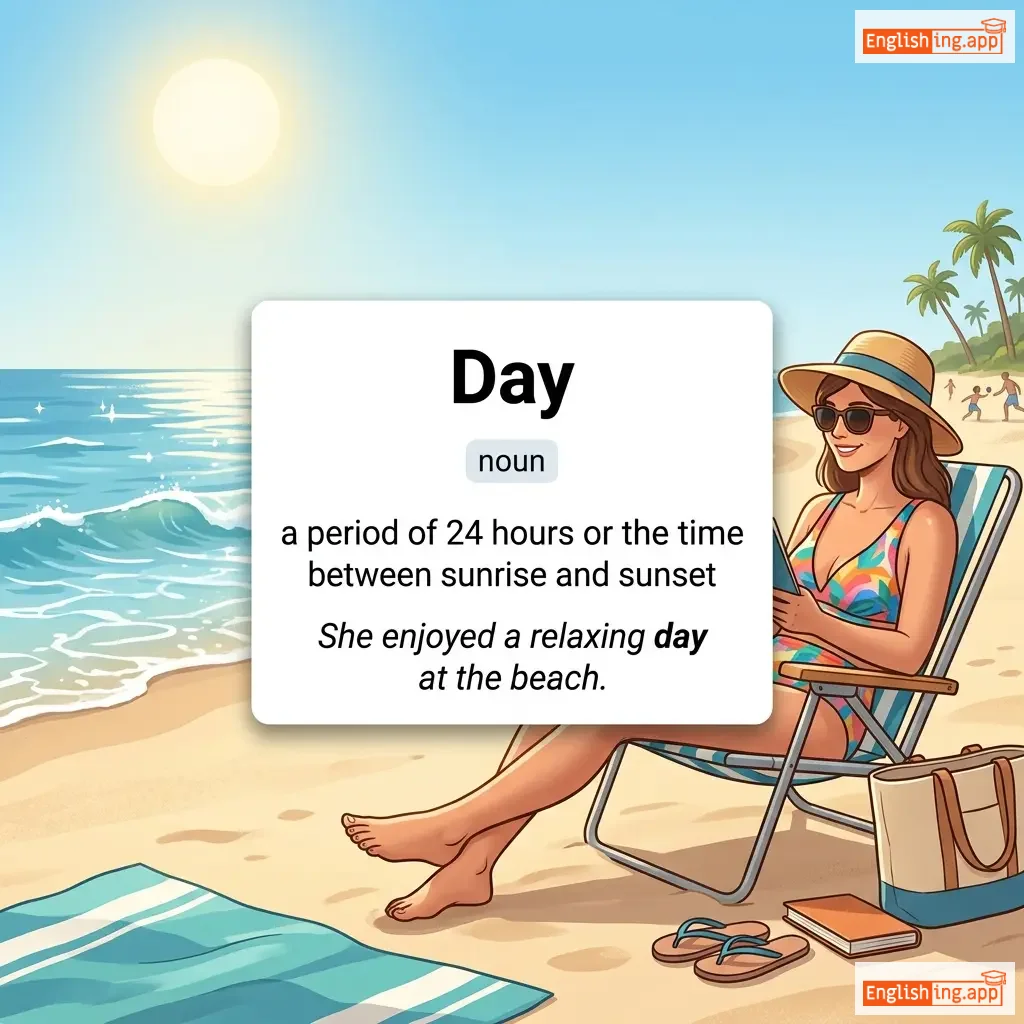
Day definition card — visual illustration of the meaning
noun
/deɪ/
(hi)

a period of 24 hours or the time between sunrise and sunset

"She enjoyed a relaxing day at the beach."

"彼女はビーチでリラックスした一日を楽しみました。" (Kanojo wa bīchi de rirakkusu shita ichinichi o tanoshimimashita.)
noun
/ˈdeɪ.mæn/
日雇い労働者 (hiyatoi rōdōsha)

a worker employed by the day; a day laborer

"The farmer hired a day-man to help with the harvest."

"農家は収穫を手伝うために日雇い労働者を雇いました。" (Nōka wa shūkaku o tetsudau tame ni hiyatoi rōdōsha o yatotta.)
noun
/ˈdeɪˌbreɪk/
夜明け (yoake)

The time in the morning when daylight first appears; dawn.

"They set out on their journey at daybreak."

"彼らは夜明けに旅を始めました。" (Karera wa yoake ni tabi o hajimemashita.)
noun
/deɪz/
日々 (hibi)

plural of day; refers to multiple 24-hour periods of time

"The project will take at least five days to finish."

"このプロジェクトは少なくとも5日かかります。" (Kono purojekuto wa sukunakutomo go nichi kakarimasu.)
😵

daze

verb
/deɪz/

to stun or confuse someone temporarily with a shock or surprise

"The bright lights dazed the runners as they entered the stadium."

verb
/ˈdæzəl/
魅了する (miryō suru)

to impress deeply or blind with brilliance or skill

"The magician's tricks dazzled the audience."

"マジシャンのトリックは観客を驚かせた。" (Majishan no torikku wa kankyaku o odorokaseta.)
adjective
/ˈdæz.lɪŋ/
眩しい; 印象的な (mabushii; inshō-teki na)

extremely bright and impressive; brilliant and stunning

"The dazzling lights of the city amazed the tourists."

"その都市の眩い光は観光客を驚かせました。" (Sono toshi no mabushii hikari wa kankōkyaku o odorokasemashita.)
adjective, noun
/dɛd/
死んだ (shinda)

No longer alive; the end of life.

"The old tree is completely dead."

"その古い木は完全に死んでいる。" (Sono furui ki wa kanzen ni shindeiru.)