Vocabulaires

Découvrez, apprenez et maîtrisez le vocabulaire anglais

noun
/dæmˈneɪ.ʃən/
damnation éternelle; destruction (damnation éternelle; destruction)

condemnation to eternal punishment in hell; something that causes ruin or failure

"The preacher spoke about salvation and damnation in his sermon."

"Le prédicateur a parlé du salut et de la damnation dans son sermon." (Le prédicateur a parlé du salut et de la damnation dans son sermon.)
adjective
/dæmp/
humide (humide)

slightly wet, often in an unpleasant way

"The room felt cold and damp after the rain."

"La pièce était froide et humide après la pluie." (La piece etait froide et humide apres la pluie.)
verb
/ˈdæmpən/
humecter, atténuer (humecter, atténuer)

to make something slightly wet; to make something less strong, active, or intense

"The rain dampened the excitement of the outdoor concert."

"La pluie dampenée l'excitation du concert en plein air." (La pluie dampenée l'excitation du concert en plein air.)
noun
/ˈdæmpər/
quelque chose qui réduit ou diminue la force, l'effet ou l'excitation (quelque chose qui réduit ou diminue la force, l'effet ou l'excitation)

something that reduces or lessens the force, effect, or excitement

"The cancellation of the trip put a damper on their enthusiasm."

"L'annulation du voyage a réduit leur enthousiasme." (L'annulation du voyage a réduit leur enthousiasme.)
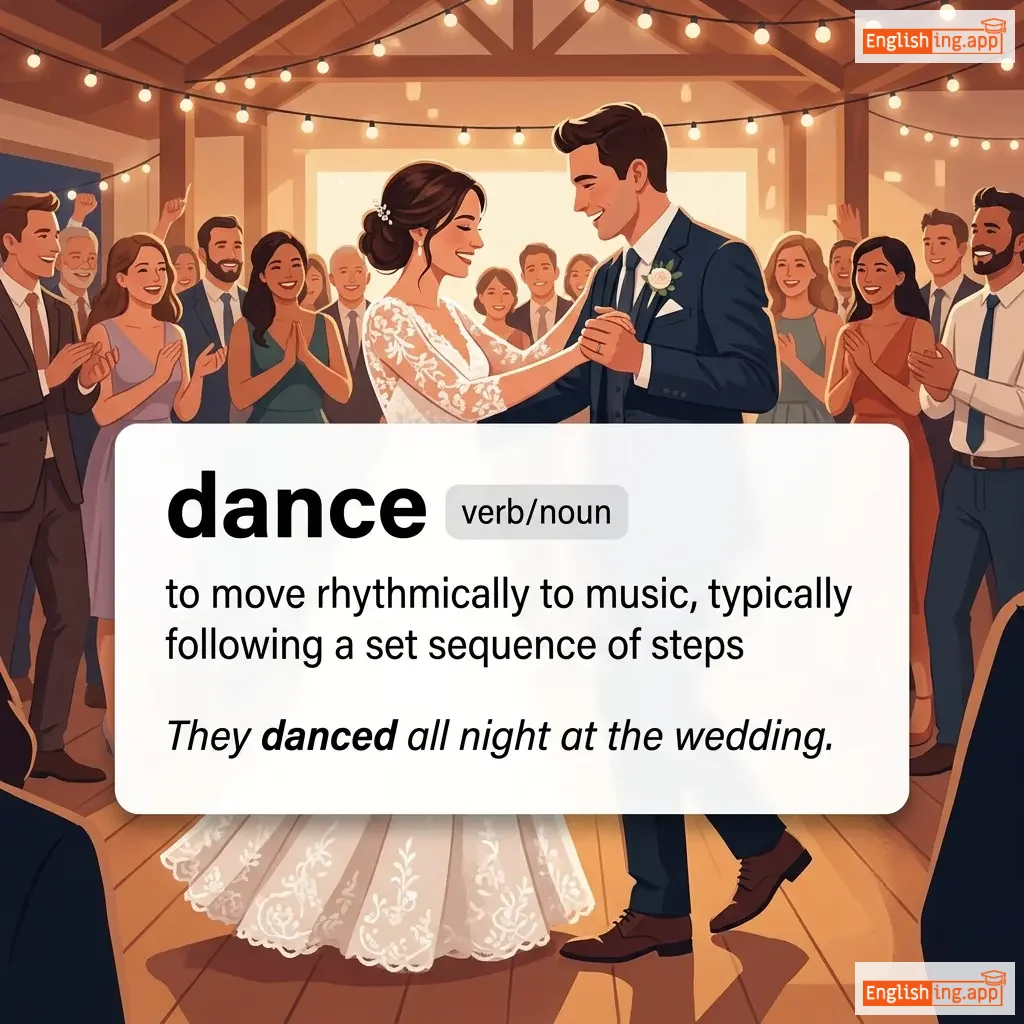
dance definition card — visual illustration of the meaning
verb/noun
/dæns/
bonheur (bonheur)

to move rhythmically to music, typically following a set sequence of steps

"They danced all night at the wedding."

"Elle ne pouvait pas cacher son bonheur quand elle a reçu le prix." (Elle ne pouvait pas cacher son bonheur quand elle a recu le prix.)
noun
/ˈdænsər/
danseur (danseur)

a person who dances or performs dancing professionally or as a hobby

"The dancer moved gracefully across the stage."

"Le danseur s'est déplacé gracieusement sur scène." (Le danseur s'est deplace gracieusement sur scene.)
noun
/ˈdænsɪŋ/
la danse (la danse)

the activity of moving the body rhythmically to music

"They spent the evening dancing at the party."

"Ils ont passé la soirée à danser à la fête." (Ils ont passe la soiree a danser a la fete)
noun
/ˈdæn.drʌf/
pellicules (pellicules)

small white or grey flakes of dead skin that form on the scalp and fall from the hair

"He used a special shampoo to treat his persistent dandruff problem."

"Il a utilisé un shampooing spécial pour traiter son problème persistant de pellicules." (Il a utilise un shampooing special pour traiter son probleme persistant de pellicules.)
noun
/ˈdændi/
homme qui accorde trop d'attention à son apparence et à ses vêtements (homme qui accorde trop d'attention à son apparence et à ses vêtements)

a man who gives too much attention to his appearance and clothes

"The young dandy spent hours grooming himself before the party."

"Le jeune dandy a passé des heures à se préparer avant la fête." (Le jeune dandy a passé des heures à se préparer avant la fête.)
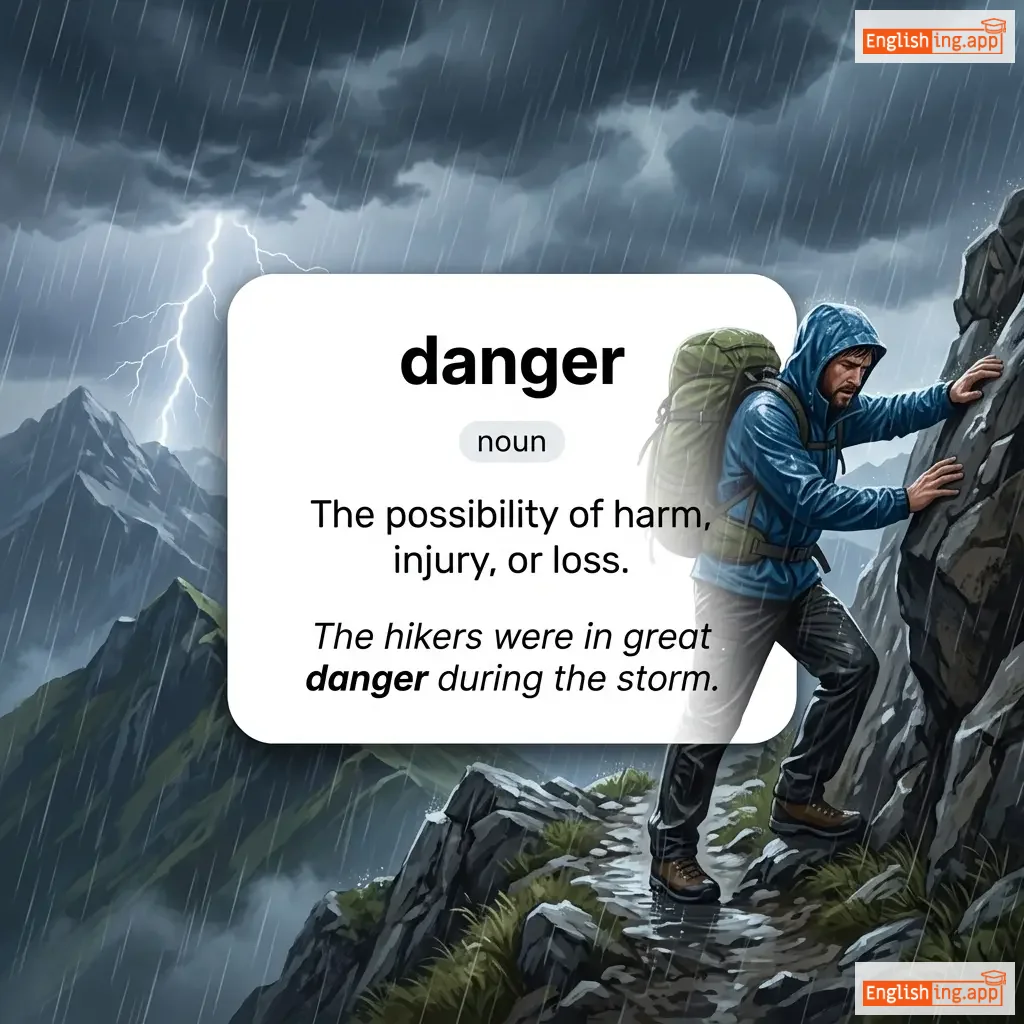
danger definition card — visual illustration of the meaning
noun
/ˈdeɪn.dʒər/
danger (danger)

The possibility of harm, injury, or loss.

"The hikers were in great danger during the storm."

"Les randonneurs étaient en grand danger pendant la tempête." (Les randonneurs etaient en grand danger pendant la tempete.)
adjective
/ˈdeɪndʒərəs/
dangereux (dangereux)

likely to cause harm or injury; unsafe

"Driving fast on icy roads is dangerous."

"Conduire vite sur des routes glacées est dangereux." (Conduire vite sur des routes glacées est dangereux.)
adverb
/ˈdeɪndʒərəsli/
dangereusement (dangereusement)

in a way that could cause harm or injury; riskily

"He was driving dangerously fast on the highway."

"Il conduisait dangereusement vite sur l'autoroute." (Il conduisait dangereusement vite sur l'autoroute)
verb
/ˈdæŋɡəl/
pendre (pendre)

to hang loosely or swing freely

"The keys dangled from his belt."

"Les clés pendaient de sa ceinture." (Les clés pendaient de sa ceinture.)
adjective
/dæŋk/
humide et froid (humide et froid)

unpleasantly damp and cold

"The basement was dark and dank, filled with a musty smell."

"Le sous-sol était sombre et humide, rempli d'une odeur nauséabonde." (Le sous-sol était sombre et humide, rempli d'une odeur nauseabonde.)
adjective
/ˈdæpər/
élégant et soigné (elegant et soigne)

Neat, stylish, and well-dressed in appearance.

"He looked very dapper in his new suit."

"Il avait l'air très élégant dans son nouveau costume." (Il avait l'air très élégant dans son nouveau costume.)
adjective
/ˈdæpəld/
tacheté (tachete)

Marked with spots or patches of light and shade or different colors.

"The forest floor was dappled with sunlight."

"Le sol de la forêt était tacheté de lumière solaire." (Le sol de la forêt était tacheté de lumière solaire.)
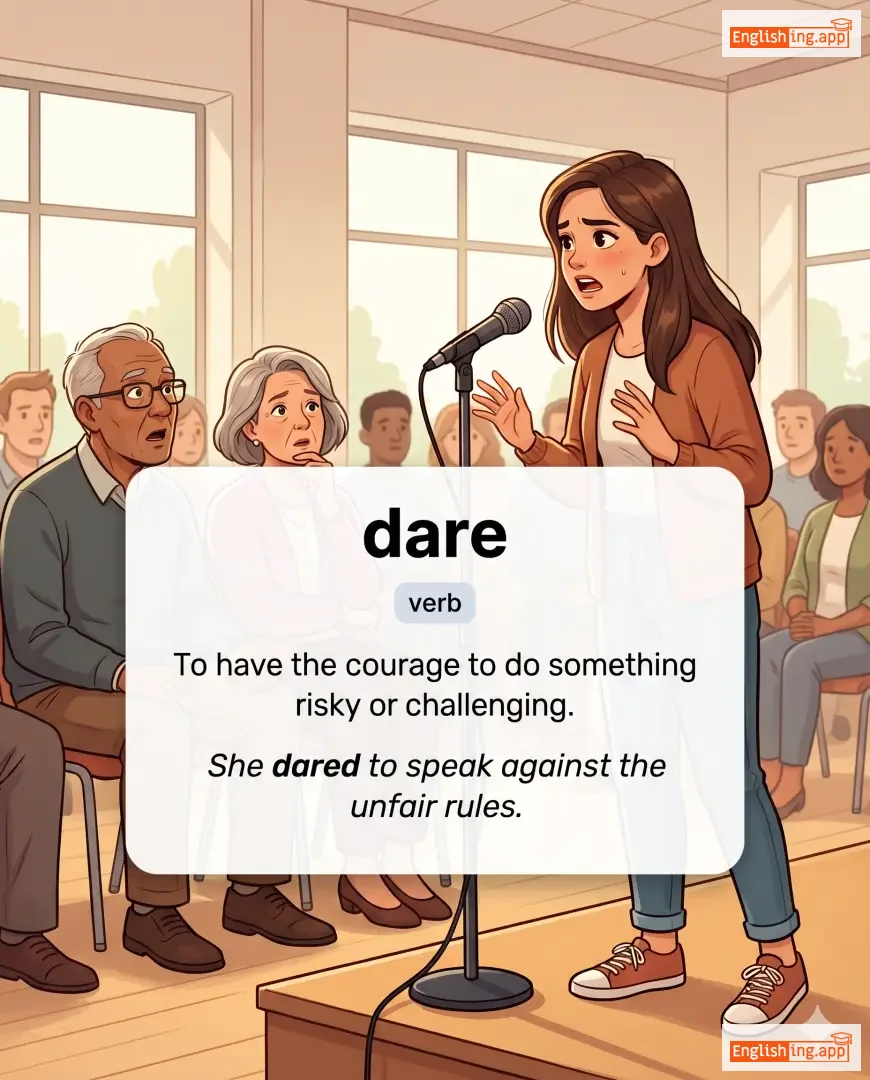
dare definition card — visual illustration of the meaning
verb
/der/
oser (oser)

To have the courage to do something risky or challenging.

"She dared to speak against the unfair rules."

"Elle a osé parler contre les règles injustes." (Elle a osé parler contre les règles injustes.)
noun
/ˈderˌdevəl/
courageux imprudent (courageux imprudent)

A person who enjoys doing dangerous or risky things.

"The stunt was performed by a famous daredevil."

"L'acrobatie a été réalisée par un célèbre imprudent." (L'acrobatie a été réalisée par un célèbre imprudent.)
adjective
/ˈderɪŋ/
audacieux (audacieux)

Willing to take risks; bold and adventurous.

"Her daring plan surprised everyone."

"Son plan audacieux a surpris tout le monde." (Son plan audacieux a surpris tout le monde.)
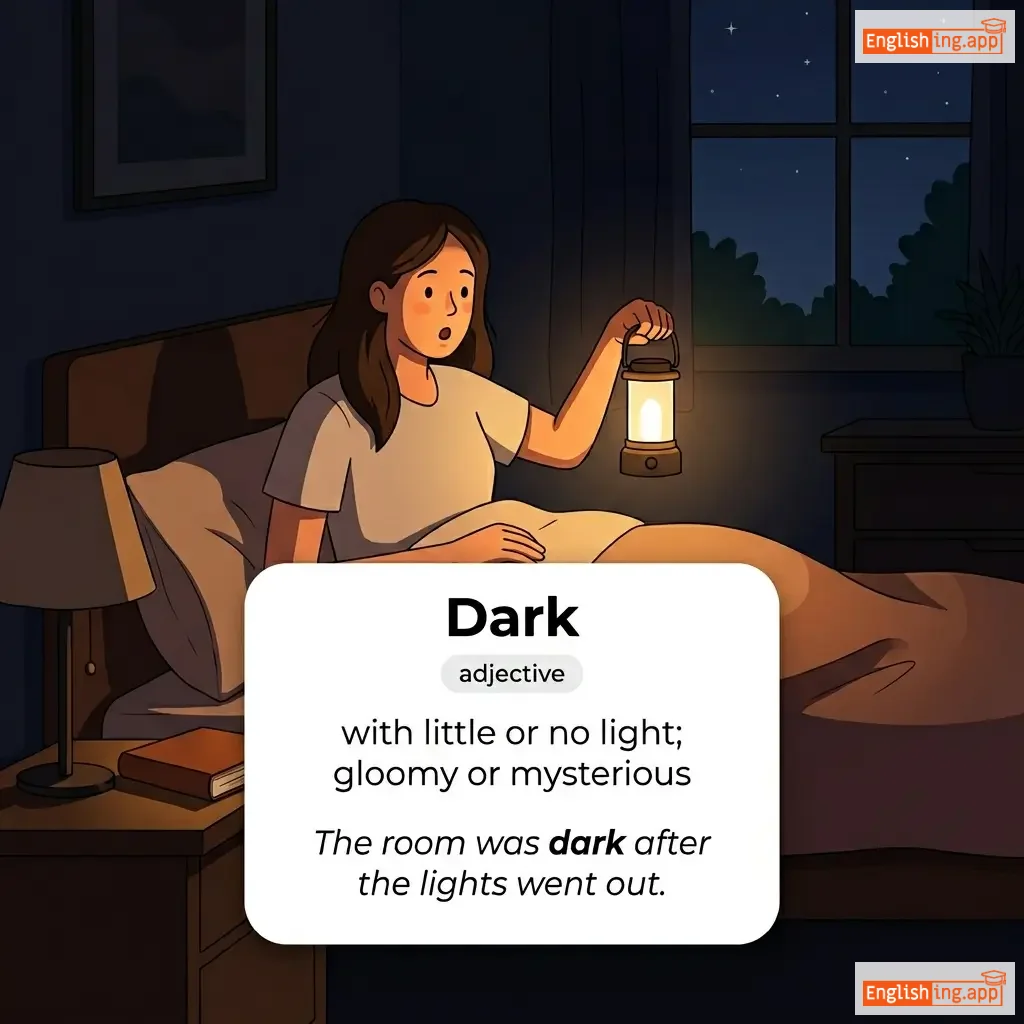
Dark definition card — visual illustration of the meaning
adjective
/dɑːrk/
sombre (somb)

with little or no light; gloomy or mysterious

"The room was dark after the lights went out."

"La pièce était sombre après l'extinction des lumières." (La piece etait somb apre lextinksion de lumier.)
adjective
/dɑːrk bluː/
bleu foncé (bleu foncé)

a deep shade of blue color

"She wore a dark blue dress to the party."

"Elle portait une robe bleu foncé à la fête." (Elle portait une robe bleu foncé à la fête.)
verb
/ˈdɑːrkən/
assombrir (assombrir)

to make or become dark; to reduce brightness or light

"The clouds began to darken the sky before the storm."

"Les nuages ont commencé à assombrir le ciel avant la tempête." (Les nuages ont commence a assombrir le ciel avant la tempete)
adverb
/ˈdɑːrklɪŋ/
dans l'obscurité (dans l'obscurite)

In the dark or growing dark; dimly.

"The forest creatures moved darkling through the night."

"Les créatures de la forêt se déplaçaient dans l'obscurité pendant la nuit." (Les creatures de la foret se deplaçaient dans l'obscurite pendant la nuit.)
noun
/ˈdɑːrk.nəs/
obscurité (obscurite)

The absence of light; the state of being dark.

"The room was filled with darkness after the lights went out."

"La pièce était remplie d'obscurité après que les lumières se soient éteintes." (La piece etait remplie d'obscurite apres que les lumieres se soient eteintes.)
verb, noun
/dɑːrt/
fléchette/courir soudainement (flechette/courir soudainement)

to move suddenly and quickly; a small pointed missile thrown at a target

"The cat darted across the street to avoid the car."

"Le chat a couru vite à travers la rue pour éviter la voiture." (Le chat a couru vite à travers la rue pour eviter la voiture.)
noun
/ˈdɑːrwɪnɪzəm/
darwinisme (darwinisme)

the theory of biological evolution developed by Charles Darwin, emphasizing natural selection

"Darwinism revolutionized the way scientists understood the origin of species."

"Le darwinisme a révolutionné la façon dont les scientifiques comprenaient l'origine des espèces." (Le darwinisme a revolutionne la facon dont les scientifiques comprenaient l'origine des especes.)
verb
/dæʃ/
se déplacer rapidement et soudainement; frapper ou casser quelque chose violemment (se déplacer rapidement et soudainement; frapper ou casser quelque chose violemment)

to move quickly and suddenly; to strike or break something violently

"She dashed across the street to catch the bus."

"Elle a couru rapidement dans la rue pour attraper le bus." (Elle a couru rapidement dans la rue pour attraper le bus.)
adjective
/ˈdæʃ.ɪŋ/
élégant; attrayant; audacieux; (elegant; attrayant; audacieux)

stylish and confident; lively and energetic; attractive and charming

"He looked dashing in his new suit."

"Il avait l'air élégant dans son nouveau costume." (Il avait l'air élégant dans son nouveau costume.)
noun
/ˈdæstərd/
lâche (lache)

a cowardly or dishonorable person

"Only a dastard would betray his closest friend."

"Seul un lâche trahirait son ami le plus proche." (Seul un lache trahirait son ami le plus proche.)
noun
/ˈdeɪ.tə/ or /ˈdæt.ə/
données (done)

Facts, statistics, or information collected for reference or analysis.

"The scientists analyzed the data to find patterns."

"Les scientifiques ont analysé les données pour trouver des modèles." (Les scientifiques ont analysé les données pour trouver des modèles.)
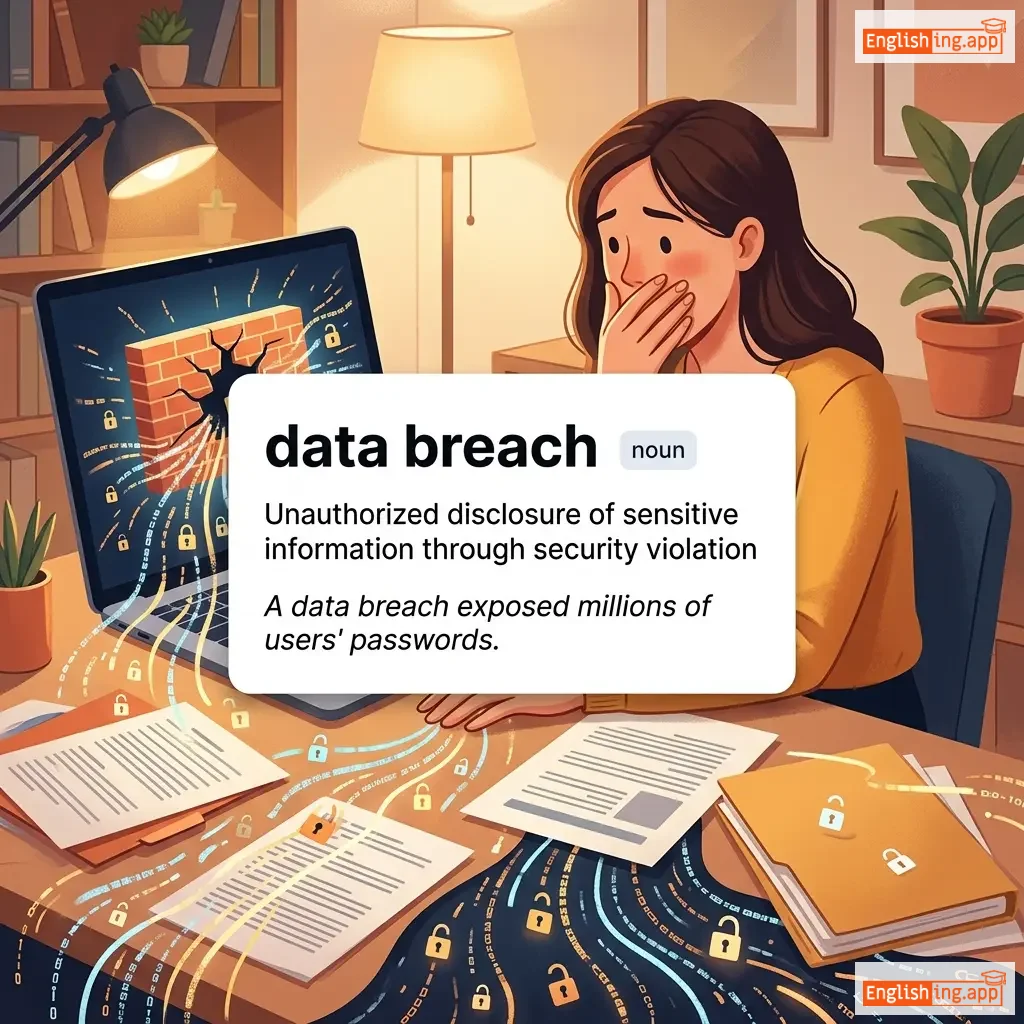
data breach definition card — visual illustration of the meaning
noun
/ˈdeɪ.tə briːtʃ/
violation de données (violation de donnees)

Unauthorized disclosure of sensitive information through security violation

"A data breach exposed millions of users' passwords."

"Une violation de données a exposé les mots de passe de millions d'utilisateurs." (Une violation de donnees a expose les mots de passe de millions d'utilisateurs.)
noun
/ˈdeɪtəbeɪs/
base de données (base de donnees)

a structured collection of data stored and accessed electronically

"The company's customer details are stored in a secure database."

"Les détails des clients de l'entreprise sont stockés dans une base de données sécurisée." (Les details des clients de l'entreprise sont stockes dans une base de donnees securisee.)
noun/verb
/deɪt/
date/rendez-vous (date/rendez-vous)

A particular day of the month or year; also, a social or romantic appointment.

"They decided to meet on the date of her birthday."

"Ils ont décidé de se rencontrer à la date de son anniversaire." (Ils ont décidé de se rencontrer à la date de son anniversaire.)
noun
/deɪts/
dattes (dattes)

sweet brown oval fruits that grow on date palm trees

"Dates are commonly eaten during Ramadan to break the fast."

"Les dattes sont couramment mangées pendant le Ramadan pour rompre le jeûne." (les dattes sont couramment mangees pendant le ramadan pour rompre le jeune)
noun
/ˈdeɪtəm/ or /ˈdætəm/
donnée (donnee)

a single piece of information; a fact used as a basis for reasoning or calculation

"Each datum in the survey was carefully analyzed."

"Chaque donnée dans l'enquête a été soigneusement analysée." (Chaque donnee dans l'enquete a ete soigneusement analysee.)
verb
/dɔːb/
badigeonner (badigeonner)

to spread a thick or sticky substance carelessly on a surface

"The children daubed paint all over the walls."

"Les enfants ont badigeonné la peinture partout sur les murs." (Les enfants ont badigeonné la peinture partout sur les murs.)
noun
/ˈdɔːtər/
fille (fille)

a female child in relation to her parents

"They are proud of their daughter for graduating college."

"Ils sont fiers de leur fille pour avoir obtenu son diplôme universitaire." (Ils sont fiers de leur fille pour avoir obtenu son diplome universitaire.)
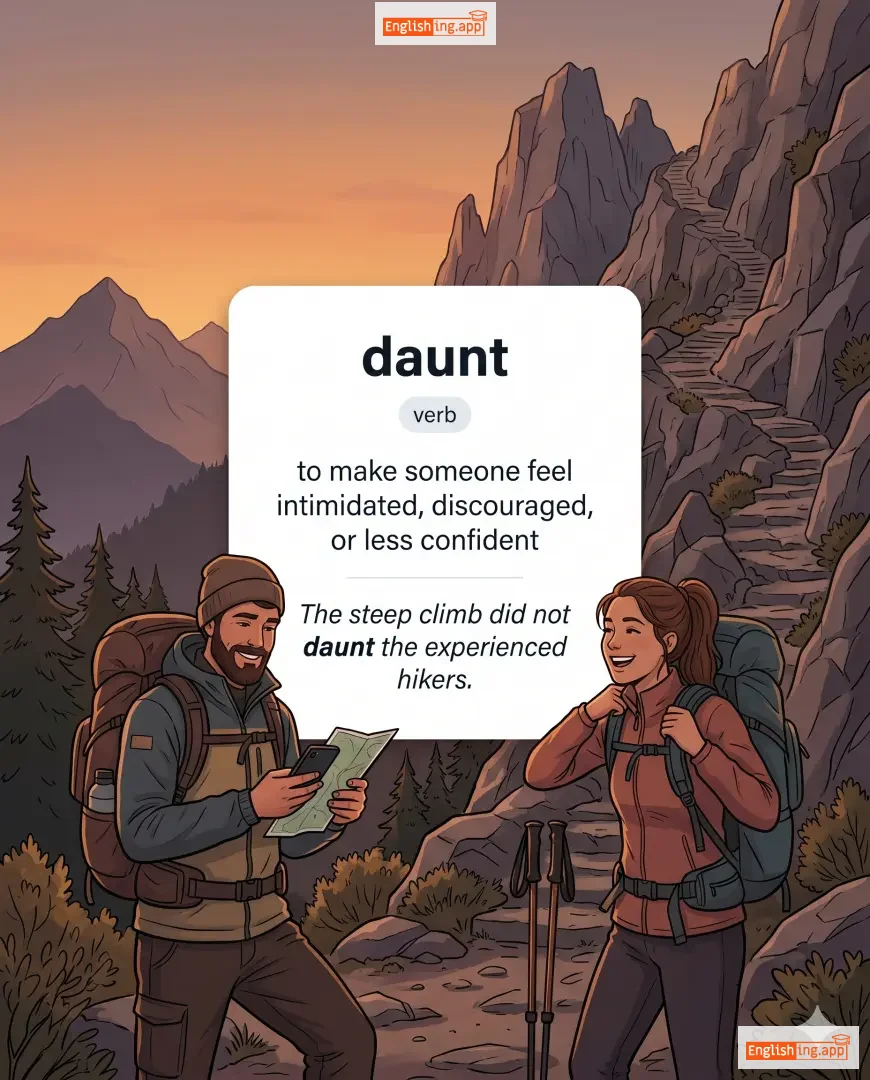
daunt definition card — visual illustration of the meaning
verb
/dɔːnt/
décourager (decourager)

to make someone feel intimidated, discouraged, or less confident

"The steep climb did not daunt the experienced hikers."

"La montée abrupte n'a pas découragé les randonneurs expérimentés." (La montée abrupte n'a pas découragé les randonneurs expérimentés.)
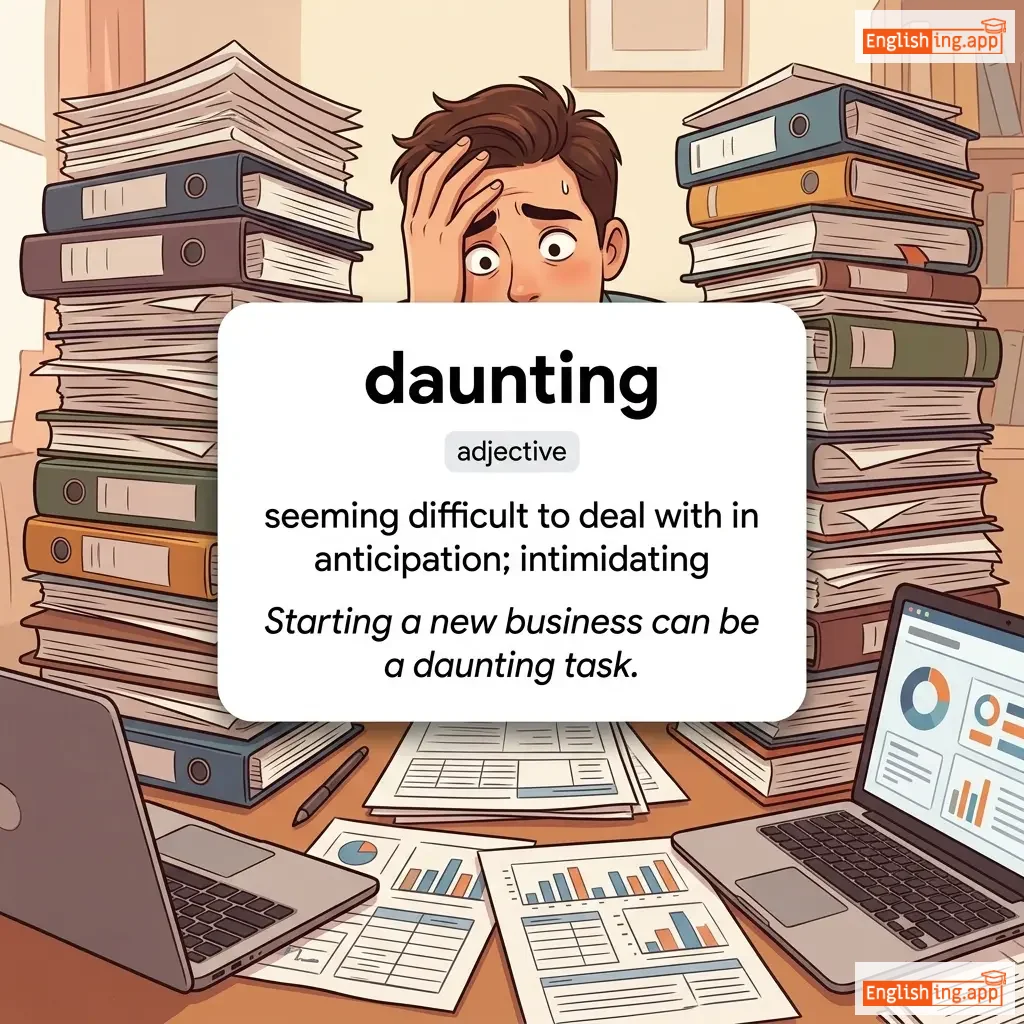
daunting definition card — visual illustration of the meaning
adjective
/ˈdɔːntɪŋ/
intimidant (intimidant)

seeming difficult to deal with in anticipation; intimidating

"Starting a new business can be a daunting task."

"Commencer une nouvelle entreprise peut être une tâche intimidante." (Commencer une nouvelle entreprise peut être une tâche intimidante.)
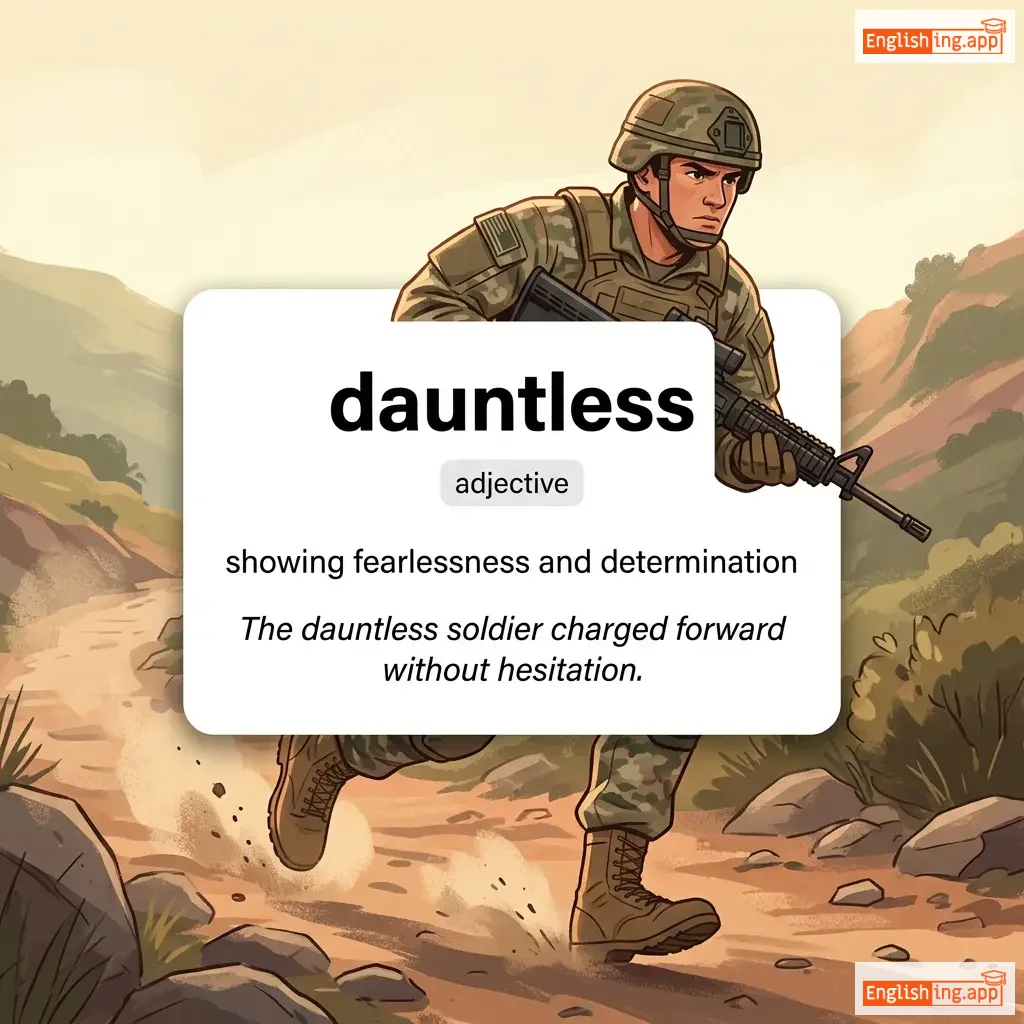
dauntless definition card — visual illustration of the meaning
adjective
/ˈdɔːntləs/
intrépide (intrepide)

showing fearlessness and determination

"The dauntless soldier charged forward without hesitation."

"Le soldat intrépide a avancé sans hésitation." (Le soldat intrepide a avance sans hesitation.)
verb
/ˈdɔːd(ə)l/
traîner (trainer)

to waste time by being slow or idle

"Stop dawdling and finish your homework."

"Arrête de traîner et finis tes devoirs." (Arrête de traîner et finis tes devoirs.)
noun, verb
/dɔːn/
aube (aube)

The first appearance of light in the sky before sunrise; to begin or become apparent.

"Hope began to dawn in her heart after hearing the good news."

"L'espoir a commencé à poindre dans son cœur après avoir entendu les bonnes nouvelles." (L'espoir a commencé à poindre dans son cœur après avoir entendu les bonnes nouvelles.)
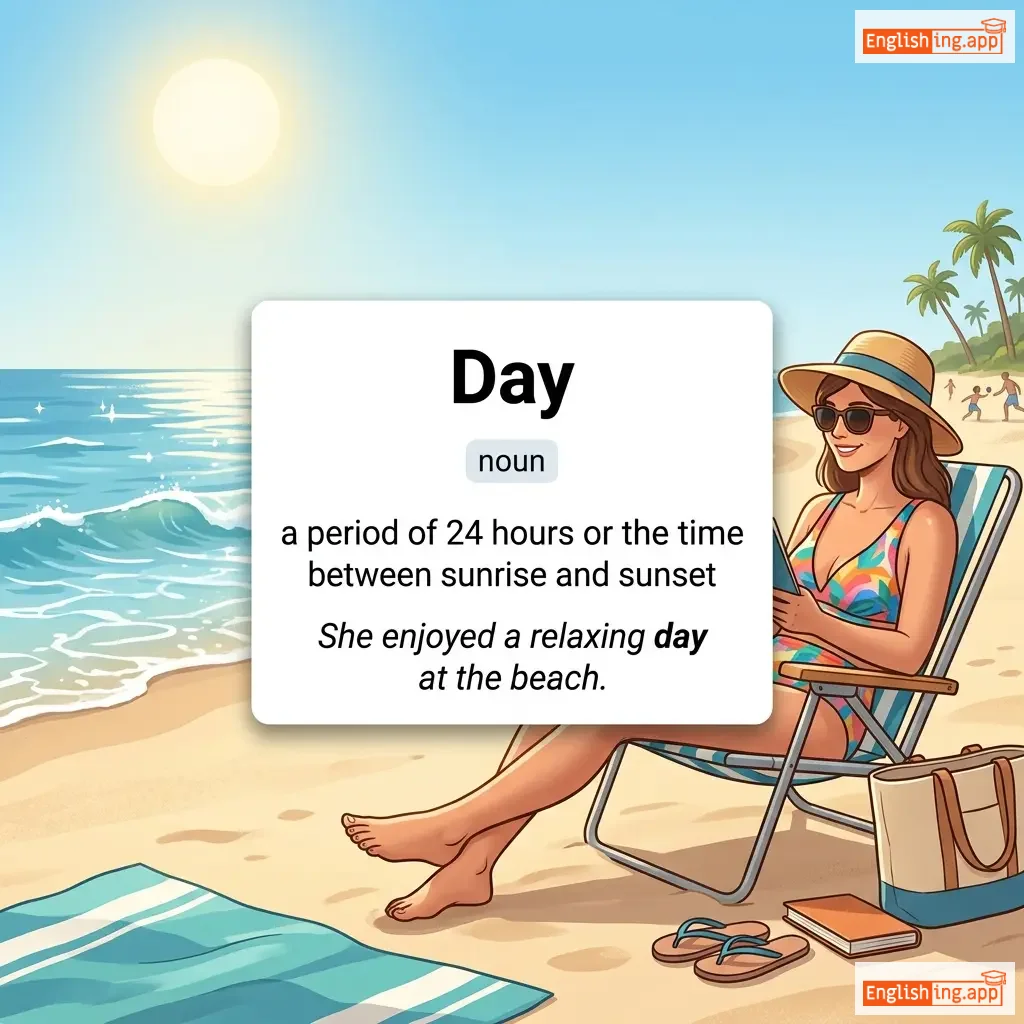
Day definition card — visual illustration of the meaning
noun
/deɪ/
jour (jour)

a period of 24 hours or the time between sunrise and sunset

"She enjoyed a relaxing day at the beach."

"Elle a passé une journée relaxante à la plage." (Elle a passe une journee relaxante a la plage.)
noun
/ˈdeɪ.mæn/
travailleur journalier (travailleur journalier)

a worker employed by the day; a day laborer

"The farmer hired a day-man to help with the harvest."

"Le fermier a embauché un travailleur journalier pour aider à la récolte." (Le fermier a embauché un travailleur journalier pour aider à la récolte.)
noun
/ˈdeɪˌbreɪk/
aurore (aurore)

The time in the morning when daylight first appears; dawn.

"They set out on their journey at daybreak."

"Ils ont commencé leur voyage à l'aube." (Ils ont commence leur voyage a l'aube.)
noun
/deɪz/
jours (jours)

plural of day; refers to multiple 24-hour periods of time

"The project will take at least five days to finish."

"Le projet prendra au moins cinq jours pour finir." (Le projet prendra au moins cinq jours pour finir.)
verb
/deɪz/
étourdir (etourdir)

to stun or confuse someone temporarily with a shock or surprise

"The bright lights dazed the runners as they entered the stadium."

"Les lumières vives ont étourdi les coureurs lorsqu'ils sont entrés dans le stade." (Les lumières vives ont étourdi les coureurs lorsqu'ils sont entrés dans le stade.)
verb
/ˈdæzəl/
éblouir (eblouir)

to impress deeply or blind with brilliance or skill

"The magician's tricks dazzled the audience."

"Les tours du magicien ont ébloui le public." (Les tours du magicien ont ébloui le public.)
adjective
/ˈdæz.lɪŋ/
éblouissant; impressionnant (eblouissant; impressionnant)

extremely bright and impressive; brilliant and stunning

"The dazzling lights of the city amazed the tourists."

"Les lumières éblouissantes de la ville ont émerveillé les touristes." (Les lumieres eblouissantes de la ville ont emerveille les touristes.)
adjective, noun
/dɛd/
mort (mort)

No longer alive; the end of life.

"The old tree is completely dead."

"L'arbre vieux est complètement mort." (L'arbre vieux est complètement mort.)