Vocabularios

Descubra, aprenda y domine el vocabulario en inglés

noun
/dæmˈneɪ.ʃən/
condena eterna; destrucción (condena eterna; destrucción)

condemnation to eternal punishment in hell; something that causes ruin or failure

"The preacher spoke about salvation and damnation in his sermon."

"El predicador habló sobre la salvación y la condena en su sermón." (El predicador habló sobre la salvación y la condena en su sermón.)
adjective
/dæmp/
húmedo (humedo)

slightly wet, often in an unpleasant way

"The room felt cold and damp after the rain."

"La habitación se sentía fría y húmeda después de la lluvia." (La habitacion se sentia fria y humeda despues de la lluvia.)
verb
/ˈdæmpən/
humedecer, atenuar (humedecer, atenuar)

to make something slightly wet; to make something less strong, active, or intense

"The rain dampened the excitement of the outdoor concert."

"La lluvia dampenó la emoción del concierto al aire libre." (La lluvia dampenó la emoción del concierto al aire libre.)
noun
/ˈdæmpər/
algo que reduce o disminuye la fuerza, efecto o emoción (algo que reduce o disminuye la fuerza, efecto o emocion)

something that reduces or lessens the force, effect, or excitement

"The cancellation of the trip put a damper on their enthusiasm."

"La cancelación del viaje redujo su entusiasmo." (La cancelación del viaje redujo su entusiasmo.)
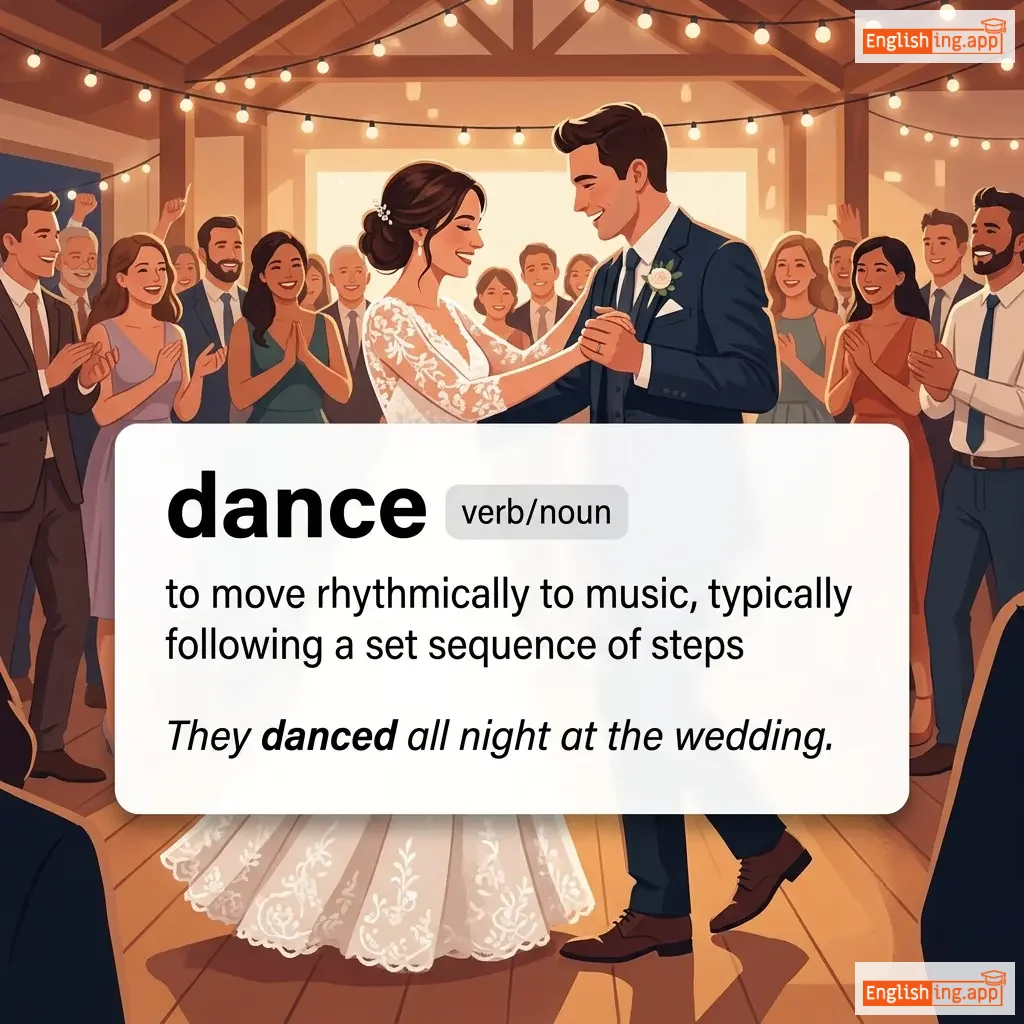
dance definition card — visual illustration of the meaning
verb/noun
/dæns/
felicidad (felicidad)

to move rhythmically to music, typically following a set sequence of steps

"They danced all night at the wedding."

"No pudo ocultar su felicidad cuando recibió el premio." (No pudo ocultar su felicidad cuando recibio el premio.)
noun
/ˈdænsər/
bailarín (bailarin)

a person who dances or performs dancing professionally or as a hobby

"The dancer moved gracefully across the stage."

"El bailarín se movió graciosamente por el escenario." (El bailarin se movio graciosamente por el escenario.)
noun
/ˈdænsɪŋ/
baile (dansing)

the activity of moving the body rhythmically to music

"They spent the evening dancing at the party."

"Pasaron la noche bailando en la fiesta." (Ellos pasaron la noche bailando en la fiesta.)
noun
/ˈdæn.drʌf/
caspa (caspa)

small white or grey flakes of dead skin that form on the scalp and fall from the hair

"He used a special shampoo to treat his persistent dandruff problem."

"Usó un champú especial para tratar su persistente problema de caspa." (Uso un champu especial para tratar su persistente problema de caspa.)
noun
/ˈdændi/
hombre que da demasiada importancia a su apariencia y ropa (hombre que da demasiada importancia a su apariencia y ropa)

a man who gives too much attention to his appearance and clothes

"The young dandy spent hours grooming himself before the party."

"El joven dandy pasó horas arreglándose antes de la fiesta." (El joven dandy pasó horas arreglándose antes de la fiesta.)
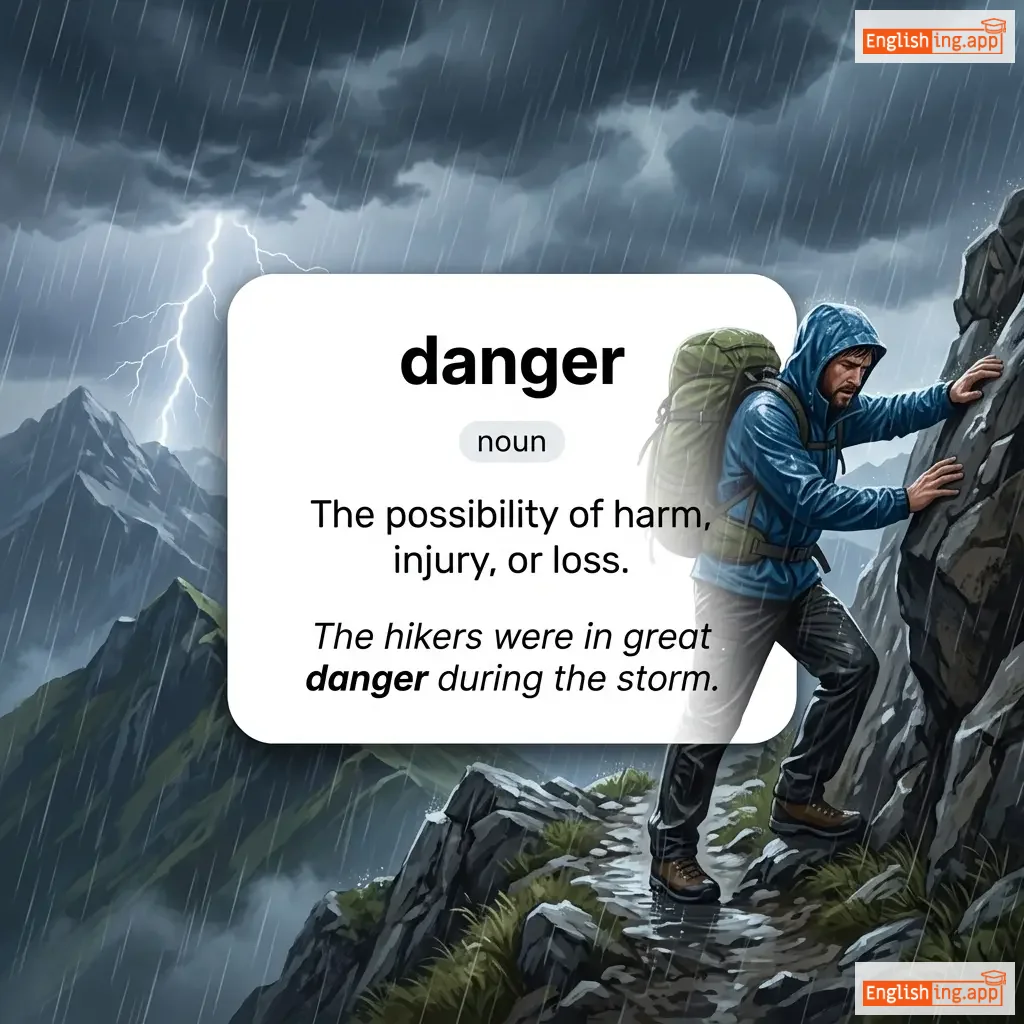
danger definition card — visual illustration of the meaning
noun
/ˈdeɪn.dʒər/
peligro (peligro)

The possibility of harm, injury, or loss.

"The hikers were in great danger during the storm."

"Los excursionistas estaban en gran peligro durante la tormenta." (Los excursionistas estaban en gran peligro durante la tormenta.)
adjective
/ˈdeɪndʒərəs/
peligroso (peligroso)

likely to cause harm or injury; unsafe

"Driving fast on icy roads is dangerous."

"Conducir rápido por carreteras heladas es peligroso." (Conducir rápido por carreteras heladas es peligroso.)
adverb
/ˈdeɪndʒərəsli/
peligrosamente (peligrosamente)

in a way that could cause harm or injury; riskily

"He was driving dangerously fast on the highway."

"Él estaba conduciendo peligrosamente rápido en la autopista." (El estaba conduciendo peligrosamente rapido en la autopista)
verb
/ˈdæŋɡəl/
colgar (colgar)

to hang loosely or swing freely

"The keys dangled from his belt."

"Las llaves colgaban de su cinturón." (Las llaves colgaban de su cinturón.)
adjective
/dæŋk/
húmedo y frío (humedo y frio)

unpleasantly damp and cold

"The basement was dark and dank, filled with a musty smell."

"El sótano estaba oscuro y húmedo, con un olor desagradable." (El sotano estaba oscuro y humedo, con un olor desagradable.)
adjective
/ˈdæpər/
elegante y bien vestido (elegante y bien vestido)

Neat, stylish, and well-dressed in appearance.

"He looked very dapper in his new suit."

"Él se veía muy elegante con su nuevo traje." (Él se veía muy elegante con su nuevo traje.)
adjective
/ˈdæpəld/
moteado (moteado)

Marked with spots or patches of light and shade or different colors.

"The forest floor was dappled with sunlight."

"El suelo del bosque estaba moteado de luz solar." (El suelo del bosque estaba moteado de luz solar.)
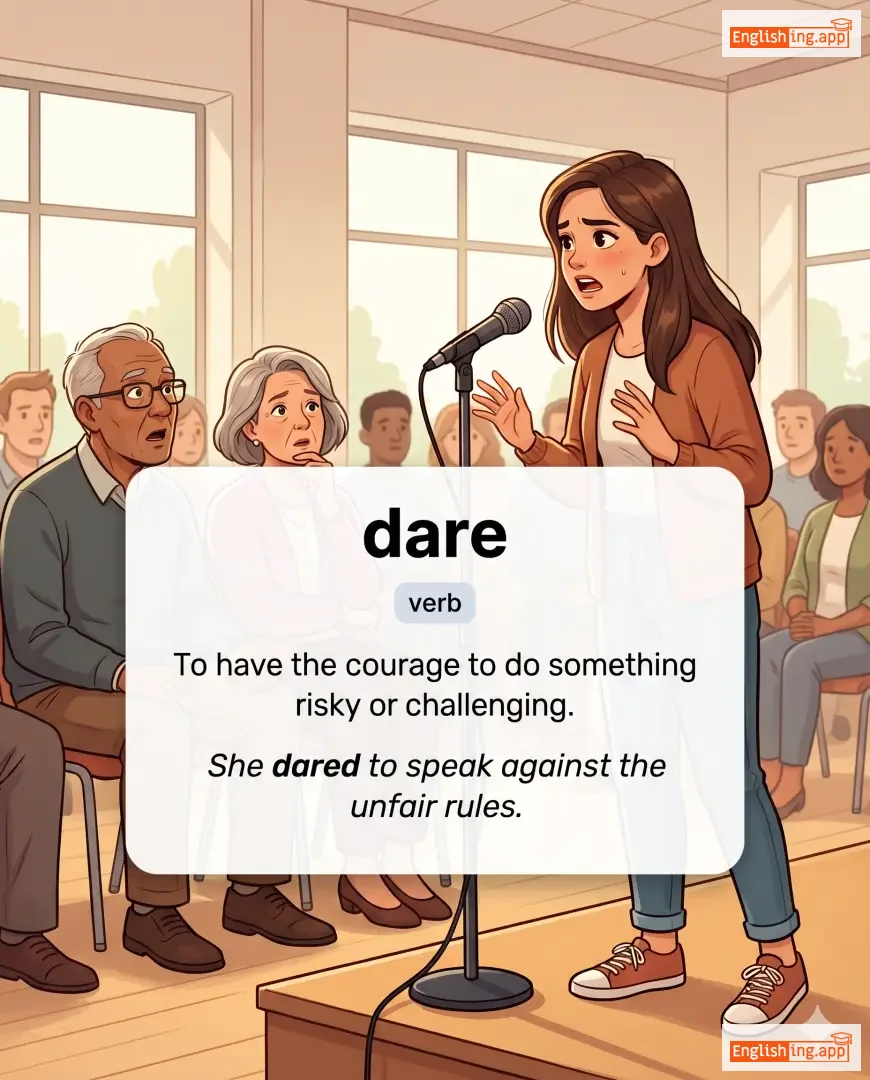
dare definition card — visual illustration of the meaning
verb
/der/
atreverse (atreverse)

To have the courage to do something risky or challenging.

"She dared to speak against the unfair rules."

"Ella se atrevió a hablar contra las reglas injustas." (Ella se atrevió a hablar contra las reglas injustas.)
noun
/ˈderˌdevəl/
persona temeraria (persona temeraria)

A person who enjoys doing dangerous or risky things.

"The stunt was performed by a famous daredevil."

"El truco fue realizado por un famoso temerario." (El truco fue realizado por un famoso temerario.)
adjective
/ˈderɪŋ/
audaz (audaz)

Willing to take risks; bold and adventurous.

"Her daring plan surprised everyone."

"Su audaz plan sorprendió a todos." (Su audaz plan sorprendió a todos.)
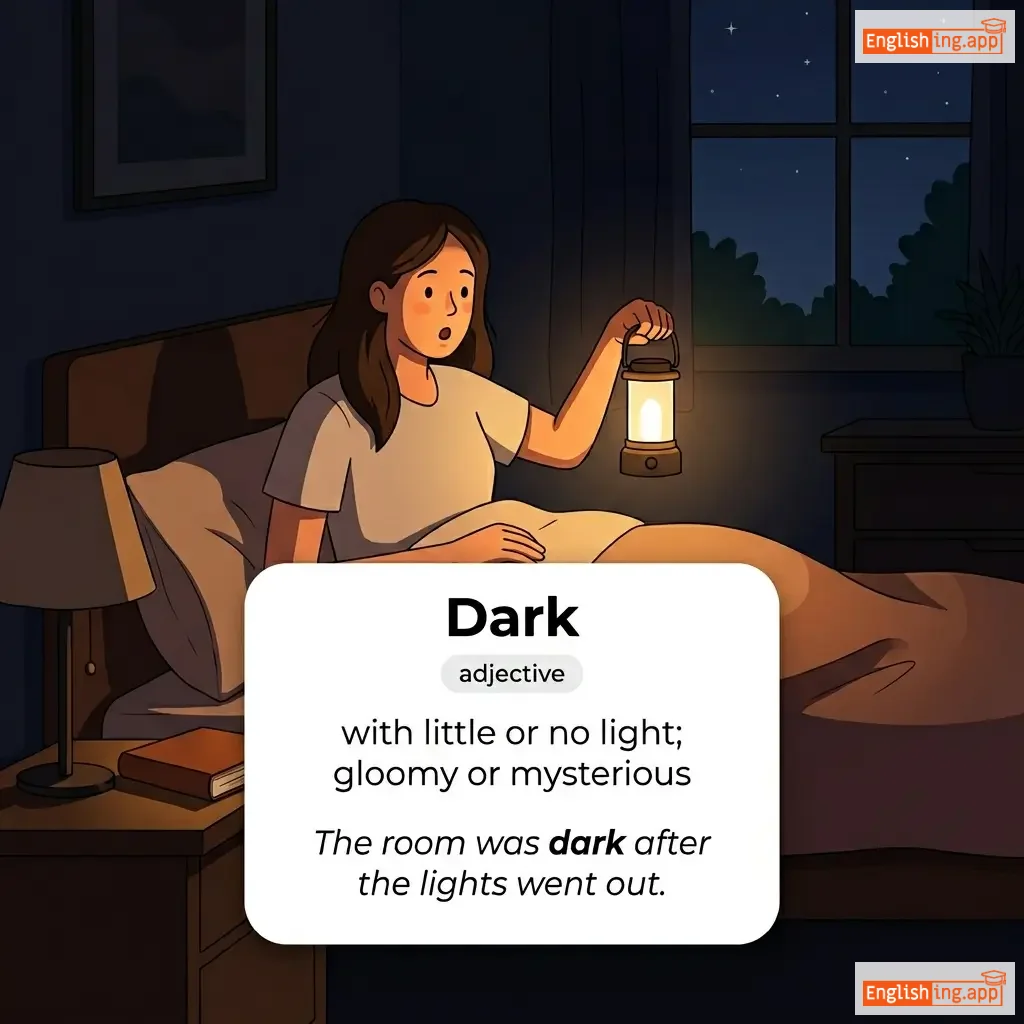
Dark definition card — visual illustration of the meaning
adjective
/dɑːrk/
oscuro (oskuro)

with little or no light; gloomy or mysterious

"The room was dark after the lights went out."

"La habitación estaba oscura después de que se apagaron las luces." (La abitasion estaba oskura despues de ke se apagaron las luces.)
adjective
/dɑːrk bluː/
azul oscuro (azul oscuro)

a deep shade of blue color

"She wore a dark blue dress to the party."

"Ella llevaba un vestido de color azul oscuro a la fiesta." (Ella llevaba un vestido de color azul oscuro a la fiesta.)
verb
/ˈdɑːrkən/
oscurecer (oscurecer)

to make or become dark; to reduce brightness or light

"The clouds began to darken the sky before the storm."

"Las nubes empezaron a oscurecer el cielo antes de la tormenta." (Las nubes empezaron a oscurecer el cielo antes de la tormenta)
adverb
/ˈdɑːrklɪŋ/
en la oscuridad (en la oscuridad)

In the dark or growing dark; dimly.

"The forest creatures moved darkling through the night."

"Las criaturas del bosque se movían en la oscuridad durante la noche." (Las criaturas del bosque se movían en la oscuridad durante la noche.)
noun
/ˈdɑːrk.nəs/
oscuridad (oskuridad)

The absence of light; the state of being dark.

"The room was filled with darkness after the lights went out."

"La habitación se llenó de oscuridad cuando se apagaron las luces." (La habitacion se lleno de oscuridad cuando se apagaron las luces.)
verb, noun
/dɑːrt/
dardo/correr rápidamente (dardo/correr rapidamente)

to move suddenly and quickly; a small pointed missile thrown at a target

"The cat darted across the street to avoid the car."

"El gato dártó cruzando la calle para evitar el coche." (El gato dartó cruzando la calle para evitar el coche.)
noun
/ˈdɑːrwɪnɪzəm/
darwinismo (darwinismo)

the theory of biological evolution developed by Charles Darwin, emphasizing natural selection

"Darwinism revolutionized the way scientists understood the origin of species."

"El darwinismo revolucionó la forma en que los científicos entendían el origen de las especies." (El darwinismo revoluciono la forma en que los cientificos entendian el origen de las especies.)
verb
/dæʃ/
moverse rápidamente y de repente; romper algo violentamente (moverse rápidamente y de repente; romper algo violentamente)

to move quickly and suddenly; to strike or break something violently

"She dashed across the street to catch the bus."

"Ella corrió rápidamente por la calle para coger el autobús." (Ella corrió rápidamente por la calle para coger el autobús.)
adjective
/ˈdæʃ.ɪŋ/
elegante; atractivo; audaz; (elegante; atractivo; audaz)

stylish and confident; lively and energetic; attractive and charming

"He looked dashing in his new suit."

"Él se veía elegante con su traje nuevo." (El se veia elegante con su traje nuevo.)
noun
/ˈdæstərd/
cobarde (cobarde)

a cowardly or dishonorable person

"Only a dastard would betray his closest friend."

"Solo un cobarde traicionaría a su amigo más cercano." (Solo un cobarde traicionaría a su amigo más cercano.)
noun
/ˈdeɪ.tə/ or /ˈdæt.ə/
datos (datos)

Facts, statistics, or information collected for reference or analysis.

"The scientists analyzed the data to find patterns."

"Los científicos analizaron los datos para encontrar patrones." (Los cientificos analizaron los datos para encontrar patrones.)
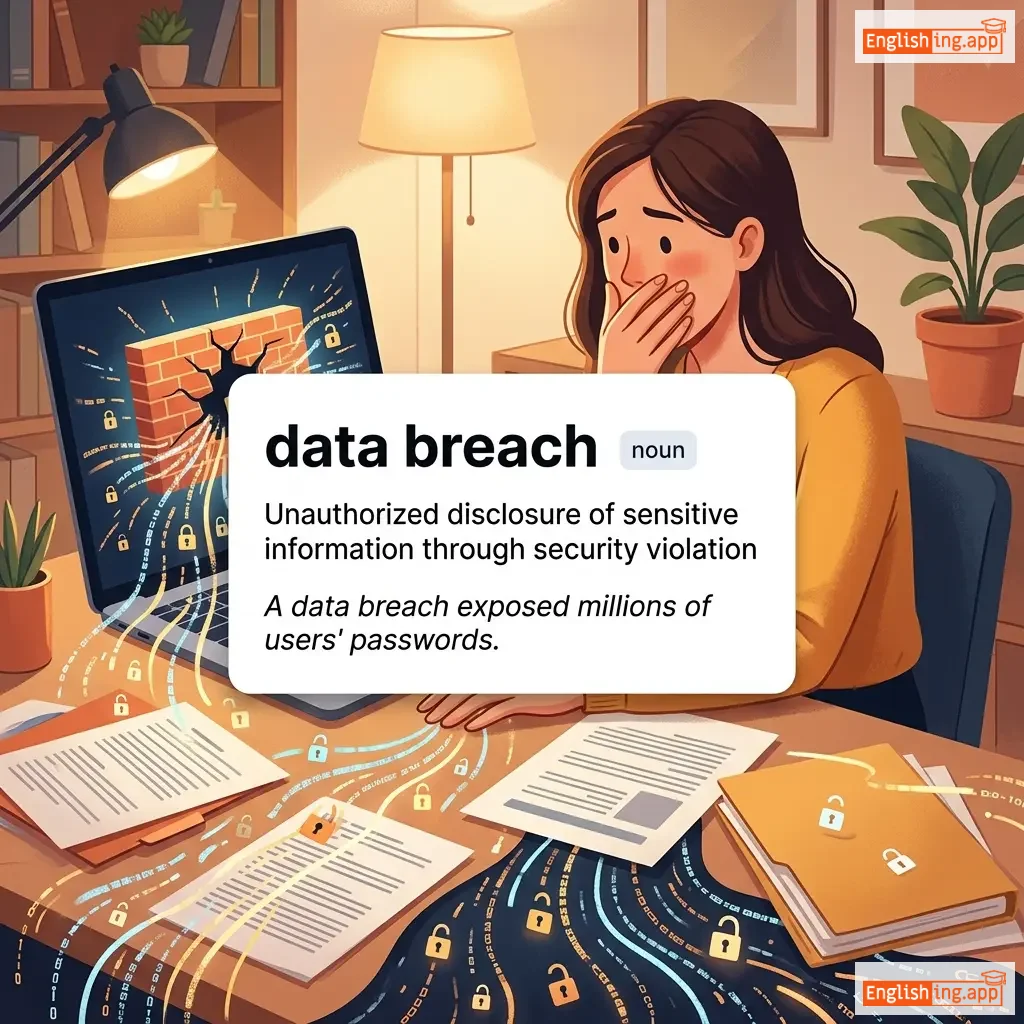
data breach definition card — visual illustration of the meaning
noun
/ˈdeɪ.tə briːtʃ/
violación de datos (violacion de datos)

Unauthorized disclosure of sensitive information through security violation

"A data breach exposed millions of users' passwords."

"Una violación de datos expuso las contraseñas de millones de usuarios." (Una violacion de datos expuso las contraseñas de millones de usuarios.)
noun
/ˈdeɪtəbeɪs/
base de datos (base de datos)

a structured collection of data stored and accessed electronically

"The company's customer details are stored in a secure database."

"Los detalles de los clientes de la empresa se almacenan en una base de datos segura." (Los detalles de los clientes de la empresa se almacenan en una base de datos segura.)
noun/verb
/deɪt/
fecha/cita (fecha/cita)

A particular day of the month or year; also, a social or romantic appointment.

"They decided to meet on the date of her birthday."

"Ellos decidieron encontrarse en la fecha de su cumpleaños." (Ellos decidieron encontrarse en la fecha de su cumpleaños.)
noun
/deɪts/
dátiles (datiles)

sweet brown oval fruits that grow on date palm trees

"Dates are commonly eaten during Ramadan to break the fast."

"Los dátiles se comen comúnmente durante el Ramadán para romper el ayuno." (los datiles se comen comunmente durante el ramadan para romper el ayuno)
noun
/ˈdeɪtəm/ or /ˈdætəm/
dato (dato)

a single piece of information; a fact used as a basis for reasoning or calculation

"Each datum in the survey was carefully analyzed."

"Cada dato en la encuesta fue cuidadosamente analizado." (Cada dato en la encuesta fue cuidadosamente analizado.)
verb
/dɔːb/
untar (untar)

to spread a thick or sticky substance carelessly on a surface

"The children daubed paint all over the walls."

"Los niños untaron pintura por todas las paredes." (Los niños untaron pintura por todas las paredes.)
noun
/ˈdɔːtər/
hija (hija)

a female child in relation to her parents

"They are proud of their daughter for graduating college."

"Están orgullosos de su hija por graduarse de la universidad." (Estan orgullosos de su hija por graduarse de la universidad.)
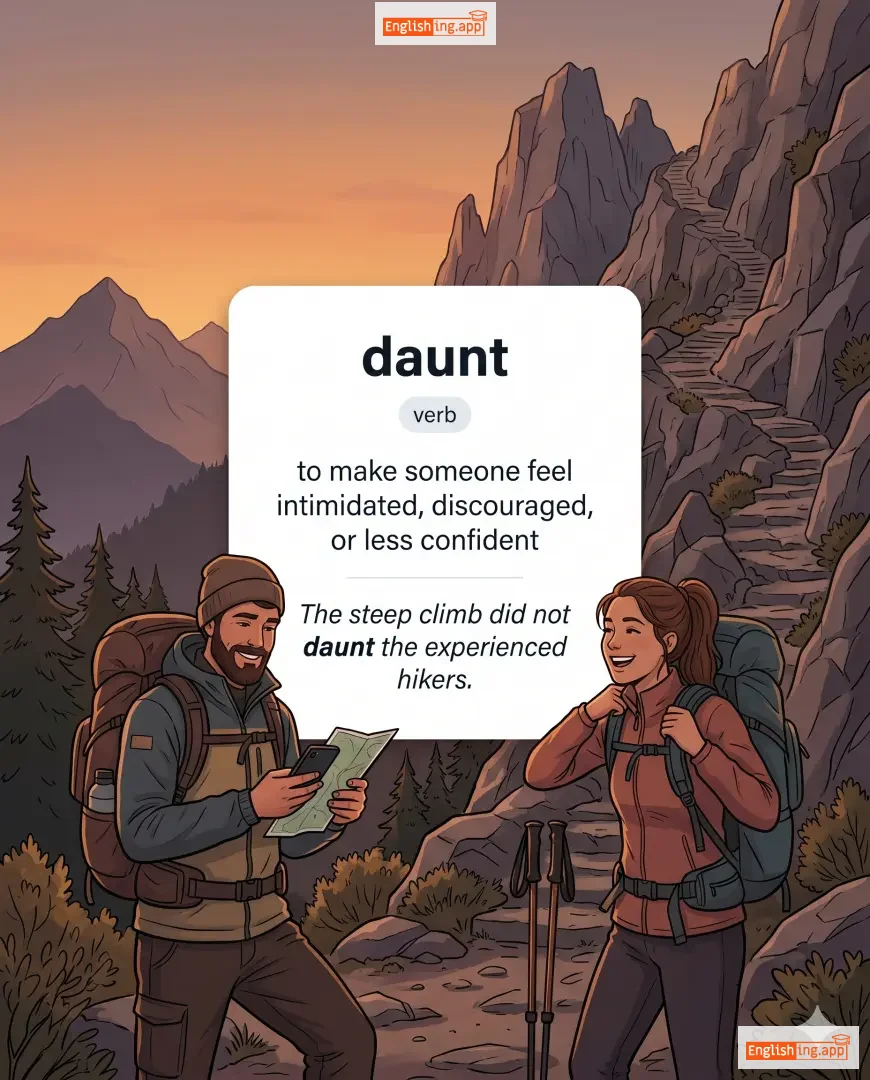
daunt definition card — visual illustration of the meaning
verb
/dɔːnt/
desanimar (desanimar)

to make someone feel intimidated, discouraged, or less confident

"The steep climb did not daunt the experienced hikers."

"La empinada subida no desanimó a los excursionistas experimentados." (La empinada subida no desanimó a los excursionistas experimentados.)
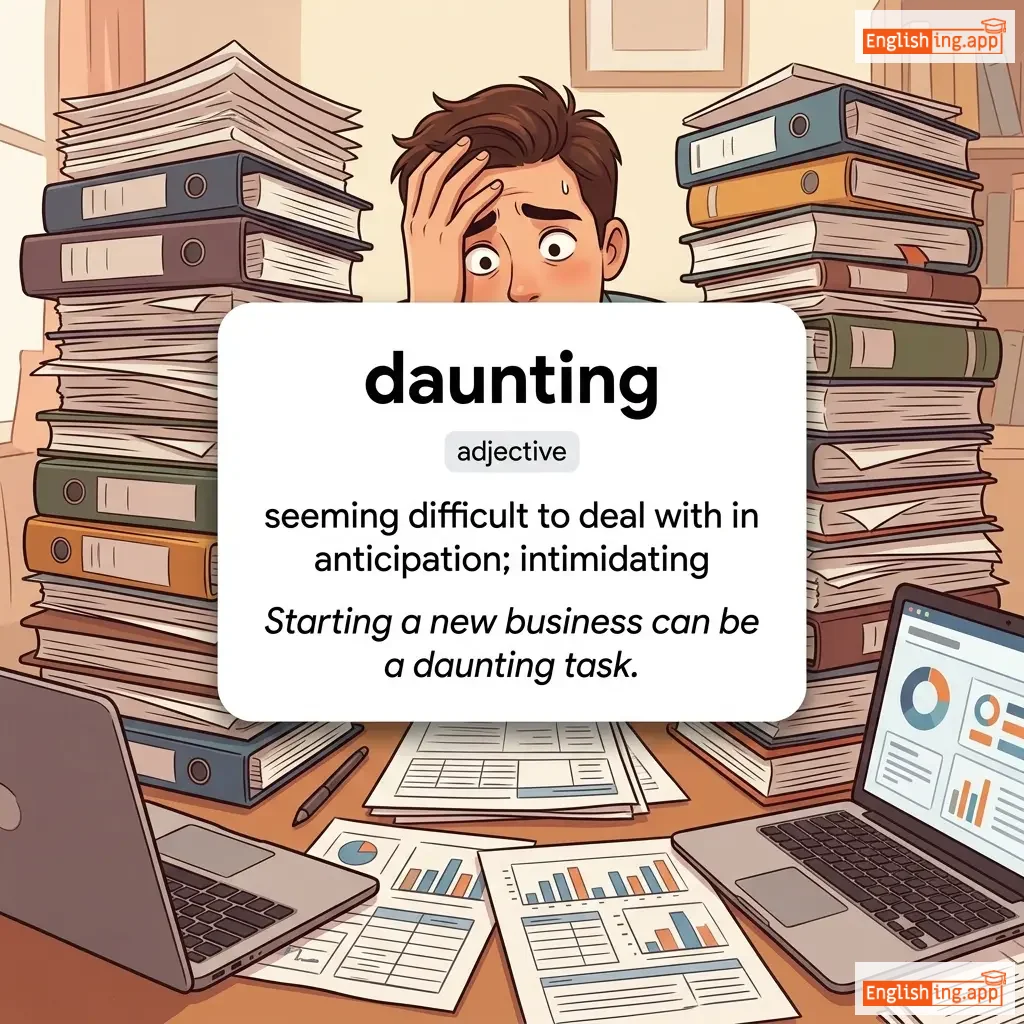
daunting definition card — visual illustration of the meaning
adjective
/ˈdɔːntɪŋ/
desgarrador (desgarrador)

seeming difficult to deal with in anticipation; intimidating

"Starting a new business can be a daunting task."

"Comenzar un nuevo negocio puede ser una tarea desgarradora." (Comenzar un nuevo negocio puede ser una tarea desgarradora.)
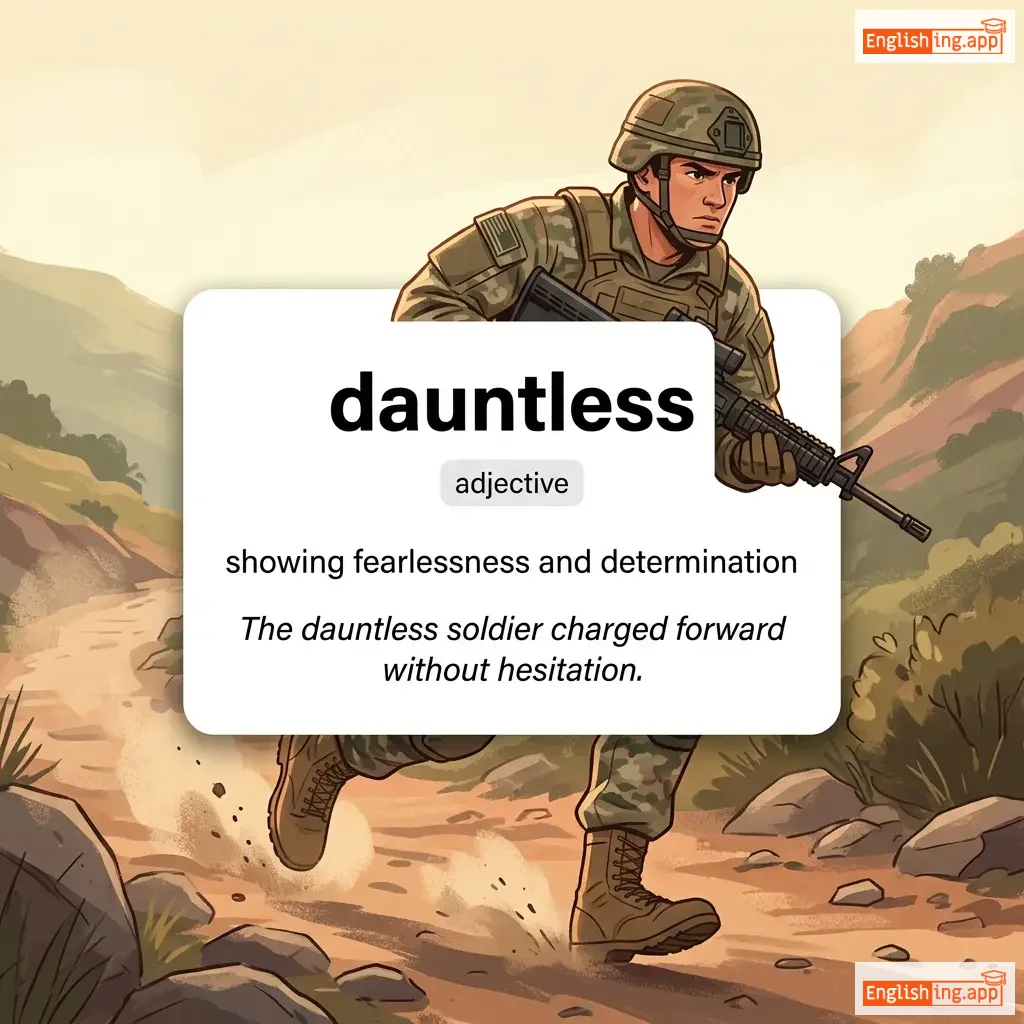
dauntless definition card — visual illustration of the meaning
adjective
/ˈdɔːntləs/
intrépido (intrepido)

showing fearlessness and determination

"The dauntless soldier charged forward without hesitation."

"El soldado intrépido avanzó sin vacilar." (El soldado intrepido avanzo sin vacilar.)
verb
/ˈdɔːd(ə)l/
perder el tiempo (perder el tiempo)

to waste time by being slow or idle

"Stop dawdling and finish your homework."

"Deja de malgastar el tiempo y termina tu tarea." (Deja de malgastar el tiempo y termina tu tarea.)
noun, verb
/dɔːn/
amanecer (amanecer)

The first appearance of light in the sky before sunrise; to begin or become apparent.

"Hope began to dawn in her heart after hearing the good news."

"La esperanza comenzó a amanecer en su corazón después de escuchar las buenas noticias." (La esperanza comenzó a amanecer en su corazón después de escuchar las buenas noticias.)
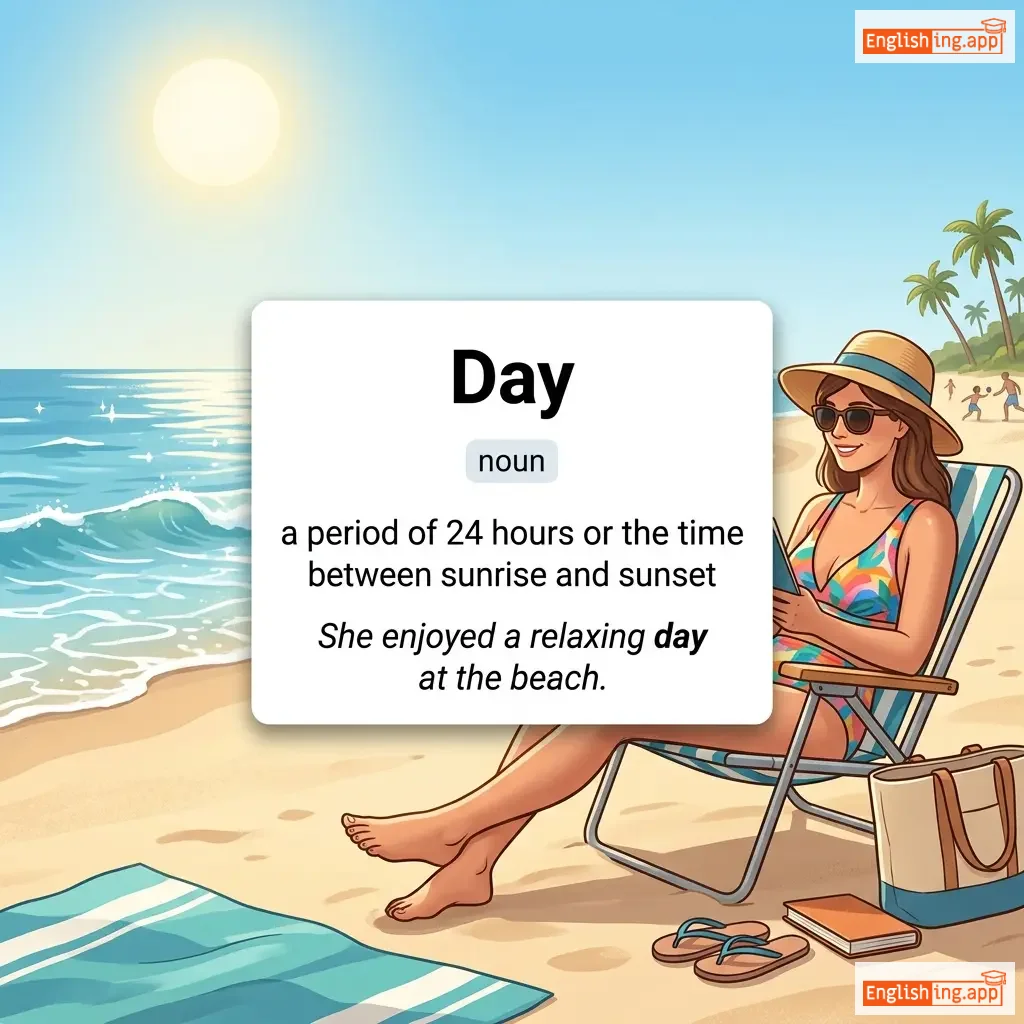
Day definition card — visual illustration of the meaning
noun
/deɪ/
día (dia)

a period of 24 hours or the time between sunrise and sunset

"She enjoyed a relaxing day at the beach."

"Ella disfrutó de un día relajante en la playa." (Ella disfruto de un dia relajante en la playa.)
noun
/ˈdeɪ.mæn/
trabajador diario (trabajador diario)

a worker employed by the day; a day laborer

"The farmer hired a day-man to help with the harvest."

"El agricultor contrató a un trabajador diario para ayudar con la cosecha." (El agricultor contrató a un trabajador diario para ayudar con la cosecha.)
noun
/ˈdeɪˌbreɪk/
alba (alba)

The time in the morning when daylight first appears; dawn.

"They set out on their journey at daybreak."

"Salieron en su viaje al amanecer." (Salieron en su viaje al amanecer.)
noun
/deɪz/
días (dias)

plural of day; refers to multiple 24-hour periods of time

"The project will take at least five days to finish."

"El proyecto tomará al menos cinco días para terminar." (El proyecto tomara al menos cinco dias para terminar.)
verb
/deɪz/
aturdir (aturdir)

to stun or confuse someone temporarily with a shock or surprise

"The bright lights dazed the runners as they entered the stadium."

"Las luces brillantes aturdirán a los corredores cuando entren en el estadio." (Las luces brillantes aturdirán a los corredores cuando entren en el estadio.)
verb
/ˈdæzəl/
deslumbrar (deslumbrar)

to impress deeply or blind with brilliance or skill

"The magician's tricks dazzled the audience."

"Los trucos del mago deslumbraron a la audiencia." (Los trucos del mago deslumbraron a la audiencia.)
adjective
/ˈdæz.lɪŋ/
deslumbrante; impresionante (deslumbrante; impresionante)

extremely bright and impressive; brilliant and stunning

"The dazzling lights of the city amazed the tourists."

"Las deslumbrantes luces de la ciudad sorprendieron a los turistas." (Las deslumbrantes luces de la ciudad sorprendieron a los turistas.)
adjective, noun
/dɛd/
muerto (muerto)

No longer alive; the end of life.

"The old tree is completely dead."

"El viejo árbol está completamente muerto." (El viejo árbol está completamente muerto.)