Vocabularios

Descubra, aprenda y domine el vocabulario en inglés

dedication definition card — visual illustration of the meaning
noun
/ˌdɛdɪˈkeɪʃən/
dedicación (dedicacion)

the quality of being committed to a task or purpose

"Her dedication to her studies earned her top grades."

"Su dedicación a sus estudios le permitió obtener las mejores calificaciones." (Su dedicacion a sus estudios le permitio obtener las mejores calificaciones.)
verb
/dɪˈdjuːs/
deducir (deducir)

to reach a conclusion by reasoning or inference

"From the evidence, the detective deduced that the suspect was lying."

"A partir de la evidencia, el detective dedujo que el sospechoso estaba mintiendo." (A partir de la evidencia, el detective dedujo que el sospechoso estaba mintiendo.)
adjective
/dɪˈdjuːsəbl/
deducible (deducible)

able to be deduced; possible to be inferred

"The solution is deducible from the data provided."

"La solución es deducible de los datos proporcionados." (La solucion es deducible de los datos proporcionados.)
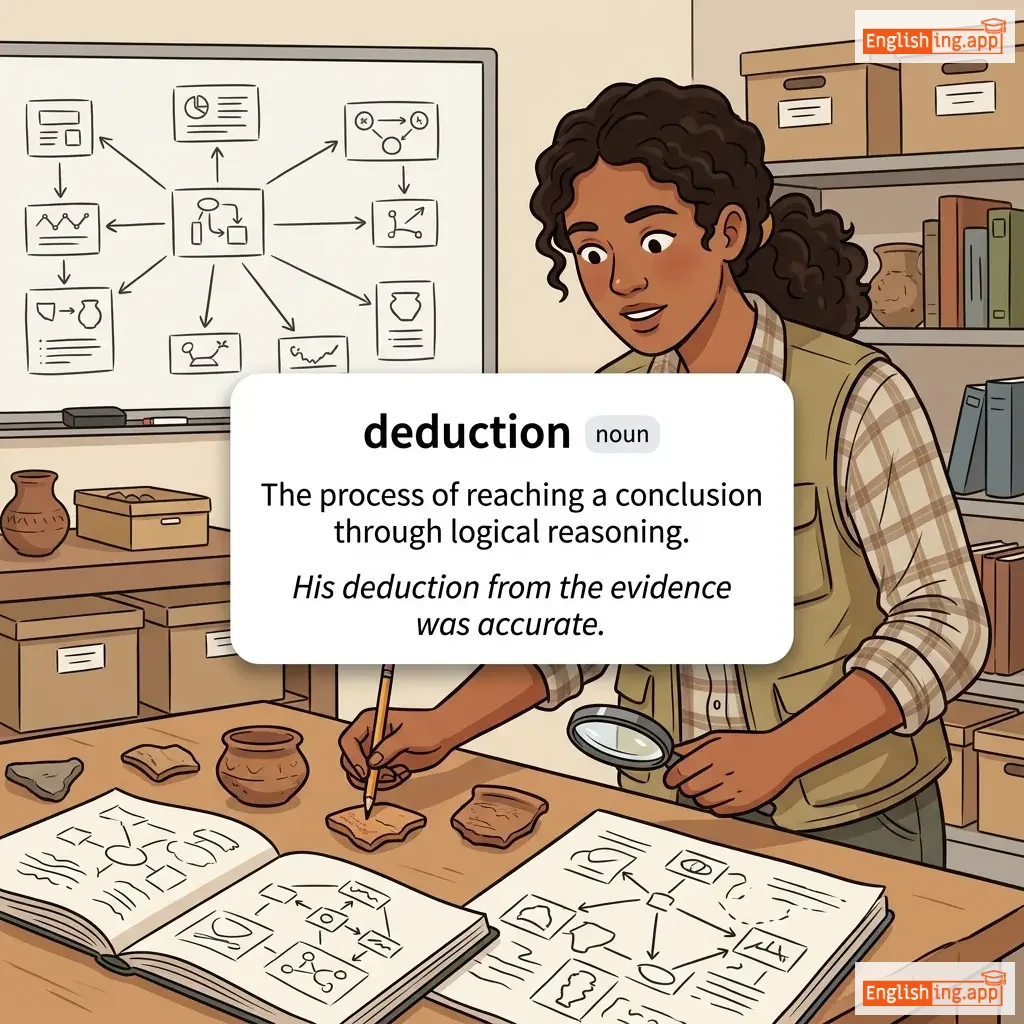
deduction definition card — visual illustration of the meaning
noun
/dɪˈdʌk.ʃən/
deducción (dedukshon)

The process of reaching a conclusion through logical reasoning.

"His deduction from the evidence was accurate."

"Su deducción de la evidencia fue precisa." (Su dedukshon de la evidencia fue precisa.)
noun
/diːd/
hecho (hecho)

an action, especially a good or evil one

"His deed of kindness will never be forgotten."

"Su hecho de bondad nunca será olvidado." (Su hecho de bondad nunca sera olvidado.)
verb
/diːm/
considerar, juzgar (considerar, juzgar)

to regard or consider in a specified way

"The project was deemed a success by the board."

"El proyecto fue considerado un éxito por la junta." (El proyecto fue considerado un éxito por la junta.)
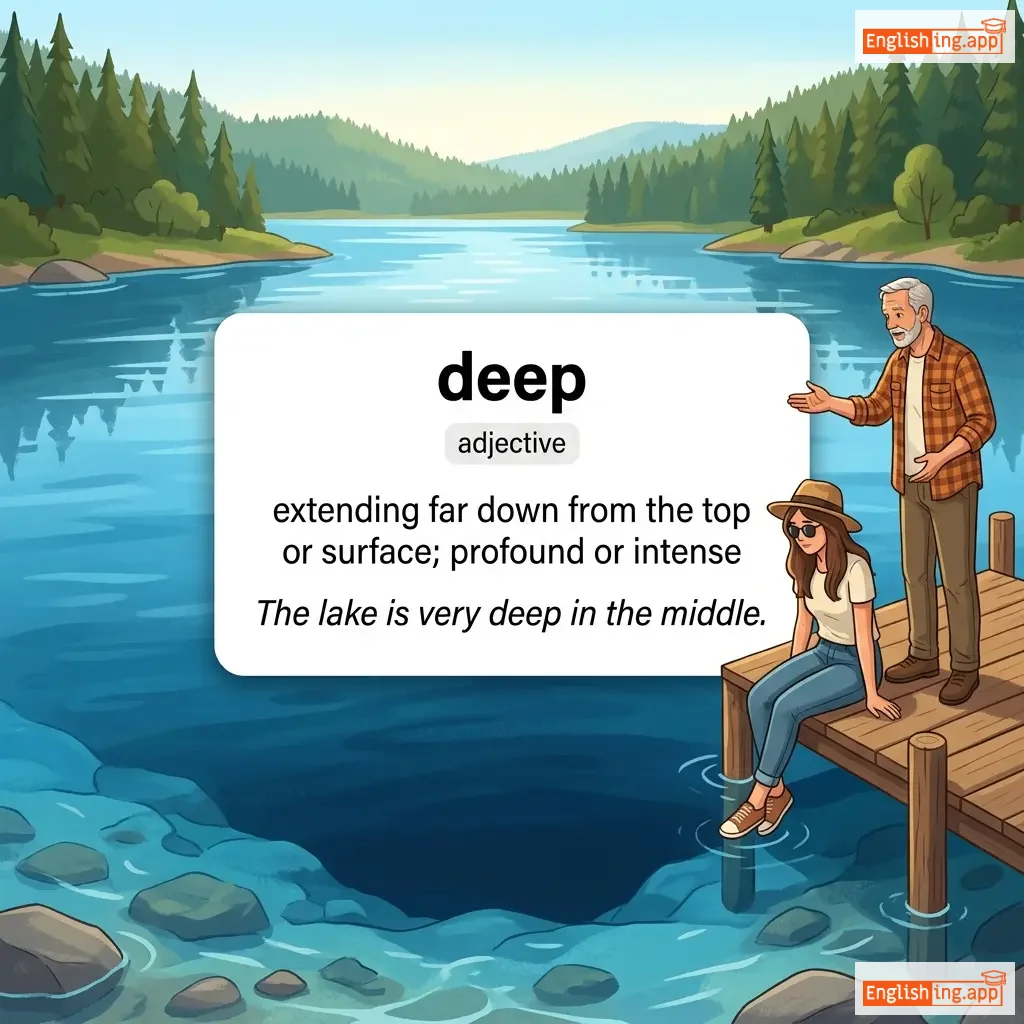
deep definition card — visual illustration of the meaning
adjective
/diːp/
felicidad (felicidad)

extending far down from the top or surface; profound or intense

"The lake is very deep in the middle."

"Ella no pudo ocultar su felicidad cuando recibió el premio." (Ella no pudo ocultar su felicidad cuando recibió el premio.)
noun
/diːp ˈkʌlər/
color profundo (color profundo)

a rich, intense, or dark shade of any color

"The artist used deep colours to create a dramatic effect."

"El artista usó colores profundos para crear un efecto dramático." (El artista usó colores profundos para crear un efecto dramático.)
deep sea definition card — visual illustration of the meaning
noun
/diːp siː/
mar profundo (mar profundo)

The deep parts of the sea or ocean, typically beyond the continental shelf.

"Many deep-sea creatures produce bioluminescence for survival."

"Muchas criaturas del mar profundo producen bioluminiscencia para sobrevivir." (Muchas criaturas del mar profundo producen bioluminiscencia para sobrevivir.)
adverb
/ˈdiːpli/
profundamente (profundamente)

to a great depth, extent, or intensity

"She was deeply moved by the speech."

"Ella estuvo profundamente conmovida por el discurso." (Ella estuvo profundamente conmovida por el discurso.)
noun
/dɪr/
ciervo (ciervo)

a graceful wild animal with long legs and antlers, often living in forests

"A deer ran across the road suddenly."

"Un ciervo cruzó repentinamente la carretera." (Un ciervo cruzó repentinamente la carretera.)
verb
/dɪˈfeɪs/
desfigurar (desfigurar)

to spoil the surface or appearance of something, especially by writing or drawing on it

"The vandals defaced the wall with graffiti."

"Los vándalos desfiguraron la pared con grafitis." (Los vandalos desfiguraron la pared con grafitis.)
verb
/ˈdiːfælˌkeɪt/
malversar (malversar)

to misuse or embezzle money that one is responsible for

"The accountant was accused of defalcating company funds."

"El contador fue acusado de malversar los fondos de la empresa." (El contador fue acusado de malversar los fondos de la empresa.)
noun
/ˌdɛfəˈmeɪʃən/
difamación (difamacion)

the act of damaging someone's reputation by making false statements

"The newspaper was sued for defamation of character."

"El periódico fue demandado por difamación." (El periodico fue demandado por difamacion.)
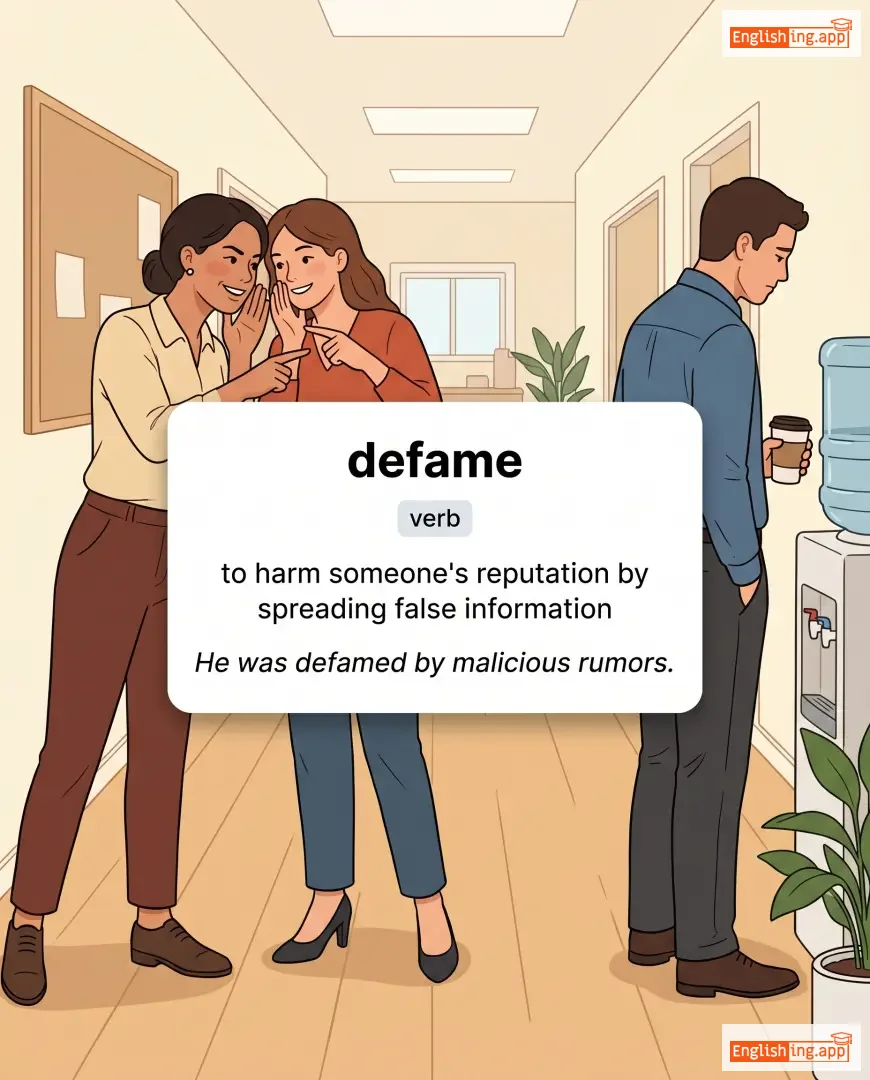
defame definition card — visual illustration of the meaning
verb
/dɪˈfeɪm/
difamar (difamar)

to harm someone's reputation by spreading false information

"He was defamed by malicious rumors."

"Él fue difamado por rumores maliciosos." (El fue difamado por rumores maliciosos.)
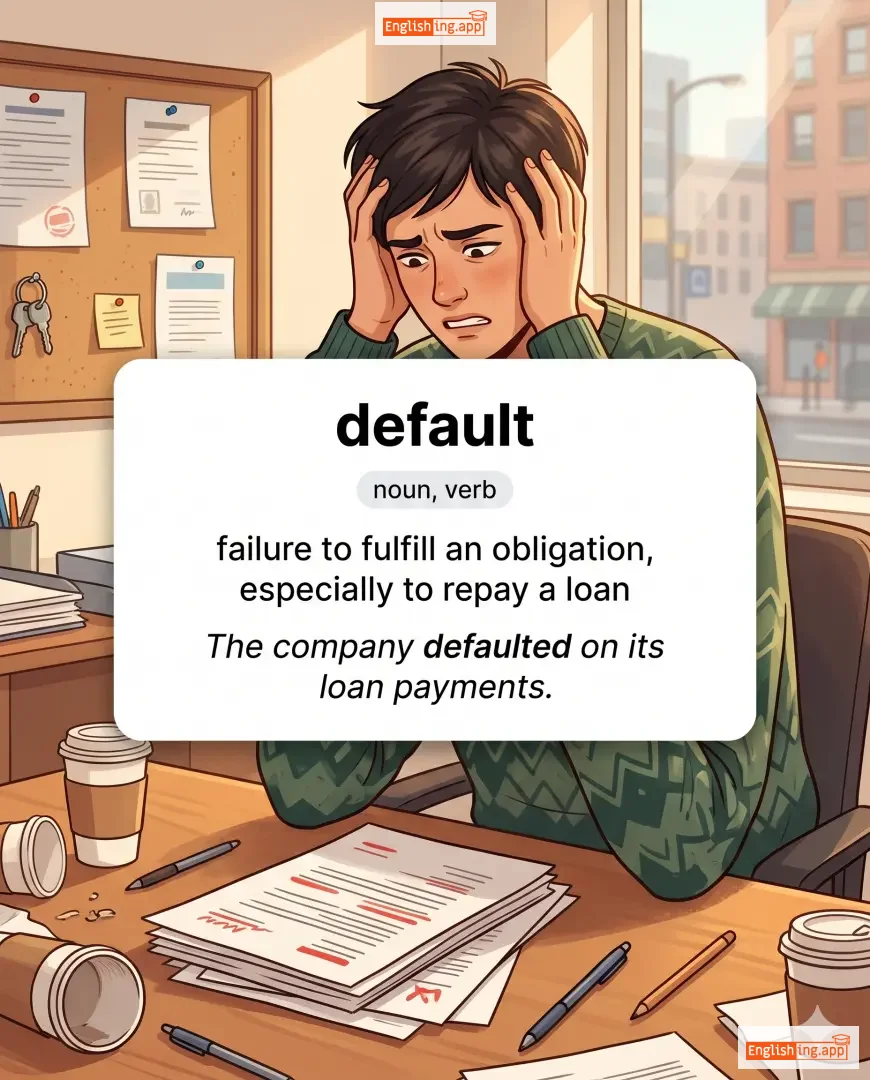
default definition card — visual illustration of the meaning
noun, verb
/dɪˈfɔːlt/
incumplir (incumplir)

failure to fulfill an obligation, especially to repay a loan

"The company defaulted on its loan payments."

"La compañía incumplió con sus pagos de préstamo." (La compania incumplio con sus pagos de prestamo.)
verb
/dɪˈfiːt/
derrotar (derrotar)

to win a victory over someone or something in a competition or battle

"Our team defeated their rivals in the final match."

"Nuestro equipo derrotó a sus rivales en el partido final." (Nuestro equipo derrotó a sus rivales en el partido final.)
noun, adjective
/dɪˈfiːtɪst/
derrotista (derrotista)

A person who expects or is excessively ready to accept failure; showing a tendency to expect defeat.

"His defeatist attitude discouraged the rest of the team."

"Su actitud derrotista desanimó al resto del equipo." (Su actitud derrotista desanimó al resto del equipo.)
noun, verb
/ˈdiːfɛkt/ (noun), /dɪˈfɛkt/ (verb)
defecto / desertar (defecto / desertar)

A shortcoming, imperfection, or flaw; or to abandon a cause or group for another.

"The engineer found a defect in the software code."

"El ingeniero encontró un defecto en el código del software." (El ingeniero encontró un defecto en el código del software.)
noun
/dɪˈfɛkʃən/
deserción (deserccion)

The act of abandoning one’s country, cause, or group in favor of another.

"The politician’s defection shocked his supporters."

"La deserción del político sorprendió a sus seguidores." (La deserccion del politico sorprendio a sus seguidores.)
adjective
/dɪˈfektɪv/
defectuoso; imperfecto (defectuoso; imperfecto)

having faults or defects; imperfect

"The defective product was returned to the store."

"El producto defectuoso fue devuelto a la tienda." (El producto defectuoso fue devuelto a la tienda.)
noun
/dɪˈfɛns/
defensa (defensa)

The act of protecting or guarding against attack, harm, or criticism.

"The castle walls were built for defence against invaders."

"Las murallas del castillo fueron construidas para la defensa contra los invasores." (Las murallas del castillo fueron construidas para la defensa contra los invasores.)
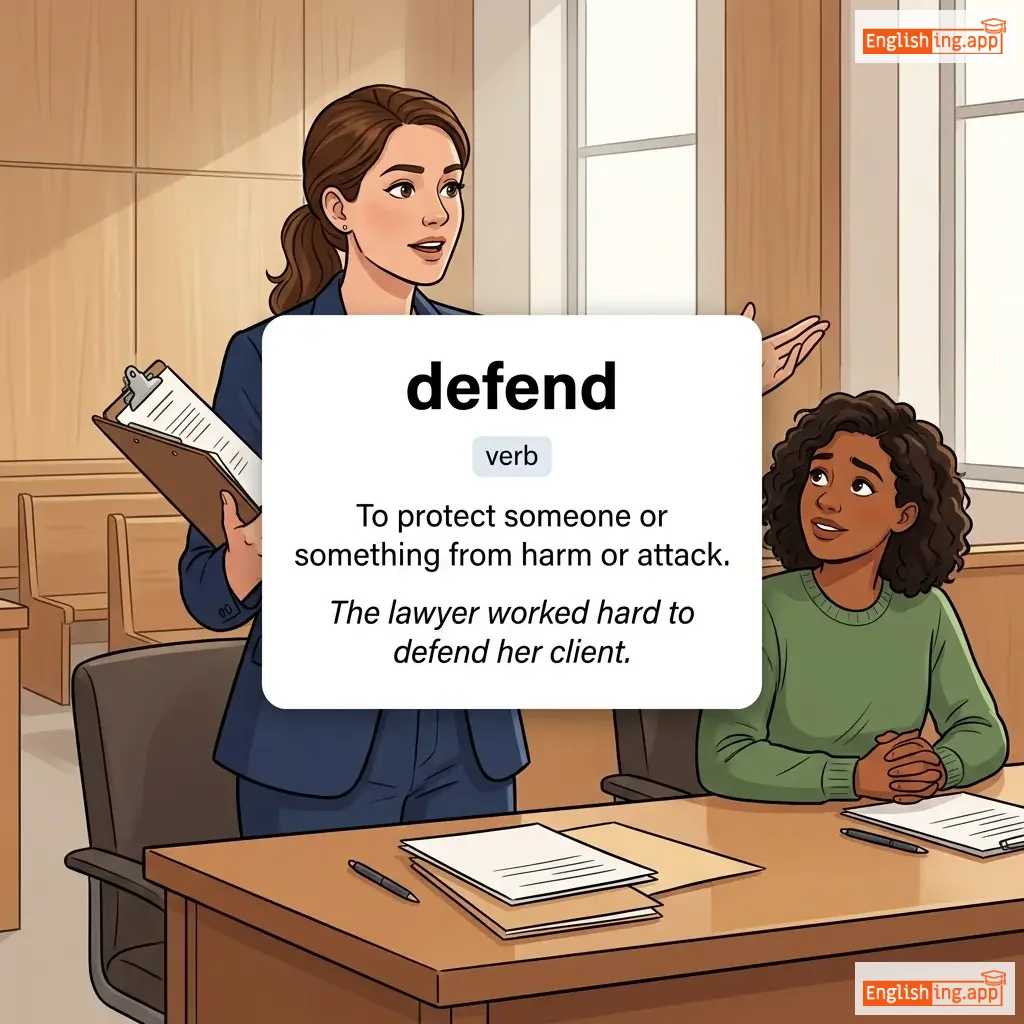
defend definition card — visual illustration of the meaning
verb
/dɪˈfɛnd/
defender (defender)

To protect someone or something from harm or attack.

"The lawyer worked hard to defend her client."

"El abogado trabajó duro para defender a su cliente." (El abogado trabajó duro para defender a su cliente.)
noun
/dɪˈfɛndənt/
acusado (acusado)

An individual, company, or institution sued or accused in a court of law.

"The defendant pleaded not guilty to the charges."

"El acusado no se declaró culpable de los cargos." (El acusado no se declaro culpable de los cargos.)
noun
/dɪˈfɛndər/
defensor (defensor)

a person who protects someone or something from harm or attack

"The defender blocked the shot and saved the goal."

"El defensor bloqueó el disparo y salvó el gol." (El defensor bloqueó el disparo y salvó el gol.)
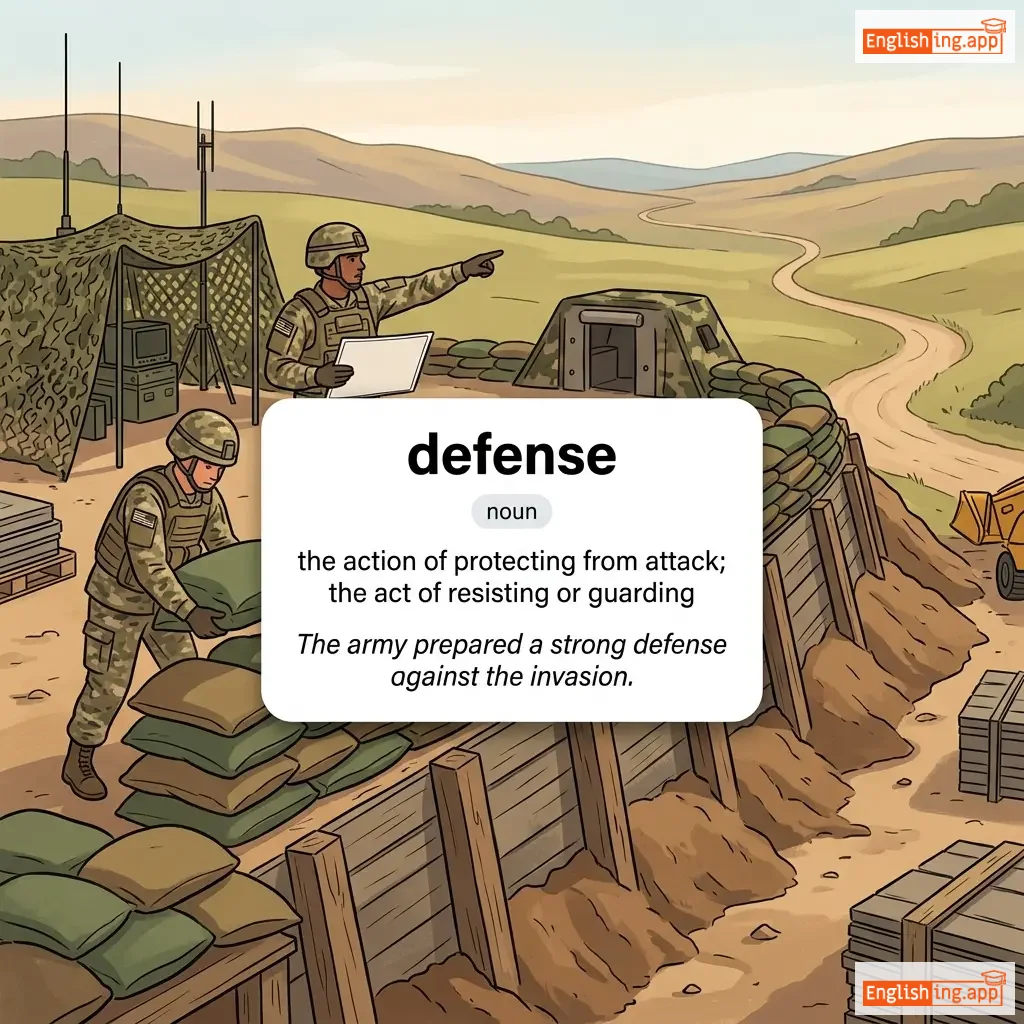
defense definition card — visual illustration of the meaning
noun
/dɪˈfɛns/
felicidad (felicidad)

the action of protecting from attack; the act of resisting or guarding

"The army prepared a strong defense against the invasion."

"Ella no pudo ocultar su felicidad cuando recibió el premio." (Ella no pudo ocultar su felicidad cuando recibió el premio.)
adjective
/dɪˈfɛnsəbəl/
defendible / justificable (defendible / justificable)

Capable of being protected against attack or criticism; justifiable.

"Her decision was legally defensible."

"Su decisión era legalmente defendible." (Su decision era legalmente defendible.)
adjective
/dɪˈfɛnsɪv/
defensivo (defensivo)

Intended to protect or defend; behaving in a way to guard against criticism or attack.

"He became defensive when asked about his mistake."

"Se puso defensivo cuando le preguntaron sobre su error." (Se puso defensivo cuando le preguntaron sobre su error.)
verb
/dɪˈfɜːr/
posponer (posponer)

To postpone or delay; to yield to someone else's judgment or opinion.

"The meeting was deferred until next week."

"La reunión fue pospuesta hasta la próxima semana." (La reunión fue pospuesta hasta la próxima semana.)
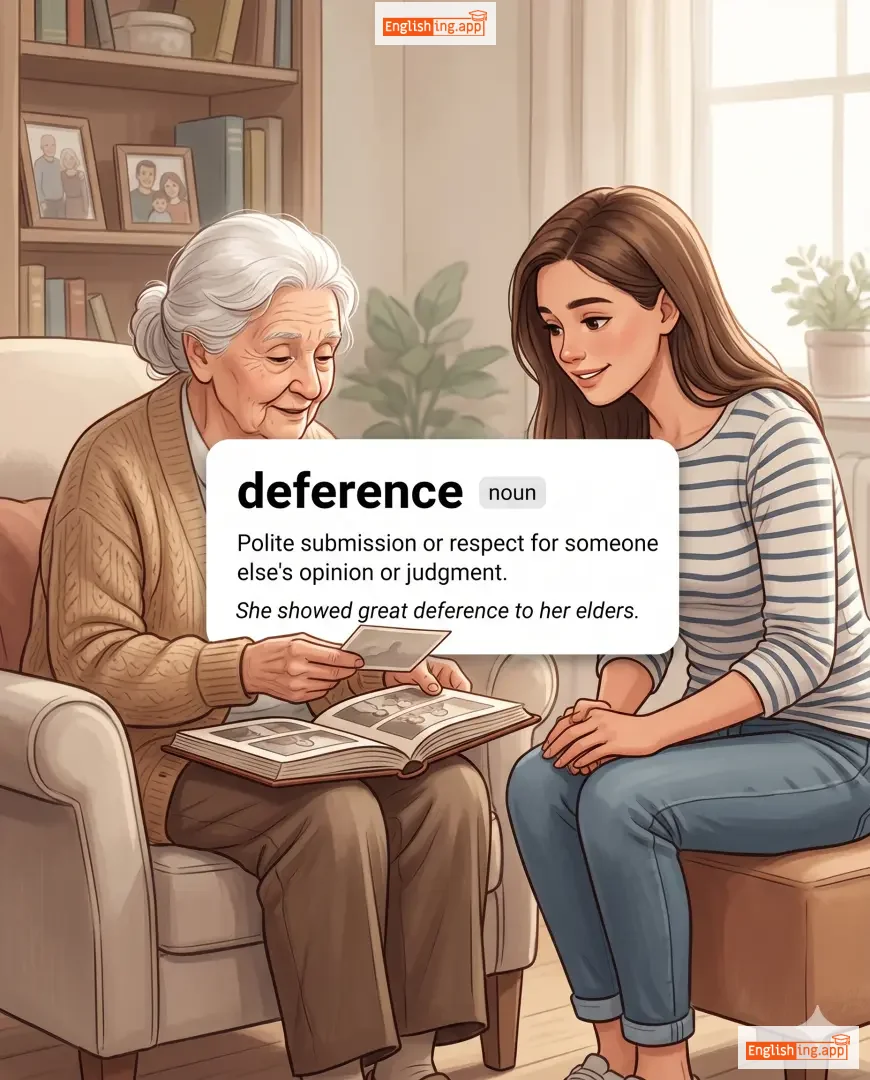
deference definition card — visual illustration of the meaning
noun
/ˈdɛfərəns/
respeto (respeto)

Polite submission or respect for someone else's opinion or judgment.

"She showed great deference to her elders."

"Ella mostró un gran respeto hacia sus mayores." (Ella mostro un gran respeto hacia sus mayores.)
adjective
/ˌdɛfəˈrɛnʃəl/
respetuoso (respetuoso)

Showing or expressing respect and high regard.

"He was always deferential toward his teachers."

"Siempre fue respetuoso con sus maestros." (siempre fue respetuoso con sus maestros.)
noun
/dɪˈfaɪəns/
desobediencia (desobediencia)

Open resistance or bold disobedience.

"The protest was an act of defiance against injustice."

"La protesta fue un acto de desobediencia contra la injusticia." (La protesta fue un acto de desobediencia contra la injusticia.)
adjective
/dɪˈfaɪ.ənt/
desafiante (desafiante)

showing open resistance or bold disobedience

"The child was defiant when told to clean his room."

"El niño estaba desafiante cuando le dijeron que limpiara su habitación." (El niño estaba desafiante cuando le dijeron que limpiara su habitación.)
noun
/dɪˈfɪʃ.ən.si/
deficiencia (deficiencia)

a lack or shortage of something that is necessary

"The doctor diagnosed him with a vitamin D deficiency."

"El médico lo diagnosticó con deficiencia de vitamina D." (El medico lo diagnostico con deficiencia de vitamina D.)
adjective
/dɪˈfɪʃ.ənt/
deficiente (deficiente)

not having enough of something that is essential

"The soil is deficient in nutrients."

"El suelo es deficiente en nutrientes." (El suelo es deficiente en nutrientes.)
noun
/ˈdɛfɪsɪt/
déficit (deficit)

The amount by which something, especially money, is too small or lacking.

"The government is trying to reduce the budget deficit."

"El gobierno está tratando de reducir el déficit presupuestario." (El gobierno está tratando de reducir el déficit presupuestario.)
verb
/dɪˈfaɪl/
profanar (profanar)

to pollute, corrupt, or make dirty

"The river was defiled by industrial waste."

"El río fue profanado por desechos industriales." (El río fue profanado por desechos industriales.)
verb
/dɪˈfaɪn/
definir (definir)

to explain the meaning of a word, phrase, or concept clearly

"The teacher asked the student to define the word 'democracy'."

"El maestro le pidió al estudiante que definiera la palabra 'democracia'." (El maestro le pidió al estudiante que definiera la palabra 'democracia'.)
adjective
/ˈdef.ən.ɪt/
definitivo (definitivo)

clearly stated or decided; not vague or doubtful

"We need a definite plan before starting the project."

"Necesitamos un plan definitivo antes de comenzar el proyecto." (Necesitamos un plan definitivo antes de comenzar el proyecto.)
adverb
/ˈdɛfɪnɪtli/
definitivamente (definitivamente)

without any doubt; certainly

"I will definitely call you tomorrow."

"Definitivamente te llamaré mañana." (Definitivamente te llamaré mañana.)
noun
/ˌdɛfɪˈnɪʃən/
definición (definicion)

a statement that explains the meaning of a word or concept

"The dictionary gives a clear definition of the word."

"El diccionario da una definición clara de la palabra." (El diccionario da una definicion clara de la palabra.)
adjective
/dɪˈfɪnɪtɪv/
definitivo (definitivo)

serving as a final or most authoritative form; conclusive and decisive

"The committee reached a definitive agreement on the policy."

"El comité llegó a un acuerdo definitivo sobre la política." (El comite llego a un acuerdo definitivo sobre la politica.)
adjective
/kənˈtraɪvd/
artificial o forzado; no natural ni espontáneo (artificial o forzado; no natural ni espontáneo)

artificial or forced; not natural or spontaneous

"The ending of the movie felt contrived and unrealistic."

"El final de la película se sintió forzado e irreal." (El final de la pelicula se sintió forzado e irreal.)
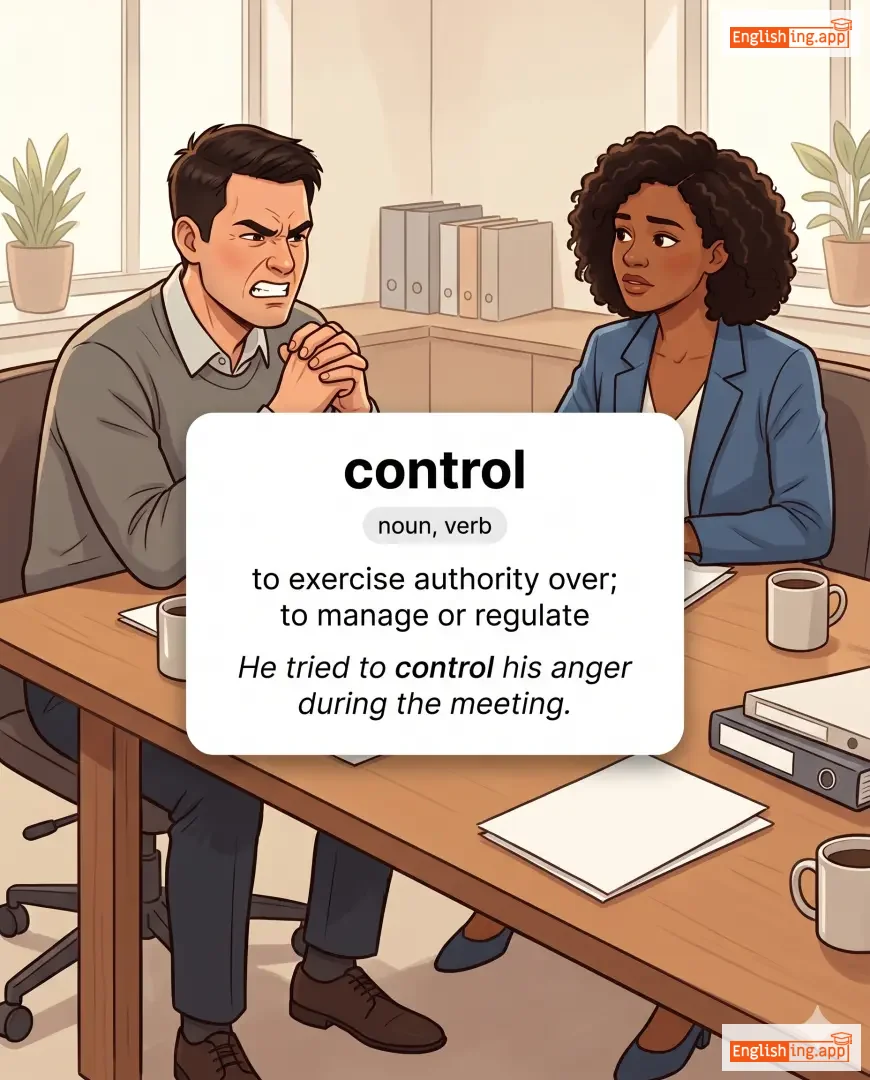
control definition card — visual illustration of the meaning
noun, verb
/kənˈtroʊl/
controlar (controlar)

to exercise authority over; to manage or regulate

"He tried to control his anger during the meeting."

"Trató de controlar su ira durante la reunión." (Trató de controlar su ira durante la reunión.)
adjective
/kənˈtroʊld/
controlado (controlado)

managed or regulated carefully; kept within limits

"The experiment was conducted in a controlled environment."

"El experimento se realizó en un entorno controlado." (El experimento se realizo en un entorno controlado)
noun
/kənˈtroʊlər/
controlador (controlador)

a person or device that manages, directs, or regulates something

"The game controller made it easy to play the video game."

"El controlador de juegos facilitó jugar el videojuego." (El controlador de juegos facilitó jugar el videojuego.)
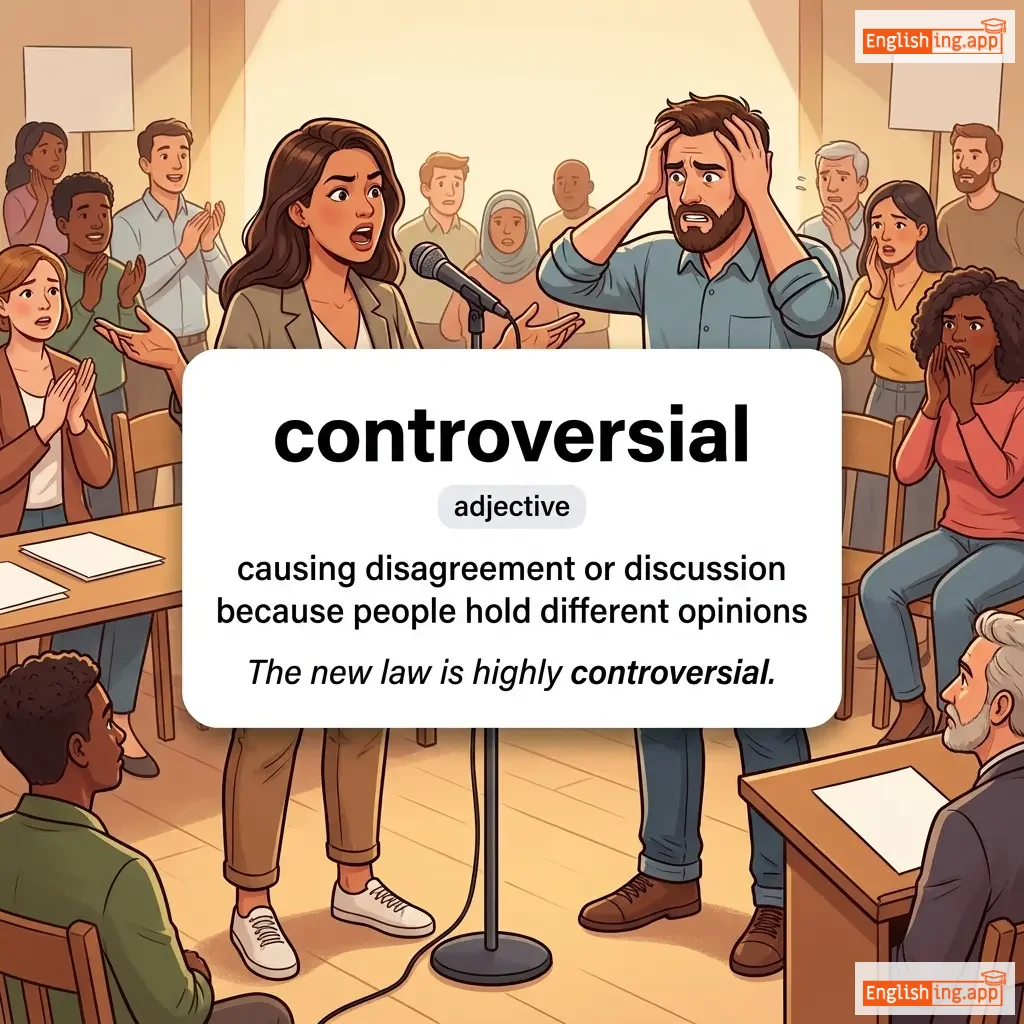
controversial definition card — visual illustration of the meaning
adjective
/ˌkɒn.trəˈvɜː.ʃəl/
controvertido (controvertido)

causing disagreement or discussion because people hold different opinions

"The new law is highly controversial."

"La nueva ley es altamente controvertida." (La nueva ley es altamente controvertida.)
noun
/ˈkɒn.trə.vɜːr.si/
controversia (controversia)

A prolonged public disagreement or heated discussion.

"The new policy sparked a major controversy."

"La nueva política desató una gran controversia." (La nueva política desató una gran controversia.)
verb
/ˌkɒntrəˈvɜːrt/
controvertir (controvertir)

to dispute or argue against; to contradict

"The scientist controversed the previous research findings."

"El científico controvirtió los hallazgos previos de la investigación." (El científico controvirtió los hallazgos previos de la investigación.)
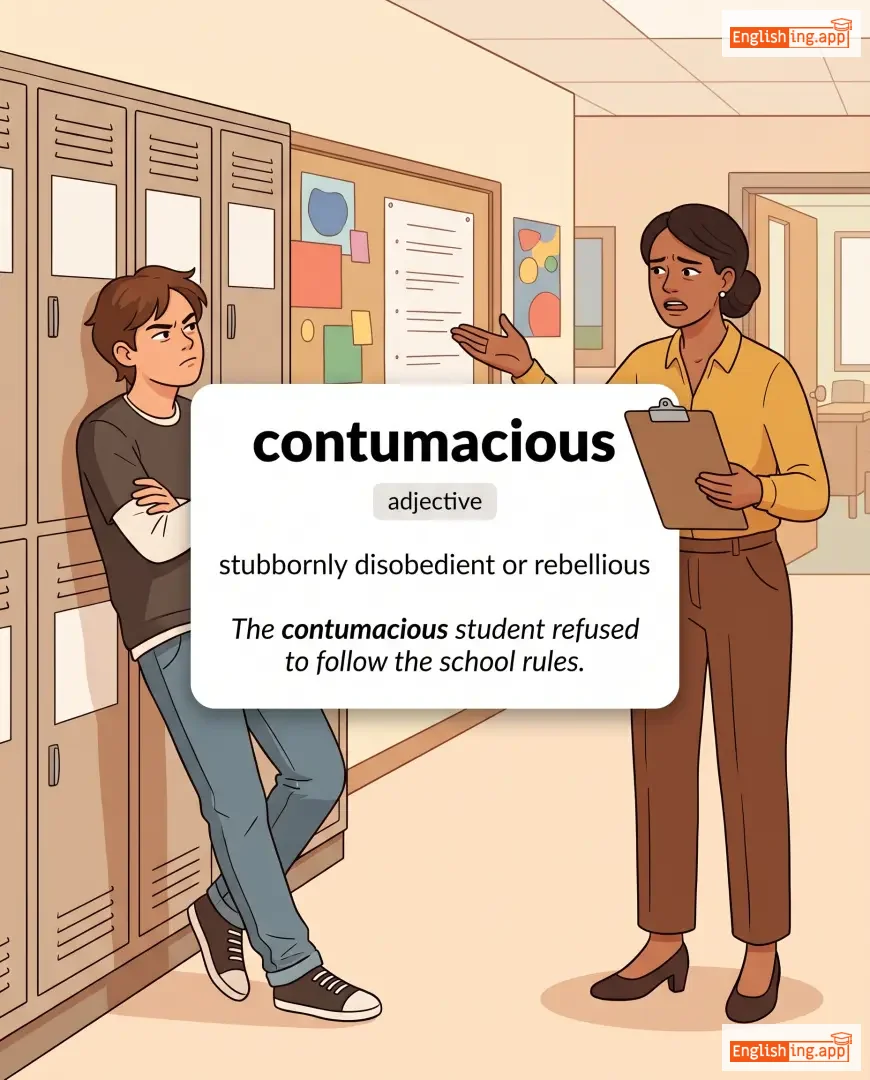
contumacious definition card — visual illustration of the meaning
adjective
/ˌkɒn.tjʊˈmeɪ.ʃəs/
rebelde, desobediente (rebelde, desobediente)

stubbornly disobedient or rebellious

"The contumacious student refused to follow the school rules."

"El estudiante rebelde se negó a seguir las reglas de la escuela." (El estudiante rebelde se negó a seguir las reglas de la escuela.)