Vocabularios

Descubra, aprenda y domine el vocabulario en inglés

noun
/ˈkɒn.tjʊ.mə.si/
desobediencia, terquedad (desobediencia, terquedad)

stubborn refusal to obey authority

"His contumacy led to his suspension from the council."

"Su desobediencia condujo a su suspensión del consejo." (Su desobediencia condujo a su suspensión del consejo.)
noun
/ˈkɒn.tjʊ.mə.li/
insulto, desdén (insulto, desdeen)

insulting or humiliating treatment

"He endured the contumely of his colleagues with patience."

"Él soportó el desdén de sus colegas con paciencia." (Él soportó el desdén de sus colegas con paciencia.)
verb
/kənˈtjuːz/
contundir (contundir)

to bruise by striking or hitting

"He contused his arm when he fell off the bike."

"Él se contusionó el brazo cuando se cayó de la bicicleta." (Él se contusionó el brazo cuando se cayó de la bicicleta.)
noun
/kənˈtjuː.ʒən/
moretón, contusión (moreton, contusion)

a bruise or injury without breaking the skin

"The boxer had several contusions after the match."

"El boxeador tenía varias contusiones después del partido." (El boxeador tenia varias contusiones despues del partido.)
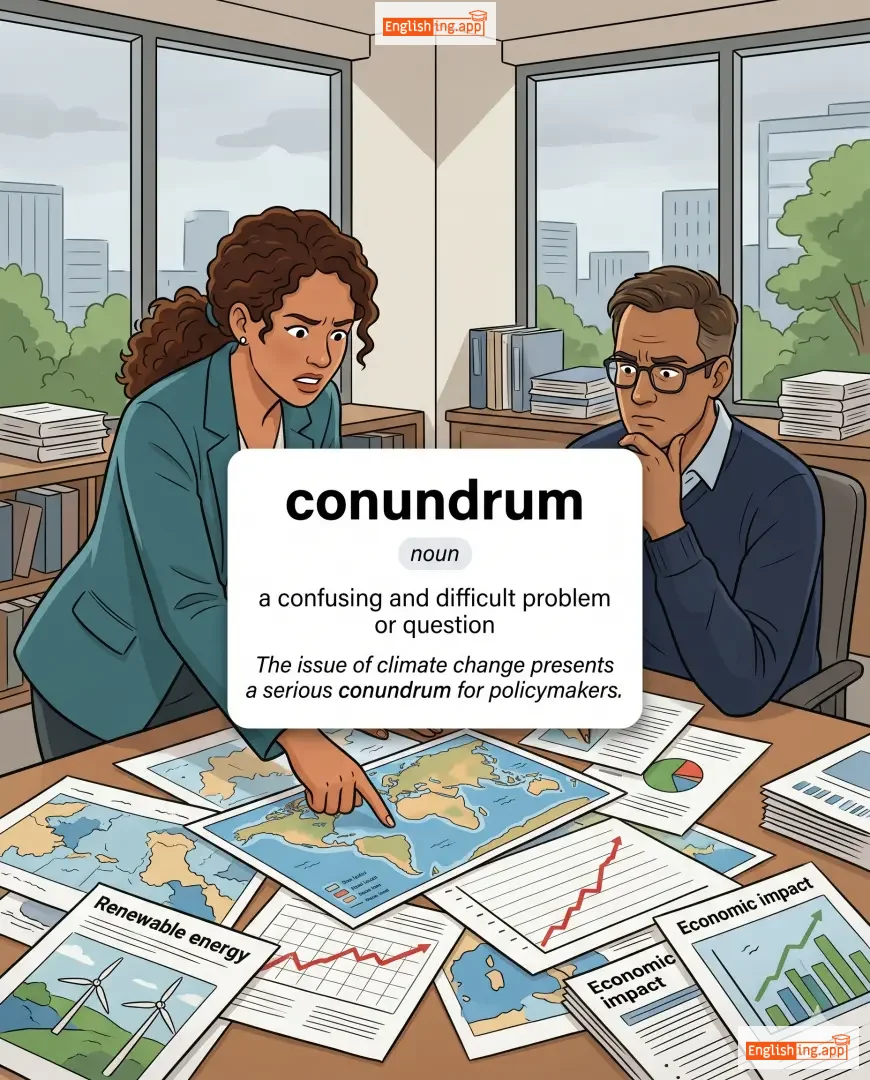
conundrum definition card — visual illustration of the meaning
noun
/kəˈnʌndrəm/
dilema (dilema)

a confusing and difficult problem or question

"The issue of climate change presents a serious conundrum for policymakers."

"El problema del cambio climático presenta un dilema serio para los responsables de las políticas." (El problema del cambio climático presenta un dilema serio para los responsables de las políticas.)
verb
/ˌkɒnvəˈlɛs/
recuperarse, recuperar salud y fuerza después de una enfermedad o tratamiento médico (recuperarse, recuperar salud y fuerza despues de una enfermedad o tratamiento medico)

to recover health and strength after illness or medical treatment

"After the surgery, she spent several weeks convalescing at home."

"Después de la cirugía, pasó varias semanas convaleciendo en casa." (Despues de la cirugia, paso varias semanas convaleciendo en casa.)
noun
/ˌkɒnvəˈlɛsns/
convalecencia (convalescencia)

the period of time spent recovering from an illness or medical treatment

"His convalescence lasted for almost two months after the accident."

"Su convalecencia duró casi dos meses después del accidente." (Su convalescencia duro casi dos meses despues del accidente.)
adjective
/ˌkɒnvəˈlɛsnt/
en recuperación, que se recupera de una enfermedad o tratamiento médico (en recuperacion, que se recupera de una enfermedad o tratamiento medico)

recovering from an illness or medical treatment

"The hospital has a special ward for convalescent patients."

"El hospital tiene una sala especial para los pacientes en recuperación." (El hospital tiene una sala especial para los pacientes en recuperacion.)
verb
/kənˈviːn/
reunirse, convocar una reunión o asamblea (reunirse, convocar una reunion o asamblea)

to come together or assemble, especially for a meeting or formal gathering

"The board will convene tomorrow to discuss the new policy."

"La junta se convocará mañana para discutir la nueva política." (La junta se convocara manana para discutir la nueva politica.)
noun
/kənˈviːniəns/
comodidad (comodidad)

the state of being able to do something easily or comfortably

"Online shopping offers great convenience for busy people."

"Las compras en línea ofrecen gran conveniencia para las personas ocupadas." (Las compras en línea ofrecen gran conveniencia para las personas ocupadas.)
adjective
/kənˈviː.ni.ənt/
conveniente (conveniente)

suitable or easy to use; fitting in well with one's needs

"This shop is convenient for my daily needs."

"Esta tienda es conveniente para mis necesidades diarias." (Esta tienda es conveniente para mis necesidades diarias.)
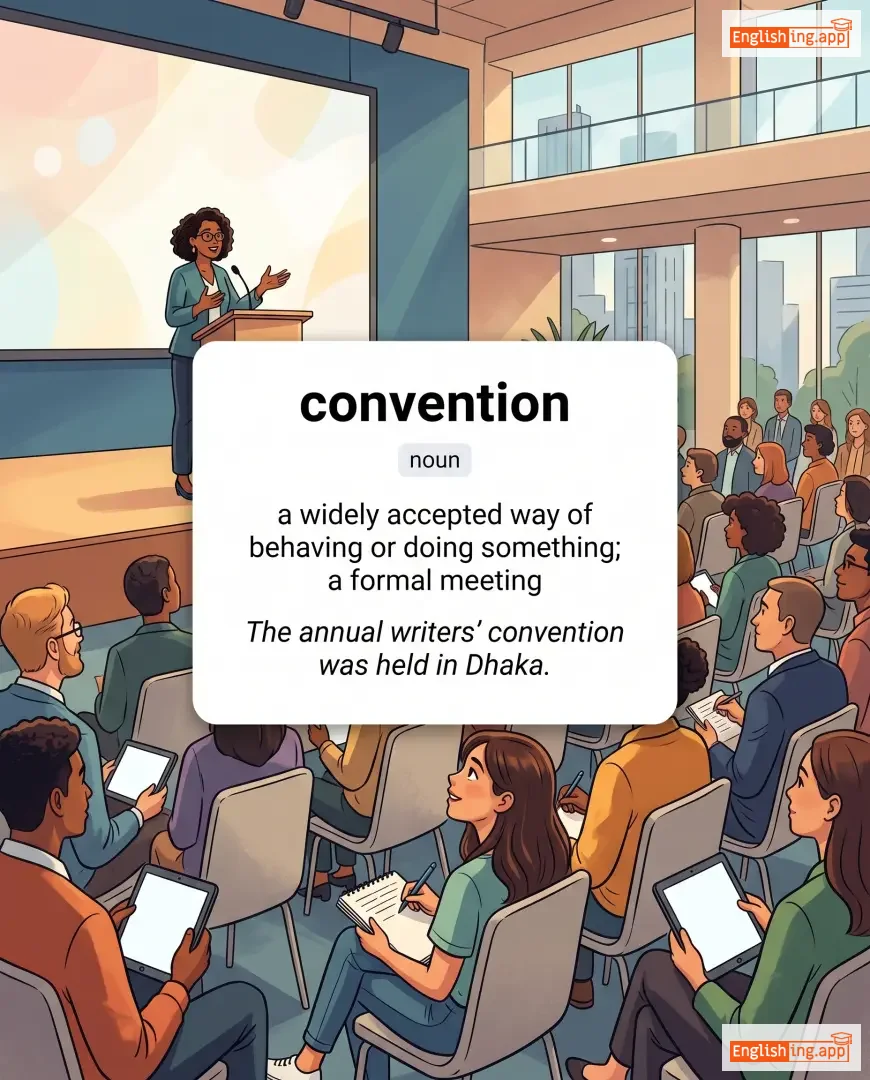
convention definition card — visual illustration of the meaning
noun
/kənˈvɛnʃən/
convención (convencion)

a widely accepted way of behaving or doing something; a formal meeting

"The annual writers' convention was held in Dhaka."

"La convención anual de escritores se celebró en Dhaka." (La convencion anual de escritores se celebro en Dhaka.)
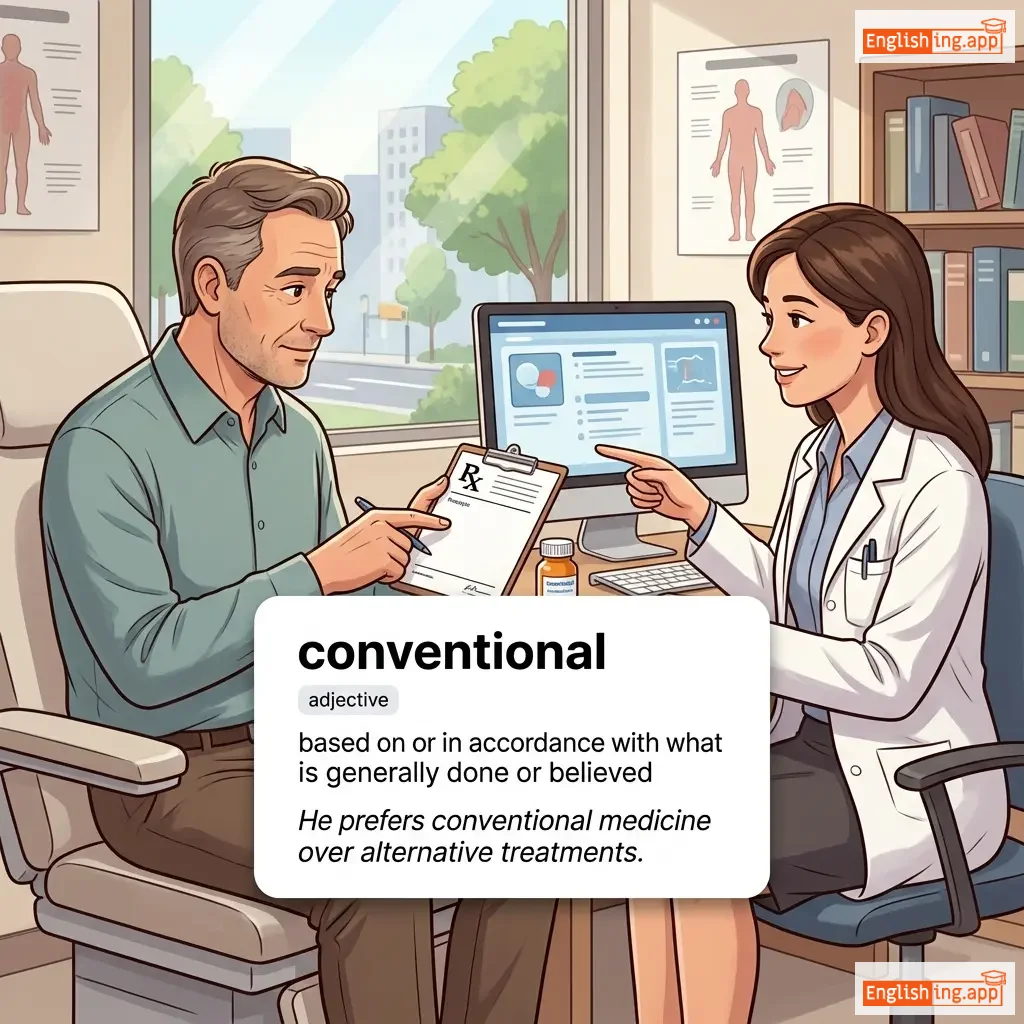
conventional definition card — visual illustration of the meaning
adjective
/kənˈvɛnʃənəl/
convencional (convencional)

based on or in accordance with what is generally done or believed

"He prefers conventional medicine over alternative treatments."

"Él prefiere la medicina convencional sobre los tratamientos alternativos." (Él prefiere la medicina convencional sobre los tratamientos alternativos.)
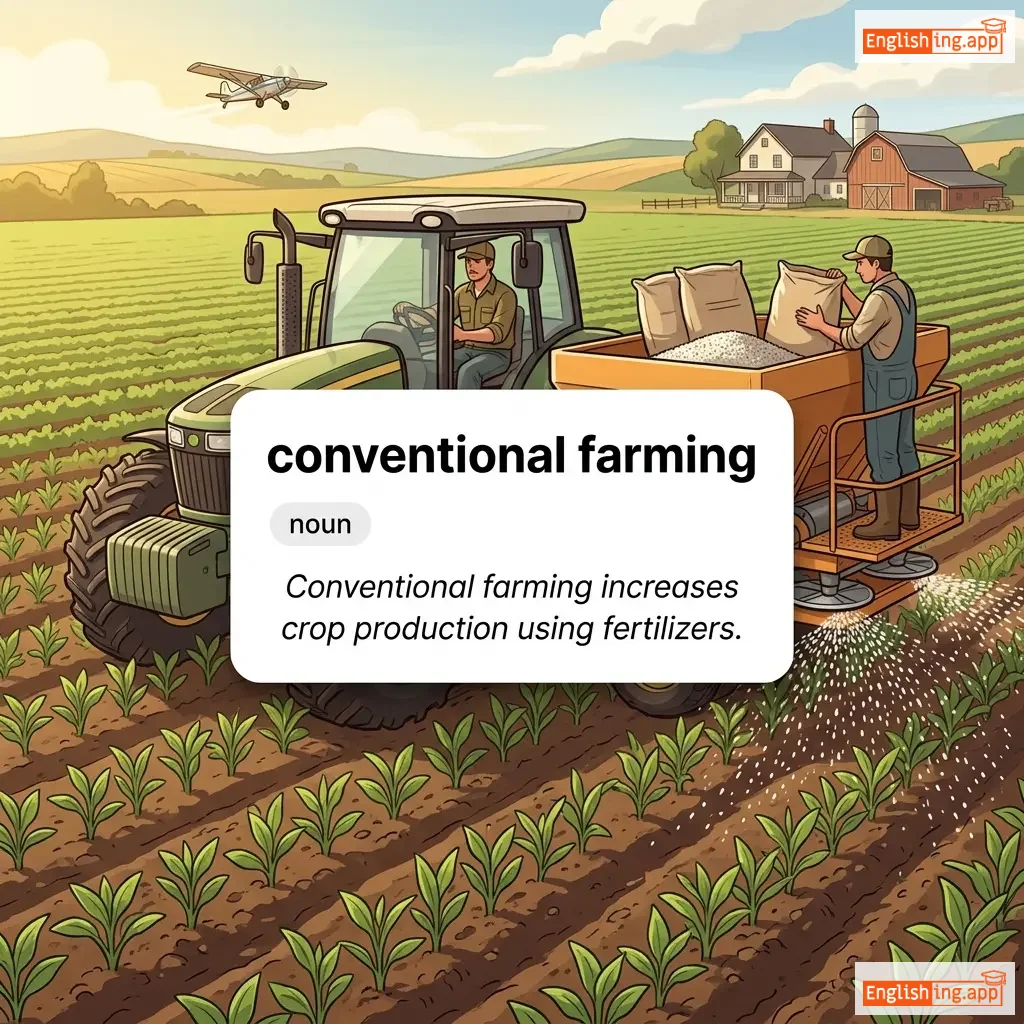
conventional farming definition card — visual illustration of the meaning
noun
/kənˈvɛn.ʃən.əl ˈfɑːr.mɪŋ/
agricultura convencional (agricultura convencional)

Traditional farming method using synthetic fertilizers, pesticides, and modern technology.

"Conventional farming increases crop production using fertilizers."

"La agricultura convencional aumenta la producción de cultivos utilizando fertilizantes." (La agricultura convencional aumenta la producción de cultivos utilizando fertilizantes.)
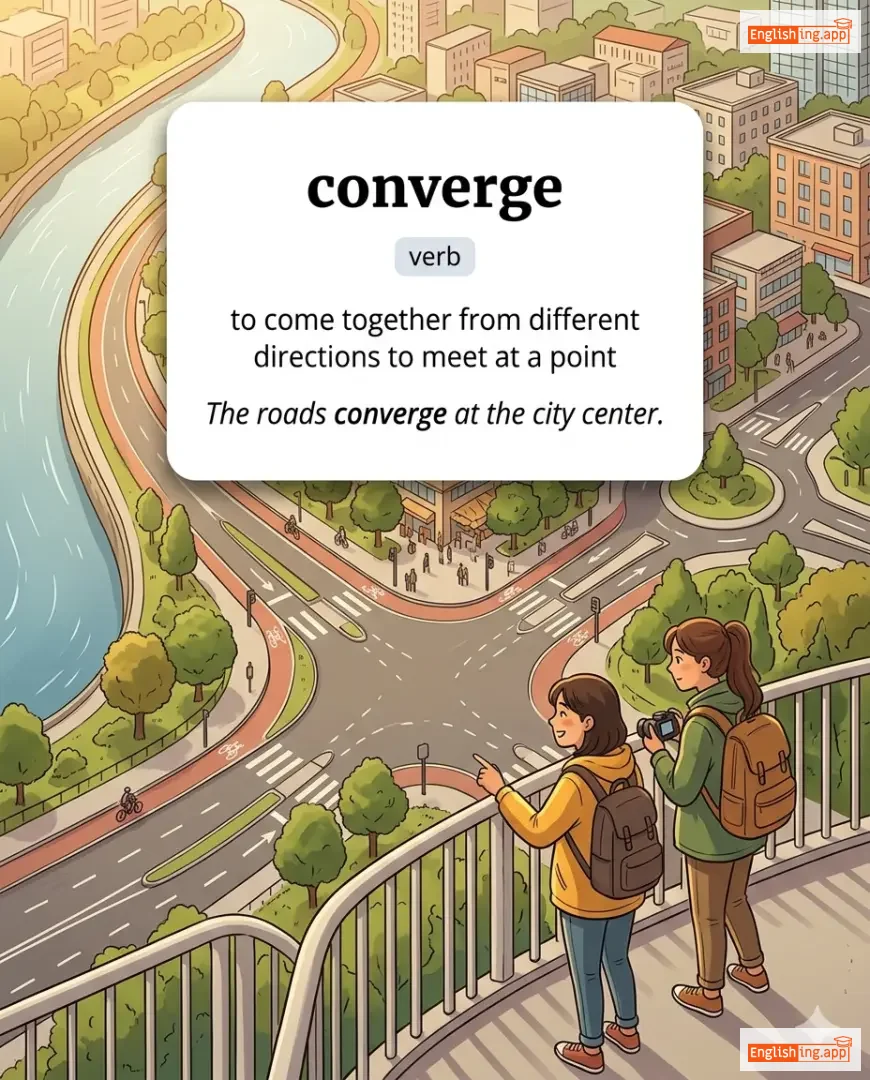
converge definition card — visual illustration of the meaning
verb
/kənˈvɜːrdʒ/
converger (converher)

to come together from different directions to meet at a point

"The roads converge at the city center."

"Las carreteras convergen en el centro de la ciudad." (Las carreteras convergen en el centro de la ciudad.)
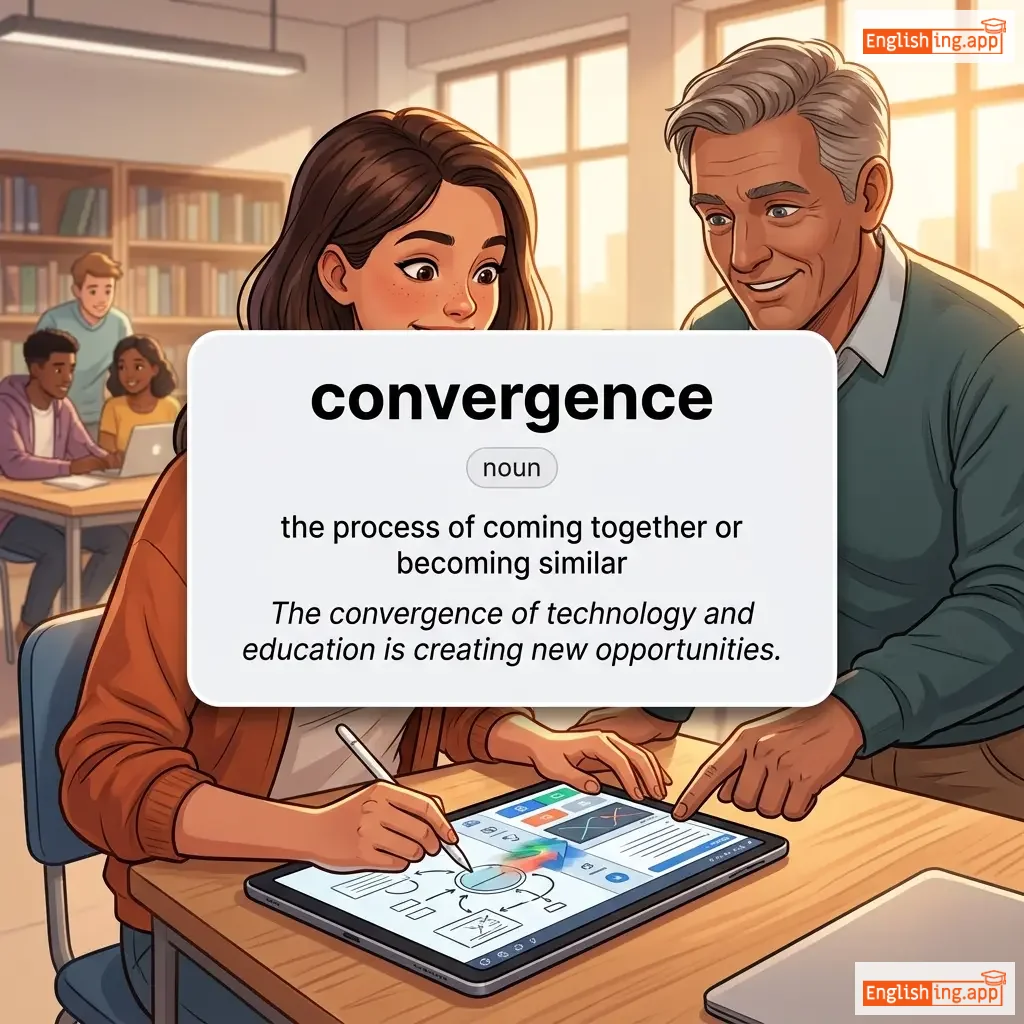
convergence definition card — visual illustration of the meaning
noun
/kənˈvɜː.dʒəns/
convergencia (convergencia)

the process of coming together or becoming similar

"The convergence of technology and education is creating new opportunities."

"La convergencia de la tecnología y la educación está creando nuevas oportunidades." (La convergencia de la tecnología y la educación está creando nuevas oportunidades.)
adjective
/kənˈvɜːrdʒənt/
convergente (convergente)

tending to move toward a common point or result

"The two rivers have a convergent path before entering the lake."

"Los dos ríos tienen un camino convergente antes de entrar al lago." (Los dos ríos tienen un camino convergente antes de entrar al lago.)
adjective
/kənˈvɜːrsənt/
familiarizado, conocedor (familiarizado, conocedor)

familiar with or knowledgeable about something

"She is conversant with the latest developments in technology."

"Ella está familiarizada con los últimos avances en tecnología." (Ella está familiarizada con los últimos avances en tecnología.)
noun
/ˌkɒnvəˈseɪʃn/
conversación (conversacion)

an informal talk between two or more people, in which ideas, feelings, and thoughts are exchanged

"We had a long conversation about future plans."

"Tuvimos una larga conversación sobre los planes futuros." (Tuvimos una larga conversacion sobre los planes futuros.)
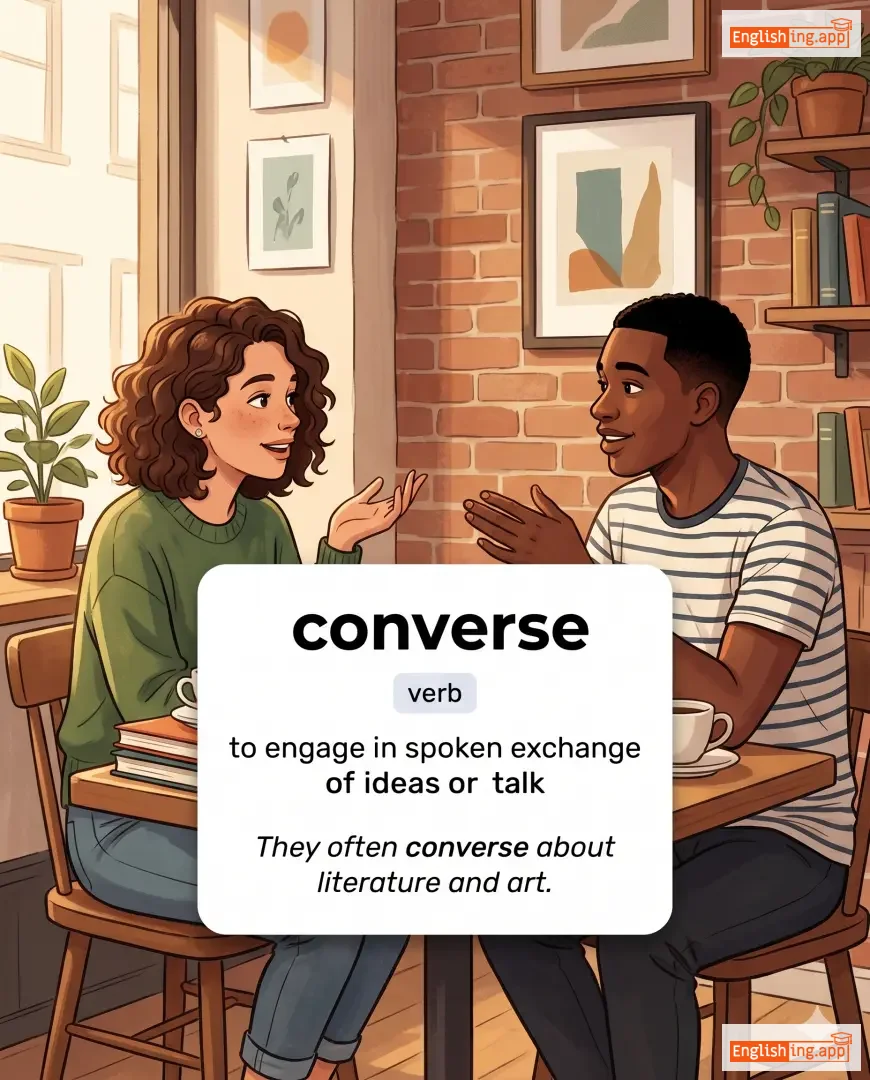
converse definition card — visual illustration of the meaning
verb
/kənˈvɜːrs/
conversar (conversar)

to engage in spoken exchange of ideas or talk

"They often converse about literature and art."

"Ellos conversan a menudo sobre literatura y arte." (Ellos conversan a menudo sobre literatura y arte.)
adverb
/kənˈvɜːrsli/
por el contrario (por el contrario)

in an opposite or contrary manner

"He is rich, conversely, his brother struggles financially."

"Él es rico, por el contrario, su hermano lucha financieramente." (Él es rico, por el contrario, su hermano lucha financieramente.)
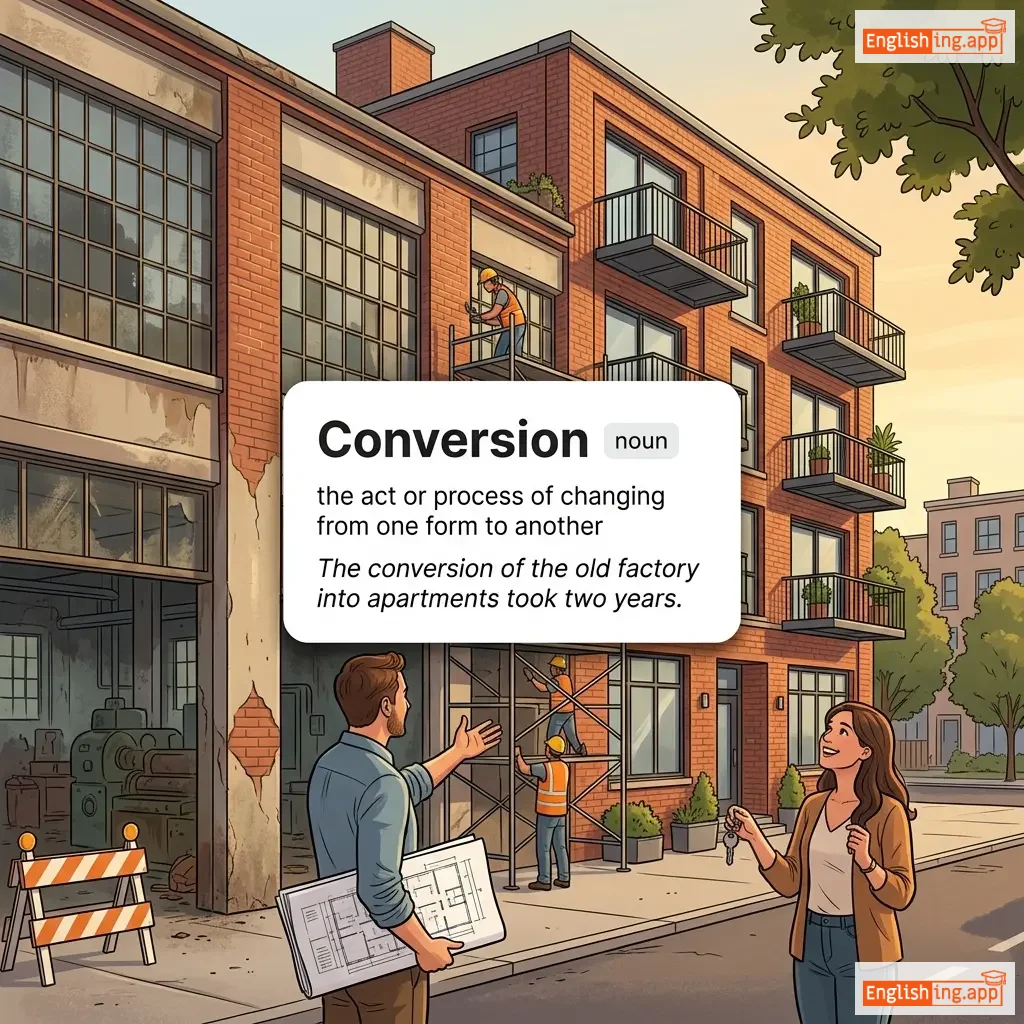
Conversion definition card — visual illustration of the meaning
noun
/kənˈvɜːrʒən/
conversión, cambio (conversion, cambio)

the act or process of changing from one form to another

"The conversion of the old factory into apartments took two years."

"La conversión de la vieja fábrica en apartamentos tardó dos años." (La conversion de la vieja fabrica en apartamentos tardo dos anos.)
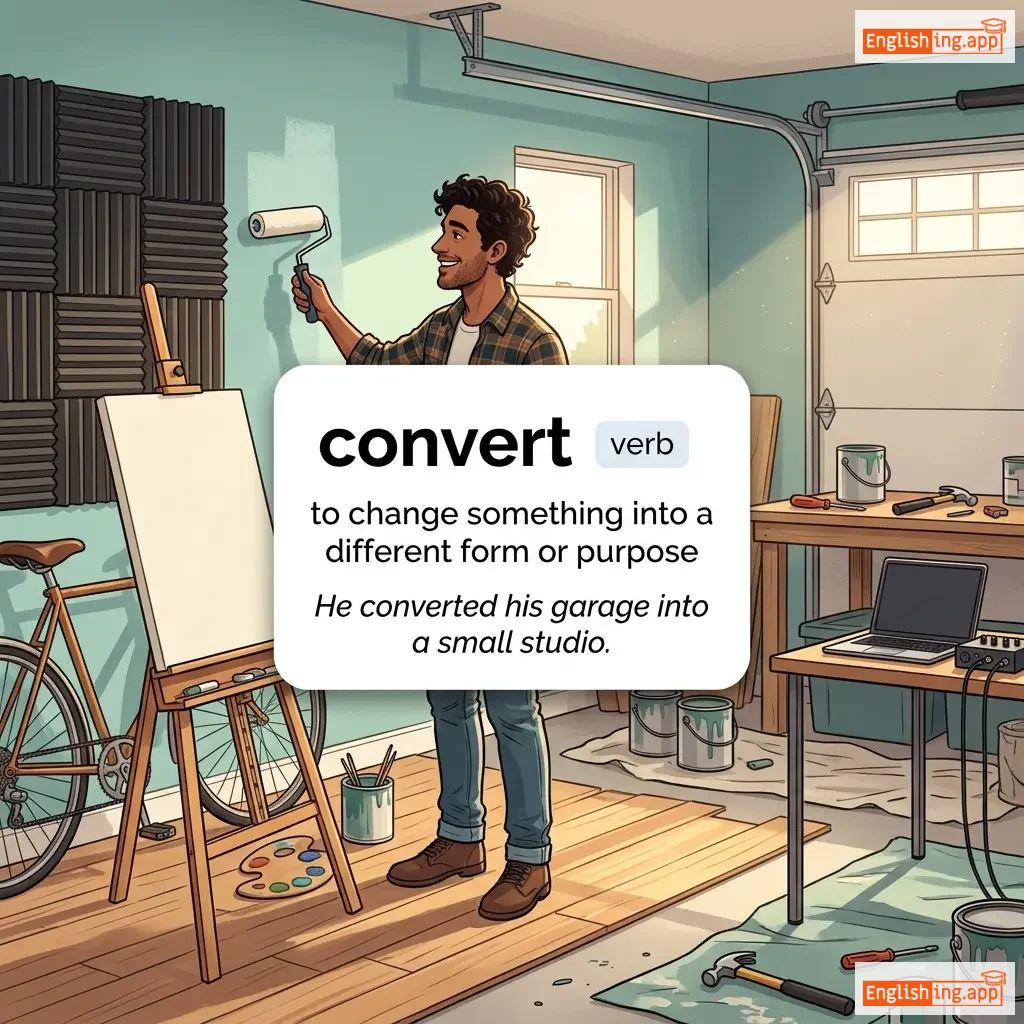
convert definition card — visual illustration of the meaning
verb
/kənˈvɜːrt/
convertir (convertir)

to change something into a different form or purpose

"He converted his garage into a small studio."

"Él convirtió su garaje en un pequeño estudio." (Él convirtió su garaje en un pequeño estudio.)
noun
/kənˈvɜːrtər/
convertidor (convertidor)

a device or person that changes something from one form, system, or use to another; a tool that converts data, energy, or materials

"The engineer used a converter to change AC power into DC power."

"El ingeniero usó un convertidor para cambiar corriente alterna a continua." (El ingeniero uso un convertidor para cambiar corriente alterna a continua)
adjective
/kənˈvɜːrtəbl/
convertible, coche con techo plegable (convertible, coche con techo plegable)

able to be changed into a different form or use; also a car with a roof that can be folded down

"She drove her new convertible along the coastal road."

"Ella condujo su nuevo convertible por la carretera costera." (Ella condujo su nuevo convertible por la carretera costera.)
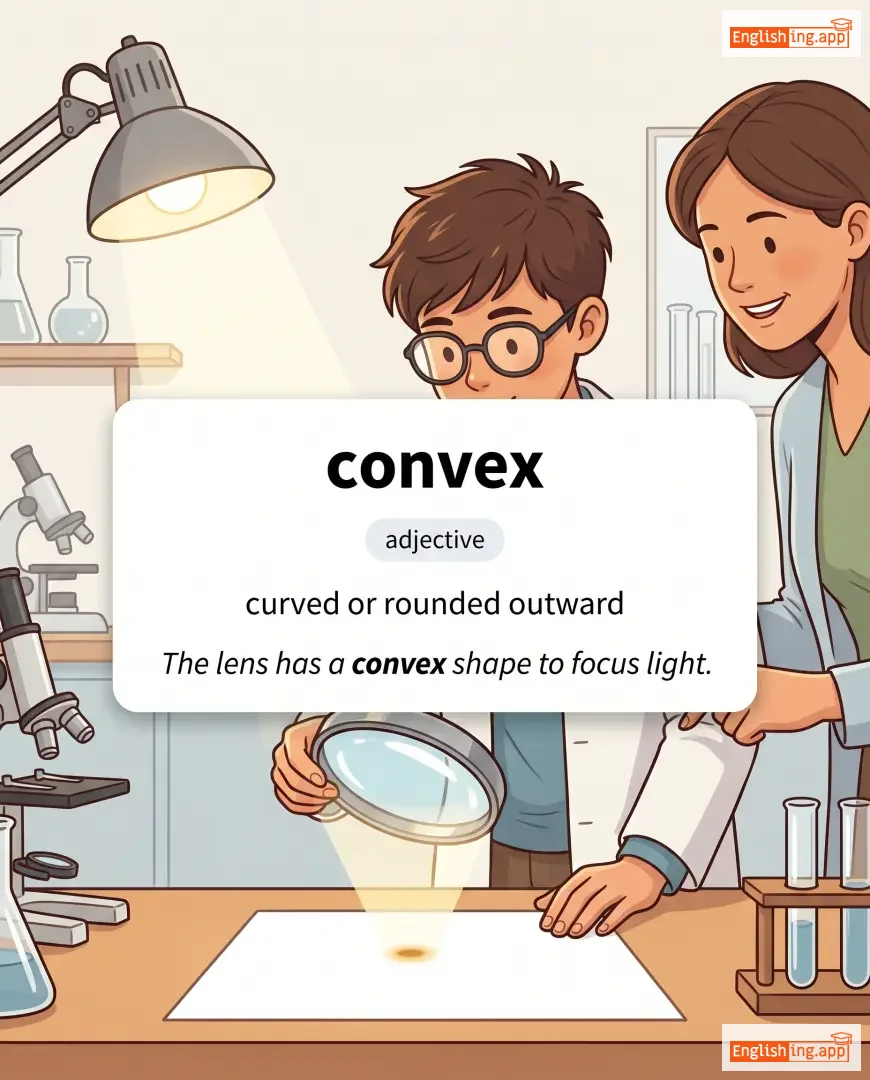
convex definition card — visual illustration of the meaning
adjective
/ˈkɒnvɛks/
convexo, redondeado hacia afuera (convexo, redondeado hacia afuera)

curved or rounded outward

"The lens has a convex shape to focus light."

"La lente tiene una forma convexa para enfocar la luz." (La lente tiene una forma convexa para enfocar la luz.)
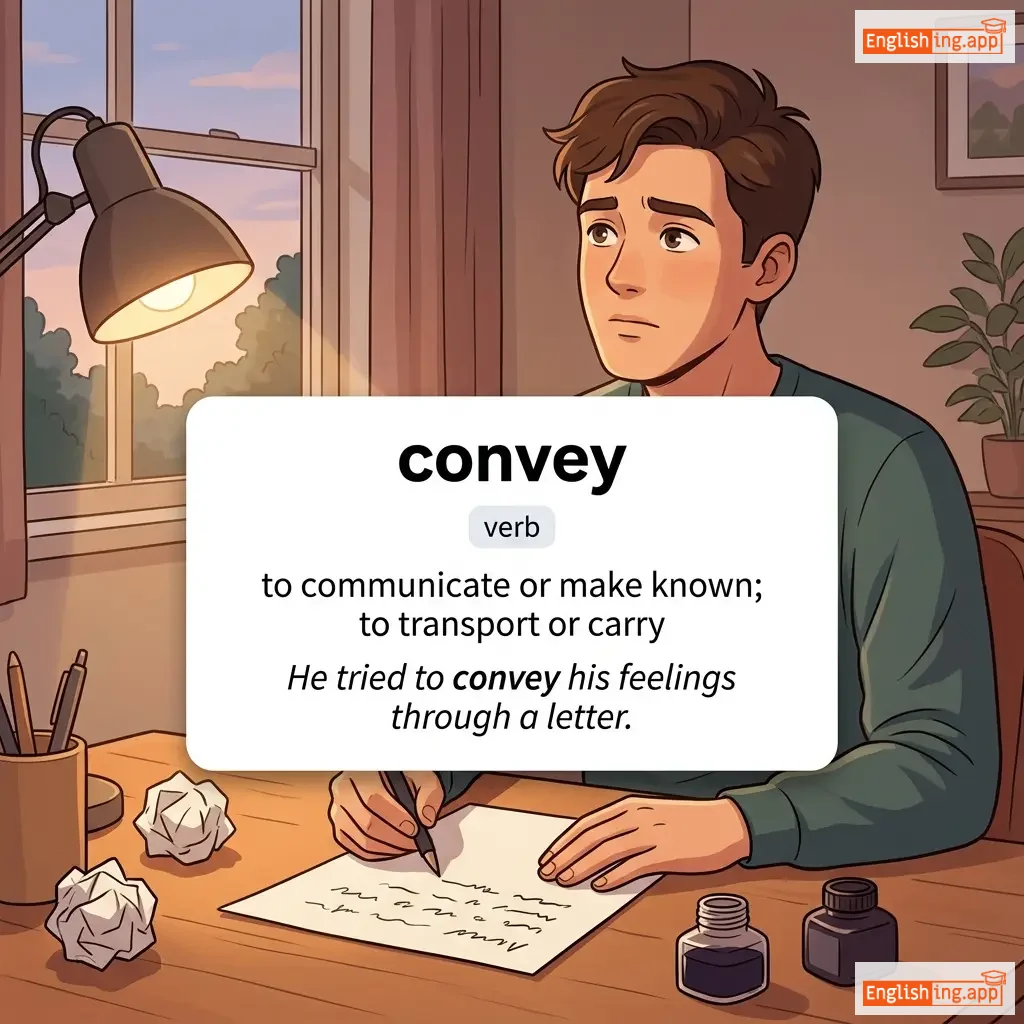
convey definition card — visual illustration of the meaning
verb
/kənˈveɪ/
transmitir, comunicar (transmitir, comunicar)

to communicate or make known; to transport or carry

"He tried to convey his feelings through a letter."

"Él intentó transmitir sus sentimientos a través de una carta." (Él intentó transmitir sus sentimientos a través de una carta.)
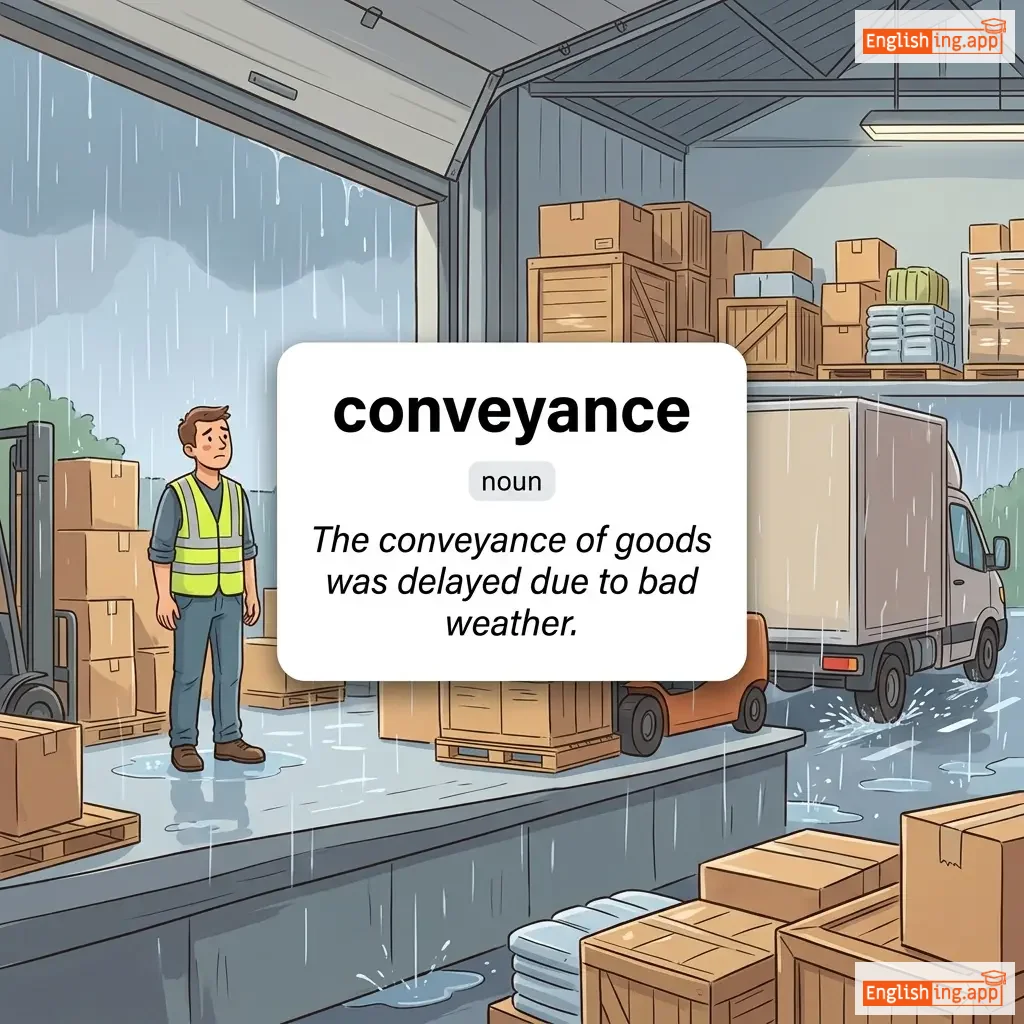
conveyance definition card — visual illustration of the meaning
noun
/kənˈveɪəns/
transporte, transporte de bienes, vehículo (transporte, transporte de bienes, vehiculo)

the act of transporting or communicating something; a vehicle or means of transport

"The conveyance of goods was delayed due to bad weather."

"El transporte de mercancías se retrasó debido al mal tiempo." (El transporte de mercancías se retrasó debido al mal tiempo.)
verb
/ˈkɒnvɪkt/
condenar (kondenar)

to find someone guilty of a crime in a court of law

"The court convicted him of theft."

"El tribunal lo condenó por el robo." (El tribunal lo kondeno por el robo.)
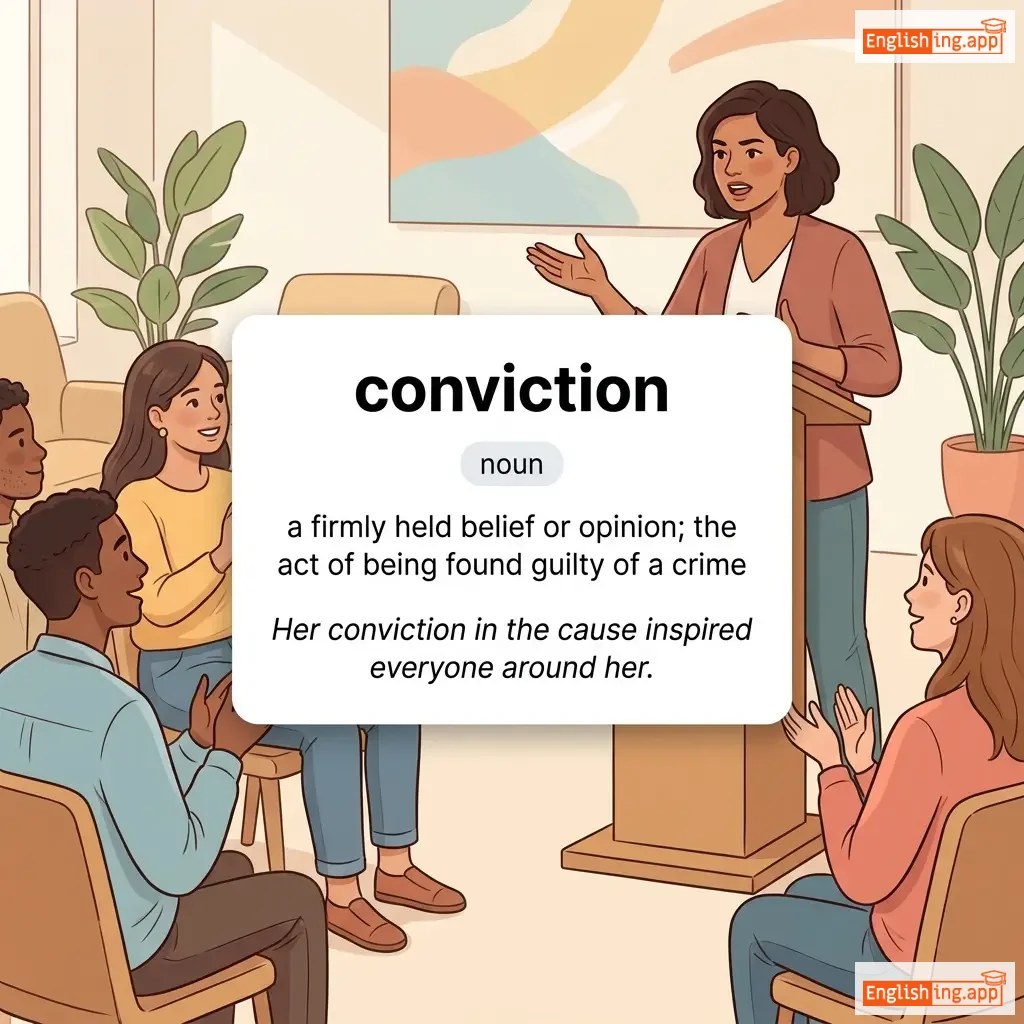
conviction definition card — visual illustration of the meaning
noun
/kənˈvɪkʃən/
creencia firme, condena (creencia firme, condena)

a firmly held belief or opinion; the act of being found guilty of a crime

"Her conviction in the cause inspired everyone around her."

"Su convicción en la causa inspiró a todos a su alrededor." (Su convicción en la causa inspiró a todos a su alrededor.)
verb
/kənˈvɪns/
convencer (convencer)

to make someone believe or feel certain about something

"She convinced him to attend the meeting."

"Ella lo convenció de asistir a la reunión." (Ella lo convenció de asistir a la reunión.)
adjective
/kənˈvɪnst/
convencido (convencido)

completely certain or sure about something

"She was convinced that he was telling the truth."

"Ella estaba convencida de que él estaba diciendo la verdad." (Ella estaba convencida de que él estaba diciendo la verdad.)
adjective
/kənˈvɪnsɪŋ/
convincente (convincente)

having the ability to make someone believe that something is true or real

"Her argument was very convincing."

"Su argumento fue muy convincente." (Su argumento fue muy convincente.)
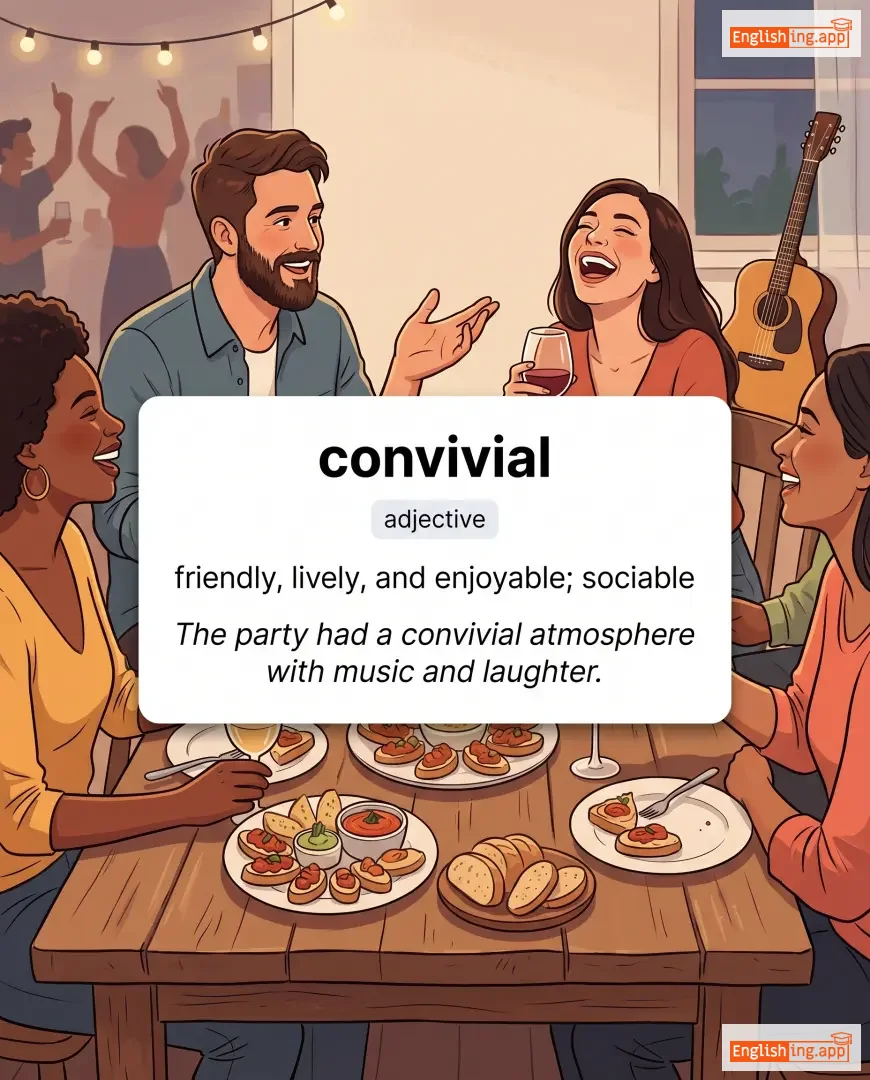
convivial definition card — visual illustration of the meaning
adjective
/kənˈvɪviəl/
amistoso, animado y agradable; sociable (amistoso, animado y agradable; sociable)

friendly, lively, and enjoyable; sociable

"The party had a convivial atmosphere with music and laughter."

"La fiesta tenía un ambiente convivial con música y risas." (La fiesta tenía un ambiente convivial con música y risas.)
verb
/kənˈvoʊk/
convocar (convocar)

to call together or summon a meeting or assembly

"The committee convoked an emergency session to discuss the crisis."

"El comité convocó una sesión de emergencia para discutir la crisis." (El comité convocó una sesión de emergencia para discutir la crisis.)
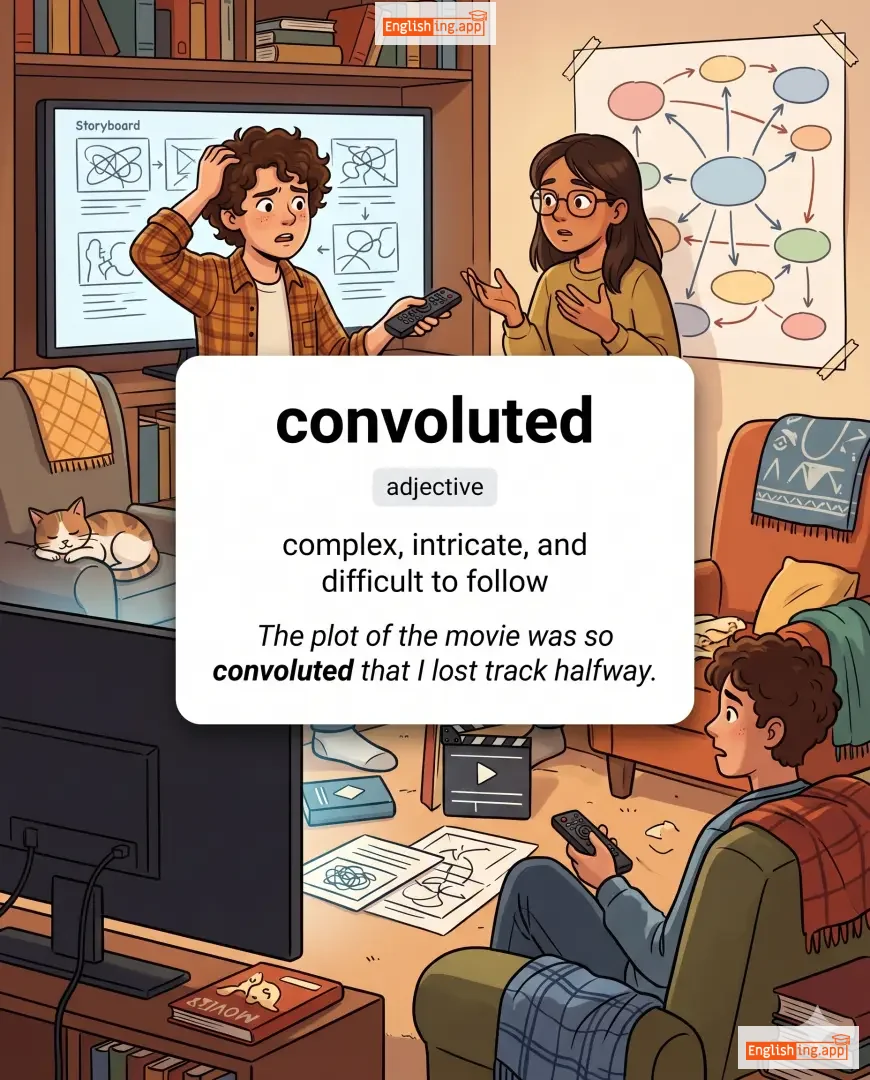
convoluted definition card — visual illustration of the meaning
adjective
/ˈkɒnvəluːtɪd/
complejo, enrevesado (kompleho, enrevesado)

complex, intricate, and difficult to follow

"The plot of the movie was so convoluted that I lost track halfway."

"La trama de la película era tan compleja que perdí el rumbo a mitad de camino." (La trama de la pelicula era tan compleja que perdi el rumbo a mitad de camino.)
noun
/ˌkɒnvəˈluːʃən/
convolución, curva compleja o estructura (convolucion, curva compleja o estructura)

a twist, coil, or a complex and intricate shape or arrangement

"The brain has many convolutions that increase its surface area."

"El cerebro tiene muchas convoluciones que aumentan su área superficial." (El cerebro tiene muchas convoluciones que aumentan su area superficial.)
verb
/kənˈvɑːlv/
enrollar o torcer juntos; enrollar o entrelazar (enrollar o torcer juntos; enrollar o entrelazar)

to roll or twist together; to coil or entwine

"The vines convolve around the tree trunk."

"Las vides se enrollan alrededor del tronco del árbol." (Las vides se enrollan alrededor del tronco del árbol.)
noun
/ˈkɒn.vɔɪ/
convoy (convoy)

a group of vehicles or ships traveling together, often for protection

"The military convoy moved through the desert at dawn."

"El convoy militar atravesó el desierto al amanecer." (El convoy militar atravesó el desierto al amanecer.)
verb
/kənˈvʌls/
sacudirse violentamente; sufrir contracciones involuntarias repentinas (sacudirse violentamente; sufrir contracciones involuntarias repentinas)

to shake violently; to suffer sudden involuntary contractions

"The patient convulsed during the seizure."

"El paciente convulsionó durante el ataque." (El paciente convulsionó durante el ataque.)
noun
/kənˈvʌl.ʃən/
convulsión (convulsión)

a sudden, violent, involuntary contraction of muscles; a seizure

"The medicine helped prevent convulsions in children."

"El medicamento ayudó a prevenir las convulsiones en los niños." (El medicamento ayudó a prevenir las convulsiones en los niños.)
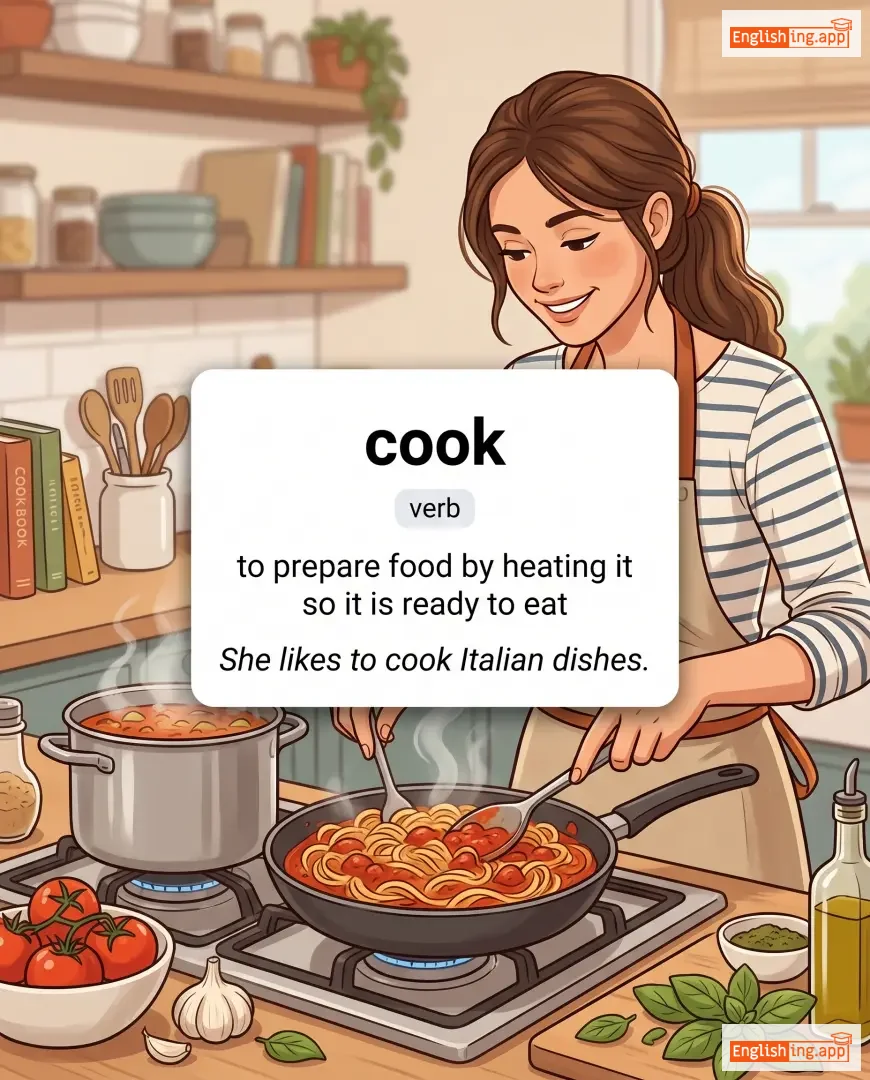
cook definition card — visual illustration of the meaning
👩‍🍳

cook (cuc)

verb
/kʊk/
cocinar (cocinar)

to prepare food by heating it so it is ready to eat

"She likes to cook Italian dishes."

"A ella le gusta cocinar platos italianos." (A ella le gusta cocinar platos italianos.)
noun
/ˈkʊkər/
cocina; olla (cocina; olla)

a device or appliance used for cooking food; a person or thing that cooks

"The rice cooker makes cooking meals much easier."

"La arrocera hace que cocinar sea más fácil." (La arrocera hace que cocinar sea mas facil)
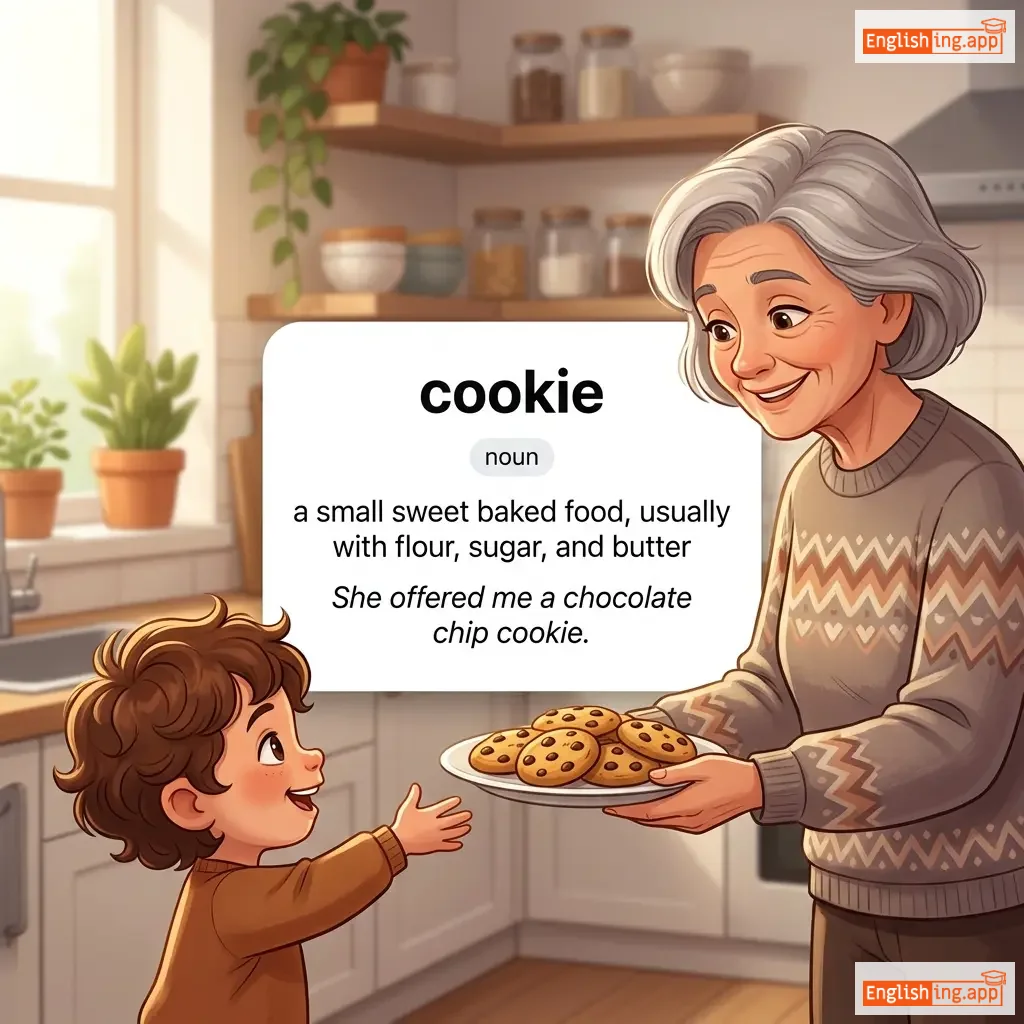
cookie definition card — visual illustration of the meaning
noun
/ˈkʊki/
galleta (galleta)

a small sweet baked food, usually with flour, sugar, and butter

"She offered me a chocolate chip cookie."

"Ella me ofreció una galleta de chispas de chocolate." (Ella me ofrecio una galleta de chispas de chocolate.)
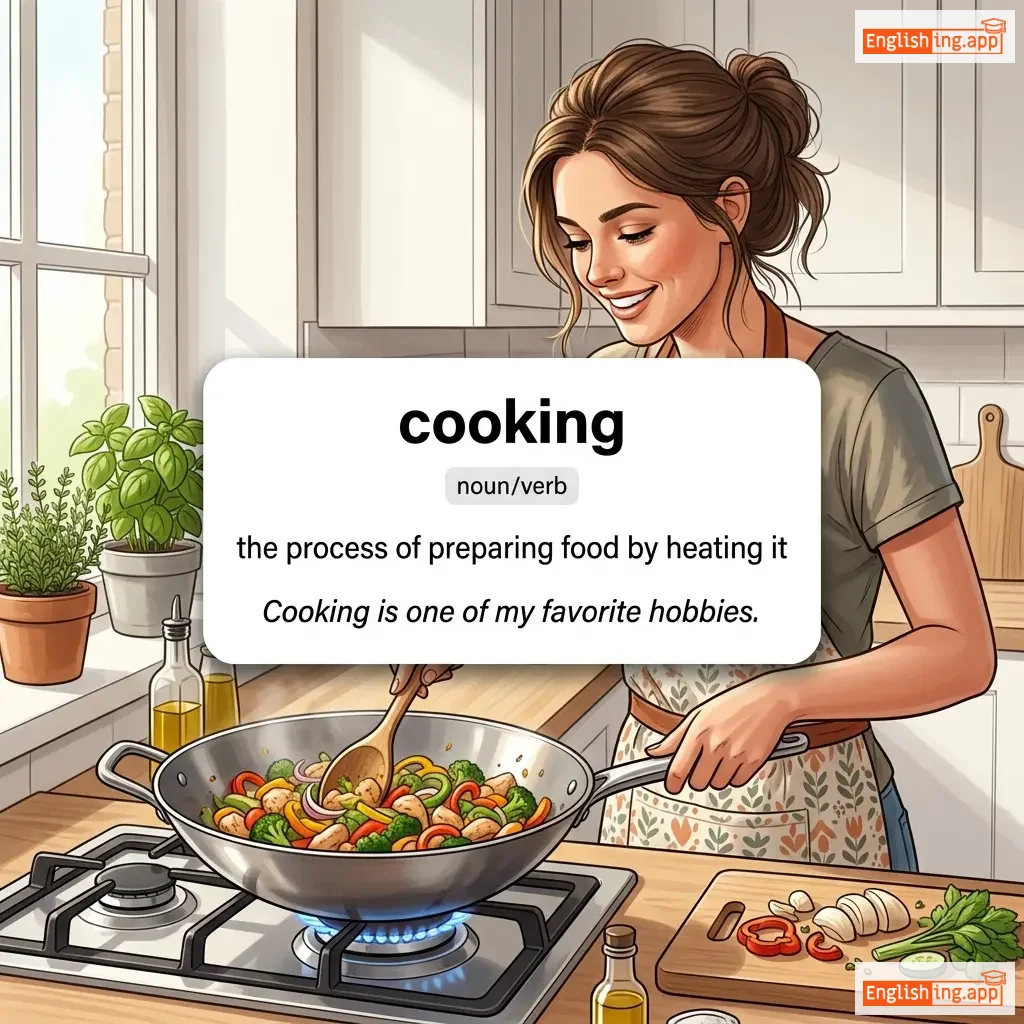
cooking definition card — visual illustration of the meaning
noun/verb
/ˈkʊkɪŋ/
cocina (cocina)

the process of preparing food by heating it

"Cooking is one of my favorite hobbies."

"Cocinar es uno de mis pasatiempos favoritos." (Cocinar es uno de mis pasatiempos favoritos.)
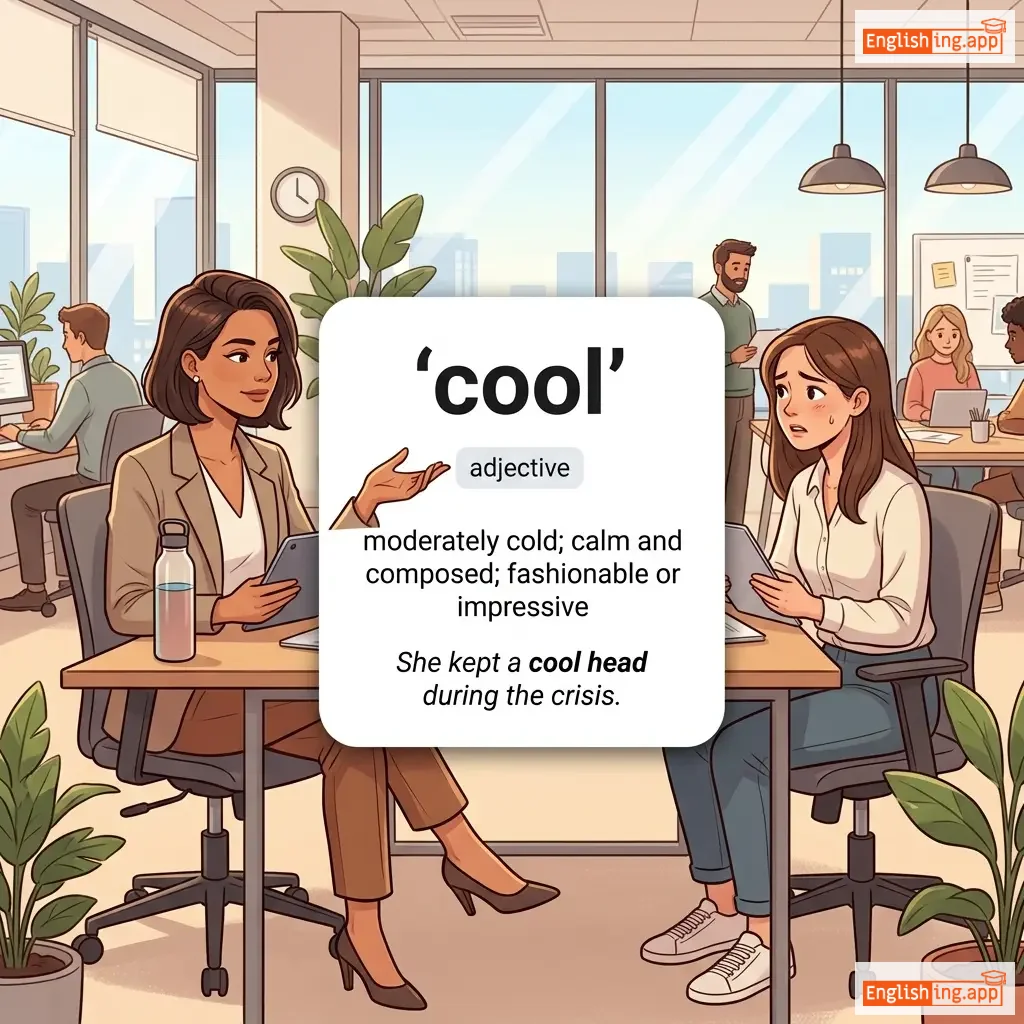
cool definition card — visual illustration of the meaning
adjective
/kuːl/
frío, tranquilo, impresionante (frio, tranquilo, impresionante)

moderately cold; calm and composed; fashionable or impressive

"She kept a cool head during the crisis."

"Ella mantuvo la cabeza fría durante la crisis." (Ella mantuvo la cabeza fria durante la crisis.)
noun
/ˈkuː.li/
cúli (kuli)

a laborer who does physical work for wages

"The cooly carried heavy bags at the railway station."

"El cúli llevó bolsas pesadas en la estación de tren." (El kuli llevo bolsas pesadas en la estacion de tren.)
noun
/kuːp/
un pequeño corral o jaula para gallinas u otras aves (un pequeno corral o jaula para gallinas u otras aves)

a small enclosure or cage for chickens or other birds

"The farmer checked the chickens in the coop every morning."

"El granjero revisaba las gallinas en el corral todas las mañanas." (El granjero revisaba las gallinas en el corral todas las mananas.)
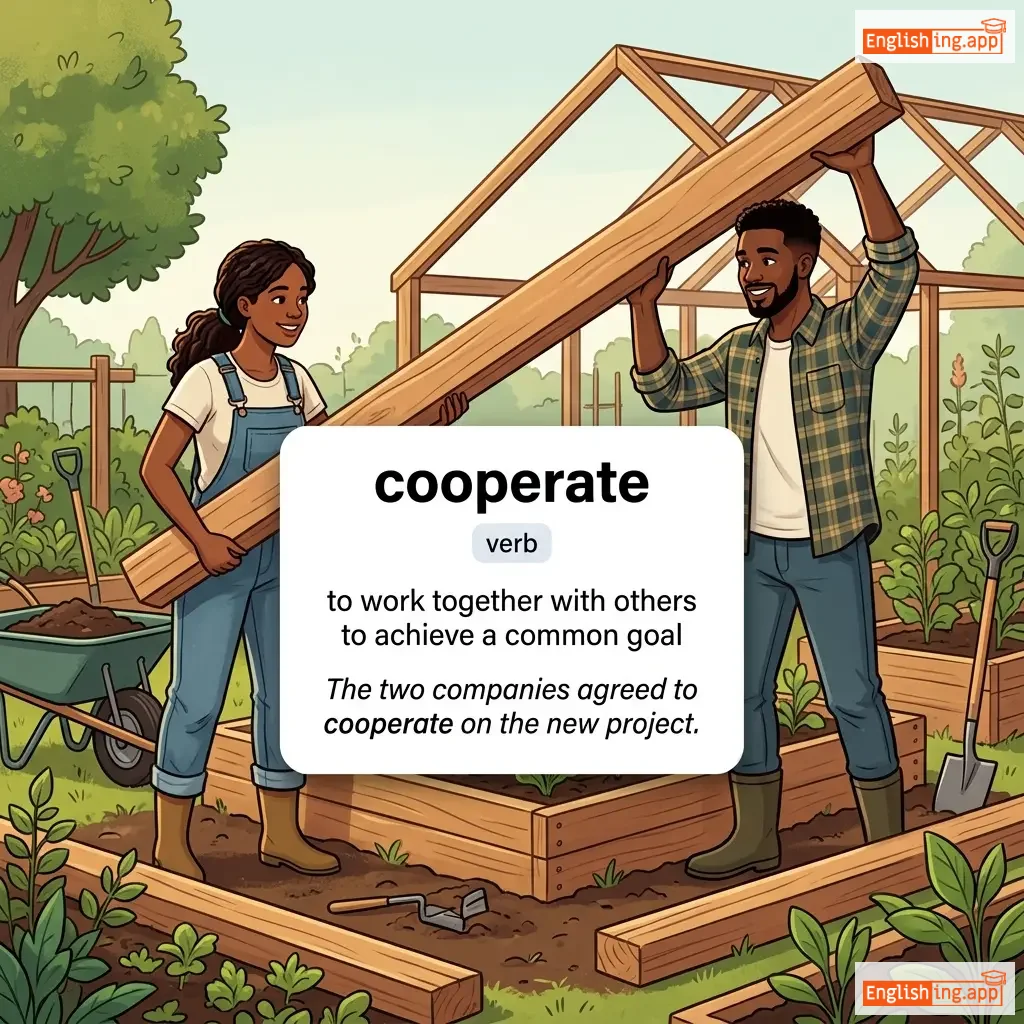
cooperate definition card — visual illustration of the meaning
verb
/kəʊˈɒpəreɪt/
cooperar (kooperar)

to work together with others to achieve a common goal

"The two companies agreed to cooperate on the new project."

"Las dos empresas acordaron cooperar en el nuevo proyecto." (Las dos empresas acordaron cooperar en el nuevo proyecto.)
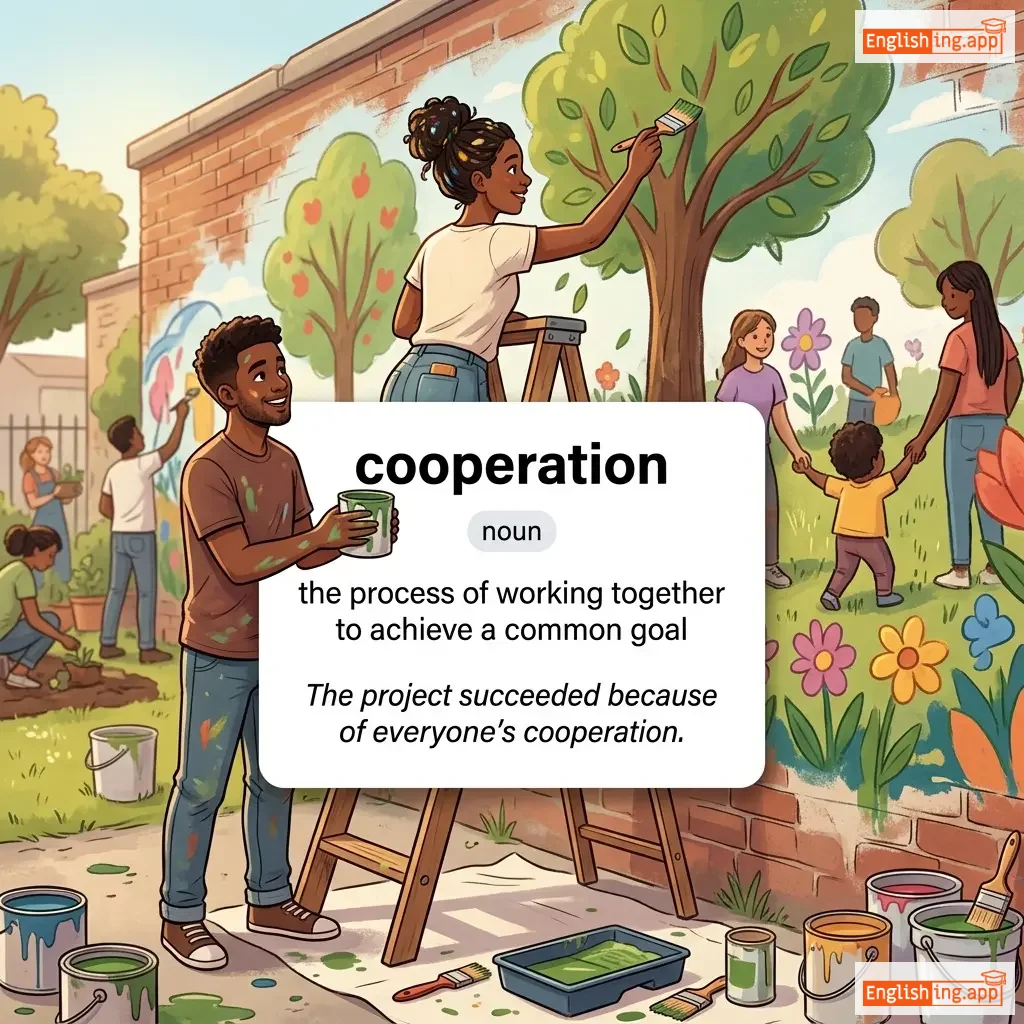
cooperation definition card — visual illustration of the meaning
noun
/koʊˌɒpəˈreɪʃn/
cooperación (cooperacion)

the process of working together to achieve a common goal

"The project succeeded because of everyone’s cooperation."

"El proyecto tuvo éxito gracias a la cooperación de todos." (El proyecto tuvo exito gracias a la cooperacion de todos.)