語彙集

英単語辞書 | 単語の意味、定義、例文

noun
/ˈkɒn.tjʊ.mə.si/
反抗, 頑固 (hankou, ganko)

stubborn refusal to obey authority

"His contumacy led to his suspension from the council."

"彼の反抗は、彼が評議会から停職された原因となった。" (Kare no hankou wa, kare ga hyougikai kara teishoku sareta gen'in to natta.)
noun
/ˈkɒn.tjʊ.mə.li/
侮辱, 軽蔑 (bujoku, keibetsu)

insulting or humiliating treatment

"He endured the contumely of his colleagues with patience."

"彼は同僚の軽蔑を忍耐強く耐えました。" (Kare wa dōryō no keibetsu o nintaizuyoku taemashita.)
verb
/kənˈtjuːz/
打撲する (daboku suru)

to bruise by striking or hitting

"He contused his arm when he fell off the bike."

"彼は自転車から落ちて腕を打撲しました。" (Kare wa jitensha kara ochite ude o daboku shimashita.)
noun
/kənˈtjuː.ʒən/
打撲、内出血 (daboku, naishukketsu)

a bruise or injury without breaking the skin

"The boxer had several contusions after the match."
"ボクサーは試合後にいくつかの打撲を受けていました。" (Bokusā wa shiai go ni ikutsuka no daboku o ukete imashita.)
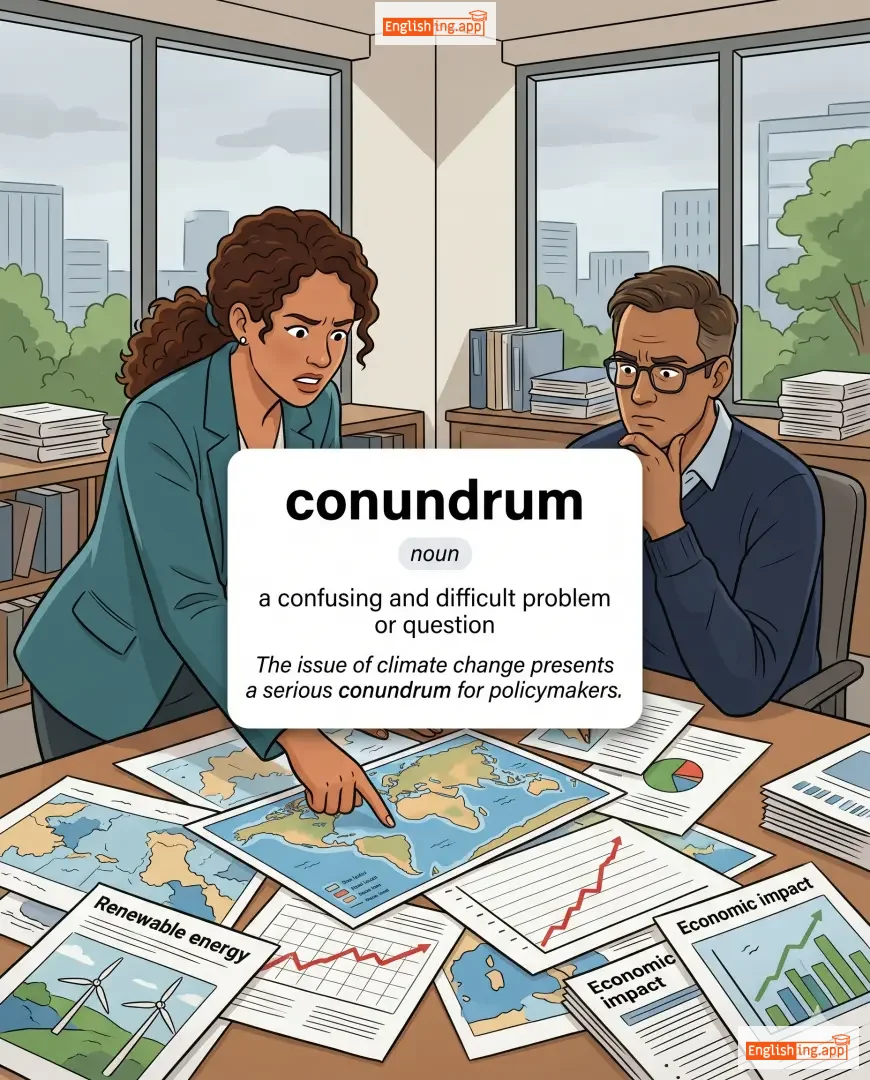
conundrum definition card — visual illustration of the meaning
noun
/kəˈnʌndrəm/
難問 (nanmon)

a confusing and difficult problem or question

"The issue of climate change presents a serious conundrum for policymakers."

"気候変動の問題は政策決定者にとって深刻な難問を呈しています。" (Kikou hendou no mondai wa seisaku kettei sha ni totte shinkoku na nanmon wo teishite imasu.)
verb
/ˌkɒnvəˈlɛs/
病気や治療後に健康と体力を回復すること (byouki ya chiryou go ni kenkou to tairyoku wo kaifuku suru koto)

to recover health and strength after illness or medical treatment

"After the surgery, she spent several weeks convalescing at home."

"手術後、彼女は家で数週間回復しました。" (Shujutsu go, kanojo wa ie de suushukan kaifuku shimashita.)
noun
/ˌkɒnvəˈlɛsns/
回復期 (kaifukuki)

the period of time spent recovering from an illness or medical treatment

"His convalescence lasted for almost two months after the accident."

"事故の後、彼の回復期はほぼ2ヶ月続きました。" (Jiko no ato, kare no kaifukuki wa hobo nikagetsu tsuzukimashita.)
adjective
/ˌkɒnvəˈlɛsnt/
回復中の、病気や治療から回復している (kaifukuchū no, byōki ya chiryo kara kaifuku shite iru)

recovering from an illness or medical treatment

"The hospital has a special ward for convalescent patients."

"病院には回復中の患者のための特別な病棟があります。" (Byōin ni wa kaifuku-chū no kanja no tame no tokubetsu na byōtō ga arimasu.)
verb
/kənˈviːn/
集まる、会議や集会を召集する (atsumaru, kaigi ya shukai wo shoushuu suru)

to come together or assemble, especially for a meeting or formal gathering

"The board will convene tomorrow to discuss the new policy."

"ボードは明日新しい方針を議論するために召集されます。" (Bōdo wa ashita atarashī hōshin o giron suru tame ni shōshū saremasu.)
noun
/kənˈviːniəns/
便利 (benri)

the state of being able to do something easily or comfortably

"Online shopping offers great convenience for busy people."

"オンラインショッピングは忙しい人々にとって大きな便利さを提供します。" (Onrain shoppingu wa isogashī hitobito ni totte ōkina benri sa o teikyō shimasu.)
adjective
/kənˈviː.ni.ənt/
便利 (benri)

suitable or easy to use; fitting in well with one's needs

"This shop is convenient for my daily needs."

"この店は私の日常的なニーズに便利です。" (Kono mise wa watashi no nichijō-tekina nīzu ni benri desu.)
convention definition card — visual illustration of the meaning
noun
/kənˈvɛnʃən/
コンベンション (konbenshon)

a widely accepted way of behaving or doing something; a formal meeting

"The annual writers' convention was held in Dhaka."

"作家の年次コンベンションはダッカで開催されました。" (Sakka no nenji konbenshon wa Dakka de kaisai saremashita.)
conventional definition card — visual illustration of the meaning
adjective
/kənˈvɛnʃənəl/
伝統的な (dentōteki na)

based on or in accordance with what is generally done or believed

"He prefers conventional medicine over alternative treatments."
"彼は代替療法よりも伝統的な医学を好みます。" (Kare wa daitai ryōhō yori mo dentōteki na igaku o konomimasu.)
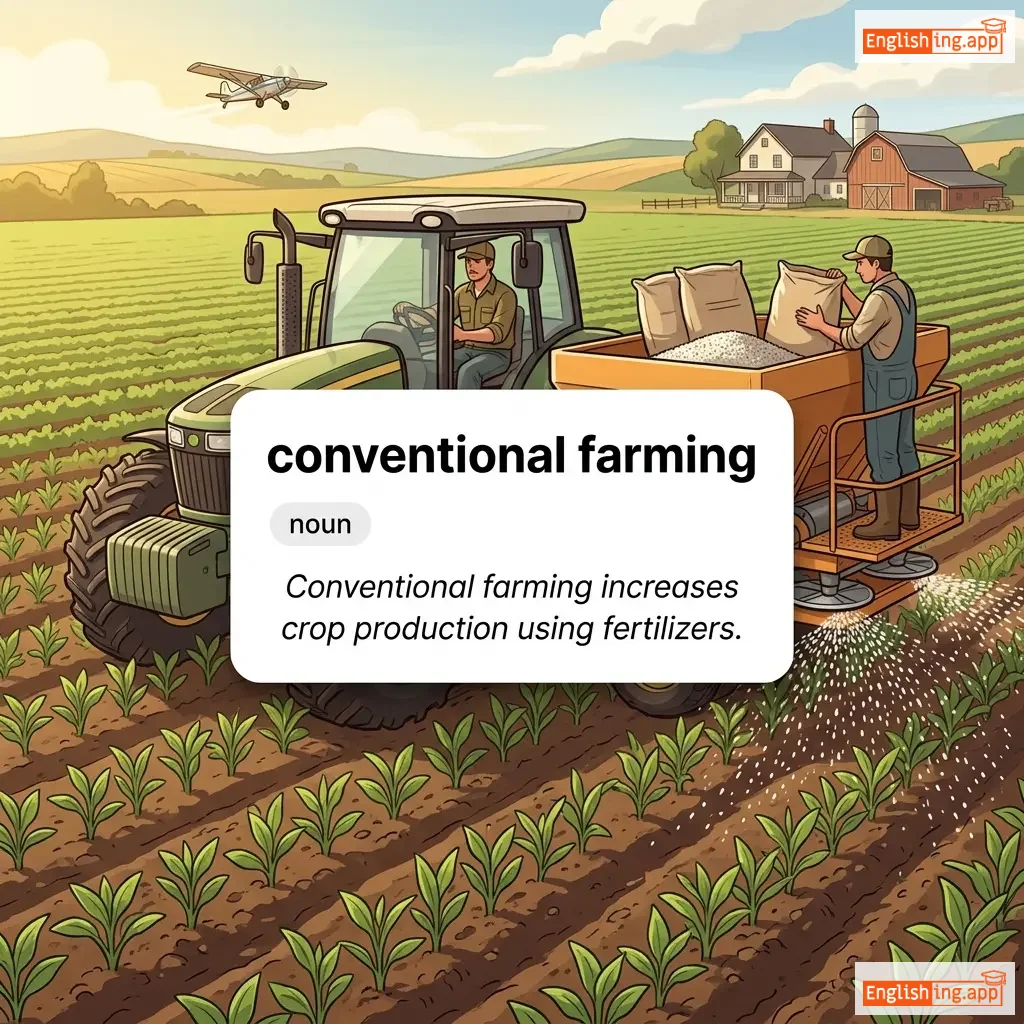
conventional farming definition card — visual illustration of the meaning
noun
/kənˈvɛn.ʃən.əl ˈfɑːr.mɪŋ/
従来型農業 (jūraigata nōgyō)

Traditional farming method using synthetic fertilizers, pesticides, and modern technology.

"Conventional farming increases crop production using fertilizers."
"従来型農業は肥料を使って作物の生産を増加させる。" (Jūraigata nōgyō wa hiryo o tsukatte sakumotsu no seisan o zōka saseru.)
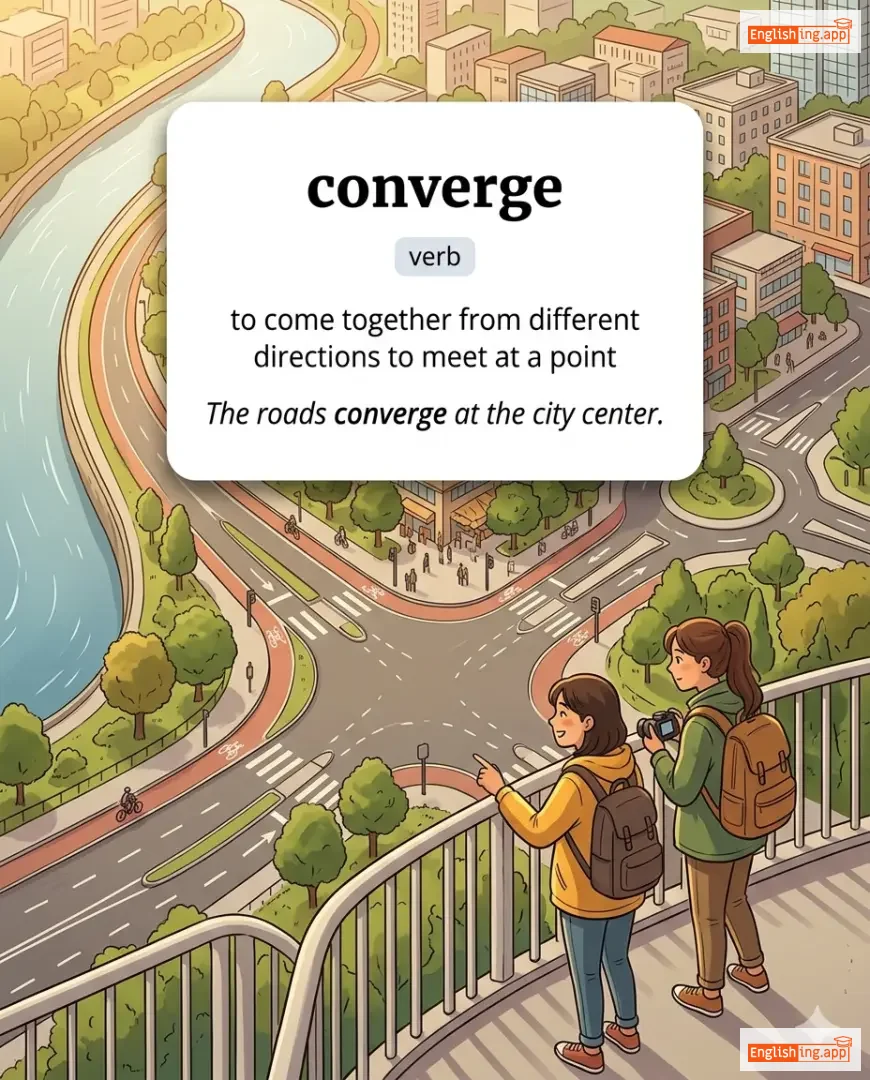
converge definition card — visual illustration of the meaning
verb
/kənˈvɜːrdʒ/
収束する (shūsoku suru)

to come together from different directions to meet at a point

"The roads converge at the city center."

"道路は市の中心で交差します。" (Dōro wa shi no chūshin de kōsa shimasu.)
convergence definition card — visual illustration of the meaning
noun
/kənˈvɜː.dʒəns/
収束 (shūshoku)

the process of coming together or becoming similar

"The convergence of technology and education is creating new opportunities."

"技術と教育の収束は新しい機会を生み出しています。" (Gijutsu to kyōiku no shūshoku wa atarashī kikai o umidashiteimasu.)
adjective
/kənˈvɜːrdʒənt/
収束する (shūsoku suru)

tending to move toward a common point or result

"The two rivers have a convergent path before entering the lake."

"2つの川は湖に入る前に収束する道を持っています。" (Futatsu no kawa wa mizuumi ni hairu mae ni shūsoku suru michi o motteimasu.)
adjective
/kənˈvɜːrsənt/
熟知、精通 (jukuchi, seikou)

familiar with or knowledgeable about something

"She is conversant with the latest developments in technology."

"彼女は最新の技術の進展に精通しています。" (Kanojo wa saishin no gijutsu no shinten ni seikou shiteimasu.)
noun
/ˌkɒnvəˈseɪʃn/
会話 (kaiga)

an informal talk between two or more people, in which ideas, feelings, and thoughts are exchanged

"We had a long conversation about future plans."

"私たちは未来の計画について長い会話をしました。" (Watashitachi wa mirai no keikaku ni tsuite nagai kaiwa o shimashita.)
converse definition card — visual illustration of the meaning
verb
/kənˈvɜːrs/
会話する (kaiwa suru)

to engage in spoken exchange of ideas or talk

"They often converse about literature and art."

"彼らはしばしば文学と芸術について会話を交わします。" (Karera wa shibashiba bungaku to geijutsu ni tsuite kaiwa o kawashimasu.)
adverb
/kənˈvɜːrsli/
逆に (gyaku ni)

in an opposite or contrary manner

"He is rich, conversely, his brother struggles financially."
"彼は金持ちだが、逆に彼の兄は経済的に苦しんでいる。" (Kare wa kanemochi da ga, gyaku ni kare no ani wa keizaiteki ni kurushinde iru.)
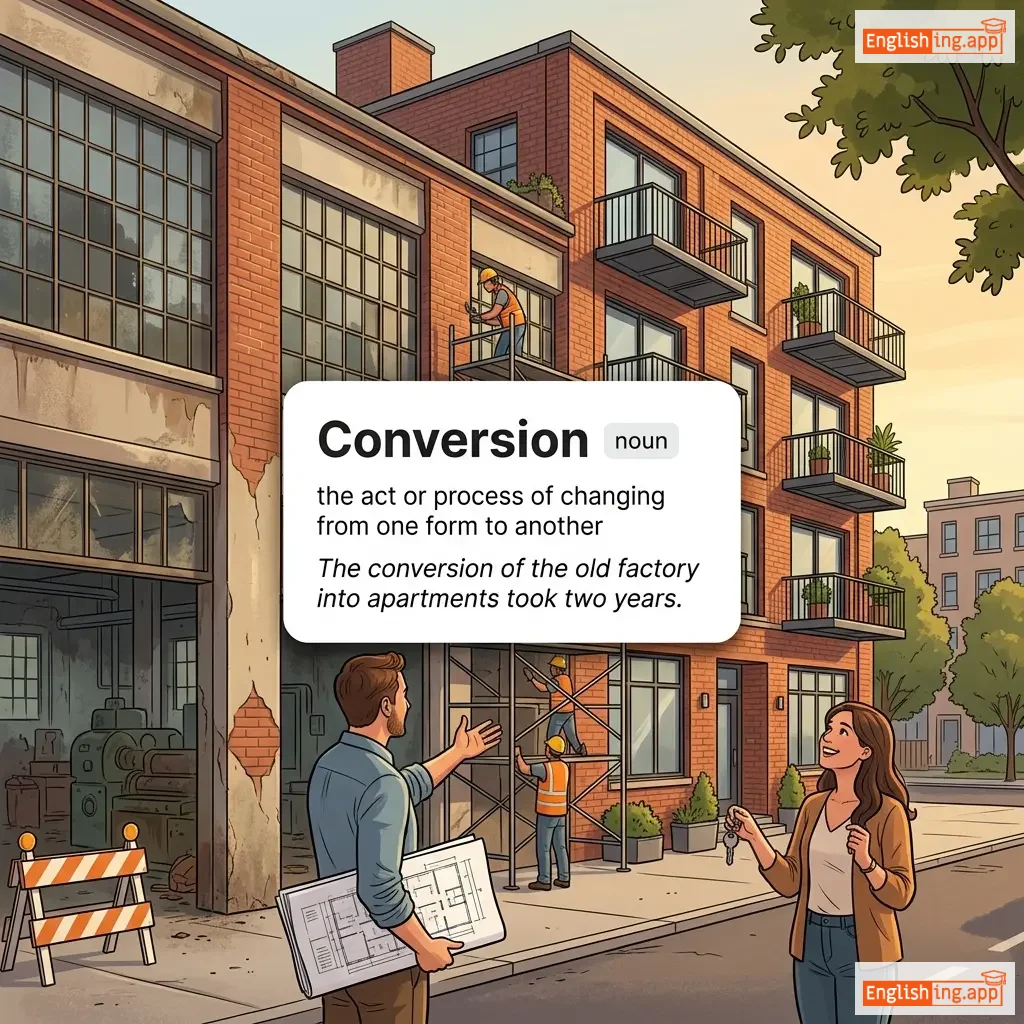
Conversion definition card — visual illustration of the meaning
noun
/kənˈvɜːrʒən/
転換, 変化 (tenkan, henka)

the act or process of changing from one form to another

"The conversion of the old factory into apartments took two years."

"古い工場をアパートに転換するのに2年かかりました。" (Furui kōjō o apāto ni tenkan suru no ni 2-nen kakarimashita.)
convert definition card — visual illustration of the meaning
verb
/kənˈvɜːrt/
変換する (henkan suru)

to change something into a different form or purpose

"He converted his garage into a small studio."

"彼は自分のガレージを小さなスタジオに変えました。" (Kare wa jibun no garēji o chīsana sutajio ni kaemashita.)
noun
/kənˈvɜːrtər/
変換器 (henkanki)

a device or person that changes something from one form, system, or use to another; a tool that converts data, energy, or materials

"The engineer used a converter to change AC power into DC power."

"エンジニアは交流電力を直流に変えるために変換器を使いました。" (enjinia wa kouryuu denryoku o chiryuu ni kaeru tame ni henkanki o tsukaimashita)
adjective
/kənˈvɜːrtəbl/
オープンカー、屋根が折りたためる車 (ōpun kā, yane ga oritatameru kuruma)

able to be changed into a different form or use; also a car with a roof that can be folded down

"She drove her new convertible along the coastal road."

"彼女は新しいオープンカーで沿岸道路を走った。" (Kanojo wa atarashī ōpun kā de enkan dōro o hashitta.)
convex definition card — visual illustration of the meaning
adjective
/ˈkɒnvɛks/
凸状の、外向きに丸みを帯びた (totsujō no, gaimuki ni marumi o obita)

curved or rounded outward

"The lens has a convex shape to focus light."

"レンズは光を焦点を合わせるために凸の形状をしています。" (Renzu wa hikari o shōten o awaseru tame ni totsu no keijō o shiteimasu.)
convey definition card — visual illustration of the meaning
verb
/kənˈveɪ/
伝える, 運ぶ (tsutaeru, hakobu)

to communicate or make known; to transport or carry

"He tried to convey his feelings through a letter."
"彼は手紙を通じて感情を伝えようとした。" (Kare wa tegami o tōjite kanjō o tsutaeyō to shita.)
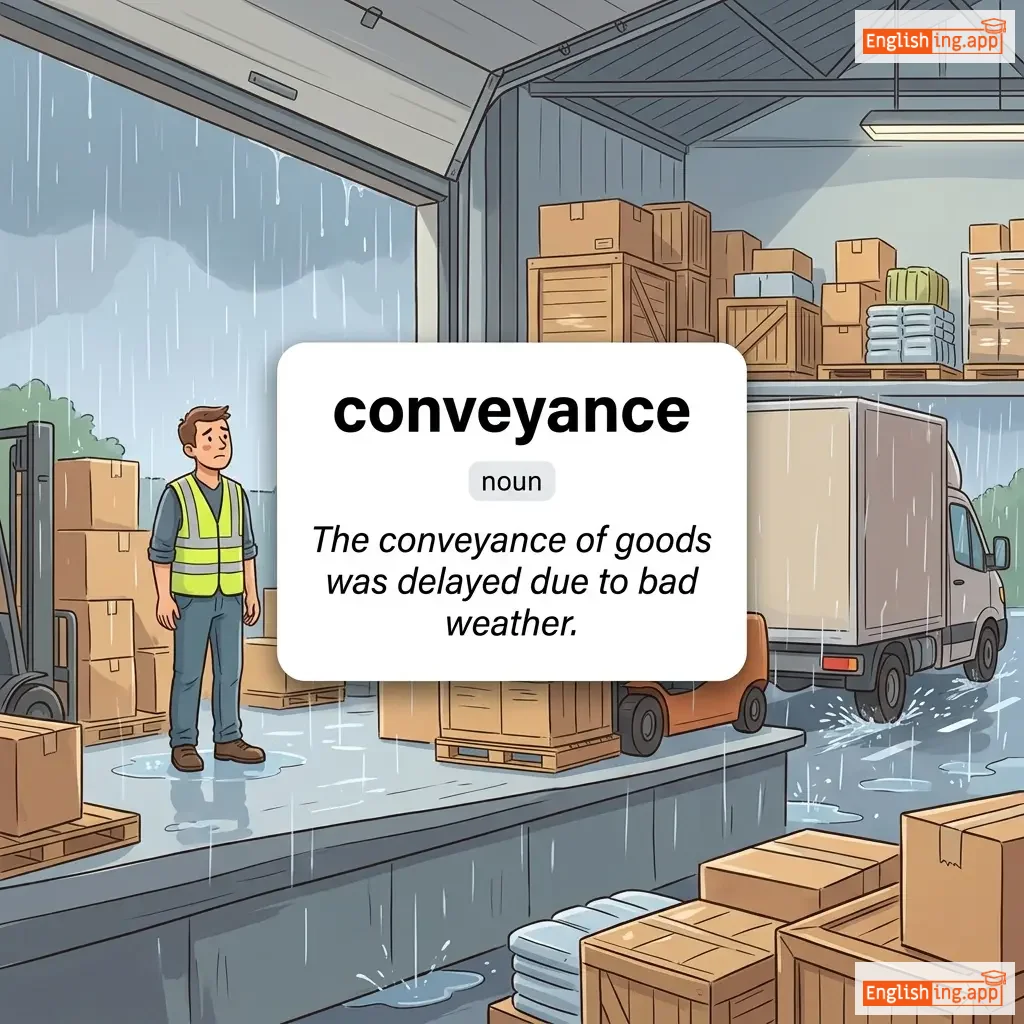
conveyance definition card — visual illustration of the meaning
noun
/kənˈveɪəns/
輸送, 交通手段, 車両 (yusou, koutsuu shudan, sharyou)

the act of transporting or communicating something; a vehicle or means of transport

"The conveyance of goods was delayed due to bad weather."

"悪天候のため、貨物の輸送は遅れました。" (Akutenkou no tame, kamotsu no yusou wa okuremashita.)
verb
/ˈkɒnvɪkt/
有罪判決を下す (yūzai hanketsu wo kudasu)

to find someone guilty of a crime in a court of law

"The court convicted him of theft."
"裁判所は彼を窃盗罪で有罪とした。" (Saibansho wa kare wo settō-zai de yūzai to shita.)
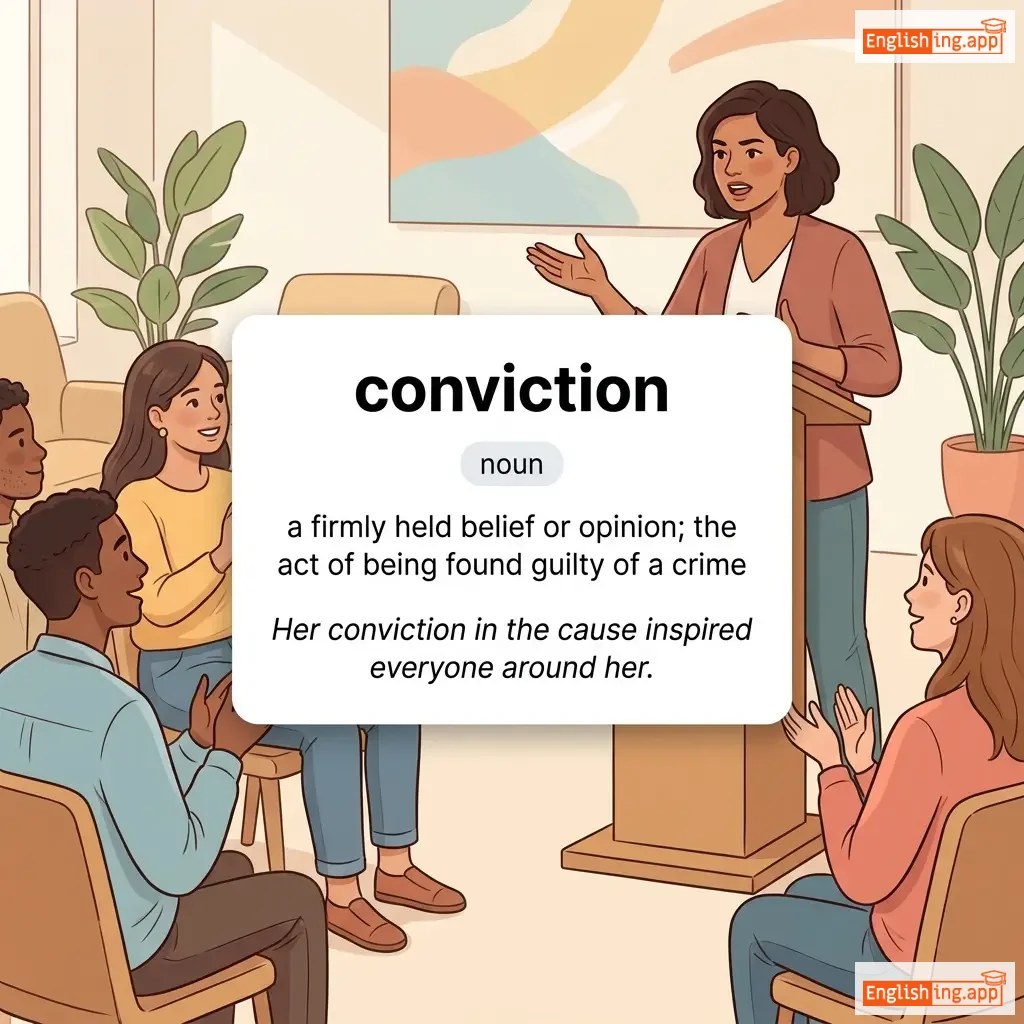
conviction definition card — visual illustration of the meaning
noun
/kənˈvɪkʃən/
確固たる信念, 有罪判決 (kakkotaru shinnen, yūzai hanketsu)

a firmly held belief or opinion; the act of being found guilty of a crime

"Her conviction in the cause inspired everyone around her."

"彼女のその理由への確固たる信念は、周りの全ての人々に刺激を与えました。" (Kanojo no sono riyū e no kakkotaru shinnen wa, mawari no subete no hitobito ni shigeki o ataemashita.)
verb
/kənˈvɪns/
納得させる (nattoku saseru)

to make someone believe or feel certain about something

"She convinced him to attend the meeting."

"彼女は彼に会議に参加するように納得させた。" (Kanojo wa kare ni kaigi ni sanka suru you ni nattoku saseta.)
adjective
/kənˈvɪnst/
確信した (kakushin shita)

completely certain or sure about something

"She was convinced that he was telling the truth."

"彼女は彼が真実を言っていると確信していた。" (Kanojo wa kare ga shinjitsu o itte iru to kakushin shite ita.)
adjective
/kənˈvɪnsɪŋ/
説得力がある (settoryoku ga aru)

having the ability to make someone believe that something is true or real

"Her argument was very convincing."
"彼女の議論は非常に説得力があった。" (Kanojo no giron wa hijō ni settoryoku ga atta.)
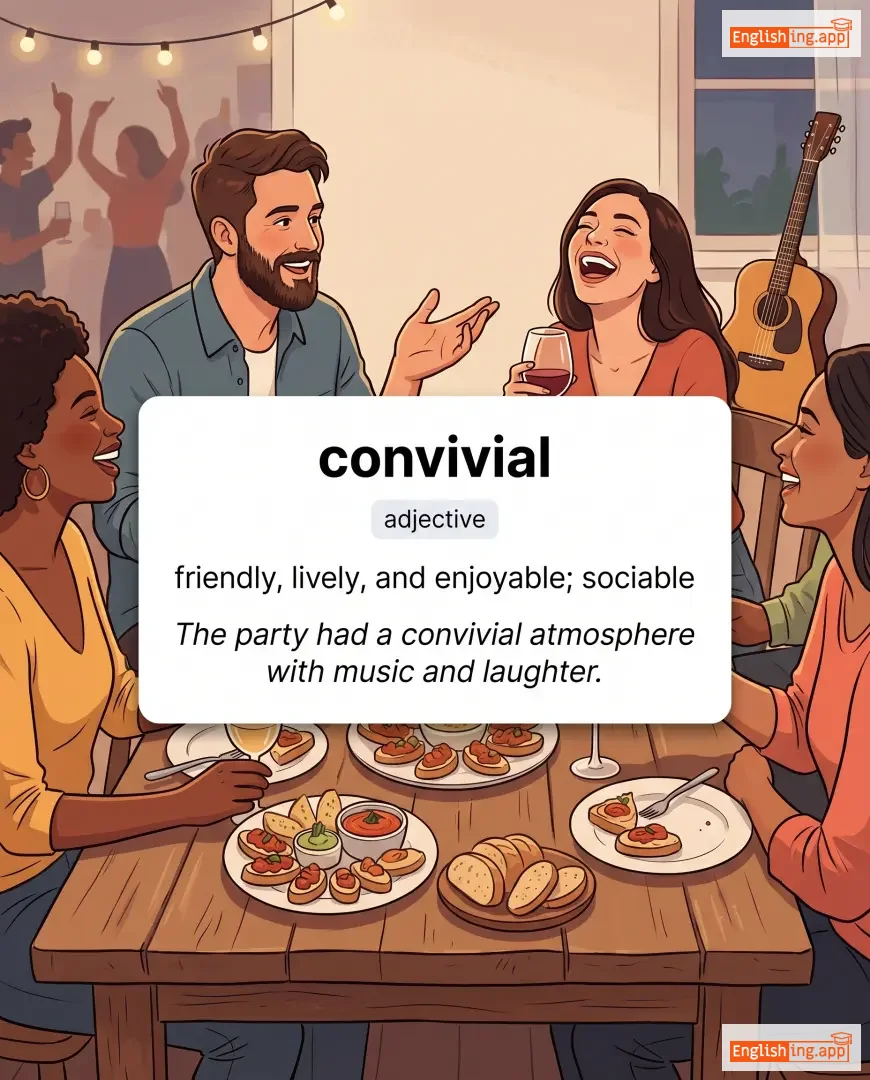
convivial definition card — visual illustration of the meaning
adjective
/kənˈvɪviəl/
友好的で生き生きとした、楽しい; 社交的 (yūkō-teki de ikigiki to shita, tanoshī; shakō-teki)

friendly, lively, and enjoyable; sociable

"The party had a convivial atmosphere with music and laughter."

"パーティーは音楽と笑いに満ちたコンヴィヴィアルな雰囲気でした。" (Pātī wa ongaku to warai ni michita konviviaru na fun'iki deshita.)
verb
/kənˈvoʊk/
召集する (shoushuu suru)

to call together or summon a meeting or assembly

"The committee convoked an emergency session to discuss the crisis."

"委員会は危機を議論するために緊急セッションを召集しました。" (Iinkai wa kiki wo giron suru tame ni kinkyu sesshon wo shoushuu shimashita.)
convoluted definition card — visual illustration of the meaning
adjective
/ˈkɒnvəluːtɪd/
複雑で入り組んだ (fukuzatsu de irikunda)

complex, intricate, and difficult to follow

"The plot of the movie was so convoluted that I lost track halfway."

"映画のプロットはとても複雑で、途中で方向を見失ってしまった。" (Eiga no purotto wa totemo fukuzatsu de, tochu de hokou o miushinatte shimatta.)
noun
/ˌkɒnvəˈluːʃən/
コンボリューション、複雑な曲線または構造 (konboryūshon, fukuzatsu na kyokusen mata wa kōzō)

a twist, coil, or a complex and intricate shape or arrangement

"The brain has many convolutions that increase its surface area."

"脳には多くのコンボリューションがあり、その表面積を増加させます。" (Nō ni wa ōku no konboryūshon ga ari, sono hyōmenshiki o zōka sasemasu.)
verb
/kənˈvɑːlv/
一緒に巻いたり、ねじったりする; 巻きつけたり、絡めたりする (Issho ni makitari, nejittari suru; makitsukettari, karamettari suru)

to roll or twist together; to coil or entwine

"The vines convolve around the tree trunk."

"ツルは木の幹の周りを巻きつけます。" (Tsuru wa ki no mikiri no mawari o makitsukemasu.)
noun
/ˈkɒn.vɔɪ/
コンボイ (konboi)

a group of vehicles or ships traveling together, often for protection

"The military convoy moved through the desert at dawn."

"軍のコンボイは夜明けに砂漠を横断しました。" (Gun no konboi wa yoake ni sabaku o ōdan shimashita.)
verb
/kənˈvʌls/
激しく震える; 突然の不随意な収縮に苦しむ (hageshiku furu; totsuzen no fuzui na shūshuku ni kurushimu)

to shake violently; to suffer sudden involuntary contractions

"The patient convulsed during the seizure."

"患者は発作中に震えました。" (Kanja wa hōsachū ni furuemashita.)
noun
/kənˈvʌl.ʃən/
痙攣 (keiren)

a sudden, violent, involuntary contraction of muscles; a seizure

"The medicine helped prevent convulsions in children."
"薬は子供たちの痙攣を防ぐのに役立ちました。" (Kusuri wa kodomotachi no keiren o fusegu no ni yakudachimashita.)
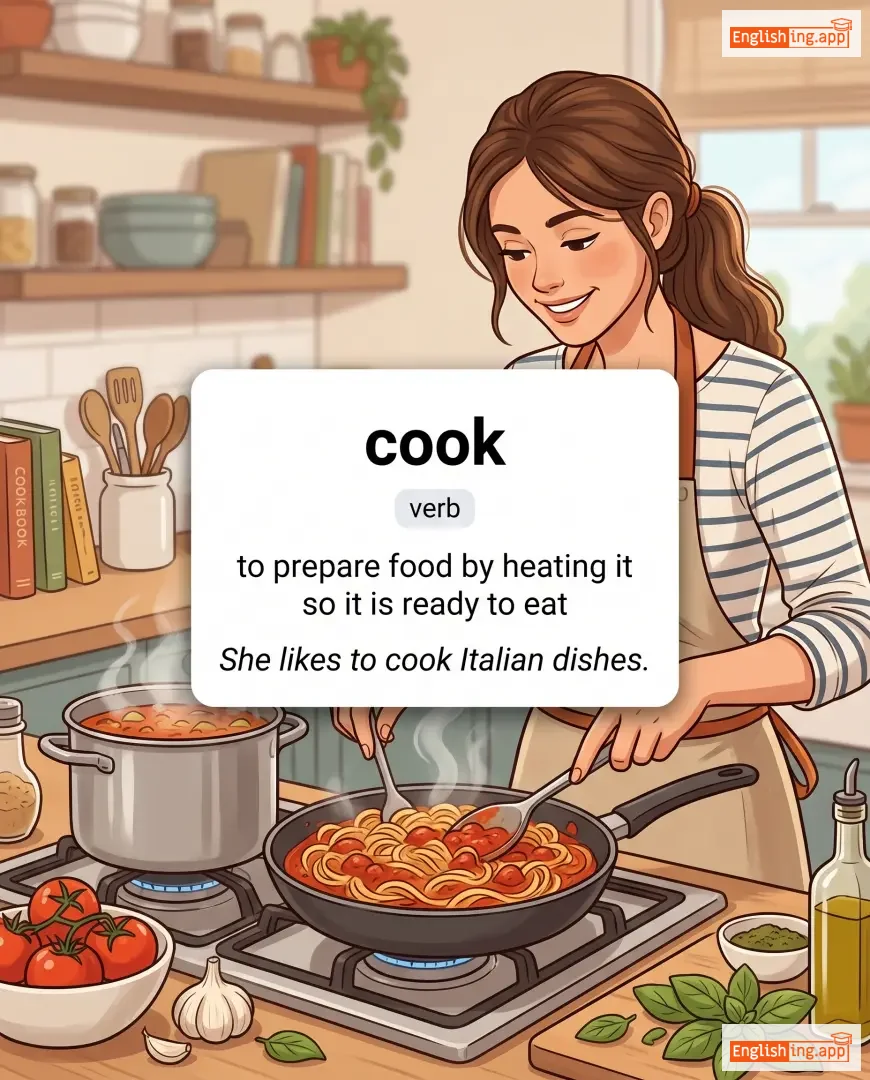
cook definition card — visual illustration of the meaning
👩‍🍳

cook (kuku)

verb
/kʊk/
料理する (ryōri suru)

to prepare food by heating it so it is ready to eat

"She likes to cook Italian dishes."

"彼女はイタリア料理を作るのが好きです。" (Kanojo wa Itaria ryōri o tsukuru no ga suki desu.)
noun
/ˈkʊkər/
調理器; 炊飯器 (chouriki; suihanki)

a device or appliance used for cooking food; a person or thing that cooks

"The rice cooker makes cooking meals much easier."
"炊飯器は料理をとても簡単にします。" (suihanki wa ryouri o totemo kantan ni shimasu)
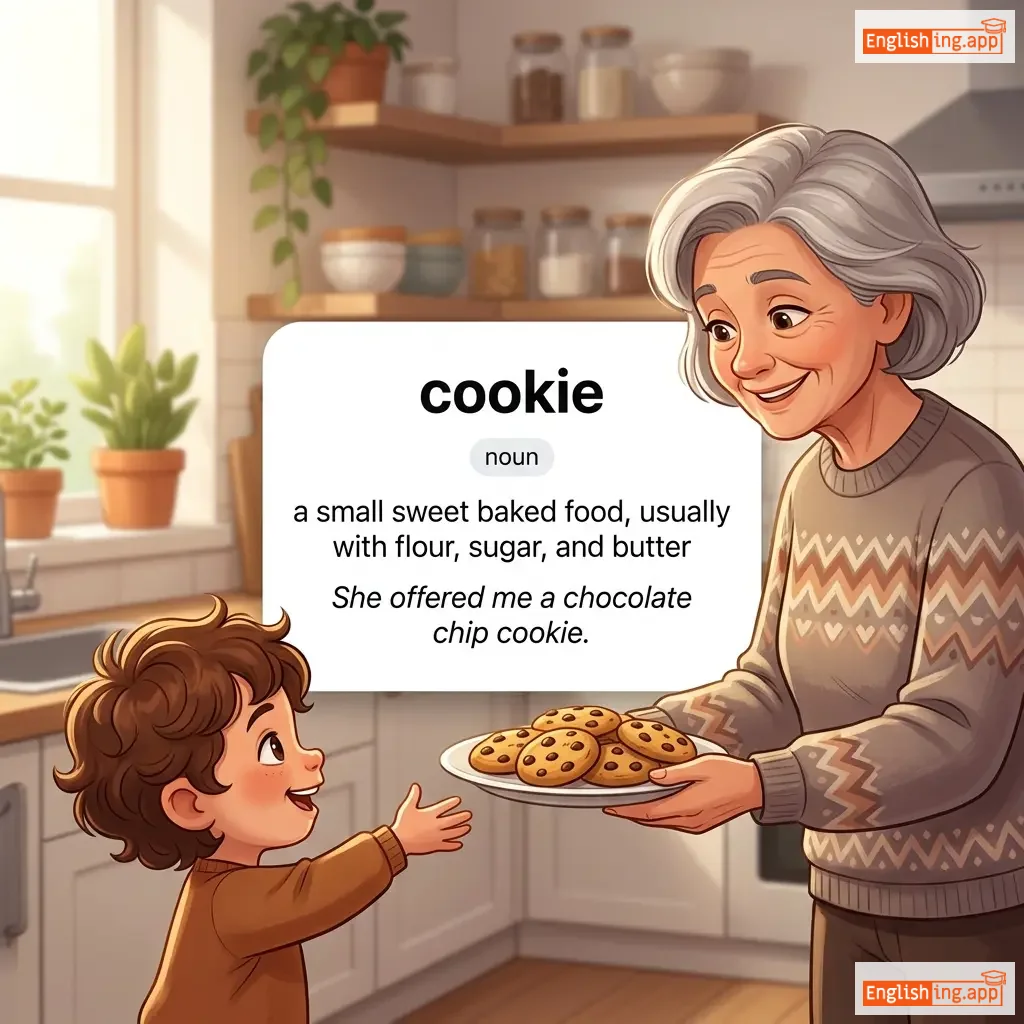
cookie definition card — visual illustration of the meaning
noun
/ˈkʊki/
クッキー (kukkī)

a small sweet baked food, usually with flour, sugar, and butter

"She offered me a chocolate chip cookie."
"彼女は私にチョコチップクッキーをくれました。" (Kanojo wa watashi ni choko chippu kukkī o kuremashita.)
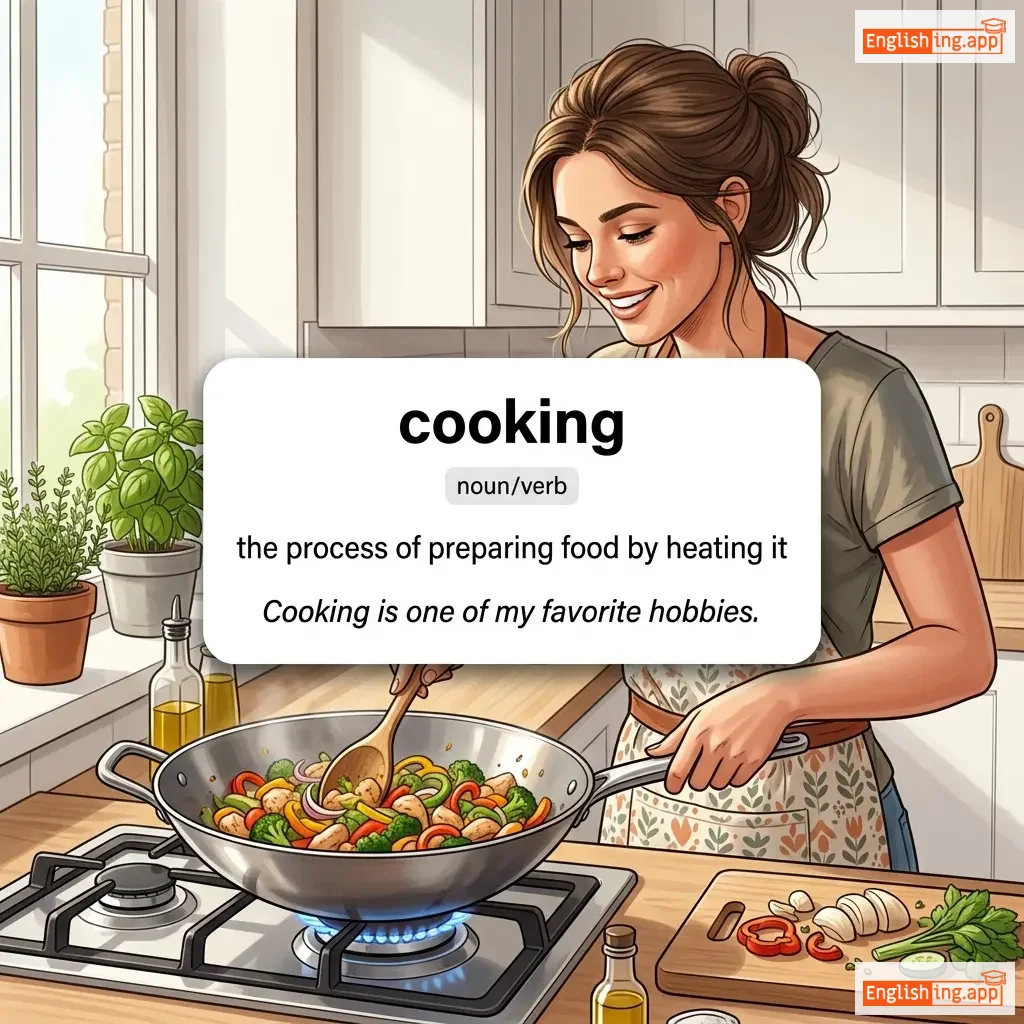
cooking definition card — visual illustration of the meaning
noun/verb
/ˈkʊkɪŋ/
料理 (ryōri)

the process of preparing food by heating it

"Cooking is one of my favorite hobbies."

"料理は私の好きな趣味の一つです。" (Ryōri wa watashi no sukina shumi no hitotsu desu.)
cool definition card — visual illustration of the meaning
adjective
/kuːl/
冷たい, 落ち着いた, 印象的 (tsumetai, ochitsuita, inshōteki)

moderately cold; calm and composed; fashionable or impressive

"She kept a cool head during the crisis."

"彼女は危機の中で冷静を保った。" (Kanojo wa kiki no naka de reisei o tamotta.)
noun
/ˈkuː.li/
クーリー (Kūri)

a laborer who does physical work for wages

"The cooly carried heavy bags at the railway station."

"クーリーは駅で重い荷物を運んでいました。" (Kūri wa eki de omoi nimotsu o hakondeimashita.)
noun
/kuːp/
鶏や他の鳥のための小さな囲いまたは小屋 (niwatori ya hoka no tori no tame no chiisana kakoi matawa koya)

a small enclosure or cage for chickens or other birds

"The farmer checked the chickens in the coop every morning."
"農夫は毎朝小屋の中の鶏をチェックしていました。" (Nōfu wa mai asa koya no naka no niwatori o chekku shite imashita.)
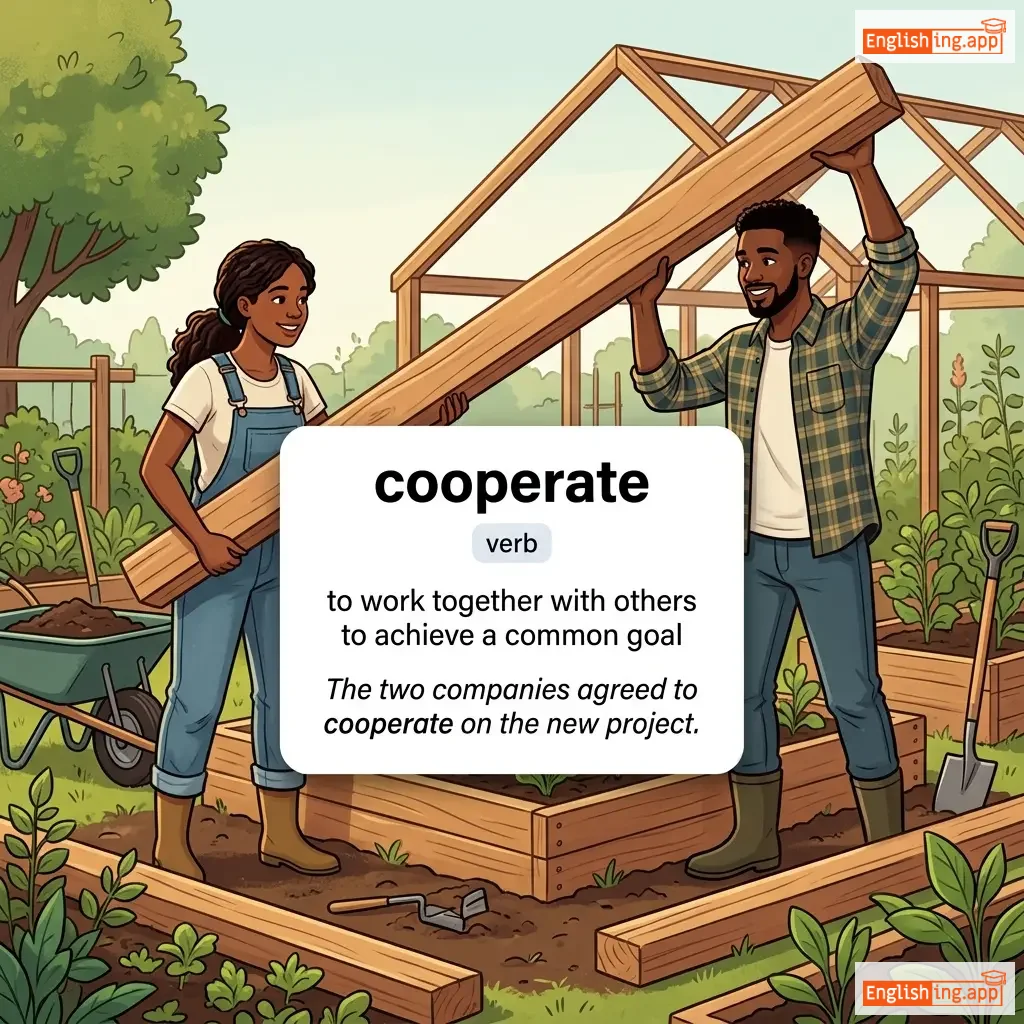
cooperate definition card — visual illustration of the meaning
verb
/kəʊˈɒpəreɪt/

to work together with others to achieve a common goal

"The two companies agreed to cooperate on the new project."

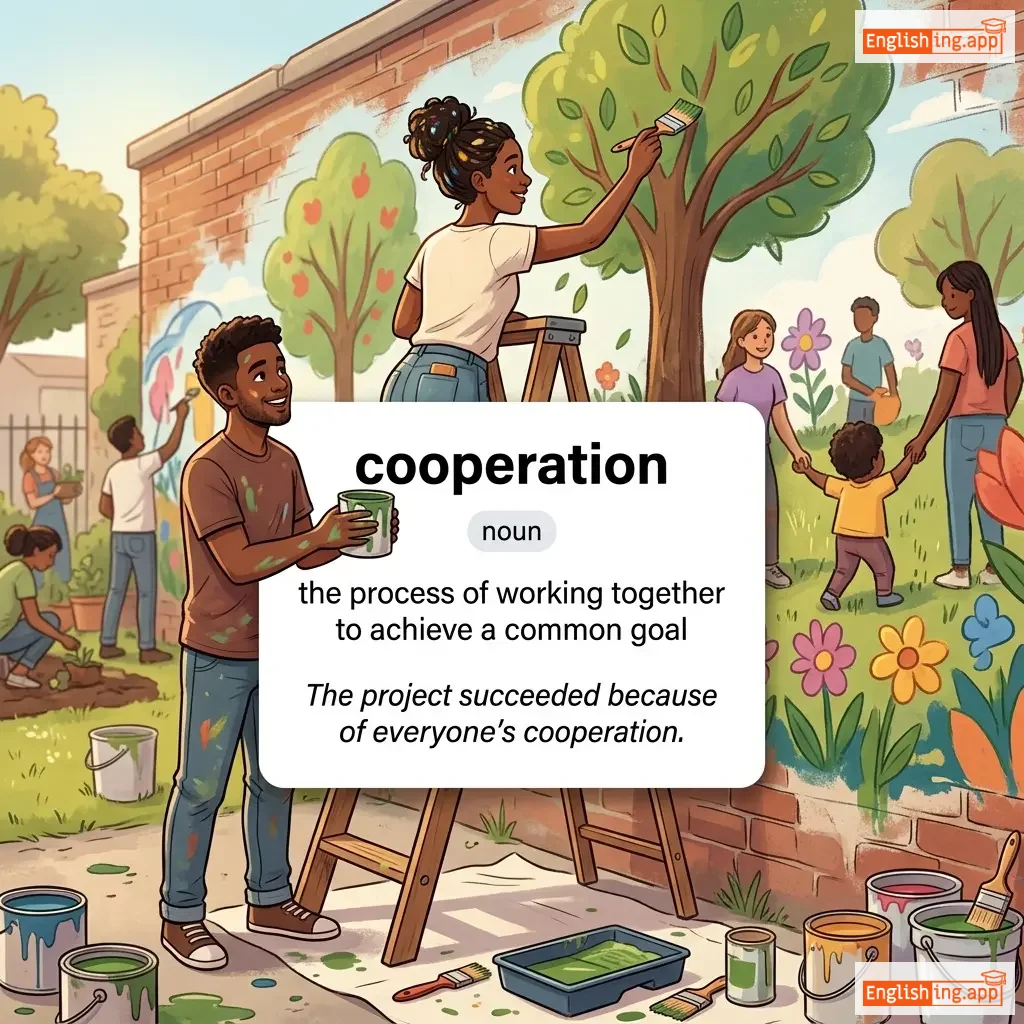
cooperation definition card — visual illustration of the meaning
noun
/koʊˌɒpəˈreɪʃn/
協力 (kyoryoku)

the process of working together to achieve a common goal

"The project succeeded because of everyone’s cooperation."

"プロジェクトは全員の協力のおかげで成功しました。" (purojekuto wa zen'in no kyouryoku no okage de seikou shimashita.)