語彙集

英単語辞書 | 単語の意味、定義、例文

adjective
/kəʊˈɒpərətɪv/
協力的 (kyōryokuteki)

willing to work or act together with others for a common purpose

"She was very cooperative during the interview process."

"彼女は面接の過程で非常に協力的でした。" (Kanojo wa mensetsu no katei de hijō ni kyōryokuteki deshita.)
verb
/koʊˈɔːrdɪˌneɪt/
調整する (chousei suru)

to organize people or things so that they work together effectively

"We need to coordinate our efforts to finish the project on time."

"私たちはプロジェクトを時間通りに終わらせるために努力を調整する必要があります。" (Watashitachi wa purojekuto o jikan doori ni owaraseru tame ni doryoku o chousei suru hitsuyou ga arimasu.)
noun
/kəʊˌɔːdɪˈneɪʃən/
調整 (chōsei)

the process of organizing different elements to work together effectively

"The coordination between the teams was flawless."

"チーム間の調整は完璧でした。" (Chīmu kan no chōsei wa kanpeki deshita.)
noun
/koʊˈɔːrdɪˌneɪtər/
コーディネーター (ko-dine-ta)

a person who organizes people or activities so that they work well together

"The event coordinator managed everything perfectly."

"イベントのコーディネーターはすべてを完璧に管理しました。" (Ibento no ko-dine-ta wa subete o kanpeki ni kanri shimashita.)
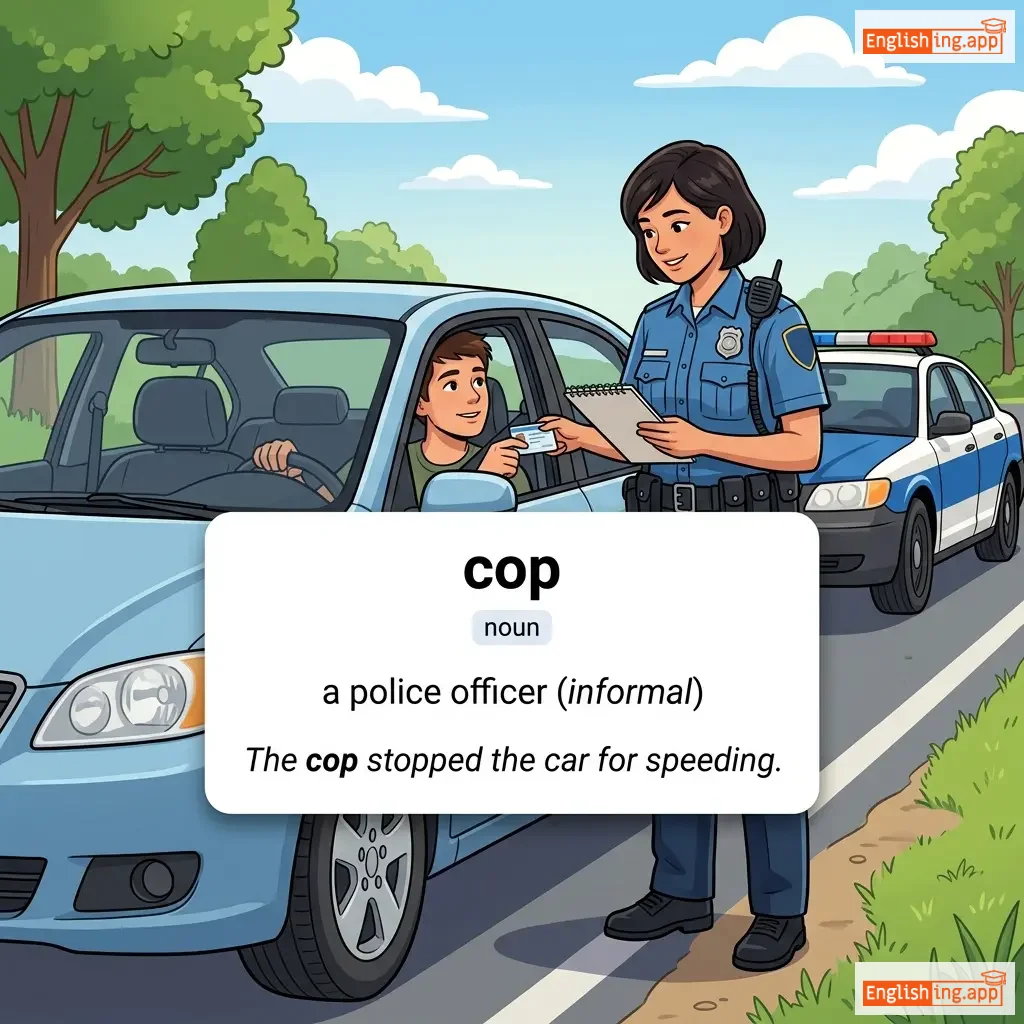
cop definition card — visual illustration of the meaning
noun
/kɒp/
警官 (keikan)

a police officer (informal)

"The cop stopped the car for speeding."

"警官はスピード違反で車を止めました。" (Keikan wa supīdo ihan de kuruma o tomemashita.)
verb
/koʊp/
対処する (taisho suru)

to deal effectively with something difficult

"She had to cope with a lot of pressure at work."
"彼女は仕事で大きなプレッシャーに対処しなければなりませんでした。" (Kanojo wa shigoto de ōkina purettoshā ni taisho shinakereba narimasen deshita.)
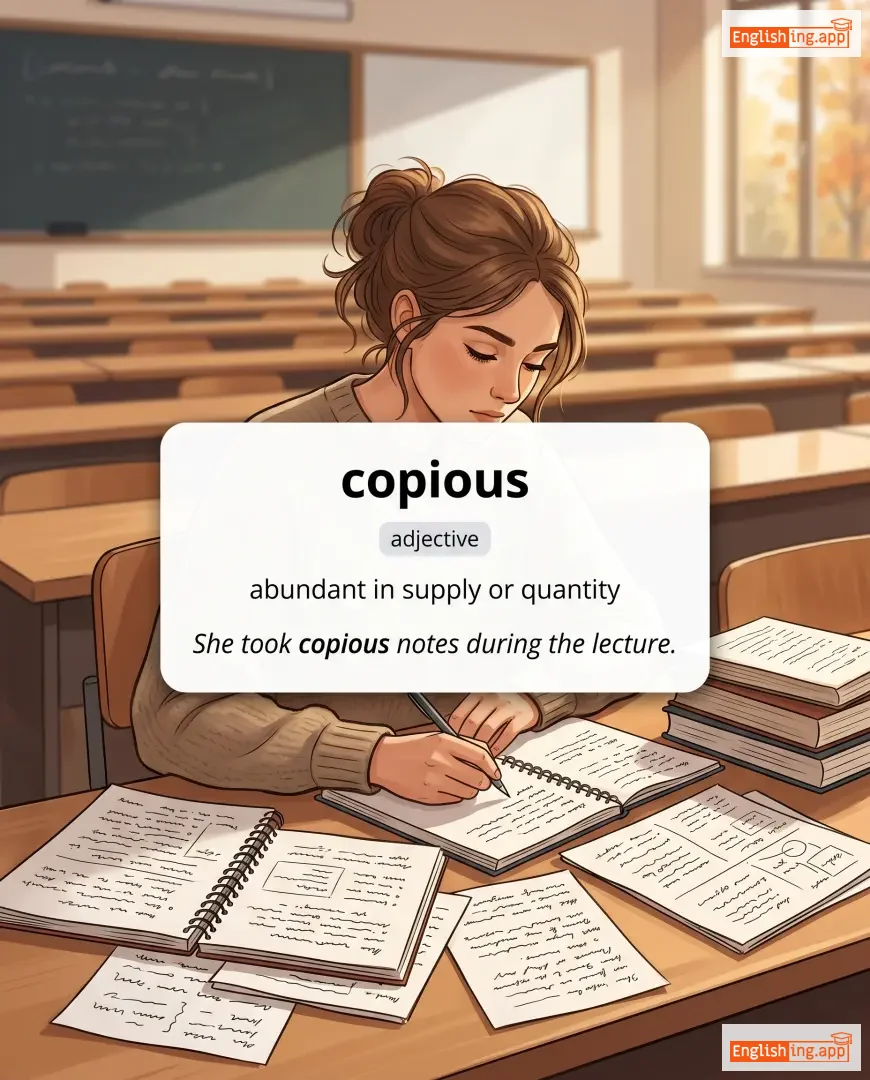
copious definition card — visual illustration of the meaning
adjective
/ˈkoʊpiəs/
豊富 (hōfu)

abundant in supply or quantity

"She took copious notes during the lecture."

"彼女は講義中に豊富なノートを取った。" (Kanojo wa kōgi-chū ni hōfu na nōto o totta.)
noun
/ˈkɒpə/
(dou)

a reddish-brown metal used for electrical wiring, coins, and more

"Copper is a good conductor of electricity."
"銅は良い電気導体です。" (Dou wa yoi denki doutai desu.)
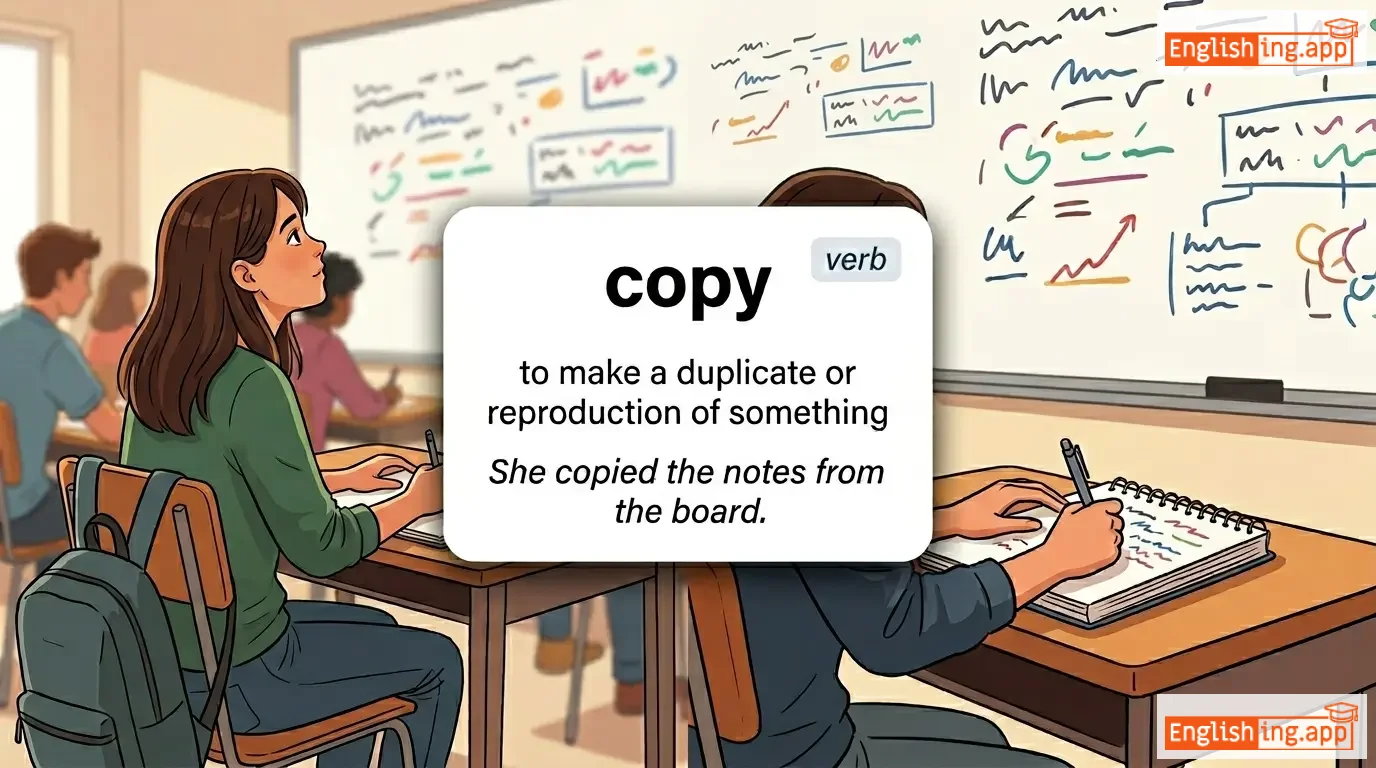
copy definition card — visual illustration of the meaning
verb
/ˈkɒpi/
コピー (kopī)

to make a duplicate or reproduction of something

"She copied the notes from the board."

"彼女はボードからノートをコピーしました。" (Kanojo wa bōdo kara nōto o kopī shimashita.)
noun
/ˈkɒpɪraɪt/
著作権 (chosakuken)

the legal right of the creator of a work to control its use and distribution

"She holds the copyright for the book."

"彼女はその本の著作権を持っています。" (Kanojo wa sono hon no chosakuken o motteimasu.)
coquette definition card — visual illustration of the meaning
noun
/koʊˈkɛt/
コケットな女性 (koketto na josei)

a woman who flirts lightheartedly

"She was a coquette, always charming everyone at the party."

"彼女はコケットで、パーティーで誰にでも魅力を振りまいていました。" (Kanojo wa koketto de, pātii de dare ni demo miryoku o furimaitemashita.)
noun, adjective
/ˈkɒrəl/
珊瑚 (sango)

a hard, rock-like marine organism formed by tiny sea animals; a pinkish-orange color resembling coral

"The coral in the reef provides shelter for many sea creatures."
"珊瑚礁の珊瑚は多くの海の生き物を守ります。" (sangoshou no sango wa ooku no umi no ikimono o mamorimasu)
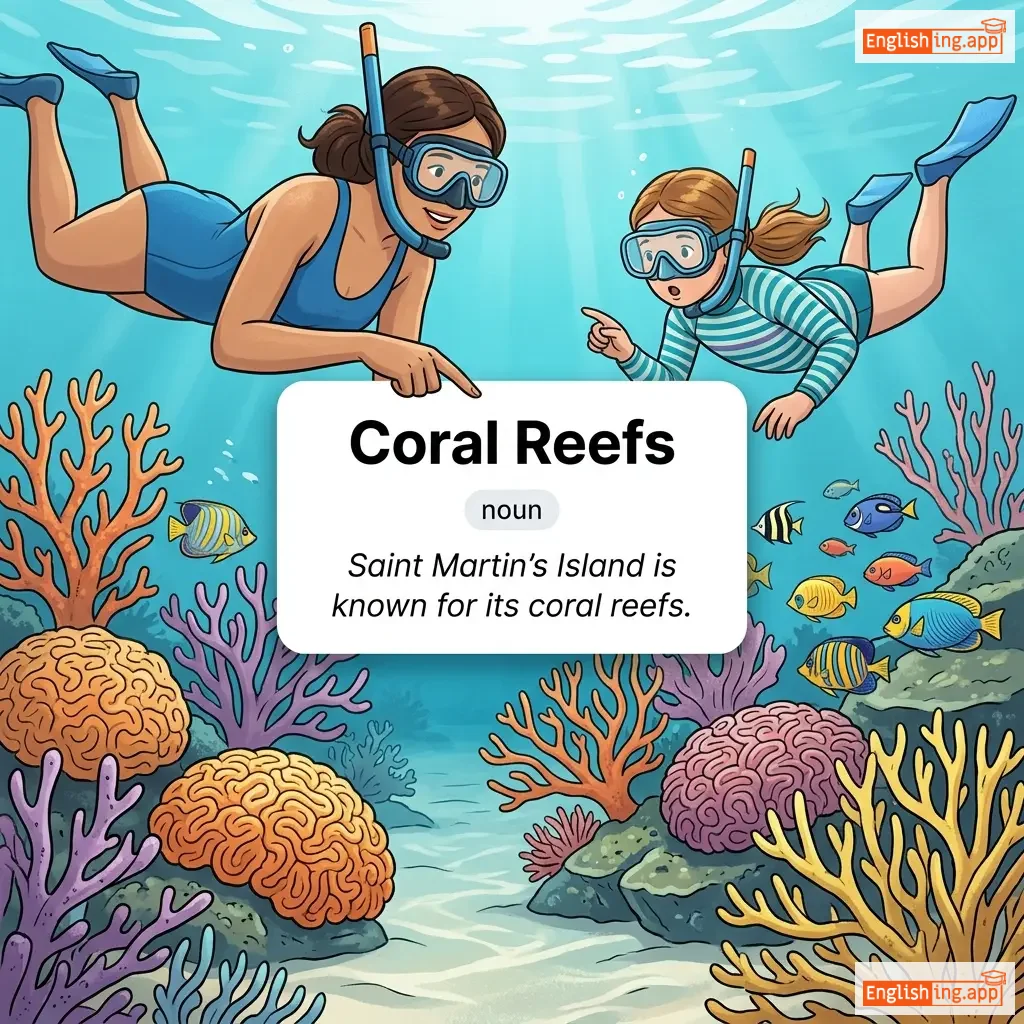
Coral Reefs definition card — visual illustration of the meaning
noun
ˈkɔːrəl ˈriːfs
サンゴ礁 (sango-shou)

Underwater structures made from calcium carbonate secreted by corals, forming diverse marine ecosystems.

"Saint Martin's Island is known for its coral reefs."

"セント・マーチン島はそのサンゴ礁で知られています。" (Sent-Maachin-tou wa sono sango-shou de shirareteimasu.)
noun
/kɔːrd/
ひも (himo)

a long, thin, flexible string or rope

"He tied the package with a strong cord."

"彼は強いひもで荷物を結びました。" (Kare wa tsuyoi himo de nimotsu o musubimashita.)
adjective
/ˈkɔːrdʒəl/
心温かく、親しみやすい (kokoro atatakai, shitashimi yasui)

warm and friendly; heartfelt

"They exchanged cordial greetings after the meeting."

"Kaigi go, karera wa kokoro atatakai aisatsu o kawashimashita." (Kaigi go, karera wa kokoro atatakai aisatsu o kawashimashita.)
noun
/ˌkɔr.diˈæl.ɪ.ti/
友情; 優しさ (yūjō; yasashisa)

sincere affection and kindness; warm and friendly behavior

"The host's cordiality made all the guests feel welcome and comfortable."

"ホストのコーディアリティはすべてのゲストが歓迎され、快適に感じさせました。" (Hosuto no kōdiariti wa subete no gesuto ga kangei sare, kaiteki ni kanjisemashita.)
adverb
/ˈkɔːrdiəli/
心から (kokorokara)

in a warm and friendly manner; sincerely

"You are cordially invited to our wedding ceremony."

"あなたは私たちの結婚式に心から招待されています。" (Anata wa watashitachi no kekkonshiki ni kokorokara shōtai sareteimasu.)
noun
/ˈkɔːrdən/
封鎖線 (fūsasen)

a line or circle of police, soldiers, or guards preventing access

"The police set up a cordon around the crime scene."

"警察は犯罪現場の周りにコルドンを設置しました。" (Keisatsu wa hanzai genba no mawari ni korudon o setchi shimashita.)
noun
/kɔːr/
(kaku)

the central or most important part of something

"Honesty is at the core of their values."

"正直は彼らの価値観の核です。" (Shoujiki wa karera no kachikan no kaku desu.)
noun
/ˌkɔːriˈændər/
コリアンダー (Koriandā)

aromatic herb with feathery leaves used for flavoring food; also refers to the seeds used as spice

"Fresh coriander leaves are sprinkled on top of the curry."

"新鮮なコリアンダーの葉がカレーの上にふりかけられます。" (Shinsen na koriandā no ha ga karē no ue ni furikakeraremasu.)
noun
/kɔˈrɪkə soˈbɔrnə/
カチキの魚 (kachiki no sakana)

a small silvery fish species found in South Asian rivers, commonly used in local cuisine

"Corica soborna is a popular ingredient in traditional Bengali fish curry."

"コリカ ソボルナは伝統的なベンガル魚カレーの人気の材料です。" (Korika Soboruna wa dentouteki na Bengaru sakana kare no ninki no zairyou desu.)
noun
/ˈkɔːrmərənt/
魚を捕まえるために潜る大きな黒い海鳥 (sakana o tsukamaeru tame ni moguru ōkina kuroi umitori)

a large black sea bird that catches fish by diving

"The cormorant perched on the rock, drying its wings after a dive."

"コウモリは岩の上に止まり、ダイブの後に羽を乾かしていました。" (Kōmori wa iwa no ue ni tomari, daibu no ato ni hane o kawakashiteimashita.)
noun
/kɔːrn/
トウモロコシ (toumorokoshi)

a type of grain, often yellow, eaten as food

"They harvested corn in the summer."
"彼らは夏にトウモロコシを収穫しました。" (Karera wa natsu ni toumorokoshi o shūkaku shimashita.)
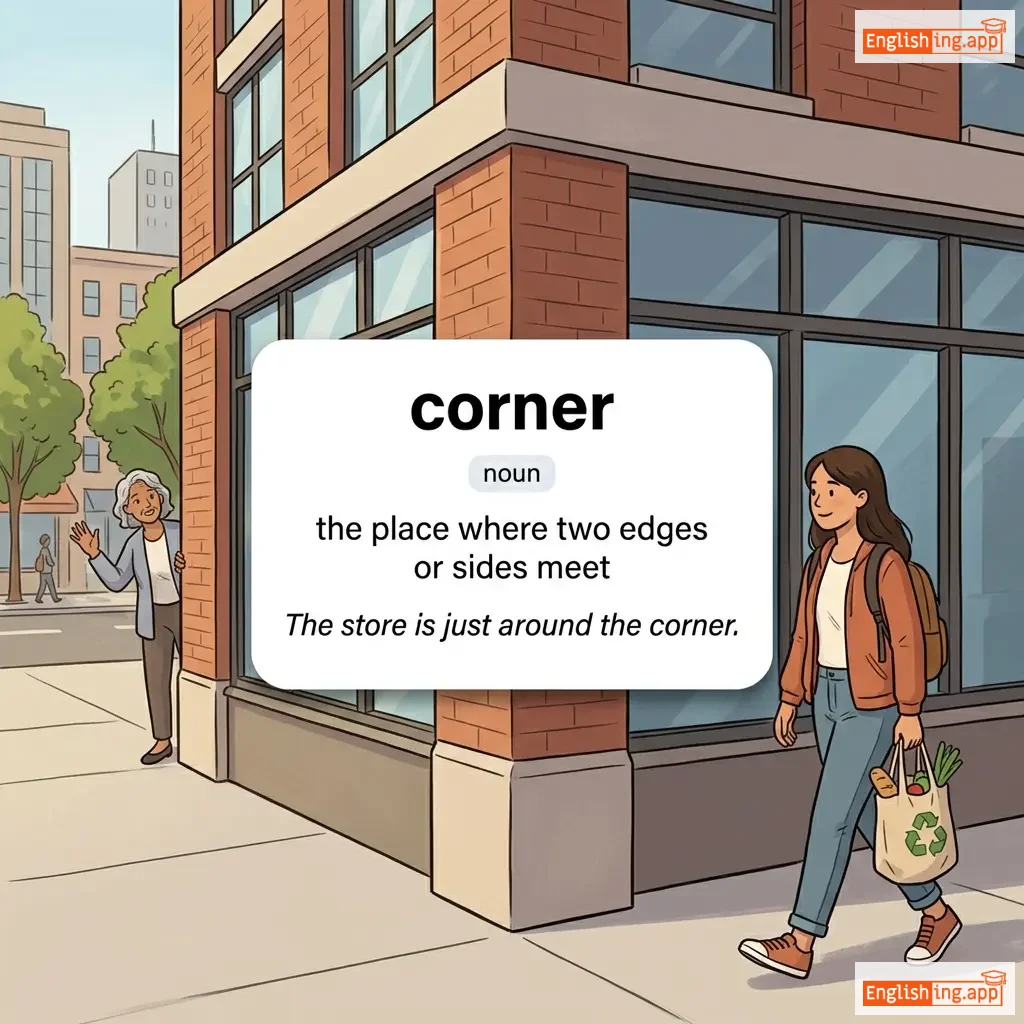
corner definition card — visual illustration of the meaning
noun
/ˈkɔːrnər/
(kado)

the place where two edges or sides meet

"The store is just around the corner."

"店はちょうど角のところにあります。" (Mise wa chōdo kado no tokoro ni arimasu.)
noun
/ˈkɔːrnɪs/
コーニス (kōnisu)

an ornamental molding around the wall of a room just below the ceiling

"The elegant cornice added a classical touch to the living room."
"エレガントなコーニスはリビングルームにクラシックなタッチを加えました。" (Ereganto na kōnisu wa ribingu rūmu ni kurashikku na tacchi o kuwaemashita.)
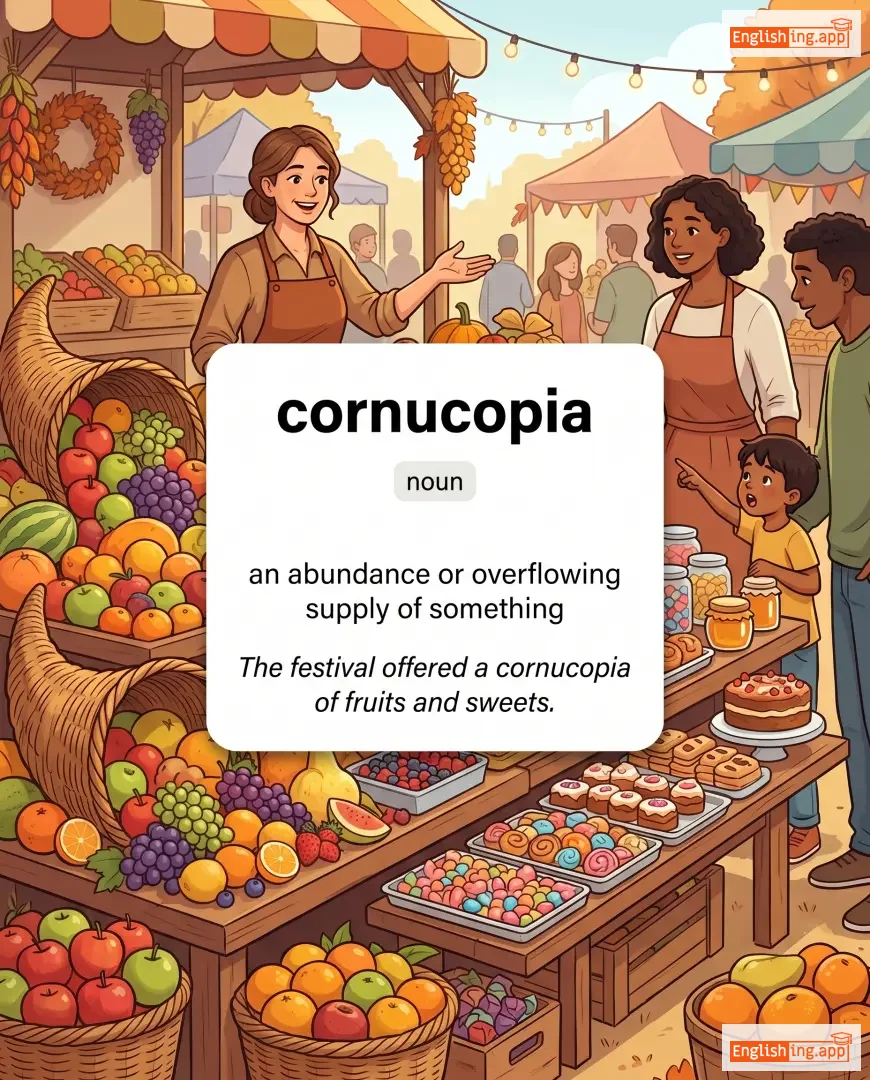
cornucopia definition card — visual illustration of the meaning
noun
/ˌkɔːrnjuˈkoʊpiə/
物事の豊富な供給または溢れんばかりの供給 (monogoto no houfu na kyoukyuu matawa afurenbakari no kyoukyuu)

an abundance or overflowing supply of something

"The festival offered a cornucopia of fruits and sweets."

"祭りでは果物とお菓子のコルヌコピアが提供されました。" (Matsuri de wa kudamono to okashi no cornucopia ga teikyou saremashita.)
noun
/kəˈrɑːləri/
直接的または自然な結果 (chokusetsuteki matawa shizenna kekka)

a direct or natural consequence or result

"One corollary of the new policy was increased public awareness."

"新しい政策の結果の一つは、公共の認識の向上でした。" (Atarashī seisaku no kekka no hitotsu wa, kōkyō no ninshiki no kōjō deshita.)
noun
/kəˈroʊnə/
王冠または王冠のような構造; また、太陽の外層大気を指すこともあります (ōkan mata wa ōkan no yō na kōzō; mata, taiyō no gaisō taiki o sasu koto mo arimasu)

a crown or crown-like structure; also refers to the outer atmosphere of the sun

"The sun's corona was visible during the total solar eclipse."

"太陽のコロナは皆既日食中に見ることができました。" (Taiyō no korona wa kaikī nisshoku-chū ni miru koto ga dekimashita.)
noun
/ˌkɒrəˈneɪʃən/
戴冠式 (taikan-shiki)

the act or ceremony of crowning a sovereign or monarch

"The coronation of the new king was attended by thousands of people."

"新しい王の戴冠式には何千人もの人々が参加しました。" (Atarashii ō no taikan-shiki ni wa nan-sen nin mo no hitobito ga sanka shimashita.)
noun
/ˈkɒrənər/
検死官 (kenshikan)

an official who investigates sudden, violent, or suspicious deaths

"The coroner determined the cause of death was natural."

"検死官は死因が自然死であると判定しました。" (Kenshikan wa shiin ga shizenshi de aru to hantei shimashita.)
noun
/ˈkɒrənɛt/
小さな王冠 (chiisana ōkan)

a small crown, especially one worn by a prince, princess, or noble

"She wore a delicate coronet on her head for the ceremony."

"彼女は式典のために頭に繊細な小さな王冠をかぶっていました。" (Kanojo wa shikiten no tame ni atama ni sensai na chiisana ōkan o kabutte imashita.)
adjective, noun
/ˈkɔːrpərəl/
伍長 (gochou)

relating to the body; a low-ranking officer in the military

"He suffered a corporal punishment for his mistake."

"彼はミスのために体罰を受けました。" (Kare wa misu no tame ni taibatsu wo ukemashita.)
corporate definition card — visual illustration of the meaning
adjective, noun
/ˈkɔːrpərət/
企業/コーポレートに関連する (kigyo/corporate ni kanren suru)

relating to a corporation or large company; united as a single body

"Corporate social responsibility is important for modern businesses."

"企業の社会的責任は現代のビジネスにとって重要です。" (Kigyo no shakaiteki sekinin wa gendai no bijinesu ni totte jūyō desu.)
noun
/ˌkɔːrpəˈreɪʃən/
株式会社 (kabushikigaisha)

A large company or group of companies that is legally recognized as a single entity.

"The corporation invested heavily in renewable energy projects."

"そのコーポレーションは再生可能エネルギーのプロジェクトに多額の投資を行った。" (Sono kōporēshon wa saiseikanō enerugī no purojekuto ni tagaku no tōshi o okonatta.)
adjective
/kɔːrˈpɔːriəl/
肉体的, 物質的 (nikutai-teki, busshitsu-teki)

relating to the physical body; material or tangible

"Ghosts are often described as having no corporeal form."

"幽霊はしばしば肉体的な形がないと説明されます。" (Yūrei wa shibashiba nikutai-teki na katachi ga nai to setsumei saremasu.)
noun
/kɔːr/
軍隊の部門、グループ (guntai no bumon, gurūpu)

a branch of the military or a group organized for a specific purpose

"He joined the army corps after graduation."

"彼は卒業後、軍隊の部門に参加しました。" (Kare wa sotsugyōgo, guntai no bumon ni sanka shimashita.)
noun
/kɔːrps/
遺体 (itai)

a dead body, especially of a human

"The police discovered a corpse in the abandoned house."

"警察は廃墟の家で遺体を発見しました。" (Keisatsu wa haikyo no ie de itai o hakken shimashita.)
adjective
/ˈkɔːpjʊlənt/
肥満の, 太った (himan no, futotta)

fat or obese; having a large bulky body

"The corpulent man struggled to fit into the small chair."
"その太った男性は、小さな椅子に座るのに苦労していました。" (Sono futotta dansei wa, chīsana isu ni suwaru no ni kurō shiteimashita.)
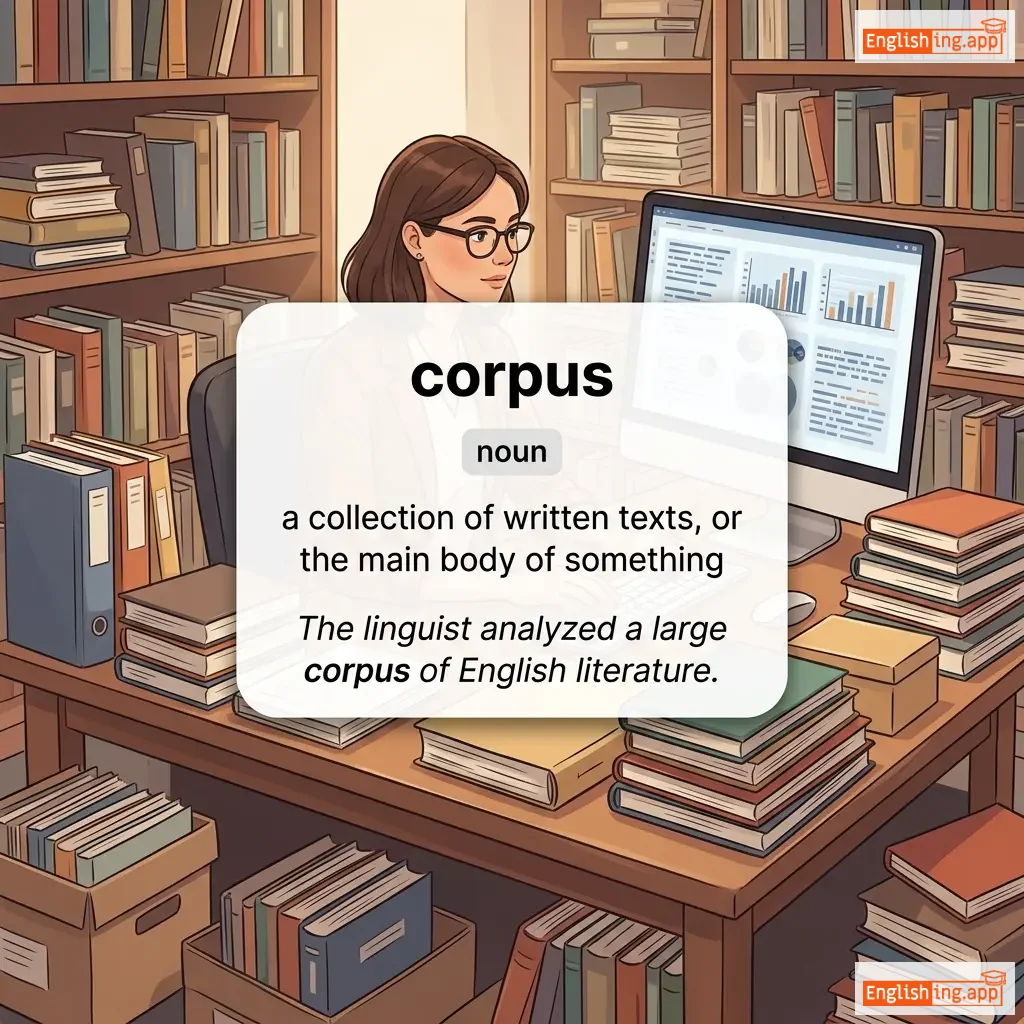
corpus definition card — visual illustration of the meaning
noun
/ˈkɔːrpəs/
コレクション、主要部分 (korekushon, shuyou bubun)

a collection of written texts, or the main body of something

"The linguist analyzed a large corpus of English literature."

"言語学者は大量の英文学コーパスを分析しました。" (Gengogakusha wa tairyo no eigobungaku kopasu o bunseki shimashita.)
noun
/ˈkɔːrpəskəl/
小さな粒子または細胞、特に赤血球 (chiisana ryuushi matawa saibou, toku ni akakeyuu)

a small particle or cell, especially a blood cell

"Red corpuscles carry oxygen throughout the body."

"赤血球は体内で酸素を運ぶ。" (Sekkekkyuu wa tainai de sanso wo hakobu.)
adjective
/kəˈrɛkt/
正しい (tadashii)

free from error; accurate

"The answer she gave was correct."

"彼女が言った答えは正しかった。" (Kanojo ga itta kotae wa tadashikatta.)
noun
/kəˈrɛkʃən/
訂正 (teisei)

the action or process of correcting something

"The teacher made a correction to the student's essay."

"教師は学生のエッセイに訂正を加えました。" (Kyōshi wa gakusei no essei ni teisei o kuwaemashita.)
adverb
/kəˈrɛktli/
正しく (tadashiku)

in a way that is true, accurate, or without mistakes

"She answered all the questions correctly."
"彼女はすべての質問に正しく答えました。" (Kanojo wa subete no shitsumon ni tadashiku kotaemashita.)
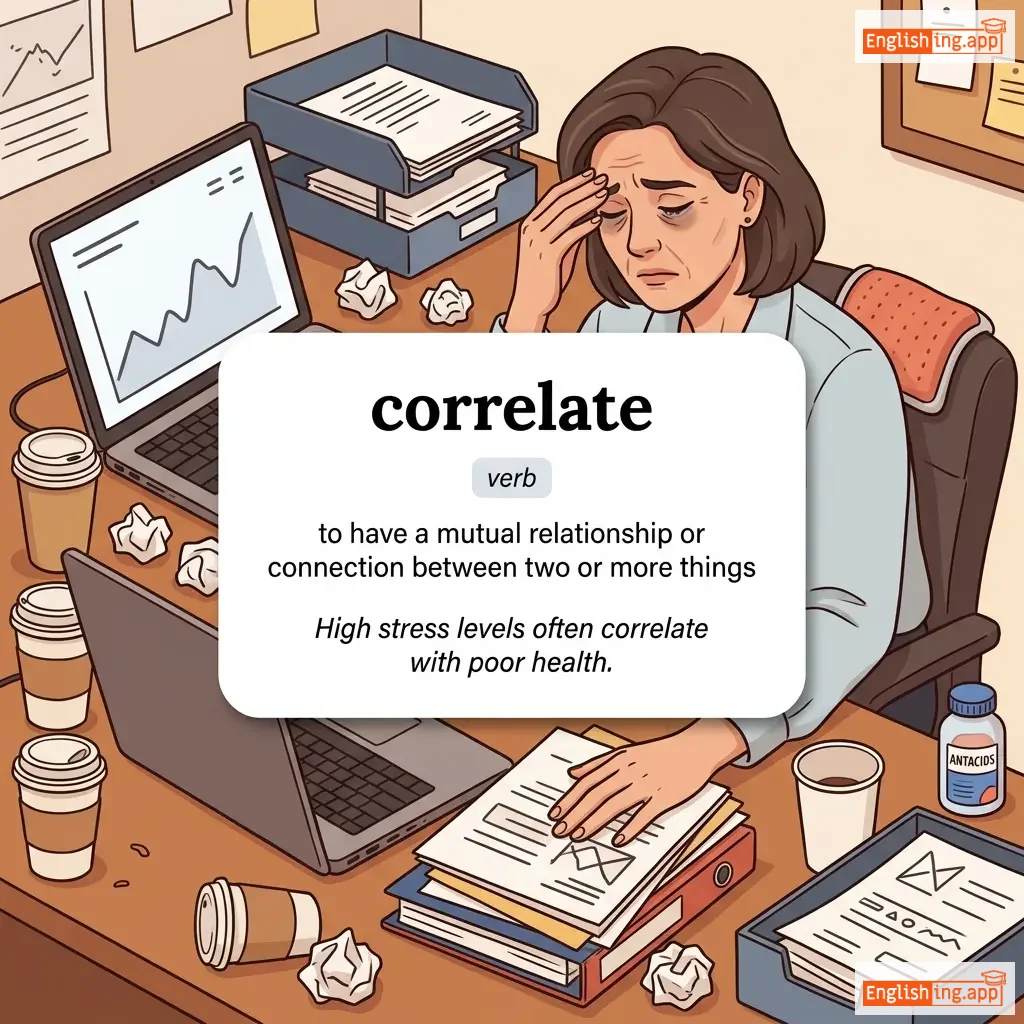
correlate definition card — visual illustration of the meaning
verb
/ˈkɒrəleɪt/
相関する (sōkan suru)

to have a mutual relationship or connection between two or more things

"High stress levels often correlate with poor health."

"高いストレスレベルは、しばしば健康の悪化と関連しています。" (Takai sutoresu reberu wa, shibashiba kenkō no akika to kanren shiteimasu.)
noun
/ˌkɒrəˈleɪʃən/
相関 (sōkan)

a mutual relationship or connection between two or more things

"Researchers found a strong correlation between diet and heart disease."

"研究者たちは、食事と心臓病との間に強い相関関係があることを発見しました。" (Kenkyū-sha-tachi wa, shokuji to shinzōbyō to no aida ni tsuyoi sōkan kankei ga aru koto o hakken shimashita.)
adjective
/kəˈrɛlətɪv/
相関的な (sōkanteki na)

having a mutual relationship; corresponding

"The increase in temperature is correlative with the melting of glaciers."

"温度の上昇は氷河の融解と関連しています。" (Ondo no jōshō wa hyōga no yūkai to kanren shiteimasu.)
verb
/kəˈrɛspɒnd/
通信する (tsuushin suru)

to communicate by exchanging letters or messages

"I correspond regularly with my old friends."

"私は定期的に古い友達と通信しています。" (Watashi wa teikitekini furui tomodachi to tsuushin shiteimasu.)
noun
/kəˈrɛspɒndəns/
通信 (tsuushin)

the exchange of letters or communication

"His correspondence with clients was always timely."

"彼のクライアントとのコレスポンデンスは常に時間通りでした。" (Kare no kuraianto to no korespondeinsu wa itsumo jikan doori deshita.)
noun
/ˌkɒrəˈspɒndənt/
通信員 (tsūshin'in)

A journalist who reports news from a particular place or on a particular subject.

"The foreign correspondent reported live from Paris."

"外国の通信員がパリからライブで報告した。" (Gaikoku no tsūshin'in ga Pari kara raibu de hōkoku shita.)
adjective
/kəˈrɛspɒndɪŋ/
対応する (taiō suru)

matching or related to something

"The corresponding page in the book explains the process in detail."

"本の対応するページは、そのプロセスを詳細に説明しています。" (Hon no taiō suru pēji wa, sono purosesu o shōsai ni setsumei shiteimasu.)