語彙集

英単語辞書 | 単語の意味、定義、例文

noun
/ˈkɔːrɪdɔːr/
部屋に通じる長い通路 (koridō)

a long passage in a building from which doors lead into rooms

"The students waited quietly in the corridor."

"生徒たちは廊下で静かに待っていた。" (Seito-tachi wa rōka de shizukani matte ita.)
adjective
/ˈkɒrɪdʒəbl/
修正可能 (shūsei kanō)

capable of being corrected or improved

"The student's mistakes were corrigible with practice."
"学生の誤りは練習で修正可能でした。" (Gakusei no ayamari wa renshū de shūsei kanō deshita.)
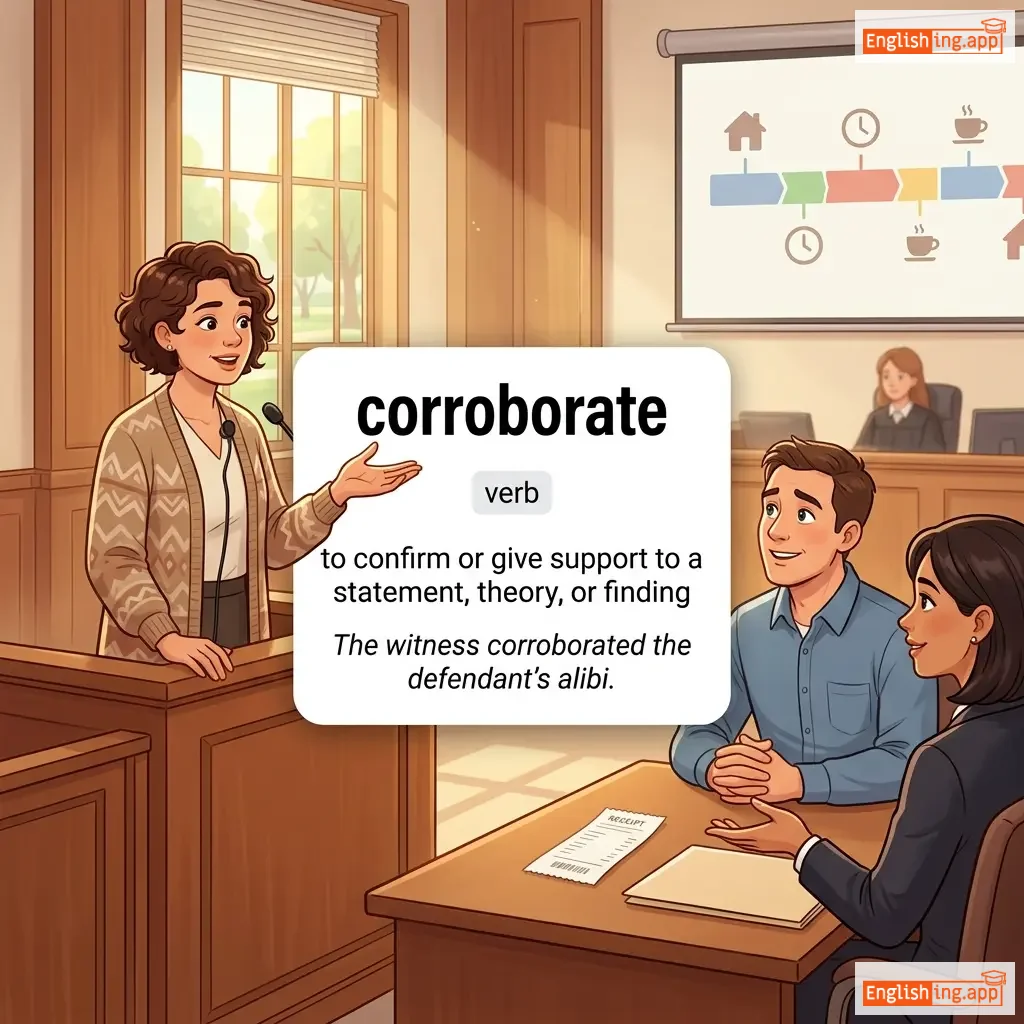
corroborate definition card — visual illustration of the meaning
verb
/kəˈrɒbəreɪt/
裏付ける (urazukeru)

to confirm or give support to a statement, theory, or finding

"The witness corroborated the defendant's alibi."

"証人は被告のアリバイを裏付けた。" (Shōnin wa hikoku no aribai wo urazuketa.)
noun
/kəˌrɒbəˈreɪʃən/
証拠 (shōko)

evidence that confirms or supports a statement, theory, or finding

"The documents provided strong corroboration of her claims."

"書類は彼女の主張を強力に裏付ける証拠を提供した。" (Shorui wa kanojo no shuchō o kyōryoku ni urazukeru shōko o teikyō shita.)
verb
/kəˈrəʊd/
腐食 (fushoku)

to gradually destroy or wear away metal or other materials through chemical action

"The iron pipes corroded over time due to exposure to water."
"鉄のパイプは水にさらされて時間が経つにつれて腐食しました。" (Tetsu no paipu wa mizu ni sarasarete jikan ga tatsu ni tsurete fushoku shimashita.)
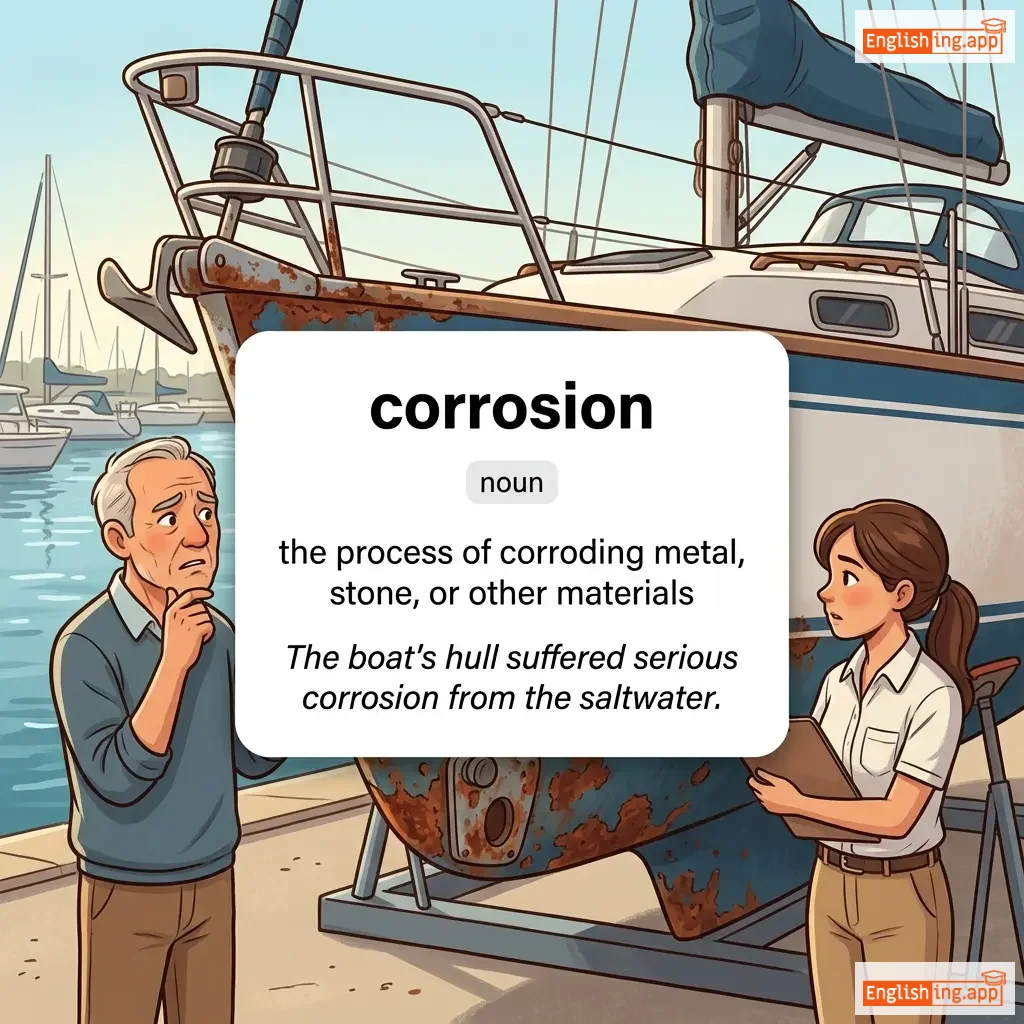
corrosion definition card — visual illustration of the meaning
noun
/kəˈrəʊʒən/
腐食, 破壊 (fushoku, hakai)

the process of corroding metal, stone, or other materials

"The boat's hull suffered serious corrosion from the saltwater."

"船の船体は塩水で深刻な腐食に見舞われました。" (Fune no sentai wa enshui de shinkoku na fushoku ni mimaware mashita.)
adjective
/kəˈrəʊsɪv/
腐食性、有害 (fushokusei, yūgai)

tending to cause corrosion; harmful or destructive to materials or people

"The chemical is highly corrosive and should be handled with care."

"この化学物質は非常に腐食性が高く、注意して取り扱う必要があります。" (Kono kagaku busshitsu wa hijō ni fushokusei ga takaku, chūi shite toriatsukau hitsuyō ga arimasu.)
adjective
/ˈkɒr.ə.ɡeɪ.tɪd/
波形または折りたたまれた (hakei mata wa oritamatareta)

shaped into ridges and grooves; wrinkled or folded

"The roof was made of corrugated metal sheets."

"屋根は波形の金属板で作られていました。" (Yane wa hokei no kinzoku ban de tsukurarete imashita.)
adjective/verb
/kəˈrʌpt/
腐敗 (fuhai)

dishonest or morally wrong; to make something impure or evil

"The politician was accused of corrupt practices."

"その政治家は腐敗行為で告発された。" (Sono seijika wa fuhai koui de kokuhatsu sareta.)
adjective
/kəˈrʌp.tə.bəl/
腐敗しやすい (fuhai shiyasui)

able to be morally or ethically corrupted

"He was known to be corruptible and often accepted bribes."

"彼は腐敗しやすいことで知られ、しばしば賄賂を受け取った。" (Kare wa fuhai shiyasui koto de shirare, shibashiba wairo o uketotta.)
noun
/kəˈrʌp.ʃən/
汚職 (osho)

dishonest or fraudulent conduct by those in power

"The government launched a campaign to fight corruption."

"政府は腐敗と戦うためにキャンペーンを開始しました。" (Seifu wa fuhai to tatakau tame ni kyanpēn o kaishi shimashita.)
noun
/ˈkɔː.seər/
海賊 (kaizoku)

a pirate, especially one operating along the Mediterranean coasts

"The corsair plundered ships along the coast."

"コルセアは海岸沿いで船を略奪した。" (Korusea wa kaiganzoi de fune o ryakudatsu shita.)
noun
/kɔːrˈteɪʒ/
葬列 (sōretsu)

a solemn procession, especially for a funeral

"A cortege of mourners followed the hearse to the cemetery."

"悲しみに沈んだ人々が葬列を引き連れて霊柩車を墓地に送った。" (Kanashimi ni shizunda hitobito ga sōretsu o hiki tsurete reikyūsha o bochi ni okutta.)
verb
/ˈkɒr.ʌ.skeɪt/
きらめく (kirameku)

to sparkle or flash brightly

"The fireworks coruscated across the night sky."

"花火は夜空に向かってきらめいた。" (Hanabi wa yozora ni mukatte kirameita.)
adjective
/kɒzˈmɛt.ɪk/
化粧品 (keshohin)

relating to beauty or appearance; intended to improve looks

"She bought a new cosmetic cream for her skin."

"彼女は肌のために新しいコスメティッククリームを買いました。" (Kanojo wa hada no tame ni atarashii kosmetikku kuriimu wo kaimashita.)
adjective
/ˈkɒz.mɪk/
宇宙的, 広大な (uchu-teki, kodai-na)

relating to the universe or cosmos; vast

"Astronomers study cosmic phenomena to understand the universe."

"天文学者たちは宇宙を理解するためにコズミック現象を研究しています。" (Tenmongakusha-tachi wa uchu o rikai suru tame ni kozumikku genshō o kenkyū shiteimasu.)
noun
/kɒzˈmɒɡ.ə.ni/
宇宙生成論 (uchū seiseiron)

the study or theory of the origin of the universe

"The book provides an overview of different cosmogonies throughout history."

"この本は歴史を通じて異なる宇宙生成論の概説を提供しています。" (Kono hon wa rekishi o tōjite kotonaru uchū seiseiron no gaisetsu o teikyō shiteimasu.)
noun
/kɒzˈmɒɡ.rə.fi/
コスモグラフィー (kosumogurafī)

the science or art of mapping the universe or cosmos

"Medieval scholars practiced cosmography to chart the stars and planets."

"中世の学者たちは、星や惑星の地図を作成するためにコスモグラフィーを実践していました。" (Chūsei no gakusha-tachi wa, hoshi ya wakusei no chizu o sakusei suru tame ni kosumogurafī o jissen shite imashita.)
cosmology definition card — visual illustration of the meaning
noun
/kɒzˈmɒlədʒi/
コスモロジー (kosumorojī)

the science of the origin and development of the universe

"She studied cosmology to understand the origins of the universe."

"彼女は宇宙の起源を理解するためにコスモロジーを学んだ。" (Kanojo wa uchū no kigen o rikai suru tame ni kosumorojī o mananda.)
adjective
/ˌkɒzməˈpɒlɪtən/
コスモポリタン (kosumoporitan)

familiar with and at ease in many different countries and cultures

"He has a cosmopolitan outlook due to his extensive travels."

"彼は広範な旅行のおかげで、コスモポリタン的な視点を持っています。" (Kare wa kōhan na ryokō no okage de, kosumoporitan-teki na shiten o motteimasu.)
noun
/ˌkɒzməˈpɒlɪtənɪzəm/
コスモポリタニズム (kosumoporitanizumu)

the ideology that all human beings belong to a single community

"Cosmopolitanism promotes respect and understanding across cultures."

"コスモポリタニズムは文化間の尊重と理解を促進します。" (Kosumoporitanizumu wa bunkakan no sonchou to rikai o sokushin shimasu.)
noun
/ˈkɒzmɒs/
宇宙 (uchū)

the universe seen as a well-ordered whole

"Astronomers study the cosmos to learn about the universe's structure."

"天文学者たちは宇宙の構造を学ぶために宇宙を研究しています。" (Tenmongakusha-tachi wa uchū no kōzō o manabu tame ni uchū o kenkyū shiteimasu.)
verb
/ˈkɒsɪt/
甘やかす (amayakasu)

to care for and protect in an overindulgent way

"The little girl was cosseted by her grandparents."

"小さな女の子は祖父母に甘やかされました。" (Chīsana onnanoko wa sofu bo ni amayakasa remashita.)
adjective
/ˈkɒs.ɪ.tɪd/
甘やかされた (amayakareta)

pampered, treated with excessive care and attention

"The cosseted child always got what he wanted."

"甘やかされた子供は、いつも欲しいものを手に入れていた。" (Amayakareta kodomo wa, itsumo hoshī mono o te ni irete ita.)
cost definition card — visual illustration of the meaning
noun, verb
/kɒst/
コスト (kosuto)

The amount of money needed to buy or do something.

"The cost of living has increased significantly."

"生活費が大幅に増加しました。" (Seikatsuhi ga ōhaba ni zōka shimashita.)
cost-efficient definition card — visual illustration of the meaning
adjective
/ˌkɒst.ɪˈfɪʃ.ənt/
コスト効率的 (kosuto kōritsuteki)

Achieving maximum productivity with minimum wasted effort or expense.

"Cost-efficient solutions benefit industries."

"コスト効率的な解決策は産業に利益をもたらす。" (Kosuto kōritsuteki na kaiketsusaku wa sangyō ni rieki o motarasu.)
adjective
/ˈkɔːstli/
高価 (kōka)

expensive or causing a lot of money, time, or effort

"Their mistake proved to be very costly for the company."
"彼らのミスは会社にとって非常に高価であることが証明されました。" (Karera no misu wa kaisha ni totte hijō ni kōka de aru koto ga shōmei saremashita.)
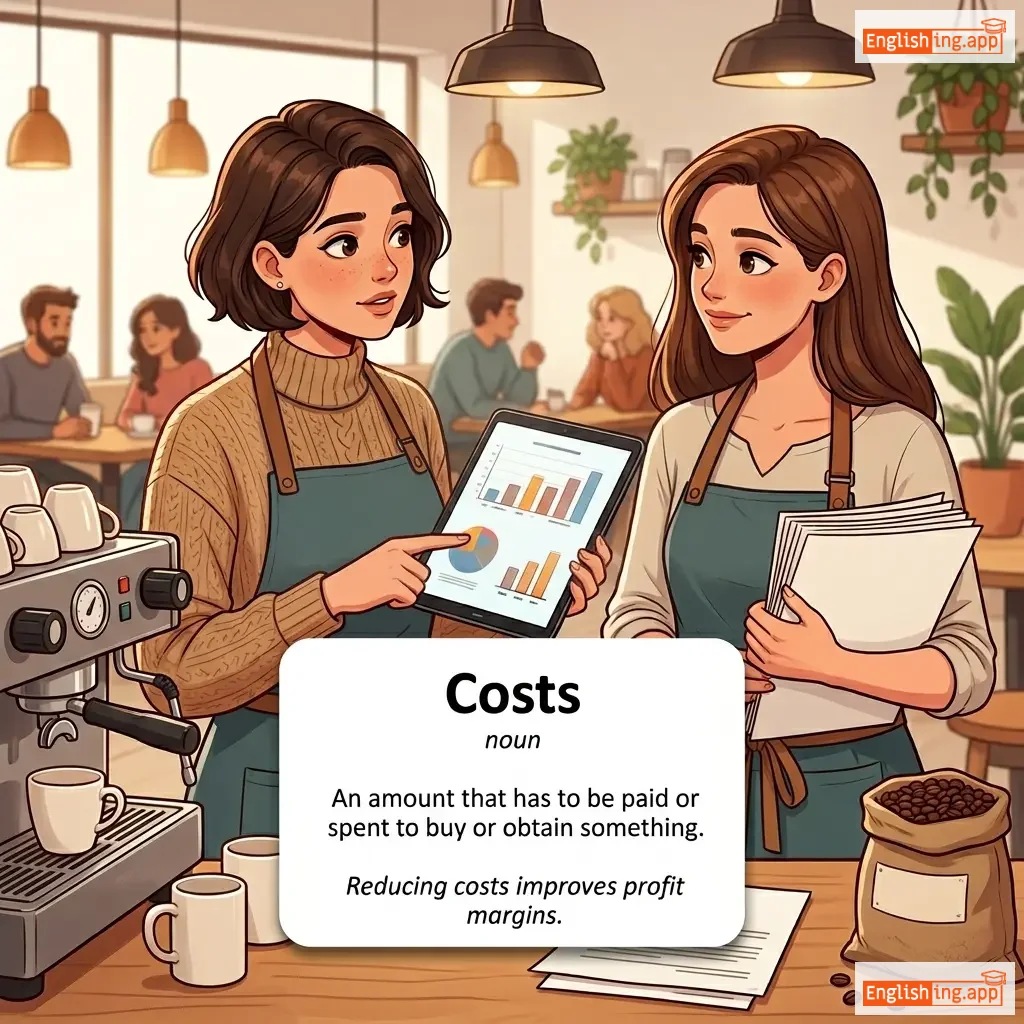
Costs definition card — visual illustration of the meaning
noun
kɒsts
コスト (kosuto)

An amount that has to be paid or spent to buy or obtain something.

"Reducing costs improves profit margins."
"コストを削減すると、利益率が向上します。" (Kosuto o sakugen suru to, rieki-ritsu ga kōjō shimasu.)
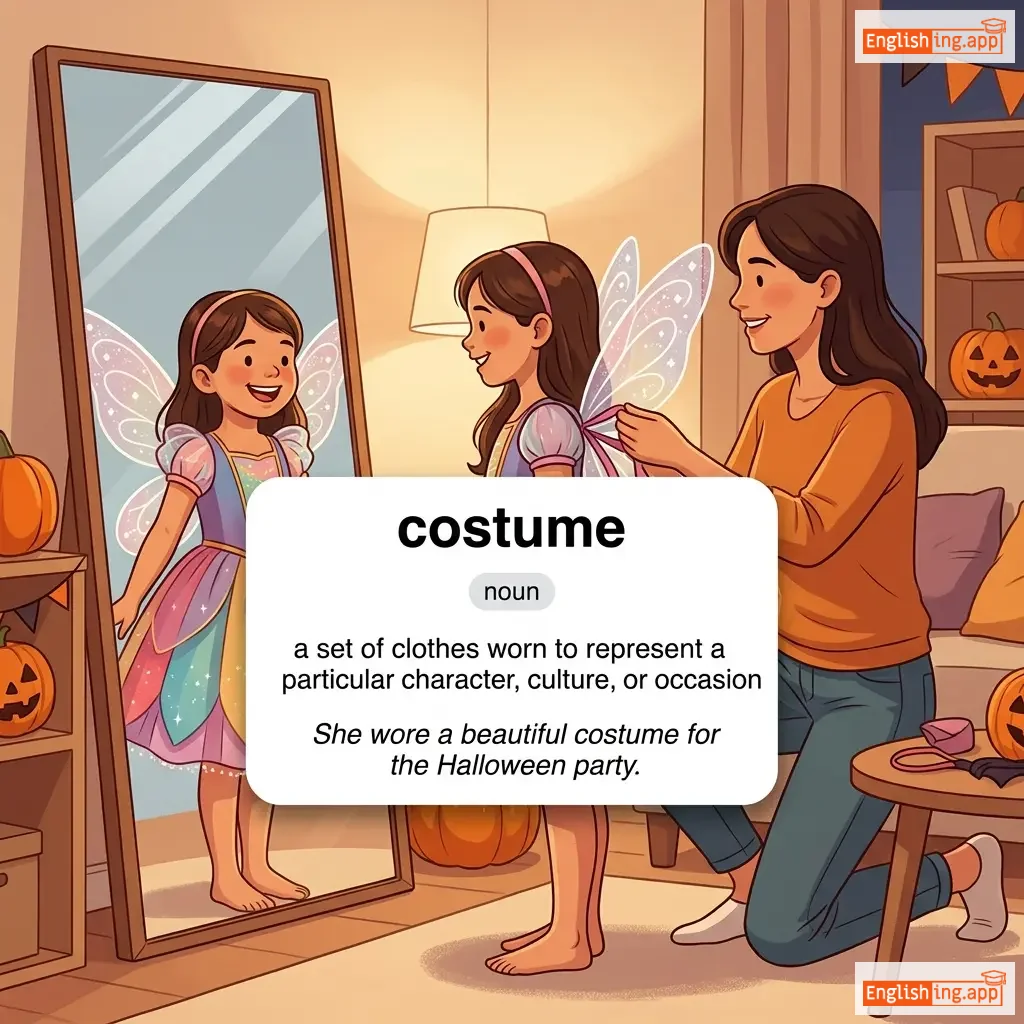
costume definition card — visual illustration of the meaning
noun
/ˈkɒstjuːm/
衣装 (ishou)

a set of clothes worn to represent a particular character, culture, or occasion

"She wore a beautiful costume for the Halloween party."

"彼女はハロウィンパーティーのために素晴らしい衣装を着ていた。" (Kanojo wa Harowīn pātii no tame ni subarashī ishō o kite ita.)
noun
/kɒt/
コット (kotto)

a small bed, especially a portable one or one for a baby

"The baby sleeps peacefully in her cot."

"赤ちゃんは彼女のコットで安らかに眠っています。" (Akachan wa kanojo no kotto de yasuraka ni nematte imasu.)
noun
/ˈkoʊ.tə.ri/
小さくて排他的なグループ (chiisakute haitateki na gurūpu)

a small, exclusive group of people with shared interests

"He belonged to a coterie of artists who met every Friday."

"彼は毎週金曜日に会うアーティストのグループに属していました。" (Kare wa maishū kin'yōbi ni au ātisuto no gurūpu ni zoku shite imashita.)
adjective
/koʊˈtɜːr.mɪ.nəs/
隣接 (rinsoku)

having the same boundaries or extent in space, time, or meaning

"The two jurisdictions are coterminous, sharing the same borders."
"これらの2つの管轄区域は隣接しており、同じ境界を共有しています。" (Korera no futatsu no kanraku kuiki wa rinsoku shite ori, onaji kyōkai o kyōyū shiteimasu.)
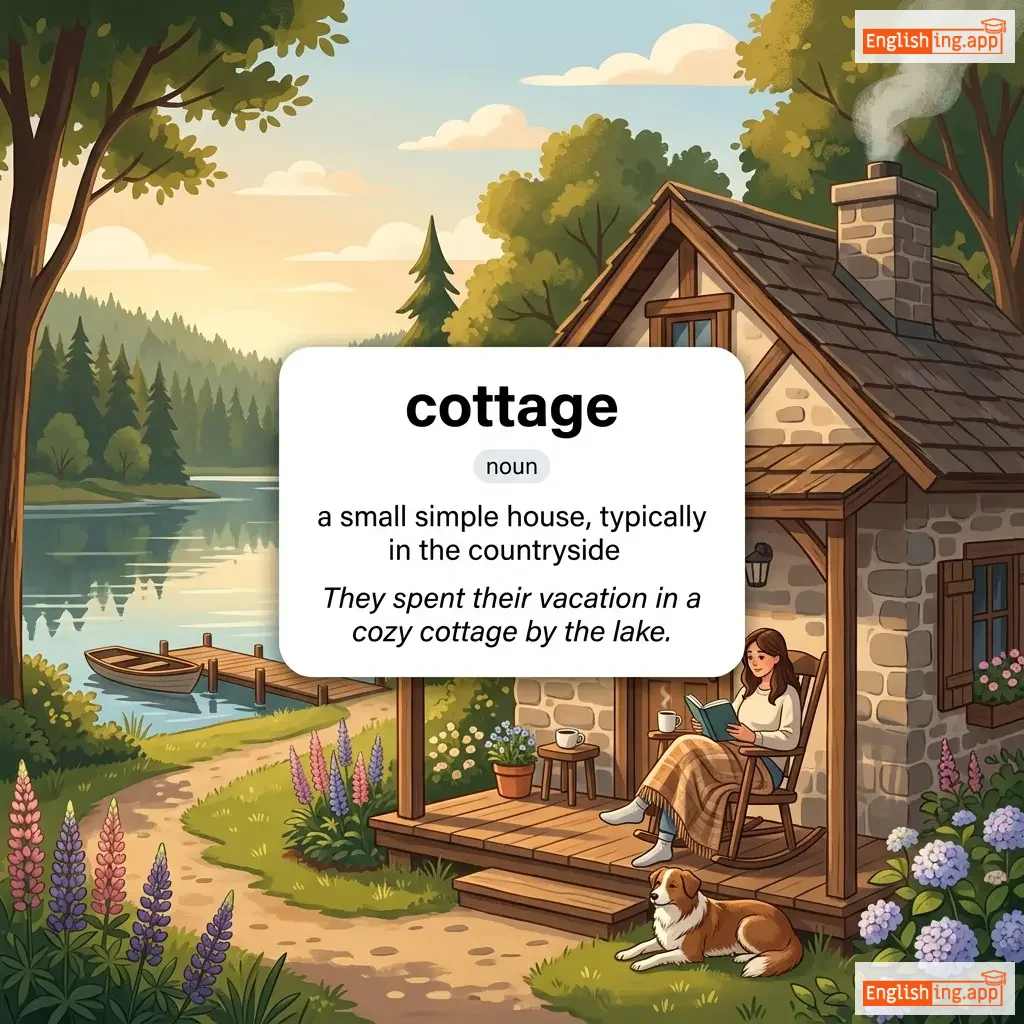
cottage definition card — visual illustration of the meaning
noun
/ˈkɒtɪdʒ/
小屋 (koya)

a small simple house, typically in the countryside

"They spent their vacation in a cozy cottage by the lake."

"彼らは湖のそばの快適な小屋で休暇を過ごしました。" (Karera wa mizuumi no soba no kaiteki na koya de kyūka o sugoshimashita.)
noun
/ˈkɒtən/
幸せ (shiawase)

A soft white fibrous substance used to make cloth and thread.

"This shirt is made of pure cotton."

"彼女は賞を受け取ったとき、自分の幸せを隠すことができませんでした。" (Kanojo wa shō o uketotta toki, jibun no shiawase o kakusu koto ga dekimasen deshita.)
noun
/ˈkɒt.ən ˈfæb.rɪk/
綿布 (menpu)

textile made from cotton fibers, known for being soft, breathable, and comfortable

"Cotton fabric is perfect for summer clothing."

"綿布は夏の衣服に最適です。" (Menpu wa natsu no ifuku ni saiteki desu.)
noun
/kaʊtʃ/
ソファ (sofa)

a comfortable seat for two or more people, typically upholstered

"They sat on the couch and watched TV."

"彼らはソファに座ってテレビを見ていました。" (Karera wa sofa ni suwatte terebi o mite imashita.)
noun, verb
/kɒf/
(seki)

a sudden noisy release of air from the lungs to clear the throat or airway; to expel air suddenly from the lungs with a cough

"He has a bad cough and stayed home today."

"彼はひどい咳があるので、今日は家にいました。" (kare wa hidoi seki ga aru node kyou wa ie ni imashita)
modal verb
/kʊd/
できた (dekita)

Used to indicate possibility, ability, or permission in the past or as a polite suggestion.

"He could swim when he was a child."
"彼は子供の頃泳げた。" (Kare wa kodomo no koro oyogeta.)
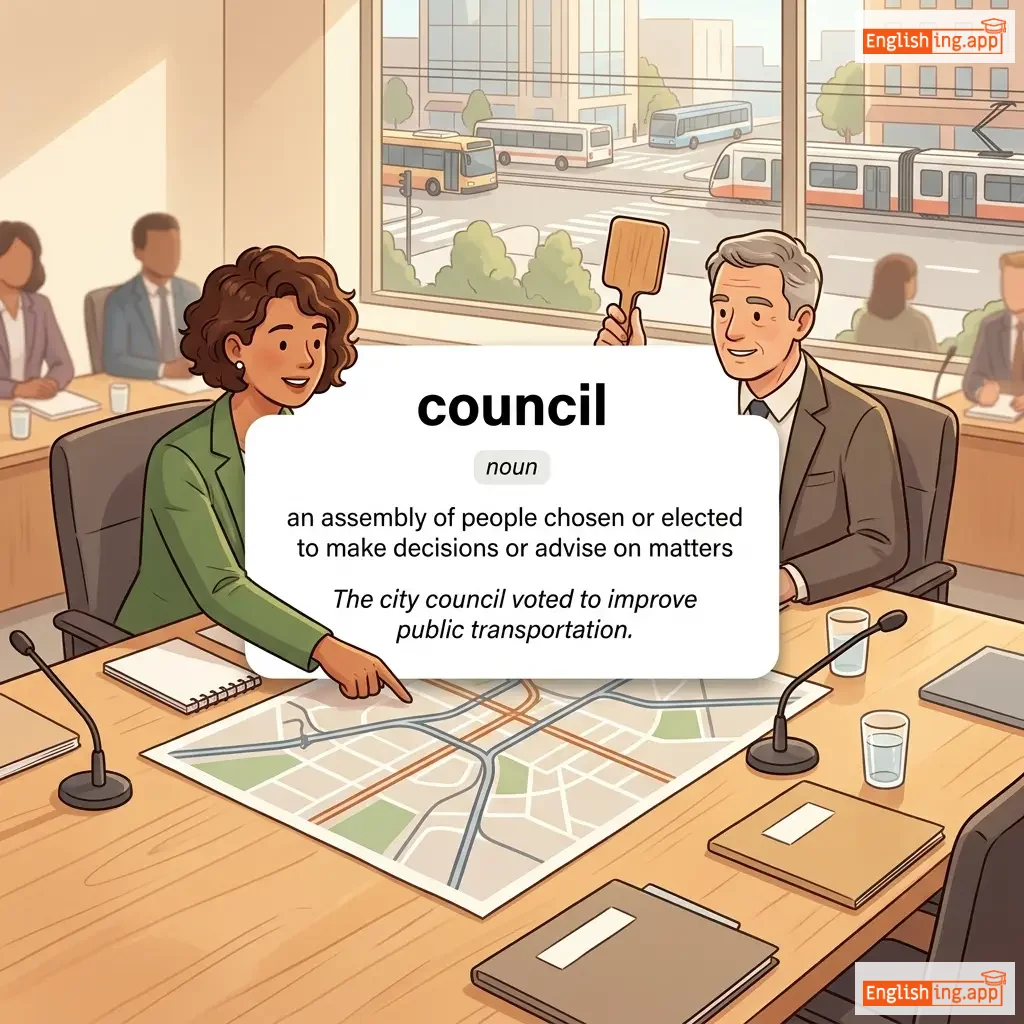
council definition card — visual illustration of the meaning
noun
/ˈkaʊn.səl/
評議会 (hyougikai)

an assembly of people chosen or elected to make decisions or advise on matters

"The city council voted to improve public transportation."

"市議会は公共交通の改善のために投票しました。" (Shigikai wa koukyou koutsuu no kaizen no tame ni touhyou shimashita.)
noun
/ˈkaʊnsələr/
議員 (giin)

an elected member of a local council who helps make decisions and represent the community

"The councillor spoke to residents about improving local roads."

"市議会議員は地域の道路について話しました。" (shigikai giin wa chiiki no doro ni tsuite hanashimashita)
noun
/ˈkaʊnsɪlər/
市議会議員 (shigikai giin)

an elected member of a council, especially a local government body

"The councilor held a public meeting to discuss local issues."

"市議会議員は地元の問題を議論するために公開会議を開きました。" (Shigikai giin wa jimoto no mondai o giron suru tame ni kōkai kaigi o hirakimashita.)
verb
/ˈkaʊnsəl/
助言する (jogen suru)

to give professional advice or guidance to someone

"The teacher counseled the students on their career choices."

"先生は学生にキャリア選択についてアドバイスしました。" (Sensei wa gakusei ni kyaria sentaku ni tsuite adobaisu shimashita.)
noun
/ˈkaʊnsəlɪŋ/
カウンセリング (kaunseringu)

professional guidance or therapy to help resolve personal or psychological problems

"She decided to go for counseling after feeling stressed for months."

"数ヶ月間ストレスを感じた後、彼女はカウンセリングを受けることを決意しました。" (Sū kagetsu-kan sutoresu o kanjita ato, kanojo wa kaunseringu o ukeru koto o ketsui shimashita.)
noun
/ˈkaʊn.səl.ɪŋ/
カウンセリング (kaunseringu)

the process of giving professional guidance and support to help someone deal with personal, social, psychological, or career-related problems

"She decided to seek counselling to manage stress and anxiety."

"彼女はストレスを管理するためにカウンセリングを受けた。" (kanojo wa sutoresu o kanri suru tame ni kaunseringu o uketa)
noun
/ˈkaʊnsələr/
カウンセラー (kaunseraa)

a person trained to give guidance on personal, social, or psychological problems; an advisor

"She spoke to a counsellor to get advice about her career."

"彼女は自分のキャリアについてカウンセラーに相談した。" (kanojo wa jibun no kyaria ni tsuite kaunseraa ni soudan shita)
noun
/ˈkaʊn.səl.ər/
カウンセラー (kaunserā)

a person trained to give guidance on personal, social, or psychological problems

"The school counselor helped the student deal with stress."

"学校のカウンセラーは学生がストレスに対処する手助けをしました。" (Gakkō no kaunserā wa gakusei ga sutoresu ni taisho suru tetsuduke o shimashita.)
verb
/kaʊnt/
数える (kazoeru)

to determine the total number of something

"She carefully counted the money on the table."

"彼女はテーブルの上のお金を慎重に数えた。" (Kanojo wa tēburu no ue no okane o shinchō ni kazoeta.)
noun
/ˈkaʊn.tə.nəns/
顔つき、表情; 支援 (kao-tsuki, hyōjō; shien)

a person's face or expression; support or approval

"Her cheerful countenance brightened the room."

"彼女の明るい顔つきが部屋を明るくした。" (Kanojo no akarui kaotsuki ga heya o akaruku shita.)
noun
/ˈkaʊn.tər/
カウンター (kauntā)

a flat surface in a shop, bank, or kitchen where transactions or work are done

"The cashier stood behind the counter."

"レジ係はカウンターの後ろに立っていました。" (Rejigakari wa kauntā no ushiro ni tatteimashita.)
noun
/ˈkaʊn.tər kleɪm/
反訴 (hansō)

a claim made to rebut a previous claim, often in legal contexts

"The defendant filed a counter-claim against the plaintiff."

"被告は原告に対して反訴を提起しました。" (Hikoku wa genkoku ni taishite hansō o teiki shimashita.)