語彙集

英単語辞書 | 単語の意味、定義、例文

noun
/ˈkreɪ.dəl/
揺り籠 (yurikago)

a small bed for a baby, especially one that rocks from side to side

"The baby sleeps peacefully in the cradle."

"赤ちゃんは揺り籠で静かに寝ています。" (Akachan wa yurikago de shizuka ni neteimasu.)
noun
/kræft/
技術、工芸、手工芸 (gijutsu, kougei, shukougei)

an activity involving skill in making things by hand; a trade or occupation

"She has mastered the craft of pottery."

"彼女は陶芸の技術を習得しています。" (Kanojo wa tougei no gijutsu o shuutoku shiteimasu.)
adjective
/ˈkræfti/
ずるい, 狡猾, 騙し (zurui, kōkatsu, damashi)

skilled at achieving goals through cunning or deceit; sly

"The crafty fox evaded the hunters again."

"ずる賢いキツネは再び狩人たちをかわしました。" (Zurukashikoi kitsune wa futatabi kariutachi o kawashimashita.)
noun
/kræɡ/
急な崖や岩の面 (kyuu na gake ya iwa no men)

a steep or rugged cliff or rock face

"The hikers climbed the jagged crag to reach the summit."

"ハイカーたちは頂上に到達するために険しい崖を登った。" (Haikaa-tachi wa choujou ni toutatsu suru tame ni kewashii gake o nobotta.)
adjective
/kræmpt/
窮屈, 不快適な小ささ (kyoukutsu, fukaiteki na chiisasa)

uncomfortably small or restricted

"The room was so cramped that we could barely move."

"部屋はとても窮屈で、ほとんど動けませんでした。" (Heya wa totemo kyoukutsu de, hotondo ugokemasen deshita.)
noun
/kreɪn/
クレーン (kuren)

a large tall bird with long legs and neck; a machine for lifting heavy objects

"The graceful crane stood motionless by the water's edge."

"優雅なクレーンは水辺に静止して立っていた。" (Yūga na kurēn wa mizube ni seishi shite tatte ita.)
noun
/ˈkreɪniəm/
頭蓋骨 (zugaikotsu)

the skull, especially the part enclosing the brain

"The archaeologists carefully examined the ancient cranium."

"考古学者たちは古代の頭蓋骨を慎重に調べました。" (Kōkogakusha-tachi wa kodai no zugaikotsu o shinchō ni shirabemashita.)
adjective
/ˈkræŋki/
機嫌が悪い (kigen ga warui)

bad-tempered, easily annoyed, or irritable

"The child gets cranky when he is hungry."
"その子供はお腹が空くと機嫌が悪くなります。" (Sono kodomo wa onaka ga suku to kigen ga waruku narimasu.)
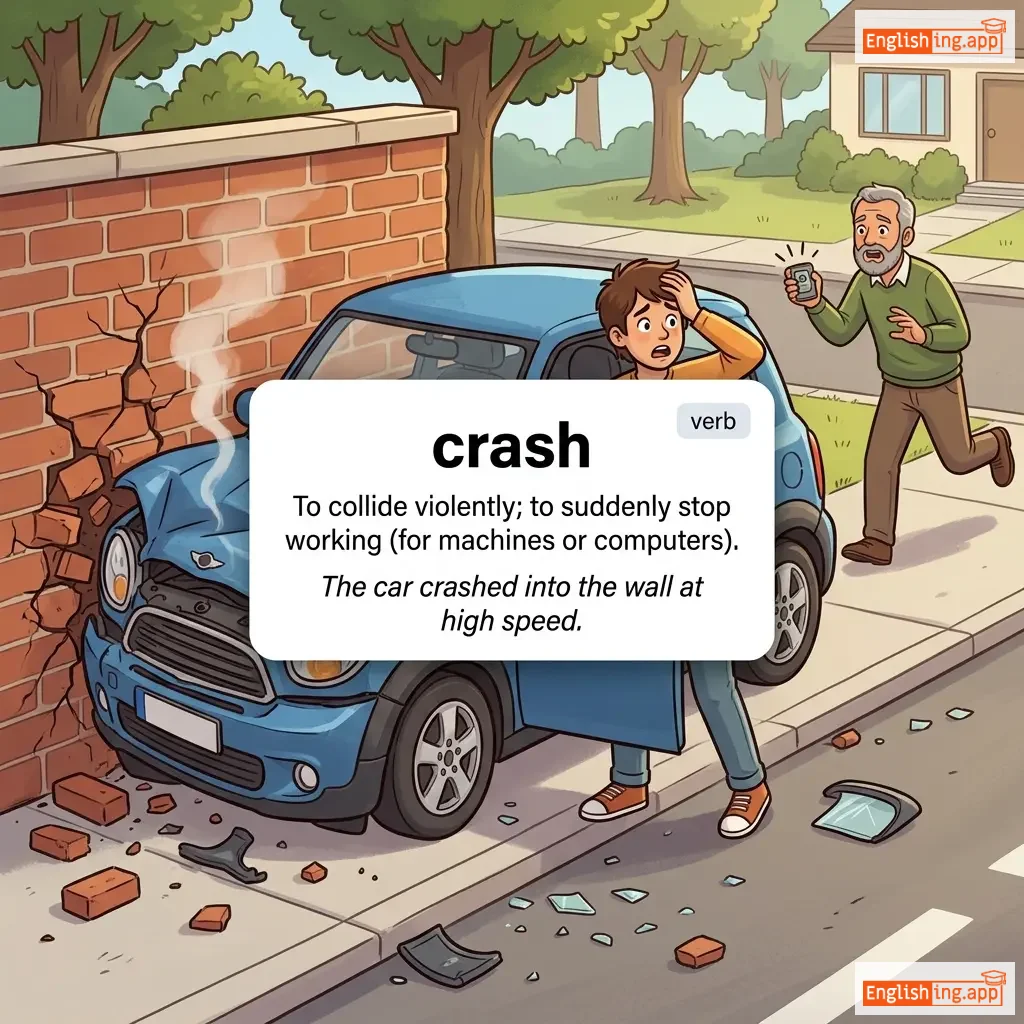
crash definition card — visual illustration of the meaning
verb
/kræʃ/
幸せ (shiawase)

To collide violently; to suddenly stop working (for machines or computers).

"The car crashed into the wall at high speed."

"彼女は賞を受け取ったとき、自分の幸せを隠せなかった。" (Kanojo wa shō o uketotta toki, jibun no shiawase o kakusenakatta.)
adjective
/kræs/
無神経な、感受性や洗練さが欠けている (mushinken na, kanjusei ya senrensā ga kakete iru)

lacking sensitivity, refinement, or intelligence

"His crass remarks offended everyone at the meeting."

"彼の無神経な発言は会議で全員を怒らせました。" (Kare no mushinken na hatsugen wa kaigi de zen'in o okorase mashita.)
verb
/kreɪv/
強く欲する, 渇望する (tsuyoku hossuru, katsubou suru)

to have a strong desire for something

"She craves adventure and often travels to remote places."
"彼女は冒険を渇望し、しばしば遠くの場所へ旅行します。" (Kanojo wa bouken wo katsubou shi, shibashiba tooku no basho e ryokou shimasu.)
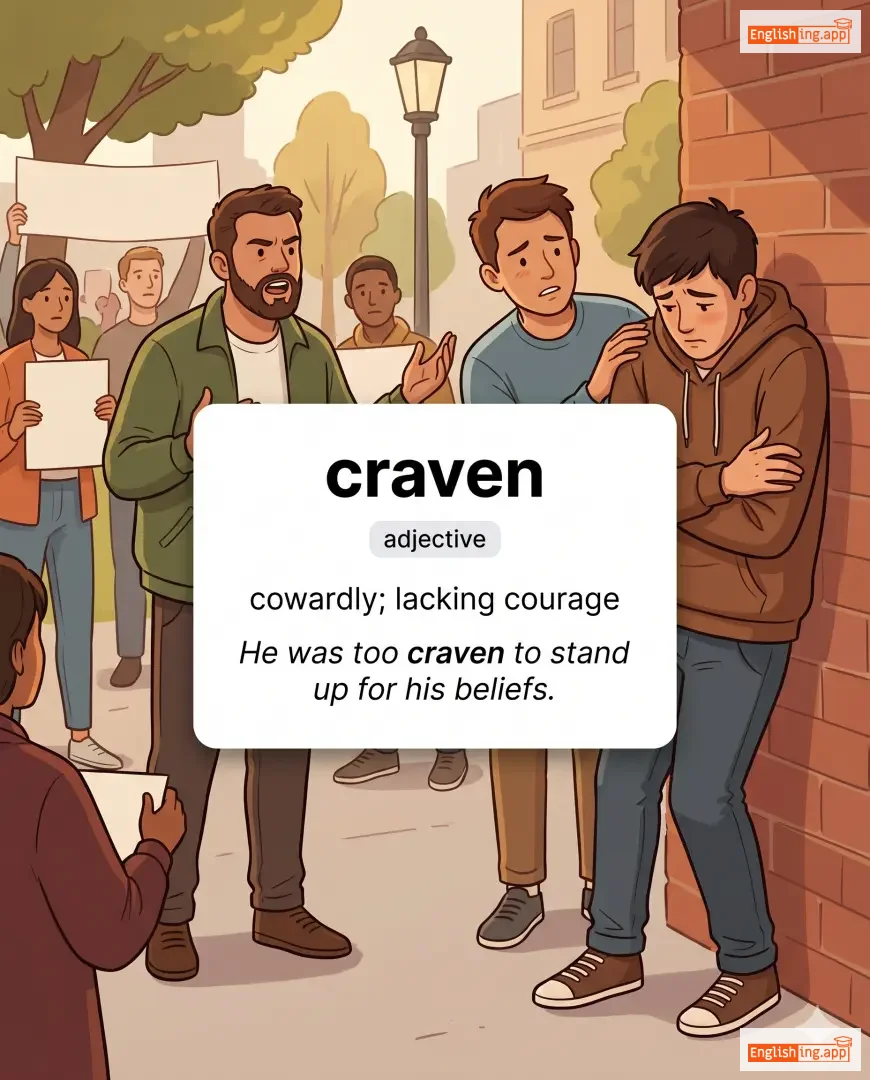
craven definition card — visual illustration of the meaning
adjective
/ˈkreɪvən/
臆病 (okubyō)

cowardly; lacking courage

"He was too craven to stand up for his beliefs."

"彼は自分の信念のために立ち上がるにはあまりにも臆病でした。" (Kare wa jibun no shinnen no tame ni tachiagaru ni wa amari ni mo okubyō deshita.)
noun
/ˈkreɪvɪŋ/
強い欲求 (tsuyoi yokkyuu)

a strong desire for something

"She has a craving for chocolate every evening."
"彼女は毎晩チョコレートが欲しくなる。" (Kanojo wa maiban chokorēto ga hoshiku naru.)
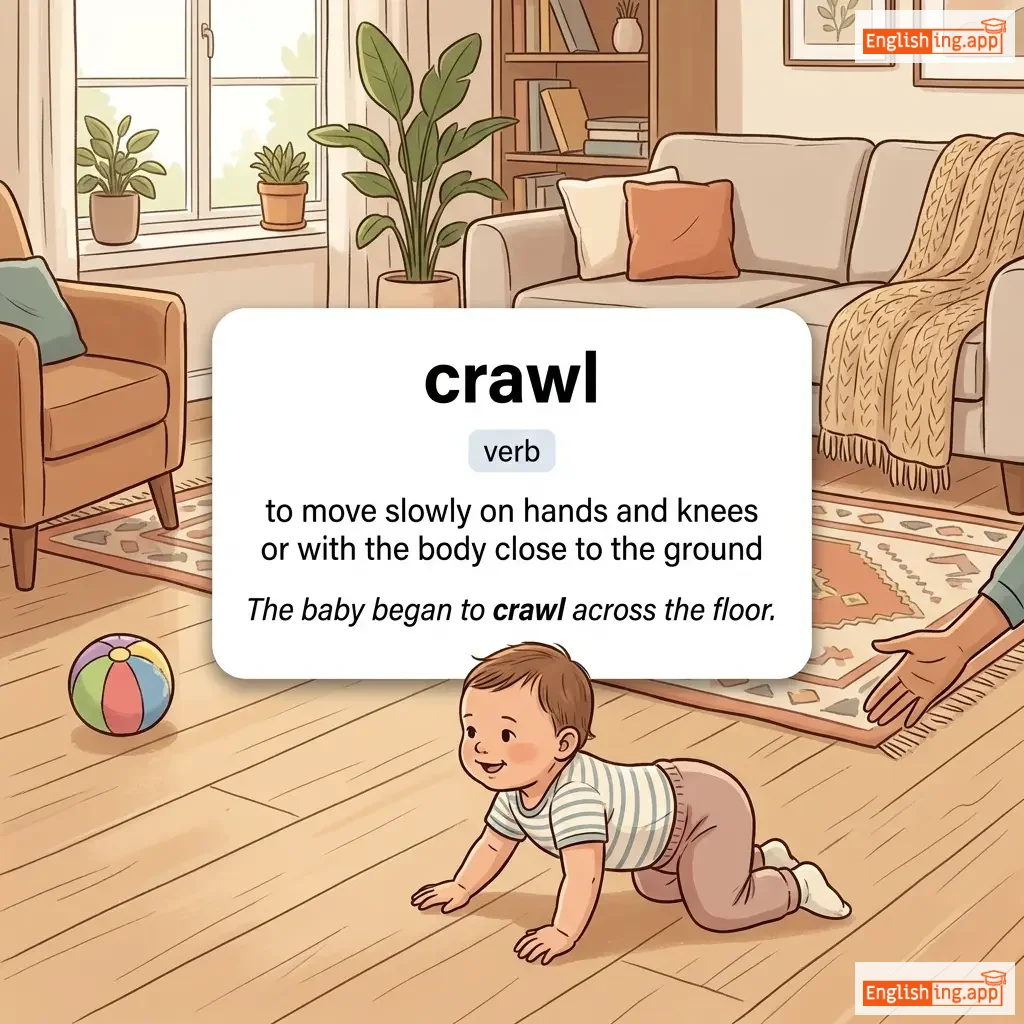
crawl definition card — visual illustration of the meaning
verb
/krɔːl/
這う (hau)

to move slowly on hands and knees or with the body close to the ground

"The baby began to crawl across the floor."
"赤ちゃんは床を這い始めました。" (Akachan wa yuka o hai hajimemashita.)
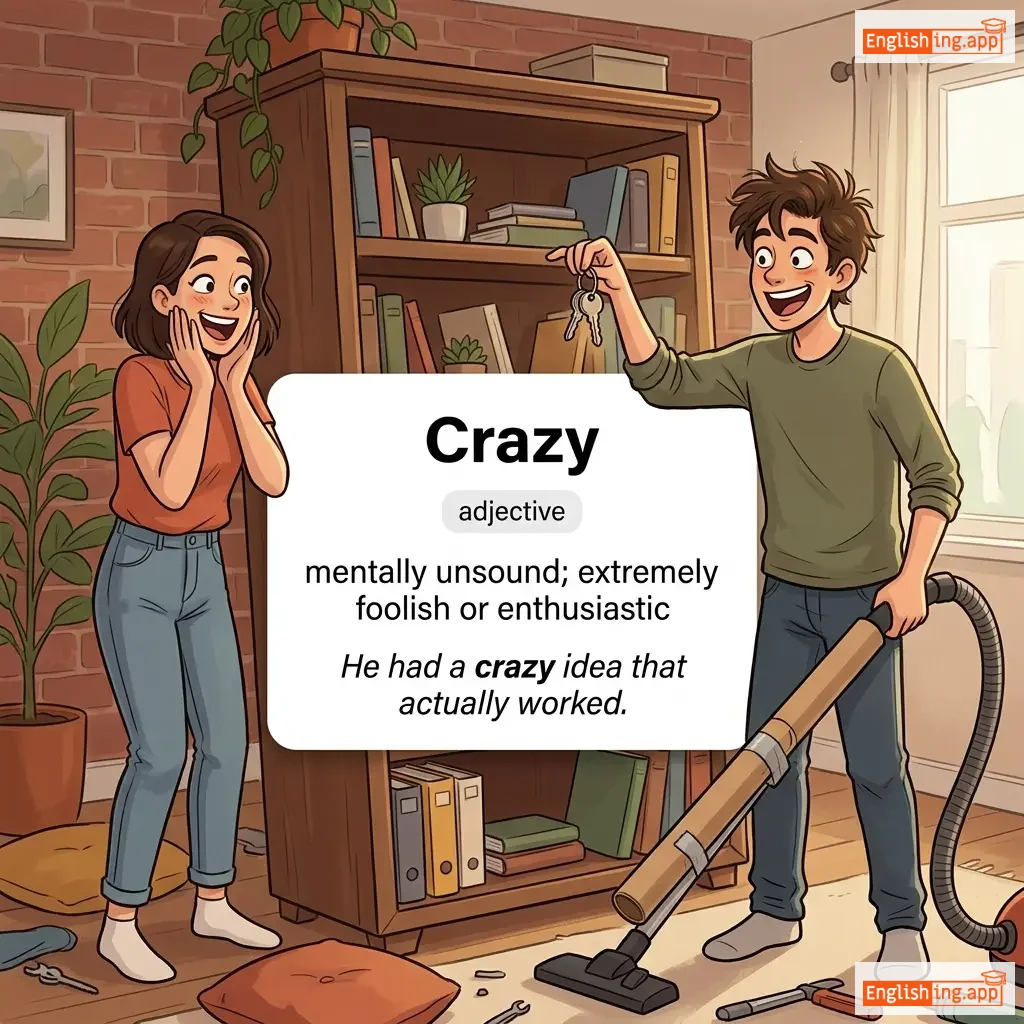
Crazy definition card — visual illustration of the meaning
adjective
/ˈkreɪzi/
クレイジー (kureijī)

mentally unsound; extremely foolish or enthusiastic

"He had a crazy idea that actually worked."

"彼は実際にうまくいったクレイジーなアイデアを持っていた。" (Kare wa jissai ni umaku itta kureijī na aidea o motte ita.)
verb
/kriːk/
高い音できしむ音を立てる (takai on de kishimu oto o tateru)

to make a high-pitched, squeaking noise when moved

"The old door creaked as she opened it."

"古いドアは彼女が開けるときにきしんだ。" (Furui doa wa kanojo ga akeru toki ni kishinda.)
noun
/kriːm/
クリーム (kuriimu)

A thick, fatty part of milk that rises to the top; also a soft substance used in cooking or cosmetics.

"She added some cream to her coffee."

"彼女はコーヒーにクリームを加えた。" (Kanojo wa koohii ni kuriimu wo kuwaeta.)
noun
/ˈkriːməri/
クリーム製造所 (kurīmu seizōjo)

a place where milk and cream are processed and dairy products are made

"The local creamery produces fresh butter and cheese daily."

"地元のクリーム製造所は毎日新鮮なバターとチーズを作っています。" (Jimoto no kurīmu seizōjo wa mainichi shinsen na batā to chīzu o tsukutteimasu.)
adjective
/ˈkriːmi/
クリームのような滑らかでリッチな質感 (kurīmu no yōna nameraka de ricchi na shitsukan)

having a smooth, rich texture like cream

"She poured a creamy sauce over the pasta."

"彼女はパスタにクリーミーなソースをかけた。" (Kanojo wa pasuta ni kurīmī na sōsu o kaketa.)
noun, verb
/kriːs/
しわ, 折り目 (shiwa, orime)

a line or fold produced on paper, cloth, or other material; to make a fold or wrinkle

"She ironed the shirt carefully to remove every crease."
"彼女はシャツを慎重にアイロンがけして、すべてのしわを取り除きました。" (Kanojo wa shatsu o shinchō ni airon gake shite, subete no shiwa o torinozokimashita.)
create definition card — visual illustration of the meaning
verb
/kriˈeɪt/
作る (tsukuru)

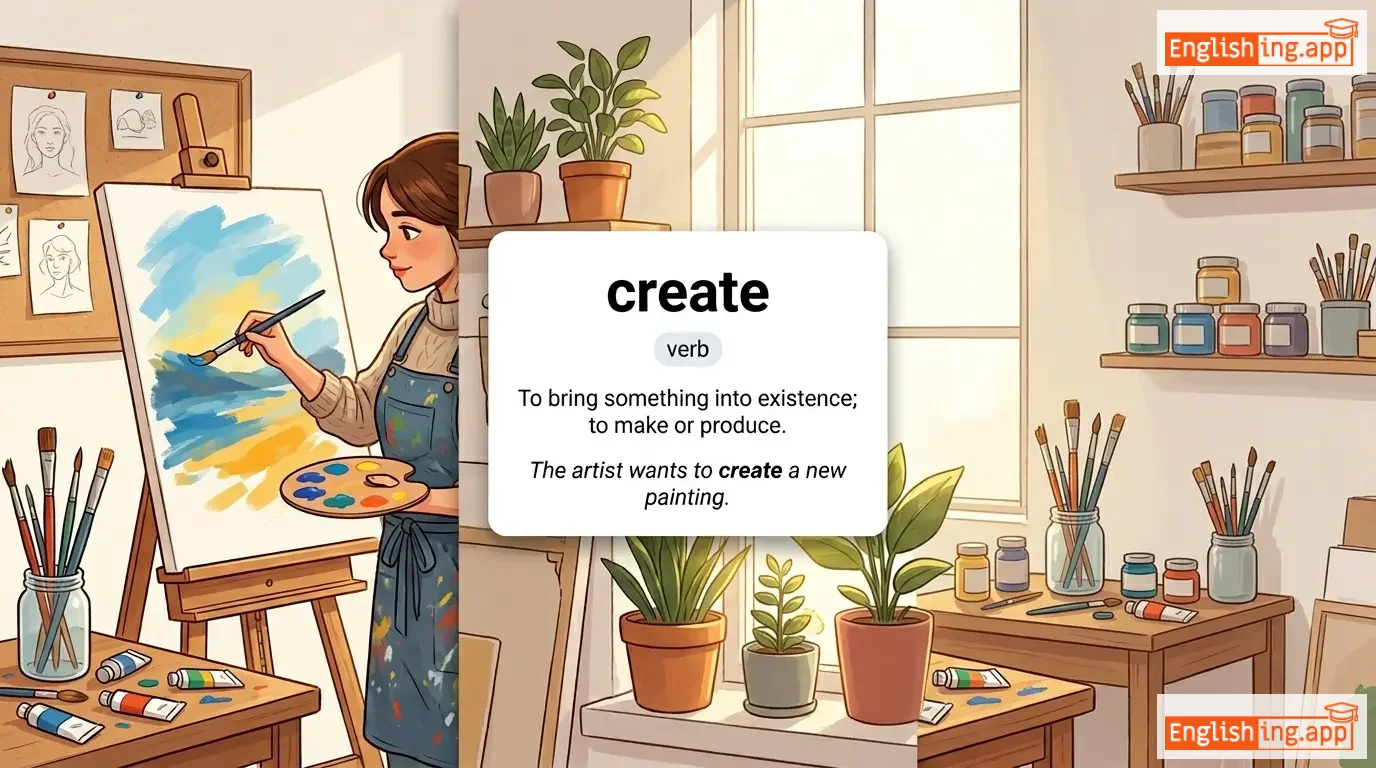
To bring something into existence; to make or produce.

"The artist wants to create a new painting."
"アーティストは新しい絵を作りたい。" (Ātisuto wa atarashī e o tsukuritai.)
creates definition card — visual illustration of the meaning
verb
kriˈeɪts
作り出す (tsukuridasu)

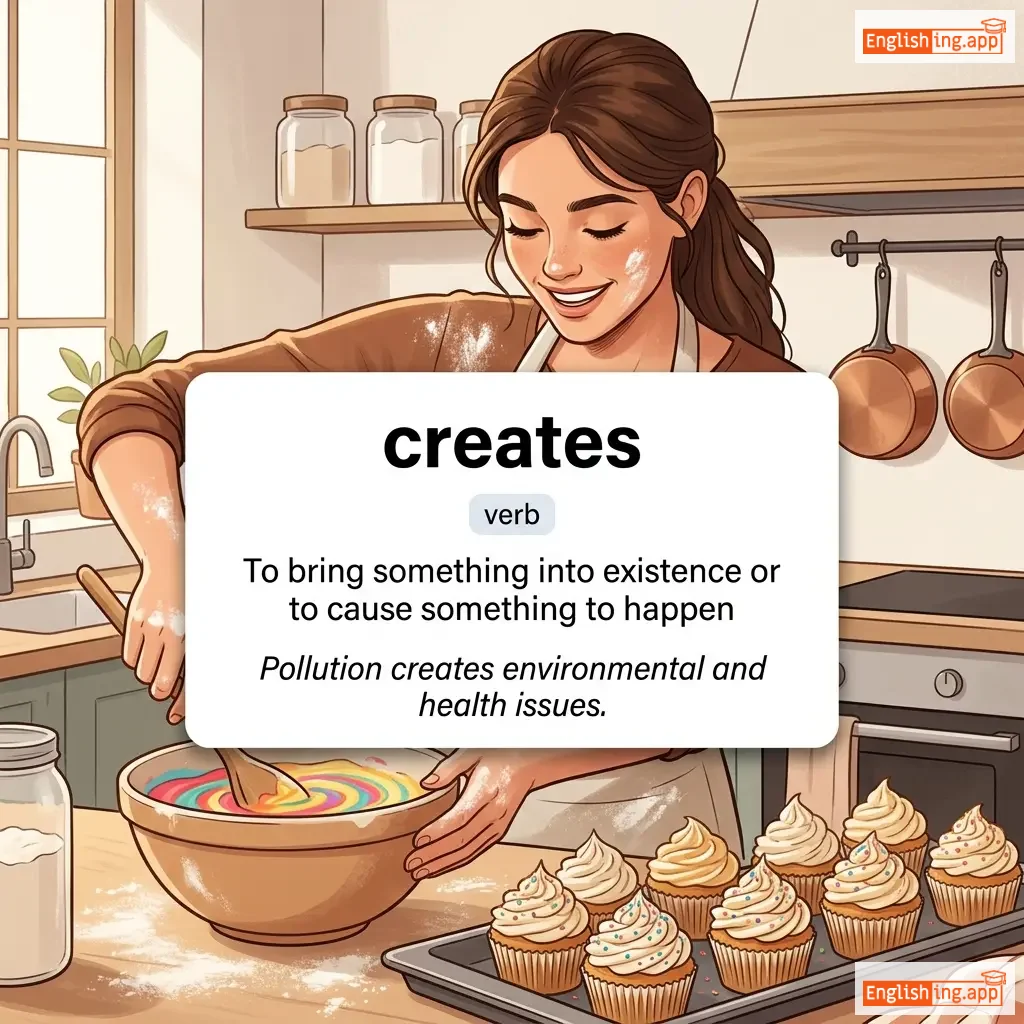
To bring something into existence or to cause something to happen

"Pollution creates environmental and health issues."

"汚染は環境と健康問題を引き起こします。" (Osenshimasu wa kankyō to kenkō mondai o hikiokoshimasu.)
noun
/kriˈeɪʃən/
創造 (sozou)

The act of bringing something into existence; something that has been made or produced.

"The artist’s latest creation was admired by everyone at the gallery."
"そのアーティストの最新の創造はギャラリーで皆に賞賛されました。" (Sono atisuto no saishin no souzou wa gyararii de mina ni shousan saremashita.)
creations definition card — visual illustration of the meaning
noun
/kriˈeɪ.ʃənz/
創作物 (sousakubutsu)

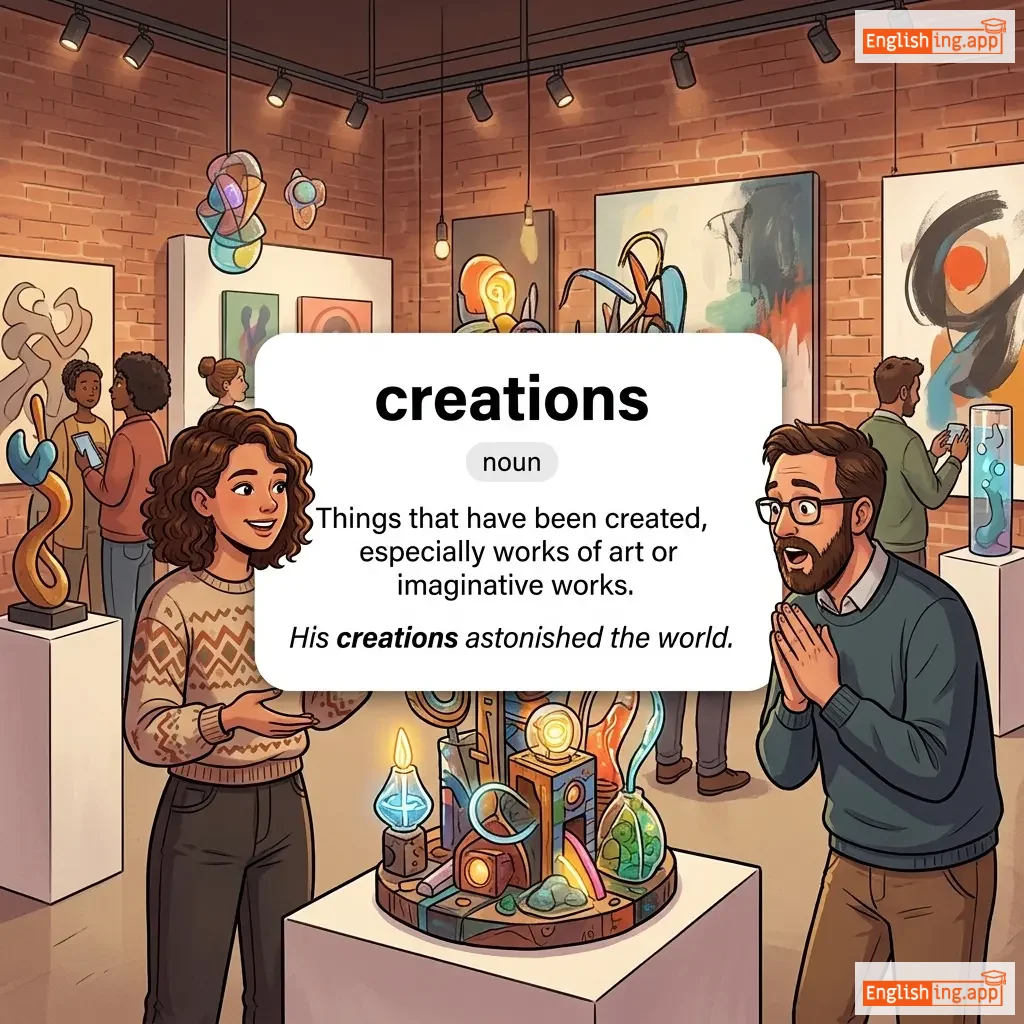
Things that have been created, especially works of art or imaginative works.

"His creations astonished the world."

"彼の創作物は世界を驚かせた。" (Kare no sousakubutsu wa sekai o odorokaseta.)
creative definition card — visual illustration of the meaning
adjective
/kriˈeɪtɪv/
創造的 (sōzō-teki)

Having the ability to produce new and original ideas or things.

"She is very creative in her writing."
"彼女は執筆において非常に創造的です。" (Kanojo wa shippitsu ni oite hijō ni sōzō-teki desu.)
creative exhibits definition card — visual illustration of the meaning
adjective + noun
kriˈeɪtɪv ɪɡˈzɪbɪts
創造的な展示 (sōzōteki na tenji)

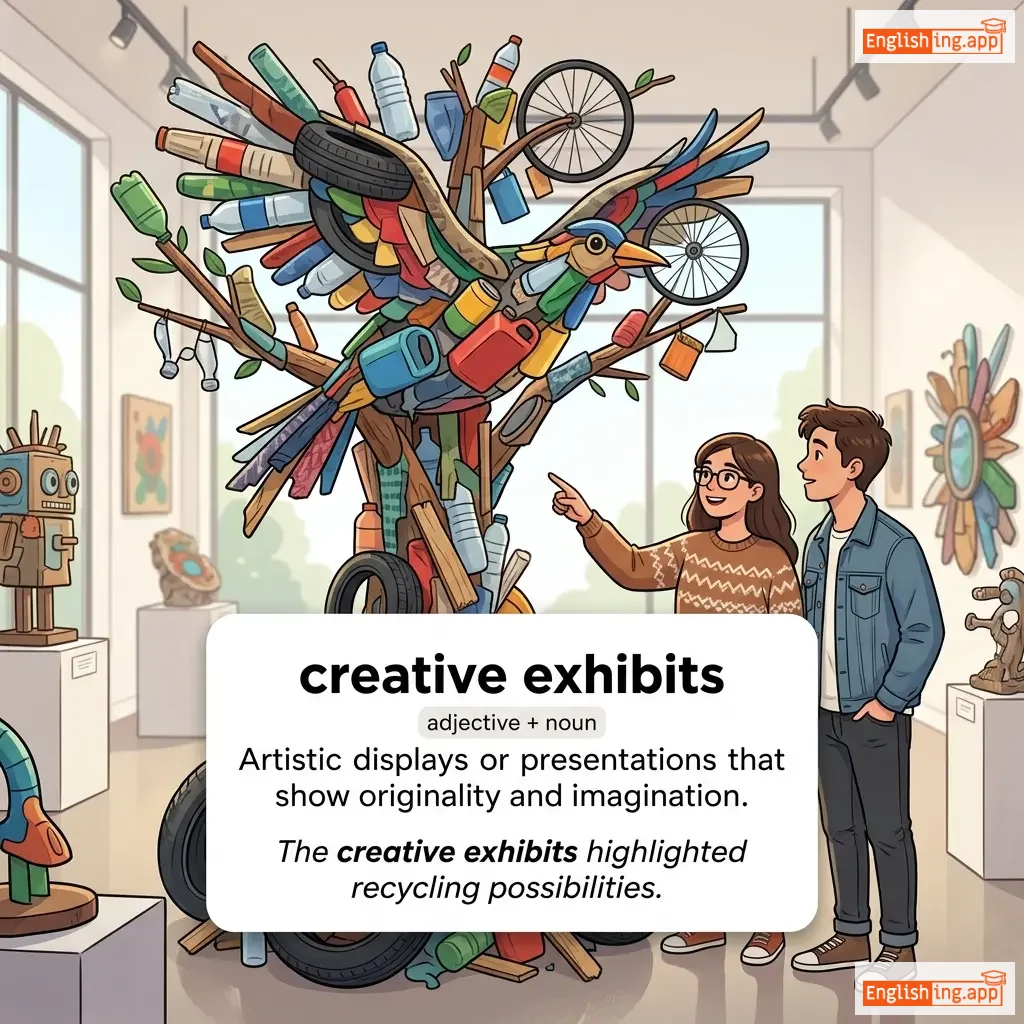
Artistic displays or presentations that show originality and imagination.

"The creative exhibits highlighted recycling possibilities."
"創造的な展示はリサイクルの可能性を強調しました。" (Sōzōteki na tenji wa risākuru no kanō-sei o kyōchō shimashita.)
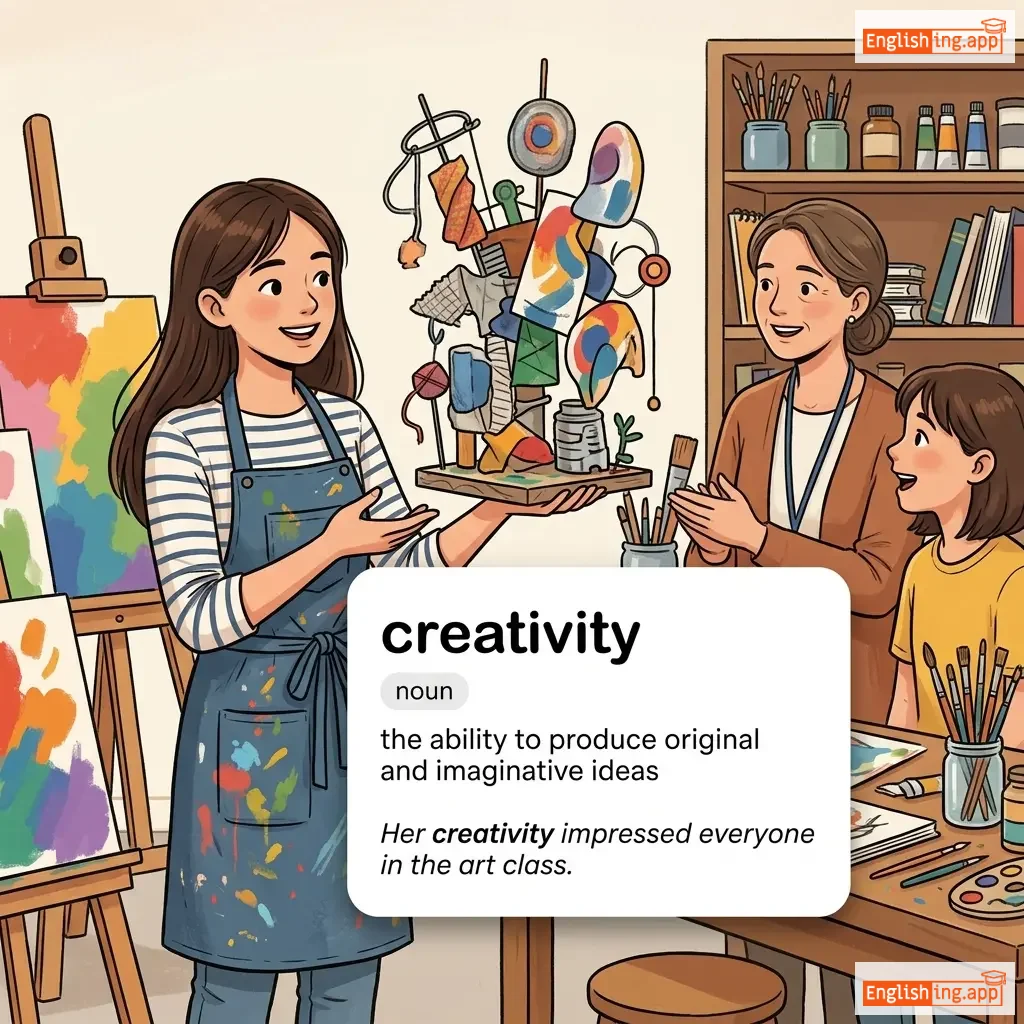
creativity definition card — visual illustration of the meaning
noun
/ˌkriːeɪˈtɪvɪti/
創造性 (souzousei)

the ability to produce original and imaginative ideas

"Her creativity impressed everyone in the art class."

"彼女の創造性は美術のクラスで皆を感動させました。" (Kanojo no souzousei wa bijutsu no kurasu de minna wo kandou sasenimashita.)
noun
/krɪˈeɪtə/
創造者 (sōzōsha)

a person who brings something into existence

"He is the creator of many successful startups."

"彼は多くの成功したスタートアップのクリエイターです。" (Kare wa ōku no seikō shita sutātopu no kurieitā desu.)
noun
/ˈkriːtʃər/
生物 (seibutsu)

A living being, especially an animal.

"The forest is full of strange creatures."

"森は奇妙な生物でいっぱいです。" (Mori wa kimyō na seibutsu de ippai desu.)
credence definition card — visual illustration of the meaning
noun
/ˈkriː.dəns/
信頼, 認めること (shinrai, mitomeru koto)

belief in or acceptance of something as true

"The witness gave credence to the defendant's alibi."

"証人は被告のアリバイに信頼をおいた。" (shōnin wa hikoku no aribai ni shinrai o oita.)
noun
/krɪˈden.ʃəl/
資格証明書 (shikaku shōmeisho)

a qualification, achievement, or aspect of a person's background used to indicate suitability for something

"She presented her credentials before starting the new job."

"彼女は新しい仕事を始める前に資格証明書を提示しました。" (Kanojo wa atarashī shigoto o hajimeru mae ni shikaku shōmeisho o teiji shimashita.)
credibility definition card — visual illustration of the meaning
noun
/ˌkrɛd.ɪˈbɪl.ɪ.ti/
信頼性 (shinraisei)

the quality of being trusted and believed in

"The journalist's credibility was questioned after the report."

"ジャーナリストの信頼性はレポートの後に疑問視されました。" (Jānarisuto no shinraisei wa repōto no ato ni gimon-shi saremashita.)
adjective
/ˈkrɛd.ɪ.bəl/
信頼できる (shinrai dekiru)

able to be believed; convincing

"Her explanation was credible enough to convince the committee."

"彼女の説明は委員会を納得させるのに十分信頼できるものでした。" (Kanojo no setsumei wa iinkai o nattoku saseru no ni jūbun shinrai dekiru mono deshita.)
noun, verb
/ˈkrɛdɪt/

As a noun: the ability to obtain goods or services before payment; recognition for an achievement. As a verb: to publicly acknowledge someone's contribution.

"She received credit for her contribution to the project."

adjective
/ˈkrɛdɪtəbl/
称賛に値する (shōsan ni atai suru)

Deserving praise or acknowledgment, though not necessarily outstanding.

"She made a creditable effort in completing the project on time."
"彼女は時間通りにプロジェクトを完了するために称賛に値する努力をしました。" (Kanojo wa jikan dōri ni purojekuto o kanryō suru tame ni shōsan ni atai suru doryoku o shimashita.)
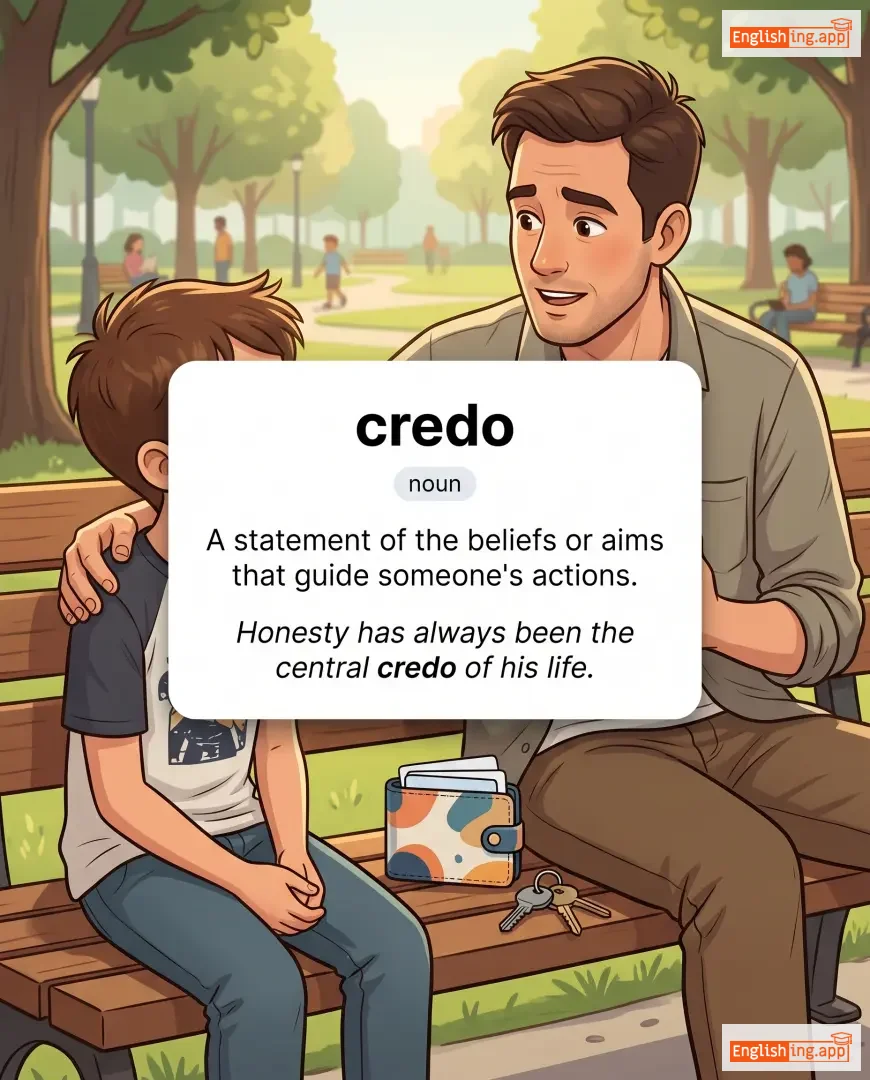
credo definition card — visual illustration of the meaning
noun
/ˈkriːdoʊ/
信条 (shinjou)

A statement of the beliefs or aims that guide someone's actions.

"Honesty has always been the central credo of his life."

"誠実は彼の人生の中で常に中心的な信条であった。" (Seijitsu wa kare no jinsei no naka de itsudemo chuushinteki na shinjou de atta.)
noun
/krəˈdjuːlɪti/
信じやすさ (shinjiyasusa)

A tendency to be too ready to believe that something is real or true.

"The scam succeeded because of the victim's credulity."

"詐欺は被害者の信じやすさのおかげで成功した。" (Sagi wa higaisha no shinjiyasusa no okage de seikou shita.)
adjective
/ˈkrɛdʒʊləs/
信用しやすい (shinyou shiyasui)

Having or showing too great a readiness to believe things.

"The credulous child believed every story she heard."

"その信用しやすい子供は、聞いた話をすべて信じました。" (Sono shinyou shiyasui kodomowa, kiita hanashi wo subete shinji mashita.)
noun
/kriːd/
信条, 原則 (shinchou, gensoku)

A system of religious or spiritual beliefs or a guiding principle.

"Freedom of speech is part of his personal creed."

"言論の自由は彼の個人的な信条の一部です。" (Genron no jiyū wa kare no kojinteki na shinchou no ichibu desu.)
noun
/kriːk/
小川 (ogawa)

a small stream or narrow river

"We went fishing by the creek near our house."
"私たちは家の近くの小川で釣りをしました。" (Watashitachi wa ie no chikaku no ogawa de tsuri o shimashita.)
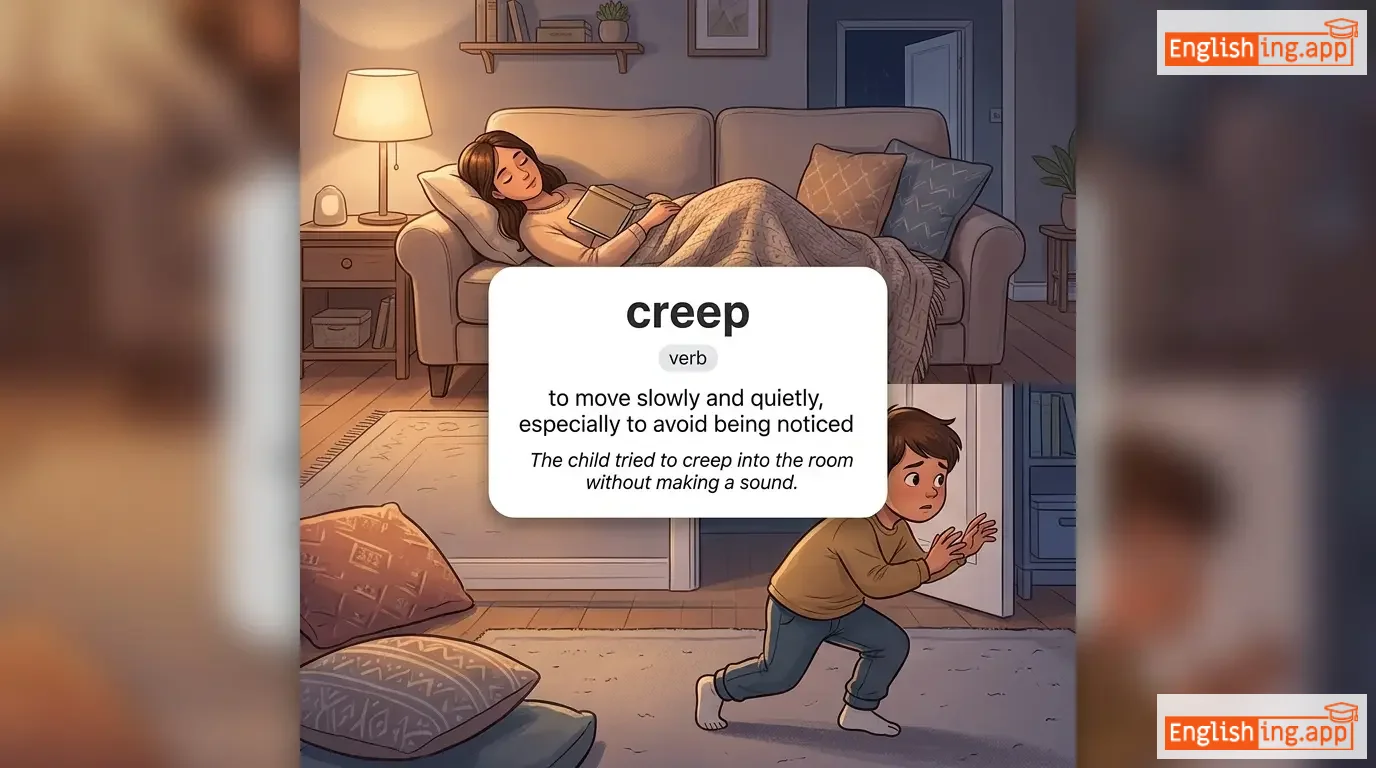
creep definition card — visual illustration of the meaning
verb
/kriːp/
忍び寄る (shinobiyoru)

to move slowly and quietly, especially to avoid being noticed

"The child tried to creep into the room without making a sound."
"子供は音を立てずに部屋に忍び込もうとしました。" (Kodomo wa oto o tatezu ni heya ni shinobikomo to shimashita.)
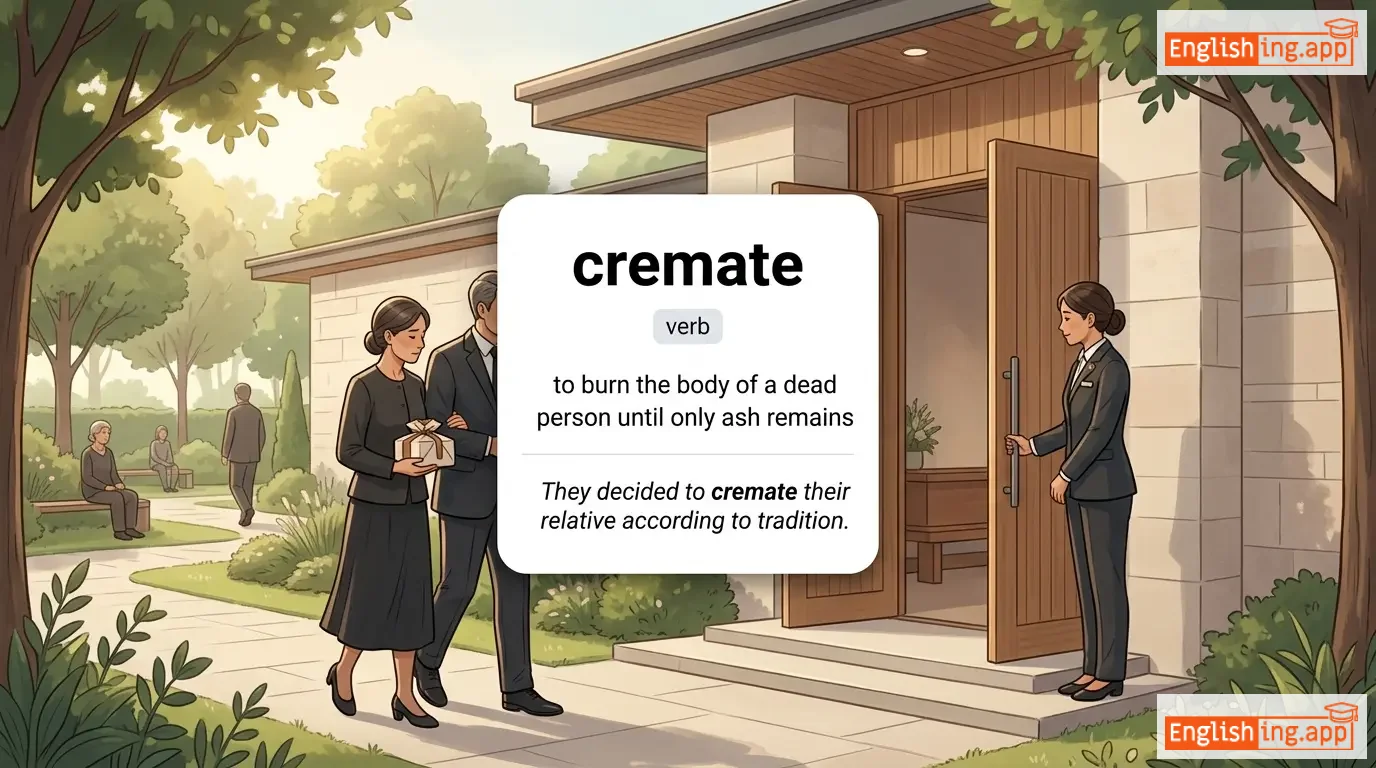
cremate definition card — visual illustration of the meaning
verb
/ˈkriː.meɪt/
火葬する (kasou suru)

to burn the body of a dead person until only ash remains

"They decided to cremate their relative according to tradition."

"彼らは伝統に従って親戚を火葬することに決めました。" (Karera wa dentou ni shitagatte shinseki o kasou suru koto ni kimemashita.)
noun
/ˈkrɛməˌtɔːri/
火葬場 (kasouba)

a place where dead bodies are cremated

"The crematory was located near the cemetery."

"火葬場は墓地の近くにありました。" (Kasouba wa bochi no chikaku ni arimashita.)
adjective
/krɪˈpʌskjʊlər/
黄昏に関係する (koushun ni kankei suru)

relating to twilight or active during twilight

"Bats are crepuscular animals, most active at dawn and dusk."

"コウモリは黄昏時に活動的な動物で、夜明けと夕暮れ時が最も活発です。" (Koumori wa koushun-ji ni katsudouteki na doubutsu de, yoake to yuugure-ji ga mottomo kappatsu desu.)
noun
/krəˈʃɛndoʊ/
音量の段階的増加 (onryou no dankai teki zouka)

a gradual increase in loudness or intensity, especially in music

"The orchestra built to a powerful crescendo before the finale."

"オーケストラはフィナーレの前に強力なクレッシェンドを築いた。" (Ookesutora wa finaare no mae ni kyouryoku na kuresshendo wo kizuita.)
noun
/krɛst/
頂上 (choujou)

the top of a hill, wave, or mountain; a symbol of identity

"The hikers reached the crest of the mountain at sunrise."

"ハイカーたちは日の出時に山頂に到達しました。" (Haikaa tachi wa hinode ji ni sanchou ni toutatsu shimashita.)
adjective
/ˈkrɛstˌfɔːlən/
がっかりした (gakkari shita)

sad and disappointed

"He looked crestfallen after hearing the bad news."

"彼は悪い知らせを聞いてがっかりしていた。" (Kare wa warui shirase wo kiite gakkari shite ita.)
noun
/krəˈvæs/
深い亀裂 (fukai ketsu)

a deep crack in a glacier or the earth’s surface

"The climbers carefully crossed the icy crevasse."

"登山者たちは慎重に氷の亀裂を越えました。" (Tōsanjatachi wa shinchō ni kōri no ketsu o koemashita.)
noun
/ˈkrɛvɪs/
亀裂 (kiretsu)

a narrow crack or opening, especially in a rock or wall

"The lizard hid in a crevice between the stones."

"トカゲは石の間の亀裂に隠れていた。" (Tokage wa ishi no aida no kiretsu ni kakurete ita.)
👨‍✈️

crew (クルー)

noun
/kruː/
乗組員 (norumuiin)

A group of people working together, especially on a ship, aircraft, or project.

"The ship's crew worked tirelessly during the storm."

"船のクルーは嵐の間、休むことなく働いた。" (Fune no kurū wa arashi no aida, yasumu koto naku hataraita.)