वोकैबुलरीज

इंग्लिश वोकैबुलरी डिस्कवर, लर्न और मास्टर करें

noun
/ˈkreɪ.dəl/
पालना (paalna)

a small bed for a baby, especially one that rocks from side to side

"The baby sleeps peacefully in the cradle."

"शिशु पालने में शांतिपूर्वक सोता है।" (shishu paalne mein shaantipoorvak sota hai)
noun
/kræft/
कला, शिल्प, हस्तशिल्प (kala, shilp, hastashilp)

an activity involving skill in making things by hand; a trade or occupation

"She has mastered the craft of pottery."

"उसने मिट्टी के बर्तन बनाने की कला में महारत हासिल कर ली है।" (Usne mitti ke bartan banane ki kala mein maharat haasil kar li hai.)
adjective
/ˈkræfti/
चतुर, चालाक, कपटी (chatur, chalaki, kapti)

skilled at achieving goals through cunning or deceit; sly

"The crafty fox evaded the hunters again."

"चतुर लोमड़ी ने फिर से शिकारीों को धोखा दिया।" (Chatur lomdi ne phir se shikariyon ko dhokha diya.)
noun
/kræɡ/
एक ऊँचा या खड़ी चट्टान (ek uncha ya khadi chattan)

a steep or rugged cliff or rock face

"The hikers climbed the jagged crag to reach the summit."

"यात्रियों ने शिखर तक पहुँचने के लिए खड़ी चट्टान चढ़ी।" (Yatriyon ne shikhar tak pahuchne ke liye khadi chattan chadhi.)
adjective
/kræmpt/
संकुचित, असुविधाजनक रूप से छोटा (sankuchit, asubidhaajanak roop se chhota)

uncomfortably small or restricted

"The room was so cramped that we could barely move."

"कमरे में इतना संकुचित था कि हम मुश्किल से हिल सकते थे।" (Kamre mein itna sankuchit tha ki hum mushkil se hil sakte the.)
noun
/kreɪn/
क्रेन (kren)

a large tall bird with long legs and neck; a machine for lifting heavy objects

"The graceful crane stood motionless by the water's edge."

"सुंदर क्रेन पानी के किनारे शांतिपूर्वक खड़ी थी।" (sundar kren pani ke kinare shantipoorvak khadi thi.)
noun
/ˈkreɪniəm/
कपाल (kapal)

the skull, especially the part enclosing the brain

"The archaeologists carefully examined the ancient cranium."

"प्राचीन क्रेनियम को ध्यान से जांचा गया।" (Prachin cranium ko dhyan se janchha gaya.)
adjective
/ˈkræŋki/
चिड़चिड़ा (chidhchidhā)

bad-tempered, easily annoyed, or irritable

"The child gets cranky when he is hungry."

"बच्चा चिड़चिड़ा हो जाता है जब उसे भूख लगती है।" (Bacchā chiḍhchidhā ho jātā hai jab use bhūkh lagtī hai.)
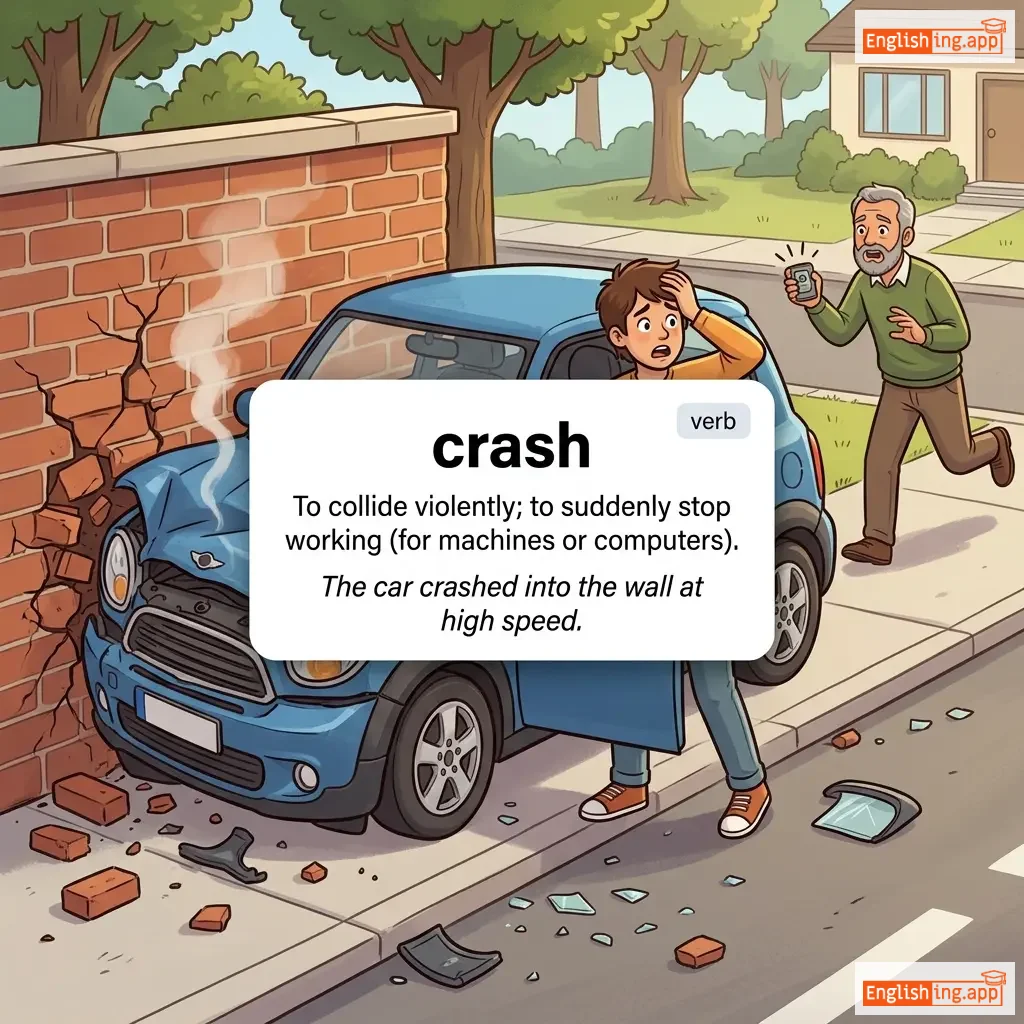
crash definition card — visual illustration of the meaning
verb
/kræʃ/
खुशी (khushi)

To collide violently; to suddenly stop working (for machines or computers).

"The car crashed into the wall at high speed."

"उसे पुरस्कार मिलने पर वह अपनी खुशी नहीं छिपा पाई।" (Use puraskar milne par wah apni khushi nahi chhupa pai.)
adjective
/kræs/
अविवेकी, संवेदनशीलता या परिष्कृतता से रहित (aviveki, sanvedansheelta ya parishkrtata se rahit)

lacking sensitivity, refinement, or intelligence

"His crass remarks offended everyone at the meeting."

"उसके अविवेकी टिप्पणियों ने बैठक में सभी को आहत किया।" (Uske aviveki tippaniyon ne baithak mein sabhi ko aahat kiya.)
verb
/kreɪv/
मजबूत इच्छा करना, लालसा करना (majboot ichha karna, lalasa karna)

to have a strong desire for something

"She craves adventure and often travels to remote places."

"वह साहसिकता की तीव्र इच्छा करती है और अक्सर दूरदराज के स्थानों की यात्रा करती है।" (Vah sahasikta ki teevr ichha karti hai aur aksar doordaraz ke sthalon ki yatra karti hai.)
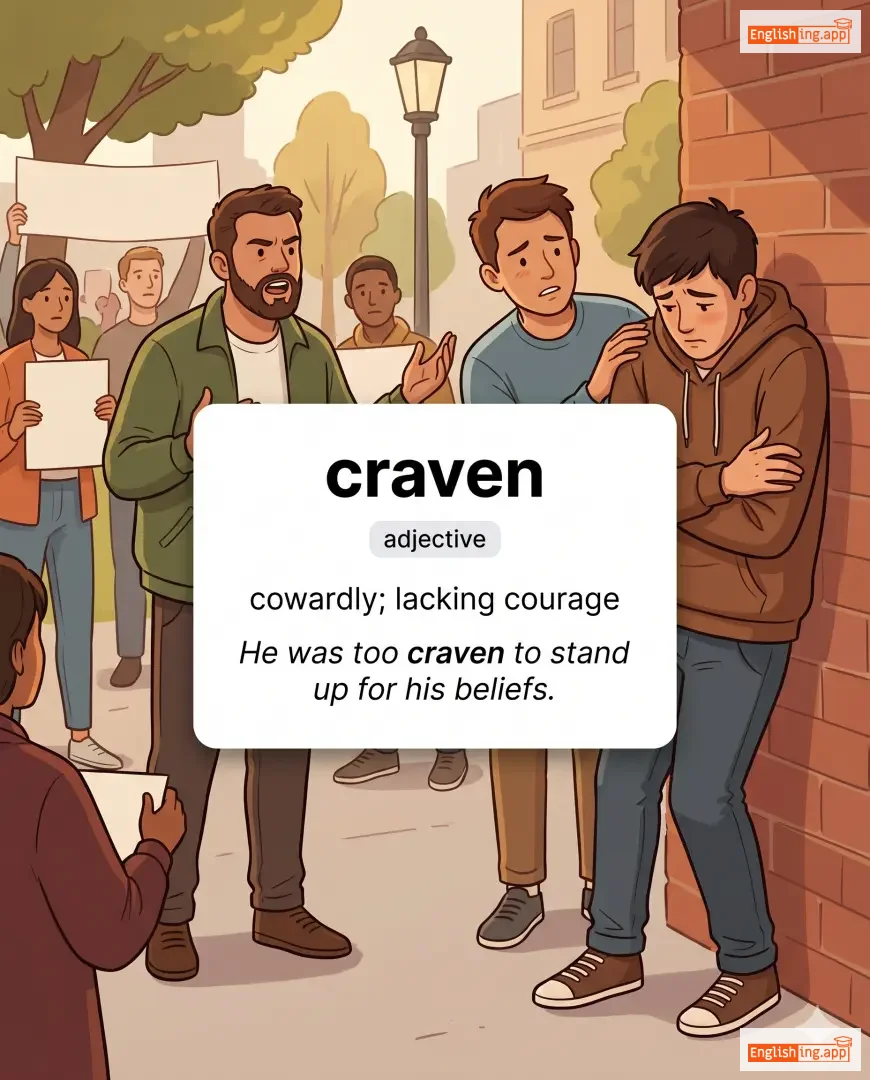
craven definition card — visual illustration of the meaning
adjective
/ˈkreɪvən/
कायर (kayar)

cowardly; lacking courage

"He was too craven to stand up for his beliefs."

"वह अपने विश्वासों के लिए खड़ा होने के लिए बहुत कायर था।" (Vah apne vishwason ke liye khada hone ke liye bahut kayar tha.)
noun
/ˈkreɪvɪŋ/
तगड़ी इच्छा, तीव्र आकांक्षा (tagdi ichha, teevr aakanksha)

a strong desire for something

"She has a craving for chocolate every evening."

"वह हर शाम चॉकलेट के लिए तगड़ी इच्छा करती है।" (Vah har shaam chocolate ke liye tagdi ichha karti hai.)
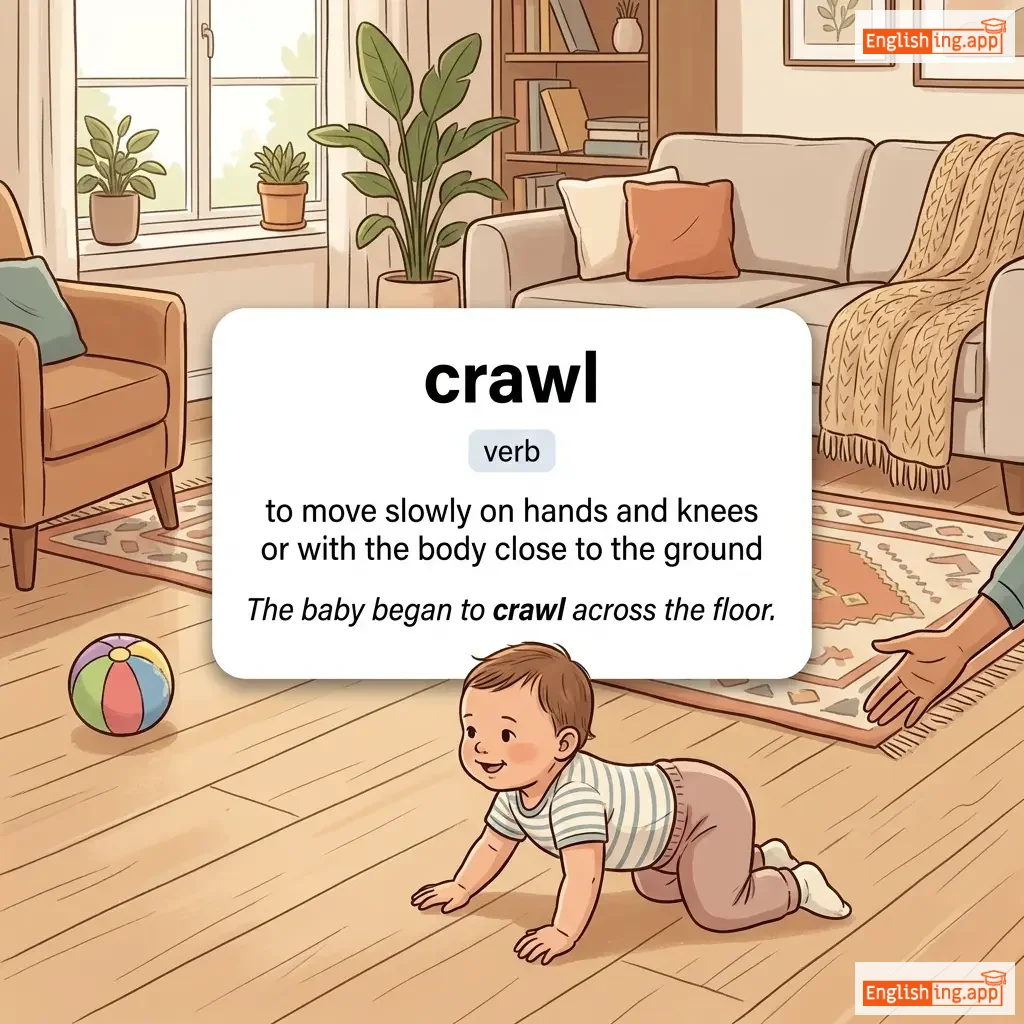
crawl definition card — visual illustration of the meaning
verb
/krɔːl/
रेंगना (rengna)

to move slowly on hands and knees or with the body close to the ground

"The baby began to crawl across the floor."

"बच्चे ने फर्श पर रेंगना शुरू किया।" (bachche ne farsh par rengna shuru kiya.)
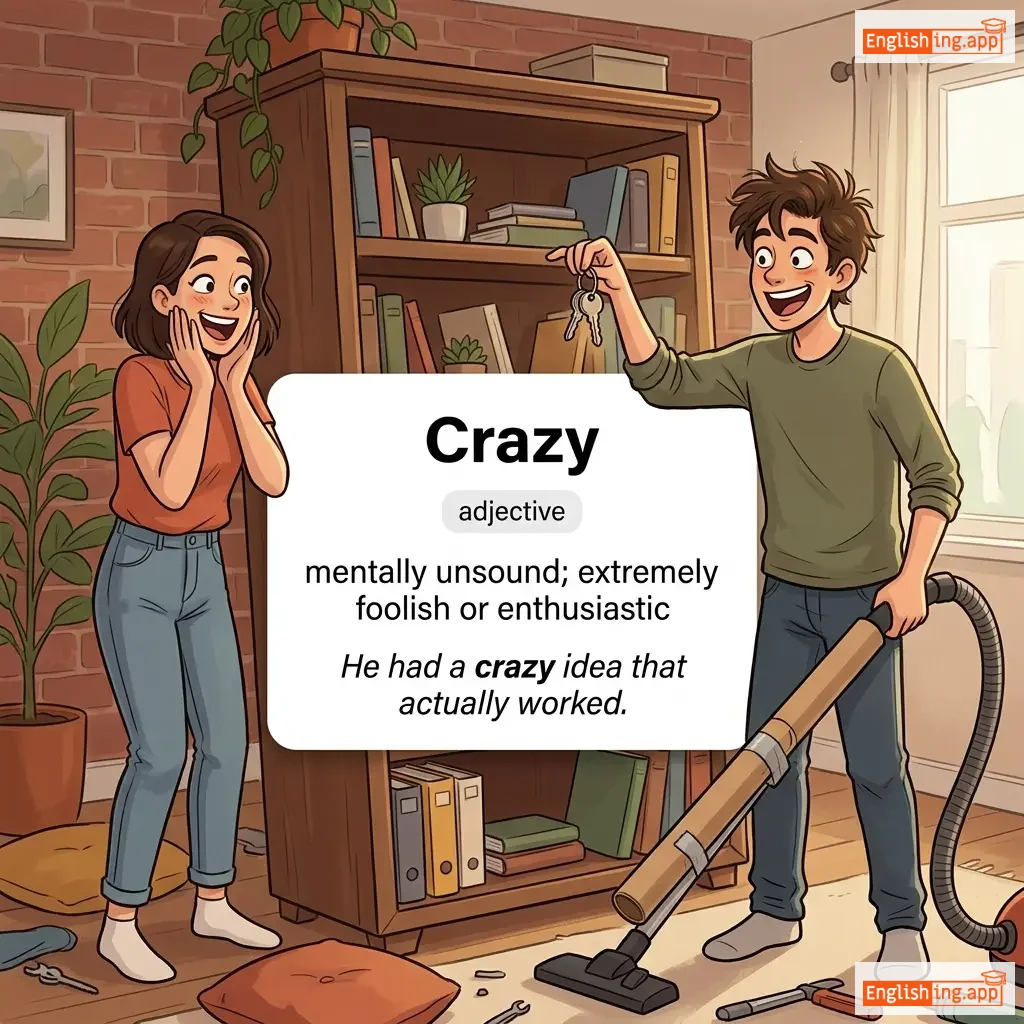
Crazy definition card — visual illustration of the meaning
adjective
/ˈkreɪzi/
पागल (pagal)

mentally unsound; extremely foolish or enthusiastic

"He had a crazy idea that actually worked."

"उसके पास एक पागल विचार था जो वास्तव में काम कर गया।" (Uske paas ek pagal vichar tha jo vastav mein kaam kar gaya.)
verb
/kriːk/
चिड़चिड़ी आवाज़ करना (chidchidi awaaz karna)

to make a high-pitched, squeaking noise when moved

"The old door creaked as she opened it."

"पुरानी दरवाजा खुलते समय क्रीक करता था।" (Purani darwaza khulte samay creak karta tha.)
noun
/kriːm/
क्रीम (krim)

A thick, fatty part of milk that rises to the top; also a soft substance used in cooking or cosmetics.

"She added some cream to her coffee."

"उसने अपनी कॉफी में कुछ क्रीम डाली।" (Usne apni coffee mein kuch krim daali.)
noun
/ˈkriːməri/
डेयरी उत्पाद निर्माण केंद्र (dairy utpad nirmann kendra)

a place where milk and cream are processed and dairy products are made

"The local creamery produces fresh butter and cheese daily."

"स्थानीय क्रीमैरी रोजाना ताजा मक्खन और पनीर बनाती है।" (Sthaniya creamery rozana taja makkhan aur paneer banati hai.)
adjective
/ˈkriːmi/
क्रीम जैसी चिकनी, समृद्ध बनावट (kreemi jaisi chikni, samriddh banawat)

having a smooth, rich texture like cream

"She poured a creamy sauce over the pasta."

"उसने पास्ता पर क्रीमी सॉस डाला।" (Usne pasta par kreemi sauce daala.)
noun, verb
/kriːs/
क्रीस, मोड़ (kris, mod)

a line or fold produced on paper, cloth, or other material; to make a fold or wrinkle

"She ironed the shirt carefully to remove every crease."

"वह शर्ट को ध्यान से इस्त्री कर रही थी ताकि हर एक क्रीस हट सके।" (Wah shart ko dhyaan se istri kar rahi thi taaki har ek kris hat sake.)
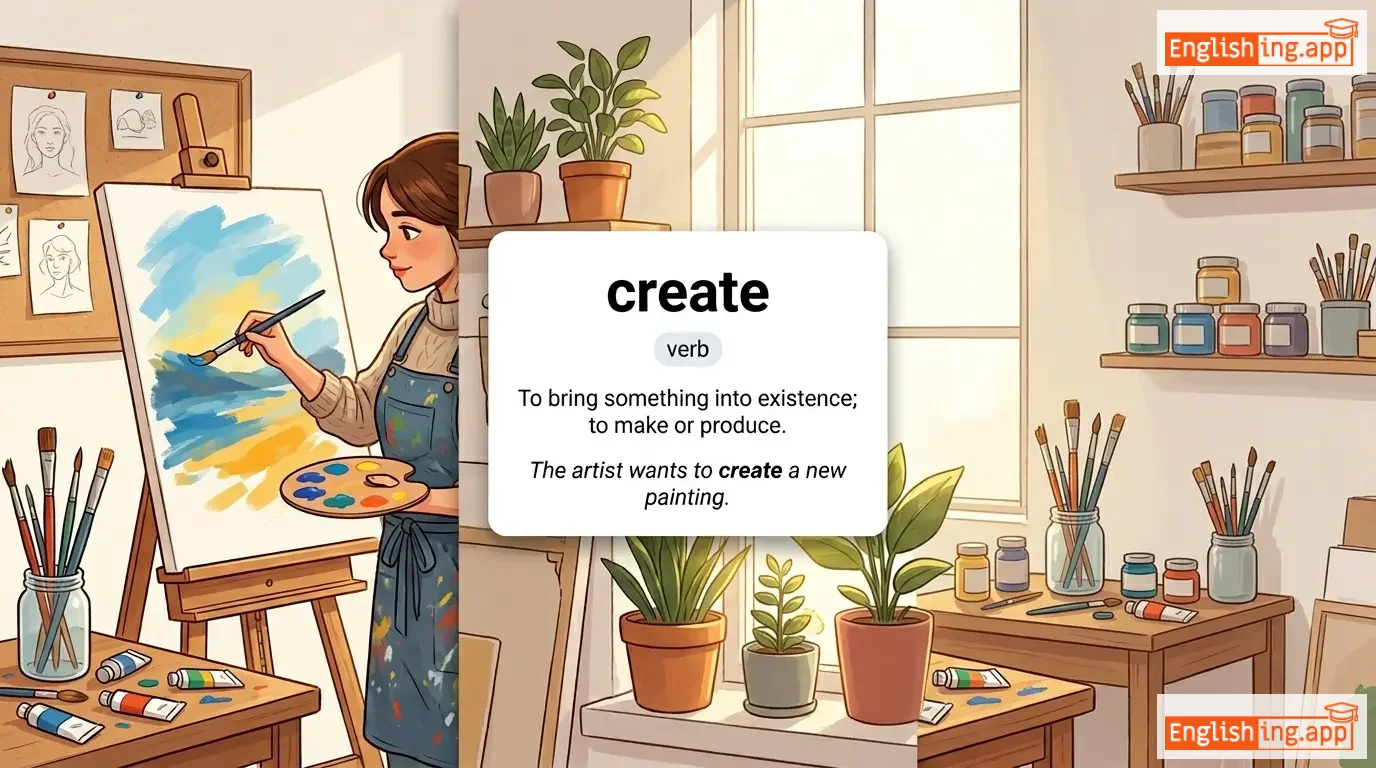
create definition card — visual illustration of the meaning
verb
/kriˈeɪt/
बनाना (banana)

To bring something into existence; to make or produce.

"The artist wants to create a new painting."

"कलाकार एक नई पेंटिंग बनाना चाहता है।" (Kalakar ek nai painting banana chahta hai.)
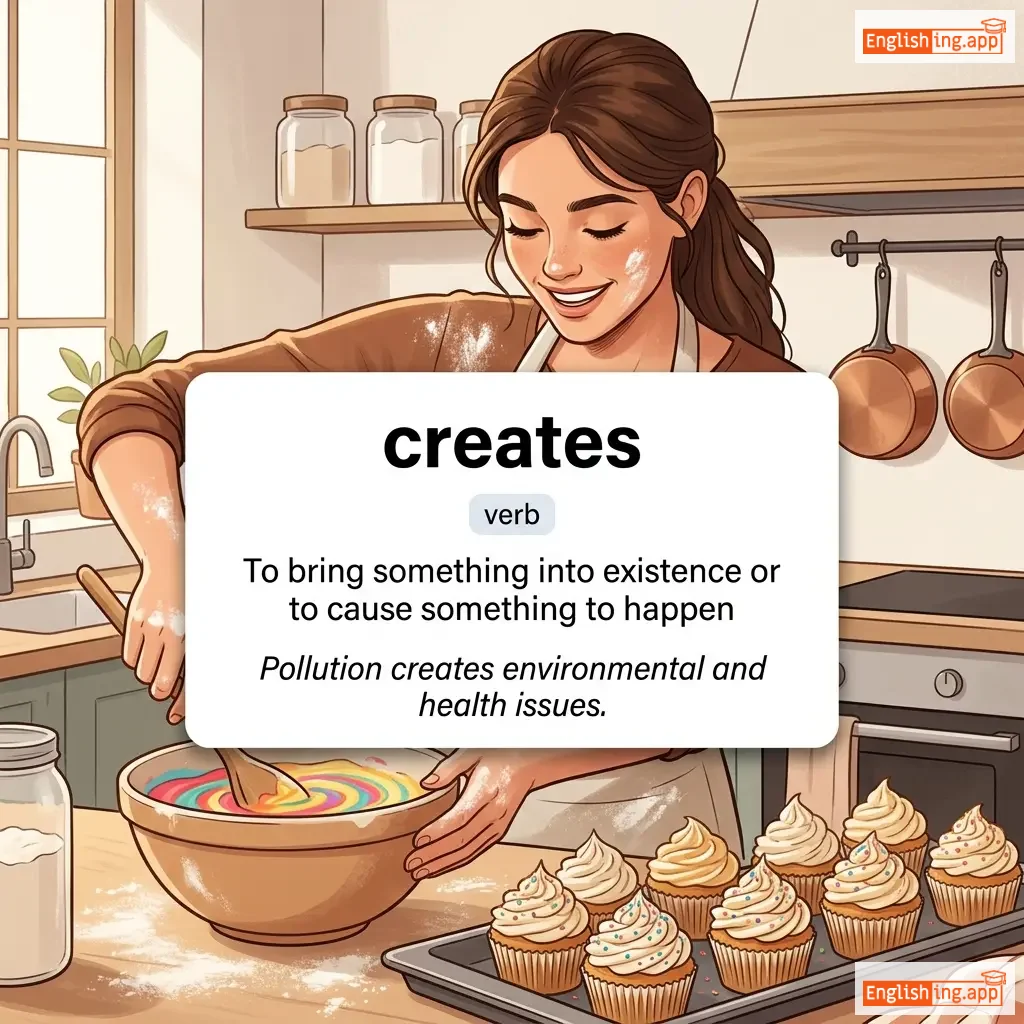
creates definition card — visual illustration of the meaning
verb
kriˈeɪts
सृजन करना (srijan karna)

To bring something into existence or to cause something to happen

"Pollution creates environmental and health issues."

"प्रदूषण पर्यावरण और स्वास्थ्य समस्याएँ उत्पन्न करता है।" (Pradushan paryavaran aur swasthya samasyaen utpann karti hain.)
noun
/kriˈeɪʃən/
सृष्टि (srishti)

The act of bringing something into existence; something that has been made or produced.

"The artist’s latest creation was admired by everyone at the gallery."

"कलाकार का नवीनतम सृजन गैलरी में सभी द्वारा सराहा गया।" (Kalaakar ka naveenatam srijan gallery mein sabhi dvara saraha gaya.)
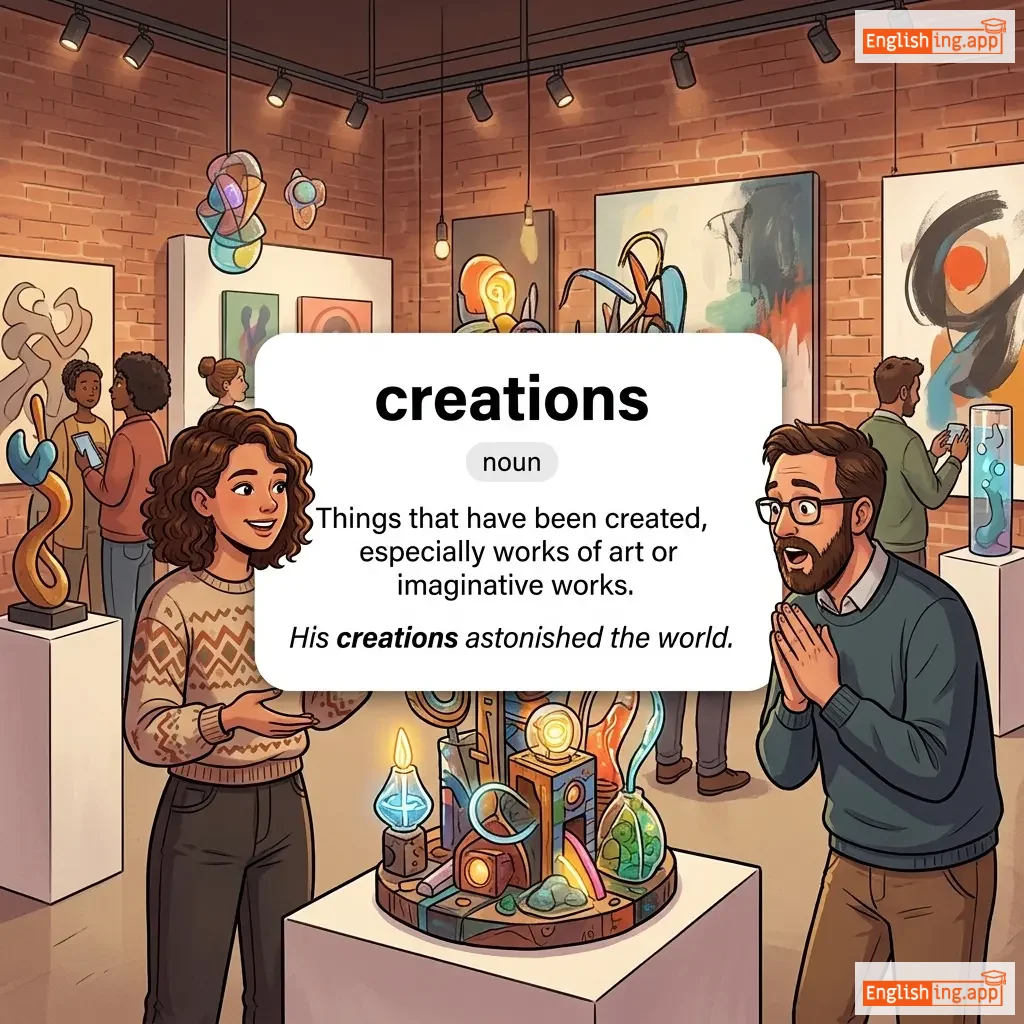
creations definition card — visual illustration of the meaning
noun
/kriˈeɪ.ʃənz/
सृष्टियाँ (srishtiyan)

Things that have been created, especially works of art or imaginative works.

"His creations astonished the world."

"उसकी सृष्टियाँ दुनिया को चौंका दी।" (Uski srishtiyan duniya ko chonka dee.)
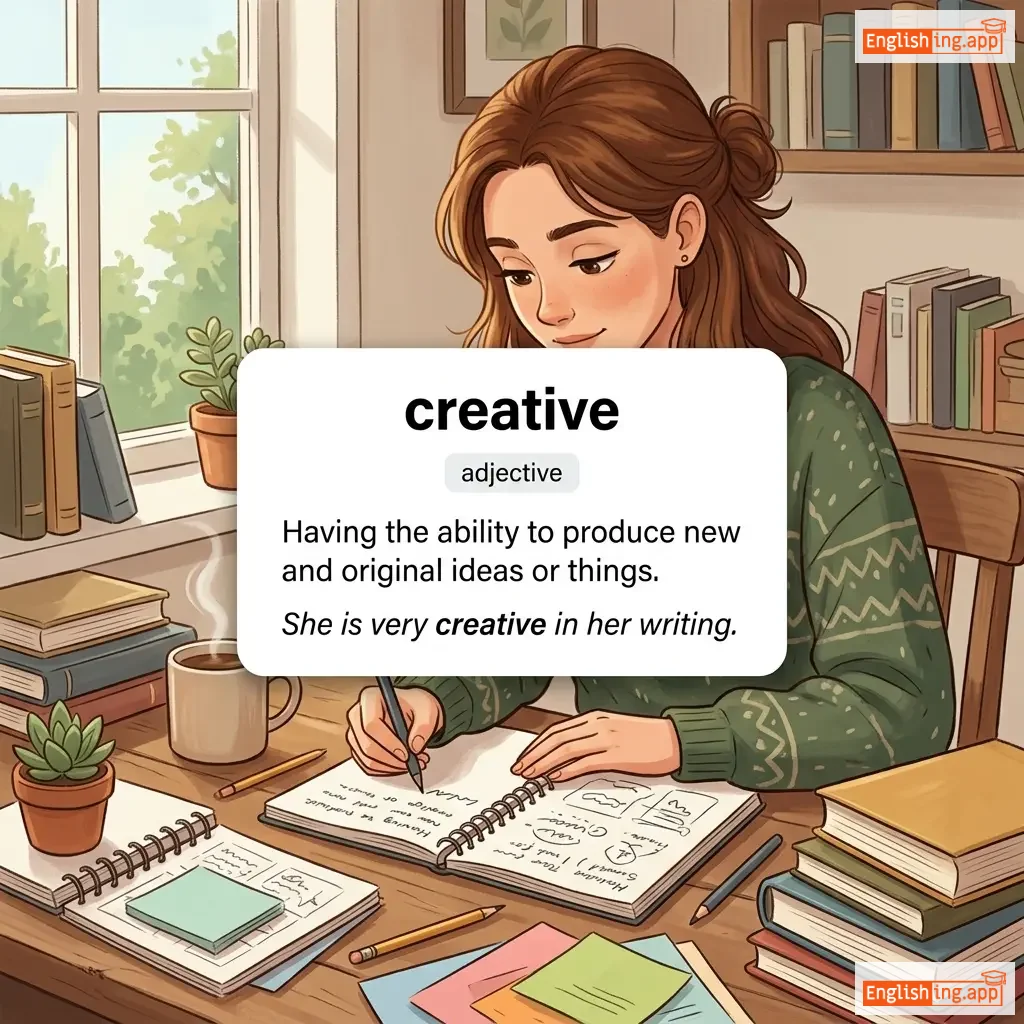
creative definition card — visual illustration of the meaning
adjective
/kriˈeɪtɪv/
रचनात्मक (rachnatmak)

Having the ability to produce new and original ideas or things.

"She is very creative in her writing."

"वह अपनी लेखनी में बहुत रचनात्मक है।" (Vah apni lekhani mein bahut rachnatmak hai.)
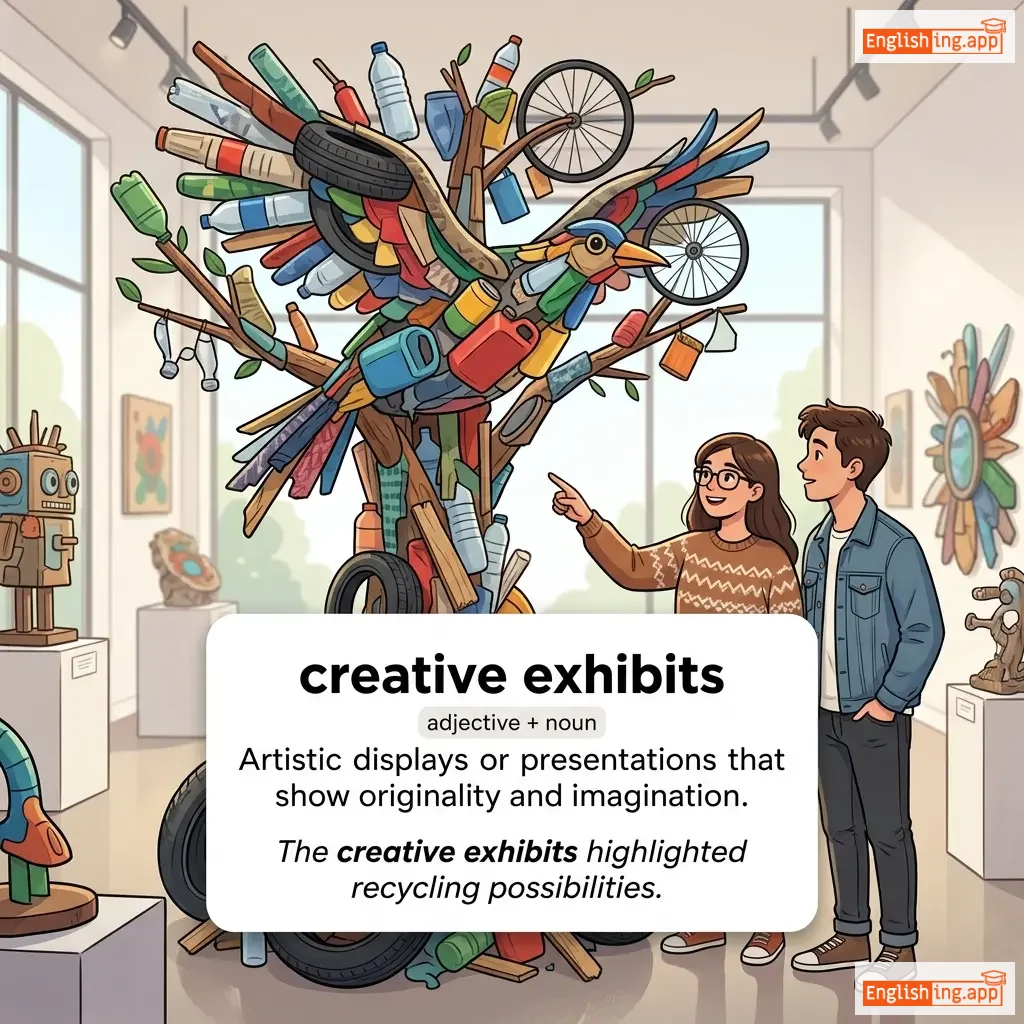
creative exhibits definition card — visual illustration of the meaning
adjective + noun
kriˈeɪtɪv ɪɡˈzɪbɪts
रचनात्मक प्रदर्शन (rachnatmak pradarshan)

Artistic displays or presentations that show originality and imagination.

"The creative exhibits highlighted recycling possibilities."

"रचनात्मक प्रदर्शन ने पुनर्चक्रण की संभावनाओं को उजागर किया।" (Rachnatmak pradarshan ne punarchakran ki sambhavnāon ko ujāgar kiyā.)
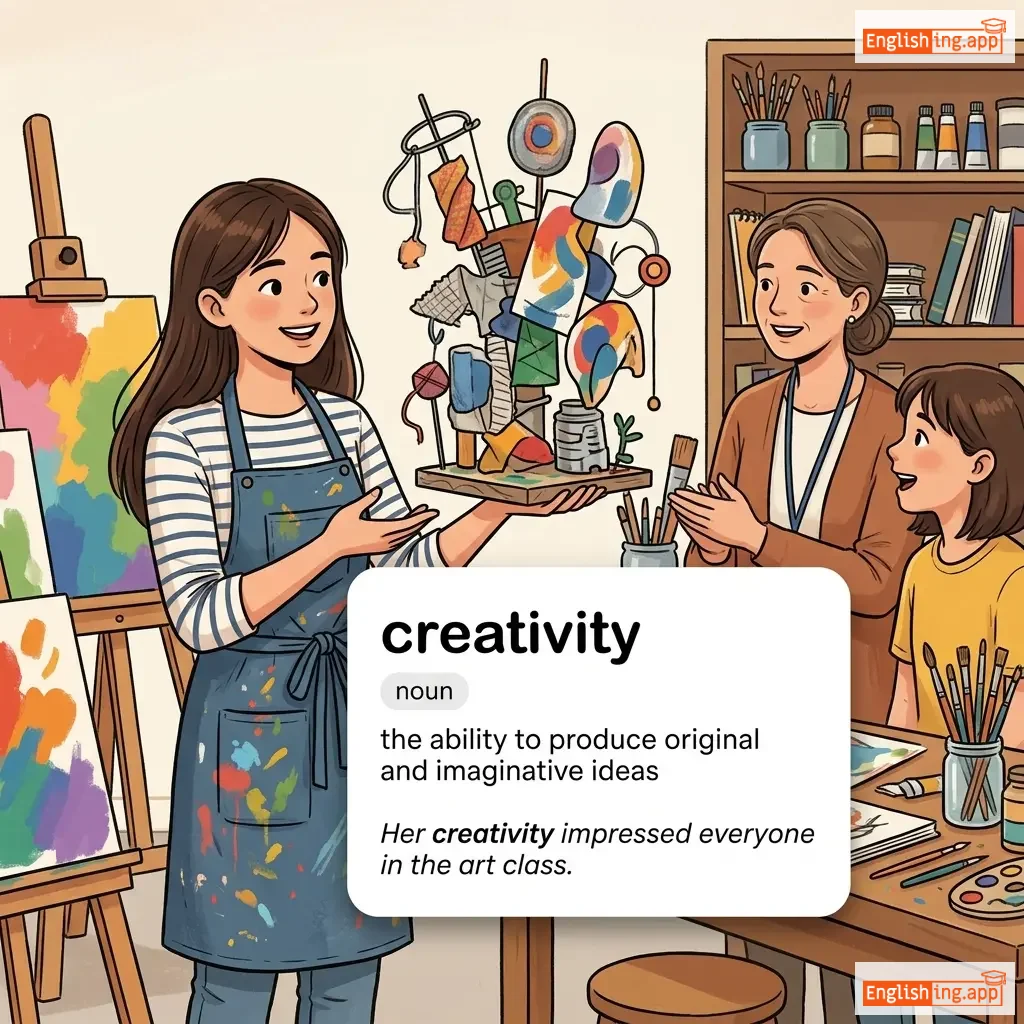
creativity definition card — visual illustration of the meaning
noun
/ˌkriːeɪˈtɪvɪti/
सृजनात्मकता (srijanatmakta)

the ability to produce original and imaginative ideas

"Her creativity impressed everyone in the art class."

"उसकी सृजनात्मकता ने कला कक्षा में सभी को प्रभावित किया।" (Uski srijanatmakta ne kala kaksha mein sabhi ko prabhavit kiya.)
noun
/krɪˈeɪtə/
निर्माता (nirmata)

a person who brings something into existence

"He is the creator of many successful startups."

"वह कई सफल स्टार्टअप्स का निर्माता है।" (Vah kai safal startups ka nirmata hai.)
noun
/ˈkriːtʃər/
प्राणी (prani)

A living being, especially an animal.

"The forest is full of strange creatures."

"जंगल अजीब प्राणियों से भरा हुआ है।" (Jangal ajeeb praniyon se bhara hua hai.)
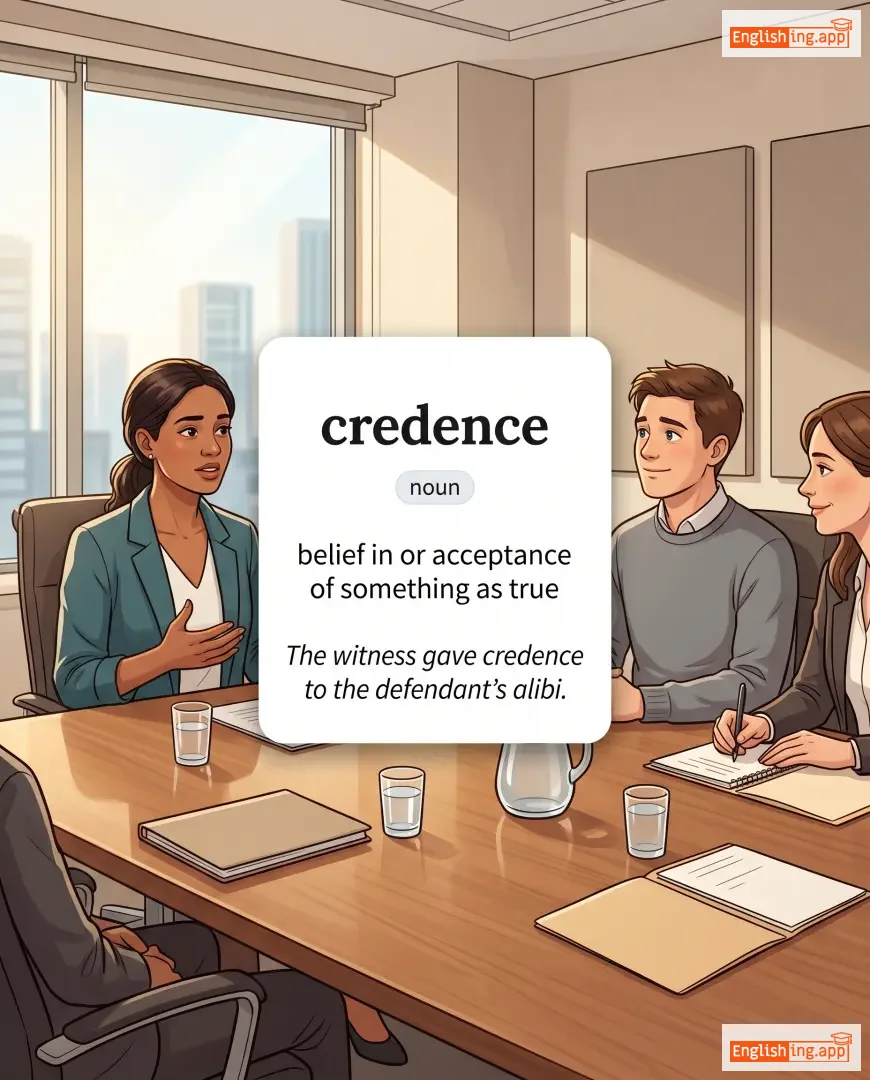
credence definition card — visual illustration of the meaning
noun
/ˈkriː.dəns/
विश्वास, स्वीकृति (vishwas, sveekriti)

belief in or acceptance of something as true

"The witness gave credence to the defendant's alibi."

"गवाह ने प्रतिवादी के बयान को विश्वास योग्य माना।" (Gawah ne prativadi ke bayan ko vishwas yogya maana.)
noun
/krɪˈden.ʃəl/
प्रमाणपत्र, योग्यता का प्रमाण (pramaantapatra, yogytā kā pramāṇ)

a qualification, achievement, or aspect of a person's background used to indicate suitability for something

"She presented her credentials before starting the new job."

"उसने नई नौकरी शुरू करने से पहले अपने प्रमाणपत्र प्रस्तुत किए।" (Usne naī naukarī shurū karne se pahle apne pramaantapatra prastut kiye.)
credibility definition card — visual illustration of the meaning
noun
/ˌkrɛd.ɪˈbɪl.ɪ.ti/
विश्वसनीयता (vishwasneeyata)

the quality of being trusted and believed in

"The journalist's credibility was questioned after the report."

"पत्रकार की विश्वसनीयता रिपोर्ट के बाद सवालों के घेरे में थी।" (Patrakar ki vishwasneeyata report ke baad sawalon ke ghere mein thi.)
adjective
/ˈkrɛd.ɪ.bəl/
विश्वसनीय (vishwasneey)

able to be believed; convincing

"Her explanation was credible enough to convince the committee."

"उसकी व्याख्या समिति को मनाने के लिए पर्याप्त विश्वसनीय थी।" (Uski vyakhya samiti ko manane ke liye paryapt vishwasneey thi.)
noun, verb
/ˈkrɛdɪt/
ऋण, श्रेय (rin, shrey)

As a noun: the ability to obtain goods or services before payment; recognition for an achievement. As a verb: to publicly acknowledge someone's contribution.

"She received credit for her contribution to the project."

"उसने परियोजना में अपने योगदान के लिए श्रेय प्राप्त किया।" (Usne pariyojna mein apne yogdan ke liye shrey prapt kiya.)
adjective
/ˈkrɛdɪtəbl/
प्रशंसनीय (prashansneeya)

Deserving praise or acknowledgment, though not necessarily outstanding.

"She made a creditable effort in completing the project on time."

"उसने समय पर परियोजना पूरी करने के लिए एक प्रशंसनीय प्रयास किया।" (Usne samay par pariyojna poori karne ke liye ek prashansneeya prayaas kiya.)
credo definition card — visual illustration of the meaning
noun
/ˈkriːdoʊ/
विश्वास (vishwas)

A statement of the beliefs or aims that guide someone's actions.

"Honesty has always been the central credo of his life."

"ईमानदारी हमेशा उसके जीवन का केंद्रीय विश्वास रही है।" (Imaandari hamesha uske jeevan ka kendriya vishwas rahi hai.)
noun
/krəˈdjuːlɪti/
आत्मविश्वास की अधिक प्रवृत्ति (aatmvishwas ki adhik pravritti)

A tendency to be too ready to believe that something is real or true.

"The scam succeeded because of the victim's credulity."

"धोखाधड़ी सफल हुई क्योंकि पीड़ित की क्रेड्युलिटी थी।" (Dhokhaadhadi safal hui kyunki peedit ki credulity thi.)
adjective
/ˈkrɛdʒʊləs/
अत्यधिक विश्वास करनेवाला (atyadhik vishwas karnewala)

Having or showing too great a readiness to believe things.

"The credulous child believed every story she heard."

"विश्वास करनेवाले बच्चे ने हर कहानी को सच माना।" (Vishwas karnewale bachche ne har kahani ko sach mana.)
noun
/kriːd/
विश्वास, सिद्धांत (vishwas, siddhant)

A system of religious or spiritual beliefs or a guiding principle.

"Freedom of speech is part of his personal creed."

"स्वतंत्रता की अभिव्यक्ति उसका व्यक्तिगत विश्वास का हिस्सा है।" (Svatantrata ki abhivyakti uska vyaktigat vishwas ka hissa hai.)
noun
/kriːk/
नदी की छोटी धारा (nadi ki chhoti dhaara)

a small stream or narrow river

"We went fishing by the creek near our house."

"हम अपने घर के पास के झरने के पास मछली पकड़ने गए थे।" (Ham apne ghar ke paas ke jharne ke paas machhli pakadne gaye the.)
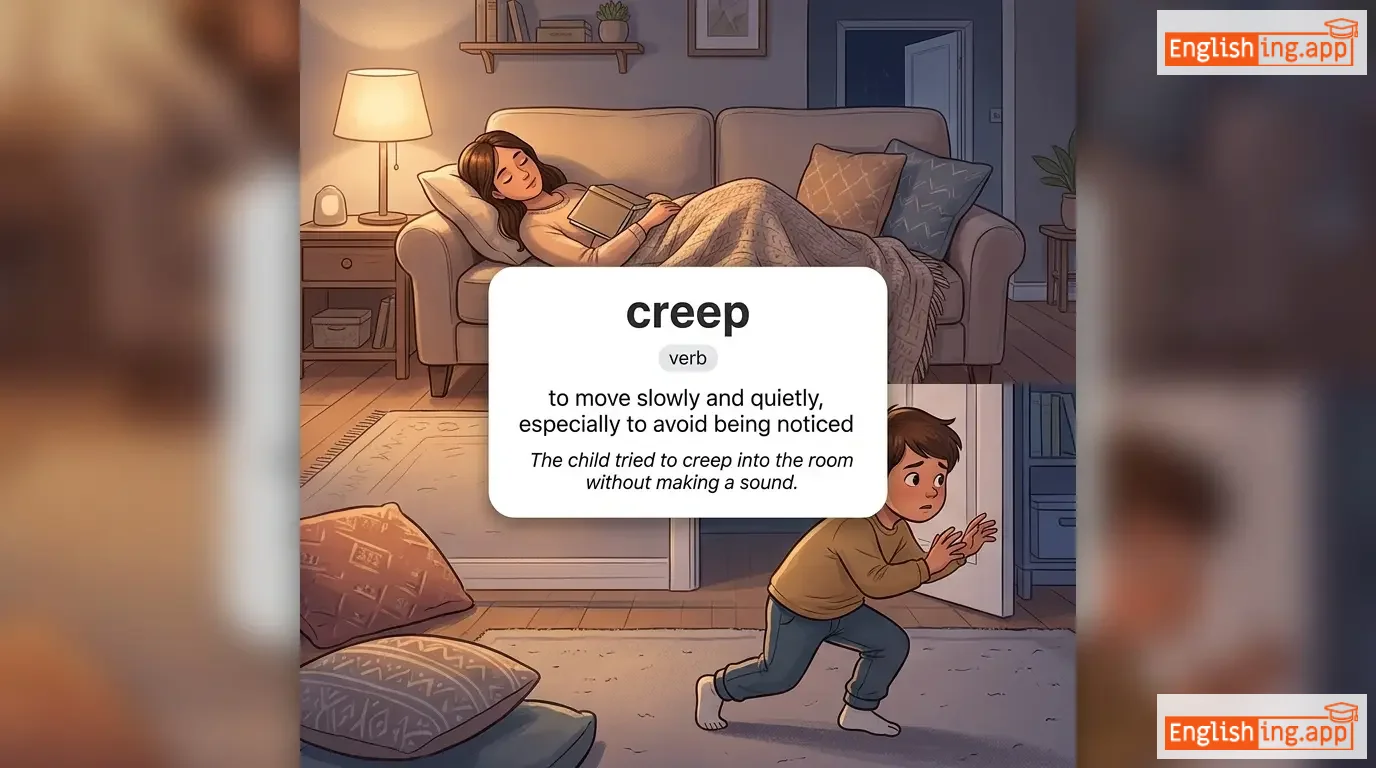
creep definition card — visual illustration of the meaning
verb
/kriːp/
धीरे-धीरे चलना (dheere-dheere chalna)

to move slowly and quietly, especially to avoid being noticed

"The child tried to creep into the room without making a sound."

"बच्चा बिना आवाज किए कमरे में घुसने की कोशिश कर रहा था।" (Baccha bina awaaz kiye kamre mein ghusne ki koshish kar raha tha.)
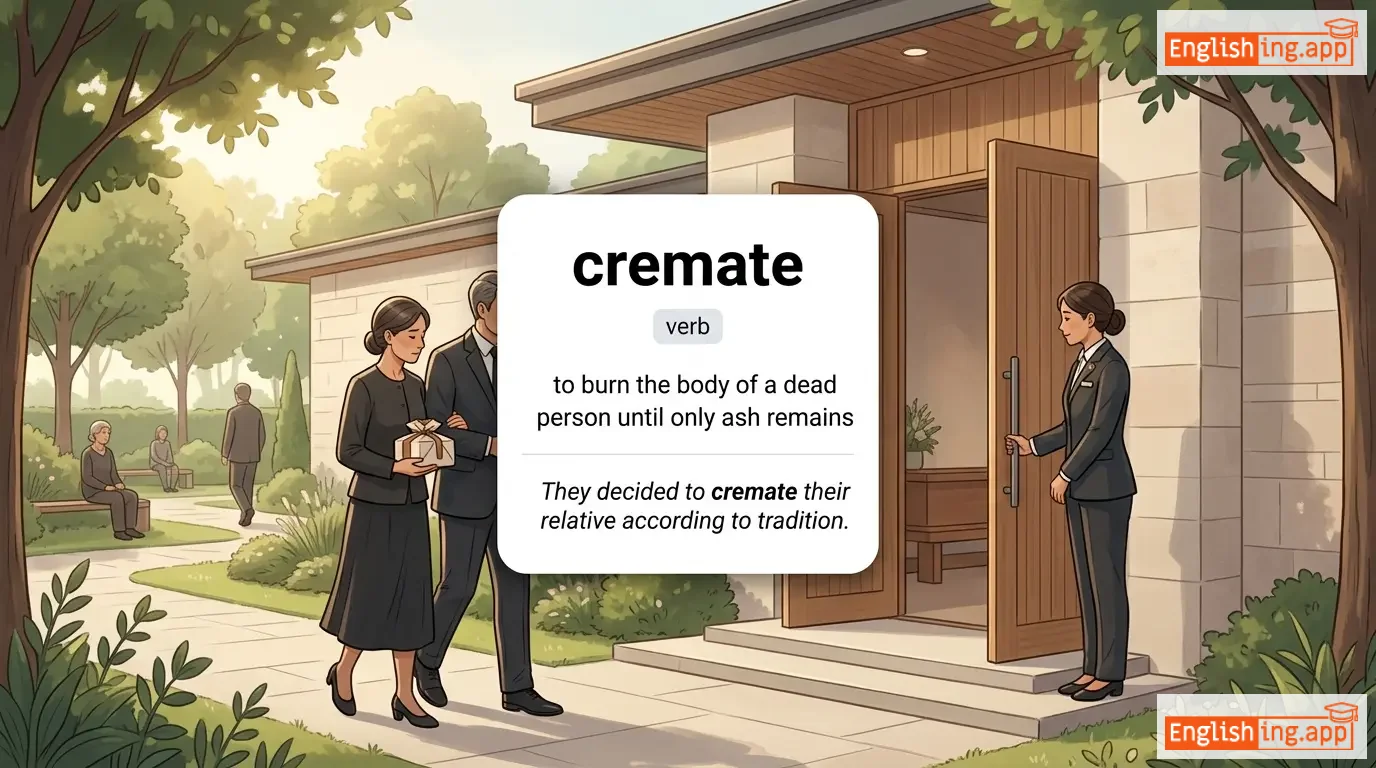
cremate definition card — visual illustration of the meaning
verb
/ˈkriː.meɪt/
दाह करना (dah karna)

to burn the body of a dead person until only ash remains

"They decided to cremate their relative according to tradition."

"वे परंपरा के अनुसार अपने रिश्तेदार को दाह संस्कार करने का निर्णय लिया।" (Ve parampara ke anusar apne rishtedar ko dah sanskar karne ka nirnay liya.)
noun
/ˈkrɛməˌtɔːri/
श्मशान (shmashan)

a place where dead bodies are cremated

"The crematory was located near the cemetery."

"क्रीमेटरी क़ब्रिस्तान के पास था।" (Crematory qabrastaan ke paas tha.)
adjective
/krɪˈpʌskjʊlər/
गोधूलि संबंधी (godhooli sambandhee)

relating to twilight or active during twilight

"Bats are crepuscular animals, most active at dawn and dusk."

"बैट्स गोधूलि समय के जानवर होते हैं, जो प्रातः और संध्या के समय सबसे अधिक सक्रिय होते हैं।" (Bats godhooli samay ke janwar hote hain, jo pratah aur sandhya ke samay sabse adhik sakriya hote hain.)
noun
/krəˈʃɛndoʊ/
ध्वनि का क्रमबद्ध वृद्धि (dhvani ka krombaddh vruddhi)

a gradual increase in loudness or intensity, especially in music

"The orchestra built to a powerful crescendo before the finale."

"ऑर्केस्ट्रा ने फिनाले से पहले एक शक्तिशाली क्रेशेंडो बनाया।" (Orkestra ne finale se pehle ek shaktishali crescendo banaya.)
noun
/krɛst/
शिखर (shikhar)

the top of a hill, wave, or mountain; a symbol of identity

"The hikers reached the crest of the mountain at sunrise."

"हाइकर सूर्योदय के समय पर्वत की चोटी पर पहुंचे।" (Haikar suryoday ke samay parvat ki chhoti par pahunche.)
adjective
/ˈkrɛstˌfɔːlən/
निराश (niraash)

sad and disappointed

"He looked crestfallen after hearing the bad news."

"बुरी खबर सुनने के बाद वह निराश दिख रहा था।" (Buri khabar sunne ke baad vah niraash dikh raha tha.)
noun
/krəˈvæs/
गहरी दरार (gehri darar)

a deep crack in a glacier or the earth’s surface

"The climbers carefully crossed the icy crevasse."

"चढ़ाई करने वाले ध्यान से बर्फीली दरार को पार कर गए।" (Chadhai karne wale dhyan se barfili darar ko paar kar gaye.)
noun
/ˈkrɛvɪs/
दरार (daraar)

a narrow crack or opening, especially in a rock or wall

"The lizard hid in a crevice between the stones."

"छिपकली पत्थरों के बीच एक दरार में छिपी हुई थी।" (Chhipkali patharon ke beech ek daraar mein chhapi hui thi.)
👨‍✈️

crew (क्रू)

noun
/kruː/
क्रू (kru)

A group of people working together, especially on a ship, aircraft, or project.

"The ship's crew worked tirelessly during the storm."

"तूफान के दौरान जहाज के क्रू ने थक-हार कर काम किया।" (Toofan ke dauran jahaj ke kru ne thakhaar kar kaam kiya.)