वोकैबुलरीज

इंग्लिश वोकैबुलरी डिस्कवर, लर्न और मास्टर करें

noun
/ˈkɔːrɪdɔːr/
कक्षों से जुड़ने वाली लंबी गली (koridor)

a long passage in a building from which doors lead into rooms

"The students waited quietly in the corridor."

"छात्रों ने कोरीडोर में चुपचाप इंतजार किया।" (Chhatron ne koridor mein chupchap intezar kiya.)
adjective
/ˈkɒrɪdʒəbl/
सुधार योग्य (sudhar yogya)

capable of being corrected or improved

"The student's mistakes were corrigible with practice."

"छात्र की गलतियाँ अभ्यास से सुधार योग्य थीं।" (Chhatra ki galtiyan abhyas se sudhaar yogya thin.)
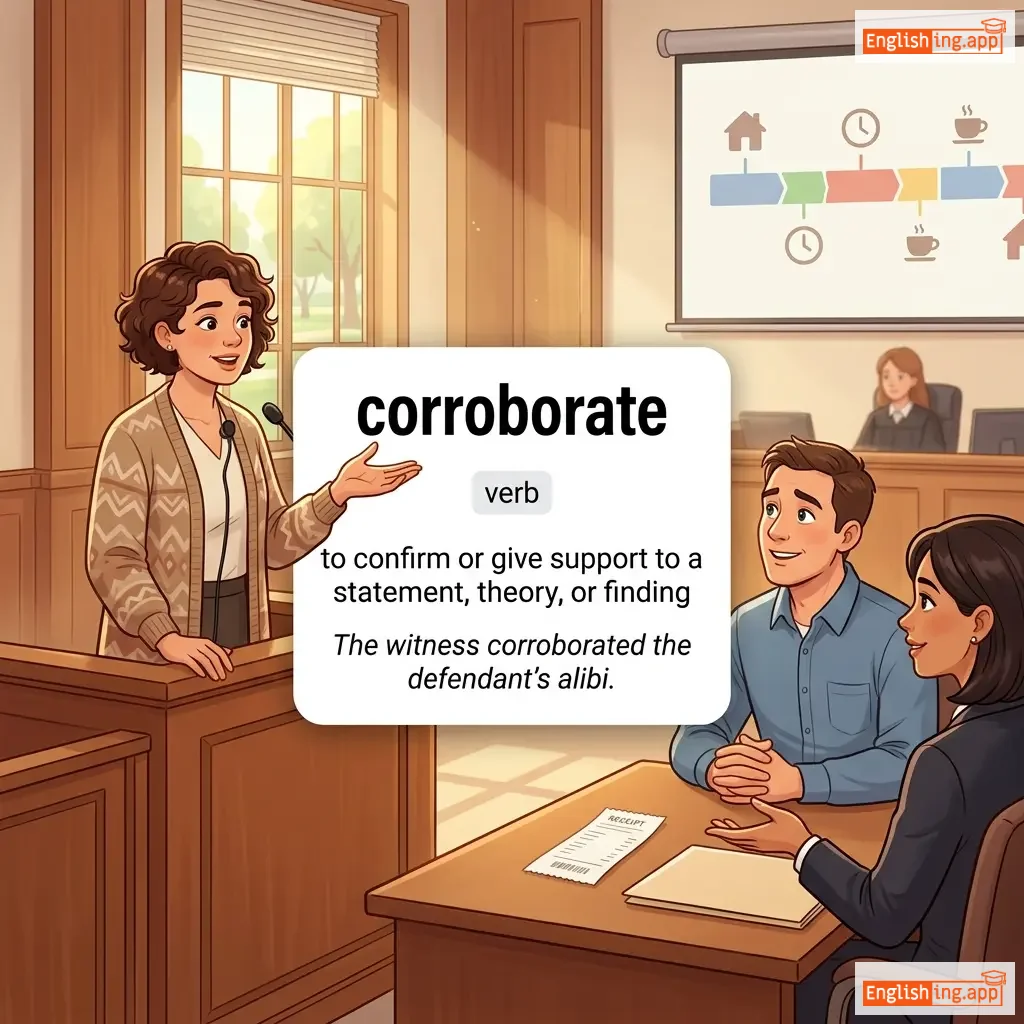
corroborate definition card — visual illustration of the meaning
verb
/kəˈrɒbəreɪt/
सत्यापित करना (satyapit karna)

to confirm or give support to a statement, theory, or finding

"The witness corroborated the defendant's alibi."

"गवाह ने प्रतिवादी के अलिबी की पुष्टि की।" (Gawah ne pratibadi ke alibi ki pushti ki.)
noun
/kəˌrɒbəˈreɪʃən/
साक्ष्य (saakshya)

evidence that confirms or supports a statement, theory, or finding

"The documents provided strong corroboration of her claims."

"दस्तावेज़ों ने उनके दावों के मजबूत समर्थन का प्रमाण प्रस्तुत किया।" (Dastavezon ne unke daawon ke majboot samarthan ka pramaan prastut kiya.)
verb
/kəˈrəʊd/
क्षय करना (kshay karna)

to gradually destroy or wear away metal or other materials through chemical action

"The iron pipes corroded over time due to exposure to water."

"लोहे की पाइपें समय के साथ साथ क्षय हो गईं।" (Lohe ki pipein samay ke saath saath kshay ho gayi.)
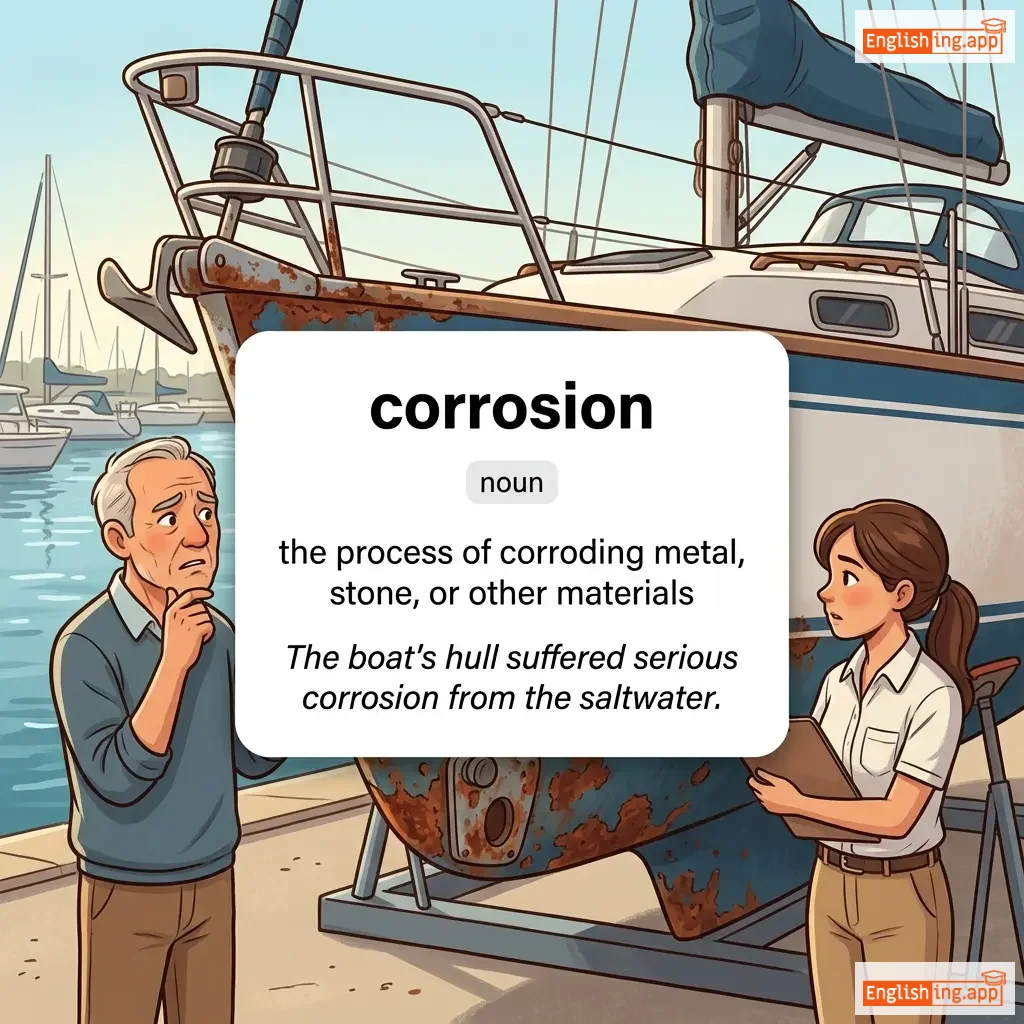
corrosion definition card — visual illustration of the meaning
noun
/kəˈrəʊʒən/
जंग, क्षय (jang, kshay)

the process of corroding metal, stone, or other materials

"The boat's hull suffered serious corrosion from the saltwater."

"नौका के धक्के को नमक वाले पानी से गंभीर जंग का सामना करना पड़ा।" (Nauka ke dhakke ko namak wale pani se gambhir jang ka samna karna pada.)
adjective
/kəˈrəʊsɪv/
क्षयकारी, घातक (kshaykaari, ghaatak)

tending to cause corrosion; harmful or destructive to materials or people

"The chemical is highly corrosive and should be handled with care."

"रासायनिक पदार्थ अत्यधिक क्षयकारी है और इसे सावधानी से संभालना चाहिए।" (Rasayanik padarth atyadhik kshaykaari hai aur ise saavdhaani se sambhalna chahiye.)
adjective
/ˈkɒr.ə.ɡeɪ.tɪd/
लहरदार या मुड़ा हुआ (lahardaar ya muda hua)

shaped into ridges and grooves; wrinkled or folded

"The roof was made of corrugated metal sheets."

"छत को लहरदार धातु की चादरों से बनाया गया था।" (Chhat ko lahardaar dhaatu ki chaadron se banaya gaya tha.)
adjective/verb
/kəˈrʌpt/
भ्रष्ट (bhrasht)

dishonest or morally wrong; to make something impure or evil

"The politician was accused of corrupt practices."

"राजनेता पर भ्रष्टाचार के आरोप लगाए गए थे।" (Rajneta par bhrashtachar ke aarop lagaaye gaye the.)
adjective
/kəˈrʌp.tə.bəl/
भ्रष्टाचार योग्य (bhrashtachar yogya)

able to be morally or ethically corrupted

"He was known to be corruptible and often accepted bribes."

"उन्हें भ्रष्टाचार योग्य के रूप में जाना जाता था और वह अक्सर रिश्वत लेते थे।" (Unhe bhrashtachar yogya ke roop mein jana jata tha aur woh aksar rishwat lete the.)
noun
/kəˈrʌp.ʃən/
भ्रष्टाचार (bhrashtachar)

dishonest or fraudulent conduct by those in power

"The government launched a campaign to fight corruption."

"सरकार ने भ्रष्टाचार से लड़ने के लिए एक अभियान शुरू किया।" (Sarkar ne bhrashtachar se ladne ke liye ek abhiyan shuru kiya.)
noun
/ˈkɔː.seər/
लुटेरा नाविक (lutera navik)

a pirate, especially one operating along the Mediterranean coasts

"The corsair plundered ships along the coast."

"कॉर्सेयर ने तट पर जहाजों को लूटा।" (Corsair ne tat par jahajon ko lootaa.)
noun
/kɔːrˈteɪʒ/
अंत्येष्टि यात्रा (antyesthi yatra)

a solemn procession, especially for a funeral

"A cortege of mourners followed the hearse to the cemetery."

"एक शोक यात्रा ने हियरसे को श्मशान घाट तक अनुसरण किया।" (Ek shok yatra ne hearse ko shamshan ghat tak anusaran kiya.)
verb
/ˈkɒr.ʌ.skeɪt/
चमकना (chamakna)

to sparkle or flash brightly

"The fireworks coruscated across the night sky."

"आतिशबाजी ने रात के आकाश में चमकते हुए दिखाई।" (Aatishbaji ne raat ke aakash mein chamakte hue dikhai.)
adjective
/kɒzˈmɛt.ɪk/
सौंदर्य संबंधी (saundarya sambandhi)

relating to beauty or appearance; intended to improve looks

"She bought a new cosmetic cream for her skin."

"वह अपनी त्वचा के लिए एक नया कॉस्मेटिक क्रीम खरीदी।" (Vah apni twacha ke liye ek naya cosmetic cream khareedi.)
adjective
/ˈkɒz.mɪk/
ब्रह्मांडीय, विशाल (brahmandiya, vishal)

relating to the universe or cosmos; vast

"Astronomers study cosmic phenomena to understand the universe."

"खगोलशास्त्री ब्रह्मांड को समझने के लिए कॉस्मिक घटनाओं का अध्ययन करते हैं।" (Khagolshastri brahmand ko samajhne ke liye cosmic ghatnaon ka adhyayan karte hain.)
noun
/kɒzˈmɒɡ.ə.ni/
सृष्टि-विज्ञान (srishti-vigyan)

the study or theory of the origin of the universe

"The book provides an overview of different cosmogonies throughout history."

"यह पुस्तक इतिहास भर में विभिन्न सृष्टि-विज्ञानों का अवलोकन प्रस्तुत करती है।" (Yeh pustak itihas bhar mein vibhinn srishti-vigyanon ka avlokan prastut karti hai.)
noun
/kɒzˈmɒɡ.rə.fi/
कॉस्मोग्राफी (cosmography)

the science or art of mapping the universe or cosmos

"Medieval scholars practiced cosmography to chart the stars and planets."

"मध्यकालीन विद्वान सितारों और ग्रहों का मानचित्र बनाने के लिए कॉस्मोग्राफी का अभ्यास करते थे।" (Madhyakalīn vidwān sitāron aur graho kā mānchitra banāne ke liye cosmography kā abhyās karte the.)
cosmology definition card — visual illustration of the meaning
noun
/kɒzˈmɒlədʒi/
कोस्मोलॉजी (cosmology)

the science of the origin and development of the universe

"She studied cosmology to understand the origins of the universe."

"उसने ब्रह्मांड के उत्पत्ति को समझने के लिए कॉस्मोलॉजी का अध्ययन किया।" (Usne brahmand ke utpatti ko samajhne ke liye cosmology ka adhyayan kiya.)
adjective
/ˌkɒzməˈpɒlɪtən/
विश्वव्यापी (vishvavyapi)

familiar with and at ease in many different countries and cultures

"He has a cosmopolitan outlook due to his extensive travels."

"उसकी व्यापक यात्राओं के कारण उसका एक कॉस्मोपॉलिटन दृष्टिकोण है।" (Uski vyapak yatraon ke karan uska ek cosmopolitan drishtikon hai.)
noun
/ˌkɒzməˈpɒlɪtənɪzəm/
विश्व नागरिकता (vishv nagrikta)

the ideology that all human beings belong to a single community

"Cosmopolitanism promotes respect and understanding across cultures."

"कॉस्मोपोलिटनिज़्म संस्कृति के बीच सम्मान और समझ को बढ़ावा देता है।" (Cosmopolitanism sanskriti ke beech sammaan aur samajh ko badhawa deta hai.)
noun
/ˈkɒzmɒs/
ब्रह्मांड (brahmand)

the universe seen as a well-ordered whole

"Astronomers study the cosmos to learn about the universe's structure."

"खगोलज्ञानी ब्रह्मांड के संरचना को जानने के लिए ब्रह्मांड का अध्ययन करते हैं।" (Khagolgyani brahmand ke sanrachna ko janane ke liye brahmand ka adhyayan karte hain.)
verb
/ˈkɒsɪt/
अत्यधिक देखभाल करना (atyadhik dekbhal karna)

to care for and protect in an overindulgent way

"The little girl was cosseted by her grandparents."

"छोटी लड़की को उसके दादा-दादी ने बहुत स्नेह दिया।" (Chhoti ladki ko uske dada-dadi ne bahut sneh diya.)
adjective
/ˈkɒs.ɪ.tɪd/
अत्यधिक देखभाल से पाला गया (atyadhik dekhbhal se pala gaya)

pampered, treated with excessive care and attention

"The cosseted child always got what he wanted."

"अत्यधिक देखभाल से पला हुआ बच्चा हमेशा वही प्राप्त करता था जो वह चाहता था।" (Atyadhik dekhbhal se pala hua bachcha hamesha wahi prapt karta tha jo wah chahta tha.)
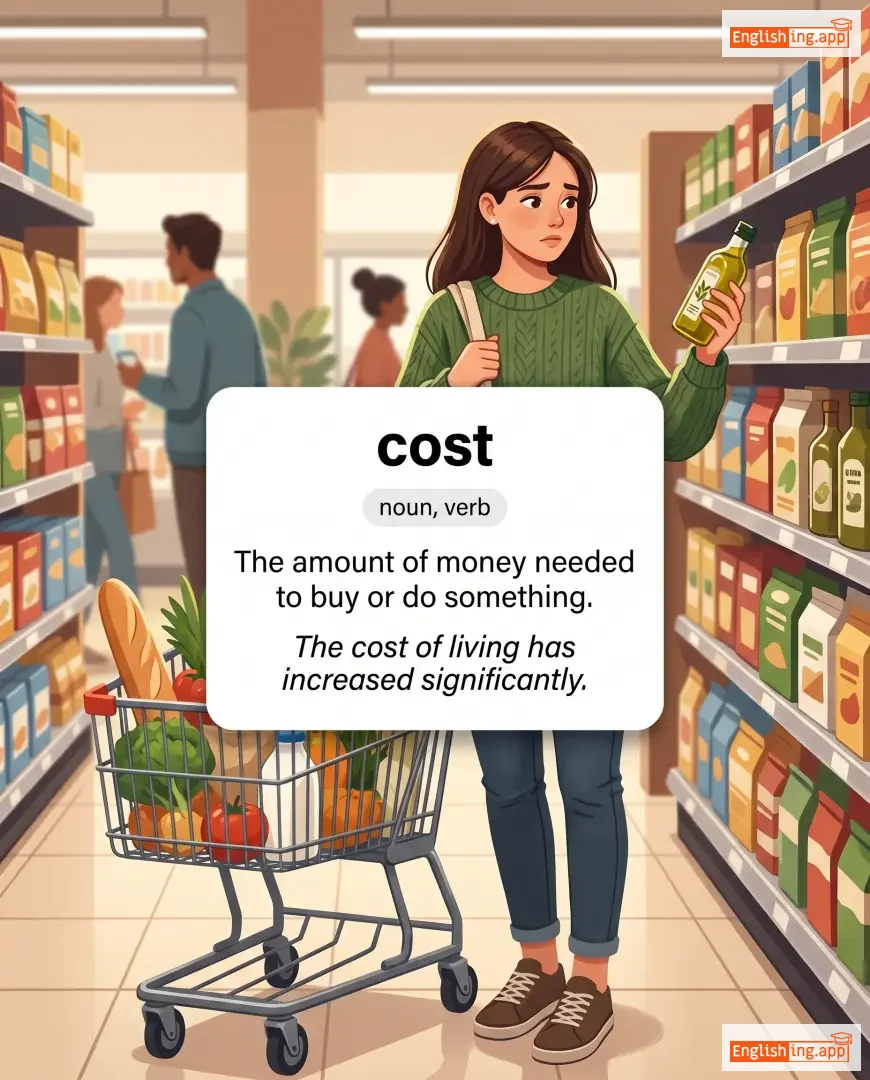
cost definition card — visual illustration of the meaning
noun, verb
/kɒst/
खर्च (kharch)

The amount of money needed to buy or do something.

"The cost of living has increased significantly."

"जीवनयापन की लागत में महत्वपूर्ण वृद्धि हुई है।" (Jeevanyapan ki lagat mein mahatvapurn vruddhi hui hai.)
cost-efficient definition card — visual illustration of the meaning
adjective
/ˌkɒst.ɪˈfɪʃ.ənt/
लागत-प्रभावी (laagat-prabhavi)

Achieving maximum productivity with minimum wasted effort or expense.

"Cost-efficient solutions benefit industries."

"लागत-प्रभावी समाधान उद्योगों को लाभ पहुंचाते हैं।" (Laagat-prabhavi samadhan udyogon ko labh pahuchate hain.)
adjective
/ˈkɔːstli/
महंगा (mahinga)

expensive or causing a lot of money, time, or effort

"Their mistake proved to be very costly for the company."

"उनकी गलती कंपनी के लिए बहुत महंगी साबित हुई।" (Unki galti company ke liye bahut mahangi sabit hui.)
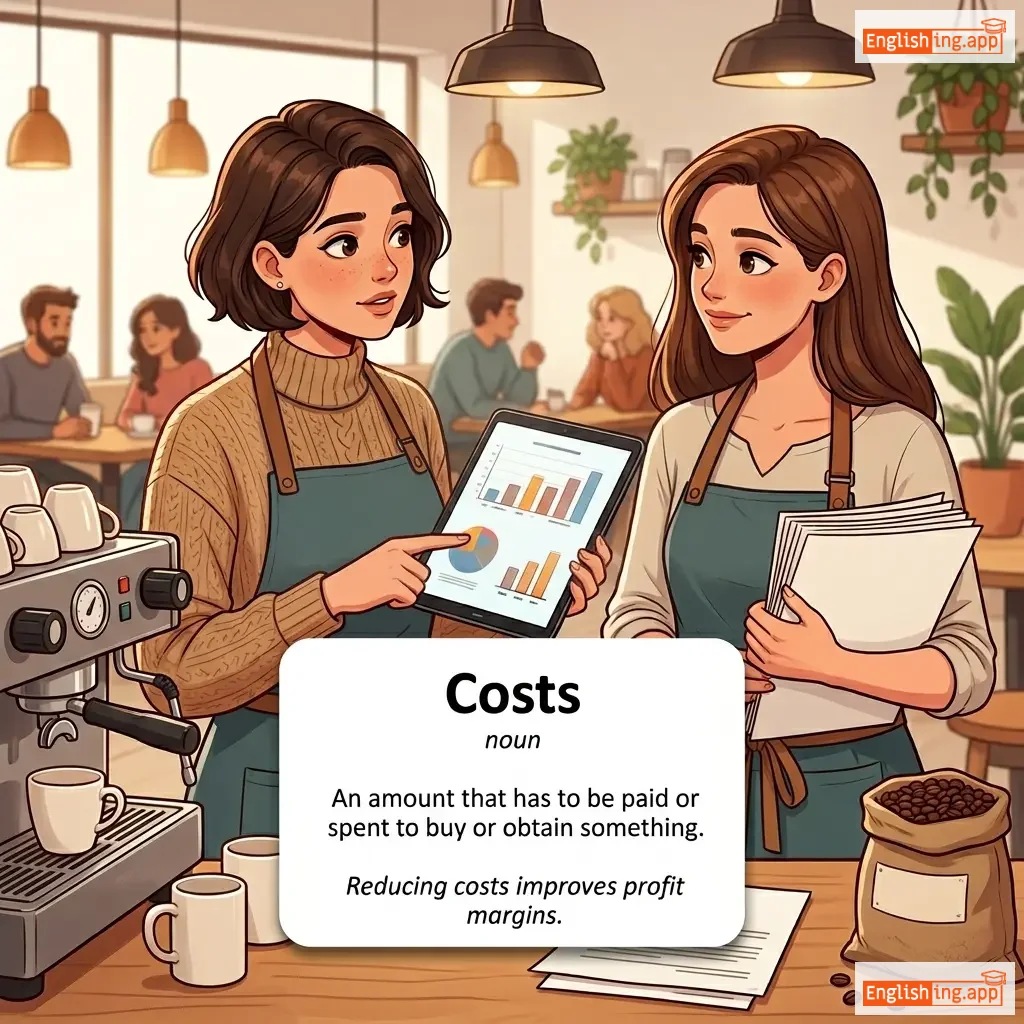
Costs definition card — visual illustration of the meaning
noun
kɒsts
लागत (laagat)

An amount that has to be paid or spent to buy or obtain something.

"Reducing costs improves profit margins."

"लागत कम करने से लाभ की सीमा में सुधार होता है।" (Laagat kam karne se laabh ki seema mein sudhaar hota hai.)
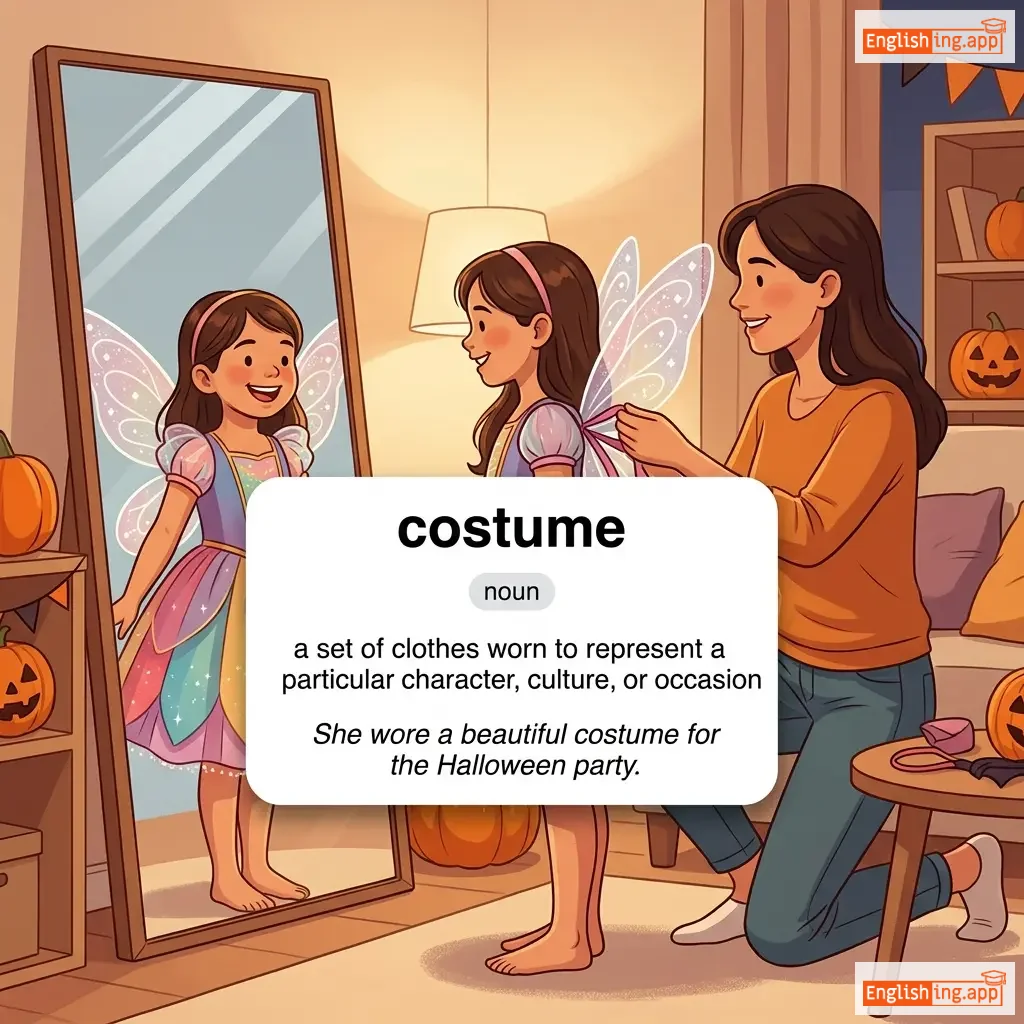
costume definition card — visual illustration of the meaning
noun
/ˈkɒstjuːm/
पोशाक (poshak)

a set of clothes worn to represent a particular character, culture, or occasion

"She wore a beautiful costume for the Halloween party."

"उसने हैलोवीन पार्टी के लिए एक खूबसूरत पोशाक पहना।" (Usne Halloween party ke liye ek khoobsurat poshak pehna.)
noun
/kɒt/
पालना (kot)

a small bed, especially a portable one or one for a baby

"The baby sleeps peacefully in her cot."

"बच्ची अपनी पालना में शांति से सोती है।" (bachchi apni palna me shanti se soti hai.)
noun
/ˈkoʊ.tə.ri/
एक छोटा, विशेष समूह (ek chhota, vishesh samuh)

a small, exclusive group of people with shared interests

"He belonged to a coterie of artists who met every Friday."

"वह उन कलाकारों के एक समूह का हिस्सा था जो हर शुक्रवार मिलते थे।" (Wah un kalakaron ke ek samuh ka hissa tha jo har shukravaar milte the.)
adjective
/koʊˈtɜːr.mɪ.nəs/
समान सीमाएँ (samaan seemaayein)

having the same boundaries or extent in space, time, or meaning

"The two jurisdictions are coterminous, sharing the same borders."

"दो न्याय क्षेत्र कोटर्मिनस हैं, जो समान सीमाओं को साझा करते हैं।" (Do nyaay kshetra koterminus hain, jo samaan seemaon ko saanjha karte hain.)
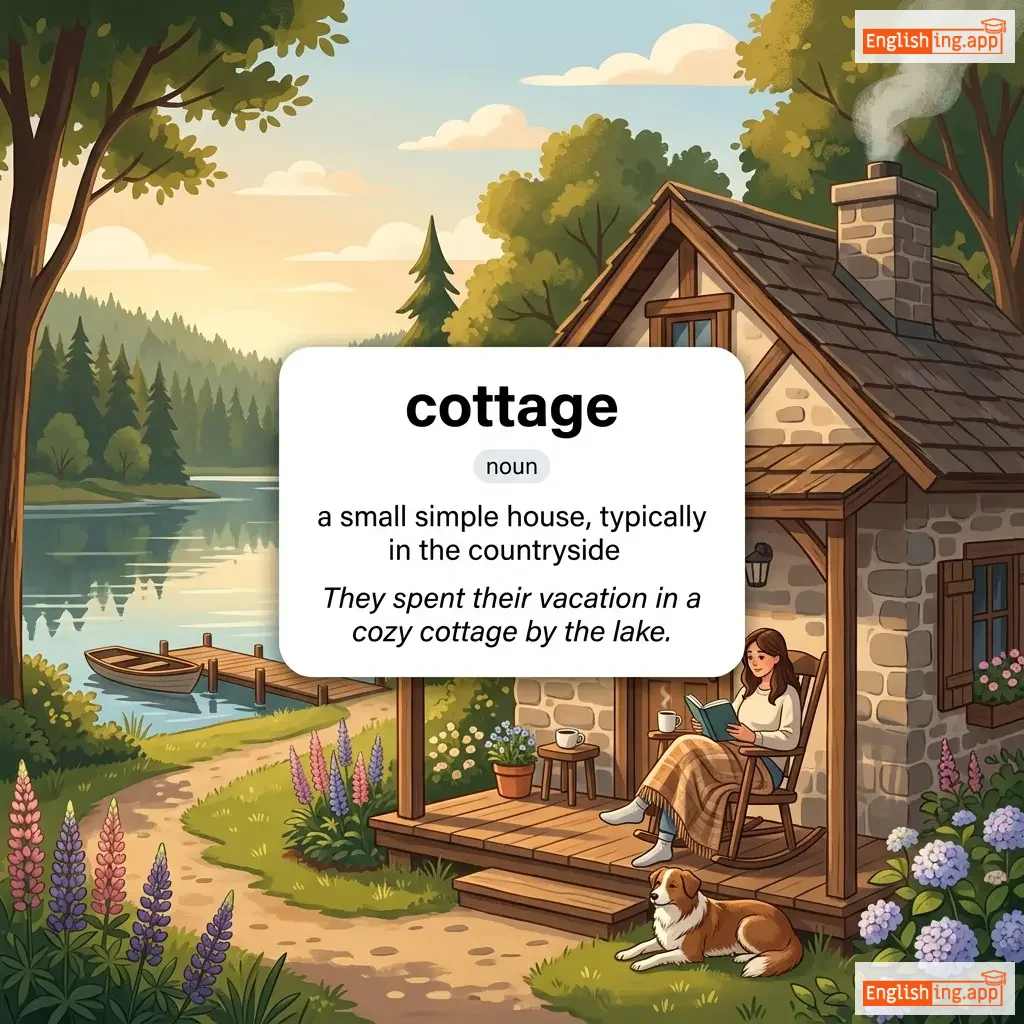
cottage definition card — visual illustration of the meaning
noun
/ˈkɒtɪdʒ/
कुटिया (kutiya)

a small simple house, typically in the countryside

"They spent their vacation in a cozy cottage by the lake."

"उन्होंने झील के पास एक आरामदायक कुटिया में अपनी छुट्टियाँ बिताईं।" (Unhone jheel ke paas ek aaramdayak kutiya mein apni chhuttiyan bitayi.)
noun
/ˈkɒtən/
खुशी (khushi)

A soft white fibrous substance used to make cloth and thread.

"This shirt is made of pure cotton."

"उसे पुरस्कार मिलने पर अपनी खुशी छुपानी नहीं आई।" (Use puraskar milne par apni khushi chhupani nahi aayi.)
noun
/ˈkɒt.ən ˈfæb.rɪk/
कॉटन कपड़ा (kottan kapda)

textile made from cotton fibers, known for being soft, breathable, and comfortable

"Cotton fabric is perfect for summer clothing."

"कॉटन कपड़ा गर्मी के कपड़े के लिए आदर्श है।" (kottan kapda garmi ke kapde ke liye aadarsh hai)
noun
/kaʊtʃ/
सोफा (sofa)

a comfortable seat for two or more people, typically upholstered

"They sat on the couch and watched TV."

"वे सोफे पर बैठकर टीवी देख रहे थे।" (ve sofe par baithkar TV dekh rahe the.)
noun, verb
/kɒf/
खाँसी (khansi)

a sudden noisy release of air from the lungs to clear the throat or airway; to expel air suddenly from the lungs with a cough

"He has a bad cough and stayed home today."

"उसे तेज़ खाँसी है, इसलिए वह आज घर पर रहा।" (use tez khansi hai, isliye vah aaj ghar par raha)
modal verb
/kʊd/
कर सकता था (kar sakta tha)

Used to indicate possibility, ability, or permission in the past or as a polite suggestion.

"He could swim when he was a child."

"वह बचपन में तैर सकता था।" (Wah bachpan mein tair sakta tha.)
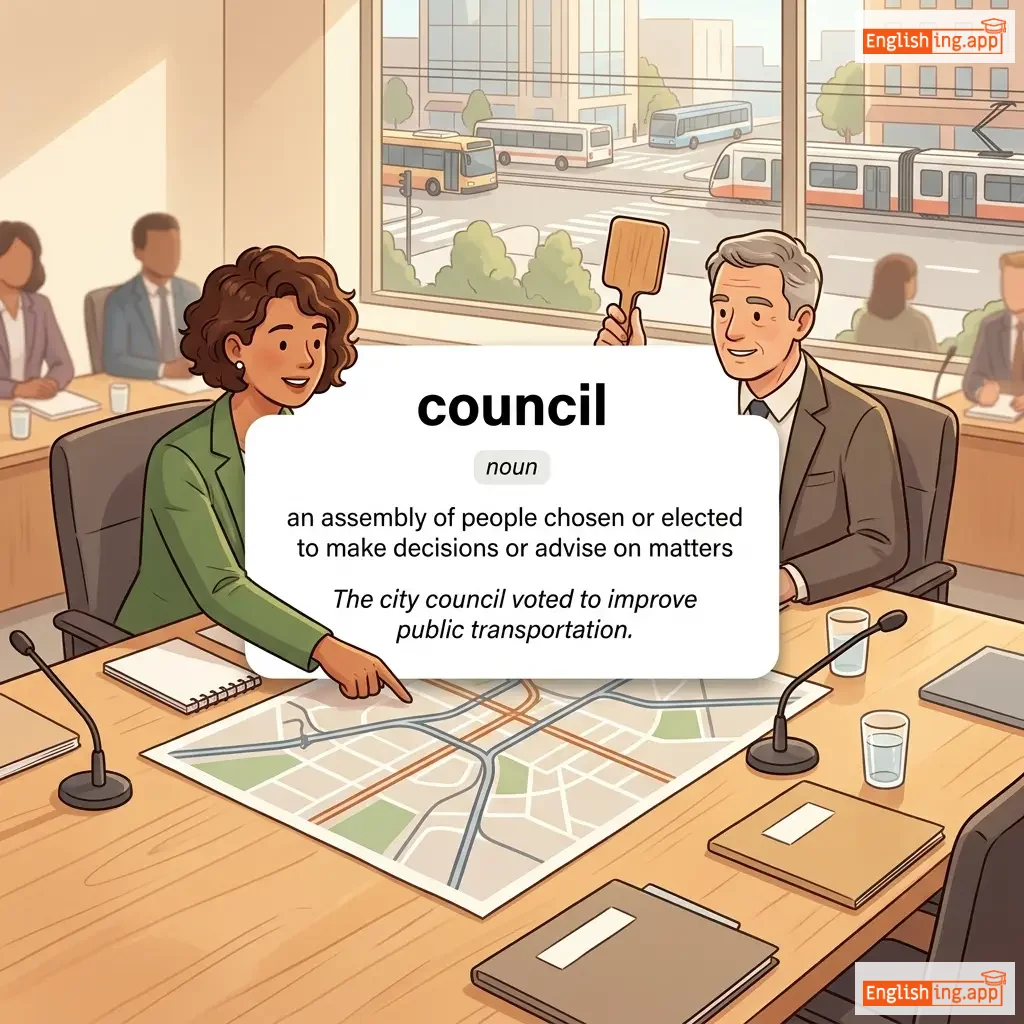
council definition card — visual illustration of the meaning
noun
/ˈkaʊn.səl/
कौंसिल (kaunsil)

an assembly of people chosen or elected to make decisions or advise on matters

"The city council voted to improve public transportation."

"शहर कौंसिल ने सार्वजनिक परिवहन को बेहतर बनाने के लिए मतदान किया।" (Shahar kaunsil ne sarvajanik parivahan ko behtar banane ke liye matdan kiya.)
noun
/ˈkaʊnsələr/
पार्षद (parshad)

an elected member of a local council who helps make decisions and represent the community

"The councillor spoke to residents about improving local roads."

"पार्षद ने स्थानीय सड़कों के सुधार पर बात की।" (parshad ne sthaniya sadkon ke sudhar par baat ki)
noun
/ˈkaʊnsɪlər/
काउंसलर (kaunsilar)

an elected member of a council, especially a local government body

"The councilor held a public meeting to discuss local issues."

"काउंसलर ने स्थानीय मुद्दों पर चर्चा करने के लिए एक सार्वजनिक बैठक आयोजित की।" (Kaunsilar ne sthanīya muddon par charchā karne ke liye ek sārbajanik baithak āyojit kī.)
verb
/ˈkaʊnsəl/
परामर्श देना (paramarsh dena)

to give professional advice or guidance to someone

"The teacher counseled the students on their career choices."

"शिक्षक ने छात्रों को उनके करियर विकल्पों पर परामर्श दिया।" (Shikshak ne chhatron ko unke career vikalpon par paramarsh diya.)
noun
/ˈkaʊnsəlɪŋ/
सलाहकारिता (salahkarita)

professional guidance or therapy to help resolve personal or psychological problems

"She decided to go for counseling after feeling stressed for months."

"महिलाओं को महीनों तक तनाव महसूस करने के बाद, उसने सलाहकारिता लेने का निर्णय लिया।" (Mahilaon ko mahino tak tanav mehsoos karne ke baad, usne salahkarita lene ka nirnay liya.)
noun
/ˈkaʊn.səl.ɪŋ/
परामर्श (paramarsh)

the process of giving professional guidance and support to help someone deal with personal, social, psychological, or career-related problems

"She decided to seek counselling to manage stress and anxiety."

"तनाव और चिंता को संभालने के लिए उसने परामर्श लेने का फैसला किया।" (tanaav aur chinta ko sambhalne ke liye usne paramarsh lene ka faisla kiya)
noun
/ˈkaʊnsələr/
परामर्शदाता (paramarshdata)

a person trained to give guidance on personal, social, or psychological problems; an advisor

"She spoke to a counsellor to get advice about her career."

"उसने अपने करियर के बारे में सलाह लेने के लिए एक परामर्शदाता से बात की।" (usne apne career ke baare mein salah lene ke liye ek paramarshdata se baat ki)
noun
/ˈkaʊn.səl.ər/
सलाहकार (salahkar)

a person trained to give guidance on personal, social, or psychological problems

"The school counselor helped the student deal with stress."

"स्कूल के काउंसलर ने छात्र को तनाव से निपटने में मदद की।" (School ke counselor ne chhatra ko tanav se nipatne mein madad ki.)
verb
/kaʊnt/
गिनती करना (ginti karna)

to determine the total number of something

"She carefully counted the money on the table."

"वह टेबल पर रखे पैसों को ध्यान से गिन रही थी।" (Wah table par rakhe paiso ko dhyaan se ghin rahi thi.)
noun
/ˈkaʊn.tə.nəns/
मुकाबला, अभिव्यक्ति; समर्थन (mukabla, abhibyakti; samarthan)

a person's face or expression; support or approval

"Her cheerful countenance brightened the room."

"उसका प्रसन्न चेहरा कमरे को रोशन कर दिया।" (Uska prasann chehra kamre ko roshan kar diya.)
noun
/ˈkaʊn.tər/
काउंटर (counter)

a flat surface in a shop, bank, or kitchen where transactions or work are done

"The cashier stood behind the counter."

"कैशियर काउंटर के पीछे खड़ा था।" (Cashier counter ke peeche khada tha.)
noun
/ˈkaʊn.tər kleɪm/
प्रत्यावेदन, उलट दावा (pratyavedan, ulat dawa)

a claim made to rebut a previous claim, often in legal contexts

"The defendant filed a counter-claim against the plaintiff."

"प्रतिवादी ने शिकायतकर्ता के खिलाफ एक प्रत्यावेदन दायर किया।" (Prativadi ne shikayatkarata ke khilaf ek pratyavedan daayar kiya.)