वोकैबुलरीज

इंग्लिश वोकैबुलरी डिस्कवर, लर्न और मास्टर करें

dedication definition card — visual illustration of the meaning
noun
/ˌdɛdɪˈkeɪʃən/
समर्पण (samarpan)

the quality of being committed to a task or purpose

"Her dedication to her studies earned her top grades."

"उसकी पढ़ाई के प्रति समर्पण ने उसे शीर्ष अंक दिलाए।" (Uski padhai ke prati samarpan ne use shreshth ank dilaye.)
verb
/dɪˈdjuːs/
निष्कर्ष निकालना (nishkarsh nikaalna)

to reach a conclusion by reasoning or inference

"From the evidence, the detective deduced that the suspect was lying."

"प्रमाण से, जासूस ने निष्कर्ष निकाला कि संदिग्ध झूठ बोल रहा था।" (Pramaan se, jasoos ne nishkarsh nikaala ki sandigdh jhooth bol raha tha.)
adjective
/dɪˈdjuːsəbl/
निष्कर्षणीय (nishkarsheeniya)

able to be deduced; possible to be inferred

"The solution is deducible from the data provided."

"समाधान डेटा से निष्कर्षणीय है।" (Samadhan data se nishkarsheeniya hai.)
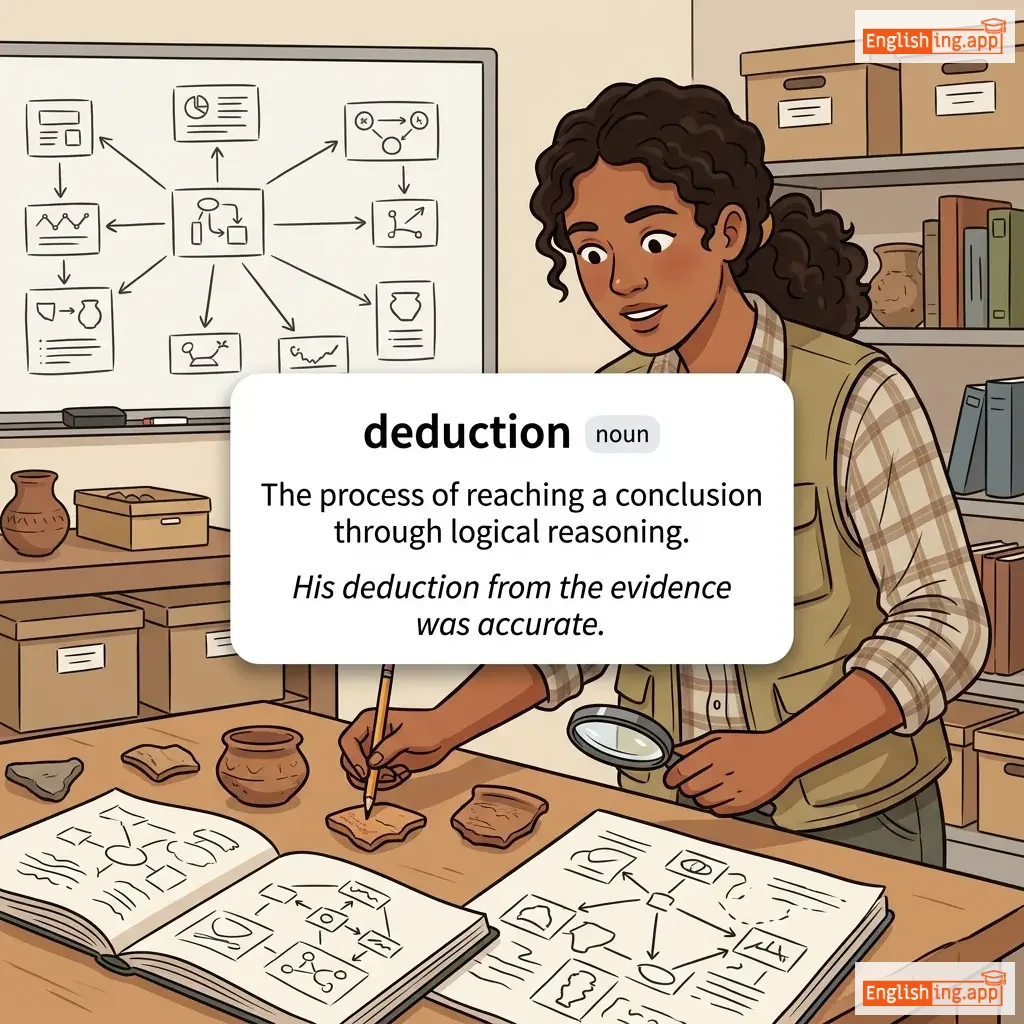
deduction definition card — visual illustration of the meaning
noun
/dɪˈdʌk.ʃən/
निष्कर्ष (nishkarsh)

The process of reaching a conclusion through logical reasoning.

"His deduction from the evidence was accurate."

"साक्ष्यों से उसका निष्कर्ष सही था।" (Sakshyon se uska nishkarsh sahi tha.)
noun
/diːd/
कर्म (karm)

an action, especially a good or evil one

"His deed of kindness will never be forgotten."

"उसका दयालु कर्म कभी नहीं भुलाया जाएगा।" (Uska dayalu karm kabhi nahi bhulaya jayega.)
verb
/diːm/
मानना, विचार करना (maanna, vichar karna)

to regard or consider in a specified way

"The project was deemed a success by the board."

"बोर्ड ने परियोजना को सफलता के रूप में माना।" (Board ne pariyojna ko safalta ke roop mein maana.)
deep definition card — visual illustration of the meaning
adjective
/diːp/
सुख (sukh)

extending far down from the top or surface; profound or intense

"The lake is very deep in the middle."

"जब उसने पुरस्कार प्राप्त किया तो वह अपनी खुशी को छिपा नहीं पाई।" (Jab usne puraskar prapt kiya to vah apni khushi ko chhupa nahin paayi.)
noun
/diːp ˈkʌlər/
गहरे रंग (gahe rang)

a rich, intense, or dark shade of any color

"The artist used deep colours to create a dramatic effect."

"कलाकार ने ड्रामेटिक प्रभाव बनाने के लिए गहरे रंगों का इस्तेमाल किया।" (kalakar ne dramtik prabhav banane ke liye gehre rangon ka istemal kiya.)
deep sea definition card — visual illustration of the meaning
noun
/diːp siː/
गहरी समुद्र (gahri samudra)

The deep parts of the sea or ocean, typically beyond the continental shelf.

"Many deep-sea creatures produce bioluminescence for survival."

"कई गहरे समुद्री जीव जीवित रहने के लिए बायोल्यूमिनेसेंस उत्पन्न करते हैं।" (Kai gahre samudri jeev jeevit rehne ke liye byoluminesens utpann karte hain.)
adverb
/ˈdiːpli/
गहरे तरीके से (gahare tareeke se)

to a great depth, extent, or intensity

"She was deeply moved by the speech."

"वह भाषण से गहरे तरीके से प्रभावित हुई थी।" (Wah bhashan se gahare tareeke se prabhavit hui thi.)
noun
/dɪr/
हिरण (hiran)

a graceful wild animal with long legs and antlers, often living in forests

"A deer ran across the road suddenly."

"एक हिरण अचानक से सड़क पार कर गया।" (Ek hiran achanak se sadak paar kar gaya.)
verb
/dɪˈfeɪs/
विकृत करना (vikrit karna)

to spoil the surface or appearance of something, especially by writing or drawing on it

"The vandals defaced the wall with graffiti."

"वैंडल्स ने दीवार को ग्रैफिटी से विकृत किया।" (Vandals ne deewar ko grafiti se vikrit kiya.)
verb
/ˈdiːfælˌkeɪt/
धन की हेराफेरी करना (dhan ki heraferi karna)

to misuse or embezzle money that one is responsible for

"The accountant was accused of defalcating company funds."

"अकाउंटेंट पर कंपनी के फंड्स का दुरुपयोग करने का आरोप था।" (Accountant par company ke funds ka durupyog karne ka aarop tha.)
noun
/ˌdɛfəˈmeɪʃən/
मानहानि (maanhani)

the act of damaging someone's reputation by making false statements

"The newspaper was sued for defamation of character."

"अखबार पर चरित्र हनन का मुकदमा दायर किया गया था।" (Akhbaar par charitra hanan ka mukadma daayir kiya gaya tha.)
defame definition card — visual illustration of the meaning
verb
/dɪˈfeɪm/
बदनाम करना (badnaam karna)

to harm someone's reputation by spreading false information

"He was defamed by malicious rumors."

"वह झूठी अफवाहों से बदनाम हुआ था।" (Wah jhoothi afwahon se badnaam hua tha.)
default definition card — visual illustration of the meaning
noun, verb
/dɪˈfɔːlt/
डिफ़ॉल्ट (default)

failure to fulfill an obligation, especially to repay a loan

"The company defaulted on its loan payments."

"कंपनी अपने लोन पेमेंट्स में डिफॉल्ट हो गई।" (Kampani apne loan payments mein default ho gayi.)
verb
/dɪˈfiːt/
पराजित करना (parajit karna)

to win a victory over someone or something in a competition or battle

"Our team defeated their rivals in the final match."

"हमारी टीम ने फाइनल मैच में उनके प्रतिद्वंद्वियों को हराया।" (Hamari team ne final match mein unke pratidvandviyon ko haraya.)
noun, adjective
/dɪˈfiːtɪst/
पराजयवादी (parajayvadi)

A person who expects or is excessively ready to accept failure; showing a tendency to expect defeat.

"His defeatist attitude discouraged the rest of the team."

"उसका पराजयवादी दृष्टिकोण टीम के बाकी सदस्य को हतोत्साहित कर रहा था।" (uska parajayvadi drishtikon team ke baaki sadasya ko hatotsahit kar raha tha.)
noun, verb
/ˈdiːfɛkt/ (noun), /dɪˈfɛkt/ (verb)
दोष / दलत्याग करना (dosh / daltayag karna)

A shortcoming, imperfection, or flaw; or to abandon a cause or group for another.

"The engineer found a defect in the software code."

"इंजीनियर ने सॉफ़्टवेयर कोड में एक दोष पाया।" (engineer ne software code mein ek dosh paya.)
noun
/dɪˈfɛkʃən/
त्याग (tyag)

The act of abandoning one’s country, cause, or group in favor of another.

"The politician’s defection shocked his supporters."

"राजनीतिक नेता का त्याग उसके समर्थकों को चौंका गया।" (rajnitik neta ka tyag uske samarthakon ko chaunka gaya.)
adjective
/dɪˈfektɪv/
दोषपूर्ण; अपूर्ण (doshpoorn; apurn)

having faults or defects; imperfect

"The defective product was returned to the store."

"दोषपूर्ण उत्पाद को दुकान में वापस किया गया था।" (doshpoorn utpad ko dukaan mein wapas kiya gaya tha)
noun
/dɪˈfɛns/
रक्षा (raksha)

The act of protecting or guarding against attack, harm, or criticism.

"The castle walls were built for defence against invaders."

"महल की दीवारें आक्रमणकारियों से रक्षा के लिए बनाई गई थीं।" (mahal ki deewarein akramankariyon se raksha ke liye banayi gayi thi.)
defend definition card — visual illustration of the meaning
verb
/dɪˈfɛnd/
रक्षा करना (raksha karna)

To protect someone or something from harm or attack.

"The lawyer worked hard to defend her client."

"वकील ने अपनी क्लाइंट की रक्षा करने के लिए कड़ी मेहनत की।" (Vakeel ne apni client ki raksha karne ke liye kadi mehnat ki.)
noun
/dɪˈfɛndənt/
प्रतिवादी (prativadi)

An individual, company, or institution sued or accused in a court of law.

"The defendant pleaded not guilty to the charges."

"प्रतिवादी ने आरोपों से इंकार किया।" (prativadi ne aaropon se inkar kiya.)
noun
/dɪˈfɛndər/
रक्षक (rakshak)

a person who protects someone or something from harm or attack

"The defender blocked the shot and saved the goal."

"रक्षक ने शॉट को रोका और गोल बचाया।" (rakshak ne shot ko roka aur gol bachaya.)
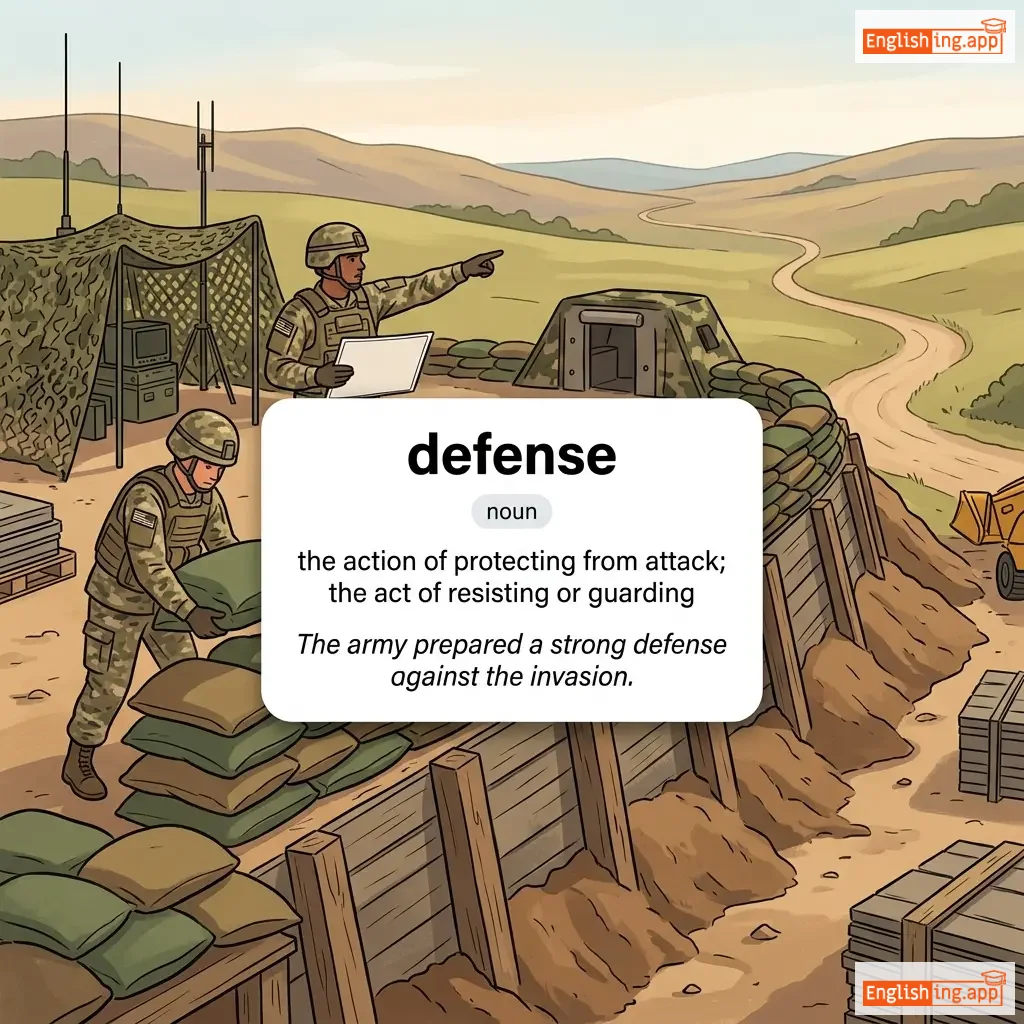
defense definition card — visual illustration of the meaning
noun
/dɪˈfɛns/
सुख (sukh)

the action of protecting from attack; the act of resisting or guarding

"The army prepared a strong defense against the invasion."

"जब उसे पुरस्कार मिला तो वह अपनी खुशी छुपा नहीं पाई।" (Jab use puraskar mila to vah apni khushi chhupa nahi paayi.)
adjective
/dɪˈfɛnsəbəl/
जो रक्षा किया जा सकता है / न्यायसंगत (jo raksha kiya ja sakta hai / nyayasangat)

Capable of being protected against attack or criticism; justifiable.

"Her decision was legally defensible."

"उसका निर्णय कानूनी रूप से रक्षात्मक था।" (uska nirnay kanuni roop se rakshatmak tha.)
adjective
/dɪˈfɛnsɪv/
रक्षात्मक (rakshatmak)

Intended to protect or defend; behaving in a way to guard against criticism or attack.

"He became defensive when asked about his mistake."

"जब उससे उसकी गलती के बारे में पूछा गया, तो वह रक्षात्मक हो गया।" (jab usse uski galti ke baare mein poochha gaya, to vah rakshatmak ho gaya.)
verb
/dɪˈfɜːr/
स्थगित करना (sthagit karna)

To postpone or delay; to yield to someone else's judgment or opinion.

"The meeting was deferred until next week."

"बैठक अगले हफ्ते तक स्थगित कर दी गई थी।" (baithak agle hafte tak sthagit kar di gayi thi.)
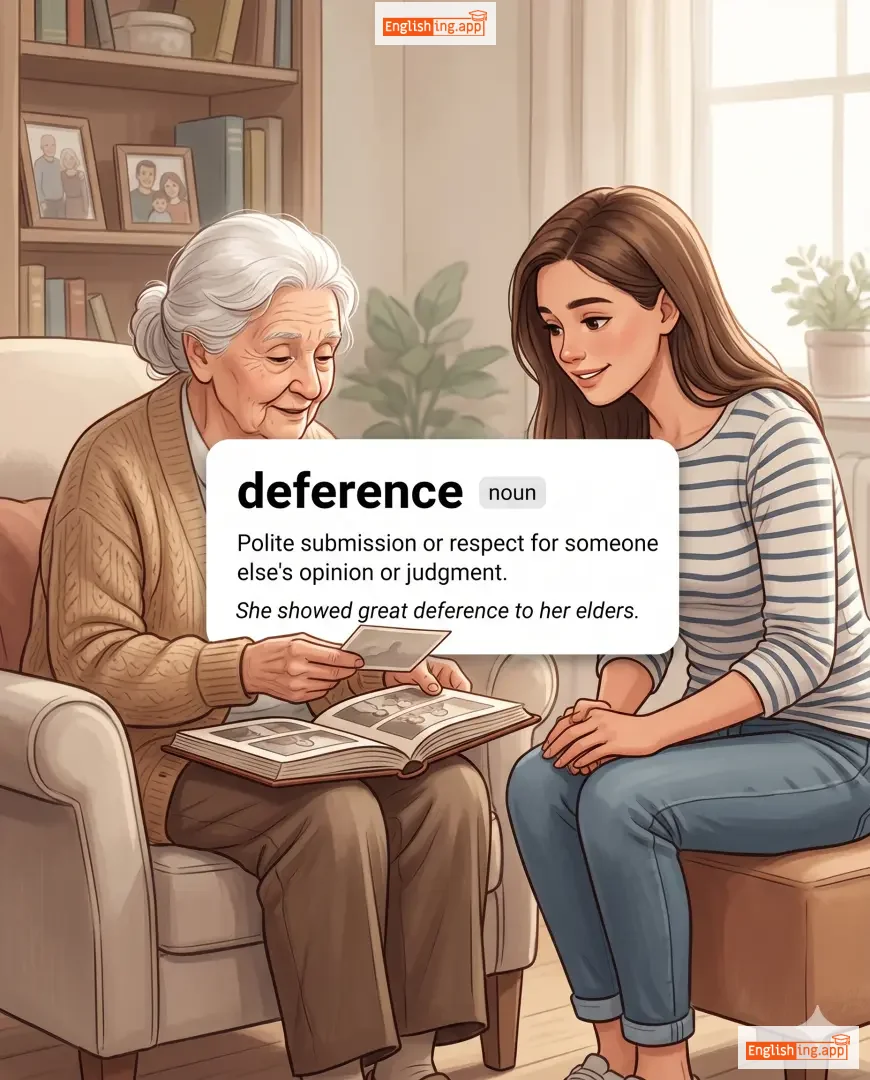
deference definition card — visual illustration of the meaning
noun
/ˈdɛfərəns/
सम्मान (samman)

Polite submission or respect for someone else's opinion or judgment.

"She showed great deference to her elders."

"उसने अपने बड़ों के प्रति महान सम्मान दिखाया।" (Usne apne baron ke prati mahan sammaan dikhaya.)
adjective
/ˌdɛfəˈrɛnʃəl/
आदरपूर्ण (aadarpoorn)

Showing or expressing respect and high regard.

"He was always deferential toward his teachers."

"वह हमेशा अपने शिक्षकों के प्रति आदरपूर्ण रहता था।" (vah hamesha apne shikshako ke prati aadarpoorn rehta tha.)
noun
/dɪˈfaɪəns/
अवज्ञा (avignya)

Open resistance or bold disobedience.

"The protest was an act of defiance against injustice."

"विरोध अन्याय के खिलाफ अवज्ञा का एक कृत्य था।" (virodh anyay ke khilaf avignya ka ek kritya tha.)
adjective
/dɪˈfaɪ.ənt/
अवज्ञाकारी (avajñākārī)

showing open resistance or bold disobedience

"The child was defiant when told to clean his room."

"जब बच्चे से उसका कमरा साफ करने के लिए कहा गया, तो वह अवज्ञाकारी था।" (Jab bacche se uska kamra saaf karne ke liye kahā gayā, to vah avajñākārī thā.)
noun
/dɪˈfɪʃ.ən.si/
कमी (kami)

a lack or shortage of something that is necessary

"The doctor diagnosed him with a vitamin D deficiency."

"डॉक्टर ने उसे विटामिन डी की कमी का निदान किया।" (Doctor ne use vitamin D ki kami ka nidan kiya.)
adjective
/dɪˈfɪʃ.ənt/
अपर्याप्त (aporyaapt)

not having enough of something that is essential

"The soil is deficient in nutrients."

"मिट्टी में पोषक तत्वों की कमी है।" (Mitti mein poshak tatvon ki kami hai.)
noun
/ˈdɛfɪsɪt/
घाटे (ghate)

The amount by which something, especially money, is too small or lacking.

"The government is trying to reduce the budget deficit."

"सरकार बजट घाटे को कम करने की कोशिश कर रही है।" (Sarkar bajat ghathe ko kam karne ki koshish kar rahi hai.)
verb
/dɪˈfaɪl/
अपवित्र करना (apavitra karna)

to pollute, corrupt, or make dirty

"The river was defiled by industrial waste."

"नदी औद्योगिक अपशिष्ट से अपवित्र हो गई थी।" (Nadi audyogik apashisht se apavitra ho gayi thi.)
verb
/dɪˈfaɪn/
परिभाषित करना (paribhashit karna)

to explain the meaning of a word, phrase, or concept clearly

"The teacher asked the student to define the word 'democracy'."

"टीचर ने छात्र से 'लोकतंत्र' शब्द को परिभाषित करने को कहा।" (Teacher ne chhatra se 'loktantra' shabd ko paribhashit karne ko kaha.)
adjective
/ˈdef.ən.ɪt/
निश्चित (nishchit)

clearly stated or decided; not vague or doubtful

"We need a definite plan before starting the project."

"हमें परियोजना शुरू करने से पहले एक निश्चित योजना की आवश्यकता है।" (Humein pariyojna shuru karne se pehle ek nishchit yojna ki avashyakta hai.)
adverb
/ˈdɛfɪnɪtli/
निश्चित रूप से (nishchit roop se)

without any doubt; certainly

"I will definitely call you tomorrow."

"मैं निश्चित रूप से तुम्हें कल कॉल करूंगा।" (Main nishchit roop se tumhe kal call karunga.)
noun
/ˌdɛfɪˈnɪʃən/
परिभाषा (paribhasha)

a statement that explains the meaning of a word or concept

"The dictionary gives a clear definition of the word."

"डिक्शनरी शब्द का स्पष्ट परिभाषा देती है।" (Dikshnari shabd ka spashṭ paribhasha deti hai.)
adjective
/dɪˈfɪnɪtɪv/
अंतिम (antim)

serving as a final or most authoritative form; conclusive and decisive

"The committee reached a definitive agreement on the policy."

"समिति ने नीति पर एक अंतिम समझौते पर पहुँचने का निर्णय लिया।" (Samiti ne niti par ek antim samjhote par pahuchne ka nirnay liya.)
adjective
/kənˈtraɪvd/
कृत्रिम या जबरदस्ती; प्राकृतिक या स्वाभाविक नहीं (kritrim ya jabardasti; prakritik ya swabhavik nahi)

artificial or forced; not natural or spontaneous

"The ending of the movie felt contrived and unrealistic."

"मुवी का एंडिंग कंट्राइव्ड और अवास्तविक लगा।" (Movie ka ending contrived aur avastavik laga.)
control definition card — visual illustration of the meaning
noun, verb
/kənˈtroʊl/
नियंत्रण करना (niyantran karna)

to exercise authority over; to manage or regulate

"He tried to control his anger during the meeting."

"उसने मीटिंग के दौरान अपने गुस्से को नियंत्रित करने की कोशिश की।" (Usne meeting ke dauran apne gusse ko niyantrit karne ki koshish ki.)
adjective
/kənˈtroʊld/
नियंत्रित (niyantrit)

managed or regulated carefully; kept within limits

"The experiment was conducted in a controlled environment."

"प्रयोग एक नियंत्रित वातावरण में किया गया था।" (prayog ek niyantrit vatavaran mein kiya gaya tha)
noun
/kənˈtroʊlər/
नियंत्रक (niyantrak)

a person or device that manages, directs, or regulates something

"The game controller made it easy to play the video game."

"गेम कंट्रोलर ने वीडियो गेम खेलना आसान बना दिया।" (Game controller ne video game khelna aasaan bana diya.)
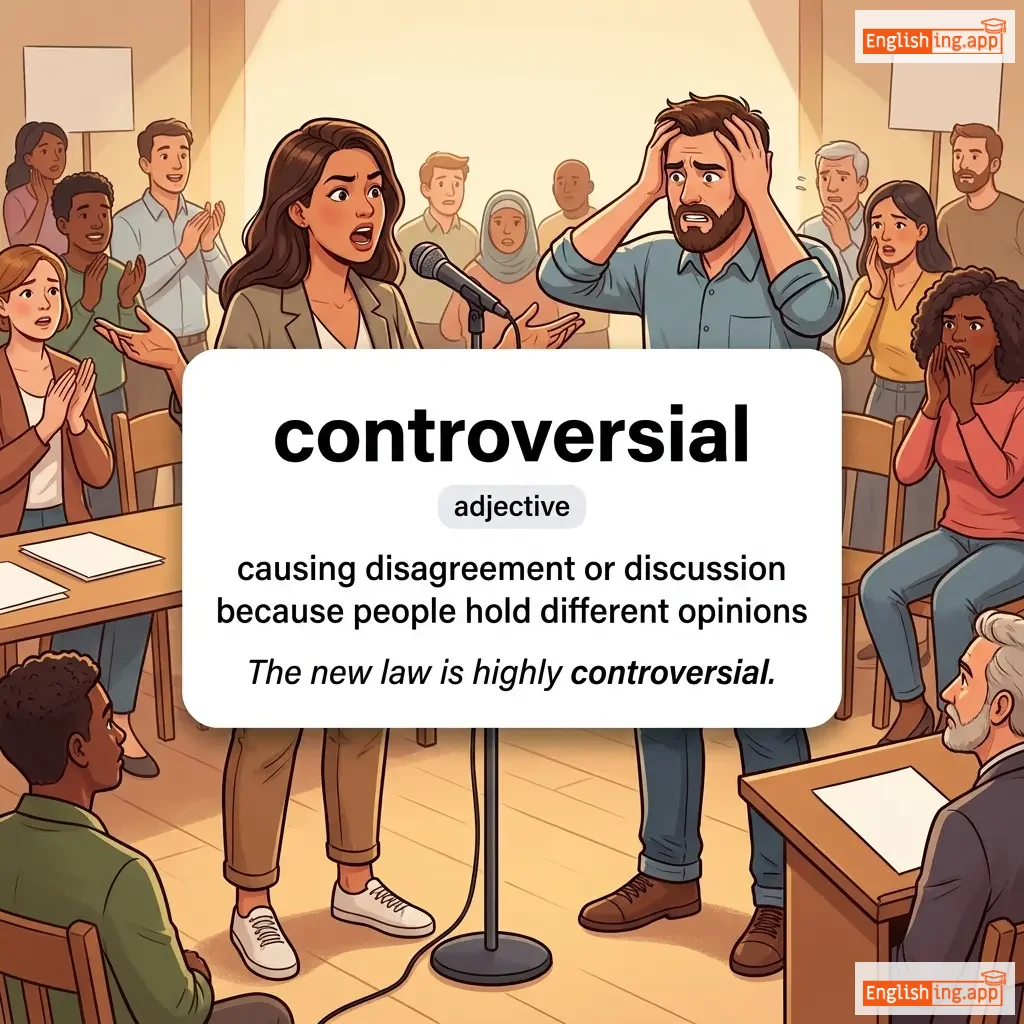
controversial definition card — visual illustration of the meaning
adjective
/ˌkɒn.trəˈvɜː.ʃəl/
विवादास्पद (vivadaspad)

causing disagreement or discussion because people hold different opinions

"The new law is highly controversial."

"नया कानून अत्यधिक विवादास्पद है।" (naya kanoon atyadhik vivadaspad hai)
noun
/ˈkɒn.trə.vɜːr.si/
विवाद (vivad)

A prolonged public disagreement or heated discussion.

"The new policy sparked a major controversy."

"नई नीति ने एक बड़ा विवाद खड़ा कर दिया।" (Nayi niti ne ek bada vivad khada kar diya.)
verb
/ˌkɒntrəˈvɜːrt/
विरोध करना (virodh karna)

to dispute or argue against; to contradict

"The scientist controversed the previous research findings."

"वैज्ञानिक ने पिछले शोध परिणामों का विरोध किया।" (Vaigyanik ne pichle shodh parinaamon ka virodh kiya.)
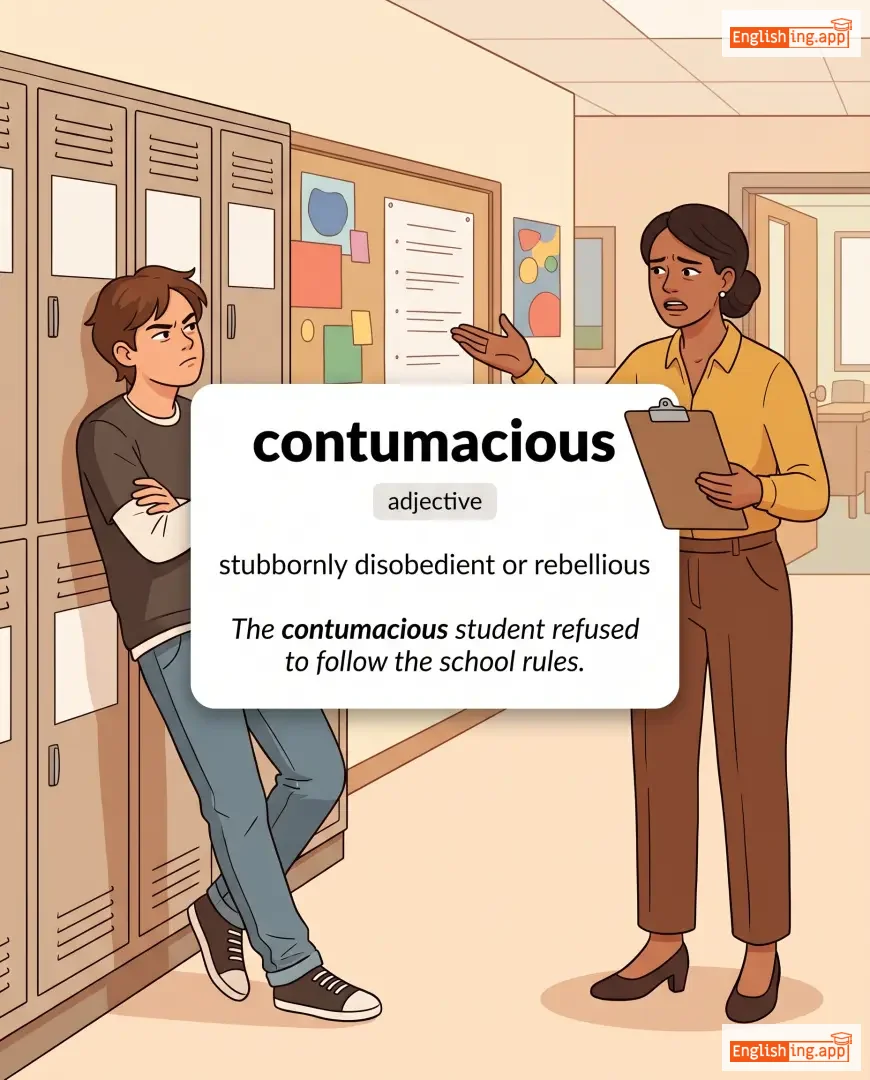
contumacious definition card — visual illustration of the meaning
adjective
/ˌkɒn.tjʊˈmeɪ.ʃəs/
अडिग, नाफरमान (adig, nafarmaan)

stubbornly disobedient or rebellious

"The contumacious student refused to follow the school rules."

"अडिग छात्र ने स्कूल के नियमों का पालन करने से इनकार किया।" (Adig chatra ne school ke niyamon ka paalan karne se inkaar kiya.)