
語彙集

英単語辞書 | 単語の意味、定義、例文

dedication definition card — visual illustration of the meaning
noun
/ˌdɛdɪˈkeɪʃən/
献身 (kenshin)

the quality of being committed to a task or purpose

"Her dedication to her studies earned her top grades."

"彼女の勉強への献身は、最高の成績を得ることを可能にした。" (Kanojo no benkyou e no kenshin wa, saikou no seiseki o eru koto o kanou ni shita.)
verb
/dɪˈdjuːs/
推測する (suikosuru)

to reach a conclusion by reasoning or inference

"From the evidence, the detective deduced that the suspect was lying."

"証拠から、探偵は容疑者が嘘をついていることを推測しました。" (Shōko kara, tantei wa yōgisha ga uso o tsuite iru koto o suisoku shimashita.)
adjective
/dɪˈdjuːsəbl/
推測可能な (suīsoku kanōna)

able to be deduced; possible to be inferred

"The solution is deducible from the data provided."
"解決策は提供されたデータから推測可能です。" (Kaiketsusaku wa teikyō sareta dēta kara suisoku kanōdesu.)
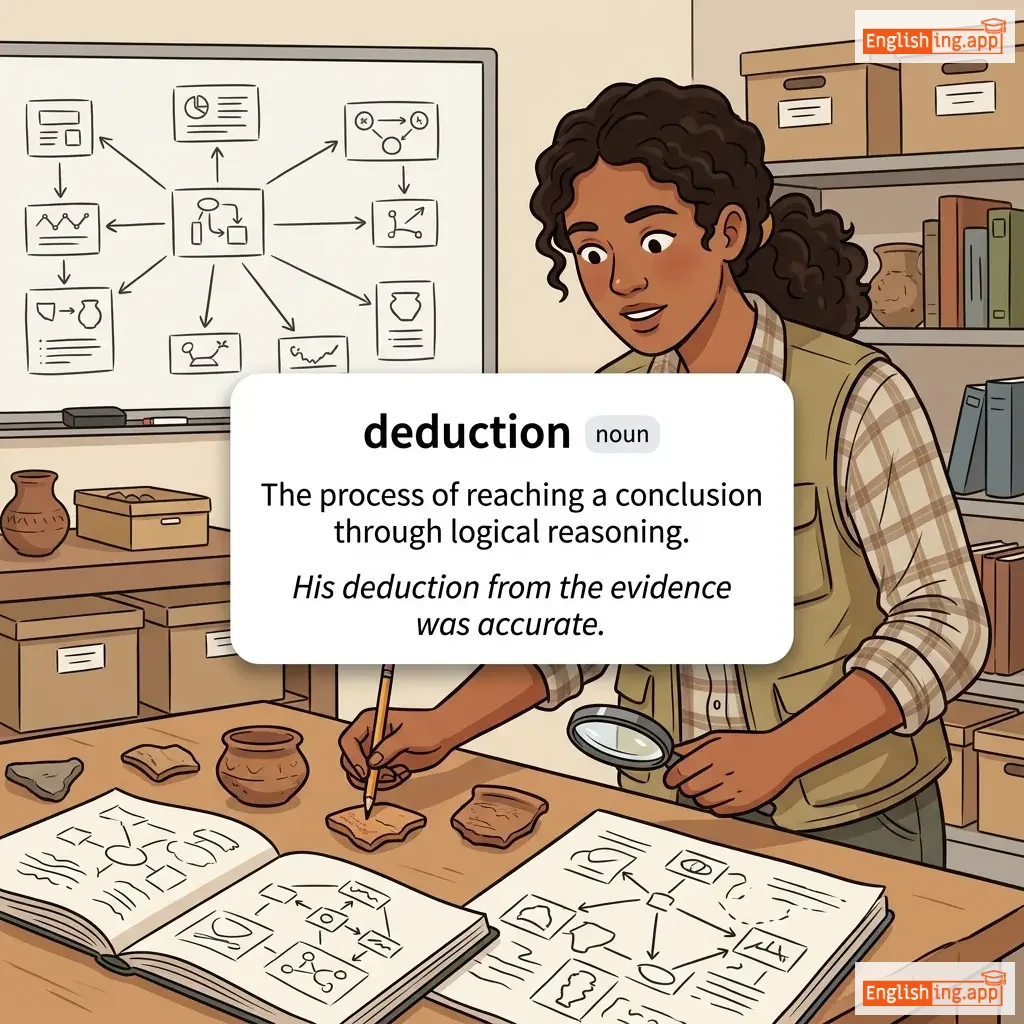
deduction definition card — visual illustration of the meaning
noun
/dɪˈdʌk.ʃən/
推論 (suiron)

The process of reaching a conclusion through logical reasoning.

"His deduction from the evidence was accurate."

"証拠から彼の推論は正確でした。" (Shōko kara kare no suiron wa seikaku deshita.)
noun
/diːd/
行い (okonai)

an action, especially a good or evil one

"His deed of kindness will never be forgotten."

"彼の親切な行いは決して忘れられません。" (Kare no shinsetsu na okonai wa kesshite wasureraremasen.)
verb
/diːm/
みなす, 判断する (minasu, handan suru)

to regard or consider in a specified way

"The project was deemed a success by the board."
"そのプロジェクトは理事会によって成功だと見なされました。" (Sono purojekuto wa rijikai ni yotte seikou da to minasaremashita.)
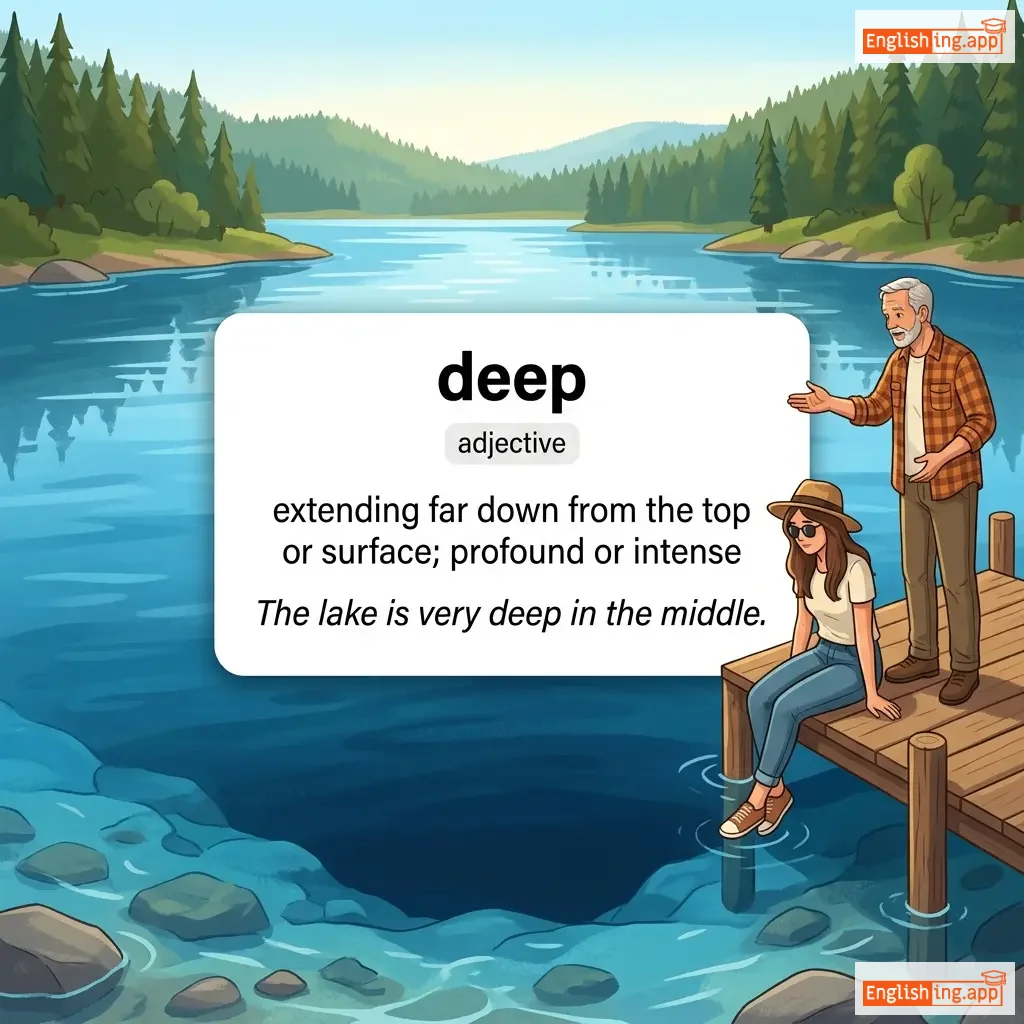
deep definition card — visual illustration of the meaning
adjective
/diːp/
幸せ (shiawase)

extending far down from the top or surface; profound or intense

"The lake is very deep in the middle."

"彼女は賞を受け取ったとき、幸せを隠すことができませんでした。" (Kanojo wa shō o uketotta toki, shiawase o kakusu koto ga dekimasen deshita.)
noun
/diːp ˈkʌlər/
深い色 (fukai iro)

a rich, intense, or dark shade of any color

"The artist used deep colours to create a dramatic effect."

"アーティストはドラマチックな効果を作り出すために深い色を使いました。" (Ātisuto wa doramachikku na kōka o tsukuridasu tame ni fukai iro o tsukaimashita.)
deep sea definition card — visual illustration of the meaning
noun
/diːp siː/
深海 (shinkai)

The deep parts of the sea or ocean, typically beyond the continental shelf.

"Many deep-sea creatures produce bioluminescence for survival."

"多くの深海生物は生存のために生物発光を生成します。" (Ōku no shinkai seibutsu wa seizon no tame ni seibutsu hakkō o seisei shimasu.)
adverb
/ˈdiːpli/
深く (fukaku)

to a great depth, extent, or intensity

"She was deeply moved by the speech."

"彼女はスピーチに深く感動しました。" (Kanojo wa supīchi ni fukaku kandō shimashita.)
noun
/dɪr/
鹿 (shika)

a graceful wild animal with long legs and antlers, often living in forests

"A deer ran across the road suddenly."

"一頭の鹿が突然道路を横切った。" (Ittō no shika ga totsuzen dōro o yokogitta.)
verb
/dɪˈfeɪs/
傷つける (kizutsukeru)

to spoil the surface or appearance of something, especially by writing or drawing on it

"The vandals defaced the wall with graffiti."

"ヴァンダルたちはグラフィティで壁を傷つけました。" (Vandaru-tachi wa gurafiti de kabe o kizutsukemashita.)
verb
/ˈdiːfælˌkeɪt/
横領する (ōryō suru)

to misuse or embezzle money that one is responsible for

"The accountant was accused of defalcating company funds."

"会計士は会社の資金を横領したと非難されました。" (Kaikeishi wa kaisha no shikin o ōryō shita to hinan saremashita.)
noun
/ˌdɛfəˈmeɪʃən/
名誉毀損 (meiyokison)

the act of damaging someone's reputation by making false statements

"The newspaper was sued for defamation of character."
"その新聞は名誉毀損で訴えられた。" (Sono shinbun wa meiyokison de uttaerareta.)
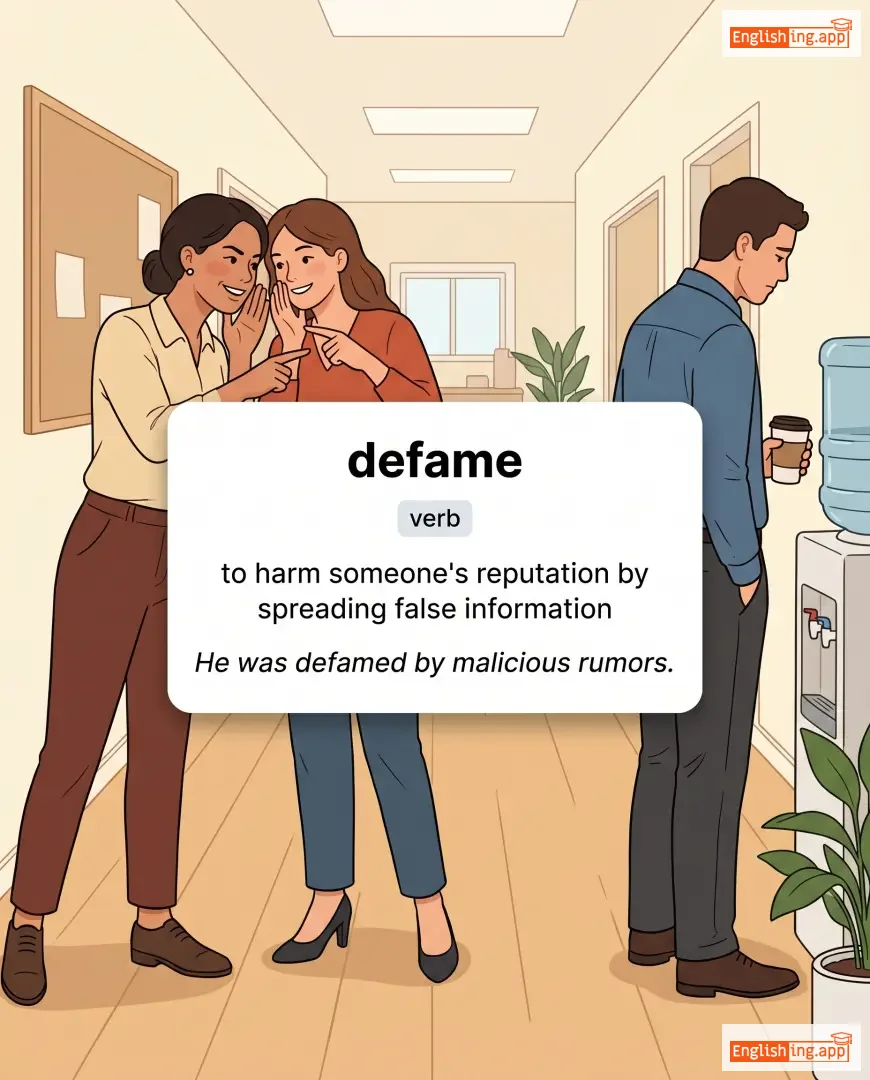
defame definition card — visual illustration of the meaning
verb
/dɪˈfeɪm/
名誉毀損 (meiyo kison)

to harm someone's reputation by spreading false information

"He was defamed by malicious rumors."

"彼は悪意のある噂で中傷されました。" (Kare wa akui no aru uwasa de chūshō saremashita.)
default definition card — visual illustration of the meaning
noun, verb
/dɪˈfɔːlt/
デフォルト (deforuto)

failure to fulfill an obligation, especially to repay a loan

"The company defaulted on its loan payments."

"会社はローンの支払いでデフォルトしました。" (Kaisha wa rōn no shiharai de deforuto shimashita.)
verb
/dɪˈfiːt/
敗北 (haiboku)

to win a victory over someone or something in a competition or battle

"Our team defeated their rivals in the final match."

"私たちのチームは決勝戦で彼らのライバルを打ち負かしました。" (Watashitachi no chīmu wa kesshōsen de karera no raibaru o uchi makashimashita.)
noun, adjective
/dɪˈfiːtɪst/
敗北主義者 (haibokushugisha)

A person who expects or is excessively ready to accept failure; showing a tendency to expect defeat.

"His defeatist attitude discouraged the rest of the team."

"彼の敗北主義的な態度は、チームの他のメンバーを落胆させました。" (Kare no haibokushugiteki na taido wa, chiimu no hoka no menbā o rakutan sasemashita.)
⚠️

Defect

noun, verb
/ˈdiːfɛkt/ (noun), /dɪˈfɛkt/ (verb)

A shortcoming, imperfection, or flaw; or to abandon a cause or group for another.

"The engineer found a defect in the software code."

noun
/dɪˈfɛkʃən/
脱党 (dattou)

The act of abandoning one’s country, cause, or group in favor of another.

"The politician’s defection shocked his supporters."

"その政治家の脱党は支持者を驚かせました。" (Sono seijika no dattou wa shijisha o odorokasemashita.)
adjective
/dɪˈfektɪv/
欠陥のある; 不完全な (kenkan no aru; fukanzen na)

having faults or defects; imperfect

"The defective product was returned to the store."

"欠陥のある製品は店に返品されました。" (Kenkan no aru seihin wa mise ni henpin saremashita.)
noun
/dɪˈfɛns/
防御 (bōgyo)

The act of protecting or guarding against attack, harm, or criticism.

"The castle walls were built for defence against invaders."
"城壁は侵略者からの防御のために建てられました。" (Jōheki wa shinryakusha kara no bōgyo no tame ni tateraremashita.)
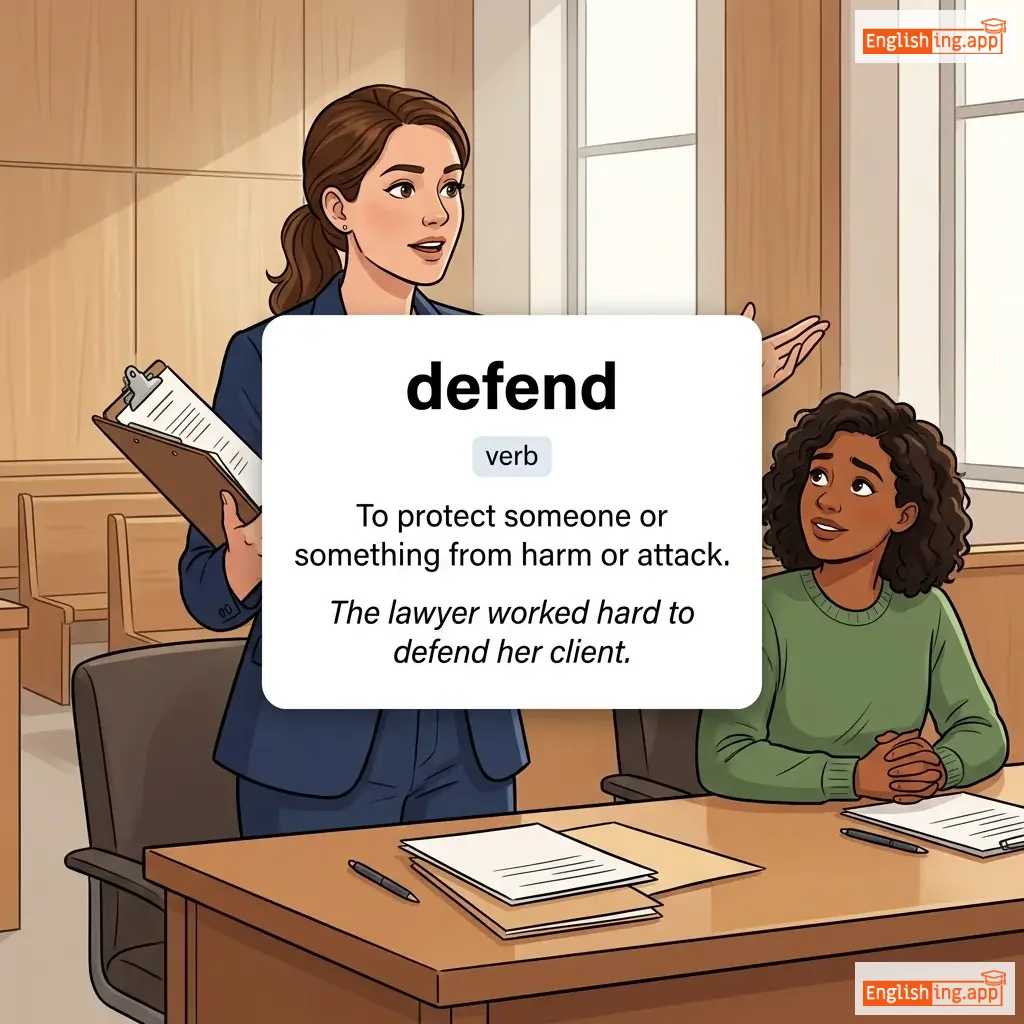
defend definition card — visual illustration of the meaning
verb
/dɪˈfɛnd/
守る (mamoru)

To protect someone or something from harm or attack.

"The lawyer worked hard to defend her client."

"弁護士は彼女のクライアントを守るために一生懸命働きました。" (Bengoshi wa kanojo no kuraianto wo mamoru tame ni isshoukenmei hatarakimashita.)
noun
/dɪˈfɛndənt/
被告 (hikoku)

An individual, company, or institution sued or accused in a court of law.

"The defendant pleaded not guilty to the charges."

"被告人は容疑を否認した。" (Hikokunin wa yogi o hinin shita.)
noun
/dɪˈfɛndər/
ディフェンダー (difendā)

a person who protects someone or something from harm or attack

"The defender blocked the shot and saved the goal."
"ディフェンダーはシュートをブロックし、ゴールを守った。" (Difendā wa shūto o burokkushi, gōru o mamotta.)
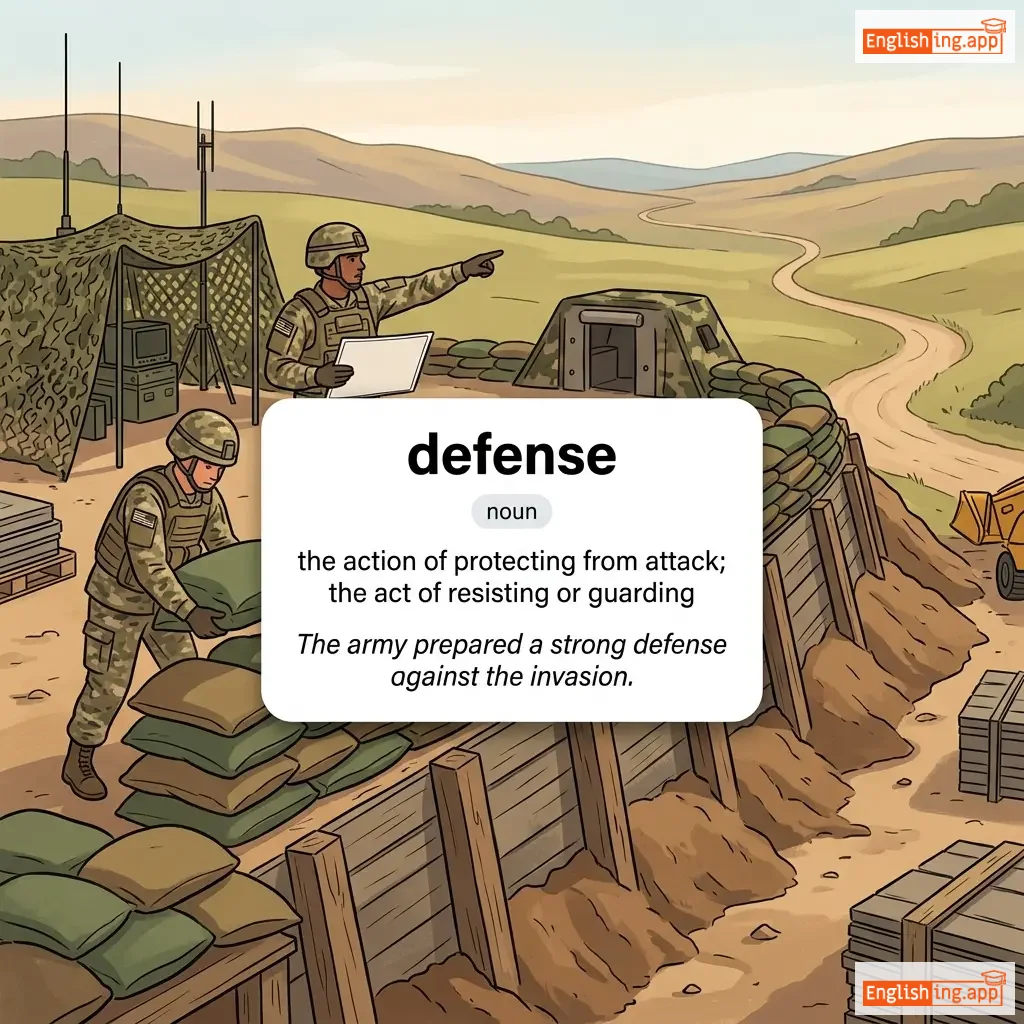
defense definition card — visual illustration of the meaning
noun
/dɪˈfɛns/
幸福 (koufuku)

the action of protecting from attack; the act of resisting or guarding

"The army prepared a strong defense against the invasion."

"彼女は賞を受け取ったとき、喜びを隠すことができませんでした。" (Kanojo wa shō o uketotta toki, yorokobi o kakusu koto ga dekimasen deshita.)
adjective
/dɪˈfɛnsəbəl/
守ることができる / 正当化できる (mamoru koto ga dekiru / seitōka dekiru)

Capable of being protected against attack or criticism; justifiable.

"Her decision was legally defensible."

"彼女の決定は法的に守ることができた。" (Kanojo no kettei wa hōteki ni mamoru koto ga dekita.)
adjective
/dɪˈfɛnsɪv/
防御的な (bōgyo-teki na)

Intended to protect or defend; behaving in a way to guard against criticism or attack.

"He became defensive when asked about his mistake."

"彼は自分のミスについて尋ねられると防御的になった。" (Kare wa jibun no misu ni tsuite tazunerareru to bōgyo-teki ni natta.)
verb
/dɪˈfɜːr/
延期する (enki suru)

To postpone or delay; to yield to someone else's judgment or opinion.

"The meeting was deferred until next week."
"会議は来週まで延期されました。" (Kaigi wa raishū made enki saremashita.)
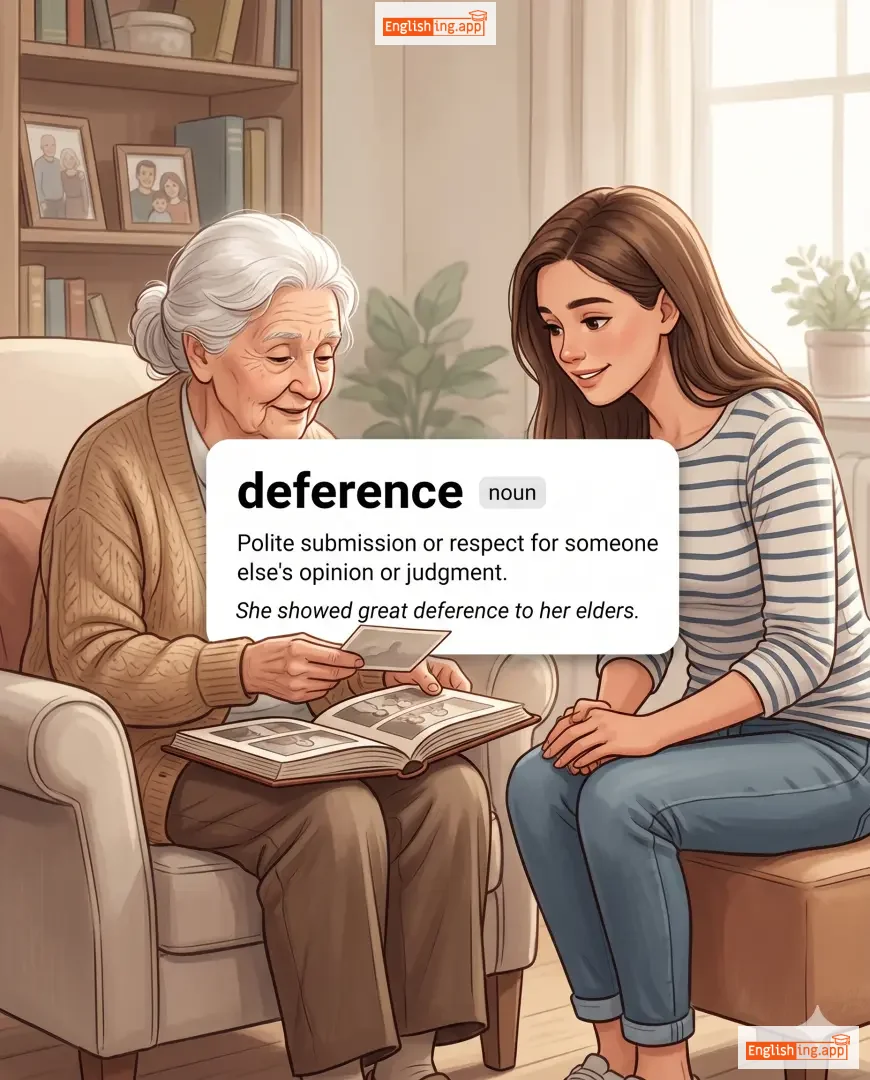
deference definition card — visual illustration of the meaning
noun
/ˈdɛfərəns/
敬意 (keii)

Polite submission or respect for someone else's opinion or judgment.

"She showed great deference to her elders."

"彼女は年長者に大きな敬意を示しました。" (Kanojo wa nenchōsha ni ōkina keii o shimeshimashita.)
adjective
/ˌdɛfəˈrɛnʃəl/
尊敬の念を示す (sonkei no nen o shimesu)

Showing or expressing respect and high regard.

"He was always deferential toward his teachers."

"彼はいつも教師に対して尊敬の念を示していた。" (kare wa itsumo kyoushi ni taishite sonkei no nen o shimeshite ita.)
noun
/dɪˈfaɪəns/
反抗 (hankou)

Open resistance or bold disobedience.

"The protest was an act of defiance against injustice."

"その抗議は不正に対する反抗の行為でした。" (Sono kōgi wa fusei ni taisuru hankō no kōi deshita.)
adjective
/dɪˈfaɪ.ənt/
挑戦的な (chōsenteki na)

showing open resistance or bold disobedience

"The child was defiant when told to clean his room."

"子供は部屋を掃除するように言われたとき、挑戦的でした。" (Kodomo wa heya o sōji suru yō ni iwareta toki, chōsenteki deshita.)
noun
/dɪˈfɪʃ.ən.si/
欠乏 (ketsubou)

a lack or shortage of something that is necessary

"The doctor diagnosed him with a vitamin D deficiency."

"医者は彼にビタミンD欠乏症と診断しました。" (Isha wa kare ni bitamin D ketsubou shou to shindan shimashita.)
adjective
/dɪˈfɪʃ.ənt/
不足している (fusoku shite iru)

not having enough of something that is essential

"The soil is deficient in nutrients."

"土壌は栄養素が不足しています。" (Dojo wa eiyōso ga fusoku shiteimasu.)
noun
/ˈdɛfɪsɪt/
赤字 (akaji)

The amount by which something, especially money, is too small or lacking.

"The government is trying to reduce the budget deficit."

"政府は予算赤字を減らそうとしています。" (Seifu wa yosan akaji o herasō to shiteimasu.)
verb
/dɪˈfaɪl/
汚す (yogosu)

to pollute, corrupt, or make dirty

"The river was defiled by industrial waste."

"川は工業廃水によって汚された。" (Kawa wa kōgyō haisui ni yotte osen sareta.)
verb
/dɪˈfaɪn/
定義する (teigi suru)

to explain the meaning of a word, phrase, or concept clearly

"The teacher asked the student to define the word 'democracy'."

"先生は生徒に『民主主義』という言葉を定義するように頼んだ。" (Sensei wa seito ni 'minshushugi' to iu kotoba o teigi suru you ni tanonda.)
adjective
/ˈdef.ən.ɪt/
明確 (meikaku)

clearly stated or decided; not vague or doubtful

"We need a definite plan before starting the project."

"プロジェクトを始める前に、明確な計画が必要です。" (Purojekuto o hajimeru mae ni, meikaku na keikaku ga hitsuyou desu.)
adverb
/ˈdɛfɪnɪtli/
確実に (kakujitsuni)

without any doubt; certainly

"I will definitely call you tomorrow."

"私は確実に明日あなたに電話します。" (Watashi wa kakujitsuni ashita anata ni denwa shimasu.)
noun
/ˌdɛfɪˈnɪʃən/
定義 (teigi)

a statement that explains the meaning of a word or concept

"The dictionary gives a clear definition of the word."

"辞書はその言葉の明確な定義を示します。" (Jisho wa sono kotoba no meikaku na teigi wo shimeshimasu.)
adjective
/dɪˈfɪnɪtɪv/
決定的 (ketteiteki)

serving as a final or most authoritative form; conclusive and decisive

"The committee reached a definitive agreement on the policy."

"委員会は政策に関する決定的な合意に達しました。" (Iinkai wa seisaku ni kansuru ketteiteki na gōi ni tasshimashita.)
adjective
/kənˈtraɪvd/
人工的または強制的; 自然でないまたは自発的でない (jinkō-teki mata wa kyōsei-teki; shizen de nai mata wa jihatsuteki de nai)

artificial or forced; not natural or spontaneous

"The ending of the movie felt contrived and unrealistic."
"映画の結末は作り物で非現実的に感じました。" (Eiga no ketsumatsu wa tsukurimono de higenjitsuteki ni kanjimashita.)
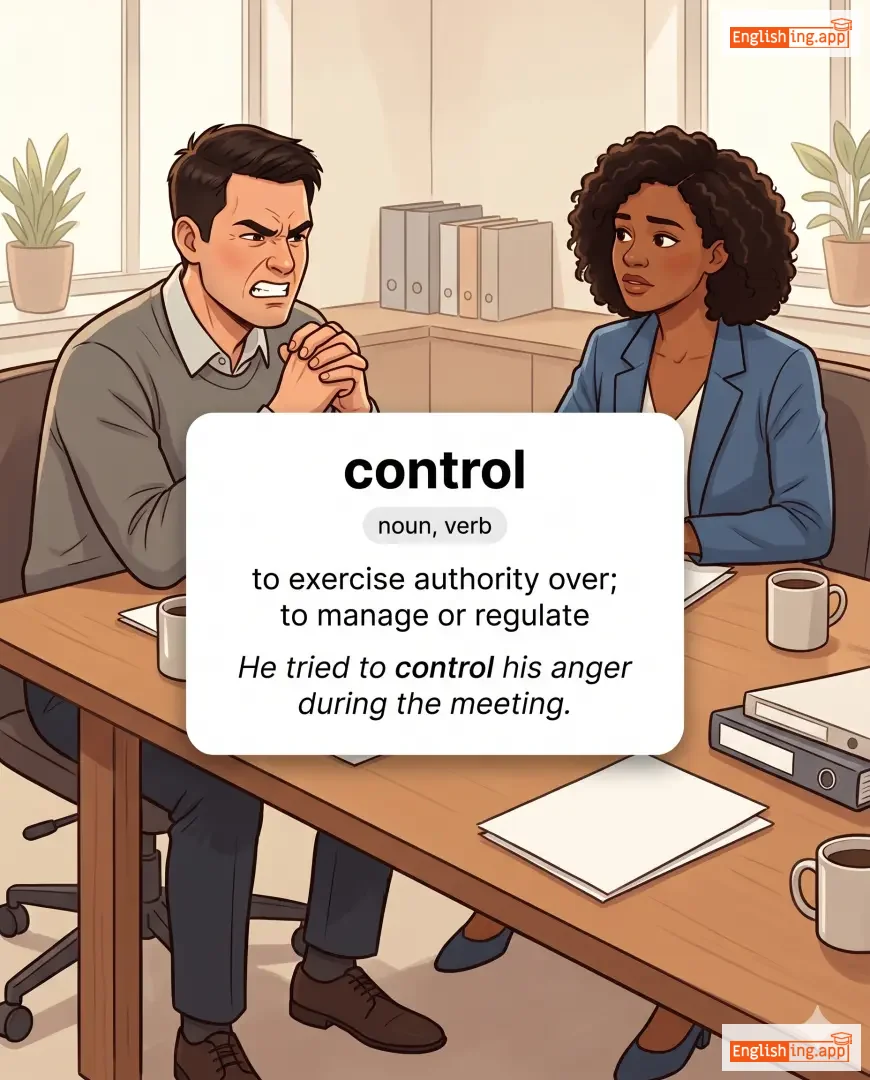
control definition card — visual illustration of the meaning
noun, verb
/kənˈtroʊl/
コントロールする (kontorōru suru)

to exercise authority over; to manage or regulate

"He tried to control his anger during the meeting."

"彼は会議中に怒りをコントロールしようとした。" (Kare wa kaigi-chū ni ikari o kontorōru shiyou to shita.)
adjective
/kənˈtroʊld/
管理された (kanri sareta)

managed or regulated carefully; kept within limits

"The experiment was conducted in a controlled environment."

"実験は管理された環境で行われました。" (jikken wa kanri sareta kankyo de okonawaremashita)
noun
/kənˈtroʊlər/
コントローラー (kontorōrā)

a person or device that manages, directs, or regulates something

"The game controller made it easy to play the video game."
"ゲームコントローラーはビデオゲームを簡単にプレイできるようにしました。" (Gēmu kontorōrā wa bideo gēmu o kantan ni purei dekiru yō ni shimashita.)
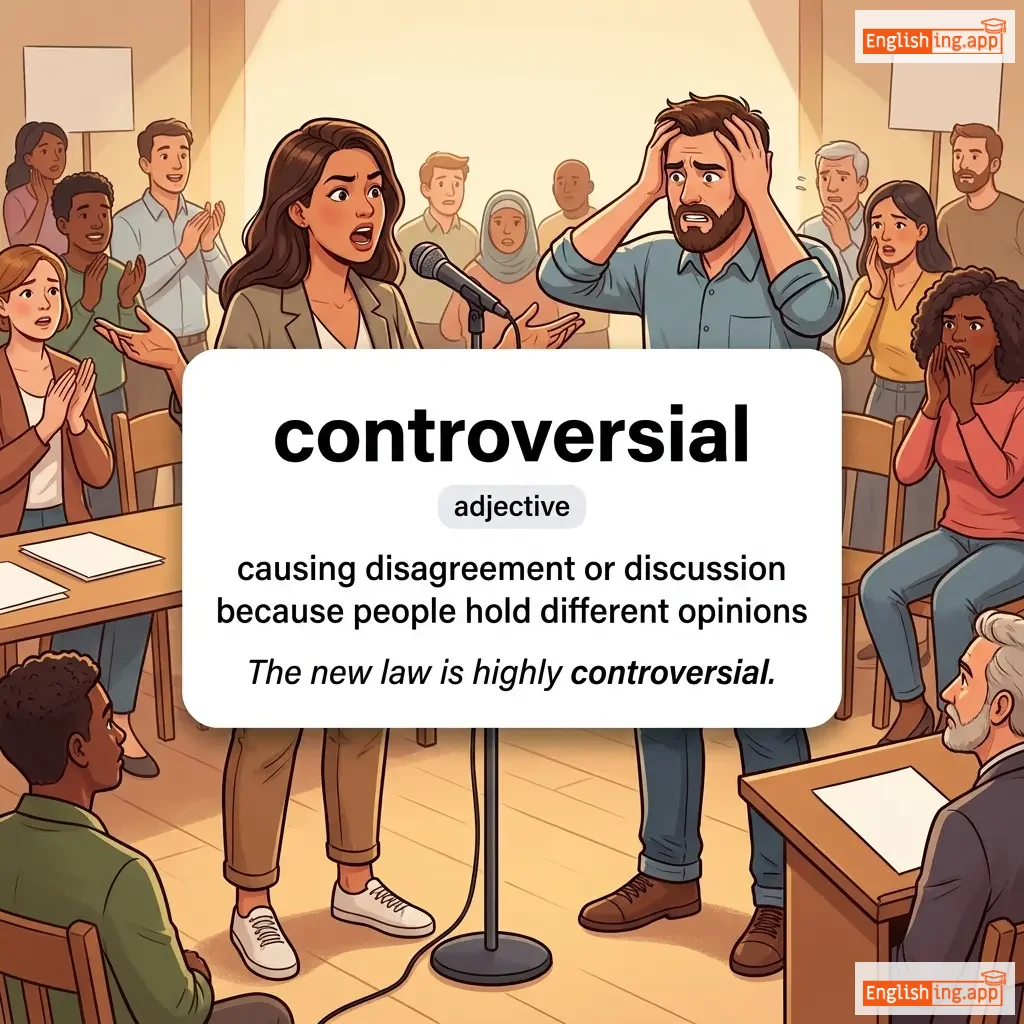
controversial definition card — visual illustration of the meaning
adjective
/ˌkɒn.trəˈvɜː.ʃəl/
議論を呼ぶ (giron o yobu)

causing disagreement or discussion because people hold different opinions

"The new law is highly controversial."

"新しい法律は非常に議論を呼んでいます。" (atarashī hōritsu wa hijō ni giron o yondeimasu)
noun
/ˈkɒn.trə.vɜːr.si/
論争 (ronzō)

A prolonged public disagreement or heated discussion.

"The new policy sparked a major controversy."

"新しい政策が大きな論争を引き起こしました。" (Atarashī seisaku ga ōkina ronzō o hikiokoshimashita.)
verb
/ˌkɒntrəˈvɜːrt/
反論する (hanron suru)

to dispute or argue against; to contradict

"The scientist controversed the previous research findings."
"その科学者は以前の研究結果に異議を唱えました。" (Sono kagakusha wa izen no kenkyu kekka ni igi o tonaemashita.)
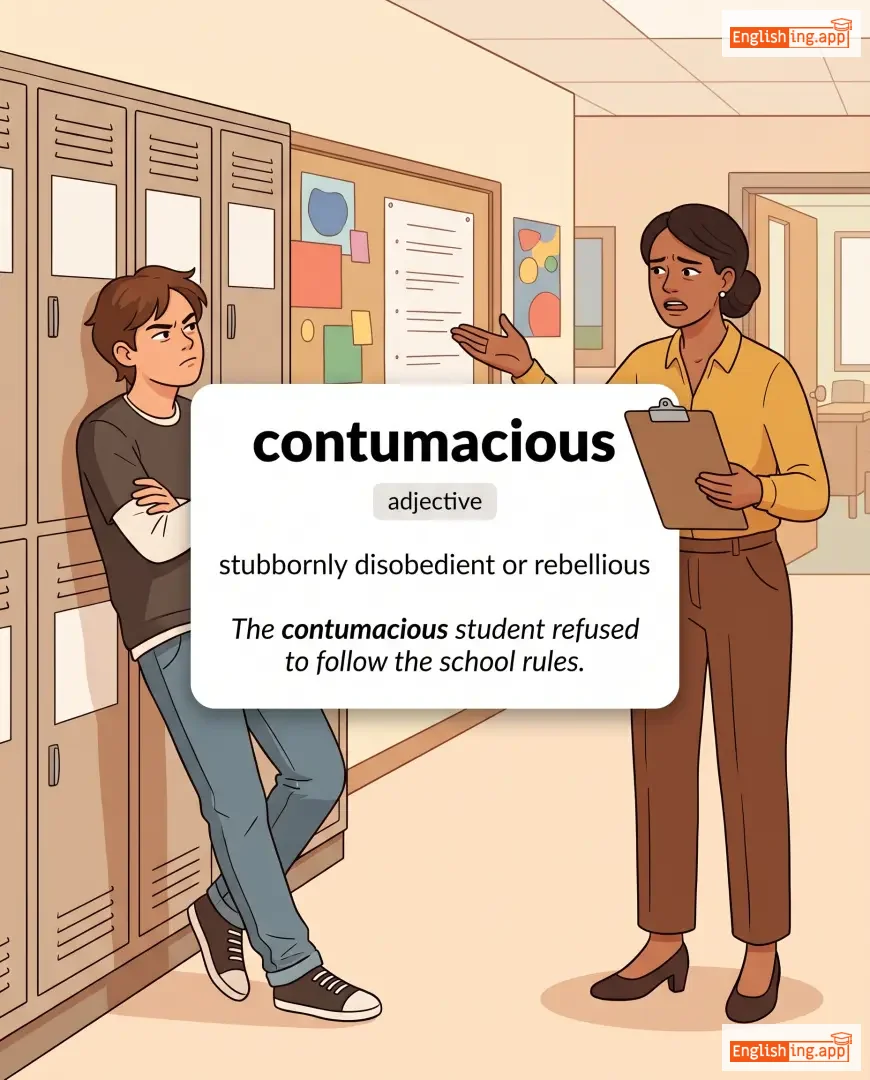
contumacious definition card — visual illustration of the meaning
adjective
/ˌkɒn.tjʊˈmeɪ.ʃəs/
反抗的な, 不従順な (hankō-teki na, fuzūjun na)

stubbornly disobedient or rebellious

"The contumacious student refused to follow the school rules."

"その反抗的な学生は学校の規則に従うことを拒否しました。" (Sono hankō-teki na gakusei wa gakkō no kisoku ni shitagau koto o kyohi shimashita.)