語彙集

英単語辞書 | 単語の意味、定義、例文

noun
/dɪˈsiːt/
欺瞞 (giman)

The act of deceiving someone by concealing or misrepresenting the truth.

"His career was ruined by lies and deceit."

"彼のキャリアは嘘と欺瞞によって台無しになった。" (Kare no kyaria wa uso to giman ni yotte dainashi ni natta.)
adjective
/dɪˈsiːtfəl/
欺瞞的な (giman-teki na)

Deliberately misleading or dishonest.

"She gave a deceitful answer to hide the truth."

"彼女は真実を隠すために欺瞞的な答えを出しました。" (Kanojo wa shinjitsu o kakusu tame ni giman-teki na kotae o dashimashita.)
verb
/dɪˈsiːv/
騙す (damasu)

To cause someone to believe something that is not true.

"He tried to deceive his friends with a fake story."

"彼は嘘の話で友達を騙そうとした。" (Kare wa uso no hanashi de tomodachi o damasou to shita.)
verb
/dɪˈsɛləˌreɪt/
減速する (gensoku suru)

to reduce speed; to slow down

"The car began to decelerate as it approached the traffic light."

"車は信号に近づくと減速し始めました。" (Kuruma wa shingou ni chikaduku to gensoku shi hajimemashita.)
noun
/dɪˈsɛmbər/
12月 (juunigatsu)

the twelfth and last month of the year in the Gregorian calendar

"December is usually cold in many countries."

"12月は多くの国で寒いです。" (juunigatsu wa ooku no kuni de samui desu)
noun
/ˈdiːsənsi/
品位 (hin'i)

behavior that conforms to accepted standards of morality or respectability

"She showed great decency by helping the stranger in need."

"彼女は困っている見知らぬ人を助けることで大きな品位を示しました。" (Kanojo wa komatte iru mishiranu hito o tasukeru koto de ōkina hin'i o shimeshimashita.)
adjective
/ˈdiːsənt/
立派 (rippa)

conforming to standards of propriety, good taste, or morality

"He found a decent job after months of searching."

"彼は数ヶ月の探しの後、立派な仕事を見つけました。" (Kare wa suukagetsu no sagashi no ato, rippa na shigoto o mitsukemashita.)
decentralization definition card — visual illustration of the meaning
noun
/diːˌsen.trə.laɪˈzeɪ.ʃən/
分権化; 権力の分配 (bunkenka; kenryoku no bunpai)

the transfer of authority from central to local government; distribution of power

"The decentralization of government services improved efficiency at the local level."
"政府サービスの分権化は、地域レベルでの効率を向上させました。" (seifu sābisu no bunkenka wa, chiiki reberu de no kōritsu o kōjō sasemashita.)
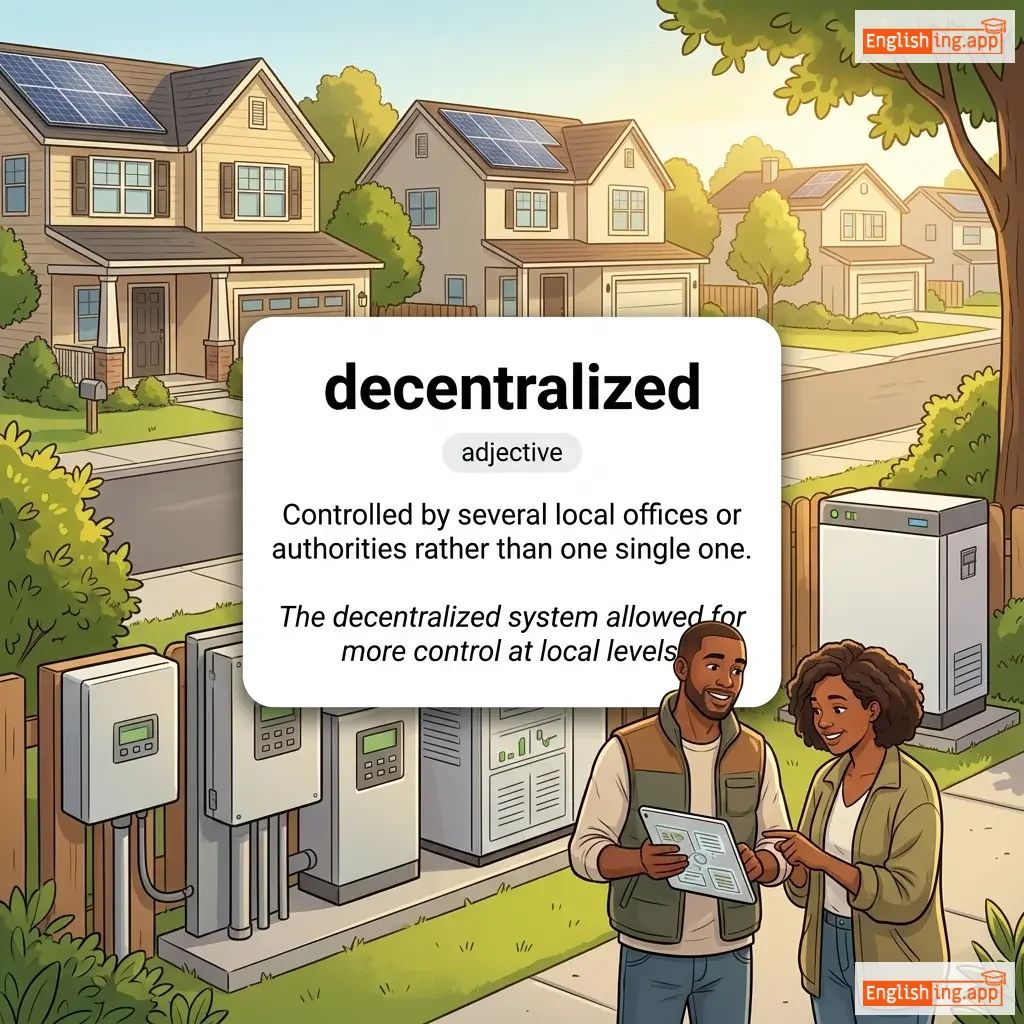
decentralized definition card — visual illustration of the meaning
adjective
/diːˈsɛntrəlaɪzd/
分散型 (bunsan-gata)

Controlled by several local offices or authorities rather than one single one.

"The decentralized system allowed for more control at local levels."

"分散型システムは、ローカルレベルでのより多くの制御を可能にしました。" (Bunsan-gata shisutemu wa, rōkaru reberu de no yori ōku no seigyo o kanō ni shimashita.)
noun
/dɪˈsep.ʃən/
欺瞞 (kiman)

the action of deceiving someone; the state of being deceived

"The magician's deception amazed the audience with seemingly impossible tricks."

"魔法使いの欺瞞は、観客を一見不可能なトリックで驚かせた。" (Mahōtsukai no kiman wa, kankyaku o ikken fukanōna torikku de odorokaseta.)
adjective
/dɪˈsɛptɪv/
騙すような (damasu you na)

Giving an appearance or impression different from the truth; misleading.

"Appearances can be deceptive."

"外見は騙すようなものかもしれません。" (Gaiken wa damasu you na mono kamoshiremasen.)
noun
/ˈdɛsɪˌbɛl/
デシベル (deshiberu)

a unit used to measure the intensity of sound

"The noise level in the factory exceeded 90 decibels."
"工場の騒音レベルは90デシベルを超えました。" (Kōjō no sōon reberu wa 90 deshiberu o koemashita.)
decide definition card — visual illustration of the meaning
verb
/dɪˈsaɪd/

To make a choice or judgment about something.

"She decided to study abroad after graduation."

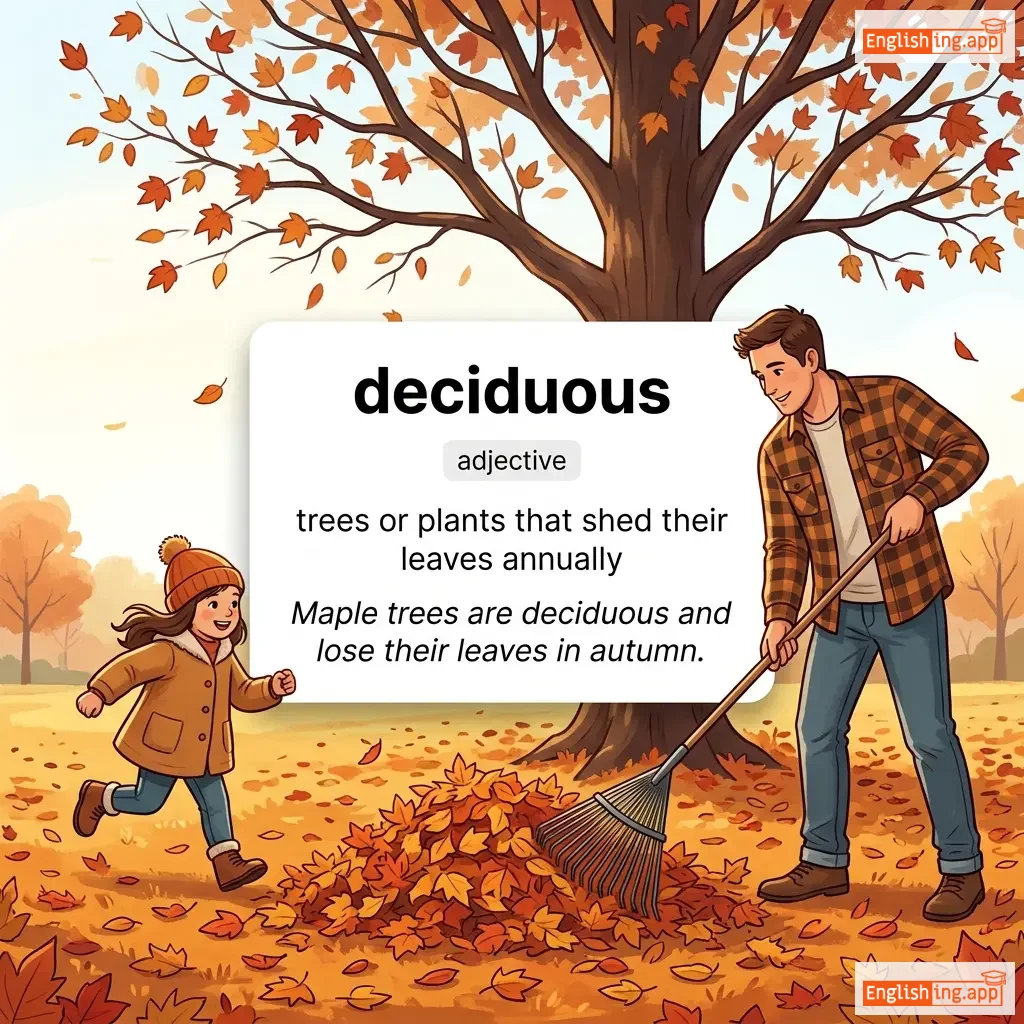
deciduous definition card — visual illustration of the meaning
adjective
/dɪˈsɪdʒuəs/
落葉性 (raku you sei)

trees or plants that shed their leaves annually

"Maple trees are deciduous and lose their leaves in autumn."

"カエデの木は落葉樹で、秋に葉を落とします。" (Kaede no ki wa rakuyouju de, aki ni ha wo otoshimasu.)
noun
/ˈdɛsɪməl/
十進法 (jūshin-hō)

A number system based on 10; a number expressed in the base-10 system.

"The number 0.75 is a decimal."

"0.75は十進法の数です。" (0.75 wa jūshin-hō no kazu desu.)
verb
/ˈdɛsɪmeɪt/
壊滅させる (kaimetsu saseru)

To destroy or kill a large proportion of something.

"The wildfire decimated the forest."

"森林火災が森を壊滅させました。" (Shinrin kasai ga mori o kaimetsu sasenashita.)
noun
/ˌdɛsɪˈmeɪʃən/
壊滅 (kaimetsu)

The act of destroying or killing a large proportion of something.

"The decimation of the city left thousands homeless."

"都市の壊滅により、何千人もの人々が家を失った。" (Toshi no kaimetsu ni yori, nansen-nin mo no hitobito ga ie o ushinatta.)
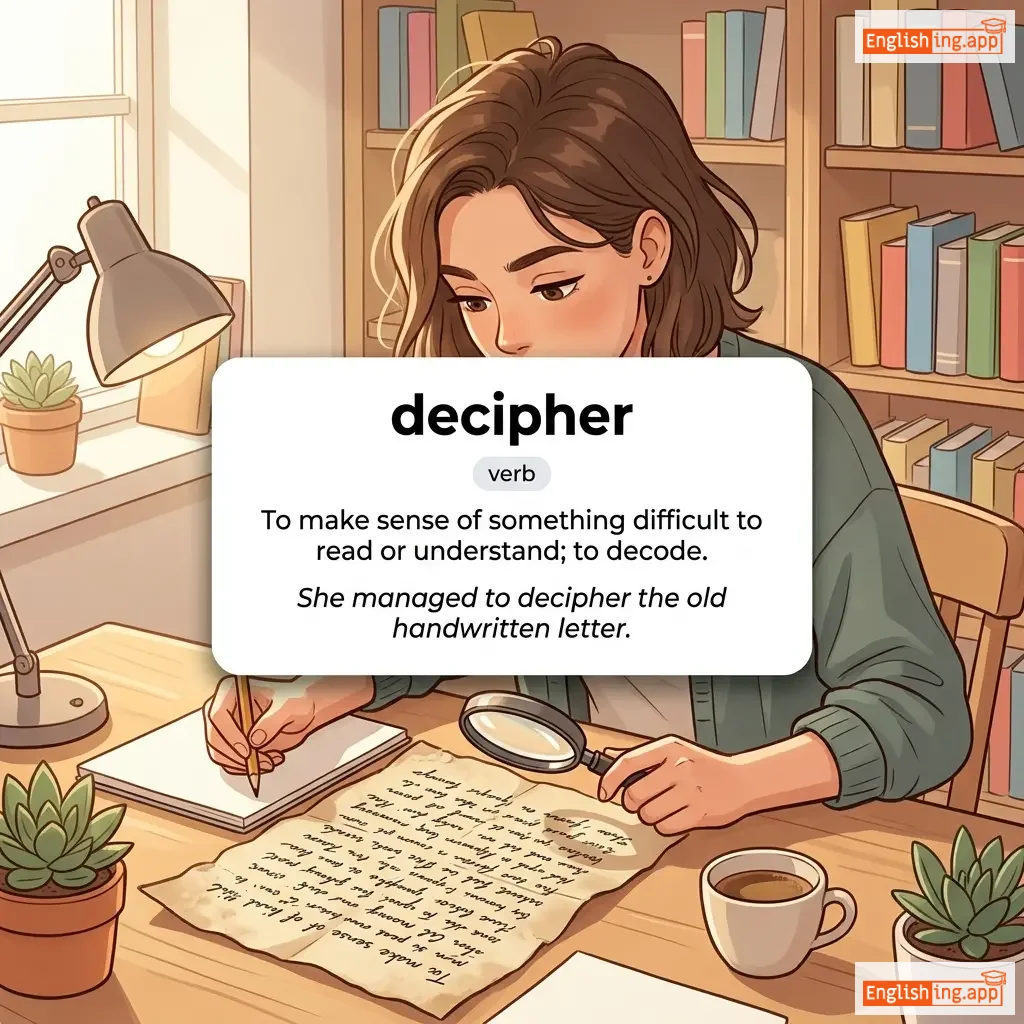
decipher definition card — visual illustration of the meaning
verb
/dɪˈsaɪfər/

To make sense of something difficult to read or understand; to decode.

"She managed to decipher the old handwritten letter."

noun
/dɪˈsɪʒən/
決定 (kettei)

A conclusion or choice made after consideration.

"She made a quick decision to accept the job offer."

"彼女は仕事のオファーを受け入れる迅速な決定を下しました。" (Kanojo wa shigoto no ofā o ukeireru jinsoku na kettei o kudashimashita.)
noun
/dɪˈsɪʒənˌmeɪkɪŋ/
意思決定 (ishikettei)

the process of making decisions, especially important or business-related decisions

"The CEO's decision-making was crucial for the success of the company."

"CEOの意思決定は、会社の成功にとって重要でした。" (CEO no ishikettei wa, kaisha no seikō ni totte jūyō deshita.)
decisions definition card — visual illustration of the meaning
noun
/dɪˈsɪʒənz/
決定 (kettei)

A conclusion or resolution reached after consideration; the action or process of deciding something.

"Making the right decisions in time was key to the project's success."

"時間内に正しい決定を下すことがプロジェクトの成功の鍵でした。" (Jikan-nai ni tadashī kettei o kudasu koto ga purojekuto no seikō no kagi deshita.)
adjective
/dɪˈsaɪsɪv/
決定的 (ketteiteki)

Having the ability to make decisions quickly and effectively; determining the outcome.

"Her decisive action saved the company from collapse."
"彼女の決定的な行動が会社を崩壊から救った。" (Kanojo no ketteiteki na kōdō ga kaisha o hōkai kara sukutta.)
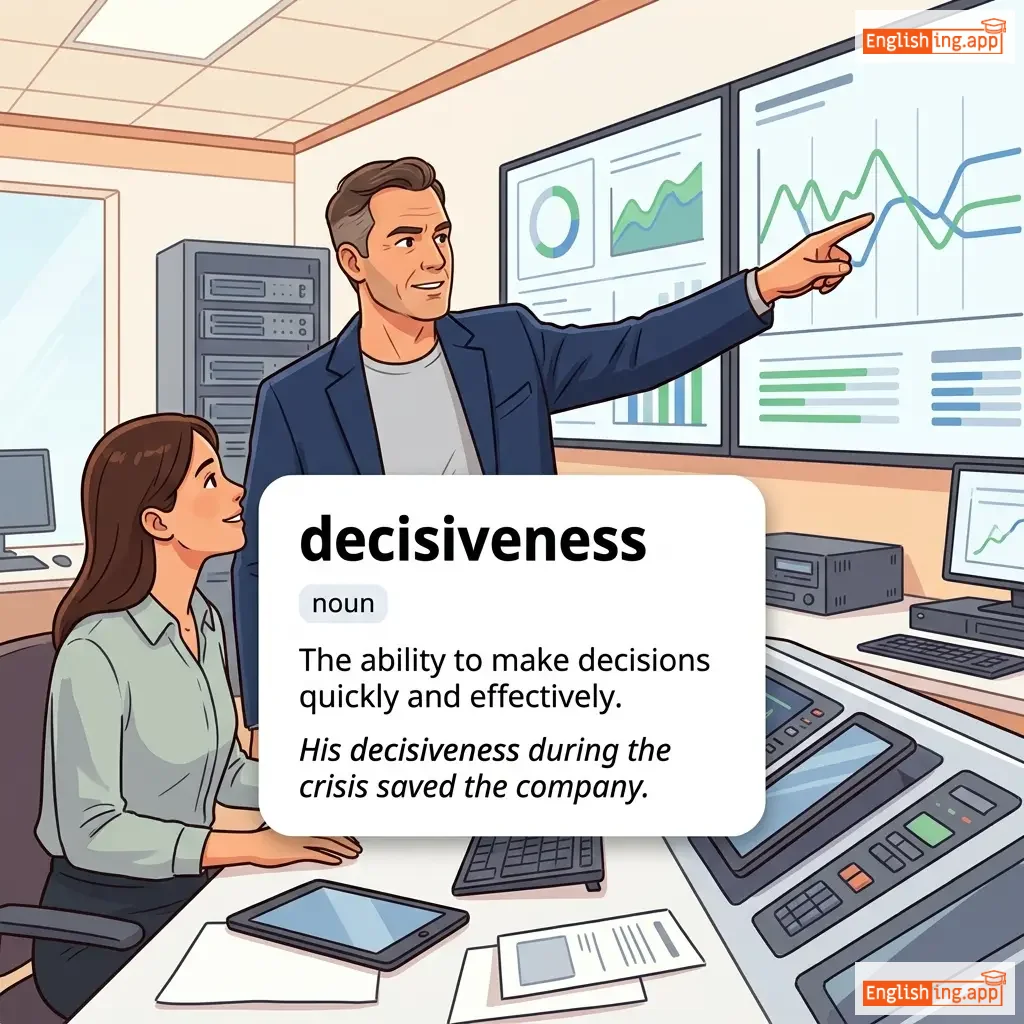
decisiveness definition card — visual illustration of the meaning
noun
dɪˈsʌɪsɪvnɪs
決断力 (ketsudanryoku)

The ability to make decisions quickly and effectively.

"His decisiveness during the crisis saved the company."

"危機の際、彼の決断力が会社を救った。" (Kiki no sai, kare no ketsudanryoku ga kaisha o sukutta.)
noun
/dɛk/
デッキ / プラットフォーム (dekki / purattofōmu)

A flat surface or platform, often on a ship or building.

"We enjoyed the sunset from the upper deck of the ferry."

"私たちはフェリーの上デッキから夕日を楽しみました。" (Watashitachi wa ferī no ue dekki kara yūhi o tanoshimimashita.)
verb
/dɪˈkleɪm/

to speak aloud in a formal, passionate, or theatrical way

"The actor declaimed his lines with great intensity."

noun
/ˌdɛkləˈmeɪʃən/
朗読 (rōdoku)

a formal speech delivered with rhetorical or dramatic effect

"Her declamation captivated the audience at the competition."

"彼女の朗読は競技会で観客を魅了しました。" (Kanojo no rōdoku wa kyōgikai de kankyaku o miryō shimashita.)
adjective
/dɪˈklæməˌtɔri/
力強い演説スタイル (chikaradzuyoi enzetsu sutairu)

speaking in a loud, rhetorical, or dramatic way

"The politician’s declamatory style impressed some but irritated others."

"その政治家の力強い演説スタイルは一部の人々に感銘を与えたが、他の人々には不快感を与えた。" (Sono seijika no chikaradzuyoi enzetsu sutairu wa ichibu no hitobito ni kanmei o ataeta ga, hoka no hitobito ni wa fukaikan o ataeta.)
noun
/ˌdɛkləˈreɪʃən/
宣言 (sengen)

a formal or explicit statement or announcement

"The president made a declaration of independence."

"大統領は独立宣言を行いました。" (Daitōryō wa dokuritsu sengen o okonaimashita.)
adjective
/dɪˈklærətɪv/
宣言的 (sengen-teki)

relating to a statement that declares something; in grammar, a sentence that makes a statement

"A declarative sentence simply states a fact or opinion."

"宣言的な文は、単に事実や意見を述べるものです。" (Sengen-teki na bun wa, tan ni jijitsu yaiken o nobemasu)
verb
/dɪˈklɛər/
宣言する (sengen suru)

To announce something formally or officially.

"The government declared a state of emergency."

"政府は緊急事態を宣言しました。" (Seifu wa kinkyū jitai o sengen shimashita.)
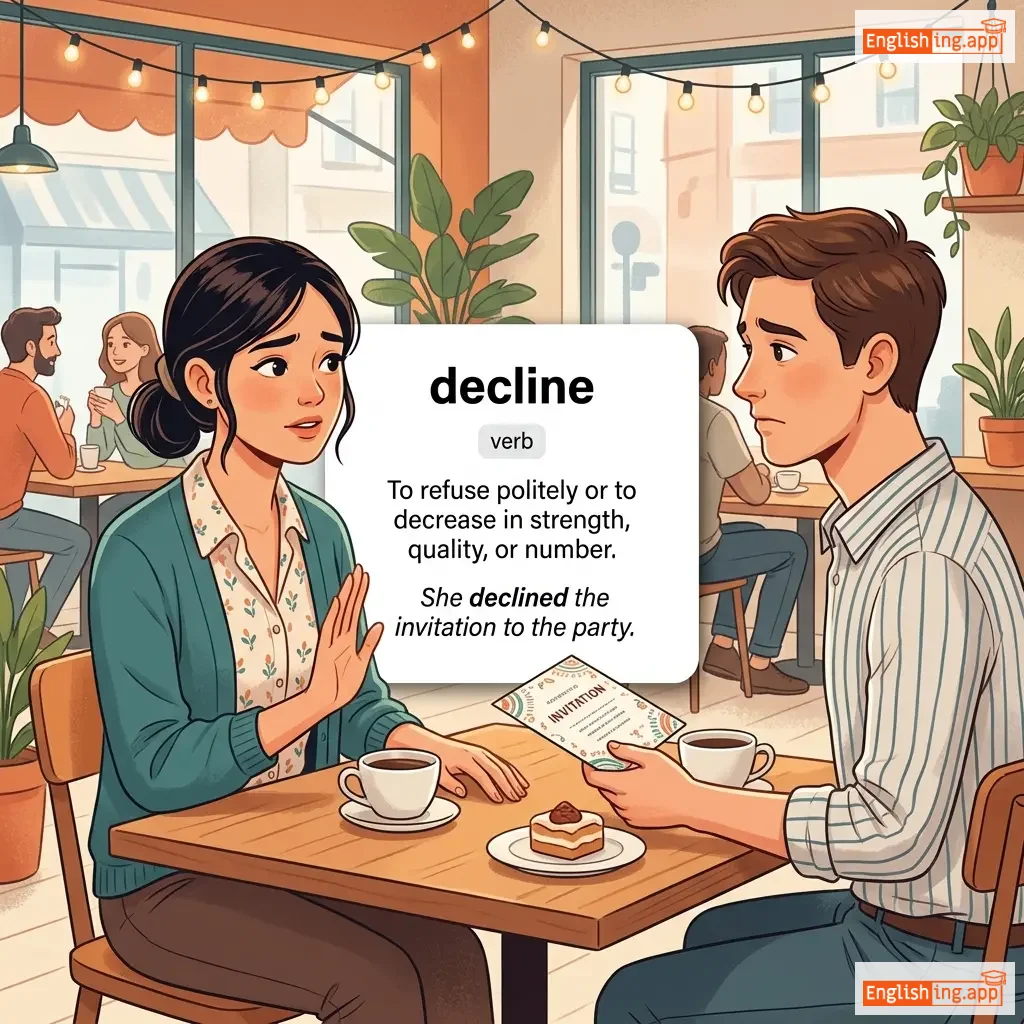
decline definition card — visual illustration of the meaning
verb
/dɪˈklaɪn/

To refuse politely or to decrease in strength, quality, or number.

"She declined the invitation to the party."

noun
/dɪˈklɪvɪti/
傾斜 (keisha)

a downward slope of ground

"They carefully climbed down the declivity of the hill."

"彼らは慎重に丘の傾斜を登った。" (Karera wa shinchou ni oka no keisha o nobotta.)
verb
/diːˈkoʊd/

to convert a coded message into a readable form; to interpret meaning

"The software can decode the hidden message within seconds."

adjective
/ˌdeɪ.kɒlˈteɪ/
深い胸元の衣装 (fukai munamoto no ishō)

of a woman's dress or top, cut low so as to reveal the neck and upper chest

"She wore a decollete gown to the party."

"彼女はパーティーで深い胸元のドレスを着ていました。" (Kanojo wa pātii de fukai munamoto no doresu o kite imashita.)
noun
/ˌdiː.kɒmpəˈzɪʃən/
分解 (bunkai)

the process of decaying or breaking down into simpler parts

"The decomposition of leaves enriches the soil."
"葉の分解は土壌を豊かにします。" (Ha no bunkai wa dojo o yutakani shimasu.)
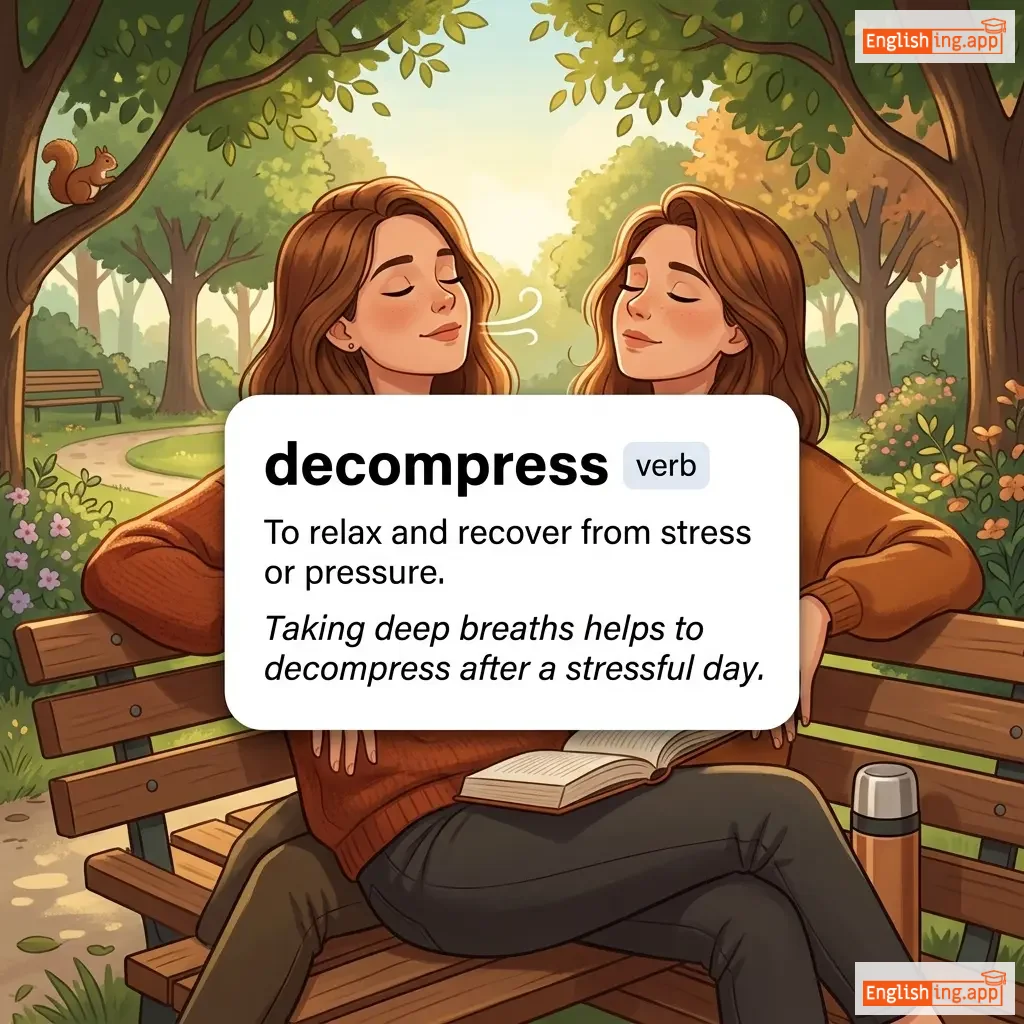
decompress definition card — visual illustration of the meaning
verb
/ˌdiː.kəmˈprɛs/
リラックスする (rirakkusu suru)

To relax and recover from stress or pressure.

"Taking deep breaths helps to decompress after a stressful day."

"深呼吸は、ストレスの多い一日後にリラックスするのに役立ちます。" (Shinkokyū wa, sutoresu no ōi ichinichi go ni rirakkusu suru no ni yakudachimasu.)
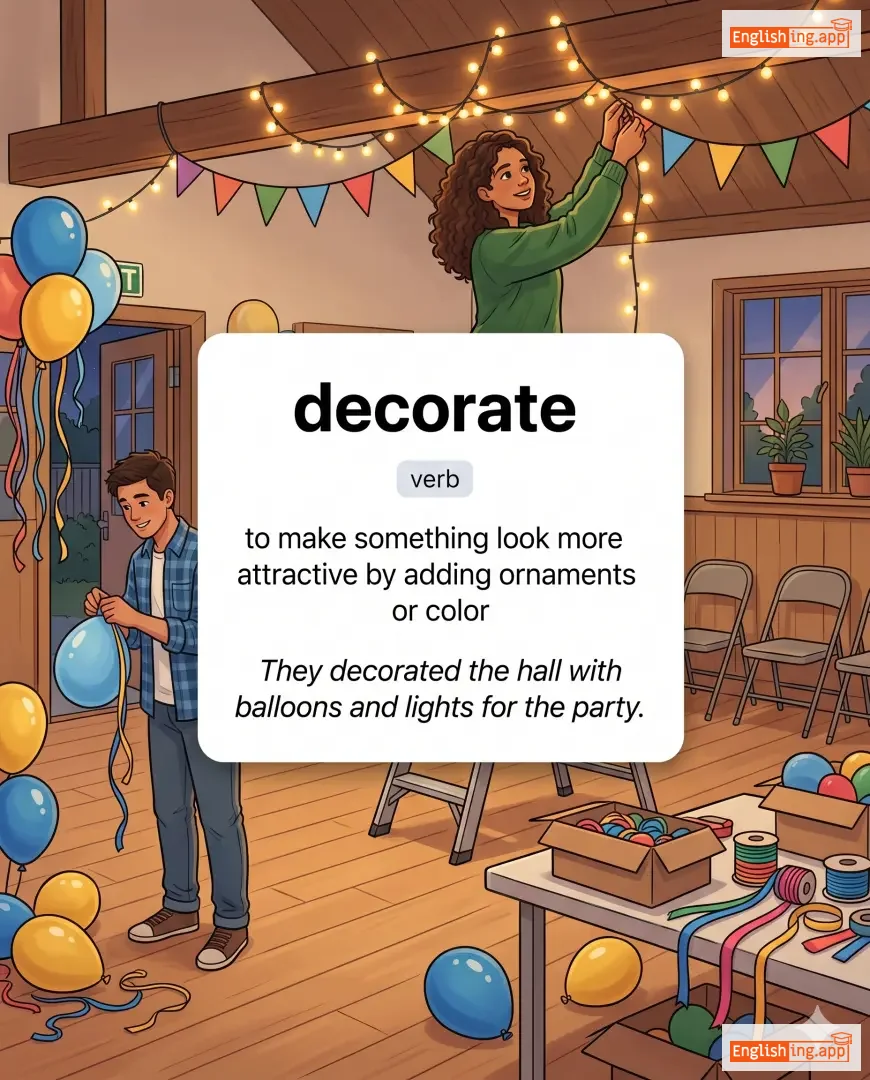
decorate definition card — visual illustration of the meaning
verb
/ˈdɛkəreɪt/

to make something look more attractive by adding ornaments or color

"They decorated the hall with balloons and lights for the party."

noun
/ˌdek.əˈreɪ.ʃən/
装飾; 飾り; 賞; (sōshoku, kazari, shō)

the process or art of decorating something; ornamental items used to beautify

"The Christmas decoration transformed the ordinary room into a festive wonderland."

"クリスマスのデコレーションは、普通の部屋をお祝いのワンダーランドに変えました。" (Kurisumasu no dekoreeshon wa, futsū no heya o oiwai no wandārando ni kaemashita.)
adjective
/ˈdekərəs/
品位のある (hin'i no aru)

showing proper and polite behavior; marked by good taste

"The audience gave a decorous applause after the performance."

"観客は公演後に品位のある拍手を送りました。" (Kankyaku wa kōen-go ni hin'i no aru hakushu o okurimashita.)
Decorum definition card — visual illustration of the meaning
noun
/dɪˈkɔːrəm/
礼儀 (reigi)

behavior in keeping with good taste and propriety

"The students maintained decorum during the ceremony."

"学生たちは式典中に礼儀を守った。" (Gakusei-tachi wa shikiten-chū ni reigi o mamotta.)
adjective
/dɪˈkɔːrəs/
得体な (tettaina)

characterized by propriety, good taste, and proper manners

"She maintained a decourous silence during the ceremony."

"彼女は式典中に得体な沈黙を守った。" (Kanojo wa shikiten-chū ni tettaina chinmoku o mamotta.)
noun/verb
/ˈdiːkɔɪ/
おとり (otori)

something or someone used to lure or mislead

"The hunters used a wooden duck as a decoy."

"狩人たちは木製のカモをデコイとして使った。" (Karyūdō-tachi wa mokusei no kamo o dekoi toshite tsukatta.)
⬇️

decrease

verb/noun
/ˈdiːkriːs/ (noun), /dɪˈkriːs/ (verb)

To become or make something smaller or fewer in number, amount, or degree.

"The population of the town has decreased over the years."

noun/verb
/dɪˈkriː/
命令 (meirei)

an official order or command, often by authority

"The king issued a decree banning hunting in the forest."

"王は森での狩猟を禁止する命令を出した。" (Ō wa mori de no shuryō o kinshi suru meirei o dashita.)
adjective
/dɪˈkrɛpɪt/
老朽 (roukyuu)

worn out or weakened by age or neglect

"The decrepit old house was on the verge of collapse."

"その老朽化した家は崩壊寸前でした。" (Sono roukyuuka shita ie wa houkai sunzen deshita.)
noun
/dɪˈkrɛpɪˌtjuːd/
衰退 (suitai)

the state of being old, weak, and worn out

"The once-great empire fell into decrepitude."

"かつて偉大だった帝国は衰退しました。" (Katsute idai datta teikoku wa suitai shimashita.)
verb
/dɪˈkraɪ/
非難する (hinansuru)

to publicly criticize or express strong disapproval of something

"Many activists decry the destruction of the rainforest."

"多くの活動家が熱帯雨林の破壊を非難しています。" (Ōku no katsudōka ga nettai urin no hakai o hinan shiteimasu.)
decryption definition card — visual illustration of the meaning
noun
/dɪˈkrɪp.ʃən/
復号 (fukugou)

The process of converting encrypted information back to its original form

"Decryption of sensitive files requires a secure key."

"機密ファイルの復号には安全なキーが必要です。" (Kimitsu fairu no fukugou ni wa anzen na kii ga hitsuyou desu.)
verb
/ˈdɛdɪkeɪt/
捧げる (sasageru)

to devote time, effort, or oneself to a particular purpose or person

"She dedicated her life to helping the poor."

"彼女は貧しい人々を助けるために自分の人生を捧げました。" (Kanojo wa mazushii hitobito o tasukeru tame ni jibun no jinsei o sasagemashita.)
adjective
/ˈdɛdɪˌkeɪtɪd/
献身的な (kenshinteki na)

devoted to a cause, task, or purpose

"She is a dedicated teacher who goes above and beyond for her students."

"彼女は生徒のために上を行き、限界を超えていく献身的な教師です。" (Kanojo wa seito no tame ni ue o iki, genkai o koete iku kenshinteki na kyoushi desu.)