語彙集

英単語辞書 | 単語の意味、定義、例文

🍛

Curry

noun/verb
/ˈkʌri/

A dish of meat, vegetables, etc., cooked in a sauce with spices; or to prepare food in such a style.

"She cooked a delicious chicken curry for dinner."

noun
/ˈkɜːr.i liːvz/
カレーの葉 (karē no ha)

aromatic leaves from the curry tree used in South Asian cooking

"Fresh curry leaves add authentic flavor to Indian dishes."

"新鮮なカレーの葉はインディアン料理に本格的な風味を加えます。" (Shinsen na karē no ha wa indian ryōri ni honkaku-teki na fūmi o kuwaemasu.)
noun, verb
/kɜːrs/
呪い (noroi)

a solemn wish that harm or misfortune should befall someone; a rude or offensive word or phrase; to utter offensive words or wish harm upon someone

"He cursed loudly when he realized he had lost his wallet."

"彼は財布をなくしたと気づいて大声で悪態をついた。" (Kare wa saifu o nakushita to kizuite oogoe de akuta o tsuita)
adjective/noun
/ˈkɜːrsɪv/
カースィブ書き (kaasibugaki)

Written with characters joined together in a flowing manner.

"The teacher asked students to write the essay in cursive handwriting."

"先生は生徒にカースィブ書きでエッセイを書くように言いました。" (Sensei wa seito ni kaasibugaki de essei o kaku you ni iimashita.)
adjective
/ˈkɜːrsəri/
ざっとした (zattoshita)

Hasty and therefore not thorough or detailed.

"He gave the report only a cursory glance before the meeting."

"彼は会議の前に報告書をざっと見た。" (Kare wa kaigi no mae ni houkokusho o zattomita.)
adjective
/kɜːrt/
ぶっきらぼう (bukkirabou)

Rudely brief in speech or manner.

"His curt reply made everyone uncomfortable."

"彼のぶっきらぼうな返答は、皆を不快にさせた。" (Kare no bukkirabou na hentou wa, mina o fukai ni saseta.)
verb
/kɜːrˈteɪl/
制限する (seigen suru)

to reduce or limit something, especially something considered undesirable

"The company had to curtail its spending due to budget cuts."
"予算削減のため、会社は支出を削減しなければなりませんでした。" (Yosan sakugen no tame, kaisha wa shishutsu o sakugen shinakereba narimasen deshita.)
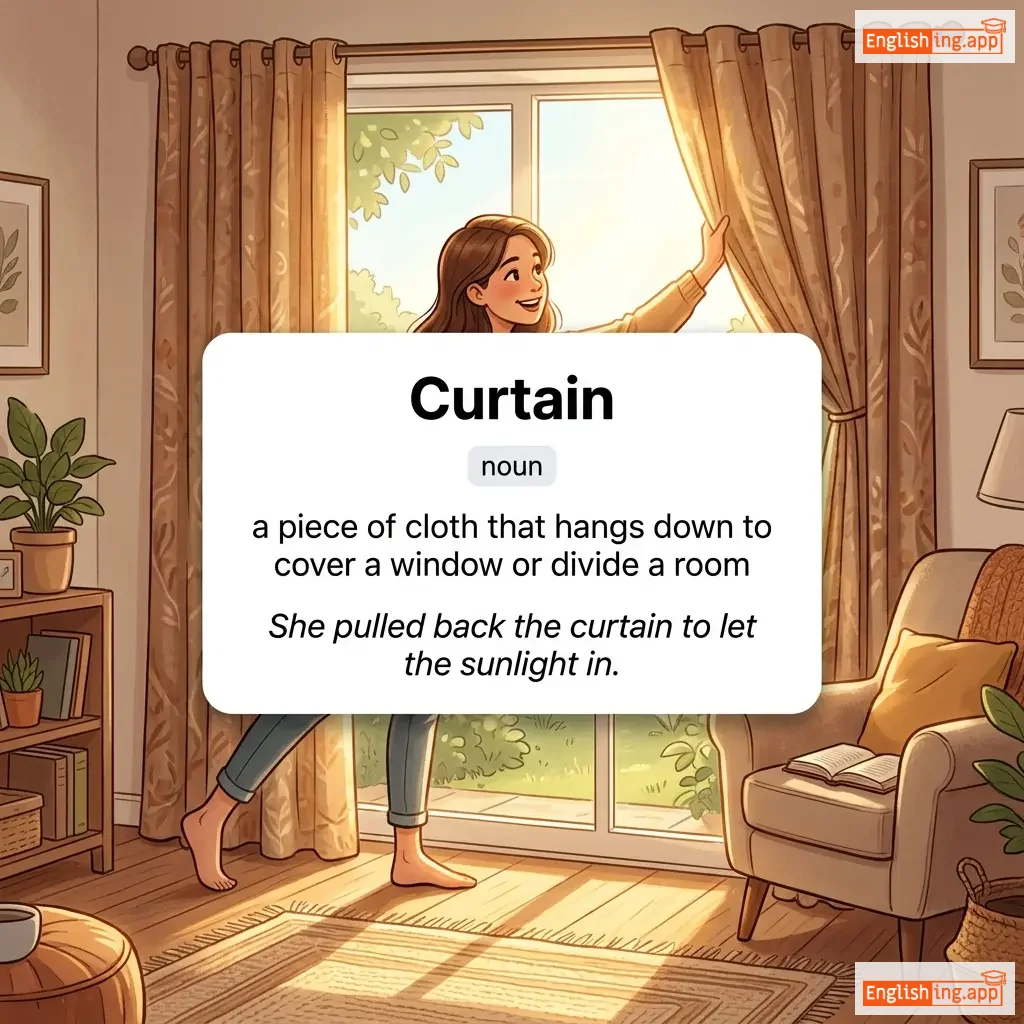
Curtain definition card — visual illustration of the meaning
noun
/ˈkɜː.tən/
カーテン (kaaten)

a piece of cloth that hangs down to cover a window or divide a room

"She pulled back the curtain to let the sunlight in."

"彼女は太陽の光を入れるためにカーテンを引いた。" (Kanojo wa taiyō no hikari o ireru tame ni kaaten o hiita.)
noun/verb
/ˈkɜːrtsi/
お辞儀 (ojigi)

a respectful bow made by women by bending the knees with one foot in front of the other

"She gave a quick curtsy before leaving the stage."

"彼女はステージを去る前に素早いカートシーをしました。" (Kanojo wa suteeji o saru mae ni subayai kaatoshii o shimashita.)
noun
/kɜːv/
曲線 (kyokusen)

a smooth, continuous line that bends without angles

"The road curved sharply to the left."

"道路は急激に左に曲がった。" (Dōro wa kyūgeki ni hidari ni magatta.)
adjective
/ˈkʌsɪd/
頑固 (ganko)

Annoyingly stubborn or difficult.

"He was too cussed to admit his mistake."

"彼は自分の間違いを認めるには頑固すぎた。" (Kare wa jibun no machigai o mitomeru ni wa ganko sugita.)
noun
/ˈkʌstərd ˈæpəl/
クリームアップル (kurīmu appuru)

a tropical fruit with sweet creamy white flesh and black seeds

"The custard apple has a sweet and creamy texture."

"クリームアップルは甘くてクリーミーな食感です。" (Kurīmu appuru wa amaku te kurīmī na shokkan desu.)
noun
/kʌˈstoʊ.di.ən/
守衛; 管理人; 監督者 (shuei; kanri-nin; kantokusha)

a person who has responsibility for or looks after something; a caretaker or guardian

"The school custodian ensures that all buildings are clean and secure."

"学校の管理人はすべての建物が清潔で安全であることを確認します。" (Gakkou no kanri-nin wa subete no tatemono ga seiketsu de anzen de aru koto o kakunin shimasu.)
noun
/ˈkʌs.tə.di/
監護 (kango)

the legal right or responsibility of taking care of someone or something

"The mother was granted custody of her children after the divorce."

"離婚後、母親は子供の監護権を得ました。" (Rikon-go, hahaoya wa kodomo no kango-ken o emashita.)
Custom definition card — visual illustration of the meaning
noun
/ˈkʌstəm/
習慣 (shūkan)

a traditional practice or usual way of behaving in a particular society or place

"Shaking hands is a common custom in many countries."
"握手は多くの国で一般的な習慣です。" (Akushu wa ōku no kuni de ippanteki na shūkan desu.)
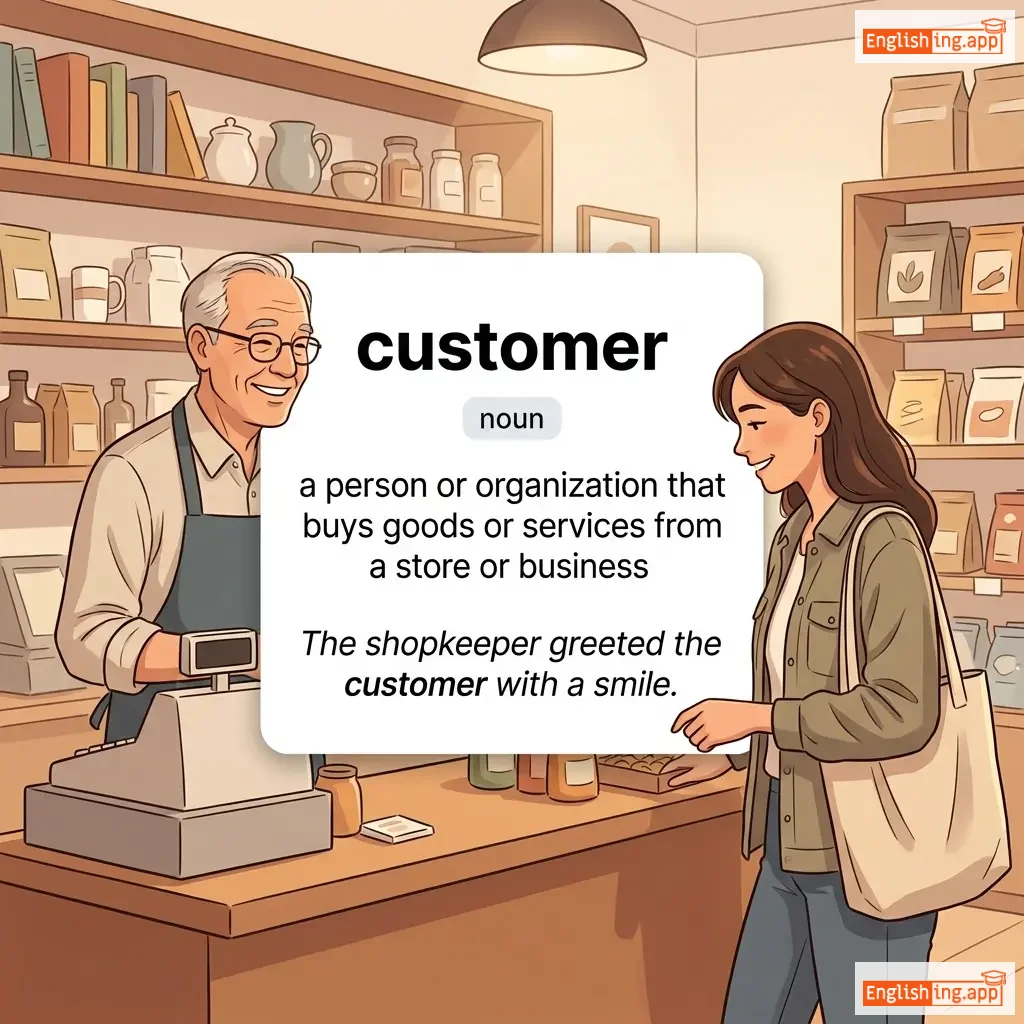
customer definition card — visual illustration of the meaning
noun
/ˈkʌstəmər/
顧客 (kokyaku)

a person or organization that buys goods or services from a store or business

"The shopkeeper greeted the customer with a smile."

"店主は笑顔で顧客を迎えました。" (Ten-shu wa egao de kokyaku wo mukaemashita.)
Customer Retention definition card — visual illustration of the meaning
noun
/ˈkʌs.tə.mər rɪˈten.ʃən/
顧客維持 (kokyaku iji)

The ability of a company or product to retain its customers over some specified period.

"High customer retention increases business sustainability."

"高い顧客維持率は、ビジネスの持続可能性を高めます。" (Takai kokyaku iji-ritsu wa, bijinesu no jizoku kanōsei o takamemasu.)
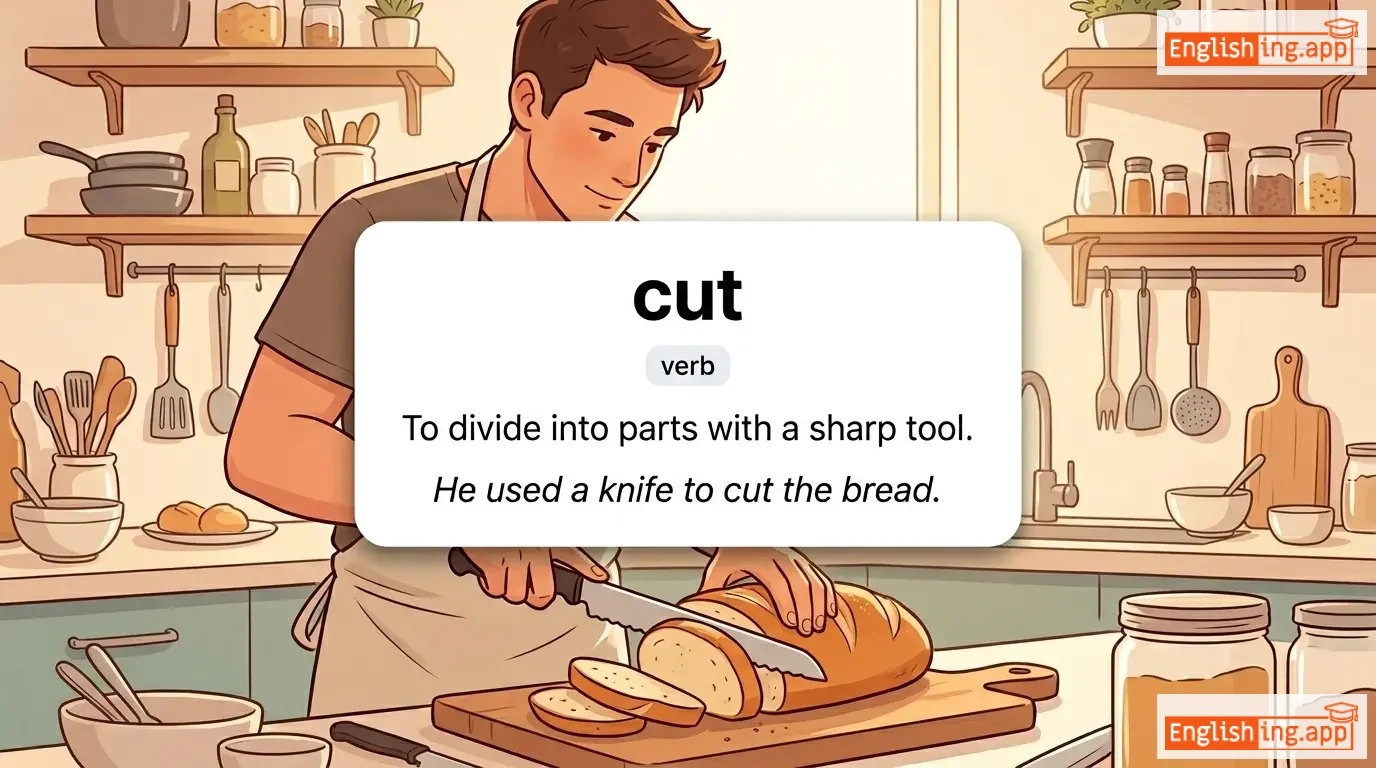
cut definition card — visual illustration of the meaning
verb
/kʌt/
切る (kiru)

To divide into parts with a sharp tool.

"He used a knife to cut the bread."

"彼はナイフを使ってパンを切った。" (Kare wa naifu o tsukatte pan o kitta.)
adjective
/kjuːt/
かわいい (kawaii)

attractive in a pretty or endearing way

"That puppy is so cute!"

"その子犬はとてもかわいいです!" (Sono koinu wa totemo kawaii desu!)
noun
/ˈkʌt.lət/
カツレツ (katsuretsu)

a small piece of meat, especially veal or lamb, for frying or grilling

"She served delicious chicken cutlets for dinner."

"彼女は夕食に美味しいチキンカツレツを出しました。" (Kanojo wa yūshoku ni oishī chikin katsuretsu o dashimashita.)
adjective
/ˈkʌtɪŋ/
鋭い (surudoi)

sharp or severe, often used to describe remarks or actions

"Her cutting remarks made everyone feel uncomfortable."

"彼女の鋭いコメントはみんなを不快にさせた。" (Kanojo no surudoi komento wa minna o fukai ni saseta.)
cutting-edge definition card — visual illustration of the meaning
adjective
ˈkʌtɪŋ ˌɛdʒ
最先端, 革新的, 最先端技術 (saizentan, kakushinteki, saizentan gijutsu)

The most advanced or innovative; at the forefront of development.

"This company develops cutting-edge technology."

"この会社は最先端技術を開発しています。" (Kono kaisha wa saizentan gijutsu o kaihatsu shiteimasu.)
cybernetics definition card — visual illustration of the meaning
noun
ˌsaɪ.bəˈnet.ɪks
サイバネティクス (saibanetikusu)

The science of communications and automatic control systems in both machines and living things.

"Cybernetics plays a crucial role in artificial intelligence."

"サイバネティクスは人工知能において重要な役割を果たしています。" (Saibanetikusu wa jinkou chinou ni oite juuyou na yakuwari wo hatashiteimasu.)
cybersecurity definition card — visual illustration of the meaning
noun
ˌsaɪ.bə.sɪˈkjʊə.rɪ.ti
サイバーセキュリティ (saibaa sekyuriti)

The practice of protecting systems, networks, and programs from digital attacks

"Cybersecurity ensures safe digital operations."

"サイバーセキュリティはデジタル運用の安全を確保します。" (saibaa sekyuriti wa dejitaru unyou no anzen o kakuho shimasu)
noun/verb
/ˈsaɪkl/
サイクル / 自転車 (saikuru / jitensha)

a series of events that repeat in the same order; or to ride a bicycle

"She cycles to school every day."

"彼女は毎日自転車で学校に行きます。" (Kanojo wa mainichi jitensha de gakkou ni ikimasu.)
noun/adjective
/ˈsaɪklɔɪd/
サイクロイド曲線 (saikuroido kyokusen)

a curve traced by a point on the rim of a circle as it rolls along a straight line

"The cycloid is often studied in mathematics and physics."

"サイクロイド曲線は数学と物理学でよく研究されます。" (Saikuroido kyokusen wa suugaku to butsurigaku de yoku kenkyuu saremasu.)
noun
/ˈsaɪkloʊn/
サイクロン (saikuron)

a large-scale air mass that rotates around a strong center of low atmospheric pressure; a violent tropical storm

"The cyclone caused severe flooding along the coast."

"サイクロンは沿岸地域に深刻な洪水を引き起こした。" (saikuron wa engan chiiki ni shinkoku na kozui o hikiokoshita)
noun
/ˈsɪɡnət/
子供の白鳥 (kodomo no hakuchou)

a young swan

"The cygnet swam closely behind its mother."

"シグネットは母親の後ろを泳いでいた。" (Shignetto wa hahaoya no ushiro wo oyoideita.)
noun
/ˈsɪnɪk/
皮肉屋 (hinokoya)

a person who believes that people are motivated purely by self-interest rather than acting for honorable reasons

"He was too much of a cynic to believe in true love."

"彼は真実の愛を信じるにはあまりにも皮肉屋すぎた。" (Kare wa shinjitsu no ai o shinjiru ni wa amari ni mo hinokoya sugita.)
adjective
/ˈsɪn.ɪ.kəl/
皮肉な (hinikuna)

Believing that people are motivated by self-interest; distrustful of human sincerity or integrity.

"She was cynical about the politician's promises."

"彼女は政治家の約束に皮肉な態度を取っていた。" (Kanojo wa seijika no yakusoku ni hinikuna taido o totteta.)
noun
/ˈsɪn.ɪˌsɪz.əm/
シニシズム (shinshizumu)

An inclination to believe that people are motivated purely by self-interest; skepticism.

"His cynicism made it hard for him to trust anyone."

"彼のシニシズムは、誰かを信頼するのを難しくしていた。" (Kare no shinshizumu wa, dareka o shinrai suru no o muzukashiku shite ita.)
noun
/ˈsaɪ.nəˌʃʊr/
皆の注目の的 (mina no chūmoku no mato)

A person or thing that is the center of attention or admiration.

"She was the cynosure of all eyes at the party."

"彼女はパーティーで皆の注目の的でした。" (Kanojo wa pātī de mina no chūmoku no mato deshita.)
verb
/ˈdæb.əl/
軽く取り組む (karuku torikumu)

To take part in an activity in a casual or superficial way.

"He dabbled in painting during his college days."

"彼は大学時代に絵を描くことを楽しんでいた。" (Kare wa daigaku jidai ni e o kaku koto o tanoshinde ita.)
noun
/dəˈkɔɪt/
盗賊 (tōzoku)

a member of an armed gang of robbers; a bandit, especially in India and Myanmar

"The village was terrorized by a gang of dacoits who robbed travelers."

"その村は、旅行者を強盗した強盗団によって恐怖に陥れられました。" (Sono mura wa, ryokōsha o gōtō shita gōtōdan ni yotte kyōfu ni ochirerarimashita.)
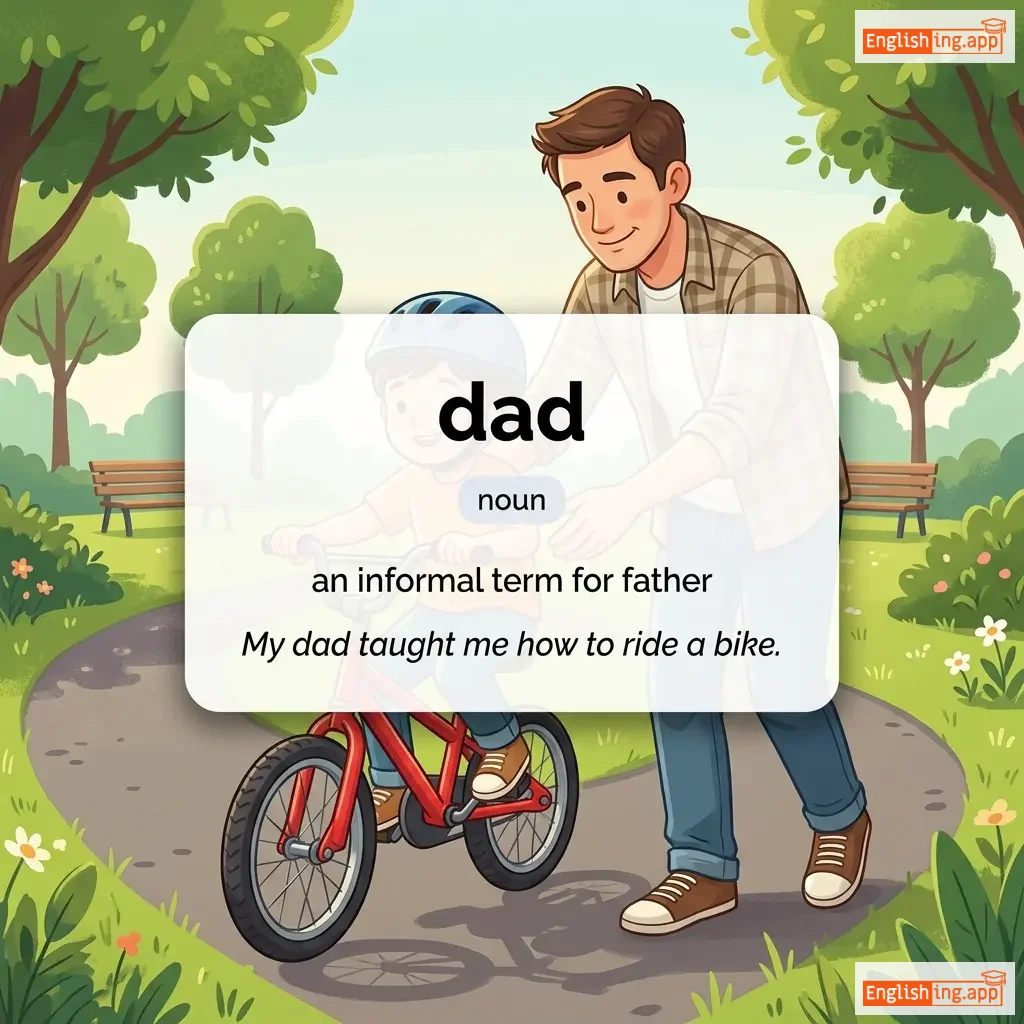
dad definition card — visual illustration of the meaning
noun
/dæd/
お父さん (otōsan)

an informal term for father

"My dad taught me how to ride a bike."

"私のお父さんは自転車の乗り方を教えてくれました。" (Watashi no otōsan wa jitensha no norikata o oshiete kuremashita.)
noun
/ˈdæf.ə.dɪl/
スイセン (suisen)

A bright yellow spring flower with a trumpet-shaped center, symbolizing rebirth and new beginnings

"The daffodils bloomed early this spring in the meadow."

"この春、スイセンは草原で早く咲きました。" (Kono haru, suisen wa sōgen de hayaku sakimashita.)
adjective
/dæft/
ばか (baka)

Silly or foolish.

"It was a daft idea to go hiking without water."

"水なしでハイキングに行くのはばかげた考えでした。" (Mizu nashi de haikingu ni iku no wa bakageta kangae deshita.)
noun
/ˈdæɡər/
短剣 (tanken)

a short knife with a pointed and edged blade, used as a weapon

"The assassin concealed a dagger beneath his cloak."

"暗殺者はマントの下に短剣を隠していた。" (ansatsusha wa mantō no shita ni tanken wo kakushite ita)
noun
/dəˈɡerəˌtaɪp/
古い写真 (furui shashin)

An early type of photograph produced on a silver or silver-covered copper plate.

"The museum displayed a rare daguerreotype of Abraham Lincoln."

"博物館にはアブラハム・リンカーンの珍しいダゲレオタイプが展示されていました。" (Hakubutsukan ni wa Aburahamu Rinkān no mezurashī dagereotai-pu ga tenji sarete imashita.)
noun
/ˈdeɪ.li.ə/
ダリア (daria)

a garden plant with brightly colored flowers that bloom in summer and autumn

"She planted colorful dahlias in her garden last summer."
"彼女は昨年の夏に庭にカラフルなダリアを植えました。" (Kanojo wa sakunen no natsu ni niwa ni karafuru na dahlia o uemashita.)
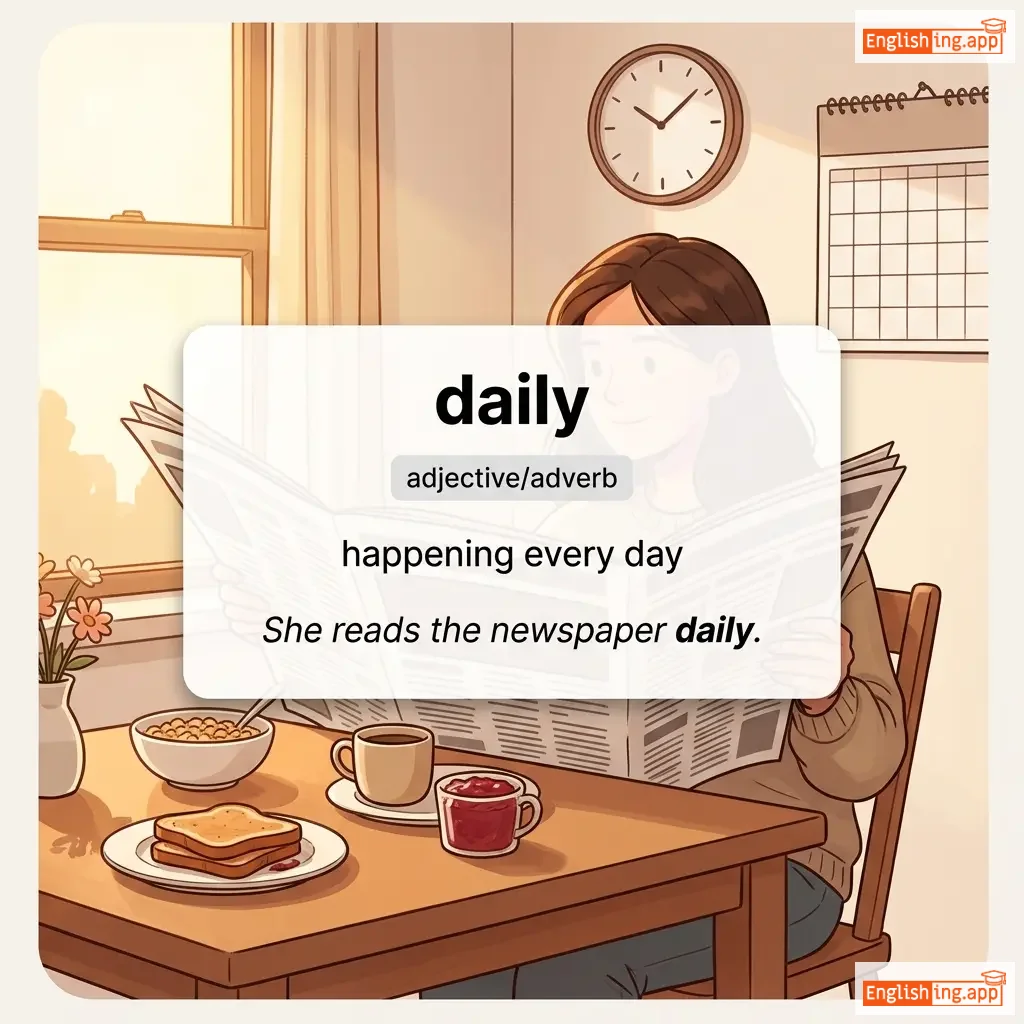
daily definition card — visual illustration of the meaning
adjective/adverb
/ˈdeɪli/
毎日の (mainichi no)

happening every day

"She reads the newspaper daily."

"彼女は毎日新聞を読んでいます。" (Kanojo wa mainichi shinbun o yondeimasu.)
adjective
/ˈdeɪnti/
優雅で可愛らしい (yūga de kawairashii)

Delicately small, pretty, and often considered elegant.

"She wore a dainty necklace made of pearls."

"彼女は真珠でできた繊細なネックレスをしていました。" (Kanojo wa shinju de dekita sensai na nekkuresu o shiteimashita.)
noun
/ˈdɛəri/
乳製品工場 (nyūseihin kōjō)

a place where milk and milk products are produced or sold

"They visited the local dairy for fresh milk."

"彼らは新鮮な牛乳を求めて地元の乳製品工場を訪れました。" (Karera wa shinsen na gyūnyū o motomete jimoto no nyūseihin kōjō o otozuremashita.)
noun
/ˈdeɪ.ɪs/ or /ˈdeɪ.əs/
舞台 (butai)

A raised platform in a hall or room, usually where speakers or honored guests sit.

"The speaker stood on the dais to address the audience."

"スピーカーは観客に話すために舞台に立ちました。" (Su-pee-kaa wa kankyaku ni hanasu tame ni butai ni tachimashita.)
noun
/ˈdæliəns/
束の間のロマンチックな関係 (tsukino-ma no romanchikku na kankei)

A casual romantic or sexual relationship; also frivolous or playful behavior.

"Their dalliance during the summer was brief but intense."

"夏の間の彼らの関係は短かったが、強烈だった。" (Natsu no aida no karera no kankei wa mijikakatta ga, kyōretsu datta.)
verb
/ˈdæli/
無駄にする (mudan suru)

To act or move slowly; to waste time; also to engage in a casual romantic relationship.

"He dallied in the garden instead of starting his work."
"彼は仕事を始める代わりに庭で時間を無駄にしていました。" (Kare wa shigoto o hajimeru kawari ni niwa de jikan o mudani shite imashita.)
noun
/dæm/
ダム (damu)

a barrier built to hold back water and raise its level

"The dam provides electricity to nearby towns."

"ダムは近隣の町に電力を供給しています。" (Damu wa kinrin no machi ni denryoku o kyōkyū shiteimasu.)
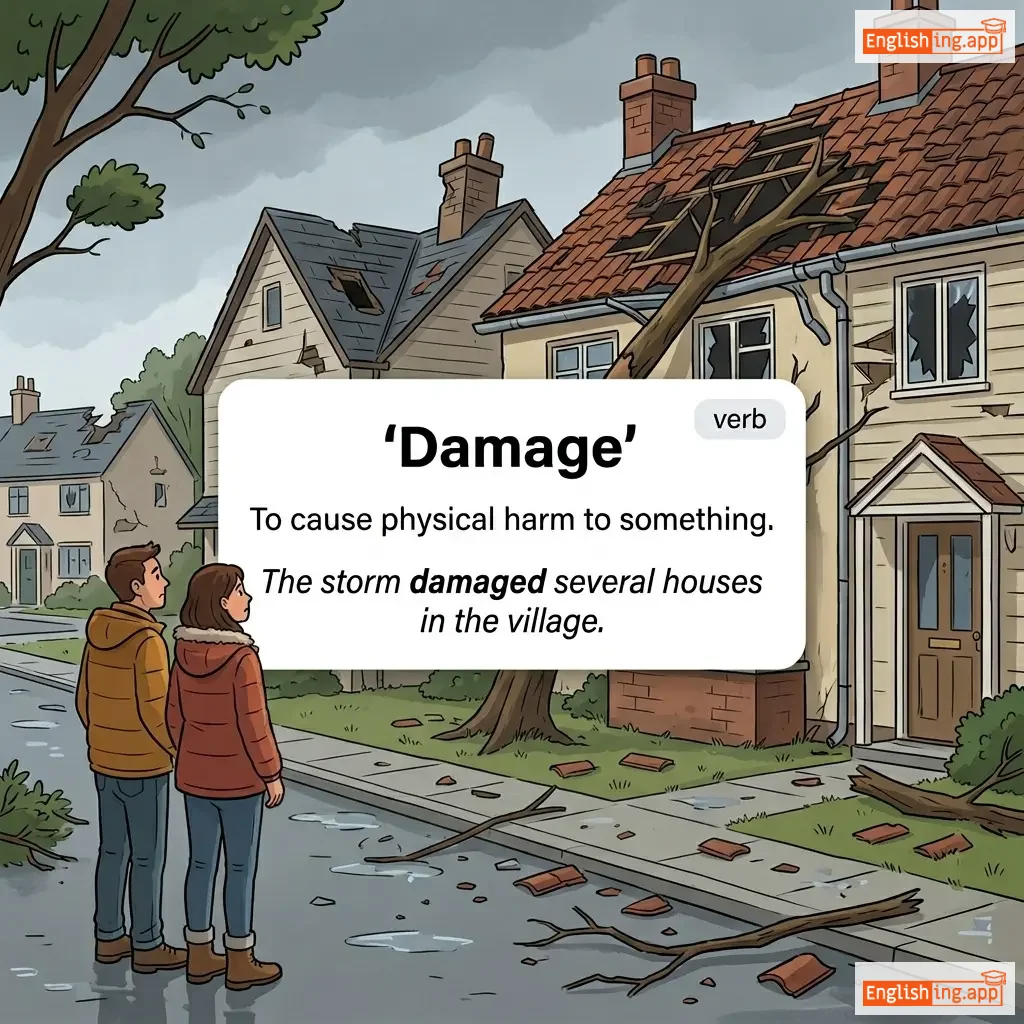
Damage definition card — visual illustration of the meaning
verb
/ˈdæmɪdʒ/
損害 (sonnai)

To cause physical harm to something.

"The storm damaged several houses in the village."

"嵐が村のいくつかの家を壊しました。" (Arashi ga mura no ikutsu ka no ie wo kowashimashita.)
adjective
/ˈdæmɪdʒɪŋ/

causing harm or injury

"The storm caused damaging effects to the crops."

😡

damn

verb
/dæm/

to condemn or criticize strongly; used as an expletive to express anger or emphasis

"He damned the unfair system in his speech."