Словари

Словарь английского языка | Значения слов, определения и примеры

noun
/ˈkɔːrɪdɔːr/
длинный проход, ведущий в различные комнаты (koridor)

a long passage in a building from which doors lead into rooms

"The students waited quietly in the corridor."

"Студенты тихо ждали в коридоре." (Studenty tikho zhdali v koridore.)
adjective
/ˈkɒrɪdʒəbl/
исправимый (ispraviymyy)

capable of being corrected or improved

"The student's mistakes were corrigible with practice."
"Ошибки студента были исправимы с практикой." (Oshibki studenta byli ispravimy s praktikoy.)
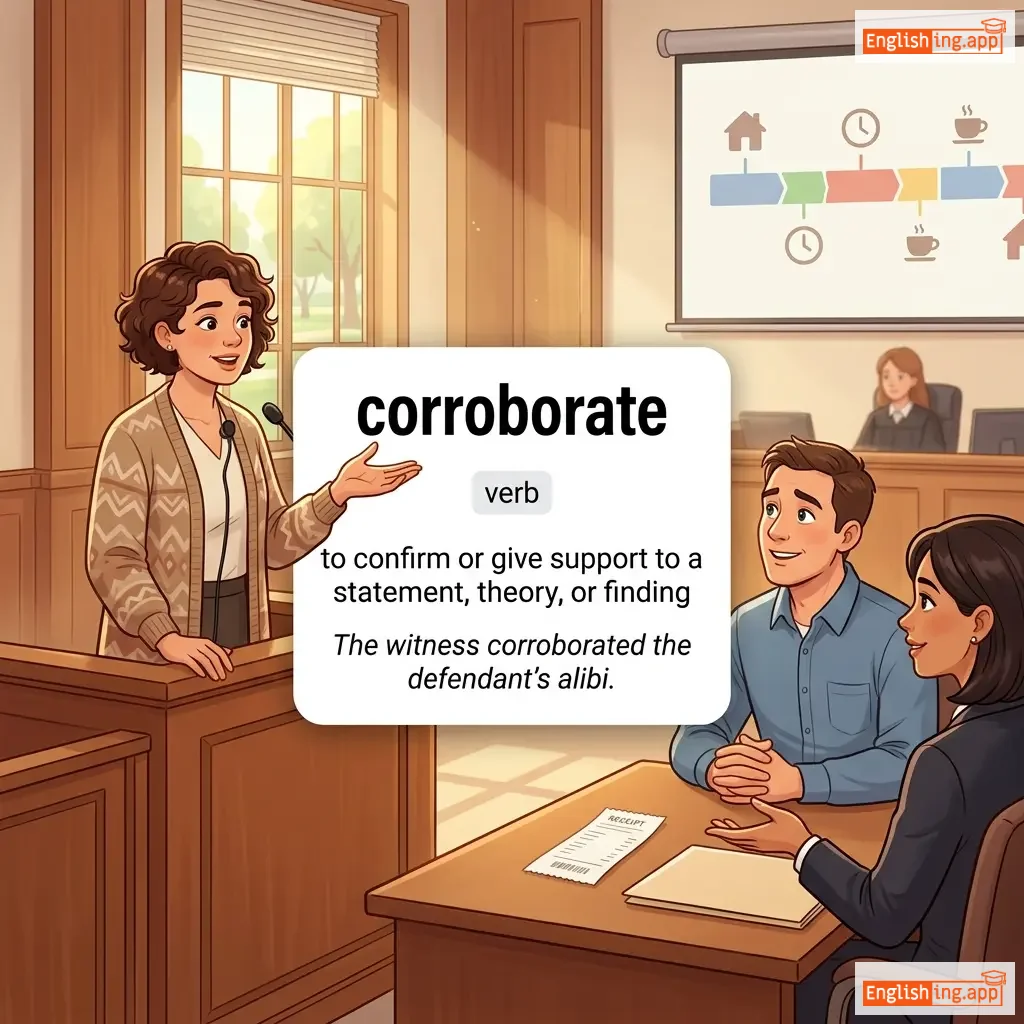
corroborate definition card — visual illustration of the meaning
verb
/kəˈrɒbəreɪt/
подтверждать (podtverzhdat')

to confirm or give support to a statement, theory, or finding

"The witness corroborated the defendant's alibi."

"Свидетель подтвердил алиби обвиняемого." (Svidetel' podtverzhdi alibi obvinyaemogo.)
noun
/kəˌrɒbəˈreɪʃən/
подтверждение (podtverzhdenie)

evidence that confirms or supports a statement, theory, or finding

"The documents provided strong corroboration of her claims."

"Документы предоставили убедительное подтверждение её утверждений." (Dokumenty predostavili ubeditel'noe podtverzhdenie ee utverzhdeniy.)
verb
/kəˈrəʊd/
корродировать (korrodirovat')

to gradually destroy or wear away metal or other materials through chemical action

"The iron pipes corroded over time due to exposure to water."
"Железные трубы корродировали со временем из-за воздействия воды." (Zheleznye truby korrodirovali so vremyaniem iz-za vozdeystviya vody.)
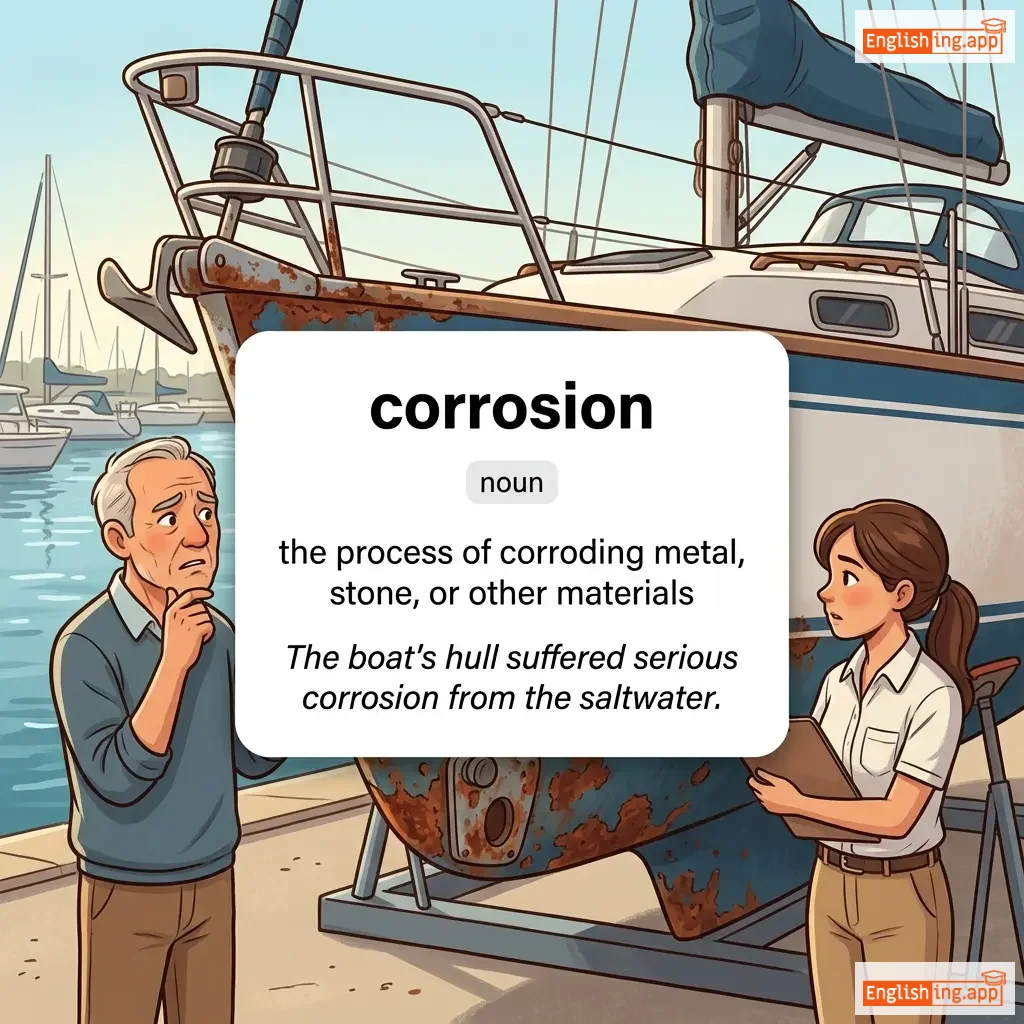
corrosion definition card — visual illustration of the meaning
noun
/kəˈrəʊʒən/
коррозия, разрушение (korroziya, razrusheniye)

the process of corroding metal, stone, or other materials

"The boat's hull suffered serious corrosion from the saltwater."

"Корпус лодки подвергся серьезной коррозии из-за соленой воды." (Korpus lodki podvergsyas' seryoznoy korrozii iz-za solenoy vody.)
adjective
/kəˈrəʊsɪv/
коррозивный, вредный (korrozivny, vredny)

tending to cause corrosion; harmful or destructive to materials or people

"The chemical is highly corrosive and should be handled with care."

"Этот химический продукт крайне коррозивен и должен обращаться с осторожностью." (Etot khimicheskiy produkt krayne korroziven i dolzhen obshchatsya s ostorozhnost'yu.)
adjective
/ˈkɒr.ə.ɡeɪ.tɪd/
волноподобный или согнутый (volnopodobnyy ili sognutyy)

shaped into ridges and grooves; wrinkled or folded

"The roof was made of corrugated metal sheets."

"Крыша была сделана из волноподобных металлических листов." (Krysha byla sdelana iz volnopodobnykh metallicheskikh listov.)
adjective/verb
/kəˈrʌpt/
коррупционный (korruptsionny)

dishonest or morally wrong; to make something impure or evil

"The politician was accused of corrupt practices."

"Политикам предъявили обвинения в коррупционных действиях." (Politikam pred'yavili obvineniya v korruptsionnykh deystviyakh.)
adjective
/kəˈrʌp.tə.bəl/
коррумпируемый (korrumpiruemyy)

able to be morally or ethically corrupted

"He was known to be corruptible and often accepted bribes."

"Он был известен как коррумпируемый и часто принимал взятки." (On byl izvesten kak korrumpiruyemyy i chasto prinimal vzyatki.)
noun
/kəˈrʌp.ʃən/
коррупция (korruptsiya)

dishonest or fraudulent conduct by those in power

"The government launched a campaign to fight corruption."

"Правительство запустило кампанию по борьбе с коррупцией." (Pravitel'stvo zapustilo kampaniyu po bor'be s korruptsiey.)
noun
/ˈkɔː.seər/
пират (pirat)

a pirate, especially one operating along the Mediterranean coasts

"The corsair plundered ships along the coast."

"Корсар грабил корабли вдоль побережья." (Corsar grabil korabli vdol' poberezhiya.)
noun
/kɔːrˈteɪʒ/
похоронная процессия (pokhoronnaya protsessiya)

a solemn procession, especially for a funeral

"A cortege of mourners followed the hearse to the cemetery."

"Похоронная процессия последовала за катафалком до кладбища." (Pokhoronnaya protsessiya posleduyushchaya za katafalkom do kladbishcha.)
verb
/ˈkɒr.ʌ.skeɪt/
сверкать (sverkat)

to sparkle or flash brightly

"The fireworks coruscated across the night sky."

"Фейерверки сверкают на ночном небе." (Feyerverki sverkayut na nochnom nebe.)
adjective
/kɒzˈmɛt.ɪk/
косметический (kosmeticheskiy)

relating to beauty or appearance; intended to improve looks

"She bought a new cosmetic cream for her skin."

"Она купила новый косметический крем для своей кожи." (Ona kupila novyy kosmeticheskiy krem dlya svoey kozhi.)
adjective
/ˈkɒz.mɪk/
космический, обширный (kosmicheskiy, obshirnyy)

relating to the universe or cosmos; vast

"Astronomers study cosmic phenomena to understand the universe."

"Астрономы изучают космические явления, чтобы понять вселенную." (Astronomy izuchayut kosmicheskie yavleniya, chtoby ponyat' vselennuyu.)
noun
/kɒzˈmɒɡ.ə.ni/
космогония (kosmogoniya)

the study or theory of the origin of the universe

"The book provides an overview of different cosmogonies throughout history."

"Книга предоставляет обзор различных космогоний на протяжении истории." (Kniga predostavlyaet obzor razlichnykh kosmogoniy na protyazhenii istorii.)
noun
/kɒzˈmɒɡ.rə.fi/
космография (kosmografiya)

the science or art of mapping the universe or cosmos

"Medieval scholars practiced cosmography to chart the stars and planets."

"Средневековые ученые практиковали космографию для составления карт звезд и планет." (Srednevekovye uchenye praktikovali kosmografiyu dlya sostavleniya kart zvezd i planet.)
cosmology definition card — visual illustration of the meaning
noun
/kɒzˈmɒlədʒi/
космология (kosmologiya)

the science of the origin and development of the universe

"She studied cosmology to understand the origins of the universe."

"Она изучала космологию, чтобы понять происхождение вселенной." (Ona izuchala kosmologiyu, chtoby ponyat proiskhozhdenie vselennoy.)
adjective
/ˌkɒzməˈpɒlɪtən/
космополитический (kosmopolitischeskiy)

familiar with and at ease in many different countries and cultures

"He has a cosmopolitan outlook due to his extensive travels."

"Он имеет космополитический взгляд благодаря своим обширным путешествиям." (On imeyet kosmopoliticheskiy vzglyad blagodarya svoim obshirnym puteshestviyam.)
noun
/ˌkɒzməˈpɒlɪtənɪzəm/
космополитизм (kosmopolitizm)

the ideology that all human beings belong to a single community

"Cosmopolitanism promotes respect and understanding across cultures."

"Космополитизм способствует уважению и пониманию между культурами." (Kosmopolitizm sposobstvuyet uvazheniyu i ponimaniyu mezhdu kulturami.)
noun
/ˈkɒzmɒs/
космос (kosmos)

the universe seen as a well-ordered whole

"Astronomers study the cosmos to learn about the universe's structure."

"Астрономы изучают космос, чтобы узнать о структуре вселенной." (Astronomy izuchayut kosmos, chtoby uznat' o strukture vselennoy.)
verb
/ˈkɒsɪt/
баловать (balovat')

to care for and protect in an overindulgent way

"The little girl was cosseted by her grandparents."

"Маленькую девочку баловали её бабушка и дедушка." (Malen'kuyu devochku balovali yey babushka i dedushka.)
adjective
/ˈkɒs.ɪ.tɪd/
балованный (balovannyy)

pampered, treated with excessive care and attention

"The cosseted child always got what he wanted."

"Балованный ребенок всегда получал то, что хотел." (Balovannyy rebenok vsegda poluchal to, chto khotel.)
cost definition card — visual illustration of the meaning
noun, verb
/kɒst/
стоимость (stoimost)

The amount of money needed to buy or do something.

"The cost of living has increased significantly."

"Стоимость жизни значительно возросла." (Stoimost' zhizni znacitel'no vozrosla.)
cost-efficient definition card — visual illustration of the meaning
adjective
/ˌkɒst.ɪˈfɪʃ.ənt/
экономичный (ekonomichnyy)

Achieving maximum productivity with minimum wasted effort or expense.

"Cost-efficient solutions benefit industries."

"Экономичные решения приносят пользу отраслям." (Ekonomichnye resheniya prinosyat pol'zu otraslyam.)
adjective
/ˈkɔːstli/
дорогой (dorogoy)

expensive or causing a lot of money, time, or effort

"Their mistake proved to be very costly for the company."

"Их ошибка оказалась очень дорогой для компании." (Ikh oshibka okazalas' ochen' dorogoy dlya kompanii.)
Costs definition card — visual illustration of the meaning
noun
kɒsts
затраты (zatraty)

An amount that has to be paid or spent to buy or obtain something.

"Reducing costs improves profit margins."
"Снижение затрат улучшает прибыльность." (Snizhenie zatrat uluchshaet pribylnost'.)
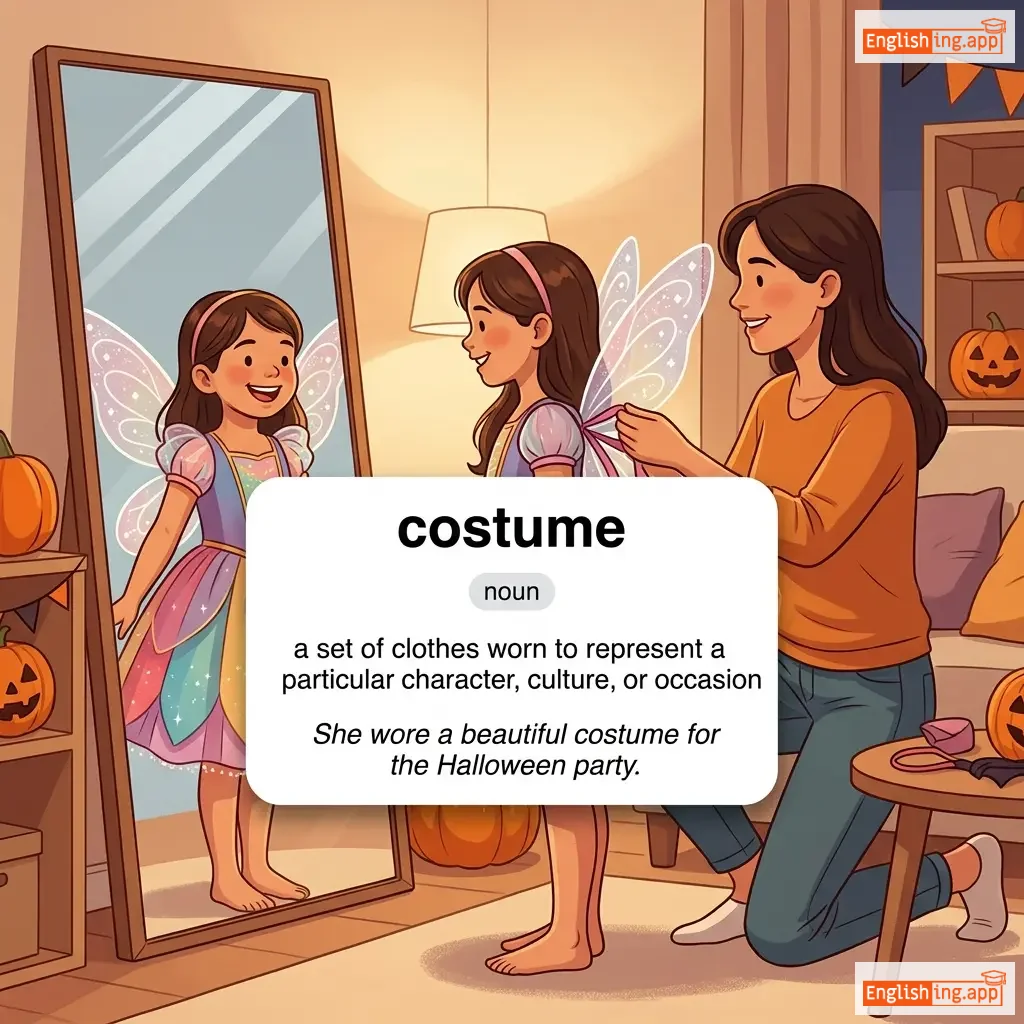
costume definition card — visual illustration of the meaning
noun
/ˈkɒstjuːm/
костюм (kostyum)

a set of clothes worn to represent a particular character, culture, or occasion

"She wore a beautiful costume for the Halloween party."

"Она надела красивый костюм на Хэллоуин-вечеринку." (Ona nadela krasivyy kostyum na Khellouin-vecherinku.)
noun
/kɒt/
кроватка (cot)

a small bed, especially a portable one or one for a baby

"The baby sleeps peacefully in her cot."

"Ребёнок мирно спит в её кроватке." (Rebyonok mirno spit v eyo krovatke.)
noun
/ˈkoʊ.tə.ri/
небольшая, эксклюзивная группа (nebol'shaya, eksklyuzivnaya gruppa)

a small, exclusive group of people with shared interests

"He belonged to a coterie of artists who met every Friday."

"Он был частью группы художников, которые встречались каждую пятницу." (On byl chastyu gruppy khudozhnikov, kotorye vstrechalis' kazhduyu pyatnitsu.)
adjective
/koʊˈtɜːr.mɪ.nəs/
совпадающий (sovpadayushchiy)

having the same boundaries or extent in space, time, or meaning

"The two jurisdictions are coterminous, sharing the same borders."
"Два юрисдикции совпадают, деля одинаковые границы." (Dva yurisdiktsii sovpadayut, delya odinakovyye granitsy.)
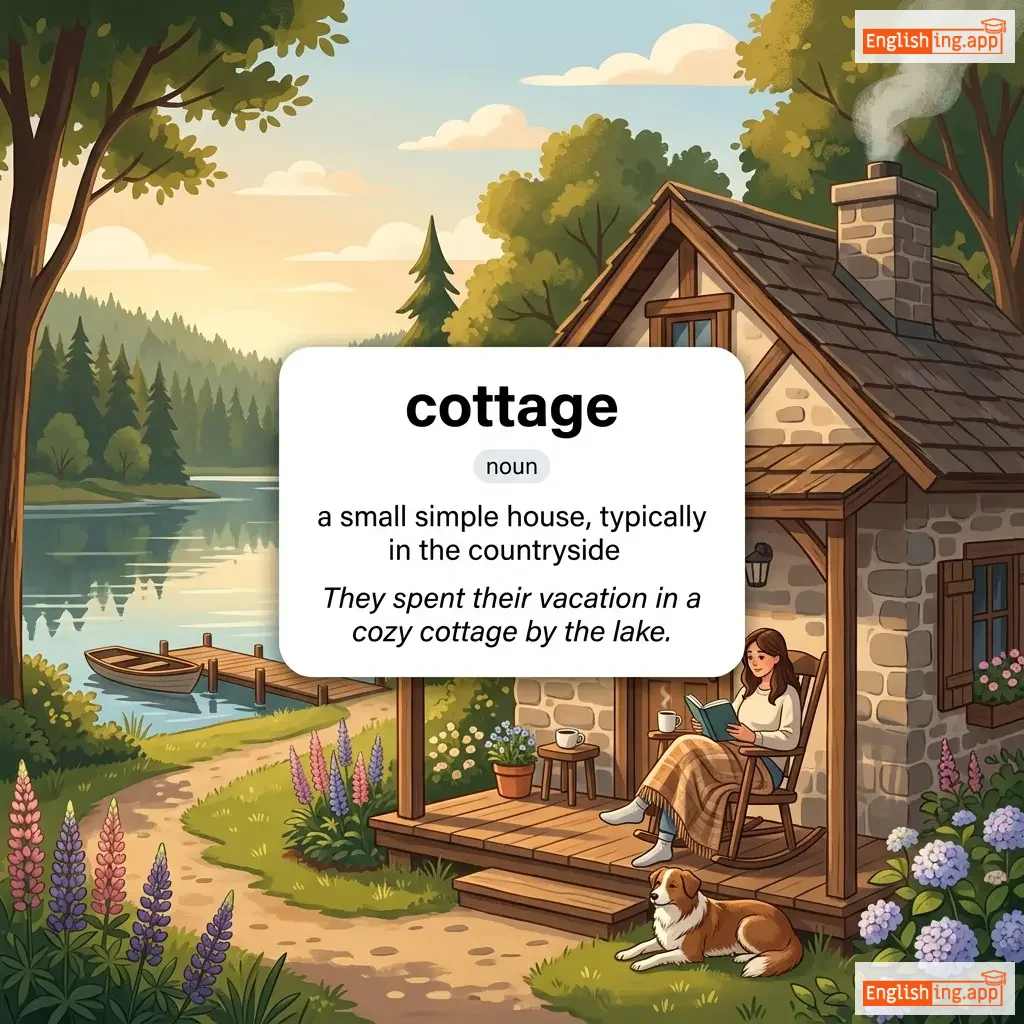
cottage definition card — visual illustration of the meaning
noun
/ˈkɒtɪdʒ/
домик (domik)

a small simple house, typically in the countryside

"They spent their vacation in a cozy cottage by the lake."

"Они провели свой отпуск в уютном домике у озера." (Oni proveli svoy otpusk v uyutnom domike u ozera.)
noun
/ˈkɒtən/
счастье (schastye)

A soft white fibrous substance used to make cloth and thread.

"This shirt is made of pure cotton."

"Она не могла скрыть своего счастья, когда получила награду." (Ona ne mogla skryt' svoego schast'ya, kogda poluchila nagradu.)
noun
/ˈkɒt.ən ˈfæb.rɪk/
хлопковая ткань (khlopkovaya tkan)

textile made from cotton fibers, known for being soft, breathable, and comfortable

"Cotton fabric is perfect for summer clothing."

"Хлопковая ткань идеально подходит для летней одежды." (Khlopkovaya tkan ideal'no podkhodit dlya letney odezhdy.)
noun
/kaʊtʃ/
диван (divan)

a comfortable seat for two or more people, typically upholstered

"They sat on the couch and watched TV."

"Они сели на диван и смотрели телевизор." (Oni sели na divan i smotreli televizor.)
noun, verb
/kɒf/
кашель (kashel)

a sudden noisy release of air from the lungs to clear the throat or airway; to expel air suddenly from the lungs with a cough

"He has a bad cough and stayed home today."

"У него сильный кашель, и сегодня он остался дома." (u nego silnyy kashel i segodnya on ostalsya doma)
modal verb
/kʊd/
мог (mog)

Used to indicate possibility, ability, or permission in the past or as a polite suggestion.

"He could swim when he was a child."
"Он мог плавать, когда был ребенком." (On mog plavat', kogda byl rebenkom.)
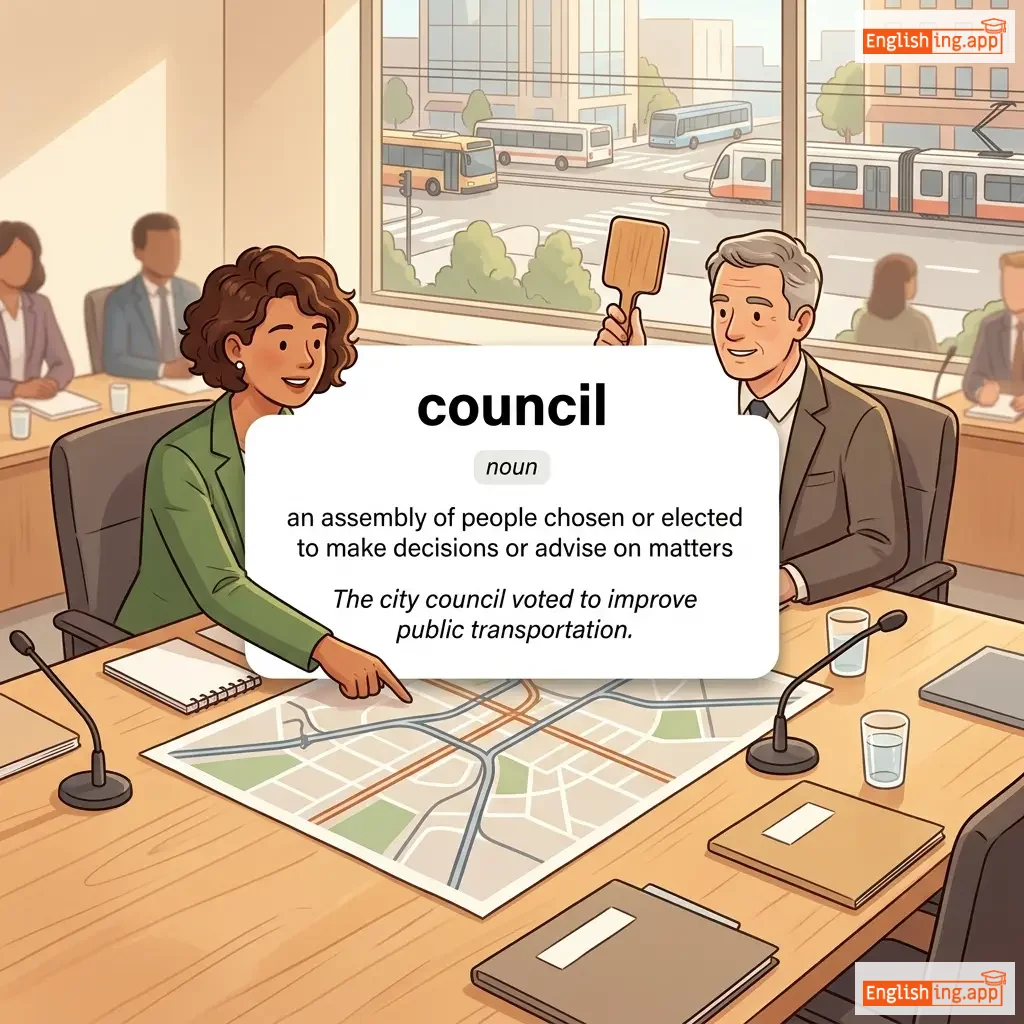
council definition card — visual illustration of the meaning
noun
/ˈkaʊn.səl/
совет (sovet)

an assembly of people chosen or elected to make decisions or advise on matters

"The city council voted to improve public transportation."

"Городской совет проголосовал за улучшение общественного транспорта." (Gorodskoy sovet pro-golosoval za uluchshenie obshchestvennogo transporta.)
noun
/ˈkaʊnsələr/
советник (sovetnik)

an elected member of a local council who helps make decisions and represent the community

"The councillor spoke to residents about improving local roads."

"Советник говорил о местных дорогах." (sovetnik govoril o mestnykh dorogakh)
noun
/ˈkaʊnsɪlər/
член совета (chlen soveta)

an elected member of a council, especially a local government body

"The councilor held a public meeting to discuss local issues."

"Член совета провел публичное собрание для обсуждения местных проблем." (Chlen soveta provel publichnoe sobranie dlya obsuzhdeniya mestnykh problem.)
verb
/ˈkaʊnsəl/
консультировать (konsul'tirovat')

to give professional advice or guidance to someone

"The teacher counseled the students on their career choices."

"Учитель консультировал студентов по вопросам карьеры." (Uchitel' konsultiroval studentov po voprosam kariery.)
noun
/ˈkaʊnsəlɪŋ/
консультирование (konsul'tirovanie)

professional guidance or therapy to help resolve personal or psychological problems

"She decided to go for counseling after feeling stressed for months."

"Она решила пройти консультирование после того, как чувствовала стресс в течение нескольких месяцев." (Ona reshilas' proyti konsultirovanie posle togo, kak chuvstvovala stress v techeniye neskol'kikh mesyatsev.)
noun
/ˈkaʊn.səl.ɪŋ/
консультирование (konsultirovanie)

the process of giving professional guidance and support to help someone deal with personal, social, psychological, or career-related problems

"She decided to seek counselling to manage stress and anxiety."

"Она решила пройти консультирование, чтобы справиться со стрессом." (ona reshila proiti konsultirovanie chtoby spravitsya so stressom)
noun
/ˈkaʊnsələr/
консультант (konsultant)

a person trained to give guidance on personal, social, or psychological problems; an advisor

"She spoke to a counsellor to get advice about her career."

"Она поговорила с консультантом о своей карьере." (ona pogovorila s konsultantom o svoey karere)
noun
/ˈkaʊn.səl.ər/
консультант (konsultant)

a person trained to give guidance on personal, social, or psychological problems

"The school counselor helped the student deal with stress."

"Школьный консультант помог ученику справиться со стрессом." (Shkol'nyy konsultant pomog uchenniku spravitsya so stressom.)
verb
/kaʊnt/
считать (schitat)

to determine the total number of something

"She carefully counted the money on the table."

"Она осторожно посчитала деньги на столе." (Ona ostorozhno poschitala dengi na stole.)
noun
/ˈkaʊn.tə.nəns/
лицо, выражение; поддержка (litsо, vyrazhenie; podderzhka)

a person's face or expression; support or approval

"Her cheerful countenance brightened the room."

"Ее радостное лицо осветило комнату." (Eeyo radostnoe litso osvetilo komnatu.)
noun
/ˈkaʊn.tər/
прилавок (prilavok)

a flat surface in a shop, bank, or kitchen where transactions or work are done

"The cashier stood behind the counter."

"Кассир стоял за прилавком." (Kassir stoyal za prilavkom.)
noun
/ˈkaʊn.tər kleɪm/
контриск (kontrisk)

a claim made to rebut a previous claim, often in legal contexts

"The defendant filed a counter-claim against the plaintiff."

"Ответчик подал контриск против истца." (Otvetchik podal kontrisk protiv istsa.)