Словари

Словарь английского языка | Значения слов, определения и примеры

noun
/ˈkrɪk.ɪt/
сверчок (sverchok)

a jumping insect that makes a chirping sound by rubbing its wings together

"We could hear crickets chirping in the evening."
"Мы слышали, как кузнечики стрекочут вечером." (my slyshali, kak kuznechiki strekochut vecherom.)
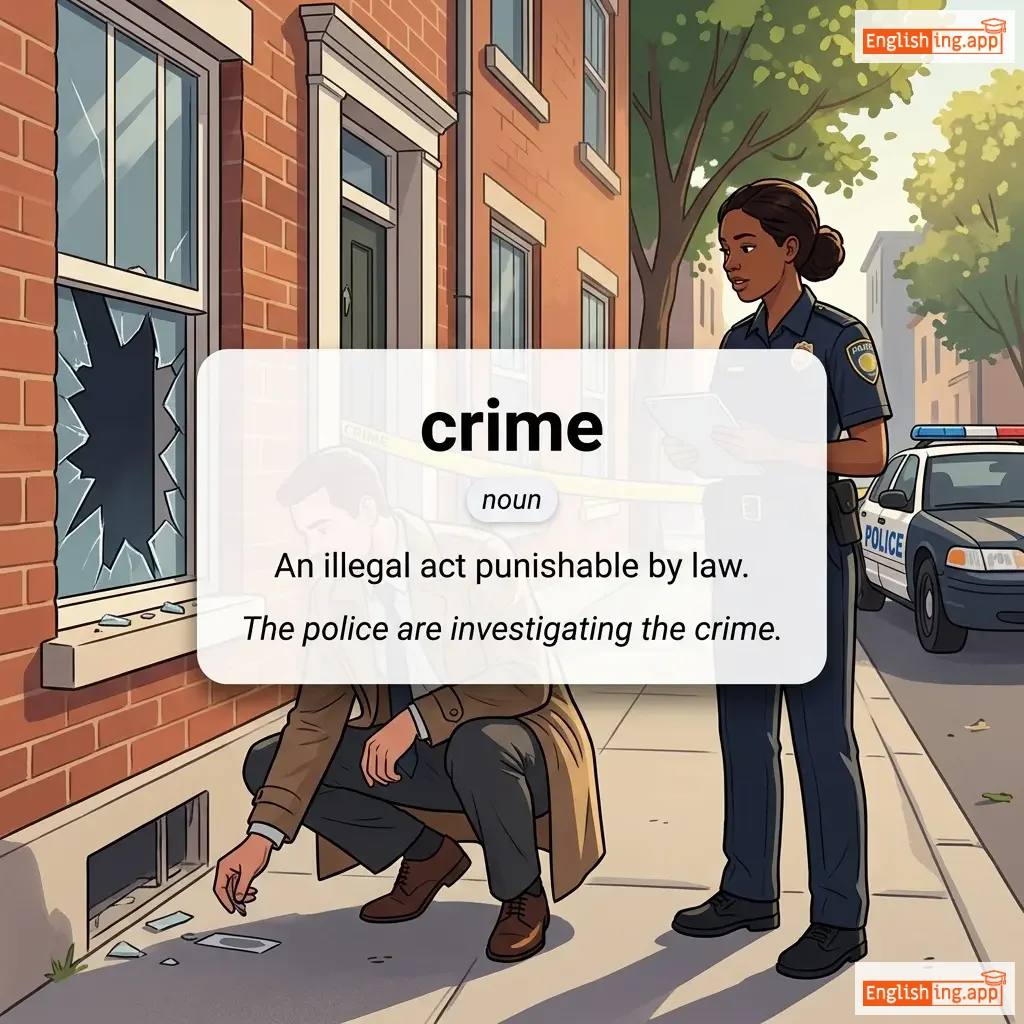
crime definition card — visual illustration of the meaning
noun
/kraɪm/
преступление (prestupleynie)

An illegal act punishable by law.

"The police are investigating the crime."

"Полиция расследует преступление." (Politsiya rassledyet prestupleniye.)
noun, adjective
/ˈkrɪmɪnəl/
преступник (prestupnik)

A person who has committed a crime; relating to crime

"The police arrested a dangerous criminal last night."

"Полиция арестовала опасного преступника прошлой ночью." (Politsiya arestovala opasnogo prestupnika proshloy noch'yu.)
adjective
/ˈkrɪm.zən/
темно-красный (temno-krasnyy)

a deep purplish-red color

"The crimson sunset painted the sky with beautiful shades."

"Темно-красный закат раскрасил небо в красивые оттенки." (Temno-krasnyy zakat raskrasil nebo v krasivyye ottenki.)
verb
/krɪndʒ/
съёживаться (s'yoyzhivat'sya)

To shrink back in fear, embarrassment, or discomfort.

"She cringed when she remembered her mistake."

"Она съёжилась, когда вспомнила свою ошибку." (Ona s'yoyzhilas', kogda vspomnila svoyu oshibku.)
verb
/ˈkrɪŋ.kəl/
морщить (morshchit')

To form small creases or wrinkles.

"She crinkled her nose at the strange smell."

"Она сморщила нос от странного запаха." (Ona smorshchila nos ot strannogo zapakha.)
crisis definition card — visual illustration of the meaning
noun
/ˈkraɪsɪs/
кризис (krizis)

A time of intense difficulty or danger

"The company faced a financial crisis during the recession."

"Компания столкнулась с финансовым кризисом во время рецессии." (Kompaniya stolknulas s finansovym krizisom vo vremya retsetsii.)
noun
/kraɪˈtɪəriə/
критерий (kriteriy)

Standards or principles by which something is judged or decided.

"The candidates were evaluated based on strict criteria."

"Кандидаты были оценены на основе строгих критериев." (Kandidaty byli otseneny na osnove strogykh kriteriev.)
noun
/kraɪˈtɪəriən/
критерий (kriteriy)

A standard or rule used to make a judgment or decision.

"Honesty is an important criterion for this job."

"Честность - это важный критерий для этой работы." (Chestnost' - eto vazhnyy kriteriy dlya etoy raboty.)
critic definition card — visual illustration of the meaning
noun
/ˈkrɪtɪk/
критик (kritik)

A person who judges the merits of something, especially art or literature

"The film critic praised the director's latest movie."
"Кинокритик похвалил последний фильм режиссера." (Kinokritik pokhvalil posledniy film rezhissera.)
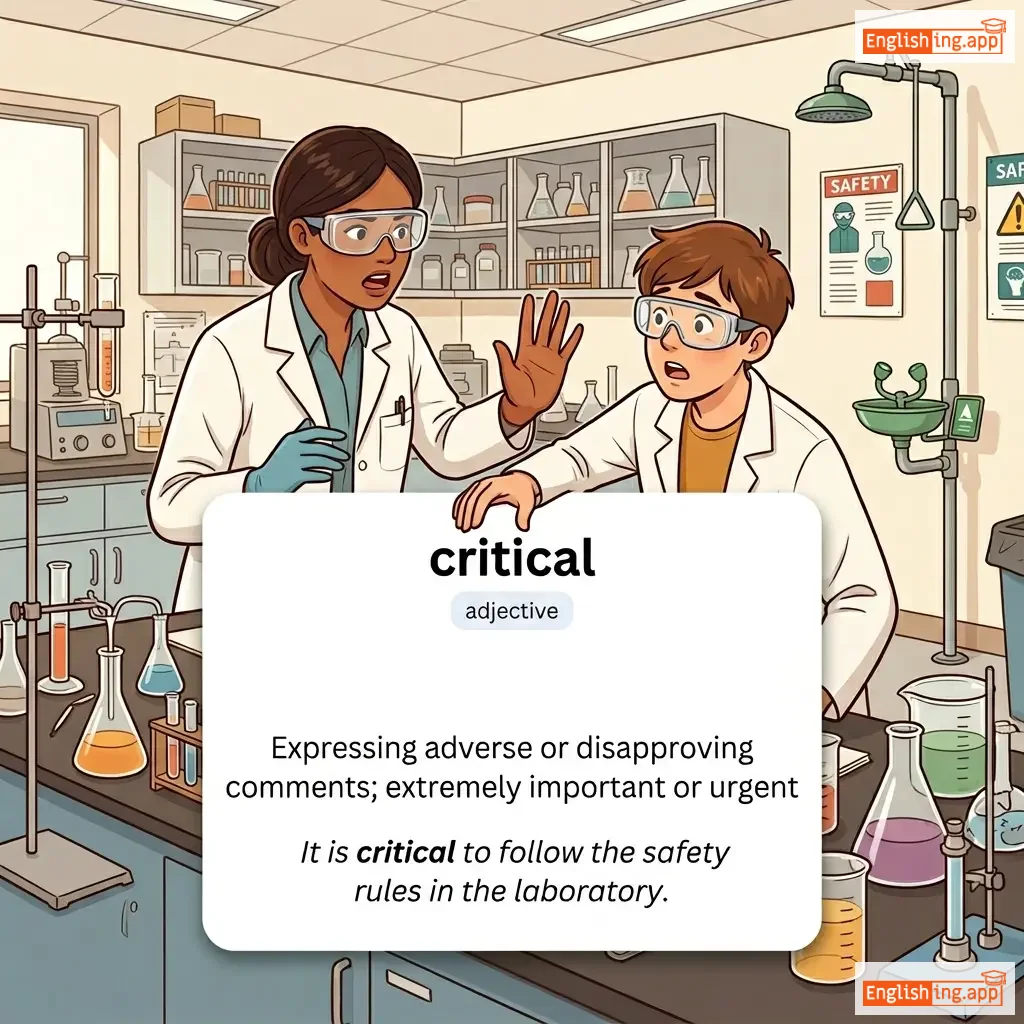
critical definition card — visual illustration of the meaning
adjective
/ˈkrɪtɪkəl/
критический / критический (kriticheskiy / kriticheskiy)

Expressing adverse or disapproving comments; extremely important or urgent

"It is critical to follow the safety rules in the laboratory."

"Крайне важно соблюдать правила безопасности в лаборатории." (Krayne vazhno soblyudat' pravila bezopasnosti v laboratorii.)
critical thinking definition card — visual illustration of the meaning
noun
ˈkrɪt.ɪ.kəl ˈθɪŋ.kɪŋ
критическое мышление (kriticheskoe myshlenie)

The objective analysis and evaluation of an issue in order to form a judgment.

"Critical thinking helps in making informed decisions."

"Критическое мышление помогает принимать обоснованные решения." (Kriticheskoe myshlenie pomogaet prinimat' obosnovannye resheniya.)
adverb
/ˈkrɪtɪkli/
критически (kriticheski)

in a way that expresses disapproval or a very serious, important way

"He was critically injured in the accident."

"Он был критически ранен в аварии." (On byl kriticheski ranen v avarii.)
noun
/ˈkrɪtɪˌsɪzəm/
критика (kritika)

The expression of disapproval or judgment of the merits of something

"The new policy has faced a lot of criticism from the public."
"Новая политика столкнулась с критикой со стороны общественности." (Novaya politika stolknulas s kritikoy so storony obshchestvennosti.)
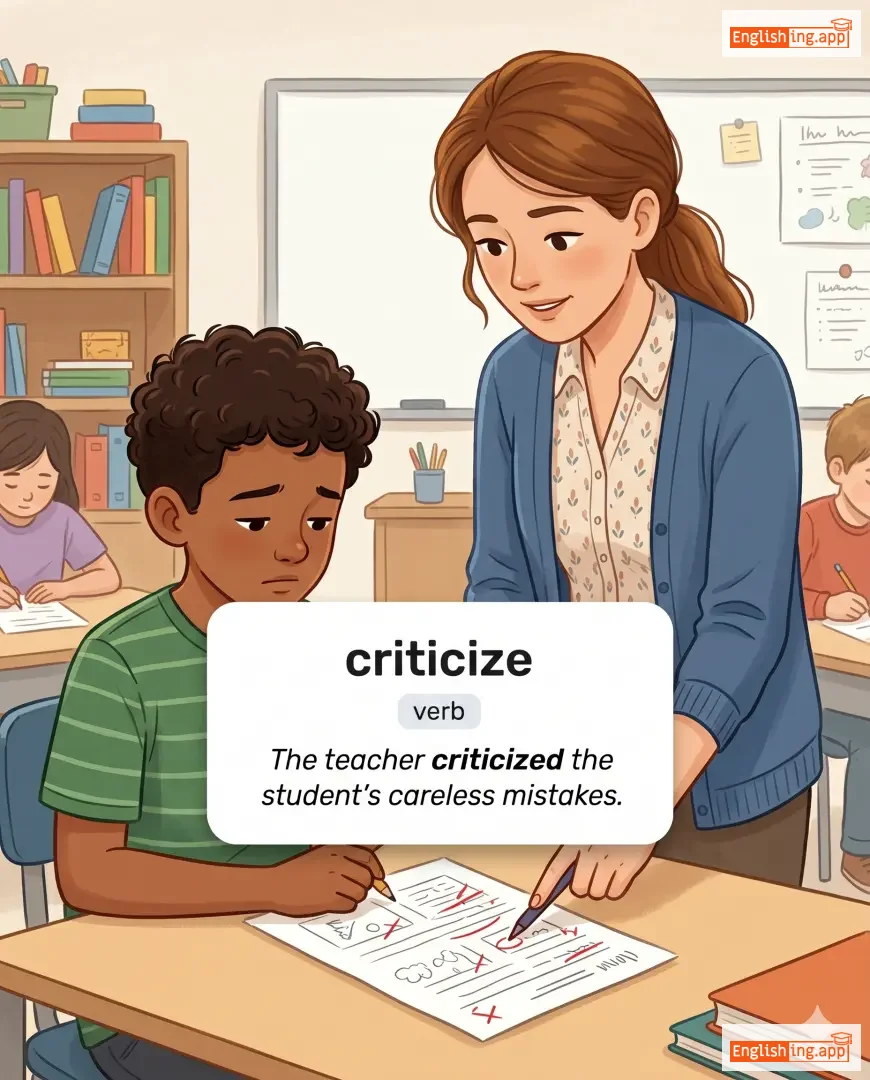
criticize definition card — visual illustration of the meaning
verb
/ˈkrɪtɪsaɪz/
критиковать (kritikovat)

to express disapproval of someone or something by pointing out faults or shortcomings

"The teacher criticized the student's careless mistakes."

"Учитель раскритиковал неосторожные ошибки студента." (Uchitel' raskritikoval neostorozhnye oshibki studenta.)
noun/verb
/krɪˈtiːk/
критика (kritika)

A detailed analysis and assessment of something, especially a literary, philosophical, or political theory; to evaluate critically.

"The professor asked the students to critique each other's essays."

"Профессор попросил студентов критиковать эссе друг друга." (Professor poprosil studentov kritikovat' esse drug druga.)
noun/verb
/kroʊˈʃeɪ/
крючок (kryuchok)

Needlework made by interlocking loops of thread with a hooked needle; the act of making such items.

"She learned how to crochet a scarf for winter."

"Она научилась вязать шарф на зиму." (Ona nauchilas' vyzat' sharf na zimu.)
noun
/krɑk pɑt/
медленноварка (medlennovarka)

an electric cooking pot that cooks food slowly at low temperatures

"I put the chicken and vegetables in the crock pot before going to work."

"Я положил курицу и овощи в медленноварку перед тем, как пойти на работу." (Ya polozhil kuritsu i ovoshchi v medlennovarku pered tem, kak poyti na rabotu)
noun
/ˈkrɒkəri/
посуда (posuda)

Dishes, plates, cups, and other items made of earthenware or china.

"The hotel provided clean crockery for the guests."

"Отель предоставил чистую посуду для гостей." (Otel predostavil chistuyu posudu dlya gostey.)
noun
/ˈkrɒk.ə.daɪl/
крокодил (krokodil)

a large reptile with a long mouth and sharp teeth that lives in rivers and lakes in hot countries

"The crocodile slowly moved through the murky water."

"Крокодил медленно двигался по мутной воде." (Krokodil medlenno dvigalsya po mutnoi vode.)
🧙‍♀️

crone (krón)

noun
/kroʊn/
старая женщина (staraya zhenshchina)

An old woman, often one who is thin and ugly, sometimes associated with witch-like qualities.

"The children were scared by the story of the wicked crone in the forest."

"Дети испугались истории о злой старой женщине в лесу." (Deti ispugalis' istorii o zloy staroy zhenshchine v lesu.)
noun
/ˈkroʊniˌɪzəm/
кумовство (kumovstvo)

The practice of favoring friends or associates, especially in political appointments or business deals.

"The company was accused of cronyism in hiring practices."

"Компания была обвинена в кумовстве при найме сотрудников." (Kompaniya byla obvinena v kumovstve pri nayme sotrudnikov.)
noun
/krʊk/
мошенник (moshennik)

a dishonest person, especially a criminal

"The police finally caught the crook who had been stealing cars."

"Полиция наконец поймала мошенника, который крал машины." (Politsiya nakonec poymala moshennika, kotoryy král mashiny.)
verb
/kruːn/
петь или напевать мягким, низким и нежным голосом (pet' ili napeyavat' myagkim, nizkim i nezhnym golosom)

to sing or hum in a soft, low, and gentle voice

"She crooned a lullaby to help the baby fall asleep."
"Она напевала колыбельную, чтобы помочь малышу уснуть." (Ona napeyavala kolybel'nuyu, chtoby pomoch' malyshu usnut'.)
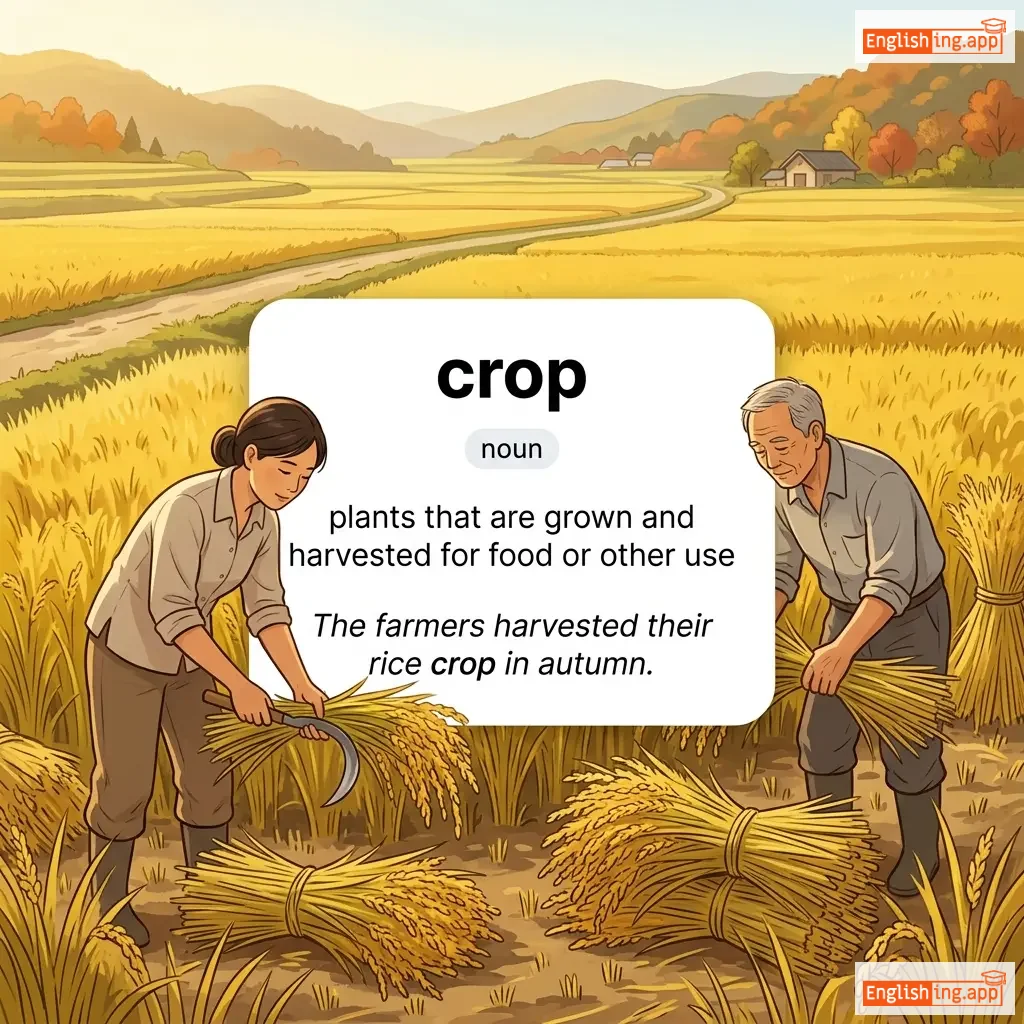
crop definition card — visual illustration of the meaning
noun
/krɒp/
урожай (urozhay)

plants that are grown and harvested for food or other use

"The farmers harvested their rice crop in autumn."
"Фермеры собрали свой урожай риса осенью." (Fermery sobrali svoj urozhaj risa osenyu.)
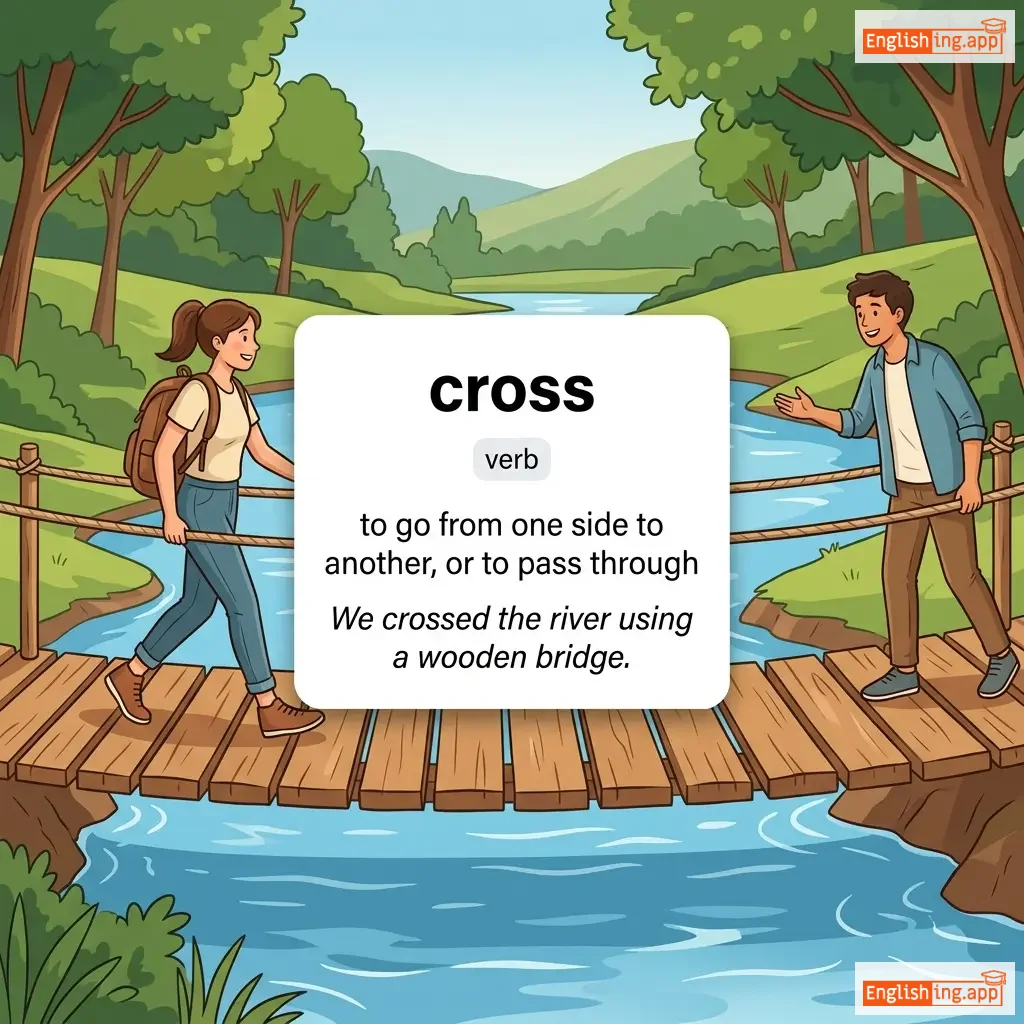
cross definition card — visual illustration of the meaning
verb
/krɒs/
пересекать (peresekat)

to go from one side to another, or to pass through

"We crossed the river using a wooden bridge."

"Мы пересекли реку, используя деревянный мост." (My peresekli reku, ispol'zuya derevyannyy most.)
verb
/ˈkrɒs.briːd/
скрещивать (skreshchivat)

to produce an animal or plant by mating two different breeds, varieties, or species

"Farmers crossbreed cows to improve milk production."

"Фермеры скрещивают коров для улучшения производства молока." (Fermery skreshchivayut korov dlya uluchsheniya proizvodstva moloka.)
adverb
/ˈkrɒswaɪz/
по диагонали (po diagonal)

in the form of a cross; diagonally across

"Place the logs crosswise to build a stable fire."

"Положите дрова по диагонали, чтобы построить стабильный огонь." (Polozhite drova po diagonal, chtoby postroit' stabil'nyy ogon'.)
adjective
/ˈkrɒtʃ.ə.ti/
сердитый (serdityy)

bad-tempered, easily annoyed, and often complaining

"The crotchety old man yelled at the children for playing near his house."

"Сердитый старик кричал на детей, играющих рядом с его домом." (Serdityy starik krichal na detey, igrayushchikh ryadom s yego domom.)
verb
/kraʊtʃ/

to bend your knees and lower your body close to the ground

"The cat crouched before leaping at its prey."

🐦‍⬛

Crow (kro)

noun
/kroʊ/
ворон (voron)

a large black bird known for its intelligence and harsh call

"The crow cawed loudly from the tree branch."

"Ворон каркал громко с ветки дерева." (Voron karkanil gromko s vetki dereva.)
noun
/ˈkroʊ.bɑːr/
лом (lom)

a heavy iron bar with a curved end used as a lever for prying things apart

"He used a crowbar to remove the old nails."

"Он использовал лом, чтобы удалить старые гвозди." (On ispol'zoval lom, chtoby udalit' starye gvozdi.)
noun
/kraʊd/
толпа (tolpa)

a large number of people gathered together

"A huge crowd gathered to watch the concert."

"Огромная толпа собралась, чтобы посмотреть концерт." (Ogromnaya tolpa sobralas', chtoby posmotret' kontsert.)
🚶‍♂️🚶‍♀️

crowded (happiness)

adjective
/ˈkraʊdɪd/
счастье (schastye)

filled with too many people or things

"The bus was so crowded that I could hardly move."

"Она не могла скрыть своего счастья, когда получила награду." (Ona ne mogla skryt' svoego schast'ya, kogda poluchila nagradu.)
noun
/kraʊn/
корона (korona)

a circular ornamental headdress worn by a monarch as a symbol of authority

"The king wore his golden crown at the ceremony."

"Царь носил свою золотую корону на церемонии." (Tsar' nosil svoyu zolotuyu koronu na tseremonii.)
crucial definition card — visual illustration of the meaning
adjective
/ˈkruːʃəl/
критически важный (kriticheski vazhny)

extremely important or necessary

"Trust is crucial for a strong relationship."

"Доверие критически важно для крепких отношений." (Doverye kriticheski vazhno dlya krepkikh otnosheniy.)
noun
/ˈkruːsɪbəl/
жесткое испытание, плавильный тигель (zhestkoe ispytanie, plavilyj tigel')

a severe test or trial; a container used for heating substances to very high temperatures

"The team emerged stronger from the crucible of competition."

"Команда вышла сильнее из плавильного тигля соревнования." (Komanda vyshla sil'nee iz plavil'nogo tiglya sorevnovaniya.)
adjective
/kruːd/
сырой (syroy)

in a natural or raw state; not yet processed or refined

"The crude oil is processed into fuel and chemicals."

"Сырая нефть перерабатывается в топливо и химикаты." (Syraja neft pererabotivayetsya v toplivo i khimikaty.)
adjective
/ˈkruːəl/
жестокий (zhestokiy)

Willfully causing pain or suffering to others, or feeling no concern about it.

"It was cruel to make fun of the injured boy."

"Было жестоко смеяться над раненым мальчиком." (Bylo zhestoko smeyat'sya nad ranyenym mal'chikom.)
noun
/ˈkruː.əl.ti/
жестокость; бесчеловечное обращение; поведение, причиняющее боль (zhestokost', beschelovechnoe obshchenie, povedenie, prichinyayushchee bol')

behavior that causes pain or suffering to others; the quality of being cruel

"The documentary exposed the cruelty of factory farming to animals."

"Документальный фильм продемонстрировал жестокость промышленного животноводства по отношению к животным." (Dokumental'nyy film prodemonstriroval zhestokost' promyshlennogo zhivotnovodstva po otnosheniyu k zhivotnym.)
noun
/ˈkruːɪt/
небольшой контейнер (nebol'shoy konteyner)

a small container, especially for salt, pepper, oil, or vinegar, used at a dining table

"She filled the cruet with olive oil for the salad."

"Она наполнила круэт оливковым маслом для салата." (Ona napolnila kruet olivkovym maslom dlya salata.)
🛳️

cruise

verb
/kruːz/
счастье (schast'ye)

to travel smoothly at a moderate speed, especially for pleasure

"They decided to cruise along the coast during their vacation."

"Она не могла скрыть своего счастья, когда получила награду." (Ona ne mogla skryt' svoego schast'ya, kogda poluchila nagradu.)
compounding definition card — visual illustration of the meaning
noun
kəmˈpaʊnd.ɪŋ
сложные проценты (slozhnyye protsenty)

The process in which an asset's earnings, from either capital gains or interest, are reinvested to generate additional earnings over time.

"Compounding allows investments to grow exponentially over time."

"Сложные проценты позволяют инвестициям расти экспоненциально с течением времени." (Slozhnyye protsenty pozvolyayut investitsiyam rasti eksponential'no s techeniyem vremeni.)
verb
/ˌkɒmprɪˈhɛnd/
понимать (ponimat)

to understand or grasp the meaning of something

"It is difficult to comprehend the scale of the disaster."

"Трудно понять масштаб катастрофы." (Trudno ponyat' masshtab katastrofy.)
adjective
/ˌkɒmprɪˈhɛnsəbl/
понятный (ponyatny)

able to be understood; intelligible

"The teacher explained the topic in a comprehensible way."

"Учитель объяснил тему понятным способом." (Uchitel' ob'yasnil temu ponyatnym sposobom.)
comprehension definition card — visual illustration of the meaning
noun
/ˌkɒmprɪˈhɛnʃən/
понимание (ponimanie)

the ability to understand something

"Good reading comprehension is essential for academic success."

"Хорошее понимание чтения важно для академического успеха." (Khoroshee ponimanie chteniya vazhno dlya akademicheskogo uspekha.)
comprehensive definition card — visual illustration of the meaning
adjective
/ˌkɒmprɪˈhɛnsɪv/
всесторонний (vsestoronniy)

including all or nearly all elements or aspects; complete

"The report provides a comprehensive overview of the project."

"Отчет представляет собой всесторонний обзор проекта." (Otchet predstavlyaet soboy vsestoronniy obzor proyeka.)
verb
/kəmˈprɛs/
сжать (szhat)

to press or squeeze something so that it becomes smaller

"The file was compressed to save storage space."

"Файл был сжат для экономии места." (Fayl byl sjat dlya ekonomii mesta.)
adjective
/kəmˈprɛsəbl̩/
сжимаемый (szhimayemyi)

Capable of being compressed or reduced in volume.

"Air is a compressible substance, unlike water."

"Воздух является сжимаемым веществом, в отличие от воды." (Vozdukh yavlyaetsya szhimayemym veshchestvom, v otlichie ot vody.)
noun
/kəmˈprɛʃn̩/
сжатие (sjatie)

The act of pressing or squeezing something into a smaller space.

"File compression helps reduce storage requirements."

"Сжатие файлов помогает снизить требования к хранению." (Szhatie faylov pomogaet snizit' trebovaniya k khraneniyu.)