語彙集

英単語辞書 | 単語の意味、定義、例文

noun
/ˈkrɪk.ɪt/
コオロギ (koorogi)

a jumping insect that makes a chirping sound by rubbing its wings together

"We could hear crickets chirping in the evening."
"私たちは夕方にコオロギの鳴き声を聞くことができました。" (watashitachi wa yuugata ni koorogi no nakigoe o kiku koto ga dekimashita.)
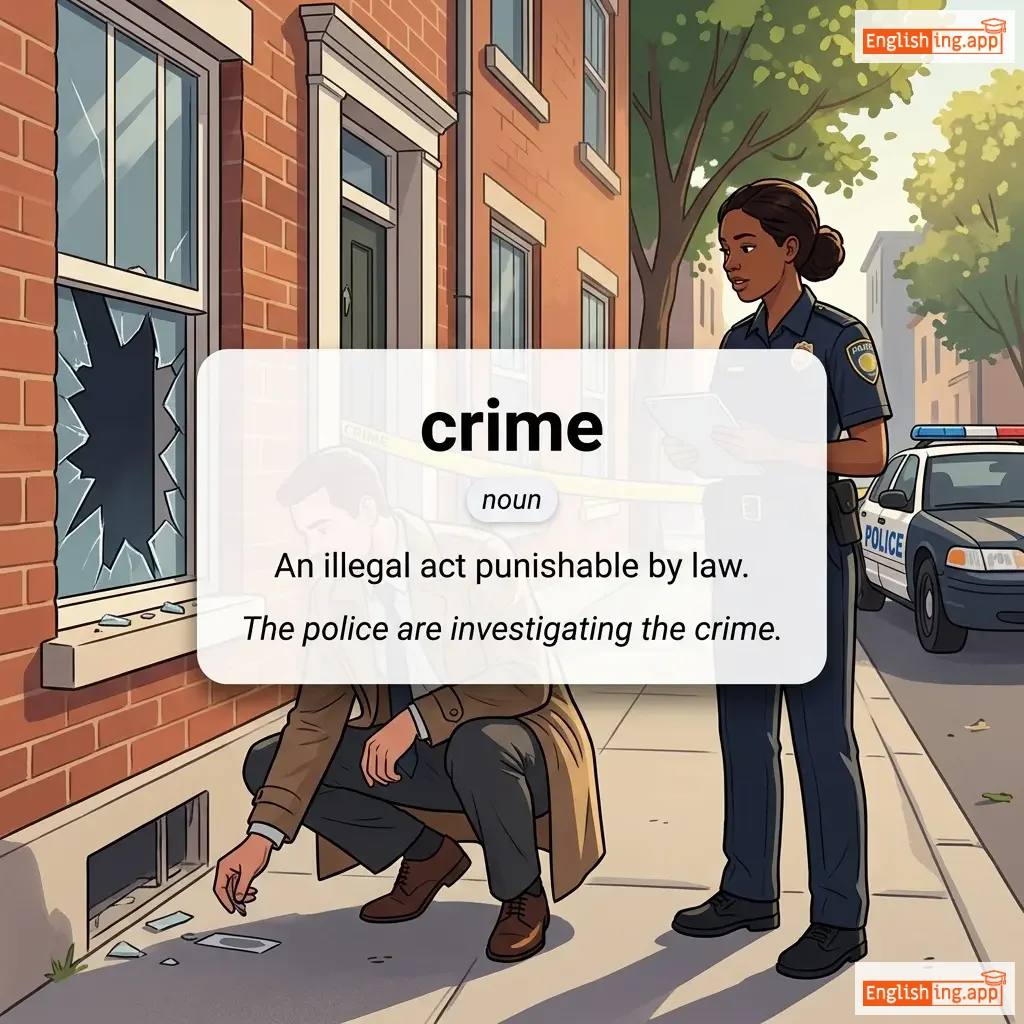
crime definition card — visual illustration of the meaning
noun
/kraɪm/
犯罪 (hanzai)

An illegal act punishable by law.

"The police are investigating the crime."

"警察は犯罪を調査しています。" (Keisatsu wa hanzai o chōsa shiteimasu.)
noun, adjective
/ˈkrɪmɪnəl/
犯罪者 (hanzai-sha)

A person who has committed a crime; relating to crime

"The police arrested a dangerous criminal last night."

"警察は昨夜、危険な犯罪者を逮捕しました。" (Keisatsu wa sakuya, kiken na hanzai-sha o taiho shimashita.)
adjective
/ˈkrɪm.zən/
深紅 (shinkou)

a deep purplish-red color

"The crimson sunset painted the sky with beautiful shades."

"深紅の夕日が美しい色合いで空を染めました。" (Shinkou no yūhi ga utsukushii iroai de sora o somemashita.)
verb
/krɪndʒ/
縮む (shizumu)

To shrink back in fear, embarrassment, or discomfort.

"She cringed when she remembered her mistake."

"彼女は自分の間違いを思い出して、縮んだ。" (Kanojo wa jibun no machigai o omoidashite, shizunda.)
verb
/ˈkrɪŋ.kəl/
しわを寄せる (shiwa o yoseru)

To form small creases or wrinkles.

"She crinkled her nose at the strange smell."
"彼女は奇妙な匂いで鼻をしかめた。" (Kanojo wa kimyō na nioi de hana o shikameta.)
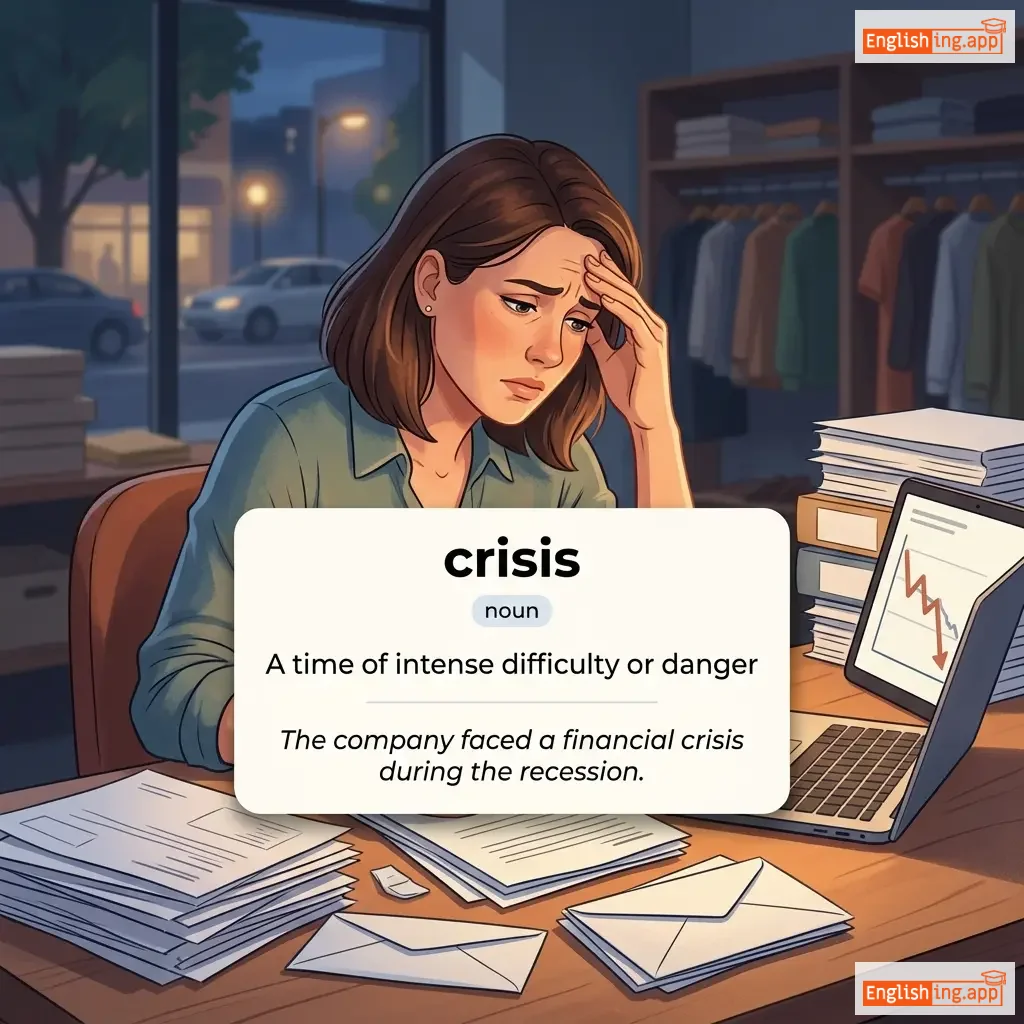
crisis definition card — visual illustration of the meaning
noun
/ˈkraɪsɪs/
危機 (kiki)

A time of intense difficulty or danger

"The company faced a financial crisis during the recession."

"その企業は不況の中で財政的な危機に直面しました。" (Sono kigyō wa fukyō no naka de zaisei-teki na kiki ni chokumen shimashita.)
noun
/kraɪˈtɪəriə/
基準 (kijun)

Standards or principles by which something is judged or decided.

"The candidates were evaluated based on strict criteria."

"候補者は厳格な基準に基づいて評価されました。" (Kōhosha wa genkaku na kijun ni motozuite hyōka saremashita.)
noun
/kraɪˈtɪəriən/
基準 (kijun)

A standard or rule used to make a judgment or decision.

"Honesty is an important criterion for this job."

"誠実はこの仕事にとって重要な基準です。" (Seijitsu wa kono shigoto ni totte juuyou na kijun desu.)
critic definition card — visual illustration of the meaning
noun
/ˈkrɪtɪk/
批評家 (hihyōka)

A person who judges the merits of something, especially art or literature

"The film critic praised the director's latest movie."
"映画批評家は監督の最新映画を称賛しました。" (Eiga hihyōka wa kantoku no saishin eiga o shōsan shimashita.)
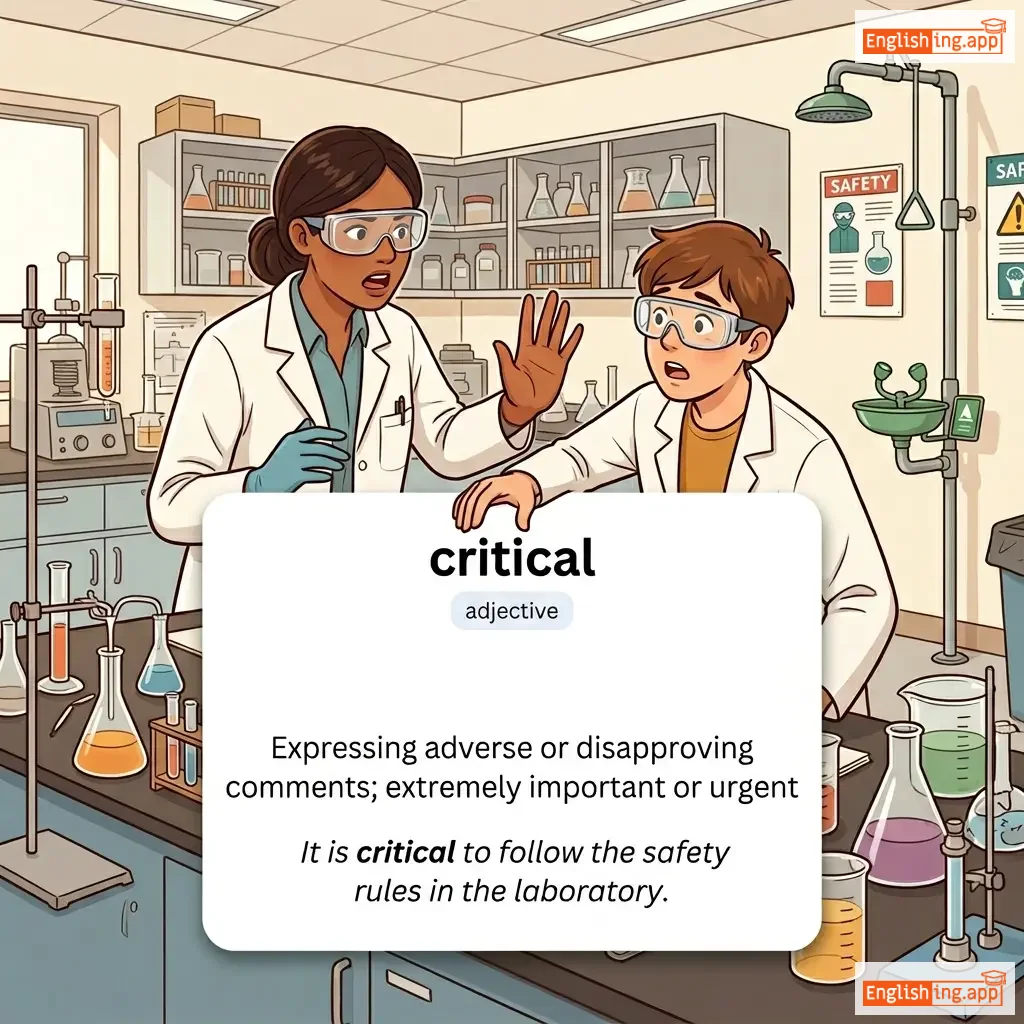
critical definition card — visual illustration of the meaning
adjective
/ˈkrɪtɪkəl/
重大な / 危機的 (jūdaina / kikiteki)

Expressing adverse or disapproving comments; extremely important or urgent

"It is critical to follow the safety rules in the laboratory."
"実験室で安全規則に従うことは非常に重要です。" (Jikken-shitsu de anzen kisoku ni shitagau koto wa hijō ni jūyō desu.)
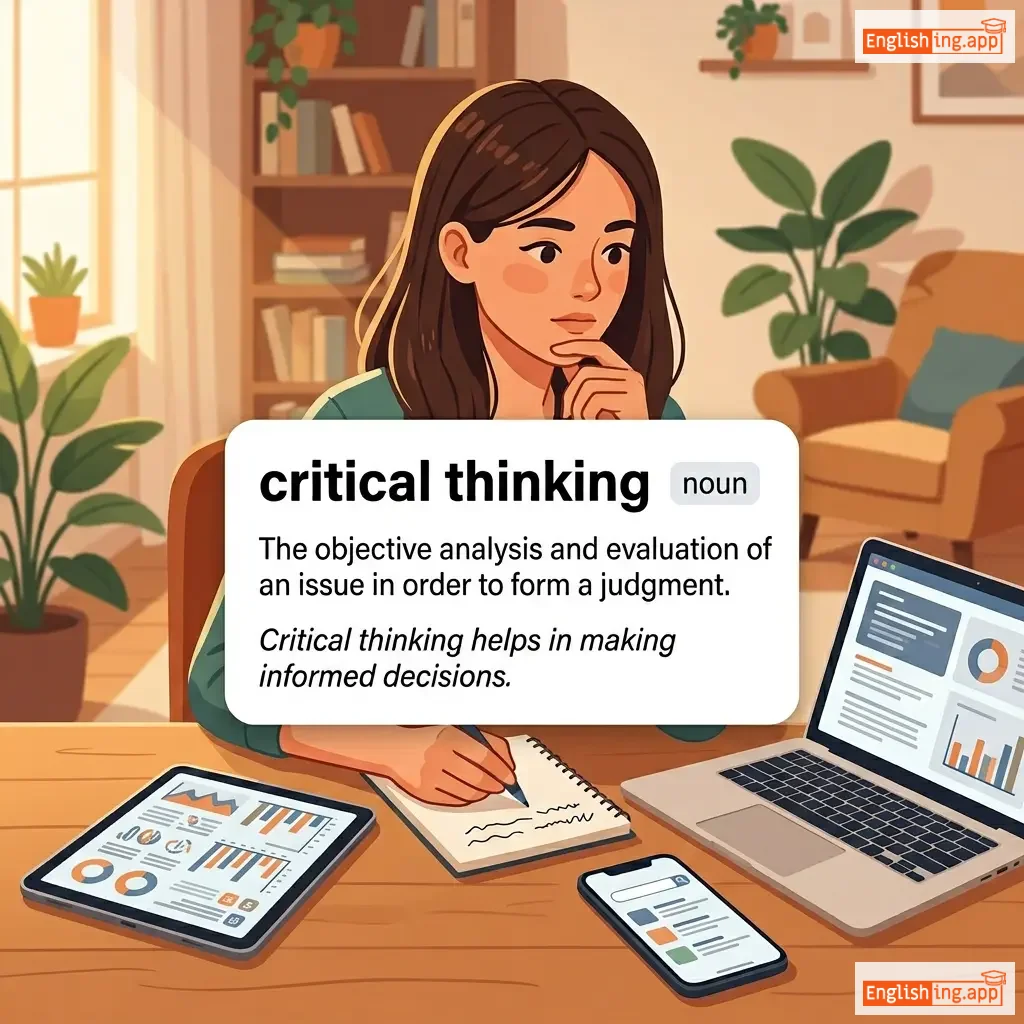
critical thinking definition card — visual illustration of the meaning
noun
ˈkrɪt.ɪ.kəl ˈθɪŋ.kɪŋ
批判的思考 (hihan teki shikou)

The objective analysis and evaluation of an issue in order to form a judgment.

"Critical thinking helps in making informed decisions."

"批判的思考は情報に基づいた意思決定に役立ちます。" (Hihanteki shikou wa jouhou ni motozuita ishikettei ni yakudachimasu.)
adverb
/ˈkrɪtɪkli/
重大に (jūdai ni)

in a way that expresses disapproval or a very serious, important way

"He was critically injured in the accident."

"彼は事故で重傷を負った。" (Kare wa jiko de jūshō o otta.)
noun
/ˈkrɪtɪˌsɪzəm/
批判 (hihan)

The expression of disapproval or judgment of the merits of something

"The new policy has faced a lot of criticism from the public."
"新しい政策は、一般の人々から多くの批判を受けました。" (Atarashī seisaku wa, ippan no hitobito kara ōku no hihan o ukemashita.)
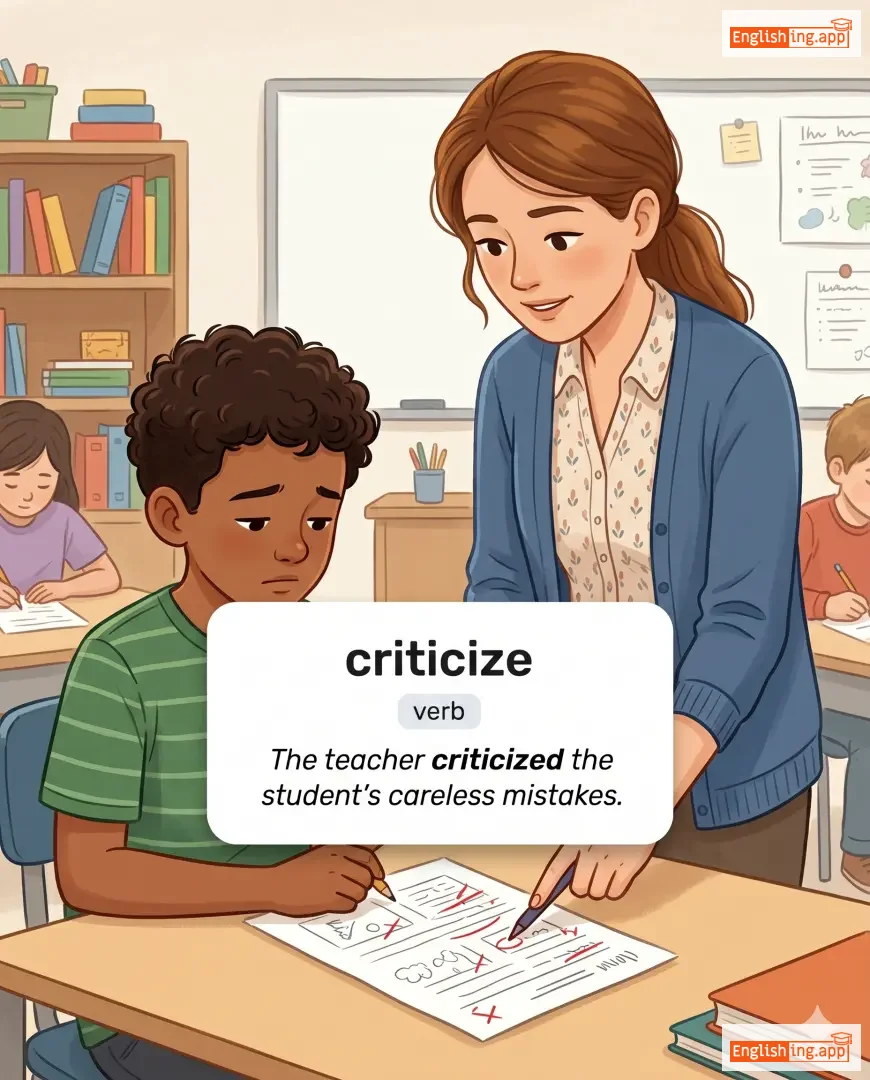
criticize definition card — visual illustration of the meaning
verb
/ˈkrɪtɪsaɪz/
批判する (hihan suru)

to express disapproval of someone or something by pointing out faults or shortcomings

"The teacher criticized the student's careless mistakes."

"教師は学生の不注意なミスを批判しました。" (Kyōshi wa gakusei no fuchūi na misu o hihan shimashita.)
noun/verb
/krɪˈtiːk/
批評 (hihyō)

A detailed analysis and assessment of something, especially a literary, philosophical, or political theory; to evaluate critically.

"The professor asked the students to critique each other's essays."

"教授は学生にお互いのエッセイを批評するように頼みました。" (Kyōju wa gakusei ni otagai no essei o hihyō suru yō ni tanomimashita.)
noun/verb
/kroʊˈʃeɪ/

Needlework made by interlocking loops of thread with a hooked needle; the act of making such items.

"She learned how to crochet a scarf for winter."

noun
/krɑk pɑt/
スロークッカー (surō kukkā)

an electric cooking pot that cooks food slowly at low temperatures

"I put the chicken and vegetables in the crock pot before going to work."

"仕事に行く前にチキンと野菜をスロークッカーに入れました。" (Shigoto ni iku mae ni chikin to yasai o surō kukkā ni iremashita)
noun
/ˈkrɒkəri/
食器 (shokki)

Dishes, plates, cups, and other items made of earthenware or china.

"The hotel provided clean crockery for the guests."

"ホテルはゲストに清潔な食器を提供しました。" (Hoteru wa gesuto ni seiketsu na shokki o teikyō shimashita.)
noun
/ˈkrɒk.ə.daɪl/
ワニ (wani)

a large reptile with a long mouth and sharp teeth that lives in rivers and lakes in hot countries

"The crocodile slowly moved through the murky water."

"ワニはゆっくりと濁った水を進んでいました。" (wani wa yukkuri to nikotta mizu o susundeimashita)
noun
/kroʊn/
老婆 (rōba)

An old woman, often one who is thin and ugly, sometimes associated with witch-like qualities.

"The children were scared by the story of the wicked crone in the forest."

"子供たちは森の中の邪悪な老婆の話に怖がっていました。" (Kodomotachi wa mori no naka no jaaku na rōba no hanashi ni kowagatte imashita.)
noun
/ˈkroʊniˌɪzəm/
縁故主義 (enkoshugi)

The practice of favoring friends or associates, especially in political appointments or business deals.

"The company was accused of cronyism in hiring practices."

"その企業は採用活動における親族主義で非難されました。" (Sono kigyō wa saiyō katsudō ni okeru enkoshugi de hinansaremashita.)
noun
/krʊk/
詐欺師 (sagishi)

a dishonest person, especially a criminal

"The police finally caught the crook who had been stealing cars."

"警察は最終的に車を盗んでいた詐欺師を捕まえました。" (Keisatsu wa saishū-teki ni kuruma o nusunde ita sagishi o tsukamaemashita.)
verb
/kruːn/
優しく低く穏やかな声で歌うまたは歌うこと (Yasashiku hikuku odayakana koe de utau matawa utau koto)

to sing or hum in a soft, low, and gentle voice

"She crooned a lullaby to help the baby fall asleep."
"彼女は赤ちゃんを寝かしつけるために子守唄を歌った。" (Kanojo wa akachan o nekashitsukeru tame ni komoriuta o utatta.)
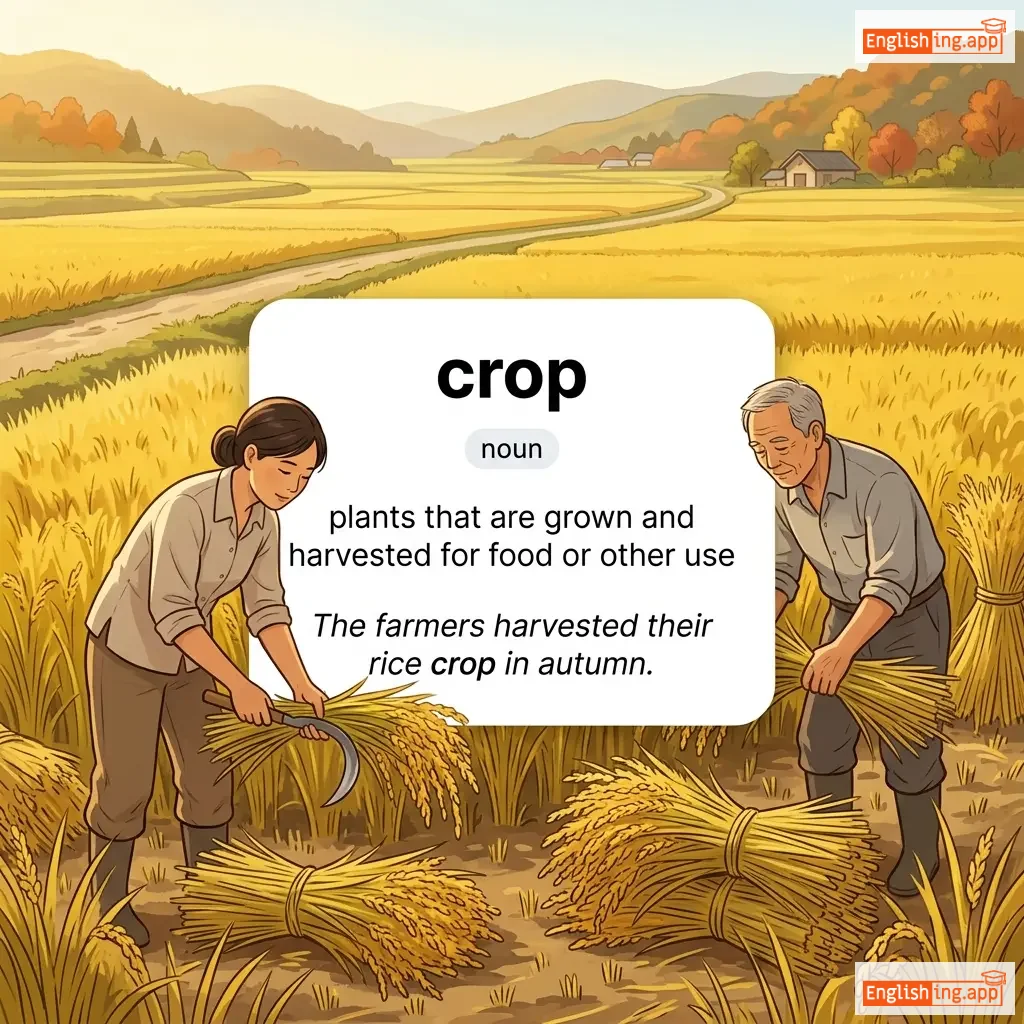
crop definition card — visual illustration of the meaning
noun
/krɒp/
作物 (sakumotsu)

plants that are grown and harvested for food or other use

"The farmers harvested their rice crop in autumn."
"農家は秋に稲作の作物を収穫しました。" (Nōka wa aki ni inasaku no sakumotsu o shūkaku shimashita.)
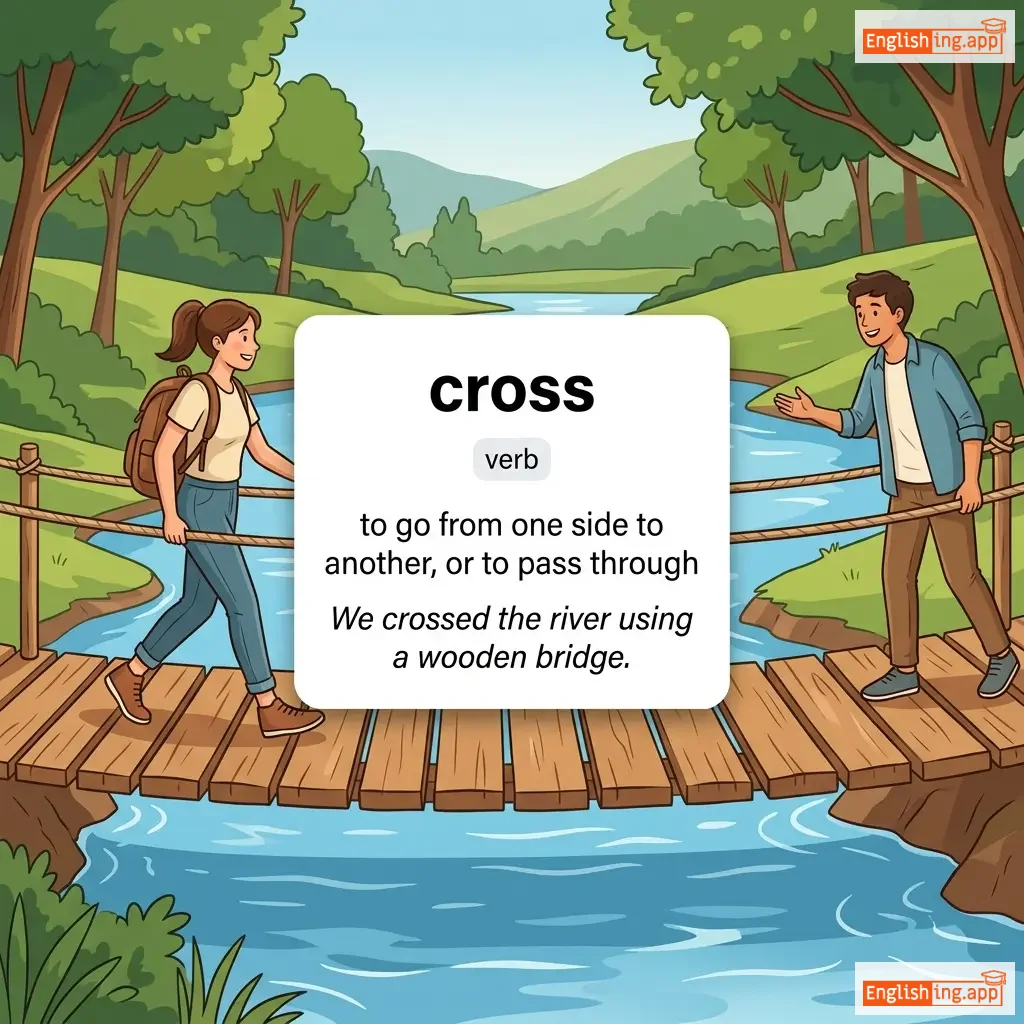
cross definition card — visual illustration of the meaning
verb
/krɒs/
渡る (wataru)

to go from one side to another, or to pass through

"We crossed the river using a wooden bridge."

"私たちは木製の橋を使って川を渡りました。" (Watashitachi wa mokusei no hashi o tsukatte kawa o watarimashita.)
verb
/ˈkrɒs.briːd/
交配 (kōhai)

to produce an animal or plant by mating two different breeds, varieties, or species

"Farmers crossbreed cows to improve milk production."

"農家は牛の乳生産を向上させるために交配します。" (Nōka wa ushi no chū seisan o kōjō saseru tame ni kōhai shimasu.)
adverb
/ˈkrɒswaɪz/
交差方向 (kousa houkou)

in the form of a cross; diagonally across

"Place the logs crosswise to build a stable fire."

"安定した火を作るために丸太を交差方向に置いてください。" (Anteishita hi wo tsukuru tame ni maruta wo kousa houkou ni oite kudasai.)
adjective
/ˈkrɒtʃ.ə.ti/
不機嫌 (bukigen)

bad-tempered, easily annoyed, and often complaining

"The crotchety old man yelled at the children for playing near his house."

"不機嫌な老人は、自分の家の近くで遊んでいる子供たちに叫んだ。" (Bukigen na rōjin wa, jibun no ie no chikaku de asonde iru kodomotachi ni sakenda.)
verb
/kraʊtʃ/

to bend your knees and lower your body close to the ground

"The cat crouched before leaping at its prey."

🐦‍⬛

Crow (クロ)

noun
/kroʊ/
カラス (karasu)

a large black bird known for its intelligence and harsh call

"The crow cawed loudly from the tree branch."

"カラスは木の枝から大きな声で鳴きました。" (Karasu wa ki no eda kara ōkina koe de nakimashita.)
noun
/ˈkroʊ.bɑːr/
バール (bāru)

a heavy iron bar with a curved end used as a lever for prying things apart

"He used a crowbar to remove the old nails."

"彼は古い釘を取り除くためにクローバーを使いました。" (Kare wa furui kugi o torinozoku tame ni kurōbā o tsukaimashita.)
noun
/kraʊd/
群衆 (gunshuu)

a large number of people gathered together

"A huge crowd gathered to watch the concert."

"コンサートを見るために大きな群衆が集まりました。" (Konsaato o miru tame ni ookina gunshuu ga atsumarimashita.)
🚶‍♂️🚶‍♀️

crowded (happiness)

adjective
/ˈkraʊdɪd/
幸せ (shiawase)

filled with too many people or things

"The bus was so crowded that I could hardly move."

"彼女は賞を受け取ったとき、自分の幸せを隠すことができなかった。" (Kanojo wa shō o uketotta toki, jibun no shiawase o kakusu koto ga dekinakatta.)
noun
/kraʊn/
王冠 (ōkan)

a circular ornamental headdress worn by a monarch as a symbol of authority

"The king wore his golden crown at the ceremony."

"王は儀式で金の王冠をかぶった。" (Ō wa gishiki de kin no ōkan o kabutta.)
crucial definition card — visual illustration of the meaning
adjective
/ˈkruːʃəl/
非常に重要 (hijou ni juuyou)

extremely important or necessary

"Trust is crucial for a strong relationship."

"信頼は強い関係にとって非常に重要です。" (Shinrai wa tsuyoi kankei ni totte hijou ni juuyou desu.)
noun
/ˈkruːsɪbəl/
過酷な試練、溶鉱炉 (kakoku na shiren, youkourou)

a severe test or trial; a container used for heating substances to very high temperatures

"The team emerged stronger from the crucible of competition."

"チームは競争の過酷な試練を乗り越えて、より強くなった。" (Chīmu wa kyōsō no kakoku na shiren o norikoete, yori tsuyoku natta.)
adjective
/kruːd/
原油 (genyu)

in a natural or raw state; not yet processed or refined

"The crude oil is processed into fuel and chemicals."

"原油は燃料や化学薬品に加工されます。" (Genyu wa nenryō ya kagaku yakuhin ni kakō saremasu.)
adjective
/ˈkruːəl/
残酷 (zankoku)

Willfully causing pain or suffering to others, or feeling no concern about it.

"It was cruel to make fun of the injured boy."

"負傷した男の子を笑うのは残酷だった。" (Fushō shita otoko no ko o warau no wa zankoku datta.)
noun
/ˈkruː.əl.ti/
残酷; 非人道的な扱い; 苦痛を引き起こす行動 (zankoku, hi jindō-teki na atsukai, kutsū o hikiokosu kōdō)

behavior that causes pain or suffering to others; the quality of being cruel

"The documentary exposed the cruelty of factory farming to animals."

"ドキュメンタリーは、工場式農業が動物に対して行う残酷さを暴露した。" (Dokyumentarī wa, kōjō-shiki nōgyō ga dōbutsu ni taishite okonau zankokusa o bakuro shita.)
noun
/ˈkruːɪt/
小さな容器 (chiisana youki)

a small container, especially for salt, pepper, oil, or vinegar, used at a dining table

"She filled the cruet with olive oil for the salad."
"彼女はサラダのためにオリーブオイルでクルエットを満たしました。" (Kanojo wa sarada no tame ni orību oiru de kuruetto wo mitashimashita.)
🛳️

cruise

verb
/kruːz/
幸せ (shiawase)

to travel smoothly at a moderate speed, especially for pleasure

"They decided to cruise along the coast during their vacation."

"彼女は賞を受け取ったときの幸せを隠すことができませんでした。" (Kanojo wa shō o uketotta toki no shiawase o kakusu koto ga dekimasen deshita.)
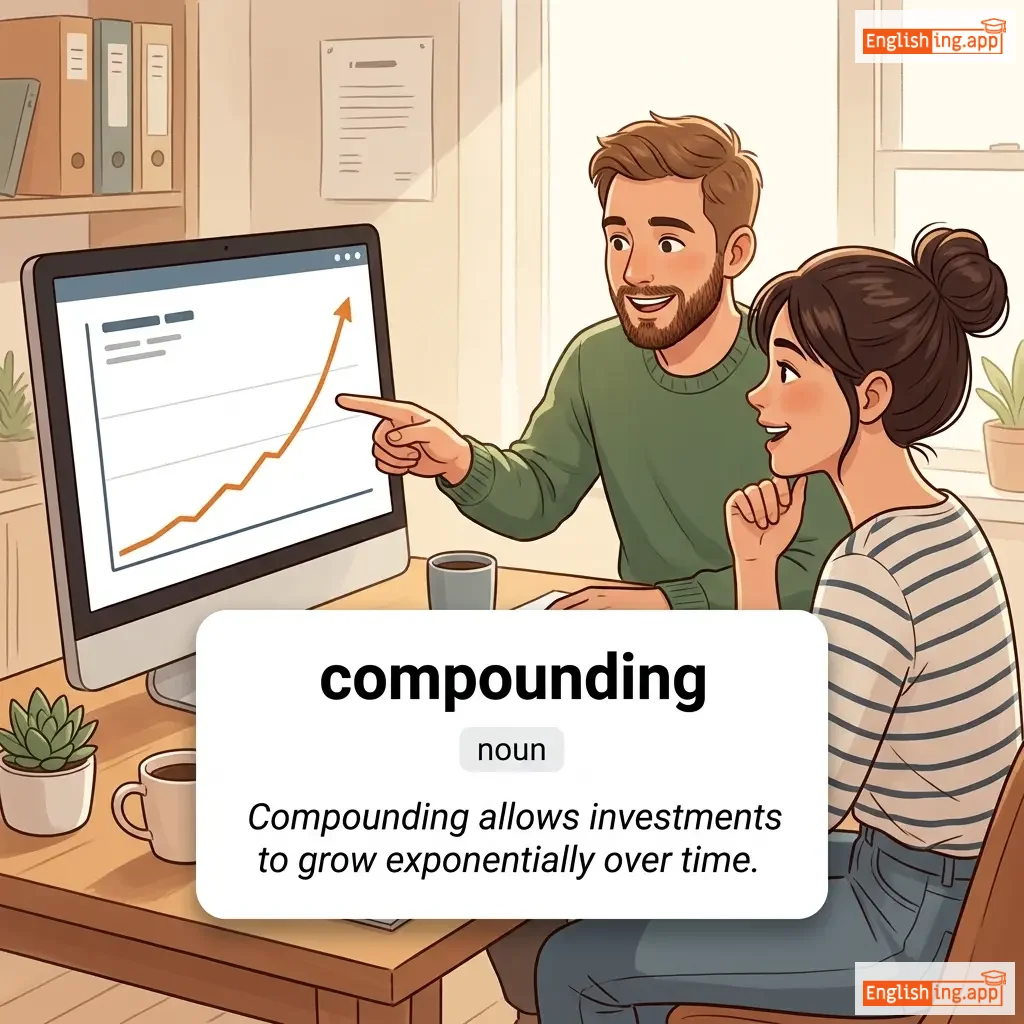
compounding definition card — visual illustration of the meaning
noun
kəmˈpaʊnd.ɪŋ
複利 (fukuri)

The process in which an asset's earnings, from either capital gains or interest, are reinvested to generate additional earnings over time.

"Compounding allows investments to grow exponentially over time."

"複利は、投資を時間とともに指数関数的に成長させます。" (Fukuri wa, tōshi o jikan to tomo ni shisū kansūteki ni seichō sasemasu.)
verb
/ˌkɒmprɪˈhɛnd/
理解する (rikai suru)

to understand or grasp the meaning of something

"It is difficult to comprehend the scale of the disaster."

"災害の規模を理解することは難しい。" (Saigai no kibo o rikai suru koto wa muzukashī.)
adjective
/ˌkɒmprɪˈhɛnsəbl/
理解できる (rikai dekiru)

able to be understood; intelligible

"The teacher explained the topic in a comprehensible way."

"先生はそのトピックを理解しやすい方法で説明しました。" (Sensei wa sono topikku o rikai shiyasui hōhō de setsumei shimashita.)
comprehension definition card — visual illustration of the meaning
noun
/ˌkɒmprɪˈhɛnʃən/
理解 (rikai)

the ability to understand something

"Good reading comprehension is essential for academic success."
"良い読解力は学業の成功に不可欠です。" (Yoi dokkairyoku wa gakugyō no seikō ni fukaketsu desu.)
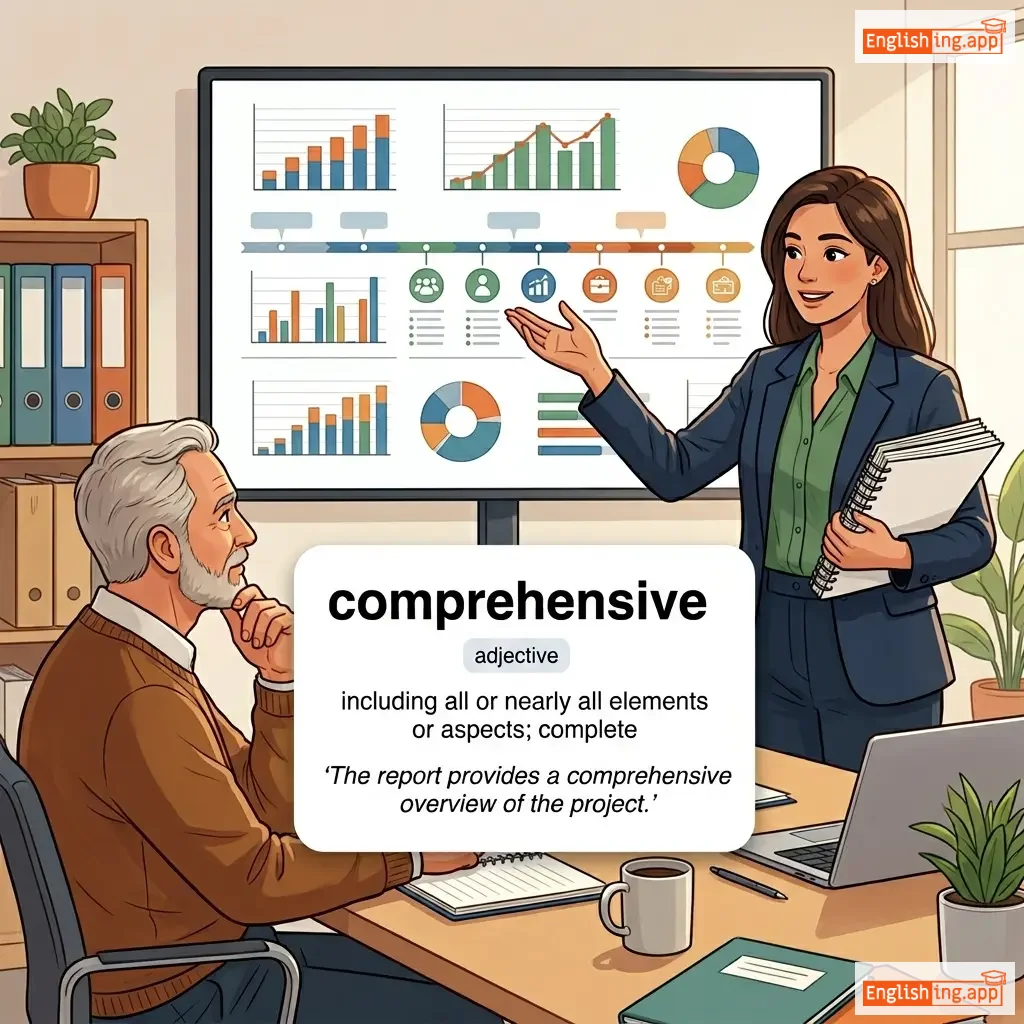
comprehensive definition card — visual illustration of the meaning
adjective
/ˌkɒmprɪˈhɛnsɪv/
包括的 (hōkatsuteki)

including all or nearly all elements or aspects; complete

"The report provides a comprehensive overview of the project."

"レポートはプロジェクトの包括的な概要を提供します。" (Repōto wa purojekuto no hōkatsuteki na gaiyō o teikyō shimasu.)
verb
/kəmˈprɛs/
圧縮する (asshuku suru)

to press or squeeze something so that it becomes smaller

"The file was compressed to save storage space."

"ファイルは圧縮されてストレージスペースを節約しました。" (Fairu wa asshuku sarete sutoressu supēsu o setsuyaku shimashita.)
adjective
/kəmˈprɛsəbl̩/
圧縮可能な (asshuku kanou na)

Capable of being compressed or reduced in volume.

"Air is a compressible substance, unlike water."

"空気は圧縮可能な物質で、水とは異なります。" (Kuki wa asshuku kanou na busshitsu de, mizu to wa kotonaru masu.)
noun
/kəmˈprɛʃn̩/
圧縮 (asshuku)

The act of pressing or squeezing something into a smaller space.

"File compression helps reduce storage requirements."

"ファイル圧縮はストレージ要件を削減するのに役立ちます。" (Fairu asshuku wa sutōreji yōken o sakugen suru no ni yakudachimasu.)