词汇表

英语词汇词典 | 单词含义、定义和示例

noun
/ˈkrɪk.ɪt/
蟋蟀 (xī shuài)

a jumping insect that makes a chirping sound by rubbing its wings together

"We could hear crickets chirping in the evening."

"我们能在傍晚听到蟋蟀的叫声。" (wo men neng zai bang wan ting dao xi shuai de jiao sheng.)
crime definition card — visual illustration of the meaning
noun
/kraɪm/
犯罪 (fànzuì)

An illegal act punishable by law.

"The police are investigating the crime."

"警方正在调查犯罪。" (jǐngfāng zhèngzài diàochá fànzuì.)
noun, adjective
/ˈkrɪmɪnəl/
罪犯 (zuìfàn)

A person who has committed a crime; relating to crime

"The police arrested a dangerous criminal last night."

"警方昨晚逮捕了一个危险的罪犯。" (Jǐngfāng zuó wǎn dàibǔle yīgè wēixiǎn de zuìfàn.)
adjective
/ˈkrɪm.zən/
深红色 (shen hong se)

a deep purplish-red color

"The crimson sunset painted the sky with beautiful shades."

"深红色的日落将天空涂抹上美丽的色调。" (Shēn hóng sè de rì luò jiāng tiānkōng túmǒ shàng měilì de sètiáo.)
verb
/krɪndʒ/
感到尴尬 (gǎndào gāngà)

To shrink back in fear, embarrassment, or discomfort.

"She cringed when she remembered her mistake."

"她想起自己的错误时,感到非常尴尬。" (Tā xiǎng qǐ zìjǐ de cuòwù shí, gǎndào fēicháng gāngà.)
verb
/ˈkrɪŋ.kəl/
皱纹 (zhòuwén)

To form small creases or wrinkles.

"She crinkled her nose at the strange smell."
"她对那股奇怪的气味皱起了鼻子。" (Tā duì nà gǔ qíguài de qìwèi zhòuqǐle bízi.)
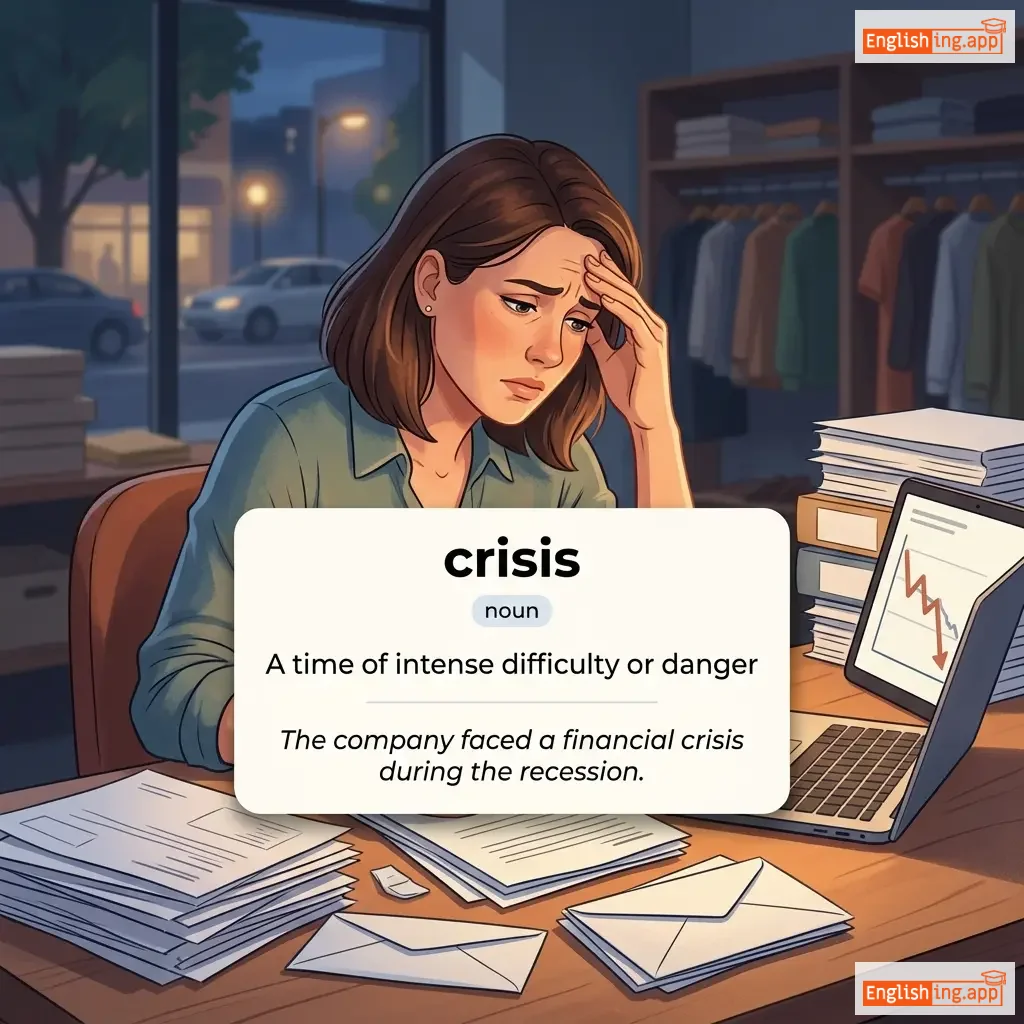
crisis definition card — visual illustration of the meaning
noun
/ˈkraɪsɪs/
危机 (weiji)

A time of intense difficulty or danger

"The company faced a financial crisis during the recession."

"在经济衰退期间,公司面临着财政危机。" (Zài jīngjì shuāituì qījiān, gōngsī miànlínzhe cáizhèng wēijī.)
noun
/kraɪˈtɪəriə/
标准 (biaozhun)

Standards or principles by which something is judged or decided.

"The candidates were evaluated based on strict criteria."

"候选人根据严格的标准进行评估。" (Hòuxuǎn rén gēnjù yángé de biāozhǔn jìnxíng pínggū.)
noun
/kraɪˈtɪəriən/
标准 (biaozhun)

A standard or rule used to make a judgment or decision.

"Honesty is an important criterion for this job."

"诚实是这份工作的一个重要标准。" (Chéng shí shì zhè fèn gōng zuò de yí gè zhòng yào biāo zhǔn.)
critic definition card — visual illustration of the meaning
noun
/ˈkrɪtɪk/
评论家 (pinglunjia)

A person who judges the merits of something, especially art or literature

"The film critic praised the director's latest movie."
"电影评论家赞扬了导演的最新电影。" (Dianying pinglunjia zanyang le daoyan de zuixin dianying.)
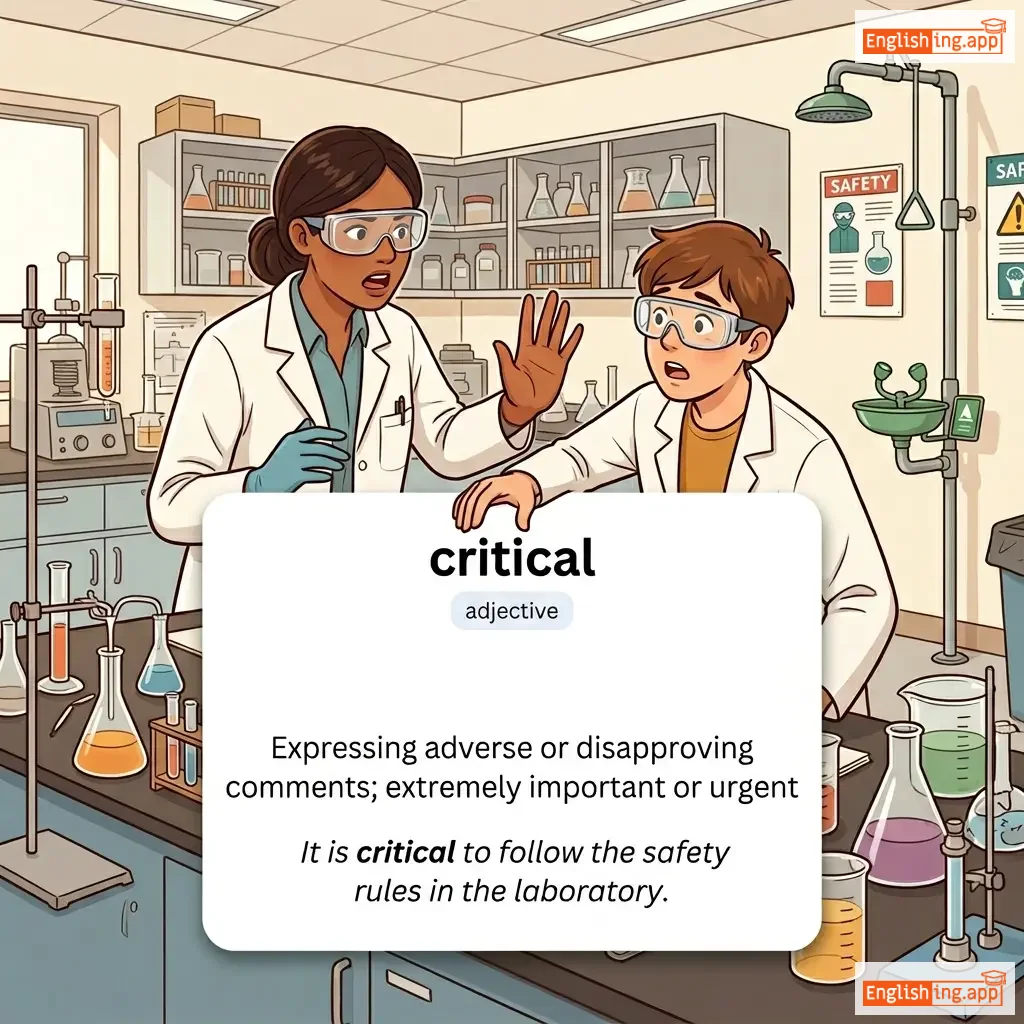
critical definition card — visual illustration of the meaning
adjective
/ˈkrɪtɪkəl/
关键的 / 紧急的 (guānjiàn de / jǐnjí de)

Expressing adverse or disapproving comments; extremely important or urgent

"It is critical to follow the safety rules in the laboratory."
"在实验室中,遵循安全规则是至关重要的。" (Zài shíyànshì zhōng, zūnxún ānquán guīzé shì zhìguān zhòngyào de.)
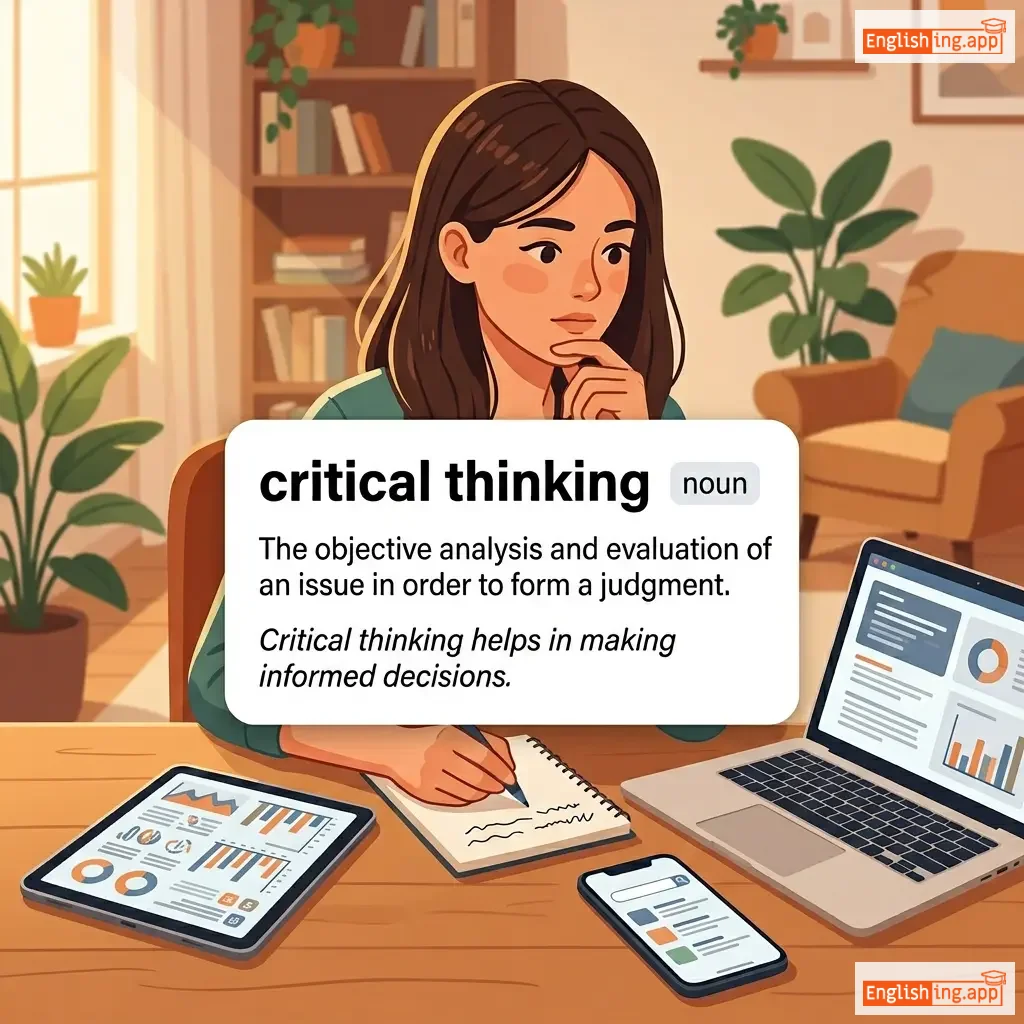
critical thinking definition card — visual illustration of the meaning
noun
ˈkrɪt.ɪ.kəl ˈθɪŋ.kɪŋ
批判性思维 (pīpànxìng sīwéi)

The objective analysis and evaluation of an issue in order to form a judgment.

"Critical thinking helps in making informed decisions."

"批判性思维有助于做出明智的决定。" (Pīpànxìng sīwéi yǒuzhù yú zuòchū míngzhì de juédìng.)
adverb
/ˈkrɪtɪkli/
严重地 (yánzhòng de)

in a way that expresses disapproval or a very serious, important way

"He was critically injured in the accident."

"他在事故中受了重伤。" (Tā zài shìgù zhōng shòu le zhòngshāng.)
noun
/ˈkrɪtɪˌsɪzəm/
批评 (pīpíng)

The expression of disapproval or judgment of the merits of something

"The new policy has faced a lot of criticism from the public."
"新政策面临来自公众的批评。" (Xīn zhèngcè miànlín láizì gōngzhòng de pīpíng.)
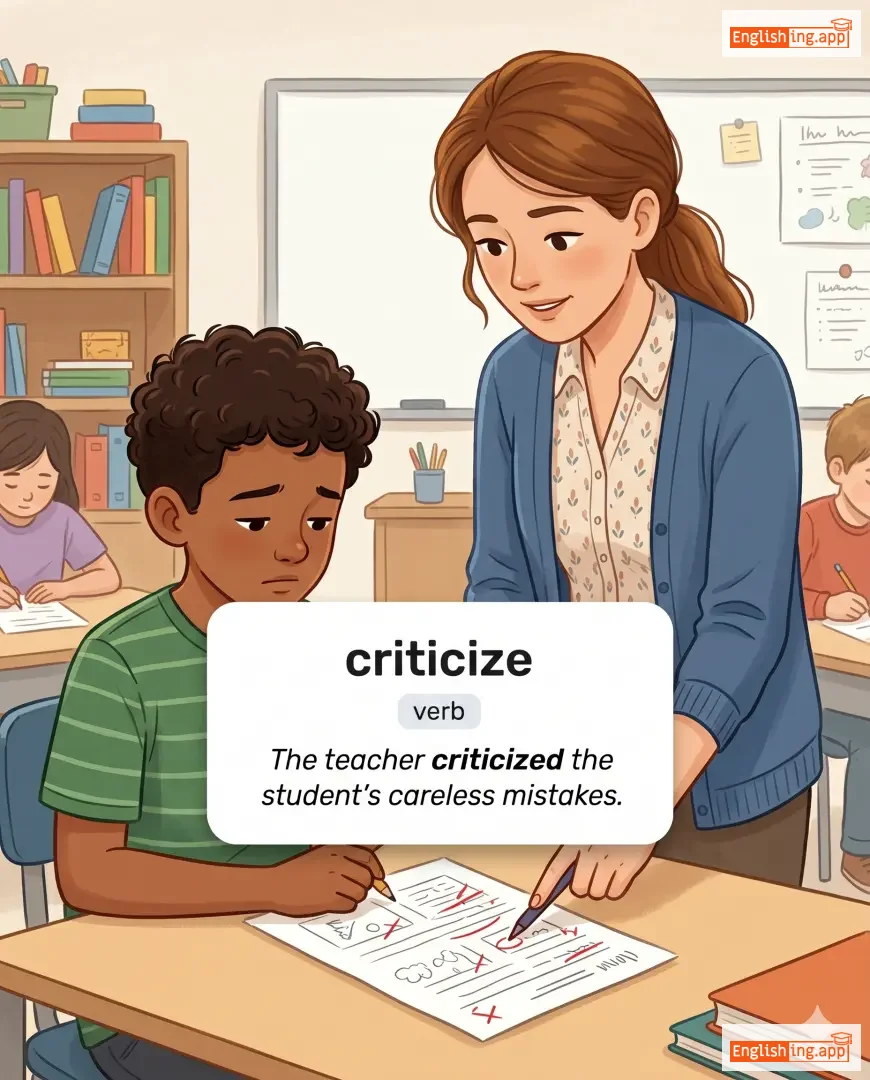
criticize definition card — visual illustration of the meaning
verb
/ˈkrɪtɪsaɪz/
批评 (pīpíng)

to express disapproval of someone or something by pointing out faults or shortcomings

"The teacher criticized the student's careless mistakes."

"老师批评了学生的粗心错误。" (Lǎoshī pīpíngle xuéshēng de cūxīn cuòwù.)
noun/verb
/krɪˈtiːk/
批评 (pīpíng)

A detailed analysis and assessment of something, especially a literary, philosophical, or political theory; to evaluate critically.

"The professor asked the students to critique each other's essays."

"教授要求学生批评彼此的论文。" (Jiàoshòu yāoqiú xuéshēng pīpíng bǐcǐ de lùnwén.)
noun/verb
/kroʊˈʃeɪ/

Needlework made by interlocking loops of thread with a hooked needle; the act of making such items.

"She learned how to crochet a scarf for winter."

noun
/krɑk pɑt/
慢炖锅 (màn dùn guō)

an electric cooking pot that cooks food slowly at low temperatures

"I put the chicken and vegetables in the crock pot before going to work."

"我在上班前把鸡肉和蔬菜放入慢炖锅中。" (Wǒ zài shàngbān qián bǎ jīròu hé shūcài fàng rù màn dùn guō zhōng)
noun
/ˈkrɒkəri/
餐具 (cānjù)

Dishes, plates, cups, and other items made of earthenware or china.

"The hotel provided clean crockery for the guests."

"酒店为客人提供了干净的餐具。" (Jiǔdiàn wèi kèrén tígōngle gānjìng de cānjù.)
noun
/ˈkrɒk.ə.daɪl/
鳄鱼 (èyú)

a large reptile with a long mouth and sharp teeth that lives in rivers and lakes in hot countries

"The crocodile slowly moved through the murky water."

"鳄鱼缓慢地穿过浑浊的水域。" (èyú huǎnmàn de chuānguò hùnchuó de shuǐyù)
🧙‍♀️

crone (kè lún)

noun
/kroʊn/
老妇人 (lǎo fù rén)

An old woman, often one who is thin and ugly, sometimes associated with witch-like qualities.

"The children were scared by the story of the wicked crone in the forest."

"孩子们被森林中邪恶老妇人的故事吓到了。" (Háizimen bèi sēnlín zhōng xié'è lǎo fù rén de gùshì xià dào le.)
noun
/ˈkroʊniˌɪzəm/
裙带关系 (qún dài guān xì)

The practice of favoring friends or associates, especially in political appointments or business deals.

"The company was accused of cronyism in hiring practices."

"该公司因招聘中的裙带关系而受到指控。" (Gāi gōngsī yīn zhāopìn zhōng de qún dài guān xì ér shòudào zhǐkòng.)
noun
/krʊk/
骗子 (pianzi)

a dishonest person, especially a criminal

"The police finally caught the crook who had been stealing cars."

"警方终于抓住了那个偷车的骗子。" (Jingfang zhongyu zhuazhu le nage tou che de pianzi.)
verb
/kruːn/
用柔和、低沉、温柔的声音唱歌或哼歌 (yòng róuhé, dīchén, wēnróu de shēngyīn chànggē huò hēnggē)

to sing or hum in a soft, low, and gentle voice

"She crooned a lullaby to help the baby fall asleep."
"她唱着摇篮曲帮助婴儿入睡。" (Tā chàngzhe yáolánqǔ bāngzhù yīngér rùshuì.)
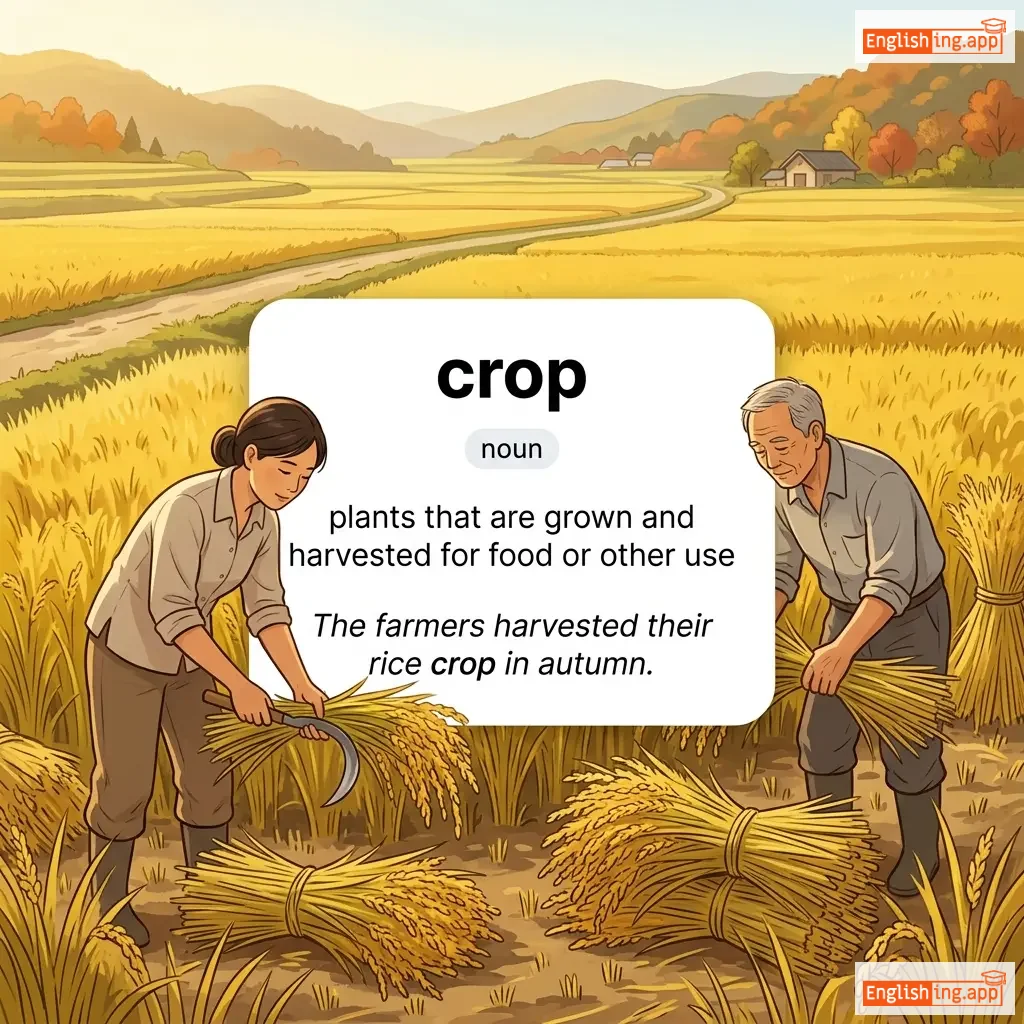
crop definition card — visual illustration of the meaning
noun
/krɒp/
农作物 (nongzuowu)

plants that are grown and harvested for food or other use

"The farmers harvested their rice crop in autumn."
"农民在秋季收获了他们的稻米作物。" (nongmin zai qiujì shōuhuòle tāmen de dàomǐ zuòwù.)
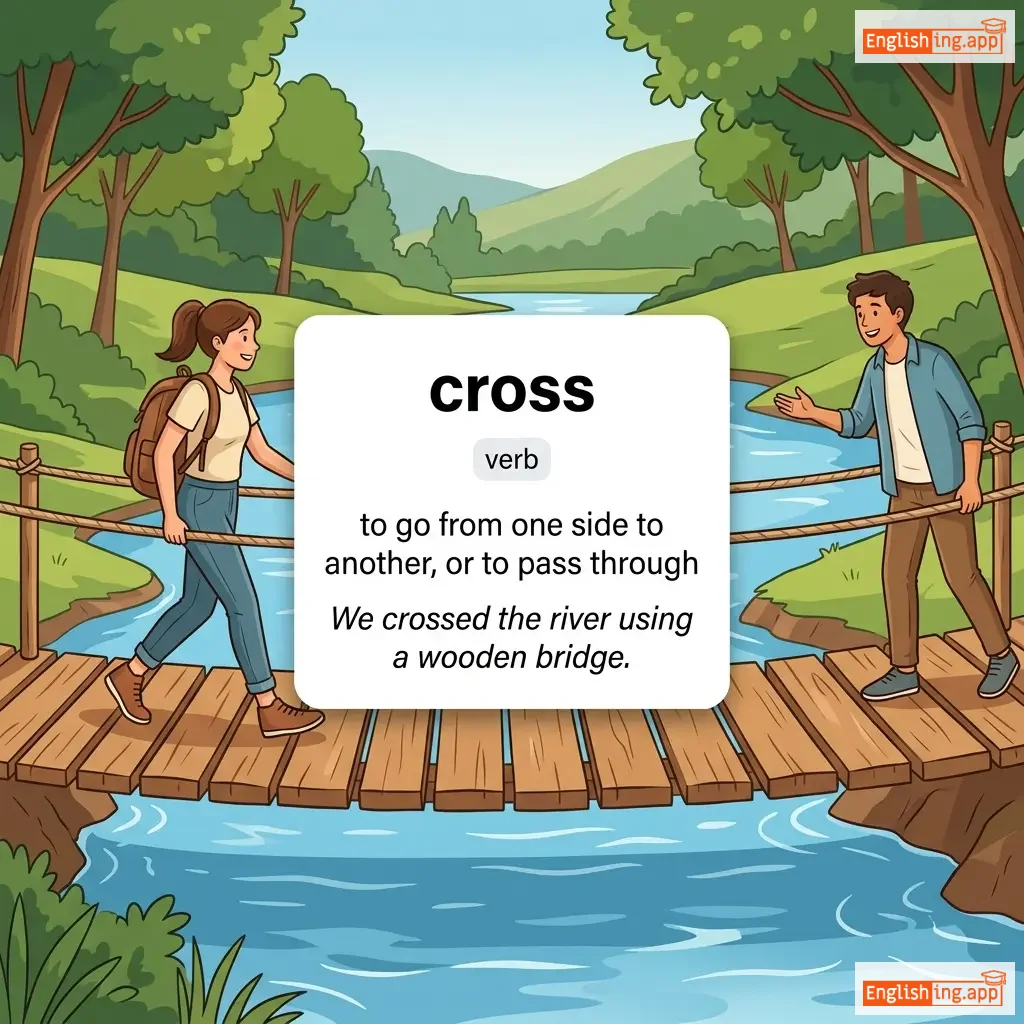
cross definition card — visual illustration of the meaning
verb
/krɒs/
穿越 (chuānyuè)

to go from one side to another, or to pass through

"We crossed the river using a wooden bridge."

"我们通过一座木桥过了河。" (Wǒmen tōngguò yī zuò mù qiáo guò le hé.)
verb
/ˈkrɒs.briːd/
杂交 (zájīao)

to produce an animal or plant by mating two different breeds, varieties, or species

"Farmers crossbreed cows to improve milk production."

"农民通过交配不同品种的牛来提高奶产量。" (Nóngmín tōngguò jiāopèi bùtóng pǐnzhǒng de niú lái tígāo nǎi chǎnliàng.)
adverb
/ˈkrɒswaɪz/
交叉方向 (jiaocha fangxiang)

in the form of a cross; diagonally across

"Place the logs crosswise to build a stable fire."

"将木柴交叉放置以建立一个稳定的火堆。" (Jiang mùchái jiaochā fàngzhì yǐ jiànlì yīgè wěndìng de huǒduī.)
adjective
/ˈkrɒtʃ.ə.ti/
脾气坏 (píqì huài)

bad-tempered, easily annoyed, and often complaining

"The crotchety old man yelled at the children for playing near his house."

"那个脾气坏的老人对在他家附近玩耍的孩子们大喊。" (Nàgè píqì huài de lǎorén duì zài tā jiā fùjìn wánshuǎ de háizimen dà hǎn.)
verb
/kraʊtʃ/

to bend your knees and lower your body close to the ground

"The cat crouched before leaping at its prey."

🐦‍⬛

Crow (kro)

noun
/kroʊ/
乌鸦 (wuyā)

a large black bird known for its intelligence and harsh call

"The crow cawed loudly from the tree branch."

"乌鸦从树枝上大声地叫。" (Wūyā cóng shùzhī shàng dàshēng de jiào.)
noun
/ˈkroʊ.bɑːr/
撬棍 (qiào gùn)

a heavy iron bar with a curved end used as a lever for prying things apart

"He used a crowbar to remove the old nails."

"他用撬棍把旧钉子取了出来。" (Tā yòng qiàogùn bǎ jiù dīngzi qǔle chūlái.)
noun
/kraʊd/
人群 (renqun)

a large number of people gathered together

"A huge crowd gathered to watch the concert."

"一个巨大的观众聚集在一起观看音乐会。" (Yi ge jueda de guanzhong juzhi zai yiqi guankan yinyuehui.)
🚶‍♂️🚶‍♀️

crowded (happiness)

adjective
/ˈkraʊdɪd/
幸福 (xìngfú)

filled with too many people or things

"The bus was so crowded that I could hardly move."

"当她收到奖项时,她无法掩饰自己的幸福。" (Dāng tā shōu dào jiǎngxiàng shí, tā wúfǎ yǎnshì zìjǐ de xìngfú.)
noun
/kraʊn/
王冠 (wangguan)

a circular ornamental headdress worn by a monarch as a symbol of authority

"The king wore his golden crown at the ceremony."

"国王在仪式上戴上了他的金色王冠。" (Guówáng zài yíshì shàng dàishàng le tā de jīnsè wángguān.)
crucial definition card — visual illustration of the meaning
adjective
/ˈkruːʃəl/
关键的 (guan-jian de)

extremely important or necessary

"Trust is crucial for a strong relationship."

"信任对强大的关系至关重要。" (Xinren dui qiangda de guanxi zhiguang zhongyao.)
noun
/ˈkruːsɪbəl/
严峻考验,熔炉 (yánjùn kǎoyàn, rónglú)

a severe test or trial; a container used for heating substances to very high temperatures

"The team emerged stronger from the crucible of competition."

"团队从竞争的熔炉中走了出来,变得更强大。" (Tuánduì cóng jìngzhēng de rónglú zhōng zǒu le chūlái, biàn dé gèng qiángdà.)
adjective
/kruːd/
原油 (yuányóu)

in a natural or raw state; not yet processed or refined

"The crude oil is processed into fuel and chemicals."

"原油被加工成燃料和化学品。" (Yuányóu bèi jiāgōng chéng ránliào hé huàxué pǐn.)
adjective
/ˈkruːəl/
残忍 (cánrěn)

Willfully causing pain or suffering to others, or feeling no concern about it.

"It was cruel to make fun of the injured boy."

"嘲笑受伤的男孩是残忍的。" (cháoxiào shòushāng de nán hái shì cánrěn de.)
noun
/ˈkruː.əl.ti/
残忍; 非人道的待遇; 导致疼痛的行为 (cánrěn, fēi réndào de dàiyù, dǎozhì téngtòng de xíngwéi)

behavior that causes pain or suffering to others; the quality of being cruel

"The documentary exposed the cruelty of factory farming to animals."

"纪录片揭示了工厂养殖对动物的残忍行为。" (Jìlùpiàn jiēshìle gōngchǎng yǎngzhí duì dòngwù de cánrěn xíngwéi.)
noun
/ˈkruːɪt/
小容器 (xiao rongqi)

a small container, especially for salt, pepper, oil, or vinegar, used at a dining table

"She filled the cruet with olive oil for the salad."

"她将橄榄油倒入调味瓶中,为沙拉准备。" (Ta jiang ganlan you dao ru tiao wei ping zhong, wei shala zhunbei.)
🛳️

cruise

verb
/kruːz/
幸福 (xìngfú)

to travel smoothly at a moderate speed, especially for pleasure

"They decided to cruise along the coast during their vacation."

"她无法掩饰当她收到奖项时的幸福。" (Tā wúfǎ yǎnshì dāng tā shōudào jiǎngxiàng shí de xìngfú.)
compounding definition card — visual illustration of the meaning
noun
kəmˈpaʊnd.ɪŋ
复利 (fùlì)

The process in which an asset's earnings, from either capital gains or interest, are reinvested to generate additional earnings over time.

"Compounding allows investments to grow exponentially over time."

"复利使投资随着时间的推移呈指数增长。" (Fùlì shǐ tóuzī suízhe shíjiān de tuīyí chéng zhǐshù zēngzhǎng.)
verb
/ˌkɒmprɪˈhɛnd/
理解 (lǐjiě)

to understand or grasp the meaning of something

"It is difficult to comprehend the scale of the disaster."

"理解灾难的规模很困难。" (Lǐjiě zāinàn de guīmó hěn kùnnán.)
adjective
/ˌkɒmprɪˈhɛnsəbl/
可理解的 (kelijiede)

able to be understood; intelligible

"The teacher explained the topic in a comprehensible way."

"老师以一种可以理解的方式解释了这个话题。" (Lǎoshī yǐ yī zhǒng kěyǐ lǐjiě de fāngshì jiěshì le zhège huàtí.)
comprehension definition card — visual illustration of the meaning
noun
/ˌkɒmprɪˈhɛnʃən/
理解 (lijiě)

the ability to understand something

"Good reading comprehension is essential for academic success."

"良好的阅读理解对学术成功至关重要。" (Liánghǎo de yuèdú lǐjiě duì xuéshù chénggōng zhìguān zhòngyào.)
comprehensive definition card — visual illustration of the meaning
adjective
/ˌkɒmprɪˈhɛnsɪv/
全面 (quánmiàn)

including all or nearly all elements or aspects; complete

"The report provides a comprehensive overview of the project."

"报告提供了项目的全面概述。" (Bàogào tígōngle xiàngmù de quánmiàn gàishuò.)
verb
/kəmˈprɛs/
压缩 (yāsuō)

to press or squeeze something so that it becomes smaller

"The file was compressed to save storage space."

"文件被压缩以节省存储空间。" (wénjiàn bèi yāsuō yǐ jiéshěng cúnchú kōngjiān.)
adjective
/kəmˈprɛsəbl̩/
可压缩的 (ke ya suode)

Capable of being compressed or reduced in volume.

"Air is a compressible substance, unlike water."

"空气是一种可压缩的物质,不像水。" (Kongqi shi yizhong ke yasuo de wuzhi, bu xiang shui.)
noun
/kəmˈprɛʃn̩/
压缩 (yāsuō)

The act of pressing or squeezing something into a smaller space.

"File compression helps reduce storage requirements."

"文件压缩有助于减少存储需求。" (Wénjiàn yāsuō yǒuzhù yú jiǎnshǎo cúnchú xūqiú.)