词汇表

英语词汇词典 | 单词含义、定义和示例

verb
/kəmˈpraɪz/
由...组成 (you...zuchéng)

To consist of or be made up of something.

"The committee comprises five members."

"委员会由五个成员组成。" (Wěiyuánhuì yóu wǔ gè chéngyuán zǔchéng.)
compromise definition card — visual illustration of the meaning
noun, verb
/ˈkɒmprəmaɪz/
妥协 (tuǒxié)

A settlement of differences in which each side makes concessions; or to weaken or put at risk.

"They reached a compromise after long negotiations."

"他们在长时间的谈判后达成了妥协。" (Tāmen zài cháng shíjiān de tánpàn hòu dáchéngle tuǒxié.)
noun
/kəmˈpʌlʃn̩/
强迫 (qiǎngpò)

An irresistible urge to do something, or the act of being forced.

"He felt a strong compulsion to check his phone constantly."

"他感到强烈的冲动,不停地查看他的电话。" (Tā gǎndào qiángliè de chōngdòng, bùtíng de chá kàn tā de diànhuà.)
adjective
/kəmˈpʌlsɪv/
强迫的 (qiang po de)

Resulting from or acting on an irresistible urge, especially one that is against one's conscious wishes.

"He is a compulsive gambler who cannot stop placing bets."

"他是一个强迫症赌博者,无法停止下赌注。" (ta shi yi ge qiangpozheng duzhuo, wufa tingzhi xia duzhu.)
adjective
/kəmˈpʌlsəri/
强制性 (qiángzhìxìng)

Required by law or a rule; obligatory.

"Wearing seat belts is compulsory in most countries."
"在大多数国家,佩戴安全带是强制性的。" (Zài dà duōshù guójiā, pèidài ānquán dài shì qiángzhìxìng de.)
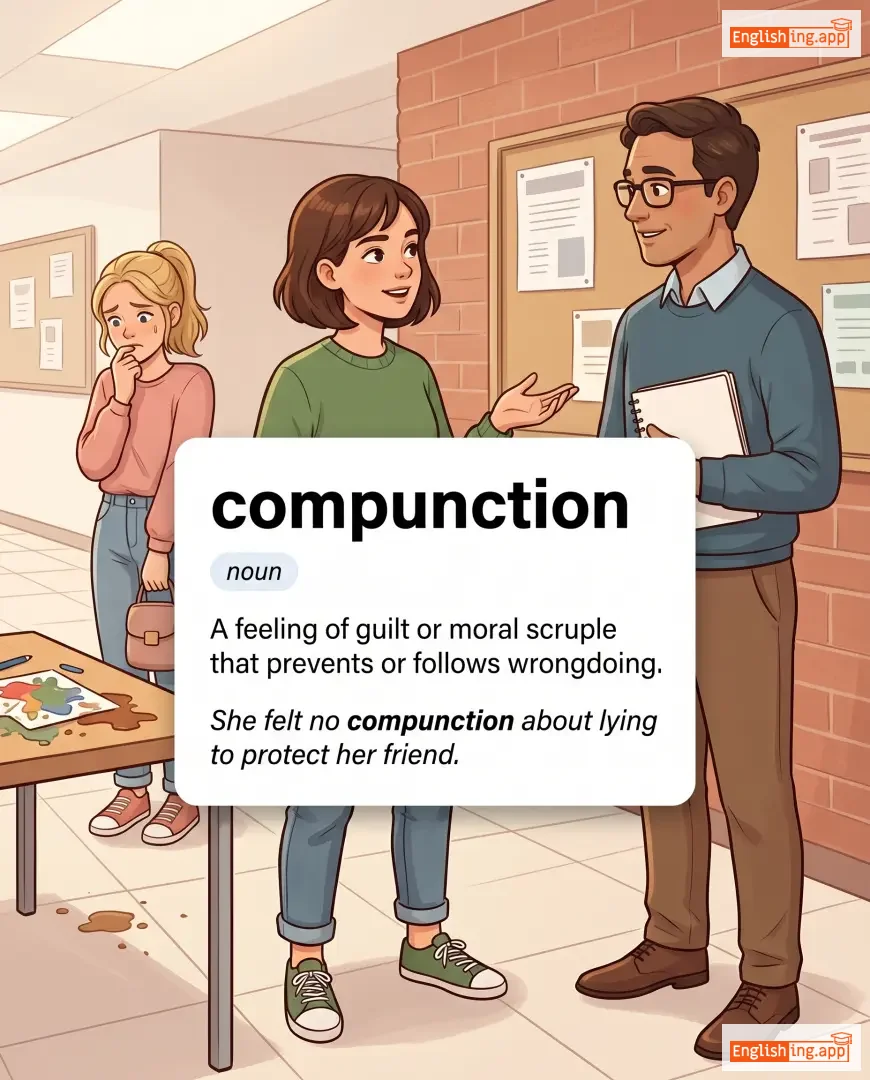
compunction definition card — visual illustration of the meaning
noun
/kəmˈpʌŋkʃən/
良心不安 (liángxīn bù'ān)

A feeling of guilt or moral scruple that prevents or follows wrongdoing.

"She felt no compunction about lying to protect her friend."

"她在撒谎以保护朋友时没有感到良心不安。" (Tā zài sāhuǎng yǐ bǎohù péngyǒu shí méiyǒu gǎndào liángxīn bù'ān.)
computation definition card — visual illustration of the meaning
noun
ˌkɒm.pjʊˈteɪ.ʃən
计算 (jisuan)

The action of mathematical calculation.

"Complex computation is required for AI models."
"复杂的计算对AI模型来说是必须的。" (Fuzha de jisuan dui AI moxing lai shuo shi bixu de.)
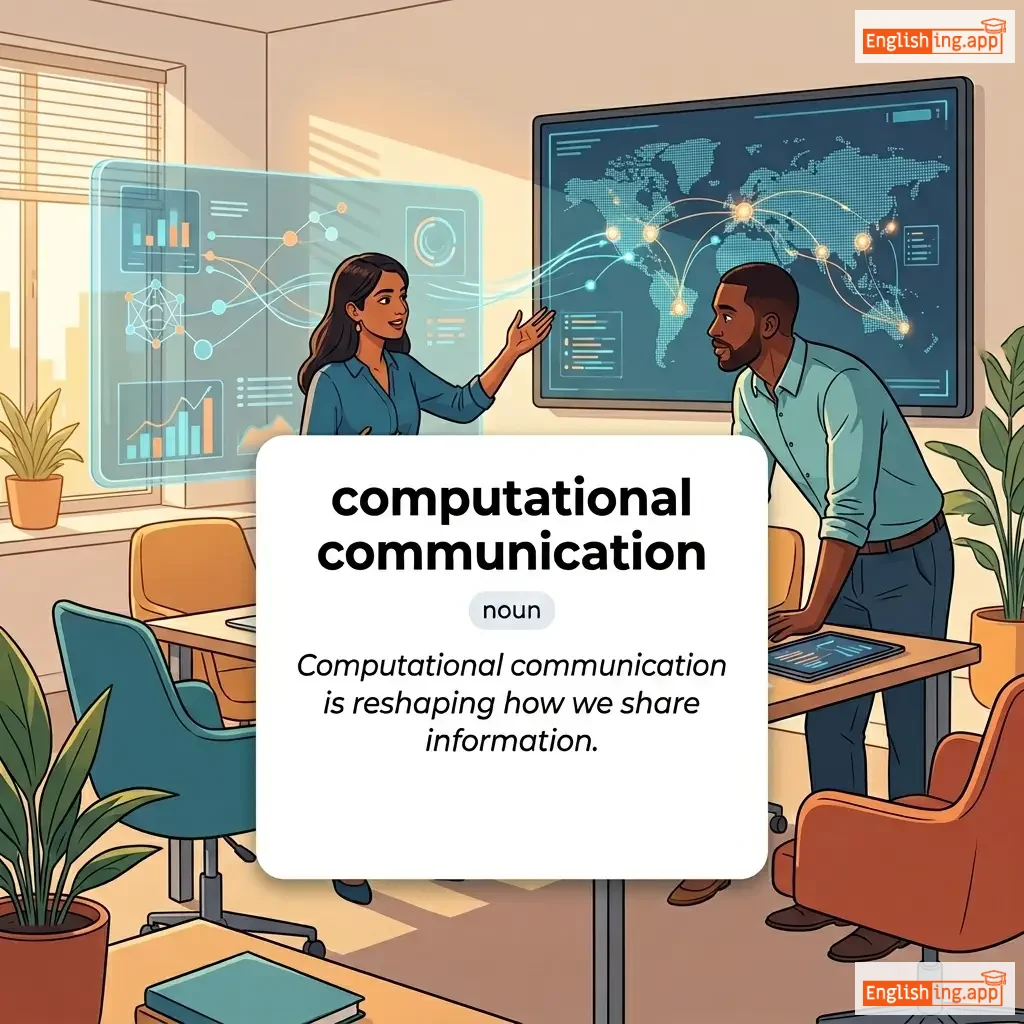
computational communication definition card — visual illustration of the meaning
noun
ˌkɒmpjʊˈteɪʃənəl kəˌmjuːnɪˈkeɪʃən
计算通信 (jisuan tongxin)

Digital exchange and automated interaction; the use of computational methods and systems to facilitate communication and information sharing.

"Computational communication is reshaping how we share information."

"计算通信正在重塑我们共享信息的方式。" (Jisuan tongxin zhengzai chongsu women gongxiang xinxi de fangshi.)
compute definition card — visual illustration of the meaning
verb
/kəmˈpjuːt/
计算 (jisuan)

To calculate or determine by using a computer or mathematical methods.

"The software can compute the total cost in seconds."

"该软件可以在几秒钟内计算出总成本。" (Gai ruanjian keyi zai ji miaozhong nei jisuan chu zong chengben.)
noun
/kəmˈpjuːtə(r)/
计算机 (jisuanji)

an electronic device for storing and processing data

"I bought a new computer for my office work."

"我为我的办公室工作买了台新电脑。" (Wo wei wode bangongshi gongzuo maile tai xin dian nao.)
verb
/kɒnˈkætəneɪt/
连接 (liánjiē)

To link things together in a series or chain.

"The program concatenates two strings into one."

"程序将两个字符串连接为一个。" (Chéngxù jiāng liǎng gè zìrùn liánjiē wéi yī gè.)
concave definition card — visual illustration of the meaning
adjective
/ˈkɒn.keɪv/
凹形 (ao xing)

curved inward like the inside of a bowl

"The mirror had a concave surface that magnified her reflection."

"镜子有一个凹形表面,放大了她的倒影。" (Jingzi you yige ao xing biaomian, fangda le ta de daoying.)
verb
/kənˈsiːl/
隐藏 (yin cang)

to hide something or keep it secret

"He tried to conceal his disappointment behind a smile."

"他试图用微笑掩饰自己的失望。" (Ta shitu yong weixiao yanshi ziji de shiwang.)
verb
/kənˈsiːd/

to admit something is true or valid, often reluctantly

"She finally conceded that she was wrong."

noun
/kənˈsiːt/
自负 (zì fù)

excessive pride in oneself; vanity

"His conceit made him unpopular among his colleagues."

"他的自负让他在同事中不受欢迎。" (Tā de zì fù ràng tā zài tóng shì zhōng bù shòu huānyíng.)
verb
/kənˈsiːv/
构思, 怀孕 (gousi, huaiyun)

to form or imagine an idea in the mind; to become pregnant

"It is hard to conceive how such an idea could succeed."

"很难想象这样的想法如何能够成功。" (Hen nan xiangxiang zheyang de xiangfa ruhe nenggou chenggong.)
verb
/ˈkɒnsəntreɪt/
集中 (jízhōng)

to focus all one's attention or mental effort on a particular object or activity

"She tried to concentrate on her studies despite the noise."

"尽管有噪音,她仍试图集中精力学习。" (jǐnguǎn yǒu zàoyīn, tā réng shìtú jízhōng jīnglì xuéxí.)
concentration definition card — visual illustration of the meaning
noun
/ˌkɒnsnˈtreɪʃən/
集中力 (ji zhong li)

the act of focusing one's attention or mental effort on something

"Good concentration is essential for success in exams."

"良好的专注力对于考试成功至关重要。" (Liánghǎo de zhuānzhù lì duìyú kǎoshì chénggōng zhìguān zhòngyào.)
adjective
/kənˈsɛntrɪk/
同心的 (tóngxīn de)

having a common center, as in circles or spheres

"The artist drew concentric circles on the canvas."
"艺术家在画布上画了同心圆。" (Yìshùjiā zài huàbù shàng huàle tóngxīn yuán.)
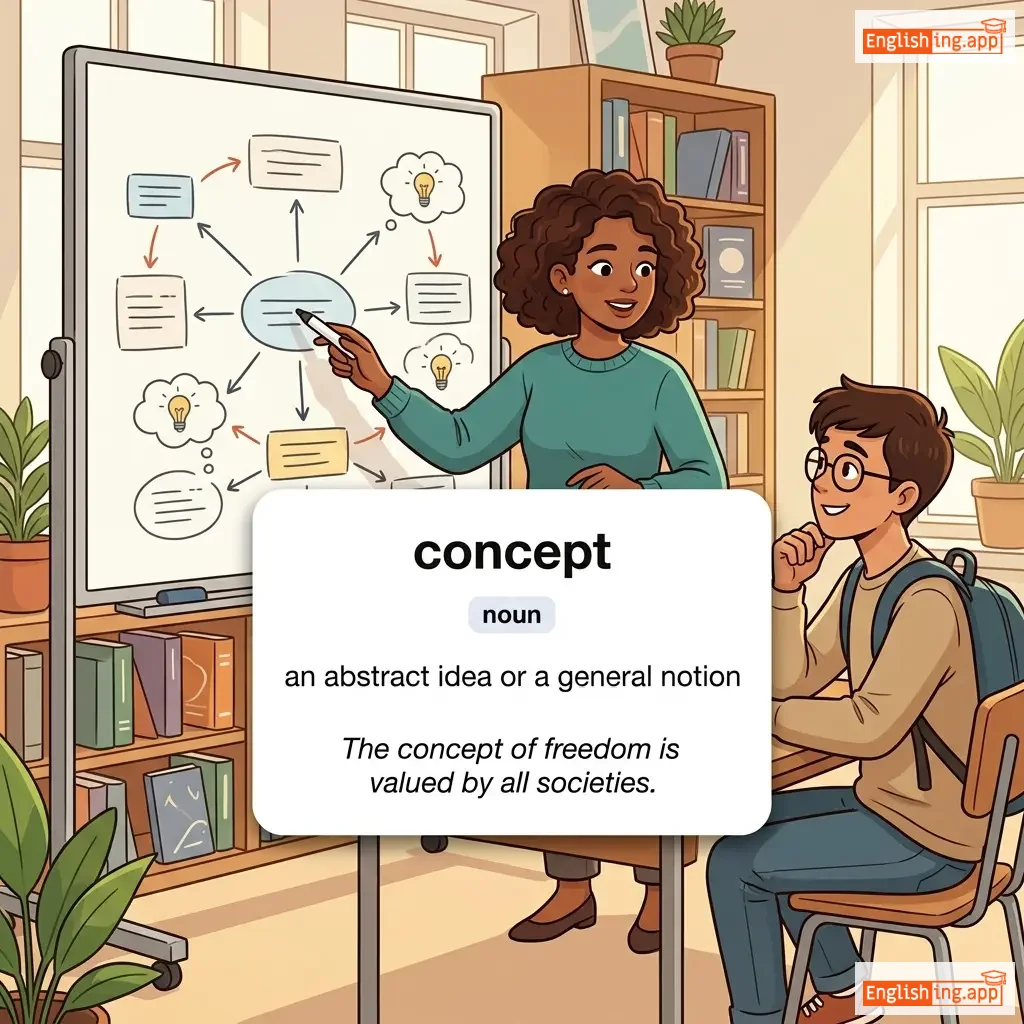
concept definition card — visual illustration of the meaning
noun
/ˈkɒnsɛpt/
概念 (gàiniàn)

an abstract idea or a general notion

"The concept of freedom is valued by all societies."

"自由的概念受到所有社会的重视。" (Zìyóu de gàiniàn shòudào suǒyǒu shèhuì de zhòngshì.)
noun
/kənˈsɛpʃən/
构思, 受孕 (gòusī, shòuyùn)

the forming or understanding of an idea; the act of conceiving a child

"Her conception of the project was very different from ours."

"她对这个项目的构思与我们的完全不同。" (tā duì zhège xiàngmù de gòusī yǔ wǒmen de wánquán bùtóng.)
conceptualization definition card — visual illustration of the meaning
noun
kənˌsep.tʃu.ə.laɪˈzeɪ.ʃən
概念化 (gàiniànhuà)

The process of forming a concept or idea; the process of developing something in the mind.

"The conceptualization of renewable cities is groundbreaking."

"可再生城市的概念化是革命性的。" (Kě zàishēng chéngshì de gàiniànhuà shì gémìngxìng de.)
verb
/kənˈsɛptʃuəlaɪz/
构思 (gousi)

to form an idea or concept of something in your mind

"The artist conceptualized a new design for the exhibition."

"艺术家为展览构思了一个新的设计。" (Yishujia wei zhanlan gousi le yige xin de sheji.)
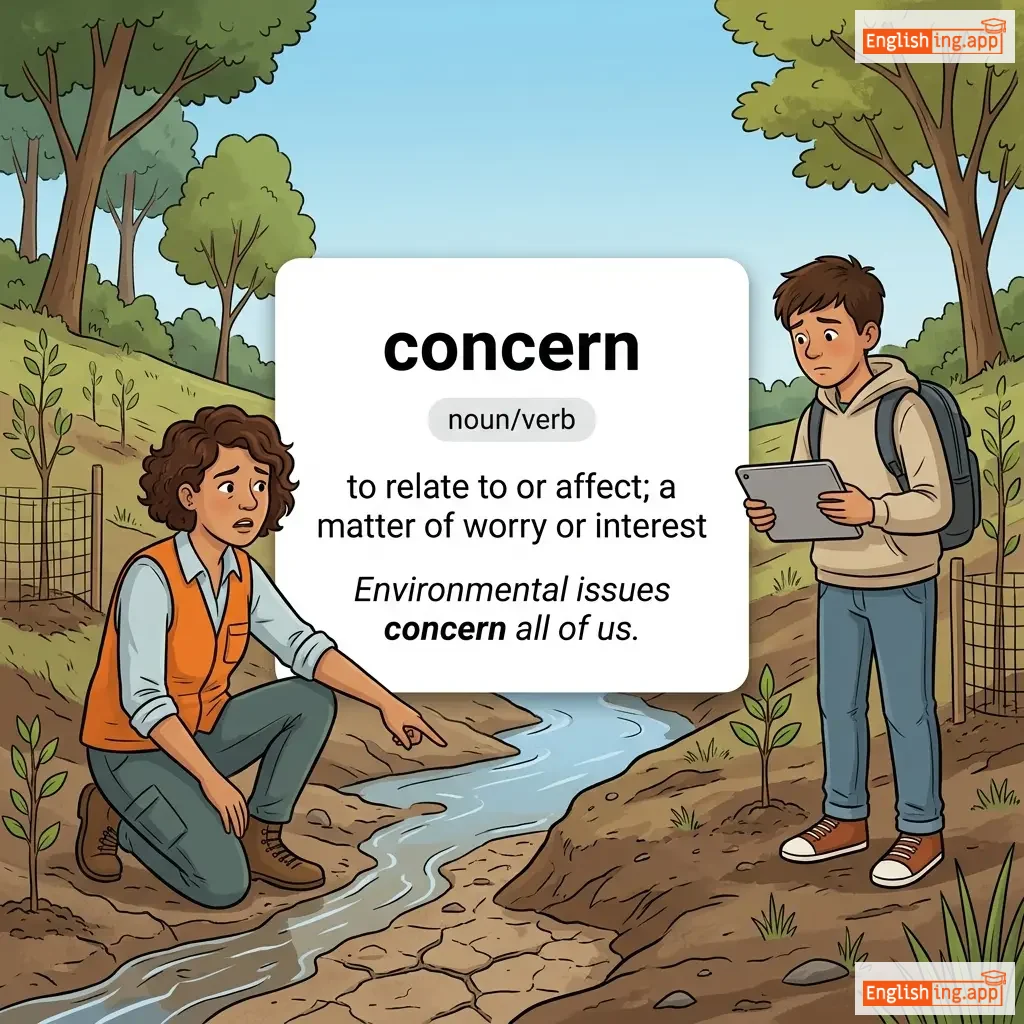
concern definition card — visual illustration of the meaning
noun/verb
/kənˈsɜːrn/

to relate to or affect; a matter of worry or interest

"Environmental issues concern all of us."

adjective
/kənˈsɜːnd/
担忧的 (dānyōu de)

worried or anxious about something; involved or interested in something

"She was concerned about her mother's health."

"她对母亲的健康感到担忧。" (Tā duì mǔqīn de jiànkāng gǎndào dānyōu.)
preposition
/kənˈsɜːnɪŋ/
关于 (guānyú)

about or relating to something; causing worry or anxiety

"There are some reports concerning the new project."

"关于新项目有一些报告。" (Guānyú xīn xiàngmù yǒu yīxiē bàogào.)
concert definition card — visual illustration of the meaning
noun
/ˈkɒnsət/
音乐会 (yīnyuè huì)

A musical performance given by one or more singers or musicians.

"We went to a concert last night and enjoyed the live music."

"我们昨晚去了一场音乐会,并享受了现场音乐。" (Wǒmen zuó wǎn qùle yīchǎng yīnyuè huì, bìng xiǎngshòule xiànchǎng yīnyuè.)
adjective
/kənˈsɜːrtɪd/
协调的 (xié tiáo de)

done with great effort, planned and performed together by multiple people

"The workers made a concerted effort to improve conditions."

"工人们为改善条件做出了协调的努力。" (Gōngrén men wèi gǎishàn tiáojiàn zuòchūle xiétiáo de nǔlì.)
noun
/kənˈtʃɛrtoʊ/
音乐作品 (yīnyuè zuòpǐn)

a musical composition for one or more solo instruments accompanied by an orchestra

"She played a Mozart concerto with the orchestra."

"她与乐队一起演奏了莫扎特的协奏曲。" (Tā yǔ yuèduì yīqǐ yǎnzòu le mòzhātè de xiézòuqǔ.)
noun
/kənˈsɛʃən/
让步 (rangbu)

something that is granted, especially in response to demands; a compromise

"The company made several concessions during the negotiations."

"公司在谈判中做出了几次让步。" (Gongsi zai tanpan zhong zuo chule jici rangbu.)
noun
/kɑːntʃ/
海螺 (hǎiluó)

a large spiral shell, often used as a trumpet in ceremonies

"The priest blew the conch to begin the ritual."

"牧师吹响了海螺,开始了仪式。" (Mùshī chuīxiǎngle hǎiluó, kāishǐle yíshì.)
🕊️

conciliate

verb
/kənˈsɪlieɪt/

to stop someone from being angry; to win over by friendly acts

"He tried to conciliate the angry customer with an apology."
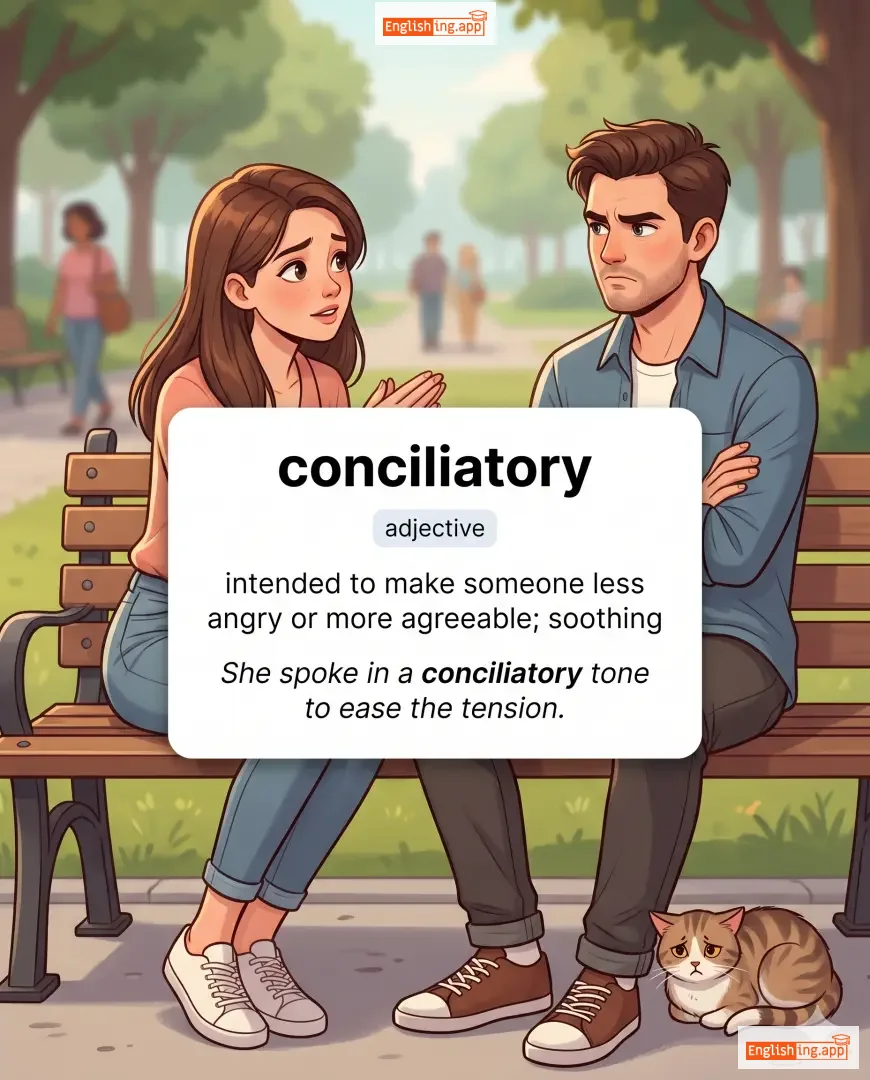
conciliatory definition card — visual illustration of the meaning
adjective
/kənˈsɪliətɔːri/
调解的 (tiao jie de)

intended to make someone less angry or more agreeable; soothing

"She spoke in a conciliatory tone to ease the tension."

"她以调解的语气说话,以缓解紧张气氛。" (Tā yǐ tiáojiě de yǔqì shuōhuà, yǐ huǎnjiě jǐnzhāng qìfēn.)
concise definition card — visual illustration of the meaning
adjective
/kənˈsaɪs/
简洁 (jianjie)

giving much information clearly and in a few words; brief but comprehensive

"The teacher asked for a concise summary of the article."

"老师要求提供文章的简洁总结。" (Laoshi yaoqiu tigong wenzhang de jianjie zongjie.)
noun
/kɒŋk/
海螺 (hǎiluó)

a shell, especially a large spiral one used as a horn or for decoration

"The priest blew the conch shell to signal the start of the ceremony."

"祭司吹响了海螺,标志着仪式的开始。" (Jìsī chuīxiǎngle hǎiluó, biāozhìzhe yíshì de kāishǐ.)
noun
/ˈkɒnk.leɪv/
秘密会议 (mìmì huìyì)

a private meeting, especially a secret or important one

"The leaders met in a secret conclave to discuss the strategy."
"领导们在一个秘密的集会上讨论战略。" (Lǐngdǎo men zài yī gè mìmì de jíhuì shàng tǎolùn zhànlüè.)
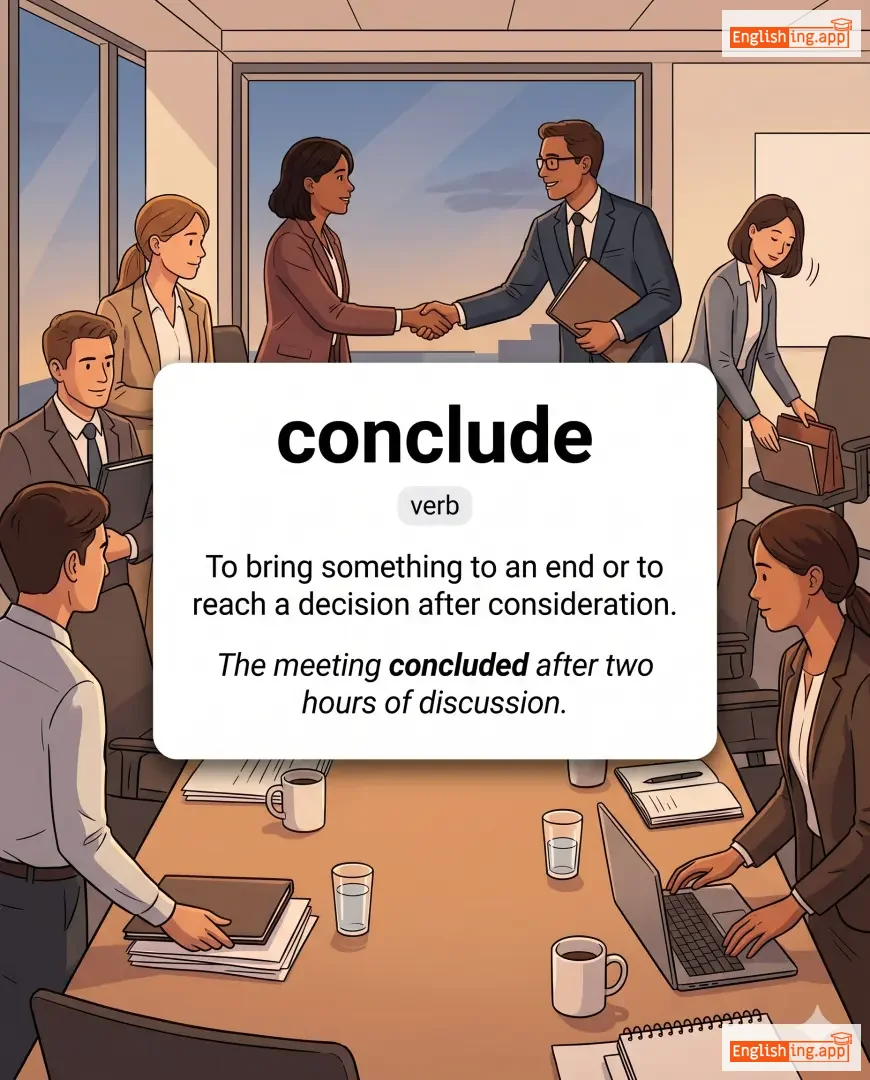
conclude definition card — visual illustration of the meaning
verb
/kənˈkluːd/
结束,做出决定 (jiéshù, zuò chū juédìng)

To bring something to an end or to reach a decision after consideration.

"The meeting concluded after two hours of discussion."

"会议在两个小时的讨论后结束。" (Huìyì zài liǎng gè xiǎoshí de tǎolùn hòu jiéshù.)
noun
/kənˈkluːʒən/
结论 (jie lun)

The end or finish of an event, process, or text; a judgment reached after consideration.

"The research paper ends with a strong conclusion."

"研究论文以一个有力的结论结束。" (Yánjiū lùnwén yǐ yīgè yǒulì de jiélùn jiéshù.)
adjective
/kənˈkluːsɪv/
决定性的 (juédìngxìng de)

serving to prove a case; decisive or convincing

"The DNA test provided conclusive evidence of his innocence."

"DNA测试提供了他无辜的决定性证据。" (DNA cèshì tígōngle tā wúgū de juédìngxìng zhèngjù.)
concoct definition card — visual illustration of the meaning
verb
/kənˈkɒkt/
混合或发明 (hunhe huo faming)

to make something, especially food or a story, by mixing or inventing

"He concocted a story to explain his absence."

"他编造了一个故事来解释他的缺席。" (Ta bianzhao le yige gushi lai jiexplain ta de quexi.)
concomitant definition card — visual illustration of the meaning
adjective
/kənˈkɒmɪtənt/
伴随的 (bànsuízhe de)

Naturally accompanying or associated with something.

"Increased stress is often concomitant with long working hours."

"增加的压力通常与长时间的工作时间并存。" (Zēngjiā de yālì tōngcháng yǔ cháng shíjiān de gōngzuò shíjiān bìngcún.)
concord definition card — visual illustration of the meaning
noun
/ˈkɒŋ.kɔːd/
和谐 (hexie)

Agreement or harmony between people or groups.

"The two nations lived in concord for many years."

"这两个国家多年来和谐相处。" (Zhe liang ge guo jia duo nian lai hexie xiang chu.)
noun
/kənˈkɔːrdəns/
一致性 (yīzhìxìng)

Agreement; also an alphabetical index of the principal words in a book.

"There is a strong concordance between the two reports."

"这两个报告之间有很强的一致性。" (Zhè liǎng gè bàogào zhī jiān yǒu hěn qiáng de yīzhìxìng.)
noun
/ˈkɒŋ.kɔː.dæt/
教廷协议 (jiàotíng xiéyì)

An agreement or treaty, especially between the Vatican and a secular government.

"The concordat established the rights of the church within the country."

"教廷协议确立了教会在该国的权利。" (Jiàotíng xiéyì quèlìle jiàohuì zài gāiguó de quánlì.)
adjective
/ˈkɒŋkriːt/
具体 (juti)

based on facts, not on ideas or guesses; specific and real

"She gave a concrete example to support her argument."

"她举了一个具体的例子来支持她的论点。" (Tā jǔle yīgè jùtǐ de lìzi lái zhīchí tā de lùndiǎn.)
verb
/kənˈkɜːr/
同意 (tóngyì)

To agree with someone or something.

"I concur with your opinion on this matter."

"我同意您在这个问题上的观点。" (Wǒ tóngyì nín zài zhège wèntí shàng de guāndiǎn.)
noun
/kənˈkʌrəns/
一致 (yīzhì)

Agreement or union in action, opinion, or occurrence; simultaneous happening of events.

"The project was completed with the concurrence of all departments."

"这个项目是在所有部门的共识下完成的。" (Zhege xiangmu shi zai suoyou bumen de gongshi xia wancheng de.)
concurrent definition card — visual illustration of the meaning
adjective
/kənˈkʌrənt/
同时发生的 (tóngshí fāshēng de)

Happening, existing, or done at the same time.

"The university offers several concurrent courses during the summer."

"大学在夏季提供几门同时进行的课程。" (Dàxué zài xiàjì tígōng jǐmén tóngshí jìnxíng de kèchéng.)
noun
/kənˈkʌʃən/
脑震荡 (nao zhen dang)

A temporary unconsciousness or shock caused by a blow to the head.

"He suffered a concussion after falling from the bike."

"他在从自行车上摔下来后,遭受了脑震荡。" (Ta zai cong zixingche shang shuai xiala hou, zaoshou le nao zhendang.)
condemn definition card — visual illustration of the meaning
verb
/kənˈdɛm/
谴责 (qianze)

To express strong disapproval of; to declare something as wrong or unacceptable.

"The government condemned the act of violence."

"政府谴责了暴力行为。" (zhèngfǔ qiǎnzéle bàolì xíngwéi.)