Vocabulaires

Découvrez, apprenez et maîtrisez le vocabulaire anglais

verb
/kəmˈpraɪz/
comprendre (comprendre)

To consist of or be made up of something.

"The committee comprises five members."

"Le comité est composé de cinq membres." (Le comité est composé de cinq membres.)
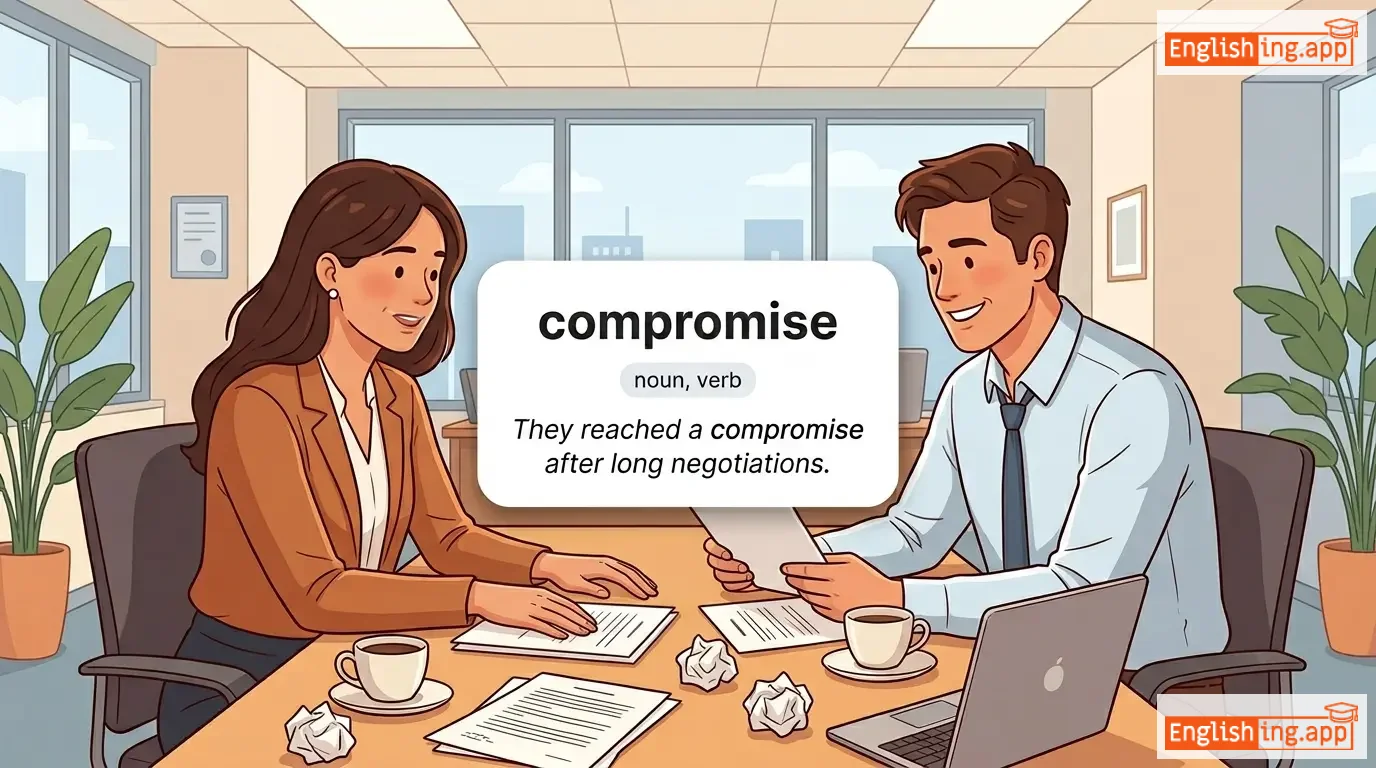
compromise definition card — visual illustration of the meaning
noun, verb
/ˈkɒmprəmaɪz/
compromis (compromis)

A settlement of differences in which each side makes concessions; or to weaken or put at risk.

"They reached a compromise after long negotiations."

"Ils ont trouvé un compromis après de longues négociations." (Ils ont trouvé un compromis après de longues négociations.)
noun
/kəmˈpʌlʃn̩/
compulsion (compulsion)

An irresistible urge to do something, or the act of being forced.

"He felt a strong compulsion to check his phone constantly."

"Il a ressenti une forte compulsion de vérifier son téléphone constamment." (Il a ressenti une forte compulsion de vérifier son téléphone constamment.)
adjective
/kəmˈpʌlsɪv/
compulsif (compulsif)

Resulting from or acting on an irresistible urge, especially one that is against one's conscious wishes.

"He is a compulsive gambler who cannot stop placing bets."

"C'est un joueur compulsif qui ne peut pas arrêter de parier." (C'est un joueur compulsif qui ne peut pas arrêter de parier.)
adjective
/kəmˈpʌlsəri/
obligatoire (obligatoire)

Required by law or a rule; obligatory.

"Wearing seat belts is compulsory in most countries."

"Porter des ceintures de sécurité est obligatoire dans la plupart des pays." (Porter des ceintures de sécurité est obligatoire dans la plupart des pays.)
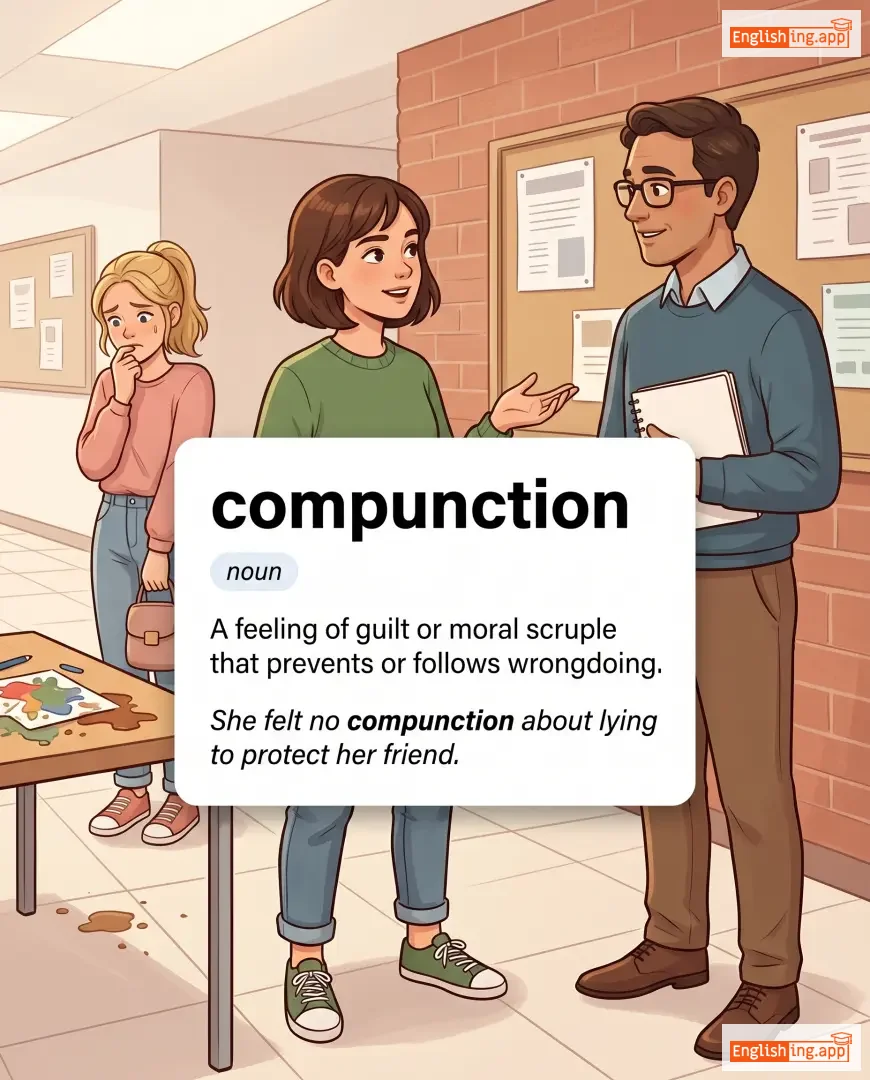
compunction definition card — visual illustration of the meaning
noun
/kəmˈpʌŋkʃən/
remords (remords)

A feeling of guilt or moral scruple that prevents or follows wrongdoing.

"She felt no compunction about lying to protect her friend."

"Elle n'a ressenti aucun remords en mentant pour protéger son amie." (Elle n'a ressenti aucun remords en mentant pour protéger son amie.)
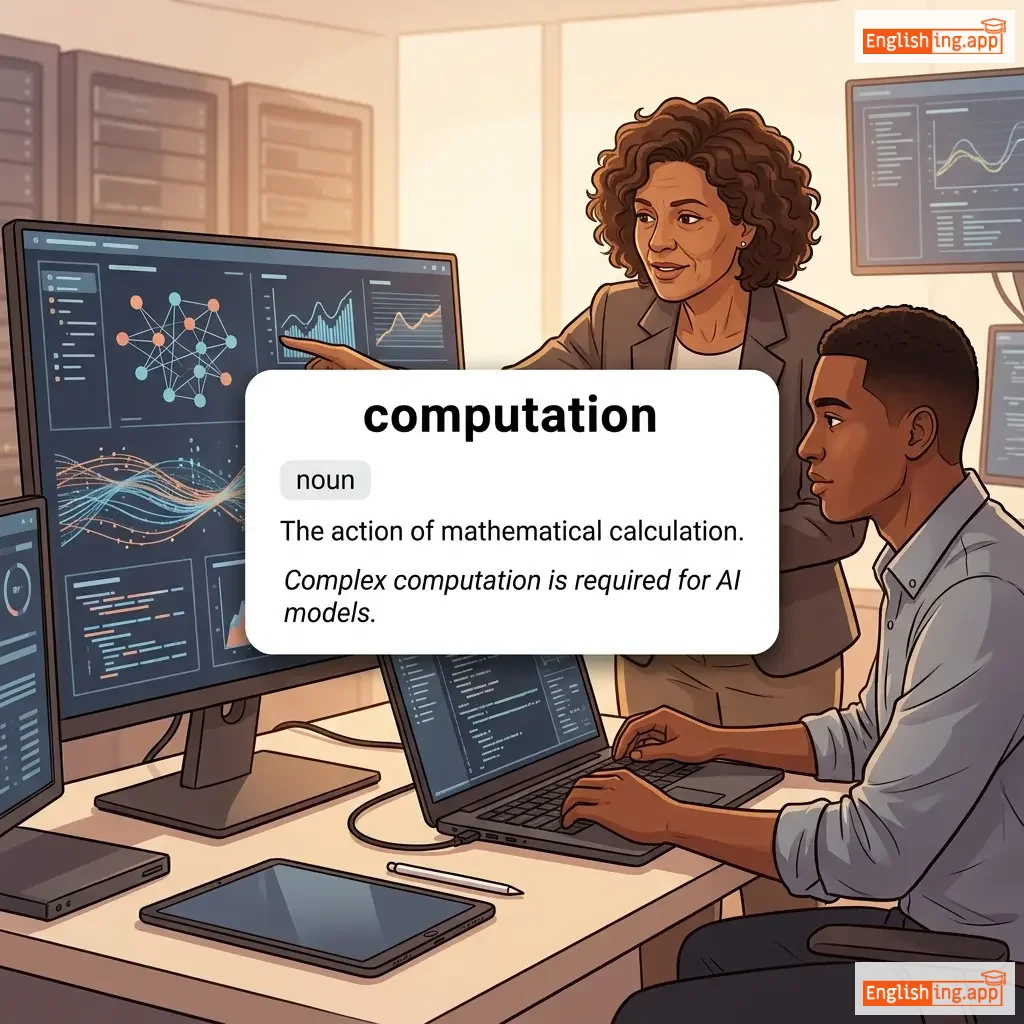
computation definition card — visual illustration of the meaning
noun
ˌkɒm.pjʊˈteɪ.ʃən
calcul (calcul)

The action of mathematical calculation.

"Complex computation is required for AI models."

"Un calcul complexe est nécessaire pour les modèles d'IA." (Un calcul complexe est necessaire pour les modeles d'IA.)
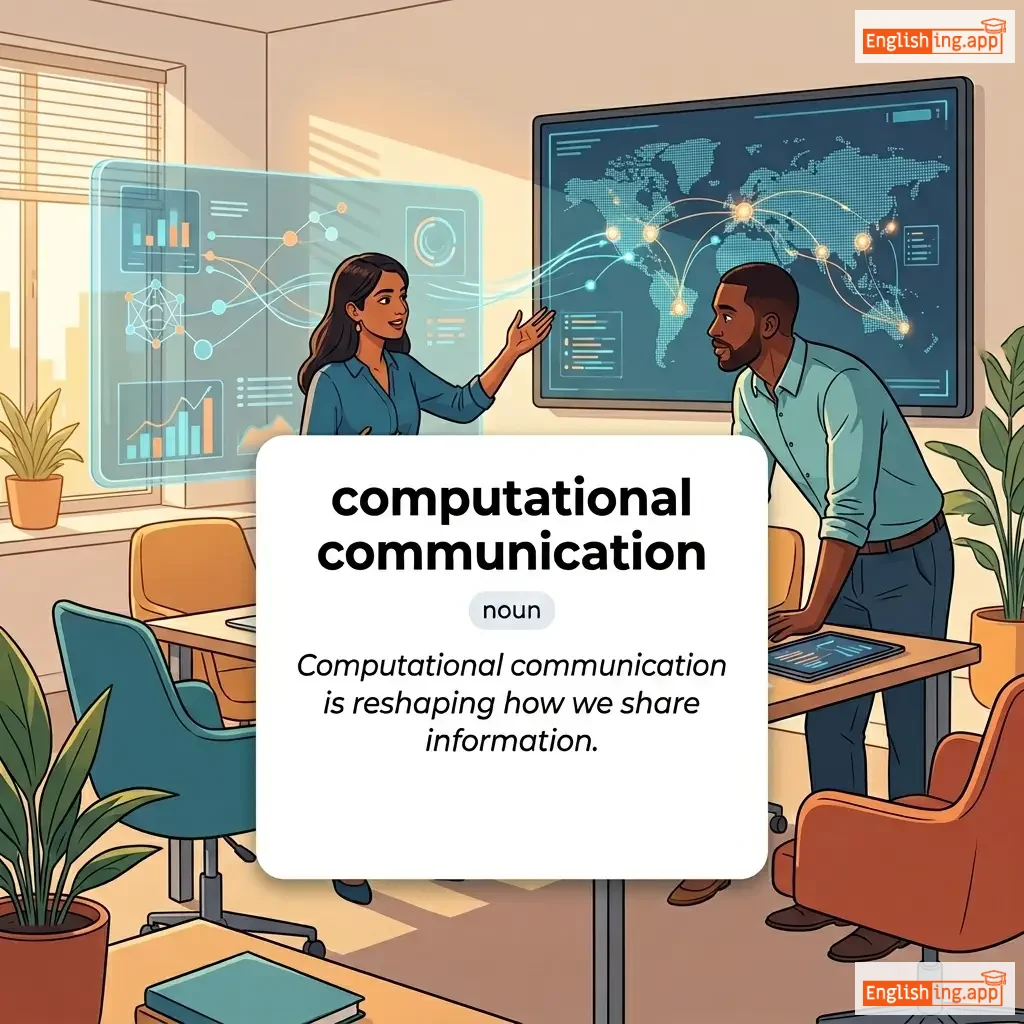
computational communication definition card — visual illustration of the meaning
noun
ˌkɒmpjʊˈteɪʃənəl kəˌmjuːnɪˈkeɪʃən
communication computationnelle (communication computationnelle)

Digital exchange and automated interaction; the use of computational methods and systems to facilitate communication and information sharing.

"Computational communication is reshaping how we share information."

"La communication computationnelle redéfinit la manière dont nous partageons les informations." (La communication computationnelle redefine la maniere dont nous partageons les informations.)
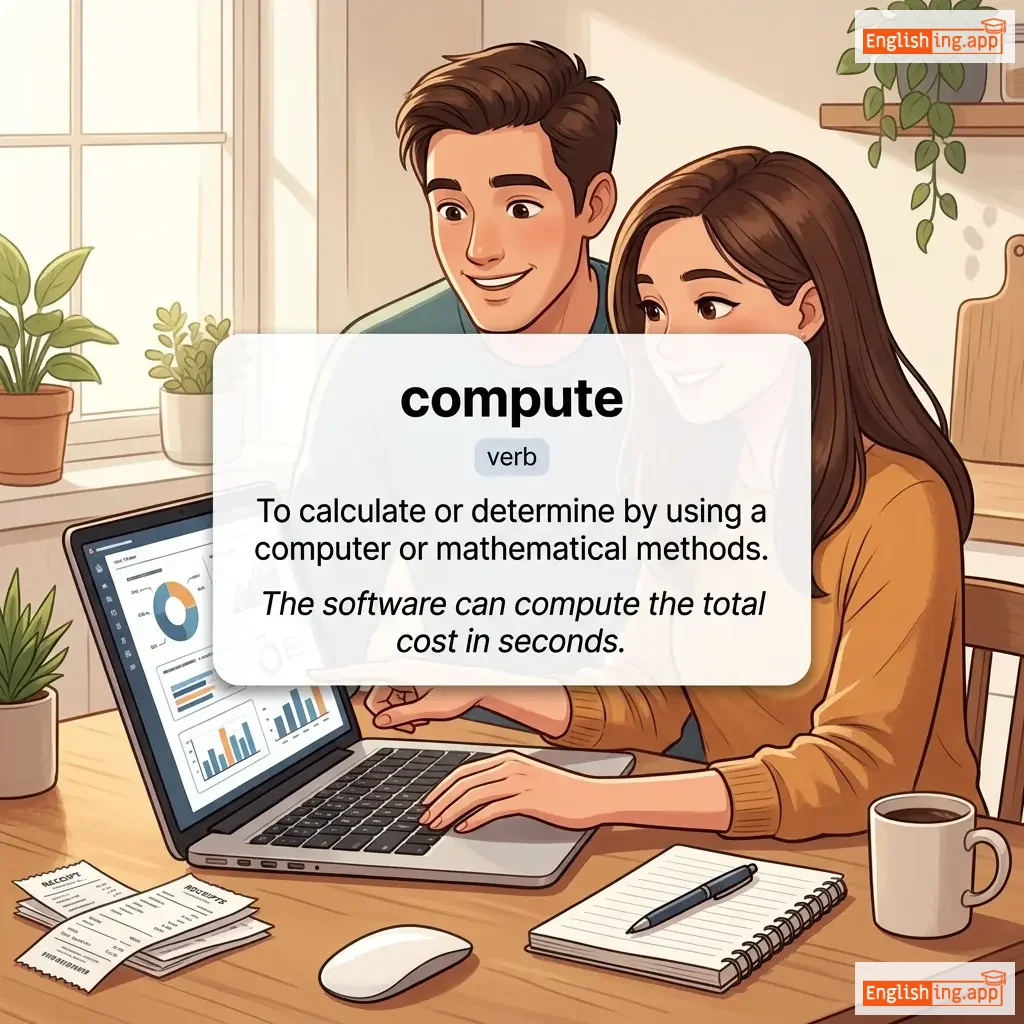
compute definition card — visual illustration of the meaning
verb
/kəmˈpjuːt/
calculer (kalkuler)

To calculate or determine by using a computer or mathematical methods.

"The software can compute the total cost in seconds."

"Le logiciel peut calculer le coût total en quelques secondes." (Le logiciel peut kalkuler le cout total en quelques secondes.)
noun
/kəmˈpjuːtə(r)/
ordinateur (ordinateur)

an electronic device for storing and processing data

"I bought a new computer for my office work."

"J'ai acheté un nouvel ordinateur pour mon travail au bureau." (J'ai acheté un nouvel ordinateur pour mon travail au bureau.)
verb
/kɒnˈkætəneɪt/
concaténer (concatener)

To link things together in a series or chain.

"The program concatenates two strings into one."

"Le programme concatène deux chaînes en une." (Le programme concatène deux chaînes en une.)
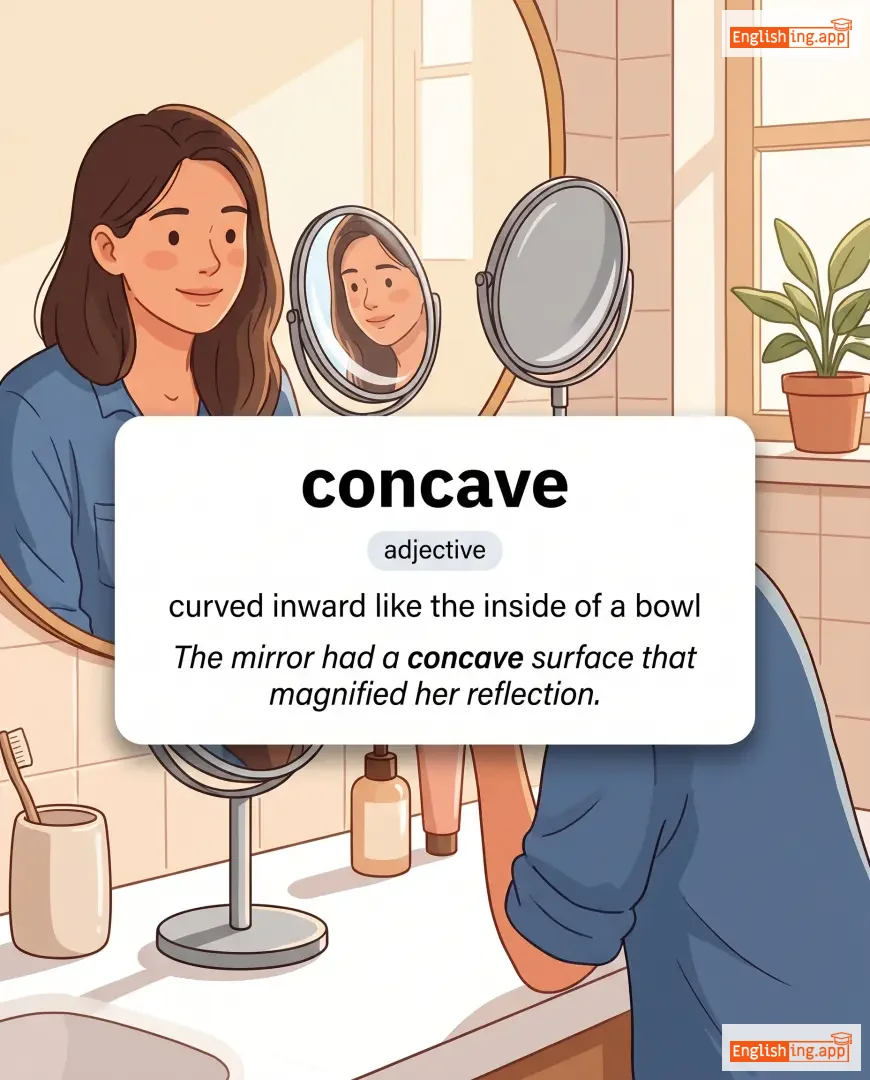
concave definition card — visual illustration of the meaning
adjective
/ˈkɒn.keɪv/
concave (concave)

curved inward like the inside of a bowl

"The mirror had a concave surface that magnified her reflection."

"Le miroir avait une surface concave qui grossissait son reflet." (Le miroir avait une surface concave qui grossissait son reflet.)
verb
/kənˈsiːl/
cacher (kashé)

to hide something or keep it secret

"He tried to conceal his disappointment behind a smile."

"Il a essayé de cacher sa déception derrière un sourire." (Il a essayé de cacher sa déception derrière un sourire.)
verb
/kənˈsiːd/
admettre (admettre)

to admit something is true or valid, often reluctantly

"She finally conceded that she was wrong."

"Elle a finalement admis qu'elle avait tort." (Elle a finalement admis qu'elle avait tort.)
noun
/kənˈsiːt/
vanité (vanite)

excessive pride in oneself; vanity

"His conceit made him unpopular among his colleagues."

"Sa vanité l'a rendu impopulaire parmi ses collègues." (Sa vanité l'a rendu impopulaire parmi ses collègues.)
verb
/kənˈsiːv/
concevoir, devenir enceinte (concevoir, devenir enceinte)

to form or imagine an idea in the mind; to become pregnant

"It is hard to conceive how such an idea could succeed."

"Il est difficile de concevoir comment une idée comme celle-ci pourrait réussir." (Il est difficile de concevoir comment une idee comme celle-ci pourrait reussir.)
verb
/ˈkɒnsəntreɪt/
se concentrer (se concentrer)

to focus all one's attention or mental effort on a particular object or activity

"She tried to concentrate on her studies despite the noise."

"Elle a essayé de se concentrer sur ses études malgré le bruit." (Elle a essayé de se concentrer sur ses études malgré le bruit.)
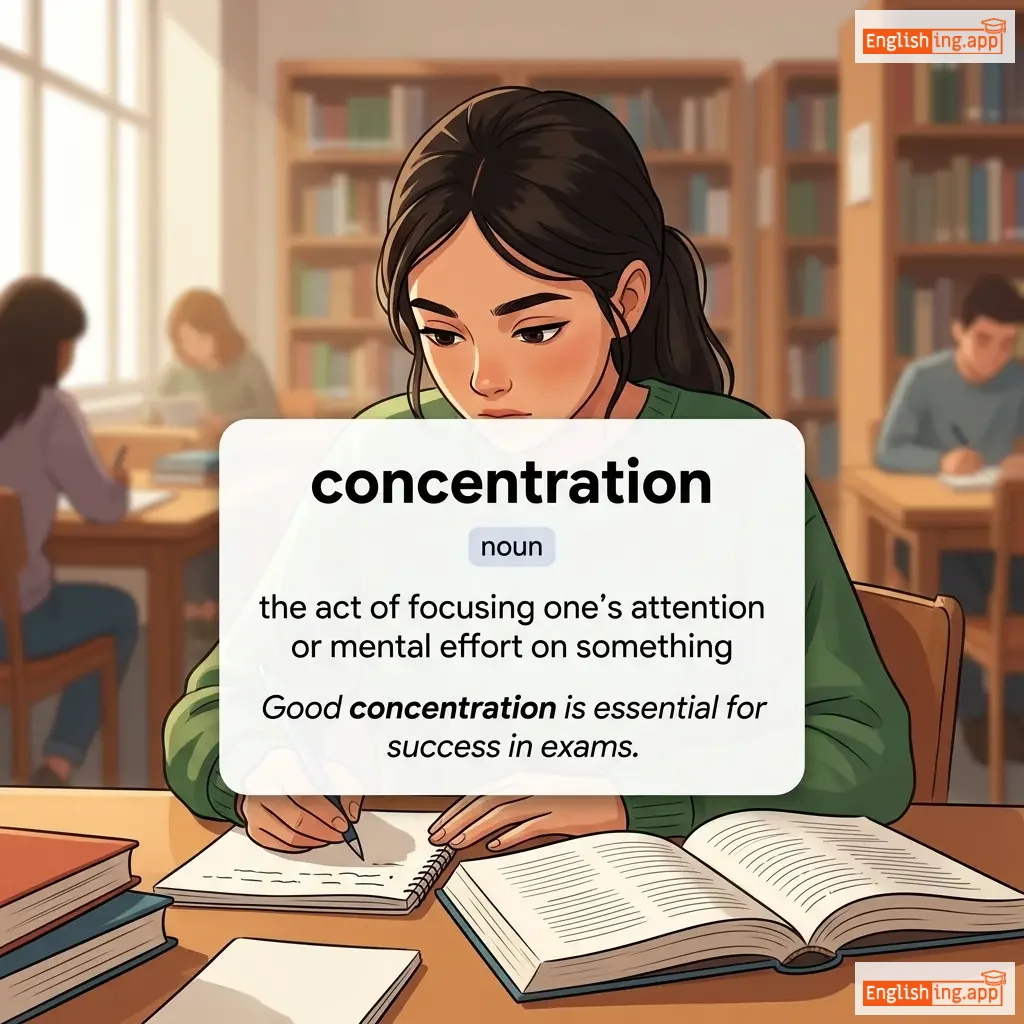
concentration definition card — visual illustration of the meaning
noun
/ˌkɒnsnˈtreɪʃən/
concentration (concentration)

the act of focusing one's attention or mental effort on something

"Good concentration is essential for success in exams."

"Une bonne concentration est essentielle pour réussir les examens." (Une bonne concentration est essentielle pour reussir les examens.)
adjective
/kənˈsɛntrɪk/
concentrique (concentrique)

having a common center, as in circles or spheres

"The artist drew concentric circles on the canvas."

"L'artiste a dessiné des cercles concentriques sur la toile." (L'artiste a dessine des cercles concentriques sur la toile.)
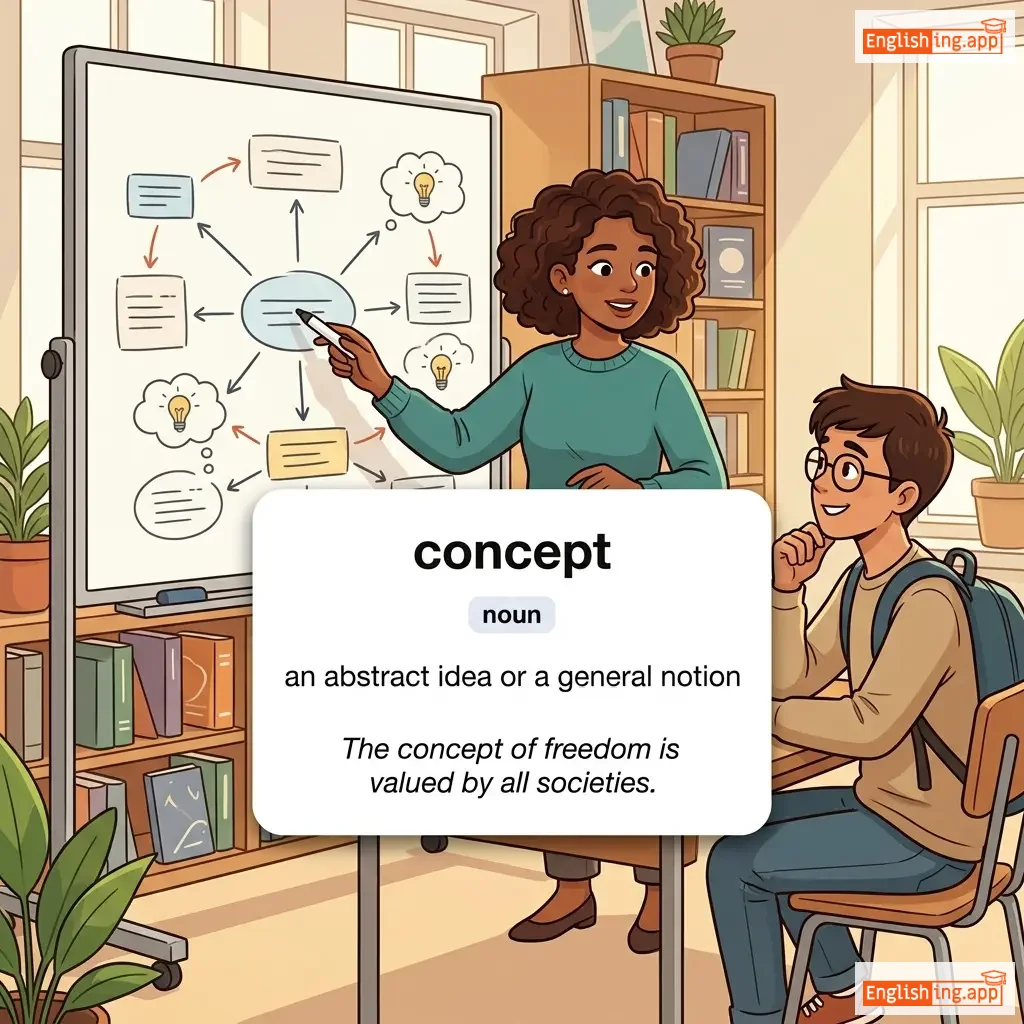
concept definition card — visual illustration of the meaning
noun
/ˈkɒnsɛpt/
concept (concept)

an abstract idea or a general notion

"The concept of freedom is valued by all societies."

"Le concept de liberté est valorisé par toutes les sociétés." (Le concept de liberté est valorisé par toutes les sociétés.)
noun
/kənˈsɛpʃən/
conception (conception)

the forming or understanding of an idea; the act of conceiving a child

"Her conception of the project was very different from ours."

"Sa conception du projet était très différente de la nôtre." (sa conception du projet etait tres differente de la notre.)
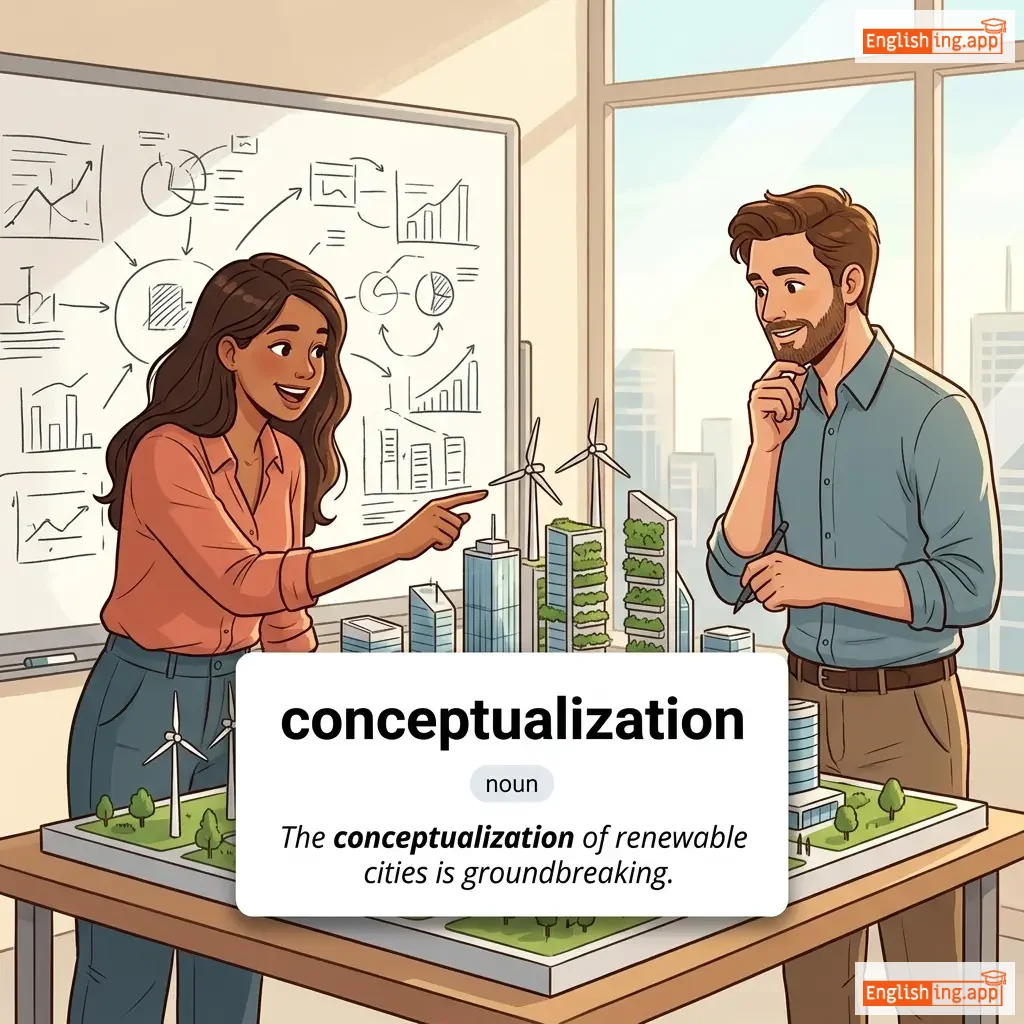
conceptualization definition card — visual illustration of the meaning
noun
kənˌsep.tʃu.ə.laɪˈzeɪ.ʃən
conceptualisation (conceptualisation)

The process of forming a concept or idea; the process of developing something in the mind.

"The conceptualization of renewable cities is groundbreaking."

"La conceptualisation des villes renouvelables est révolutionnaire." (La conceptualisation des villes renouvelables est révolutionnaire.)
verb
/kənˈsɛptʃuəlaɪz/
conceptualiser (conceptualiser)

to form an idea or concept of something in your mind

"The artist conceptualized a new design for the exhibition."

"L'artiste a conceptualisé un nouveau design pour l'exposition." (L'artiste a conceptualisé un nouveau design pour l'exposition.)
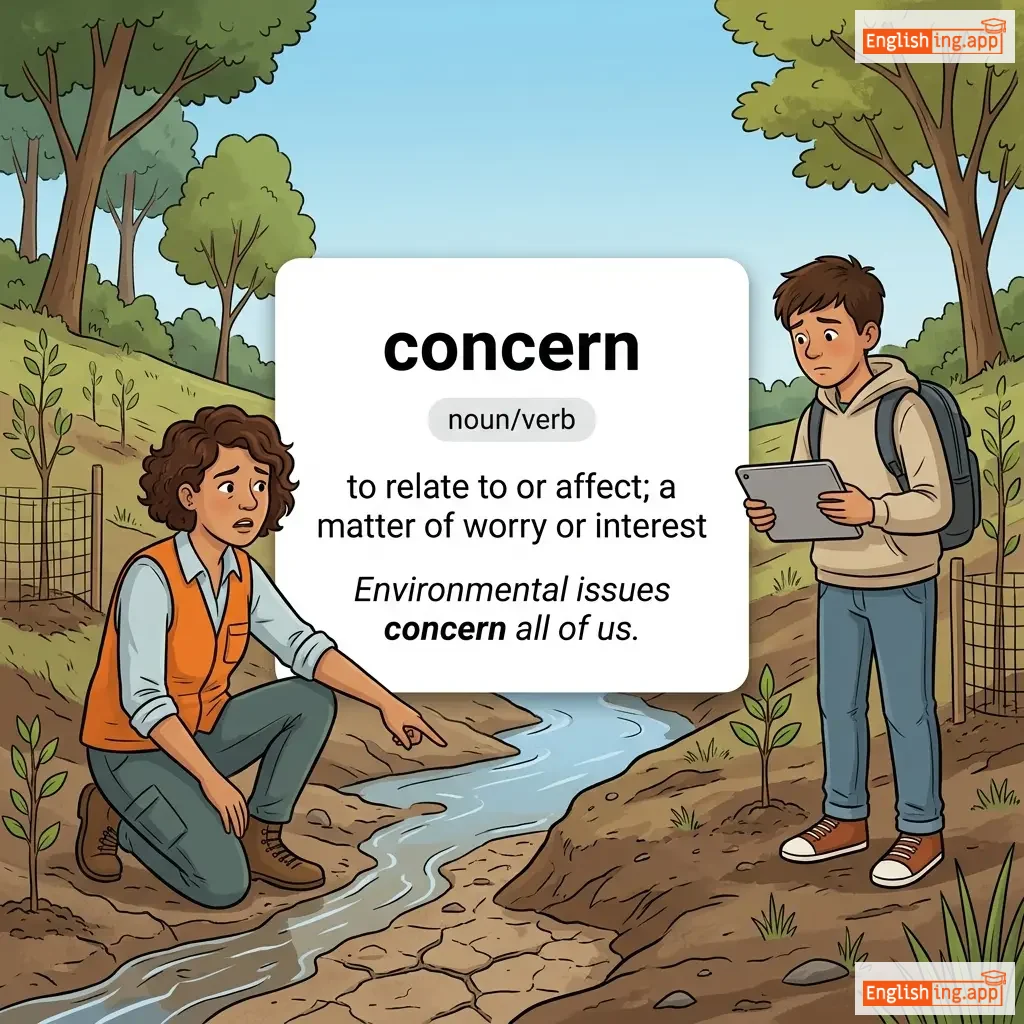
concern definition card — visual illustration of the meaning
noun/verb
/kənˈsɜːrn/
préoccupation, affaire de préoccupation (preoccupation, affaire de preoccupation)

to relate to or affect; a matter of worry or interest

"Environmental issues concern all of us."

"Les problèmes environnementaux nous concernent tous." (Les problemes environnementaux nous concernent tous.)
adjective
/kənˈsɜːnd/
préoccupé (preoccupe)

worried or anxious about something; involved or interested in something

"She was concerned about her mother's health."

"Elle était préoccupée par la santé de sa mère." (Elle était préoccupée par la santé de sa mère.)
preposition
/kənˈsɜːnɪŋ/
concernant (konsernan)

about or relating to something; causing worry or anxiety

"There are some reports concerning the new project."

"Il y a quelques rapports concernant le nouveau projet." (Il y a quelques rapports concernant le nouveau projet.)
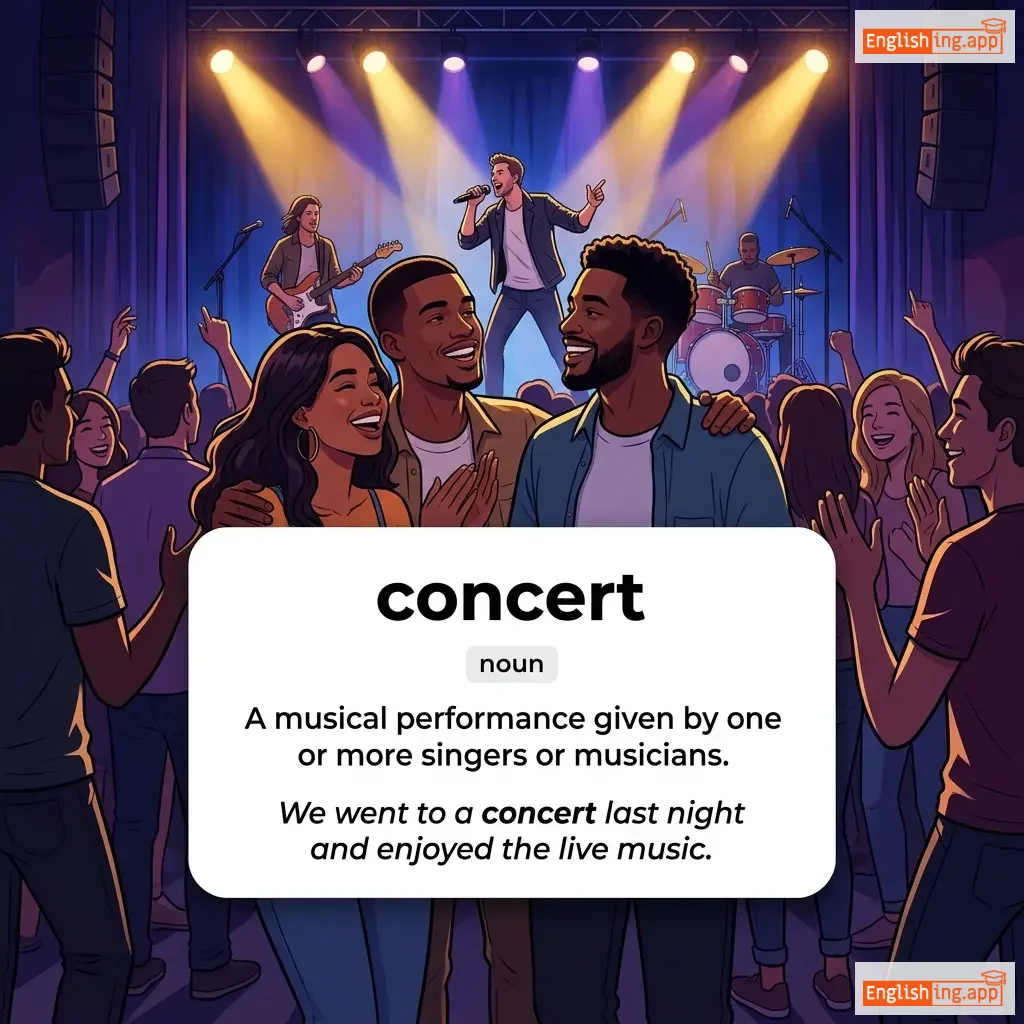
concert definition card — visual illustration of the meaning
noun
/ˈkɒnsət/
concert (concert)

A musical performance given by one or more singers or musicians.

"We went to a concert last night and enjoyed the live music."

"Nous sommes allés à un concert hier soir et avons apprécié la musique en direct." (Nous sommes alles a un concert hier soir et avons apprecie la musique en direct.)
adjective
/kənˈsɜːrtɪd/
concerté (concerte)

done with great effort, planned and performed together by multiple people

"The workers made a concerted effort to improve conditions."

"Les travailleurs ont fait un effort concerté pour améliorer les conditions." (Les travailleurs ont fait un effort concerté pour améliorer les conditions.)
noun
/kənˈtʃɛrtoʊ/
composition musicale (composition musicale)

a musical composition for one or more solo instruments accompanied by an orchestra

"She played a Mozart concerto with the orchestra."

"Elle a joué un concerto de Mozart avec l'orchestre." (Elle a joue un concerto de Mozart avec l'orchestre.)
noun
/kənˈsɛʃən/
concession (concession)

something that is granted, especially in response to demands; a compromise

"The company made several concessions during the negotiations."

"L'entreprise a fait plusieurs concessions lors des négociations." (L'entreprise a fait plusieurs concessions lors des négociations.)
noun
/kɑːntʃ/
conque (conque)

a large spiral shell, often used as a trumpet in ceremonies

"The priest blew the conch to begin the ritual."

"Le prêtre souffla dans le coquillage pour commencer le rituel." (Le prêtre souffla dans le coquillage pour commencer le rituel.)
verb
/kənˈsɪlieɪt/
concilier (konsilye)

to stop someone from being angry; to win over by friendly acts

"He tried to conciliate the angry customer with an apology."

"Il a essayé de concilier le client en colère avec des excuses." (Il a essayé de concilier le client en colère avec des excuses.)
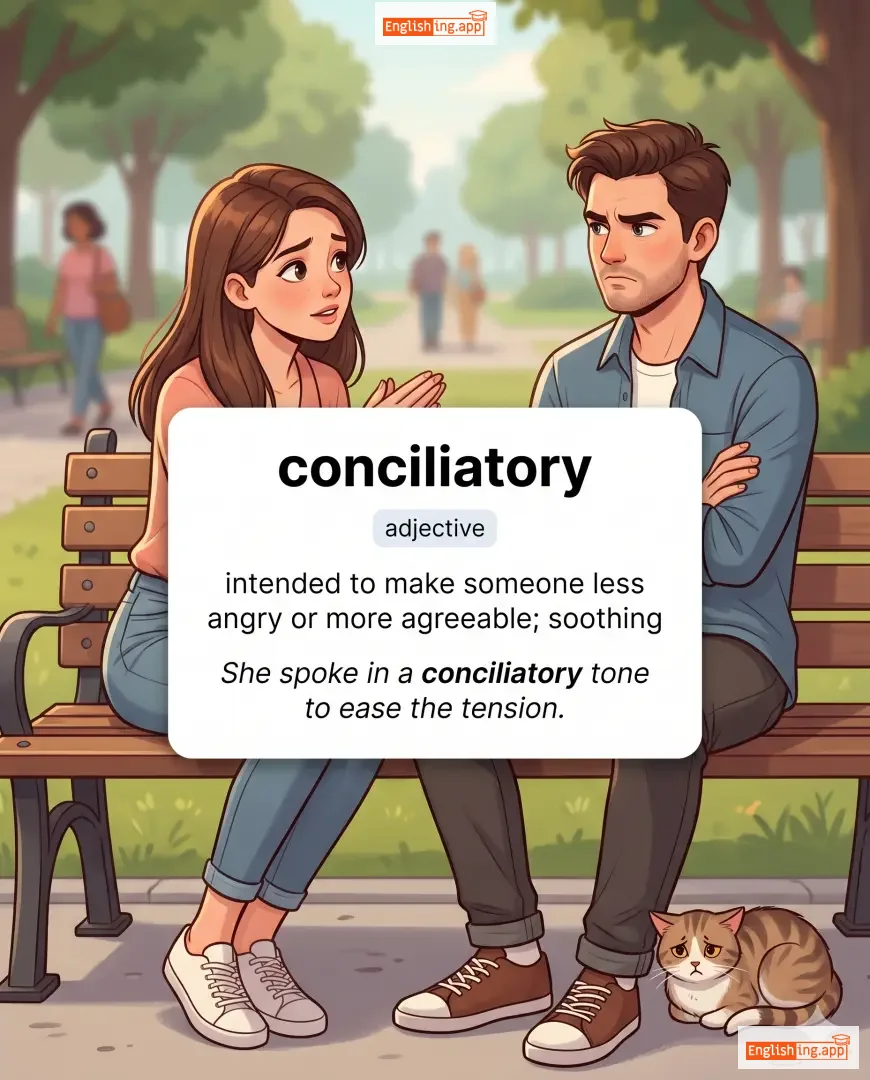
conciliatory definition card — visual illustration of the meaning
adjective
/kənˈsɪliətɔːri/
conciliatoire (conciliatoire)

intended to make someone less angry or more agreeable; soothing

"She spoke in a conciliatory tone to ease the tension."

"Elle a parlé d'un ton conciliant pour apaiser la tension." (Elle a parlé d'un ton conciliant pour apaiser la tension.)
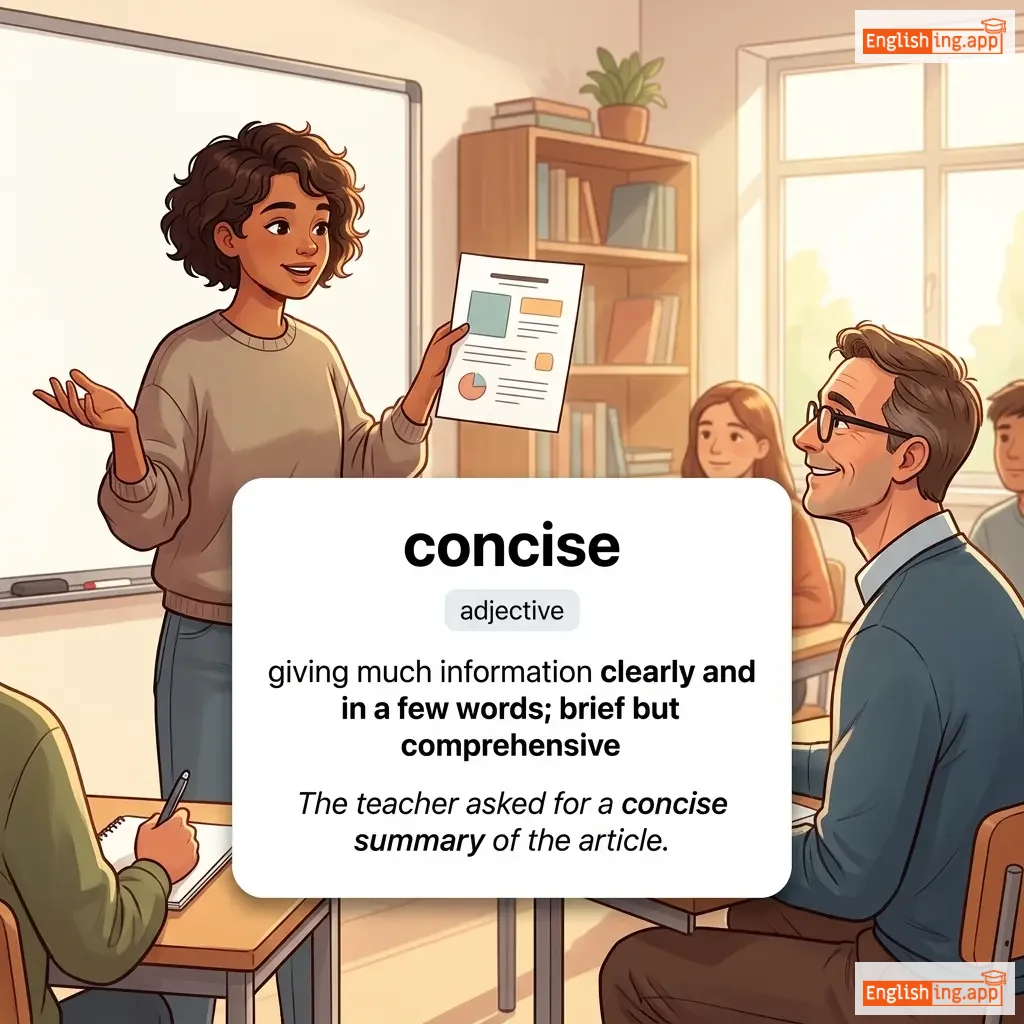
concise definition card — visual illustration of the meaning
adjective
/kənˈsaɪs/
concis (concis)

giving much information clearly and in a few words; brief but comprehensive

"The teacher asked for a concise summary of the article."

"L'enseignant a demandé un résumé concis de l'article." (L'enseignant a demandé un résumé concis de l'article.)
noun
/kɒŋk/
conque (konk)

a shell, especially a large spiral one used as a horn or for decoration

"The priest blew the conch shell to signal the start of the ceremony."

"Le prêtre a soufflé dans la coquille de conque pour signaler le début de la cérémonie." (Le pretre a souffle dans la coquille de conque pour signaler le debut de la ceremonie.)
noun
/ˈkɒnk.leɪv/
conclave secret (conclave secret)

a private meeting, especially a secret or important one

"The leaders met in a secret conclave to discuss the strategy."

"Les dirigeants se sont réunis dans un conclave secret pour discuter de la stratégie." (Les dirigeants se sont réunis dans un conclave secret pour discuter de la stratégie.)
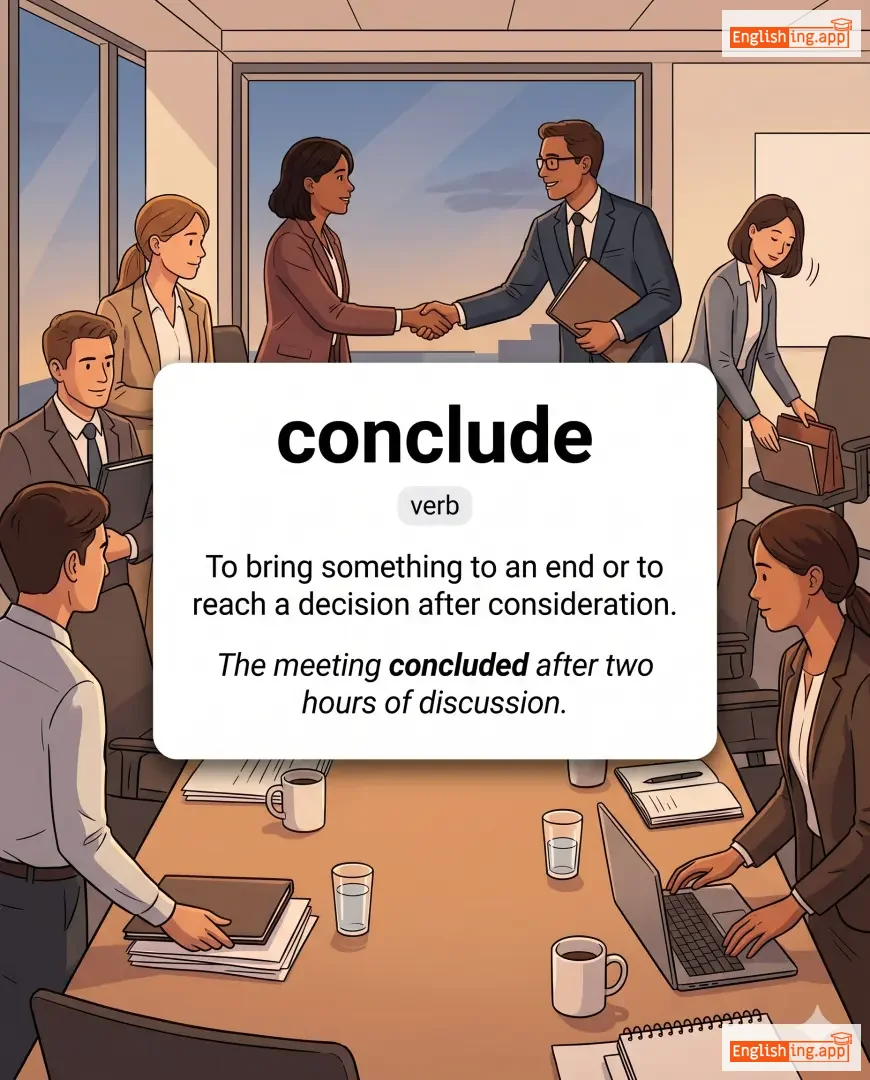
conclude definition card — visual illustration of the meaning
verb
/kənˈkluːd/
conclure, arriver à une décision (conclure, arriver à une decision)

To bring something to an end or to reach a decision after consideration.

"The meeting concluded after two hours of discussion."

"La réunion a conclu après deux heures de discussion." (La reunion a conclu apres deux heures de discussion.)
noun
/kənˈkluːʒən/
conclusion (conclusion)

The end or finish of an event, process, or text; a judgment reached after consideration.

"The research paper ends with a strong conclusion."

"L'article de recherche se termine par une conclusion solide." (L'article de recherche se termine par une conclusion solide.)
adjective
/kənˈkluːsɪv/
concluant (concluant)

serving to prove a case; decisive or convincing

"The DNA test provided conclusive evidence of his innocence."

"Le test ADN a fourni des preuves concluantes de son innocence." (Le test ADN a fourni des preuves concluantes de son innocence.)
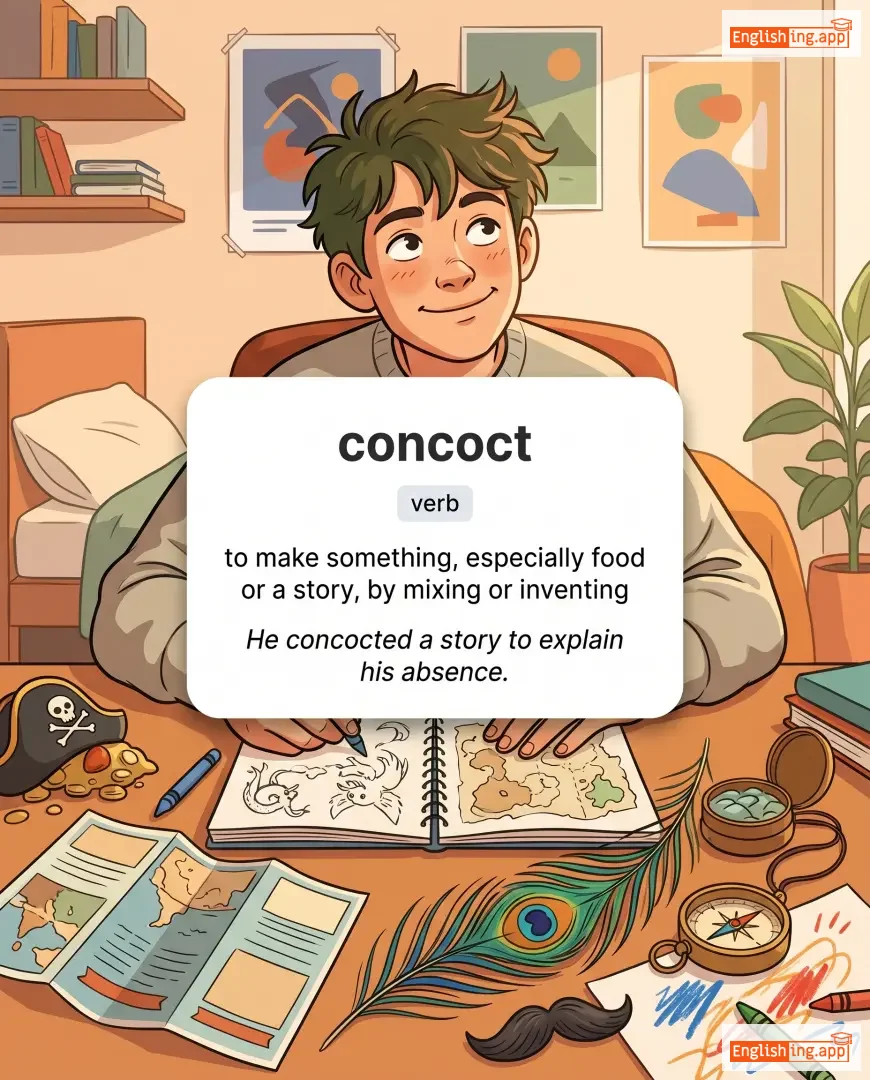
concoct definition card — visual illustration of the meaning
verb
/kənˈkɒkt/
créer ou inventer (creer ou inventer)

to make something, especially food or a story, by mixing or inventing

"He concocted a story to explain his absence."

"Il a inventé une histoire pour expliquer son absence." (Il a inventé une histoire pour expliquer son absence.)
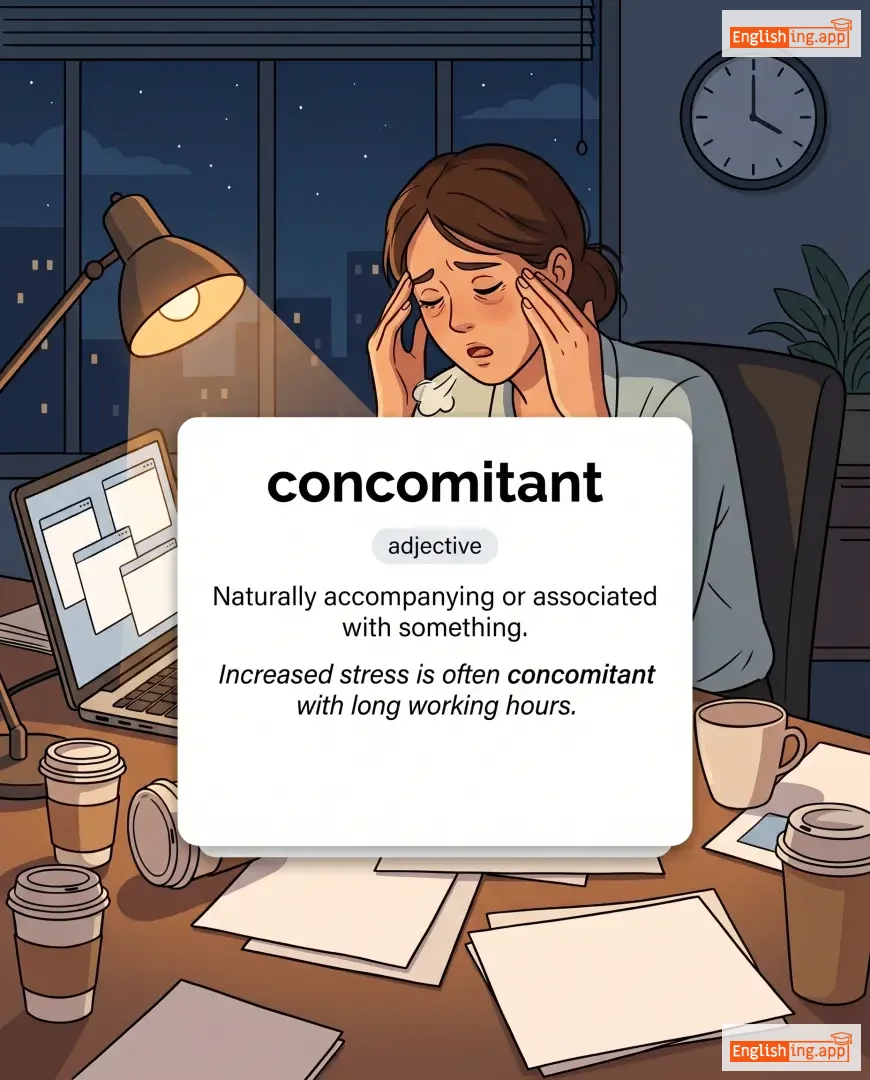
concomitant definition card — visual illustration of the meaning
adjective
/kənˈkɒmɪtənt/
concomitant (concomitant)

Naturally accompanying or associated with something.

"Increased stress is often concomitant with long working hours."

"Le stress accru est souvent concomitant avec de longues heures de travail." (Le stress accru est souvent concomitant avec de longues heures de travail.)
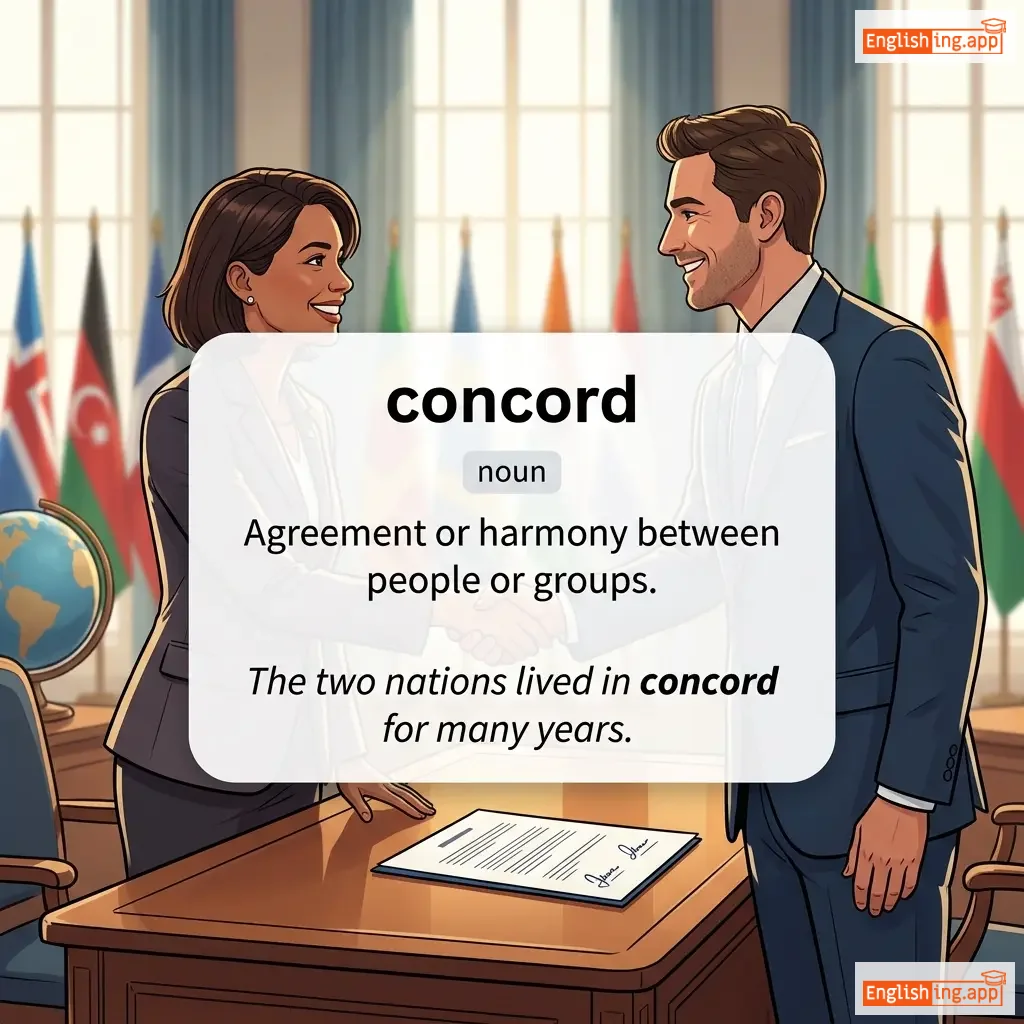
concord definition card — visual illustration of the meaning
noun
/ˈkɒŋ.kɔːd/
concorde (concorde)

Agreement or harmony between people or groups.

"The two nations lived in concord for many years."

"Les deux pays ont vécu en concorde pendant de nombreuses années." (Les deux pays ont vécu en concorde pendant de nombreuses années.)
noun
/kənˈkɔːrdəns/
concordance (concordance)

Agreement; also an alphabetical index of the principal words in a book.

"There is a strong concordance between the two reports."

"Il y a une forte concordance entre les deux rapports." (Il y a une forte concordance entre les deux rapports.)
noun
/ˈkɒŋ.kɔː.dæt/
concordat (concordat)

An agreement or treaty, especially between the Vatican and a secular government.

"The concordat established the rights of the church within the country."

"Le concordat a établi les droits de l'église dans le pays." (Le concordat a établi les droits de l'église dans le pays.)
adjective
/ˈkɒŋkriːt/
concret (concret)

based on facts, not on ideas or guesses; specific and real

"She gave a concrete example to support her argument."

"Elle a donné un exemple concret pour étayer son argument." (Elle a donné un exemple concret pour étayer son argument.)
verb
/kənˈkɜːr/
convenir (convenir)

To agree with someone or something.

"I concur with your opinion on this matter."

"Je suis d'accord avec votre opinion sur cette question." (Je suis d'accord avec votre opinion sur cette question.)
noun
/kənˈkʌrəns/
concurrence (concurrence)

Agreement or union in action, opinion, or occurrence; simultaneous happening of events.

"The project was completed with the concurrence of all departments."

"Le projet a été complété avec la concurrence de tous les départements." (Le projet a été complété avec la concurrence de tous les départements.)
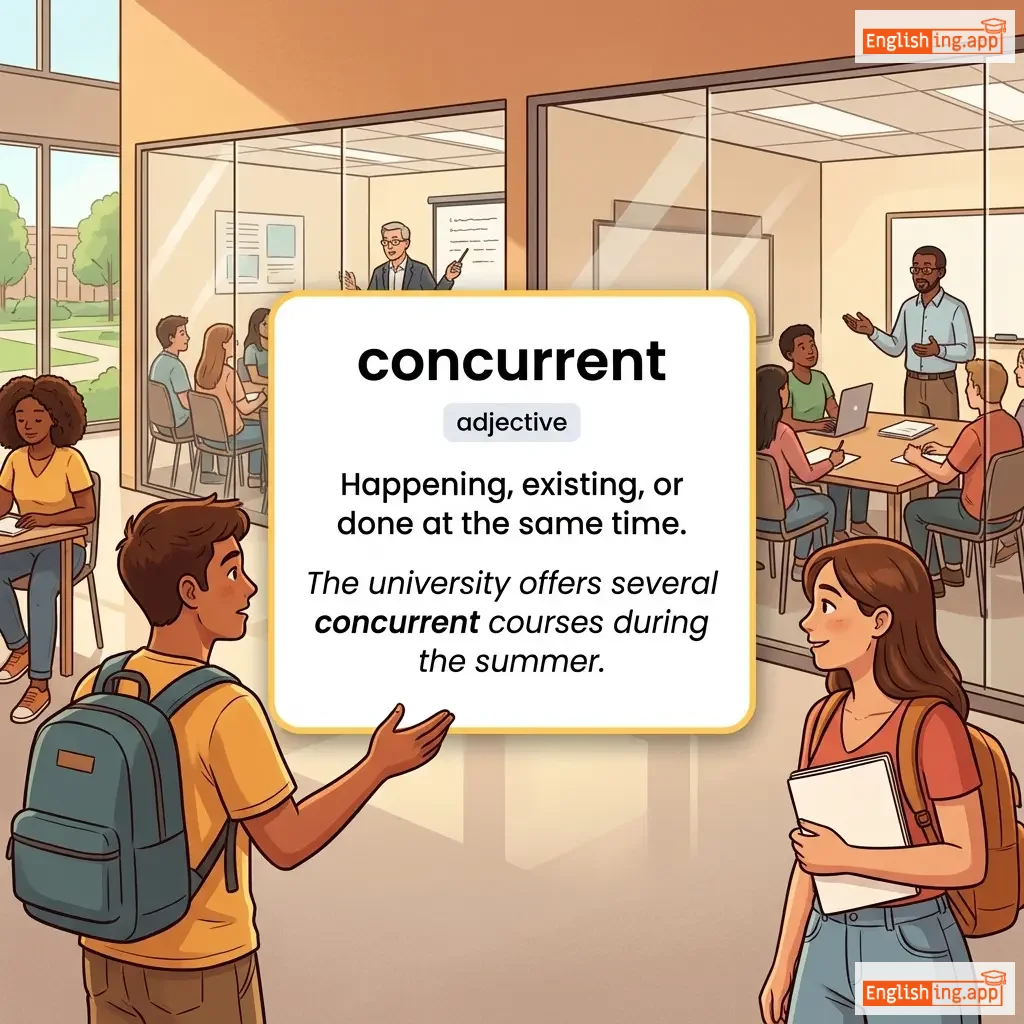
concurrent definition card — visual illustration of the meaning
adjective
/kənˈkʌrənt/
concurrent (concurrent)

Happening, existing, or done at the same time.

"The university offers several concurrent courses during the summer."

"L'université propose plusieurs cours concurrentiels pendant l'été." (L'université propose plusieurs cours concurrentiels pendant l'été.)
noun
/kənˈkʌʃən/
commotion cérébrale (commotion cerebrale)

A temporary unconsciousness or shock caused by a blow to the head.

"He suffered a concussion after falling from the bike."

"Il a subi une commotion cérébrale après être tombé de son vélo." (Il a subi une commotion cérébrale après être tombé de son vélo.)
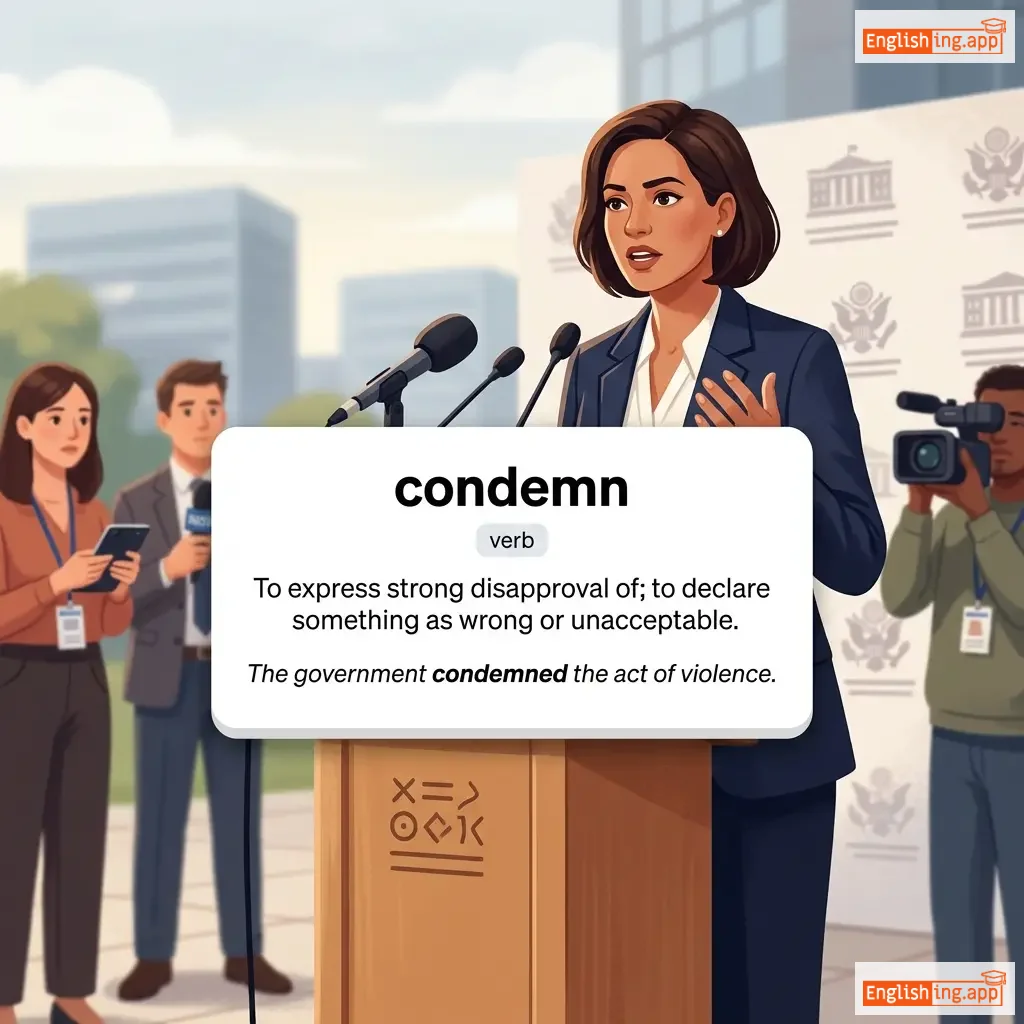
condemn definition card — visual illustration of the meaning
verb
/kənˈdɛm/
condamner (condamner)

To express strong disapproval of; to declare something as wrong or unacceptable.

"The government condemned the act of violence."

"Le gouvernement a condamné l'acte de violence." (Le gouvernement a condamné l'acte de violence.)