Vocabulaires

Découvrez, apprenez et maîtrisez le vocabulaire anglais

conquer definition card — visual illustration of the meaning
verb
/ˈkɒŋkər/
conquérir (conquerir)

To defeat and take control of a place or people by force.

"The king set out to conquer new lands."

"Le roi est parti conquérir de nouvelles terres." (Le roi est parti conquérir de nouvelles terres.)
adjective
/kɒnˈsæŋɡwɪn/
consanguin (consanguin)

Of the same blood or origin; related by birth.

"The two families were consanguine through their grandparents."

"Les deux familles étaient consanguines par leurs grands-parents." (Les deux familles étaient consanguines par leurs grands-parents.)
adjective
/ˌkɒnsæŋˈɡwɪniəs/
consanguin (consanguin)

Related by blood; descended from the same ancestor.

"The study focused on genetic disorders in consanguineous families."

"L'étude s'est concentrée sur les troubles génétiques dans les familles consanguines." (L'étude s'est concentrée sur les troubles génétiques dans les familles consanguines.)
👨‍👩‍👧‍👦

consanguinity (consanguinité)

noun
/ˌkɒnsæŋˈɡwɪnɪti/
consanguinité (consanguinite)

The fact of being descended from the same ancestor; blood relationship.

"The degree of consanguinity was important in inheritance laws."

"Le degré de consanguinité était important dans les lois de l'héritage." (Le degre de consanguinite etait important dans les lois de l'heritage.)
noun
/ˈkɒnʃəns/
conscience (conscience)

An inner sense of right and wrong that guides a person's actions.

"Her conscience told her to admit the mistake."

"Sa conscience lui dit d'admettre l'erreur." (Sa conscience lui dit d'admettre l'erreur.)
conscientious definition card — visual illustration of the meaning
adjective
/ˌkɒnʃiˈɛnʃəs/
consciencieux et assidu (consciencieux et assidu)

Wishing to do what is right, especially to do one's work or duty well and thoroughly.

"He is a conscientious employee who always meets deadlines."

"C'est un employé consciencieux et assidu qui respecte toujours les délais." (C'est un employé consciencieux et assidu qui respecte toujours les délais.)
conscientiousness definition card — visual illustration of the meaning
noun
/ˌkɒn.ʃiˈen.ʃəs.nəs/
conscience, responsabilité, rigueur (conscience, responsabilité, rigueur)

The quality of wishing to do what is right, especially to do one's work or duty well and thoroughly.

"Her conscientiousness makes her a great leader."

"Sa conscience en fait une grande dirigeante." (Sa conscience en fait une grande dirigeante.)
adjective
/ˈkɒnʃəs/
conscient (konsyan)

Aware of and responding to one's surroundings; awake.

"She was fully conscious after the surgery."

"Elle était complètement consciente après l'opération." (Elle était complètement consciente après l'opération.)
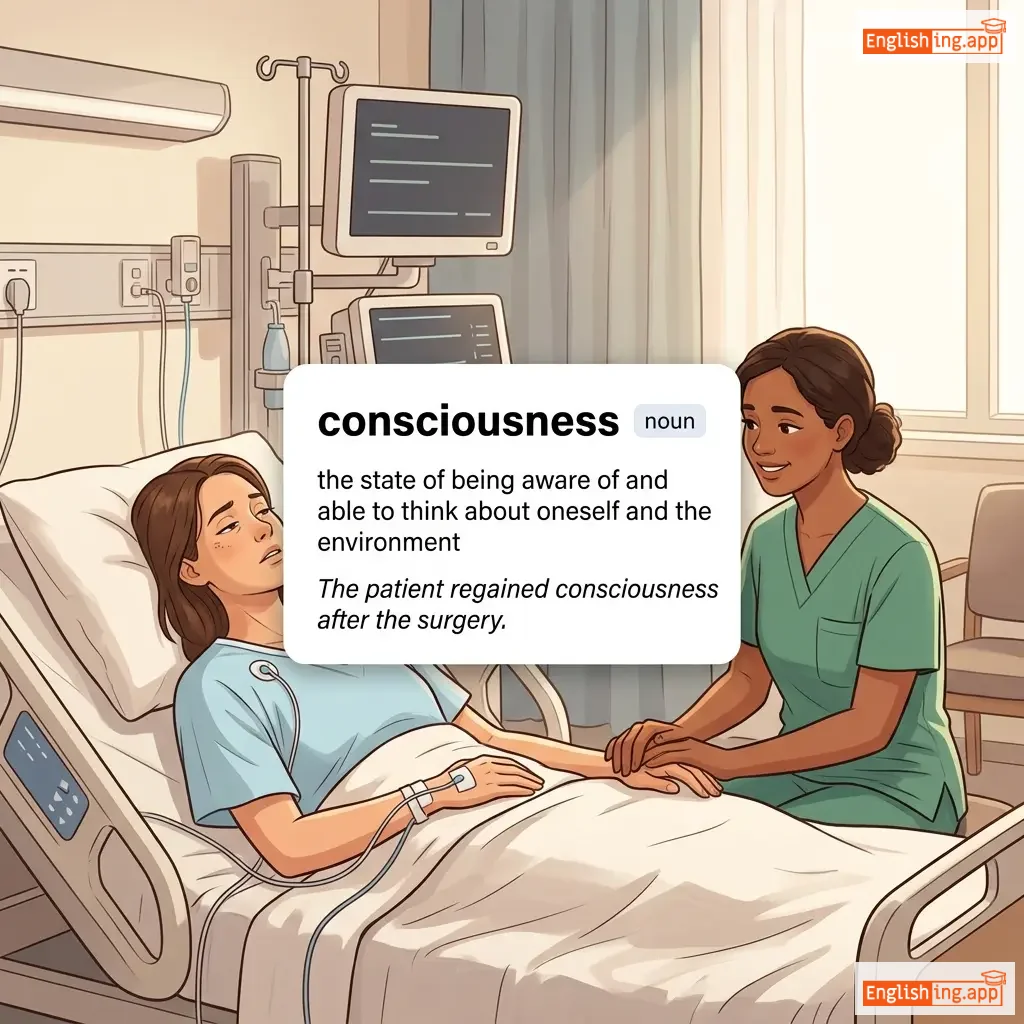
consciousness definition card — visual illustration of the meaning
noun
/ˈkɒnʃəsnəs/
conscience (conscience)

the state of being aware of and able to think about oneself and the environment

"The patient regained consciousness after the surgery."

"Le patient a retrouvé conscience après la chirurgie." (Le patient a retrouvé conscience après la chirurgie.)
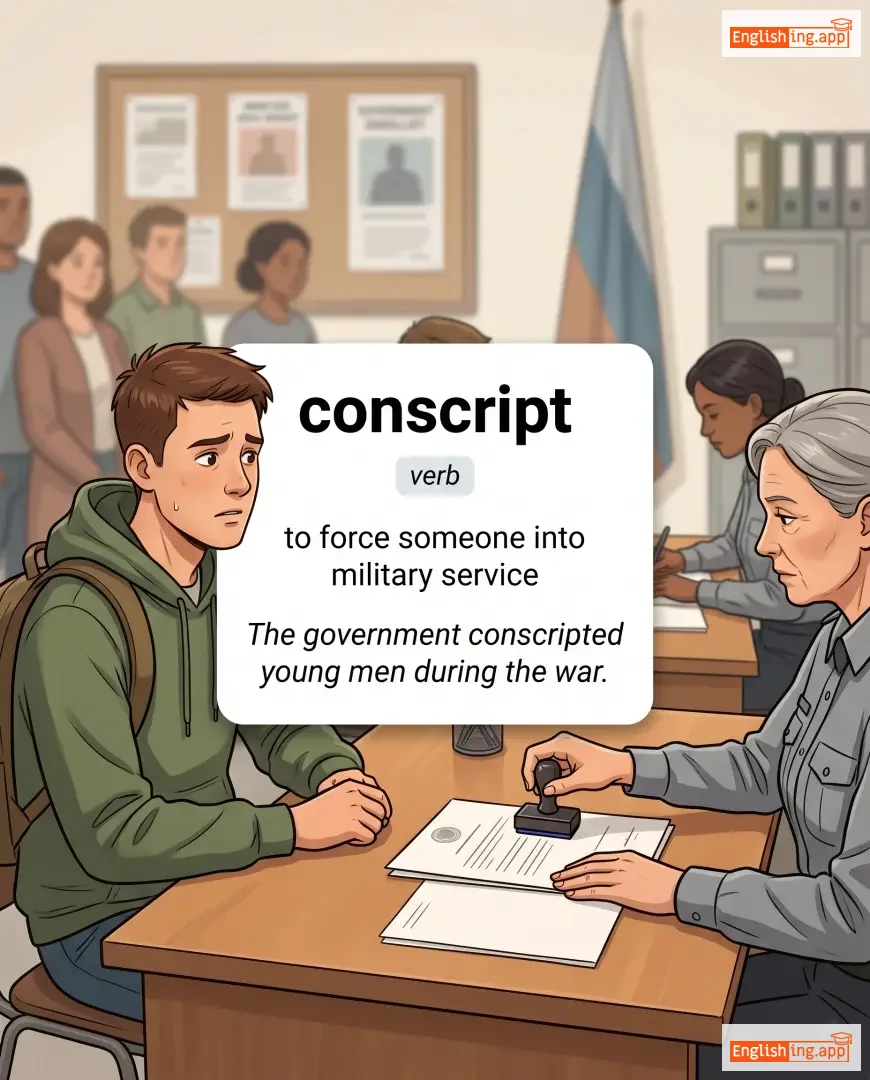
conscript definition card — visual illustration of the meaning
verb
/ˈkɒnskrɪpt/
forcé quelqu'un à rejoindre l'armée (force kelk'uns a rejoindre l'armee)

to force someone into military service

"The government conscripted young men during the war."

"Le gouvernement a conscrit des jeunes hommes pendant la guerre." (Le gouvernement a conscrit des jeunes hommes pendant la guerre.)
consecrate definition card — visual illustration of the meaning
verb
/ˈkɒnsɪkreɪt/
consacrer (consacrer)

to make something sacred, usually through a religious ceremony

"The church was consecrated by the bishop."

"L'église a été consacrée par l'évêque." (L'église a été consacrée par l'évêque.)
adjective
/kənˈsɛkjʊtɪv/
consécutif (consécutif)

following one after another without interruption

"She won three consecutive matches."

"Elle a gagné trois matchs consécutifs." (Elle a gagné trois matchs consécutifs.)
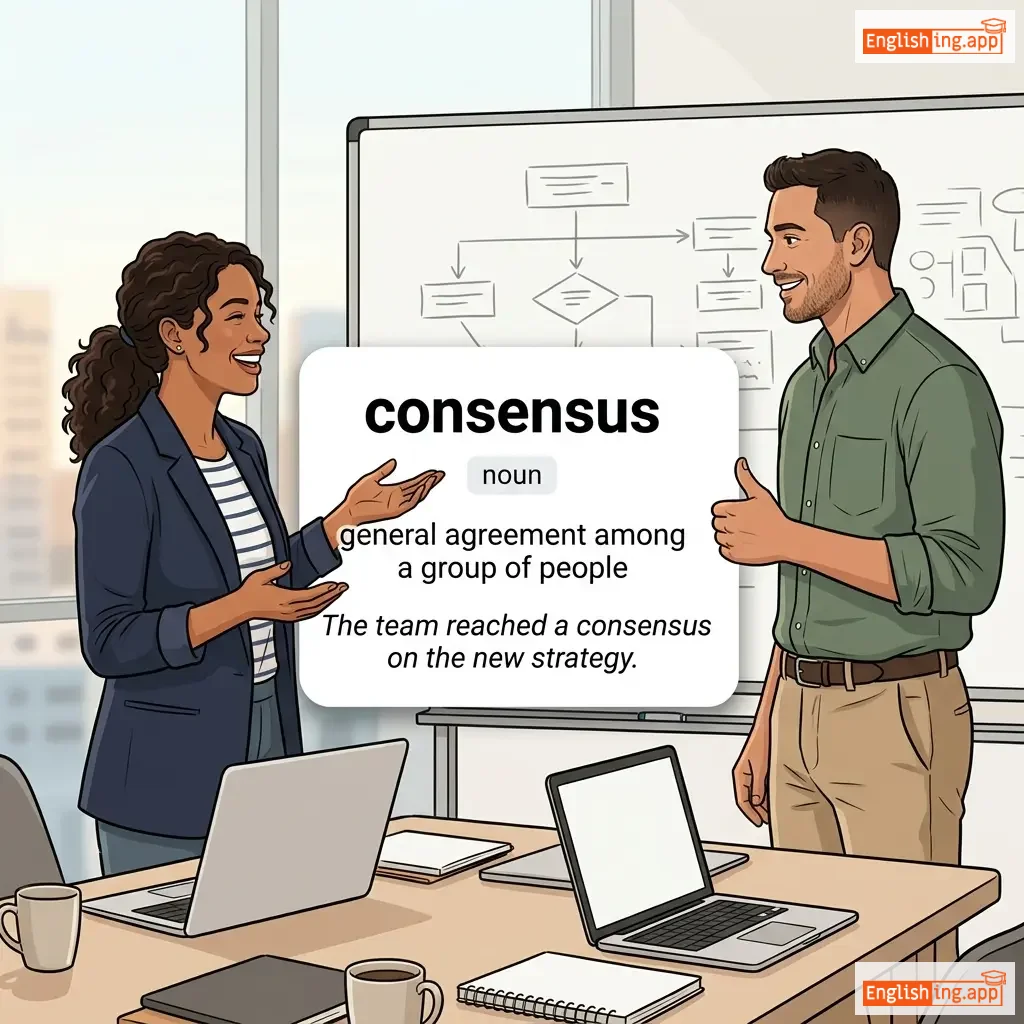
consensus definition card — visual illustration of the meaning
noun
/kənˈsɛnsəs/
consensus (consensus)

general agreement among a group of people

"The team reached a consensus on the new strategy."

"L'équipe a atteint un consensus sur la nouvelle stratégie." (L'équipe a atteint un consensus sur la nouvelle stratégie.)
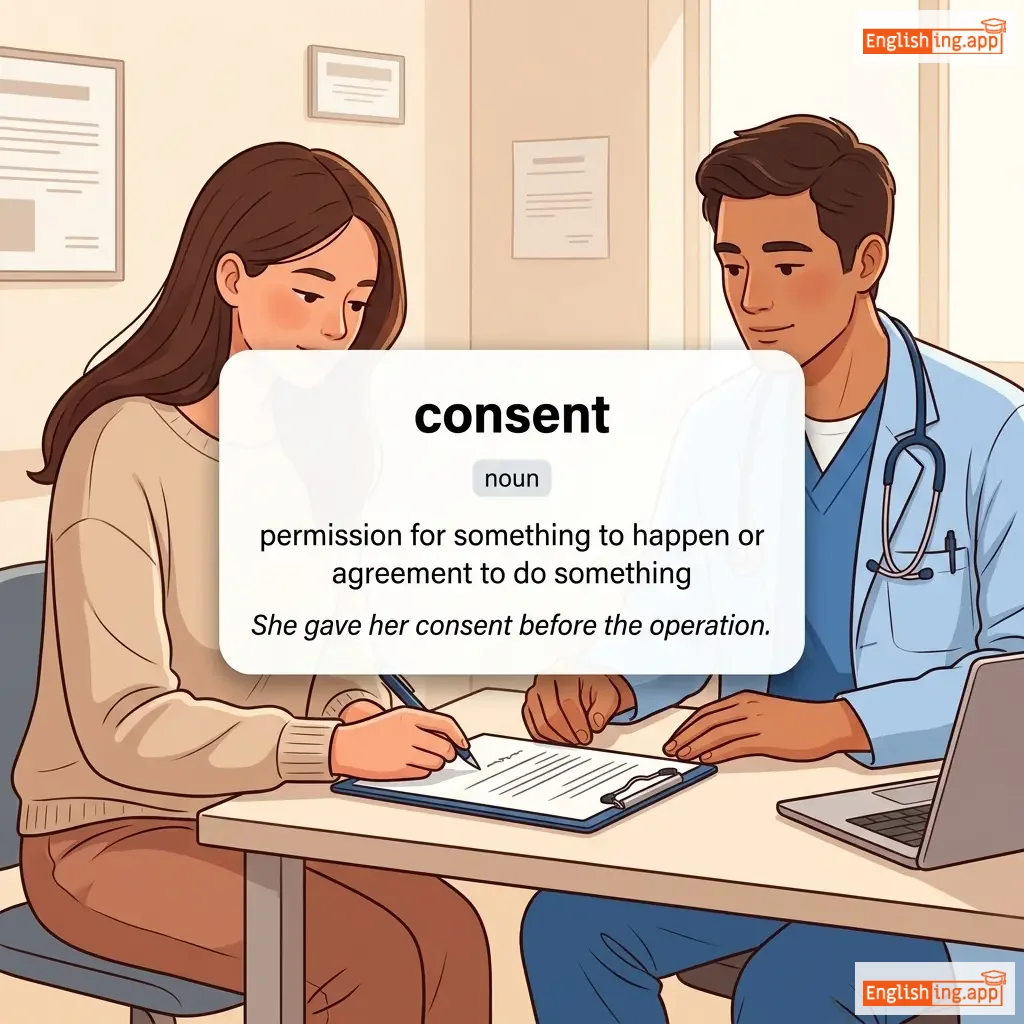
consent definition card — visual illustration of the meaning
noun
/kənˈsɛnt/
consentement (consentement)

permission for something to happen or agreement to do something

"She gave her consent before the operation."

"Elle a donné son consentement avant l'opération." (Elle a donné son consentement avant l'opération.)
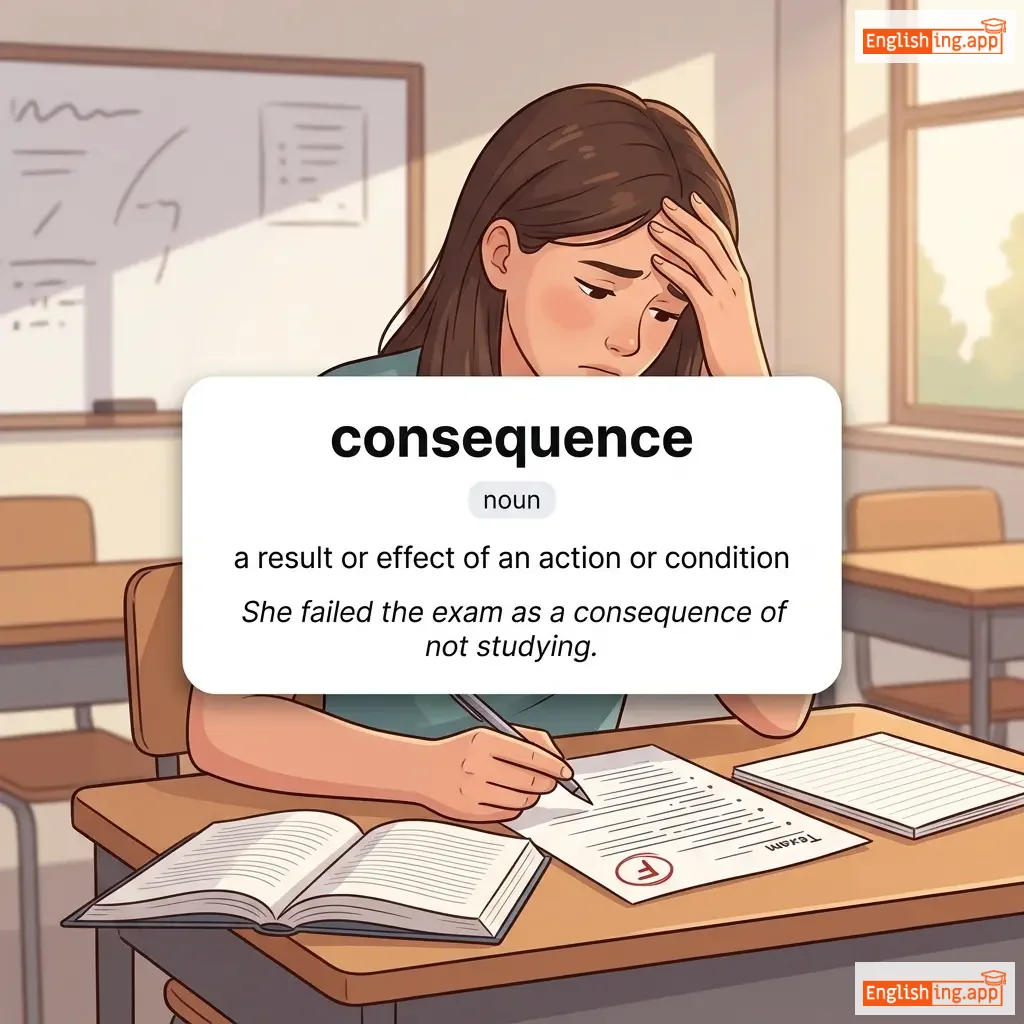
consequence definition card — visual illustration of the meaning
noun
/ˈkɒnsɪkwəns/
conséquence (konsékwans)

a result or effect of an action or condition

"She failed the exam as a consequence of not studying."

"Elle a échoué à l'examen en conséquence de ne pas avoir étudié." (Elle a échoué à l'examen en conséquence de ne pas avoir étudié.)
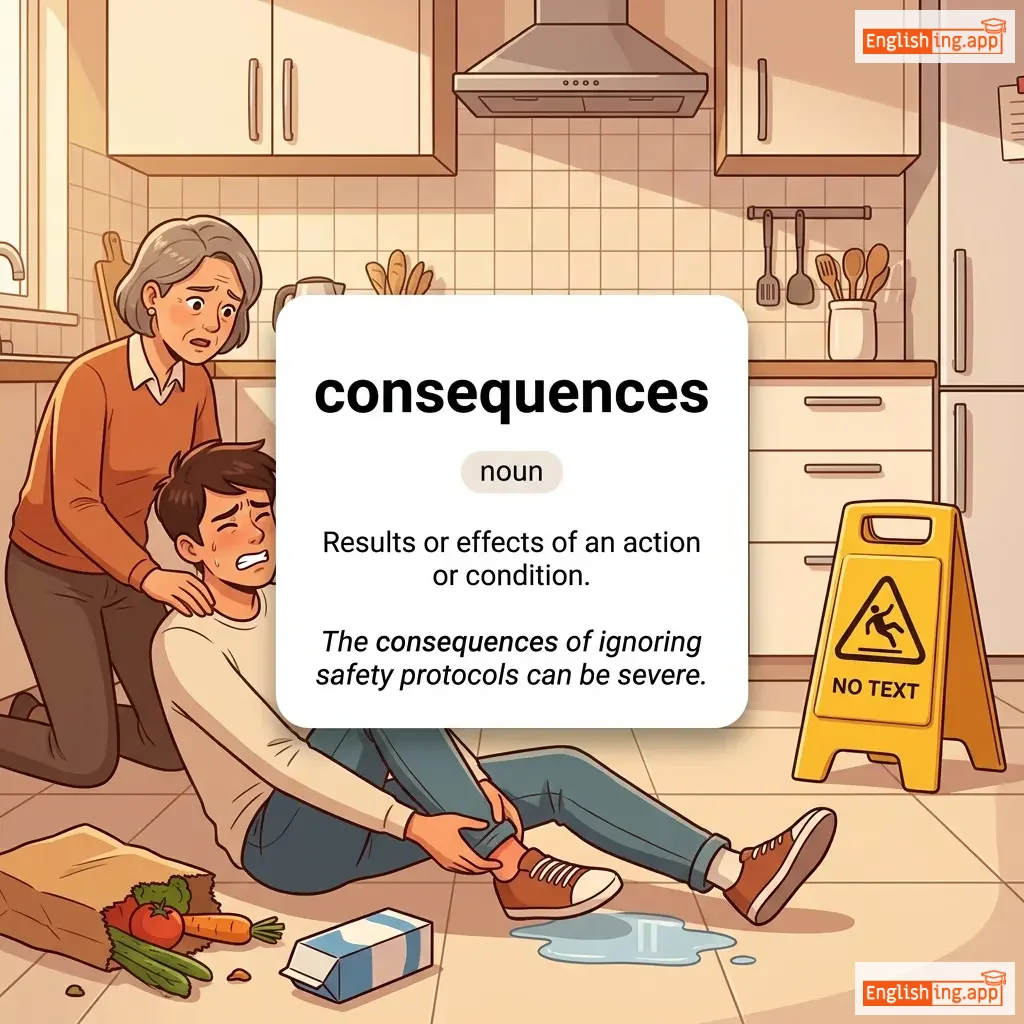
consequences definition card — visual illustration of the meaning
noun
/ˈkɒnsɪkwənsɪz/
conséquences (consequences)

Results or effects of an action or condition.

"The consequences of ignoring safety protocols can be severe."

"Les conséquences de l'ignorance des protocoles de sécurité peuvent être graves." (Les consequences de l'ignorance des protocoles de securite peuvent etre graves.)
adjective
/ˌkɒnsɪˈkwɛnʃəl/
déterminant (determinant)

Having important or significant consequences; resulting from something.

"The meeting was consequential for the future of the project."

"La réunion a été déterminante pour l'avenir du projet." (La réunion a été déterminante pour l'avenir du projet.)
adverb
/ˈkɒnsɪkwəntli/
par conséquent (par consequent)

as a result; therefore

"He didn’t study, and consequently he failed the exam."

"Il n'a pas étudié, et par conséquent, il a échoué à l'examen." (Il n'a pas étudié, et par conséquent, il a échoué à l'examen.)
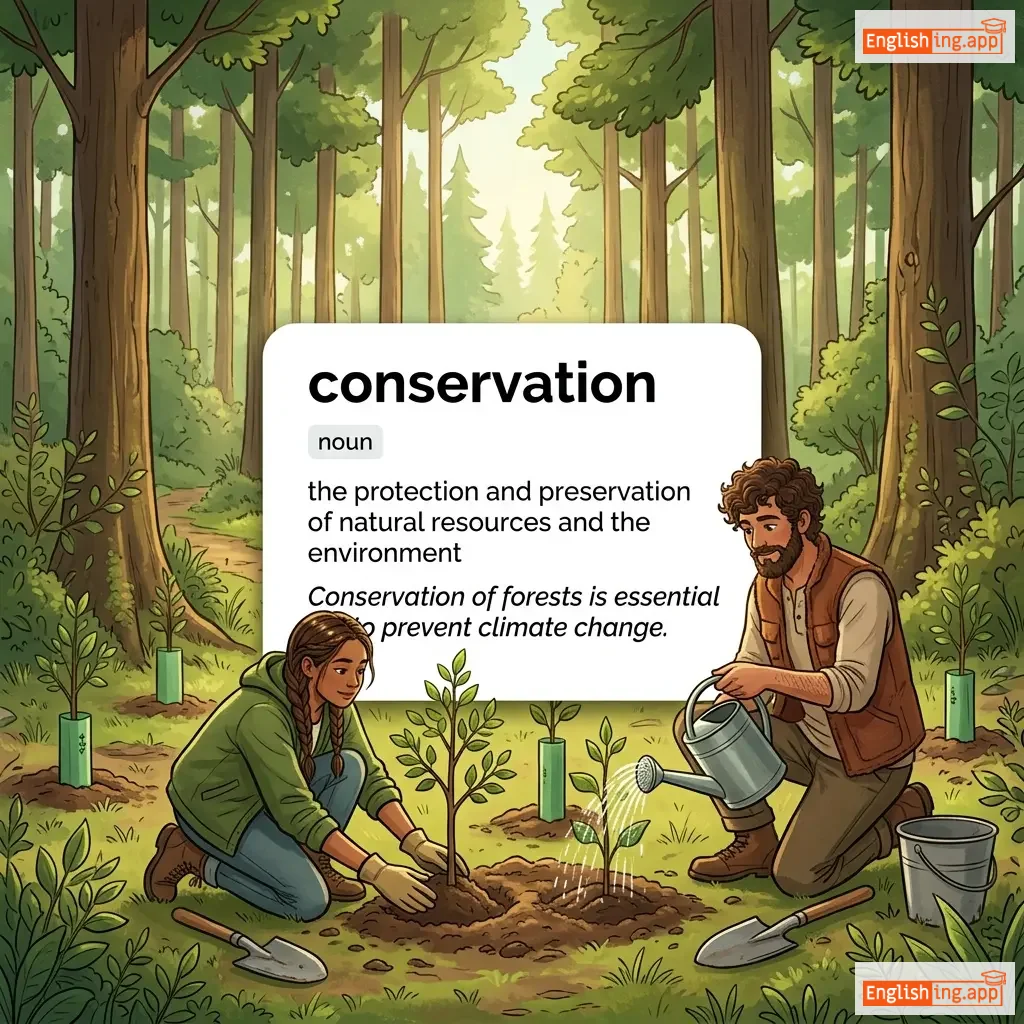
conservation definition card — visual illustration of the meaning
noun
/ˌkɒnsəˈveɪʃən/
conservation (konservasion)

the protection and preservation of natural resources and the environment

"Conservation of forests is essential to prevent climate change."

"La conservation des forêts est essentielle pour prévenir le changement climatique." (La konservasion de fore es esansiel pur prevenir le shonzhmon klimatik.)
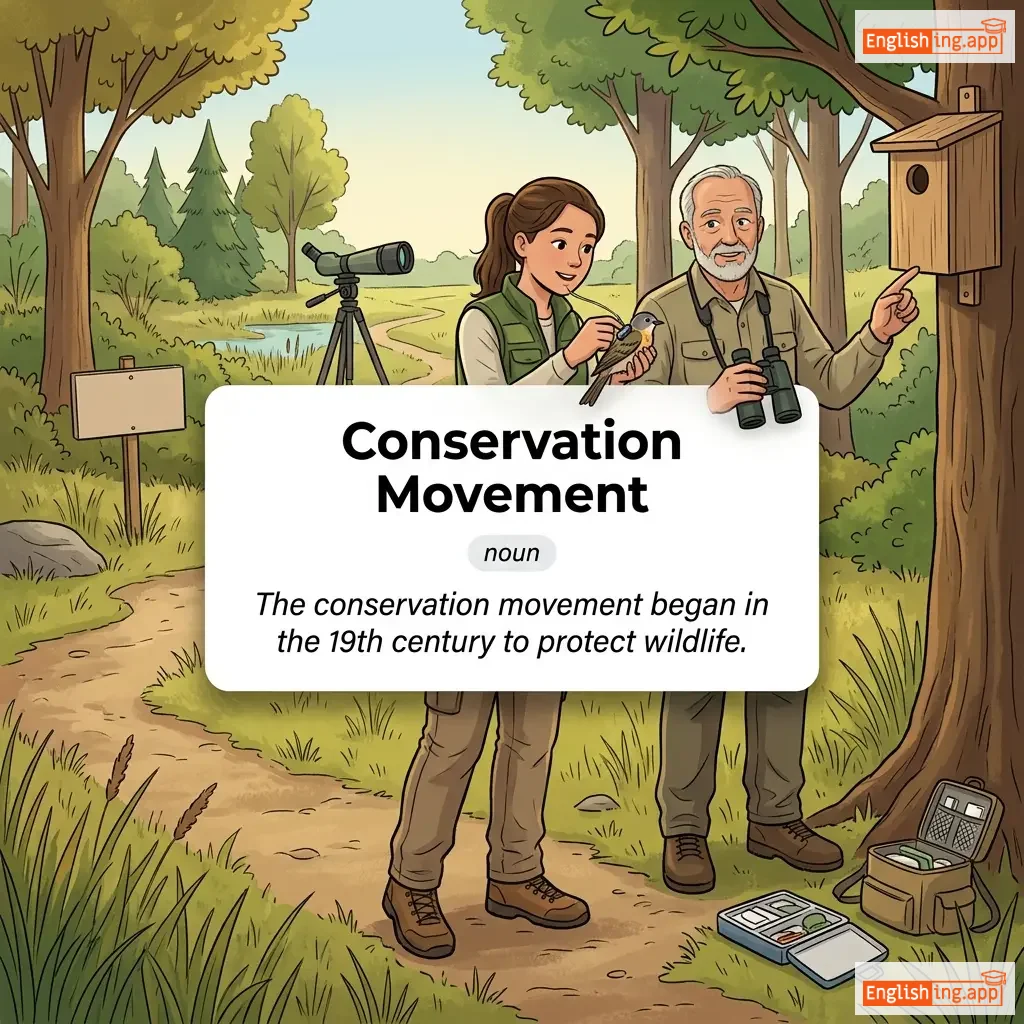
Conservation Movement definition card — visual illustration of the meaning
noun
/ˌkɒnsərˈveɪʃən ˈmuːvmənt/
Mouvement de conservation (mouvement de conservation)

A political, environmental, and social movement that seeks to protect natural resources including plant and animal species as well as their habitat for the future.

"The conservation movement began in the 19th century to protect wildlife."

"Le mouvement de conservation a commencé au XIXe siècle pour protéger la faune." (Le mouvement de conservation a commencé au XIXe siècle pour protéger la faune.)
noun
/kənˈsɜːvəˌtɪzəm/
conservatisme (conservatisme)

A political or social philosophy promoting traditional institutions and resistance to change.

"Conservatism values tradition and gradual development."

"Le conservatisme valorise la tradition et le développement progressif." (Le conservatisme valorise la tradition et le developpement progressif.)
adjective
/kənˈsɜːvətɪv/
conservateur (conservateur)

Favoring traditional views and values; resistant to change.

"He has conservative views on family and society."

"Il a des opinions conservatrices sur la famille et la société." (Il a des opinions conservatrices sur la famille et la société.)
noun
/ˈkɒnsəvəˌtwɑː/
conservatoire (conservatoire)

A school specializing in the study of music or drama.

"She trained as a pianist at the Paris Conservatoire."

"Elle s'est formée comme pianiste au Conservatoire de Paris." (Elle s'est formée comme pianiste au Conservatoire de Paris.)
noun
/kənˈsɜːvəˌtɔːri/
serre / école de musique et d'art (serre / ecole de musique et d'art)

A greenhouse for growing plants or a school for music and the arts.

"They grew exotic plants in the conservatory."

"Ils ont cultivé des plantes exotiques dans la serre." (Ils ont cultive des plantes exotiques dans la serre.)
verb
/kənˈsɜːrv/
conserver (konservé)

to protect something from harm or destruction; to use resources carefully to avoid waste

"We must conserve water during the dry season."

"Nous devons conserver l'eau pendant la saison sèche." (Nous devons conserver l'eau pendant la saison sèche.)
verb
/kənˈsɪdər/
considérer (considérer)

to think carefully about something, especially before making a decision

"She is considering studying abroad next year."

"Elle envisage d'étudier à l'étranger l'année prochaine." (Elle envisage d'étudier à l'étranger l'année prochaine.)
adjective
/kənˈsɪdərəbl/
considérable (considerable)

large in amount, size, or importance

"The project required a considerable amount of time and money."

"Le projet a nécessité une quantité considérable de temps et d'argent." (Le projet a necessite une quantite considerable de temps et d'argent.)
adverb
/kənˈsɪdərəbli/
considérablement (considérablement)

to a great extent or degree; significantly

"The weather has improved considerably since last week."

"Le temps s'est considérablement amélioré depuis la semaine dernière." (Le temps s'est considérablement amélioré depuis la semaine dernière.)
adjective
/kənˈsɪdərət/
attentif (attentif)

showing concern for the needs and feelings of others

"He is always considerate of his neighbors."

"Il est toujours attentif à ses voisins." (Il est toujours attentif à ses voisins.)
noun
/kənˌsɪdəˈreɪʃən/
bonheur (bonheur)

careful thought or attention to something before making a decision

"After much consideration, she accepted the job offer."

"Elle ne pouvait pas cacher son bonheur lorsqu'elle a reçu le prix." (Elle ne pouvait pas cacher son bonheur lorsqu'elle a reçu le prix.)
verb
/kənˈsaɪn/
consigner (consigner)

to deliver something to a person or place, often for selling or safekeeping

"He consigned the package to the shipping company."

"Il a consigné le paquet à la société de transport." (Il a consigné le paquet à la société de transport.)
noun
/ˌkɒnsaɪˈniː/
destinataire (destinataire)

the person or company to whom goods are delivered

"The consignee received the shipment on time."

"Le destinataire a reçu l'envoi à temps." (Le destinataire a reçu l'envoi à temps.)
noun
/kənˈsaɪnər/
expéditeur (expediteur)

a person or company that sends goods to be sold or transported

"The consignor shipped the goods to the warehouse."

"L'expéditeur a envoyé les marchandises à l'entrepôt." (L'expéditeur a envoyé les marchandises à l'entrepôt.)
verb
/kənˈsɪst/
consister (consister)

to be made up or composed of certain parts or elements

"The committee consists of five members."

"Le comité est composé de cinq membres." (Le comité est composé de cinq membres.)
consistency definition card — visual illustration of the meaning
noun
/kənˈsɪstənsi/
consistance, stabilité (consistance, stabilité)

the quality of always behaving or performing in a similar way; uniformity

"Her consistency in work earned her a promotion."

"Sa consistance au travail lui a valu une promotion." (Sa consistance au travail lui a valu une promotion.)
consistent definition card — visual illustration of the meaning
adjective
/kənˈsɪstənt/
consistant (consistant)

acting or done in the same way over time; reliable or uniform

"He is very consistent in his work."

"Il est très consistent dans son travail." (Il est très consistent dans son travail.)
adverb
/kənˈsɪstəntli/
constamment (constamment)

in a way that does not vary; regularly and dependably

"She has been performing consistently well in her studies."

"Elle a constamment bien performé dans ses études." (Elle a constamment bien performé dans ses études.)
verb
/kənˈsoʊl/
consoler (consoler)

to comfort someone at a time of grief or disappointment

"She tried to console him after his loss."

"Elle a essayé de le réconforter après sa perte." (Elle a essaye de le reconforter apres sa perte.)
consolidate definition card — visual illustration of the meaning
verb
/kənˈsɑːlɪdeɪt/
consolider (kohn-soh-lee-day)

to combine into a single, more effective or coherent whole

"The company plans to consolidate its offices into one building."

"L'entreprise prévoit de consolider ses bureaux dans un seul bâtiment." (L'entreprise prévoit de consolider ses bureaux dans un seul bâtiment.)
Consolidation definition card — visual illustration of the meaning
noun
/kənˌsɑːlɪˈdeɪʃən/
consolidation (consolidation)

the act or process of combining into a single, stronger or more effective entity

"The consolidation of the two companies improved efficiency."

"La consolidation des deux entreprises a amélioré l'efficacité." (La consolidation des deux entreprises a ameliore l'efficacite.)
noun
/ˈkɒnsənəns/
consonance, harmonie (consonance, harmonie)

Agreement or harmony among parts; a pleasing combination of sounds in music or words.

"The consonance between their ideas made the project successful."

"La consonance entre leurs idées a rendu le projet réussi." (La consonance entre leurs idées a rendu le projet réussi.)
noun
/ˈkɒnsənənt/
consonne (consonne)

A speech sound produced by blocking air flow, or a letter representing such a sound.

"The word 'cat' has two consonants and one vowel."

"Le mot 'chat' a deux consonnes et une voyelle." (Le mot 'chat' a deux consonnes et une voyelle.)
verb
/ˈkɒnsɔːrt/
partenaire, conjoint royal (partenaire, conjoint royal)

To associate with someone, typically with disapproval; also, a spouse of a reigning monarch.

"He was criticized for consorting with criminals."

"Il a été critiqué pour avoir fréquenté des criminels." (Il a été critiqué pour avoir fréquenté des criminels.)
consortium definition card — visual illustration of the meaning
noun
kənˈsɔː.ti.əm
consortium (consortium)

An association of several companies or organizations formed to undertake an enterprise beyond the resources of any one member.

"The consortium worked collaboratively to build the cable."

"Le consortium a travaillé de manière collaborative pour construire le câble." (Le consortium a travaille de maniere collaborative pour construire le cable.)
adjective
/kənˈspɪkjuəs/
conspicueux (conspicueux)

Easily noticeable; attracting attention due to being unusual or prominent.

"Her red dress made her conspicuous at the party."

"Sa robe rouge la rendait conspicueuse à la fête." (Sa robe rouge la rendait conspicueuse à la fête.)
noun
/kənˈspɪrəsi/
conspiration (conspiration)

A secret plan by a group to do something unlawful or harmful.

"The police uncovered a conspiracy to overthrow the government."

"La police a découvert une conspiration pour renverser le gouvernement." (La police a découvert une conspiration pour renverser le gouvernement.)
noun
/kənˈspɪrə.tər/
conspirateur (conspirateur)

a person who secretly plans with others to do something unlawful or harmful

"The conspirator was arrested before the plan could be carried out."

"Le conspirateur a été arrêté avant que le plan ne puisse être mis à exécution." (Le conspirateur a été arrêté avant que le plan ne puisse être mis à exécution.)
verb
/kənˈspaɪər/
conspirer (conspirer)

to secretly plan with others to do something harmful or illegal

"They conspired to overthrow the government."

"Ils ont conspiré pour renverser le gouvernement." (Ils ont conspiré pour renverser le gouvernement.)
noun
/ˈkʌn.stə.bəl/
agent de police (agent de police)

a police officer of the lowest rank

"The constable directed traffic at the busy intersection."

"L'agent de police a dirigé la circulation à l'intersection animée." (L'agent de police a dirigé la circulation à l'intersection animée.)
noun
/ˈkɒnstənsi/
constance (constance)

the quality of being faithful and dependable

"Her constancy in friendship is admirable."

"Sa constance en amitié est admirable." (Sa constance en amitier est admirable.)