Словари

Словарь английского языка | Значения слов, определения и примеры

conquer definition card — visual illustration of the meaning
verb
/ˈkɒŋkər/
покорять (pokoryat)

To defeat and take control of a place or people by force.

"The king set out to conquer new lands."

"Король отправился завоевывать новые земли." (Korol' otpravil'sya zavoevyvat' novye zemli.)
adjective
/kɒnˈsæŋɡwɪn/
кровнородственный (krovnorodstvenny)

Of the same blood or origin; related by birth.

"The two families were consanguine through their grandparents."

"Два семейства были кровнородственны через своих бабушек и дедушек." (Dva semeystva byli krovnorodstvenny cherez svoikh babushek i dedushek.)
adjective
/ˌkɒnsæŋˈɡwɪniəs/
кровно родственны (krovno rodstvenny)

Related by blood; descended from the same ancestor.

"The study focused on genetic disorders in consanguineous families."

"Исследование сосредоточилось на генетических расстройствах в кровно родственных семьях." (Issledovanie sosredotochilos' na geneticheskikh rasstroystvakh v krovno rodstvennykh sem'yakh.)
noun
/ˌkɒnsæŋˈɡwɪnɪti/
кровное родство (krovnoe rodstvo)

The fact of being descended from the same ancestor; blood relationship.

"The degree of consanguinity was important in inheritance laws."

"Степень кровного родства была важна в законах о наследовании." (Stepen' krovnogo rodstva byla vazhna v zakonakh o nasledovanii.)
noun
/ˈkɒnʃəns/
совесть (sovest')

An inner sense of right and wrong that guides a person's actions.

"Her conscience told her to admit the mistake."

"Ее совесть сказала ей признать ошибку." (Eyo sovest' skazala yey priznat' oshibku.)
conscientious definition card — visual illustration of the meaning
adjective
/ˌkɒnʃiˈɛnʃəs/
добросовестный и исполнительный (dobrosovestny i ispolnitel'ny)

Wishing to do what is right, especially to do one's work or duty well and thoroughly.

"He is a conscientious employee who always meets deadlines."

"Он добросовестный сотрудник, который всегда выполняет сроки." (On dobrosovestnyy sotrudnik, kotoryy vsegda vypolnyaet sroki.)
conscientiousness definition card — visual illustration of the meaning
noun
/ˌkɒn.ʃiˈen.ʃəs.nəs/
осознанность, ответственность, добросовестность (osoznannost, otvetstvennost, dobrosovestnost)

The quality of wishing to do what is right, especially to do one's work or duty well and thoroughly.

"Her conscientiousness makes her a great leader."

"Её сознательность делает её выдающимся лидером." (Eyo soznatel'nost' delayet yeye vydajushchimsya liderom.)
adjective
/ˈkɒnʃəs/
сознательный (soznatelny)

Aware of and responding to one's surroundings; awake.

"She was fully conscious after the surgery."

"Она была полностью в сознании после операции." (Ona byla polnost'yu v soznanii posle operatsii.)
consciousness definition card — visual illustration of the meaning
noun
/ˈkɒnʃəsnəs/
сознание (soznanie)

the state of being aware of and able to think about oneself and the environment

"The patient regained consciousness after the surgery."

"Пациент пришел в сознание после операции." (Patsiyent prishel v soznanie posle operatsii.)
conscript definition card — visual illustration of the meaning
verb
/ˈkɒnskrɪpt/
заставить кого-то вступить в армию (zastavit' kogo-to vstupit' v armiyu)

to force someone into military service

"The government conscripted young men during the war."

"Правительство призвало молодых людей во время войны." (Pravitel'stvo prizvalo molodykh lyudey vo vremya voyny.)
consecrate definition card — visual illustration of the meaning
verb
/ˈkɒnsɪkreɪt/
освящать (osvyashchat)

to make something sacred, usually through a religious ceremony

"The church was consecrated by the bishop."

"Церковь была освящена епископом." (Tserkov' byla osvyashchena yepis kopom.)
adjective
/kənˈsɛkjʊtɪv/
последовательный (posledovatel'nyy)

following one after another without interruption

"She won three consecutive matches."

"Она выиграла три подряд идущие матча." (Ona vyigrala tri podryad idushchie matcha.)
consensus definition card — visual illustration of the meaning
noun
/kənˈsɛnsəs/
консенсус (konsensus)

general agreement among a group of people

"The team reached a consensus on the new strategy."

"Команда пришла к консенсусу по новой стратегии." (Komanda prishla k konsensusu po novoy strategii.)
consent definition card — visual illustration of the meaning
noun
/kənˈsɛnt/
согласие (soglasie)

permission for something to happen or agreement to do something

"She gave her consent before the operation."
"Она дала свое согласие перед операцией." (Ona dala svoe soglasie pered operatsiey.)
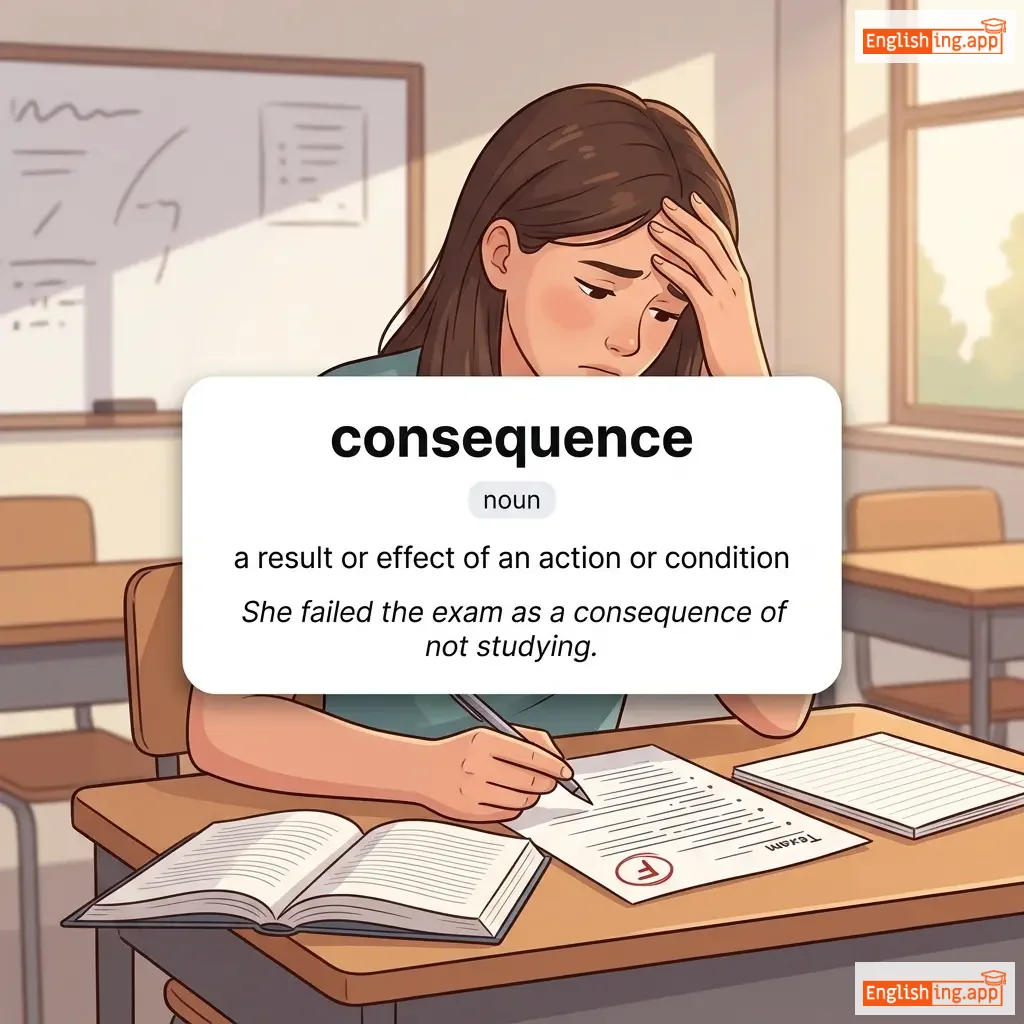
consequence definition card — visual illustration of the meaning
noun
/ˈkɒnsɪkwəns/
последствие (posledstvie)

a result or effect of an action or condition

"She failed the exam as a consequence of not studying."
"Она провалила экзамен как следствие того, что не училась." (Ona provalila ekzamen kak sledstvie togo, chto ne uchilas'.)
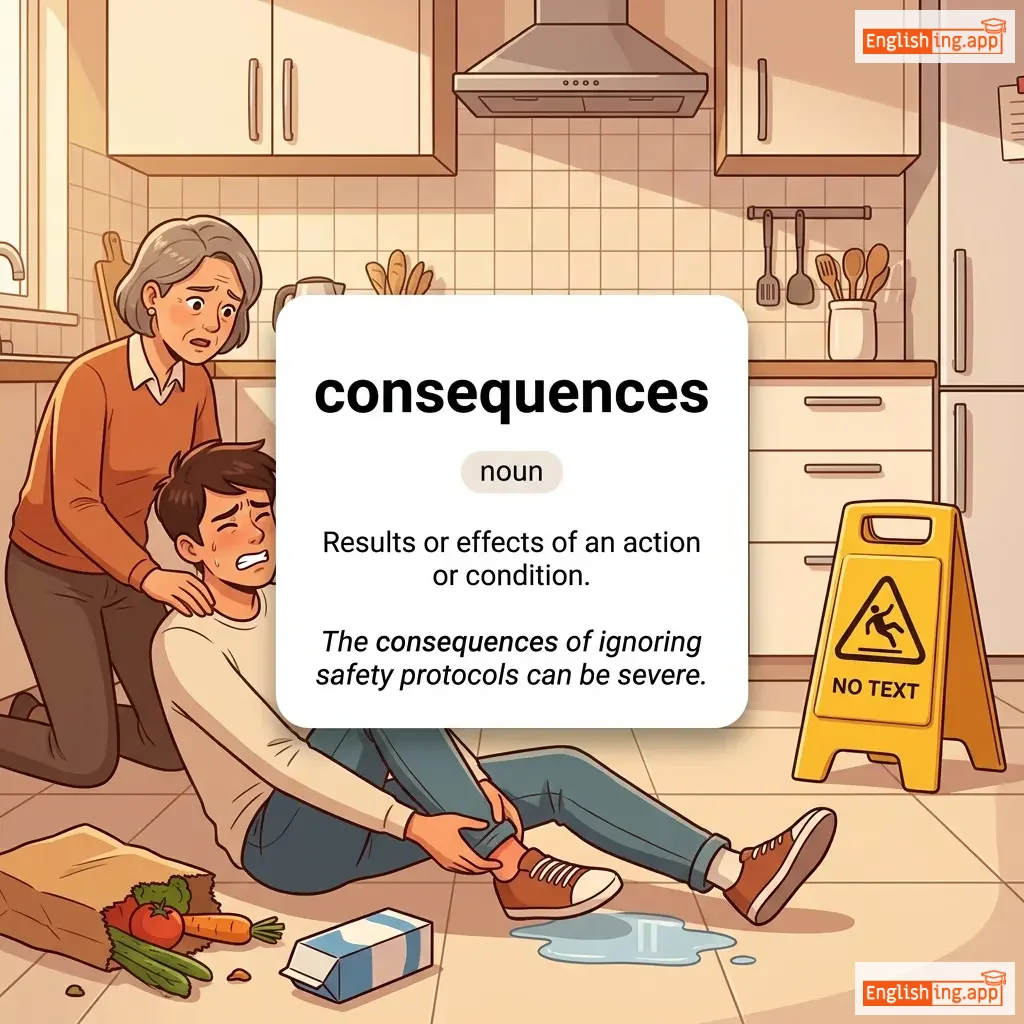
consequences definition card — visual illustration of the meaning
noun
/ˈkɒnsɪkwənsɪz/
последствия (posledstviya)

Results or effects of an action or condition.

"The consequences of ignoring safety protocols can be severe."

"Последствия игнорирования протоколов безопасности могут быть серьезными." (Posledstviya ignorirovaniya protokolov bezopasnosti mogut byt' seryoznymi.)
adjective
/ˌkɒnsɪˈkwɛnʃəl/
важный (vazhnyy)

Having important or significant consequences; resulting from something.

"The meeting was consequential for the future of the project."

"Эта встреча была решающей для будущего проекта." (Eta vstrecha byla reshaushchey dlya budushchego proekta.)
adverb
/ˈkɒnsɪkwəntli/
следовательно (slyedovatel'no)

as a result; therefore

"He didn’t study, and consequently he failed the exam."

"Он не учился, и, следовательно, не сдал экзамен." (On ne uchilsya, i, slyedovatel'no, ne sdal ekzamen.)
conservation definition card — visual illustration of the meaning
noun
/ˌkɒnsəˈveɪʃən/
сохранение (sokhranenie)

the protection and preservation of natural resources and the environment

"Conservation of forests is essential to prevent climate change."

"Сохранение лесов необходимо для предотвращения изменения климата." (Sokhranenie lesov neobkhodimo dlya predotvrashcheniya izmeneniya klimata.)
Conservation Movement definition card — visual illustration of the meaning
noun
/ˌkɒnsərˈveɪʃən ˈmuːvmənt/
Движение за сохранение природы (dvizhenie za sokhranenie prirody)

A political, environmental, and social movement that seeks to protect natural resources including plant and animal species as well as their habitat for the future.

"The conservation movement began in the 19th century to protect wildlife."

"Движение за сохранение природы началось в XIX веке с целью защиты дикой природы." (Dvizhenie za sokhranenie prirody nachalos' v XIX veke s tsel'yu zashchity dikoy prirody.)
noun
/kənˈsɜːvəˌtɪzəm/
консерватизм (konservatizm)

A political or social philosophy promoting traditional institutions and resistance to change.

"Conservatism values tradition and gradual development."

"Консерватизм ценит традиции и постепенное развитие." (Konservatizm tsenit traditsii i postepennoe razvitie.)
adjective
/kənˈsɜːvətɪv/
консервативный (konservativny)

Favoring traditional views and values; resistant to change.

"He has conservative views on family and society."

"У него консервативные взгляды на семью и общество." (U nego konservativnye vzglyady na sem'yu i obshchestvo.)
noun
/ˈkɒnsəvəˌtwɑː/
консерватория (konservatoriya)

A school specializing in the study of music or drama.

"She trained as a pianist at the Paris Conservatoire."

"Она училась на пианиста в Парижской консерватории." (Ona uchilas' na pianista v Parizhkoy konservatorii.)
noun
/kənˈsɜːvəˌtɔːri/
теплица / школа музыки и искусства (teplicha / shkola muzyki i iskusstva)

A greenhouse for growing plants or a school for music and the arts.

"They grew exotic plants in the conservatory."

"Они выращивали экзотические растения в теплице." (Oni vyrashchivali ekzoticheskie rastenija v teplitse.)
verb
/kənˈsɜːrv/
сохранять (sokhranyat')

to protect something from harm or destruction; to use resources carefully to avoid waste

"We must conserve water during the dry season."

"Мы должны экономить воду в сухой сезон." (My dolzhny ekonomit' vodu v sukhoy sezon.)
verb
/kənˈsɪdər/
рассматривать (rassmatrivat)

to think carefully about something, especially before making a decision

"She is considering studying abroad next year."

"Она рассматривает возможность учебы за границей в следующем году." (Ona rassmatrivaet vozmozhnost' ucheby za granitsey v sleduyushchem godu.)
adjective
/kənˈsɪdərəbl/
существенный (sushtestvenny)

large in amount, size, or importance

"The project required a considerable amount of time and money."

"Проект потребовал значительного времени и денег." (Proyekt potreboval znachitelnogo vremeni i deneg.)
adverb
/kənˈsɪdərəbli/
значительно (znachitel'no)

to a great extent or degree; significantly

"The weather has improved considerably since last week."

"Погода значительно улучшилась с прошлой недели." (Pogoda znachitel'no uluchshilas' s proshloy nedeli.)
adjective
/kənˈsɪdərət/
внимательный (vnimatel'nyj)

showing concern for the needs and feelings of others

"He is always considerate of his neighbors."

"Он всегда внимателен к своим соседям." (On vsegda vnimatelen k svoim sosedyam.)
noun
/kənˌsɪdəˈreɪʃən/
счастье (schast'ye)

careful thought or attention to something before making a decision

"After much consideration, she accepted the job offer."

"Она не могла скрыть свое счастье, когда получила награду." (Ona ne mogla skryt' svoe schast'ye, kogda poluchila nagradu.)
verb
/kənˈsaɪn/
передавать (peredavat)

to deliver something to a person or place, often for selling or safekeeping

"He consigned the package to the shipping company."

"Он передал пакет транспортной компании." (On peredal paket transportnoy kompanii.)
noun
/ˌkɒnsaɪˈniː/
получатель (poluchatel)

the person or company to whom goods are delivered

"The consignee received the shipment on time."

"Получатель получил отправление вовремя." (Poluchatel poluchil otpravlenie vovremya.)
noun
/kənˈsaɪnər/
отправитель (otpravitel)

a person or company that sends goods to be sold or transported

"The consignor shipped the goods to the warehouse."

"Отправитель отправил товар на склад." (Otpravitel otpravil tovar na sklad.)
verb
/kənˈsɪst/
состоять (sostoyat)

to be made up or composed of certain parts or elements

"The committee consists of five members."

"Комитет состоит из пяти членов." (Komitet sostoyit iz pyati chlenov.)
consistency definition card — visual illustration of the meaning
noun
/kənˈsɪstənsi/
последовательность, стабильность (posledovatel'nost', stabil'nost')

the quality of always behaving or performing in a similar way; uniformity

"Her consistency in work earned her a promotion."

"Ее последовательность в работе принесла ей повышение." (Eyo posledovatel'nost' v rabote prinesla yey povyshenie.)
consistent definition card — visual illustration of the meaning
adjective
/kənˈsɪstənt/
последовательный (posledovatel'nyy)

acting or done in the same way over time; reliable or uniform

"He is very consistent in his work."

"Он очень последовательный в своей работе." (On ochen' posledovatel'nyy v svoey rabote.)
adverb
/kənˈsɪstəntli/
непрерывно (nepreryvno)

in a way that does not vary; regularly and dependably

"She has been performing consistently well in her studies."

"Она постоянно показывает хорошие результаты в учебе." (Ona postoyanno pokazyvayet khoroshie rezul'taty v uchebe.)
verb
/kənˈsoʊl/
утешать (uteshat)

to comfort someone at a time of grief or disappointment

"She tried to console him after his loss."

"Она попыталась утешить его после его потери." (Ona popytalas uteshit ego posle ego poteri.)
consolidate definition card — visual illustration of the meaning
verb
/kənˈsɑːlɪdeɪt/
консолидировать (konsolidirovat)

to combine into a single, more effective or coherent whole

"The company plans to consolidate its offices into one building."

"Компания планирует консолидацию своих офисов в одном здании." (Kompaniya planirovet konsolidatsiyu svoikh ofisov v odnom zdanii.)
Consolidation definition card — visual illustration of the meaning
noun
/kənˌsɑːlɪˈdeɪʃən/
консолидация (konsolidatsiya)

the act or process of combining into a single, stronger or more effective entity

"The consolidation of the two companies improved efficiency."

"Консолидация двух компаний улучшила эффективность." (Konsolidatsiya dvukh kompaniy uluchshila effektivnost'.)
noun
/ˈkɒnsənəns/
созвучие, гармония (sozvuchie, garmoniya)

Agreement or harmony among parts; a pleasing combination of sounds in music or words.

"The consonance between their ideas made the project successful."

"Созвучие между их идеями сделало проект успешным." (Sozvuchie mezhdu ikh ideyami sdelalo proyekt uspeshnym.)
noun
/ˈkɒnsənənt/
согласный (soglasny)

A speech sound produced by blocking air flow, or a letter representing such a sound.

"The word 'cat' has two consonants and one vowel."

"Слово 'кот' имеет два согласных и одну гласную." (Slovo 'kot' imeyet dva soglasnykh i odnu glasnuyu.)
verb
/ˈkɒnsɔːrt/

To associate with someone, typically with disapproval; also, a spouse of a reigning monarch.

"He was criticized for consorting with criminals."

consortium definition card — visual illustration of the meaning
noun
kənˈsɔː.ti.əm
консорциум (konsortsium)

An association of several companies or organizations formed to undertake an enterprise beyond the resources of any one member.

"The consortium worked collaboratively to build the cable."

"Консорциум работал совместно для строительства кабеля." (Konsortsium rabotal sovmestno dlya stroitel'stva kabyelya.)
adjective
/kənˈspɪkjuəs/
заметный (zametny)

Easily noticeable; attracting attention due to being unusual or prominent.

"Her red dress made her conspicuous at the party."

"Ее красное платье сделало ее заметной на вечеринке." (Eyo krasnoe plat'e sdelo eyo zametnoy na vecherinke.)
noun
/kənˈspɪrəsi/
заговор (zagovor)

A secret plan by a group to do something unlawful or harmful.

"The police uncovered a conspiracy to overthrow the government."

"Полиция раскрыла заговор по свержению правительства." (Politsiya raskryla zagovor po sverzheniyu pravitel'stva.)
noun
/kənˈspɪrə.tər/
заговорщик (zagogorshchik)

a person who secretly plans with others to do something unlawful or harmful

"The conspirator was arrested before the plan could be carried out."

"Заговорщик был арестован до того, как план мог быть осуществлен." (Zagovorščik byl arestovan do togo, kak plan mog byt' osushchestvlen.)
verb
/kənˈspaɪər/
заговорить (zagovorit)

to secretly plan with others to do something harmful or illegal

"They conspired to overthrow the government."

"Они сговорились, чтобы свергнуть правительство." (Oni sgovorilis', chtoby svergnut' pravitel'stvo.)
noun
/ˈkʌn.stə.bəl/
младший полицейский (mladshiy politseyskiy)

a police officer of the lowest rank

"The constable directed traffic at the busy intersection."

"Младший полицейский регулировал движение на оживленном перекрестке." (Mladshiy politseyskiy regu-liviroval dvizhene na ozhivlyonnom perekrestke.)
noun
/ˈkɒnstənsi/
постоянство (postoyanstvo)

the quality of being faithful and dependable

"Her constancy in friendship is admirable."

"Её постоянство в дружбе восхитительно." (Yeyo postoyanstvo v druzhbe voskhititelno.)