
語彙集

英単語辞書 | 単語の意味、定義、例文

conquer definition card — visual illustration of the meaning
verb
/ˈkɒŋkər/
征服する (seifuku suru)

To defeat and take control of a place or people by force.

"The king set out to conquer new lands."

"王は新しい土地を征服するために出発した。" (Ō wa atarashī tochi o seifuku suru tame ni shuppatsu shita.)
adjective
/kɒnˈsæŋɡwɪn/
血縁関係の (ketsuen kankei no)

Of the same blood or origin; related by birth.

"The two families were consanguine through their grandparents."

"二つの家族は彼らの祖父母を通じて血縁関係にあった。" (Futatsu no kazoku wa karera no sofubo o tōjite ketsuen kankei ni atta.)
adjective
/ˌkɒnsæŋˈɡwɪniəs/
血縁の (ketsuen no)

Related by blood; descended from the same ancestor.

"The study focused on genetic disorders in consanguineous families."

"この研究は血縁のある家族における遺伝的障害に焦点を当てました。" (Kono kenkyū wa ketsuen no aru kazoku ni okeru iden-teki shōgai ni shōten o atemashita.)
noun
/ˌkɒnsæŋˈɡwɪnɪti/
血縁関係 (ketsuen kankei)

The fact of being descended from the same ancestor; blood relationship.

"The degree of consanguinity was important in inheritance laws."

"相続法では、血縁関係の程度が重要でした。" (Souzoku hou de wa, ketsuen kankei no teido ga juuyou deshita.)
noun
/ˈkɒnʃəns/
良心 (ryōshin)

An inner sense of right and wrong that guides a person's actions.

"Her conscience told her to admit the mistake."

"彼女の良心は彼女に間違いを認めるように言った。" (Kanojo no ryōshin wa kanojo ni machigai o mitomeru yō ni itta.)
conscientious definition card — visual illustration of the meaning
adjective
/ˌkɒnʃiˈɛnʃəs/
良心的で勤勉な (ryōshinteki de kinbenna)

Wishing to do what is right, especially to do one's work or duty well and thoroughly.

"He is a conscientious employee who always meets deadlines."

"彼は常に締め切りを守る良心的で勤勉な社員です。" (Kare wa tsuneni shimekiri o mamoru ryōshinteki de kinbenna shain desu.)
conscientiousness definition card — visual illustration of the meaning
noun
/ˌkɒn.ʃiˈen.ʃəs.nəs/
誠実, 責任感, 勤勉 (seijitsu, sekininkan, kinben)

The quality of wishing to do what is right, especially to do one's work or duty well and thoroughly.

"Her conscientiousness makes her a great leader."

"彼女の誠実さは、彼女を素晴らしいリーダーにしています。" (Kanojo no seijitsusa wa, kanojo o subarashī rīdā ni shiteimasu.)
adjective
/ˈkɒnʃəs/
意識的 (ishikiteki)

Aware of and responding to one's surroundings; awake.

"She was fully conscious after the surgery."
"手術後、彼女は完全に意識が戻った。" (Shujutsugo, kanojo wa kanzen ni ishiki ga modotta.)
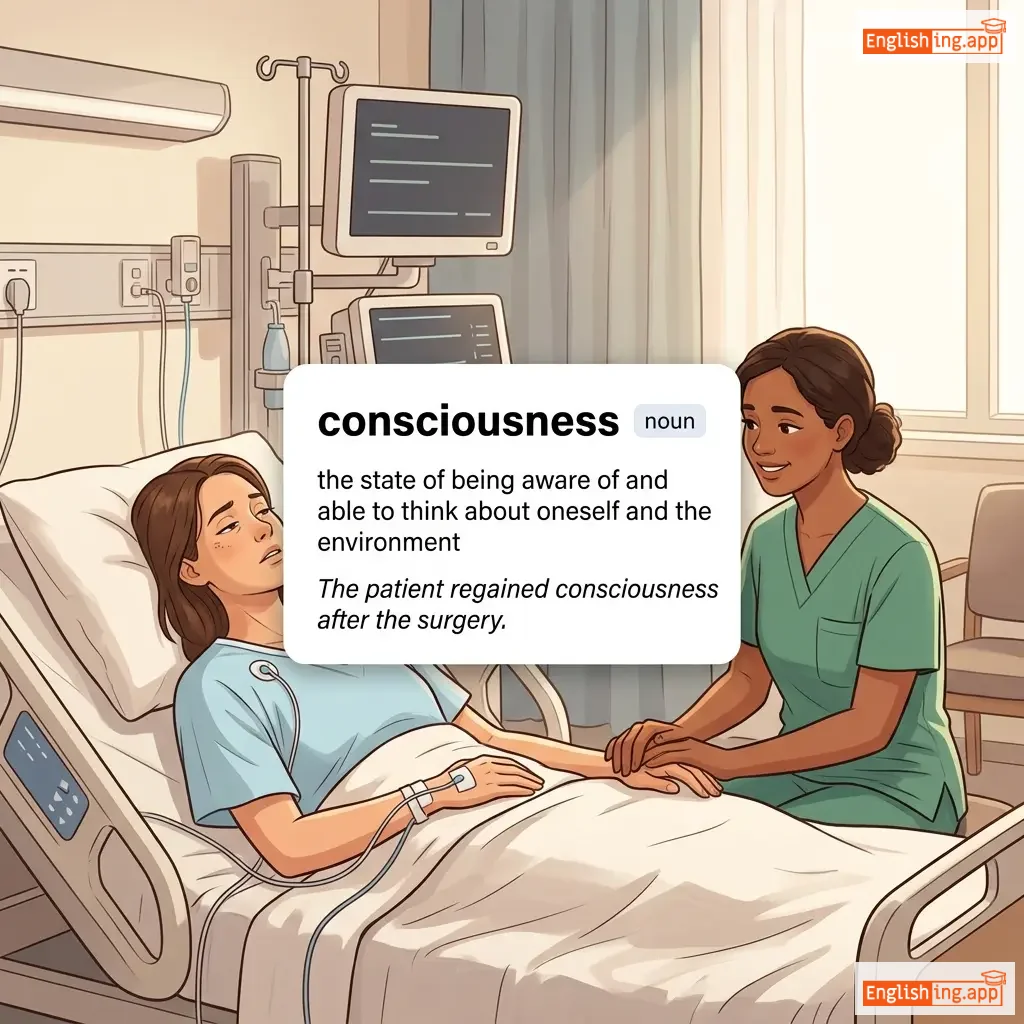
consciousness definition card — visual illustration of the meaning
noun
/ˈkɒnʃəsnəs/
意識 (ishiki)

the state of being aware of and able to think about oneself and the environment

"The patient regained consciousness after the surgery."

"手術後、患者は意識を取り戻しました。" (Shujutsugo, kanja wa ishiki o torimodoshimashita.)
conscript definition card — visual illustration of the meaning
verb
/ˈkɒnskrɪpt/
徴兵する (chōhei suru)

to force someone into military service

"The government conscripted young men during the war."

"政府は戦争中に若い男性を徴兵しました。" (Seifu wa sensō-chū ni wakai dansei o chōhei shimashita.)
consecrate definition card — visual illustration of the meaning
verb
/ˈkɒnsɪkreɪt/
奉献する (hōkensuru)

to make something sacred, usually through a religious ceremony

"The church was consecrated by the bishop."

"教会は司教によって奉献されました。" (Kyōkai wa shikyō ni yotte hōkensaremashita.)
adjective
/kənˈsɛkjʊtɪv/
連続的 (renzokuteki)

following one after another without interruption

"She won three consecutive matches."

"彼女は三連続の試合に勝った。" (Kanojo wa san renzoku no shiai ni katta.)
consensus definition card — visual illustration of the meaning
noun
/kənˈsɛnsəs/
コンセンサス (konsensasu)

general agreement among a group of people

"The team reached a consensus on the new strategy."

"チームは新しい戦略についてコンセンサスに達しました。" (Chīmu wa atarashī senryaku ni tsuite konsensasu ni tasshimashita.)
consent definition card — visual illustration of the meaning
noun
/kənˈsɛnt/
同意 (doui)

permission for something to happen or agreement to do something

"She gave her consent before the operation."
"彼女は手術の前に同意を与えました。" (Kanojo wa shujutsu no mae ni doui o ataemashita.)
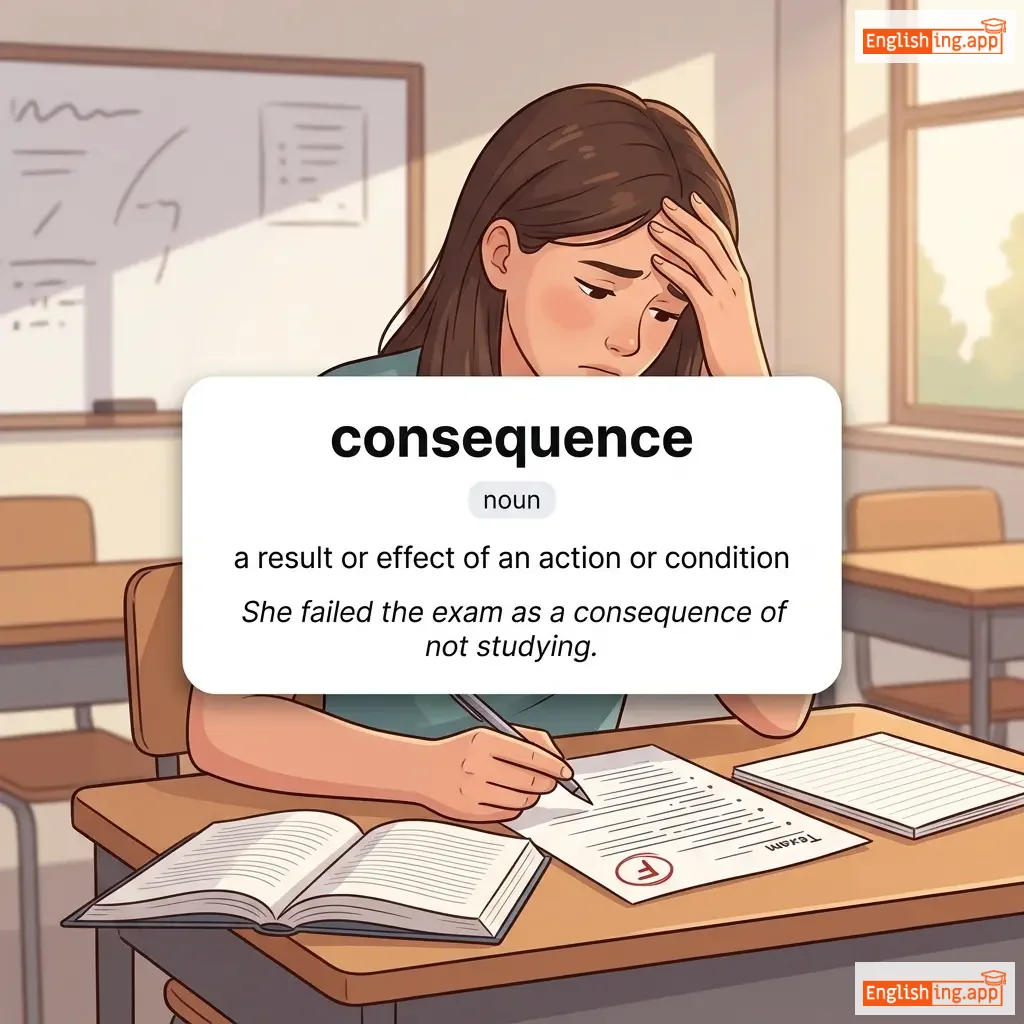
consequence definition card — visual illustration of the meaning
noun
/ˈkɒnsɪkwəns/
結果 (kekka)

a result or effect of an action or condition

"She failed the exam as a consequence of not studying."
"勉強しなかった結果、試験に落ちた。" (Benkyō shinakatta kekka, shiken ni ochita.)
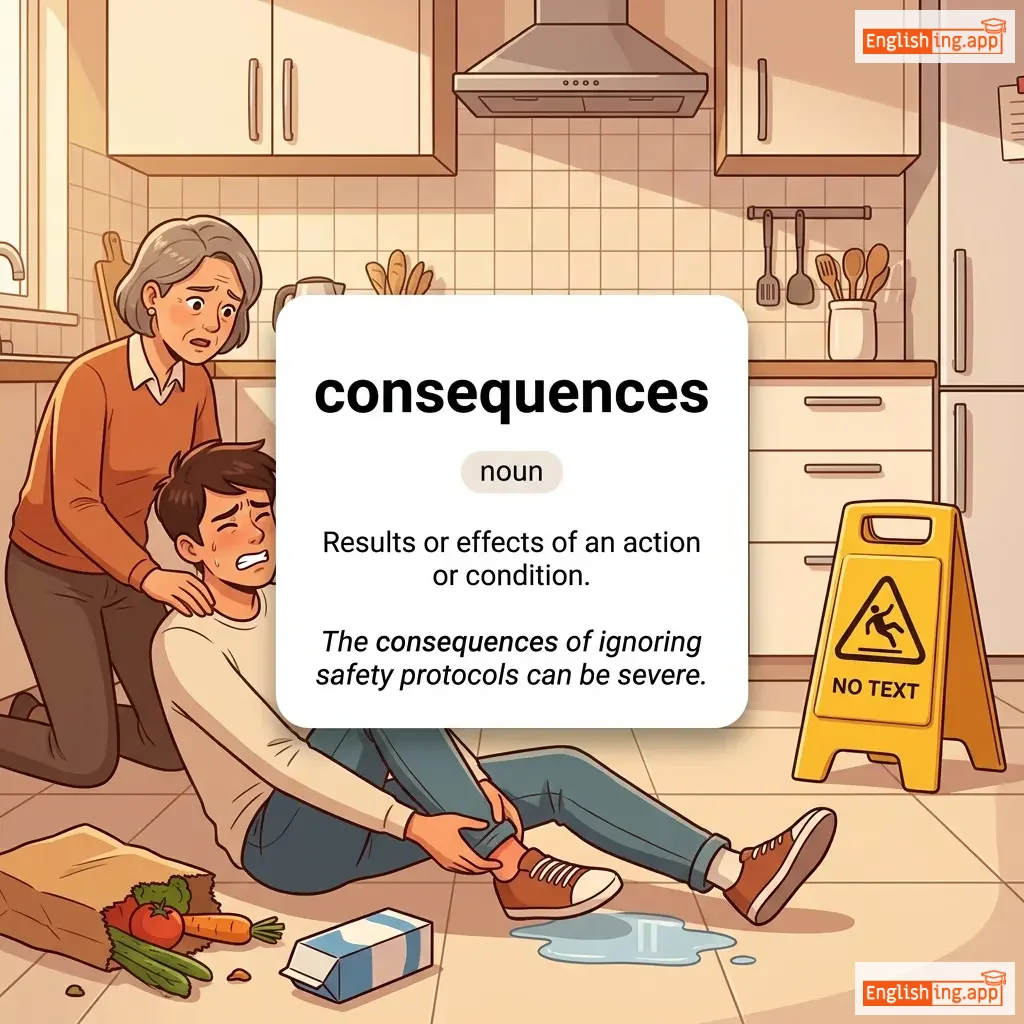
consequences definition card — visual illustration of the meaning
noun
/ˈkɒnsɪkwənsɪz/
結果 (kekka)

Results or effects of an action or condition.

"The consequences of ignoring safety protocols can be severe."

"安全プロトコルを無視した結果、重大な事態が生じる可能性があります。" (Anzen purotokoru o mushi shita kekka, juudaina jitai ga shoujiru kanousei ga arimasu.)
adjective
/ˌkɒnsɪˈkwɛnʃəl/
重要な (jūyōna)

Having important or significant consequences; resulting from something.

"The meeting was consequential for the future of the project."

"その会議はプロジェクトの未来にとって重要でした。" (Sono kaigi wa purojekuto no mirai ni totte jūyō deshita.)
adverb
/ˈkɒnsɪkwəntli/
その結果 (sono kekka)

as a result; therefore

"He didn’t study, and consequently he failed the exam."

"彼は勉強しなかったので、その結果試験に落ちた。" (Kare wa benkyou shinakatta node, sono kekka shiken ni ochita.)
conservation definition card — visual illustration of the meaning
noun
/ˌkɒnsəˈveɪʃən/
保護 (hogo)

the protection and preservation of natural resources and the environment

"Conservation of forests is essential to prevent climate change."

"森の保護は気候変動を防ぐために重要です。" (mori no hogo wa kikou hendou o fusegu tame ni juuyou desu.)
Conservation Movement definition card — visual illustration of the meaning
noun
/ˌkɒnsərˈveɪʃən ˈmuːvmənt/
保護運動 (hogo undou)

A political, environmental, and social movement that seeks to protect natural resources including plant and animal species as well as their habitat for the future.

"The conservation movement began in the 19th century to protect wildlife."

"保護運動は19世紀に野生動物を保護するために始まりました。" (Hogo undō wa 19 seiki ni yasei dōbutsu o hogo suru tame ni hajimari mashita.)
noun
/kənˈsɜːvəˌtɪzəm/
保守主義 (hoshu shugi)

A political or social philosophy promoting traditional institutions and resistance to change.

"Conservatism values tradition and gradual development."

"保守主義は伝統と徐々に進行する発展を重視します。" (Hoshu shugi wa dentō to jōjō ni shinkō suru hatten o jūshi shimasu.)
adjective
/kənˈsɜːvətɪv/
保守的な (hoshuteki na)

Favoring traditional views and values; resistant to change.

"He has conservative views on family and society."

"彼は家族と社会について保守的な見解を持っている。" (Kare wa kazoku to shakai ni tsuite hoshuteki na kenkai o motte iru.)
noun
/ˈkɒnsəvəˌtwɑː/
音楽院 (ongakuin)

A school specializing in the study of music or drama.

"She trained as a pianist at the Paris Conservatoire."

"彼女はパリの音楽院でピアニストとして訓練を受けました。" (Kanojo wa Pari no ongakuin de pianisuto toshite kunren o ukemashita.)
noun
/kənˈsɜːvəˌtɔːri/
温室 / 音楽と芸術の学校 (onshitsu / ongaku to geijutsu no gakkou)

A greenhouse for growing plants or a school for music and the arts.

"They grew exotic plants in the conservatory."

"彼らは温室でエキゾチックな植物を育てていました。" (Karera wa onshitsu de ekizochikku na shokubutsu o sodate te imashita.)
verb
/kənˈsɜːrv/

to protect something from harm or destruction; to use resources carefully to avoid waste

"We must conserve water during the dry season."

verb
/kənˈsɪdər/
考慮する (koryo suru)

to think carefully about something, especially before making a decision

"She is considering studying abroad next year."

"彼女は来年海外で学ぶことを考えています。" (Kanojo wa rainen kaigai de manabu koto wo kangaeteimasu.)
adjective
/kənˈsɪdərəbl/
かなりの (kanarino)

large in amount, size, or importance

"The project required a considerable amount of time and money."

"そのプロジェクトはかなりの時間とお金を必要としました。" (Sono purojekuto wa kanarino jikan to okane o hitsuyō to shimashita.)
adverb
/kənˈsɪdərəbli/
かなり (kanari)

to a great extent or degree; significantly

"The weather has improved considerably since last week."

"天気は先週からかなり改善しました。" (Tenki wa senshū kara kanari kaizen shimashita.)
adjective
/kənˈsɪdərət/
思いやりのある (omoiyari no aru)

showing concern for the needs and feelings of others

"He is always considerate of his neighbors."

"彼はいつも近所の人々に思いやりを持っています。" (Kare wa itsumo kinjo no hitobito ni omoiyari o motteimasu.)
noun
/kənˌsɪdəˈreɪʃən/
幸福 (kōfuku)

careful thought or attention to something before making a decision

"After much consideration, she accepted the job offer."

"彼女は賞を受け取ったとき、自分の幸せを隠せなかった。" (Kanojo wa shō o uketotta toki, jibun no kōfuku o kakusenakatta.)
verb
/kənˈsaɪn/
委託する (itaku suru)

to deliver something to a person or place, often for selling or safekeeping

"He consigned the package to the shipping company."

"彼は荷物を配送会社に委託しました。" (Kare wa nimotsu o haisō kaisha ni itaku shimashita.)
noun
/ˌkɒnsaɪˈniː/
受取人 (uketorinin)

the person or company to whom goods are delivered

"The consignee received the shipment on time."

"受取人は時間通りに配送を受け取りました。" (Uketorinin wa jikan dōri ni haisō o uketorimashita.)
noun
/kənˈsaɪnər/
発送者 (hassōsha)

a person or company that sends goods to be sold or transported

"The consignor shipped the goods to the warehouse."

"発送者は商品を倉庫に送った。" (Hassōsha wa shōhin o sōko ni okutta.)
verb
/kənˈsɪst/
構成する (kousei suru)

to be made up or composed of certain parts or elements

"The committee consists of five members."

"委員会は五人のメンバーで構成されています。" (Iinkai wa gonin no menbaa de kousei sareteimasu.)
consistency definition card — visual illustration of the meaning
noun
/kənˈsɪstənsi/
一貫性, 安定性 (ikkansē, anteisē)

the quality of always behaving or performing in a similar way; uniformity

"Her consistency in work earned her a promotion."

"彼女の仕事での一貫性が昇進をもたらしました。" (Kanojo no shigoto de no ikkansē ga shōshin o motarashimashita.)
consistent definition card — visual illustration of the meaning
adjective
/kənˈsɪstənt/
一貫した (ikkan shita)

acting or done in the same way over time; reliable or uniform

"He is very consistent in his work."

"彼は仕事において非常に一貫しています。" (Kare wa shigoto ni oite hijō ni ikkan shiteimasu.)
adverb
/kənˈsɪstəntli/
一貫して (ikkanshite)

in a way that does not vary; regularly and dependably

"She has been performing consistently well in her studies."

"彼女は学業で一貫して良い成績を収めています。" (Kanojo wa gakugyō de ikkanshite yoi seiseki o osameteimasu.)
verb
/kənˈsoʊl/
慰める (nagusameru)

to comfort someone at a time of grief or disappointment

"She tried to console him after his loss."

"彼女は彼の損失の後、彼を慰めようとした。" (Kanojo wa kare no sonshitsu no ato, kare wo nagusameyou to shita.)
consolidate definition card — visual illustration of the meaning
verb
/kənˈsɑːlɪdeɪt/
統合する (tōgō suru)

to combine into a single, more effective or coherent whole

"The company plans to consolidate its offices into one building."

"その会社はオフィスを1つの建物に統合する予定です。" (Sono kaisha wa ofisu o hitotsu no tatemono ni tōgō suru yotei desu.)
Consolidation definition card — visual illustration of the meaning
noun
/kənˌsɑːlɪˈdeɪʃən/
統合 (tōgō)

the act or process of combining into a single, stronger or more effective entity

"The consolidation of the two companies improved efficiency."

"二つの会社の統合は効率を改善しました。" (Futatsu no kaisha no tōgō wa kōritsu o kaizen shimashita.)
noun
/ˈkɒnsənəns/
調和, 一致 (chouwa, itchi)

Agreement or harmony among parts; a pleasing combination of sounds in music or words.

"The consonance between their ideas made the project successful."

"彼らの考えの調和がプロジェクトを成功に導いた。" (Karera no kangae no chouwa ga purojekuto o seikou ni michibiita.)
noun
/ˈkɒnsənənt/
子音 (shiin)

A speech sound produced by blocking air flow, or a letter representing such a sound.

"The word 'cat' has two consonants and one vowel."

"‘猫’という単語には、2つの子音と1つの母音があります。" ('Neko' to iu tango ni wa, futatsu no shiin to hitotsu no boin ga arimasu.)
verb
/ˈkɒnsɔːrt/

To associate with someone, typically with disapproval; also, a spouse of a reigning monarch.

"He was criticized for consorting with criminals."

consortium definition card — visual illustration of the meaning
noun
kənˈsɔː.ti.əm
コンソーシアム (konsōshiamu)

An association of several companies or organizations formed to undertake an enterprise beyond the resources of any one member.

"The consortium worked collaboratively to build the cable."

"コンソーシアムはケーブルの建設に協力しました。" (Konsōshiamu wa kēburu no kensetsu ni kyōryoku shimashita.)
adjective
/kənˈspɪkjuəs/
目立つ (medatsu)

Easily noticeable; attracting attention due to being unusual or prominent.

"Her red dress made her conspicuous at the party."

"彼女の赤いドレスはパーティーで目立っていました。" (Kanojo no akai doresu wa pātī de medatte imashita.)
noun
/kənˈspɪrəsi/
陰謀 (inbō)

A secret plan by a group to do something unlawful or harmful.

"The police uncovered a conspiracy to overthrow the government."

"警察は政府を転覆させる陰謀を暴露した。" (Keisatsu wa seifu o tenpuku saseru inbō o bakuro shita.)
noun
/kənˈspɪrə.tər/
陰謀者 (inbousha)

a person who secretly plans with others to do something unlawful or harmful

"The conspirator was arrested before the plan could be carried out."

"陰謀者は計画が実行される前に逮捕された。" (Inbousha wa keikaku ga jikkou sareru mae ni taiho sareta.)
verb
/kənˈspaɪər/
共謀する (kyoubou suru)

to secretly plan with others to do something harmful or illegal

"They conspired to overthrow the government."

"彼らは政府を倒すために共謀した。" (Karera wa seifu o taosu tame ni kyoubou shita.)
noun
/ˈkʌn.stə.bəl/
巡査 (junsa)

a police officer of the lowest rank

"The constable directed traffic at the busy intersection."

"巡査は混雑した交差点で交通を指導しました。" (Junsa wa konzatsu shita kōsaten de kōtsū o shidō shimashita.)
noun
/ˈkɒnstənsi/
不変/忠実 (fuhen/chujitsu)

the quality of being faithful and dependable

"Her constancy in friendship is admirable."

"彼女の友情での忠実さは賞賛に値します。" (Kanojo no yujo de no chujitsu sa wa shosan ni atai shimasu.)