語彙集

英単語辞書 | 単語の意味、定義、例文

adjective
/ˈkɒn.stənt/
一定の (ittei no)

happening all the time or staying the same without change

"She lived in constant fear of losing her job."

"彼女は仕事を失うことへの一定の恐怖の中で生きていた。" (Kanojo wa shigoto o ushinau koto e no ittei no kyōfu no naka de ikite ita.)
adverb
/ˈkɒnstəntli/
絶えず (taezu)

continuously over a period of time; always

"He is constantly improving his skills."

"彼は絶え間なくスキルを向上させています。" (Kare wa taezu sukiru o kōjō saseteimasu.)
noun
/ˌkɒn.stəˈleɪ.ʃən/
星座 (seiza)

a group of stars forming a recognizable pattern in the night sky

"Orion is one of the most famous constellations."

"オリオン座は最も有名な星座の一つです。" (Orion-za wa mottomo yūmei na seiza no hitotsu desu.)
noun
/ˌkɒnstəˈneɪʃən/
動揺 (douyou)

A feeling of anxiety, dismay, or confusion, often caused by something unexpected.

"The sudden announcement caused widespread consternation among the employees."

"突然の発表が従業員の間で広範な動揺を引き起こしました" (Totsuzen no happyou ga juugyouin no aida de kouhan na douyou wo hikiokoshimashita)
noun
/kənˈstɪtʃuənsi/
選挙区 (senkyoku)

A geographical area whose residents elect a representative to a legislative body.

"She campaigned tirelessly across her constituency."

"彼女は選挙区で疲れ知らずに選挙運動を行いました。" (Kanojo wa senkyoku de tsukare shirazu ni senkyo undou o okonai mashita.)
noun/adjective
/kənˈstɪtʃuənt/
構成要素 / 有権者 (kousei youso / yuukensha)

Noun: A member of a constituency or an essential part of something. Adjective: Being a necessary part of a whole.

"The senator met with his constituents to discuss local issues."
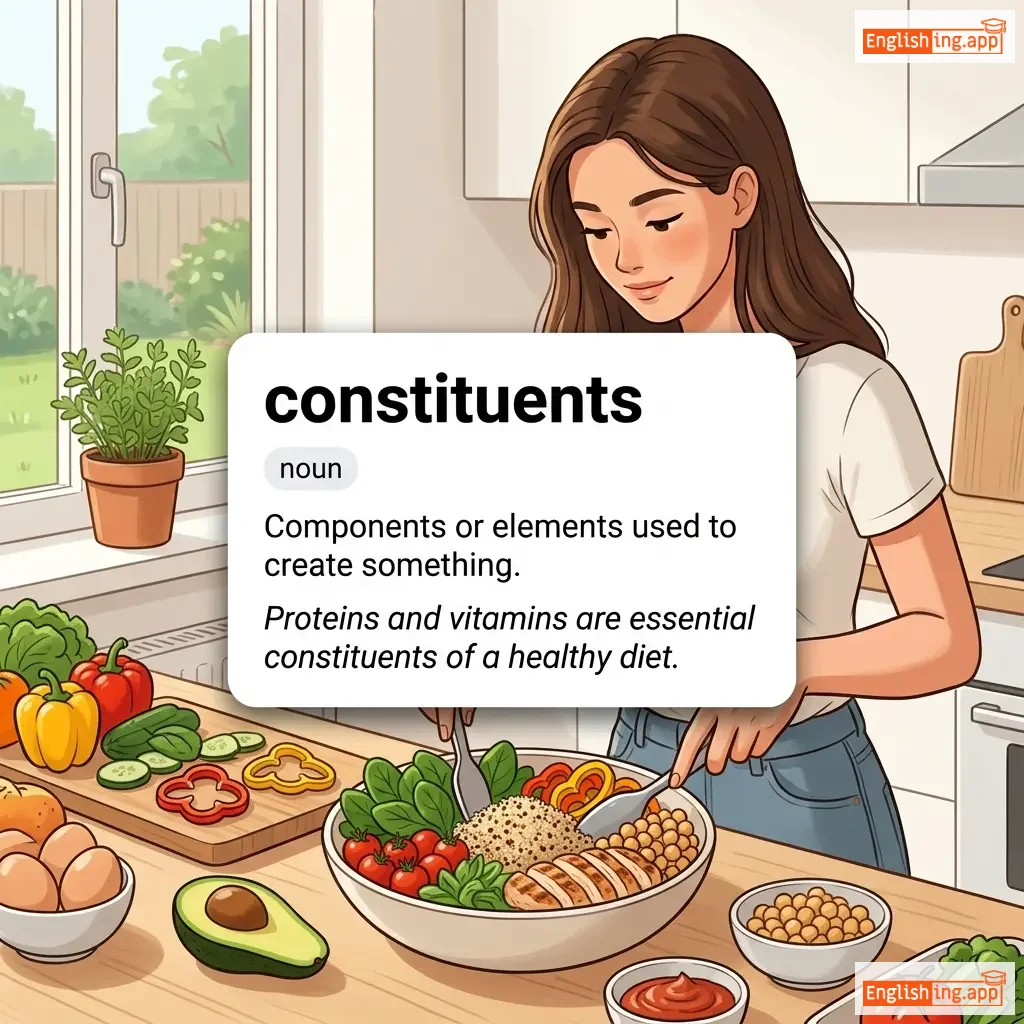
"上院議員は地元の問題を議論するために選挙区の有権者と会いました。" (Jouin giin wa jimoto no mondai o giron suru tame ni senkyoku no yuukensha to aimashita.)
constituents definition card — visual illustration of the meaning
noun
/kənˈstɪtʃ.u.ənts/
構成要素 (kousei youso)

Components or elements used to create something.

"Proteins and vitamins are essential constituents of a healthy diet."

"プロテインとビタミンは健康的な食事の重要な構成要素です。" (Purotein to bitamin wa kenkou-teki na shokuji no juuyou na kousei youso desu.)
verb
/ˈkɒnstɪtjuːt/
構成する (kousei suru)

To make up, form, or establish something.

"These documents constitute the legal agreement between the two parties."
"これらの文書は、両者間の法的契約を構成しています。" (Korera no bunsho wa, ryousha-kan no houteki keiyaku o kousei shiteimasu.)
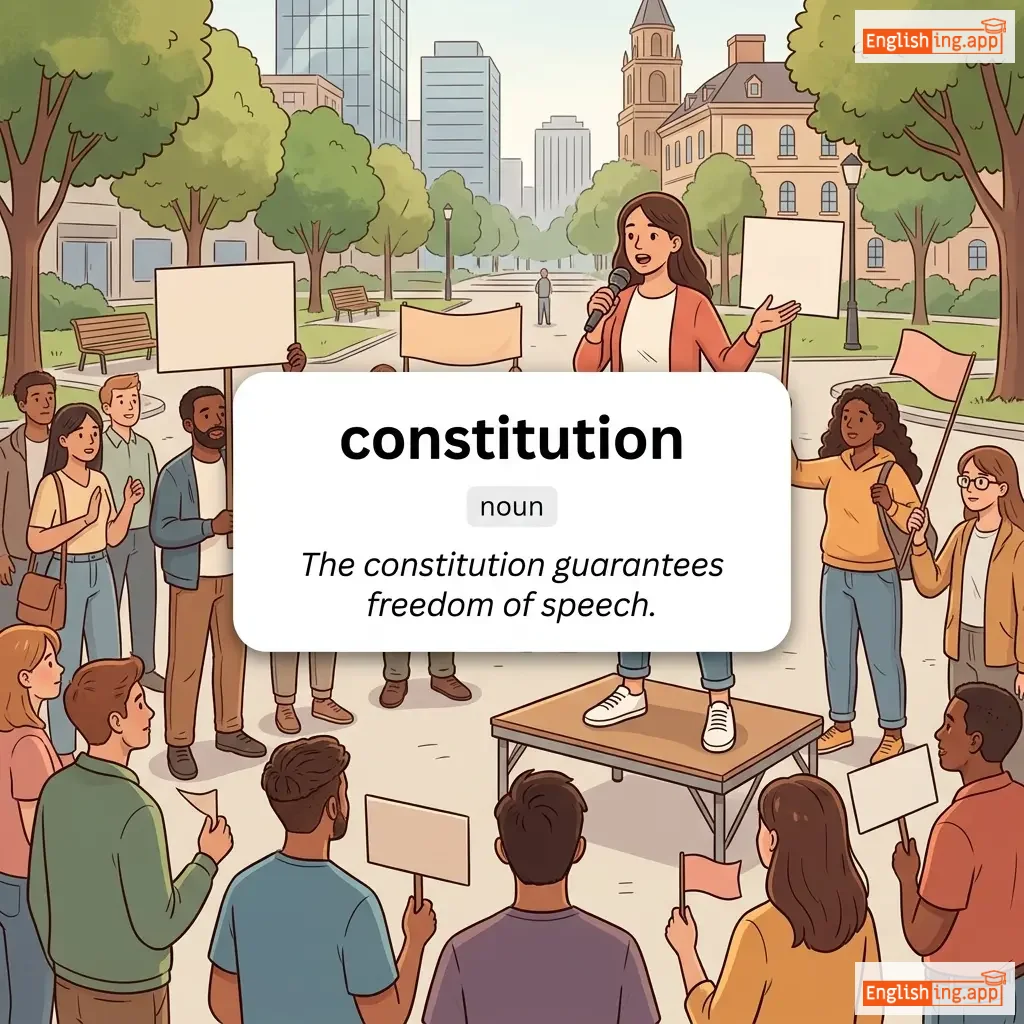
constitution definition card — visual illustration of the meaning
noun
/ˌkɒnstɪˈtjuːʃən/
憲法 (kenpou)

The system of fundamental principles according to which a nation or organization is governed.

"The constitution guarantees freedom of speech."
"憲法は言論の自由を保障します。" (Kenpou wa genron no jiyuu o hoshou shimasu.)
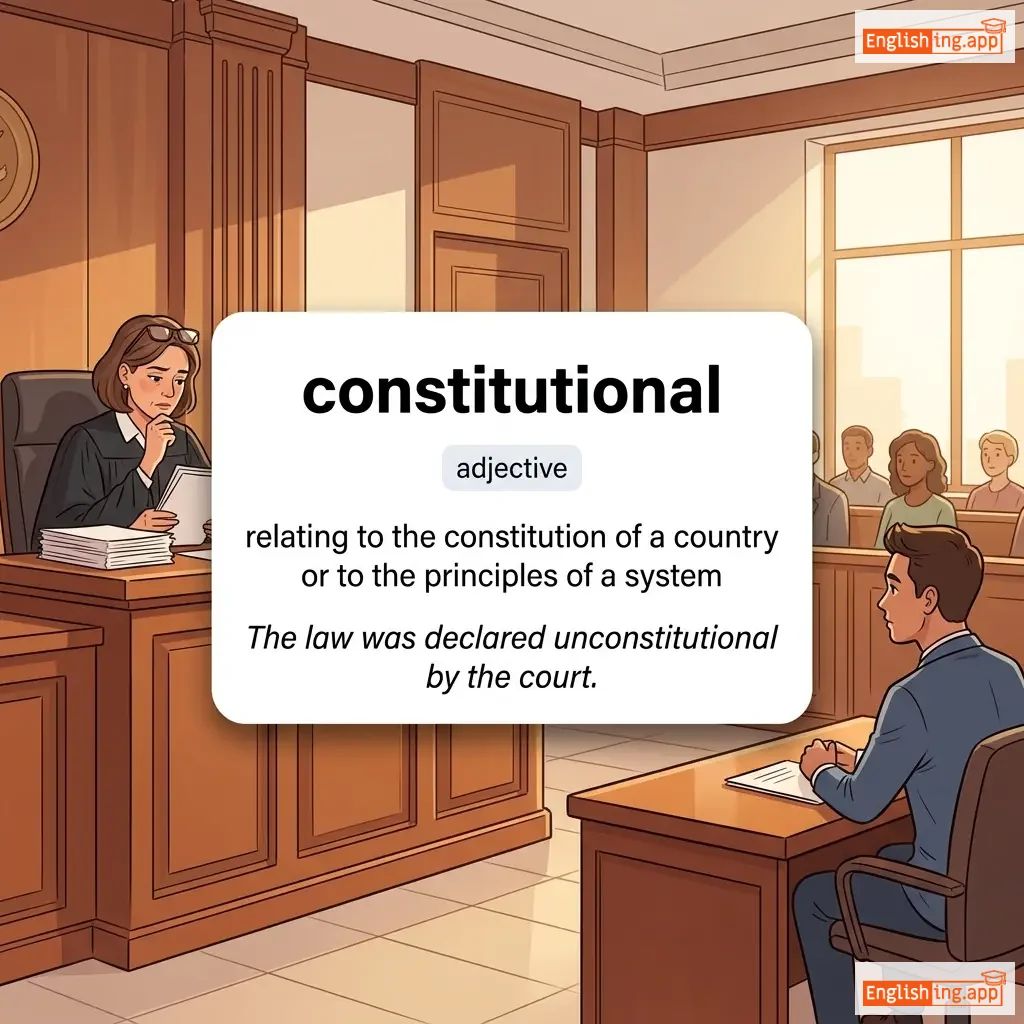
constitutional definition card — visual illustration of the meaning
adjective
/ˌkɒnstɪˈtjuːʃənəl/

relating to the constitution of a country or to the principles of a system

"The law was declared unconstitutional by the court."

verb
/kənˈstreɪn/
制限する (seigensuru)

to limit or restrict someone or something; to force or compel

"The new regulations constrain businesses from polluting the environment."

"新しい規制は企業が環境を汚染するのを制限しています。" (Atarashī kisei wa kigyō ga kankyō o osen suru no o seigen shiteimasu.)
adjective
/kənˈstreɪnd/
制約された、無理に作られた (seiyaku sareta, muri ni tsukurareta)

appearing forced, unnatural, or restricted

"He gave a constrained smile during the awkward meeting."

"彼は気まずい会議で強制的な笑顔を見せた。" (Kare wa kizamui kaigi de kyousei teki na egao o miseta.)
noun
/kənˈstreɪnt/
制約 (seiyaku)

a limitation or restriction

"Time is the biggest constraint in completing the project."

"プロジェクトを完了するための最大の制約は時間です。" (Purojekuto o kanryou suru tame no saidai no seiyaku wa jikan desu.)
verb
/kənˈstrɪkt/
絞る (shiboru)

to make narrower or tighter; to shrink or compress

"The snake constricted its prey before swallowing."

"その蛇は獲物を飲み込む前に締め付けました。" (Sono hebi wa emono o nomikomu mae ni shime tsukemashita.)
verb
/kənˈstrɪndʒ/
収縮する (shūshuku suru)

to cause to shrink or contract; to constrict

"The medicine helped constringe the swollen tissues."

"その薬は腫れた組織を収縮させるのに役立ちました。" (Sono kusuri wa hareta soshiki o shūshuku saseru no ni yakudachimashita.)
verb
/kənˈstrʌkt/
建設する (kensetsu suru)

to build or form something by putting parts together

"They plan to construct a new bridge over the river."
"彼らは川に新しい橋を建設する予定です。" (Karera wa kawa ni atarashī hashi o kensetsu suru yotei desu.)
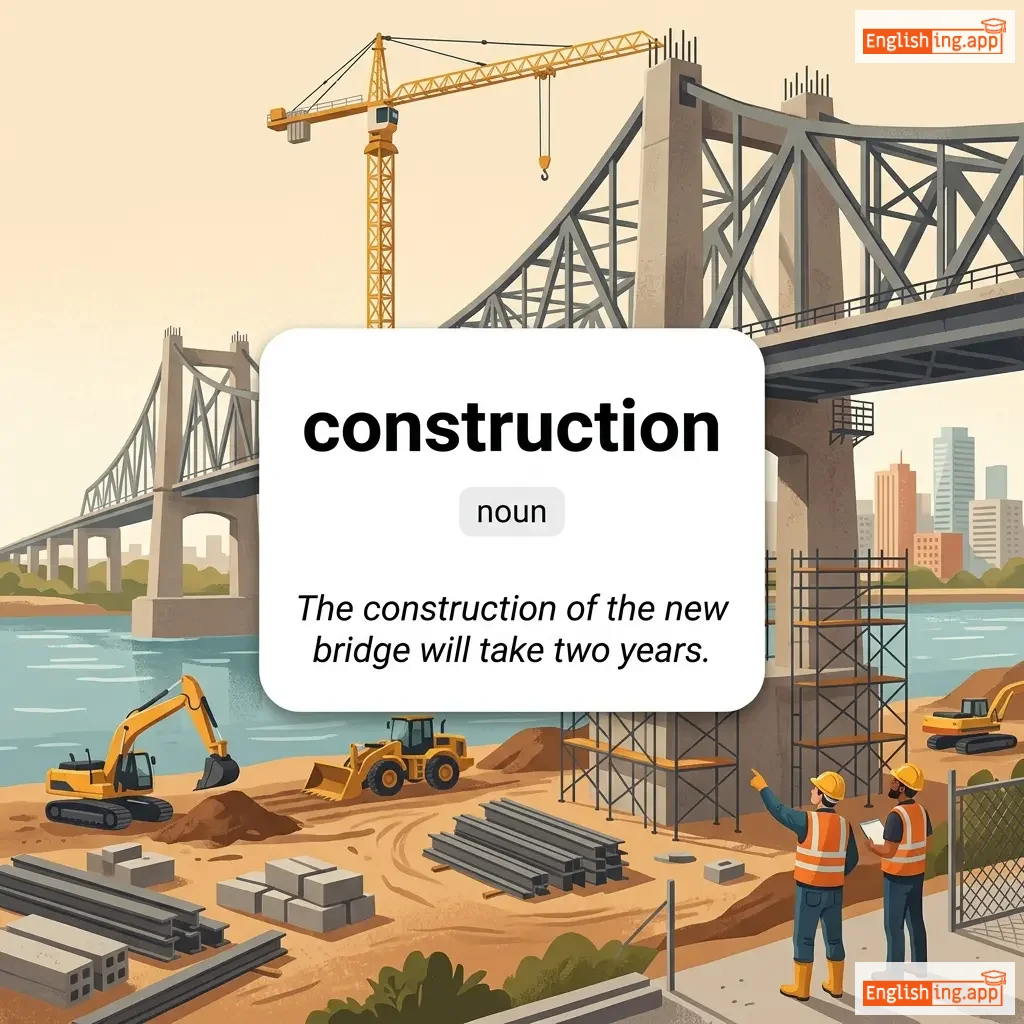
construction definition card — visual illustration of the meaning
noun
/kənˈstrʌkʃən/
建設 (kensetsu)

The process of building something, typically large structures such as houses, roads, or bridges.

"The construction of the new bridge will take two years."

"新しい橋の建設には2年かかります。" (Atarashii hashi no kensetsu ni wa 2-nen kakarimasu.)
verb
/kənˈstruː/
解釈する (kaishaku suru)

to interpret or understand the meaning of something in a particular way

"His words could be construed as a threat."

"彼の言葉は脅威として解釈されるかもしれません。" (Kare no kotoba wa kyōi toshite kaishaku sareru kamoshiremasen.)
noun
/ˈkɒnsəl/
領事 / 大使 (ryoushi / taishi)

an official appointed by a government to live in a foreign city and protect its citizens and interests there

"The consul assisted travelers who lost their passports."

"領事は、パスポートを失った旅行者を助けました。" (Ryoushi wa, pasupooto o ushinatta ryokousha o tasukemashita.)
noun
/ˈkɒnsjʊlət/
領事館 (ryōjikan)

the building or office where a consul works

"He went to the consulate to renew his visa."

"彼はビザを更新するために領事館に行きました。" (Kare wa biza o kōshin suru tame ni ryōjikan ni ikimashita.)
consult definition card — visual illustration of the meaning
verb
/kənˈsʌlt/
相談する (soudan suru)

To seek advice or information from someone with expertise.

"You should consult a doctor before starting the treatment."

"治療を始める前に、医師に相談するべきです。" (Chiryō o hajimeru mae ni, ishi ni soudan suru beki desu.)
noun
/kənˈsʌltənt/
コンサルタント (konsarutanto)

A professional who provides expert advice in a particular area.

"The company hired a consultant to improve its marketing strategy."

"会社はマーケティング戦略を改善するためにコンサルタントを雇いました。" (Kaisha wa māketingu senryaku o kaizen suru tame ni konsarutanto o yatōshimashita.)
consultation definition card — visual illustration of the meaning
noun
/ˌkɒnsʌlˈteɪʃən/
相談 (soudan)

a meeting with an expert or professional to seek advice

"The doctor scheduled a consultation with the patient."

"医師は患者との相談を予定しました。" (Ishi wa kanja to no soudan o yotei shimashita.)
consume definition card — visual illustration of the meaning
verb
/kənˈsjuːm/
消費する (shouhishiru)

To use up, eat, drink, or take in.

"People consume a large amount of information daily."

"人々は毎日大量の情報を消費します。" (Hitobito wa mainichi tairyou no jouhou o shouhishimasu.)
noun
/kənˈsjuːmər/
消費者 (shōhisha)

A person who buys and uses goods and services.

"The company focuses on understanding consumer needs."

"その会社は消費者のニーズを理解することに重点を置いています。" (Sono kaisha wa shōhisha no nīzu o rikai suru koto ni jūten o oiteimasu.)
consumerism definition card — visual illustration of the meaning
noun
kənˈsjuː.mə.rɪ.zəm
消費主義 (shōhī shugi)

The tendency to increase consumption of goods and the importance given to consuming products.

"Modern consumerism leads to increased demand for luxury goods."
"現代の消費主義は高級品の需要の増加を引き起こします。" (Gendai no shōhi shugi wa kōkyūhin no juyō no zōka o hikiokoshimasu.)
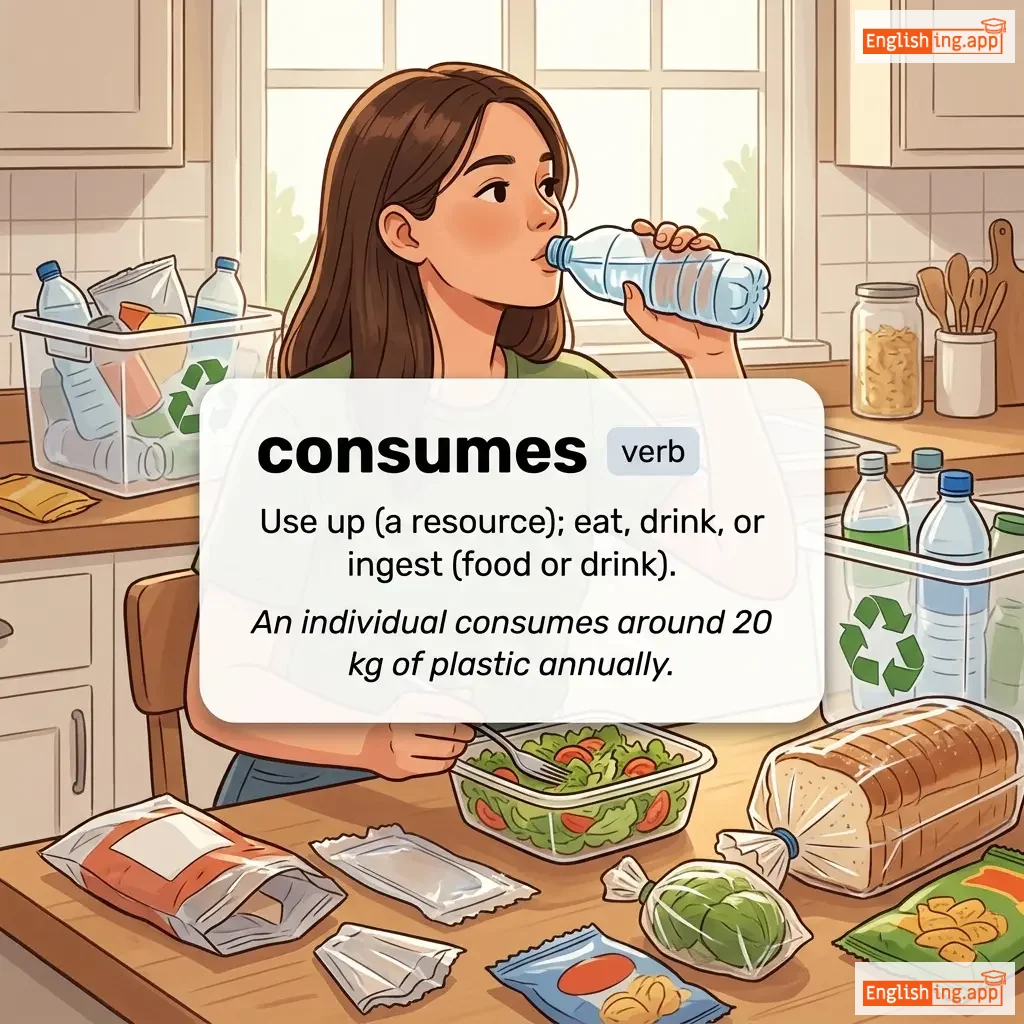
consumes definition card — visual illustration of the meaning
verb
kənˈsjuːmz
消費する (shouhi suru)

Use up (a resource); eat, drink, or ingest (food or drink).

"An individual consumes around 20 kg of plastic annually."

"1人の人は年間約20キロのプラスチックを消費します。" (Hitori no hito wa nenkan yaku 20 kiro no purasuchikku wo shouhi shimasu.)
consummate definition card — visual illustration of the meaning
adjective, verb
/ˈkɒnsəmət/ (adj), /ˈkɒnsəmeɪt/ (verb)
完成する / 完璧 (kansei suru / kanpeki)

to complete or perfect something; showing great skill or excellence

"She is a consummate professional in her field."
"彼女はその分野で完璧なプロフェッショナルです。" (Kanojo wa sono bunya de kanpeki na purofesshonaru desu.)
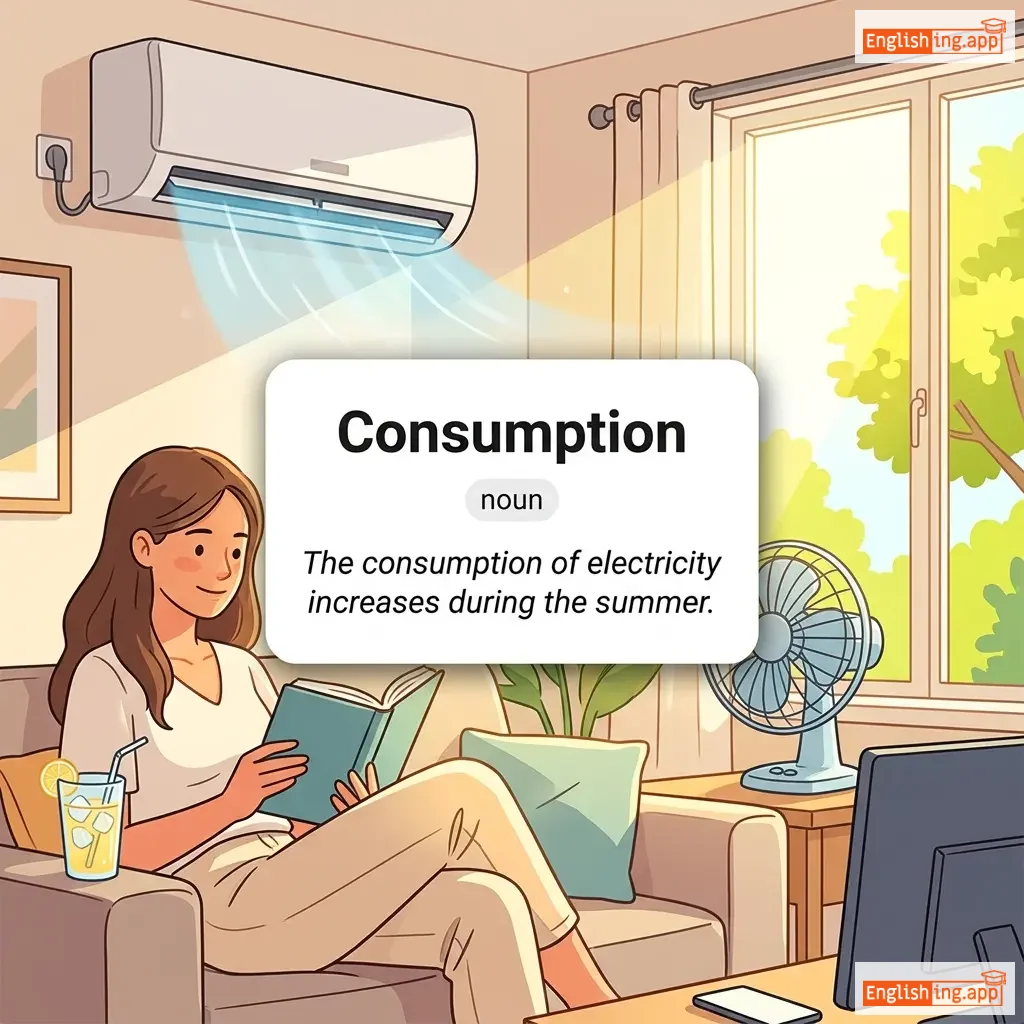
Consumption definition card — visual illustration of the meaning
noun
/kənˈsʌmpʃən/
消費 (shōhi)

The act of using up resources, goods, or energy; also refers to the eating or drinking of something.

"The consumption of electricity increases during the summer."

"夏の間、電力の消費が増加します。" (Natsu no aida, denryoku no shōhi ga zōka shimasu.)
adjective
/kənˈsʌmptɪv/
消費的な (shōhiteki na)

Relating to or characterized by consumption; historically used to describe someone suffering from tuberculosis.

"The doctor advised against consumptive habits."

"医者は消費的な習慣を避けるようにアドバイスした。" (Isha wa shōhiteki na shūkan o sakeru yō ni adobaisu shita.)
contact definition card — visual illustration of the meaning
noun/verb
/ˈkɒntækt/
接触 (sesshoku)

Communication or connection with someone.

"You should contact your doctor if symptoms persist."

"症状が続く場合は、医師にコンタクトを取るべきです。" (Shōjō ga tsuzuku baai wa, ishi ni kontakuto o toru beki desu.)
noun
/kənˈteɪdʒən/
感染 (kansen)

The communication of disease from one person to another by close contact; also the spread of harmful ideas or behaviors.

"Fear spread like a contagion through the crowd."

"恐怖は群衆の中で感染のように広がった。" (Kyōfu wa gunshū no naka de kansen no yō ni hirogatta.)
adjective
/kənˈteɪdʒəs/
伝染性 (densensei)

Able to be transmitted from one person to another, typically by direct contact; also used for emotions or attitudes that spread quickly.

"Her laughter was so contagious that everyone started laughing."
"彼女の笑い声はとても伝染性があり、みんなが笑い始めました。" (Kanojo no waraigoe wa totemo densensei ga ari, minna ga warai hajimemashita.)
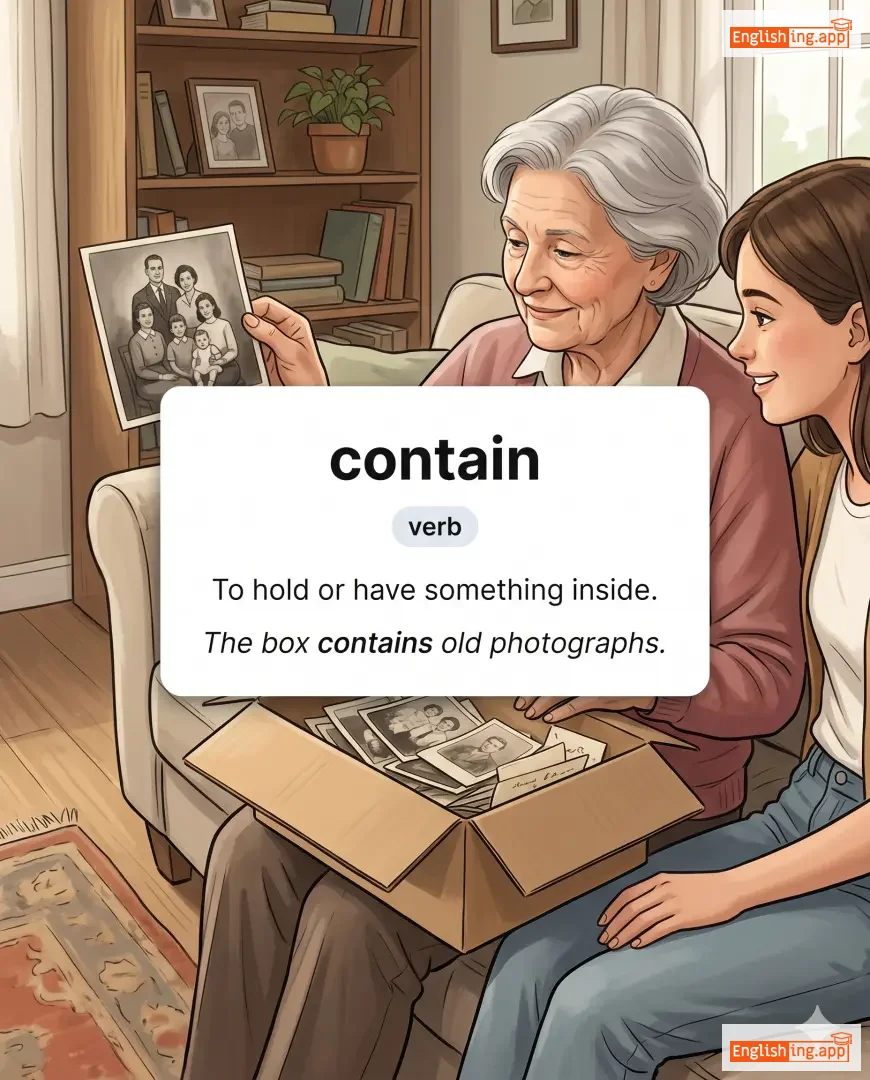
contain definition card — visual illustration of the meaning
verb
/kənˈteɪn/
含む (fukumu)

To hold or have something inside.

"The box contains old photographs."
"箱には古い写真が含まれています。" (Hako ni wa furui shashin ga fukumareteimasu.)
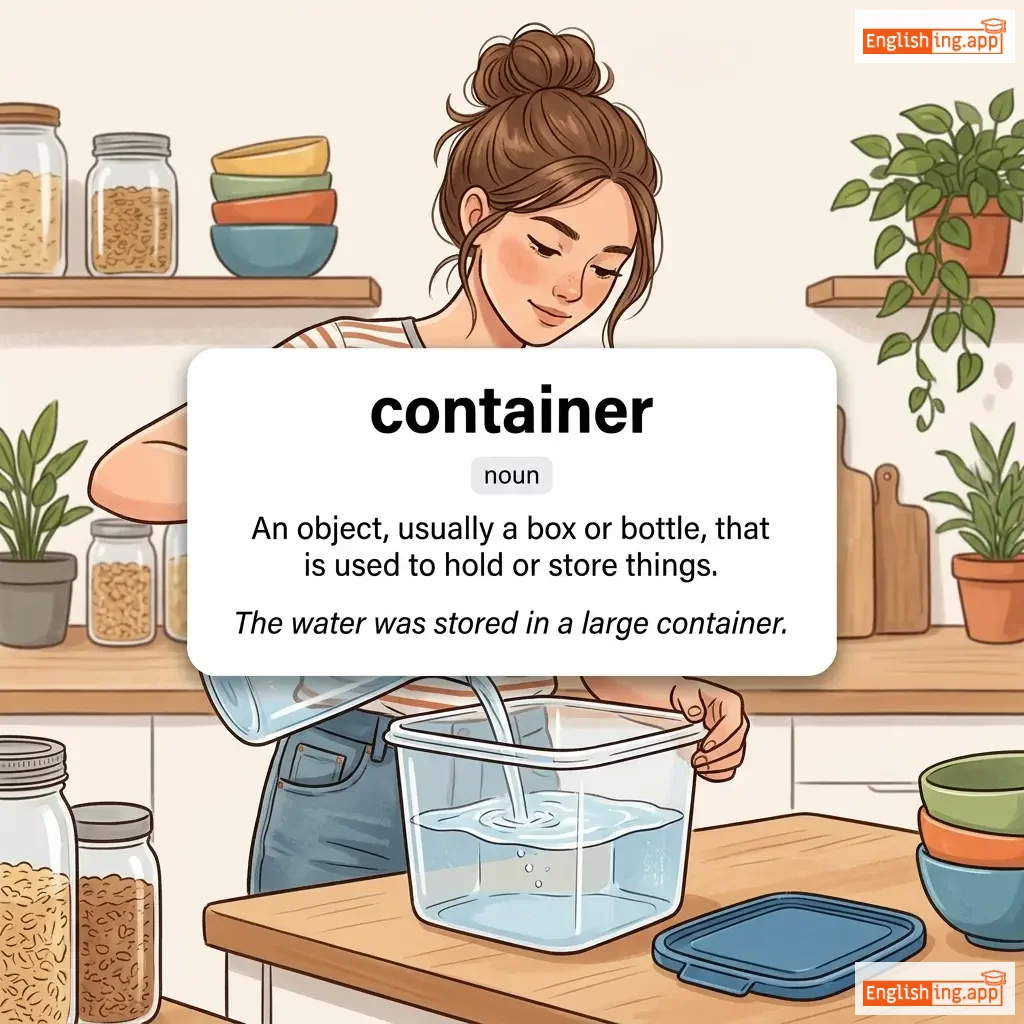
container definition card — visual illustration of the meaning
noun
/kənˈteɪnər/
コンテナ (kontena)

An object, usually a box or bottle, that is used to hold or store things.

"The water was stored in a large container."

"水は大きなコンテナに保存されました。" (Mizu wa ookina kontena ni hozon saremashita.)
verb
/kənˈtæmɪneɪt/

To make something impure, dirty, or harmful by contact with a poisonous or polluting substance.

"The river was contaminated by industrial waste."
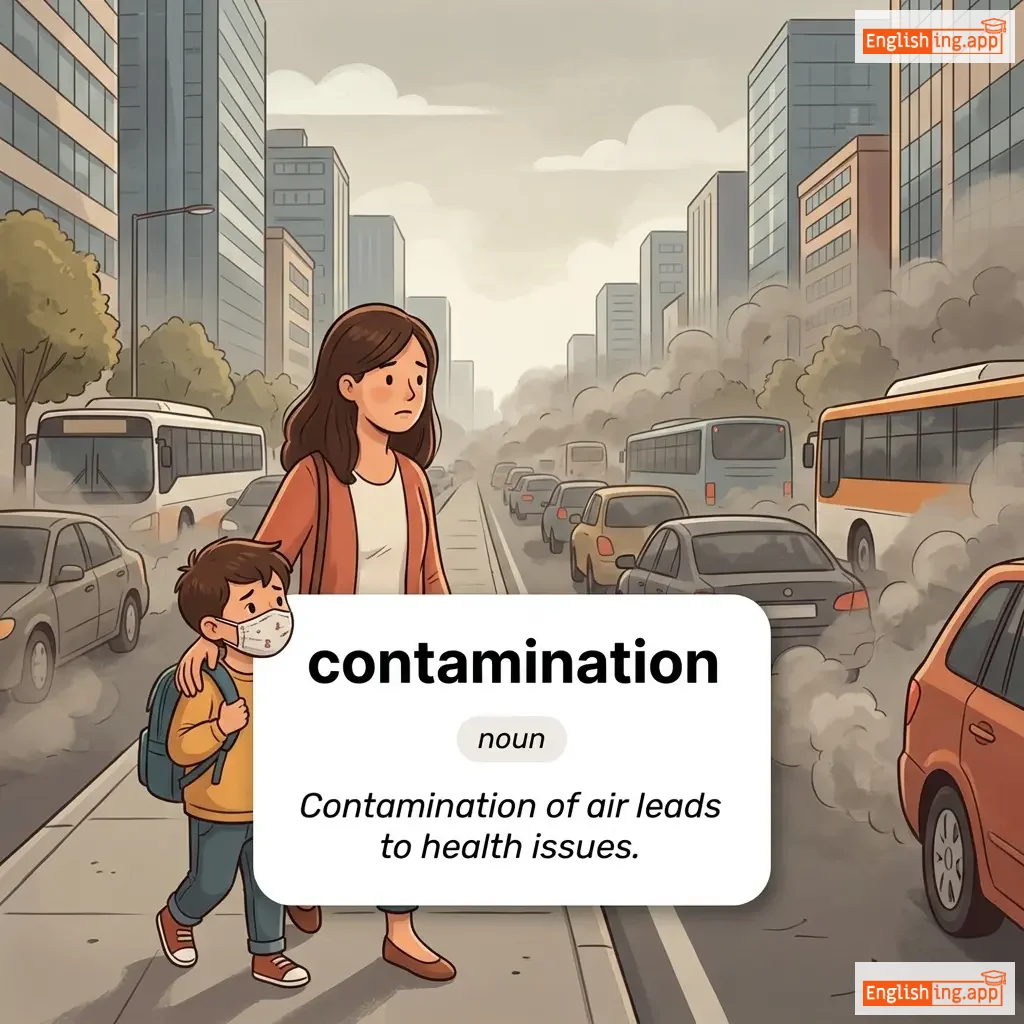
contamination definition card — visual illustration of the meaning
noun
kənˌtæm.ɪˈneɪ.ʃən
汚染 (osen)

The process of making something less pure by exposure to or addition of a poisonous or polluting substance.

"Contamination of air leads to health issues."

"空気の汚染は健康に問題を引き起こします。" (Kūki no osen wa kenkō ni mondai o hikiokoshimasu.)
verb
/kənˈtɛm/
軽蔑する (keibetsu suru)

to treat or regard with disdain, scorn, or contempt

"He would never contemn honest work, no matter how humble."

"彼はどんなに謙虚でも正直な仕事を軽蔑しない。" (Kare wa donna ni kenkyō demo shōjiki na shigoto o keibetsu shinai.)
verb
/ˈkɒntəmpleɪt/

to think deeply and carefully about something; to consider thoughtfully

"She sat quietly to contemplate her future plans."

contemplation definition card — visual illustration of the meaning
noun
ˌkɒn.təmˈpleɪ.ʃən
熟考, 深い思索 (jukou, fukai shisoku)

The action of looking thoughtfully at something for a long time; deep reflective thought.

"He spent hours in contemplation about his future."
"彼は自分の未来について何時間も熟考しました。" (Kare wa jibun no mirai ni tsuite nanjikan mo jukou shimashita.)
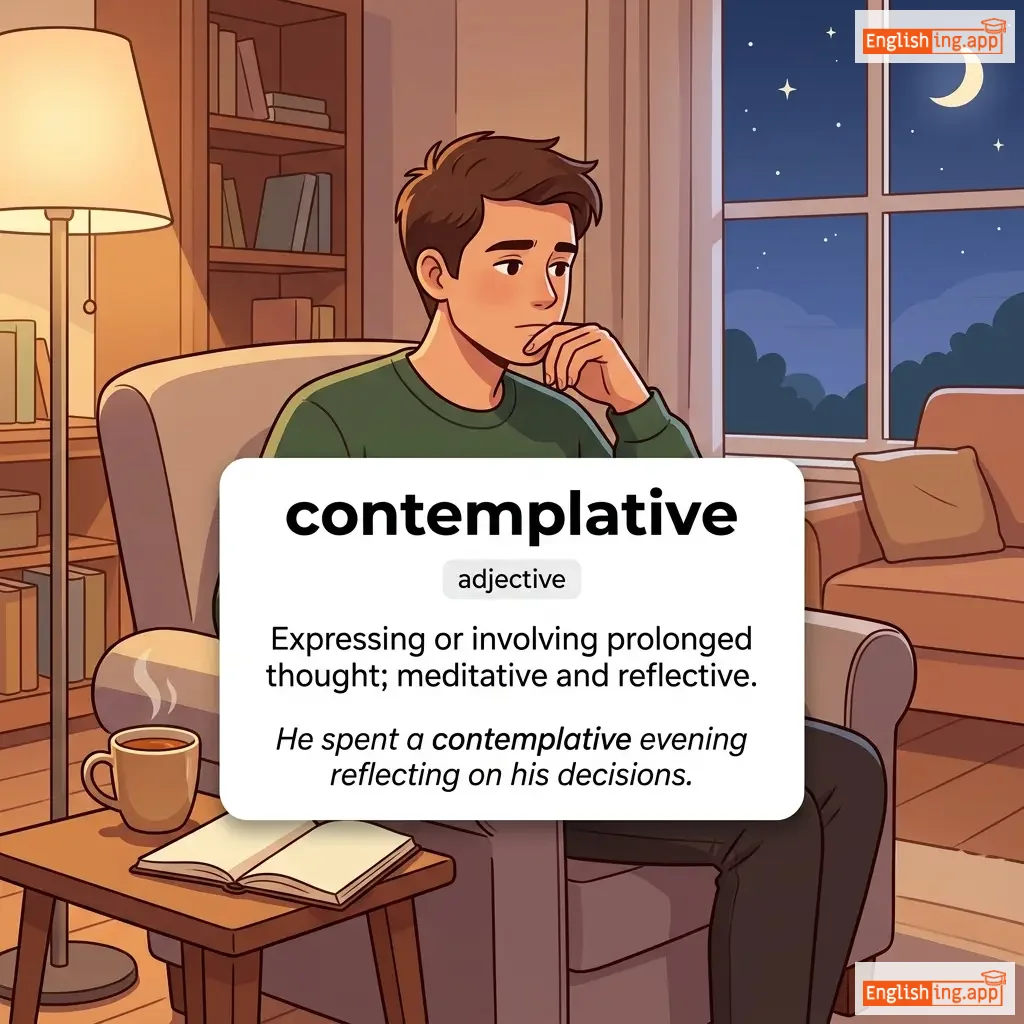
contemplative definition card — visual illustration of the meaning
adjective
ˈkɒn.təm.plə.tɪv
思索的または瞑想的 (shisakuteki matawa meisōteki)

Expressing or involving prolonged thought; meditative and reflective.

"He spent a contemplative evening reflecting on his decisions."

"彼は自分の決断を振り返りながら、思索的な夕べを過ごしました。" (Kare wa jibun no ketsudan o furikaerinagara, shisakuteki na yūbe o sugoshimashita.)
adjective
/kənˌtɛmpəˈreɪniəs/
同時代の (dōjidai no)

existing, happening, or occurring at the same time

"The two artists were contemporaneous and often influenced each other."

"二人のアーティストは同時代のもので、しばしば互いに影響を与えました。" (Futari no ātisuto wa dōjidai no mono de, shibashiba tagai ni eikyō o ataemashita.)
adjective
/kənˈtɛmpərɛri/
現代的な, 現代の (gendai-teki na, gendai no)

belonging to the same time period; modern

"She enjoys contemporary art exhibitions."

"彼女は現代アートの展示を楽しんでいます。" (Kanojo wa gendai āto no tenji o tanoshindeimasu.)
noun
/kənˈtɛmpt/

a strong feeling of dislike and lack of respect towards someone or something

"He spoke with contempt about the corrupt officials."

adjective
/kənˈtɛmptəbl/
軽蔑すべき, 嫌悪すべき (keibetsu subeki, ken'o subeki)

deserving of contempt; despicable

"His deceitful actions were truly contemptible."

"彼の欺瞞的な行動は本当に軽蔑すべきものでした。" (Kare no gimanteki na kōdō wa hontōni keibetsu subeki mono deshita.)
adjective
/kənˈtɛmptʃuəs/
軽蔑的, 侮辱的 (keibetsuteki, bujokuteki)

showing or expressing contempt; scornful

"She gave him a contemptuous glance."

"彼女は彼に軽蔑のまなざしを向けた。" (Kanojo wa kare ni keibetsu no manazashi o muketa.)
contend definition card — visual illustration of the meaning
verb
/kənˈtɛnd/
争う、主張する (arasou, shuchou suru)

to strive or compete for something; to assert earnestly

"Athletes from around the world contend for the championship."

"世界中のアスリートがチャンピオンシップを争っています。" (Sekai juu no asurīto ga chanpionship wo arasotteimasu.)
noun
/kənˈtɛndər/
競争者, 立候補者 (kyousou-sha, rikkou-hosha)

a person or team competing for a title or prize

"She is a strong contender for the mayoral position."

"彼女は市長職の強力な候補者です。" (Kanojo wa shichou shoku no kyouryoku na kouhosha desu.)
adjective
/ˈkɒntɛnt/
満足している, 幸せな (manzoku shite iru, shiawase na)

in a state of satisfaction; pleased

"He felt content after finishing his work."

"彼は仕事を終えた後、満足していた。" (Kare wa shigoto o oeta ato, manzoku shite ita.)
adjective
/kənˈtɛntɪd/
満足した (manzoku shita)

Feeling or expressing happiness and satisfaction.

"She was contented with her simple life."

"彼女はシンプルな生活に満足していた。" (Kanojo wa shinpuruna seikatsu ni manzoku shiteita.)