词汇表

英语词汇词典 | 单词含义、定义和示例

adjective
/ˈkɒn.stənt/
恒定的 (héngdìng de)

happening all the time or staying the same without change

"She lived in constant fear of losing her job."

"她一直生活在失去工作的恒定恐惧中。" (Tā yīzhí shēnghuó zài shīqù gōngzuò de héngdìng kǒngjù zhōng.)
adverb
/ˈkɒnstəntli/
不断 (bùduàn)

continuously over a period of time; always

"He is constantly improving his skills."

"他不断提升自己的技能。" (Tā bùduàn tíshēng zìjǐ de jìnéng.)
noun
/ˌkɒn.stəˈleɪ.ʃən/
星座 (xingzuo)

a group of stars forming a recognizable pattern in the night sky

"Orion is one of the most famous constellations."

"猎户座是最著名的星座之一。" (Liè hù zuò shì zuì zhùmíng de xīngzuò zhī yī.)
noun
/ˌkɒnstəˈneɪʃən/
惊愕 (jing'e)

A feeling of anxiety, dismay, or confusion, often caused by something unexpected.

"The sudden announcement caused widespread consternation among the employees."

"突如其来的宣布在员工中引起了广泛的惊愕" (Tu ru qi lai de xuibu zai yuangong zhong yinqi le guangfan de jing'e)
noun
/kənˈstɪtʃuənsi/
选区 (xuan qu)

A geographical area whose residents elect a representative to a legislative body.

"She campaigned tirelessly across her constituency."

"她在自己的选区内不知疲倦地竞选。" (Ta zai ziji de xuanqu nei buzhi pijuande jingxuan.)
noun/adjective
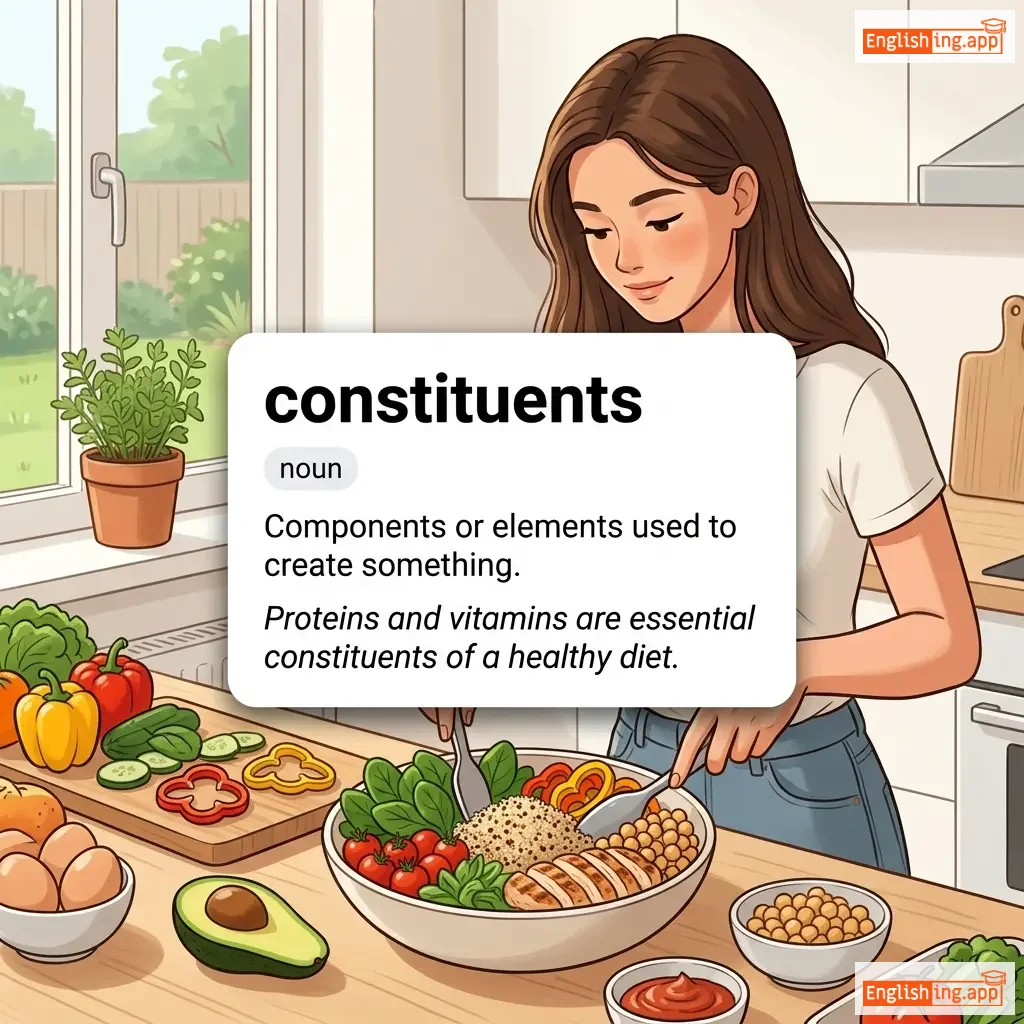
/kənˈstɪtʃuənt/
成分 / 选民 (chengfen / xuanmin)

Noun: A member of a constituency or an essential part of something. Adjective: Being a necessary part of a whole.

"The senator met with his constituents to discuss local issues."
"参议员与他的选民会面,讨论当地问题。" (Can yiyuan yu tade xuanmin huimian, taolun dangdi wenti.)
constituents definition card — visual illustration of the meaning
noun
/kənˈstɪtʃ.u.ənts/
组成部分 (zǔchéng bùfen)

Components or elements used to create something.

"Proteins and vitamins are essential constituents of a healthy diet."

"蛋白质和维生素是健康饮食的重要组成部分。" (Dànbái zhí hé wéishēngsù shì jiànkāng yǐnshí de zhòngyào zǔchéng bùfen.)
verb
/ˈkɒnstɪtjuːt/
构成 (gòu chéng)

To make up, form, or establish something.

"These documents constitute the legal agreement between the two parties."

"这些文件构成了两方之间的法律协议。" (Zhèxiē wénjiàn gòuchéngle liǎng fāng zhī jiān de fǎlǜ xiéyì.)
constitution definition card — visual illustration of the meaning
noun
/ˌkɒnstɪˈtjuːʃən/
宪法 (xianfa)

The system of fundamental principles according to which a nation or organization is governed.

"The constitution guarantees freedom of speech."

"宪法保障言论自由。" (Xiànfǎ bǎozhàng yánlùn zìyóu.)
constitutional definition card — visual illustration of the meaning
adjective
/ˌkɒnstɪˈtjuːʃənəl/

relating to the constitution of a country or to the principles of a system

"The law was declared unconstitutional by the court."

verb
/kənˈstreɪn/
限制 (xiànzhì)

to limit or restrict someone or something; to force or compel

"The new regulations constrain businesses from polluting the environment."

"新规定限制企业不允许污染环境。" (Xīn guīdìng xiànzhì qǐyè bù yǔnxǔ wūrǎn huánjìng.)
adjective
/kənˈstreɪnd/
受限的, 强迫的 (shouxian de, qiangpo de)

appearing forced, unnatural, or restricted

"He gave a constrained smile during the awkward meeting."

"在尴尬的会议中,他露出了强迫的微笑。" (Zai gankan de huiyi zhong, ta louchu le qiangpo de weixiao.)
noun
/kənˈstreɪnt/
限制 (xiànzhì)

a limitation or restriction

"Time is the biggest constraint in completing the project."

"时间是完成项目的最大限制。" (Shíjiān shì wánchéng xiàngmù de zuìdà xiànzhì.)
verb
/kənˈstrɪkt/
收缩 (shōusuō)

to make narrower or tighter; to shrink or compress

"The snake constricted its prey before swallowing."

"蛇在吞噬之前把猎物收缩了。" (Shé zài tūn shì zhīqián bǎ lièwù shōusuōle.)
verb
/kənˈstrɪndʒ/
收缩 (shousuo)

to cause to shrink or contract; to constrict

"The medicine helped constringe the swollen tissues."

"药物帮助收缩肿胀的组织。" (Yao wu bang zhu shou suo zhong zhang de zu zhi.)
verb
/kənˈstrʌkt/
建造 (jianzao)

to build or form something by putting parts together

"They plan to construct a new bridge over the river."

"他们计划在河上建一座新桥。" (Tamen jihua zai he shang jian yi zuo xin qiao.)
construction definition card — visual illustration of the meaning
noun
/kənˈstrʌkʃən/
建筑 (jian zhu)

The process of building something, typically large structures such as houses, roads, or bridges.

"The construction of the new bridge will take two years."

"新桥的建设将需要两年时间。" (Xin qiao de jian she jiang xu yao liang nian shi jian.)
verb
/kənˈstruː/
解释 (jiěshì)

to interpret or understand the meaning of something in a particular way

"His words could be construed as a threat."

"他的话可以被理解为威胁。" (Tā de huà kěyǐ bèi lǐjiě wéi wēixié.)
noun
/ˈkɒnsəl/
领事 / 大使 (lingshi / dashi)

an official appointed by a government to live in a foreign city and protect its citizens and interests there

"The consul assisted travelers who lost their passports."

"领事帮助了那些丢失护照的旅行者。" (Lingshi bangzhu le naxie diushi huzhao de lvxingzhe.)
noun
/ˈkɒnsjʊlət/
领事馆 (lingshiguan)

the building or office where a consul works

"He went to the consulate to renew his visa."

"他去了领事馆续签他的签证。" (Ta qule lingshiguan xuqian tade qianzheng.)
consult definition card — visual illustration of the meaning
verb
/kənˈsʌlt/
咨询 (zixun)

To seek advice or information from someone with expertise.

"You should consult a doctor before starting the treatment."

"在开始治疗之前,你应该咨询医生。" (Zai kaishi zhiliaozhiqian, ni yinggai zixun yisheng.)
noun
/kənˈsʌltənt/
顾问 (gùwèn)

A professional who provides expert advice in a particular area.

"The company hired a consultant to improve its marketing strategy."

"公司聘请了一位顾问来改善其市场营销战略。" (Gōngsī pìnqǐngle yī wèi gùwèn lái gǎishàn qí shìchǎng yíngxiāo zhànlüè.)
consultation definition card — visual illustration of the meaning
noun
/ˌkɒnsʌlˈteɪʃən/
咨询 (zixun)

a meeting with an expert or professional to seek advice

"The doctor scheduled a consultation with the patient."

"医生安排了与病人的咨询。" (Yisheng anpai le yu bingren de zixun.)
consume definition card — visual illustration of the meaning
verb
/kənˈsjuːm/
消耗 (xiāo hào)

To use up, eat, drink, or take in.

"People consume a large amount of information daily."

"人们每天消耗大量信息。" (Rénmen měitiān xiāohào dàliàng xìnxī.)
noun
/kənˈsjuːmər/
消费者 (xiaofeizhe)

A person who buys and uses goods and services.

"The company focuses on understanding consumer needs."

"公司专注于理解消费者需求。" (Gongsi zhuanzhu yu lijie xiaofeizhe xuqiu.)
consumerism definition card — visual illustration of the meaning
noun
kənˈsjuː.mə.rɪ.zəm
消费主义 (xiāofèizhǔyì)

The tendency to increase consumption of goods and the importance given to consuming products.

"Modern consumerism leads to increased demand for luxury goods."
"现代消费主义导致对奢侈品的需求增加。" (Xiàndài xiāofèizhǔyì dǎozhì duì shēchǐpǐn de xūqiú zēngjiā.)
consumes definition card — visual illustration of the meaning
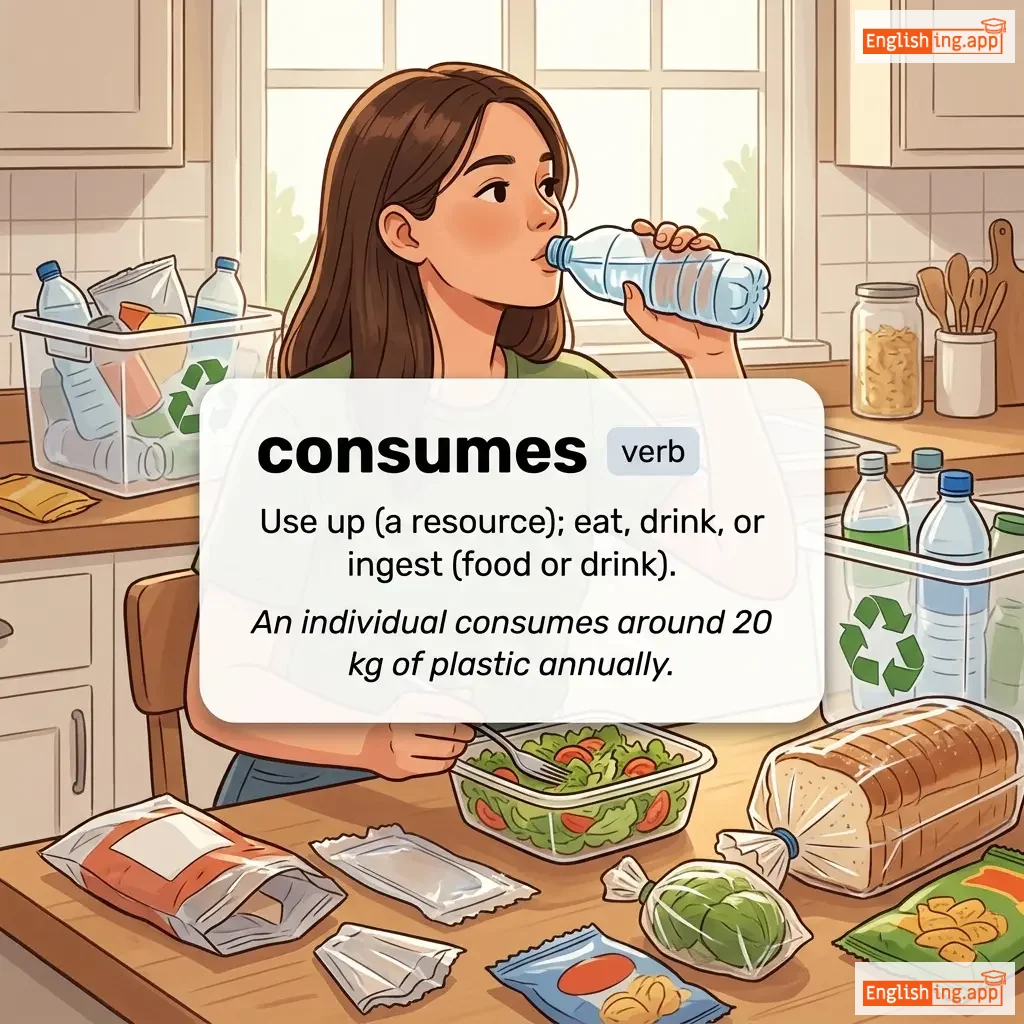
verb
kənˈsjuːmz
消耗 (xiaohào)

Use up (a resource); eat, drink, or ingest (food or drink).

"An individual consumes around 20 kg of plastic annually."

"一个人每年消耗大约 20 公斤塑料。" (Yīgè rén měi nián xiāohào dàyuē 20 gōngjīn sùliào.)
consummate definition card — visual illustration of the meaning
adjective, verb
/ˈkɒnsəmət/ (adj), /ˈkɒnsəmeɪt/ (verb)
完成 / 完美 (wancheng / wanmei)

to complete or perfect something; showing great skill or excellence

"She is a consummate professional in her field."

"她在她的领域是一个圆满的专业人士。" (Tā zài tā de lǐngyù shì yīgè yuánmǎn de zhuānyè rénshì.)
Consumption definition card — visual illustration of the meaning
noun
/kənˈsʌmpʃən/
消费 (xiaofei)

The act of using up resources, goods, or energy; also refers to the eating or drinking of something.

"The consumption of electricity increases during the summer."

"夏季电力消费增加。" (Xiàjì diànlì xiāofèi zēngjiā.)
adjective
/kənˈsʌmptɪv/
消费性的 (xiaofeixing de)

Relating to or characterized by consumption; historically used to describe someone suffering from tuberculosis.

"The doctor advised against consumptive habits."

"医生建议避免消费性习惯。" (Yisheng jianyi bimi xiaofeixing xiguan.)
contact definition card — visual illustration of the meaning
noun/verb
/ˈkɒntækt/
联系 (liánxì)

Communication or connection with someone.

"You should contact your doctor if symptoms persist."

"如果症状持续,您应该联系您的医生。" (Rúguǒ zhèngzhuàng chíxù, nín yīnggāi liánxì nín de yīshēng.)
noun
/kənˈteɪdʒən/
传染 (chuanran)

The communication of disease from one person to another by close contact; also the spread of harmful ideas or behaviors.

"Fear spread like a contagion through the crowd."

"恐惧像传染一样在群众中传播开来。" (Kǒngjù xiàng chuánrǎn yīyàng zài qúnzhòng zhōng chuánbò kāilái.)
adjective
/kənˈteɪdʒəs/
传染性 (chuánrǎn xìng)

Able to be transmitted from one person to another, typically by direct contact; also used for emotions or attitudes that spread quickly.

"Her laughter was so contagious that everyone started laughing."
"她的笑声如此传染性,大家都开始笑了。" (Tā de xiàoshēng rúcǐ chuánrǎn xìng, dàjiā dōu kāishǐ xiàole.)
contain definition card — visual illustration of the meaning
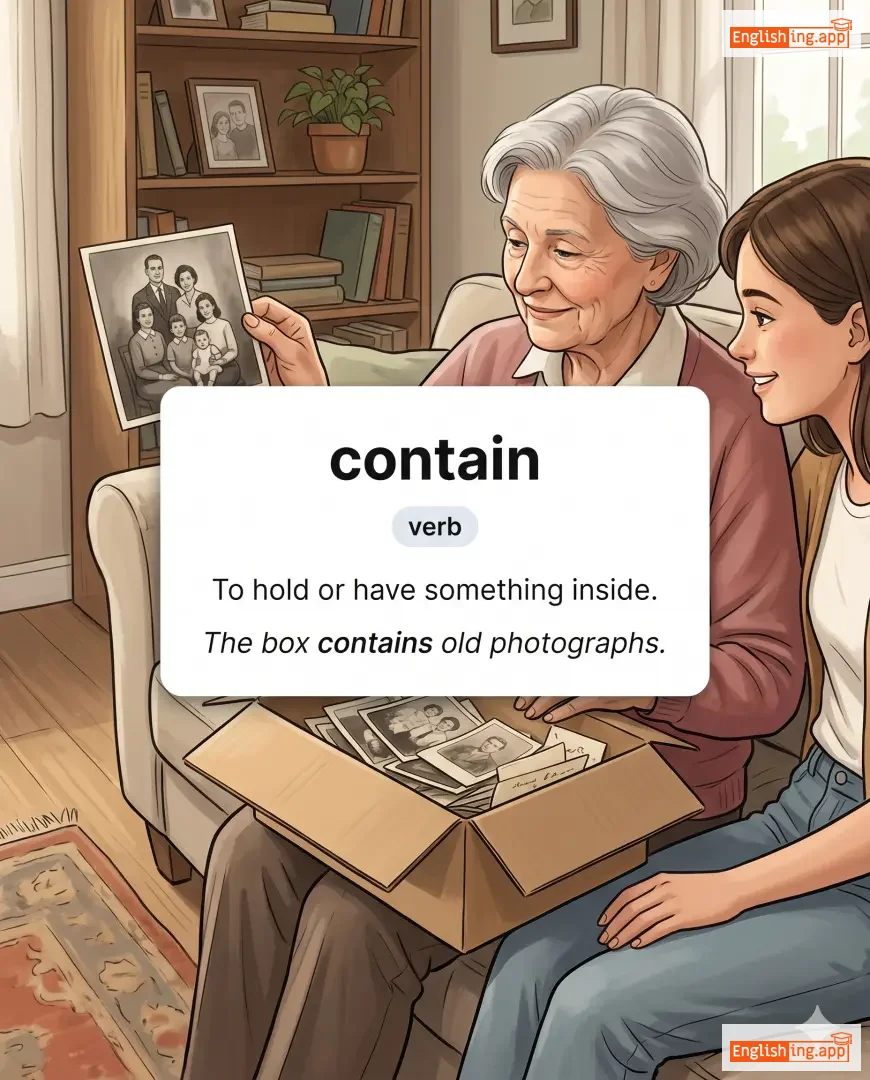
verb
/kənˈteɪn/
包含 (bāohán)

To hold or have something inside.

"The box contains old photographs."
"盒子里有旧照片。" (Hézi lǐ yǒu jiù zhàopiàn.)
container definition card — visual illustration of the meaning
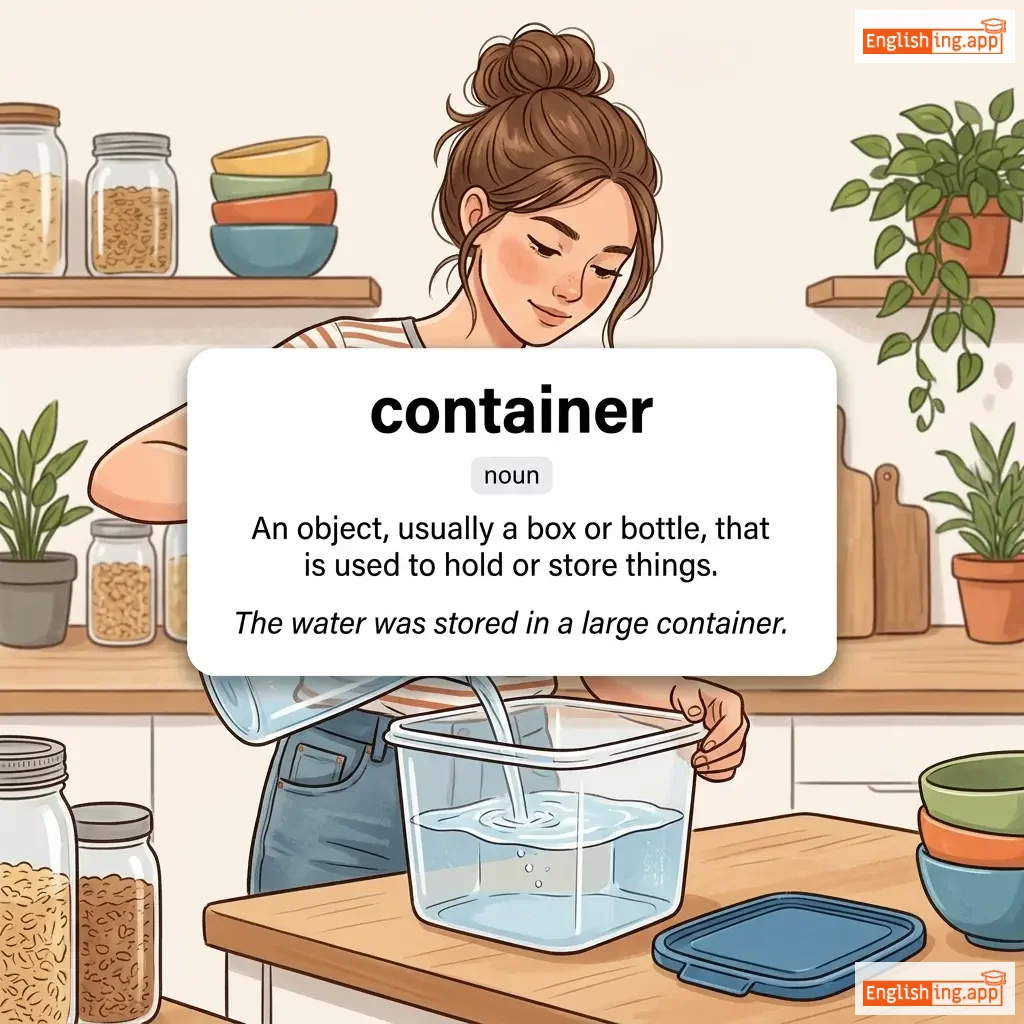
noun
/kənˈteɪnər/
容器 (rongqi)

An object, usually a box or bottle, that is used to hold or store things.

"The water was stored in a large container."

"水被存储在一个大容器中。" (Shuǐ bèi cúnchú zài yīgè dà róngqì zhōng.)
verb
/kənˈtæmɪneɪt/

To make something impure, dirty, or harmful by contact with a poisonous or polluting substance.

"The river was contaminated by industrial waste."
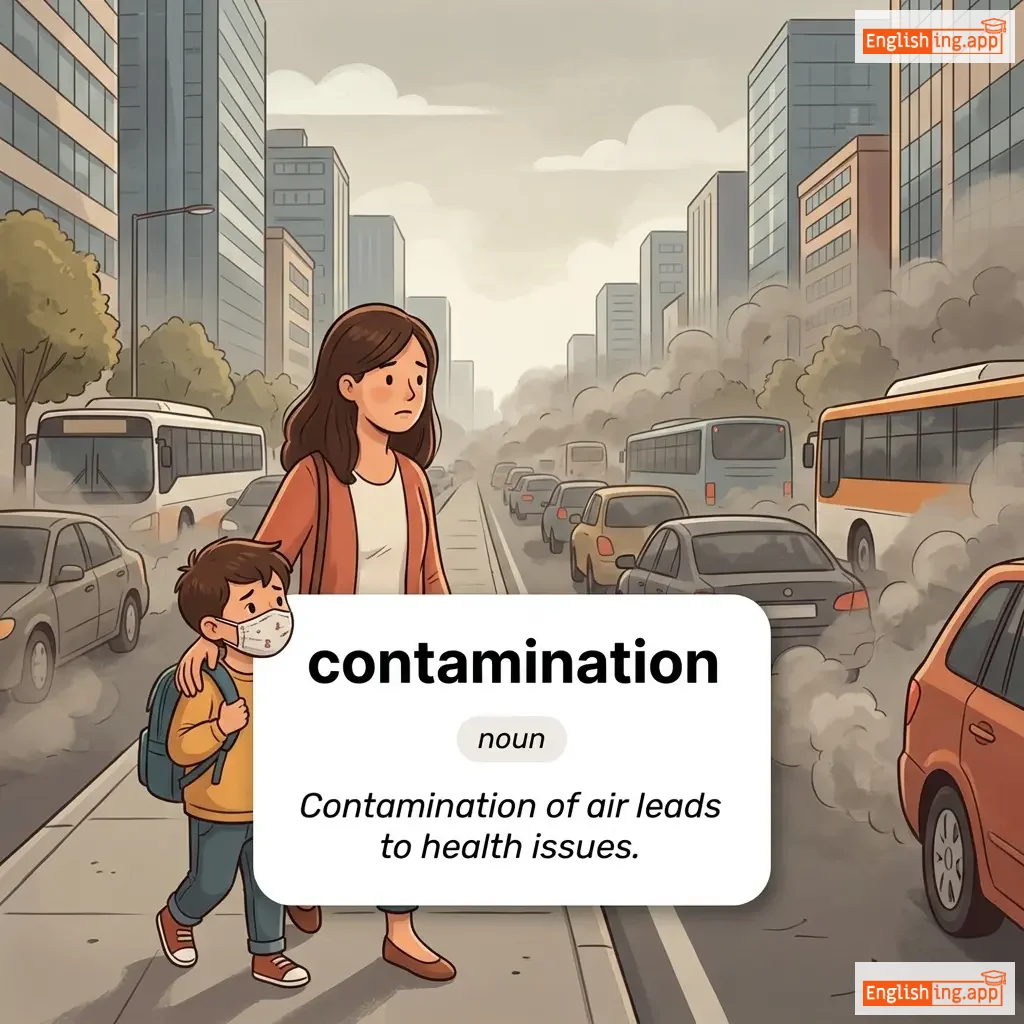
contamination definition card — visual illustration of the meaning
noun
kənˌtæm.ɪˈneɪ.ʃən
污染 (wūrǎn)

The process of making something less pure by exposure to or addition of a poisonous or polluting substance.

"Contamination of air leads to health issues."

"空气污染导致健康问题。" (Kōngqì wūrǎn dǎozhì jiànkāng wèntí.)
verb
/kənˈtɛm/
轻视 (qīngshì)

to treat or regard with disdain, scorn, or contempt

"He would never contemn honest work, no matter how humble."

"他绝不会轻视诚实的工作,无论它多么卑微。" (Tā jué bù huì qīngshì chéngshí de gōngzuò, wúlùn tā duōme bēiwēi.)
verb
/ˈkɒntəmpleɪt/

to think deeply and carefully about something; to consider thoughtfully

"She sat quietly to contemplate her future plans."

contemplation definition card — visual illustration of the meaning
noun
ˌkɒn.təmˈpleɪ.ʃən
沉思, 深思熟虑 (chénsī, shēnsī shúlǜ)

The action of looking thoughtfully at something for a long time; deep reflective thought.

"He spent hours in contemplation about his future."

"他花了几个小时在思考他的未来。" (Tā huāle jǐ gè xiǎoshí zài sīkǎo tā de wèilái.)
contemplative definition card — visual illustration of the meaning
adjective
ˈkɒn.təm.plə.tɪv
沉思的或冥想的 (chénsī de huò míngxiǎng de)

Expressing or involving prolonged thought; meditative and reflective.

"He spent a contemplative evening reflecting on his decisions."

"他度过了一个沉思的晚上,反思他的决定。" (Tā dùguòle yīgè chénsī de wǎnshàng, fǎnsī tā de juédìng.)
adjective
/kənˌtɛmpəˈreɪniəs/
同时代的 (tóng shídài de)

existing, happening, or occurring at the same time

"The two artists were contemporaneous and often influenced each other."

"这两位艺术家是同时代的,并且经常互相影响。" (Zhè liǎng wèi yìshùjiā shì tóng shídài de, bìngqiě jīngcháng hùxiāng yǐngxiǎng.)
adjective
/kənˈtɛmpərɛri/
当代的, 现代的 (dāngdài de, xiàndài de)

belonging to the same time period; modern

"She enjoys contemporary art exhibitions."

"她喜欢现代艺术展览。" (Tā xǐhuān xiàndài yìshù zhǎnlǎn.)
noun
/kənˈtɛmpt/

a strong feeling of dislike and lack of respect towards someone or something

"He spoke with contempt about the corrupt officials."

adjective
/kənˈtɛmptəbl/
可鄙的, 令人厌恶的 (kě bǐ de, lìng rén yàn wù de)

deserving of contempt; despicable

"His deceitful actions were truly contemptible."

"他的欺骗行为真是可鄙的。" (Tā de qīpiàn xíngwéi zhēn shì kě bǐ de.)
adjective
/kənˈtɛmptʃuəs/
轻蔑的, 鄙视的 (qīngmiè de, bǐshì de)

showing or expressing contempt; scornful

"She gave him a contemptuous glance."

"她给了他一个轻蔑的眼神。" (Tā gěile tā yīgè qīngmiè de yǎnshén.)
contend definition card — visual illustration of the meaning
verb
/kənˈtɛnd/
竞争,主张 (jìngzhēng, zhǔzhāng)

to strive or compete for something; to assert earnestly

"Athletes from around the world contend for the championship."

"来自世界各地的运动员为冠军而争斗。" (Láizì shìjiè gèdì de yùndòngyuán wèi guànjūn ér zhēngdòu.)
noun
/kənˈtɛndər/
竞争者, 争夺者 (jingzhengzhe, zhengduozhe)

a person or team competing for a title or prize

"She is a strong contender for the mayoral position."

"她是市长职位的强有力竞争者。" (Ta shi shizhang zhiwei de qiang youli jingzhengzhe.)
adjective
/ˈkɒntɛnt/
满意的, 高兴的 (mǎnyì de, gāoxìng de)

in a state of satisfaction; pleased

"He felt content after finishing his work."

"他在完成工作后感到满意。" (Tā zài wánchéng gōngzuò hòu gǎndào mǎnyì.)
adjective
/kənˈtɛntɪd/
满足的 (manzu de)

Feeling or expressing happiness and satisfaction.

"She was contented with her simple life."

"她对她简单的生活感到满足。" (Tā duì tā jiǎndān de shēnghuó gǎndào mǎnzú.)