词汇表

英语词汇词典 | 单词含义、定义和示例

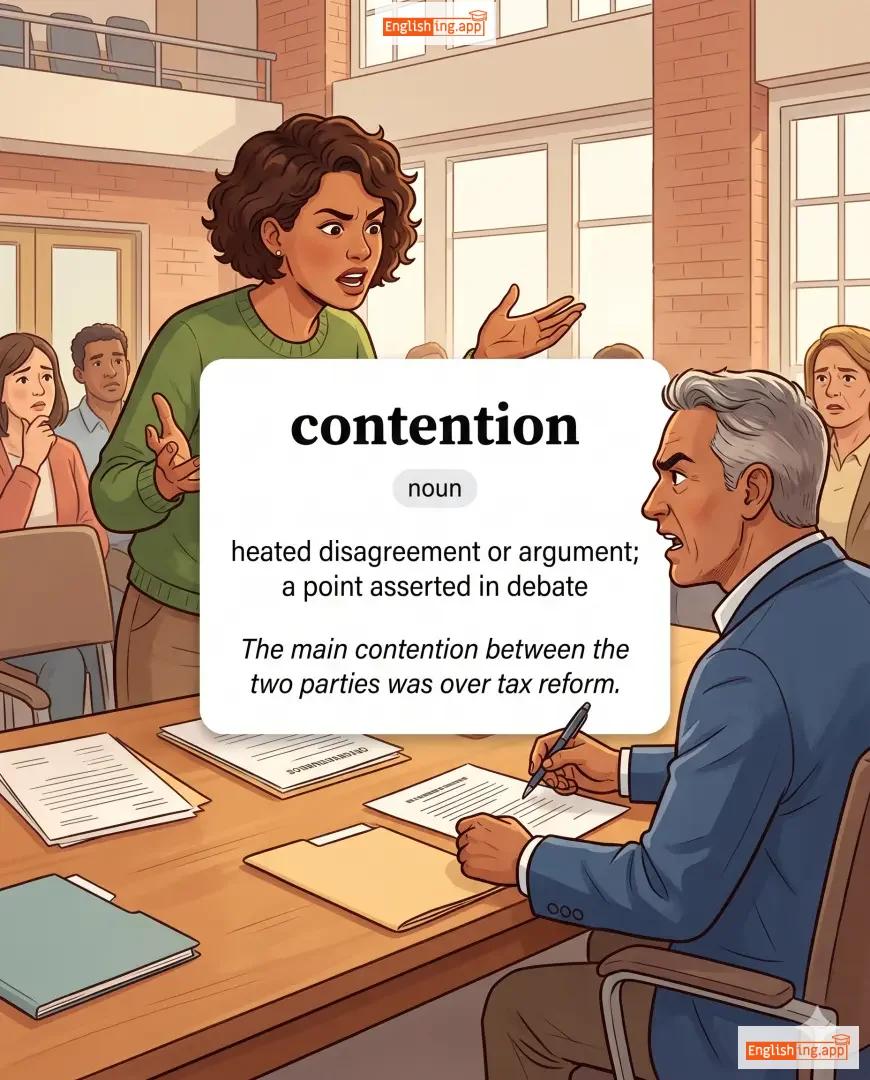
contention definition card — visual illustration of the meaning
noun
/kənˈtɛnʃən/
争议, 分歧 (zhēngyì, fēnqí)

heated disagreement or argument; a point asserted in debate

"The main contention between the two parties was over tax reform."
"两党之间的主要争议是关于税务改革。" (Liǎng dǎng zhī jiān de zhǔyào zhēngyì shì guānyú shuìwù gǎigé.)
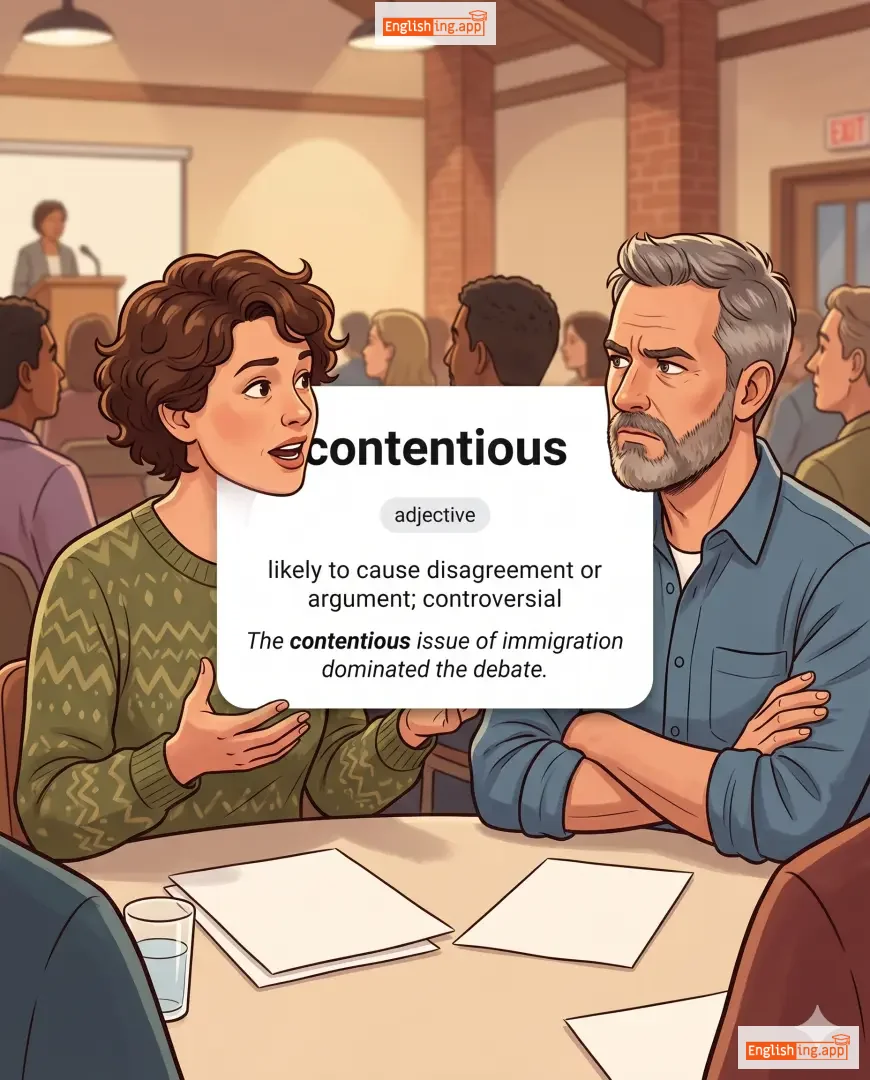
contentious definition card — visual illustration of the meaning
adjective
/kənˈtɛnʃəs/
有争议的 (yǒu zhēngyì de)

likely to cause disagreement or argument; controversial

"The contentious issue of immigration dominated the debate."

"移民问题的争议性在辩论中占据主导地位。" (Yímín wèntí de zhēngyì xìng zài biànlùn zhōng zhànjù zhǔdǎo dìwèi.)
noun
/kənˈtentmənt/
满足感 (manzugan)

a state of happiness and satisfaction with what one has

"She felt a deep sense of contentment after helping others."

"帮助他人之后,她感到深深的满足感。" (bangzhu taren zhihou ta gandao shenshen de manzugan)
verb, noun
/ˈkɒntɛst/
竞赛, 挑战 (jìngsài, tiǎozhàn)

verb: to compete or challenge; noun: a competition or dispute

"She decided to contest the election against the incumbent."

"她决定挑战现任者的选举。" (Tā juédìng tiǎozhàn xiànrèn zhě de xuǎnjǔ.)
noun
/ˈkɒntɛkst/
上下文 (shàngxiàwén)

the circumstances or background relevant to an event, statement, or idea

"To understand the quote, you need to know the context in which it was said."
"要理解这句话,你需要知道它说的上下文。" (Yào lǐjiě zhè jù huà, nǐ xūyào zhīdào tā shuō de shàngxiàwén.)
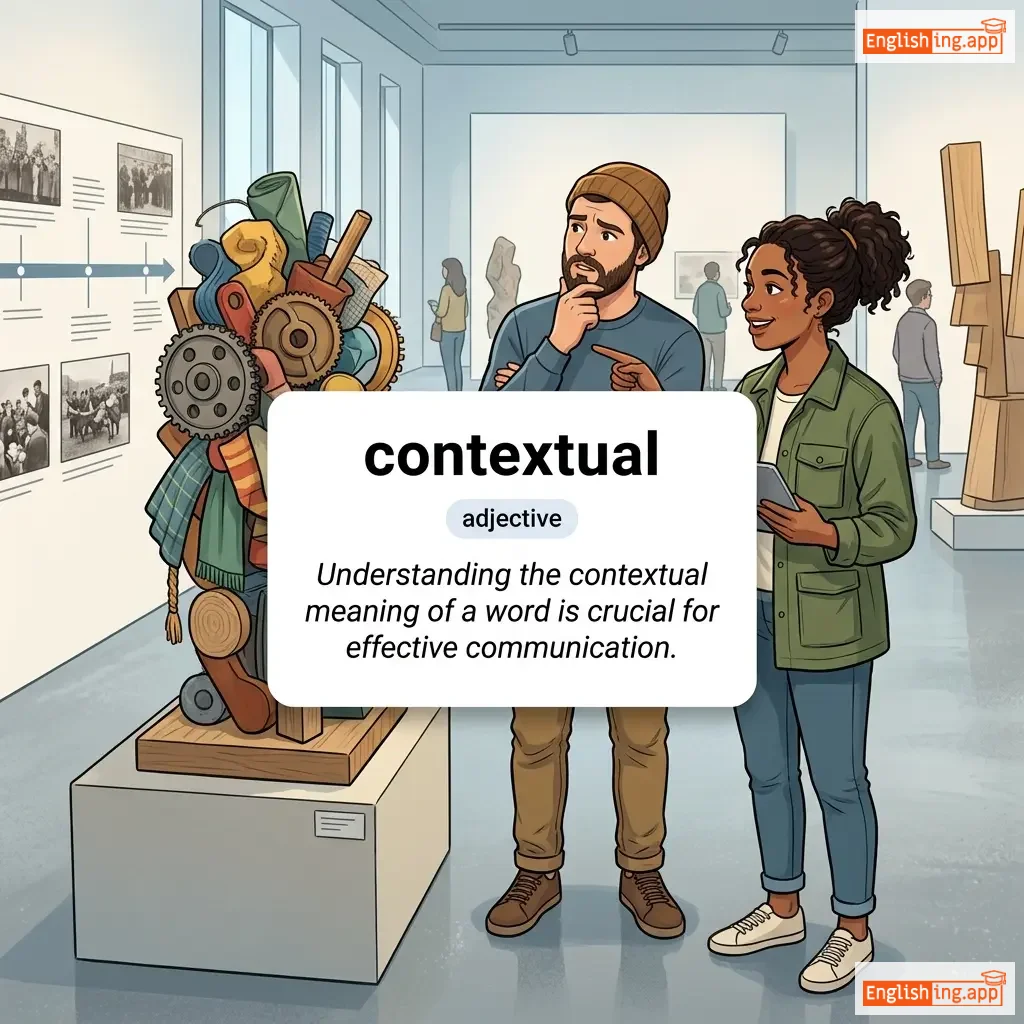
contextual definition card — visual illustration of the meaning
adjective
/kənˈtɛkstʃʊəl/
情境的,基于上下文的 (qíngjìng de, jīyú shàngxiàwén de)

Depending on or relating to the circumstances that form the setting for an event or statement.

"Understanding the contextual meaning of a word is crucial for effective communication."
"理解一个词的情境意义对于有效沟通至关重要。" (Lǐjiě yīgè cí de qíngjìng yìyì duìyú yǒuxiào gōutōng zhìguān zhòngyào.)
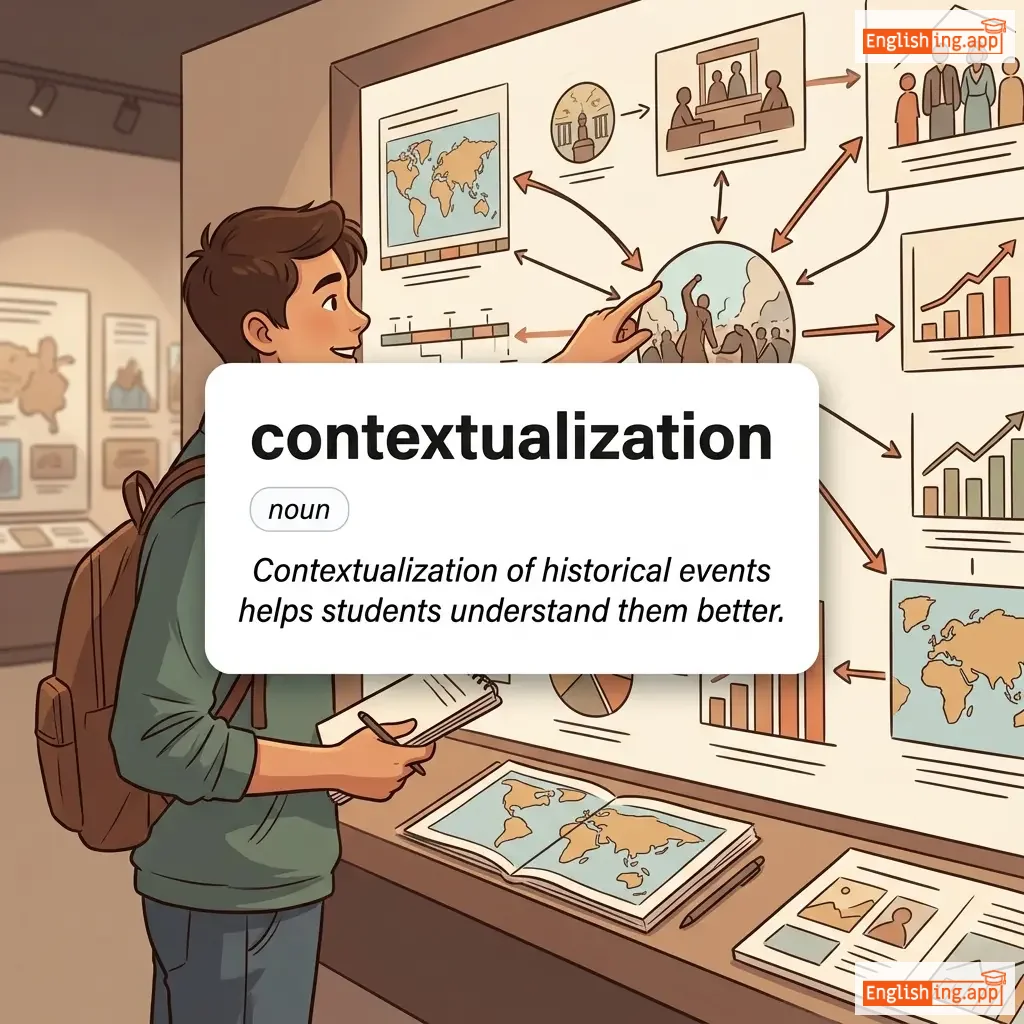
contextualization definition card — visual illustration of the meaning
noun
/kɒnˌtek.stʃu.ə.laɪˈzeɪ.ʃən/
情境化 (qingjinghua)

The process of placing something in its proper context or setting to understand it better.

"Contextualization of historical events helps students understand them better."

"历史事件的情境化帮助学生更好地理解它们。" (Lìshǐ shìjiàn de qíngjìng huà bāngzhù xuéshēng gèng hǎo de lǐjiě tāmen.)
verb
/kənˈtɛkstʃuəlaɪz/
使……有背景 (shǐ... yǒu bèijǐng)

to place something in a context or interpret it in relation to its surroundings

"The teacher contextualized the historical event to make it more relevant for students."

"老师将历史事件置于背景中,以使其对学生更加相关。" (Lǎoshī jiāng lìshǐ shìjiàn zhì yú bèijǐng zhōng, yǐ shǐ qí duì xuéshēng gèng jiā xiāngguān.)
noun
/kɒn.tɪˈɡjuː.ɪ.ti/
接壤 (jiērǎng)

the state of being in direct contact or next to each other

"The contiguity of the two countries facilitates trade."
"这两个国家的接壤促进了贸易。" (Zhè liǎng gè guójiā de jiērǎng cùjìnle màoyì.)
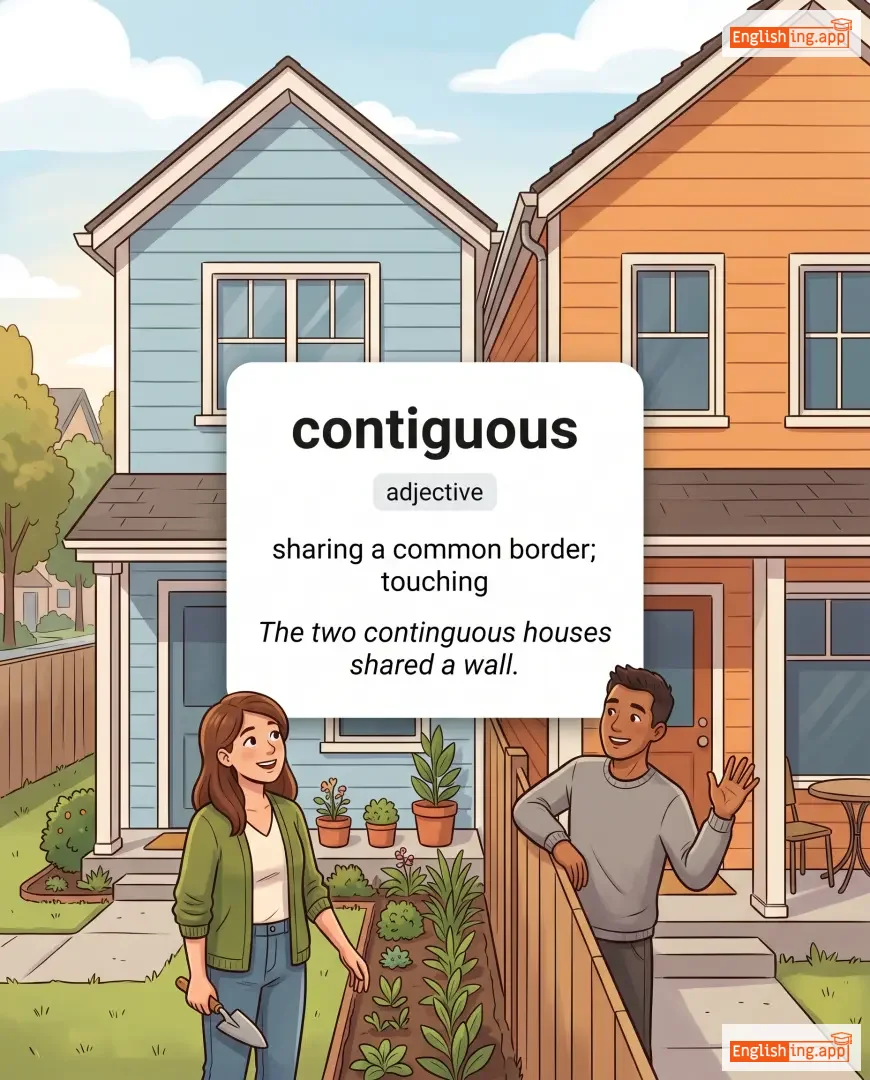
contiguous definition card — visual illustration of the meaning
adjective
/kənˈtɪɡ.ju.əs/
相邻 (xianglin)

sharing a common border; touching

"The two continguous houses shared a wall."
"这两座相邻的房子共享了一面墙。" (Zhe liang zuo xianglin de fangzi gongxiang le yi mian qiang.)
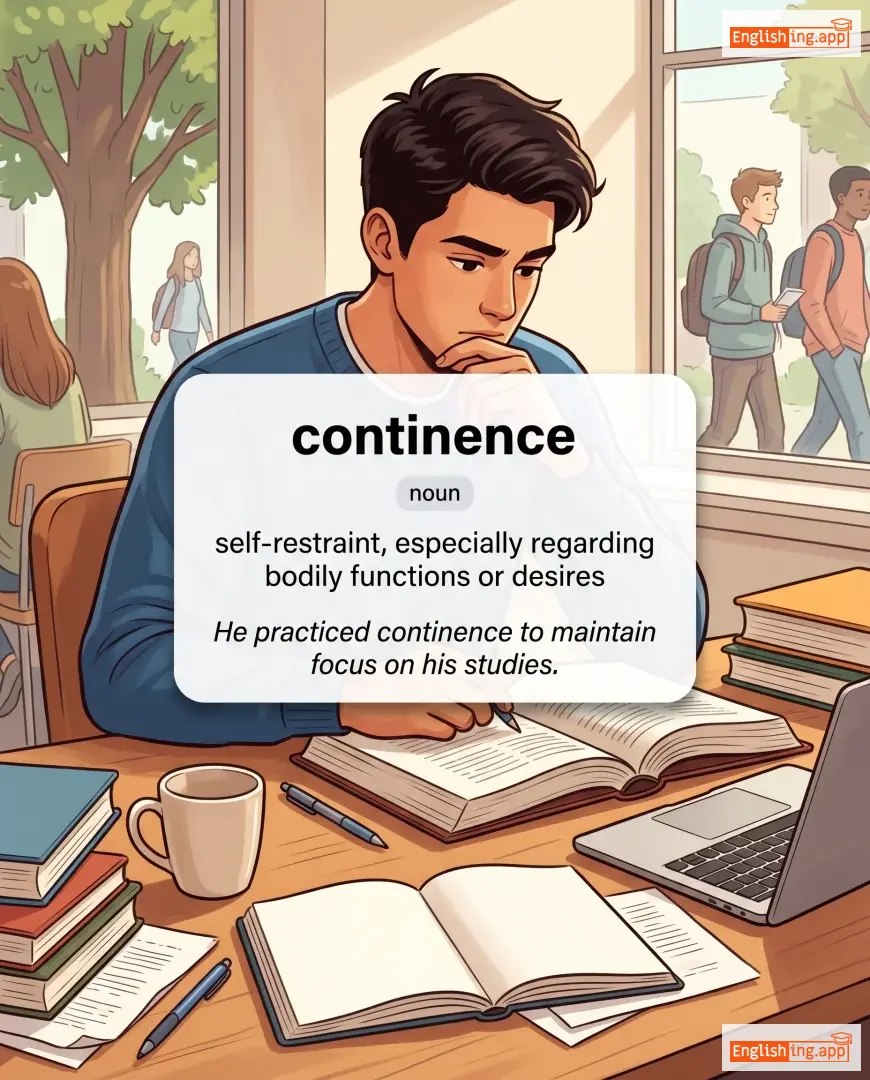
continence definition card — visual illustration of the meaning
noun
/ˈkɒn.tɪ.nəns/
节制 (jiezhi)

self-restraint, especially regarding bodily functions or desires

"He practiced continence to maintain focus on his studies."

"他练习节制以保持对学业的专注。" (Tā liànxí jiezhi yǐ bǎochí duì xuéyè de zhuānzhù.)
noun
/ˈkɒntɪnənt/
大陆 (dàlù)

one of the large landmasses on Earth such as Asia, Africa, or Europe

"Asia is the largest continent in the world."
"亚洲是世界上最大的大陆。" (Yàzhōu shì shìjiè shàng zuì dà de dàlù.)
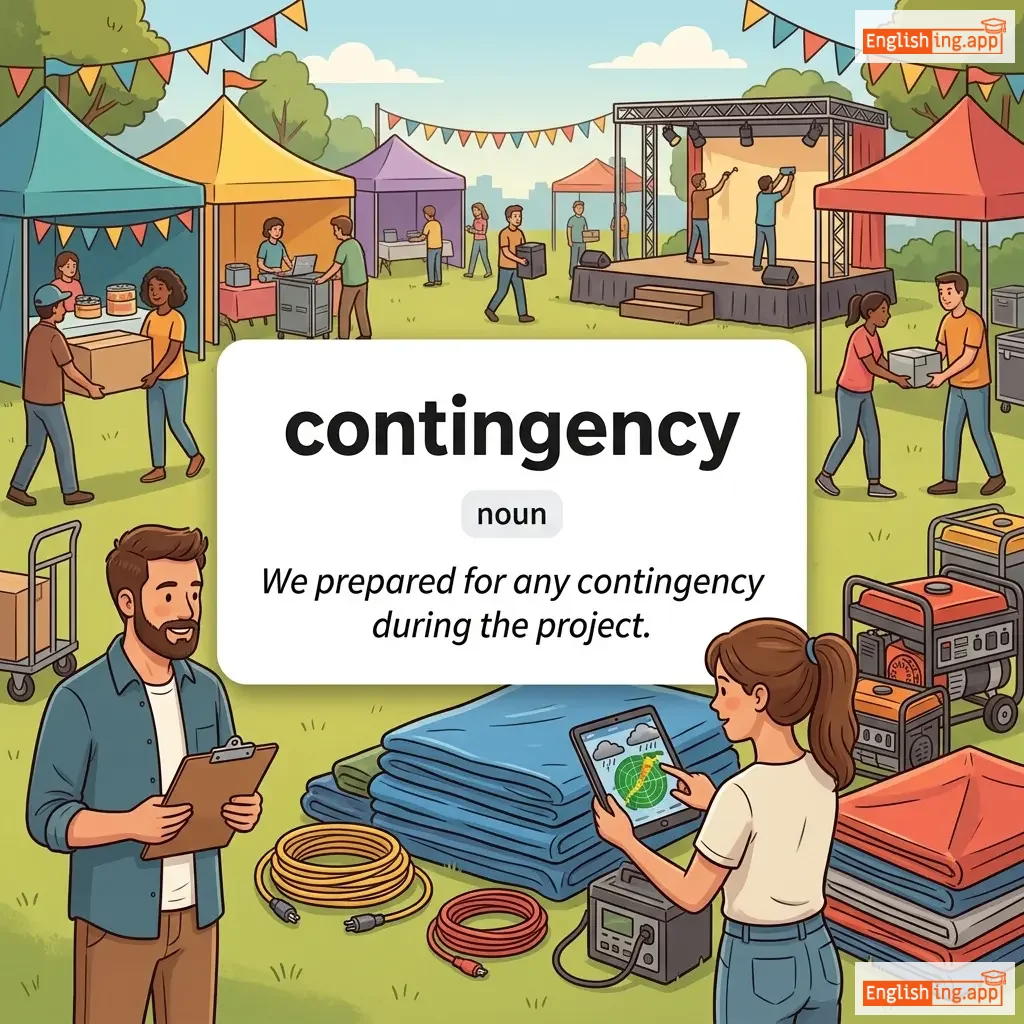
contingency definition card — visual illustration of the meaning
noun
/kənˈtɪn.dʒən.si/
应急情况 (yingji qingkuang)

a future event or circumstance that is possible but cannot be predicted with certainty

"We prepared for any contingency during the project."

"我们为项目中的任何应急情况做好了准备。" (Women wei xiangmu zhong de renhe yingji qingkuang zuohao le zhunbei.)
adjective,noun
/kənˈtɪn.dʒənt/
取决于 / 队伍 (qǔ jué yú / duì wǔ)

dependent on something else; a group of people representing an organization

"Attendance is contingent on prior registration. / A contingent of students attended the conference."

"出席取决于事先注册。 / 一个学生代表团参加了会议。" (chūxí qǔ jué yú shìxiān zhùcè. / yīgè xuéshēng dàibiǎo tuántuán cānjiāle huìyì.)
adjective
/kənˈtɪn.ju.əl/
持续的;不停的 (chíxù de; bùtíng de)

happening repeatedly over a long period of time; constant and uninterrupted

"The continual noise from the construction site was very annoying."

"来自建筑工地的持续噪音非常让人烦恼。" (Láizì jiànzhú gōngdì de chíxù zàoyīn fēicháng ràng rén fánnǎo.)
adverb
/kənˈtɪnjuəli/
持续 (chixu)

in a continuous and uninterrupted way

"The rain has been falling continually for hours."

"雨已经持续下了好几个小时。" (Yu yijing chixu xiala haoji ge xiaoshi.)
noun
/kənˈtɪn.ju.əns/
持续性 (chíxù xìng)

the state of continuing or being prolonged; persistence

"The continuance of the project depended on securing additional funding."

"项目的持续性依赖于确保额外的资金。" (Xiàngmù de chíxù xìng yīlài yú quèbǎo éwài de zījīn.)
noun
/kənˌtɪn.juˈeɪ.ʃən/
延续 (yanxu)

the action of carrying something on over time; extension

"The continuation of the series was announced after the finale."

"系列的延续在结局后宣布。" (Xìliè de yánxù zài jiéjú hòu xuānbù.)
verb
/kənˈtɪnjuː/
继续 (jixu)

To keep happening, existing, or doing something without stopping.

"The rain will continue throughout the night."

"雨水会持续整晚。" (Yǔ shuǐ huì chíxù zhěng wǎn.)
verb
/kənˈtɪn.juːd/
继续 (jìxù)

Kept happening or carried on without stopping.

"She continued working despite the challenges."

"她继续工作,尽管面临挑战。" (Tā jìxù gōngzuò, jǐnguǎn miànlín tiǎozhàn.)
verb
/kənˈtɪnjuɪŋ/
继续 (jixu)

to keep doing something without stopping

"They are continuing their journey despite the rain."

"尽管下雨,他们仍在继续他们的旅程。" (Jinguan xia yu, tamen reng zai jixu tamen de lüxing.)
noun
/ˌkɒn.tɪˈnjuː.ɪ.ti/
连续性 (lianxuxing)

the state of being continuous or connected; consistency over time

"Maintaining continuity in leadership is essential for organizational stability."

"在领导力中保持连续性对于组织稳定性至关重要。" (Zai lingdaoli zhong baochi lianxuxing dui yuanzhi wendingxing zhi guan zhongyao.)
adjective
/kənˈtɪn.ju.əs/
连续的 (lianxu de)

forming an unbroken whole; without interruption

"The factory operates on a continuous 24-hour schedule."

"工厂按照连续的24小时工作计划运行。" (Gongchang anzhao lianxu de 24 xiaoshi gongzuo jihua yunxing.)
adverb
/kənˈtɪnjuəsli/
连续不断地; 持续; 不间断 (liánxù bùduàn de; chíxù; bù jiànduàn)

without interruption; in an unbroken sequence

"The machine operates continuously for 24 hours."

"机器持续运行24小时。" (jīqì chíxù yùnxíng 24 xiǎoshí.)
noun
/kənˈtɪnjuəm/
连续体 (liánxùtǐ)

A continuous sequence in which adjacent elements are not perceptibly different from each other, but the extremes are quite distinct.

"Life and death are often seen as part of the same continuum."

"生与死常常被视为同一连续体的一部分。" (Shēng yǔ sǐ chángcháng bèi shì wéi tóng yī liánxùtǐ de yī bùfen.)
verb
/kənˈtɔːrt/
扭曲 (niǔqū)

to twist or bend out of the normal shape

"She contorted her face in pain after the injury."

"受伤后,她痛苦地扭曲了脸。" (Shòushāng hòu, tā tòngkǔ de niǔqū le liǎn.)
noun
/kənˈtɔːrʃən/
扭曲或弯曲的形状; 从正常形状扭曲的行为 (niǔqū huò wānqū de xíngzhuàng; cóng zhèngcháng xíngzhuàng niǔqū de xíngwéi)

a twisted or bent shape; the act of twisting out of the normal shape

"The gymnast's contortion amazed the audience."

"体操运动员的扭曲动作令观众惊叹。" (Tǐcāo yùndòngyuán de niǔqū dòngzuò lìng guānzhòng jīngtàn.)
noun
/kənˈtɔːrʃənz/
扭曲的复数形式; 多个弯曲或扭曲的形状 (niǔqū de fùshù xíngshì; duō gè wānqū huò niǔqū de xíngzhuàng)

plural form of contortion; multiple twisted or bent shapes

"The magician's contortions left the crowd in awe."

"魔术师的扭曲让观众惊叹不已。" (Móshùshī de niǔqū ràng guānzhòng jīngtàn bù yǐ.)
noun
/ˈkɒntrəbænd/
走私货物 (zousi huowu)

goods that are illegal to import, export, or possess

"The police seized a shipment of contraband cigarettes."

"警方查获了一批走私香烟。" (Jingfang chahuo le yī pī zousi xiangyan.)
contract definition card — visual illustration of the meaning
noun, verb
/ˈkɒntrækt/
合同,书面或口头协议 (hetong, shuwen huo koutou xieyi)

noun: a written or spoken agreement; verb: to enter into an agreement or to reduce in size

"They signed a contract for the new project."
"他们为新项目签署了合同。" (Tāmen wèi xīn xiàngmù qiānshǔle hétóng.)
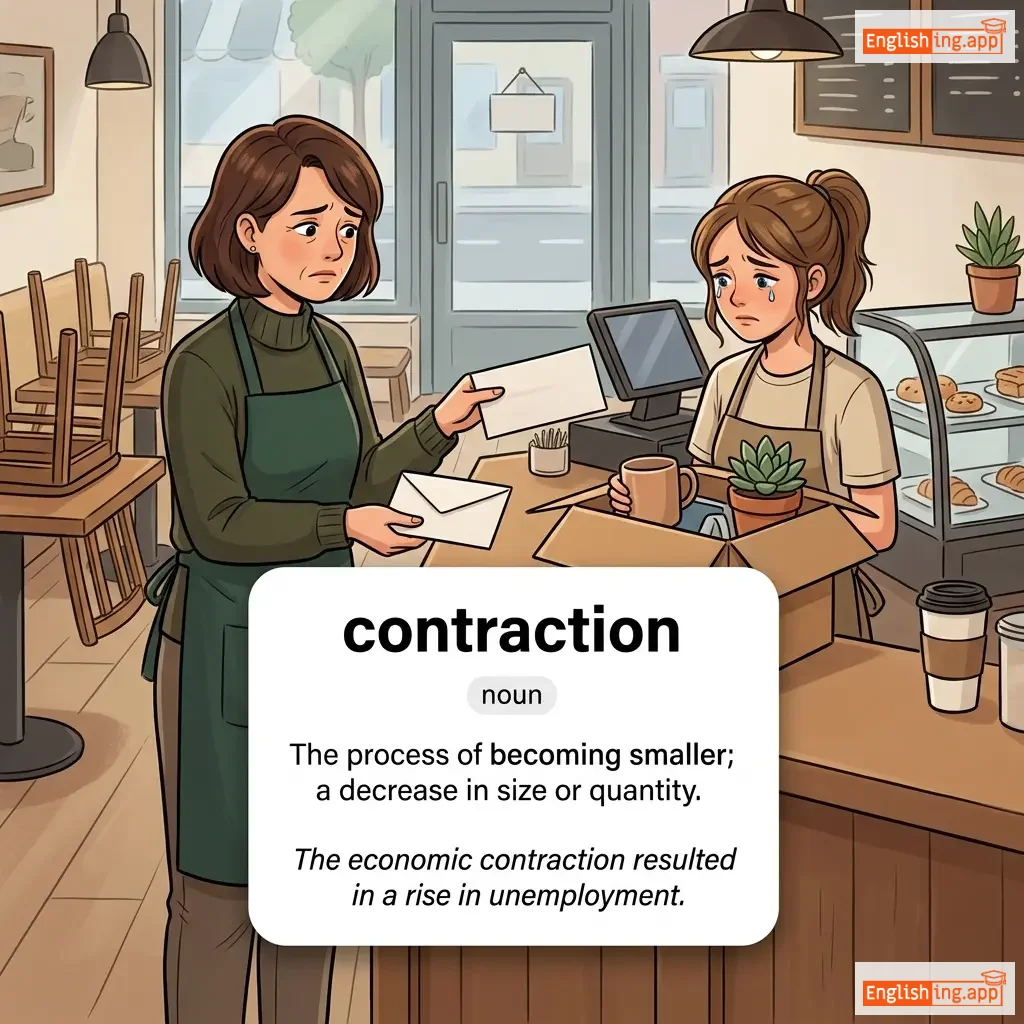
contraction definition card — visual illustration of the meaning
noun
kənˈtrækʃən
收缩 (shōusuō)

The process of becoming smaller; a decrease in size or quantity.

"The economic contraction resulted in a rise in unemployment."

"经济收缩导致失业率上升。" (Jīngjì shōusuō dǎozhì shīyè lǜ shàngshēng.)
noun
/ˈkɒntræktər/
承包商 (chéngbāo shāng)

a person or company that agrees to provide materials or labor to perform a service or do a job

"The contractor completed the building project on time."

"承包商按时完成了建筑项目。" (Chéngbāo shāng ànshí wánchéngle jiànzhù xiàngmù.)
verb
/ˌkɒn.trəˈdɪkt/
反驳 (fǎnbó)

to say or show the opposite of something that has been said or believed

"His actions contradict his words."

"他的行为与他的言辞相矛盾。" (tā de xíngwéi yǔ tā de yáncí xiāng máodùn.)
noun
/ˌkɒntrəˈdɪkʃən/
矛盾,不一致 (máodùn, bù yīzhì)

a statement or situation that is opposed to another, inconsistency

"Her actions are in clear contradiction to her words."
"她的行动与她的话明显矛盾。" (Tā de xíngdòng yǔ tā de huà míngxiǎn máodùn.)
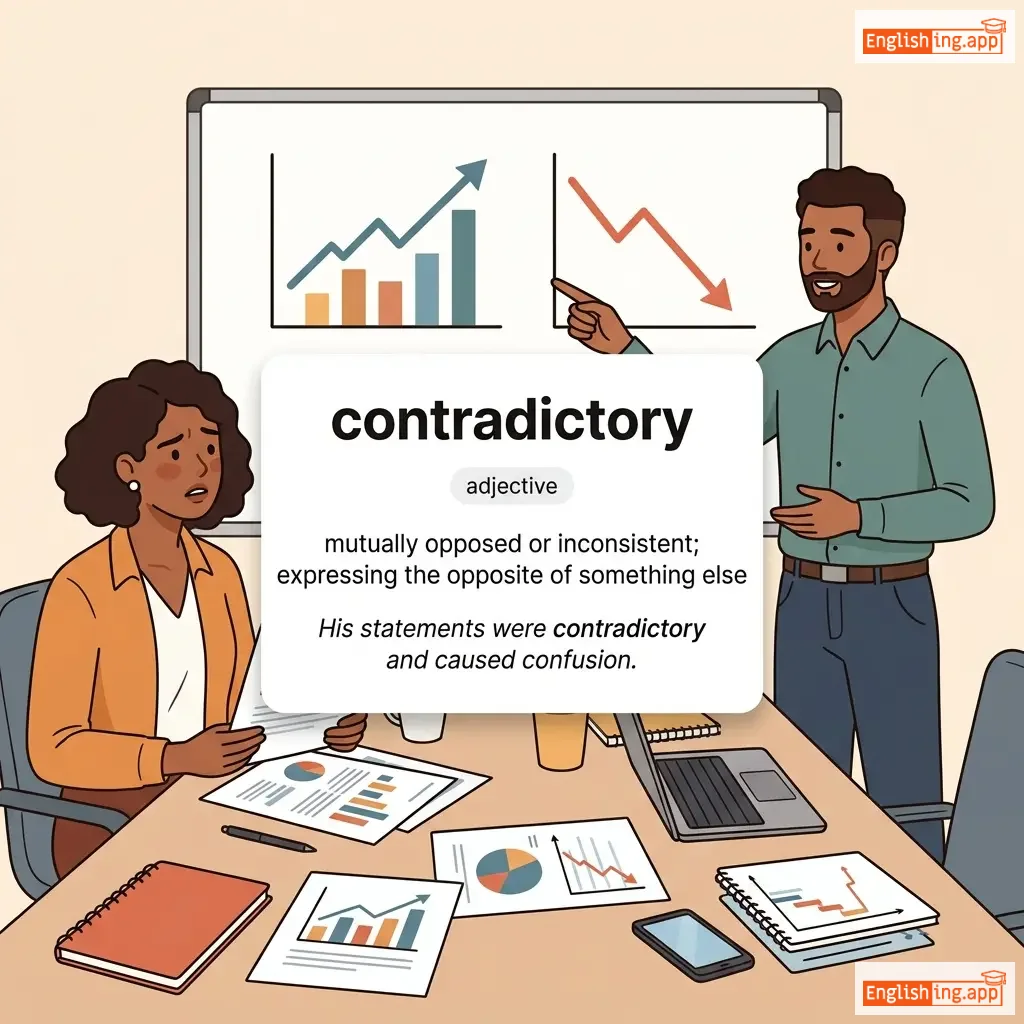
contradictory definition card — visual illustration of the meaning
adjective
/ˌkɒntrəˈdɪktəri/
矛盾的 (maodun de)

mutually opposed or inconsistent; expressing the opposite of something else

"His statements were contradictory and caused confusion."

"他的陈述是矛盾的,导致了混乱。" (Tā de chénshù shì máodùn de, dǎozhìle hùnluàn.)
noun
/ˌkɒntrəpəˈzɪʃən/
对立面 (duìlìmiàn)

the act of placing two things in opposition for contrast or comparison

"The contraposition of the two theories highlighted their differences."

"两种理论的对立面突出了它们的差异。" (Liǎng zhǒng lǐlùn de duìlìmiàn tūchūle tāmen de chāyì.)
noun
/ˈkɒntrəriz/
对立的事物 (duìlì de shìwù)

things that are completely different or opposite to each other

"Freedom and slavery are contraries in every sense."

"自由与奴隶制在各个方面都是对立的。" (Zìyóu yǔ núlìzhì zài gège fāngmiàn dōu shì duìlì de.)
adjective
/ˈkɒn.trəri/
相反的 (xiāngfǎn de)

opposite in nature, direction, or meaning

"Her views are contrary to mine."
"她的观点与我相反。" (tā de guāndiǎn yǔ wǒ xiāngfǎn.)
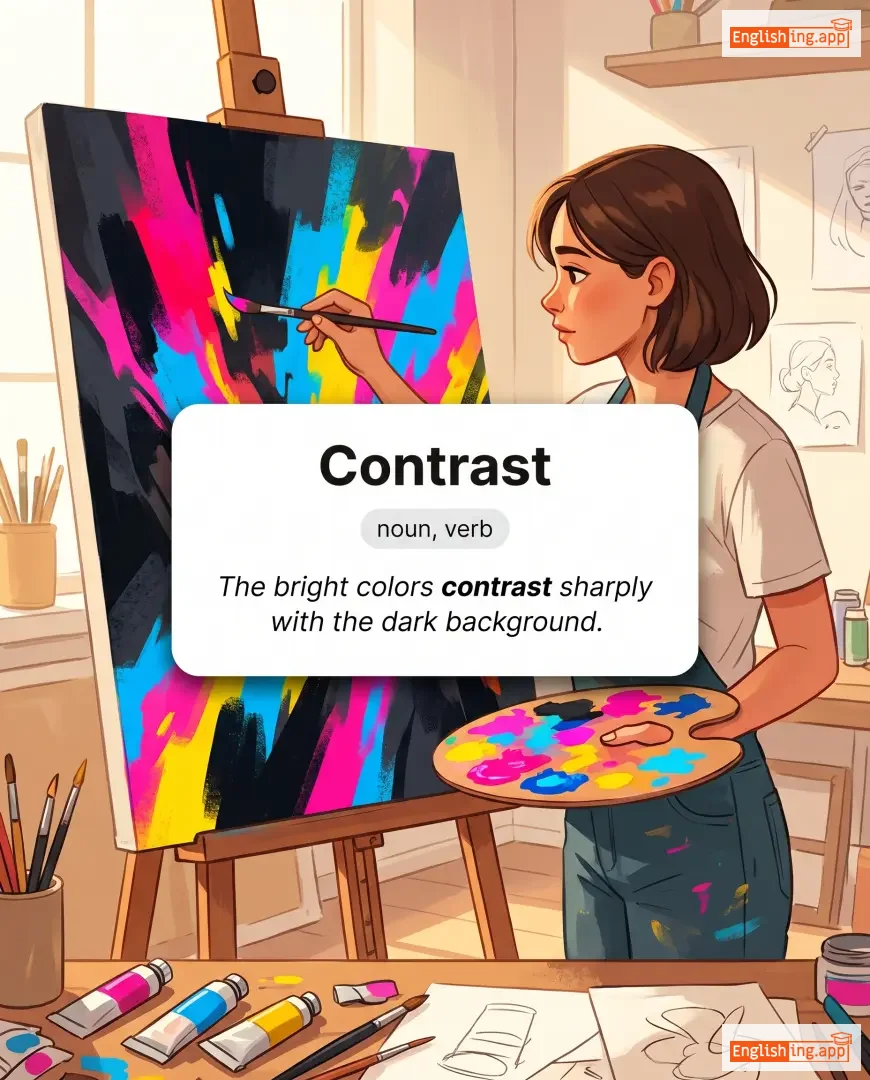
Contrast definition card — visual illustration of the meaning
noun, verb
/ˈkɒn.trɑːst/ (noun), /kənˈtræst/ (verb)
幸福 (xingfu)

A difference between two or more things; to compare two things to show how they are different.

"The bright colors contrast sharply with the dark background."

"当她获得奖项时,她无法掩饰自己的幸福。" (Dāng tā huòdé jiǎngxiàng shí, tā wúfǎ yǎnshì zìjǐ de xìngfú.)
verb
/ˌkɒntrəˈviːn/
违背 (wéibèi)

to go against or act in opposition to a law, rule, or agreement

"He contravened the safety regulations and was fined."

"他违反了安全规定并被罚款。" (Tā wéibèi le ānquán guīdìng bìng bèi fákuǎn.)
noun
/ˈkɒntrətɑː̃/
意外争执 (yìwài zhēngzhí)

an unexpected and unfortunate event or disagreement; a minor dispute

"There was a small contretemps between the two colleagues during the meeting."

"会议期间,两位同事之间发生了一个小的意外争执。" (Huìyì qījiān, liǎng wèi tóngshì zhījiān fāshēng le yí gè xiǎo de yìwài zhēngzhí.)
contribute definition card — visual illustration of the meaning
verb
/kənˈtrɪbjuːt/

To give or add something, especially to help achieve or provide something.

"Everyone contributed money to support the charity."
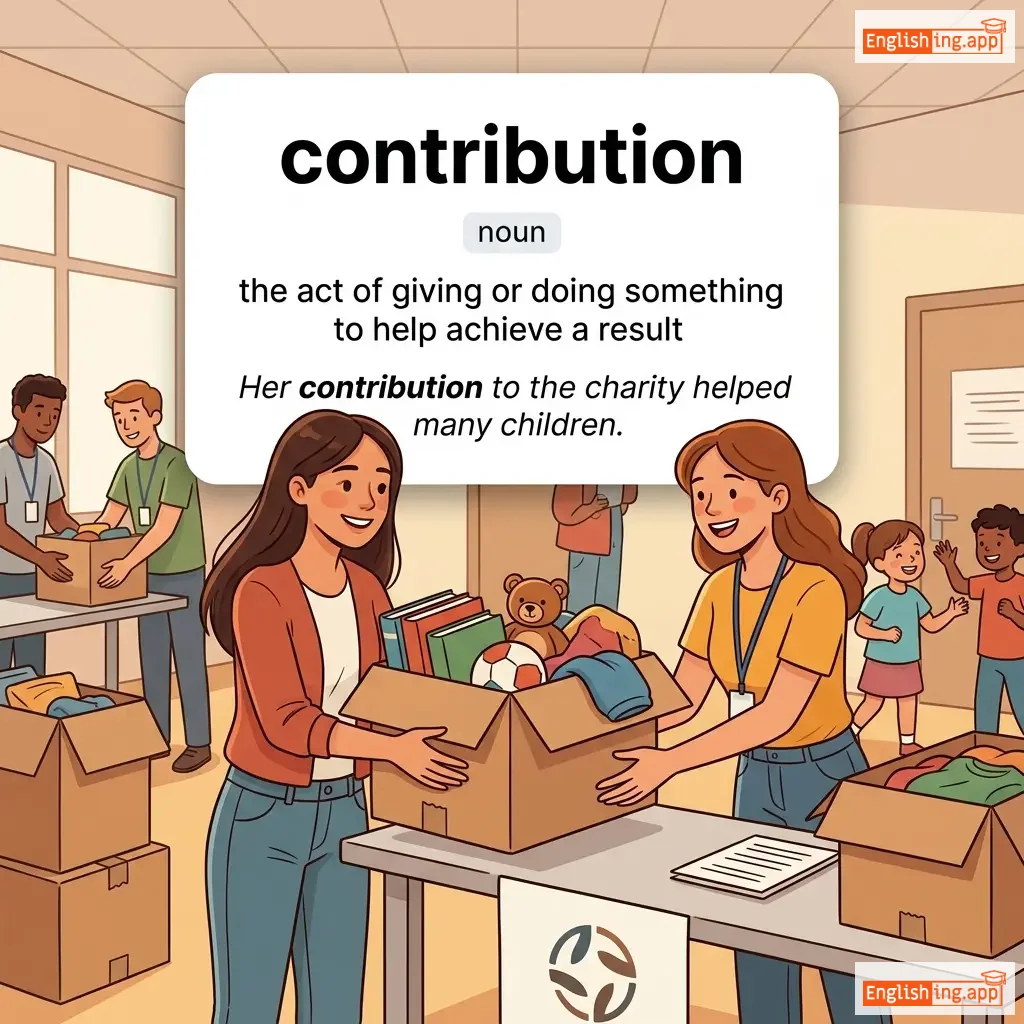
contribution definition card — visual illustration of the meaning
noun
/ˌkɒn.trɪˈbjuː.ʃən/
贡献 (gongxian)

the act of giving or doing something to help achieve a result

"Her contribution to the charity helped many children."

"她对慈善事业的贡献帮助了许多儿童。" (Ta dui cishan shiye de gongxian bangzhu le xuduo ertong.)
noun
/ˈkɒn.trɪ.bjʊ.tər/
贡献者 (gongxian zhe)

a person who gives something to help achieve a result

"He was a regular contributor to the local newspaper."

"他是当地报纸的常驻贡献者。" (Ta shi dangdi baozhi de changzhu gongxian zhe.)
contrite definition card — visual illustration of the meaning
adjective
/kənˈtraɪt/
懊悔的 (àohuǐ de)

feeling or showing remorse or guilt

"She was contrite after realizing her mistake."

"她在意识到自己的错误后感到懊悔。" (Tā zài yìshí dào zìjǐ de cuòwù hòu gǎndào àohuǐ.)
noun
/kənˈtrɪʃ.ən/
悔恼 (huǐnǎo)

the state of feeling remorseful and repentant

"His contrition was evident after the apology."

"在道歉后,他的悔恼显而易见。" (Zài dàoqiàn hòu, tā de huǐnǎo xiǎn ér yìjiàn.)
noun
/kənˈtraɪ.vəns/
装置或计划 (zhuangzhi huo jihua)

a device or plan that is cleverly or artificially created

"The clock was an intricate contrivance of gears and springs."

"这只钟是由齿轮和弹簧组成的复杂装置。" (Zhe zhi zhong shi you chǐlún hé tánhuáng zǔchéng de fùzá zhuāngzhì.)
verb
/kənˈtraɪv/
设计 (shèjì)

to plan or devise cleverly or skillfully

"She contrived a clever plan to surprise her friends."

"她想出了一个聪明的计划来给她的朋友们带来惊喜。" (Tā xiǎng chūle yīgè cōngmíng de jìhuà lái gěi tā de péngyǒumen dàilái jīngxǐ.)
noun
/ˈklævɪkəl/
锁骨 (suǒgǔ)

the collarbone, a long bone that serves as a strut between the shoulder blade and the sternum

"He fractured his clavicle in the accident."

"他在事故中断了锁骨。" (Tā zài shìgù zhōng duàn le suǒgǔ.)
noun
/klɔː/
爪子 (zhǎo zi)

sharp curved nail on the foot of an animal or bird

"The cat extended its sharp claws to climb the tree."

"猫伸出锋利的爪子爬上了树。" (Māo shēn chū fēng lì de zhǎo zi pá shàng le shù.)