Словари

Словарь английского языка | Значения слов, определения и примеры
contention definition card — visual illustration of the meaning
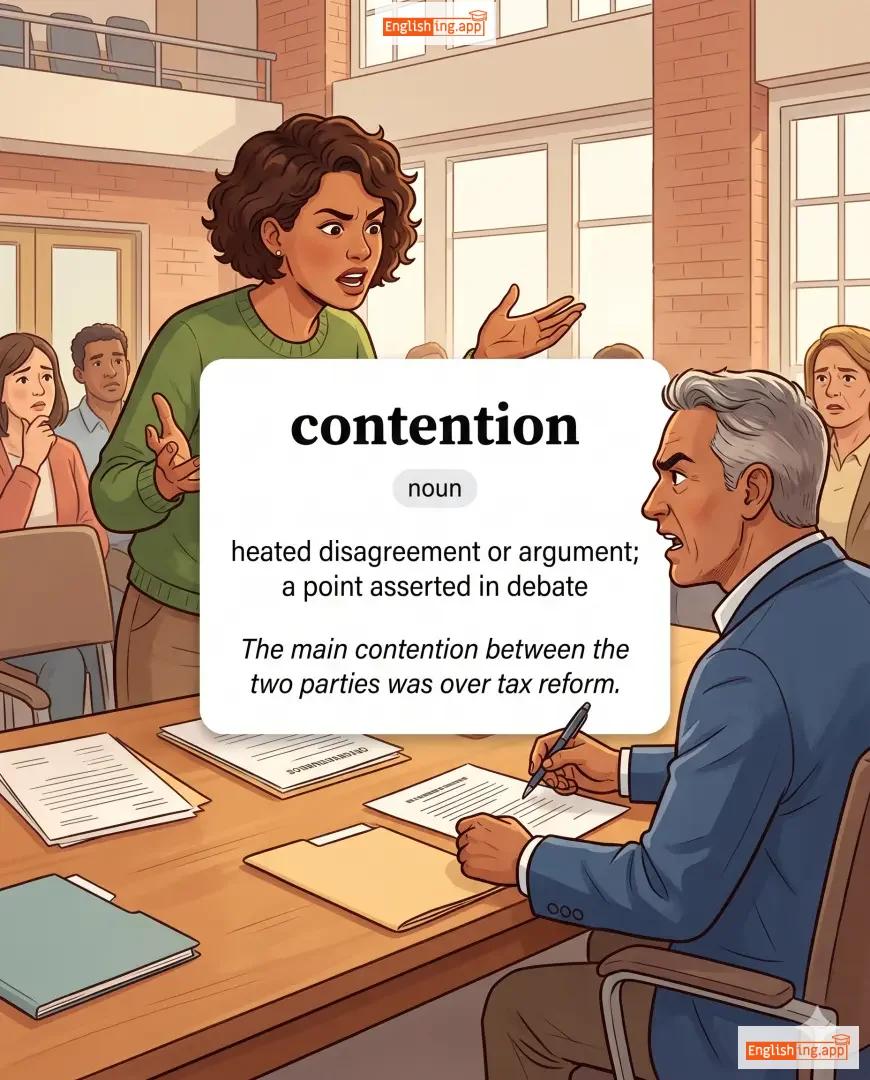
noun
/kənˈtɛnʃən/
спор, разногласие (spor, raznoglasiye)

heated disagreement or argument; a point asserted in debate

"The main contention between the two parties was over tax reform."
"Основной спор между двумя партиями был связан с налоговой реформой." (Osnovnoy spor mezhdu dvumya partiyami byl svyazan s nalogovoy reformoy.)
contentious definition card — visual illustration of the meaning
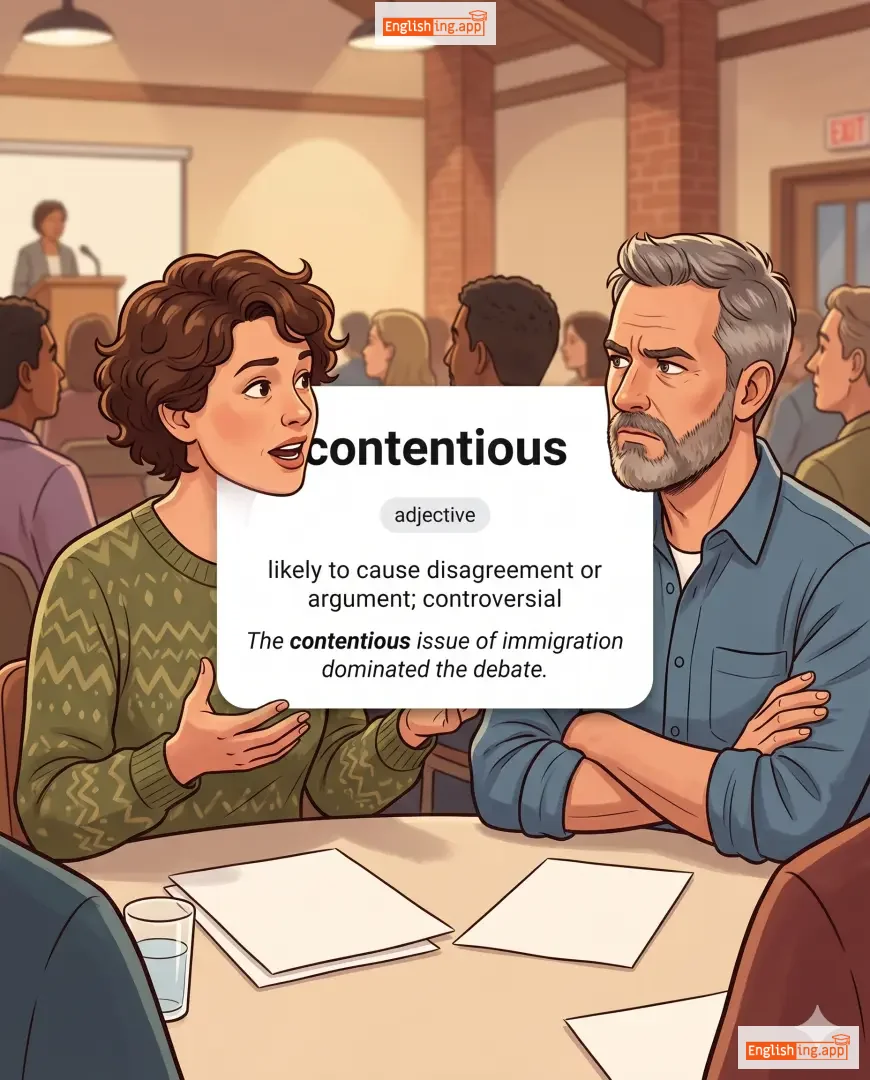
adjective
/kənˈtɛnʃəs/
спорный (spornyy)

likely to cause disagreement or argument; controversial

"The contentious issue of immigration dominated the debate."

"Спорный вопрос иммиграции доминировал в дебатах." (Spornyy vopros immigratsii dominirival v debatakh.)
noun
/kənˈtentmənt/
удовлетворение (udovletvorenie)

a state of happiness and satisfaction with what one has

"She felt a deep sense of contentment after helping others."

"Она почувствовала глубокое удовлетворение после помощи другим." (ona pochuvstvovala glubokoe udovletvorenie posle pomoshchi drugim)
verb, noun
/ˈkɒntɛst/
оспаривать, конкурс (osparivat', konkurs)

verb: to compete or challenge; noun: a competition or dispute

"She decided to contest the election against the incumbent."

"Она решила оспаривать выборы против действующего кандидата." (Ona reshila osparivat' vibory protiv deystvuyushchego kandidata.)
noun
/ˈkɒntɛkst/
контекст (kontekst)

the circumstances or background relevant to an event, statement, or idea

"To understand the quote, you need to know the context in which it was said."
"Чтобы понять цитату, вам нужно знать контекст, в котором она была сказана." (Shtoby ponyat' tsitaty, vam nuzhno znat' kontekst, v kotorom ona byla skazana.)
contextual definition card — visual illustration of the meaning
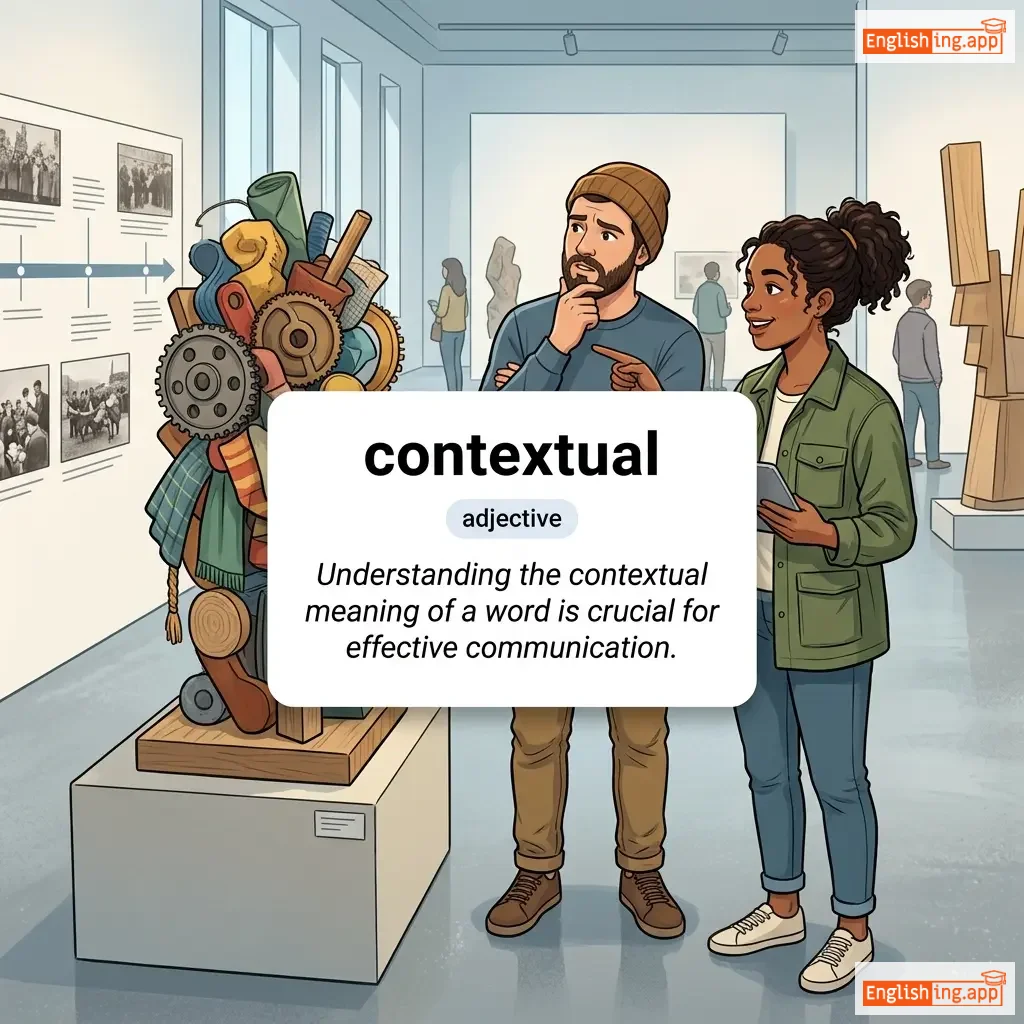
adjective
/kənˈtɛkstʃʊəl/
контекстуальный, в зависимости от контекста (kontekstual'nyj, v zavisimosti ot konteksta)

Depending on or relating to the circumstances that form the setting for an event or statement.

"Understanding the contextual meaning of a word is crucial for effective communication."
"Понимание контекстуального значения слова важно для эффективной коммуникации." (Ponimanie kontekstual'nogo znacheniya slova vazhno dlya effektivnoy kommunikatsii.)
contextualization definition card — visual illustration of the meaning
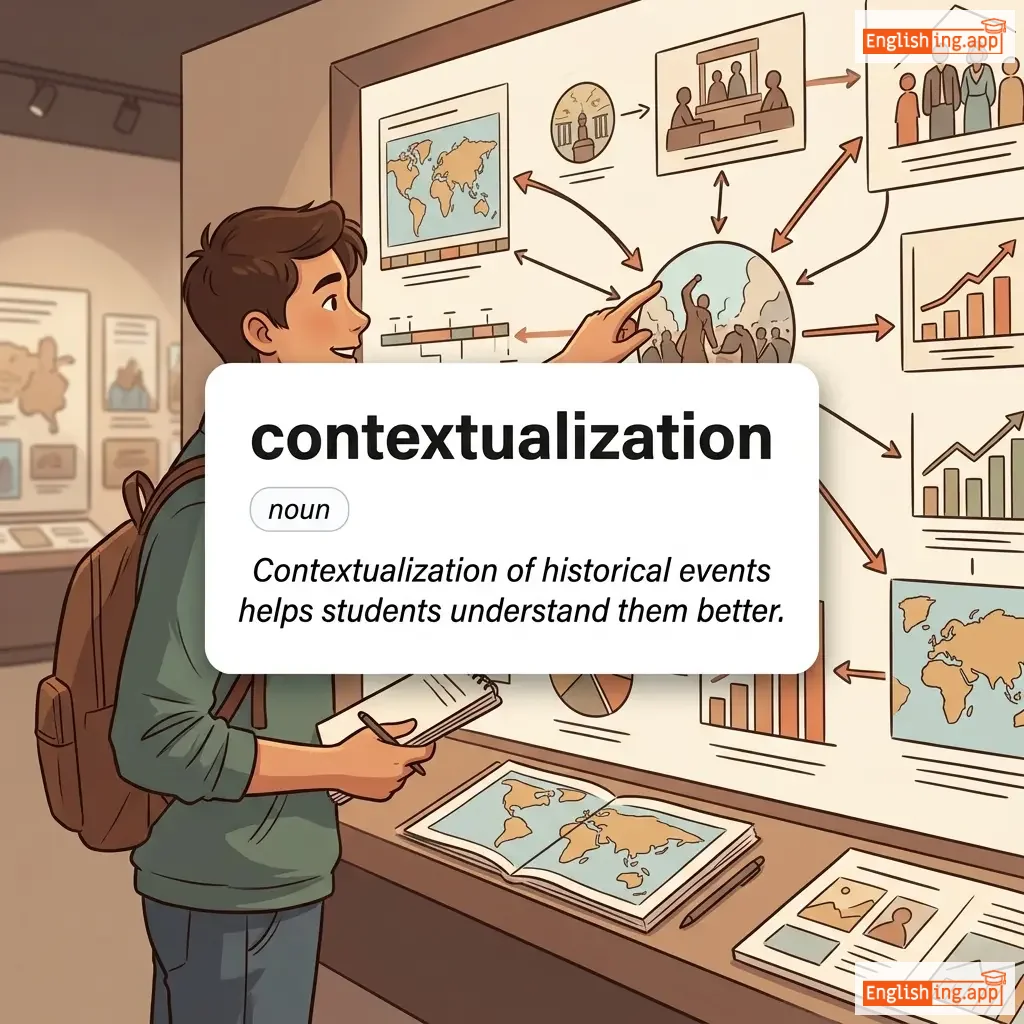
noun
/kɒnˌtek.stʃu.ə.laɪˈzeɪ.ʃən/
контекстуализация (kontekstualizatsiya)

The process of placing something in its proper context or setting to understand it better.

"Contextualization of historical events helps students understand them better."

"Контекстуализация исторических событий помогает студентам лучше их понимать." (Kontekstualizatsiya istoricheskikh sobytiy pomogaet studentam luchshe ikh ponimat'.)
verb
/kənˈtɛkstʃuəlaɪz/
контекстуализировать (kontekstualizirovat)

to place something in a context or interpret it in relation to its surroundings

"The teacher contextualized the historical event to make it more relevant for students."

"Учитель контекстуализировал историческое событие, чтобы сделать его более актуальным для студентов." (Uchitel' kontekstualiziroval istoricheckoe sobytie, chtoby sdelat' ego bolee aktual'nym dlya studentov.)
noun
/kɒn.tɪˈɡjuː.ɪ.ti/
континуитет (kontiniut)

the state of being in direct contact or next to each other

"The contiguity of the two countries facilitates trade."
"Континуитет двух стран облегчает торговлю." (Kontiniutet dvukh stran oblegchaet torgovlyu.)
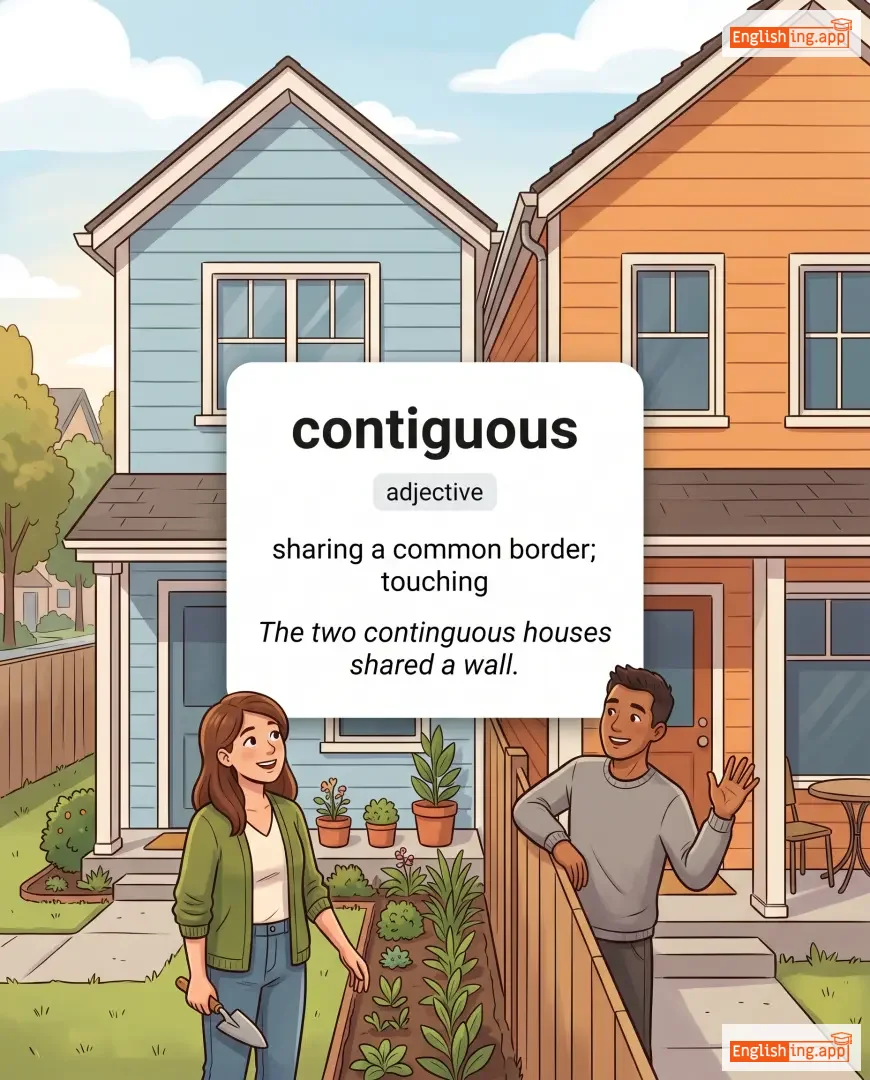
contiguous definition card — visual illustration of the meaning
adjective
/kənˈtɪɡ.ju.əs/
смежный (smezhnij)

sharing a common border; touching

"The two continguous houses shared a wall."
"Два смежных дома поделились стеной." (Dva smezhnykh doma podelilis' stenoy.)
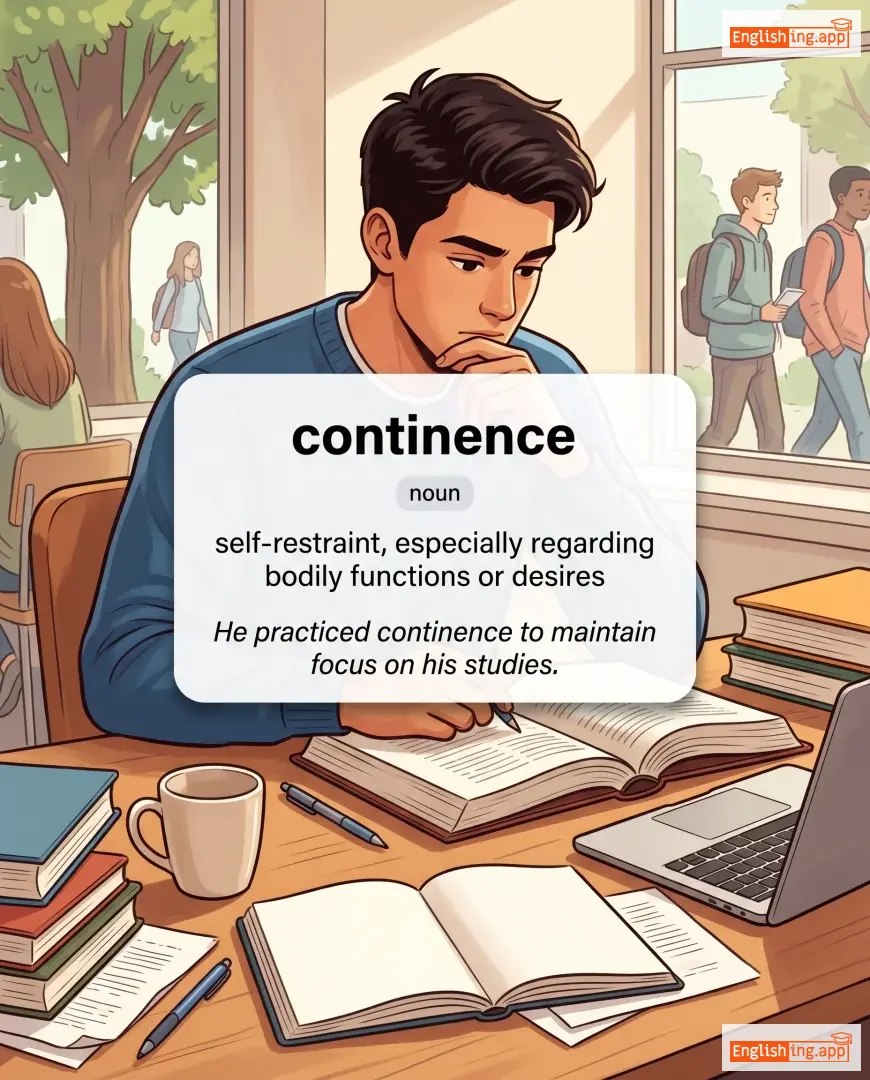
continence definition card — visual illustration of the meaning
noun
/ˈkɒn.tɪ.nəns/
воздержание (vozderzhanie)

self-restraint, especially regarding bodily functions or desires

"He practiced continence to maintain focus on his studies."

"Он практиковал воздержание, чтобы сосредоточиться на учебе." (On praktikovav vozderzhanie, chtoby sosredotochit'sya na uchebe.)
noun
/ˈkɒntɪnənt/
континент (kontinent)

one of the large landmasses on Earth such as Asia, Africa, or Europe

"Asia is the largest continent in the world."
"Азия — крупнейший континент в мире." (Aziya — krupneyshiy kontinent v mire.)
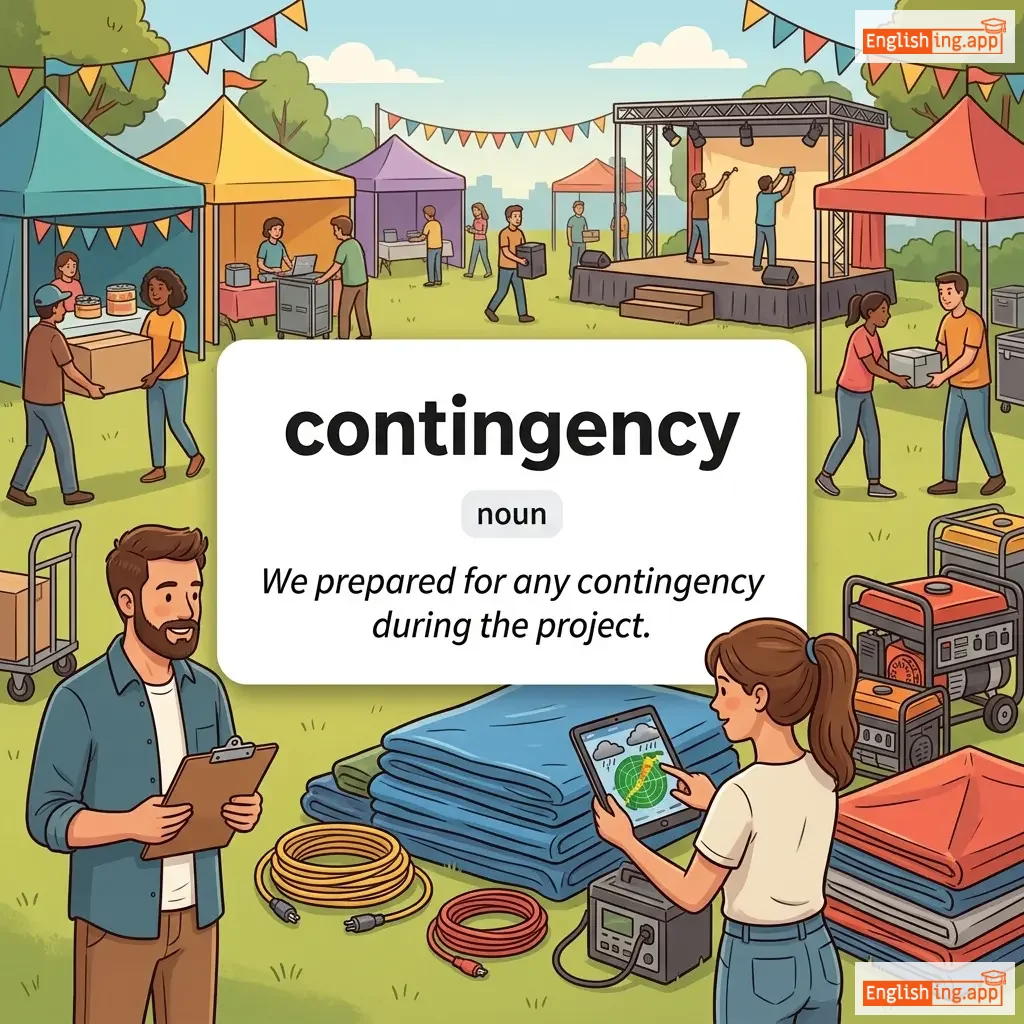
contingency definition card — visual illustration of the meaning
noun
/kənˈtɪn.dʒən.si/
непредвиденная ситуация (nepredvidennaya situatsiya)

a future event or circumstance that is possible but cannot be predicted with certainty

"We prepared for any contingency during the project."

"Мы подготовились к любой непредвиденной ситуации в ходе проекта." (My podgotovilis' k lyuboy nepredvidennoy situatsii v khode proyekt.)
adjective,noun
/kənˈtɪn.dʒənt/
зависимый / контингент (zavisimy / kontingent)

dependent on something else; a group of people representing an organization

"Attendance is contingent on prior registration. / A contingent of students attended the conference."

"Посещение зависит от предварительной регистрации. / Контингент студентов посетил конференцию." (Poseshchenie zavisit ot predvaritel'noy registratsii. / Kontingent studentov posetil konferentsiyu.)
adjective
/kənˈtɪn.ju.əl/
непрерывный; постоянный; (nepreryvnyy; postoyannyy;)

happening repeatedly over a long period of time; constant and uninterrupted

"The continual noise from the construction site was very annoying."

"Постоянный шум с строительного участка был очень раздражающим." (Postoyannyy shum s stroitel'nogo uchastka byl ochen' razdrazhayushchim.)
adverb
/kənˈtɪnjuəli/
непрерывно (nepreryvno)

in a continuous and uninterrupted way

"The rain has been falling continually for hours."

"Дождь идет непрерывно уже несколько часов." (Dozhd' idyot nepreryvno uzhe neskol'ko chasov.)
noun
/kənˈtɪn.ju.əns/
продолжение (prodolzhenie)

the state of continuing or being prolonged; persistence

"The continuance of the project depended on securing additional funding."

"Продолжение проекта зависело от обеспечения дополнительного финансирования." (Prodolzhenie proyeka zaviselo ot obespecheniya dopolnitel'nogo finansirovaniya.)
noun
/kənˌtɪn.juˈeɪ.ʃən/
продолжение (prodolzhenie)

the action of carrying something on over time; extension

"The continuation of the series was announced after the finale."

"Продолжение сериала было анонсировано после финала." (Prodolzhenie seriala bylo anonsirovano posle finala.)
verb
/kənˈtɪnjuː/
продолжать (prodolzhat)

To keep happening, existing, or doing something without stopping.

"The rain will continue throughout the night."

"Дождь будет продолжаться всю ночь." (Dozhd' budet prodolzhat'sya vsyu noch'.)
verb
/kənˈtɪn.juːd/
продолжено (prodolzheno)

Kept happening or carried on without stopping.

"She continued working despite the challenges."

"Она продолжала работать, несмотря на трудности." (Ona prodolzhala rabotat', nesmotrya na trudnosti.)
verb
/kənˈtɪnjuɪŋ/
продолжающийся (prodolzhayushchiesya)

to keep doing something without stopping

"They are continuing their journey despite the rain."

"Они продолжают свое путешествие, несмотря на дождь." (Oni prodolzhayut svoe puteshestvie, nesmotrya na dozhd'.)
noun
/ˌkɒn.tɪˈnjuː.ɪ.ti/
непрерывность (nepreryvnost)

the state of being continuous or connected; consistency over time

"Maintaining continuity in leadership is essential for organizational stability."

"Поддержание непрерывности в лидерстве важно для стабильности организации." (Podderzhanie nepreryvnosti v liderstve vazhno dlya stabil'nosti organizatsii.)
adjective
/kənˈtɪn.ju.əs/
непрерывный (nepreryvny)

forming an unbroken whole; without interruption

"The factory operates on a continuous 24-hour schedule."

"Фабрика работает по непрерывному графику 24 часа." (Fabrika rabotaet po nepreryvnomu grafikyu 24 chasa.)
adverb
/kənˈtɪnjuəsli/
непрерывно; постоянно; без перерыва (nepreryvno; postoyanno; bez pereryva)

without interruption; in an unbroken sequence

"The machine operates continuously for 24 hours."

"Машина работает непрерывно 24 часа." (Mashina rabotaet nepreryvno 24 chasa.)
noun
/kənˈtɪnjuəm/
непрерывность (nepreryvnost)

A continuous sequence in which adjacent elements are not perceptibly different from each other, but the extremes are quite distinct.

"Life and death are often seen as part of the same continuum."

"Жизнь и смерть часто воспринимаются как части одного и того же континуума." (Zhizn' i smert' chasto vosprinimayutsya kak chasti odnogi i togo zhe kontinuuma.)
verb
/kənˈtɔːrt/
искривлять (iskrivlyat)

to twist or bend out of the normal shape

"She contorted her face in pain after the injury."

"Она скривила свое лицо от боли после травмы." (Ona skrivila svoe litso ot boli posle travmy.)
noun
/kənˈtɔːrʃən/
искривленная или согнутая форма; действие, когда что-то изгибается или искажается (iskrivlennaya ili sognutaya forma; deystviye, kogda chto-to izgibayetsya ili iskazhdaetsya)

a twisted or bent shape; the act of twisting out of the normal shape

"The gymnast's contortion amazed the audience."

"Контортия гимнаста поразила зрителей." (Kontortiya gimnasta porazila zriteley.)
noun
/kənˈtɔːrʃənz/
множественное число от контурсия; несколько искривленных или изогнутых форм (mnozhestvennoe chislo ot kontursiya; neskol'ko iskryvlennykh ili izognutykh form)

plural form of contortion; multiple twisted or bent shapes

"The magician's contortions left the crowd in awe."

"Контортии мага оставили толпу в изумлении." (Kontortii maga ostavili tolpu v izumlenii.)
noun
/ˈkɒntrəbænd/
незаконные товары (nezakonnyye tovar)

goods that are illegal to import, export, or possess

"The police seized a shipment of contraband cigarettes."

"Полиция изъяла партию контрабандных сигарет." (Politsiya iz'yala partiyu kontrabandnykh sigaret.)
contract definition card — visual illustration of the meaning
noun, verb
/ˈkɒntrækt/
контракт, письменное или устное соглашение (kontrakt, pis'mennoe ili ustnoe soglashenie)

noun: a written or spoken agreement; verb: to enter into an agreement or to reduce in size

"They signed a contract for the new project."
"Они подписали контракт на новый проект." (Oni podpisali kontrakt na novyi proyekt.)
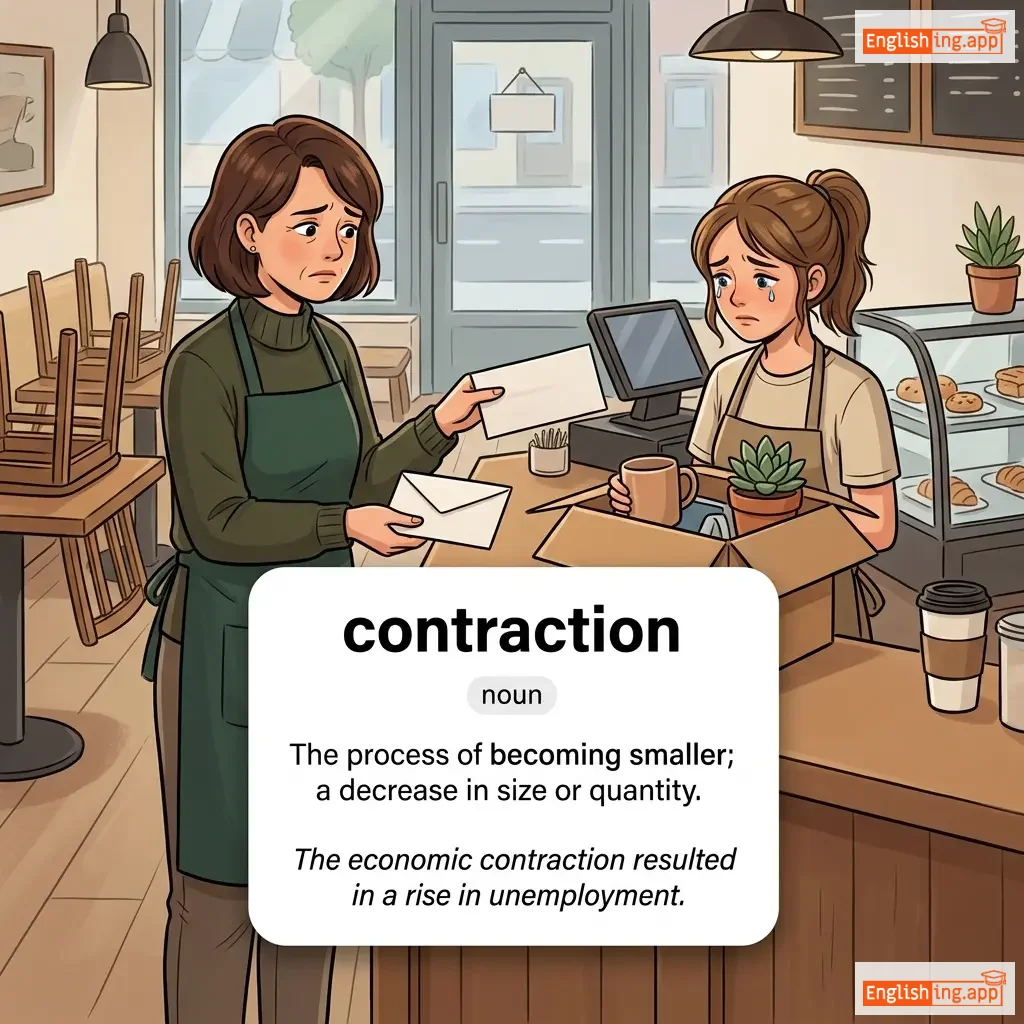
contraction definition card — visual illustration of the meaning
noun
kənˈtrækʃən
сужение (suzhenie)

The process of becoming smaller; a decrease in size or quantity.

"The economic contraction resulted in a rise in unemployment."

"Экономическое сужение привело к росту безработицы." (Ekonomicheskoe suzhenie privedlo k rostu bezrabotitsy.)
noun
/ˈkɒntræktər/
подрядчик (podryadchik)

a person or company that agrees to provide materials or labor to perform a service or do a job

"The contractor completed the building project on time."

"Подрядчик завершил строительный проект вовремя." (Podryadchik zavershil stroitel'nyy proyekt vovremya.)
verb
/ˌkɒn.trəˈdɪkt/
противоречить (protivorechit)

to say or show the opposite of something that has been said or believed

"His actions contradict his words."

"Его действия противоречат его словам." (Ego deystviya protivorechat ego slovam.)
noun
/ˌkɒntrəˈdɪkʃən/
противоречие, несоответствие (protivorechie, nesootvetstvie)

a statement or situation that is opposed to another, inconsistency

"Her actions are in clear contradiction to her words."
"Ее действия явно противоречат ее словам." (Eyo deystviya yavno protivorechat yeye slovam.)
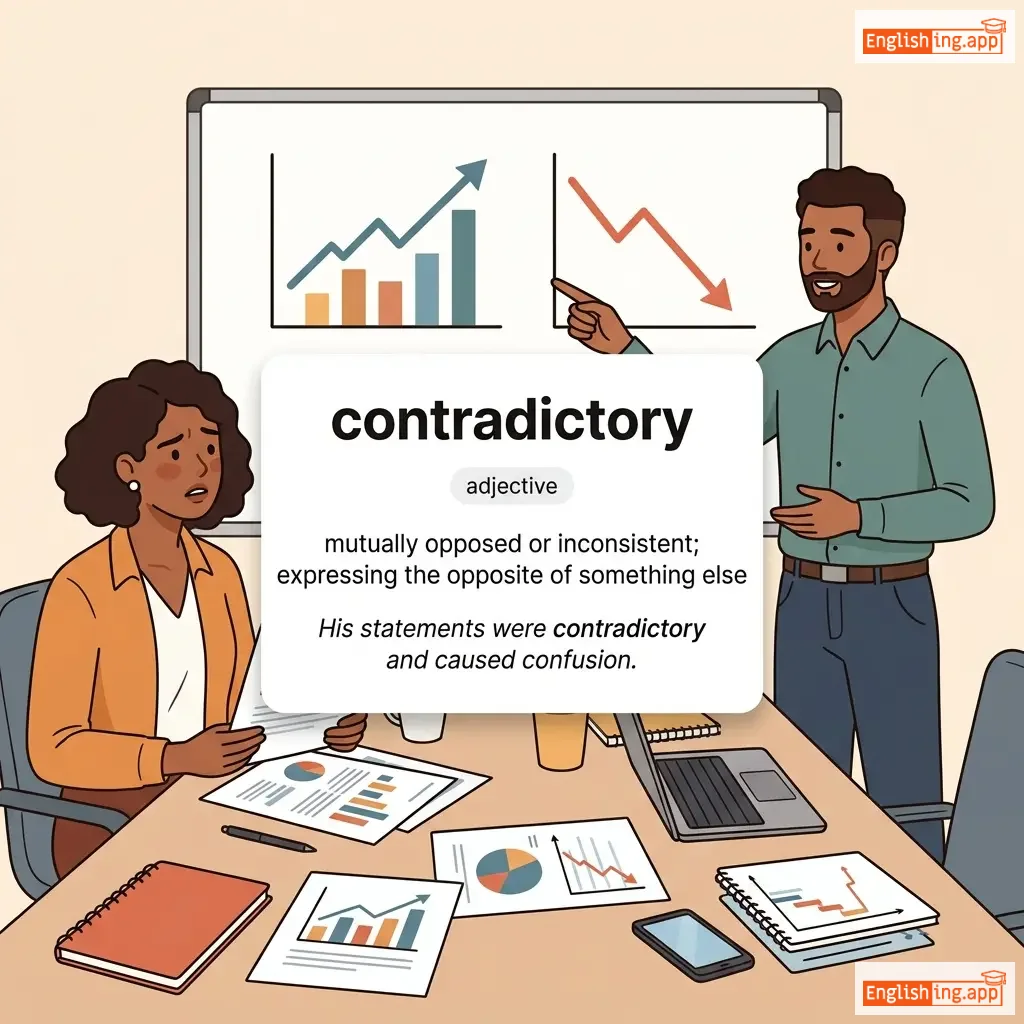
contradictory definition card — visual illustration of the meaning
adjective
/ˌkɒntrəˈdɪktəri/
противоречивый (protivorechivyy)

mutually opposed or inconsistent; expressing the opposite of something else

"His statements were contradictory and caused confusion."

"Его заявления были противоречивыми и вызвали путаницу." (Ego zayavleniya byli protivorechivymi i vyzvali putanitsu.)
noun
/ˌkɒntrəpəˈzɪʃən/
контрапозиция (kontrapoziya)

the act of placing two things in opposition for contrast or comparison

"The contraposition of the two theories highlighted their differences."

"Контрапозиция двух теорий подчеркнула их различия." (Kontrapozitsiya dvukh teoyriy podcherknula ikh razlichiya.)
noun
/ˈkɒntrəriz/
противоположные вещи (protivopolozhnye veshchi)

things that are completely different or opposite to each other

"Freedom and slavery are contraries in every sense."

"Свобода и рабство противоположны во всех отношениях." (Svoboda i rabstvo protivopolozhny vo vsekh otnosheniyakh.)
adjective
/ˈkɒn.trəri/
противоположный (protivopolozhny)

opposite in nature, direction, or meaning

"Her views are contrary to mine."
"Её взгляды противоположны моим." (Yeyo vzglyady protivopolozhny moim.)
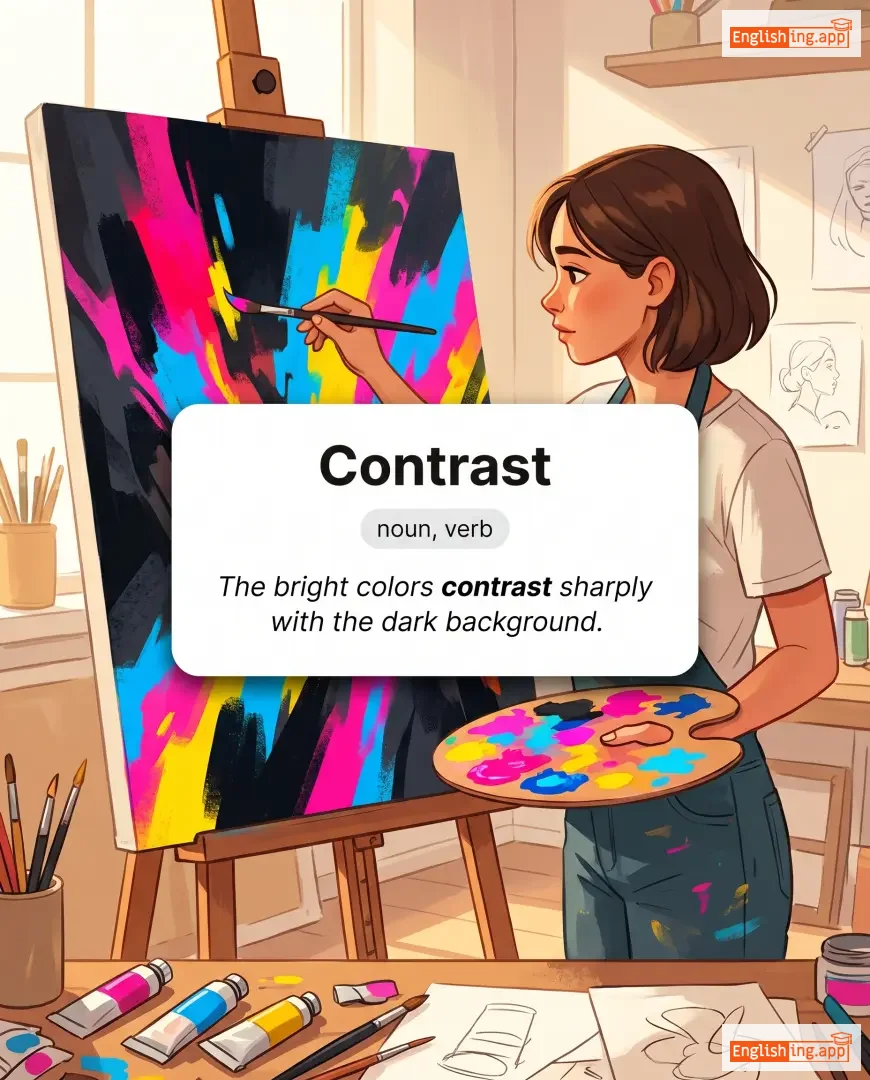
Contrast definition card — visual illustration of the meaning
noun, verb
/ˈkɒn.trɑːst/ (noun), /kənˈtræst/ (verb)
счастье (schastye)

A difference between two or more things; to compare two things to show how they are different.

"The bright colors contrast sharply with the dark background."

"Она не могла скрыть своего счастья, когда получила награду." (Ona ne mogla skryt' svoego schast'ya, kogda poluchila nagradu.)
verb
/ˌkɒntrəˈviːn/
нарушать (narushat)

to go against or act in opposition to a law, rule, or agreement

"He contravened the safety regulations and was fined."

"Он нарушил правила безопасности и был оштрафован." (On narushil pravila bezopasnosti i byl oshtrafovan.)
noun
/ˈkɒntrətɑː̃/
неожиданный конфликт (neozhidannyi konflikt)

an unexpected and unfortunate event or disagreement; a minor dispute

"There was a small contretemps between the two colleagues during the meeting."
"Между двумя коллегами возник небольшой неожиданный конфликт во время встречи." (Mezhdu dvumya kollegami voznik nebol'shoy neozhidannyy konflikt vo vremya vstrechi.)
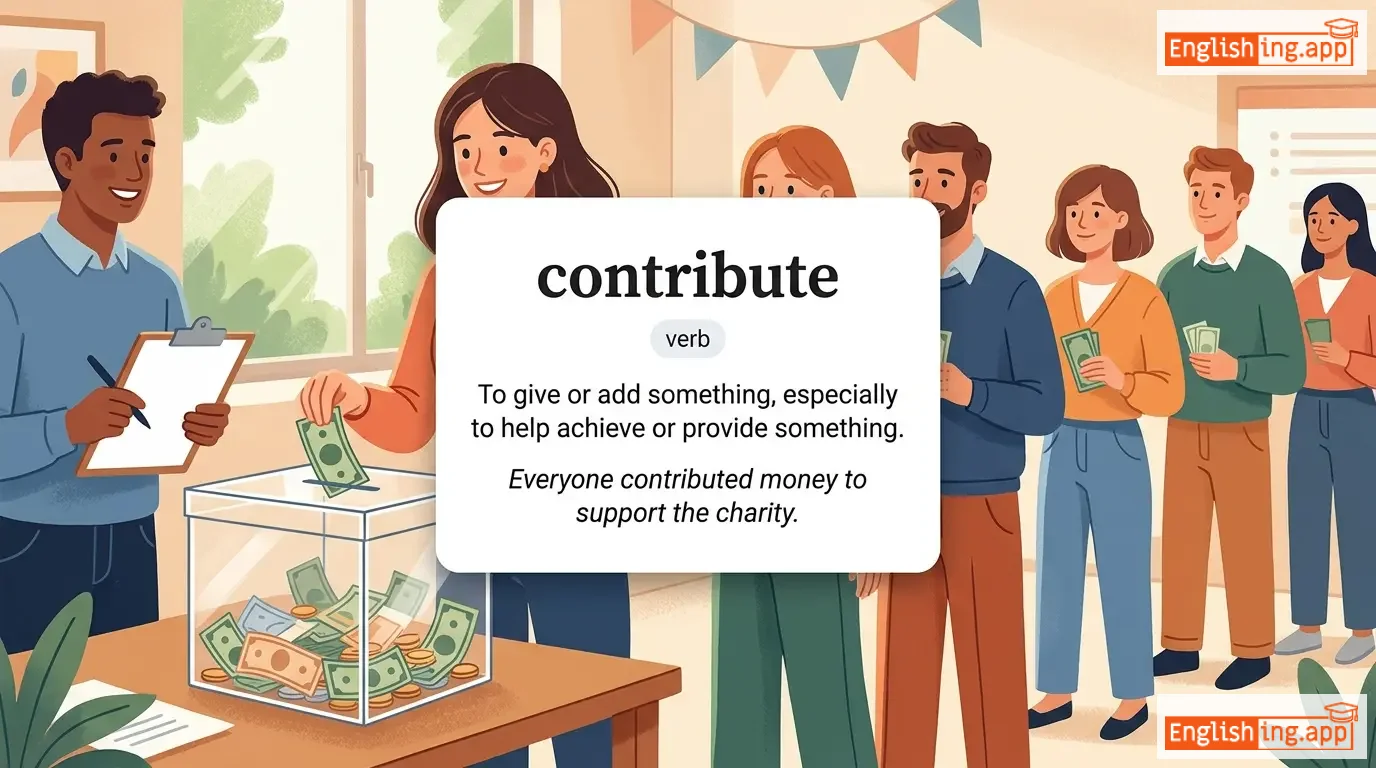
contribute definition card — visual illustration of the meaning
verb
/kənˈtrɪbjuːt/
внести вклад (vnyesti vklad)

To give or add something, especially to help achieve or provide something.

"Everyone contributed money to support the charity."
"Все внесли деньги, чтобы поддержать благотворительность." (Vse vnesli den'gi, chtoby podderzhat' blagotvoritel'nost'.)
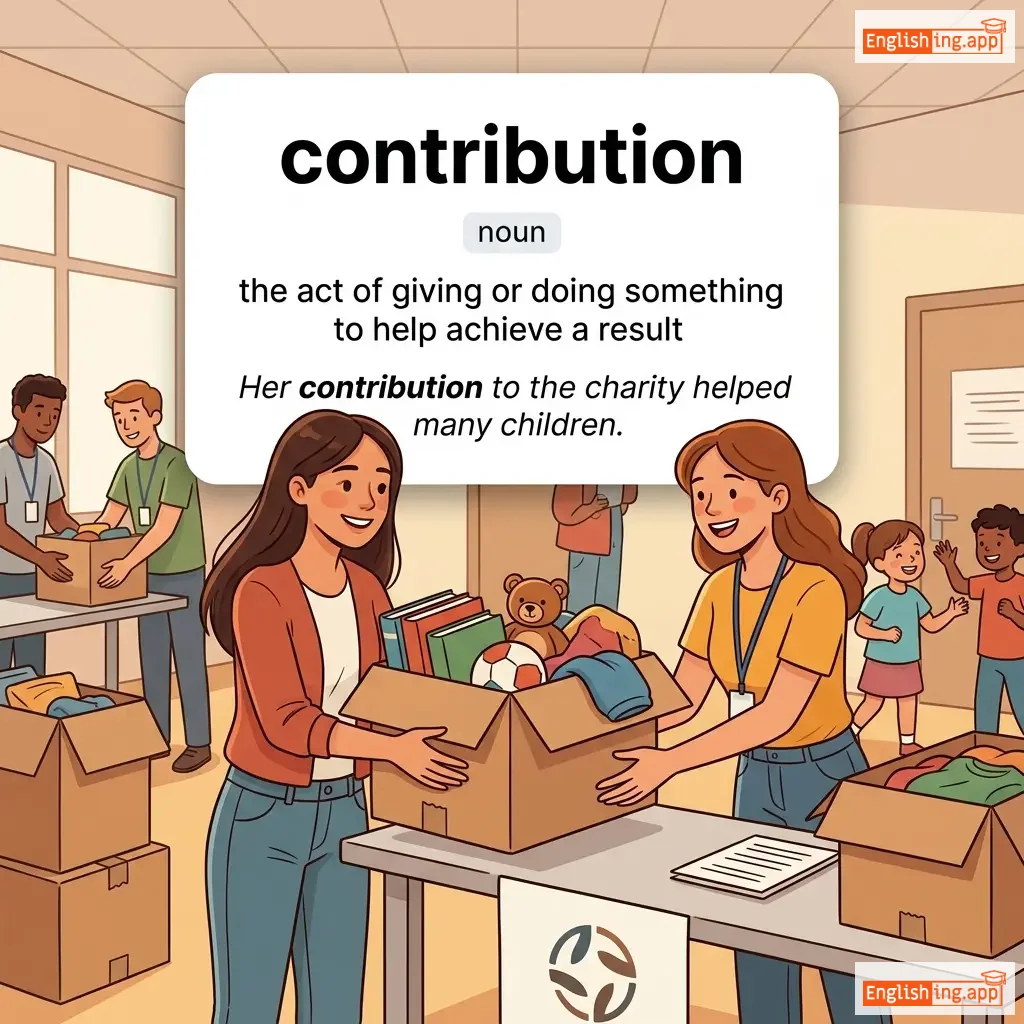
contribution definition card — visual illustration of the meaning
noun
/ˌkɒn.trɪˈbjuː.ʃən/
вклад (vklad)

the act of giving or doing something to help achieve a result

"Her contribution to the charity helped many children."

"Ее вклад в благотворительность помог многим детям." (Eyo vklad v blagotvoritel'nost' pomog mnogim detyam.)
noun
/ˈkɒn.trɪ.bjʊ.tər/
вкладчик (vkladchik)

a person who gives something to help achieve a result

"He was a regular contributor to the local newspaper."

"Он был регулярным вкладчиком в местную газету." (On byl regulyarnym vkladchikom v mestnuyu gazetu.)
contrite definition card — visual illustration of the meaning
adjective
/kənˈtraɪt/
раскаивающийся (raskayivayushchiesya)

feeling or showing remorse or guilt

"She was contrite after realizing her mistake."

"Она была раскаявшейся, когда осознала свою ошибку." (Ona byla raskayavshiesya, kogda osoznala svoyu oshibku.)
noun
/kənˈtrɪʃ.ən/
раскаяние (raskayanie)

the state of feeling remorseful and repentant

"His contrition was evident after the apology."

"Его раскаяние было очевидно после извинений." (Ego raskayanie bylo ochevidno posle izvineniy.)
noun
/kənˈtraɪ.vəns/
изобретение или план (izobretenie ili plan)

a device or plan that is cleverly or artificially created

"The clock was an intricate contrivance of gears and springs."

"Часы были сложным изобретением из шестерёнок и пружин." (Chasy byli slozhnym izobreteniem iz shesteryonok i pruzhin.)
verb
/kənˈtraɪv/
выдумывать (vydumyvat)

to plan or devise cleverly or skillfully

"She contrived a clever plan to surprise her friends."

"Она придумала умный план, чтобы удивить своих друзей." (Ona pridumala umnyy plan, chtoby udivit' svoikh druzey.)
noun
/ˈklævɪkəl/
ключица (klyuchitsa)

the collarbone, a long bone that serves as a strut between the shoulder blade and the sternum

"He fractured his clavicle in the accident."

"Он сломал ключицу в аварии." (On slomal klyuchitsu v avarii.)
noun
/klɔː/
коготь (kogot)

sharp curved nail on the foot of an animal or bird

"The cat extended its sharp claws to climb the tree."

"Кошка вытянула свои острые когти, чтобы взобраться на дерево." (Koshka vityanula svoi ostryye kogti, chtoby vzobrat'sya na derevo.)