Словари

Словарь английского языка | Значения слов, определения и примеры

adjective
/kənˈfɔːrməbl/
соответствующий (sootvetstvuyushchiy)

Capable of being adapted or consistent with something; compliant.

"His actions were conformable to the rules of the institution."

"Его действия соответствовали правилам учреждения." (yego deystviya sootvetstvovali pravilam uchrezhdeniya.)
noun
/kənˈfɔːrməns/
соответствие (sootvetstvie)

The act of conforming to a rule, standard, or law.

"The product was tested for conformance with safety standards."

"Продукт был протестирован на соответствие стандартам безопасности." (Produkt byl protestirovan na sootvetstviye standartam bezopasnosti.)
noun
/ˌkɑːnfɔːrˈmeɪʃən/
конформация (konformaciya)

The shape, structure, or arrangement of something.

"The scientist studied the molecular conformation of the protein."

"Ученый изучал молекулярную конфигурацию белка." (Ucheny izuchal molekulyarnuyu konformaciyu belka.)
noun
/kənˈfɔːrmɪst/
конформист (konformist)

A person who uncritically conforms to established practices or standards.

"She was labeled a conformist for always following the crowd."

"Ее называли конформисткой, потому что она всегда следовала за толпой." (Yeyo nazyvali konformistkoy, potomu chto ona vsegda sleduyala za tolpoy.)
conformity definition card — visual illustration of the meaning
noun
/kənˈfɔːrməti/
соответствие (sootvetstvie)

Compliance with standards, rules, or laws; behavior in accordance with social norms.

"The students were praised for their conformity to the school regulations."

"Студенты были похвалены за свое соответствие школьным правилам." (Studenty byli pokhvaleny za svoe sootvetstvie shkol'nym pravilam.)
confound definition card — visual illustration of the meaning
verb
/kənˈfaʊnd/

to confuse or surprise someone, often by acting against their expectations

"The magician's trick seemed to confound the entire audience."

verb
/kənˈfrʌnt/
противостоять (protivostoyat)

to face someone or something directly, especially in a challenge or conflict

"She had to confront her fears before making the speech."

"Ей пришлось столкнуться с своими страхами перед тем, как выступить с речью." (Yey prishlos' stolknutsya s svoimi strakhami pered tem, kak vystupit' s rech'yu.)
noun
/ˌkɒnfrʌnˈteɪʃən/
конфронтация (konfrontatsiya)

A hostile or argumentative meeting or situation between opposing parties.

"The protest led to a confrontation with the police."

"Протест привел к конфронтации с полицией." (Protest privel k konfrontacii s policej.)
verb
/kənˈfjuːz/
смущать (smushchat)

To make someone unable to think clearly; to bewilder.

"The complex instructions confused the students."

"Сложные инструкции запутали студентов." (Slozhnye instruktsii zaputali studentov.)
adjective
/kənˈfjuːzd/
смущённый (smushchyonnyy)

unable to think clearly; uncertain or puzzled

"She felt confused by the complicated instructions."

"Она была смущена сложными инструкциями." (ona byla smushchyena slozhnymi instruktsiyami)
adjective
/kənˈfjuːzɪŋ/
запутывающий (zaputyvayushchiy)

causing someone to be unable to think clearly or understand; difficult to comprehend

"The instructions were confusing and hard to follow."

"Инструкции были запутывающими и трудными для понимания." (Instruktsii byli zaputyvayushchimi i trudnymi dlya ponimaniya)
noun
/kənˈfjuːʒən/
замешательство (zamechatel'stvo)

a state of being bewildered or unclear in one’s mind

"The sudden change in schedule caused a lot of confusion."

"Внезапное изменение расписания вызвало много замешательства." (Vnezapnoe izmenenie raspisaniya vyzvalo mnogo zamechatel'stva.)
verb
/kənˈdʒiːl/
застывать (zastyvat)

to become thick or solid, especially from cooling

"The soup began to congeal after being left on the table."
"Суп начал застывать, когда его оставили на столе." (Sup nachal zastyvat, kogda ego ostavili na stole.)
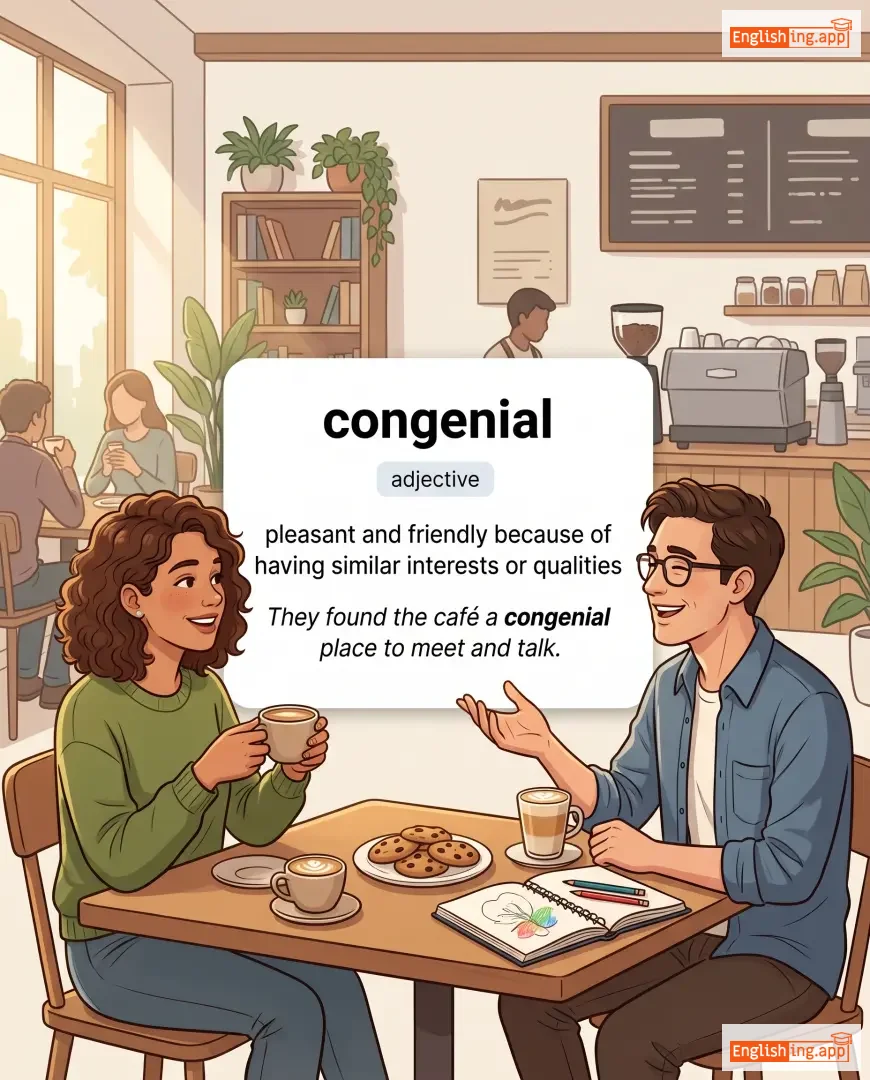
congenial definition card — visual illustration of the meaning
adjective
/kənˈdʒiːniəl/
приветливый (privetlivyy)

pleasant and friendly because of having similar interests or qualities

"They found the café a congenial place to meet and talk."

"Они нашли кафе приятным местом для встреч и бесед." (Oni nashli kafe priyatnym mestom dlya vstrech i besed.)
congeniality definition card — visual illustration of the meaning
noun
/kənˌdʒiː.niˈæl.ə.t̬i/
дружелюбие (druzhelyubie)

The quality of being pleasant, friendly, and easy to talk to.

"His congeniality makes him popular among friends."

"Его дружелюбие делает его популярным среди друзей." (Yego druzhelyubie delayet ego populyarnym sredi druzey.)
adjective
/kənˈdʒenɪtl/
врожденный (vrozhdennyy)

existing from birth, usually describing a disease or condition

"The child was born with a congenital heart defect."

"Ребенок родился с врожденным пороком сердца." (Rebenok rodilsya s vrozhdennym porokom serdtsa.)
verb
/kənˈdʒɛst/
перегружать (peregruzhat)

To block or overcrowd a space, making movement or flow difficult.

"Heavy traffic can congest the city streets during rush hour."

"Плотное движение может перегрузить улицы города в часы пик." (Plotnoe dvizheneie mozhet peregruzit' ulitsy goroda v chasy pik.)
adjective
/kənˈdʒɛstɪd/
перегруженный (peregruzhennyi)

Blocked up with too much traffic or crowding.

"The road was congested during rush hour."

"Дорога была перегружена в час пик." (Doroga byla peregruzhena v chas pik.)
congestion definition card — visual illustration of the meaning
noun
/kənˈdʒes.tʃən/
пробки или избыточная толпа (probki ili izbytochnaya tolpa)

Traffic jam or overcrowded condition in roads or areas where there is excessive presence of vehicles or people.

"Urban congestion leads to longer travel times."
"Городская загруженность приводит к более длительному времени в пути." (Gorodskaya zagruzhennost privodit k bolee dlitel'nomu vremeni v puti.)
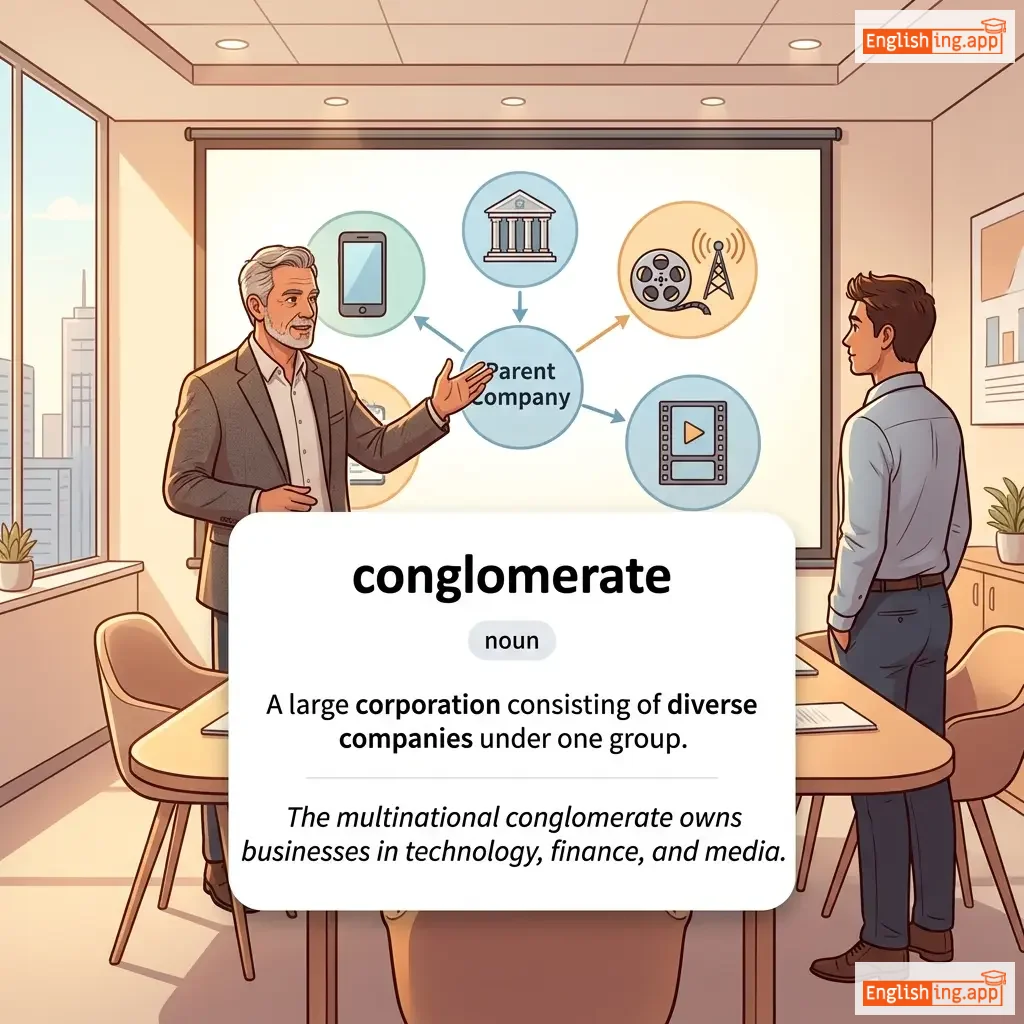
conglomerate definition card — visual illustration of the meaning
noun
/kənˈɡlɒmərət/
крупная корпорация, состоящая из разных компаний (krupnaya korporatsiya, sostoyashchaya iz raznykh kompanii)

A large corporation consisting of diverse companies under one group.

"The multinational conglomerate owns businesses in technology, finance, and media."

"Многонациональный конгломерат владеет бизнесом в области технологий, финансов и медиа." (Mnogonatsional'nyy konglomerat vladeet biznesom v oblasti tekhnologiy, finansov i media.)
noun
/kənˌɡlɒməˈreɪʃən/
конгломерат (konglomeraht)

A collection or mixture of different things grouped together.

"The market is a conglomeration of small shops and food stalls."

"Рынок — это конгломерат маленьких магазинов и продовольственных лавок." (Rynok — eto konglomeraht malenkikh magazinov i prodovol'stvennykh lavok.)
verb
/kənˈɡrætʃʊleɪt/
поздравить (pozdravit')

to praise someone for an achievement or for a special occasion

"I want to congratulate you on your promotion."

"Я хочу поздравить тебя с повышением." (Ya khochu pozdravit' tebya s povysheniem.)
noun
/kənˌɡrætʃəˈleɪʃən/
поздравление (pozdravlenie)

an expression of praise or joy for someone’s achievement or good fortune

"She sent a congratulation to her friend on winning the award."

"Она отправила поздравление подруге с победой в конкурсе." (ona otpravila pozdravlenie podruge s pobedoi v konkurse)
noun
/kənˌɡrætʃ.əˈleɪ.ʃənz/
поздравления (pozdravleniya)

words expressing praise for an achievement or good wishes on a special occasion

"Congratulations on your promotion! You really deserved this success."
"Поздравляю с повышением! Ты действительно заслужил этот успех." (Pozdravlyayu s povysheniem! Ty deystvitel'no zasluzhil etot uspek.)
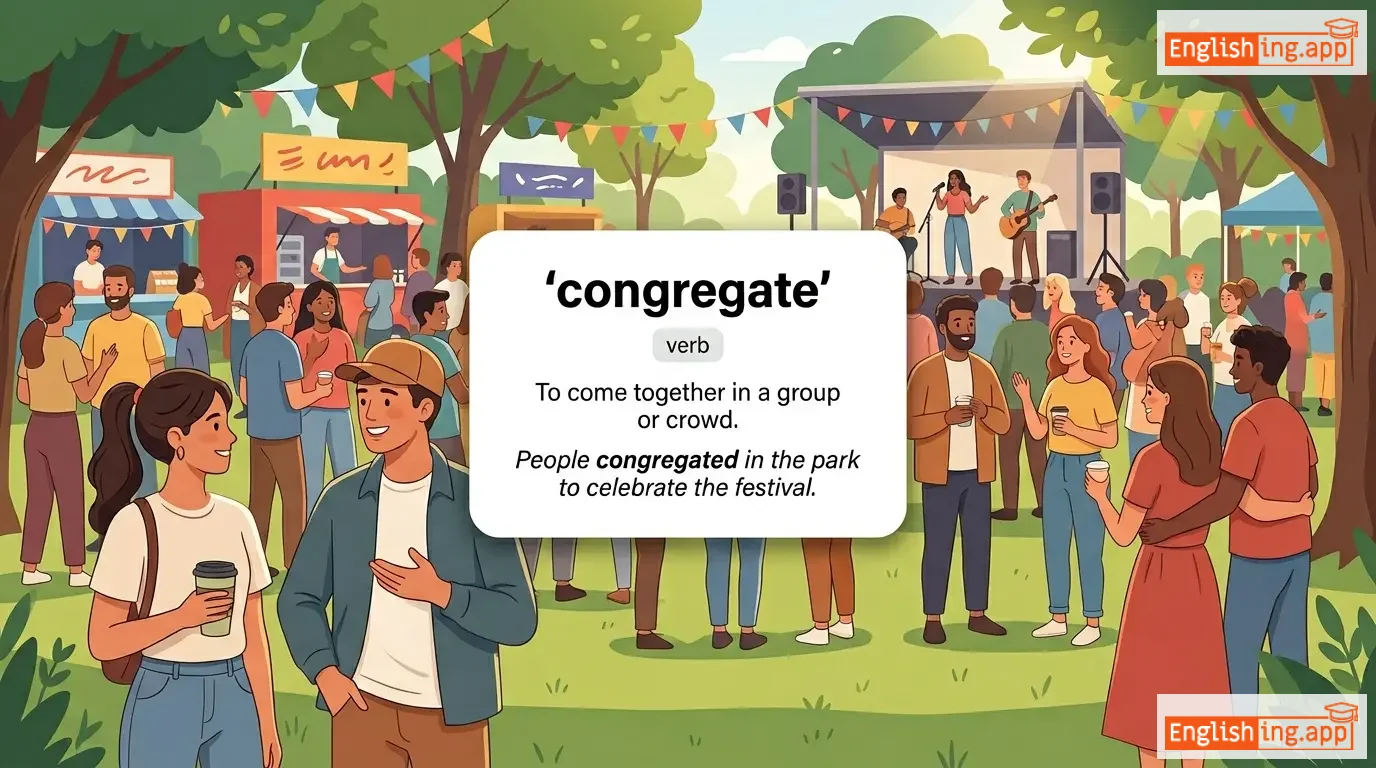
congregate definition card — visual illustration of the meaning
verb
/ˈkɒŋɡrɪˌɡeɪt/
собираться (sobirat'sya)

To come together in a group or crowd.

"People congregated in the park to celebrate the festival."

"Люди собрались в парке, чтобы отпраздновать фестиваль." (Lyudi sobralis' v parke, chtoby otprazdnovat' festival'.)
noun
/ˌkɒŋɡrɪˈɡeɪʃən/
община (obshchina)

a group of people assembled for religious worship or a common purpose

"The congregation gathered to hear the sermon."

"Община собралась, чтобы послушать проповедь." (Obshchina sobralas, chtoby poslushat' propoved'.)
noun
/ˈkɒŋɡrɛs/
конгресс (kongress)

a formal meeting or assembly, especially of representatives for discussion

"The international congress on climate change will be held next year."

"Международный конгресс по изменению климата состоится в следующем году." (Mezhdunarodnyy kongress po izmeneniyu klimata sostoyitsya v sleduyushchem godu.)
adjective
/kənˈɡrɛʃənl/
конгрессуальный (kongressual'nyy)

relating to a congress, especially the US Congress

"The bill received strong congressional support."
"Законопроект получил сильную поддержку от Конгресса." (Zakonoproekt poluchil sil'nuyu podderzhku ot Kongressa.)
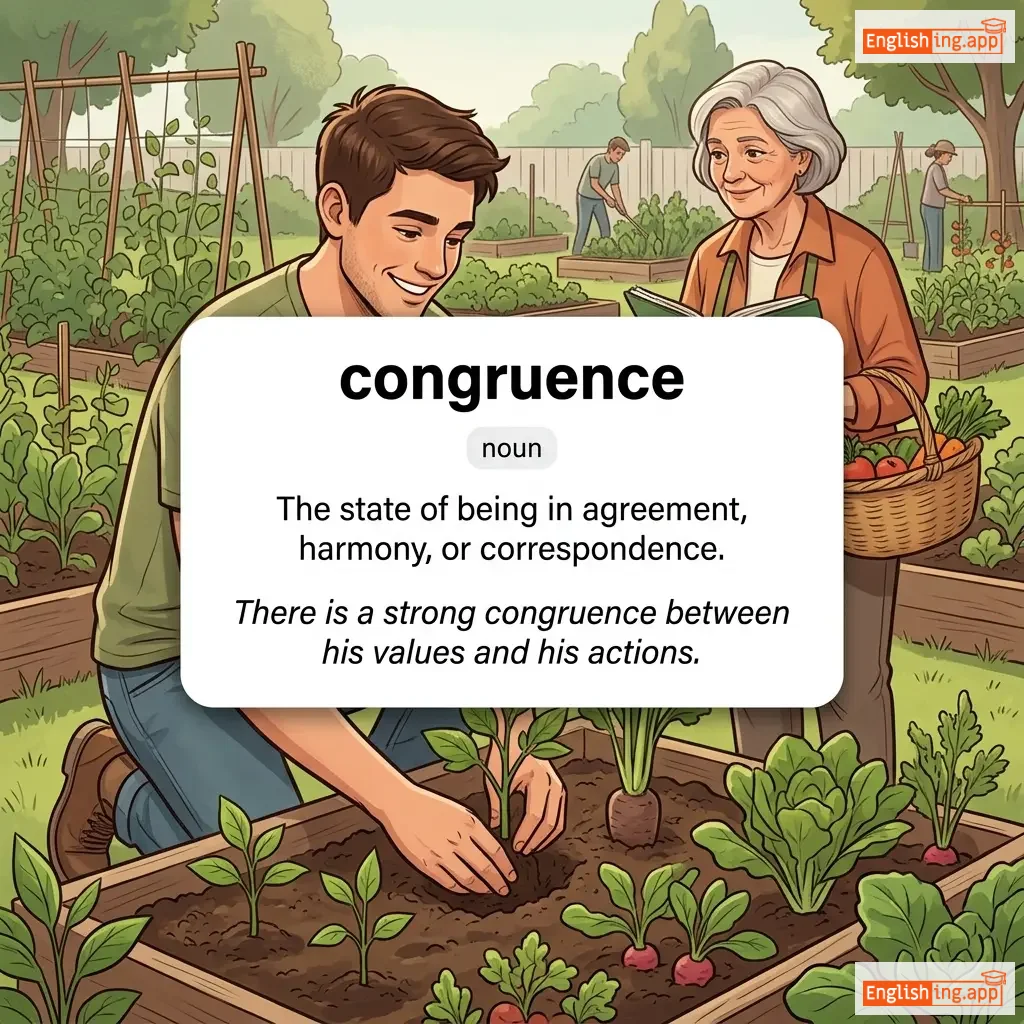
congruence definition card — visual illustration of the meaning
noun
/ˈkɒŋɡruəns/
конгруэнция (kongruentsiya)

The state of being in agreement, harmony, or correspondence.

"There is a strong congruence between his values and his actions."

"Есть сильная конгруэнтность между его ценностями и его действиями." (Yest' sil'naya kongruyentnost' mezhdu ego tsennostyami i ego deystviyami.)
adjective
/ˈkɒŋɡruənt/
конгруэнтный (kongruentnyy)

in agreement or harmony; having the same shape and size in geometry

"Their values are congruent with the goals of the organization."

"Их ценности совпадают с целями организации." (Ih tsennosti sovpadayut s tseliami organizatsii.)
noun
/ˈkɒnɪfər/
Хвойное дерево (Khvoynoye derevo)

a type of tree that bears cones and evergreen needle-like leaves, such as pine or fir

"The forest is dominated by conifers like pine and spruce."
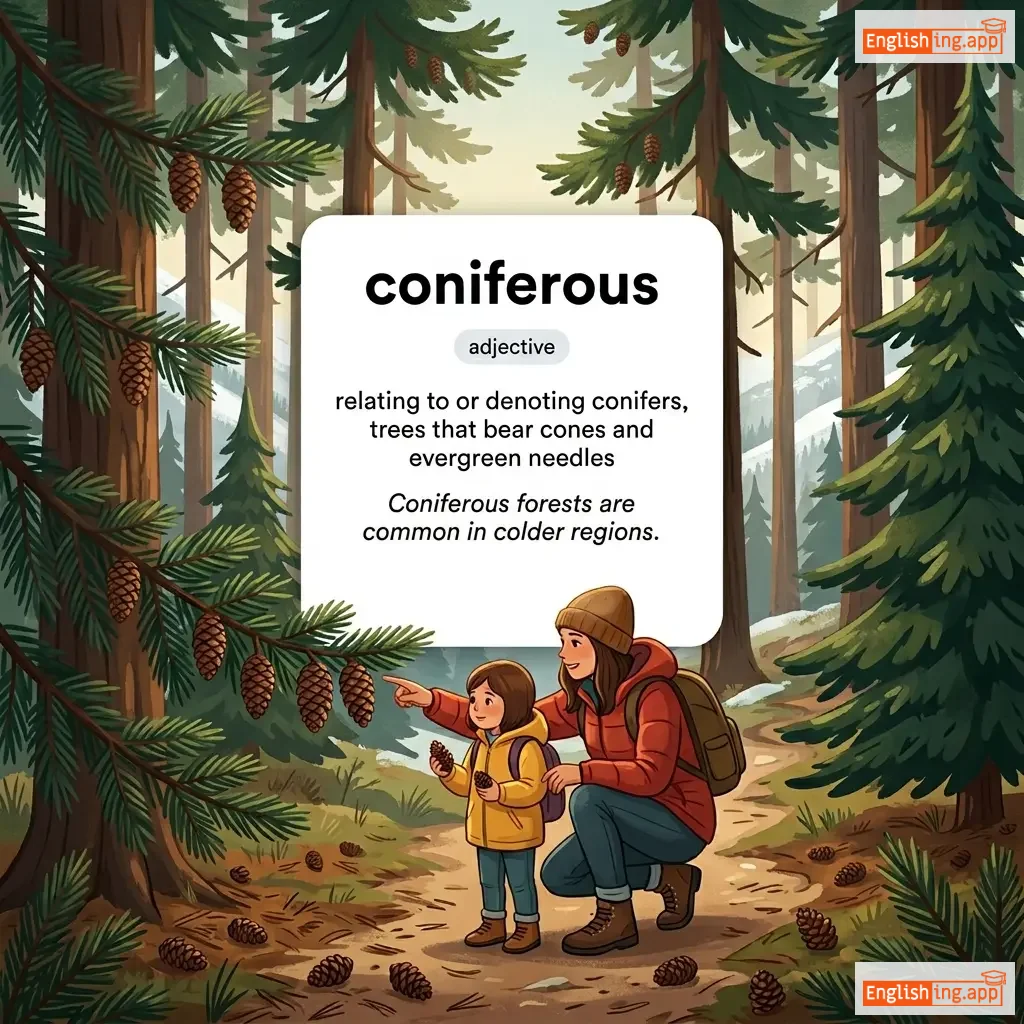
"Лес в основном состоит из хвойных деревьев, таких как сосна и ель." (Les v osnovnom sostoit iz khvoynykh derev'yev, takikh kak sosna i el'.)
coniferous definition card — visual illustration of the meaning
adjective
/kəˈnɪfərəs/
хвойные деревья (khvoynye derev'ya)

relating to or denoting conifers, trees that bear cones and evergreen needles

"Coniferous forests are common in colder regions."

"Хвойные леса обычны в холодных регионах." (Khvoynye lesa obychny v kholodnykh regionakh.)
adjective
/kənˈdʒɛktʃərəl/
предположительный (predpolozhitelnyy)

based on guesswork or incomplete evidence rather than certain knowledge

"His explanation was purely conjectural and lacked proof."

"Его объяснение было чисто предположительным и не имело доказательств." (Ego obyasnenie bylo chisto predpolozhitel'nym i ne imelo dokazatel'stv.)
conjecture definition card — visual illustration of the meaning
noun/verb
/kənˈdʒɛktʃər/
предположение (predpolozhenie)

an opinion or conclusion formed on the basis of incomplete information; to form an opinion without sufficient evidence

"The critics conjectured that the book was inspired by real events."

"критики предположили, что книга была вдохновлена реальными событиями." (kritiki predpolozhili, chto kniga byla vdokhnovlena real'nymi sobytiyami.)
verb
/kənˈdʒɔɪn/
объединять (ob'yedin'jat')

to join together or unite; to combine

"The two rivers conjoin just before reaching the sea."

"Два реки соединяются прямо перед тем, как достичь моря." (Dva reki soedinyayutsya pryamo pered tem, kak dostich' morya.)
conjugal definition card — visual illustration of the meaning
adjective
/ˈkɒndʒʊɡəl/
супружеский (supruzheskiy)

relating to marriage or the relationship between husband and wife

"They enjoyed a long life of conjugal happiness."

"Они наслаждались долгой супружеской жизнью счастья." (Oni naslazhdalis' dolgoy supruzheskoy zhiznyu schast'ya.)
verb
/ˈkɒndʒʊɡeɪt/
спрягать (spryagat)

to list the different forms of a verb according to tense, person, and number

"Students are asked to conjugate the verb 'to be'."

"Студентам предлагают конъюгировать глагол 'быть'." (Studentam predlagayut kon'yugirovat' glagol 'byt'.)
noun
/ˌkɒndʒʊˈɡeɪʃən/
спряжение (spryazhenie)

the variation of the form of a verb to indicate tense, person, and number

"French verbs have complex conjugations."

"Во французском языке существуют сложные формы глаголов." (Vo frantsuzskom yazyke sushchestvuyut slozhnye formy glagolov.)
noun
/kənˈdʒʌŋkʃən/
союз (soyoz)

a word used to connect clauses or sentences, or to coordinate words

"The words 'and' and 'but' are common conjunctions."

"Слова 'и' и 'но' — это общие союзы." (Slova 'i' i 'no' — eto obshchie soyusy.)
verb
/ˈkʌn.dʒər/
вызывать (vyez-zy-vat)

to summon something as if by magic; to imagine vividly

"The magician conjured a rabbit out of the hat."

"Фокусник призвал кролика из шляпы." (Fokus-nik priz-val kro-li-ka iz shlyap-y.)
connect definition card — visual illustration of the meaning
verb
/kəˈnɛkt/
соединять (soedinyat)

to join or link two or more things together

"The new bridge will connect the two cities."
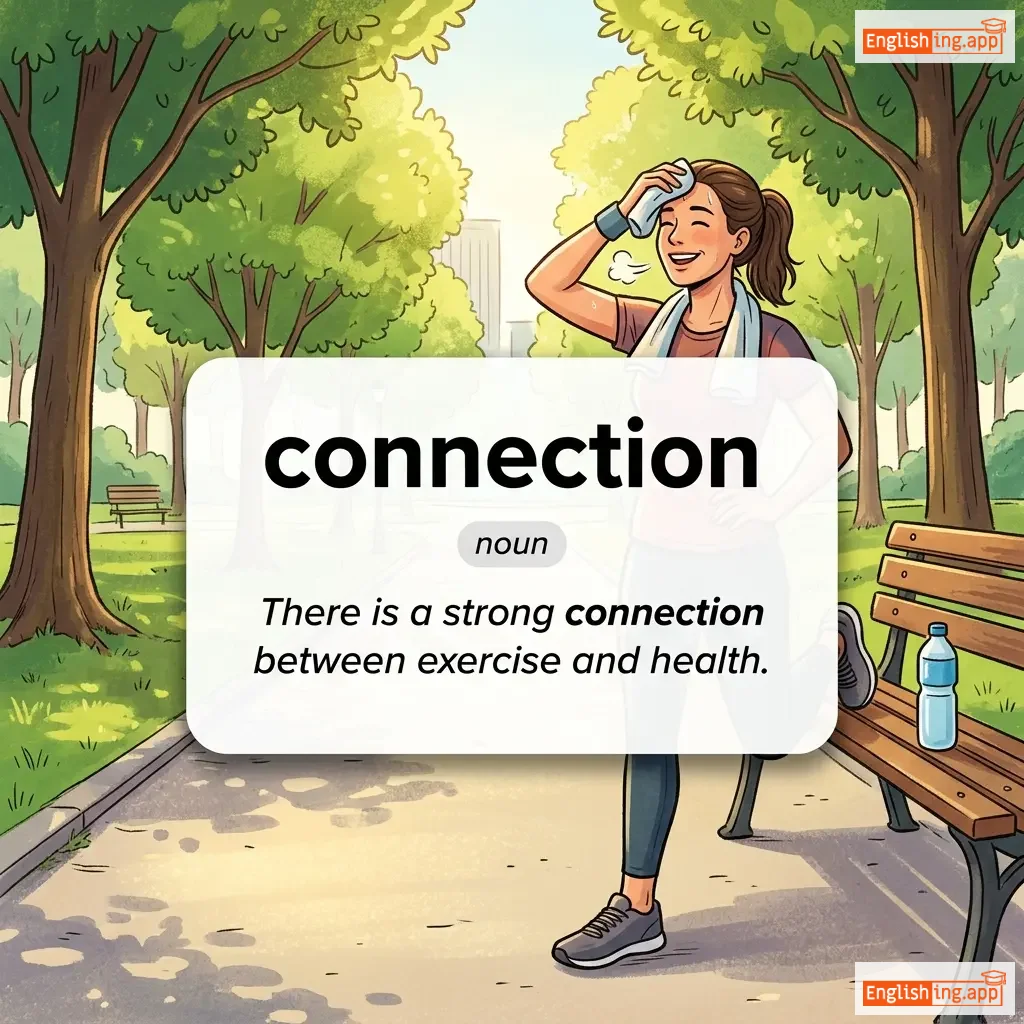
"Новый мост соединит два города." (Novyi most soedinit dva goroda.)
connection definition card — visual illustration of the meaning
noun
/kəˈnɛkʃən/
связь (svyaz)

a relationship in which a person, thing, or idea is linked or associated with something else

"There is a strong connection between exercise and health."
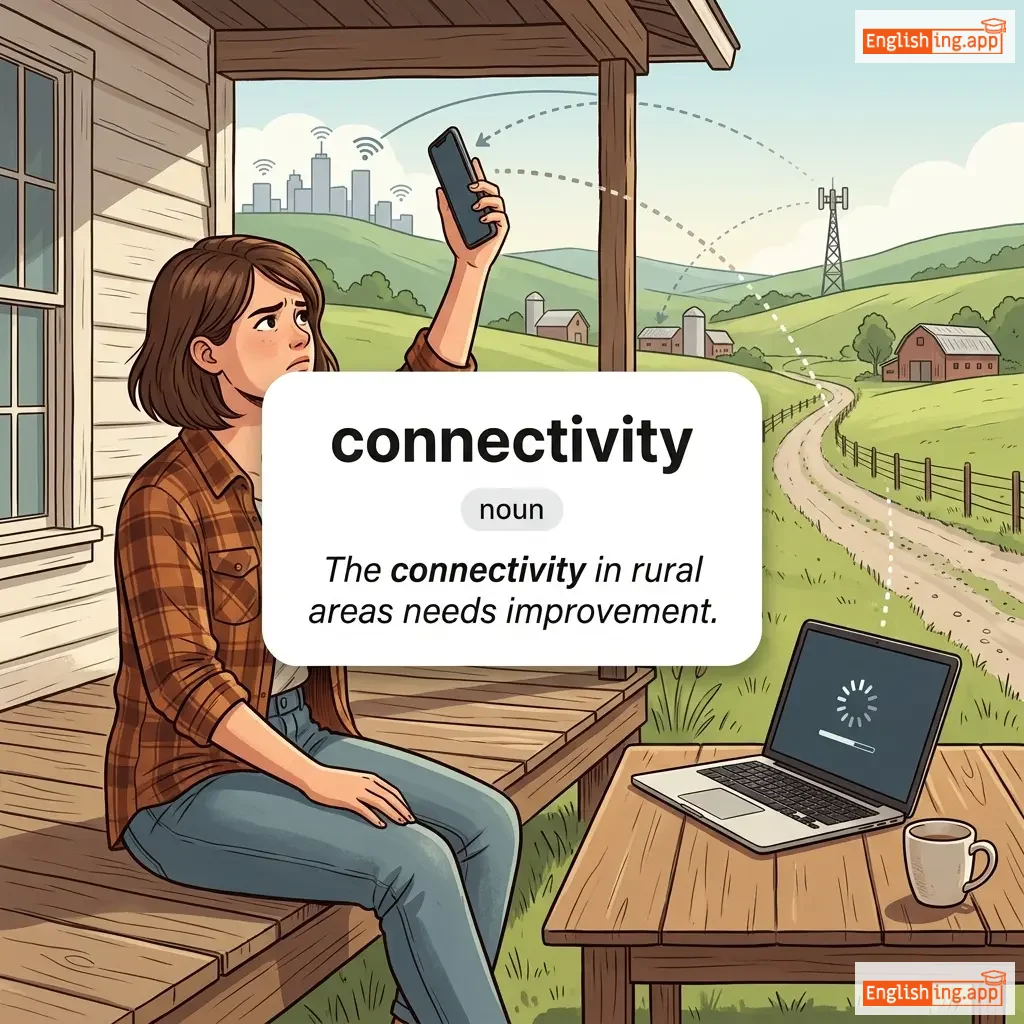
"Существует сильная связь между физическими упражнениями и здоровьем." (Sushchestvuyet sil'naya svyaz' mezhdu fizicheskimi uprazhneniyami i zdorov'yem.)
connectivity definition card — visual illustration of the meaning
noun
ˌkɒn.ekˈtɪv.ɪ.ti
способность подключения, сеть, взаимосвязь (sposobnost' podklyucheniya, set', vzaimosvyaz')

The state of being connected or interconnected; capacity for the interconnection of platforms, systems, and applications.

"The connectivity in rural areas needs improvement."

"Коннективность в сельских районах нуждается в улучшении." (Konnektivnost' v sel'skikh rayonakh nuzhdaetsya v uluchshenii.)
noun
/kəˈnaɪ.vəns/
соглашение (soglashenie)

the act of secretly allowing or being involved in wrongdoing

"The theft happened with the connivance of the security guard."

"Кража произошла с согласия охранника." (Krazha proizoshla s soglasiya okhrannika.)
verb
/kəˈnaɪv/
тайно участвовать в преступлении (tajno uchastvovat v prestuplenii)

to secretly allow or be involved in a wrongdoing

"The manager connived with the supplier to cheat the company."

"Менеджер конивал с поставщиком, чтобы обмануть компанию." (Menedzher konival s postavshchikom, chtoby obmanut' kompaniyu.)
adjective
/kəˈnaɪ.vɪŋ/
коварный (kovarnyy)

secretly scheming or plotting to help in wrongdoing

"He is a conniving politician who manipulates people for power."

"Он коварный политик, который манипулирует людьми ради власти." (On kovarnyy politik, kotoryy manipulirowet lyud'mi radi vlasti.)
connoisseur definition card — visual illustration of the meaning
noun
/ˌkɒn.əˈsɜːr/
знаток (znatok)

an expert judge in matters of taste, especially in food, art, or wine

"She is a true connoisseur of fine art."

"Она настоящий знаток изобразительного искусства." (Ona nastoyashchiy znatok izobrazitel'nogo iskusstva.)
connotation definition card — visual illustration of the meaning
noun
/ˌkɒnəˈteɪʃən/
коннотация (konnotatsiya)

An idea or feeling that a word invokes in addition to its literal meaning.

"The word 'home' has a positive connotation of warmth and family."

"Слово 'дом' имеет положительную коннотацию тепла и семьи." (Slovo 'dom' imeyet polozhitel'nuyu konnotatsiyu tepla i sem'i.)
verb
/kəˈnoʊt/
коннотировать (konnotirovat)

To suggest or imply an additional meaning beyond the literal one.

"The word 'youthful' connotes energy and vitality."

"Слово 'молодёжный' коннотирует энергию и жизненную силу." (Slovo 'molodyozhnyy' konnotiruet energiyu i zhiznennuyu silu.)
adjective
/kəˈnjuːbiəl/
супружеский (supruzheskiy)

Relating to marriage or the relationship of a married couple.

"They celebrated their connubial bliss with a honeymoon trip."

"Они отпраздновали своё супружеское счастье с медовым месяцем." (Oni otprazdnovali svojo supruzheskoe schast'je s medovym mesyacem.)