词汇表

英语词汇词典 | 单词含义、定义和示例

adjective
/kənˈfɔːrməbl/
一致的 (yīzhì de)

Capable of being adapted or consistent with something; compliant.

"His actions were conformable to the rules of the institution."

"他的行为与机构的规定一致。" (tā de xíngwéi yǔ jīgòu de guīdìng yīzhì.)
noun
/kənˈfɔːrməns/
一致性 (yīzhìxìng)

The act of conforming to a rule, standard, or law.

"The product was tested for conformance with safety standards."

"该产品已按照安全标准进行了符合性测试。" (Gāi chǎnpǐn yǐ ànzhào ānquán biāozhǔn jìnxíngle fúhéxìng cèshì.)
noun
/ˌkɑːnfɔːrˈmeɪʃən/
构象 (gouxiang)

The shape, structure, or arrangement of something.

"The scientist studied the molecular conformation of the protein."

"科学家研究了蛋白质的分子构象。" (Kexuejia yanjiule danbaizhi de fenzi gouxiang.)
noun
/kənˈfɔːrmɪst/
盲从者 (mángcóng zhě)

A person who uncritically conforms to established practices or standards.

"She was labeled a conformist for always following the crowd."

"她因为总是跟随人群而被贴上了盲从者的标签。" (tā yīnwèi zǒng shì gēnsuí rénqún ér bèi tiē shàng le mángcóng zhě de biāoqiān.)
conformity definition card — visual illustration of the meaning
noun
/kənˈfɔːrməti/
一致性 (yizhi xing)

Compliance with standards, rules, or laws; behavior in accordance with social norms.

"The students were praised for their conformity to the school regulations."

"学生们因遵守学校规定而受到表扬。" (Xueshengmen yin zunshou xuexiao guiding er shoudao biaoyang.)
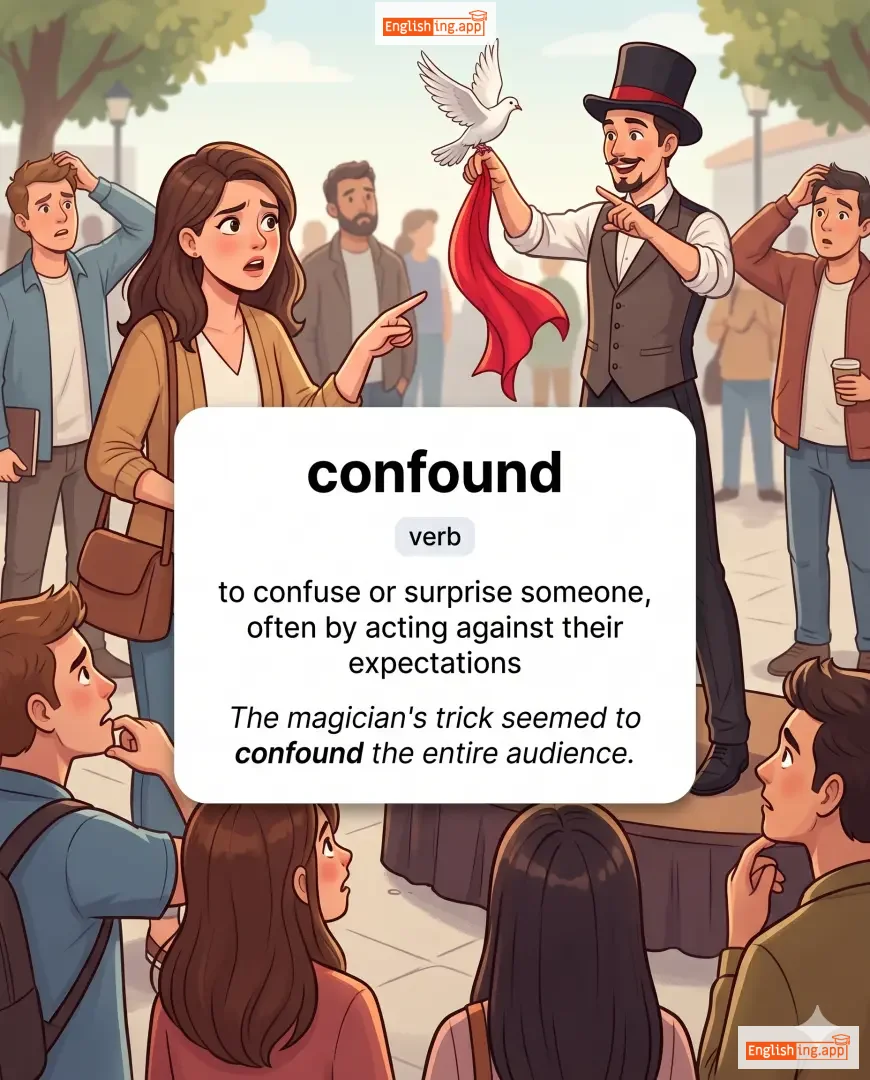
confound definition card — visual illustration of the meaning
verb
/kənˈfaʊnd/

to confuse or surprise someone, often by acting against their expectations

"The magician's trick seemed to confound the entire audience."

verb
/kənˈfrʌnt/
面对 (miànduì)

to face someone or something directly, especially in a challenge or conflict

"She had to confront her fears before making the speech."

"她在演讲前必须面对自己的恐惧。" (Tā zài yǎnjiǎng qián bìxū miànduì zìjǐ de kǒngjù.)
noun
/ˌkɒnfrʌnˈteɪʃən/
对抗 (duìkàng)

A hostile or argumentative meeting or situation between opposing parties.

"The protest led to a confrontation with the police."

"抗议活动导致了与警察的对抗。" (Kàngyì huódòng dǎozhìle yǔ jǐngchá de duìkàng.)
verb
/kənˈfjuːz/
混淆 (hùnxiáo)

To make someone unable to think clearly; to bewilder.

"The complex instructions confused the students."

"复杂的指示使学生感到困惑。" (Fùzá de zhǐshì shǐ xuéshēng gǎndào kùnhuò.)
adjective
/kənˈfjuːzd/
困惑的 (kunhuode)

unable to think clearly; uncertain or puzzled

"She felt confused by the complicated instructions."

"她被复杂的指示弄得很困惑。" (ta bei fuzade zhishi nong de hen kunhuo)
adjective
/kənˈfjuːzɪŋ/
令人困惑的 (ling ren kun huo de)

causing someone to be unable to think clearly or understand; difficult to comprehend

"The instructions were confusing and hard to follow."

"这些说明令人困惑,很难遵循。" (zhe xie shuo ming ling ren kun huo hen nan zun xun)
noun
/kənˈfjuːʒən/
困惑 (kùnhuò)

a state of being bewildered or unclear in one’s mind

"The sudden change in schedule caused a lot of confusion."

"时间表的突然变化引起了许多困惑。" (Shíjiān biǎo de túrán biànhuà yǐnqǐle xǔduō kùnhuò.)
verb
/kənˈdʒiːl/
凝固 (nínggù)

to become thick or solid, especially from cooling

"The soup began to congeal after being left on the table."
"汤开始在桌子上放置后变稠。" (Tāng kāishǐ zài zhuōzi shàng fàngzhì hòu biàn chōu.)
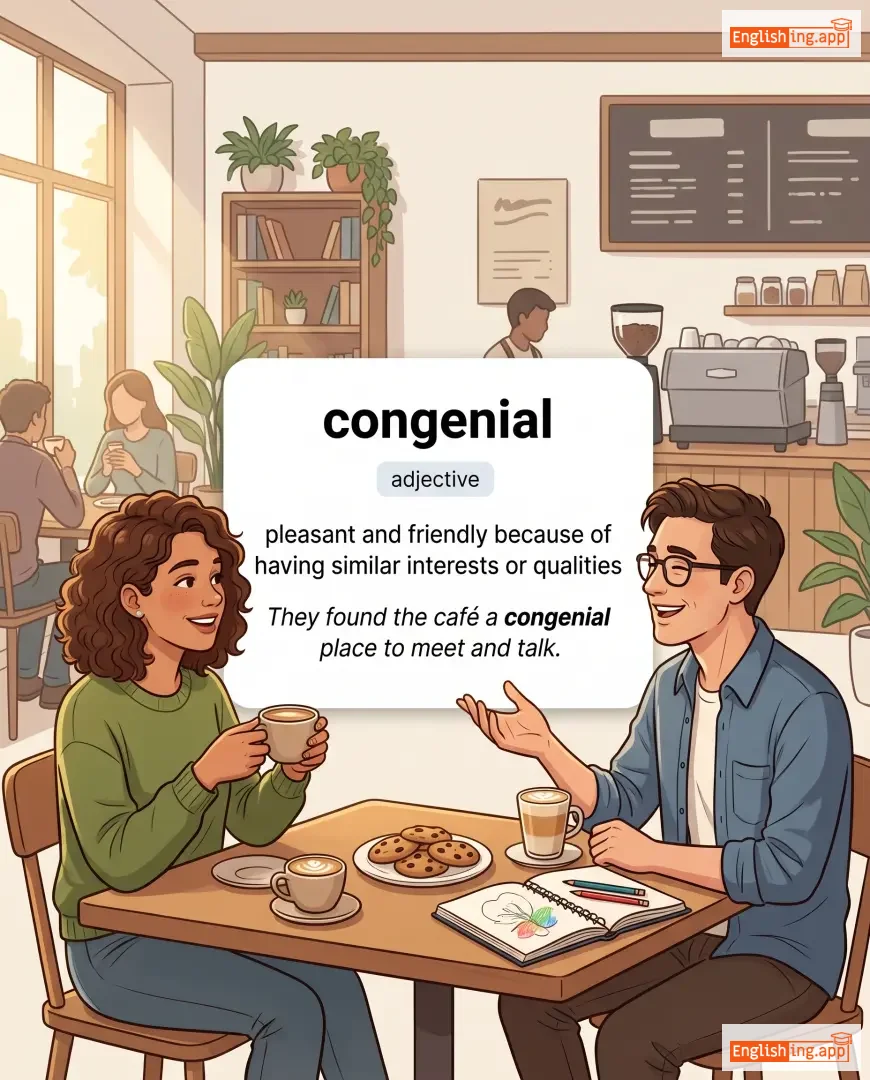
congenial definition card — visual illustration of the meaning
adjective
/kənˈdʒiːniəl/
和蔼可亲 (hé'ǎi kěqīn)

pleasant and friendly because of having similar interests or qualities

"They found the café a congenial place to meet and talk."
"他们发现那家咖啡馆是一个和蔼可亲的地方,适合见面和交谈。" (Tāmen fāxiàn nà jiā kāfēi guǎn shì yīgè hé'ǎi kěqīn de dìfāng, shìhé jiànmiàn hé jiāotán.)
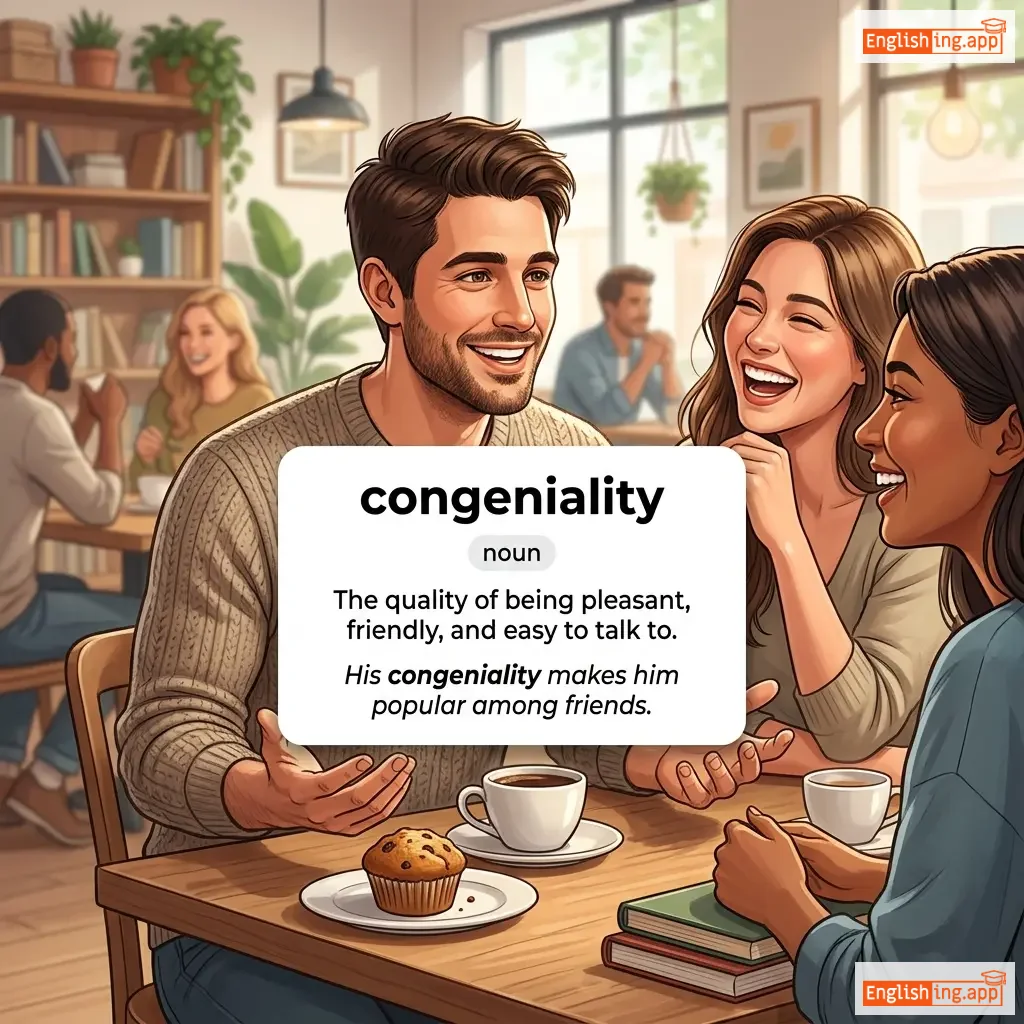
congeniality definition card — visual illustration of the meaning
noun
/kənˌdʒiː.niˈæl.ə.t̬i/
和蔼可亲 (hé'ǎi kě qīn)

The quality of being pleasant, friendly, and easy to talk to.

"His congeniality makes him popular among friends."

"他的和蔼可亲使他在朋友中很受欢迎。" (Tā de hé'ǎi kě qīn shǐ tā zài péngyǒu zhōng hěn shòu huānyíng.)
adjective
/kənˈdʒenɪtl/
先天的 (xiāntiānde)

existing from birth, usually describing a disease or condition

"The child was born with a congenital heart defect."

"这个孩子出生时就有先天性心脏缺陷。" (Zhège háizi chūshēng shí jiù yǒu xiāntiānxìng xīnzàng quēxiàn.)
verb
/kənˈdʒɛst/
拥堵 (yōngdǔ)

To block or overcrowd a space, making movement or flow difficult.

"Heavy traffic can congest the city streets during rush hour."

"繁忙的交通可能会在高峰时段拥堵城市的街道。" (Fánmáng de jiāotōng kěnéng huì zài gāofēng shíduàn yōngdǔ chéngshì de jiēdào.)
adjective
/kənˈdʒɛstɪd/
拥堵 (yōngdǔ)

Blocked up with too much traffic or crowding.

"The road was congested during rush hour."
"在高峰时段,路上非常拥堵。" (Zài gāofēng shíduàn, lùshàng fēicháng yōngdǔ.)
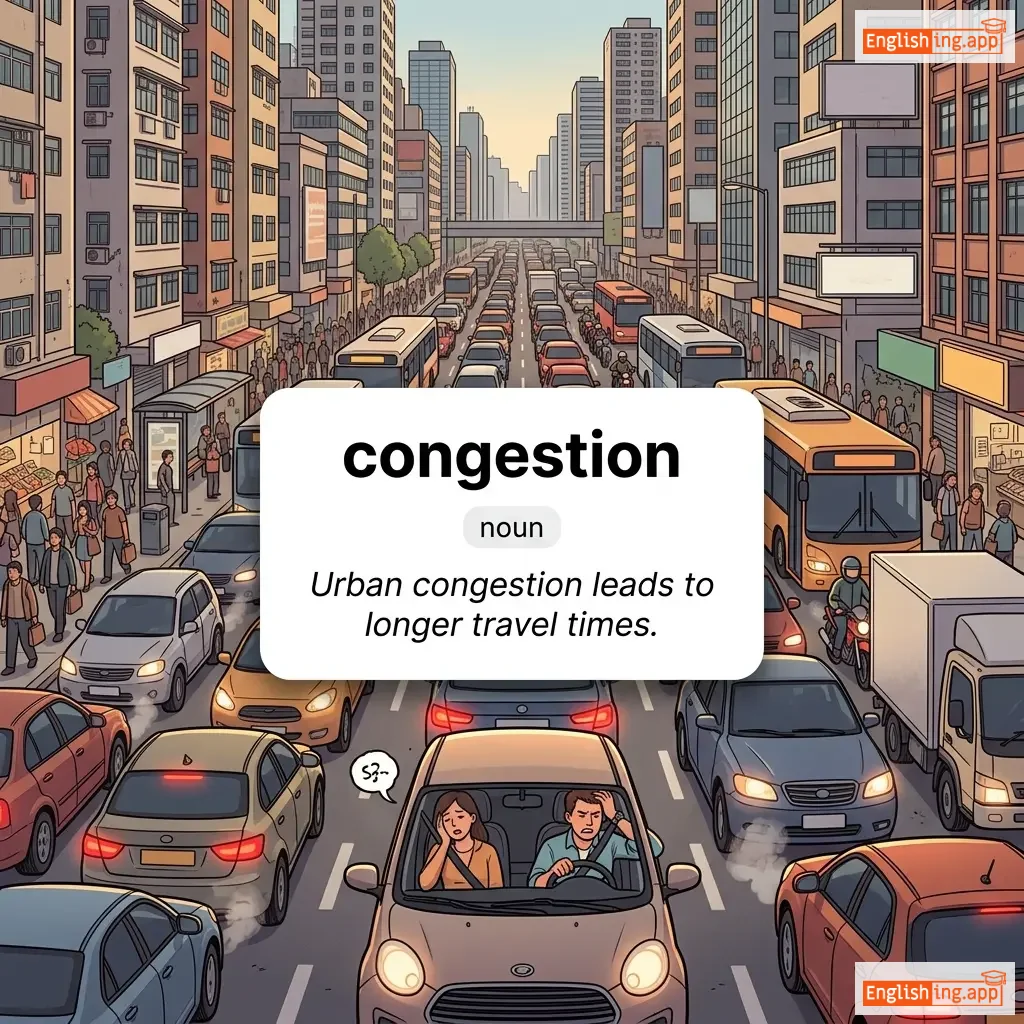
congestion definition card — visual illustration of the meaning
noun
/kənˈdʒes.tʃən/
交通堵塞或过度拥挤 (jiaotong duse huo guodu yongji)

Traffic jam or overcrowded condition in roads or areas where there is excessive presence of vehicles or people.

"Urban congestion leads to longer travel times."
"城市交通拥堵导致更长的旅行时间。" (Chengshi jiaotong yongdu daozhi geng chang de lvxing shijian.)
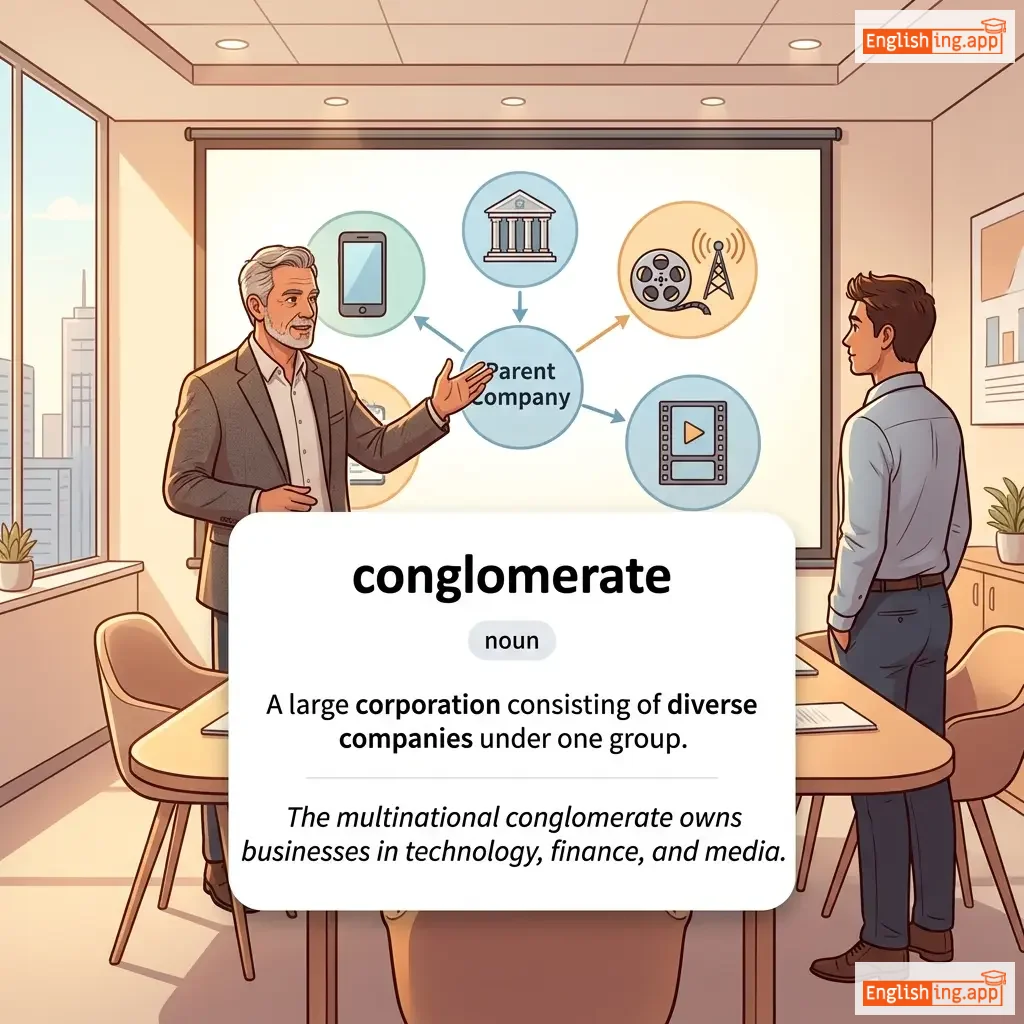
conglomerate definition card — visual illustration of the meaning
noun
/kənˈɡlɒmərət/
由不同公司组成的大型企业集团 (yóu bùtóng gōngsī zǔchéng de dàxíng qǐyè jítuán)

A large corporation consisting of diverse companies under one group.

"The multinational conglomerate owns businesses in technology, finance, and media."

"这个跨国集团拥有科技、金融和媒体领域的公司。" (Zhège kuàguó jítuán yǒngyǒu kējì, jīnróng hé méitǐ lǐngyù de gōngsī.)
noun
/kənˌɡlɒməˈreɪʃən/
聚集 (jùjí)

A collection or mixture of different things grouped together.

"The market is a conglomeration of small shops and food stalls."

"市场是一个小商店和食品摊位的聚集。" (Shìchǎng shì yīgè xiǎo shāngdiàn hé shípǐn tānwèi de jùjí.)
verb
/kənˈɡrætʃʊleɪt/
祝贺 (zhùhè)

to praise someone for an achievement or for a special occasion

"I want to congratulate you on your promotion."

"我想祝贺你晋升。" (Wǒ xiǎng zhùhè nǐ jìnshēng.)
noun
/kənˌɡrætʃəˈleɪʃən/
祝贺 (zhuhe)

an expression of praise or joy for someone’s achievement or good fortune

"She sent a congratulation to her friend on winning the award."

"她向朋友送上了获奖的祝贺。" (ta xiang pengyou song shangle huojiang de zhuhe)
noun
/kənˌɡrætʃ.əˈleɪ.ʃənz/
祝贺 (zhùhè)

words expressing praise for an achievement or good wishes on a special occasion

"Congratulations on your promotion! You really deserved this success."
"恭喜晋升!你真的值得这次成功。" (Gōngxǐ jìnshēng! Nǐ zhēn de zhídé zhè cì chénggōng.)
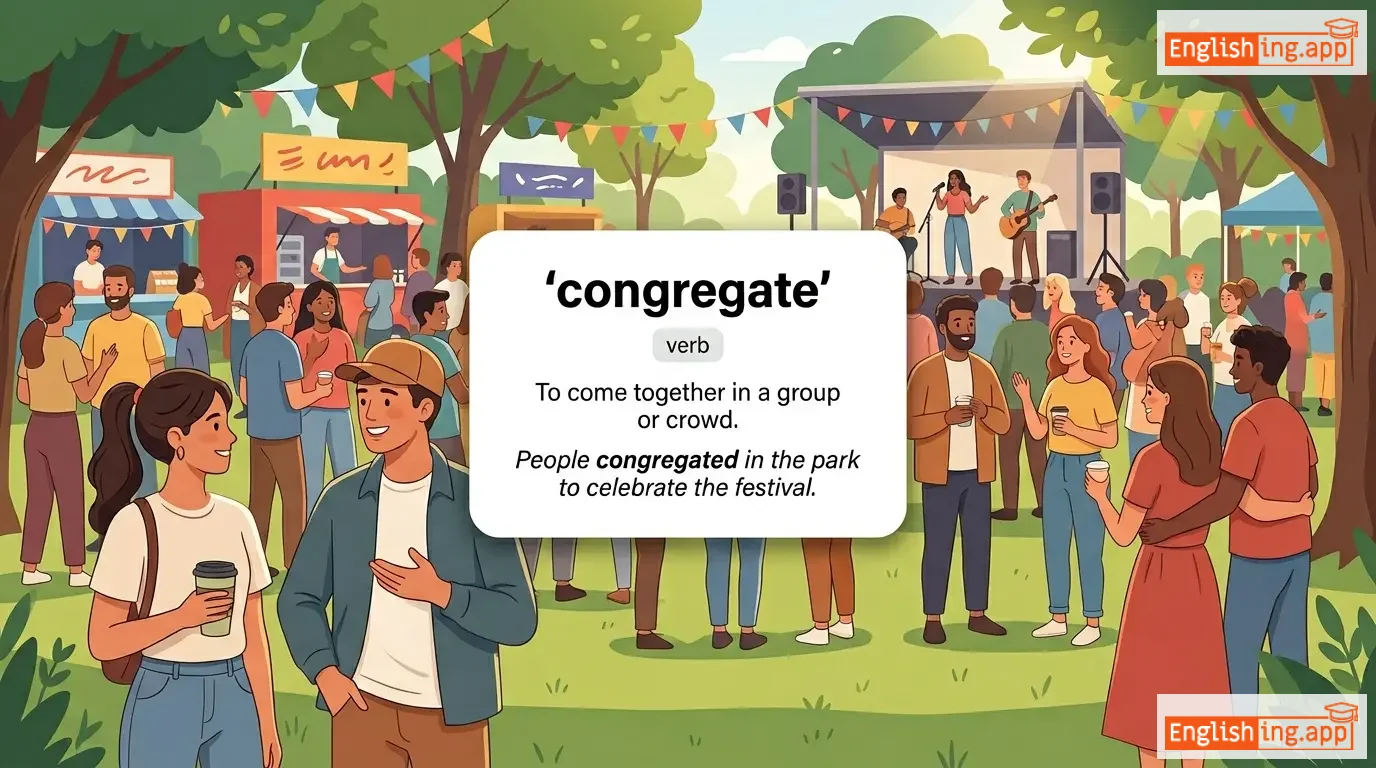
congregate definition card — visual illustration of the meaning
verb
/ˈkɒŋɡrɪˌɡeɪt/
聚集 (jùjí)

To come together in a group or crowd.

"People congregated in the park to celebrate the festival."

"人们聚集在公园里庆祝节日。" (Rénmen jùjí zài gōngyuán lǐ qìngzhù jiérì.)
noun
/ˌkɒŋɡrɪˈɡeɪʃən/
集会 (jihui)

a group of people assembled for religious worship or a common purpose

"The congregation gathered to hear the sermon."

"集会聚集在一起聆听讲道。" (Jihui juzhi zai yiqi lingting jiangdao.)
noun
/ˈkɒŋɡrɛs/
大会 (dàhuì)

a formal meeting or assembly, especially of representatives for discussion

"The international congress on climate change will be held next year."

"关于气候变化的国际大会将在明年举行。" (Guānyú qìhòu biànhuà de guójì dàhuì jiāng zài míngnián jǔxíng.)
adjective
/kənˈɡrɛʃənl/
国会的 (guóhuì de)

relating to a congress, especially the US Congress

"The bill received strong congressional support."
"该法案获得了强烈的国会支持。" (Gāi fǎ'àn huòdéle qiángliè de guóhuì zhīchí.)
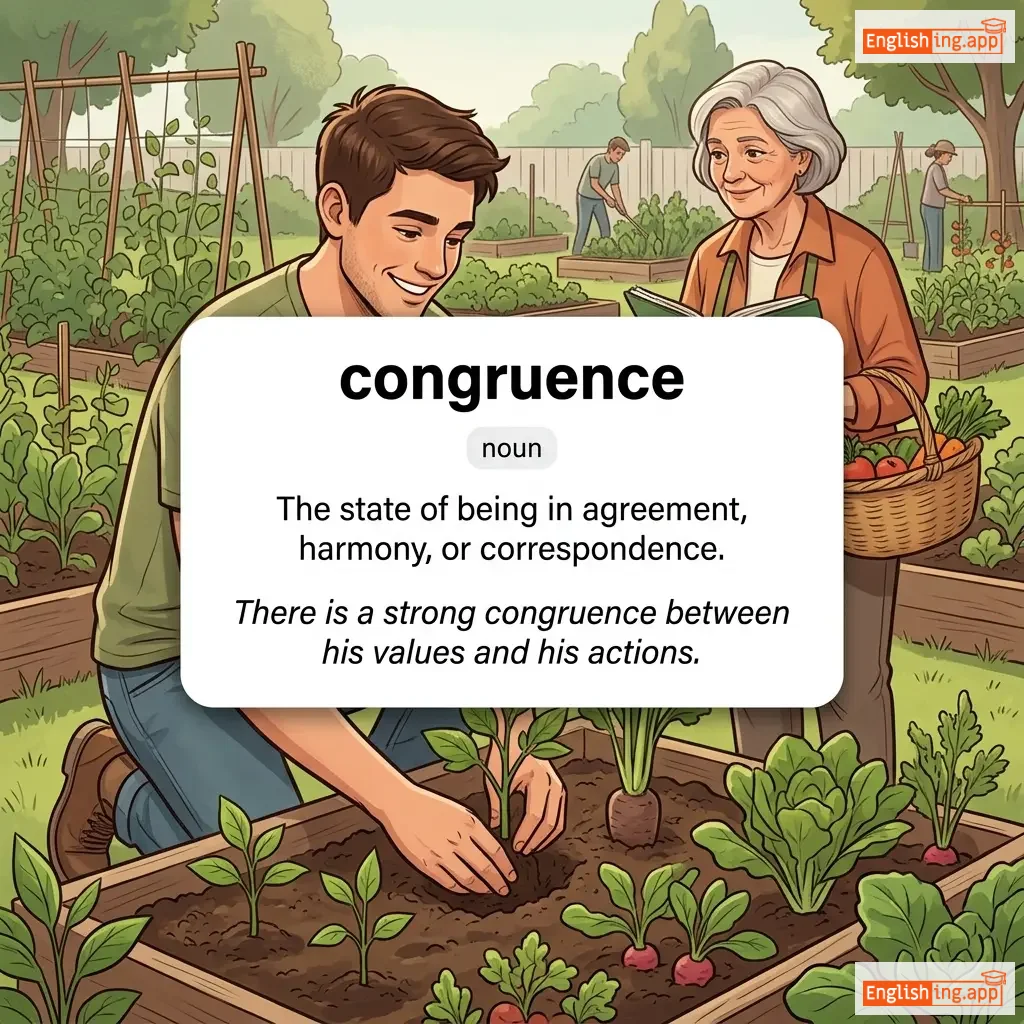
congruence definition card — visual illustration of the meaning
noun
/ˈkɒŋɡruəns/
一致性 (yizhixing)

The state of being in agreement, harmony, or correspondence.

"There is a strong congruence between his values and his actions."

"他的价值观和他的行动之间有很强的契合。" (Tā de jiàzhíguān hé tā de xíngdòng zhījiān yǒu hěn qiáng de qìhé.)
adjective
/ˈkɒŋɡruənt/
全等 (quán děng)

in agreement or harmony; having the same shape and size in geometry

"Their values are congruent with the goals of the organization."

"他们的价值观与组织的目标一致。" (Tāmen de jiàzhíguān yǔ zǔzhī de mùbiāo yīzhì.)
noun
/ˈkɒnɪfər/
针叶树 (zhēn yè shù)

a type of tree that bears cones and evergreen needle-like leaves, such as pine or fir

"The forest is dominated by conifers like pine and spruce."
"森林由松树和云杉等针叶树主导。" (Sēnlín yóu sōngshù hé yúnshān děng zhēn yè shù zhǔdǎo.)
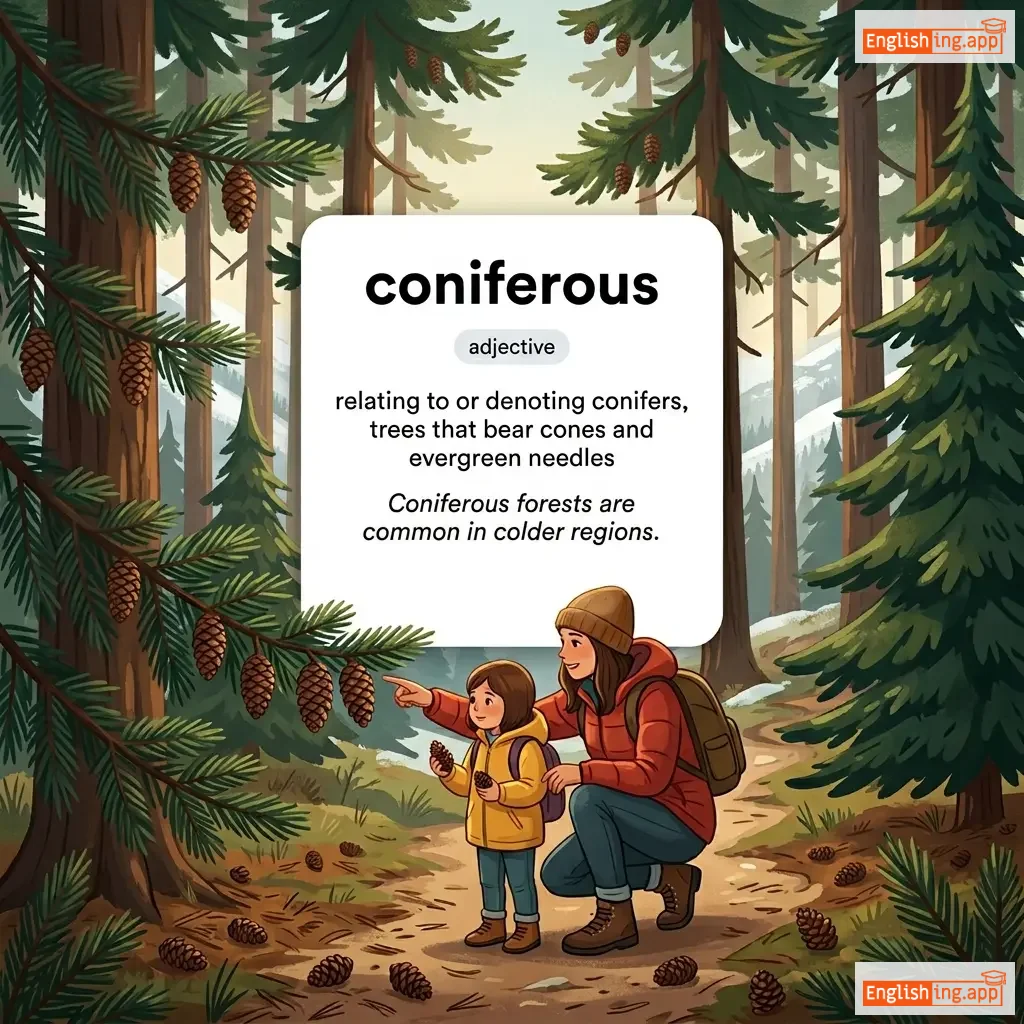
coniferous definition card — visual illustration of the meaning
adjective
/kəˈnɪfərəs/
松树类 (song shu lei)

relating to or denoting conifers, trees that bear cones and evergreen needles

"Coniferous forests are common in colder regions."

"松树林在寒冷的地区很常见。" (Song shu lin zai han leng de di qu hen chang jian.)
adjective
/kənˈdʒɛktʃərəl/
推测的 (tuīcè de)

based on guesswork or incomplete evidence rather than certain knowledge

"His explanation was purely conjectural and lacked proof."

"他的解释完全是推测性的,缺乏证据。" (Tā de jiěshì wánquán shì tuīcè xìng de, quēfá zhèngjù.)
conjecture definition card — visual illustration of the meaning
noun/verb
/kənˈdʒɛktʃər/
猜测 (cāicè)

an opinion or conclusion formed on the basis of incomplete information; to form an opinion without sufficient evidence

"The critics conjectured that the book was inspired by real events."

"评论家推测这本书的灵感来自真实的事件。" (Pínglùn jiā tuīcè zhè běn shū de línggǎn láizì zhēnshí de shìjiàn.)
verb
/kənˈdʒɔɪn/
联合 (liánhé)

to join together or unite; to combine

"The two rivers conjoin just before reaching the sea."

"两条河流在到达大海之前汇合。" (Liǎng tiáo héliú zài dàoshǐ dàhǎi zhīqián huìhé.)
conjugal definition card — visual illustration of the meaning
adjective
/ˈkɒndʒʊɡəl/
婚姻的 (hūnyīn de)

relating to marriage or the relationship between husband and wife

"They enjoyed a long life of conjugal happiness."

"他们享受了长久的婚姻幸福生活。" (Tāmen xiǎngshòule chángjiǔ de hūnyīn xìngfú shēnghuó.)
verb
/ˈkɒndʒʊɡeɪt/
变位 (bian wei)

to list the different forms of a verb according to tense, person, and number

"Students are asked to conjugate the verb 'to be'."

"学生被要求变动动词'是'的形式。" (Xuesheng bei yaoqiu biandong dongci 'shi' de xingzhi.)
noun
/ˌkɒndʒʊˈɡeɪʃən/
词形变化 (cíxíng biànhuà)

the variation of the form of a verb to indicate tense, person, and number

"French verbs have complex conjugations."

"法语动词有复杂的变位。" (Fǎyǔ dòngcí yǒu fùzá de biànwèi.)
noun
/kənˈdʒʌŋkʃən/
连词 (liáncí)

a word used to connect clauses or sentences, or to coordinate words

"The words 'and' and 'but' are common conjunctions."

"'和' 和 '但是' 是常见的连词。" ('hé' hé 'dànshì' shì chángjiàn de liáncí.)
verb
/ˈkʌn.dʒər/
召唤 (zhao-huan)

to summon something as if by magic; to imagine vividly

"The magician conjured a rabbit out of the hat."

"魔术师从帽子里召唤出了一只兔子。" (Mo-shu-shi cong mao-zi li zhao-huan chu-le yi-zhi tu-zi.)
connect definition card — visual illustration of the meaning
verb
/kəˈnɛkt/
连接 (lianjie)

to join or link two or more things together

"The new bridge will connect the two cities."
"新桥将连接这两个城市。" (Xin qiao jiang lianjie zhe liang ge chengshi.)
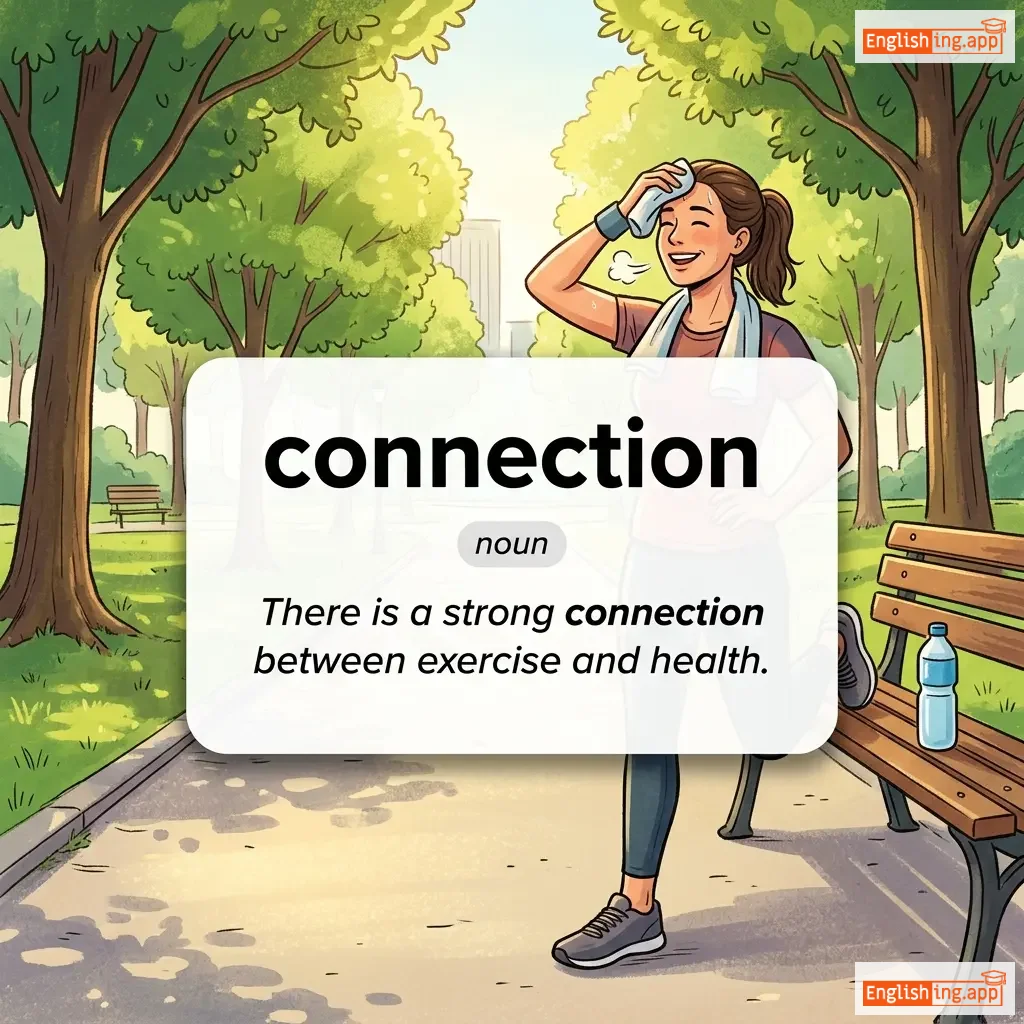
connection definition card — visual illustration of the meaning
noun
/kəˈnɛkʃən/
连接 (lianjie)

a relationship in which a person, thing, or idea is linked or associated with something else

"There is a strong connection between exercise and health."
"运动和健康之间有着紧密的联系。" (Yundong he jiankang zhijian youzhe jinmi de lianxi.)
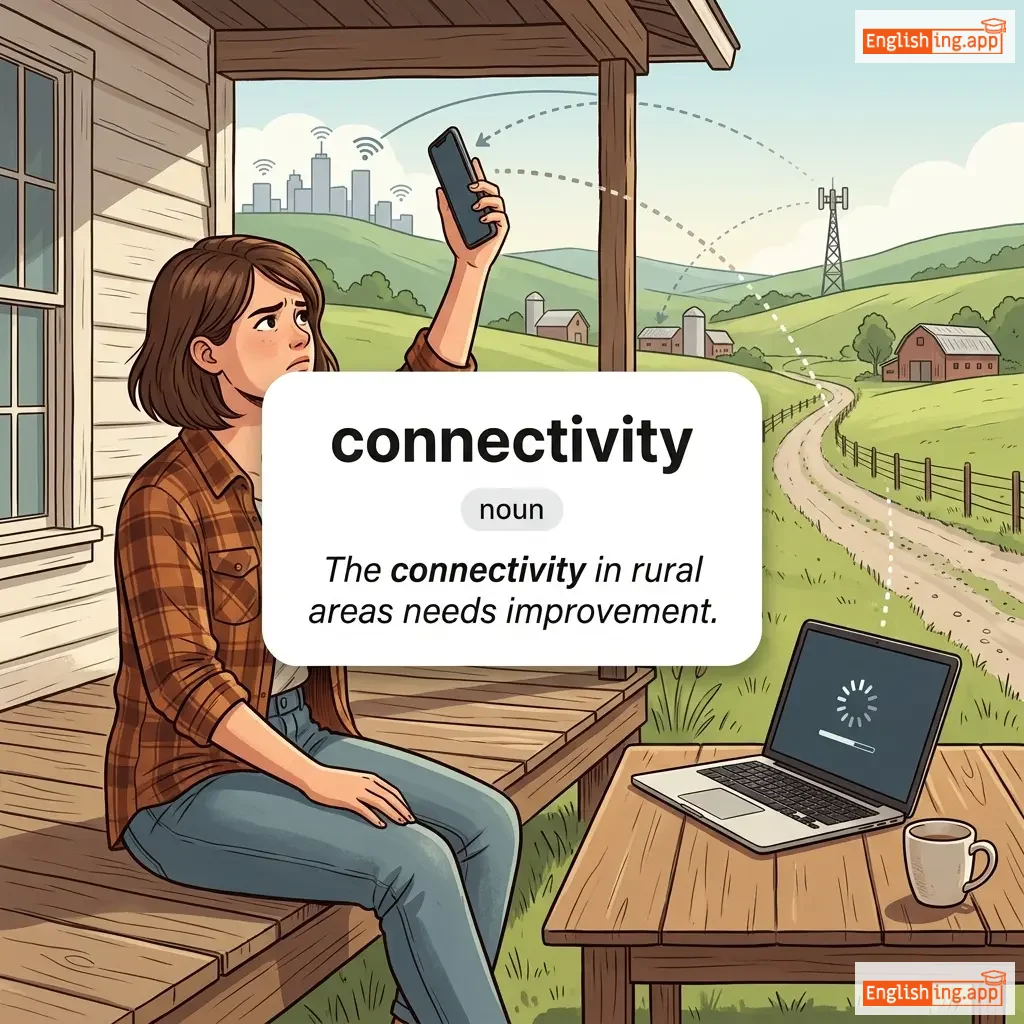
connectivity definition card — visual illustration of the meaning
noun
ˌkɒn.ekˈtɪv.ɪ.ti
连接能力, 网络连接, 互联互通 (liánjiē nénglì, wǎngluò liánjiē, hùlián hùtōng)

The state of being connected or interconnected; capacity for the interconnection of platforms, systems, and applications.

"The connectivity in rural areas needs improvement."

"农村地区的连接性需要改善。" (Nóngcūn dìqū de liánjiēxìng xūyào gǎishàn.)
noun
/kəˈnaɪ.vəns/
默许 (mòxǔ)

the act of secretly allowing or being involved in wrongdoing

"The theft happened with the connivance of the security guard."

"盗窃发生在保安的默许下。" (Dàoqiè fāshēng zài bǎo'ān de mòxǔ xià.)
verb
/kəˈnaɪv/
秘密参与不当行为 (mìmì cānyù bùdàng xíngwéi)

to secretly allow or be involved in a wrongdoing

"The manager connived with the supplier to cheat the company."

"经理与供应商合谋欺骗公司。" (Jīnglǐ yǔ gōngyìng shāng hé móu qīpiàn gōngsī.)
adjective
/kəˈnaɪ.vɪŋ/
阴险的 (yīnxiǎn de)

secretly scheming or plotting to help in wrongdoing

"He is a conniving politician who manipulates people for power."

"他是一个阴险的政治家,利用权力操纵人民。" (Tā shì yīgè yīnxiǎn de zhèngzhìjiā, lìyòng quánlì cāozòng rénmín.)
connoisseur definition card — visual illustration of the meaning
noun
/ˌkɒn.əˈsɜːr/
行家 (hangjia)

an expert judge in matters of taste, especially in food, art, or wine

"She is a true connoisseur of fine art."

"她是美术的真正行家。" (Tā shì měishù de zhēnzhèng hángjiā.)
connotation definition card — visual illustration of the meaning
noun
/ˌkɒnəˈteɪʃən/
内涵 (neihan)

An idea or feeling that a word invokes in addition to its literal meaning.

"The word 'home' has a positive connotation of warmth and family."

"单词“家”具有温暖和家庭的积极内涵。" (Dan ci 'jia' ju you wen nuan he jia ting de ji ji nei han.)
verb
/kəˈnoʊt/
暗示 (anshi)

To suggest or imply an additional meaning beyond the literal one.

"The word 'youthful' connotes energy and vitality."

"‘青春’一词暗示着活力和生气。" ('Qīngchūn' yī cí ànshì zhe huólì hé shēngqì.)
adjective
/kəˈnjuːbiəl/
婚姻的 (hūn yīn de)

Relating to marriage or the relationship of a married couple.

"They celebrated their connubial bliss with a honeymoon trip."

"他们通过蜜月旅行庆祝他们的婚姻幸福。" (Tāmen tōngguò mìyuè lǚxíng qìngzhù tāmen de hūnyīn xìngfú.)