Словари

Словарь английского языка | Значения слов, определения и примеры

adjective
/ˈkɒn.stənt/
постоянный (postoyannyy)

happening all the time or staying the same without change

"She lived in constant fear of losing her job."

"Она жила в постоянном страхе потерять свою работу." (Ona zhila v postoyannom strake poteryat' svoyu rabotu.)
adverb
/ˈkɒnstəntli/
постоянно (postoyanno)

continuously over a period of time; always

"He is constantly improving his skills."

"Он постоянно улучшает свои навыки." (On postoyanno uluchshayet svoi navyki.)
noun
/ˌkɒn.stəˈleɪ.ʃən/
созвездие (sozvezdie)

a group of stars forming a recognizable pattern in the night sky

"Orion is one of the most famous constellations."

"Орион — одно из самых известных созвездий." (Orion — odno iz samykh izvestnykh sozyvezdiy.)
noun
/ˌkɒnstəˈneɪʃən/
беспокойство (bespokoystvo)

A feeling of anxiety, dismay, or confusion, often caused by something unexpected.

"The sudden announcement caused widespread consternation among the employees."

"Внезапное объявление вызвало широкое беспокойство среди сотрудников" (Vnezapnoe ob'yavlenie vyzvalo shirokoe bespokoystvo sredi sotrudnikov)
noun
/kənˈstɪtʃuənsi/
избирательный округ (izbiratel'nyy okrug)

A geographical area whose residents elect a representative to a legislative body.

"She campaigned tirelessly across her constituency."

"Она неустанно вела кампанию по своему избирательному округу." (Ona neustanno vela kampaniyu po svojemu izbiratel'nomu okrugu.)
noun/adjective
/kənˈstɪtʃuənt/
составная часть / избиратель (sostavnaya chast / izbiratel)

Noun: A member of a constituency or an essential part of something. Adjective: Being a necessary part of a whole.

"The senator met with his constituents to discuss local issues."
"Сенатор встретился со своими избирателями, чтобы обсудить местные проблемы." (Senator vstretilsya so svoimi izbiratelyami, chtoby obsudit' mestnye problemy.)
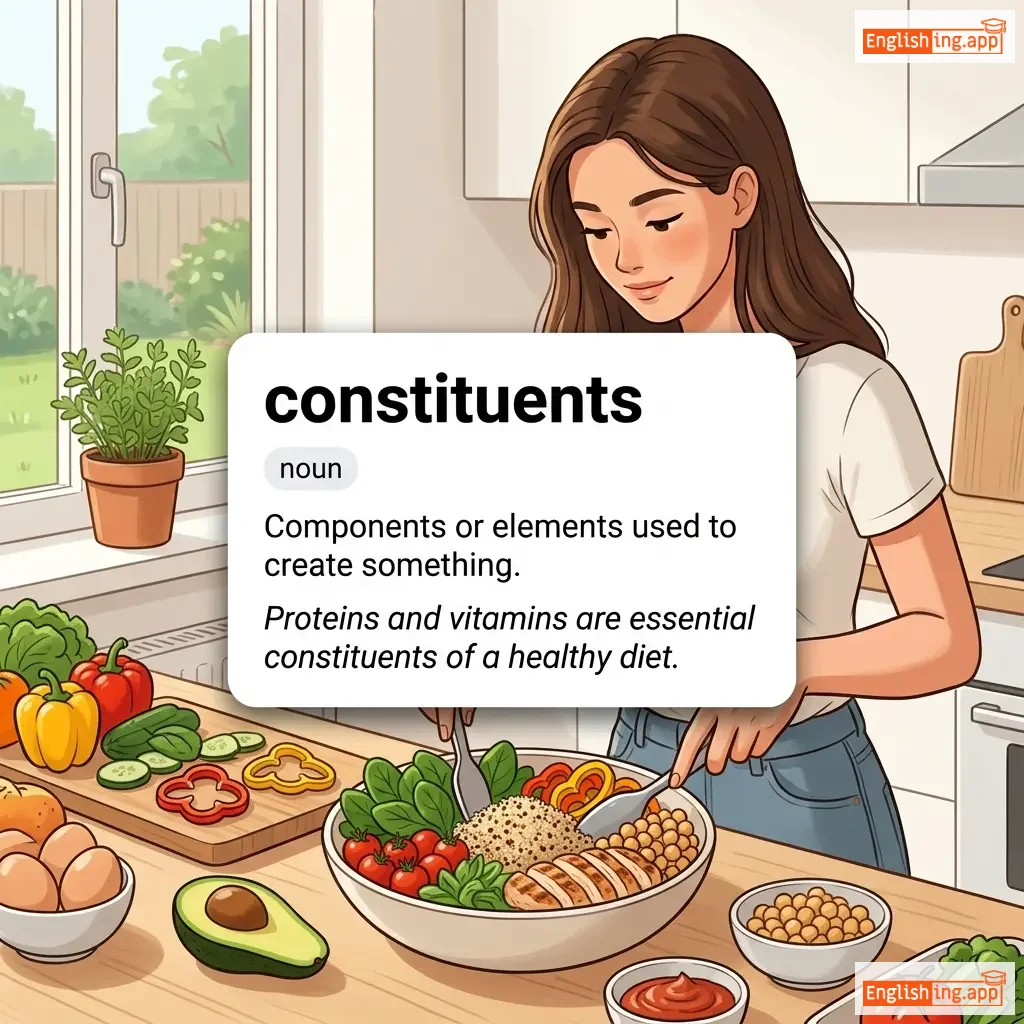
constituents definition card — visual illustration of the meaning
noun
/kənˈstɪtʃ.u.ənts/
составные части (sostavnye chasti)

Components or elements used to create something.

"Proteins and vitamins are essential constituents of a healthy diet."

"Белки и витамины являются важными составляющими здорового питания." (Belki i vitaminy yavyayutsya vazhnymi sostavlyayushchimi zdorovogo pitaniya.)
verb
/ˈkɒnstɪtjuːt/
составлять (sostavlyat')

To make up, form, or establish something.

"These documents constitute the legal agreement between the two parties."
"Эти документы составляют юридическое соглашение между двумя сторонами." (Ety dokumenty sostavlyayut yuridicheskoe soglashenie mezhdu dvumya storonami.)
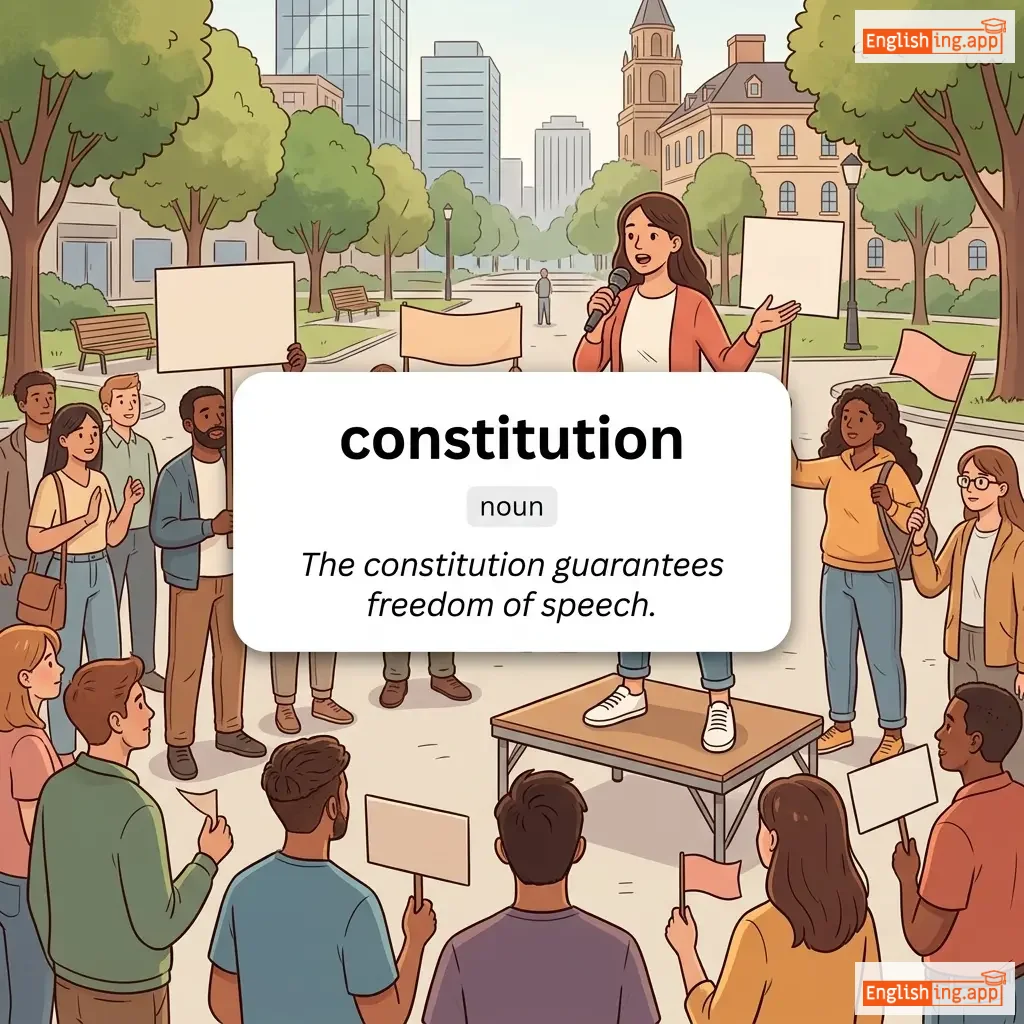
constitution definition card — visual illustration of the meaning
noun
/ˌkɒnstɪˈtjuːʃən/
конституция (konstituciya)

The system of fundamental principles according to which a nation or organization is governed.

"The constitution guarantees freedom of speech."
"Конституция гарантирует свободу слова." (Konstituciya garantiruet svobodu slova.)
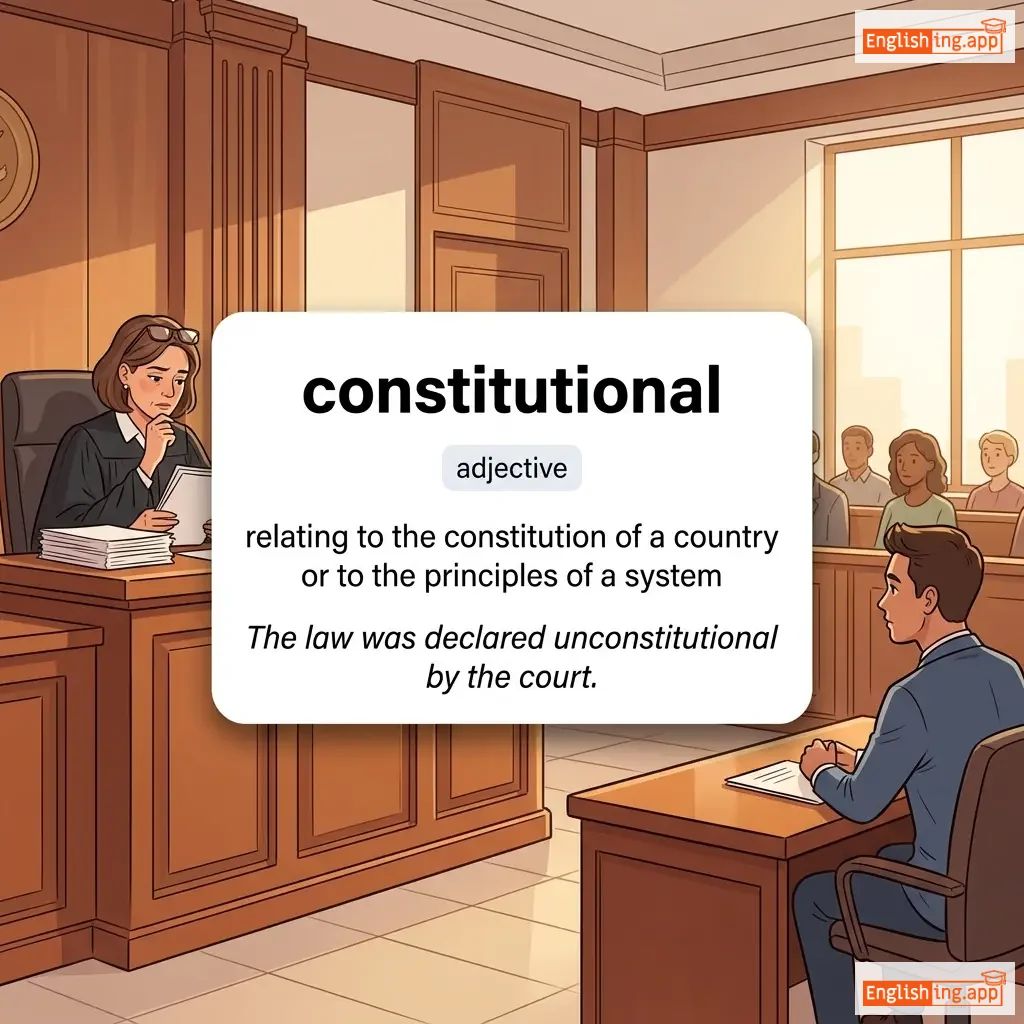
constitutional definition card — visual illustration of the meaning
adjective
/ˌkɒnstɪˈtjuːʃənəl/
конституционный (konstitutsionny)

relating to the constitution of a country or to the principles of a system

"The law was declared unconstitutional by the court."

"Закон был признан неконституционным судом." (Zakon byl prizan nekonstitutsionnym sudom.)
verb
/kənˈstreɪn/
ограничить (ogranichit)

to limit or restrict someone or something; to force or compel

"The new regulations constrain businesses from polluting the environment."

"Новые правила ограничивают компании от загрязнения окружающей среды." (Novye pravila ogranichivayut kompanii ot zagryazneniya okruzhayushchey sredy.)
adjective
/kənˈstreɪnd/
ограниченный, искусственный (ogranichennyy, iskusstvennyy)

appearing forced, unnatural, or restricted

"He gave a constrained smile during the awkward meeting."

"Он сделал принужденную улыбку во время неловкой встречи." (On sdelal prinuzhdennuyu ulybku vo vremya nelovkoy vstrechi.)
noun
/kənˈstreɪnt/
ограничение (ogranichenie)

a limitation or restriction

"Time is the biggest constraint in completing the project."

"Время - это самое большое ограничение при завершении проекта." (Vremya - eto samoe bol'shoe ogranichenie pri zavershenii proekta.)
verb
/kənˈstrɪkt/
сжимать (szhimat)

to make narrower or tighter; to shrink or compress

"The snake constricted its prey before swallowing."

"Змея сжала свою добычу, прежде чем проглотить её." (Zmeyas zhzhalo svoiu dobychu prezhde chem proglotit ee.)
verb
/kənˈstrɪndʒ/
сжимать (szhimat)

to cause to shrink or contract; to constrict

"The medicine helped constringe the swollen tissues."

"Лекарство помогло сжать опухшие ткани." (Lekarstvo pomoglo szhat' opukhshiye tkani.)
verb
/kənˈstrʌkt/
строить (stroyt)

to build or form something by putting parts together

"They plan to construct a new bridge over the river."

"Они планируют построить новый мост через реку." (Oni planiroiut postroit' novyi most cherez reku.)
construction definition card — visual illustration of the meaning
noun
/kənˈstrʌkʃən/
строительство (stroitel'stvo)

The process of building something, typically large structures such as houses, roads, or bridges.

"The construction of the new bridge will take two years."

"Строительство нового моста займет два года." (Stroitel'stvo novogo mosta zaymet dva goda.)
verb
/kənˈstruː/
интерпретировать (interpretirovat')

to interpret or understand the meaning of something in a particular way

"His words could be construed as a threat."

"Его слова могут быть интерпретированы как угроза." (Ego slova mogut byt' interpretirovany kak ugroza.)
noun
/ˈkɒnsəl/
консул / посол (konsul / posol)

an official appointed by a government to live in a foreign city and protect its citizens and interests there

"The consul assisted travelers who lost their passports."

"Консул помог путешественникам, которые потеряли свои паспорта." (Konsul pomog puteshestvennikam, kotorye poteryali svoi pasporty.)
noun
/ˈkɒnsjʊlət/
консульство (konsul'stvo)

the building or office where a consul works

"He went to the consulate to renew his visa."

"Он пошел в консульство, чтобы продлить свою визу." (On poshel v konsul'stvo, chtoby prodlit' svoiu vizu.)
consult definition card — visual illustration of the meaning
verb
/kənˈsʌlt/
консультироваться (konsul'tirovatsya)

To seek advice or information from someone with expertise.

"You should consult a doctor before starting the treatment."

"Вы должны проконсультироваться с врачом перед началом лечения." (Vy dolzhny prokonsul'tirovat'sya s vrachom pered nachalom lecheniya.)
noun
/kənˈsʌltənt/
консультант (konsul'tant)

A professional who provides expert advice in a particular area.

"The company hired a consultant to improve its marketing strategy."

"Компания наняла консультанта для улучшения своей маркетинговой стратегии." (Kompaniya nanyala konsul'tanta dlya uluchsheniya svoey marketingovoy strategii.)
consultation definition card — visual illustration of the meaning
noun
/ˌkɒnsʌlˈteɪʃən/
консультация (konsultatsiya)

a meeting with an expert or professional to seek advice

"The doctor scheduled a consultation with the patient."

"Доктор назначил консультацию с пациентом." (Doktor naznachil konsultatsiyu s patsiyentom.)
consume definition card — visual illustration of the meaning
verb
/kənˈsjuːm/
потреблять (potrebljat')

To use up, eat, drink, or take in.

"People consume a large amount of information daily."

"Люди потребляют большое количество информации ежедневно." (Ljudи potrebljajut bol'šoe količestvo informacii ežednevno.)
noun
/kənˈsjuːmər/
потребитель (potrebitel)

A person who buys and uses goods and services.

"The company focuses on understanding consumer needs."

"Компания сосредоточена на понимании потребностей потребителей." (Kompaniya sosredotochena na ponimanii potrebnostey potrebitelya.)
consumerism definition card — visual illustration of the meaning
noun
kənˈsjuː.mə.rɪ.zəm
потребительский капитализм (potrebitelskiy kapitalizm)

The tendency to increase consumption of goods and the importance given to consuming products.

"Modern consumerism leads to increased demand for luxury goods."
"Современный потребительский капитализм ведет к увеличению спроса на товары класса люкс." (Sovremennyy potrebitelskiy kapitalizm vedyot k uvelicheniyu sprosa na tovarы klassa lyuks.)
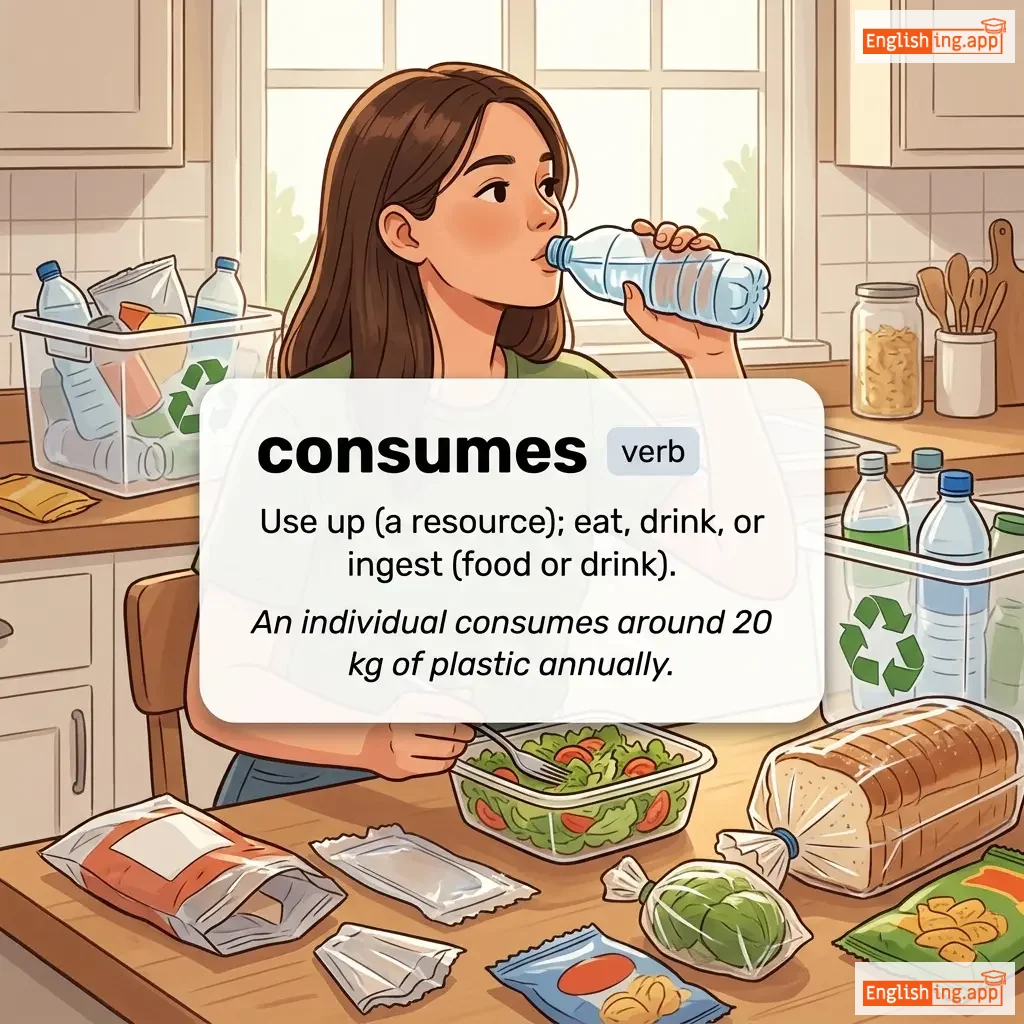
consumes definition card — visual illustration of the meaning
verb
kənˈsjuːmz
потреблять (potrebljat')

Use up (a resource); eat, drink, or ingest (food or drink).

"An individual consumes around 20 kg of plastic annually."

"Человек потребляет около 20 кг пластика ежегодно." (Chelovek potrebljaet okolo 20 kg plastika ezhednevno.)
consummate definition card — visual illustration of the meaning
adjective, verb
/ˈkɒnsəmət/ (adj), /ˈkɒnsəmeɪt/ (verb)
совершить / полный (sovershit / polny)

to complete or perfect something; showing great skill or excellence

"She is a consummate professional in her field."

"Она совершенный профессионал в своей области." (Ona sovershennyy professional v svoey oblasti.)
Consumption definition card — visual illustration of the meaning
noun
/kənˈsʌmpʃən/
потребление (potreblenie)

The act of using up resources, goods, or energy; also refers to the eating or drinking of something.

"The consumption of electricity increases during the summer."

"Потребление электричества увеличивается летом." (Potreblenie elektrichestva uvelichivaetsya letom.)
adjective
/kənˈsʌmptɪv/
потребительский (potrebitelskiy)

Relating to or characterized by consumption; historically used to describe someone suffering from tuberculosis.

"The doctor advised against consumptive habits."

"Врач посоветовал избегать потребительских привычек." (Vrach posovetoval izbegat' potrebitel'skikh privychek.)
contact definition card — visual illustration of the meaning
noun/verb
/ˈkɒntækt/
контакт (kontakt)

Communication or connection with someone.

"You should contact your doctor if symptoms persist."

"Вы должны связаться с вашим врачом, если симптомы сохраняются." (Vy dolzhny svyazat'sya s vashim vrachom, yesli simptyomy sokhranyayutsya.)
noun
/kənˈteɪdʒən/
заражение (zarazhenie)

The communication of disease from one person to another by close contact; also the spread of harmful ideas or behaviors.

"Fear spread like a contagion through the crowd."

"Страх распространился как заражение через толпу." (Strakh rasprostranilsya kak zarazhenie cherez tolpu.)
adjective
/kənˈteɪdʒəs/
заразный (zarazny)

Able to be transmitted from one person to another, typically by direct contact; also used for emotions or attitudes that spread quickly.

"Her laughter was so contagious that everyone started laughing."
"Её смех был настолько заразным, что все начали смеяться." (Eyo smekh byl nastol'ko zaraznym, chto vse nachali smeyat'sya.)
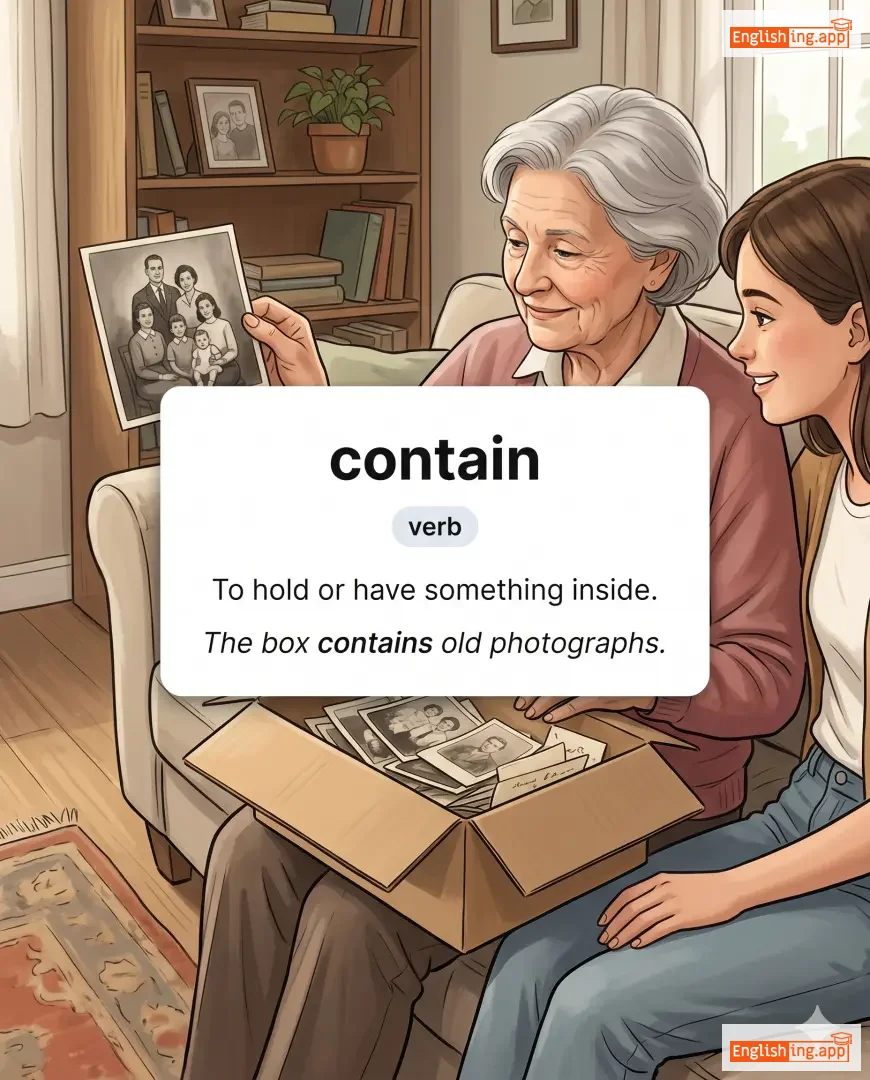
contain definition card — visual illustration of the meaning
verb
/kənˈteɪn/
содержать (soderzhat)

To hold or have something inside.

"The box contains old photographs."
"Коробка содержит старые фотографии." (Korobka soderzhit starye fotografii.)
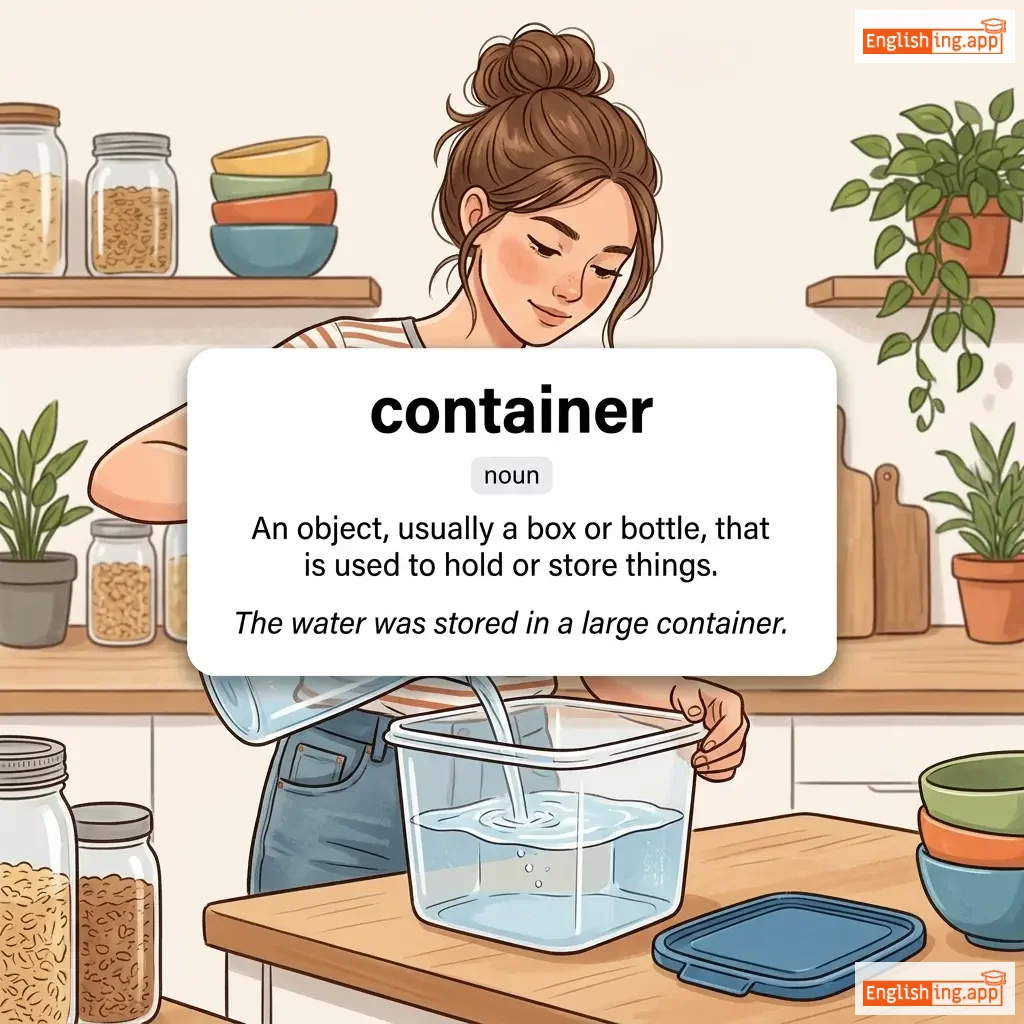
container definition card — visual illustration of the meaning
noun
/kənˈteɪnər/
контейнер (konteyner)

An object, usually a box or bottle, that is used to hold or store things.

"The water was stored in a large container."

"Вода хранилась в большом контейнере." (Voda khranilas' v bol'shom konteynerе.)
verb
/kənˈtæmɪneɪt/

To make something impure, dirty, or harmful by contact with a poisonous or polluting substance.

"The river was contaminated by industrial waste."
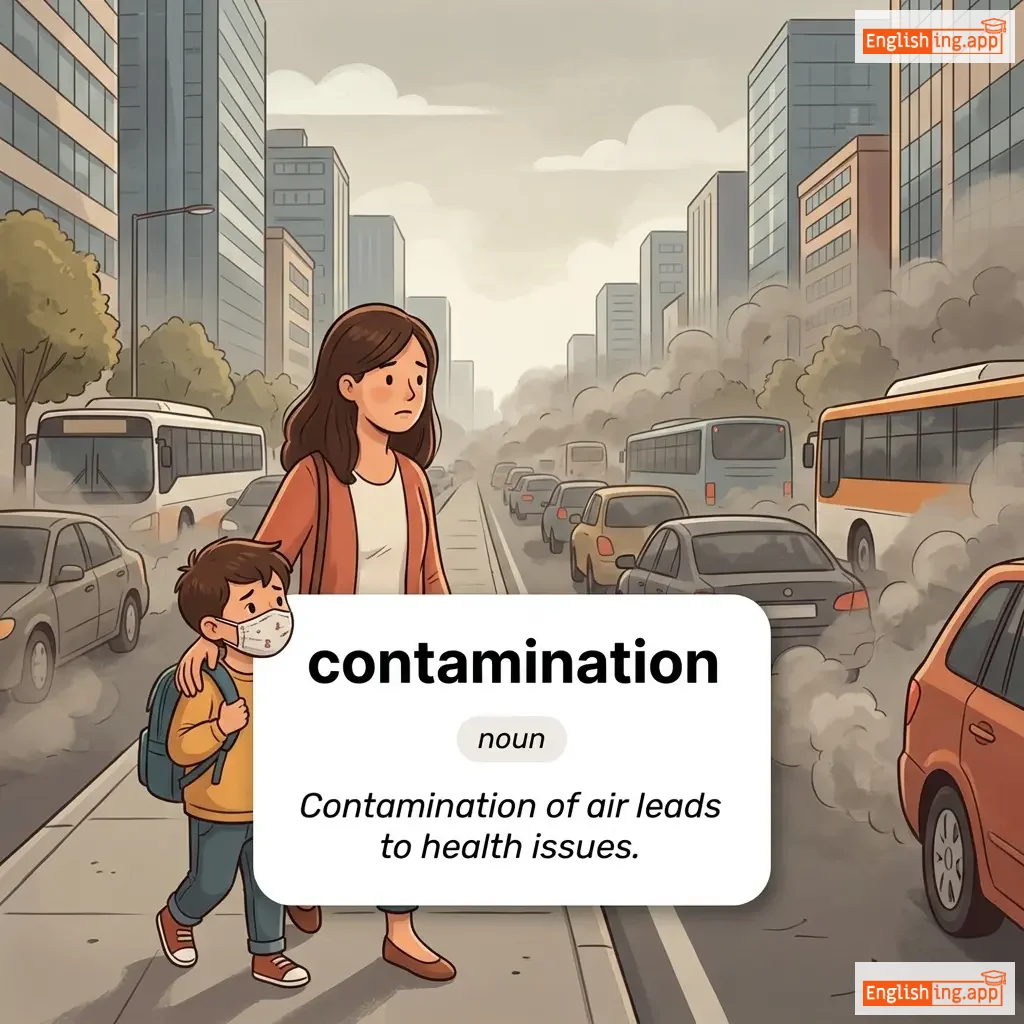
contamination definition card — visual illustration of the meaning
noun
kənˌtæm.ɪˈneɪ.ʃən
загрязнение (zagryaznenie)

The process of making something less pure by exposure to or addition of a poisonous or polluting substance.

"Contamination of air leads to health issues."

"Загрязнение воздуха вызывает проблемы со здоровьем." (Zagryaznenie vozdukha vyzyvaet problemy so zdorovem.)
verb
/kənˈtɛm/
презирать (prezirat)

to treat or regard with disdain, scorn, or contempt

"He would never contemn honest work, no matter how humble."

"Он никогда не стал бы презирать честную работу, независимо от того, насколько она скромна." (On nikogda ne stal by prezirat' chestnuyu rabotu, nezavisimo ot togo, naskol'ko ona skromna.)
verb
/ˈkɒntəmpleɪt/
размышлять (razmyshlyat)

to think deeply and carefully about something; to consider thoughtfully

"She sat quietly to contemplate her future plans."

"Она сидела тихо, чтобы обдумать свои будущие планы." (Ona sidelа tikho, chtoby obdumаt' svoi budushchie plany.)
contemplation definition card — visual illustration of the meaning
noun
ˌkɒn.təmˈpleɪ.ʃən
созерцание, глубокое размышление (sozyertsanie, glubokoye razmyshleniye)

The action of looking thoughtfully at something for a long time; deep reflective thought.

"He spent hours in contemplation about his future."
"Он провел часы в созерцании о своем будущем." (On provel chasy v sozyertsanii o svoem budushchem.)
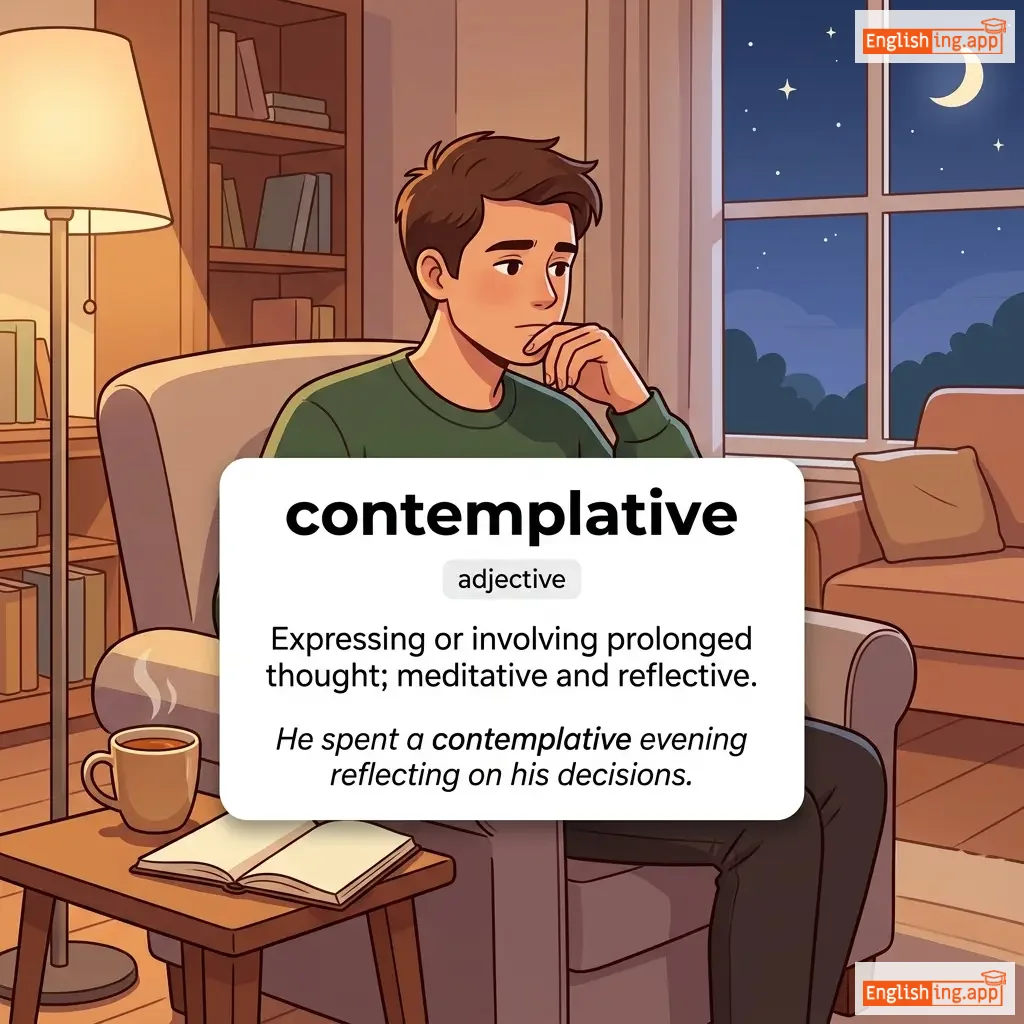
contemplative definition card — visual illustration of the meaning
adjective
ˈkɒn.təm.plə.tɪv
размышляющий или медитативный (razmyshlyayushchiy ili meditativnyy)

Expressing or involving prolonged thought; meditative and reflective.

"He spent a contemplative evening reflecting on his decisions."

"Он провел созерцательный вечер, размышляя о своих решениях." (On provel sozyertchatel'nyy vecher, razmyshlyaya o svoikh resheniyakh.)
adjective
/kənˌtɛmpəˈreɪniəs/
современны́й (sovremennyy)

existing, happening, or occurring at the same time

"The two artists were contemporaneous and often influenced each other."

"Оба художника были современными и часто влияли друг на друга." (Oba khudozhnika byli sovremennymi i chasto vliyali drug na druga.)
adjective
/kənˈtɛmpərɛri/
современный, современный (sovremennyy, sovremennyy)

belonging to the same time period; modern

"She enjoys contemporary art exhibitions."

"Она наслаждается выставками современного искусства." (Ona naslazhdaetsya vystavkami sovremennogo iskusstva.)
noun
/kənˈtɛmpt/
презрение (prezrenie)

a strong feeling of dislike and lack of respect towards someone or something

"He spoke with contempt about the corrupt officials."

"Он говорил с презрением о коррумпированных чиновниках." (On govoril s prezreniem o korrumpirovannykh chinovnikakh.)
adjective
/kənˈtɛmptəbl/
презренный, достойный презрения (prezrenny, dostoyny prezreniya)

deserving of contempt; despicable

"His deceitful actions were truly contemptible."

"Его обманные действия были действительно презренными." (Ego obmannye deystviya byli deystvitel'no prezrennymi.)
adjective
/kənˈtɛmptʃuəs/
презрительный, пренебрежительный (prezritylnyy, prenebrezhitel'nyy)

showing or expressing contempt; scornful

"She gave him a contemptuous glance."

"Она посмотрела на него презрительным взглядом." (Ona posmotrela na nego prezritelnym vzglyadom.)
contend definition card — visual illustration of the meaning
verb
/kənˈtɛnd/
состязаться, утверждать (sostyazatsya, utverzhdat)

to strive or compete for something; to assert earnestly

"Athletes from around the world contend for the championship."

"Атлеты со всего мира борются за чемпионство." (Atlety so vsego mira boryutsya za chempionstvo.)
noun
/kənˈtɛndər/
конкурент, претендент (konkurent, pretendent)

a person or team competing for a title or prize

"She is a strong contender for the mayoral position."

"Она сильный претендент на пост мэра." (Ona sil'nyy pretendent na post mera.)
adjective
/ˈkɒntɛnt/
удовлетворённый, довольный (udovletvorjonnyj, dovol'nyj)

in a state of satisfaction; pleased

"He felt content after finishing his work."

"Он чувствовал себя удовлетворённым после того, как завершил свою работу." (On chuvstvoval sebya udovletvorjonnym posle togo, kak zavershil svoyu rabotu.)
adjective
/kənˈtɛntɪd/
удовлетворённый (udovletvorjonnyj)

Feeling or expressing happiness and satisfaction.

"She was contented with her simple life."

"Она была удовлетворена своей простой жизнью." (Ona byla udovletvorena svoey prostoy zhiznyu.)