Словари

Словарь английского языка | Значения слов, определения и примеры

verb
/kəmˈpraɪz/
состоять (sostoyat)

To consist of or be made up of something.

"The committee comprises five members."

"Комитет состоит из пяти членов." (Komitet sostoyit iz pyati chlenov.)
compromise definition card — visual illustration of the meaning
noun, verb
/ˈkɒmprəmaɪz/
компромисс (kompromiss)

A settlement of differences in which each side makes concessions; or to weaken or put at risk.

"They reached a compromise after long negotiations."

"Oни достигли компромисса после долгих переговоров." (Oni dostigli kompromissa posle dolgikh peregovorov.)
noun
/kəmˈpʌlʃn̩/
принуждение (prinuzhdenie)

An irresistible urge to do something, or the act of being forced.

"He felt a strong compulsion to check his phone constantly."

"Он почувствовал сильное принуждение постоянно проверять свой телефон." (On pochuvstvoval sil'noe prinuzhdenie postoyanno proveryat' svoy telefon.)
adjective
/kəmˈpʌlsɪv/
компульсивный (kompulsivny)

Resulting from or acting on an irresistible urge, especially one that is against one's conscious wishes.

"He is a compulsive gambler who cannot stop placing bets."

"Он compulsive игрок, который не может остановиться, делая ставки." (On kompulsivny igrok, kotoryy ne mozhet ostanovitsya, delaya stavki.)
adjective
/kəmˈpʌlsəri/
обязательный (obyazatel'nyy)

Required by law or a rule; obligatory.

"Wearing seat belts is compulsory in most countries."
"Ношение ремней безопасности обязательно в большинстве стран." (Noshenie remney bezopasnosti obyazatel'no v bol'shinstve stran.)
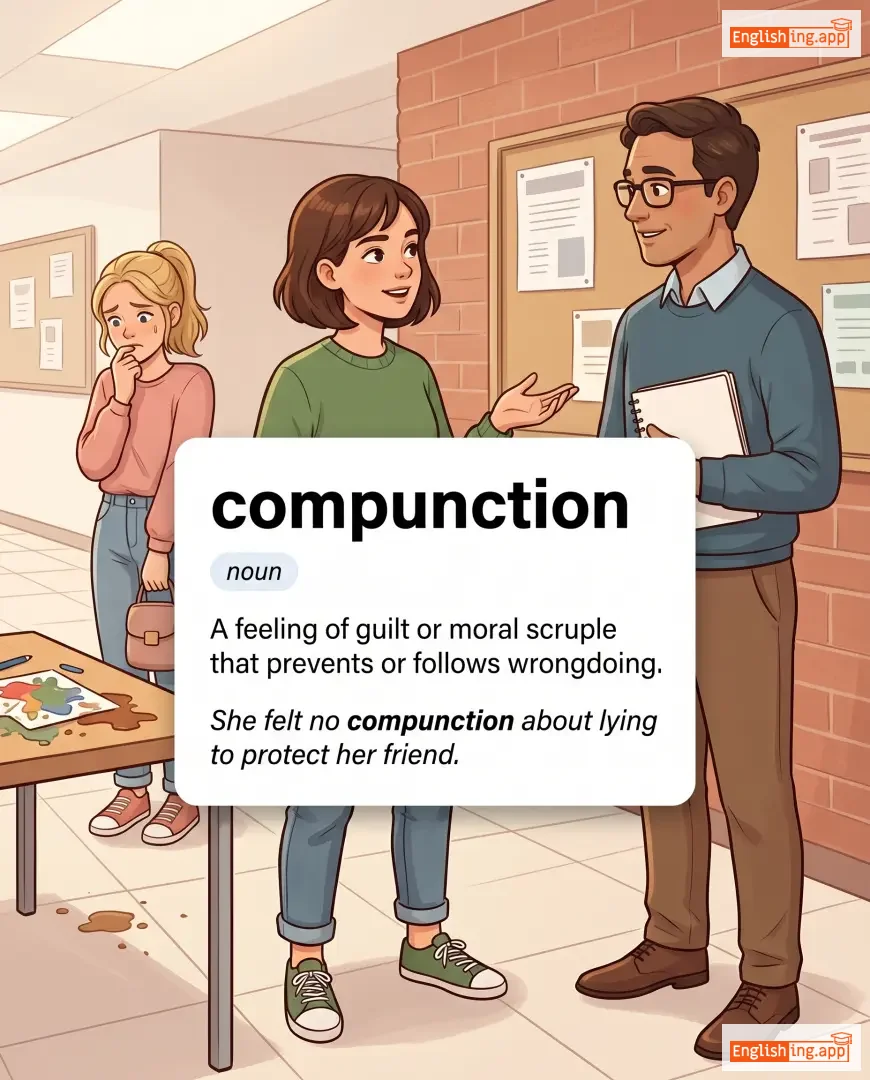
compunction definition card — visual illustration of the meaning
noun
/kəmˈpʌŋkʃən/
угрызения совести (ugryzeniya sovesti)

A feeling of guilt or moral scruple that prevents or follows wrongdoing.

"She felt no compunction about lying to protect her friend."

"Она не почувствовала угрызений совести, лгав, чтобы защитить свою подругу." (Ona ne pochuvstvovala ugryzheniy sovesti, lgav, chtoby zashchitit' svoyu podrugu.)
computation definition card — visual illustration of the meaning
noun
ˌkɒm.pjʊˈteɪ.ʃən
вычисление (vychislenie)

The action of mathematical calculation.

"Complex computation is required for AI models."

"Для моделей ИИ требуются сложные вычисления." (Dlya modeley II trebuyutsya slozhnye vychisleniya.)
computational communication definition card — visual illustration of the meaning
noun
ˌkɒmpjʊˈteɪʃənəl kəˌmjuːnɪˈkeɪʃən
вычислительная связь (vychislitel'naya svyaz')

Digital exchange and automated interaction; the use of computational methods and systems to facilitate communication and information sharing.

"Computational communication is reshaping how we share information."

"Вычислительная связь изменяет способ, которым мы делимся информацией." (Vychislitel'naya svyaz' izmenyayet sposob, kotorym my delimsya informatsiey.)
compute definition card — visual illustration of the meaning
verb
/kəmˈpjuːt/
вычислить (vychislit)

To calculate or determine by using a computer or mathematical methods.

"The software can compute the total cost in seconds."

"Программное обеспечение может вычислить общую стоимость за секунды." (Programmnoe obespechenie mozhet vychislit' obshchuyu stoimost' za sekundy.)
noun
/kəmˈpjuːtə(r)/
компьютер (komp'yuter)

an electronic device for storing and processing data

"I bought a new computer for my office work."

"Я купил новый компьютер для работы в офисе." (Ya kupil novyy komp'yuter dlya raboty v ofise.)
verb
/kɒnˈkætəneɪt/
связывать (svyazyvat)

To link things together in a series or chain.

"The program concatenates two strings into one."

"Программа соединяет две строки в одну." (Programma soedinyaet dve stroki v odnu.)
concave definition card — visual illustration of the meaning
adjective
/ˈkɒn.keɪv/
вогнутый (vognutyy)

curved inward like the inside of a bowl

"The mirror had a concave surface that magnified her reflection."

"Зеркало имело вогнутую поверхность, которая увеличивала ее отражение." (Zerkalo imelo vognutuyu poverkhnost', kotoraya uvelichivala yeye otrazhenie.)
verb
/kənˈsiːl/
скрывать (skryvat)

to hide something or keep it secret

"He tried to conceal his disappointment behind a smile."

"Он попытался скрыть свое разочарование за улыбкой." (On popytalsya skryt' svoe razocharovanie za ulybkoy.)
verb
/kənˈsiːd/
признавать (priznavat)

to admit something is true or valid, often reluctantly

"She finally conceded that she was wrong."

"Она наконец признала, что ошибалась." (Ona nakonec prizdala, chto oshibalas'.)
noun
/kənˈsiːt/
тщеславие (tshcheslaviye)

excessive pride in oneself; vanity

"His conceit made him unpopular among his colleagues."

"Его тщеславие сделало его непопулярным среди коллег." (Yego tshcheslaviye sdelalo yego nepopulyarnym sredi kolleg.)
verb
/kənˈsiːv/
задумать, забеременеть (zaduemat', zaberemenet')

to form or imagine an idea in the mind; to become pregnant

"It is hard to conceive how such an idea could succeed."

"Трудно представить, как такая идея может быть успешной." (Trudno predstavit', kak takaya ideya mozhet byt' uspeshnoy.)
verb
/ˈkɒnsəntreɪt/
сосредоточиться (sosredotochitsya)

to focus all one's attention or mental effort on a particular object or activity

"She tried to concentrate on her studies despite the noise."

"Она пыталась сосредоточиться на учёбе, несмотря на шум." (Ona pytalas' sosredotochitsya na uchebe, nesmotrya na shum.)
concentration definition card — visual illustration of the meaning
noun
/ˌkɒnsnˈtreɪʃən/
концентрация (kontsentratsiya)

the act of focusing one's attention or mental effort on something

"Good concentration is essential for success in exams."

"Хорошая концентрация важна для успеха на экзаменах." (Khoroshaya kontsentratsiya vazhna dlya uspekha na ekzamenakh.)
adjective
/kənˈsɛntrɪk/
концентрический (kontsentritcheskiy)

having a common center, as in circles or spheres

"The artist drew concentric circles on the canvas."
"Художник нарисовал концентрические круги на холсте." (Khudozhnik narisoval kontsentritcheskiye krugi na kholste.)
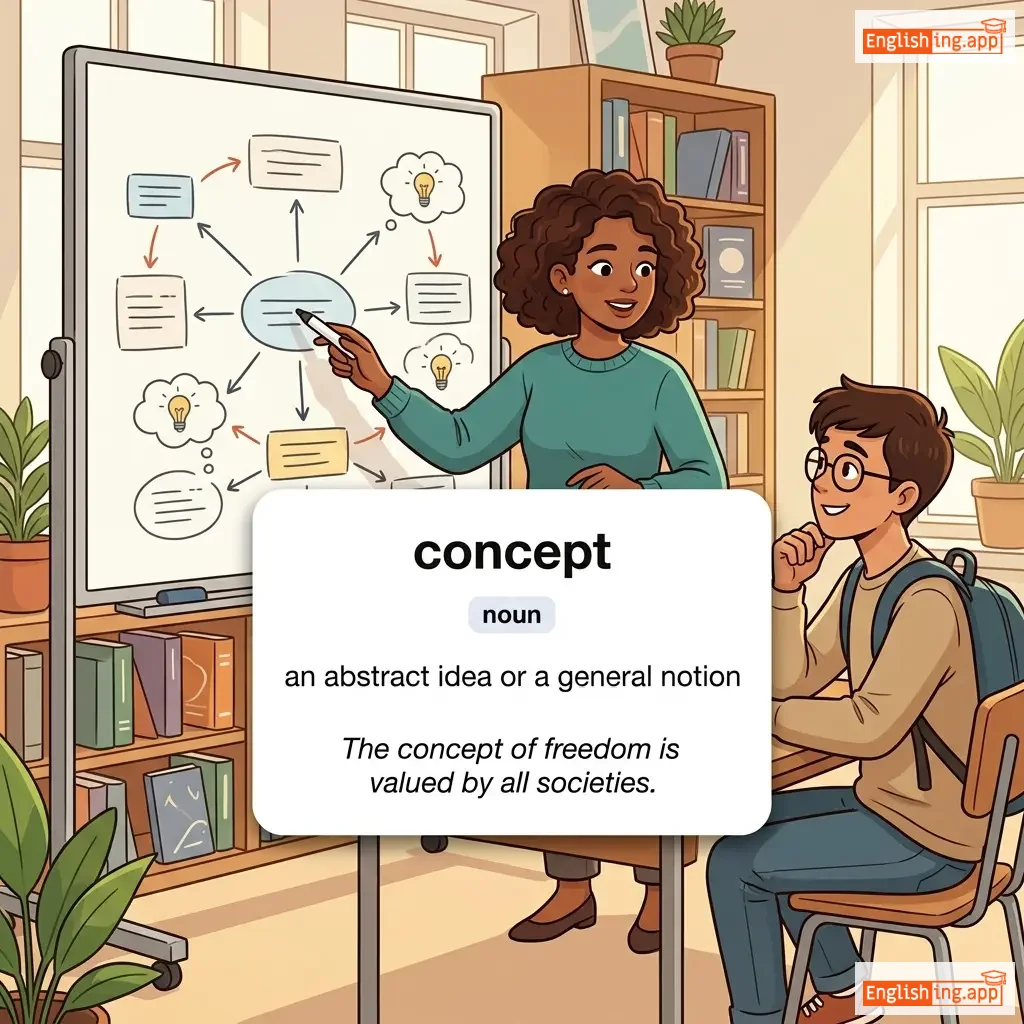
concept definition card — visual illustration of the meaning
noun
/ˈkɒnsɛpt/
концепт (kontsept)

an abstract idea or a general notion

"The concept of freedom is valued by all societies."

"Концепция свободы ценится всеми обществами." (Kontseptsiya svobody tsenitsya vsemi obshchestvami.)
noun
/kənˈsɛpʃən/
концепция, зачатие (kontseptsiya, zachatye)

the forming or understanding of an idea; the act of conceiving a child

"Her conception of the project was very different from ours."

"Её концепция проекта сильно отличалась от нашей." (Eyo kontseptsiya proyekta sil'no otlichalas' ot nashej.)
conceptualization definition card — visual illustration of the meaning
noun
kənˌsep.tʃu.ə.laɪˈzeɪ.ʃən
концептуализация (kontseptualizatsiya)

The process of forming a concept or idea; the process of developing something in the mind.

"The conceptualization of renewable cities is groundbreaking."

"Концептуализация возобновляемых городов является революционной." (Kontseptualizatsiya vozobnovlyayemykh gorodov yavlyaetsya revolyutsionnoy.)
verb
/kənˈsɛptʃuəlaɪz/
концептуализировать (kontseptualizirovat)

to form an idea or concept of something in your mind

"The artist conceptualized a new design for the exhibition."
"Художник концептуализировал новый дизайн для выставки." (Kudozhnik kontseptualiziroval novyy dizayn dlya vystavki.)
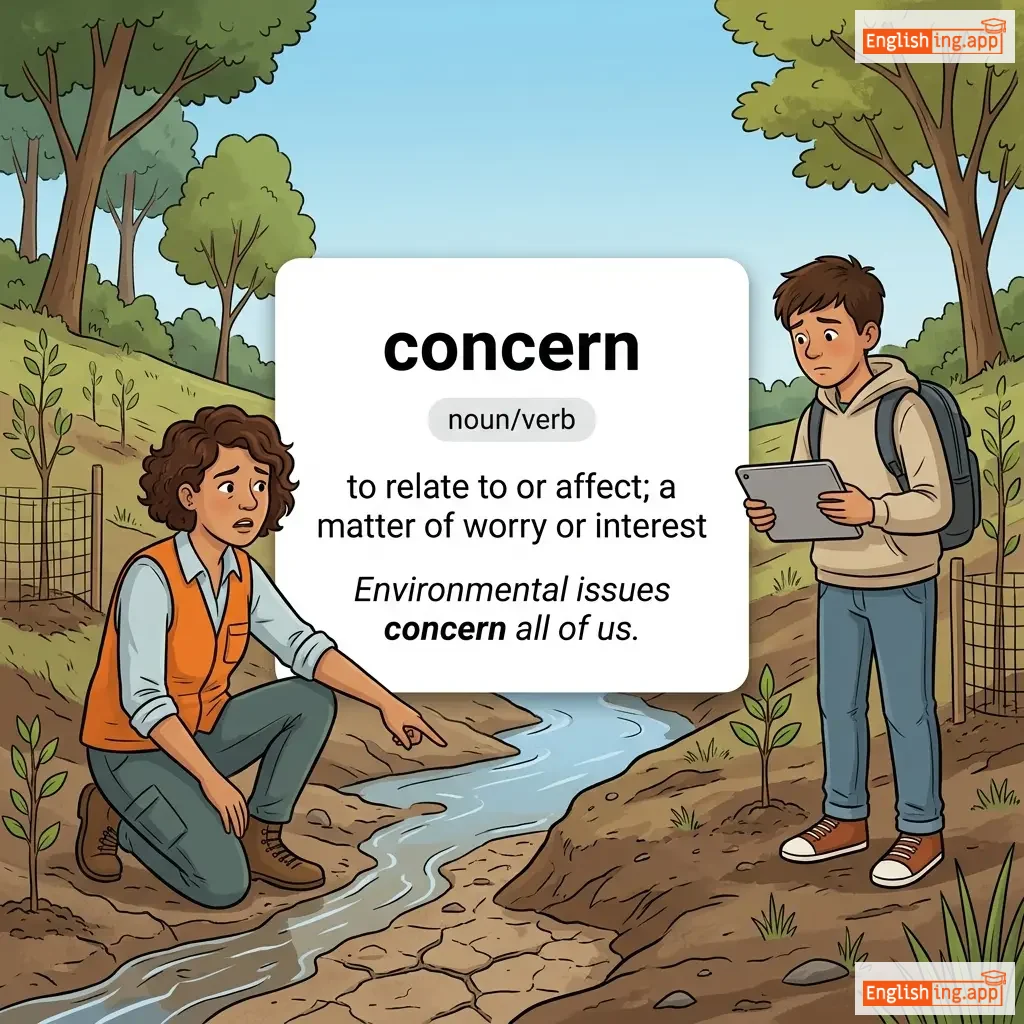
concern definition card — visual illustration of the meaning
noun/verb
/kənˈsɜːrn/
беспокойство, предмет беспокойства (bespokoystvo, predmet bespokoystva)

to relate to or affect; a matter of worry or interest

"Environmental issues concern all of us."

"Экологические проблемы волнуют нас всех." (Ekologicheskie problemy volnuyut nas vsekh.)
adjective
/kənˈsɜːnd/
обеспокоенный (obespokoennyi)

worried or anxious about something; involved or interested in something

"She was concerned about her mother's health."

"Она была обеспокоена здоровьем своей матери." (Ona byla obespokoena zdorov'em svoei materi.)
preposition
/kənˈsɜːnɪŋ/
касающийся (kasayushchiesya)

about or relating to something; causing worry or anxiety

"There are some reports concerning the new project."

"Есть несколько отчетов, касающихся нового проекта." (Yest' neskol'ko otchetov, kasayushchikhsya novogo proyektu.)
concert definition card — visual illustration of the meaning
noun
/ˈkɒnsət/
концерт (kontsert)

A musical performance given by one or more singers or musicians.

"We went to a concert last night and enjoyed the live music."

"Мы пошли на концерт вчера вечером и наслаждались живой музыкой." (My poshli na kontsert vchera vecherom i naslazhdalis' zhivoy muzykoy.)
adjective
/kənˈsɜːrtɪd/
согласованный (soglasovannyy)

done with great effort, planned and performed together by multiple people

"The workers made a concerted effort to improve conditions."

"Рабочие приложили согласованные усилия для улучшения условий." (Rabochie prilozhili soglasovannye usiliya dlya uluchsheniya usloviy.)
noun
/kənˈtʃɛrtoʊ/
музыкальная композиция (muzykal'naya kompozitsiya)

a musical composition for one or more solo instruments accompanied by an orchestra

"She played a Mozart concerto with the orchestra."

"Она сыграла концерт Моцарта с оркестром." (Ona sygrala kontsert Motsarta s orkestrom.)
noun
/kənˈsɛʃən/
уступка (ustupka)

something that is granted, especially in response to demands; a compromise

"The company made several concessions during the negotiations."

"Компания сделала несколько уступок в ходе переговоров." (Kompaniya sdelala neskol'ko ustupok v khode peregovorov.)
noun
/kɑːntʃ/
раковина (rakovina)

a large spiral shell, often used as a trumpet in ceremonies

"The priest blew the conch to begin the ritual."

"Священник подул в раковину, чтобы начать ритуал." (Svyashchennik podul v rakovinu, chtoby nachat' ritual.)
verb
/kənˈsɪlieɪt/
примирить (primirit)

to stop someone from being angry; to win over by friendly acts

"He tried to conciliate the angry customer with an apology."
"Он попытался примирить разъяренного клиента с помощью извинений." (On popytalsya primirit' raz'yarennoho kliyenta s pomoshch'yu izvineniy.)
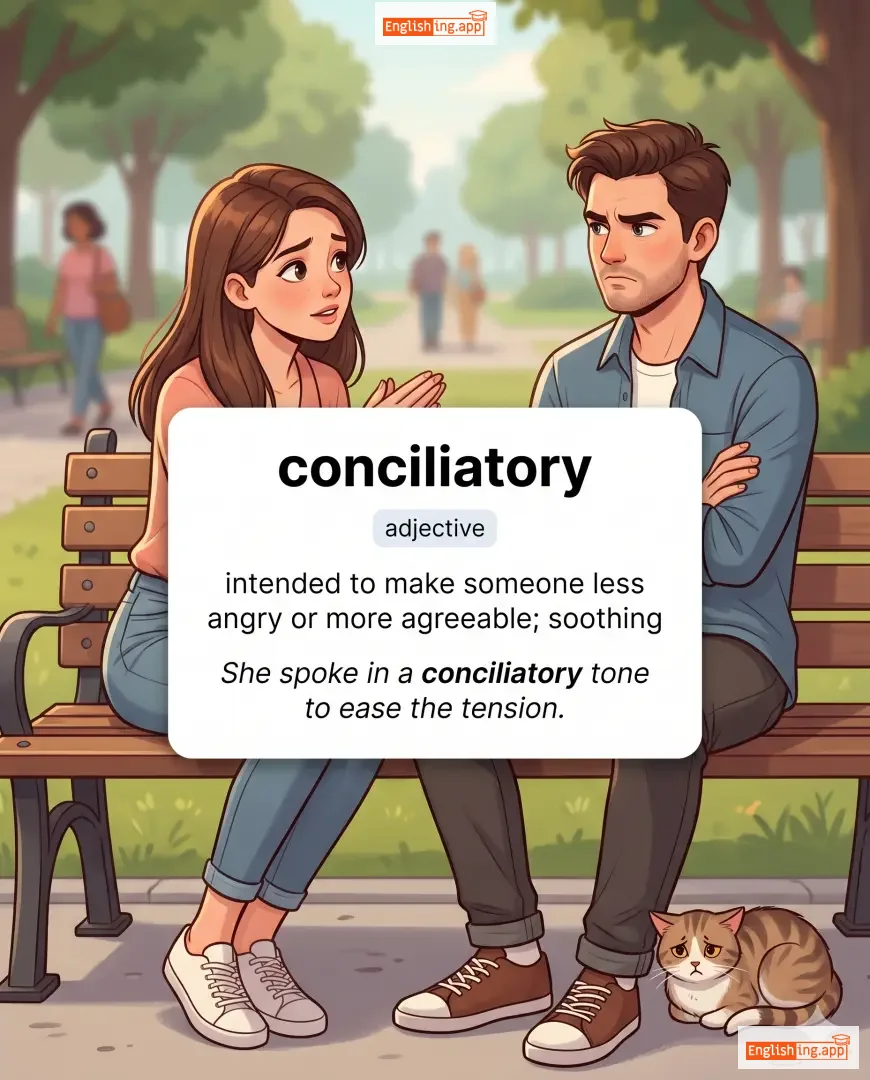
conciliatory definition card — visual illustration of the meaning
adjective
/kənˈsɪliətɔːri/
примирительный (primiritel'nyy)

intended to make someone less angry or more agreeable; soothing

"She spoke in a conciliatory tone to ease the tension."

"Она говорила примирительным тоном, чтобы уменьшить напряжение." (Ona govoryla primiritel'nym tonom, chtoby umen'shit' napryazhenie.)
concise definition card — visual illustration of the meaning
adjective
/kənˈsaɪs/
краткий (kratkiy)

giving much information clearly and in a few words; brief but comprehensive

"The teacher asked for a concise summary of the article."

"Учитель попросил краткое изложение статьи." (Uchitel' poprosil kratkoe izlozhenie stat'i.)
noun
/kɒŋk/
раковина (rakovina)

a shell, especially a large spiral one used as a horn or for decoration

"The priest blew the conch shell to signal the start of the ceremony."

"Священник подул в раковину, чтобы сигнализировать о начале церемонии." (Svyashchennik podul v rakovinu, chtoby signalizirovat' o nachale tseremonii.)
noun
/ˈkɒnk.leɪv/
секретное собрание (sekretnoe sobranie)

a private meeting, especially a secret or important one

"The leaders met in a secret conclave to discuss the strategy."
"Лидеры встретились на секретном конклаве, чтобы обсудить стратегию." (Lidery vstretilis na sekretnom konklave, chtoby obsudit' strategiyu.)
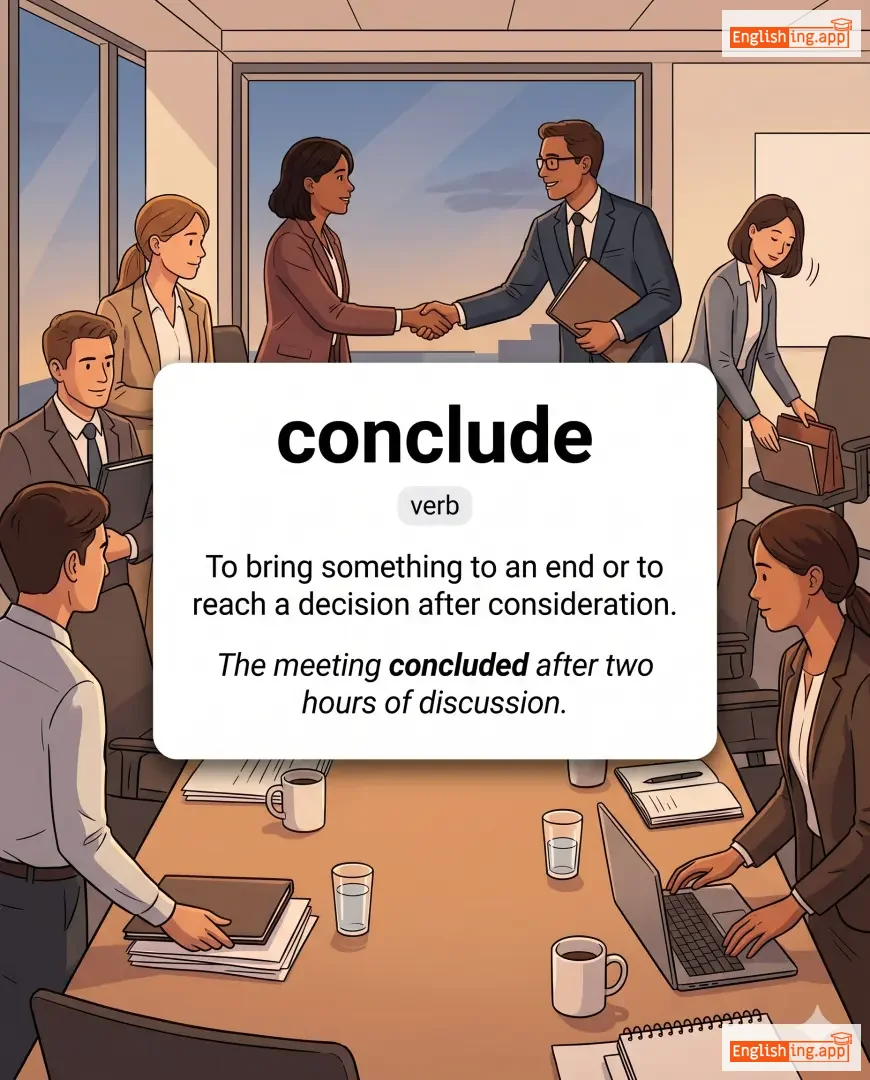
conclude definition card — visual illustration of the meaning
verb
/kənˈkluːd/
заключить, прийти к решению (zaklyuchit', priyti k resheniyu)

To bring something to an end or to reach a decision after consideration.

"The meeting concluded after two hours of discussion."

"Совещание завершилось через два часа обсуждения." (Soveshchanie zavershilos' cherez dva chasa obsuzhdeniya.)
noun
/kənˈkluːʒən/
заключение (zaklyucheniye)

The end or finish of an event, process, or text; a judgment reached after consideration.

"The research paper ends with a strong conclusion."

"Исследовательская работа заканчивается сильным заключением." (Issledovatelskaya rabota zakanchivayetsya sil'nym zaklyucheniem.)
adjective
/kənˈkluːsɪv/
окончательный (okonychatel'nyj)

serving to prove a case; decisive or convincing

"The DNA test provided conclusive evidence of his innocence."

"Тест ДНК предоставил убедительные доказательства его невиновности." (Test DNA predostavil ubeditel'nye dokazy ego nevinovnosti.)
concoct definition card — visual illustration of the meaning
verb
/kənˈkɒkt/
составить или придумать (sostavit' ili pridumat')

to make something, especially food or a story, by mixing or inventing

"He concocted a story to explain his absence."
"Он придумал историю, чтобы объяснить свое отсутствие." (On pridumal istoriyu, chtoby ob'yasnit' svoe otsutstvie.)
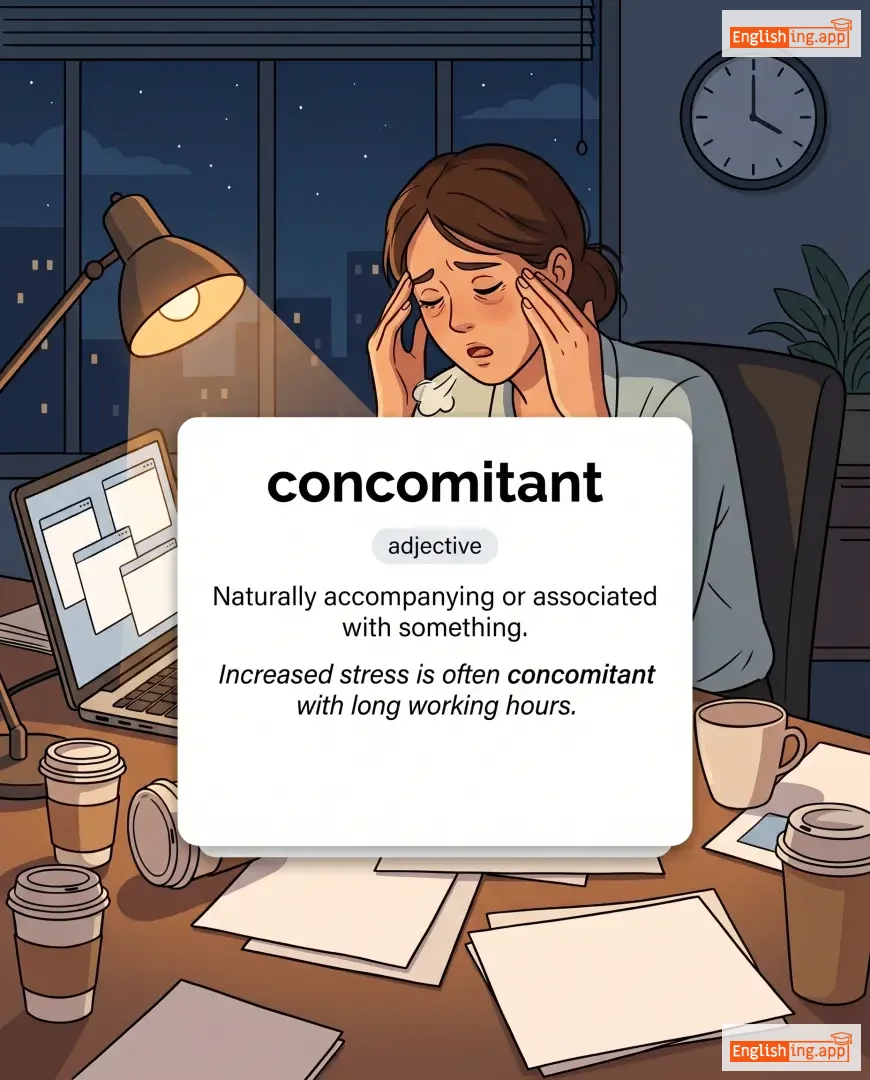
concomitant definition card — visual illustration of the meaning
adjective
/kənˈkɒmɪtənt/
сопутствующий (soputstvuyushchiy)

Naturally accompanying or associated with something.

"Increased stress is often concomitant with long working hours."
"Увеличение стресса часто сопряжено с длительным рабочим временем." (Uvelichenie stressa chasto soputstvuyet s dlitelnym rabochim vremyanym.)
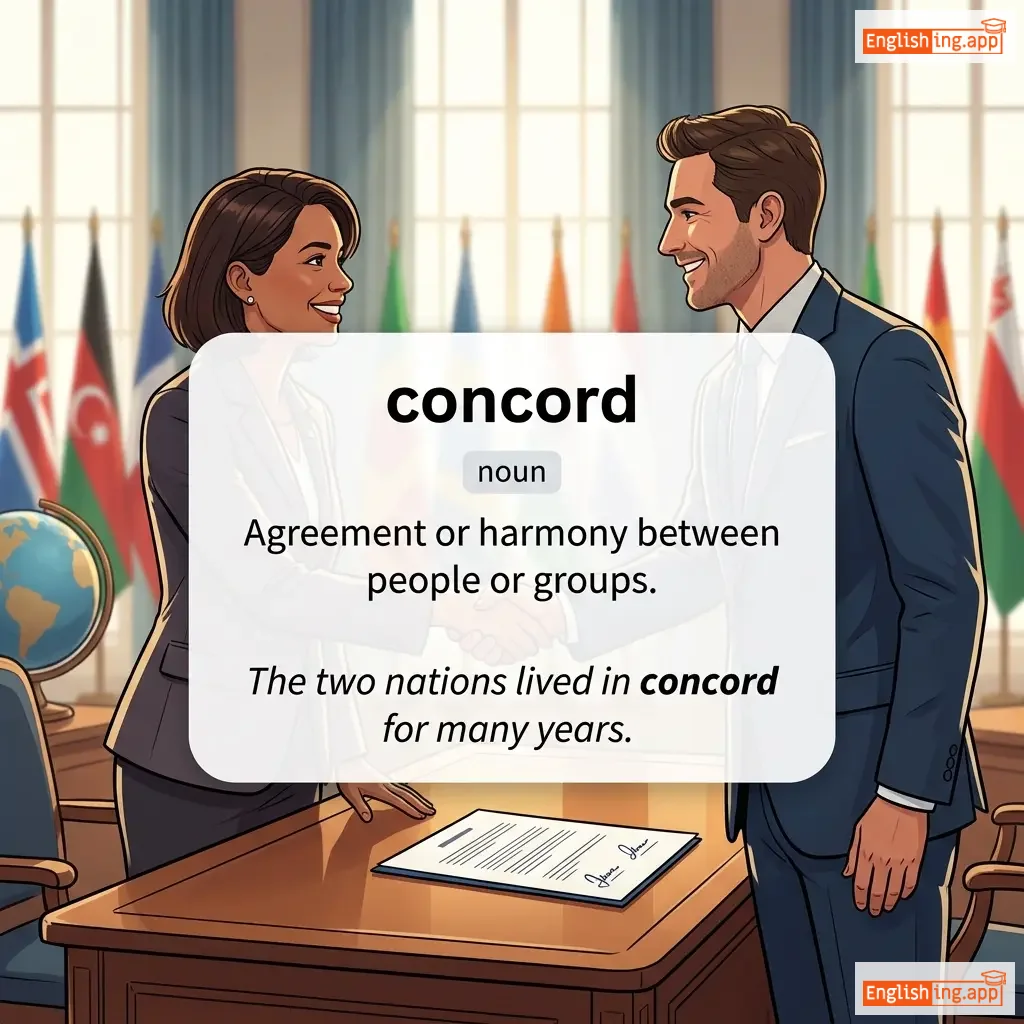
concord definition card — visual illustration of the meaning
noun
/ˈkɒŋ.kɔːd/
согласие (soglasie)

Agreement or harmony between people or groups.

"The two nations lived in concord for many years."

"Два государства жили в согласии много лет." (Dva gosudarstva zhili v soglasii mnogo let.)
noun
/kənˈkɔːrdəns/
согласованность (soglasovannost)

Agreement; also an alphabetical index of the principal words in a book.

"There is a strong concordance between the two reports."

"Существует сильная согласованность между двумя отчетами." (Sushchestvuet sil'naya soglasovannost' mezhdu dvumya otchety.)
noun
/ˈkɒŋ.kɔː.dæt/
конкордат (konkordat)

An agreement or treaty, especially between the Vatican and a secular government.

"The concordat established the rights of the church within the country."

"Конкордат установил права церкви в стране." (Konkordat ustanovil prava tserkvi v strane.)
adjective
/ˈkɒŋkriːt/
конкретный (konkretnyj)

based on facts, not on ideas or guesses; specific and real

"She gave a concrete example to support her argument."

"Она привела конкретный пример, чтобы поддержать свой аргумент." (Ona privela konkretnyj primer, chtoby podderzhat' svoj argument.)
verb
/kənˈkɜːr/
согласиться (soglasitsya)

To agree with someone or something.

"I concur with your opinion on this matter."

"Я согласен с вашим мнением по этому вопросу." (Ya soglasen s vashim mneniem po etomu voprosu.)
noun
/kənˈkʌrəns/
согласие (soglasie)

Agreement or union in action, opinion, or occurrence; simultaneous happening of events.

"The project was completed with the concurrence of all departments."
"Проект был завершён с согласия всех отделов." (Proyekt byl zavershyon s soglasiya vsekh otdelov.)
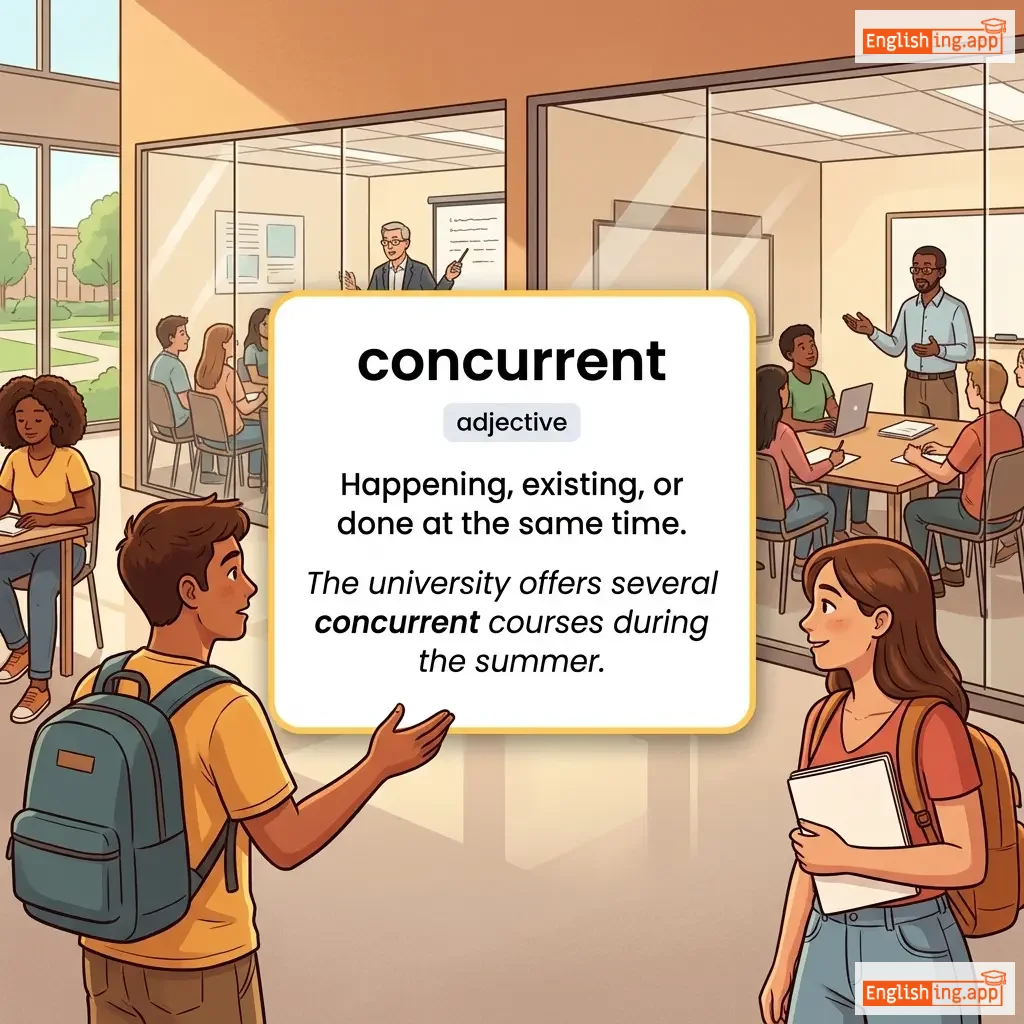
concurrent definition card — visual illustration of the meaning
adjective
/kənˈkʌrənt/
одновременный (odnovremennyy)

Happening, existing, or done at the same time.

"The university offers several concurrent courses during the summer."

"Университет предлагает несколько одновременных курсов летом." (Universitet predlagayet neskol'ko odnovremennykh kursov letom.)
noun
/kənˈkʌʃən/
сотрясение мозга (sotryasenie mozga)

A temporary unconsciousness or shock caused by a blow to the head.

"He suffered a concussion after falling from the bike."
"Он получил сотрясение мозга после того, как упал с велосипеда." (On poluchil sotryasenie mozga posle togo, kak upal s velosipeda.)
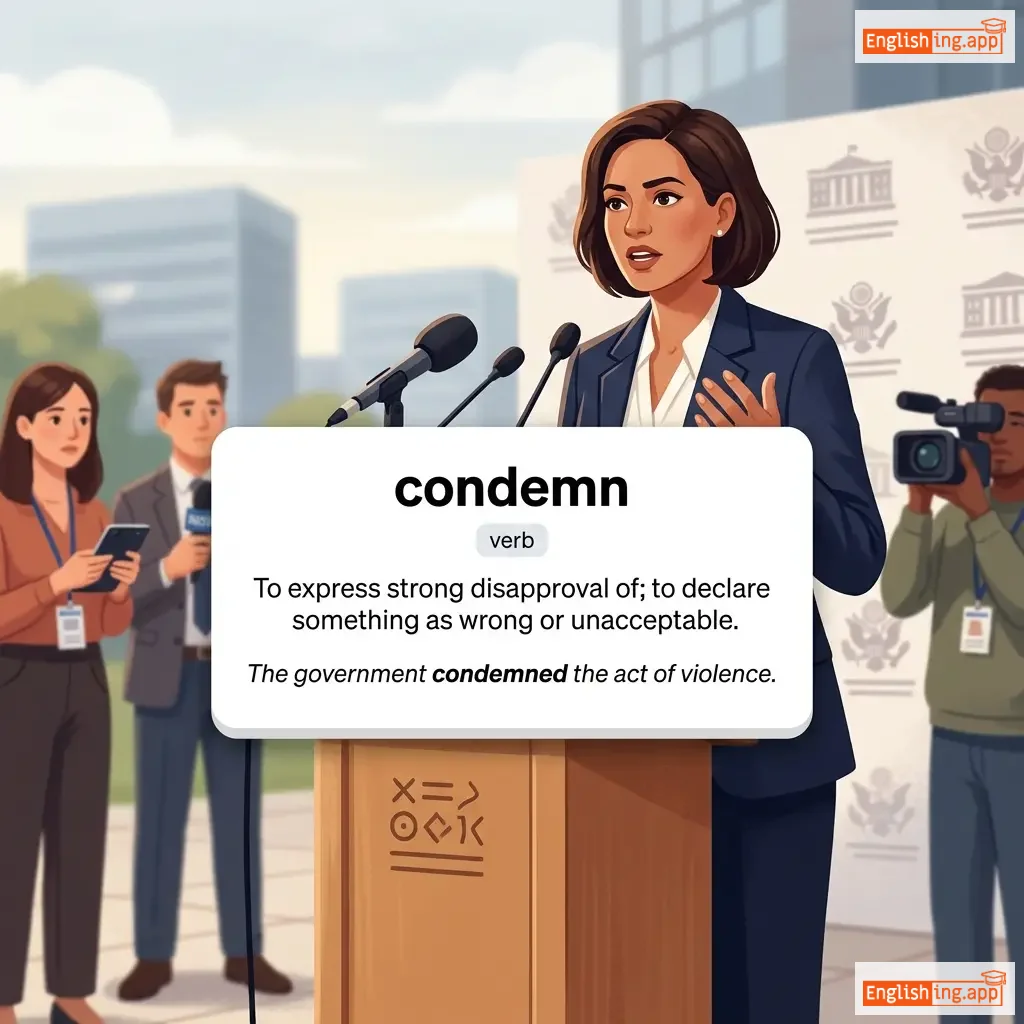
condemn definition card — visual illustration of the meaning
verb
/kənˈdɛm/
осуждать (osuzhdat)

To express strong disapproval of; to declare something as wrong or unacceptable.

"The government condemned the act of violence."

"Правительство осудило акт насилия." (Pravitel'stvo osudilo akt nasiliya.)