वोकैबुलरीज

इंग्लिश वोकैबुलरी डिस्कवर, लर्न और मास्टर करें

conquer definition card — visual illustration of the meaning
verb
/ˈkɒŋkər/
विजय प्राप्त करना (vijay prapt karna)

To defeat and take control of a place or people by force.

"The king set out to conquer new lands."

"राजा नए भूमि को जीतने के लिए निकला।" (Raja naye bhoomi ko jeetne ke liye nikla.)
adjective
/kɒnˈsæŋɡwɪn/
रक्तसंबंधी (raktasambandhi)

Of the same blood or origin; related by birth.

"The two families were consanguine through their grandparents."

"दो परिवार अपने दादा-दादी के माध्यम से रक्तसंबंधी थे।" (Do parivār apne dādā-dādī ke mādhyam se raktasambandhi the.)
adjective
/ˌkɒnsæŋˈɡwɪniəs/
रक्तसंबंधी (raktsambandhi)

Related by blood; descended from the same ancestor.

"The study focused on genetic disorders in consanguineous families."

"अध्यान ने रक्तसंबंधी परिवारों में आनुवंशिक विकारों पर ध्यान केंद्रित किया।" (Adhyan ne raktsambandhi parivar mein aanuvanshik vikar par dhyan kendrit kiya.)
noun
/ˌkɒnsæŋˈɡwɪnɪti/
रक्तसंबंध (raktasambandh)

The fact of being descended from the same ancestor; blood relationship.

"The degree of consanguinity was important in inheritance laws."

"विरासत कानूनों में रक्तसंबंध की डिग्री महत्वपूर्ण थी।" (Virasat kanoonon mein raktasambandh ki digri mahatvapurn thi.)
noun
/ˈkɒnʃəns/
सचेतना (sachetna)

An inner sense of right and wrong that guides a person's actions.

"Her conscience told her to admit the mistake."

"उसकी सचेतना ने उसे गलती स्वीकार करने को कहा।" (Uski sachetna ne use galti svikar karne ko kaha.)
conscientious definition card — visual illustration of the meaning
adjective
/ˌkɒnʃiˈɛnʃəs/
सतर्क और ईमानदार (satark aur imandar)

Wishing to do what is right, especially to do one's work or duty well and thoroughly.

"He is a conscientious employee who always meets deadlines."

"वह एक सतर्क और ईमानदार कर्मचारी है जो हमेशा समयसीमा को पूरा करता है।" (Wah ek satark aur imandar karmchari hai jo hamesha samayseema ko poora karta hai.)
conscientiousness definition card — visual illustration of the meaning
noun
/ˌkɒn.ʃiˈen.ʃəs.nəs/
नैतिकता, जिम्मेदारी, मेहनत (naitikta, jimmedari, mehnat)

The quality of wishing to do what is right, especially to do one's work or duty well and thoroughly.

"Her conscientiousness makes her a great leader."

"उसकी सचेतनता उसे एक महान नेता बनाती है।" (Uski sachetnata use ek mahaan neta banati hai.)
adjective
/ˈkɒnʃəs/
सचेत (sachet)

Aware of and responding to one's surroundings; awake.

"She was fully conscious after the surgery."

"वह सर्जरी के बाद पूरी तरह से सचेत थी।" (Vah sarjari ke baad puri tarah se sachet thi.)
consciousness definition card — visual illustration of the meaning
noun
/ˈkɒnʃəsnəs/
सचेतना (sachetna)

the state of being aware of and able to think about oneself and the environment

"The patient regained consciousness after the surgery."

"सर्जरी के बाद मरीज को होश आया।" (Surgery ke baad mareez ko hosh aaya.)
conscript definition card — visual illustration of the meaning
verb
/ˈkɒnskrɪpt/
सैन्य में भर्ती करने के लिए मजबूर करना (sainya mein bharti karne ke liye majboor karna)

to force someone into military service

"The government conscripted young men during the war."

"युद्ध के दौरान सरकार ने युवा पुरुषों को सैन्य सेवा में भर्ती किया।" (Yudh ke dauran sarkar ne yuva purushon ko sainya seva mein bharti kiya.)
consecrate definition card — visual illustration of the meaning
verb
/ˈkɒnsɪkreɪt/
पवित्र करना (pavitra karna)

to make something sacred, usually through a religious ceremony

"The church was consecrated by the bishop."

"चर्च को बिशप द्वारा पवित्र किया गया था।" (Church ko bishop dwara pavitra kiya gaya tha.)
adjective
/kənˈsɛkjʊtɪv/
क्रमागत (kramagat)

following one after another without interruption

"She won three consecutive matches."

"वह तीन लगातार मैच जीत चुकी थी।" (Wah teen lagatar match jeet chuki thi.)
consensus definition card — visual illustration of the meaning
noun
/kənˈsɛnsəs/
सहमति (sahmati)

general agreement among a group of people

"The team reached a consensus on the new strategy."

"टीम ने नई रणनीति पर सहमति बनाई।" (Team ne nayi ranneeti par sahmati banayi.)
consent definition card — visual illustration of the meaning
noun
/kənˈsɛnt/
अनुमति (anumati)

permission for something to happen or agreement to do something

"She gave her consent before the operation."

"उसने ऑपरेशन से पहले अपनी सहमति दी।" (Usne operation se pehle apni sahmati di.)
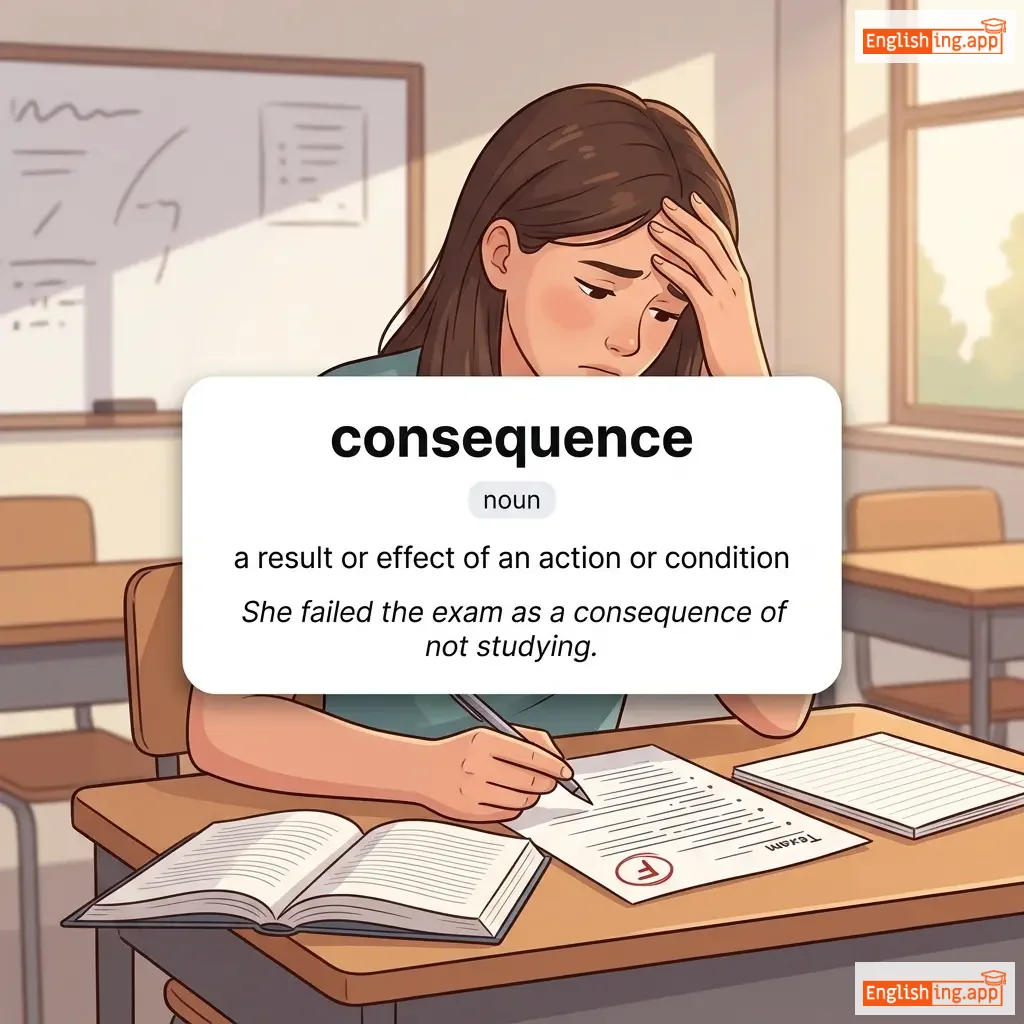
consequence definition card — visual illustration of the meaning
noun
/ˈkɒnsɪkwəns/
परिणाम (parinaam)

a result or effect of an action or condition

"She failed the exam as a consequence of not studying."

"वह परीक्षा में असफल हुई क्योंकि उसने अध्ययन नहीं किया था।" (Vah pareeksha mein asafal hui kyonki usne adhyayan nahi kiya tha.)
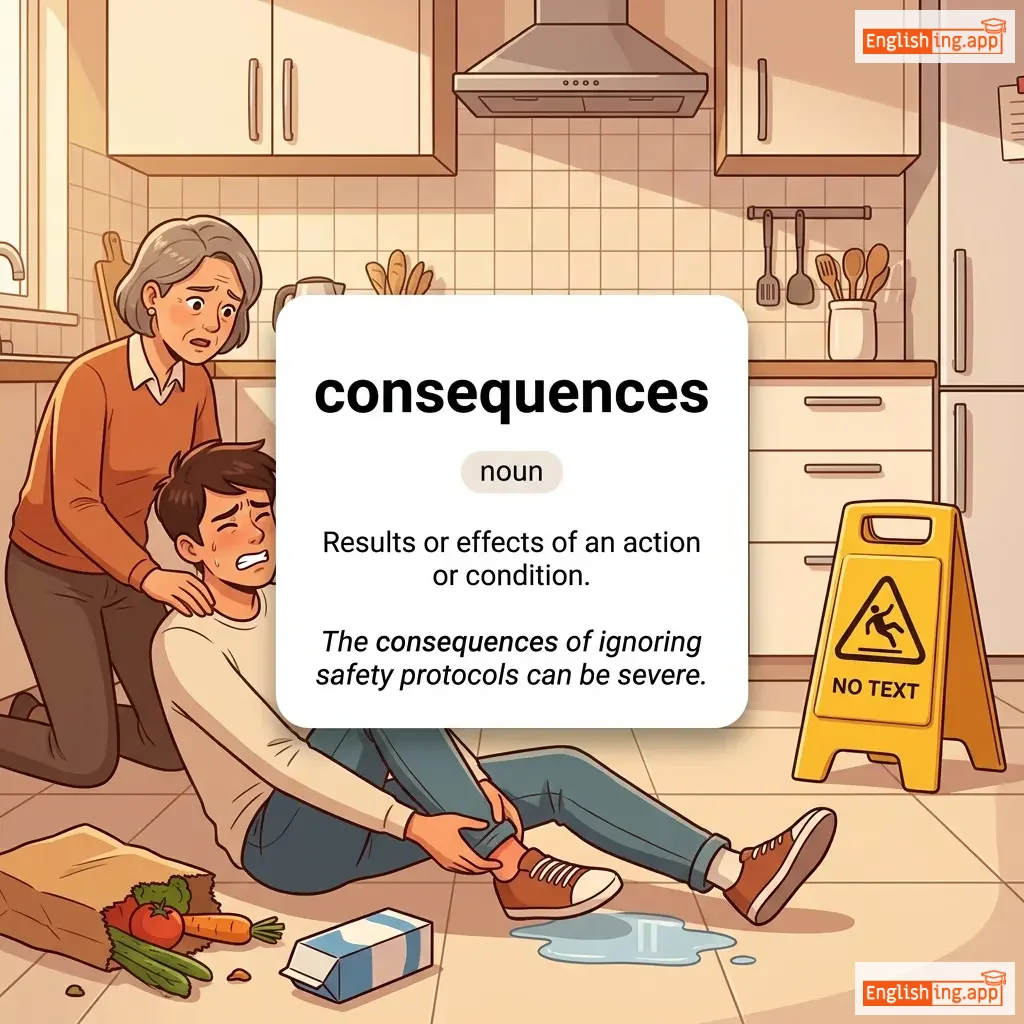
consequences definition card — visual illustration of the meaning
noun
/ˈkɒnsɪkwənsɪz/
परिणाम (parinaam)

Results or effects of an action or condition.

"The consequences of ignoring safety protocols can be severe."

"सुरक्षा प्रोटोकॉल की अनदेखी करने के परिणाम गंभीर हो सकते हैं।" (Suraksha protocol ki andekhi karne ke parinaam gambhir ho sakte hain.)
adjective
/ˌkɒnsɪˈkwɛnʃəl/
महत्वपूर्ण (mahatvapoorn)

Having important or significant consequences; resulting from something.

"The meeting was consequential for the future of the project."

"बैठक परियोजना के भविष्य के लिए महत्वपूर्ण थी।" (Baithak pariyojna ke bhavishya ke liye mahatvapoorn thi.)
adverb
/ˈkɒnsɪkwəntli/
परिणामस्वरूप (parinaamswaroop)

as a result; therefore

"He didn’t study, and consequently he failed the exam."

"उसने अध्ययन नहीं किया, और परिणामस्वरूप वह परीक्षा में फेल हो गया।" (Usne adhyayan nahi kiya, aur parinaamswaroop vah pareeksha mein fel ho gaya.)
conservation definition card — visual illustration of the meaning
noun
/ˌkɒnsəˈveɪʃən/
संरक्षण (sanrakshan)

the protection and preservation of natural resources and the environment

"Conservation of forests is essential to prevent climate change."

"वनों का संरक्षण जलवायु परिवर्तन को रोकने के लिए आवश्यक है।" (vanon ka sanrakshan jalvayu parivartan ko rokne ke liye avashyak hai.)
Conservation Movement definition card — visual illustration of the meaning
noun
/ˌkɒnsərˈveɪʃən ˈmuːvmənt/
संरक्षण आंदोलन (sangrakshan aandolan)

A political, environmental, and social movement that seeks to protect natural resources including plant and animal species as well as their habitat for the future.

"The conservation movement began in the 19th century to protect wildlife."

"संरक्षण आंदोलन ने 19वीं सदी में वन्यजीवों को बचाने के लिए शुरुआत की थी।" (sangrakshan aandolan ne 19vi sadi mein vanyajeevon ko bachane ke liye shuruat ki thi.)
noun
/kənˈsɜːvəˌtɪzəm/
संर्यवाद (sarnyavad)

A political or social philosophy promoting traditional institutions and resistance to change.

"Conservatism values tradition and gradual development."

"संर्यवाद परंपरा और धीरे-धीरे विकास को महत्व देता है।" (Sarnyavad parampara aur dheere-dheere vikas ko mahatva deta hai.)
adjective
/kənˈsɜːvətɪv/
संवेदनशील (sanvedansheel)

Favoring traditional views and values; resistant to change.

"He has conservative views on family and society."

"उसके परिवार और समाज पर परंपरागत दृष्टिकोण हैं।" (Uske parivaar aur samaaj par paramparagat drishtikon hain.)
noun
/ˈkɒnsəvəˌtwɑː/
संगीत विद्यालय (sangeet vidyalay)

A school specializing in the study of music or drama.

"She trained as a pianist at the Paris Conservatoire."

"वह पेरिस कन्सर्वेटॉयर में पियानो सीखने के लिए प्रशिक्षित हुई।" (Wah Paris Conservatoire mein piano seekhne ke liye prashikshit hui.)
noun
/kənˈsɜːvəˌtɔːri/
कांचघर / संगीत विद्यालय (kanchghar / sangeet vidyalay)

A greenhouse for growing plants or a school for music and the arts.

"They grew exotic plants in the conservatory."

"उन्होंने कंसरवे‍टरी में विदेशी पौधों की खेती की।" (Unhone conservatory mein videshi paudhon ki kheti ki.)
verb
/kənˈsɜːrv/
संरक्षित करना (sanrakshit karna)

to protect something from harm or destruction; to use resources carefully to avoid waste

"We must conserve water during the dry season."

"हमें सूखा मौसम में पानी बचाना चाहिए।" (Humein sukkha mausam mein paani bachana chahiye.)
verb
/kənˈsɪdər/
विचार करना (vichar karna)

to think carefully about something, especially before making a decision

"She is considering studying abroad next year."

"वह अगले साल विदेश में पढ़ाई करने पर विचार कर रही है।" (Woh agle saal videsh mein padhai karne par vichar kar rahi hai.)
adjective
/kənˈsɪdərəbl/
महत्वपूर्ण (mahatvapoorn)

large in amount, size, or importance

"The project required a considerable amount of time and money."

"प्रोजेक्ट को महत्वपूर्ण समय और पैसे की आवश्यकता थी।" (Project ko mahatvapoorn samay aur paise ki avashyakta thi.)
adverb
/kənˈsɪdərəbli/
काफी हद तक (kaafi had tak)

to a great extent or degree; significantly

"The weather has improved considerably since last week."

"मौसम पिछले सप्ताह के बाद काफी हद तक सुधर चुका है।" (Mausam pichhle saptah ke baad kaafi had tak sudhar chuka hai.)
adjective
/kənˈsɪdərət/
सहानुभूतिपूर्ण (sahanubhutipurn)

showing concern for the needs and feelings of others

"He is always considerate of his neighbors."

"वह हमेशा अपने पड़ोसियों के प्रति सहानुभूतिपूर्ण होता है।" (Vah hamesha apne padosiyon ke prati sahanubhutipurn hota hai.)
noun
/kənˌsɪdəˈreɪʃən/
सुख (sukh)

careful thought or attention to something before making a decision

"After much consideration, she accepted the job offer."

"वह पुरस्कार मिलने पर अपनी खुशी नहीं छिपा पाई।" (Wah puraskar milne par apni khushi nahin chhupa paayi.)
verb
/kənˈsaɪn/
सौंपना (saunpna)

to deliver something to a person or place, often for selling or safekeeping

"He consigned the package to the shipping company."

"उसने पैकेज को शिपिंग कंपनी को सौंपा।" (Usne package ko shipping company ko saunp diya.)
noun
/ˌkɒnsaɪˈniː/
प्राप्तकर्ता (praaptakarta)

the person or company to whom goods are delivered

"The consignee received the shipment on time."

"प्राप्तकर्ता ने समय पर शिपमेंट प्राप्त किया।" (Praptakarta ne samay par shipment prapt kiya.)
noun
/kənˈsaɪnər/
प्रेषक (preshak)

a person or company that sends goods to be sold or transported

"The consignor shipped the goods to the warehouse."

"प्रेषक ने माल को गोदाम में भेजा।" (Preshak ne maal ko godam mein bheja.)
verb
/kənˈsɪst/
गठित होना (gathit hona)

to be made up or composed of certain parts or elements

"The committee consists of five members."

"कमिटी पांच सदस्यों से बनी है।" (Kmiti paanch sadasyon se bani hai.)
consistency definition card — visual illustration of the meaning
noun
/kənˈsɪstənsi/
संगति, स्थिरता (sangati, sthirata)

the quality of always behaving or performing in a similar way; uniformity

"Her consistency in work earned her a promotion."

"उसकी काम में निरंतरता ने उसे पदोन्नति दिलाई।" (Uski kaam mein nirantarata ne use podonnoti dilayi.)
consistent definition card — visual illustration of the meaning
adjective
/kənˈsɪstənt/
संगतपूर्ण (sangatpoorn)

acting or done in the same way over time; reliable or uniform

"He is very consistent in his work."

"वह अपने काम में बहुत संगतपूर्ण है।" (Vah apne kaam mein bahut sangatpoorn hai.)
adverb
/kənˈsɪstəntli/
नियमित रूप से (niyamit roop se)

in a way that does not vary; regularly and dependably

"She has been performing consistently well in her studies."

"वह अपनी पढ़ाई में नियमित रूप से अच्छा प्रदर्शन कर रही है।" (Wah apni padhai mein niyamit roop se accha pradarshan kar rahi hai.)
verb
/kənˈsoʊl/
सांत्वना देना (santvana dena)

to comfort someone at a time of grief or disappointment

"She tried to console him after his loss."

"उसने उसके नुकसान के बाद उसे सांत्वना देने की कोशिश की।" (Usne uske nuksan ke baad use santvana dene ki koshish ki.)
consolidate definition card — visual illustration of the meaning
verb
/kənˈsɑːlɪdeɪt/
एकत्रित करना, मजबूत करना (ekatrit karna, majboot karna)

to combine into a single, more effective or coherent whole

"The company plans to consolidate its offices into one building."

"कंपनी अपनी ऑफिसों को एक इमारत में समाहित करने की योजना बना रही है।" (Company apni offices ko ek imarat mein samaahit karne ki yojna bana rahi hai.)
Consolidation definition card — visual illustration of the meaning
noun
/kənˌsɑːlɪˈdeɪʃən/
एकत्रीकरण (ektrikaran)

the act or process of combining into a single, stronger or more effective entity

"The consolidation of the two companies improved efficiency."

"दो कंपनियों का एकत्रीकरण दक्षता में सुधार किया।" (Do companyon ka ektrikaran dakshata mein sudhaar kiya.)
noun
/ˈkɒnsənəns/
सामंजस्य, सुरेल मेल (samanjashya, surel mel)

Agreement or harmony among parts; a pleasing combination of sounds in music or words.

"The consonance between their ideas made the project successful."

"उनके विचारों के बीच सामंजस्य ने परियोजना को सफल बना दिया।" (Unke vicharon ke beech samanjasya ne pariyojna ko safal bana diya.)
noun
/ˈkɒnsənənt/
व्यंजन (vyajan)

A speech sound produced by blocking air flow, or a letter representing such a sound.

"The word 'cat' has two consonants and one vowel."

"'कैट' शब्द में दो व्यंजन और एक स्वर हैं।" ('cat' shabd mein do vyajan aur ek swar hain.)
verb
/ˈkɒnsɔːrt/
संगत, सम्राट की पत्नी (sangat, samrat ki patni)

To associate with someone, typically with disapproval; also, a spouse of a reigning monarch.

"He was criticized for consorting with criminals."

"उसे अपराधियों के साथ मेलजोल रखने के लिए आलोचना की गई।" (Use aparadhiyon ke saath meljol rakhne ke liye alochana ki gayi.)
consortium definition card — visual illustration of the meaning
noun
kənˈsɔː.ti.əm
संघ (sangh)

An association of several companies or organizations formed to undertake an enterprise beyond the resources of any one member.

"The consortium worked collaboratively to build the cable."

"कंसोर्टियम ने मिलकर केबल बनाने के लिए सहयोग किया।" (Konsorṭiyam ne milkar kyabal banane ke liye sahyog kiya.)
adjective
/kənˈspɪkjuəs/
साफ़ दिखाई देने वाला (saaf dikhai dene wala)

Easily noticeable; attracting attention due to being unusual or prominent.

"Her red dress made her conspicuous at the party."

"उसकी लाल ड्रेस उसे पार्टी में साफ़ दिखाई देती थी।" (Uski laal dress use party mein saaf dikhai deti thi.)
noun
/kənˈspɪrəsi/
साज़िश (saazish)

A secret plan by a group to do something unlawful or harmful.

"The police uncovered a conspiracy to overthrow the government."

"पुलिस ने सरकार को उखाड़ फेंकने की साज़िश का खुलासा किया।" (Police ne sarkar ko ukhaad phenkne ki saazish ka khulasa kiya.)
noun
/kənˈspɪrə.tər/
साजिशकर्ता (saazishkartaa)

a person who secretly plans with others to do something unlawful or harmful

"The conspirator was arrested before the plan could be carried out."

"साजिशकर्ता को योजना के पूरा होने से पहले गिरफ्तार कर लिया गया था।" (saazishkarta ko yojna ke poora hone se pehle giraftaar kar liya gaya tha.)
verb
/kənˈspaɪər/
साजिश करना (saazish karna)

to secretly plan with others to do something harmful or illegal

"They conspired to overthrow the government."

"वे सरकार को उखाड़ फेंकने के लिए साजिश कर रहे थे।" (ve sarkar ko ukhad phenkne ke liye saazish kar rahe the.)
noun
/ˈkʌn.stə.bəl/
कॉनस्टेबल (constable)

a police officer of the lowest rank

"The constable directed traffic at the busy intersection."

"कॉनस्टेबल ने व्यस्त चौराहे पर यातायात का संचालन किया।" (constable ne vyast chaurahen par yatayat ka sancharan kiya.)
noun
/ˈkɒnstənsi/
दृढ़ता/निष्ठा (dridhata/nishtha)

the quality of being faithful and dependable

"Her constancy in friendship is admirable."

"उसकी दोस्ती में निष्ठा सराहनीय है।" (Uski dosti mein nishtha sarahniya hai.)