語彙集

英単語辞書 | 単語の意味、定義、例文

adjective
/ɪmˈpræktɪkəbl/
実行不可能 (jikkou fukanou)

Not capable of being carried out or put into practice.

"The plan seemed impracticable due to limited resources."

"資源が限られていたため、計画は実行不可能に見えました。" (Shigen ga kagirarete ita tame, keikaku wa jikkou fukanou ni miemashita.)
verb
/ˈɪmprɪkeɪt/
呪う (norou)

To utter a curse or invoke evil upon someone.

"The old woman imprecated her enemies with dark words."
"その年老いた女性は暗い言葉で敵を呪いました。" (Sono toshi oita josei wa kurai kotoba de teki wo noroi mashita.)
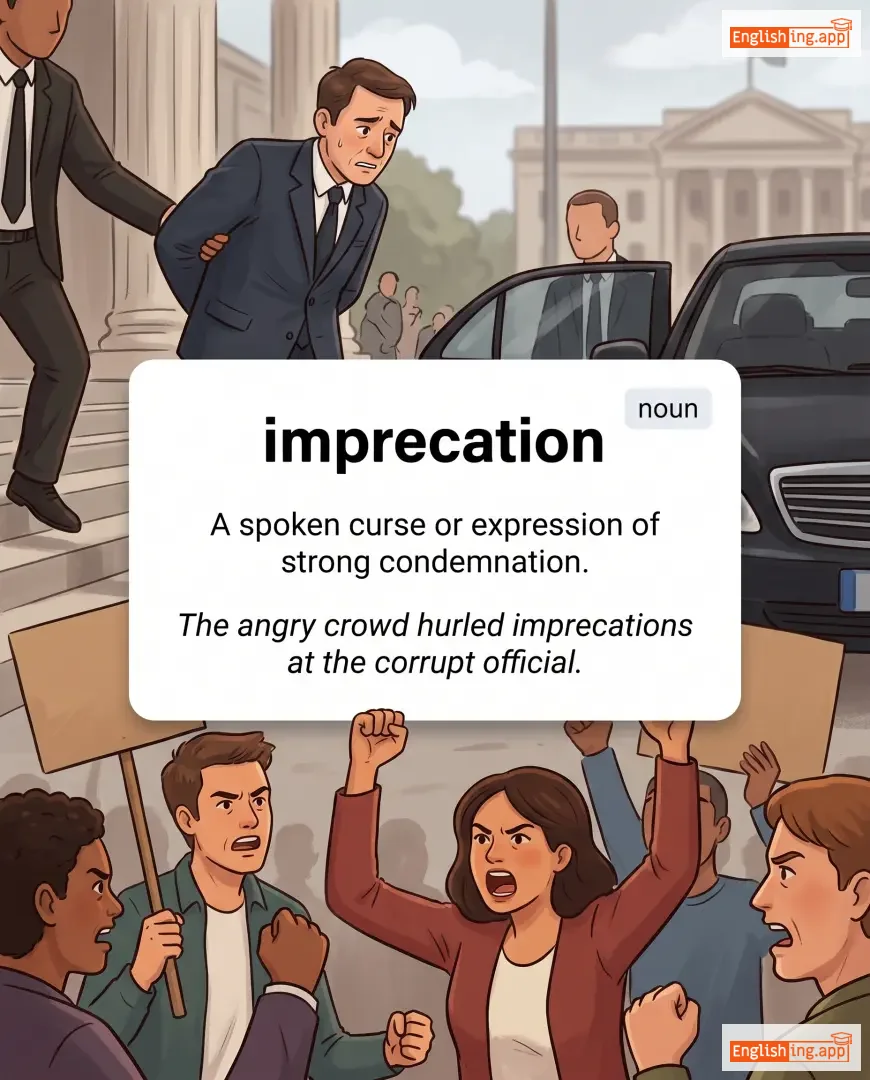
imprecation definition card — visual illustration of the meaning
noun
/ˌɪmprɪˈkeɪʃən/
呪い (noroi)

A spoken curse or expression of strong condemnation.

"The angry crowd hurled imprecations at the corrupt official."

"怒った群衆は腐敗した役人に呪いを投げかけた。" (Okotta gunshuu wa fuhai shita yakunin ni noroi wo nagekaketa.)
adjective
/ˌɪmprɪˈsaɪs/
不正確 (fuseikaku)

Not exact or accurate; vague.

"His explanation was too imprecise to be helpful."

"彼の説明はあまりにも不正確で役に立たなかった。" (Kare no setsumei wa amari ni mo fuseikaku de yaku ni tatanakatta.)
adjective
/ɪmˈprɛɡnəbl̩/
攻略不可能 (kōryaku fukanō)

Unable to be captured, broken into, or defeated.

"The fortress was considered impregnable by the enemy."

"その要塞は敵によって攻略不可能と見なされていました。" (Sono yōsai wa teki ni yotte kōryaku fukanō to minasarete imashita.)
verb
/ˈɪmprɛɡneɪt/
妊娠させる / 飽和させる (ninshin saseru / hōwa saseru)

To make pregnant; to fill or saturate with something.

"The scientist used a method to impregnate the material with resin."

"科学者は樹脂で素材をインプレグネイトする方法を使用しました。" (Kagakusha wa jushi de sozai o inpureguneito suru hōhō o shiyō shimashita.)
noun
/ˌɪmprəˈsɑːrioʊ/
プロデューサー (purodyūsā)

A person who organizes or finances concerts, plays, or operas.

"The impresario arranged a series of concerts for the rising star."

"インプレサリオは、急成長するスターのためにコンサートのシリーズを手配しました。" (Inpresario wa, kyū seichō suru sutā no tame ni konsāto no shirīzu o tehai shimashita.)
verb
/ɪmˈprɛs/
感動させる (kandō saseru)

to cause someone to feel admiration or respect

"Her speech managed to impress the audience."

"彼女のスピーチは聴衆を感動させました。" (Kanojo no supīchi wa chōshū o kandō sasemashita.)
noun
/ɪmˈprɛʃən/
印象, 概念 (inpuresshon, gainen)

an idea, feeling, or opinion about something or someone

"The book gave me a good first impression."

"その本は私に良い最初の印象を与えました。" (Sono hon wa watashi ni yoi saisho no inshou o ataemashita.)
adjective
/ɪmˈprɛsɪv/
印象的な、賞賛に値する (in-shou-teki na, shou-san ni atai suru)

causing admiration or respect; remarkable

"The building is an impressive example of modern architecture."

"その建物は現代建築の印象的な例です。" (Sono tatemono wa gendai kenchiku no inshouteki na rei desu.)
noun
/ˌɪmprɪˈmɑːtər/
承認 (shōnin)

An official license or approval, especially to publish a book.

"The book was released with the official imprimatur of the church."
"その本は教会の正式な承認を得て出版されました。" (Sono hon wa kyōkai no seishiki na shōnin o ete shuppan saremashita.)
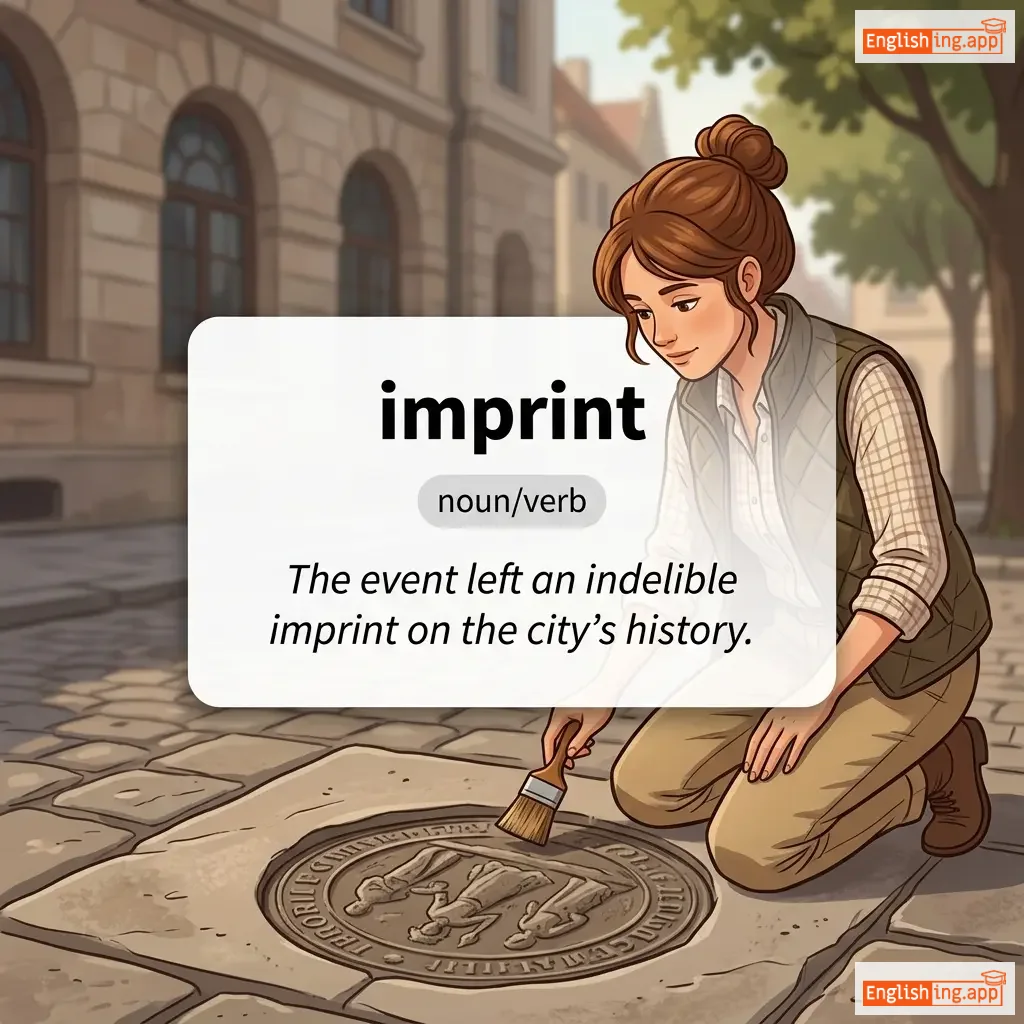
imprint definition card — visual illustration of the meaning
noun/verb
/ˈɪmprɪnt/
刻印 (kokuin)

A mark or impression made by pressure; to establish or fix firmly in someone's mind.

"The event left an indelible imprint on the city's history."
"その出来事は都市の歴史に消えない刻印を残した。" (Sono dekigoto wa toshi no rekishi ni kienai kokuin o nokoshita.)
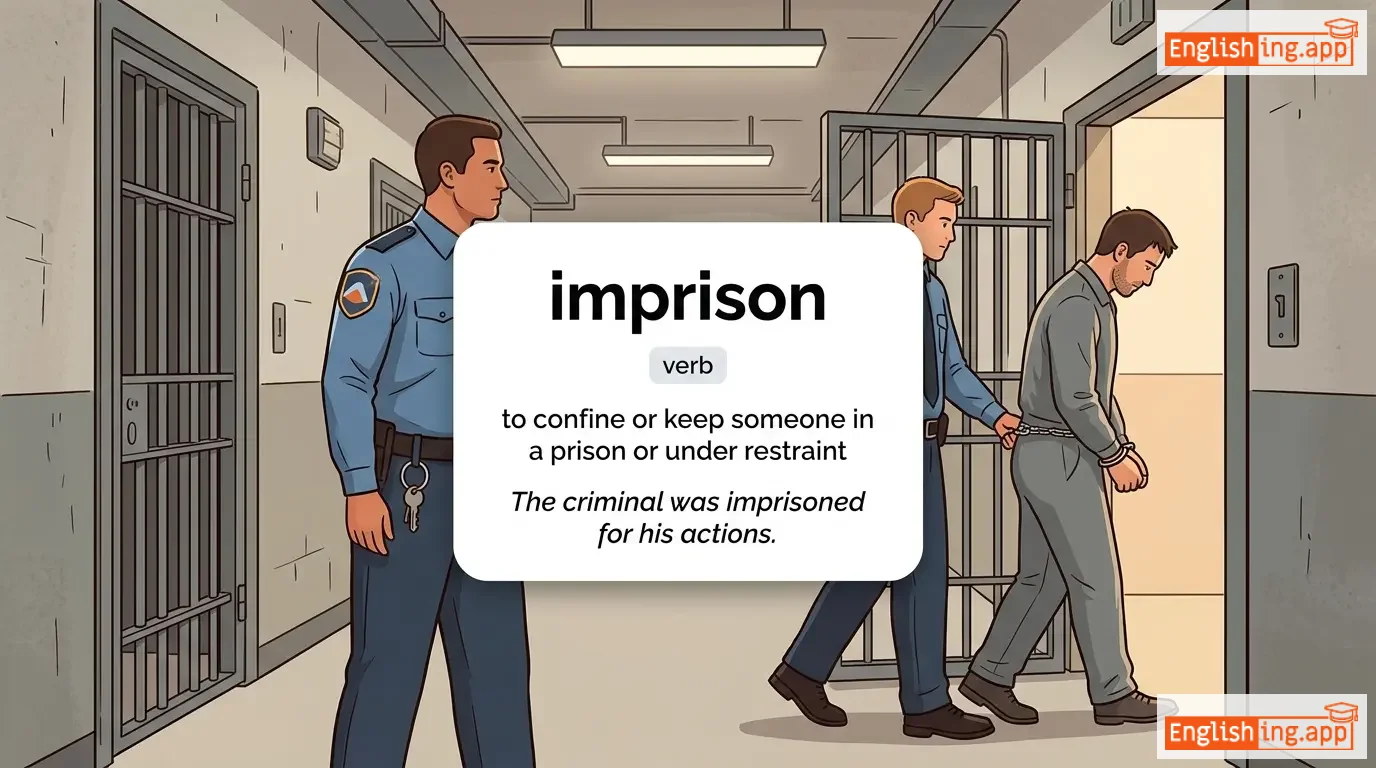
imprison definition card — visual illustration of the meaning
verb
/ɪmˈprɪzən/
投獄する (tōgoku suru)

to confine or keep someone in a prison or under restraint

"The criminal was imprisoned for his actions."

"その犯罪者は行動のために投獄された。" (Sono hanzai-sha wa kōdō no tame ni tōgoku sareta.)
noun
/ɪmˈprɪzənmənt/
投獄 (tougoku)

the act of putting someone in prison; the state of being confined as punishment

"He faced imprisonment for violating the court order."

"彼は裁判所の命令に違反して投獄に直面した。" (Kare wa saibansho no meirei ni ihan shite tougoku ni chokumen shita)
noun
/ɪmˌprɒb.əˈbɪl.ə.ti/
不確実性 (fukakujitsusei)

the quality or state of being improbable; unlikely to be true or to happen

"The improbability of winning the lottery twice didn't stop her from buying tickets."

"ロトで二回連続で当選する可能性の低さは、彼女がチケットを買うのを止めませんでした。" (roto de nikai renzoku de tōsen suru kanōsei no hikusa wa, kanojo ga chiketto o kau no o tome masen deshita.)
adjective
/ɪmˈprɒbəbl/
あり得ない (arienai)

Not likely to be true or to happen.

"It seems improbable that he will arrive on time."
"彼が時間通りに到着するのはあり得ないようだ。" (Kare ga jikan dōri ni tōchaku suru no wa arienai yō da.)
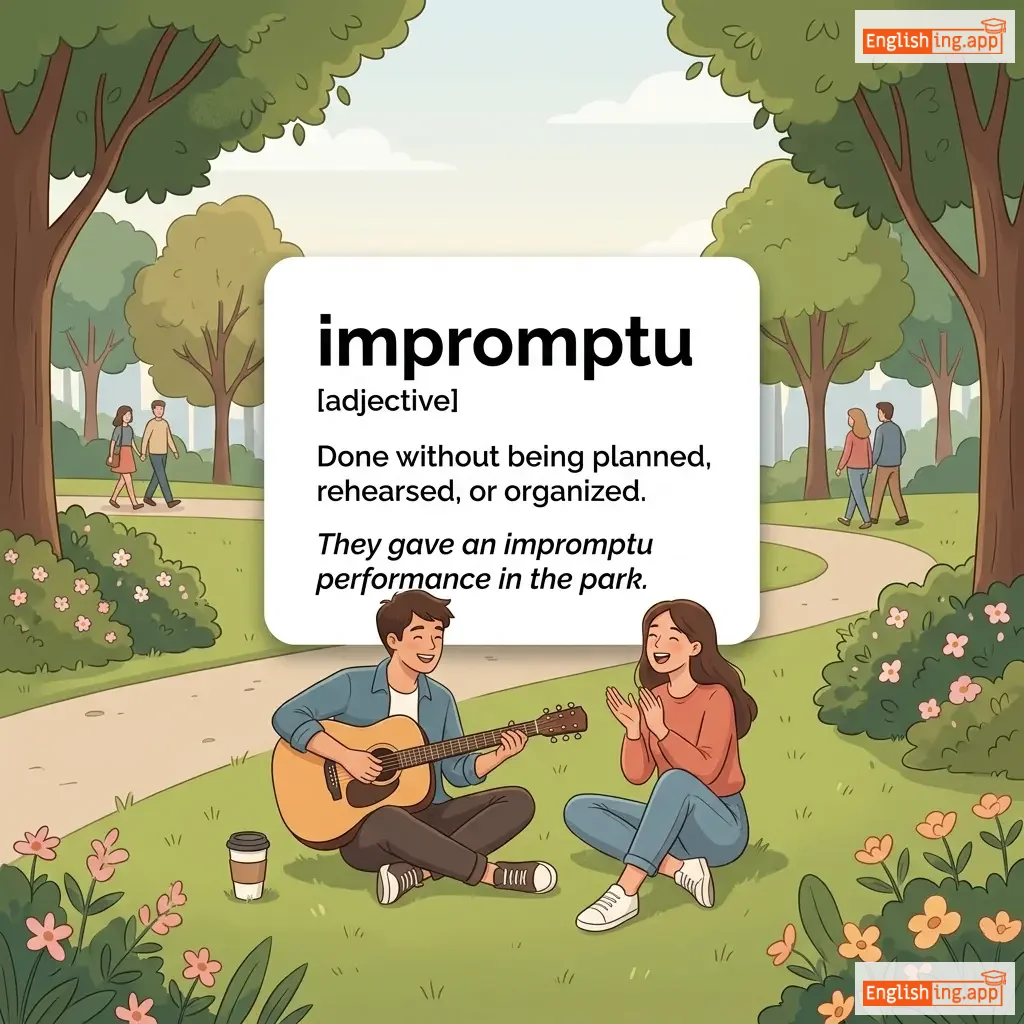
impromptu definition card — visual illustration of the meaning
adjective
/ɪmˈprɒmptjuː/
即興 (sokkyou)

Done without being planned, rehearsed, or organized.

"They gave an impromptu performance in the park."

"彼らは公園で即興のパフォーマンスをしました。" (Karera wa kouen de sokkyou no pafōmansu o shimashita.)
adjective
/ɪmˈprɒpər/
不適切 (futekisetsu)

Not suitable or appropriate; against accepted standards.

"It is improper to talk loudly in the library."

"図書館で大声で話すのは不適切です。" (Toshokan de oogoe de hanasu no wa futekisetsu desu.)
noun
/ˌɪmprəˈpraɪəti/
不正行為 (fusei koui)

Failure to observe standards of honesty or modesty; improper behavior.

"The politician was accused of financial impropriety."
"その政治家は財政的不正行為で告発されました。" (Sono seijika wa zaisei-teki fusei koui de kokuhatsu saremashita.)
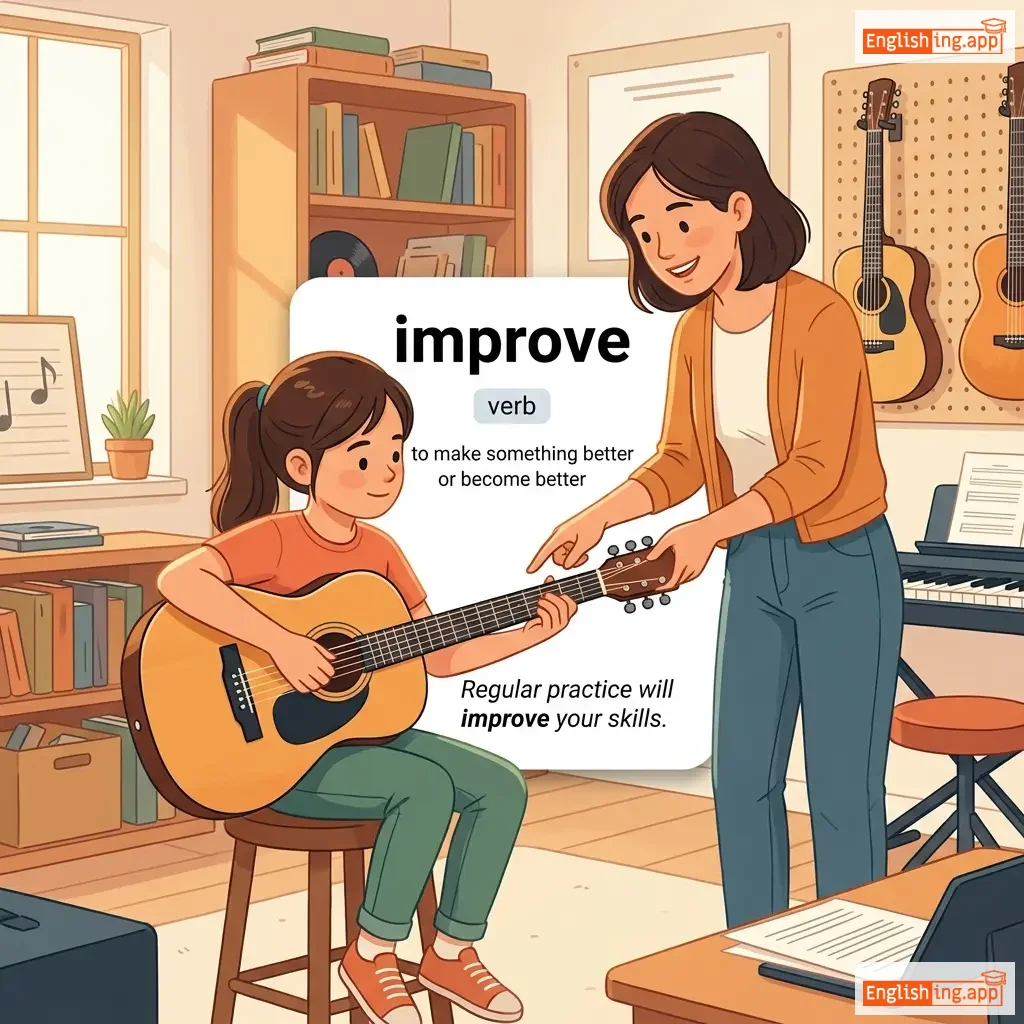
improve definition card — visual illustration of the meaning
verb
/ɪmˈpruːv/
改善する (kaizen suru)

to make something better or become better

"Regular practice will improve your skills."

"定期的な練習はあなたのスキルを向上させるでしょう。" (teikiteki na renshū wa anata no sukiru o kōjō saseru deshō.)
improved definition card — visual illustration of the meaning
adjective
/ɪmˈpruːvd/
改善された (kaizen sareta)

made better or enhanced in quality or condition

"Her health has significantly improved since last month."

"彼女の健康は先月から大きく改善されました。" (Kanojo no kenkō wa sengetsu kara ōkiku kaizen saremashita.)
noun
/ɪmˈpruːvmənt/
改善 (kaizen)

the act of making something better

"There has been a significant improvement in his health."

"彼の健康には重要な改善がありました。" (kare no kenko ni wa jūyō na kaizen ga arimashita.)
improvements definition card — visual illustration of the meaning
noun
ɪmˈpruːv.mənts
改善 (kaizen)

The action of making or becoming better; an instance of something becoming or being made better.

"Continuous improvements increase productivity."

"継続的な改善は生産性を高めます。" (Keizokuteki na kaizen wa seisansei o takamemasu.)
noun
/ɪmˈprɑːvɪdəns/
不注意 (fuchūi)

Lack of foresight or care for future needs.

"His improvidence led to financial difficulties."

"彼の不注意が彼を財政的な困難に追い込んだ。" (Kare no fuchūi ga kare o zaiseiteki na konnan ni oikonda.)
adjective
/ɪmˈprɒvɪdənt/
先見の明がない (senken no mei ga nai)

Not having or showing foresight; spending wastefully or without thought for the future.

"His improvident habits left him with no savings."

"彼の先見の明がない習慣は、貯金がないまま彼を残した。" (Kare no senken no mei ga nai shūkan wa, chokin ga nai mama kare o nokoshita.)
verb
/ˈɪmprəvaɪz/

To create or perform something spontaneously without preparation.

"The actor had to improvise his lines when he forgot the script."

noun
/ɪmˈpruːdəns/
軽率 (keisotsu)

Lack of caution or good judgment.

"His imprudence in investing all his money in one stock was disastrous."

"一つの株に全てのお金を投資する彼の軽率さは、壊滅的だった。" (Hitotsu no kabu ni subete no okane wo toshi suru kare no keisotsu sa wa, kaimetsu teki datta.)
adjective
/ɪmˈpruːdənt/
不注意な (fuchuui na)

Not showing care for the consequences of an action.

"It was imprudent to drive in such stormy weather."

"こんな嵐の天気で運転するのは不注意だった。" (Konna arashi no tenki de unten suru no wa fuchuui datta.)
noun
/ˈɪmpjʊdəns/
厚かましさ (atsukamashisa)

Rude and disrespectful behavior.

"The student's impudence shocked the entire class."

"その学生の厚かましさはクラス全体を驚かせた。" (Sono gakusei no atsukamashisa wa kurasu zentai o odorokaseta.)
adjective
/ˈɪmpjəd(ə)nt/
無礼な、厚かましい (bureina, atsukamashii)

not showing due respect for another person; rude

"The impudent child talked back to the teacher."

"その無礼な子供は先生に逆らった。" (Sono bureina kodomo wa sensei ni sakaratta.)
⚔️

impugn

verb
/ɪmˈpjuːn/

to dispute the truth, validity, or honesty of a statement or motive

"The lawyer tried to impugn the credibility of the witness."

noun
/ɪmˈpjuːɪsəns/
無力, 無能 (muryoku, munou)

inability to take effective action; helplessness

"The government’s impuissance in the face of crisis frustrated the people."

"危機の前で政府の無力さが人々を失望させた。" (Kiki no mae de seifu no muryokusa ga hitobito o shitsubou saseta.)
noun
/ˈɪmpʌls/
衝動 (shōdō)

a sudden strong desire or urge to act without thinking

"He bought the watch on impulse without planning to."

"彼は計画なしで衝動的に時計を買いました。" (Kare wa keikaku nashi de shōdō-teki ni tokei o kaimashita.)
noun
/ɪmˈpʌlʃən/

a strong urge or drive to act; the act of impelling

"His impulsion to travel made him leave his job suddenly."

adjective
/ɪmˈpʌlsɪv/
衝動的な, 直感的な (shoudouteki na, chokkan teki na)

acting suddenly without careful thought

"She made an impulsive decision to buy the car."
"彼女は衝動的な決定で車を買うことにしました。" (Kanojo wa shoudouteki na kettei de kuruma o kau koto ni shimashita.)
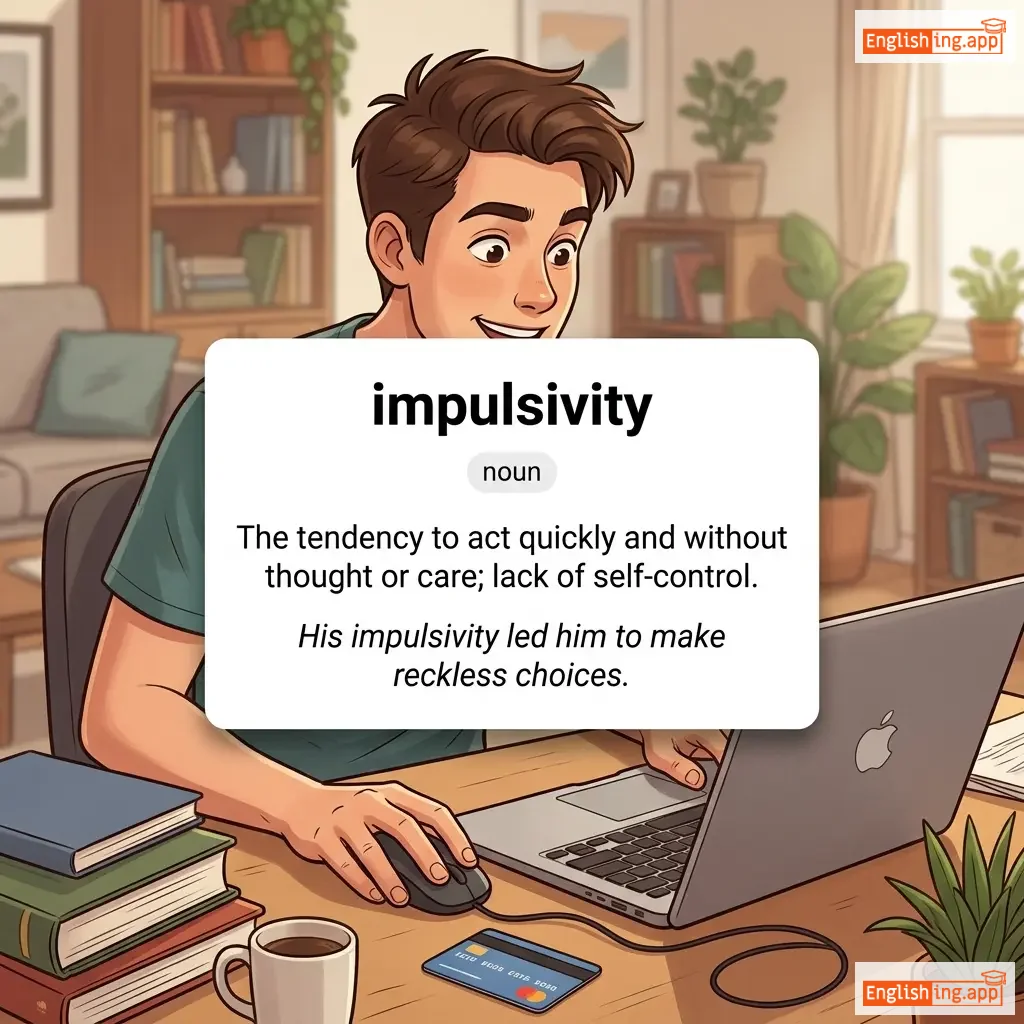
impulsivity definition card — visual illustration of the meaning
noun
ˌɪm.pʌlˈsɪv.ɪ.ti
衝動性 (shōdōsei)

The tendency to act quickly and without thought or care; lack of self-control.

"His impulsivity led him to make reckless choices."

"彼の衝動性は、無謀な選択をさせた。" (Kare no shōdōsei wa, mubō na sentaku o saseta.)
🛡️

impunity

noun
/ɪmˈpjuːnɪti/

freedom from punishment or harmful consequences for an action

"The dictator ruled with impunity, ignoring international laws."

adjective
/ɪmˈpjʊər/
不純 (fujun)

not clean or free from contamination; morally corrupt

"The water was impure and unsafe to drink."

"水は不純で飲むには安全ではなかった。" (Mizu wa fujun de nomu ni wa anzen de wa nakatta.)
noun
/ɪmˈpjʊərəti/
不純物 (fujunbutsu)

the state of being unclean or contaminated; a substance that makes something impure

"The scientist removed every impurity from the water sample."

"科学者は水のサンプルからすべての不純物を取り除いた。" (kagakusha wa mizu no sanpuru kara subete no fujunbutsu o torinoita)
noun
/ˌɪmpjuˈteɪʃən/
非難 (hinan)

an accusation or attribution of blame

"The politician denied the imputation of corruption."

"政治家は腐敗の非難を否定した。" (Seijika wa fuhai no hinan o hitei shita.)
verb
/ɪmˈpjuːt/
帰する (kisuru)

to attribute a fault or responsibility to someone

"They imputed the company's success to good leadership."

"彼らは会社の成功を良いリーダーシップに帰属させた。" (Karera wa kaisha no seikou o yoi rīdāshippu ni kisusaseta.)
preposition
/ɪn/
(naka)

expressing the situation of being enclosed or surrounded by something

"She is in the kitchen preparing dinner."

"彼女は台所で夕食を準備している。" (Kanojo wa daidokoro de yuushoku o junbi shiteiru.)
preposition
/ɪn ˈfrʌnt əv/
〜の前に (no mae ni)

positioned before or ahead of something; facing or located at the forward side of a person or object

"She stood in front of the building."

"彼女は建物の前に立っていた。" (Kanojo wa tatemono no mae ni tatte ita)
noun
/ˌɪnəˈbɪləti/
無能 (munou)

the state of being unable to do something

"His inability to make decisions affected his career."

"彼の意思決定の無能さは彼のキャリアに影響を与えた。" (Kare no ishi kettei no munousa wa kare no kyaria ni eikyou wo ataeta.)
adjective
/ˌɪnækˈsɛsəbl/
アクセスできない (akusesu dekinai)

unable to be reached, entered, or understood

"The remote village is almost inaccessible during the rainy season."

"その遠隔地の村は雨季にはほとんどアクセスできません。" (Sono enkaku-chi no mura wa uki ni wa hotondo akusesu dekimasen.)
noun
/ɪnˈækjʊrəsi/
不正確さ (fuseikakusa)

lack of accuracy or precision; an incorrect or wrong detail

"The report contained several factual inaccuracies."

"その報告書にはいくつかの不正確さがあった。" (sono houkokusho niwa ikutsuka no fuseikakusa ga atta)
adjective
/ɪnˈækjʊrət/
不正確 (fuseikaku)

Not correct, precise, or exact; containing errors.

"The report was full of inaccurate data."

"レポートは不正確なデータでいっぱいだった。" (Repōto wa fuseikaku na dēta de ippai datta.)
adjective
/ɪnˈæktɪv/
非アクティブ (hi akuteibu)

Not engaging in activity; not active.

"The account has been inactive for six months."

"アカウントは6ヶ月間非アクティブです。" (Akaunto wa roku kagetsu kan hi akuteibu desu.)
noun
/ˌɪnækˈtɪvɪti/
不活動 (fukatsudo)

the state of not being active physically or mentally; lack of action

"Prolonged inactivity can negatively affect both physical and mental health."

"長期間の不活動は身体的および精神的健康に悪影響を与えます。" (chokikan no fukatsudo wa shintaiteki oyobi seishinteki kenkou ni akueikyou o ataemasu)
noun
/ɪnˈædɪkwəsi/
不十分さ (fujubunsa)

lack of sufficient ability, quality, or strength; a feeling of not being good enough

"She struggled with feelings of inadequacy at work despite her strong qualifications."

"十分な資格があるにもかかわらず、彼女は職場で不十分さを感じていた。" (Juubun na shikaku ga aru ni mo kakawarazu, kanojo wa shokuba de fujubunsa o kanjite ita)