語彙集

英単語辞書 | 単語の意味、定義、例文

verb
/ɪnˈvɛnt/
発明する (hatsumei suru)

to create or design something that has not existed before

"Thomas Edison invented the electric bulb."
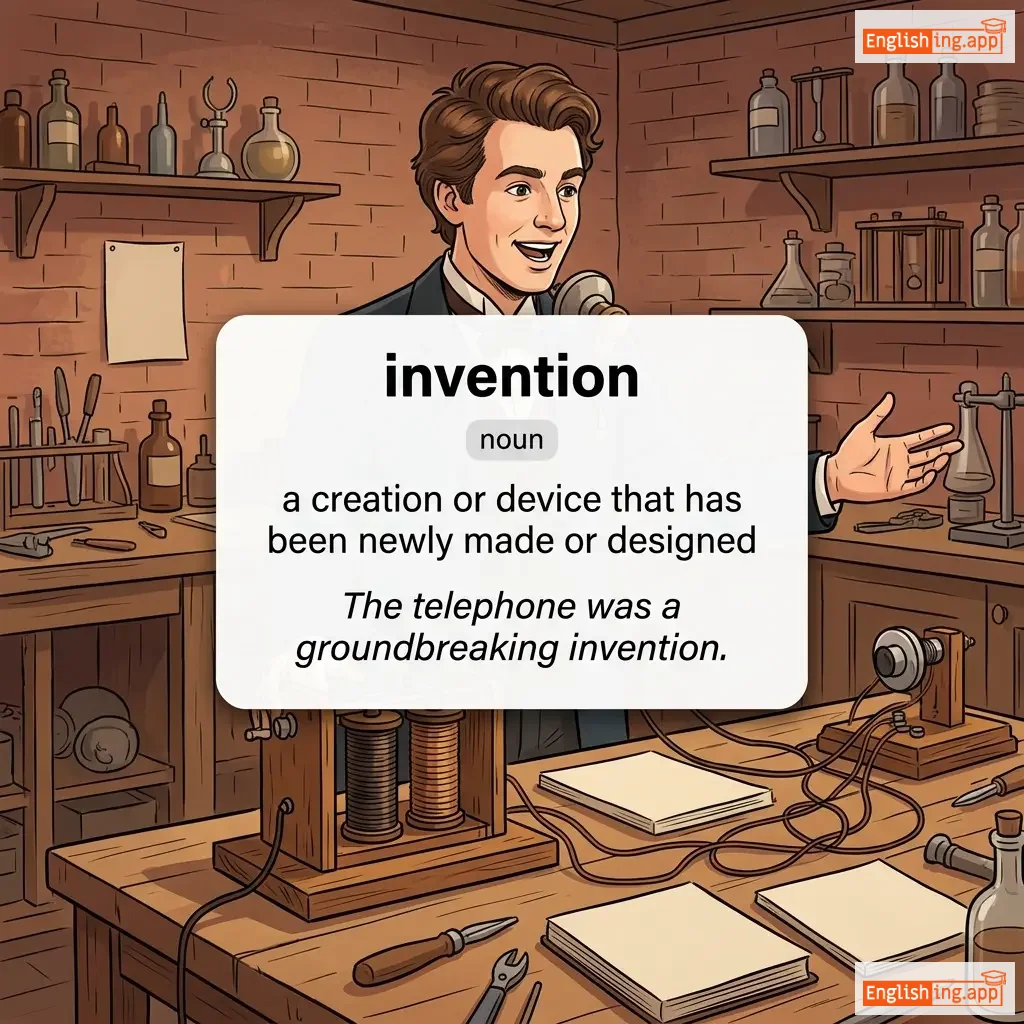
"トーマス・エジソンは電球を発明しました。" (Tōmasu Ejison wa denkyū o hatsumei shimashita.)
invention definition card — visual illustration of the meaning
noun
/ɪnˈvɛnʃən/
発明 (hatsumei)

a creation or device that has been newly made or designed

"The telephone was a groundbreaking invention."

"電話は画期的な発明でした。" (Denwa wa kakiteki na hatsumei deshita.)
adjective
/ɪnˈvɛntɪv/
創造的 (sōzōteki)

Having the ability to create or design new things or to think originally.

"The inventor was known for his inventive solutions to everyday problems."

"発明家は日常の問題に対する創造的な解決策で知られていた。" (Hatsumeika wa nichijō no mondai ni taisuru sōzō-teki na kaiketsu-saku de shirarete ita.)
noun
/ɪnˈventər/
発明家 (hatsumeika)

a person who creates or designs something new, especially a device, method, or process

"The inventor patented her new medical device."

"その発明家は新しい医療機器の特許を取得した。" (sono hatsumeika wa atarashii iryo kiki no tokkyo o shutoku shita)
noun
/ˈɪnvənˌtɔːri/
インベントリ (inbentori)

A complete list of items, such as goods in stock or property.

"The shopkeeper checked the inventory before opening the store."

"店主は店を開店する前にインベントリを確認しました。" (Tenshu wa mise o kaiten suru mae ni inbentori o kakunin shimashita.)
adjective
/ˌɪnˈvɜːrs/
(gyaku)

Opposite in position, direction, order, or effect.

"There is an inverse relationship between price and demand."

"価格と需要の間には逆の関係があります。" (Kakaku to juyō no aida ni wa gyaku no kankei ga arimasu.)
adverb
/ɪnˈvɜːrs.li/
逆に; 反対に (gyaku ni; hantai ni)

in a way that is opposite or contrary; in reverse order or manner

"The price of goods is inversely related to their availability in the market."

"商品の価格は市場での入手可能性に逆に関連しています。" (shōhin no kakaku wa shijō de no nyūshu kanō-sei ni gyaku ni kanren shiteimasu.)
noun
/ɪnˈvɜːrʒən/
逆転 (gyakuten)

A reversal of the normal order, position, or relationship.

"In poetry, inversion is often used to create emphasis."

"詩では、逆転は強調を作るためによく使われます。" (Shi de wa, gyakuten wa kyouchou o tsukuru tame ni yoku tsukawaremasu.)
verb
/ɪnˈvɜːrt/
逆さにする (sakasa ni suru)

To turn something upside down or in the opposite position, order, or direction.

"He inverted the glass to let the water drain out."

"彼は水が流れ出るようにグラスを逆さまにしました。" (Kare wa mizu ga nagarediru yō ni gurasu wo sakasama ni shimashita.)
invest definition card — visual illustration of the meaning
verb
/ɪnˈvɛst/
投資する (toushi suru)

to put money, time, or effort into something with the expectation of achieving a benefit

"He decided to invest in real estate to secure his future."

"彼は自分の未来を確保するために不動産に投資することを決めました。" (Kare wa jibun no mirai o kakuho suru tame ni fudōsan ni tōshi suru koto o kimemashita.)
verb
/ɪnˈvɛs.tɪ.ɡeɪt/
調査する (chousa suru)

to carry out a systematic inquiry to discover facts or information

"The police will investigate the incident thoroughly."

"警察は事件を徹底的に調査するでしょう。" (Keisatsu wa jiken o tetteiteki ni chousa suru deshou.)
noun
/ɪnˌvɛs.tɪˈɡeɪ.ʃən/
調査 (chousa)

the process of inquiring into or examining something carefully to find the truth

"The investigation revealed new evidence about the fraud."

"調査は詐欺に関する新しい証拠を明らかにしました。" (Chousa wa sagi ni kansuru atarashii shouko wo akiraka ni shimashita.)
noun
/ɪnˈvɛstɪˌɡeɪtər/
幸福 (kōfuku)

a person who carries out a formal inquiry or investigation

"The investigator gathered evidence from the crime scene."

"彼女は賞を受け取ったとき、自分の幸福を隠すことができませんでした。" (Kanojo wa shō o uketotta toki, jibun no kōfuku o kakusu koto ga dekimasen deshita.)
investing definition card — visual illustration of the meaning
verb
ɪnˈvɛst.ɪŋ
投資 (toushi)

The act of putting money into financial schemes, shares, property, or a commercial venture with the expectation of achieving a profit.

"Investing in stocks can generate long-term wealth."

"株式投資は長期的な富を生むことができます。" (Kabushiki tōshi wa chōkitekina tomi o umu koto ga dekimasu.)
noun
/ɪnˈvɛstɪtʃər/
任命式 (ninmei-shiki)

the formal ceremony of conferring authority, rank, or office

"The king held an investiture ceremony for the new knight."

"王は新しい騎士のために任命式を開催しました。" (Ō wa atarashī kishi no tame ni ninmei-shiki o kaisai shimashita.)
investment definition card — visual illustration of the meaning
noun
/ɪnˈvɛst.mənt/
投資 (tōshi)

the action or process of putting money, time, or resources into something for future benefit

"Her investment in technology startups has paid off well."

"彼女のテクノロジースタートアップへの投資は良い結果を生んだ。" (Kanojo no tekunorojī sutātopu e no tōshi wa yoi kekka o unda.)
noun
/ɪnˈvɛstər/
投資家 (toushika)

a person or organization that puts money into financial schemes, property, or business ventures with the expectation of achieving a profit

"The investor funded the startup with a large sum of money."

"投資家はスタートアップに大金を投資しました。" (Tōshika wa sātoappu ni ōkin o tōshi shimashita.)
inveterate definition card — visual illustration of the meaning
adjective
/ɪnˈvɛtərət/
常習的な (joushuuteki na)

having a long-established habit, activity, or interest that is unlikely to change

"He is an inveterate reader who spends hours in the library every day."

"彼は毎日数時間を図書館で過ごす常習的な読者です。" (Kare wa mainichi suujikan wo toshokan de sugosu joushuuteki na dokusha desu.)
verb
/ɪmˈbruː/
汚す (yogosu)

To stain, especially with blood.

"His hands were imbrued with blood after the battle."

"戦いの後、彼の手は血で汚れていた。" (Tatakau no ato, kare no te wa chi de yogorete ita.)
Imbue definition card — visual illustration of the meaning
verb
/ɪmˈbjuː/
染み込ませる (shimikomaseru)

to inspire or permeate with a feeling or quality

"The teacher's passion for history imbued the students with curiosity."
"歴史への教師の情熱は学生たちに好奇心を植え付けました。" (Rekishi e no kyōshi no jōnetsu wa gakuseitachi ni kōkishin o uetsukemashita.)
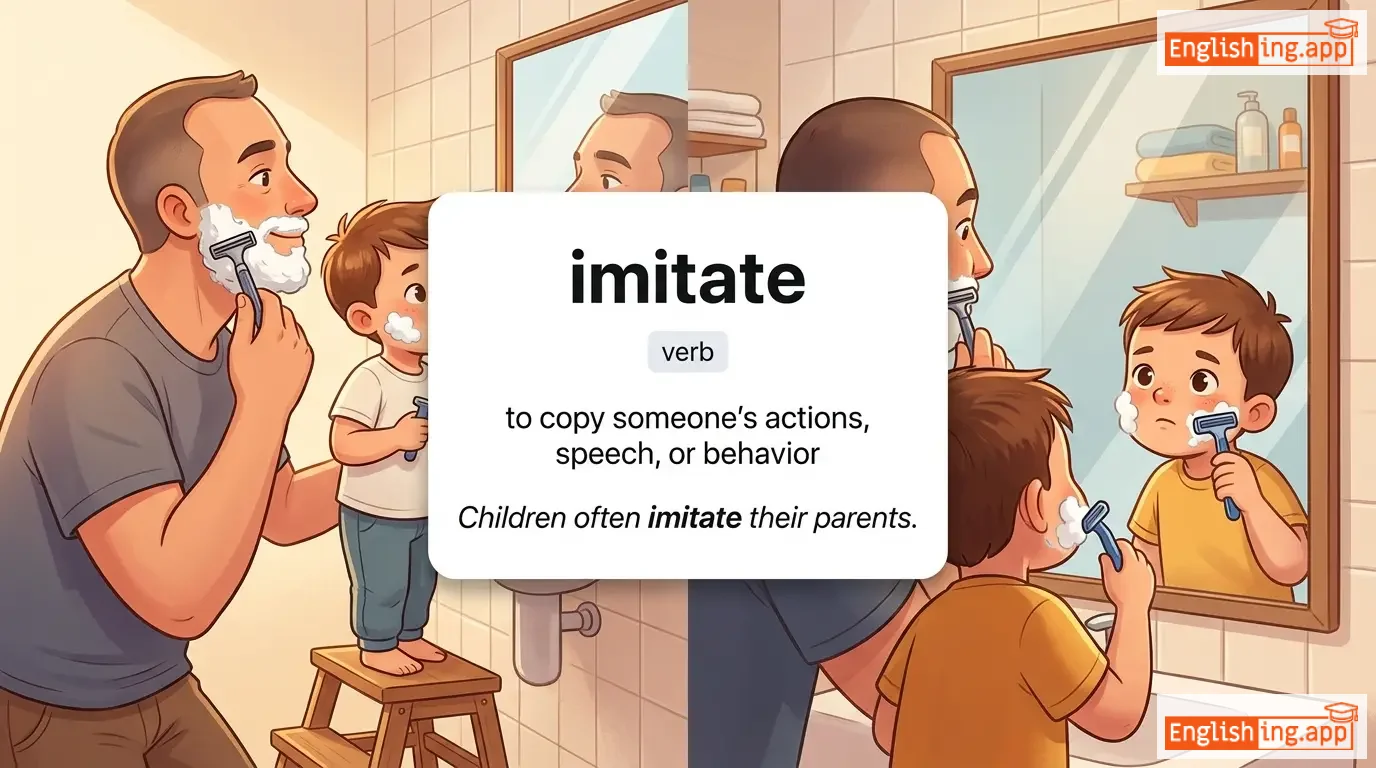
imitate definition card — visual illustration of the meaning
verb
/ˈɪmɪteɪt/
模倣する (mohō suru)

to copy someone's actions, speech, or behavior

"Children often imitate their parents."

"子供たちはしばしば親を真似ます。" (Kodomo-tachi wa shibashiba oya o manemasu.)
noun
/ˌɪmɪˈteɪʃən/
模倣 (mohō)

the act of copying or mimicking someone or something

"Children learn many skills through imitation."

"子供たちは模倣を通じて多くのスキルを学びます。" (Kodomotachi wa mohō o tōjite ōku no sukiru o manabimasu.)
noun
/ˈɪmɪˌteɪtər/
模倣者 (mōhōsha)

a person who copies the behavior, style, or actions of others

"He became famous as an imitator of popular singers."

"彼は人気のある歌手の模倣者として有名になった。" (Kare wa ninki no aru kashu no mōhōsha toshite yūmei ni natta.)
adjective
/ɪˈmækjələt/
完璧 (kanpeki)

perfectly clean, neat, or free from flaws

"Her room was immaculate, with everything in its place."

"彼女の部屋は完璧で、すべてが所定の位置にありました。" (Kanojo no heya wa kanpeki de, subete ga shotei no ichi ni arimashita.)
adjective
/ˈɪmənənt/
内在的 (naizai-teki)

existing or operating within; inherent

"He believed that moral values are immanent in human nature."

"彼は道徳的価値が人間の本性に内在していると信じていました。" (Kare wa doutokuteki kachi ga ningen no honsei ni naizai shite iru to shinjite imashita.)
adjective
/ˌɪməˈtɪəriəl/
無関係 (mukankei)

Not important or relevant; lacking physical substance.

"The judge ruled that the argument was immaterial to the case."

"裁判官はその議論が事件に関係ないと判断しました。" (Saibankan wa sono giron ga jiken ni kankei nai to handan shimashita.)
adjective
/ˌɪməˈtjʊər/
未熟 (mijuku)

Not fully developed; childish or lacking maturity.

"His immature behavior annoyed everyone at the meeting."

"彼の未熟な振る舞いは会議で皆をイライラさせた。" (Kare no mijuku na furumai wa kaigi de mina o iraira saseta.)
noun
/ˌɪməˈtjʊərəti/
未熟さ (mijukusa)

the state of not being fully developed emotionally, mentally, or physically; lack of maturity

"His immaturity made it difficult for him to handle responsibility."

"彼の未熟さは責任を果たすことを難しくした。" (kare no mijukusa wa sekinin o hatasu koto o muzukashiku shita)
adjective
/ɪˈmɛʒərəbl/
計り知れない (hakari shirenai)

Too great or extreme to be measured.

"Her kindness brought him immeasurable happiness."

"彼女の優しさは計り知れない幸福をもたらした。" (Kanojo no yasashisa wa hakari shirenai kōfuku o motarashita.)
immediacy definition card — visual illustration of the meaning
noun
/ɪˈmiːdiəsi/
即時性, 緊迫感 (sokujisei, kinpokkan)

The quality of bringing one into direct and instant involvement with something, giving rise to a sense of urgency or excitement.

"The immediacy of digital communication has reshaped business operations."

"デジタルコミュニケーションの即時性は、ビジネスの運営方法を変えました。" (Dejitaru komyunikeeshon no sokujisei wa, bijinesu no un'ei hōhō o kaemashita.)
adjective
/ɪˈmiːdiət/
即時 (sokujī)

happening or done without delay

"The doctor gave her immediate attention."

"医者は彼女に即時の注意を与えました。" (Isha wa kanojo ni sokujī no chūi o ataemashita.)
adverb
/ɪˈmiːdiətli/
直ちに (tadachini)

at once; without delay

"She responded immediately to the emergency call."

"彼女は緊急の電話に直ちに応答した。" (Kanojo wa kinkyū no denwa ni tadachini ōtō shita.)
adjective
/ˌɪməˈmɔːriəl/
不朽の (fukyū no)

Extending back beyond memory or record; ancient.

"The tradition has been followed since time immemorial."

"その伝統は不朽の時代から受け継がれてきた。" (Sono dentō wa fukyū no jidai kara uketsugarete kita.)
adjective
/ɪˈmɛns/
巨大な (kyodaina)

Extremely large or great in size, amount, or degree.

"The project required an immense amount of effort."
"そのプロジェクトには膨大な努力が必要でした。" (Sono purojekuto ni wa boudaina doryoku ga hitsuyou deshita.)
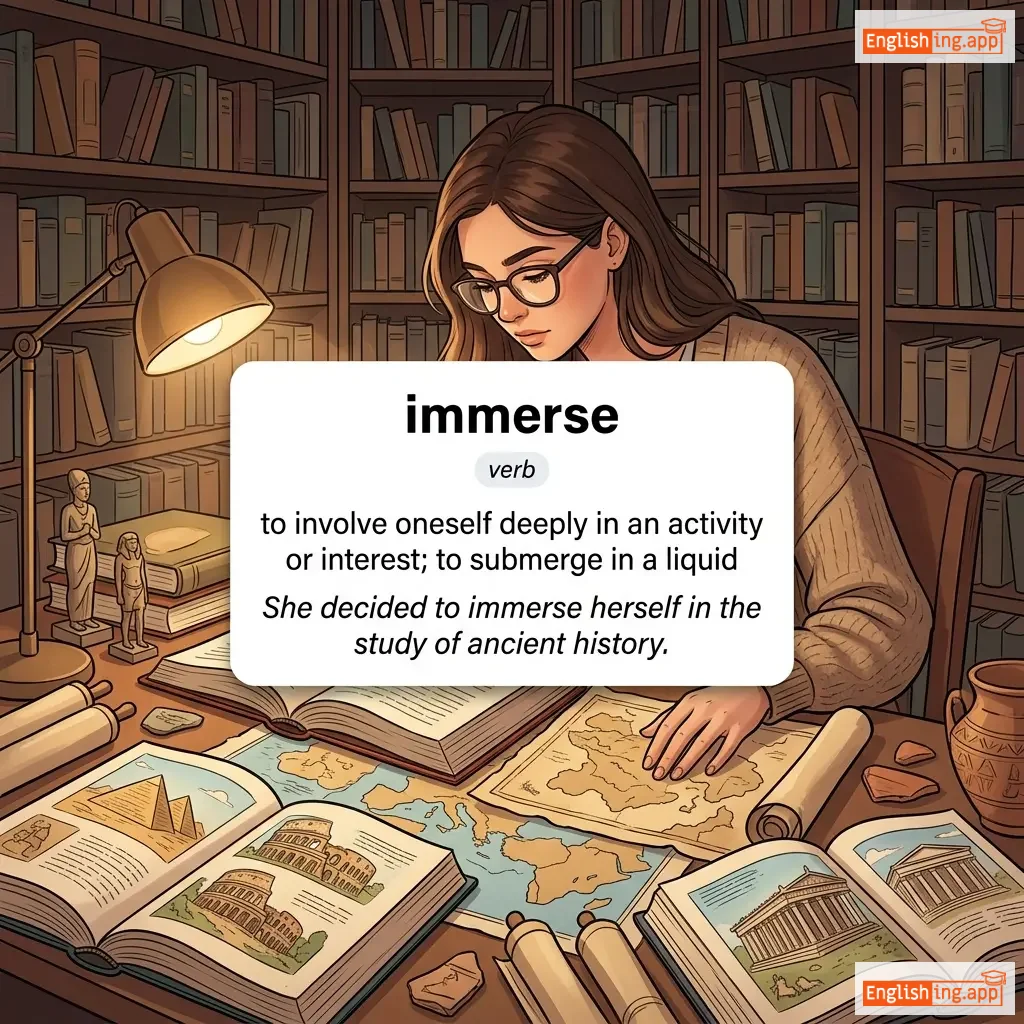
immerse definition card — visual illustration of the meaning
verb
/ɪˈmɜːrs/
浸る、没頭する (hitaru, mottou suru)

to involve oneself deeply in an activity or interest; to submerge in a liquid

"She decided to immerse herself in the study of ancient history."
"彼女は古代の歴史の研究に没頭することに決めました。" (Kanojo wa kodai no rekishi no kenkyuu ni mottou suru koto ni kimemashita.)
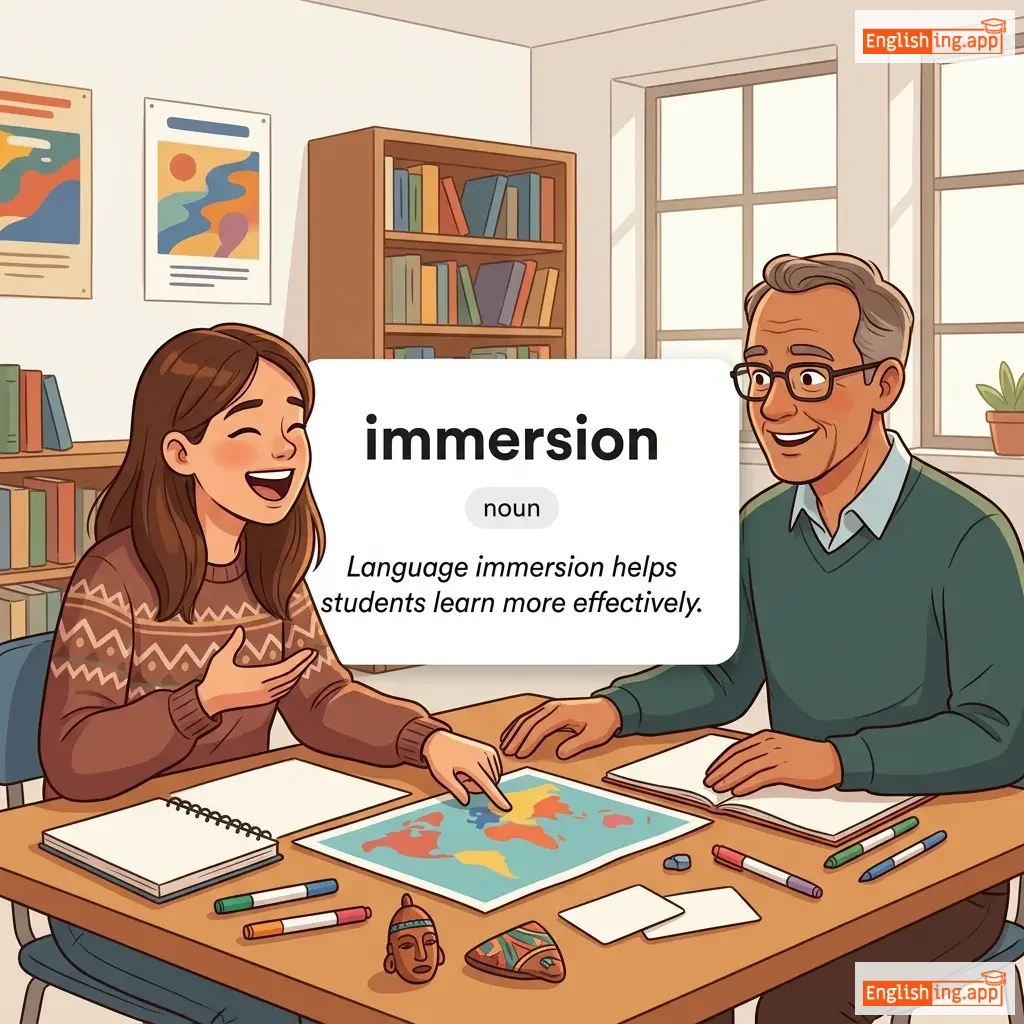
immersion definition card — visual illustration of the meaning
noun
/ɪˈmɜːrʒən/
イマーシブ (imāshibu)

the act of deeply involving oneself in something; the state of being completely surrounded by liquid

"Language immersion helps students learn more effectively."
"言語のイマーシブは学生がより効果的に学ぶのに役立ちます。" (Gengo no imāshibu wa gakusei ga yori kōkatekini manabu no ni yakudachimasu.)
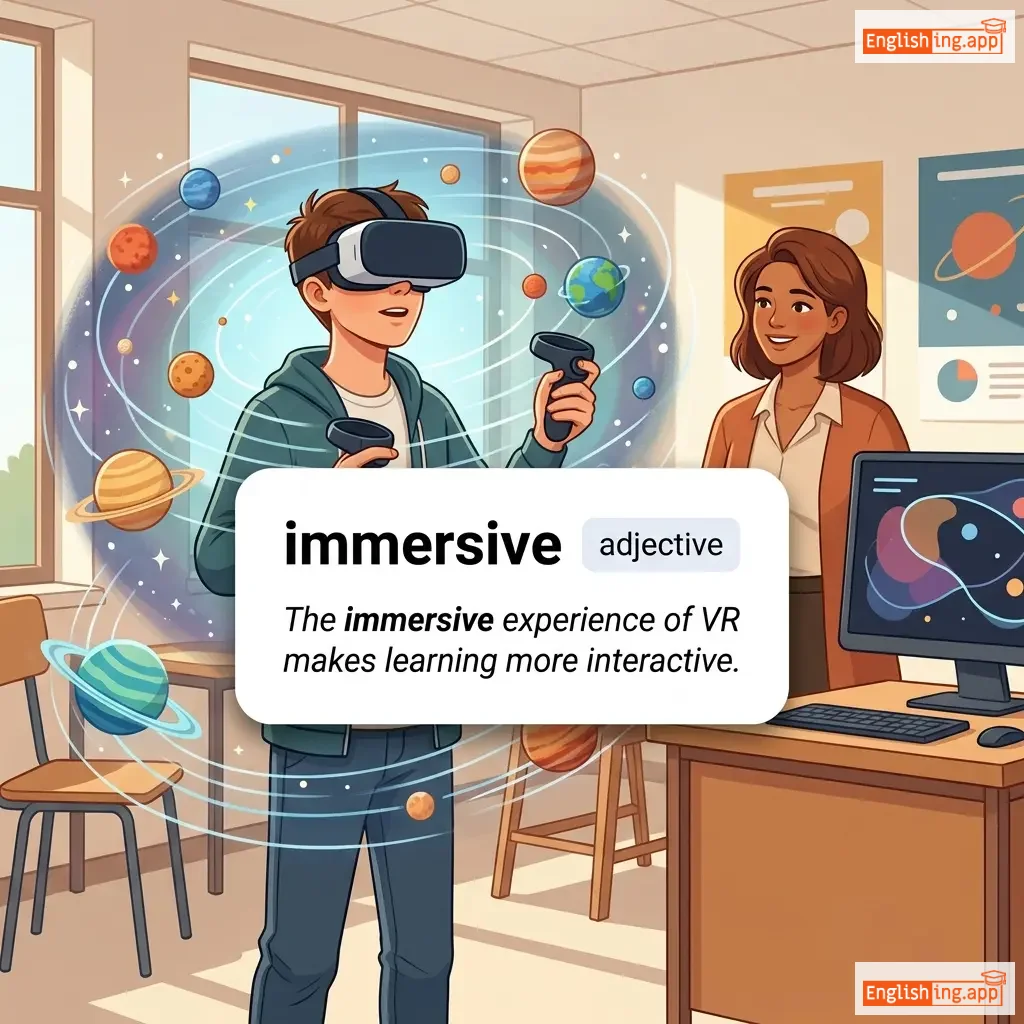
immersive definition card — visual illustration of the meaning
adjective
ɪˈmɜː.sɪv
イマーシブ (imashibu)

Providing, involving, or characterized by deep absorption or immersion in something.

"The immersive experience of VR makes learning more interactive."

"VRのイマーシブ体験は、学習をよりインタラクティブにします。" (VR no imāshibu taiken wa, gakushū o yori intarakutibu ni shimasu.)
noun
/ˈɪmɪɡrənt/
移民 (imin)

a person who comes to live permanently in a foreign country

"The city has welcomed many new immigrants this year."

"今年、市は多くの新しい移民を迎えました。" (Kotoshi, shi wa ōku no atarashī imin o mukaemashita.)
verb
/ˈɪmɪɡreɪt/
移住する (ijyuu suru)

to come to live permanently in a foreign country

"He immigrated to Canada five years ago."

"彼は5年前にカナダに移住しました。" (Kare wa go-nen mae ni Kanada ni ijyuu shimashita.)
noun
/ˌɪmɪˈɡreɪʃən/
移民 (imin)

the action of coming to live permanently in a foreign country

"Immigration policies vary from country to country."

"移民政策は国によって異なります。" (Imin seisaku wa kuni ni yotte kotonari masu.)
noun
/ˈɪmɪnəns/
差し迫り、間近な状態 (sashisemari, majikana joutai)

the state of being about to happen

"The imminence of the storm forced people to take shelter."

"嵐の差し迫りが人々を避難させることを強制した。" (Arashi no sashisemari ga hitobito o hinan saseru koto o kyousei shita.)
adjective
/ˈɪmɪnənt/
差し迫った (さしせまった)

About to happen; likely to occur very soon.

"Dark clouds signaled that a storm was imminent."

"暗い雲は嵐が迫っていることを示していた。" (Kurai kumo wa arashi ga sematte iru koto o shimeshite ita.)
adjective
/ɪˈmɪsəbl/
不混和 (fukonwa)

Describes liquids that do not mix together.

"Oil and water are immiscible liquids."

"油と水は不混和の液体です。" (Abura to mizu wa fukonwa no ekitai desu.)
adjective
/ɪˈmoʊbəl/
動けない (ugokenai)

unable to move or be moved

"After the accident, he was immobile for weeks."

"事故の後、彼は数週間動けなかった。" (Jiko no ato, kare wa suushukan ugokenakatta.)
noun
/ˌɪməʊˈbɪləti/
不動 (fudou)

The state of being unable to move.

"After the accident, she suffered from immobility in her legs."

"事故の後、彼女は足の不動に苦しみました。" (Jiko no ato, kanojo wa ashi no fudou ni kurushimashita.)
adjective
/ɪˈmɒdərət/
過度な (kadona)

excessive; beyond reasonable limits

"He has an immoderate love for sweets."

"彼はお菓子に対して過度の愛情を持っています。" (Kare wa okashi ni taishite kadona aijō o motteimasu.)
adjective
/ɪˈmɒdɪst/
傲慢 / 不適切 (ouman / futekisetsu)

lacking humility or decency; excessively proud or improper

"His immodest remarks offended the audience."

"彼の傲慢な発言は観客を不快にさせた。" (Kare no ouman na hatsugen wa kankyaku o fukai ni saseta.)
noun
/ɪˈmɒdəsti/
不謹慎 (fukinshin)

lack of modesty or decency; behavior or attitude that is overly bold or improper

"The article was criticized for its tone of immodesty."

"その記事は不謹慎な語調で批判された。" (sono kiji wa fukinshin na gochou de hihansareta)
verb
/ˈɪməleɪt/
犠牲にする/焼死させる (gisei ni suru/yakushi saseru)

To kill or sacrifice, especially by burning.

"The protesters threatened to immolate themselves in front of the building."

"抗議者たちは建物の前で自ら火にくべると脅した。" (Kōgisha-tachi wa tatemono no mae de mizukara hi ni kuberu to odoshita.)
adjective
/ɪˈmɒrəl/
不道徳な (fudōtoku na)

Not conforming to accepted standards of morality; unethical or wicked.

"He was fired for his immoral behavior."

"彼は不道徳な行動で解雇されました。" (Kare wa fudōtoku na kōdō de kaiko saremashita.)